UPADTE 5 (2011-4-13): The Daily NK reports that the NorthKorean people have yet to be informed of any decisions made at the SPA:
Even though six days have passed since the end of the Supreme People’s Assembly (SPA), decisions and instruments taken there have yet to be handed down to the people in local meetings.
Although the North Korean media did release the agenda of the SPA, there has been no comment on the implementation of decisions. Diverse sources also reported on the 13th that people’s unit meetings have not contained anything about the SPA.
SPA decisions are conventionally discussed in people’s unit meetings two or three days after the event and the people’s unit allocates assignments to residents according to its decisions. Of course, propaganda urging residents to carry out their assigned tasks then follows.
Whereas this year, there has been nothing. Not that people have any interest in the SPA, anyway. As one source from Yangkang Province said, “There have been no decrees on the SPA, and anyway we don’t have enough time to pay attention to it since even living is tough. We don’t have any interest in it. Can the SPA keep us alive?”
“If the SPA gave us as little as one kilogram of potatoes or corn, we would pay attention to it, but for us who must prepare meals every day we don’t pay it any attention. If something like changing of the president happened we would pay attention to it,” another source from North Hamkyung Province agreed,
Nevertheless, the SPA agenda items Chosun Central News Agency (KCNA) reported were as follows: the business of the Cabinet in 2010; the settlement of national accounts in 2010 and budget for 2011; and organizational issues.
The North Korean media also reported some personnel changes, notably the movement of Lee Myung Su from Administrative Director of the National Defense Commission to head of the People’s Safety Ministry.
UPDATE 4 (2011-4-12): Institute for Far Eastern Studies:
On April 7, 2011, the fourth session of the 12th Supreme People’s Assembly of the DPRK was held at the Mansudae Assembly Hall. At the session, Deputy Choe Yong Rim, premier of the DPRK, reported on the “Work of the DPRK Cabinet in 2010 and its tasks for 2011.”
The main tasks for this year stated by Premier Choe included increasing the production of consumer goods and realizing the goal of grain production in order to improve the standard of living for the people of North Korea. He also advised that production should be increased in all sectors of the economy while steadily pushing towards modernization of the national economy.
The Cabinet placed emphasis on last year’s achievements in the light industry and agricultural production while stressing the importance of modernizing consumer goods production and the development of science and technology as the goal of this year.
In addition, Choe highlighted, “production in all sectors of the national economy including the four pilot sectors must be increased to support the ongoing march to improve the standard of people’s living.”
Specific improvements in the four pilot sectors were mentioned, with plans to “operate all generating power equipment in full capacity while forming a system of transmission and distribution to make the most effective use of the electricity produced.” Additional focus was placed on calling for national efforts to reach the goal of electricity production through the construction of the Huichon Power Station and building other large-scale hydro and thermal power plants.
The Cabinet also stressed on diversifying trade and promised to “work towards the improvement of the DPRK’s socialist self-supporting economy by actively seeking out projects that effectively incorporate economic and technological cooperation.”
In evaluating the previous year’s accomplishments, Choe declared, “The most significant achievement in economic development was the progress made in placing national economy in line with Juche ideology.”
Other achievements mentioned were: 1) the inter-departmental structure of the metal industry was revamped and the Juche iron production system was successfully established at major metal plants as well as new alloy steel production bases; 2) large chemical industrial centers were updated to the latest technology to bring about the mass production of Juche fiber and fertilizers; 3) the coal production capacity increased and the construction of hydropower stations was completed to add to the power generating capacity. The construction of Huichon Power Station is making rapid progress for completion by 2012; and lastly 4) strong foundation was laid to bring about a huge development in the light industry and agriculture production.
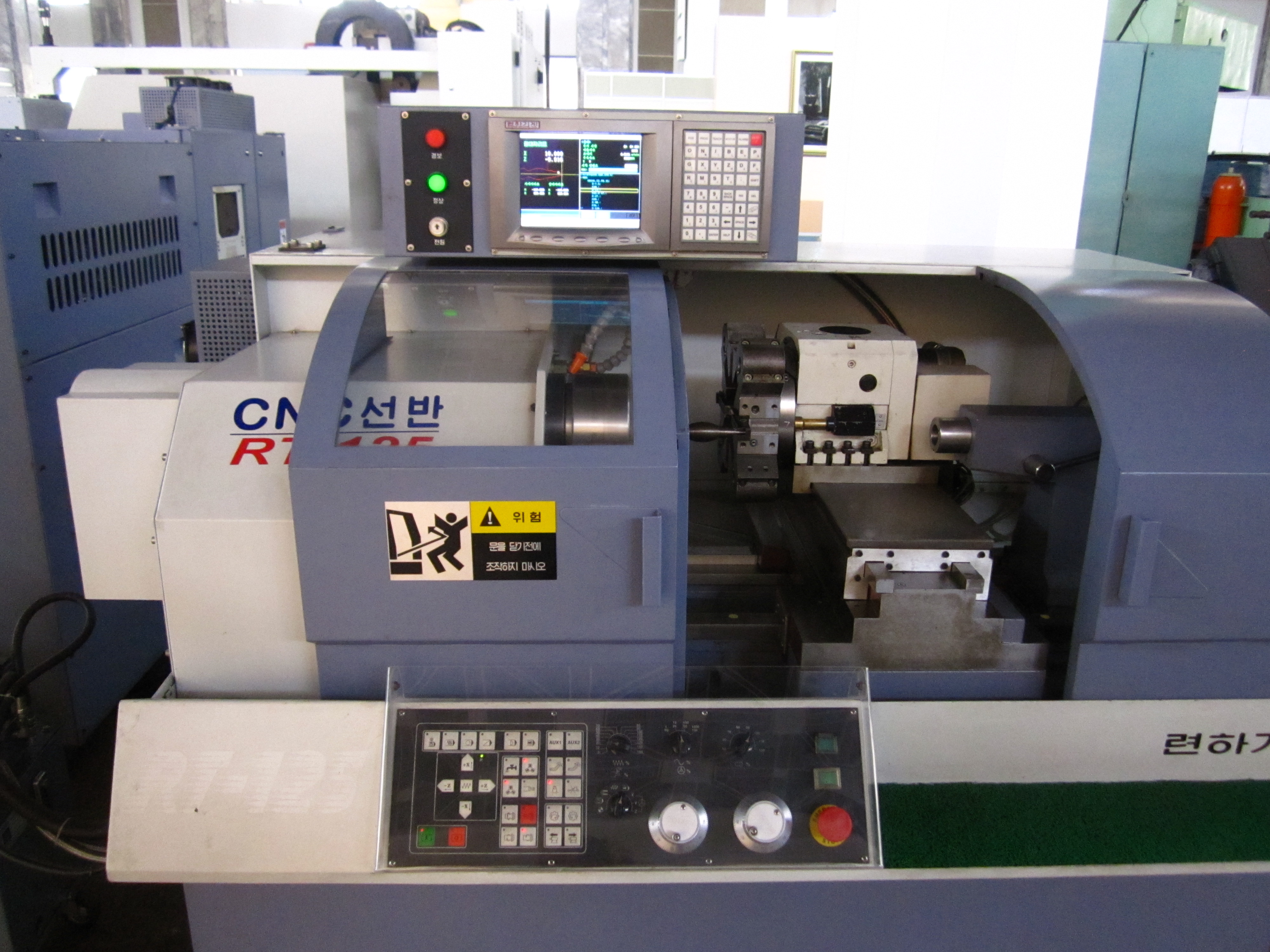
Lastly, Choe praised the development in the science and technology sector for adopting CNC (computer numerical control) system in all sectors of the national economy and scientific research in IT and biotechnology.
Deputy Pak Su Gil, vice-premier and Minster of Finance presented the state budget for 2010 and 2011. He expected the state budgetary revenue to grow 7.5 percent and the expenditure is expected to grow 8.9 percent against the previous year. The state budget allocation is focused on strengthening the light and agriculture industries and improving the national economy by bringing state-of-art technologies in all sectors.
The expected state budgetary revenue is 83.9 percent of the total state budgetary revenue and local budgetary revenue is at 16.1 percent. The revenue from transaction and the profits of state-run enterprises are expected to hold 78.5 percent of the total state budgetary revenue this year and the profits of cooperative organizations, the fixed asset depreciation, the income from real estate rent and social insurance are expected to rise 3.8 percent, 1.4 percent, 0.7 percent and 0.4 percent respectively as compared with those of last year.
The current year’s plan for state budgetary expenditure is expected to show an 8.9 percent increase over last year. The budgetary allocation for the light industry is expected to climb 12.9 percent and a large amount is also expected to be distributed to the local industry.
The budgetary expenditure by category compared to the previous year is as follows: 1) 9 percent more funds will go into agriculture; 2) funds needed for farming will be provided on a priority basis and the expenditure for the basic industries of the national economy is expected to go up 13.5 percent; 3) the financial allocation for the capital construction will go up 15.1 percent; 4) 10.1 percent increase will be made for scientific and technological development.
Especially in the science and technology sector, emphasis is being placed on fulfilling the five-year plan of modernizing and building an economic power and successful implementation of CNC system.
Lastly, 15.8 percent of the total expenditure is expected to be spent on national defense.
UPDATE 3 (2011-4-10): News is trickling out about the 12th SPA’s 4th session. I will keep adding stories below as they roll in:
Yonhap: N. Korea ups budget for construction projects this year
North Korea’s parliament dramatically increased a budget for major construction projects as Pyongyang prepares to throw a massive celebration next year, Seoul said Friday.
North Korea has vowed to achieve its goal of becoming a “great, prosperous and powerful country” by 2012, the centennial of the birth of its late founder Kim Il-sung, father of current leader Kim Jong-il.
The legislature endorsed 567 billion (North Korean) won (US$5.73 billion) for this year’s total budget in a session on Thursday, according to the Unification Ministry, which handles inter-Korean affairs in Seoul.
The budget for construction projects jumped by 15.1 percent from last year as the North plans to build 100,000 houses in Pyongyang and a massive power plant in the country’s northwest region, said the ministry.
The North also earmarked 15.8 percent of the total state budget for national defense this year as it did last year, said the ministry.
North Korean Premier Choe Yong-rim vowed to strengthen military capabilities, improve economy and increase grain production amid the country’s chronic food shortages.
The cabinet “will make sustained great efforts for the provision of materials needed for boosting the combat capability of the People’s Army and the defense capability of the country in every way,” Choe said at the session.
Last year, the North recorded a fiscal surplus of 7.3 billion (North Korean) won, said the ministry.
North Korea’s official Korean Central News Agency also reported on the country’s spending and budget, though it didn’t give any monetary figures.
Daily NK: North Korea’s Rubber Stamp Parliament Explained
The 4th meeting of the 12th session of North Korea’s Supreme People’s Assembly (SPA) will convene at Mansudae Assembly Hall in Pyongyang today.
The official North Korean translation of Article 87 of the Socialist Constitution of the Democratic People’s Republic of Korea proclaims, “The Supreme People’s Assembly is the highest organ of State power in the Democratic People’s Republic of Korea.”
SPA delegates are elected every five years (every four years until 1992), while meetings are normally convened once a year; however, there were two meetings during 2010, which is why today’s gathering will actually be the 4th of the 12th session, which began in 2009.
However, the SPA is by no means as important as the constitution claims; instead, it is a political show. As soon as one takes a look at the delegates, their selection method and the SPA’s practical role, it becomes clear that it is a symbolic organ with no practical function.
Let’s look in more detail at the SPA via a brief Q&A.
– What are the principle tasks of the Supreme People’s Assembly?
The role of the Supreme People’s Assembly prescribed in North Korea’s constitution is no different from that of South Korea’s National Assembly. The Supreme People’s Assembly is the highest sovereign organization and legislative organ which has the authority to adopt and revise the constitution and laws of the land. In addition, it establishes the basic principles of internal and external policy and manages the personnel matters of state apparatus. During annual meetings, the results of the previous year’s budget and the budget for the coming year are at the top of the agenda.
However, general matters of government administration are decided by the Chosun Workers’ Party; the SPA is a propaganda organization aimed at the people. The SPA simply approves the policy of the Chosun Workers’ Party as the representative of the North Korean people.
– Who are the SPA delegates?
A delegate is not a full time politician, unlike a member of the South Korean National Assembly, and they come from every region and sector of society, including a small number of workers, farmers and soldiers. They are selected to justify calling the SPA the representative of the people, but are expected to nod through Party decisions without meaningful debate.
Candidates become delegates after being recommended by their local Party, which is led by the Central Committee in Pyongyang. There is a screening committee for delegates but it does not reject them. Delegates are always elected with implausible majorities.
The period of a delegate is five years, but since the 687 delegates tend to stay in post, the term does not have much meaning. North Korea held a delegates’ election for the 12th session of the SPA on March 8th, 2009, electing a total of 687 members. Kim Jong Il is a delegate, as reflected in his official title, ‘Kim Jong Il, 333rd Election Precinct and General Secretary of the Chosun Workers’ Party, Chairman of the National Defense Commission’, although he doesn’t always attend meetings. Rumor has it that Kim Jong Eun is a delegate under an assumed name, but that has not been proven.
– In that case, what kind of organ is the Standing Committee of the Supreme People’s Assembly?
The Standing Committee and departmental committees are branches of the SPA. When the SPA is not in session (meaning most of the time), the Standing Committee operates as the state’s highest sovereign organization. The chair of the Standing Committee is also the head of state according to the constitution, but the chairman of the National Defense Commission, currently Kim Jong Il, leads all government administration in practice. The chair of the Standing Committee is Kim Young Nam, who frequently receives foreign visitors and operates as one of the regime’s more prominent public faces.
– What privileges accrue to SPA delegates?
The practical role of a delegate is almost non-existent, but there are some perks. Delegates get priority use of transportation and are immune from prosecution unless expressly stripped of that right by the Party Central Committee. National Assembly lawmakers in South Korea have similar privileges, of course. Notably, SPA delegates do not receive priority food distribution.
Even though the SPA is North Korea’s highest sovereign organization, delegates are not envied by ordinary North Koreans. Since the Supreme People’s Assembly does not have the authority to influence people’s lives, those people accord them little interest.
One North Korean defector commented, “Delegates are usually factory managers or similar, so people are only really envious of his job, in which he can make a lot of money, than in his work as a delegate.” Being a delegate does not directly improve a person’s economic status.
And more here from the Pyongyang Times.
UPDATE 2 (2011-4-7): Below is the first round of media stories about the SPA’s 4th session.
KCNA: DPRK Supreme People’s Assembly Meets
The Fourth Session of the 12th Supreme People′s Assembly of the DPRK was held at the Mansudae Assembly Hall Thursday.
Present there were deputies to the SPA.
Also attending it as observers were officials of party, armed forces and power organs, public organizations, ministries and national institutions and those in the fields of science, education, culture and arts, public health and media.
The Session discussed the following agenda items:
On the work of the DPRK Cabinet in Juche 99 (2010) and its tasks for Juche 100 (2011)
On the results of the implementation of the DPRK state budget for Juche 99 (2010) and its state budget for Juche 100 (2011)
Organizational matter
Deputy Choe Yong Rim, premier of the DPRK, made a report on the first agenda item.
He said that last year witnessed the signal advance in making the national economy Juche-oriented and the solid foundation for a drastic turn in developing the light industry and agricultural production. Big successes were made in development of science and technology, cultural construction and other fields, he noted.
He referred to the concrete tasks for this year, stressing the need to remarkably increase the production of consumer goods and attain the goal of grain production without fail to bring about decisive turn in improving the standard of people′s living. Production should be increased in the economic field as a whole while steadily pushing ahead with the drive to put the national economy on a modern basis, he added.
Deputy Pak Su Gil, vice-premier and minister of Finance, made a report on the second agenda item.
He noted that last year′s state budget revenue was overfulfilled 1.3 percent and the state budgetary expenditure was implemented at 99.9 percent. The revenue increased 7.7 percent while the expenditure swelled 8.2 percent over the previous year, he said, adding:
The state budgetary allocations for light industry and agriculture last year showed 10.9 percent and 9.4 percent increase respectively as compared with that in the previous year. The state budgetary expenditure for the pilot domains of the national economy, basic industrial domains and capital construction last year went up 8 percent and 12.9 percent respectively over the previous year.
8.1 percent greater financial disbursement than the previous year was made for the field of science and technology and 6 percent bigger fund than that in the previous year was spent for the implementation of the popular policies.
15.8 percent of the total state budgetary expenditure was spent for national defence last year.
He further said:
This year the state budgetary revenue is expected to grow 7.5 percent over last year′s and the state budgetary expenditure is expected to show an 8.9 percent increase over last year. Huge funds will go to the light industry, agriculture, etc. and 15.8 percent of the total state budgetary expenditure will be spent for national defence.
Speakers at the Session pointed out that the Cabinet′s work last year and the implementation of the state budget were properly reviewed and summed up. This year′s tasks have been clearly laid down and the state budget correctly shaped in such a way as to give full play to the advantages of the socialist system in the DPRK, they said, expressing full support and approval of them.
They also manifested their will to push ahead with the general offensive for bringing about a decisive turn in building a thriving nation by increasing the political and military power of the country in every way and intensifying the drive for great surge for improving the standard of people′s living.
The Session adopted with the unanimous approval of deputies the SPA decision “On approving the report on the work of the DPRK Cabinet and the results of the implementation of the DPRK state budget for Juche 99 (2010)” and the DPRK SPA ordinance “On the DPRK state budget for Juche 100 (2011) “.
Then the Session discussed the organizational matter.
Deputy Jon Pyong Ho was recalled from member of the DPRK National Defence Commission due to the transfer to other post and Deputy Pak To Chun was elected to fill the vacancy.
Deputy Ri Myong Su was appointed as minister of People′s Security of the DPRK NDC.
Deputy Jang Pyong Gyu was elected chairman of the SPA Legislation Committee to fill the vacancy.
Deputy Ri Thae Nam was relieved of vice-premier of the Cabinet for his health reason.
KCNA: Report on the work of the DPRK Cabinet last year and for this year:
Deputy Choe Yong Rim, premier of the DPRK Cabinet, made a report on its work last year and its tasks for this year at the Fourth Session of the 12th Supreme People′s Assembly of the DPRK held Thursday.
He said that the most important achievement gained in the nation′s economic development last year was that signal progress was made in putting the national economy on a Juche-basis.
The inter-departmental structure of the metal industry was refurbished with the new one. The Juche iron production system was successfully established at major metal plants and new alloy steel production bases sprang up.
Large chemical industrial centres were updated on the basis of the latest science and technology to bring about the mass-production of Juche fiber and Juche fertilizers, signal events.
The coal production capacity increased in the field of coal industry. The construction of hydropower stations was completed to create huge additional generating capacity in the field of power industry. The construction of the Huichon Power Station made unprecedentedly rapid progress, opening a bright prospect for completing it by 2012.
It was another signal success made in the development of the national economy last year that a solid foundation was laid to bring about a radical turn in the development of light industry and the agricultural production.
Spectacular successes were made in the development of science and technology last year and the work to put all sectors of the national economy on a CNC basis made dynamic progress.
Scientists and technicians succeeded in the nuclear fusion, stunning the world. Products based on cutting-edge technology were developed and big progress was made in the development of bio-engineering.
The reporter said that this year the DPRK Cabinet would significantly boost the production of consumer goods and attain the target of grain production without fail and thus bring about a decisive turn in improving the standard of people′s living and continue energetically pushing forward the updating of the national economy while forcefully waging the drive for increased production in all economic sectors.
He went on:
The Cabinet will make this year a year in which light industry will advance in full gear and the people will benefit from it and, at the same time, dynamically push ahead with the work to put the production of consumer goods on a modern and scientific basis.
It will focus all efforts on attaining the target of grain production by bringing about signal innovations in farming with the whole party, country and army and all the people involved.
It will thoroughly establish a food production system of agricultural production and stock breeding and that of fruit farming and stock breeding and reenergize the production at the modern stock breeding and fruit production centers in a bid to simultaneously boost the production of livestock products, fruits and grain. It will make sure that a turn is effected in the development of fruit farming, in particular, this year.
The Cabinet will see to it that the material and technical foundation will be consolidated in the fishery domain to conduct deep-sea fishing, small-scale fishing and shallow-sea culture in a big way and put fish farming on a scientific and intensive basis to produce and supply greater quantities of aquatic products and processed fishes and seafood to the people.
It will improve and strengthen the service to the people to fully meet their need and provide better convenience in their lives.
It will decisively increase the production in all sectors of the national economy including the four pilot sectors in an effort to give strong spurs to the ongoing march for a signal improvement in the standard of people′s living.
The Cabinet will make sure that the coal production will be radically boosted in the field of coal industry while the coal production capacity will be increased under a long-term plan.
It will see to it that the field of power industry will operate all generating equipment in full capacity while rationally forming a system of transmission and distribution to make the most effective use of the electricity produced.
It will accelerate the building of large-scale hydro and thermal power plants while focusing sustained state efforts on the construction of the Huichon Power Station in a bid to provide a sure guarantee for hitting the target of electricity production.
The Cabinet will make sure that the field of metal industry will consolidate and develop the Juche-oriented iron production system and method. It will see to it that the introduction of heavy duty rails and the modernization of railways will be accelerated and transport capacity boosted in the field of railway transport to satisfactorily ease the strain on transport.
It will make sure that the field of mining industry will keep production going at a high rate and dynamically push forward updating while laying a foundation for ensuring a more satisfactory production and supply of nonferrous metal products under a long-term plan.
The field of machine-building industry will energetically step up the work to put machine plants on a CNC basis, ensure a satisfactory production and supply of generating equipment and machines and equipment necessary for the modernization of the national economy. The field of electronics industry will boost the production of varieties of electronic elements and products and the IT field would contribute to putting the national economy on an IT basis.
The field of construction will dynamically push forward the construction of important projects including the Hungnam gasification project, Tanchon Port, the sacred site of Thaekwon-Do and the building of 100 000 flats in Pyongyang so as to complete them at the earliest possible date.
The fields of land administration and urban management will radically change the appearance of the country as befitting a thriving nation and provide better living conditions and environment to the people.
The field of scientific research will radically develop such core basic technologies and cutting-edge science and technology including IT and bio-engineering and satisfactorily settle scientific and technological issues arising in building an economic power.
The Cabinet will see to it that foreign trade will be diverse and multi-faceted to decisively increase the volume of export.
The Cabinet will conduct a positive work for making an effective use of levers for economic and technological cooperation in the direction of consolidating the foundation of the DPRK′s socialist self-supporting economy.
It will make sustained great efforts for the provision of materials needed for boosting the combat capability of the People′s Army and the defence capability of the country in every way and the development of the field of socialist cultural construction.
The reporter called on everybody to work hard to emerge honorable victors in the general offensive this year to significantly greet the centenary of birth of President Kim Il Sung, united close around the Central Committee of the Workers′ Party of Korea headed by leader Kim Jong Il.
KCNA: Report on the implementation of state budget for 2010 and state budget for 2011
Deputy Pak Su Gil, vice-premier and minister of Finance, delivered a report on the results of the implementation of the DPRK state budget for last year and its state budget for this year at the Fourth Session of the 12th Supreme People′s Assembly held on Thursday.
According to the report, last year′s state budgetary revenue was overfulfilled 1.3 percent and its plan for state budgetary expenditure was carried out at 99.9 percent.
The state budgetary allocations for light industry and agriculture last year showed a 10.9 percent and 9.4 percent increase respectively as compared with that in the previous year. The state budgetary expenditure for the pilot domains of national economy, basic industrial domains and capital construction last year went up 8 percent and 12.9 percent respectively over the previous year.
8.1 percent greater financial disbursement than the previous year was made for the field of science and technology and 6 percent bigger fund than that in the previous year was spent for the implementation of the popular policies.
15.8 percent of the total state budgetary expenditure was spent for national defence last year.
The state budget for this year has been shaped in such a way as to radically boost the light industry and agricultural production, revitalize the overall economic construction and conduct a dynamic drive to break through the latest science and technology in all fields to lay a solid foundation for an economic power.
This year′s plan for state budgetary revenue is expected to grow 7.5 percent over last year′s.
The national budgetary revenue is expected to hold 83.9 percent of the total state budgetary revenue and local budgetary revenue 16.1 percent.
The revenue from transaction and the profits of state-run enterprises are expected to hold 78.5 percent of the total state budgetary revenue this year and the profits of cooperative organizations, the fixed asset depreciation, the income from real estate rent and social insurance are expected to swell 3.8 percent, 1.4 percent, 0.7 percent and 0.4 percent respectively as compared with those last year.
This year′s plan for state budgetary expenditure is expected to show an 8.9 percent increase over last year. The budgetary allocation for the light industry is expected to go up 12.9 percent and a huge budgetary disbursement will be made for local industry, too.
9 percent more funds than last year will go to agriculture, funds needed for farming will be provided on a priority basis and the expenditure for the pilot domains and basic industries of the national economy is expected to go up 13.5 percent over last year.
The financial allocation for the capital construction will go up 15.1 percent over last year to hasten the construction of important objects and complete them at the earliest possible date. 10.1 percent bigger financial allocation than last year will be made for scientific and technological development in order to fulfill the five-year plan for state scientific and technological development, positively push forward the work for putting industrial domains on a modern and CNC basis and successfully solve scientific and technical issues arising in the building of an economic power.
Huge funds will go to the cultural construction and land improvement and city management.
15.8 percent of the total state budgetary expenditure is expected to be spent for national defence for this year.
A large amount of educational aid fund and stipends will be sent for the children of Koreans in Japan this year, too.
For the successful fulfillment of the state budget for this year it is necessary for all domains and units of the national economy to give full play to the mental power of the producer masses, economize manpower, materials and funds and cut down as much as possible nonproductive expenditure and thus carry out the monthly and quarterly plans for budgetary revenue without fail, the reporter stressed.
The absense of Kim Jong-un is fomenting speculation. See here, here, here, here, and here.
Michael Madden offers information on the individuals mentioned above.
UPDATE 1 (4/1/2011): The Institute for Far Eastern Studies (IFES) issues the following information (NK Brief No 11-03-30):
On March 15, the Standing Committee of the Supreme People’s Assembly (SPA) announced that the 4th Session of North Korea’s 12th SPA will convene on April 7 in Pyongyang, ordering all the SPA members to pre-register from April 5 to 6.
The SPA is the highest organ of state power according to the Constitution of the DPRK. The Assembly is convened once or twice a year in regular sessions and called to meet in two to three weeks in advance. Its functions include adopting, amending or supplementing enactments to the constitution, determining state policy and budgets, and organizing elections of National Defence Commission (NDC) and other state organs.
Although the KCNA did not report on the specific agenda for the session, it is most likely to resemble the other regular sessions of the SPA, consisting of discussions of the final budget from last year as well as the budget for this year; organizational and personnel issues; and the direction of economic policy. In addition, organizational and personnel changes within the Cabinet and the NDC will likely be on the top agenda.
Particular attention is drawn to whether the heir-apparent Kim Jong Un will be appointed as the vice chairman of the NDC at this session to add to his new title of vice chairman of the Party’s Central Military Commission, which he received earned last year. Another point of interest is on who will replace Ju Sang Sung, who was suddenly dismissed from his post as the Minister of People’s Security. The personnel changes made at the session will play an important role in cementing the succession process of Kim Jong Un.
At the first session of the 12th Presidium of the Supreme People’s Assembly held in April 2009, the Constitution was amended to name the NDC chairman as the “highest leader”, further strengthening the power of the Commission and Kim Jong Il.
Additionally, the second session of the 12th SPA was held on April 9, 2010 followed by the third session which was held on June 7, 2010.
ORIGINAL POST (3/22/2011): According to KCNA:
The fourth session of the 12th SPA of the DPRK will be held in Pyongyang on April 7, Juche 100 (2011).
The Presidium of the Supreme People’s Assembly of the DPRK made public a decision on it on Tuesday.
According to the AFP:
Pyongyang usually convenes its rubber-stamp parliament twice a year for a day or two to pass government budgets and approve personnel changes.
Attention is focused on whether Kim Jong-Un, leader Kim Jong-Il’s youngest son and heir apparent, will be promoted to become one of the vice-chairmen of the powerful National Defence Commission (NDC).
Jong-Un, believed aged 27, was made a four-star general in September and appointed as one of vice-chairmen of the party Central Military Commission, which oversees the 1.2 million-strong armed forces headed by his father.
“It is interesting to see whether the son becomes an NDC vice-chairman or even the first NDC vice-chairman,” Professor Yang Moo-Jin, of the University of North Korean Studies, told AFP.
“It will give us an indication as to where the North stands in its efforts to endow him with power and authority needed to become an eventual successor,” Yang said.
If Jong-Un emerges as the NDC first vice-chairman, he is likely to be given the same title in the Central Military Commission sooner or later, Yang added.
“This will pave the way for the son’s eventual ascension to the throne,” he said.
North Korea’s 2009 constitution says the NDC chairman, currently the senior Kim, is “the highest leader” of the communist state.
The need for new appointments has become acute after the death of the first NDC vice-chairman, Vice Marshall Jo Myong-Rok, in November last year, and the sudden dismissal of the North’s police chief, Ju Sang Song.
According to the Choson Ilbo:
The rubberstamp parliament […] approves senior members of the National Defense Commission, the top decision-making body, and the Cabinet.
Kim Jong-un has already been appointed vice chairman of the commission, and the SPA is expected to approve the appointment.
“Kim Jong-un will need the title if he is to visit China as his father’s heir and meet Xi Jinping,” who is widely tipped as the next Chinese president, a Unification Ministry official speculated.
Below is past information on the 12th Supreme People’s Assembly:
Elections were held in March 2009. See here, here, here.
12th SPA’s First Session (April 9th, 2009): KCNA and here.
12th SPA’s Second Session (April 9th, 2010): KCNA 1,KCNA 2, here, and here.
12th SPA’s Third Session (June 7th, 2010): KCNA 1, KCNA 2, KCNA 3, KCNA 4, KCNA 5, KCNA 6, KCNA 7, KCNA 8, here, here, and here.