Archive for the ‘Economic reform’ Category

Koryolink sees increase in users and revenue

Tuesday, April 19th, 2011

Martyn Williams writes in PC World:

North Korea’s only 3G cellular operator continues to report strong demand for its service and saw record revenue and growth in subscriber numbers in 2010, its majority shareholder said Monday.

The Koryolink service ended 2010 with 431,919 subscribers, more than quadrupling its customer base over the year, said Egypt’s Orascom Telecom. Orascom owns three-quarters of the cellular carrier through Cheo Technology, a joint venture with the state-run Korea Posts and Telecommunications (KPTC).

Revenue hit US$66.4 million, up 155 percent on the year.

Koryolink launched its service in the final weeks of 2008 amid some skepticism about whether North Korea’s government, which keeps tight control on its people, would really permit the general populace to own cellphones.

The continuing subscription growth appears to have proven the critics wrong. Anecdotal evidence from foreigners that have visited Pyongyang also points to an increasing number of people being seen on the street with cellphones.

There remains plenty of room to grow. The current subscriber base represents less than 2 percent of the population. Koryolink offered cheaper tariffs in 2010 to put its cellphone service within reach of more people, and might have to continue lowering prices if it wants to greatly expand penetration inside what is one of Asia’s poorest countries.

The service now covers 91 percent of the population including the capital, Pyongyang, 14 other cities, and 22 major highways. In addition to basic voice service, a video phone service was introduced in the third quarter. SMS and MMS messaging services and high-speed data service are available, although subscribers cannot access the Internet through their cellphones.

While subscriber numbers and revenues grow, it remains unclear if Orascom is making any money in North Korea. The company doesn’t disclose net profit figures for the unit, but provides profit before accounting for interest payments, taxes, depreciation and amortization (EBITDA). Measured this way, the company posted profits of $57.8 million, up from $17.2 million in 2009.

But perhaps an indication of Koryolink’s profitability, or at least its potential, can be found in Orascom’s recent deal to merge most of its telecom operations with Russia’s Vimpelcom. The deal includes carriers in a handful of countries in Africa, the Middle East and Asia, but excludes two: its home market of Egypt and Koryolink in North Korea.

Orascom’s 2010 annual report (Just released) can be found here (PDF).

More about the Vimpelcom deal here.

Martyn discusses the firm’s performance here.

Choson Ilbo has more here.

Read the full story here:
North Korea’s Sole 3G Operator Sees Users and Revenue Surge
PC World
Martyn Williams
2011-4-19

Share

Official holiday gifts for sale in marketplace

Thursday, April 14th, 2011

For the last few years, stories have appeared in the media about people selling their official 2.16 and 4.15 holiday gifts from the leaders.

The Daily NK gets the first story this time around:

“Is it true that Day of the Sun gifts are being sold in the jangmadang?”

Most defectors answer to that question is something like, “Isn’t it obvious; selling them can give us enough money for one kilogram of rice?” In the past, gifts from Kim Il Sung and Kim Jong Il on national holidays used to be quite precious and an honor for the people, but now they have become a way to lessen difficulties.

According to defectors, special stalls selling “Day of the Sun gifts” have even appeared.

Even the annual crackdown on selling such gifts is a mere formality. Ham In Suk, who came to the South in 2009, said, “The crackdown is carried out temporarily, but it is not effective and not particularly problematic.”

On the biggest national holidays, the Day of Sun and Kim Jong Il’s birthday, the authorities present gifts to children in day nurseries (four to five years of age), kindergartens (six year old) and elementary students (seven to eleven years old).

In one pack, there are usually around 400g of cookies, 400g of candy, 50g of jellies, 100g of rice crackers and five pieces of gum, although the quality and quantity of gifts differs by province.

A ceremony for giving the gifts to children is held a few days before the birthday in kindergartens, and elementary schools, meaning roughly February 14th and April 13th.

Then, on the afternoon of the day when the ceremony finishes you can easily find gifts in the jangmadang. People sell them to traders for a comparatively cheap price decided by weight.

A one-kilogram pack is sold for 1500 won, and the traders sell them on for 2000 won. Therefore, people can earn enough for one kilogram of rice by selling one pack of the gifts and thus have a hot dinner with family to commemorate the national holiday.

According to defectors, the General’s gifts have been on sale in the jangmadang since the March of Tribulation. This is because even though food distribution was suspended during that tough period, gifts from Kim Il Sung and Kim Jong Il continued.

Before that, it was apparently hard to find the gifts in the markets at all, no matter how hard lives were. At that time on the morning of the holiday, parents even made their children bow to portraits of Kim Il Sung and Kim Jong Il before they ate the gifts.

One defector who came to South Korea in 2009 said, “Selling gifts was beyond our imagination before the March of Tribulation, and we even stopped our children from opening the pack of cookies before saying a pledge of loyalty.”

In the 2000s, when people began to purchase Chinese products and food and several kinds of cookies in the jangmadang, the situation for snacks also changed; people in more affluent households sold their gifts from the authorities to the jangamdang to purchase more delicious cookies for their children.

In poor houses, however, parents take the gifts from their children and sell them to get a kilogram of rice. Instead of the General’s gifts, they give their children corn cookies costing around 150 won.

Here are previous posts on this topics.

Read the full story here:
General’s Gifts on Sale in the Jangmadang
Daily NK
Kang Mi Jin
2011-4-14

Share

Wonsan and other market developments

Thursday, April 14th, 2011

UPDATE: Some of these images were picked up by Radio Free Asia and Yonhap.

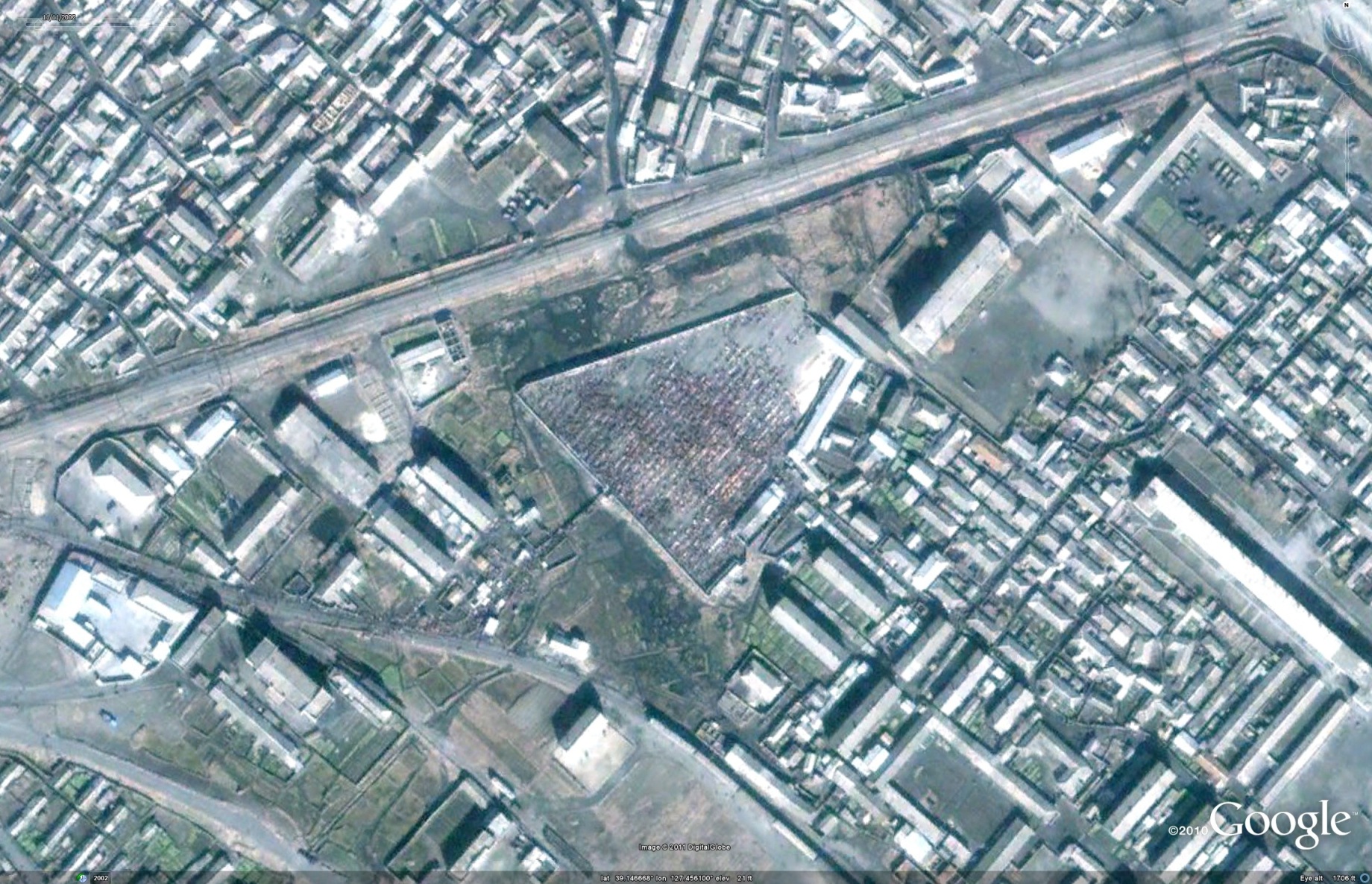
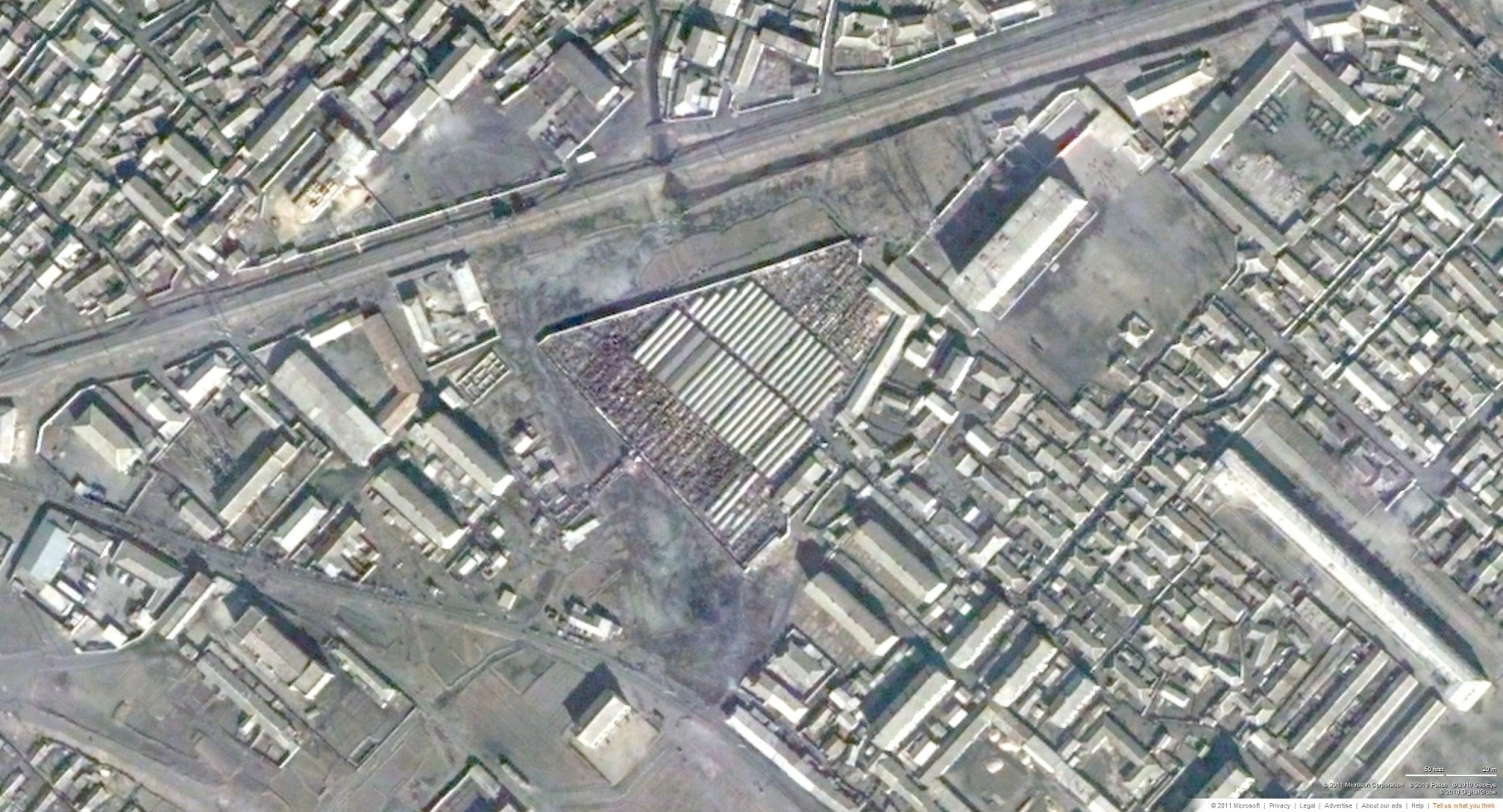
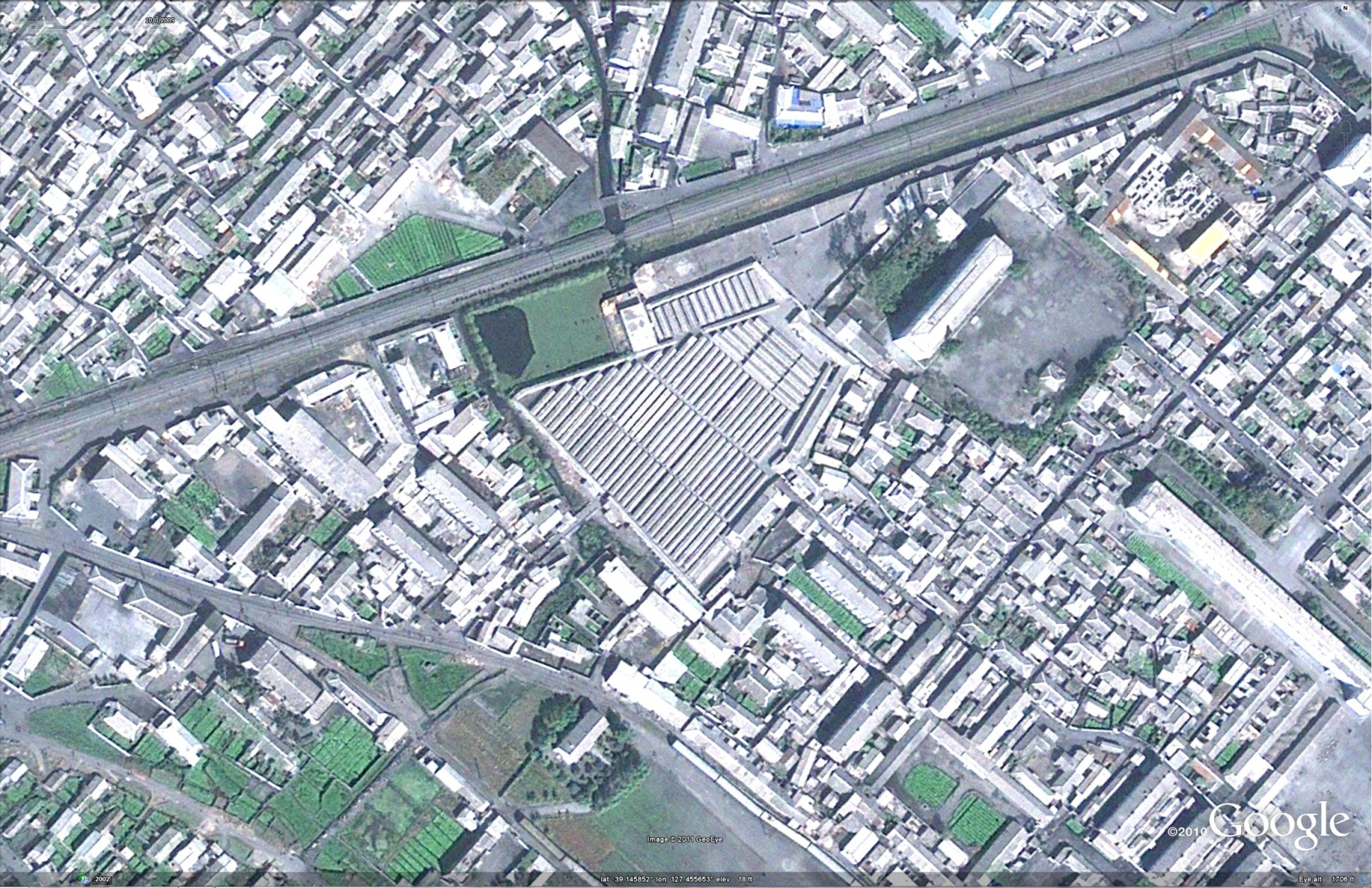
ORIGINAL POST: Google has provided new imagery of Wonsan, the capital of Kangwon Province. Using satellite imagery we can see the continued expansion of the city’s markets.

Pictured below is the formalization of Wonsan’s largest market (39.145886°, 127.455761°):

(Above) The image on the top-left is from Google Earth and it is dated 2002-11-11.  The picture on the top-right is from Bing Maps and the date is not known.  The bottom image is from Google Earth and it is dated 2009-10-3.

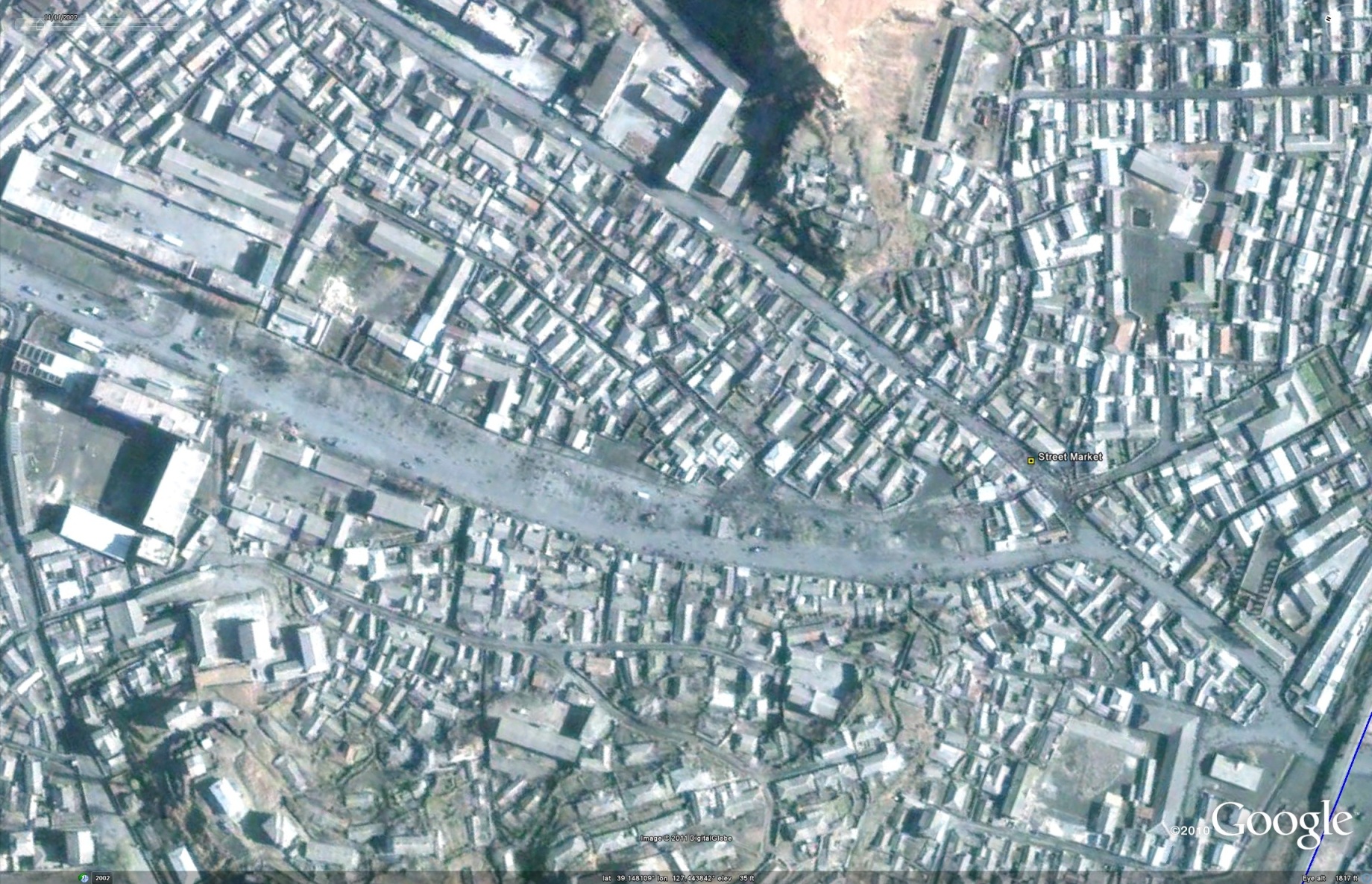
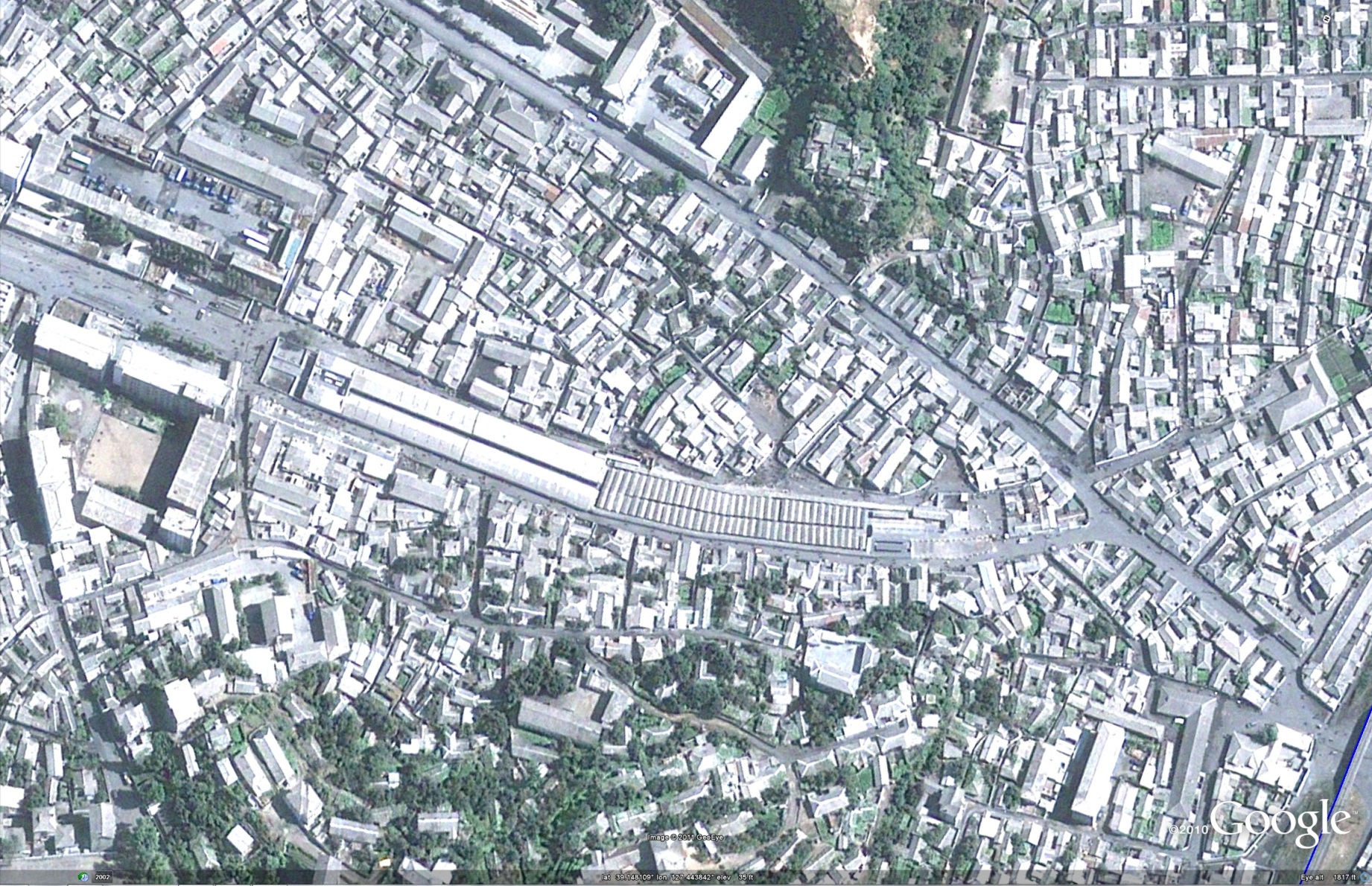
We can also see the formalization and expansion of a street market only 900m to the west (39.148420°, 127.443440°):

(Above) In the left-side picture dated 2002-11-11 you can see a small street market.  In the right hand picture dated 2009-10-3 you can see a large formal market has been constructed in city.

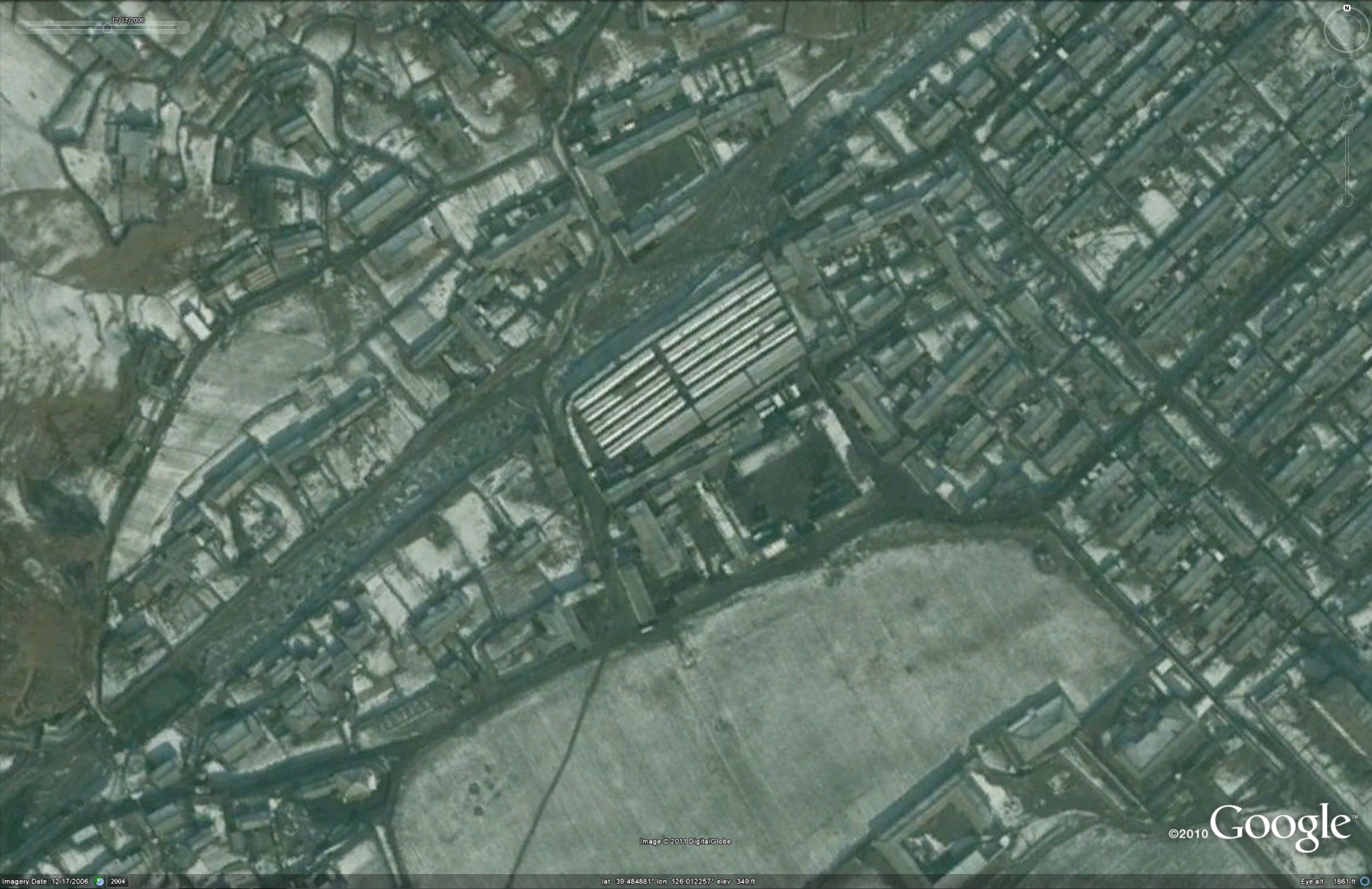
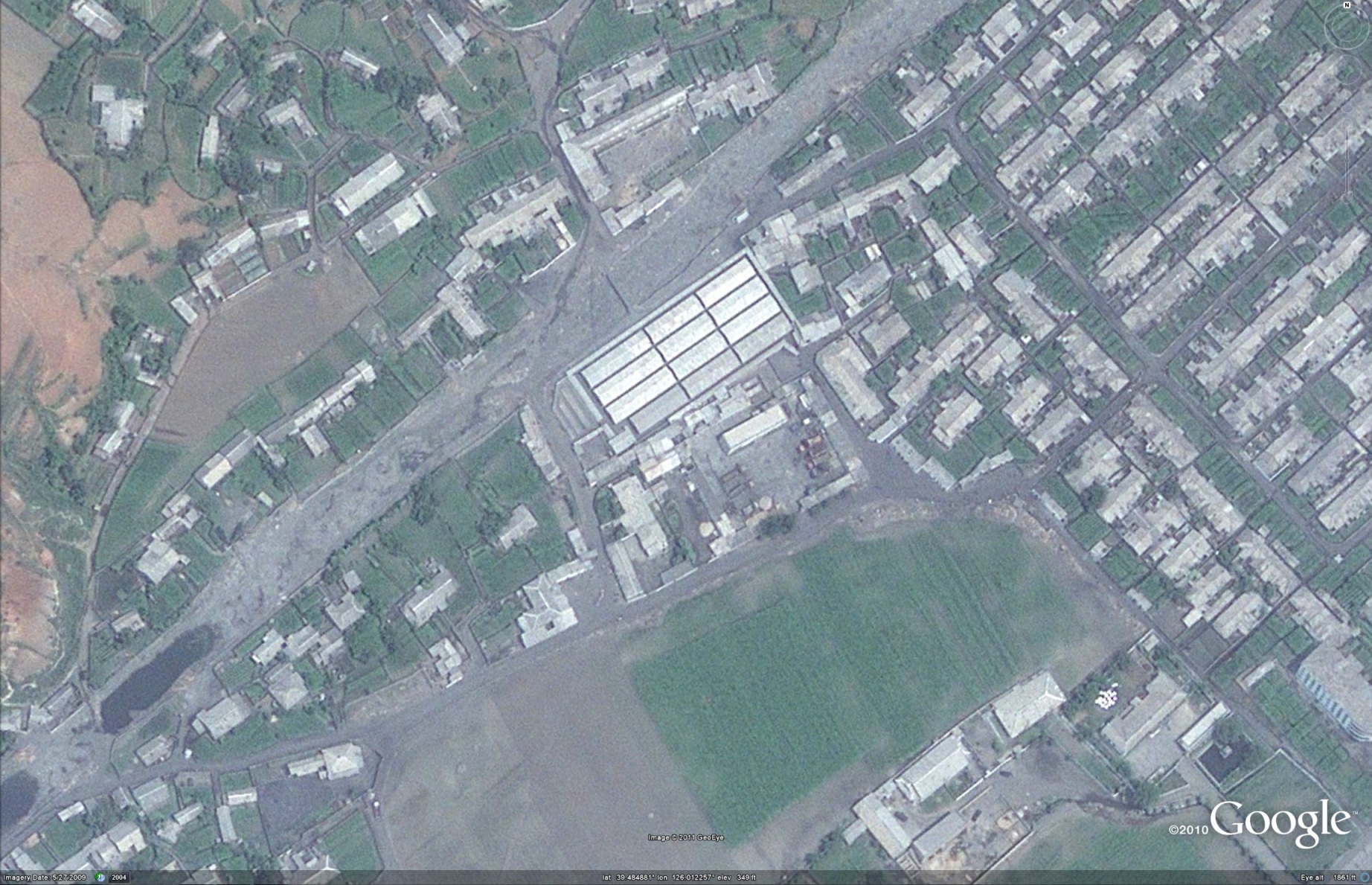
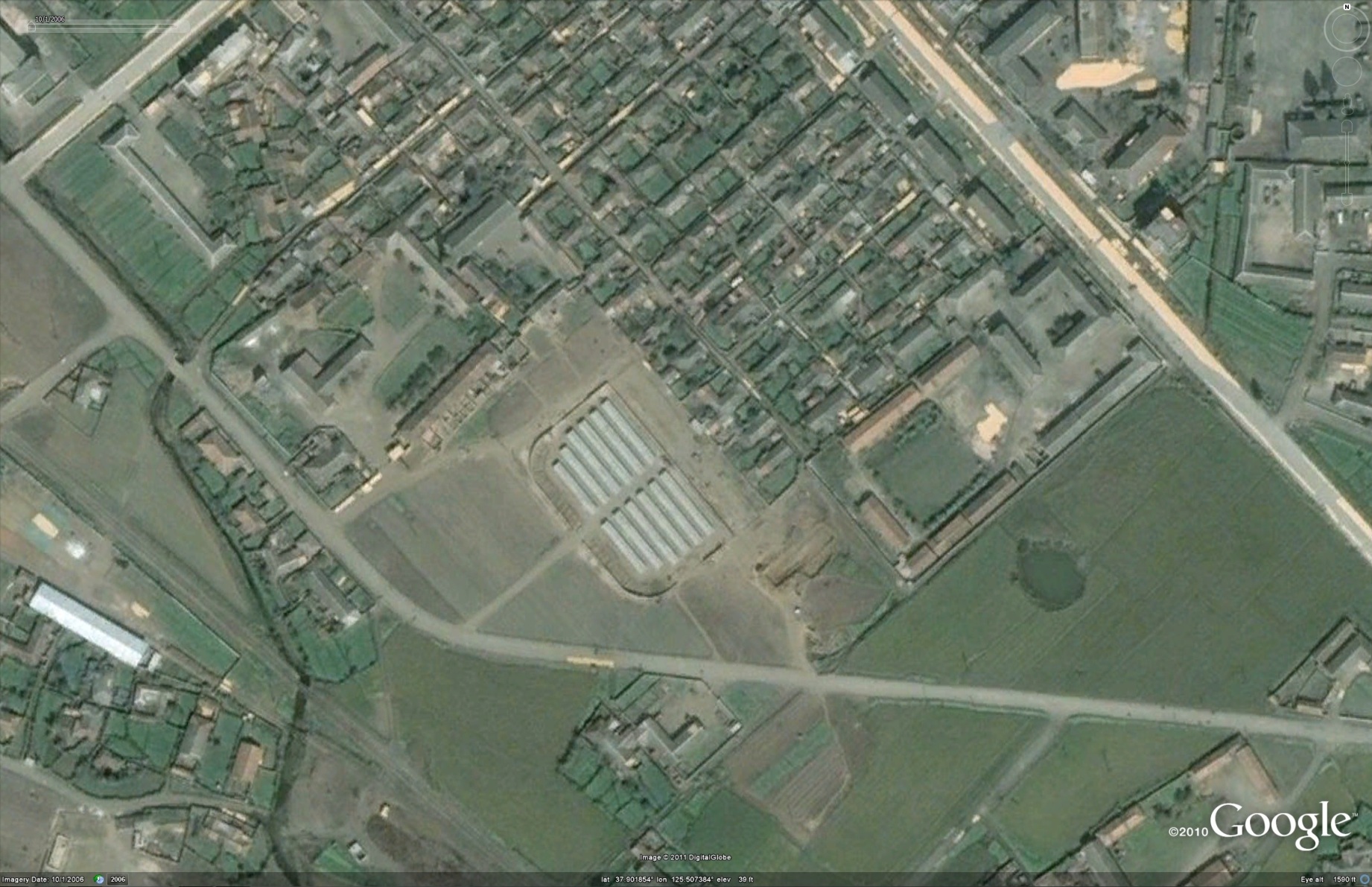
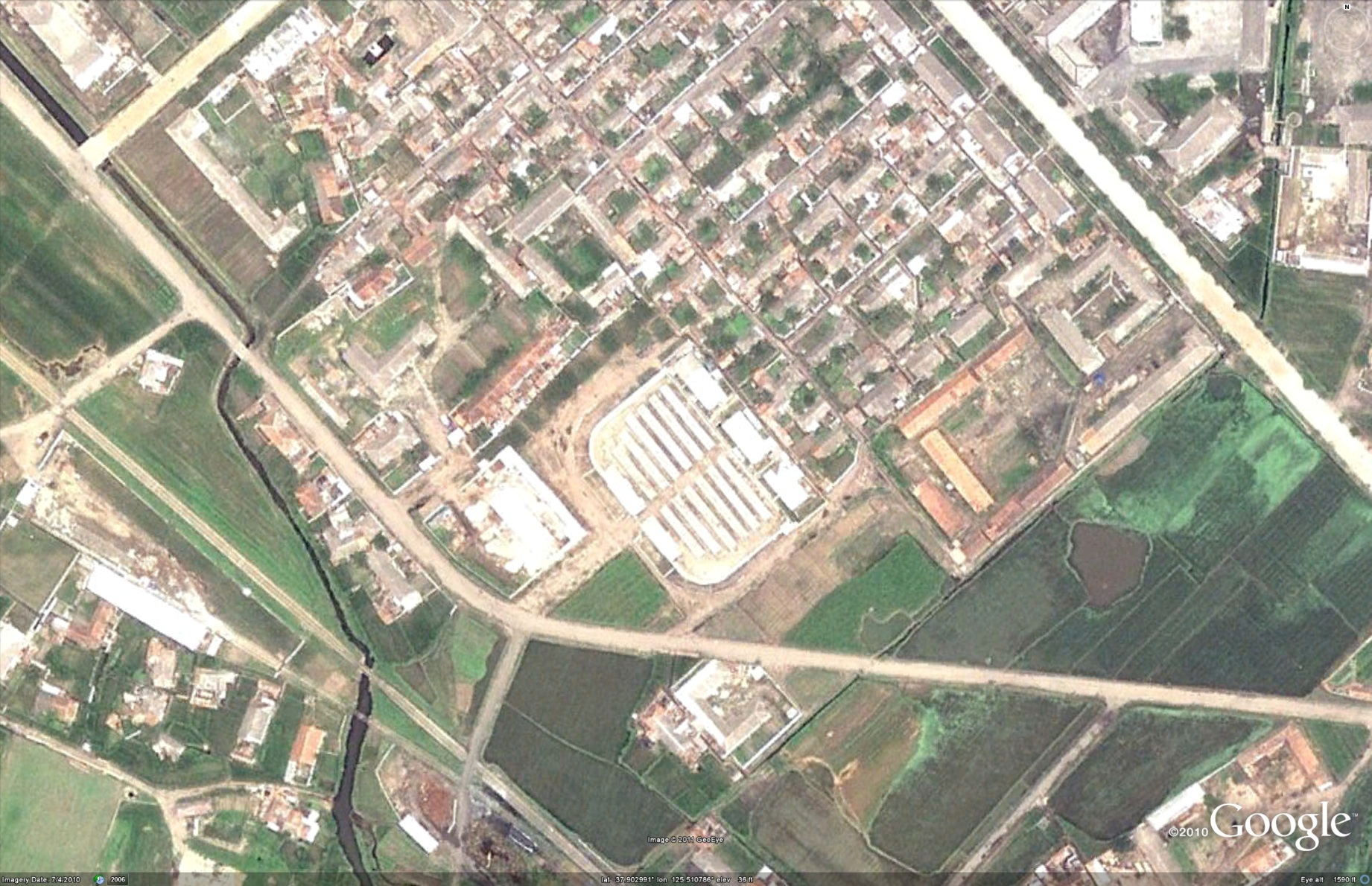
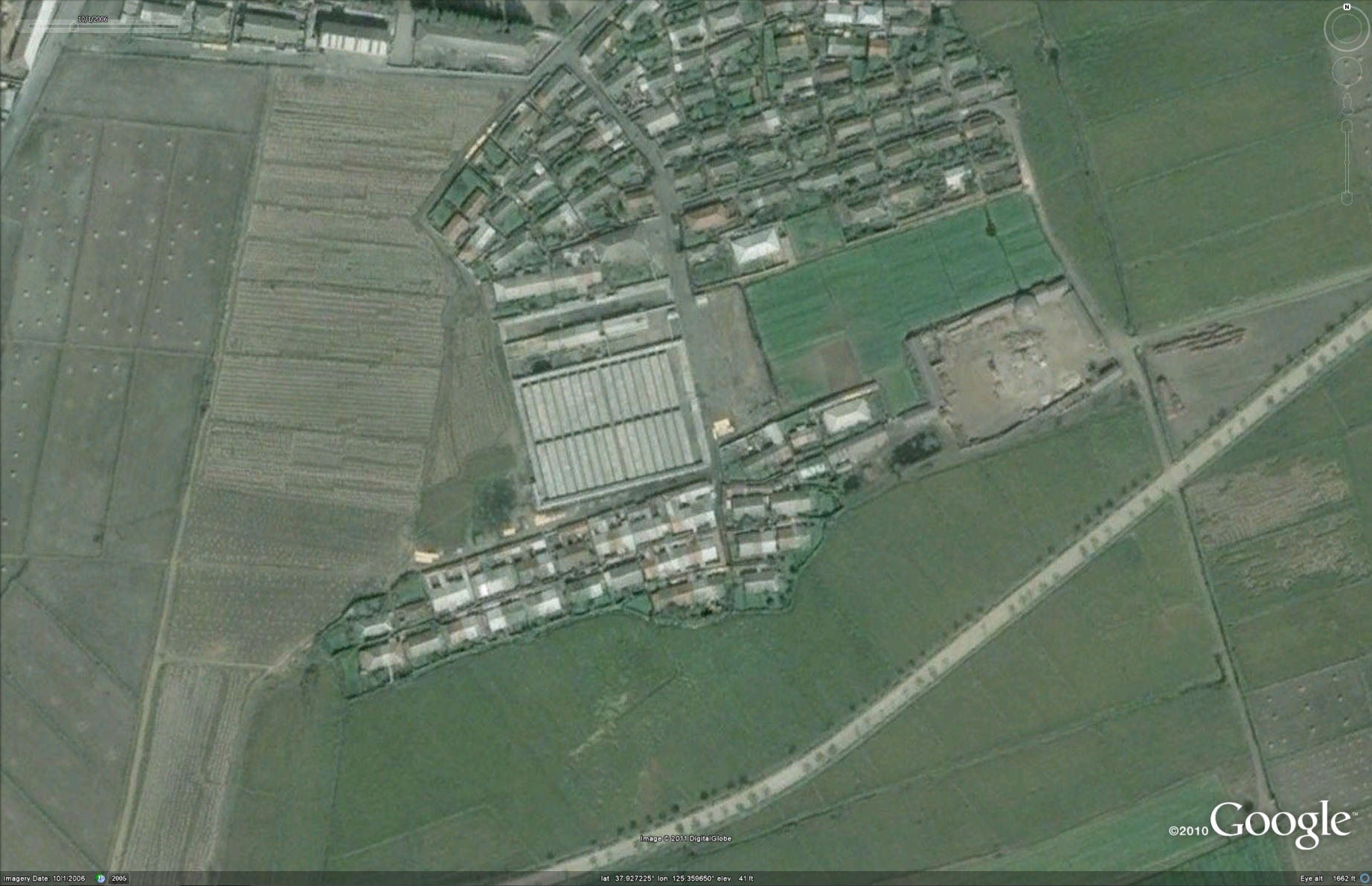
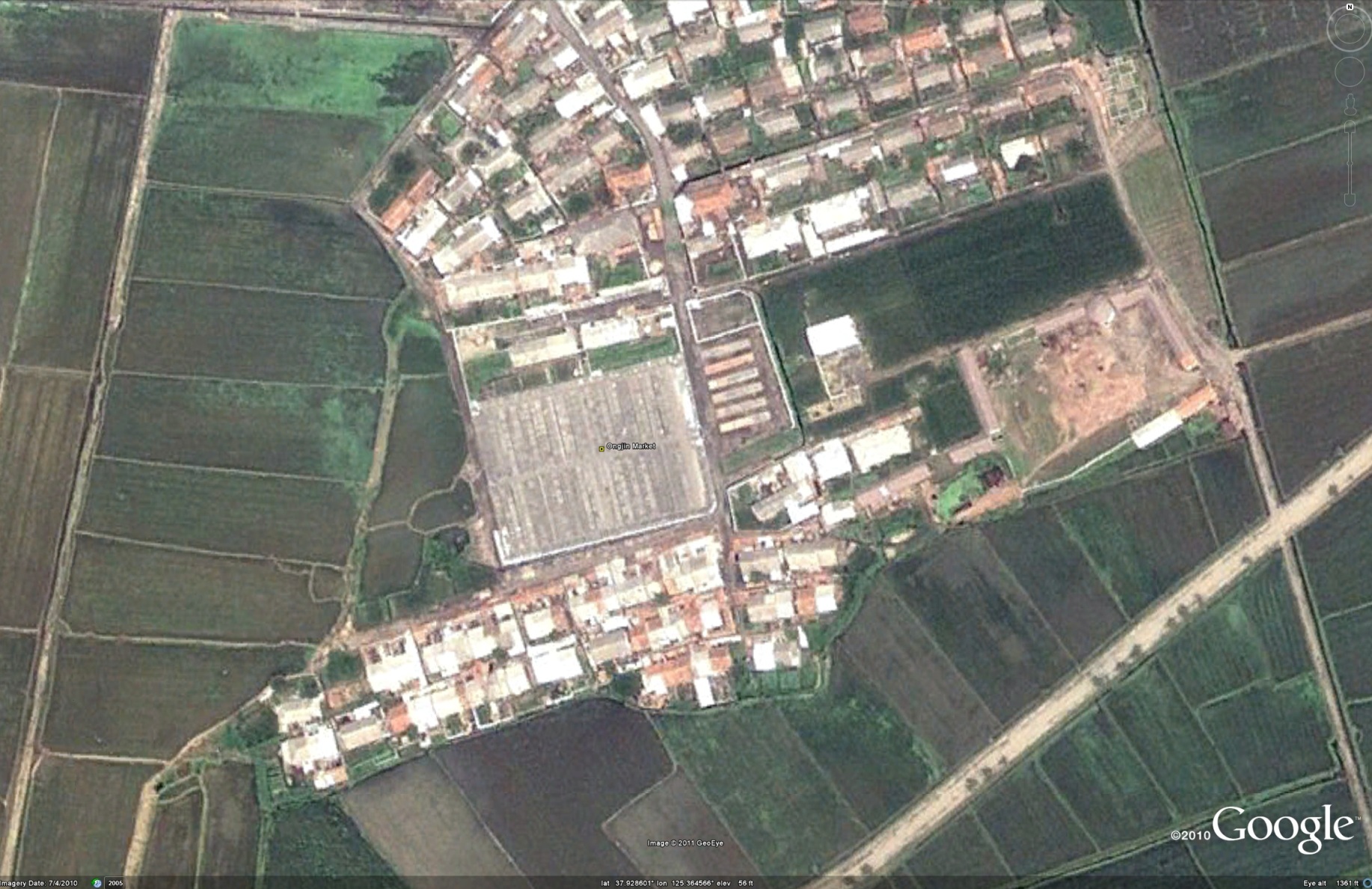
The growth in the numbers and sizes of markets throughout the country is not limited to provincial capitals.  This process can be seen in the smaller county capitals and worker’s districts as well. Below are some less prestigious examples:

Sunchon’s Puhung-dong  market upgrade (순천군, 부흥동: 39.485129°, 126.012211°):


Kangryon market expansion (강령군: 37.906801°, 125.505416°):

Ongjin Market expansion (옹진군: 37.928589°, 125.364248°):

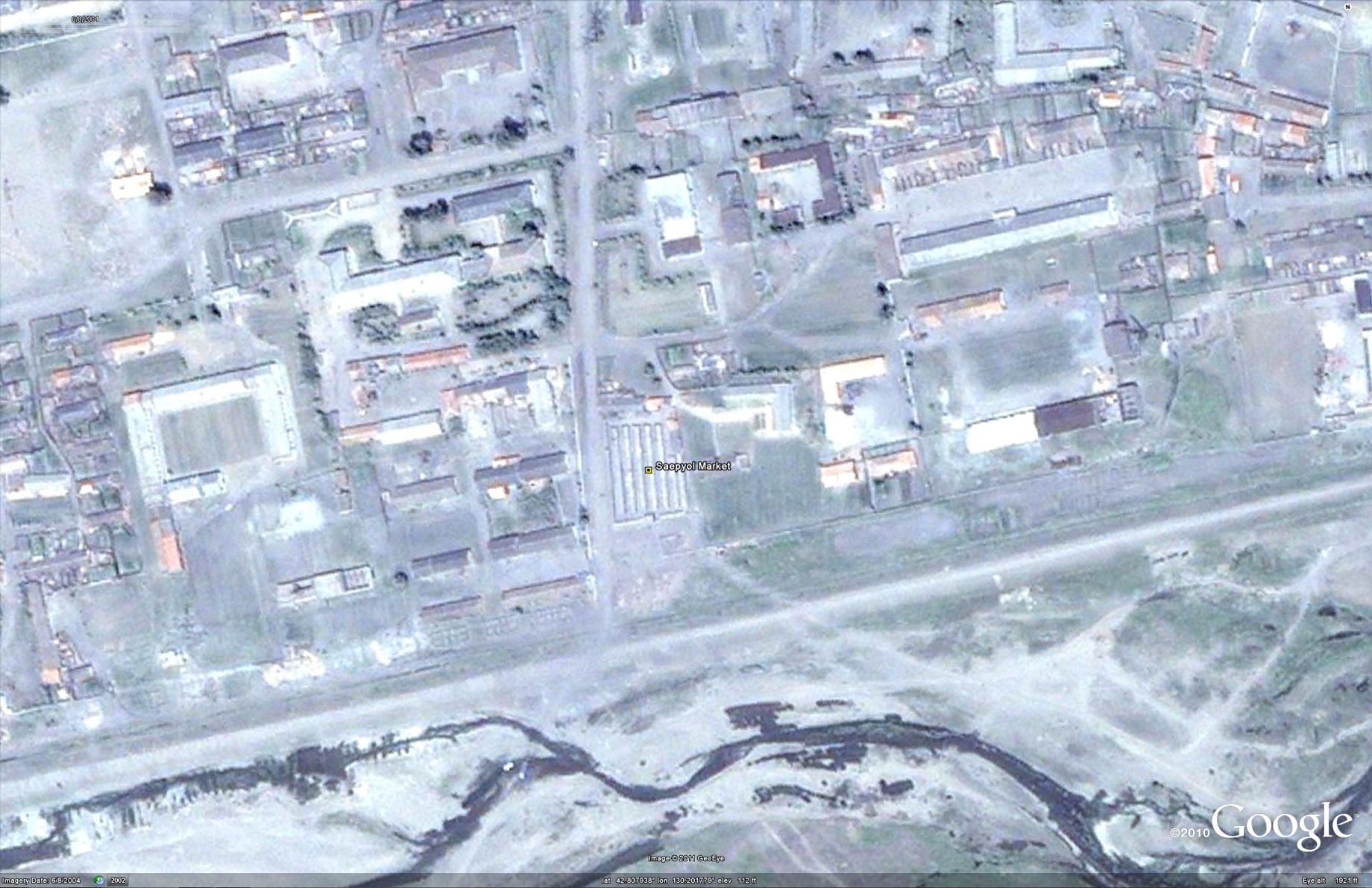
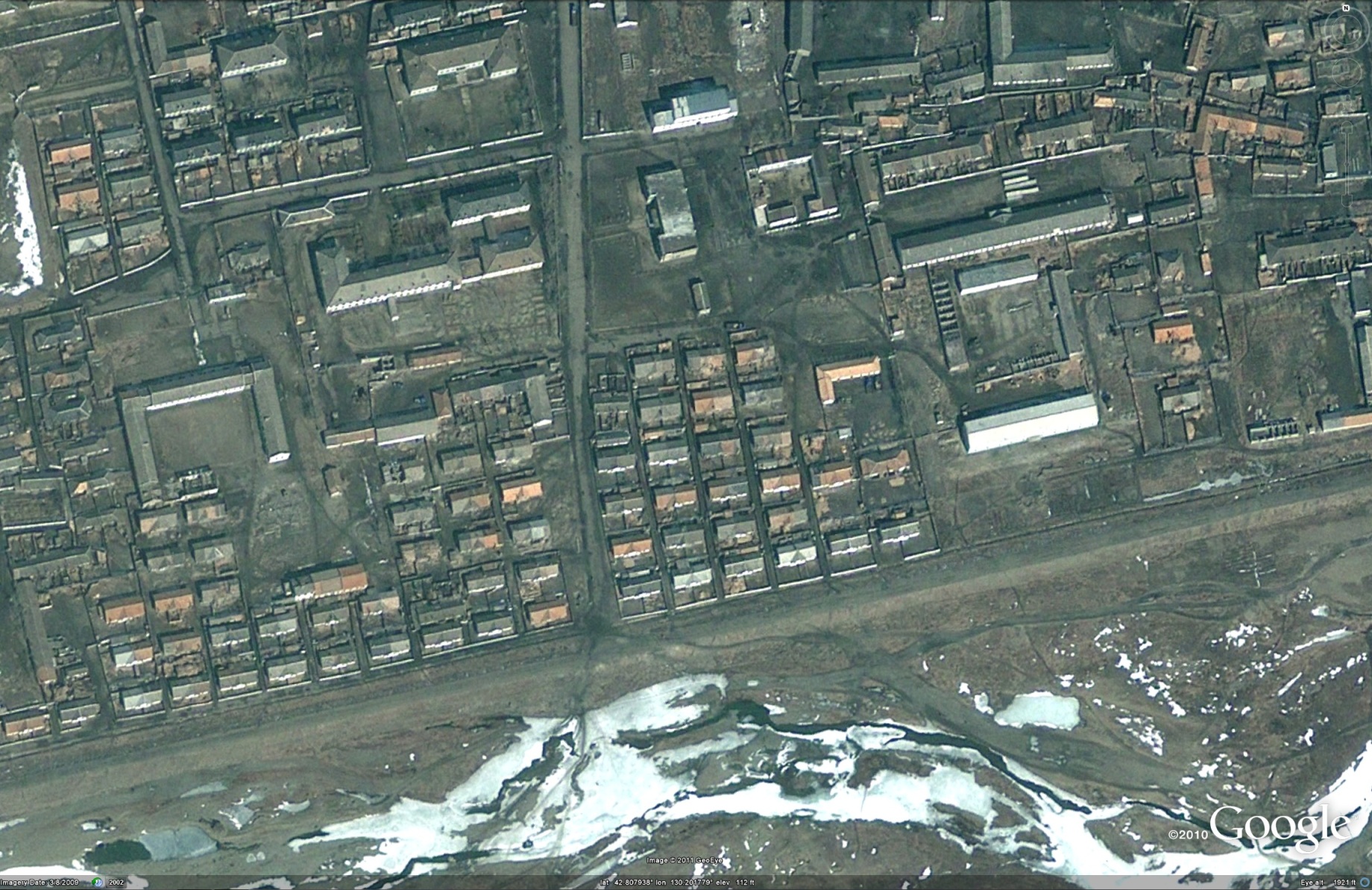
But sometimes the process can move in reverse.  Here in Saepyol (새별군: 42.813426°, 130.205220°), the market was replaced by new housing.  I have still not located a replacement market in this city, though one will likely emerge.  In the meantime, people will simply trade in the streets or in a vacant plot of land:

You can see previous posts which show market expansion using Google Earth satellite imagery here, here, here, here, and here.

Share

Transfer of management rights to Chinese investment companies within North Korea

Tuesday, April 12th, 2011

Institute for Far Eastern Studies (IFES)
NK Brief (11-04-05)

The trade volume and economic cooperation between China and the DPRK are on the rise. The trade environment for Chinese investment in North Korea has also changed.

Currently in the DPRK, there are about 200 Chinese companies in operation and more than 70 percent of these companies are concentrated around the cities of Rajin and Sonbong. China has pursued economic cooperation with the DPRK based on the four principles of state-ownership, corporate-centeredness, market-management, and mutual benefit. In the past, China persuaded North Korea with various joint venture projects arguing that, “You have nothing to lose from these projects. Although it’s based on market principles, ultimately it’s beneficial for both parties.” North Korea on the other hand maintained the stance, “You (China) invest and we will manage,” holding on to management rights of these companies. However, for this very reason Chinese companies were reluctant to directly invest in North Korea. Even after contracts were signed, large -scale investment did not transpire due to poor management.

However, North Korea finally yielded to China’s request, handing over major management rights to Chinese investors. This recent move is analyzed as an attempt to attract more foreign investment to actualize North Korea’s goal of building a “Strong and Prosperous Nation” by 2012. With large-scale management rights transferred to the Chinese companies for joint ventures, the DPRK-China economic cooperation volume is expected to grow.

North Korea also seems to be exploring other ways to improve the investment environment for the Chinese companies. Recently, Chinese trade investors are reported to be receiving special treatment. They are exempt from strict body searches at the airport and mandatory tours required for all visitors, which included visits to Mangyongdae, the birthplace of Kim Il Sung, Panmunjeom, the International Friendship Exhibition in Myohyang Mountain, and Kim Il Sung monuments. Their trips are now considered and treated strictly for the exclusive purpose of business.

When concerns are raised about the volatile North Korean policies involving foreign investment, North Korean officials offer elaborate explanations: “Even if policy changes or the regime, management rights are like private property protected by the Investor Protection Act. One’s investment will be protected even after a policy change, just as your real estate properties would. There is nothing to be worried about.” Many Chinese businessmen are reported to be expressing some concerns over these unexpected changes in policy related to attracting foreign capital and the attitudes of North Korean officials.

Share

DRPK deploying flares along border

Tuesday, April 12th, 2011

According to the AFP via the Straits Times:

North Korea has tightened security along parts of its border with China as part of a growing effort to clamp down on a stream of refugees, a Seoul radio station which broadcasts to the North said on Monday.

Open Radio For North Korea said the communist state last week started laying tripwires which send flares into the air when triggered.

The devices make it easier for border patrols to catch those trying to flee their impoverished homeland, it said, citing a source in the northeastern border city of Hoeryong.

‘The authorities are planning to install the devices eventually along most border areas commonly used for defection and smuggling by North Koreans,’ its source said.

A few days ago we reported how the Chinese are boosting border security as well.

Read teh full story here:
N.Korea boosts security on China border
AFP via Straits Times
4/11/2011

Share

DPRK rescinds Hyundai’s Kumgang contract rights

Monday, April 11th, 2011

UPDATE 2 (2011-4-11): South Korea has declared the move illegal.  According to the AFP:

South Korea Monday criticised North Korea’s threat to strip a Seoul firm of its exclusive right to run tours to a mountain resort in the communist state, calling the move illegal and unacceptable.

The North said Saturday it may deprive Hyundai Asan of its monopoly over tours to scenic Mount Kumgang, where the firm has invested millions of dollars and has a 50-year agreement reached in 2000.

“The North’s claim… is in violation of agreements made at business and government levels as well as international customs,” said Chun Hae-Sung, a spokesman for the South’s unification ministry that handles cross-border affairs.

“The decision is absolutely illegal, illegitimate and unacceptable and should be withdrawn immediately,” Chun said.

UPDATE 1 (2011-4-11): The DPRK has formally ended Hyundai’s contract.  According to the Choson Ilbo:

North Korea has unilaterally ended a long-standing agreement that gave South Korea’s Hyundai Asan the sole rights to operate package tours to Mt. Kumgang. The tours have long been suspended, but Hyundai Asan has put a significant amount of money into accommodation and other infrastructure in the scenic resort.

In a statement on Friday night, the North’s Asia-Pacific Peace Committee said, “We’re invalidating the clause on the exclusive right given to Hyundai in the agreement on Mt. Kumgang tourism that we concluded with the company.” It said Hyundai Asan may continue to operate tours from the South Korean side, but the committee “will take care of the tours arranged through the North Korean side.”

A Hyundai Asan spokesman said the following day North Korea should withdraw the decision “since no terms of the agreement can be canceled or invalidated unilaterally by either side.”

Unilateral Decision

The two sides signed an agreement in October 1998 giving Hyundai Asan, a subsidiary of the Hyundai Corporation not to be confused with Hyundai Motor Group, the exclusive right to operate the tours.

In 2002, the regime granted Hyundai Asan the right to use of land in the Mt. Kumgang area until 2052, but it confiscated the property after South Korea suspended the tours following the shooting death of a tourist in July 2008.

According to Hyundai Asan, North Korean officials summoned staff to Mt. Kumgang on March 15 and 30 and told them the North would now promote tours on its own. On March 30, the North Korean also proffered a written document to a Hyundai Asan staffer, who refused to accept it saying it contravenes the original agreement.

The decision to cancel the deal nonetheless shows how desperate the North is to earn hard currency, since the apparent aim is to promote tours for Chinese visitors instead or indirectly pressure the South Korean government into resuming the tours.

Seoul says it will not resume the tours until the North allows an investigation of the shooting, gives firm safety guarantees, and promises to prevent similar incidents. There have been talks about their resumption, but the North’s sinking of the Navy corvette Cheonan in March last year and shelling of Yeonpyeong Island in November effectively strangled them at birth.

Chinese Tourists

It is unlikely that the North can plug the gap with revenues from Chinese tourists. Hyundai Asan says about 1.96 million tourists visited Mt. Kumgang over the past 10-odd years, but a mere 12,000 came from countries other than South Korea.

It remains to be seen whether the North will use the Hyundai-owned facilities to accommodate Chinese visitors.

Hyundai Asan has spent a total of W754.1 billion (US$1=W1,084) on developing nearby land and building facilities such as a power plant and a hotel. Other South Korean agencies and companies, including the Korea Tourism Organization and the National Agricultural Cooperative Federation, invested W133 billion. After tours were suspended, Hyundai Asan left 16 staffers behind at Mt. Kumgang to look after its properties.

ORIGINAL POST (2011-4-9): According to Yonhap:

Apparently growing impatient with South Korea’s lukewarm response to its dialogue offer, North Korea announced Friday that it could terminate an exclusive contract with a South Korean conglomerate for tourism at Mount Kumgang, a resort along its east coast.

In a statement carried by the official news agency KCNA, the Asia Pacific Peace Committee, a state organ in charge of inter-Korean relations, said, “There is no more prospect of resuming the tour of Mount Kumgang.”

“In this regard it informed the Hyundai side of its stand that it may terminate the validity of the provision of the agreement on tour of Mount Kumgang signed with the Hyundai side which calls for granting it monopoly over the tour,” it said, referring to Hyundai Asan, the South Korean operator of Mount Kumgang tourism program.

The statement also added Hyundai could continue conducting tours for South Koreans but that Pyongyang “may” take charge of tours to Mount Kumgang and elsewhere for North Koreans and also entrust an overseas business professional with such tours.

South Koreans’ tours to Mount Kumgang, once a cash cow for the impoverished North, have been suspended since the summer of 2008, when a female South Korean tourist was shot dead after straying into an off-limits military zone.

Pyongyang has been seeking to resume the joint venture, but Seoul has demanded a formal apology for the killing of the housewife, along with measures to prevent a recurrence of such an incident and a guarantee of tourists’ safety.

Friday’s announcement was viewed as aimed at putting pressure on the South to restart the tourism business.

Hyundai Asan said it was working to identify North Korea’s true intentions.

“The company is working to find out at the earliest possible date what the North’s true intentions are,” a Hyundai Asan official said, asking not to be identified.

North Korea froze Hyundai Asan’s assets at Mount Kumgang last year in an apparent attempt to pressure South Korea to resume tours to the mountain, a spiritual destination for Koreans on both sides of the border.

After years of threats and provocative acts, highlighted by two deadly attacks in 2010, Pyongyang has been appealing to Seoul for talks. Conservatives here say the North wants aid from the South and a dialogue with the United States.

Here you can see more of Seoul’s demands for resuming Kumgang tours.

Here and here you can find more information on Seoul’s demands for resuming Kumgang Tours.

Previous posts about the Kumgang Resort can be found here.

 

Share

Exchange rate data

Wednesday, April 6th, 2011

The The UN World Food Prgram’s Rapid Food Security Assessment Mission (RFSA) offered some exchange rate data that I thought was worth pointing out:

Currently the official exchange rate is about USD1=KPW100 yet the market rate is closer to USD1=KPW3000. In other words, the redenomination of the national currency that occurred in November 2009 is all but neutralized. The effects of this policy on ordinary citizens appear to be mixed where people with over KPW 100,000 lost their savings. The purpose of such a policy was to control inflation by reducing money supply and to curb the growth in private enterprise. Worker salaries remained the same, but prices were reduced significantly.

The PDS prices were revised downwards in the wake of the currency revaluation making it even more affordable, at least in principle. For example, PDS prices of rice declined from KPW 44 to KPW 24 per kg and maize declined from KPW 24 to KPW 14. At these low prices the issue is the lack of commodities in the market, rather than consumers lacking money to purchase them.

An average worker makes around KPW 3,000 to KPW 4,000 per month. This translates into a dollar per month which only works in DPRK because everything is heavily subsidized and ordinary citizens do not rely on direct purchases of imported commodities. If PDS were to run out of cereals at the end April, people would not have the means to purchase cereals on the black market, where prices are KPW2000 per kilogram of rice and about KPW 1000 for maize. It is highly doubtful that the barter system which is the backbone of this informal economy will be able to withstand a shock of this magnitude over more than a couple of weeks. A humanitarian crisis is the likely outcome of such a series of events.

Share

DPRK IT product management borrows from the past

Monday, April 4th, 2011

According to Yonhap:

North Korea has begun to demand that every personal and electronic storage device in the country be registered in an apparent effort to crack down on outside information that may contain sensitive news about Middle East uprisings, a government source said Friday.

The measure took effect early this year and has led to the confiscation of a considerable number of electronic devices, the South Korean source said, declining to be identified.

The communist country is also allowing its notoriously harsh policing organ to have the right to approve the use of a mobile phone by an individual, the source said.

More than 300,000 mobile phones are believed to be in use in North Korea, which strictly controls the flow of information in and out of its territory in an effort to keep its 24 million people brainwashed and make them conform to the regime.

And according to the Straits Times (Singapore):

Pyongyang has ordered institutions and households to report on how many computers and even portable data storage devices such as USBs and MP3 players they own, early in 2011, according to a Seoul government source.

The North Korean police agency is in charge of keeping track of the IT gadgets possessed by everyone, presses criminal charges against those who failed to report and even confiscates many of the gadgets, the source said.

The reclusive communist state has been running a unit of authorities for years to crack down on North Koreans watching South Korean soap operas or foreign movies, which they call ‘non-socialist video’.

Pyongyang is also reinforcing a crackdown on use of cellphones and the Internet. It is estimated that more than 400,000 mobile phones are being used in North Korea. North Koreans are required to get government permission to use cell phones. They are also banned from bringing them into the country or using cell phones bought overseas.

Foreign members of international non-governmental organisations working in North Korea were also told to follow domestic regulations on cell phones.

It appears that the DPRK is attempting to treat these products the same way it has treated radios for decades.  Lankov writes in his book, North of the DMZ:

Certainly, a person with some technical knowledge can easily make the necessary adjustments and transform such a receiver into a real radio. To prevent this from happening, the police undertake periodic random inspections of all registered receivers. Controlling the correct use of radio receivers is also an important duty of the heads of the so-called people’s groups or inminban. The head of an inminban can break into any house at any time (even in the dead of night) to check for the possible use of a non-registered receiver.

If a North Korean has access to foreign currency, he or she can buy a foreign-made radio set in one of the numerous hard-currency shops. However, after purchase the radio set was subjected to minor surgery in a police workshop — its tuning had to be fixed, so it could only receive official Pyongyang broadcasts (it appears this practice is declining in recent years).

The control was never perfect…

Of course it is questionable as to whether the inminban play a reliable role in “law enforcement” these days.  Instead, individuals in these positions seem to play an increasing role in shielding their residents from Pyongyang’s dictates rather than assuming a pure-exploitation position.  In the past we have seen how inminban effectiveness can affect local real estate prices.  Also, when the government needed to apologize for the disastrous “recent” currency reform, they did so in person to the inminban representatives.

Given the proliferation of electronic devices, particularly in Pyongyang, in combination with the capacity of local police to carry out this mission, I believe the actual result of this policy will be the registration of “some” electronic devices along with the hiding and bribing required to keep others off the books.  So inspection police just got a raise!

Share

Competition in “oldest profession” in Sinuiju

Tuesday, March 29th, 2011

According to the Daily NK:

An inside source has reported that the number of pimps in Sinuiju continues to increase, with security agents driving up prices by taking a growing slice of the profits. As a result, many women are apparently working to find other ways to make money from the activity whilst avoiding losing money to a growing list of middle men.

The source, who comes from the city explained, “Since there is so very little food, it is not difficult to find cases of even university students selling their bodies. Young women sit around in the market selling themselves.”

According to the source, the cost of sex with a local university student (20~25 years old) is around $100, but can run to a maximum of $130. In the case of a working woman (19~25 years old), it is $70~100, and housewives (26~30 years old) allegedly cost $20~30.

The security services, which should be controlling the situation, have joined the process. According to the source, they demand a substantial cut of the illegal profits.

He explained, “Security agents and pimps are both involved in the business, colluding to fix the price at whatever level they want,” before adding, “Therefore, the person directly involved is unable to earn much money.”

For this reason, many prostitutes have begun to sell themselves secretively in local markets.

According to the source, if a woman is selling a small number of eggs in the market, it means that she will sell herself. When a man asks “How much is this?” bargaining over the price of the woman rather than the eggs begins. The source reported that it is commonplace to see a woman and man disappear off somewhere shortly after reaching agreement on price.

The source added, “Recently the number of women selling flowers one-by-one has been rising. These are also women selling their bodies.”

However, the source pointed out that because security agents are connected with pimps and profit from prostitution, those women who try to sell themselves individually face strict inspection. The source said, “In front of train stations and markets, for example, it is not rare to see a struggle between prostituting females, their customers and the security agents who chase them.”

Other well-organized prostitution is conducted in established brothels, but these are not inspected either because there, too, security agents simply take money to look the other way.

Read the full story here:
Battle for Prostitution Profits Fierce in Sinuiju
Daily NK
Park Jun Hyeong
3/29/2011

Share

CRS report on Kaesong Industrial Complex

Tuesday, March 29th, 2011

The Congressional Research Service has published an update to its paper on the Kaesong Industrial Complex.

You can download the paper here (PDF).

You can download other CRS reports on North Korea at my CRS Reports Page.

Below is the paper’s summary:

This purpose of this report is to provide an overview of the role, purposes, and results of the Kaesong Industrial Complex (KIC) and examine U.S. interests, policy issues, options, and legislation. The KIC is a six-year old industrial park located in the Democratic People’s Republic of Korea (DPRK or North Korea) just across the demilitarized zone from South Korea. As of the end of 2010, over 120 medium-sized South Korean companies were employing over 47,000 North Korean workers to manufacture products in Kaesong. The facility, which in 2010 produced $323 million in output, has the land and infrastructure to house two to three times as many firms and workers. Products vary widely, and include clothing and textiles (71 firms), kitchen utensils (4 firms), auto parts (4 firms), semiconductor parts (2 firms), and toner cartridges (1 firm).

Despite a rise in tensions between North and South Korea since early 2008, the complex has continued to operate and expand. The KIC was not shut down in 2010 despite two violent incidents between the two Koreas that year: the March sinking of a South Korean naval vessel, the Cheonan, which was found to be caused by a North Korean torpedo, and North Korea’s artillery attack on a South Korean island in November. Indeed, the complex has become virtually the last vestige of inter-Korean cooperation. After the Cheonan sinking, South Korea announced it would cut off all inter-Korean economic relations except the Kaesong complex. It also has reduced the number of South Korean workers—primarily government officials and business managers—at the complex because of worries about them being taken hostage by North Korea.

The KIC represents a dilemma for U.S. and South Korean policymakers. On the one hand, the project provides an ongoing revenue stream to the Kim Jong-il regime in Pyongyang, by virtue of the share the government takes from the salaries paid to North Korean workers. South Korean and U.S. officials estimate this revenue stream to be around $20 million per year. On the other hand, the KIC arguably helps maintain stability on the Peninsula and provides a possible beachhead for market reforms in the DPRK that could eventually spill over to areas outside the park and expose tens of thousands of North Koreans to outside influences, market-oriented businesses, and incentives.

The United States has limited direct involvement in the KIC, which the United States has officially supported since its conception. At present, no U.S. companies have invested in the Kaesong complex, though a number of South Korean officials have expressed a desire to attract U.S. investment. U.S. government approval is needed for South Korean firms to ship to the KIC certain U.S.-made equipment currently under U.S. export controls. The Korea-U.S. Free Trade Agreement (KORUS FTA), which has yet to be submitted to Congress for approval, provides for a Committee on Outward Processing Zones (OPZ) to be formed and to consider whether zones such as the KIC will receive preferential treatment under the FTA. Although the KORUS FTA says that the Executive branch will seek “legislative approval” for any changes to the agreement, Congress’s precise role in accepting or rejecting these changes is not clear.

Another issue raised by the KIC is whether components made in the complex can enter the United States if they are incorporated into products that are manufactured in South Korea and that qualify as originating in South Korea. This possibility is likely to be determined mainly by the KIC’s evolution; the more that is produced in the complex, the more products are likely to enter South Korea’s supply chain.

Share