Archive for the ‘Economic reform’ Category

South Korean entertainment increasingly popular

Thursday, March 24th, 2011

According to the Daily NK:

The names Kang Ho Dong and Yoo Jae Seok are growing in popularity in urban North Korea now that variety shows hosted by the two South Korean entertainers, KBS show “One Night, Two Days” and MBC’s “Endless Challenge”, are becoming popular there.

One source who trades in Pyongyang said, “I rented ‘X-Men’ (a variety show on another big South Korean station, SBS), the show hosted by Kang Ho Dong and Yoo Jae Seok, from a CD store; it was really entertaining.”

“One of the popular things with Pyongyang elementary and middle school students is the games they can see in this show,” he added.

He noted, “Parents believe the games in X-Men can develop their children’s brains, so they also try to occasionally show it to them. Kang Ho Dong and Yoo Jae Seok are really popular here; we laughed until we cried.”

According to the source, people in Pyongyang do not generally purchase CDs of North Korean products, but rent them for around 500 won each, while illegally-produced South Korean dramas and variety shows are generally 2,000 won each, approximately the price of a kilogram of rice.

Another source from Shinuiju said, “The shows with Kang Ho Dong and Yoo Jae Seok, ‘One Night, Two Days’ and ‘Endless Challenge’ are so popular that they sell for 4,800 won.”

The reason why people like ‘One Night, Two Days’, in which a number of South Korean entertainers, led by Kang, take a trip to little-known South Korean places to camp out, mingle with locals and play a range of games, the source said, is “because people can see a lot of the scenery of South Chosun, as if they were sightseeing for real. It gives comfort to those who are in the situation of being unable to so much as dream of a trip to Chosun.”

There is another background reason for their growing popularity: they are also popular among Korean-Chinese people in the border provinces of China, leading to these illegally copied CDs flowing into North Korea.

In Yanji, Dandong, Shenyang and other Chinese cities with big Korean-Chinese populations, internet cafes have their own servers to download South Korean TV shows so that local people can see them easily at a decent speed.

North Korean or Korean-Chinese smugglers then take illegally copied DVDs or CDs containing the shows into North Korea. One smuggler generally carries between 1,000 and 3,000 recordable CDs or DVDs including such shows into North Korea at any one time.

Another defector, Kim Seong Cheol explained, “I can copy thousands of CDs cheaply and send them to North Korea all at once.”

When he crosses the river, Kim says he ends up giving away a few hundred discs in the form of bribes, and wholesales a few hundred to each North Korean trader.

Read the full story here:
South Korean Entertainers Gaining in Popularity
Daily NK
Park Jun Hyeong and Jeong Jae Sung
3/23/2011

Share

Kim Jong-il pays respects to memory of Chung Ju-yung

Tuesday, March 22nd, 2011

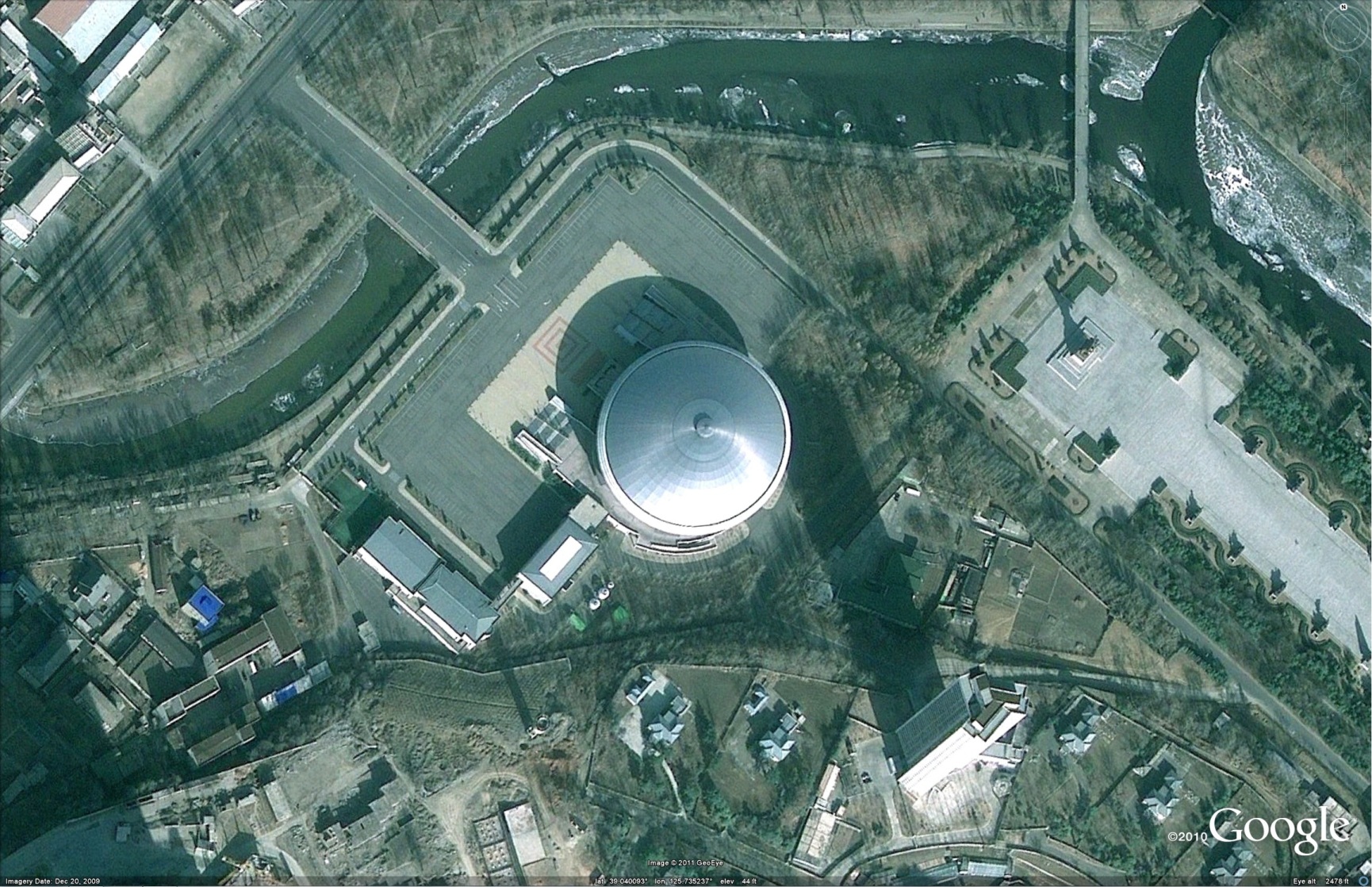
Pictured Above: Chung Ju-yung Stadium in Pyongyang
(Google Earth:  39.040093°, 125.735237°)

According to the Korea Herald:

North Korean leader Kim Jong-il has sent a verbal message to commemorate the 10th anniversary of the death of a noted South Korean industrialist who pioneered cross-border economic projects, the North’s media said Saturday.

Chung Ju-yung, the then chairman of Hyundai Group, initiated a series of major economic projects in North Korea starting in 1998, including a sightseeing tour to scenic Mount Geumgang on the North’s east coast. He died on March 21, 2001.

In the verbal message, the North Korean leader spoke highly of the South Korean industrialist, saying that he did the right thing to promote national reconciliation, the North’s Korean Central News Agency said in a report.

“Chung Ju-yung paved the way for national reconciliation and cooperation and did really a great job for the development of the inter-Korean relations and the sacred cause of national reunification,” the KCNA quoted the leader as saying in the message.

Kim also expressed hope that everything would go well for the Chung family and Hyundai, the KCNA report said.

The report did not say when and how the North Korean leader’s message was conveyed to the Chung family in Seoul. Chung’s eldest son, Chung Mong-koo, heads the nation’s largest automaker, Hyundai Motor Co.

According to the Choson Ilbo:

North Korea has sent a wreath to Hyundai Group to commemorate the 10th anniversary of the death of Hyundai founder Chung Ju-yung.

The wreath that read “In memory of Chung Ju-yung” was delivered from Pyongyang’s Asia-Pacific Peace Committee to Hyundai staffers at the joint-Korean industrial complex in Kaesong.

On Friday North Korean leader Kim Jong-il spoke highly of Chung for his role in paving the way for national reconciliation and cooperation.

Chung initiated various projects with the Stalinist state including the Mt. Kumgang package tours in the North and had sent more than one-thousand cows over the demilitarized zone to North Korea.

The Daily NK also offers some cultural background

Share

Kaesong production value returns to pre-Cheonan levels

Tuesday, March 22nd, 2011

According to Yonhap:

The monthly production from the South Korea-invested industrial park in North Korea exceeded US$30 million for the first time since tension escalated over the North’s torpedoing of a South Korean navy ship a year ago, the government said Sunday.

The Kaesong industrial complex produced $31.05 million worth of products in January, up 6.7 percent from $29.09 million in December, the Unification Ministry said.

It was the first time that the monthly production from the Kaesong complex topped $30 million since the attack took place in March last year. The complex produced $30.79 million worth of products that month.

Seoul suspended all cross-border trade after a multinational investigation found North Korea responsible for the March sinking of the warship Cheonan. Relations between the divided countries hit the worst point in more than a decade when the North shelled the South Korean island of Yeonpyeong in November.

Despite the high tension, the annual production at the complex increased 26 percent to $323.32 million last year compared to a year earlier.

The rise appears to be due to the steady increase of North Koreans working in the complex.

A total of 46,194 North Koreans, up from 42,397 in January last year, now work in the communist state’s border town of Kaesong, providing labor for South Korean firms that produce goods such as clothes, utensils and watches.

The factory park was a result of the first inter-Korean summit that took place in Pyongyang in 2000. More than 120 South Korean firms operate in Kaesong, providing capital and know-how in exchange for cheap labor.

Previous posts about the Cheonan incident are here.

Previous posts about the Kaesong Industrial Zone are here.

Read the full story here:
Production at Kaesong complex returns to $30 million mark
Yonhap
3/20/2011

Share

Narco-capitalism grips North Korea

Friday, March 18th, 2011

Lankov writes in the Asia Times:

In early March, the United States State Department made a statement that attracted surprisingly little attention worldwide, estimating that government-sponsored narcotic production in North Korea seemed to have decreased considerably. At the same time, the statement made clear that the private production of drugs was on the rise.

This fits with what the present author has heard recently – often from sources inside North Korea; it seems that North Korea’s drug industry is changing, and this change might have important consequences for the outside world.

The story of North Korea’s involvement with the international narcotics trade began 35 years ago. In 1976, Norwegian police intercepted a large shipment of hashish in the luggage of North Korean diplomats. The same year, another group of North Korean officials was found in possession of the same drug by Egyptian customs; they had 400 kilograms of hashish in their luggage.

In both cases, diplomatic passports saved them from any formal investigation. Next year, North Korean diplomats were caught trying to smuggle drugs into Venezuela and India. In India, quite friendly to North Korea in those days, the 15 kgs of hashish was transported by the ambassador’s secretary. After that, such seizures became regular occurrences, usually once every year or two, and usually involving North Korean diplomats.

North Korea’s narcotics program has always appeared strange to outside observers – “strange” even if judged by the standards of Pyongyang, whose leaders do not care much about legal niceties and international reputation, and perceive international politics as a cut-throat, zero-sum game. On balance, state-sponsored drug production has done much more harm than good to Pyongyang.

Available estimates agree that the North Korean government didn’t earn much from pedaling illicit drugs. It is even possible that these risky operations were largely waged to sustain North Korean missions overseas – from the mid-1970s such missions were required to pay for their own expenses.

At the same time, the existence of this program inflicted serious damage on Pyongyang’s international standing, which was at rock-bottom anyway. Despite all denials of official involvement, the program could not really be hidden because seizures of narcotics carried by North Korean diplomats and officials happened far too often and sometimes in countries that were relatively sympathetic to the North.

So, if analysts at the State Department are to be believed, North Korea seems to have come to its senses and stopped or, more likely, significantly reduced its narcotics production. Indeed, this program seems to belong to the strange and slightly bizarre world of the foreign policy of North Korea in the 1970s. After all, those were the times when North Korean agents were busy kidnapping Japanese teenagers to become living tools for the training of agents (and when US$200 million was spent propagating the juche(self-reliance) ideology in the Third World).

However, this doesn’t mean the world should heave a collective sigh of relief and write off North Korea as a potential source of dangerous narcotics. If anything, the situation has become worse over the past five to six years. But this time, the North Korean regime seems to have little or no responsibility for the new boom in drug production.

The change in the North Korean drug industry essentially mirrors the wider changes that in the past two decades have occurred in the North Korean economy and society at large. The state-run Stalinist economy essentially collapsed whilst private business took over – usually unrecognized by the state, technically illegal in most cases, completely absent from official statistics, but powerful nonetheless. This happened in all industries, and drugs production was not an exception.

The author interacts with North Koreans quite frequently and most of my contacts are people from the northernmost part of the country, from areas adjacent to the Chinese border. They are unanimous: around 2005 to 2006, these areas experienced a sudden and dramatic upsurge in drug usage, hitherto almost unknown to the common public.

It’s true that some opium productive capacity existed in the northeastern parts of Korea since the early 1900s. This is also the region where secret state-run plantations were rumored to be located in the 1980s or early 1990s. However, in the North Korea of the Kim Il-sung era, surveillance was tight and exceptionally efficient, so drug problems were for all practical purposes non-existent within the country. The drugs were produced for export and medical purposes only.

Things began to change around 2005; by that time North Korea had undergone what is usually described as “grassroots capitalism” or “marketization from below”. The old state-run economy had come to a complete standstill, so most North Koreans started to make a living through all sorts of private economic activities – from cultivating private fields and working at private workshops to smuggling.

Official corruption became endemic, so officials became more than willing to turn a blind eye to all sorts of illegal activities as long as they received their cut. Arguably, North Korea nowadays might be described as the most corrupt country of East Asia: every interaction with authorities requires payment, and if the payment is sufficient, almost everything is possible.

This social and economic situation has made the large-scale private production of drugs possible. The new North Korean drug scene is dominated by “Ice” (crystal meth), a synthetic substance produced in numerous small workshops. It is frequently mentioned by defectors, while references to other drugs are quite rare.

Most of my North Korean interlocutors, some former Korean People’s Army officers, believe that methamphetamines were initially produced officially, but not so much as a drug in the strict sense, rather as a stimulant for elite military units. This seems to be plausible – after all, it was used as such during World War II by both the Axis and the Allies.

However, after around 2005 private production of Ice began and soon became large-scale. There are rumors about occasional state involvement with illicit production of drugs for export, but even if those rumors are true, the state-sponsored labs clearly produce only a small fraction of the total. Most of the labs are private nowadays.

Raw materials are often imported from China, and China has also become a major market for North Korean drug manufacturers. Since law-enforcement in North Korea is so lax (at least when no political issues are involved), it is easier and safer to run a drug workshop there, on the southern banks of the Tumen River.

The Ice-producing labs are difficult to hide since the production is smelly. Usually, such labs operate at some distance from living quarters, somewhere in the mountains or at a non-operational factory. (Admittedly, such factories are not in short supply in post-crisis North Korea).

In many cases, there are joint operations of Chinese and North Korean criminal groups: the Chinese provide the necessary supplies while the North Koreans use their territory as a safe haven to process drugs that are later shipped to China.

However, some narcotics remain in North Korea, where drug usage has increased dramatically. My interviewees say that at least in the cities of the borderlands a significant proportion of younger people have had some experience with Ice. A schoolteacher from a borderland city of Musan recently told me that in 2008-09 most of the students in their final years of high school tried Ice.

But the problem is not limited to the borderlands. A few months ago, a colleague of mine whilst visiting a prestigious college in Pyongyang spotted a poster that warned Pyongyang students about the dangers of drug use. Merely a few years ago, such a poster would be both unthinkable and unnecessary.

It seems this development has begun to worry the Chinese. In the past few years, Chinese media occasionally write about crackdowns on drug dealers in China’s northeast, often explicitly mentioning their Korean connection. Last summer, Chinese media reported that a fleet of high-speed boats, operated by the Chinese police, had begun to patrol the rivers on the border with North Korea. The task of this squad is specifically to fight drug smuggling.

The “new” North Korean drug problem is relatively local and small in scale, although it might have sufficiently grave consequences for North Korea itself, as well as for some adjacent areas of China and Russia. It also might be seen as an indication of a new type of problem that North Korea might create.

In the past, most troubles related to North Korea were caused by the North Korean government that demonstrated an inclination to flout international laws and conventions (sometimes this inclination was strengthened by remarkable adventurism). Nowadays, problems are increasingly caused by the inability of this government to control what is happening in the country – at least outside of Pyongyang and some major cities. In the long run, the lawlessness of uncontrolled private profiteers might prove more dangerous than the Machiavellian adventurism of dictators.

Read the full story here:
Narco-capitalism grips North Korea
Asia Times
Andrei Lankov
3/18/2011

Share

The desperate turn to private gold mining

Tuesday, March 15th, 2011

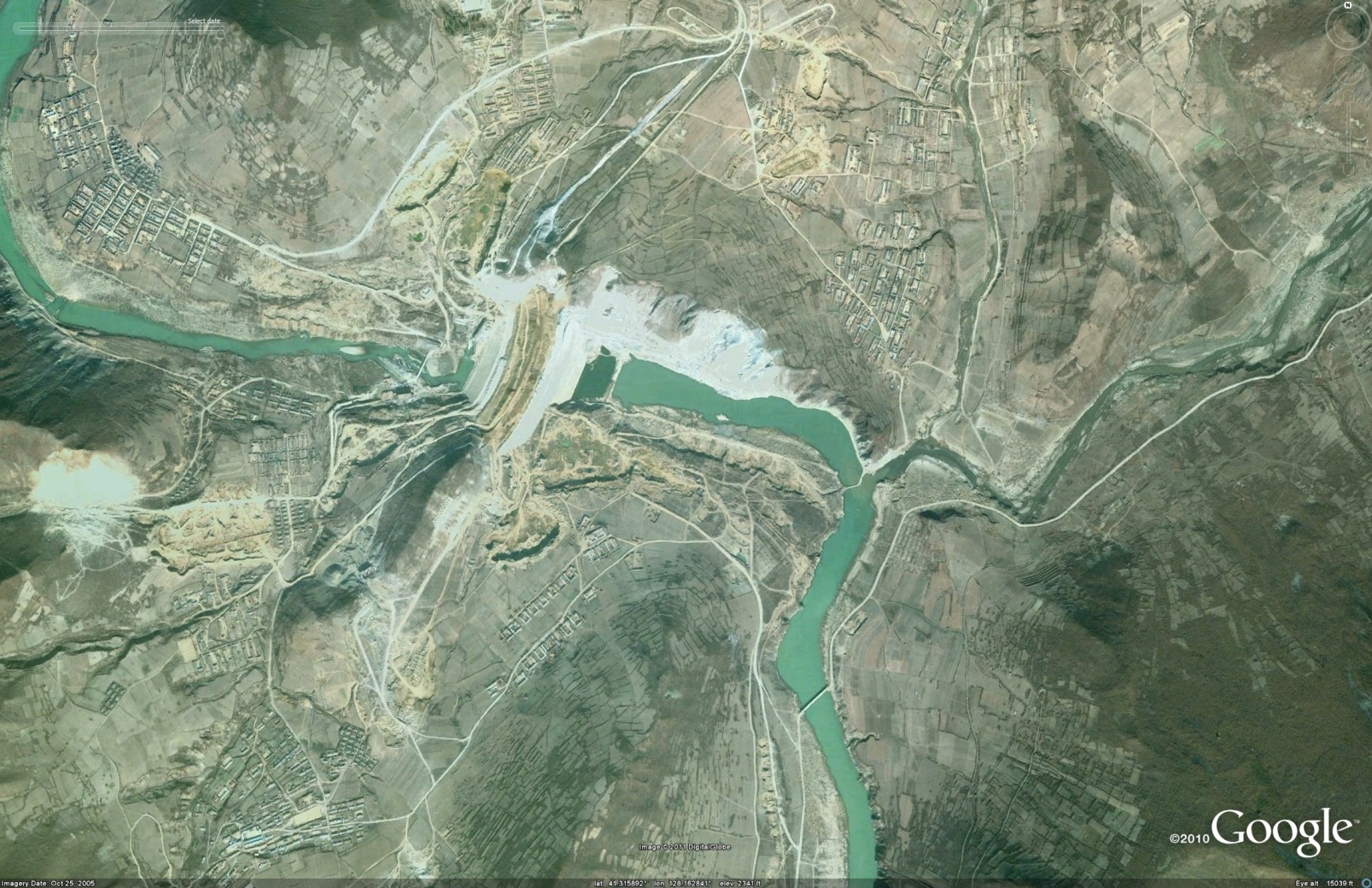
Pictured above: Samsu Dam construction (Google Earth)

According to the Daily NK:

Located at the base of Mt. Nokbong, near Hyesan in Yangkang Province, one particular village of 24 households saw its schools, public facilities and all other vestiges of welfare disappear following the construction of the Samsoo Power Station in 2004, which deprived the area of power.

And yet this village is now overflowing with people. They are here from all over the country, cramming homes and the nearby valley with one purpose in mind; searching for gold. Housewives, workers, university students, farmers, children, drifters, criminals, soldiers and bureaucrats; men and women alike from all different classes are living in this one place with the same aim.

The majority of people dig, without permission from the authorities and with only rudimentary tools. Their only wish is to avoid having to leave town and, hopefully, find some gold. The soldiers and bureaucrats, on the other hand, do not dig, instead using their authority to cream a share of others’ profits.

The daily mission of most people is to dig a hole to extract the ore, take it to the riverside to wash, and then sell it to buy food. With work clothes and a hammer, wash bowl, strong burlap sack, metal bucket, candles, shovel, rope, and a washcloth and drain (with a wooden partition to make it easier to trap gold), they enter the mine.

First the ore has to be dug out of the mine, at which point it can be taken up to the riverbank in the bucket and sprayed with water to remove stones and dirt, then the gold separated off with the washcloth.

Those who get on the wrong side of the bureaucrats or armed forces in this process have their tools confiscated, and any gold they have sweated for as well. Complaint is out of the question. Men who show the slightest resistance are flogged and women sprayed with water and sworn at. For this reason, many people consider bribes of cigarettes or alcohol to be a necessary cost of doing business there.

Those without money enter the mines under the cover of darkness, collect large quantities of dirt and take it away to clean.

As you would expect in these circumstances, accidents are commonplace.

On June 16, 2008, a 39-year old man from Hyesan who had carried more than 200 bags full of soil to the riverbank since dawn finally stopped for lunch, when he heard a cry for help from a person who had tried, and failed, to cross the river. The rescue mission became a tragedy when the man himself drowned.

That particular spot had been used to hunt for gold when the reservoir was dry; but now it was more than 10m underwater. The man, exhausted from hours of backbreaking labor, had been unable to get out. Other people who had been dealing with their own ore nearby tried to save him, but it was no easy task.

The security forces and army eventually combined to retrieve the man two days later. Two days after that, the deceased man’s widow returned to dig for gold on the same riverbank where she had lost both her husband and 9-year old son.

This is just one story that amply demonstrates the heart wrenching reality of life in North Korea. Even to the present day hunger continues to drive people to the foothills of Mt Nokbong. The struggle to survive goes on as ordinary people dig away at the riverbed, all the while hoping to avoid becoming a victim of the regime.

You can read previous posts on the impact of the Samsu Dam here.

Read the full story here:
A Modern Day Gold Rush
Daily NK
Kang Mi-jin
3-15-2011

Share

Friday Grab Bag

Friday, March 11th, 2011

North Korean market footage
Kim Song Min  (김성민), founder of Free North Korea Radio, has posted some video footage of a North Korean market.

You might be able to see it here, but I make no promises. It definitely won’t work from China.

Nothing remarkable, but interesting.  Of course the market is dominated by female vendors.  Bread and dried squid were for sale.  Also, shoe shines seemed to be popular.

I wish I knew what people were saying in the background.

North Korean Legos
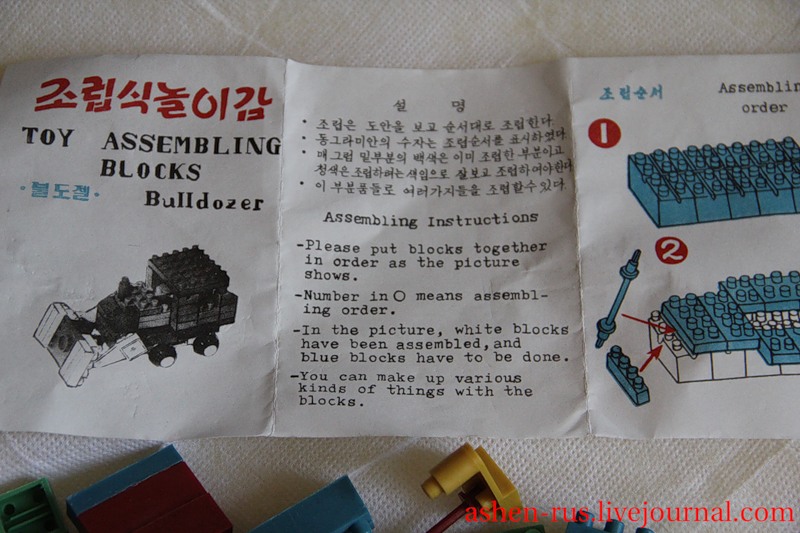
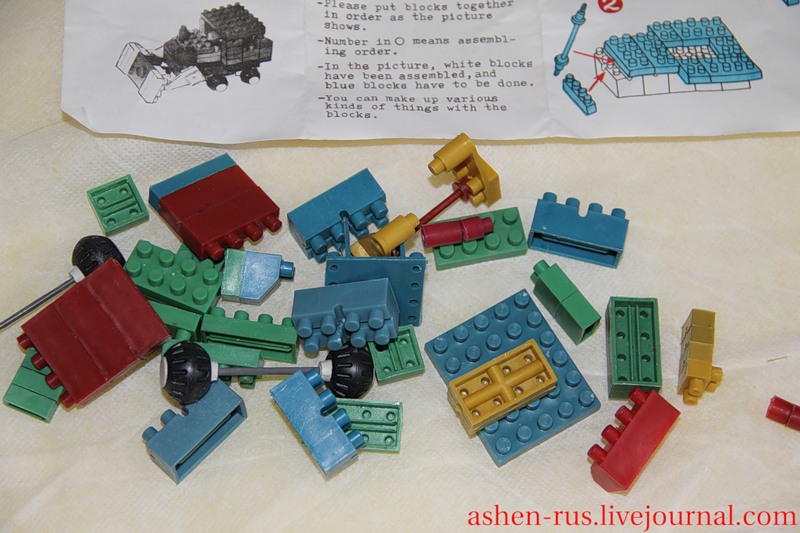
The Russian  blogger that brought us the DPRK’s Linux OS, the DPRK’s PDA device, and the DPRK’s film camera, now brings us the DPRK version of Legos:

Interestingly, the toys come with instructions in both English and Korean.  Maybe the producers are hoping for an opportunity to export in the future?  Finally some actual socialist building blocks behind which the children of the world can unite!  You can read more in Russian here.  You can read more in English here (via Google Translate)

Pyongyang Metro Photos
Most visitors to the DPRK visit the Puhung and Yongwang Metro Stations.  Satellite images here and here. Google has also cataloged lots of pictures pictures of these stations: Puhung, Yongwang.

The Ponghwa Metro Station is located at  39.012100°, 125.744452°–next to the Party Founding Museum.  This station is not visited by foreigners as often, but here are some photos: One, two, three, four.

The Kaeson Metro Station is next door to the Arch of Triumh (39.043059°, 125.754027°).  A friend sent some North Korean postcards that seem to come from this station, though the pictures look like they were taken in the 1970s: one, two, three, four, five, six, seven, eight, nine, ten, eleven.

Pyongyang goes pop: sex scandal on the socialist music scene
According to a story in The Guardian:

There was mild controversy last year when a secret video featuring Wangjaesan’s female dance troupe entered the public domain. The video was being privately circulated among the elite, but reached the North Korean public before making it over the border to China – and therefore the world. Normally seen in traditional, body-cloaking hangbok dresses as they perform polite folk numbers, this little clip revealed unprecedented levels of sexiness in Pyongyang, as the girls popped up in sparkly hot pants and did the splits. Western displays of decadence like this are illegal but, given Kim Jong-il’s alleged love of pornography, perhaps he turned a blind eye to this one.

The video of the dancers can be found here (though it is a VERY slow download) or you can watch it on YouTube here and here.  I could not find a better version this time around.  Here is the original story in Yonhap (2009-11) when the story broke (with picture).

UPDATED: This video is allegedly of the same group.

The 4 of 31 fishermen
I have not spent much time blogging about the 4 of 31 North Korean fishermen who drifted to the South and do not wish to return to the DPRK.  I did track down the six videos the North Koreans filmed with the family members.  They were posted to YouTube by Uriminzokkiri.  See them here: One, two, three, four, five, six. If anyone can translate these, or give us a rough idea, I would apprecaite it.

KFA sets up branch in Israel!
Alejandro Cao de Benos seeks to build sympathy for the DPRK among the Israelis.

Share

Kaesong Complex and ROK goods become harder to find in DPRK

Thursday, March 10th, 2011

According to the Daily NK:

This year, the North Korean authorities have been cracking down on the sale and distribution of products, tools and materials coming out of the Kaesong Industrial Complex. As a result, such Korean goods, formerly an expensive but popular choice in Hwanghae and South Pyongan Provinces, are now hard to find in markets.

A source from South Pyongan Province who spoke with The Daily NK in China explained, “Right up until last year, literally anything being made in the Kaesong Complex was available in the market, including clocks, metal, screws, clothes, underwear, toys and parts of electronics. However, the amounts have fallen dramatically since regulations were strengthened.”

The reason behind the regulations is unclear, however; the source suggested it could only be because of deteriorating inter-Korean relations.

Regardless, the source went on, “Nowadays, revealing the fact you sell those Kaesong Complex goods results in high fines and puts you in a bind” Therefore, he went on, “Only bread (Choco Pies), stainless steel or ceramic bowls and underwear are being sold.”

One consequence of the crackdown is that it makes the sale of other South Korean products smuggled in from China equally difficult. Albeit with some provincial differences, clothes and electronics cannot now be displayed on stalls, and must be sold in alley markets in secret.

A source from Shinuiju explained, “Market watch guards go around markets every day inspecting stalls with no notice; their investigation into South Korean products is really severe.” He explained, “If they find goods with Korean writing on, they confiscate them and give them back after two or three days later, after fines have been paid.”

“I hear there was a decree from above reinforcing crackdowns, but won’t this only lead to bribes?” the source pointed out.

Even when readily available, South Korean products are at the top of the price range, so most average families cannot afford them; one Choco Pie, a circular, individually wrapped chocolate cake made famous by the movie “JSA”, is between 180 and 200 won, a set of women’s underwear is 90,000 won, and a set of roughly ten plates, five or six small bowls and some coffee cups is around 250,000 won.

The source reported, “Due to the severe regulations, some traders sell them at home or in secret, hiding the goods behind the curtain.”

Interestingly, one South Korean official with the Kaesong Industrial Complex told the Daily NK that product leakage is not a problem at Kaesong, saying, “There have been almost no cases of complete products leaking out, but it is possible for stock, tools or things provided to workers like Choco Pies. However, the leaks are not enough to affect factory management.

And yet, one defector who used to be a worker in a shoe factory in charge of testing product quality explained that the siphoning off of materials, complete products, tools and other things is common among North Korean workers.

“The way they hide things and bring them out of the factory is really expert. I sometimes put up to 20 pairs of shoes on my body and came out of the factory. If you wear a long, thick winter coat then it is not so remarkable. Sometimes we did it in collusion with the factory manager.”

Read the full story here:
South Korean Products Disappear from Markets
Daily NK
Park Jun Hyeong and Mok Yong Jae
2010-3-10

Share

Increase in North Korean Male Workers in Kaesong Industrial Complex

Tuesday, March 8th, 2011

Institute for Far Eastern Studies (IFES)
NK Brief No. 11-03-07
3/7/2011

The number of male workers in Kaesong Industrial Complex (KIC) increased according to the Ministry of Unification (MOU). Since the establishment of the complex, women made up 84-85 percent of the total work staff. But from last May, the number fell below 80 percent and currently is around 74 percent.

In contrast, the number of male workers steadily increased from 15 percent from last year to 26 percent, an increase of over 10 percent.

Out of the new hires of all of last year, 56 percent were male. Even sewing factories generally dominated by female employees began to accept male workers.

Many of the South Korean companies in Kaesong preferred young female workers over male for higher work efficiency; but with declining manpower, more male workers are being hired than previously.

An official from the MOU stated, “We are facing difficulties with labor supply lately,” and added, “Many are even coming from Pyongyang in addition to the nearby areas of Kaesong.”

The total production output of Kaesong Complex reached 323.32 million USD last year, an increase of 26 percent against the previous year.

Kaesong is a popular employment spot for the North Koreans due to its higher wages and extra perks including coupons exchangeable for daily necessities and free coffee and snacks.

The MOU official also noted that even in times of troubled inter-Korean relations, North Korean officials and workers on several occasions have expressed their hopes for the KIC to continue. “KIC is a space we acquired from the North for the purpose of fulfilling our national strategy. We need to be more proactive in utilizing this opportunity to its full potential.”

On the other hand, North Korea sent a letter proposing working-level talks on the industrial complex to the South earlier last month. In the letter the North expressed, “We hope for your active support to resume the working-level talks of the Kaesong Industrial Complex at the earliest possible date to revitalize the currently stagnant business. We look forward to your positive response.”

On January 8, the DPRK officially proposed for the resumption of KIC working-level talks at the earliest possible date through a statement made by the spokesperson of the Committee for the Peaceful Reunification of Korea. Specifically, late January or early February was suggested.

On January 18, the Central Special Zone Development Guidance of North Korea also proposed through its representative for working-level talks related to the KIC to be held in Kaesong on February 9.

The request from the DPRK is analyzed to be an attempt to relax restrictions prohibiting new businesses and investments in the KIC from the “May 24 Sanctions” that the South Korean government put into effect in 2010 following the sinking of the South Korean naval corvette Cheonan in March of last year.

Share

Surveillance bureau 118 Sangmu launched

Sunday, March 6th, 2011

According to the Choson Ilbo:

The North Korean regime in January launched a new surveillance bureau charged with snooping on its people, Radio Free Asia reported Thursday.

Quoting a source in the city of Hyesan, Ryanggang Province RFA said the bureau, named 118 Sangmu, combines forces from the State Security Department, the Ministry of Public Security, prosecutors’ offices and party organs, in accordance with leader Kim Jong-il’s instructions “to eradicate antisocialist elements.” Senior officials involved are baffled because the new bureau’s tasks overlap with those of an already existing bureau, 109 Sangmu, it claimed.

Since its launch in 2005, 109 Sangmu cracked down on drugs and DVDs of South Korean soap operas. Over recent years, surveillance bodies have mushroomed, including Bureau 27, an agency which monitors mobile phone use under the State Security Department; 111 Sangmu, which cracks down on child beggars; patrol units of the Ministry of Public Security; mobile strike forces; border guard posts under the Civil Defense Department; and worker inspectors.

The proliferation is already causing problems. On Feb. 24, a pitched battle broke out near the border in North Hamgyong Province between border guards and a security patrol over how to handle three smugglers, a man and two women, who were arrested by the patrol after border guards pursued them, RFA quoted another source in the province as saying. “It nearly led to a shoot-out between the two groups,” the source added.

Internal Surveillance Agencies Mushroom in N.Korea
Choson Ilbo
3/4/2010

Share

Security of investment in DPRK guaranteed by law

Thursday, March 3rd, 2011

UPDATE: KCNA Video here (Youtube)

ORIGINAL POST: According to KCNA:

The DPRK encourages foreigners to make investments in the country on the principle of equality and reciprocity and neither nationalizes nor seize their invested properties, said an official of the DPRK Committee of Investment and Joint Ventures.

In an interview with KCNA, Ri Song Hyok said the DPRK law on foreign investment stipulates the principles and order for protecting the investment of foreigners and ensuring legitimate rights and interests of foreign-invested businesses.

“The law gives a full detail of the requirements of the DPRK’s investment policy, foreign investment forms and methods, investors’ business conditions, investment sectors, incentive measures and preferential treatment in the Rason economic and trade zone,” he said.

According to the principles and order stipulated by the law, regulations have been provided on investment, joint venture, foreign business, foreign-invested business, taxation for foreigners, foreign-invested bank, land lease and Rason economic and trade zone, he added.

The law on foreign investment was adopted in the country on October 5, Juche 81 (1992) and revised in 1999 and 2004.

Well if they say they won’t nationalize or seize invested properties….

The DPRK’s law on foreign investment can be found here.

It is also interesting that KCNA uses the American spelling of “nationalize” rather than the British spelling of “nationalise” since there have been far more British English teachers in the DPRK than American.

Share