Archive for the ‘Economic reform’ Category

Rason’s Chinese investor tour

Friday, June 10th, 2011

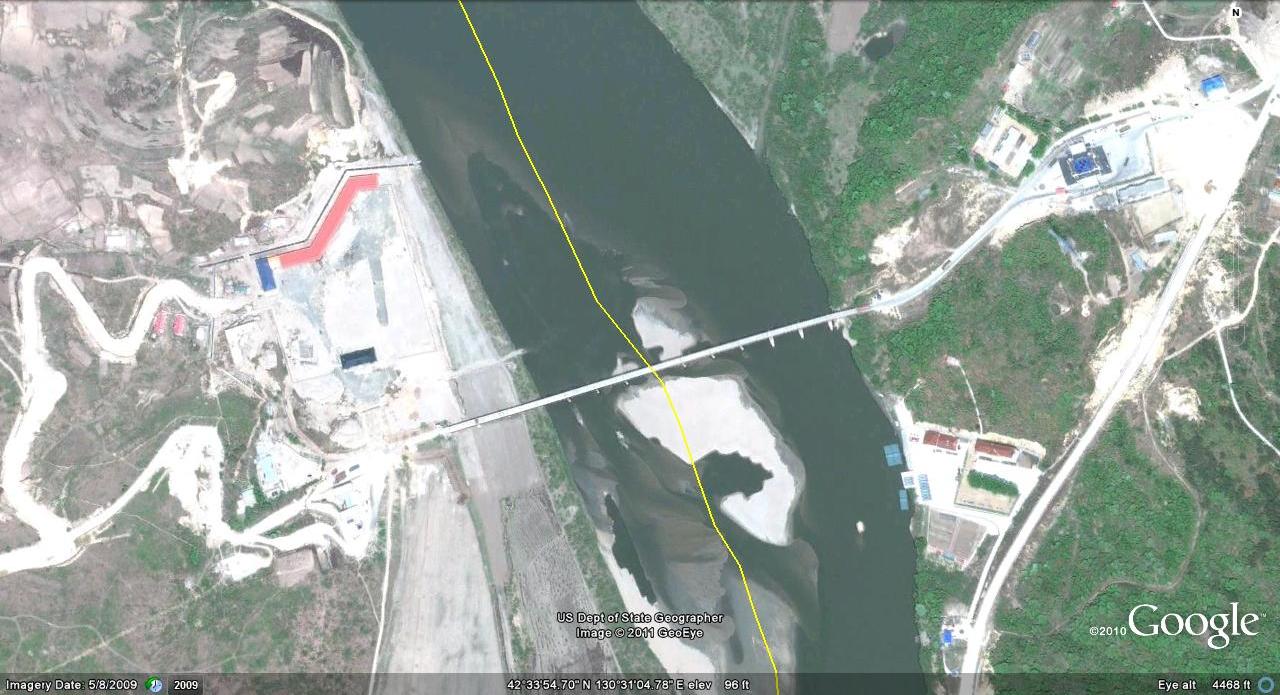
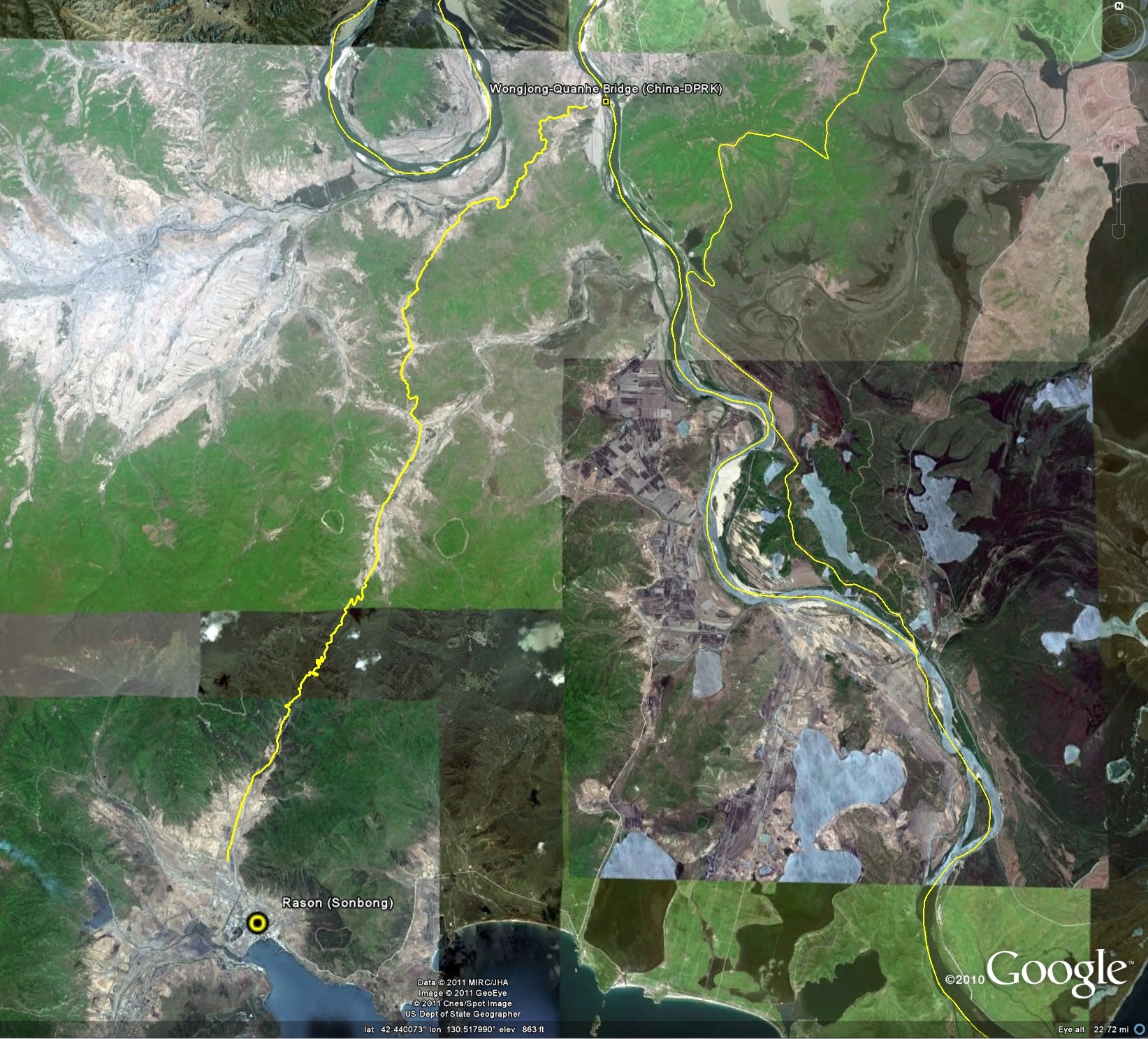
Pictured above (Google Maps): The Wonjong Bridge and route traveled by Chinese drivers from the border to Rason

UPDATE 6 (2011-6-15): Here is a great news video of the Chinese driving tour:
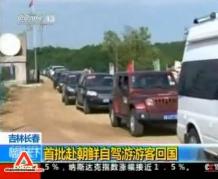
Click image to watch video at YouTube

UPDATE 5 (2011-6-10): Barbara Demick writes in the L.A. Times:

No doubt the most attractive part of the package for China is the access to the port in Rajin, part of a larger special economic zone known as Rason. In 1860, China’s weak Qing dynasty signed a treaty that ceded a long strip of coastline to Russia, leaving Chinese Manchuria landlocked. The use of the port in Rajin makes it easier to transport raw materials from the resource-rich region of northeastern China to the industrial hubs in southern China. In December, the Dalian-based Chuangli group, which had spent $3.6 million renovating the port, shipped 20,000 tons of Manchurian coal through the North Korean port to Shanghai.

“It is faster and cheaper to ship through North Korea’s port than to use the railroads,” said a businessman who was in Rajin this week as preparations were underway for the groundbreaking. “Everybody in Rajin is very excited about what the Chinese are doing. They think it will bring jobs.”

UPDATE 4 (2011-6-9): KCNA coverage of the Hwanggumphyong ground breaking ceremony also mentioned developments in Rason:

The [Hwanggumphyong] ceremony was followed by announcing the start of the reconstruction of the Rajin Port-Wonjong road, ground-breaking ceremonies of Athae Rason Cement Factory and the Rason, DPRK-Jilin Province, China High Efficiency Agricultural Model District and departing ceremonies of Chinese domestic freight transit transportation via Rajin Port and private car tourism as the first phase projects for the start of the joint development of the zone.

UPDATE 3 (2011-6-10): China’s Global Times reports on the Chinese business tour:

The first self-drive tour from China to North Korea started on Thursday, with around 100 tourists setting off from Changchun, Jilin Province, to Rason, North Korea, China News Service (CNS) reported.

A total of 24 vehicles carrying around 100 travelers including well-known entrepreneurs, officials with the Changchun Tourism Bureau and provincial government took part in the tour, according to a staff member surnamed Wang with the publicity department of the China Youth Travel Service (CYTS) Tours Corporation Jilin Branch, which organized the tour.

“We’ve spent more than a month preparing for the activity. We sent invitations to tourists and negotiated with the Rason government,” Wang told the Global Times on Thursday.

The tour will last from June 9 to 11, and the cost for each tourist was more than 1,000 yuan ($149), an anonymous staff member with the executive office of the CYTS Tours Corporation Jilin Branch told the Global Times on Thursday.

After assembling at the Changchun Exhibition and Conference Center on Thursday morning and identifying each car with a number, the tourists began their journey at 7 am and planned to reach Hunchun, the border city in Jilin Province that leads to North Korea, in the afternoon, according to the CNS report.

“The 24 vehicles were all provided by the tourists themselves, but we have dispatched a car to lead them and they were all given interphone sets in case some of them fall behind,” she told the Global Times on Thursday.

After passing through Hunchun, the tourists will reach Rason district and tour guides dispatched by the Rason government will lead them to visit Rajin Port and Rajin Bay.

There, they will be able to enjoy children’s performances and also visit local scenic spots, according to the staff member with the executive office of the CYTS Tours Corporation Jilin Branch.

“There were so many people who called to ask about this activity, so I believe we will organize a second tour in the near future,” she told the Global Times.

The North Korean government plans to develop Rason, located in the border area between China and North Korea, into an international economic zone. At the end of May, the North Korean government allowed Chinese tourists to make the self-drive trip to Rason to enjoy its scenery, according to CNS.

“Allowing self-drive tours from China to North Korea means a lot to both countries, because it will increase the interaction and enhance mutual understanding between the two peoples, and consequently, enhance friendly relations between the two countries,” Yang Zhenzhi, a professor at the School of History and Culture (Tourism) with Sichuan University, told the Global Times, adding that the decision will also help to boost economic ties between the two countries.

UPDATE 2 (2011-6-4): According to an earlier report in the Donga Ilbo a “groundbreaking ceremony” for the Rason area will also take place Thursday (June 9).  No doubt this will take place just before the convoy of Chinese investors crosses into the DPRK.  According  to the article:

Sources in China`s Yanbian Autonomous District in Jilin Province and Dandong in Liaoning Province said Friday that the groundbreaking ceremony for the special district in Rason Special City will be held Thursday and that for the development of Hwangkumpyong in the Yalu River near Shinuiju will come Tuesday.

UPDATE 1 (2011-6-6): The news out today indicates that, as earlier reported (see original post below), a convoy of Chinese investors will travel the new road from Wonjong to Rason to explore investment opportunities.  There are a few interesting differences between the time the story was originally published (in April) and today:

Firstly, and the least interesting point, the “investment convoy” is about nine days behind the original schedule. Originally the convoy was to depart for the DPRK on June 1.  The convoy now appears to be departing on June 9.

Secondly, the convoy appears to be operated by a different Chinese tour company.  Back in April the convoy was being coordinated through the Sanjiang International Travel Agency in Hunchun.  The convoy departing this week, however, is run by CYTS Tours.  I do not know enough about either of these businesses to speculate on treasons for the last minute switch in partners.

Thirdly, the cost of the trip has increased significantly.  In April the Sanjiang Travel Agency said the trip would cost 680 Yuan.  Now CYTS Tours says the cost will be 1450 Yuan per person, and the convoy size will be limited to 30 vehicles.

Here is the most recent report in the Donga Ilbo:

Chinese nationals can start traveling Thursday to Rason, a free trade zone in North Korea`s northeastern region, with their own cars for three days.

This is in line with the development plan linking the Chinese cities of Changchun, Jilin and Tumen that the Chinese government is promoting, China’s Xinhua News Agency said Friday.

For starters, the service launched by CYTS Tours will begin with fewer than 30 cars. Travel costs will be 1,450 yuan (224 U.S. dollars) per person, including lodging and eating. Whether anyone has applied remains unknown, however.

People who will start from Changchun Thursday will drive 500 kilometers to Hunchun in Yanbian Korean Autonomous Prefecture and then enter North Korea through the maritime customs at Quanhe. After crossing the Tumen River, they will go through immigration procedures at the customs office in the North Korean village of Wonjeong-ri and then go to Rason through a Hunchun-Rason road under construction.

The travelers will tour the port of Rajin and then tour Rajin Bay by boat. They will watch a children’s show and visit Sea Village and Wang Hai Guo, where the late founder of North Korea Kim Il Sung visited.

A source at CYTS Tours said, “The product was designed as a part of the (Chinese) government’s travel development plan for Changchun, Jilin and Tumen.”

ORIGINAL POST (2011-4-4): According to the Choson Ilbo:

North Korea is reportedly allowing Chinese motorists to drive to the special economic zone of Rajin-Sonbong so they can look around for investment opportunities there.

A spokesman for Sanjiang International Travel Agency in Hunchun, China on Friday said a group of Chinese motorists will tour Rajin-Sonbong and Duman near the North Korean-Chinese-Russian border under an initiative by the Tourism Bureau of Jilin Province on May 31-June 1. Sanjiang specializes in travels to the lower reaches of the Duman (Tumen) River in North Korea and Russia.

The two-day trip will cost 680 yuan (approximately W115,000) per person.

The Sanjiang staffer said small groups of Chinese motorists have gone to Rajin-Sonbong before, but this is the first large-scale trip organized by the Jilin provincial government and the first time tourists are visiting Duman.

The aim is apparently to lure Chinese investors to Rajin-Sonbong. Early this year, the North agreed with Hunchun city to build a large recreation center and park in its special economic zone.

Back in March 2008, the North allowed South Korean motorists to travel to the scenic Mt. Kumgang resort, but only four months later the tours were suspended after a South Korean tourist was shot dead by a North Korean soldier.

Related historical information:

1. Bridge on China-North Korea border being renovated (2010-4-13)

2. DPRK-China border bridge opens (2010-6-23)

3. Who uses Rajin’s Ports? (2010-5-23)

4. Rason port facilitates intra-China coal distribution (2011-1-4)

Read the original stories here:
China to allow nat`ls to travel to Rason, N.Korea, by car
Donga Ilbo
2011-6-6

Chinese Motorists to Tour N.Korean Investment Zones
Choson Ilbo
2011-4-5

Share

HgCapital challenged over DPRK links

Thursday, June 9th, 2011

According to City Wire:

Private equity investment trust HgCapital Trust was challenged over links to pariah state North Korea at an investor conference this week.

Ian Armitage, chairman of HgCapital, was asked to explain the trust’s links to talc mines in North Korea via its ownership of the Finnish firm Mondo Minerals.

Talc is a mineral used to make talcum powder but also for paper making, plastic, paint and many other industries. Mondo is the world’s second largest producer and, according to Armitage, the company sells 390,000 tonnes per year. Of this 1,500 tonnes comes from North Korea.

Mark Partington, an investment trust investor attending the conference held by Numis in London, said he was concerned that the mine may have used political prisoners in its labour force.

Armitage told Citywire that Mondo ‘didn’t own a mine in North Korea and had no hand at all in operating a mine but does get supplies from that mine through a joint venture that is part owned by the mine and part owned by Mondo.’ He said that Mondo was just a customer of the mine.

Armitage said that Mondo’s relationship with North Korea was in place when HgCapital bought Mondo and that US investors in the fund had been asked if they objected – at the time there was a ban on investing in ‘axis of evil’ states – and had allowed the deal to go ahead.

But he said: ‘In terms of what happens around the world it is not our job to make moral decisions about difficult countries.’ He added: ‘We are not the world’s policeman and we do not take responsibility for what suppliers (of Mondo) do.’

Mondo makes up about 5% of HgCapital Trust’s portfolio of companies and it is believed that HgCapital is looking to sell the firm – rumours which have not been denied by HgCapital Trust. The trust has a market value of £360 million and it is about 10% of HgCapital’s larger unlisted private equity fund.

The trust is in Citywire Selection, our shortlist of investment ideas, and its shares have returned 42% over the last three years while its net asset value (NAV) has risen by 22%. The shares are now trading around a 4% premium to NAV which means that the shares are worth more than the underlying companies owned by HgCapital.

Read the full story here:
HgCapital challenged over North Korea links
City Wire
Rob Mackinlay
2011-6-9

Share

Sinuiju SAR/SEZ Version 5: Hwanggumphyong-ri and Wihwa Islands

Wednesday, June 8th, 2011

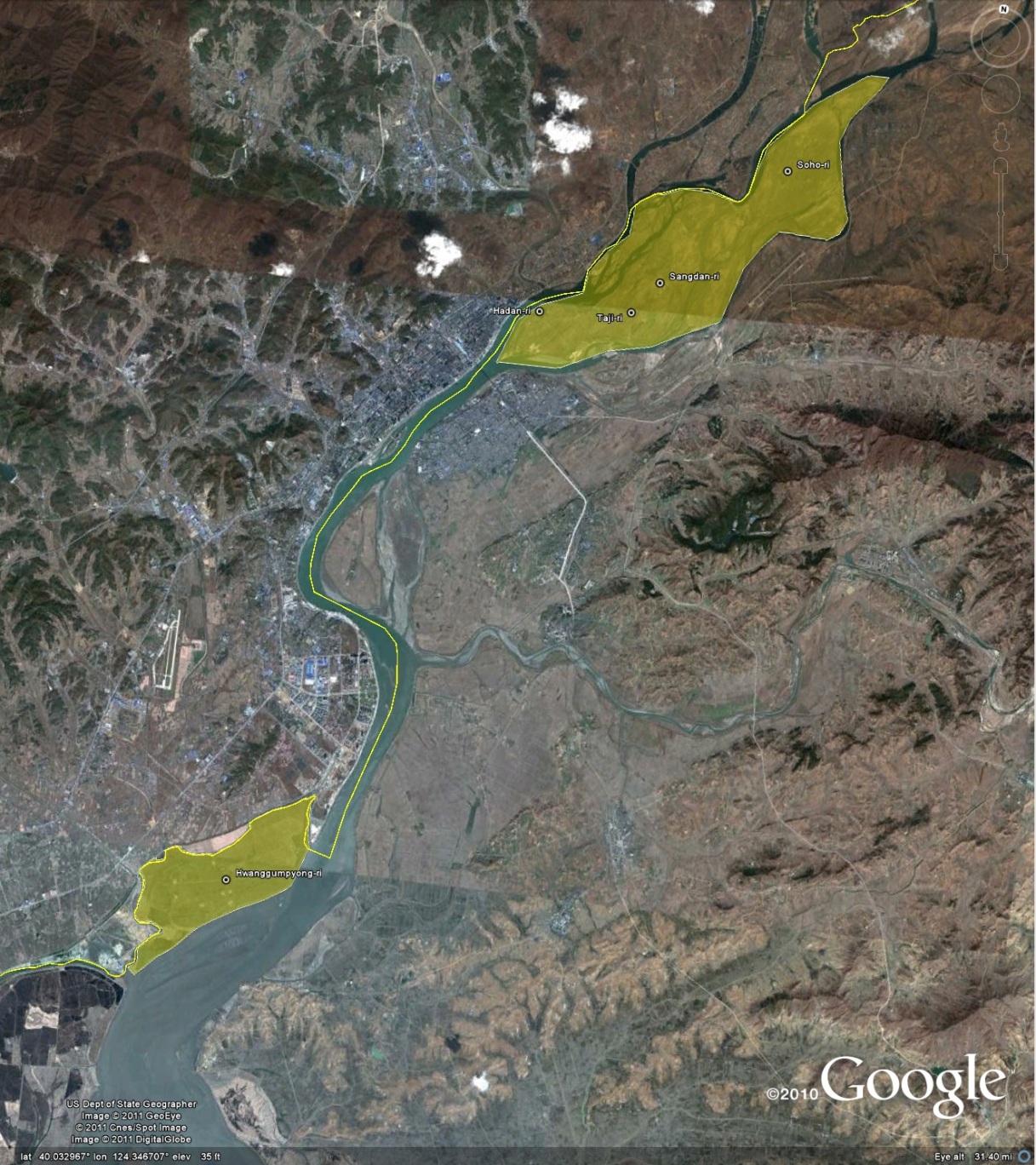
Pictured Above (Google Earth): The new PRC/DPRK economic zone: Hwanggumphyong-ri (Sindo County) and Wihwa Island (Sinuiju and Uiju Counties).  See islands in Google Maps here and here.

UPDATE 13 (2011-6-14): US urges caution.  According to Yonhap:

“We urge transparency, extreme caution and vigilance in any business dealings with North Korea. We urge all United Nations member states to fully implement U.N. Security Council Resolutions 1718 and 1874, which target North Korea’s continued involvement in proliferation, nuclear weapons development and procurement of luxury goods,” the White House official said on condition of anonymity.

The U.S. and South Korea have been putting economic pressure on the impoverished North, which refuses to dismantle its nuclear program and continues military threats. But China, the North’s largest benefactor, has maintained close economic ties with North Korea, prompting criticism that it is undermining U.N. sanctions on Pyongyang imposed after its nuclear and missile tests in 2006 and 2009.

UPDATE 12 (2011-6-9): Here is coverage of the groundbreaking ceremony in KCNA.

UPDATE 11 (2011-6-10): Barbara Demick, writing for the L.A. Times, highlights the low-key nature of the ground-breaking ceremonies as well as providing details of the lease agreements.  According to the article:

Pyongyang publicized the ceremonies, but official Chinese news outlets did not send reporters attend and carried just brief dispatches based largely on news releases. The lack of publicity in China may reflect Beijing’s ambivalence about doing business with an unreliable neighbor and a desire to avoid international criticism for propping up a nuclear-armed country with an abysmal human rights record.

China reportedly signed a 50-year-lease for the 4.6-square-mile Hwanggumpyong, where a 30-minute ceremony was held Wednesday. The South Korean Yonhap news service reported that large balloons flew overhead with the slogans “Friendship between China and North Korea” and “Joint Development.” The low-lying island, south of the Chinese city of Dandong, is currently used for farmland and a North Korean military installation. A smaller island called Wihwa is also part of the deal.

The Chinese are also building a new bridge to the islands that is eventually supposed to be extended to reach to the North Korean mainland.

UPDATE 10 (2011-6-10): Caijing, which is (according to the Wall Street Journal) China’s leading finance newspaper has just published a lengthy article (in Chinese) about North Korea and states at the beginning of the article the “urgent need for internal reforms to adapt to the trend of market forces”. Here is the article.

UPDATE 9 (2011-6-9): Xinhua reports on the ground breaking ceremony:

Officials from China and the Democratic People’s Republic of Korea (DPRK) have reached a consensus to jointly develop two economic zones in the DPRK, according to a press release issued by the Chinese Ministry of Commerce on Thursday.

From Tuesday to Thursday, Chinese and DPRK officials convened in northeast China’s Liaoning and Jilin provinces for the second meeting of the Development Cooperation and Joint Steering Committee.

Their meeting concerned the development of the Rason Economic and Trade Zone and the Hwanggumphyong and Wihwa Islands Economic Zone.

The joint development of the two economic zones in the DPRK will be “government-guided, enterprise-based and market-oriented,” according to the press release.

Both sides agreed to work together and give full play to their respective advantages in the development of the economic zones, the release said.

China and the DPRK have agreed to build the economic zones into a model of Sino-DPRK economic and trade cooperation and a platform to promote economic and trade cooperation with the rest of the world, the release said.

Both sides also held launching ceremonies for several cooperative projects during the meeting, according to the press release.

The meeting was jointly presided over by Chen Deming, Chinese Minister of Commerce, and Jang Song Taek, the administrative director of the Korean Workers’ Party.

The committee held its first meeting in the DPRK’s capital of Pyongyang last November.

UPDATE 8 (2011-6-9): The Choson Ilbo reports on the Hwanggumphyong opening ceremony:

The ceremony started at 10:40 a.m. and took half an hour. Huge balloons with messages like “Friendship between China and North Korea” and “Joint Development” floated in the air above while a military brass band played. Some 300-400 people attended, a stark contrast from the ground breaking for a new bridge connecting Sinuiju in North Korea to China’s Dandong across the Apnok (or Yalu) River at the end of last year, which lasted just 10 minutes with a few dozen regional officials present. AP’s Pyongyang correspondent was allowed to cover the event.

UPDATE 7 (2011-6-9): A reader notes int the comments that it is probably incorrect to refer to this development as a “Special Administrative Region” because we have yet to see if there is any new administrative apparatus which will control the new zone.  So until we see such a development I will refer to this as a “Special Economic Zone (SEZ)”.

UPDATE 6 (2011-6-7): Yonhap reports that Jang Song-thaek attended a groundbreaking ceremony on Hwanggumphyong today (Wednesday):

North Korea and China on Wednesday broke ground on a border island to develop it into an economic zone, spurring speculation that Pyongyang may embrace Chinese-style economic development to try to revive its faltering economy.

The groundbreaking ceremony came on the heels of North Korean leader Kim Jong-il’s weeklong trip to China in May to study the neighboring country’s spectacular economic development, his third trip to China in just over a year.

On Wednesday, some 1,000 people from North Korea and China, including Kim’s brother-in-law, Jang Song-thaek, and Chinese Commerce Minister Chen Deming, attended the ceremony on Hwanggumphyong Island in the Yalu River that separates the two countries.

Several dozen giant advertising balloons were floating in the air as a military brass band played festive songs, and hundreds of doves were released at the ceremony.

The messages on the balloons read “North Korea-China friendship and joint development” in a symbolic gesture for their commitment to the project.

The two sides also reportedly signed a deal on the joint development project, including lease terms on Hwanggumphyong. No details were immediately available.

UPDATE 5 (2011-6-7): KCNA announces (here and here) the establishment (and expansion) of the Special Administrative Region (SAR or SEZ):

(KCNA: 2011-6-6) DPRK Decides to Set Up Hwanggumphyong and Wihwa Islands Economic Zone

The DPRK decided to set up the Hwanggumphyong and Wihwa Islands Economic Zone in order to boost the DPRK-China friendship and expand and develop the external economic relations.

A decree of the Presidium of the Supreme People’s Assembly was promulgated on June 6 in this regard.

According to it, Hwanggumphyong-ri, Sindo County, Sangdan-ri, Hadan-ri and Taji-ri, Sinuiju City and Soho-ri, Uiju County of North Phyongan Province shall belong to the zone.

The sovereignty of the DPRK shall be exercised in the zone.

The development of the zone shall start from the Hwanggumphyong district.

and…

(KCNA: 2011-6-7) Hwanggumphyong and Wihwa Islands Economic Zone to Be Set Up

The Japanese Tokyo Shimbun Tuesday released the following report titled “Close to setting up economic zone on DPRK-China border:”

The Presidium of the Supreme People’s Assembly of the DPRK Monday promulgated a decree on setting up the Hwanggumphyong and Wihwa Islands Economic Zone in the border with China. It was reported that the sovereignty of the DPRK would be exercised in the zone and the development of the zone would start from the Hwanggumphyong district.

Both Hwanggumphyong and Wihwa Islands are within the territory of the DPRK along the River Amnok flowing along the DPRK-China border. It was basically agreed to develop Hwanggumphyong by the joint efforts of the DPRK and China. A ground-breaking ceremony is expected to take place within one or two days.

The project for building the DPRK-China Amnokgang Bridge which started at the end of last year is making brisk headway on the river. It seems that a discussion on the above-said zone was held during the China visit by General Secretary Kim Jong Il in May and it is likely to put greater impetus to economic cooperation between the DPRK and China and development of the border area with the decision as an occasion.

The SPA Presidium of the DPRK, explaining the reason for setting up the economic zone, said it was to boost the traditional DPRK-China friendship and expand and develop external economic relations.

South Korean CBS released similar news on the same day.

In a separate note, it is nice to hear the construction on the second Yalu River bridge is “making brisk headway”.  The north Korean media has not reported on the bridge in some time.  The bridge does not run through any of the newly created Special Economic Zone.

UPDATE 4 (2011-6-5): According to the Donga Ilbo, the groundbreaking ceremony is supposed to take place tomorrow (Tuesday).  On Thursday a groundbreaking ceremony is scheduled for Rason.

UPDATE 3 (2011-5-30): The groundbreaking ceremony was cancelled.  It is unclear when development will begin. According to the Choson Ilbo,

There has been no official comment from China, but a ground-breaking ceremony for the development scheduled for Saturday has been cancelled, apparently because China had second thoughts. “Since last year, I’ve had business officials from other regions like Tianjin and Qingdao, asking me whether there’s any vacant office spaces for rent,” said a business owner in Dandong.

But people in Dandong have not lost all hope of potential development of the area. One Chinese businessman who has traded with North Korea since the 1990s, said, “Business projects with North Korea usually take a long time to materialize, and talk of developing Hwanggumphyong and Wihwa islands have been around for a long time, so I feel they will happen someday.”

Other major projects are already under way in Dandong. The Chinese city plans to build a new city in the Langtou area to house 200,000 people by 2020. A bank building and high-rise apartments have already sprung up in the area, which was a barren tract of land just three years ago. And a new bridge is being built linking Langtou with the North Korean border town of Ryongchon across the [Amnok] River.

UPDATE 2 (2011-5-10): Development of Hwanggumphyong Island is reported to begin this month (May 2011).

According to the AFP:

North Korea and China will start work on developing a river island on their border this month, a report said Tuesday, amid an international drive to coax Pyongyang back to nuclear disarmament talks.

The two countries plan to hold a groundbreaking ceremony on May 28 for development of the island on the Yalu River, the South’s Yonhap news agency said.

Pyongyang has reportedly worked out a special law to set up a free trade zone on the island, which is separated by a narrow waterway from the Chinese city of Dandong.

The two sides have agreed to turn the island into a base for logistics, tourism and manufacturing that would be linked to China’s industrial complex to be built in Dandong, Yonhap said.

There is still no sign that Wihwa Island is receiving any special development.

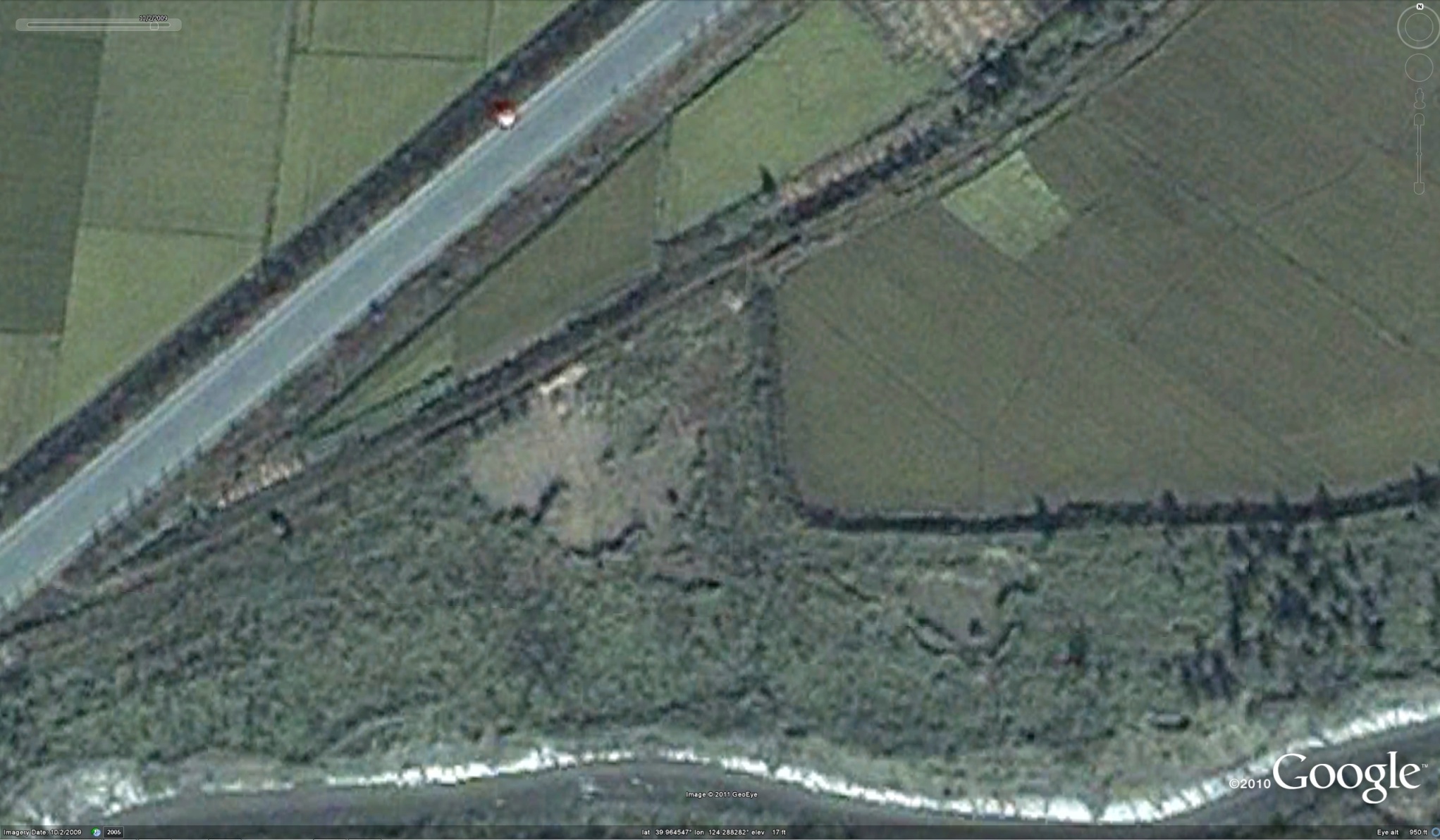
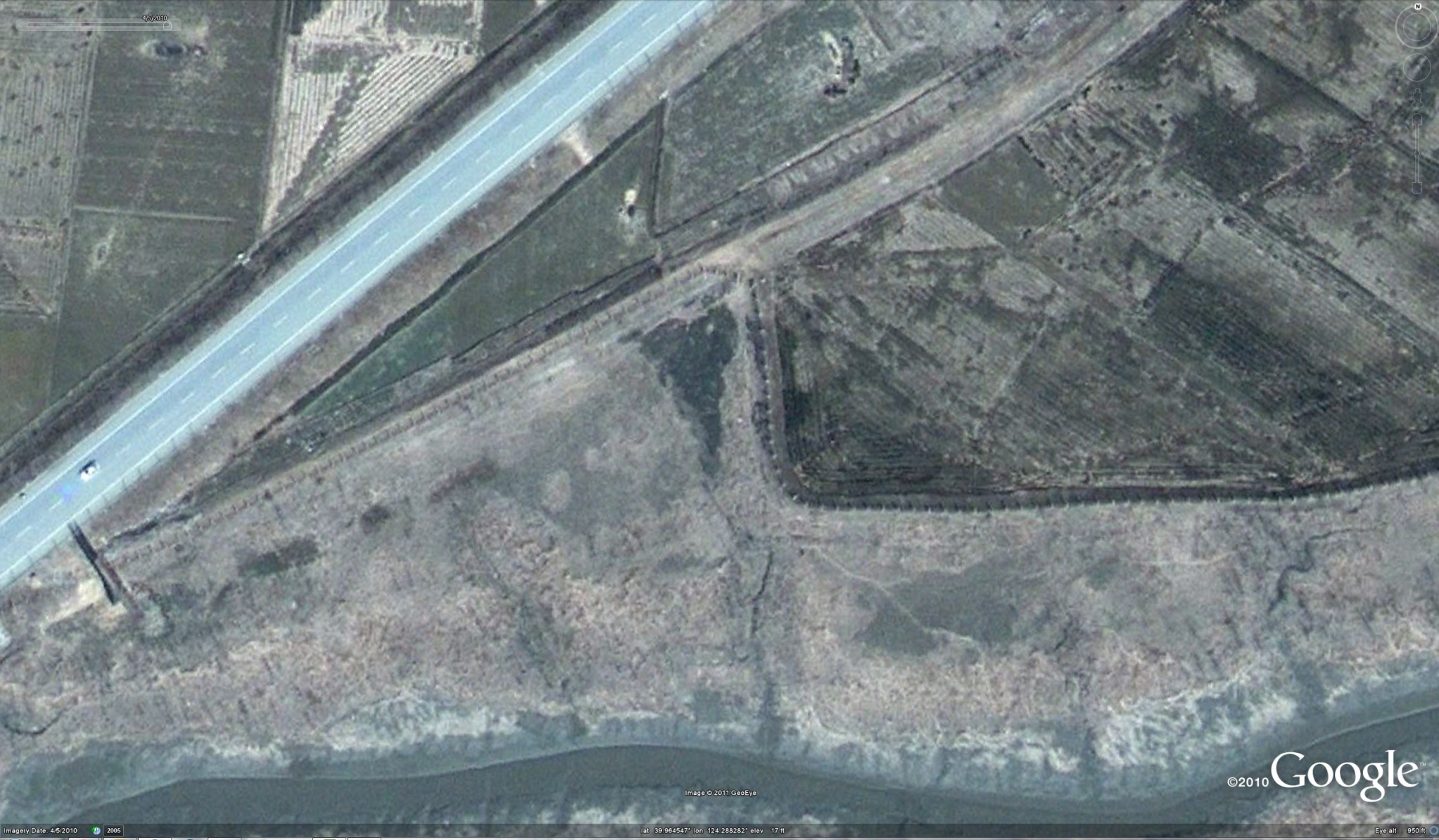
UPDATE 1 (2011-3-30): Huangjinbing Island (mentioned below) is the Chinese name of Hwanggumphyong Island (Hwanggumpyong, Hwangkupyong, 황금평: 39.961121°, 124.316044°). The Chinese recently built a fence around this island.

Using Google Earth (39.964363°, 124.288470°) we can see both before and after satellite images of the fence construction which separates the DPRK’s island territory from the PRC’s. Dates: 2009-10-2 (Left/Before), 2010-4-5 (Right/After)

According to the Telegraph:

Fences more than 13ft [3.962 m] high, topped with barbed wire, are now being erected along an eight-mile stretch of the Yalu river around the Chinese city of Dandong. This is a popular escape point for North Korea refugees seeking food or better lives, Korea’s Yonhap news agency reported.

“It’s the first time such strong border fences are being erected here. Looks like it is related to the unstable situation in North Korea,” a resident said of the work which began last November but is ongoing.

Previously the border was only marked by a 10ft-high fence which “anybody could cross if they really wanted”, the resident added.

Fears for the stability of North Korea have been heightened in recent weeks with reports of a growing food crisis following the severest winter in 60 years and an outbreak of foot-and-mouth disease that has hit the oxen that are still mainly used to plough the North’s fields.

This week, in a highly unusual step, foreign aid agencies based in Pyongyang issued a joint statement warning that 6 million North Koreans now need urgent food aid because crops of potatoes, wheat and barley have all failed.

As an aside, at least one report claims this island has been leased to China.

Read the full Telegraph story below:
China builds higher fences over fears of instability in North Korea
Telegraph
Peter Foster
3/30/2011

ORIGINAL POST (2010-2-25): In September 2002 the North Korean government announced the Siuiju Special Administrative Region/ Special Economic Zone.  It did not end well.  The idea of implementing a Sinuiju SAR/SEZ, however, has never faded away–though it has taken different forms.

Sunuiju Version 1: The initial vision of the city, under a Yang Bin administration, was the creation of a very liberal and independent territory which would supposedly be free of Pyongyang’s dictates in exchange for tax revenue.  The Hong Kong-style “Basic Law” can be found here.

Sinuiju Version 2: In March of 2007 the North Koreans decided to move the SAR/SEZ territory out of the Sinuiju city center on two Islands in the Tumen River:  Bidan and Wihwa.

Sinuiju Version 3: In August 2007 creation of a special zone had reportedly already begun, however, this time the project is located in the Sinuiju city center (not remote islands).

Sinuiju Version 4: In January 2009 the Yomiuri Shimbum reported that the SAR/SEZ had once again moved out to  Wihwa Island.

Today Adam Cathcart emailed me a report in the Huanqiu Shibao featuring the following statement by a PRC foreign ministry spokesman :

环球时报记者段聪聪报道 2月25日,中国外交部发言人秦刚在例行记者会上就中国企业有可能获准开发两个朝鲜岛屿的事情表态:“不要混淆联合国制裁和两国正常的经贸往来。” Global Times reporter Duan Congcong reports on Feb. 25: Chinese Foreign Ministry Spokesperson Qin Gang, at a press conference, stated [the Ministry’s] position on the situation of the possibility of Chinese enterprises obtaining permission to start business on two Korean islands : “Don’t confuse U.N. Sanctions with normal bilateral trade dealings.”

据报道,朝鲜为了吸引外国投资,决定将位于中朝边境临近辽宁丹东市的威化岛和黄金屏岛定为自由贸易区域,交由中国企业进行开发。两岛的投资规模分别为5亿和3亿美元。秦刚表示,不要混淆联合国制裁和两国之间正常的经贸往来与合作。对朝鲜实施制裁,联合国的有关决议有明确的规定,规定了制裁的项目。而报道中提到的 项目属于中朝之间正常的经贸往来,并不违反联合国规定. According to the report, North Korea is attracting foreign investment, and has decided to establish a free trade zone on the islands of  Weihua [威化岛] and Huangjinbing [黄金屏岛] in the Sino-Korean border area of Liaoning’s Dandong city.  The dimensions of the two islands’ total investment will total 500 and 300 million U.S. dollars, respectively.  Qin Gang stated that it wasn’t necessary to confuse UN sanctions with normal bilateral economic dealings and cooperation.  Regarding the implementation of sanctions on North Korea, the related United Nations resolutions are very clear in their stipulations of the project.  But, the report noted, projects referring to inclusion of normal bilateral trade between China and North Korea are not forbidden by the UN stipulations.

据报道,朝鲜政府高层就比邻中国丹东的边境地区建立特别经济区方案正在进一步细化过程当中。参与此次朝鲜岛屿开发的中国丹东华商海外投资公司将组团赴朝就具体合作意向进行最后敲定。 According to the report, high officials in North Korea’s government nieghboring China’s Dandong border area are currently moving in a detailed way with establishing this special economic zone.  Participating in the development of this North Korean islands are Dandong Huashang Overseas Investment Corp. which will organize and send a delegation to North Korea in order to cooperate and move forward with final resolution.

I will call this “Sinuiju SAR: Version 5.” Wihwa Island is back, but Bidan Island has been replaced by “Huangjinbing Island.”

Additional Information

1. The Dandong Huashang Overseas Investment Corp. web page is here. (again, h/t Adam)

2. China has also reportedly approved the creation of a trade zone on its side of the North Korean border.

Share

China capturing ROK’s old business in DPRK

Wednesday, June 8th, 2011

According to the JoongAng Daily:

South Koreans doing business with North Korea, or across its border with China, are seeing opportunities dry up as Pyongyang gives all the good breaks to Chinese companies.

Yesterday, workers were seen getting ready for a ground-breaking ceremony at Hwanggumpyong, a joint industrial complex run by North Korea and China on an island in the Yalu River.

North Korea’s official news agency said the complex would further deepen economic ties between the two countries. The exact reverse is happening to South Korean businesspeople.

“South Korean firms and investors have pretty much let their businesses at the China-North Korea border go since last May,” said Choi, the owner of a restaurant in Dandong. Choi, 54, has been running his restaurant for a decade and, to him, the good times are over.

“When business was active between South and North Korea, there were about 1,000 South Korean businessmen working in Dandong, all doing work related to North Korea,” said Choi. “But now most of them have left.”

“Most of the manufacturing jobs done inside North Korea have been taken by Chinese investors and the South Koreans left here in Dandong are mostly contractors for Chinese firms,” Choi said.

After the attack on the warship Cheonan in March 2010, business ties between South and North Korea have run dry due to sanctions ordered by Seoul the following May.

“I invested millions of dollars into developing the underground natural resources in North Korea before last May,” said Park, 56, who was working from Hunchun in northeast China. “Now that the South Korean government has banned all North Korean goods from entering the South, I’m about to lose all my money.”

Chinese investors – including ethnic Koreans living in China – are grabbing the business opportunities forfeited by the Southerners.

“I run short of stock even if I charge 10 renminbi [$1.54] for an abalone I used to sell at 5 renminbi,” said Han, 70, an ethnic Korean in China who sells abalones caught in North Korea. The trade was formerly done by South Koreans.

“Doing business with Chinese customers is much better because I can earn more and in cash, too,” he said.

The South’s sanctions on North Korea have resulted in some other problems as well. Pollack caught in Russian waters have been denied being imported into South Korea because they were mistaken for North Korean pollack. In fact, the fish cannot be found in North Korea anymore due to global warming.

“It was a loss for me when the fish didn’t make it through customs after being mistaken for North Korean pollack,” said Lee, 51. “I export Russian pollack to South Korea after they are caught and processed in China.” Lee is involved in aquatic product processing in Hunchun.

Jo Dong-ho, a professor of North Korean studies at Ewha Womans University in Seoul, said, “North Korea is looking for an alternative by doing business with China after trade with the South halted. There is a need for some breathing space when it comes to inter-Korean trade.”

Read the full story here:
China capturing North’s business
JoongAng Daily
Chang Se-jeong
2011-6-8

Share

Korea Unpung Joint Operating Company

Monday, June 6th, 2011

According to Yonhap:

A China-North Korea joint venture maker of food additives, have been operating smoothly in a display of close ties between the two countries, China’s state-run Xinhua News Agency said Monday.

China’s Liaoning Wellhope Agri-tech Co. and North Korea’s Unpasan General Trading Company set up a joint venture, (North) Korea Unpung Joint Operating Company, in 2006, in Pyongyang, the North Korean capital city.

Liaoning Wellhope Agri-tech holds a 55 percent stake in the joint venture, while the North Korean trading firm has a 45 percent stake.

In a dispatch from Pyongyang, Xinhua said the total assets of Unpung have now reached 21 million yuan (US$3.24 million). During the six-year operation, the firm made a total pre-tax profit of 15.21 million yuan, and its cumulative sales of food additives reached 18,720 tons.

“At present, Unpung aims to become a first-class brand in the (North) Korean food additive industry,” the new agency said in a Chinese-language report.

“Recently, demand for food additives are rapidly rising in North Korea, and many companies need their employees to work overtime to meet the demand.”

Quoting the Chinese head of the joint venture, Xie Jingming, the report said the firm’s more than 5 years of business development and expansion can not be separated from the deepening economic cooperation between China and North Korea.

China-N. Korea joint venture maker of food additives operates smoothly: Xinhua
Yonhap
Kim Young-gyo
2011-6-6

Share

DPRK stepping up investigations of border patrol

Friday, June 3rd, 2011

According ot the DailyNK:

The North Korean authorities are conducting an extensive investigation into the actions of soldiers attached to border guard units, based on the presumption that such guards are frequently guilty of aiding and abetting defection. Those found to have done so are being arrested and severely punished.

A source from Yangkang Province explained the news yesterday, “For the third time they are conducting an investigation along the border in Kim Jong Eun’s name, but this time it is focused on the soldiers.”

“The decree says to arrest and severely punish soldiers who have aided and abetted in defection, to pull out the roots; so the investigation has been harsh from the very beginning.”

The two previous investigations into defection from the border region, both said to have been launched in the name of the successor, happened in February and April this year, as reported by The Daily NK. However, this is the first time that attention has turned away from defectors themselves and towards those soldiers who help facilitate a lot of the escapes.

“There are two members of an investigation team from Defense Security Command going to every guard post, and they are questioning the soldiers one by one,” the source said.

It is well known both within and without North Korea that border guards are commonly bribed to turn a blind eye to defection. Through very serious questioning and the threat of severe punishment, the authorities are presumably hoping to kill two birds with one stone; both hindering further defections and re-instilling military discipline.

However, the new investigation has already inspired at least two guards from one post to desert instead of face censure, according to the source.

“Two men from a guard post in the Hyesin-dong area of Hyesan took their weapons and deserted, so now they are in the middle of a house-to-house investigation,” the source explained, adding, however, “People are saying, ‘They’ve already fled to China, why the hell would they still be in the country?’”

Although nobody knows why the two men chose to desert, the source said he had heard that they were indeed involved in defections, and feared punishment.

Across the Tumen River in Changbai, China, meanwhile, there is also an unusually intense investigation going on, according to sources there. It is suspected that the two events are related.

A source explained, “Public security officers and soldiers are stopping and investigating cars one by one. I heard that soldiers from North Korea deserted with their guns, so maybe it is because of that.”

Of course, the investigation is hurting small traders, too.

“Big-time smugglers are not having problems,” the Yangkang Province source explained. “But day-to-day small scale smugglers are complaining about the investigation. Border guards are telling them to put up with it just a little more.”

Read the full story here:
Border Investigators Turned on Soldiers
Daily NK
Lee Seok-young
2011-6-3

Share

Friday grab bag: everything but the kitchen sink

Thursday, June 2nd, 2011

DPRK Public Trial Video

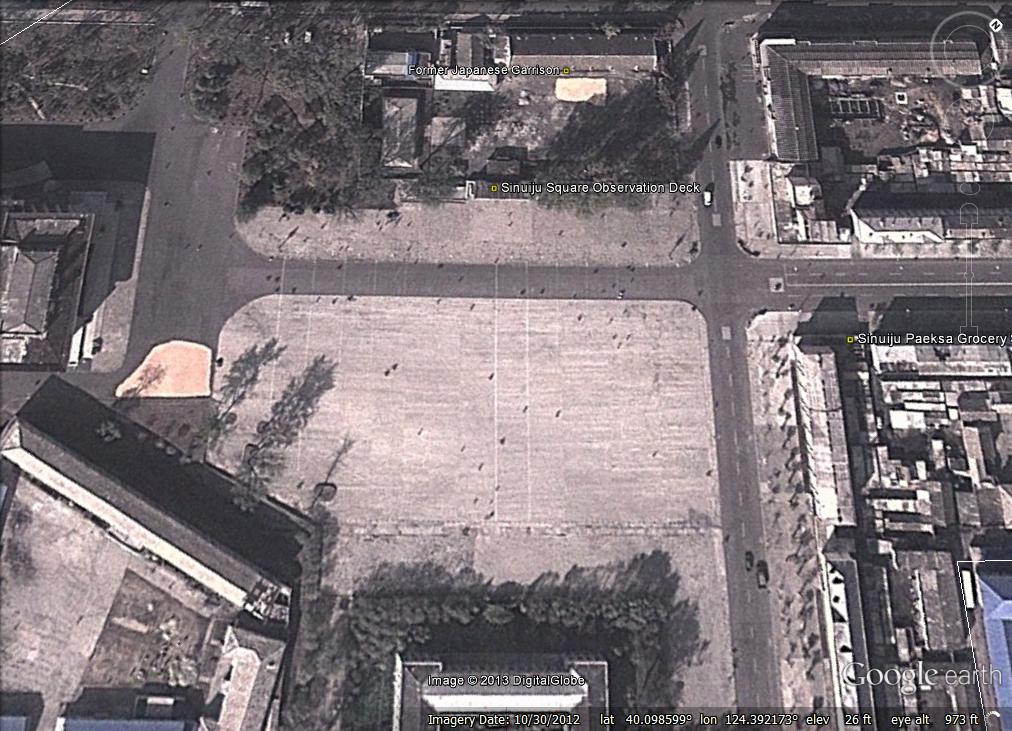
There is a video on YouTube (via South Korean television) that purportedly shows a public trial that took place last April in Sinuiju (RFA). The trial took place in the Sinuiju central Square:

Sinuiju-square

There is an (increasingly hard to find) older video of a public trial in Hamju County (함주군) which clearly matches the satellite imagery. You can see the video here.  The stadium where it was filmed is here.

Kim Jong-il’s Only Televised Speech in the DPRK

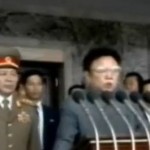
In an earlier “Friday Fun” post, I linked to a parody of Kim Jong Il’s only televised speech in the DPRK.  Here is his actual and only speech!

Kimchi Dog

For the dog lovers: I thought this clip of a North Korean dog carrying a kimchi bucket near Kim Il-sung square in Pyongyang was cute.

DPRK No 2 Happiest Country?

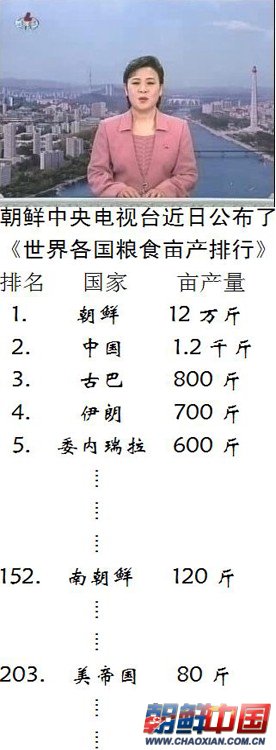
Chinese blog post, picked up by the Shanghaiist, went viral this week.  The story:

China is the happiest place on earth(!!) according to a new global happiness index released by North Korea’s Chosun Central Television. China earned 100 out of 100 points, followed closely by North Korea (98 points), then Cuba, Iran, and Venezuela. Coming in at 203rd place is America (or rather “the American Empire”, 美帝国), with only 3 happiness points. South Korea got a measly 18 points for 152nd place.

Frankly, I don’t think most North Koreans would believe this story if they saw it on television.

I tried to learn more, but the source material is proving difficult to locate. There is no mention of the “study” in KCNA.  I have also gone through my archives of recent North Korean television footage and I am unable to locate the broadcast.  Does anyone know when the original video clip was aired?

For what it is worth, Freedom House just ranked the DPRK as the country with the world’s worst human rights record (again).

Did the DPRK Get a New Yacht?

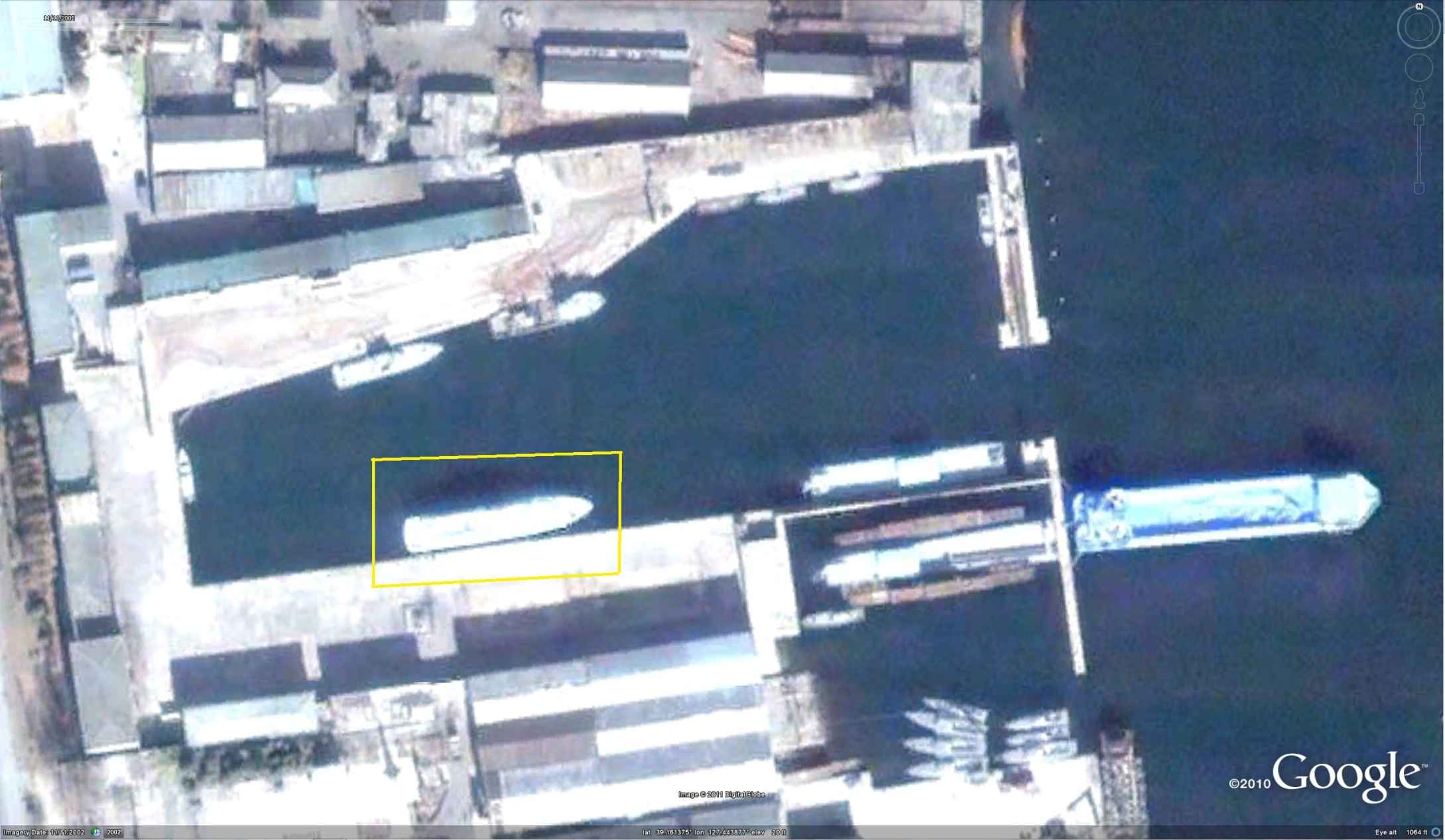
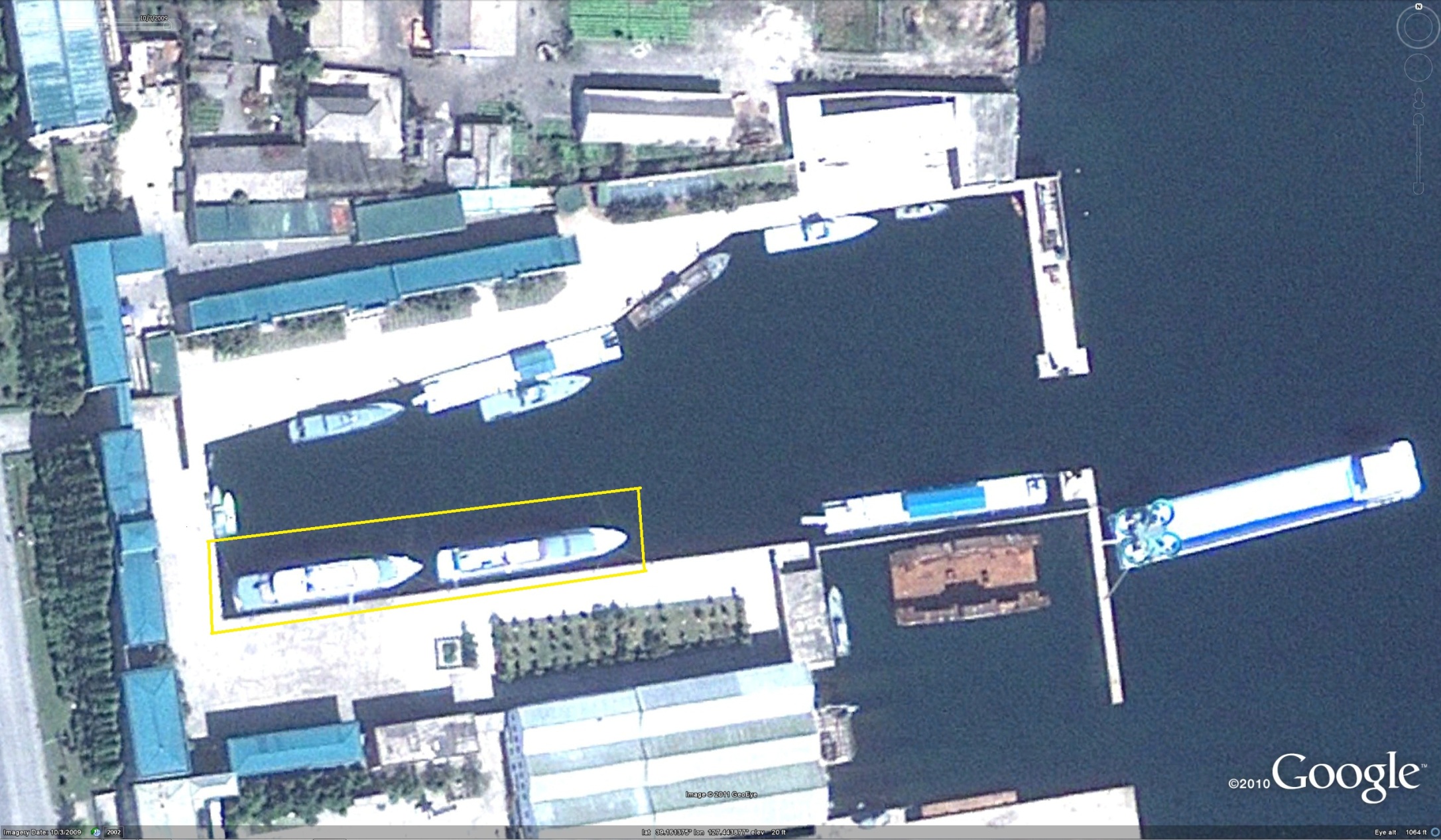
While scouring new imagery of Wonsan on Google Earth, I noticed that a port, holding what many believe are ships for elite use, seemed to be +1 yacht.  Both are about 48m long.  The two pictures above are dated 2002-11-11(left) and 2009-10-3 (right). It is possible that the second yacht was moved from another location.  In 2009 the sale of two yachts to the DPRK was detected and halted.

New Google Earth Imagery of the Kumgang Resort

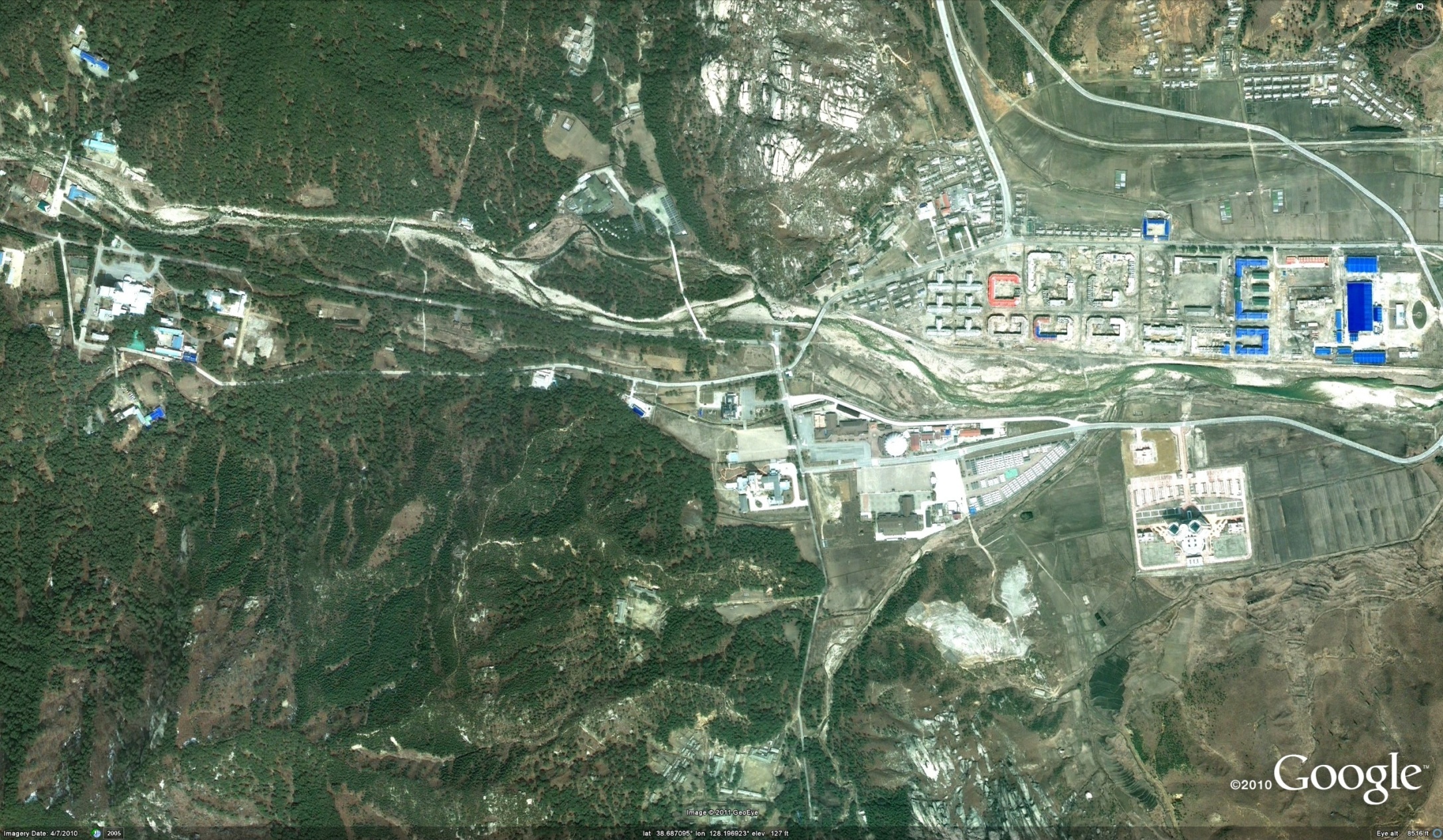
We can now see all the properties that the DPRK has “seized” from Hyundai-Asan: Family Reunion Center,  Kumgangsan Hotel, Mokranwon Restaurant, Kumgang Golf Course and more!

Share

The blueprint for the development of the Rajin-Sonbong (Rason) economic and trade zone is released

Tuesday, May 31st, 2011

Institute for Far Eastern Studies (IFES)
2011.05.26

On May 23, the DPRK released the “Outline of DPRK-China Joint Development Plan for Rason and Hwanggumpyong Economic and Trade Zone” consisting of detailed blueprint of two countries’ recent bilateral joint development deal.

According to Yonhap News, China and North Korea are planning to turn the Rason and Hwanggumpyong areas into a comprehensive industrial complex of tourism and manufacturing producing automobiles, mobile phones, agricultural and chemical products.

In addition, the Law on Rason Economic and Trade Zone and the Special Law on Hwanggumpyong Zone will adopt market economy principles which will permit foreign bank investments and independent contracts between corporations and workers. Although the development plans are not definite yet, it is significant since it hints at North Korea’s shifting position on opening up and economic development.

The bilateral development plan between Pyongyang and Beijing will stretch from Rajin, Sonbong, Ungsang, to Gulpo areas.

In the Rajin area, four major industrial complexes will be constructed consisting of storage, logistics and distribution centers, state of the art technology, and equipment, clothing and food manufacturing. In the Ungsang area, comprehensive a wood processing complex will be built while in the Gulpo area, a high-efficiency agriculture zone will be constructed. In the Sonbong area, truck manufacturing factories will be built along with other metal producing factories. In Rajin, docks will be built for ship building and maintenance.

There are also plans of developing the Rason area into an international tourism zone. There are immediate plans to build basic tourism infrastructure such as hotels, resorts, and roads for sightseeing. The long-term goal is to build a grand Northeast Asia tour course, which will include Yanbian of China; Rason, Chongjin, Mount Chilbo and Mount Kumgang of North Korea; Vladivostok and Sakhalin of Russia; Sapporo and Nakata of Japan; and Sokcho and Busan of South Korea.

As for the Hwanggumpyong area, four major industrial complexes will be established: one each for information, tourism and culture, modern protected agriculture, and food processing. More specifically, Hwanggumpyong will connect information between Hwanggumpyong and the border city of Dandong in China. In addition, culture and tourism will be developed through promotion of Arirang and other cultural performances and exhibitions.

As for the high-efficiency agriculture zone, a modern agriculture technology research center will be established and China-DPRK joint markets will be set up to serve as a central commerce center.

To assist with the industrial development in the area, land and sea routes will be developed where roads and railroads will be built and Rajin will be upgraded to a comprehensive and multi-purpose port.

There are additional plans of constructing a coal power station to replace the current thermoelectric power plant in Sonbong. There is also discussion of possibly developing other alternative energy plants, such as wind and solar. There are also plans of building basic facilities of mobile telecommunication to promote international communication.

Hwanggumpyong is an island on the Yalu River and the new developments in building ports and roads along with distribution network, Internet, and mobile telecommunication will become a link connecting North Korea with China.

Pyongyang is pursuing development through multiple cooperation channels. It has plans of establishing three-tiered cooperative system with joint management committee, joint development management committee and investment development corporation with Beijing. These committees will be responsible for amending and negotiating any issues that may arise during the process of development and supervise various areas of investments, enterprises, and environment and as well as inspect land and commerce development and basic facility operations.

Both Pyongyang and Beijing will attract foreign investments through market-based tax and financial policies in the Rason and Hwanggumpyong zones. Specifically, tax refund policy will be implemented and tariffs will be lifted from any imported equipment and materials necessary for production. The foreign investment companies will be allowed to choose their own banks or even establish financial institutions to assist in their business management.

In addition, workers and companies will be permitted to sign their own labor contracts. The companies will be granted autonomy in hiring and firing, pricing, bankruptcy, liquidation and other business practices based on market principles.

As for investment protection policy, foreign investors will be permitted to transfer or inherit profits and assets and foreign investor’s investments and assets will not be collected as national property by North Korea.

Share

Retail competition in the DPRK

Wednesday, May 25th, 2011

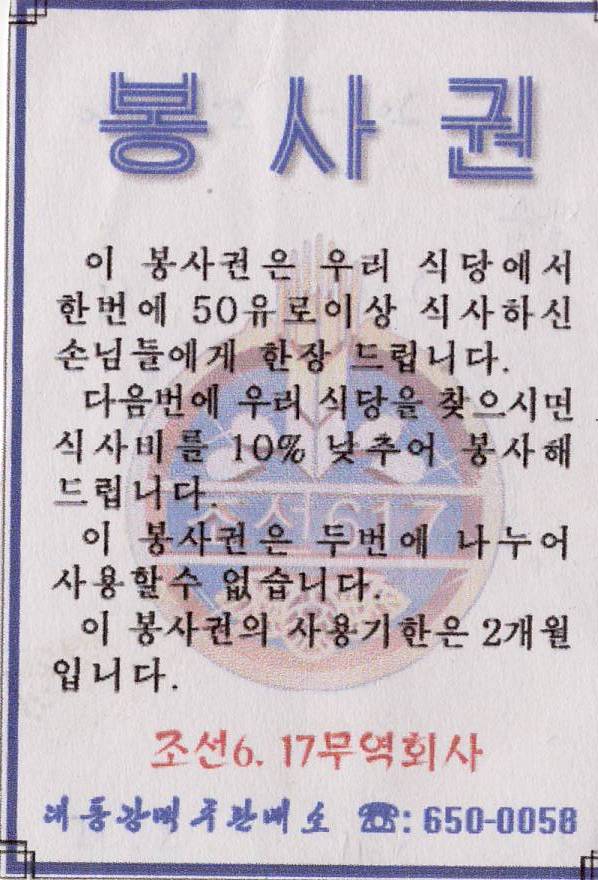
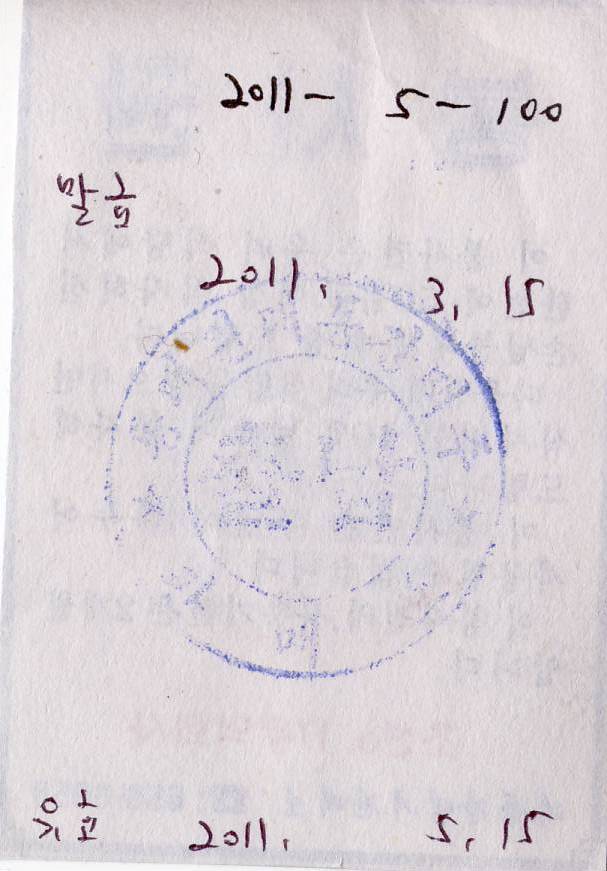
A visitor to the DPRK sends in a picture of a 10% discount coupon received at a hard currency shop in Pyongyang.

The coupon is issued by the 6.17 Trading Company, and according to a member of my crack translation team it reads:

One coupon per party is given when the party has spent more than 50 Euros at our restaurant during their visit. The next time you visit our restaurant, 10% discount will be applied to your bill.  This coupon cannot be used twice or split over visits. The expiration date of this coupon is in two months.

I am also told that the coupon lexically equates “discount” with “service” as in “we will serve you at 10% lower price”.

The coupon is interesting because it signals that there seems to be some real price competition among hard currency shops in the capital. These shops not only cater to foreigners, but also to North Koreans with sufficient forex balances, so they don’t just have to compete against each other, but also with the black market.

Do other readers have any experience with discount coupons in the DPRK, or is this a relatively new phenomenon?

Share

ROK moves to control inter-Korean remittances

Monday, May 23rd, 2011

UPDATE (2011-5-26): Defectors are not too happy with plans by the South Korean government to get control over remittances to the DPRK.  According to the Korea Herald:

North Korean defectors here are strongly opposing a government plan to require them to gain approval before making remittances to relatives in the cash-strapped state.

They say that the approval process could put them and their loved ones in the North in dangerous situations and make brokers demand more money for delivering funds.

They also say that since their remittances are made through “complicated multi-layered” procedures, it would be difficult to detect those sending money without approval.

On Tuesday, the Unification Ministry put on public notice a revision bill mandating defectors to obtain approval when remitting more than a certain amount of money, with the cut-off figure yet to be set. Officials said the revision is aimed at “securing transparency in inter-Korean exchanges.”

“We have been scrimping on food, clothes and others to send some of the hard-earned money ― at most 1 million won ($917) ― to help our family, not the North Korean regime. The approval system is wrong,” a 43-year-old North Korean defector, who has taken asylum here since 1997, told The Korea Herald, declining to be named.

“Our remittances have been transparently made and we always check whether our relatives have received the money by talking directly to them by cellphone. Through the talks, albeit brief, defectors tell them the truth about Korean society and help enlighten them and bring about change there.”

He also pointed out that the planned system may not be effective.

“All these have so far taken place secretly. Who would ever like to willingly tell the authorities about their remittances at the risk of revealing their identities and those of their relatives in the North? One out of 10 may be willing,” he said.

A Unification Ministry official said that the government will carry out the approval system after taking into account opinions from the defectors and experts.

“There has been controversy over the legitimacy of their remittances, which has stemmed from the absence of government procedures over them. The system is aimed at systemizing their sending of the money to the North,” the official said.

“We will consider various opinions including those regarding the amount of money for which they should secure approval and measures to protect their family in the North.”

North Korean defectors usually send their money through ethnic Chinese people here, who ask their Chinese relatives or acquaintances inside the North or near the North Korea-China border to deliver the money. The brokers are known to take 30 percent of the total remittances.

According to a survey by a private Seoul-based group, which was released early this year, nearly half of North Korean defectors here have sent money to their families in the North.

The survey by the Database Center for North Korean Human Rights found that 49.5 percent said they had sent money to their families in the North, while 46 percent said they had not and 4.5 percent said that they have no family there.

The survey was conducted on 396 North Korean defectors residing in the South, aged 15 or older, from Dec. 14-31 last year.

Seoul officials estimate that North Korean defectors’ annual remittances amount to $10 million.

Some people say the remittances could stimulate North Koreans’ longing for the affluent life south of the heavily fortified border. Others, however, are concerned that the money could get into the wrong hands in the notoriously autocratic regime.

The number of North Korean defectors living here stands at 21,294 as of April. It is expected to rise as food shortages and oppression continue in the reclusive state.

And according to Yonhap:

The Unification Ministry has announced its plans to revise a law that would require defectors to receive government approval before sending money to their families.

The ministry, which handles inter-Korean affairs, said the move is aimed at legalizing the money transfers and increasing their transparency.

Defectors said their families in the North usually receive some 70 percent of their remittances as brokers who arrange the deals take some 30 percent of the money as a fee.

The ministry said it would give some wiggle room for defectors by exempting them from receiving mandatory approval in case they remit a certain amount of money for their families to support them or to help them seek medical treatment.

Details have yet to be arranged. The revision process would take months as other government ministries must screen any changes before the new law’s submission to the legislature for approval.

The new revision is expected to take effect as early as the second half of next year.

The move “is not trying to regulate humanitarian money remittance,” a government official said on condition of anonymity, citing office policy.

Still, the proposed move triggered a backlash from defectors, who fear that the government regulation could complicate the process of money remittance and jeopardize their families in the North.

“I have no choice but to give money to family members in the North as they live on the money I send to them, but I cannot give any information to the government,” a defector said, asking not to be identified, citing security concerns for family members in the North.

ORIGINAL POST (2011-5-23): According to the Korea Herald:

South Koreans who wish to send money to their families in North Korea will be required to get government approval in advance under a revised law, Seoul’s Unification Ministry said Monday.

All remittances between the South and North, including investments or aid to the North from an overseas corporation set up by a South Korean citizen, will require government approval, according to the revised law on inter-Korean exchange and cooperation, aimed at increasing transparency of the cross-border exchanges.

So far, only payments for commercial transactions were subject to obtain government permission in advance, raising concerns that it was hard to track other kinds of cash flow into North Korea.

North Korean defectors who have settled in the South or members of families separated by the border after the 1950-53 Korean War have occasionally remitted money to their kin in the impoverished North through bank accounts in third countries such as China.

But under the new law taking effect in the second half of this year, South Koreans are obliged to get government approval before sending or passing on inheritance to their family in the North. There will be exceptions, however, for remittances of small amounts for basic living costs or medical costs of their kin in the North.

If a corporation established by a South Korean citizen in a third country plans to invest in the North, the South Korean proprietor will now have to report to the Seoul government in advance.

South Koreans planning to send goods purchased in third countries to the North will also have to attain government permission.

A South Korean Christian aid group recently sent flour, bought in China through a Chinese nongovernmental organization called Amity Foundation, to North Korea.

South Korean companies trading with entities in the North will also be required to register, under the new law.

“Between 700 and 800 companies are believed to have records of trade with the North so far, but only 580 have been confirmed so far in a survey conducted after the May 25 regulation (on inter-Korean exchanges) last year,” a ministry official said.

“The others have either stopped doing business in the North or have gone out of contact, making it hard for the government to keep track.”

The ministry plans to set up a state-funded agency to support inter-Korean nongovernmental exchanges at all times.

So far, the ministry has allocated financial aid to support inter-Korean exchange to selected non-profit organizations once or twice a year.

Previous reports indicated that the level of remittances from the ROK to the DPRK can reach USD$10m per year.

Read the full story here:
Seoul tightens rules on cash flow to North Korea
Korea Herald
Kim So-hyun
2011-5-23

Share