Growth and Geography of Markets in North Korea

October 6th, 2015

By Benjamin Katzeff Silberstein

Some shameless self-promotion: the U.S.-Korea Institute at Johns Hopkins SAIS released a report yesterday where I (with the help of Curtis and others) study how North Korea’s formalized markets have grown over time, and how they are distributed geographically using satellite imagery from Google Earth. The report is available here. These are the main findings:

  • With a few exceptions, formalized markets have grown in North Korea over the past few years. In some cities, they have more than doubled, while other cities have seen only nominal or no changes. Only Pyongsong, the capital of South Pyong’an Province, has seen a significant decline in aggregate market space.
  • There exists only a weak correlation between population size and aggregate market space. The correlation between aggregate market space per capita and proximity to Pyongyang, a large driver for demand in the North Korean economy, is also relatively weak. 

The largest aggregate market space per capita can be found in cities in the southwestern part of the country. This suggests that trade on formal markets may be driven by other factors than those commonly assumed, such as sea route trade and agriculture.

Share

Kim Jong Un pays ‘special incentive’ to entire North Korean people

October 5th, 2015

Institute for Far Eastern Studies (IFES)

With the 70th anniversary of the Workers’ Party ahead, Kim Jong Un has decided to pay every North Korean soldier and civilian a ‘special incentive’ amounting to 100% of their salary. Unlike past major anniversaries, in which the government paid citizens goods like blankets or wall clocks, this time it is distributing cash. This is seen as a reflection of the deepening marketization in North Korea.

On September 25, 2015, the Korean Central News Agency (KCNA) reported, “As the Workers’ Party of Korea reaches its 70th anniversary, all workers, military personnel, and recipients of scholarships, subsidies or pensions will be granted special prize money amounting to 100% of their monthly living expenses.”

Thus, it appears a special incentive will be issued not just to soldiers and working citizens, but to college students, retirees with pensions, and people like the unemployed who receive a basic living subsidy. In short, it will be paid to every adult citizen, excluding those in high school and younger.

This is the first time since the establishment of the regime that North Korean authorities have paid such an incentive to all citizens and soldiers instead of an unspecified large number of individuals.

One similar instance in which North Korea distributed a special incentive to the people was the 1989 World Festival of Youth and Students. In celebration of the results of the ‘200 Day Battle’ to prepare for the festival, the government presented a special incentive to laborers, technicians, college students with scholarships, and office workers such as clerks. However, the army was excluded from this benefit, as well as retirees and the unemployed.

The offering of special prize money to an unspecified large number of people is not unprecedented. However, the extension of this money to soldiers is seen as a new characteristic. While in the past the government has paid special incentives to individuals or entire farms or corporations that exceeded the regime’s economic plans, until now the government has never extended such incentives to all citizens and soldiers.

Kim Jong Un’s decision to distribute this money to every citizen and soldier ahead of the 70th anniversary of the Workers’ Party is viewed as an attempt to gain public support and strengthen internal unity.

Share

Kaesong output reaches US$3 billion

October 5th, 2015

According to the JoongAng Ilbo:

The Kaesong Industrial Complex’s accumulated production value is expected to have hit the $3 billion mark, more than a decade after its launch, according to government data.

As of the end of July, accumulated manufactured goods were valued at $2.99 billion, with average monthly production output hovering at around $46 million.

Accumulated production value was thought to have surpassed $3 billion sometime after July.


…The volume of manufactured goods at the Kaesong Industrial Complex has increased annually since its opening, except for in 2013, when it was temporarily shut down for five months amid tensions on the peninsula. In 2008, the complex surpassed the $200 million mark in production and continued to expand yearly production levels to reach $469 million in 2012.

Due to the temporary shutdown, the complex saw its annual production drop down to $223 million in 2013, though it bounced back to $469 million the following year.

The number of North Korean workers employed by South Korean firms has gone up, from 7,621 in 2005 to 53,947 in 2014, according to data by the Ministry of Unification.

Here is coverage in Yonhap.

Read the full story here:
Kaesong’s accumulated output at $3B
JoongAng Ilbo
Kang Jin-Kyu
2015-10-5

Share

World Food Program North Korea funds down

October 5th, 2015

By Benjamin Katzeff Silberstein 

Voice of America reports:

The U.N. food aid agency said Thursday that its aid to North Korea’s vulnerable people dropped 44 percent last month because of a lack of funds.

A World Food Program spokesman said the organization in September provided 2,105 tons of food to 742,000 people who depend on external assistance, including pregnant women and children.

Last month’s amount was also significantly less than what the U.N. agency planned to provide. The agency’s goal was to provide 10,000 tons of food to 1.8 million people every month.

Recently, the agency scaled down distribution areas to 69 counties and cities across the country.

“The main reason for distributing less food in September was insufficient funding resources,” wrote Damian Kean, WFP’s regional communications officer, in an email to VOA.

To fund projects this year, the agency needs about $167.8 million, but it has secured only half of the amount so far, according to the agency’s website.

The FAO has also highlighted the problem. As mentioned in another post, while the North Korean government claims success for agricultural reforms and claims that the drought impact was very limited, international aid agencies paint a different picture. But data confusion is nothing unusual for North Korea, and perhaps the picture will change as both the North Korean government and multilateral agencies continue to reassess the situation.

Read the full article:

Cash-strapped World Food Program Cuts Aid to N. Korea

Voice of America

10-01-2015

Share

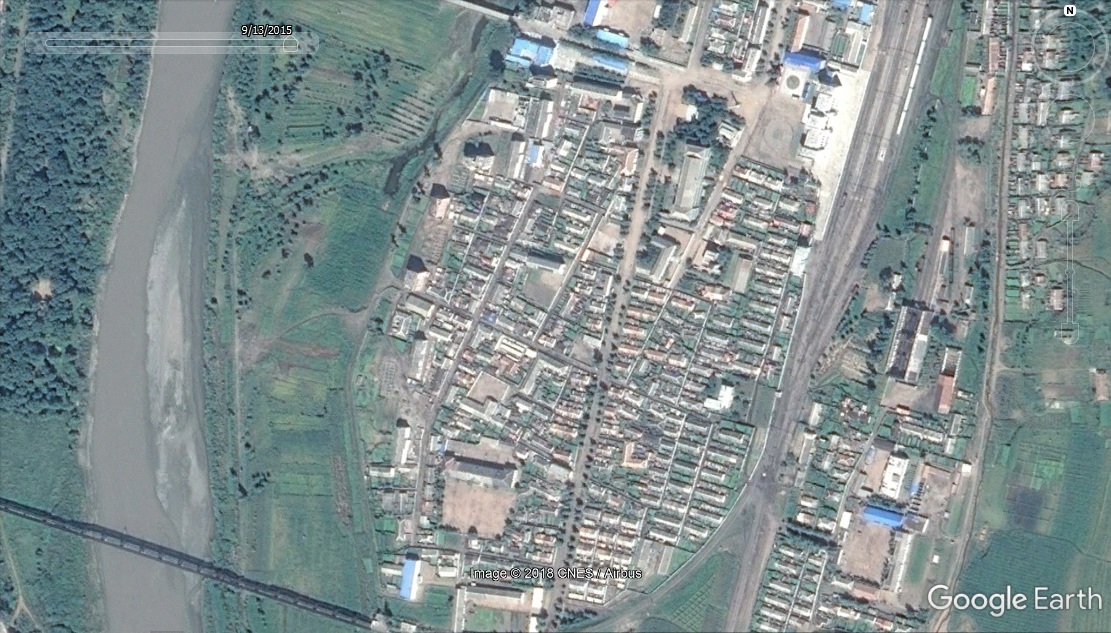
On the Hyesan and Sinuiju real estate markets

October 2nd, 2015

According to the Daily NK:

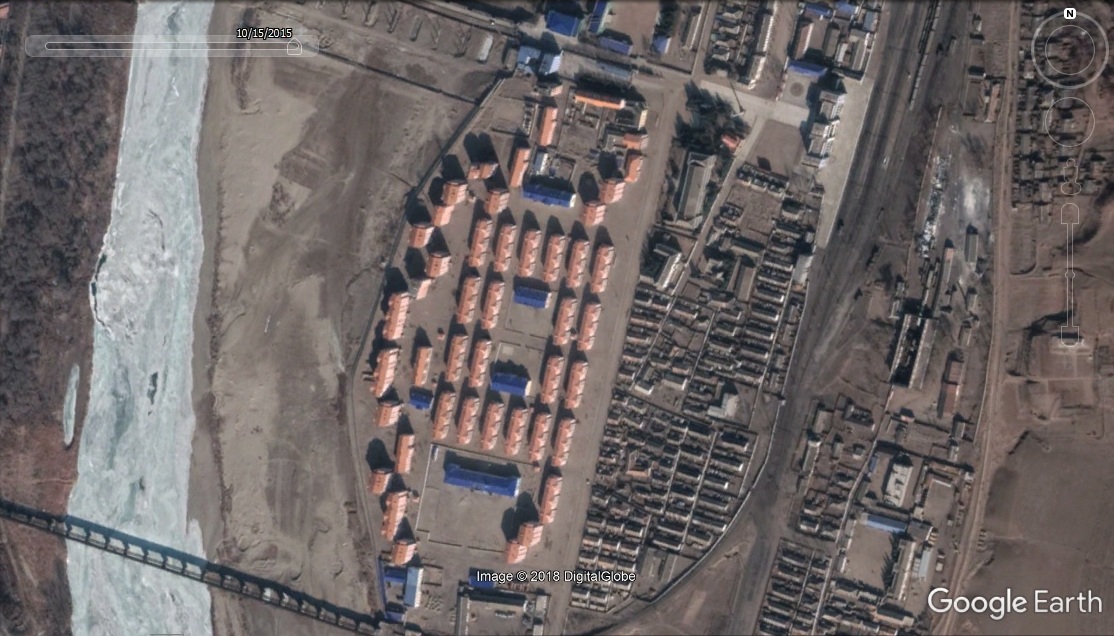
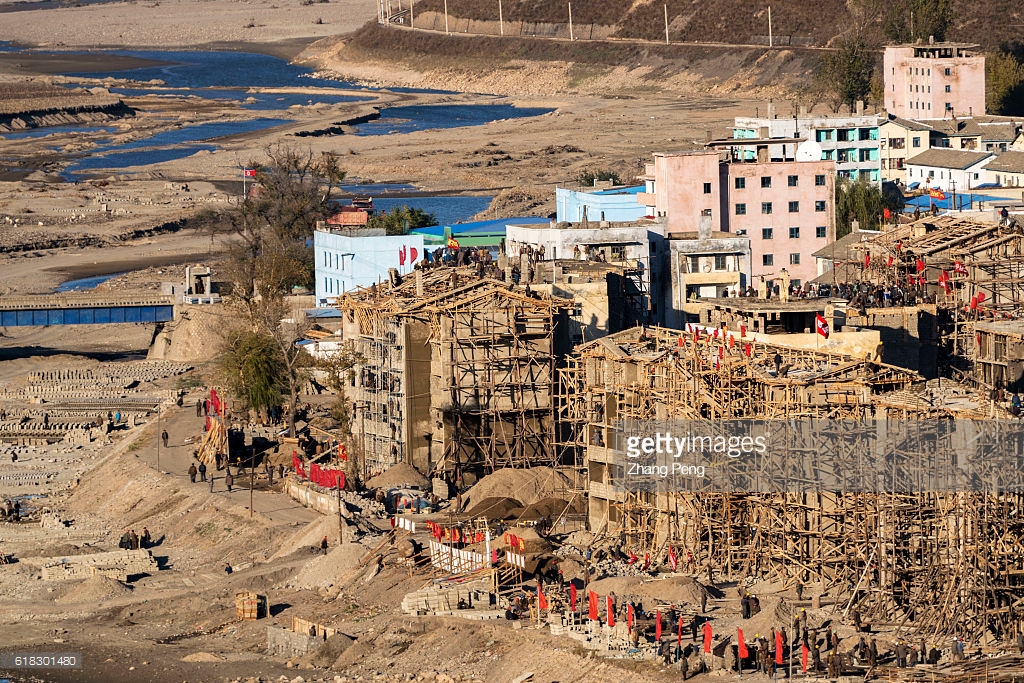
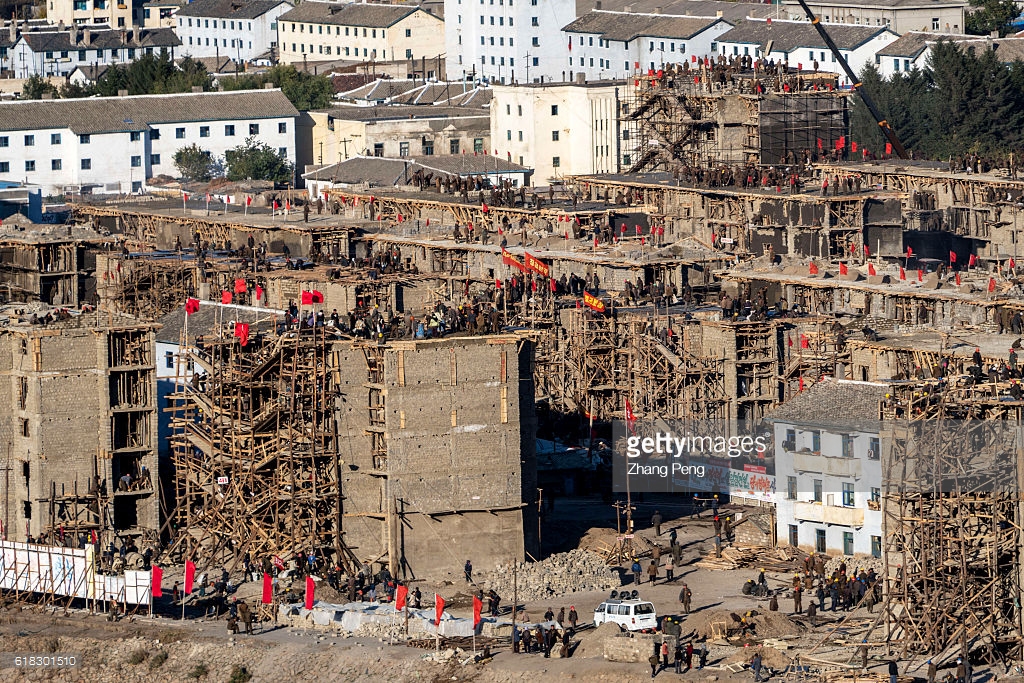
Construction of new apartment buildings is being accelerated in North Pyongan Province’s Sinuiju and Hyesan, Yanggang Province, with low rise apartments fetching the highest price at nearly US $10,000. Unlike Sinuiju, which has high rise buildings, Hyesan is mainly constructing low rise apartments. Apartments at or above the fifth floor are being called “Royal Suites,” and selling for big money, according to inside sources.

In a telephone conversation with the Daily NK on October 1st, a source in Yanggang Province explained, “Hyesan is currently undergoing a makeover. New apartments are going up all over the city. Residents are preferring the high rise apartments despite their relative scarcity, or perhaps because of it. Right now a fifth floor, two room apartment (approximately 80-120 square feet) sells for 60,000-70,000 Yuan (US $10,000- $11,000) is the most expensive.”

Another source in Yanggang Province confirmed this development.

In Hyesan, the lower floors go for much cheaper; apartments in floors 1-3 usually sell for about 20,000 – 25,000 Yuan (US $3,000 – $4,000).

“The prices tend to be tied to the floor level like this,” she explained.

“By the time the Korean Workers’ Party Foundation Day holiday arrives on October 10th, Hyesan will look like a totally new city. But construction is not limited to Hyesan; we also see apartment buildings shooting up in Hyesan’s suburbs and riverside regions, in Tabsongdong near Hyesan Stadium, and in Hyemyeongdong, an area filled with statues of Kim Il Sung and Kim Jong Il.”

Added the source, “Much of the construction is due to investment from the Hwagyo [community of overseas Chinese] residing here. They buy one story houses at a very cheap price and then build up a multi-storied apartment and sell it off. They are making a good amount of money through the sales, but the residents are happy to be enjoying the more modern living spaces, so it’s a win-win.”

When asked why the residents prefer apartments on higher floors, the source said that “people are less worried about theft of furniture and large appliances when they live higher up.” In years past, she asserted, most people preferred to be ground level so that they could have access to the yard for planting vegetables. But now, “ lots of folks are worried about flood damage during the rainy season or the possibility of theft.”

She continued to describe the state of one story homes, saying, “houses near Nongnim University or the Hyesan train station sell for approximately 25,000 Yuan (US $4,000). Homes in Yeonbong Il Dong sell for rather cheap at 5,000 Yuan (~$800). However, there are some pricier places in Yeonbong located near the jangmadang (marketplace) that sell for about 20,000 Yuan (~US $3,000).”

Last week the currency conversion rate in Hyesan was 1 Yuan/1320 KPW. That means that a 60,000 Yuan apartment sells for about 80 million KPW (~US $70,000) and a cheaper home selling for 5,000 Yuan sells for about 6.5 million KPW (~ US $7,000).

Read the full story here:
Hwagyo investors fuel building boom
Daily NK
Kang Mi Jin
2015-10-2

Share

World Food Program cuts aid to DPRK

October 1st, 2015

According to Voice of America:

The U.N. food aid agency said Thursday that its aid to North Korea’s vulnerable people dropped 44 percent last month because of a lack of funds.

A World Food Program spokesman said the organization in September provided 2,105 tons of food to 742,000 people who depend on external assistance, including pregnant women and children.

Last month’s amount was also significantly less than what the U.N. agency planned to provide. The agency’s goal was to provide 10,000 tons of food to 1.8 million people every month.

Recently, the agency scaled down distribution areas to 69 counties and cities across the country.

“The main reason for distributing less food in September was insufficient funding resources,” wrote Damian Kean, WFP’s regional communications officer, in an email to VOA.

To fund projects this year, the agency needs about $167.8 million, but it has secured only half of the amount so far, according to the agency’s website.

The food aid cut came as the communist country has been reducing food rations. Last month, North Korea distributed an average of 250 grams of daily rations per person, a 21 percent decline from a three-year average, according to the U.N.’s Food and Agriculture Organization. The figure was less than half of the minimum amount recommended by the U.N. FAO officials blamed poor crop production caused by drought for the cut.

Experts warn that North Korea could face further food shortages next year.

“North Korea has not imported enough food this year, nor did it get significant aid,” said Kwon Tae-jin, an economic analyst in Seoul who specializes in North Korea’s agriculture.

The FAO said North Korea needs 421,000 tons of food from the outside world by the end of the month to feed its citizens this year.

Read the full story here:
Cash-strapped World Food Program Cuts Aid to N. Korea
VOA
Kim Hyunjin
2015-10-1

Share

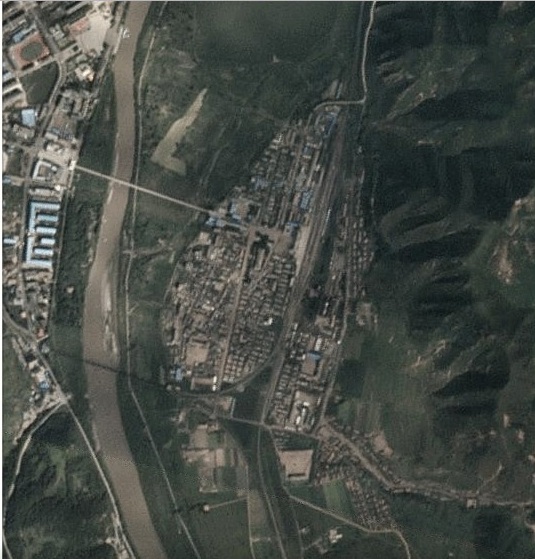
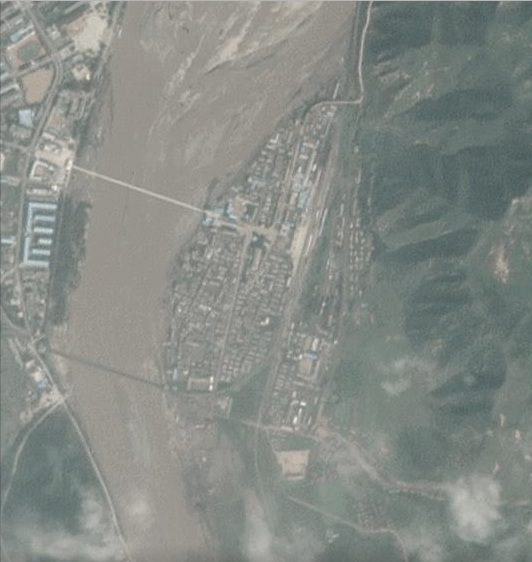
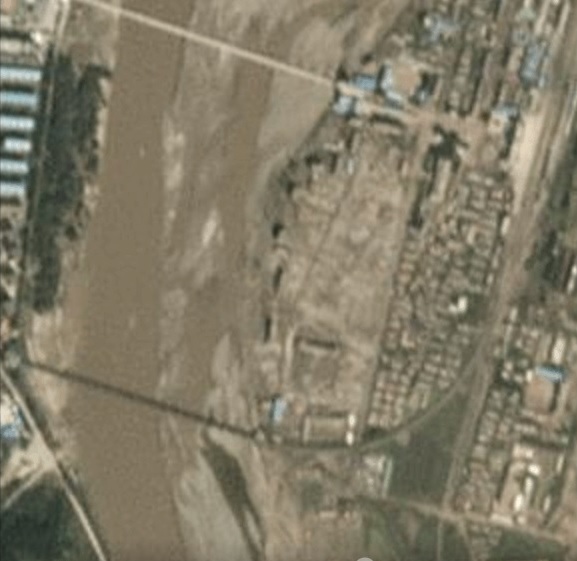
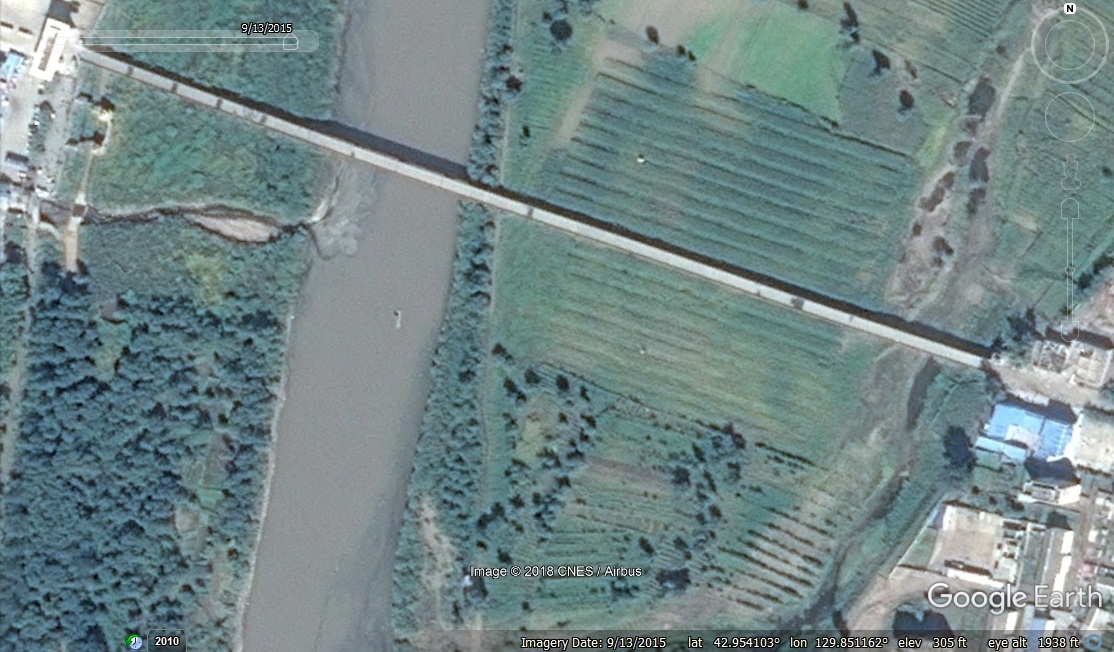
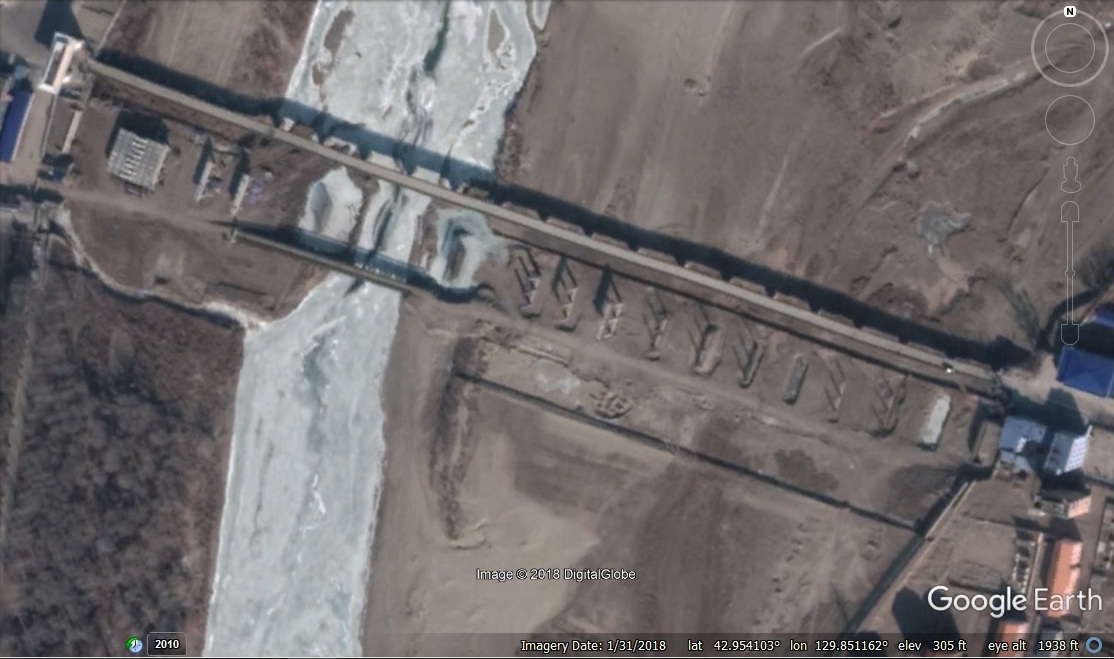
Dandong bridge accident

September 29th, 2015

Dandong-bridge-accident-1 Dandong-bridge-accident-2

Photos from Daily NK

UPDATE 3 (2015-10-26): NK News reports that the bridge was also closed to road traffic in the last week of October for additional repairs.

UPDATE 2 (2015-10-6): Sino-NK Friendship Bridge to open with new regulations. According to the Daily NK:

The Sino-Korea Friendship Bridge has reopened after receiving maintenance for wear and tear that caused a truck accident and an ensuing shutdown of the bridge late last month, Daily NK has learned.

“The transport of cargo was halted because of the truck accident, which was the first to occur in seven decades since the bridge was built, but they’ve resumed transport starting today,” a source in North Pyongan Province told Daily NK on Monday. “They completed three days of work on the bridge, and all cargo trucks are traveling through, but they’ve limited the weight of the truck and cargo to 15 tons to prevent recurrences.”

This news was corroborated via a second source in the same province.

Following a request from the customs office in China’s Dandong, the two sides agreed to abolish the system of allowing cargo to pass according to respective decisions that had created room for passage of overloaded trucks. Instead, authorities will cap the weight of the vehicle and cargo combined at a total of 15 tons.

There are no exceptions at this time, he said; if a vehicle fails to comply with the limit regulations, no access will be permitted.

“Until now, 20 to 30 tons had commonly been the minimum loaded, and often cargo would be much heavier,” the source explained. “Especially more recently, the loads sometimes reached up to 40 to 50 tons due to overloading because of mineral exports that were done in 30-ton containers.”

The bridge is acutely susceptible to damage, he added, noting that North Korea has been overloading trucks with coal, and minerals such as gold, copper, silver, magnetite, molybdenum, and other minerals to earn in foreign currency and secure ‘loyalty funds’ for the leadership since the 1990s.

Mineral exports have reportedly seen a dramatic surge this year, explained by state efforts to reap in capital for Party Foundation Day preparations. However, no attending measures were implemented to control the pervasive practice of overburdening vehicles.

“We (the North) will face a sense of urgency to push out as many minerals as we can to get our hands on more money and import goods, but now with the restrictions on cargo volume now, traders will be swamped,” the source predicted, adding that the number of trucks on the road is also likely to jump significantly.

A flagrant disregard for concern over safety measures is entirely to blame for the accident, he lamented, noting that traders focus all their energies and concerns on raking in ‘loyalty funds’ above all else. While the need for weight regulations was irrefutable, the source surmised that the sudden modification will soon prove to be a double-edged sword.

Going forward, accidents will, presumably, decrease, but disgruntlement from traders faced with bringing in massive loads of supplies into the country leading up to the October 10 celebration is certain to peak, he concluded.

UPDATE 1 (2015-10-1): According to the Daily NK:

The Sino-Korean Friendship Bridge, connecting China’s Dandong and North Korea’s Sinuiju, has been shut down after damage sustained over a protracted period of time caused a truck to flip over. However, with only a number of days left until the Korean Workers’ Party foundation celebration, traffic was temporarily resumed on September 30th, Daily NK has learned.

“Today (September 30th) they resumed traffic just for one day so that North Korean traders can bring in supplies for the event after a truck crashed because of the damage on Monday,” a source from North Pyongan Province told Daily NK.

An additional source in the same province corroborated this news.

Officials have banned entry from October 1 to 4 so that they can restore the bridge, but facing urgent preparation for the Party’s 70th Foundation Day festivities, they put down steel plates as a temporary fix to get truck loads of supplies through, the source explained.

“The accident has thrown customs offices on either side of the border into mad panic,” she added. “Cadres from both customs services surveyed the site of the accident and put things into motion, so construction work is now underway.”

Starting at 8 p.m. on the day of the accident, train services were up and running, but the battered roads with deep crevices were covered with makeshift steel plates by North Korean workers, allowing vehicles that had entered Sinuiju to return to Dandong. Reconstruction work is currently being carried out by Chinese workers, according to the source.

The source speculated that the project would be finalized by October 5, opening up the bridge for a massive trade of goods, leading up to the Party celebration, which falls on the 10th.

ORIGINAL POST (2015-9-29): According to UPI:

A 72-year-old railroad bridge connecting North Korea and China was closed after a crash involving multiple trucks occurred on the North Korea side of the span on Monday.

The Yalu River Bridge, also known as the Sino-Korean Friendship Bridge, was blocked after three or four Chinese trucks rolled at a portion of the bridge that had sunk between 13 and 22 feet, South Korean news network YTN reported.

The bridge has a lane for road vehicles and another for a pair of railway tracks. Trains traveling from China into North Korea were temporarily suspended, but service was resumed after the tracks were repaired, an unidentified source told YTN on Monday.

Another source told South Korean outlet CBS No Cut News the heavy trucks headed for Sinuiju overturned, fell and collided into the adjacent railway tracks, and the accident occurred between 10 and 11 a.m. Vehicular traffic was closed for the rest of the day, and more than 100 trucks from China waiting to enter North Korea were halted, the source said.

The number of casualties was not disclosed.

The bridge, completed in 1943, accounts for 70 percent of commercial traffic between China and North Korea, and the railroad runs from Sinuiju to Beijing.

China remains North Korea’s No. 1 trading partner, and North Korea imports more than it exports to Asia’s largest economy. Pyongyang’s trade dependence on China runs as high as 90.1 percent, according to South Korean government statistics [which exclude South Korean trade with the DPRK].

Read the full story here:
Truck accident on sinking North Korea bridge suspends traffic
UPI
2015-9-29

Share

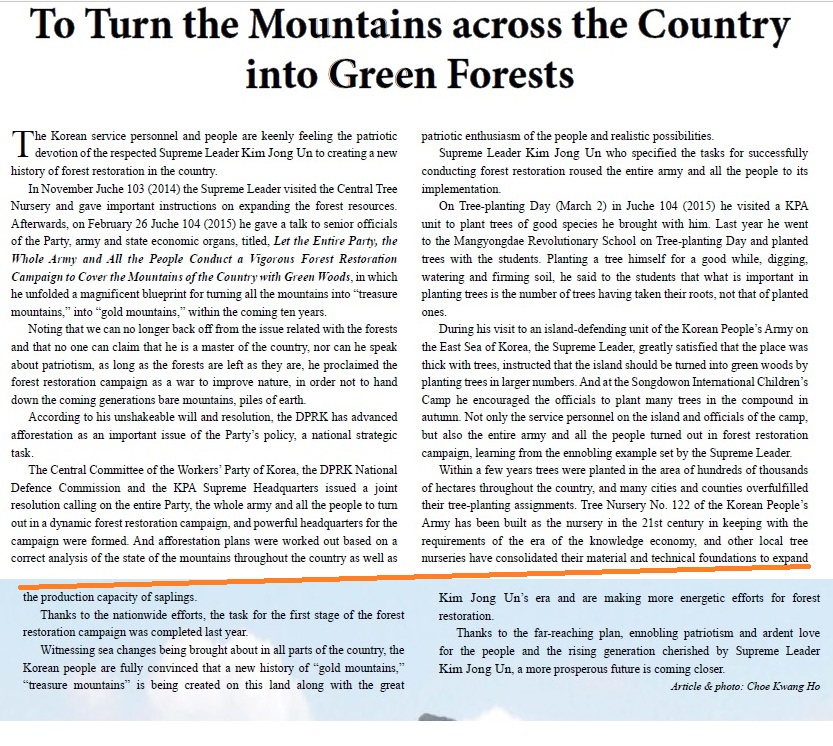
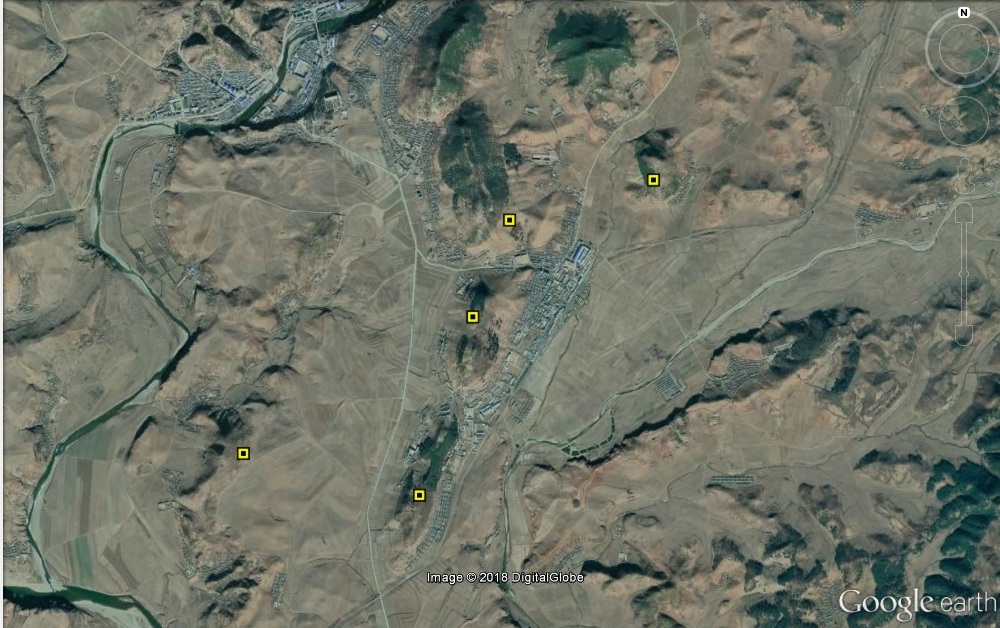
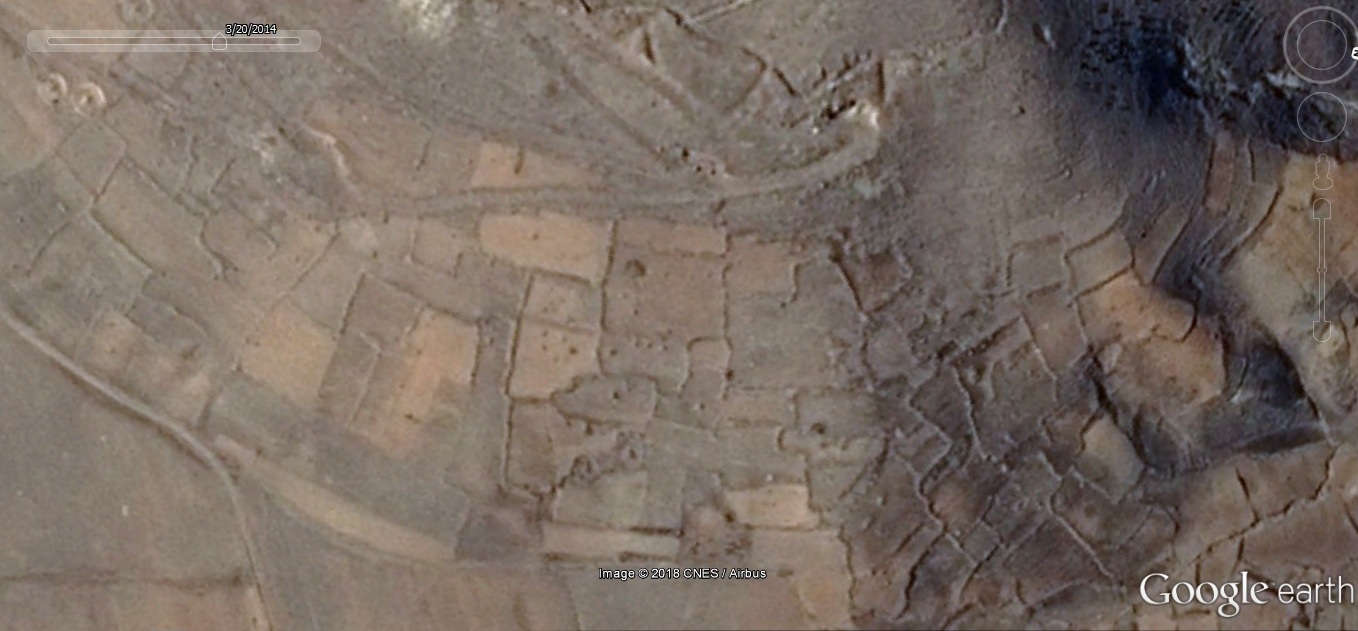
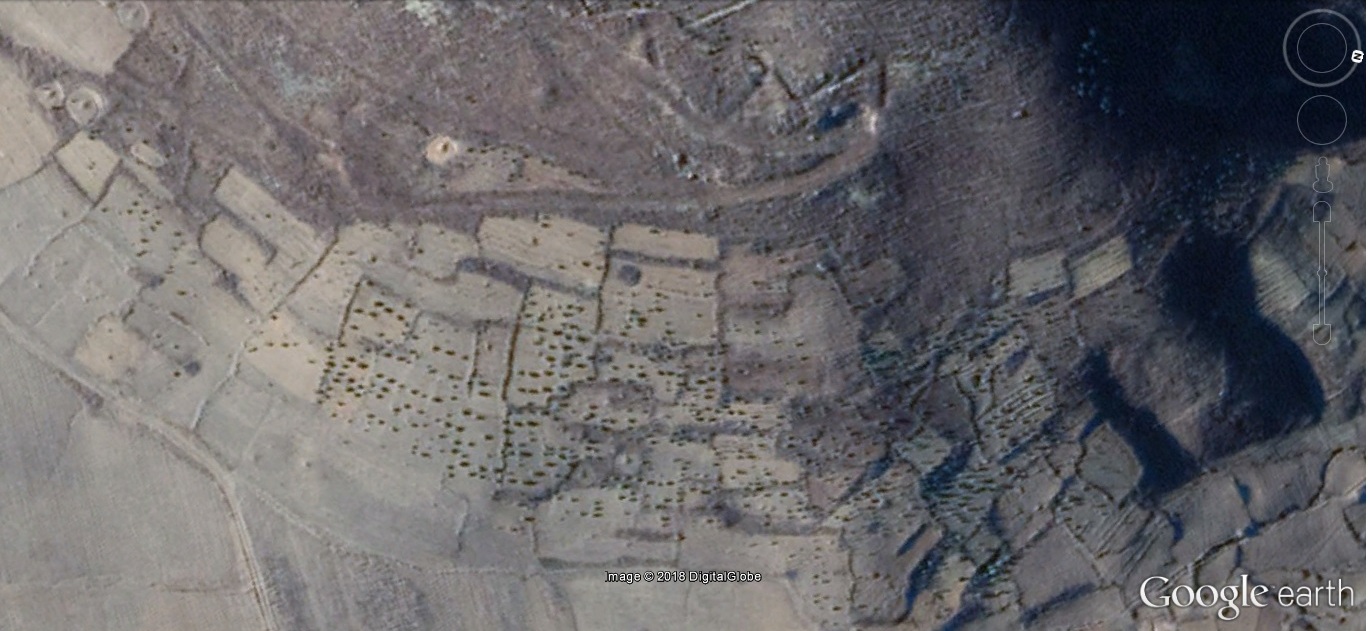
North Korean state media still not pleased with forest restoration

September 29th, 2015

A new brief from IFES recaps the content of yet another North Korean TV broadcast detailing problems arising as the new forestry policies are being implemented:

On August 26, 2015, Korean Central Television (KCTV) aired a program entitled, Let’s Go Forward in Patriotism and Strength in the Forest Restoration Battle. The broadcast criticized several Forest Management Centers, including one in North Hwanghae Province’s Songnim. “They set up sun shades carelessly and then do not even water saplings properly. As a result saplings have become withered and yellow,” the program alleged.

The broadcast went on to a scathing critique of the tree nursery’s poor management: “The spraying equipment also does not properly work […] No more than 30% of the trees are alive […] The soil is overgrown with weeds […] One of the trees still has not sprouted.”

It also condemned the management of the Kangdong County tree nursery. “Because they do not properly conduct fertilizer management and also do not follow water guarantee measures, the saplings turn yellow and wither away. In the vegetable gardens there is so much seaweed that it is difficult to tell whether they are fields of saplings or meadows.”

“The fact that saplings can not grow properly is not due to unfavorable climate conditions but the defeatist and ‘non-owner’ work attitudes of the Forest Management Center workers and tree nursery work groups, who half-heartedly do their work and quit,” the broadcast added.

Read the full article:

IFES NK Brief

North Korean Broadcast Criticizes Forest Restoration Results

03-09-2015

Share

2015 Pyongyang Autumn International Trade Fair

September 28th, 2015

UPDATE 1 (2015-9-30): Aram Pan (DPRK 360) has posted a comprehensive video of the trade fair for those of us unable to make it.

ORIGINAL POST (2015-9-28): According to Yonhap:

A Chinese envoy has urged more Chinese companies to make inroads into the North Korean market, while calling for deepening economic and trade ties with North Korea.

Li Jinjun, China’s ambassador to North Korea, made the remarks on Thursday as he visited an annual trade fair in Pyongyang, in which about 110 Chinese firms took part, according to the Chinese Embassy in the North on Monday.

Li urged the Chinese companies to “better understand and enter into the North Korean market.”

The Chinese ambassador also “encouraged them to develop friendly relations between China and North Korea and deepen bilateral economic and trade cooperation.”

Political relations between North Korea and China remain strained over the North’s defiant pursuit of nuclear weapons and missiles, but China is the North’s economic lifeline.

About 300 companies from 10 nations, including China, Germany, Singapore and Vietnam, joined the 11th Pyongyang Autumn International Trade Fair, which was held last week, according to the Chinese Embassy.

Read the full story here:
Chinese ambassador calls for deepening economic ties with N. Korea
Yonhap
2015-9-28

Share

The Political Prestige of North Korea’s Economic Reforms, and why it may be a Problem

September 28th, 2015

By Benjamin Katzeff Silberstein

This certainly has been the season of contradictory information on North Korea’s food supply. The North Korean government is celebrating and claiming success of their agricultural reforms, while the FAO reports that things have gotten worse. Let us recap what has happened:

First there was the drought. North Korean state media described it as the worst one in 100 years. UN agencies predicted large-scale crop failures and appealed for food aid, warning that large shares of the population would be at great risk if aid did not come. The UN’s emergency response fund (CERF) allocated $6.3 million to counter the impacts of the drought. The rains came, however, and the drought alarms seemed to have been exaggerated.

Next, the North Korean media – assuming you can even talk about it as a single, coordinated entity – went the other direction. In July, the weekly Tongil Sinbo claimed that thanks to agricultural reforms, this year’s harvest had actually increased “despite adverse weather conditions”.

And recently, reports turned the other way again. In early September, the Food and Agriculture Organization of the UN declared that the cereal production forecast for the main season of 2015 had declined drastically from last year due to a “prolonged dry spell”.

The rain that eventually came in July and August, causing flooding in the northern parts of the country and leading to an estimated loss of one percent of all planted areas. The FAO rice production forecast for 2015 is 12 percent below that of last year. State food rations, the importance of which can be debated, declined drastically, according to the agency.

In the midst of all of this, North Korean propaganda is still claiming success for the reforms. Earlier this month, the state news agency KCNA reported that a “dance party” had been held in South Hwanghae, part of the country’s rice bowl, celebrating improving conditions on the countryside:

The performers presented cheerful dances depicting the happy agricultural workers who work and live in the rural areas now turning into a good place to work and live thanks to the successful embodiment of the socialist rural theses under the leadership of the Workers’ Party of Korea.

The picture gets even more complicated if one assigns meaning to the fact that cereal imports from China were reportedly lower in July this year compared to 2014. Figures from just one month might not indicate a trend, but given that July was a particularly dire month, these figures are still significant. If imports are being decreased because the official line is that agricultural conditions have improved, no matter the reality, that might be bad news for those in the North Korean public that rely on the public distribution system for any significant part of their consumption.

Either the FAO is right and the North Korean government wrong, or the other way around. Harvests this season cannot have been improving and getting worse at the same time. The FAO is probably far more likely than the North Korean government to have made a correct assessment here. Even if North Korean authorities aren’t claiming success of the reforms for propaganda reasons – which they may well be doing – it is hard to see why their statistical and monitoring capabilities would be better than those of the FAO.

So, the North Korean government is claiming that agricultural reforms are leading to better harvests and food conditions, even when they probably aren’t. Why would they do that? There are lots of possible reasons and one can only speculate.

One possible reason is that the agricultural reforms have become a prestige project. North Korean propaganda channels and news outlets have publically claimed that reforms are being implemented and leading to good results, even though some adjustment problems have been admitted. The same pattern, by the way, can be seen with regards to forestry policies – state media has publicized them with a bang and claimed that they just aren’t being implemented well enough by people on the ground when they don’t seem to be working as intended.

This could be an indication that agricultural reforms are indeed, like many have assumed, a major policy project of Kim Jong-un and the top strata.

That could be good news. After all, North Korea is in dire need of changes in agricultural structures, production methods, ownership and responsibility.

But it could also be bad news. When policies are strongly sanctioned and pushed by the top, their flexibility is likely to be inhibited. In other words, if the top leadership says that something should get done, it has to get done regardless of whether it works well or not.

Again, look at the forestry policies. According to reports from inside the country, those tasked with putting the new policies into practice on the ground say that doing what the central government asks isn’t smart or possible. Nevertheless, such orders are hard and risky to question.

At this stage it is only speculation, which is always a risky endeavor when it comes to North Korea. It may well later turn out to be wrong.

But if the state is placing enough prestige in the agricultural reforms to claim that conditions are improving even if they aren’t, that may lead to limited flexibility in how they are implemented and changed in the future. In other words, if the leadership thinks they are important enough to claim success even when things are getting worse, they may not be prone to changing their orders to fix what isn’t working.

Share

An affiliate of 38 North