Archive for the ‘Uncategorized’ Category

DPRK rattles more sabers

Friday, January 30th, 2009

On Friday, the DPRK announced it is rescinding the 1991 Agreement on Reconciliation with South Korea (h/t to Nautilus Institute).  The document is brief—so it is worth a read.

Among all of the stipulations in the document, the media has focused on the appendix in which the DPRK agreed to respect the NLL (the de facto, but disputed, maritime border in the West Sea).  The DPRK’s actions have led some analysts to predict that the DPRK will resort to staging provocations along the border in the near future.

Why the drastic policy change?  Well, we are talking about North Korean policy making here, so in a sense unpredictable changes in foreign policy should be…predictable.

Although the DPRK claims it is taking this action in response to South Korea’s ‘hostile policy,’ (which is what Pyongyang euphemistically calls South Korea’s decision to end unconditional financial and economic subsidies), some have speculated that Pyongyang is experincing a bit of a power struggle.  Others believe the DPRK is merely raising tensions to get the attention of the new Obama administration which has been so busy with domestic issues that it has not yet named a North Korea envoy. If this is merely a play for more financial assistance from both South Korea and the US, then the use of provocative language and tactics is rational on the part of the DPRK as they have generally yielded results in the past.

Of course, as with any sequential game, players do adjust to adversarial strategies.  For now, South Korea is simply ignoring the DPRK’s complaints.  Financial markets also seem unimpressed:

“Market participants are sick and tired of the North’s rah rah … investors remain pretty much unmoved now,” said Y.S. Rhoo, an analyst at Hyundai Securities.

Major ratings agencies said they saw no reason to adjust their view on South Korea following the threats.

And according to Reuters:

Credit ratings agencies played down the impact on South Korea’s ratings of Friday’s threat by North Korea to scrap all key agreements with the South, calling the remarks yet more diplomatic manoeuvring.

“We have tolerance for both positive and negative news flow out of North Korea up to a certain limit,” James McCormack, Head of Asia-Pacific Sovereign Ratings at Fitch Ratings, said by telephone from Hong Kong.

“But I think what we’ve seen today is probably within the tolerance band,” he added.

Kim Eng Tan, a sovereign ratings official at Standard & Poor’s Ratings, also predicted little immediate impact on South Korean ratings from the North Korean remarks.

“Unless things develop to the point where there is a real threat to security or stability on the Korean peninsula, we are unlikely to change our assessment of the South Korean government’s creditworthiness as a result of this declaration,” he said in an email to Reuters.

Fitch has an A-plus sovereign rating on South Korea with a negative outlook while S&P has an A rating with a stable outlook. They have said security concerns regarding North Korea are among the main constraints on South Korean ratings. 

If this is true, then the South Korean government is not under any pressure from financial markets to resolve the situation quickly…which is not good news for the DPRK.  Could it be that the DPRK is now unable to credibly project itself as a threat to the South?  

What an interesting scenario that would be.

See also: DPRK Studies, One Free Korea, and the Economist

UPDATE: The full statement in KCNA:

DPRK to Scrap All Points Agreed with S. Korea over Political and Military Issues
 
Pyongyang, January 30 (KCNA) — The Committee for the Peaceful Reunification of Korea issued a statement Friday in connection with the situation on the Korean Peninsula growing tenser as the days go by due to the south Korean conservative authorities’ reckless moves to escalate the confrontation with the DPRK.

Citing facts to prove that the Lee Myung Bak group, far from reflecting on the treacheries of pushing the north-south relations to a serious crisis, shamelessly is challenging the north, raising a hue and cry over the “threat from the north” and “adherence to principle,” the statement said:

The inter-Korean relations have reached such pass that there is neither way to improve them nor hope to bring them on track. The confrontation between the north and the south in the political and military fields has been put to such extremes that the inter-Korean relations have reached the brink of a war.

The group of traitors has already reduced all the agreements reached between the north and the south in the past to dead documents.

Under such situation it is self-evident that there is no need for the DPRK to remain bound to those north-south agreements.

The statement vehemently denounced on behalf of all the Koreans the Lee group for having pushed the inter-Korean relations to the brink of a war through its moves to escalate the confrontation with the DPRK in gross violation of the inter-Korean agreements.

In view of the prevailing situation the statement solemnly clarified as follows:

First, all the agreed points concerning the issue of putting an end to the political and military confrontation between the north and the south will be nullified.

Second, the Agreement on Reconciliation, Non-aggression, Cooperation and Exchange between the North and the South and the points on the military boundary line in the West Sea stipulated in its appendix will be nullified.

Holding the Lee Myung Bak group wholly accountable for the present grave situation to which the inter-Korean relations have been pushed, the statement continued:

Never to be condoned are the crimes the Lee group has committed against the nation and reunification by bedeviling overnight the inter-Korean relations that had favorably developed amidst the support and encouragement of all the Koreans and ruthlessly scrapping the inter-Korean agreements.

The Lee group seems to wait for something, calling for “adhering to the principle” but it will only face a heavier blow and shameful destruction.

Read more on this story below:
North Korea Ramps Up Rhetoric Against Seoul
Wall Street Journal
Evan Ramstad
1/30/2009

North Korea, trying to jolt Obama, warns South
Reuters
Jonathan Thatcher
1/30/2009

North Korea Scrapping Accords With South Korea
New York Times
Choe Sang-hun
1/29/2009

NKorea ditches nonaggression pact with SKorea
AP (Via Washington Post)
Jae-Soon Chang
1/30/2009

Ratings agencies play down North Korea remarks
Reuters
Yoo Choonsik
1/30/2009

Power struggle suspected in N. Korea
Washington Times
Andrew Salmon
1/31/2009

Share

Friday fun: Kim to bring moon to DPRK

Friday, January 30th, 2009

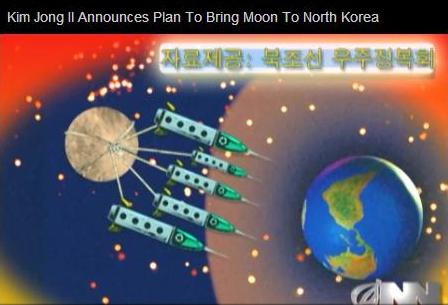
For a good laugh, check out The Onion’s latest (well researched) “story” from North Korea (h/t to Rich at www.Asiabizblog.com for this one).

moonplan.JPG

My favorite line: “The People’s Great and Harmonious Moon Hand of Kim Jong il will be the largest moon hand pedestal ever constructed”

I am told the English subtitles and the Korean voice-over actually come pretty close to matching.

The Onion recently published this piece as well.

Share

Johns Hopkins: US-Korea Institute Working Papers

Tuesday, January 27th, 2009

2008 Working Papers   
 
WPS 08-9: Alliance of “Tooth and Lips” or Marriage of Convenience? The Origins and Development of the Sino-North Korean Alliance, 1946-1958, by Shen Zhi-Hua, traces the development of Sino-North Korean relations and challenges the “tooth and lips” myth often purported as the basis of their alliance.
 
WPS 08-8: Dependence and Mistrust: North Korea’s Relations with Moscow and the Evolution of Juche, by Kathryn Weathersby, Ph.D., discusses North Korea’s diplomatic history with the former Soviet Union and the Soviet Communist Party, identifying key events which catalyzed the deterioration of the Soviet-North Korean alliance.
 
WPS 08-7: Ending the Korean War: Considerations on the Role of History, by Kathryn Weathersby, Ph.D., argues that as the complex task of constructing a peace regime on the Korean peninsula begins, constant confrontation with historical inquiry, which undercuts the natural tendency to simplify and distort the past into national myths that hinder reconciliation, will be necessary.
 
WPS 08-6: Japan and North Korea: The Long and Twisted Path towards Normalcy, by Gavan McCormack, Ph.D., discusses the diplomatic history of North Korea-Japan relations, including the tensions over the issue of Japanese abductees.
 
WPS 08-4: How Korea Could Become a Regional Power in Northeast Asia: Building a Northeast Asian Triad, by Im Hyug Baeg, Ph.D., presents strategies for increasing South Korea’s soft power and smart power around Asia in order to close the power gap with its Northeast Asia neighbors, China and Japan.
 
WPS 08-3: Necessary Enemies: Anti-Americanism, Juche Ideology, and the Tortuous Path to Normalization, by Charles Armstrong, Ph.D., chronicles the development of U.S.-DPRK relations from 1942 to the present, including such contentious issues as the USS Pueblo Incident and North Korea’s nuclear ambitions.
 
WPS 08-2: In Pursuit of Peaceful Development in Northeast Asia: China, the Tumen River Development Project and Sino-Korean Relations, by Carla P. Freeman, Ph.D., examines the changing dynamics of China’s relations with both North and South Korea, as well as with ethnic-Korean populations within China, and the implications of these complex relationships for East Asian regional security and cooperation.
 
WPS 08-1: Korea: An Important Part of India’s Look East Policy, by Walter Andersen, Ph.D., presents a multi-faceted look at growing India-Korea cooperation, including the strengthening of institutional mechanisms for increased trade and investment, and key opportunities and obstacles for increasing strategic cooperation.
 
Find more about USKI’s Working Paper Series here.

Share

Economic rationality in the DPRK

Saturday, January 24th, 2009

Writing in the Daily NK, guest author “Benji” and an astute reader offer us this little glimpse of economic rationality in North Korean culture.

benji-pektu.jpg

Commenting on the photo above, “Benji” notes:

“A North Korean soldier in front of an amazing view from [Mt. Pektu].  Minutes later, he was to offer me one of his cigarettes.”  

An astute reader made the following comment:

“The cigarette from the Soldier probably wasn’t the kind offer it seemed to be. North Koreans use cigarettes as currency. When they see a western tourist they offer their substandard north korean cigarettes in the hope of receiving western thus more valuable ones in exchange, or if they are especially lucky chinese Double Hapiness

The pictures and story are worth reading here:
Sacred and Stunning Mountain, Baekdu
Daily NK
“Benji”
1/22/2009

Share

DPRK announces “bond”…er…lottery winners

Sunday, December 28th, 2008

Quoting from Yonhap:

The latest drawings for pay outs of North Korea’s government bonds have taken place in Pyongyang, the country’s state-run television broadcaster said Friday.

The (North) Korean Central TV, monitored in Seoul, reported that the latest winners of the “People’s Life Bonds” were announced this week.

From July-November 2003, the North Korean government sold 10-year bonds worth 500 (US$3.50), 1000, and 5000 North Korean won, saying it would repay lottery winners by multiplying the original payment rather than paying interest.

It was the first bond that North Korea has issued.

According to reports then, the cash-short communist regime aggressively marketed the bonds, praising buyers as “patriots” helping to funnel private money into the buildup of the national economy.

First-place winners get 50 times the face value of the bond, with second-place winners receiving 25 times, third with 10 times, fourth with five times, six with triple and seventh with double.

Drawings were reported to be held once or twice a year.

The sixth round of drawings took place in January 2008, with thirteen 5000-won bond holders declared winners, as well as eight 1000-won bond holders and 10 holders of 500-won bonds.

For this week’s event, seven winners were drawn for each denomination, the TV report said.

Here is a link to an IFES article on the last round (round six) of bond payments, which were announced in January 2008.  Round five took place in January 2006.

Read the full article here:
N. Korea holds latest lottery for gov’t bond repayment
Yonhap
12/26/2008

Share

DPRK to continue economic slide

Saturday, December 27th, 2008

Quoting from The Nation:

“North Korea had a little boost this year, due largely to its farm, mine and electricity and gas sectors,” the Hyundai Research Institute (HRI) said in its 2009 report on the communist nation’s economy.

North Korea’s farm production increased by 7.5 per cent, from 4.01 million tonnes in 2007 to 4.31 million tonnes forecast for 2008, according to South Korea’s Rural Development Administration (RDA).

“This year, North Korea’s weather conditions have enabled modest harvest growth,” said Ha Un-Gu, a researcher at RDA.

The delivery of energy aid from the United States, China and Russia was cited by the HRI report as a boost for North Korea’s gas and electricity sectors.

In 2008, North Korean trade with China has grown at a pace strong enough to offset its shrinking trade with Thailand. “So North Korea is forecast to post a record trade volume of 3 billion US dollars in 2008,” the HRI said.

However, North Korea’s 2012 target is becoming elusive, as the country’s trade volume is forecast to slide back from its peak of 3 billion dollars in 2008.

Liquidity problems of key trading partners China and Thailand will make it hard for them to maintain their economic ties with North Korea.

North Korea’s business ties with China were forecast to undergo a particularly steep decline, the HRI said.

North Korea’s trade volume with China increased by 25 per cent to 1.19 billion dollars during the January to June period in 2008, compared to same period in 2007, according to Shin Jeong-Seung, the South Korean ambassador to China.

Download the study (PDF in Korean) here.

Read the full article here:
North Korea’s economy is forecast to resume its slide
The Nation
12/27/2008

Share

About the leaflets…

Thursday, December 25th, 2008

As we have previously discussed, North Korean human rights groups are sending leaflets across the DMZ in balloons.  Dr. Petrov provides a link to what is written on these brochures, which can be read in Korean here.

I have aso put the flyer into a PDF which you can download here.

Here is the gist in English:

1st section: Starts off saying that FFNK intends to set the facts straight; that the people in the DPRK need to know the truth.  Key messages: the hunger and the poverty in DPRK is not due to SK or US but due to the habitual negligence and selfishness of Kim Jong il (They say “devil-like KJI”) and that the DPRK government was the puppet government of the Soviet Union, adding that a September 25, 1945 document containing the verification of this fact was released publicly in 1993.

2nd section: Titled, “The Truth about the 6.25 war (Korean reference to the Korean war),” states that it was in fact the DPRK who attacked the south.  In march 1949, Kim il Sung went to Moscow and “begged” Stalin for permission to attack the South to unify Korea under the socialist flag. After KIS’s 48th attempt, Stalin gave his consent in early February 1950 and Kim attacked on 6.25.1950. The leaflet stresses that this info has been verified by the US and Russia.

3rd section: Titled, “The Reason for the Fall of DPRK,” claims it wil be due to KIS and KJI depleting natural resources and exploiting the people as their personal banks and slaves. The leaflet claims that they disguise their greed/exploitation by pretending/lying that they are also the sons of the people and that what is good for the party is also good for the people.  A direct quote states: “While the NK people were starving, KJI dined like a king with meals prepared by his Japanese chef,”and that the DPRK is the only country in the world where laws are embodied by a man.  This section also lists many economic and social statistics that contrast the DPRK and RoK. Another direct quote: “In other words, KIS and KJI have made you a mindless drone/slave of the modern age mentally, physically and through your hunger. KJI is solely responsible for this atrocity/disaster.”

4th section: Titled, “What Kind of Human is KJI? Here’s the Truth (they use the Korean word for ‘human’ rather than ‘person’.” His birthday is actually 1941.2.16 but was changed to 1942 to coincide with the year his father came to power. His birthplace is not Mt. Baektu a hospital in the Soviet Union. When “Yura” graduated from his middle school, he announced that he was ‘issued’ a Korean name and would henceforth be called JI. His Siblings: unconfirmed older sister, younger brother “Shura,” who drowned while playing with JI in a river, younger sister kim kyung hyui. Wife: officially married to Kim Young Sook, but separated. He lived with a former movie actress Song Hae Rim, who gave him Kim Jong Nam, but when she committed adultery, he exiled her to Moscow.  She died in 2002. His next wife, Ko Young Hui, gave him 3 kids, but she died 2004.  Kim has probably lived with tens of women. The leaflet asks “are these the actions of the face of the respectable/high-minded communist country, the innocent, modest and loving leader of the people?” 

Share

Orascom 3G wrap up

Friday, December 19th, 2008

UPDATE: Here is an older paper by Stacey Banks which I have not read: North Korean Telecommunication: On Hold.

ORIGINAL POST: On Monday the Orascom 3G mobile network launched in North Korea.  Just about everyone covered this story…so here are the highlights:

Telecommunications in North Korea: Has Orascom Made the Connection?
Working Paper: Marcus Noland

The topicality of the second paper, on the Egyptian firm Orascom’s role in North Korea’s telecommunications modernization, received a boost this week with the announcement in Pyongyang that Orascom was finally rolling out its cell phone service and creating a joint venture bank with a North Korean partner.  The planned Orascom investments are large: if actualized, they would be the largest non-Chinese or non-South Korean investments in North Korea, and would exceed total private investment in the Kaesong Industrial Complex to date

Financial Times

Orascom is confident North Korea is opening up its economy and says it has been assured by the ­government that everyone will be allowed to buy a mobile. However, experts think that such a volte-face is highly unlikely and reckon only senior military and government officials will be allowed access, and then only to a closed network.

When asked how many people would ultimately use the service, Orascom’s chairman Naguib Sawiris said: “We have a modest target of 5 to 10 per cent of the population.” The population is about 23m. Mr Sawiris expects 50,000 subscriptions in the first three-to-six months.

Jim Hoare, Britain’s former chargé d’affaires to Pyongyang, says the new network is bound to have severe restrictions.

“It’s unlikely that a country that doesn’t allow you to have a radio unless it’s set to the state frequency will suddenly allow everyone to have mobile phones. It’s more credible that there will be a limited network for officials in Pyongyang and Nampo.”

Dong Yong-sung, chief of the economic security team at the Samsung Economic Research Institute in Seoul, believes another obstacle to ordinary North Koreans owning phones will be the cost. “As far as I know, mobile phone registration costs about $1,000,” he said, a sum equivalent to the average annual income.

(NKeconWatch: Others put the price at $700…and there are many problems with asserting that the DPRK’s per capita income is $1,000 per year.)

Bloomberg

The inauguration of Koryolink took place today in North Korea, Orascom Telecom said in an e-mailed statement. Orascom Telecom Chief Executive Officer and Chairman Sawiris attended the event, a company official said, requesting anonymity. The Cairo- based company got a 25-year license and exclusive access for four years in January. It plans to spend as much as $400 million on a high-speed network and the license for the first three years.

The North Korean venture is “in line with our strategy to penetrate countries with high population and low penetration by providing the first mobile telephony services,” Sawiris said in a statement earlier this year.

CHEO Technology JV Company, the North Korean unit that will operate under the Koryolink name, is 75 percent owned by Orascom Telecom and 25 percent by the state-owned Korea Post and Telecommunications Corporation.

The unit will see average revenue per user of $12 to $15 this year as Orascom Telecom targets three of the country’s biggest cities, according to company forecasts.

Koryolink has rolled out its so-called third-generation grid to initially cover Pyongyang, with a population of 2 million.

Orascom is counting on four potential markets in the Stalinist nation, according to a study by Marcus Noland of the Peterson Institute for International Economics.

The military and government officials are the top targets, followed by foreigners working for UN organizations and diplomats. The others are customers from South Korea, which has several economic projects with its neighbor, and local demand from rich North Koreans.

To protect its investment, Orascom “hedged its bet, committing only half of its investment at the outset and making additional investment conditional on its assessment of conditions going forward,” Noland said.

If the deal is threatened, Orascom may withdraw specialized equipment or technicians, reducing the value of the network to Pyongyang, Noland said in his study.

“Orascom may have spread the wealth informally, creating beneficiaries within the decision-making apparatus who would stand to lose if the agreement failed,” according to the study.

Bloomberg

Orascom Telecom, the Middle East’s biggest wireless company, opened Ora Bank in Pyongyang in the presence of Chairman and Chief Executive Officer Naguib Sawiris, a company official said on condition of anonymity. Ezzeldine Heikal, who is also head of Koryolink, Orascom’s North Korean mobile-phone network, was appointed president of the bank, the official said without providing further details.

“This is a big deal, especially as far as North Korea is concerned, because the current banking system is virtually non- existent,” Marcus Noland of the Peterson Institute for International Economics said in a telephone interview from Washington, D.C. “It’s a ground that others have feared to tread and is perhaps an endorsement for North Korea that says ‘we’re open for business.’”

Ora Bank is a joint venture between Orascom Telecom and North Korea’s state-owned Foreign Trade Bank, North Korea’s official news agency reported today. The director of North Korea’s central bank Kim Chon Gyun and Egypt’s ambassador to Pyongyang Ismail Abdelrahman Ghoneim Hussein, were also present at the opening ceremony, the news agency said.

Radio Free Asia

Chinese traders who regularly travel back and forth to North Korea said local residents showed little enthusiasm for the new service, which cost more than U.S. $900 to set up before the Ryongchun explosion.

North Korean defector Kim Kwang-jin, a senior researcher at the Institute for National Security Strategy in Seoul, said the fact that the government had once pulled the plug on North Korean cell phones meant that it could easily do so again.

“In the beginning, people will be hesitant, because a few years ago many of them made a big investment in cell phones. But service was suspended abruptly, so they are still very concerned that might happen again,” Kim said.

“People are also worried that the ability to pay such a high amount of money for a cell phone may raise a red flag and bring them under scrutiny by the North Korean authorities.”

Most foreigners are banned from using cell phones while in North Korea, although a network for government officials is believed to exist in the capital, Pyongyang.

(NKeconWatch: I personally saw elite North Koreans use mobile phones and even some western journalists in 2005.)

The Guardan

North Korea first experimented with mobile phones in 2002, but recalled the handsets 18 months later after a mysterious train explosion that killed an estimated 160 people. Some experts argue that officials feared the incident was an attempt to assassinate the regime’s “dear leader”, Kim Jong-il, and that mobile phones were involved.

BBC

Some reports suggest that handsets for the new network will cost around $700 each, putting them far beyond the reach of the vast majority of people in the impoverished country.

Choson Ilbo

Although the technology would enable users to send and receive text messages and video content, North Korean customers will only be allowed to speak over their phones.

BMI Political Risk Analysis, Dec 16, 2008 (h/t Oliver)

BMI View: North Korea has officially begun third-generation (3G) mobile phone services, thanks to Egypt’s Orascom Telecom (OT). However, the growth of the network could be limited by the regime’s fear that mobile phones will increase the scope for anti-regime activities.

North Korea has officially commenced third-generation (3G) mobile phone services, thanks to an investment by Egypt’s Orascom Telecom (OT). The firm’s initial target is 100,000 subscribers in three major cities, including Pyongyang, and it eventually hopes to develop a nation-wide network connecting North Korea’s 23mn citizens. OT has promised to invest US$400mn in network infrastructure over the next four years. It has signed a 25-year contract with the North Korean government, and owns 75% of their joint-venture (known as Korealink). OT’s exclusivity rights will last for four years. Orascom’s foray is something of a coup, given that North Korea’s communications network is so rudimentary (for further background see December 8 2008, Industry Trend Analysis – North Korea Prepares For Mobile Network Launch).

Why Pyongyang Fears Mobile Phones
North Korea launched a mobile phone service operated by a Thai subsidiary firm in 2002, but reversed course in 2004, apparently because of a devastating bomb blast on a train in Ryongchon in April of that year. Given that North Korean leader Kim Jong Il’s personal train had passed through the area only a few hours earlier, there was speculation that the explosion had been an assassination attempt, possibly triggered by mobile phone. Since then, only those living in areas close to the border with China have had access to mobile phones, thanks to the proximity of the Chinese network.

Aside from the notion of mobile phones as bomb triggers, they can also make it easier for citizens to communicate with one another. This would increase citizens’ ability to organise anti-government activities – such as protests or sabotage. For example, the popular uprising that led to the overthrow of Philippine president Joseph Estrada in 2001 was dubbed the ‘text message revolution’, because that is how the marches were announced and coordinated. Admittedly, the Philippines is a far more open society than North Korea, but the subversive aspect has not been lost on the regime.

Mobile phones would also make it easier for North Koreans to communicate with the outside world, and thus allow the real-time transmission of information or intelligence to foreign media or spy agencies, and vice versa. They would also allow the North Korean elite to communicate more efficiently, allowing dissident elements to plot against the regime.

Thus, even something as basic as mobile phones are seen as potentially regime threatening.

Mobile Service Difficult To Spread
Consequently, Orascom will surely find it difficult to spread its mobile service across the country. For a start, registration will be tightly watched. Secondly, the cost of the handsets, at several hundred dollars, will mean that only the political and moneyed elites will be able to afford mobiles. Of course, elements of the elite can ‘misuse’ their phones to arrange subversive actions if they deem it worthy, but it seems that the regime are counting on loyalty. Indeed, depending on the sophistication of their equipment, the regime will probably be able to snoop in on the elite’s conversations and movements, giving them an additional layer of security.

Read the full articles below:
Orascom eyes North Korean network
Financial Times
Christian Oliver
12/14/2008

Orascom Telecom’s Sawiris Signs North Korean Deal
Bloomberg
Tarek Al-Issawi
12/15/2008

Orascom Telecom of Egypt Opens Bank in North Korea
Bloomberg
Tarek Al-Issawi
12/16/2008

North Korea Brings Back Cell Phones
Radio Free Asia
Jung Young
12/16/2008

Secretive North Korea launches restricted mobile phone service
The Guardian
Tania Branigan
12/16/2008

N Korea launches 3G phone network
BBC
Steve Jackson
12/15/2008

N.Korea Restarts Cell Phone Service
Choson Ilbo
12/17/2008

Share

Exam time…

Monday, December 1st, 2008

Unless something truly amazing happens between now and December 15th, I will be taking a break for exams.  After that I will play catch up and post the latest version of North Korea Google Earth—which has been significantly expanded.

Share

Farewell Gordon Tullock

Thursday, November 20th, 2008

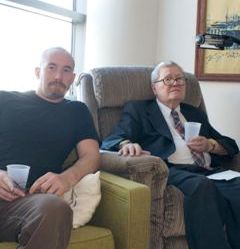
tullock.jpgGeorge Mason University law and economics professor Gordon Tullock is retiring.  Professor Tullcok is one of the seminal scholars of the Public Choice school of economics and the phenomenon known as “rent seeking.”  Although his CV is over 20 pages long, his most referenced work is The Calculus of Consent, co-authored with Professor James Buchanan who was awarded the Nobel Prize for the book’s contributions to economic science. 

Professor Tullock began his career in the US State Department, where he had a front row seat to Chairman Mao’s defeat of Chiang Kai-shek. He was actually in Beijing the day the communists entered the city, and for several years afterwards, he worked the China and North Korea desks for the State Department.

Since moving to Virginia in 1999, I have been honored to work down the hall from Professor Tullock, and he has always been a great source of wisdom and humor.  I wish to congratulate him for his notable and prolific career(s). 

Share