Archive for the ‘International Organizaitons’ Category

Why the Sunshine Policy Made Sense

Thursday, April 1st, 2010

Nautilus Institute Policy Forum Online 10-020A: April 1st, 2010
James E. Hoare
4/1/2010

I. Introduction

James E. Hoare was Britain’s Chargé d’Affaires to the DPRK from 2001-2002 and opened the British Embassy in Pyongyang. In this article on the Sunshine policy he writes, “Slowly, the policy was creating a group of people who could see benefits in remaining on good terms with South Korea and who had wider links with the outside world. Engagement has worked in other countries, most noticeably China, and I believe that it was beginning to work in North Korea. There was never going to be a speedy change in attitudes built up over sixty years, but stopping the process after ten was not a wise decision.”

This article was published by 38 North a web site devoted to analysis of North Korea from the U.S.-Korea Institute at SAIS. 38 North will harness the experience of long-time observers of North Korea and others who have dealt directly with North Koreans. It will also draw on other experts outside the field who might bring fresh, well, informed insights to those of us who follow North Korea.

The views expressed in this article are those of the author and do not necessarily reflect the official policy or position of the Nautilus Institute. Readers should note that Nautilus seeks a diversity of views and opinions on contentious topics in order to identify common ground.

II. Article by James E. Hoare

– “Why the Sunshine Policy Made Sense”
By James E. Hoare

At a recent private meeting in London, a former senior United Nations’ official, drawing on experience relating to a wide range of countries, said that transforming a “failing” or “fragile” state was not something that could be done overnight. Those involved needed to think in terms of ten to twenty years rather than weeks or months. Regardless of whether or not one accepts the idea of the Democratic People’s Republic of Korea (DPRK or North Korea) as a failed or even fragile state-and the term is often used in some quarters-the idea that one is in for the long haul in bringing about major modifications in behavior and attitude is certainly a good one to have in mind when dealing with the DRPK. It was such an approach that marked the Republic of Korea’s policy towards the North under former Presidents Kim Dae-jung and Roh Moo-hyun.

Since the Lee Myung-bak government took office in the Republic of Korea (ROK or South Korea) in 2008, it is fashionable to dismiss the policies followed by his predecessors as an expensive failure. Sneers about “ATM diplomacy,” innuendo about Kim Dae-jung’s motives, and references to his successor Roh Moo-hyun’s naivety, are the commonplace of South Korean academic and press comment, and are heard much further afield. “Sunshine” or engagement have become terms of mockery. The Lee government has adopted a more aggressive policy towards North Korea. It has not refused assistance outright, but has couched its offers in such a way that rejection is inevitable-the most recent example is the “grand bargain” proposed in 2009 in which the DPRK must first give up its nuclear program to receive security guarantees and aid. This is then played back as evidence that the North is incorrigible and not deserving of assistance.

The Lee government’s approach is based on an incorrect assessment both of the Sunshine Policy and what went before it. “Sunshine” or “engagement” was not something that sprang from Kim Dae-jung’s fertile brain, though he certainly can be credited with refining and developing the idea. The policies pursued by Kim and Roh lay firmly within a tradition that goes back to President Park Chung Hee in the early 1970s and that was followed by all his successors to a greater or lesser degree. However, it was never easy to engage the North and it did not take much to divert earlier presidents from such a policy. Frustrated or annoyed, they eventually gave up the effort.

The difference after 1998 was that South Korea stuck to “sunshine” even when there were difficulties. Neither Kim nor Roh were starry-eyed and neither expected that the North would be changed overnight. Both responded to Pyongyang’s bad behavior with firmness. But they realized that circumstances had changed with the famine and other problems that hit North Korea in the 1990s. They also realized that for engagement to be successful, it was best to avoid rubbing in the fact that the country faced real problems. Even if the explanations offered for the problems often ignored the North Korean regime’s own part in bringing them about, there was nevertheless an acceptance that help was needed. The unprecedented appeal for outside assistance that brought in UN agencies and resident non-governmental organizations in the late 1990s showed that the South would help without preaching. No doubt the expense and complications of German reunification also gave pause for thought. If the two Germanys, which had not fought a savage war and were far richer, could not achieve a smooth reintegration, how could the two Koreas?

So Kim and Roh did not break off engagement as a result of “bad” behavior or outside criticism of “soft policies.” They accepted that it would take a long time to modify Pyongyang’s policies and that there were likely to be few expressions of thanks. Of course there was no instant transformation. But the new approach provided a window for other countries to establish relations with North Korea. In theory, it had long been the South’s policy to allow if not to encourage such relations, but the reality had been different. From 2000 onwards, that changed. Countries that had hitherto held back for fear of offending Seoul now found themselves encouraged to establish relations with Pyongyang.

Those that did so found a North Korea that seemed eager for change, although very careful about how that eagerness was expressed. But there was a readiness to do things that would have seemed improbable only ten years before. While never quite admitting that the policies pursued under Kim Il Sung and Kim Jong Il might have had defects, those of us working in the North between 2000-2002 found a willingness on the part of officials to admit that they needed assistance and that mistakes had been made. Examples included a vice-mayor who admitted that post-Korean War town planning had many defects that were only then becoming obvious. Officials were willing to admit that the country was in need of a whole range of economic and commercial skills that had hitherto been neglected. Perhaps most telling of all, a country that had responded to the changes in the former Soviet Union, Eastern Europe and China in the early 1990s by calling home all its overseas students now was most anxious to send students abroad once again.

Engagement was thus helping to open North Korean eyes to possibilities beyond juche, but unfortunately, even before the 2002 nuclear crisis, there was relatively little follow-up on these expressions of intent. Pyongyang found difficulty in matching students to the requirements of foreign universities and other training institutions. Some countries that established diplomatic relations preferred to concentrate on human rights issues to the exclusion of other matters. Since several of these were members of the European Union (EU), their approach inevitably affected the EU’s broad approach to North Korea. Even among countries that did not give predominance to human rights, goodwill was rarely transformed into sufficient funding to make a real difference.

That said, in the British case alone, we were able to fund several sessions of economics training, an English-language training program that put initially two-now four -British teachers into DPRK universities to train English teachers, and intensive English courses for a variety of North Korean officials. In addition, non-governmental bodies such as the BBC and Reuters conducted training programs for media staff in modern methods of news presentation and communication skills. Perhaps if the United States had been more supportive of its ally’s engagement policy these efforts would have made a difference. But as the relatively benign approach towards engagement of the Clinton years gave way to hostility under President George W. Bush after 2000 that too had an impact on how far countries such as Britain would support the sunshine policy.

It was South Korea’s approach to engagement that had the greatest impact. Seoul’s aid and other measures taken under the umbrella of the “sunshine” approach brought North and South into contact across many fields. During the period from 1998-2008, the North became known to South Korean citizens in a totally unprecedented way. The process had begun earlier, especially during the Roh Tae-woo presidency (1988-93), but the trickle of information about the North of those years became a flood. And it was not only information but actual contact with North Korea. For some, this meant tightly controlled tours to the Diamond Mountains (Mount Kumgang) or towards the end of the period, to Kaesong at the western end of the Demilitarized Zone. Limited though these were, they were still a glimpse into what had hitherto been unknown and feared. There were also signs that, as the North got used to the idea of such visits, it might open up a little more; the decision to allow the use of visitors’ own cars in March 2008 was one such indication, but there were several others.

Much more important were the wide range of government and non-governmental contacts. Relatively few North Koreans came South but the traffic in the other direction was enormous. On any given day, there were likely to be several thousand South Korean visitors in the North, dealing with aid, trade, cultural, educational and even religious exchanges-both the Protestant and the Roman Catholic churches in the North had regular South Korean officiating ministers as well as hymnbooks and prayer books produced in the ROK. South Korean journalists were also a not uncommon sight. Most of this activity may have been confined to Pyongyang, by not all of it was. South Koreans were visiting many parts of the country, especially in connection with agricultural assistance and other aid-related projects. Nobody was starry-eyed about these visits. South Korean visitors were watched and controlled. But they were able to learn a lot since they could speak and read Korean. If the projects agreed to at the October 2007 summit between Kim Jong-il and Roh Moo-hyun had been implemented by the incoming Lee Myung-bak government, there would have been a huge increase in these types of contacts.

No doubt engagement was expensive and sometimes the means used to bring it about were shady, but it was producing benefits. The South, and to some extent the rest of the world, now has a far better understanding of how North Korea works then it did before engagement began. Within the North, a large number of people have come to see their southern compatriots in a less hostile light and have some, even if limited, understanding of the economic and social structures of South Korea. Perhaps some of the assistance provided was diverted away from its original purpose, but enough rice and fertilizer bags reached areas far away from Pyongyang and enough people were willing to ask questions about the South to show that the impact of engagement extended beyond a small circle of ruling elite. Slowly, the policy was creating a group of people who could see benefits in remaining on good terms with South Korea and who had wider links with the outside world. Engagement has worked in other countries, most noticeably China, and I believe that it was beginning to work in North Korea. There was never going to be a speedy change in attitudes built up over sixty years, but stopping the process after ten was not a wise decision.

Share

DPRK Business Monthly Vol. 1, No.2

Wednesday, March 31st, 2010

Long time DPRK-watcher Paul White has published the second issue of his “DPRK Business Monthly” newsletter.  This seems to be a successor to the Korea Business Consultants newsletter.

Here is a PDF of the issue.

Topics discussed include:
DPRK ready for Shanghai Expo
DPRK Default Bonds “good buy”: Exotix
Second bridge [Dandong-Sinuiju] to link DPRK, China
China Accelerating Investment in DPRK
Russia to export flour to DPRK
US team helps DPRK build TB lab
Chinese groups to tour DPRK
DPRK rice experts assist Malaysia
Huge DPRK demand for Chinese solar lamps
DPRK helping South Africa build stadiums
Inter-Korean trade up %52.1%
WHO health project brings North, South closer
ROK to cut imports of NK sand
Pyongyang may seize ROK Kumgang assets
ROK cuts DPRK agricultural product imports
South needs to use DPRK workers: ROK Thnk tank
New law to spur coal exploitation
Special foreign trade bank sets up
Taepung concentrating on foreign investment
Kim Jong il tours vinalon factory
DPRK has its own operating system
Kim Jong il backs “cutting edge” technology
DPRK relaxes Rason Zone rules
China to develop two of DPRK’s Yalu River islands
South Pyongan Province

Share

Choson Exchange launched

Sunday, March 28th, 2010

ce_logo_100313.jpg

Choson Exchange creates training programs for young North Koreans and functions as a facilitator of projects by matching needs, proposing projects, advising on projects, and reaching out to potential partners in North Korea. It works with universities and student groups to design and implement project ideas with North Korean educational and governmental institutions, and help organize visits by interested groups or individuals. In addition to training programs, Choson Exchange conducts evaluations of DPRK learning needs for dissemination and seeks out opportunities for North Korean students to study abroad and vice versa.

Programs
1. The Pyongyang Lecture Series
An annual training program for DPRK government officials, managers and academics on topics related to business economics, finance, law and management with a focus on encouraging international trade. Topics for 2010 focus on finance and will be conducted by economists/industry experts/academics from the United States and Singapore.

2. Kim Il Sung University Student Exchange
A program for students and faculty from foreign universities to visit Kim Il Sung University and other academic institutions to build contacts between peers. Proceeds from this program funds our training programs.

3. North Korean Students Abroad
We also actively develop new channels and opportunities for promising North Korean students and young professionals to study abroad and attend international conferences.

4. Architecture, Humanities & Public Health
We are looking to promote two-way exchange and knowledge sharing in non-traditional fields. In 2009, we worked with Pyongyang and Singaporean architects to share architecture knowledge and to reach out to North Korean city planners.

5. Next Generation Leaders
Outside of North Korea, we seek to involve young, promising and entrepreneurial individuals in our work to cultivate the next generation of leaders in North Korean engagement.

Share

Friday Fun: Centre Forward and Mass Games photos

Friday, March 26th, 2010

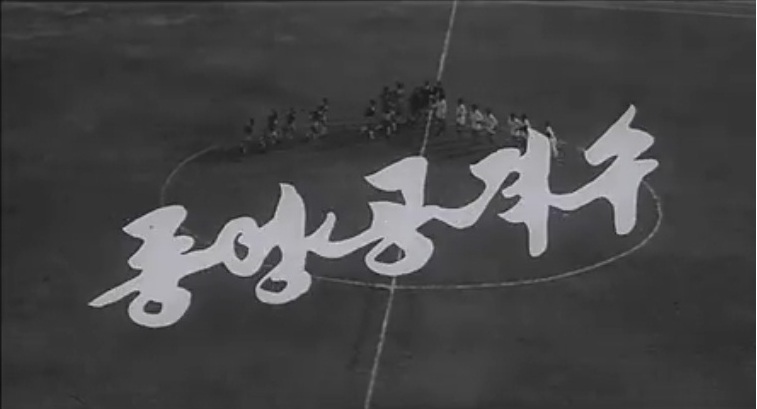
Koryo Tours is distributing the North Korean film Centre Forward–a film which “critics are already hailing as the best North Korean-themed football movie of all time”.

centre-forward.jpg

See the trailer you YouTube here.

See the trailer on Youku (PR China) here.

You can order the film directly from Koryo Tours by email: info@KoryoGroup.com

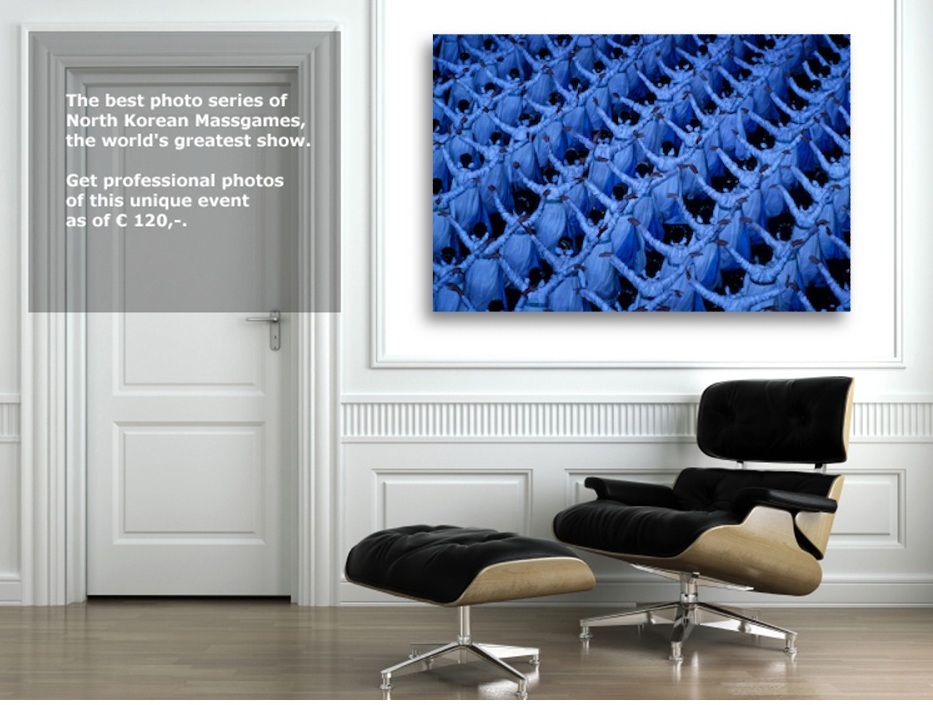
Also, photographer Werner Kranwetvogel worked with Nick Bonner to produce high quality photography of the Mass Games:

mass-games-photos.jpg

See more about his work here.

Share

North Korean Life: inside and out

Wednesday, March 24th, 2010

March 27, 11:30 a.m.-5 p.m. (Korean lunch will be provided.)
McShain Lounge in McCarthy Hall
Georgetown University
Washington, DC
RSVP and questions: dcpscore@pscore.org or 202-492-9631

Flyer here.

Have you ever imagined what life would be like living in the world’s most isolated country?  Moreover, have you wondered what it would be like to live as a North Korean under the ruling of Kim Jong-il?

Join us for a speedy synopsis of North Koreans life inside the reclusive country as well as a dialogue with two defectors about their escape and settlement in a new world beyond the reins of Kim Jong-il. Invest ONE afternoon and gain a fresh perspective of life inside North Korea.

For the detailed program and directions, please refer to the attachment.

This event is hosted by People for Successful Corean Reunification  and sponsored by Asian Studies Program at Georgetown University. PSCORE is a non-profit, non-religious, non-partisan NGO based in Seoul & Washington, DC. PSCORE strives for mutual understanding and harmony between the two Koreas and aims to provide a platform to discuss topics such as democratization, human rights and social issues. We hope to bridge the gap between South Korea, North Korea and the international community. We are not affiliated with any political organizations.

Read program flyer here.

Share

DPRK should open dialogue for funds

Wednesday, March 17th, 2010

According to the AFP:

North Korea should first open dialogue with the world if it wants foreign investment to revive its troubled economy, a senior World Bank official said Monday.

Jim Adams, World Bank vice president for East Asia and Pacific, said it had yet to be approached by Pyongyang in connection with its reported plan to raise foreign funds by setting up its own development bank.

Adams, in Tokyo to meet Japanese officials and lawmakers, said it was a “key challenge” for the communist state to first map out its own plan to approach the outside world.

“Once those decisions are made, I think there can be an appropriate response,” Adams told a news conference. “But so far I don’t see those decisions having been made.”

There is no doubt that the DPRK needs foreign investment.  The problem is credible commitment to contract terms and the kinds of concessions investors will require.

Share

Pscore’s got the word on helping new defectors

Tuesday, March 16th, 2010

Joong Ang Daily
Eldo Kim
3/17/2010

Walking through the busy streets of metropolitan Seoul, Lee (an alias) seems no different than the hundreds of Koreans around her.

Stopping by a cafe, she purchases a cup of coffee and hurries out to the subway station. Following the everyday actions of millions of fellow urbanites, there is nothing unusual about her.

But there is something that sets her apart. Lee is a North Korean refugee who defected in 2005. Lee is also a student at People for Successful Corean Reunification, or Pscore.

Established in 2006, Pscore is a non-governmental organization consisting entirely of volunteers, with bases in Washington, D.C. and Seoul.

While it provides news coverage of North Korea and helping defectors become South Korean citizens, a unique aspect of this organization is that it offers educational programs for refugees. Tutors, a mix of foreigners and English-speaking Koreans, meet one-on-one on a weekly basis with individuals to teach subjects ranging from English to mathematics.

Although Pscore has only run its tutoring program for 20 months, at any given time there are around 60 to 70 refugee students registered.

According to the Ministry of Unification, in 2000, only 312 North Korean refugees escaped to South Korea. In 2008, the number of escapees rose to 2,809. In the past few years, the population of North Korean refugees in South Korea has grown so rapidly that the government is only offering $10,000 in resettlement money per refugee, instead of to the previous amount of $28,000.

Also, Hanawon, a government-sponsored training center for North Korean escapees, has reduced its program cycles from three months to two months.

Pscore seeks to fill the gaps in already existent assimilation aid for North Korean defectors.

One Pscore student, Chae, who asked to be anonymous, defected from North Korea in April 2006. After enrolling in college to study medical science, she was surprised that 40 to 50 percent of the lectures were in English. Looking for English lessons, Chae found Pscore through friends who were being tutored already. A year has passed, and she feels that her English lessons will be invaluable to her goal of becoming a nurse in the United States.

Like Chae, 70 percent of Pscore students seek help mostly in English as its usage has increased in South Koreans’ daily lives and the workplace.

“In the 21st century, the acculturation process of South Korea has been profoundly influenced by the West. The culture shock that North Korean emigrants experience when they settle in South Korea is worsened by the constant presence of English, a language that is restricted mostly to the elite in North Korea,” said Choi Hyun-chul, the president of the Korean Society for Journalism and Communication Studies.

As a young organization, there are still problems that the organization must fix.

“Frequently, there are tutors who are not very sincere about their work or do not put in all their effort in teaching refugees.” says Lee, a 35-year-old North Korean college student, citing several English tutors who frequently canceled meetings or didn’t show up. She said that perhaps Pscore should be more selective in choosing its volunteer tutors.

Score hopes that South Koreans would be more willing to welcome North Korean refugees with open arms, rather than a cold shoulder.

“On a societal level, the atmosphere in South Korea is not very supportive or encouraging of the refugees. The average citizen doesn’t care much about their issues,” said An Seung-woo, secretary general of Pscore.

Mary Anderson, an American teacher in Seoul who tutors for Pscore, commented likewise.

“Tutoring the students is simply delightful, and without a doubt, they’re some of the hardest working students I’ve ever seen. But, there is shockingly a lot of prejudice. I knew a North Korean woman dating a Canadian man in South Korea who desperately wanted to move to Canada because of how unwelcome she felt in South Korea.”

Pscore is looking forward to conducting research about reunification of the two Koreas and expanding their tutoring program in the future.

“Whenever a refugee gets accepted into college or achieves employment, we feel a sense of distinct accomplishment and pride,” says Pscore.

Share

On tobacco and hard currency

Monday, March 8th, 2010

The Financial Times published a thorough article on the DPRKs eforts to raise hard currency through tobacco re-exports:

North Korean and other Asian trading entities started re-exporting State Express 555 cigarettes, manufactured by British American Tobacco, in February last year, just months before North Korea’s second nuclear test in four years prompted the United Nations to impose tougher sanctions on Pyongyang.

BAT sold the so-called “NK 555s”, made and packaged in Singapore for the North Korean market, to a Singaporean distributor for shipment to Nampo, a port near Pyongyang.

However, at least 15,000 cases worth $6.3m (€4.6m, £4.2m) rebounded out of Nampo to ports in Vietnam and the Philippines, according to documents seen by the Financial Times, to go to other markets where they commanded a higher price.

While the UN banned luxury goods exports to North Korea, member nations have been allowed to compile their own sanctions lists, which critics say created loopholes.

The US, Japan, Australia and Canada banned a broad range of tobacco products. Meanwhile, the European Union and Singapore sanctioned only cigars, which allowed BAT to continue exporting NK 555 cigarettes to North Korea. BAT said it halted exports of the cigarettes from Singapore to North Korea after discovering a diverted cargo of NK 555s in August.

International tobacco companies frown on “grey market” or “parallel” exports of their products to markets for which they were not intended. But national customs authorities target counterfeits rather than so-called “diverted real product”.

BAT has maintained some business ties to the country. It still supplies its former Pyongyang joint venture, from which it divested in 2007, with materials to make and sell cheaper Craven A cigarettes on the domestic market.

BAT says 175m NK 555s were exported to North Korea in 2008. They were made and packaged in Singapore which, like the EU, banned exports of cigars but not cigarettes.

The London-based company sold the NK 555s to SUTL Group, a family-controlled distributor in Singapore, for onward shipment to the North Korean port of Nampo.

“When we became aware of the diversion, we immediately launched an investigation,” Pat Heneghan, global head of BAT’s anti-illicit trade division, told the FT. “We certainly didn’t like what we found.”

While there was no evidence of any involvement by SUTL in the diversion, Mr Heneghan said BAT still had “a very hard discussion with the distributor”. SUTL declined to comment.

There is no evidence that the re-export of NK 555s by a number of unidentifiable North Korean entities and other small trading companies across Asia was illegal.

While tobacco companies consider the re-routing of legitimate cigarettes from their intended market as “illicit”, they are not necessarily “illegal” in the eyes of customs authorities focused on counterfeits and smuggling.

“In August last year, BAT discovered a diverted NK 555 shipment in Singapore, which we assumed could be for transhipment to other markets in Asia,” said a BAT spokeswoman. “But we were unable to inspect the shipment as we could not demonstrate any breach of Singapore law to the authorities.”

On April 10 2009, the NK 555 re-exports were discussed in an e-mail sent by a Singapore-based cigarette trader to a potential buyer in Manila.

“We have to confirm by next week,” wrote Bert Lee of Compass Inc. “Empty containers will have to start moving into Nampo . . . So kindly speak and plan with your buyer and let me know if you want to take up this new NK 555 Blue.”

Compass began to sell cases of NK 555 to a Hong Kong-based trading company in early 2009. E-mails and shipping documents show the cigarettes were first diverted to Dalian, a Chinese port, and then shipped on to Singapore before finally landing in Haiphong in Vietnam.

While the trail ran cold in Haiphong, people tracking the shipment suspected its ultimate destination was China.

“They sell it to someone who can handle it for the China market,” said one person involved in the trade, who asked not to be identified.

Invoices sent from Compass to its Hong Kong buyer in February 2009 do not reveal the North Korean source of the NK 555s. But Mr Lee left no doubt about the cigarettes’ provenance.

“Stocks are now in NK and sample already send [sic] out to us,” he wrote to his potential buyer in Manila. “I hope we can work on this New Blue [555] and controlling the market and stocks as soon as possible.” Mr Lee did not reply to phone calls, e-mails and faxes from the FT.

“As a trader, we just get the product and buy and sell,” said one Compass executive who declined to identify himself or comment on the NK 555 shipments when contacted by telephone. “Where it goes, who knows?”

Read previous tobacco posts here. Read previous BAT posts here.

To date I have been unsuccessful in locating the BAT factory in the DPRK.  If any readers have knowledge of its whereabouts, I would appreciate it. 

Read the full article here:
N Korea draws on tobacco for cash
Financial Times
Tom Mitchell, Pan Kwan Yuk
3/8/2010

Share

DPRK reopens markets, authorizes food sales

Thursday, February 25th, 2010

Institute for Far Eastern Studies
NK Brief No. 10-2-24-1
2/24/00

Suffering from severe food shortages, North Korean authorities ordered that markets be opened unconditionally, and that there be absolutely no crack-down on the sale of foodstuffs within the markets. This is according to a report issued on February 18 by the North Korean human rights organization ‘Good Friends’.

Good Friends’ newsletter revealed, “After examining a report on food shortages and the conditions of residents in each region throughout the country by the Office of Economic Policy Review, the Central Committee of the Korean Workers’ Party issued an ‘Order for Absolutely No Regulation Regarding Foodstuffs’ to each law enforcement office.” The order stated that until central distribution is running smoothly, all markets are to be reopened as they were prior to recent government crack-downs, and that under no circumstances were authorities to try to regulate food sales.

Furthermore, it reported that “the People’s Security Bureau also received the Central Committee’s order, and passed on a special instruction to each regional security office ordering agents not to crack down on markets for anything other than illegal goods, and not to regulate food sales, in particular.” Local authorities were also ordered not to engage in altercations with market traders and not to intervene or interfere in fights between traders working within the markets.

According to Good Friends, “Central Party authorities set the price of one kilogram of rice at 24~25 Won, corn at 9 Won/Kg, and corn noodles at 10 Won in an attempt to stabilize the daily lives of people, but the lack of central distribution made the attempt meaningless.”

A North Korean public health official relayed to Good Friends that a report released by central authorities on January 22 stated that there were more than 47 thousand cases of tuberculosis in the North, but that more than half were unable to receive treatment in a hospital, and that “the rise in the number of deaths due to starvation among the most indigent was due to TB patients being unable to eat and subsequently dying after catching a cold or the flu.”

In mid-January, Kim Jong Il called a meeting of Party administrative director (and brother-in-law) Jang Sung-taek and other high-level authorities in order to ease the side-effects of last year’s currency reform. A North Korean source relayed to Daily NK on February 17 that at the meeting, it had been decided that authorities would issue emergency rations to residents facing the threat of starvation.

According to this order, the Office of Food Procurement has been tasked with distribution of the emergency food; neighborhood units receive 5 kg of food daily, while offices receive between 5~15 kg, depending on the number of employees. Neighborhood unit directors or factory supervisors are responsible for assessing the food needs of their neighbors or employees, and prioritize food distribution to those households at risk of starvation.

Until the end of January, currency reform measures that banned the sale of food and drove prices up drove a significant number of households to starvation. However, since the emergency rations measure began to be enforced on February 1, there have been no reports of large-scale famine.

Share

’38 North’ featuring Bradley Babson

Tuesday, February 23rd, 2010

According to the email from SAIS:

Attached please find the latest bulletin from “38 NORTH,” a web-based initiative sponsored by the U.S.-Korea Institute at SAIS. The goal of “38 NORTH” is to harness the experience of long-time observers of North Korea and others who have dealt directly with Pyongyang in producing quality analysis of events north of the 38th parallel. This analysis, written by Bradley O. Babson, former World Bank official and Chair of USKI’s DPRK Economic Forum,  looks at recent developments inside North Korea from an economist’s perspective.
 
Too often, the media and the expert community jump to premature conclusions about what is going on inside North Korea. In the coming weeks and months, “38 NORTH” plans to publish a series of articles looking at these same developments in an effort to help us all get a better fix on the meaning of these events and their implications for the Korean peninsula, the region and the international community. These articles will be written by experts with different perspectives.
 
We are looking forward to the scheduled launch of the “38 NORTH” website on April 1, 2010. In the meantime, questions and comments regarding this publication should be directed to: thirtyeightnorth@gmail.com.

Here is Babson’s article (PDF)

Share

An affiliate of 38 North