Archive for the ‘International Governments’ Category

DPRK ships fishing illegally in Antarctica

Thursday, April 7th, 2011

UPDATE 1: Some additional information from the New Zealand media:

The government will be lodging a complaint with the North Korean government after two fishing vessels were caught fishing illegally in the Ross Sea.

Foreign Affairs Minister Murray McCully says the North Korean vessels were intercepted by an Air Force Orion plane carrying out surveillance against illegal fishing in the area.

The vessels, Xiong Nu Baru 33 and Sima Qian Baru 22, were caught fishing in an area managed by the Commission for the Conservation of Antarctic Marine Living Resources (CCAMLR). The Xiong Nu Baru 33 was using deep-sea gillnets, which are banned in the CCAMLR Convention Area.

“Deep-sea gill netting and associated ghost-fishing by lost and discarded nets have serious detrimental effects on the marine environment and many marine species”, said Fisheries Minister Phil Heatley.

“Illegal, unreported and unregulated fishing poses a severe threat to the sustainability of valuable toothfish stocks and has caused considerable environmental damage in the Southern Ocean.”

McCully said the detection of illegal, unreported and unregulated fishing vessels in the Southern Ocean was of grave concern to New Zealand.

He said New Zealand had reported its findings to the CCAMLR Commission and lodged its concerns with the North Korean government.

Noland reminds us of another similar case.

ORIGINAL POST (2011-4-7): According to the Dow Jones Newswire:

Two North Korean fishing vessels were recently caught illegally fishing in the Southern Ocean in Antarctica, New Zealand’s minister of foreign affairs said Thursday.

Minister Murray McCully said the Royal New Zealand Airforce in February detected two North Korean boats fishing to the east of the Ross Sea in an area managed by the Commission for the Conservation of Antarctic Marine Living Resources.

The boats weren’t supposed to be fishing in the area as they had been blacklisted under other names. One of the boats was also fishing using a banned deep-sea gill net.

“Illegal, unreported and unregulated fishing poses a severe threat to the sustainability of valuable toothfish stocks and has caused considerable environmental damage in the Southern Ocean,” McCully said.

New Zealand is concerned about unreported and unregulated fishing vessels in the Southern Ocean, the minister said, and would be lodging its concerns about these vessels with the Government of the Democratic People’s Republic of Korea.

New Zealand has reported these boats to the Commission and “this should ensure that the Commission’s 25 members (countries) do not allow these vessels to access their ports nor allow the import of any fish caught by them,” he said

You can read the full story here:
New Zealand Foreign Minister: North Korean Boats Caught Illegally Fishing In Southern Ocean
Dow Jones Newswire
Lucy Craymer
4/7/2011

Share

DPRK on high alert for radioactive damage from Japan

Wednesday, April 6th, 2011

UPDATE (4/6/2011): According to Yonahp:

North Korea’s official media reported on Tuesday that the country detected traces of radioactive materials in major cities following Japan’s nuclear crisis triggered by the March 11 earthquake and tsunami.

The North said in a report carried by the official Korean Central Broadcasting Station that traces of radioactive iodine and cesium were found in the cities of Pyongyang, Wonsan and Cheongjin, but the report did not disclose detection levels of such materials.

“Radioactivity monitoring stations in Pyongyang, Wonsan and Cheongjin have detected radioactive materials like iodine and cesium, which have not been seen in the past,” an official for North Korea’s meteorological research agency said in the TV report.

The traces were so small that they will not affect public health, the official said, adding that “close attention should be paid to monitoring and forecasting of weather changes.”

The news came as South Korea also reported air detection of radioactive materials after the massive earthquake and tsunami crippled nuclear reactors in Fukushima, sparking concerns of radioactive leaks.

ORIGINAL POST (2011-3-29): According to Yonhap:

North Korea is on high alert for any possible radioactive damage from an unfolding nuclear crisis in neighboring Japan, a senior North Korean scholar said Tuesday during talks with South Korea on a possible volcano in the communist state.

The comment was made by Yoo Yong-geun, head of a North Korean delegation who traveled earlier in the day to this South Korean border town of Munsan to discuss joint ways to respond if Mount Paekdu in the North is found to have an active volcanic core.

“We are actively watching, worrying that radioactive contamination may reach us” from Japan, where firefighters are struggling to contain radioactive leaks from a northeastern nuclear plant hit by a major earthquake and ensuing tsunami.

Yoon did not elaborate on what measures his government was taking to protect its population. Despite the direction of winds that normally blow from west to east, traces of radioactive material have been detected in South Korea, raising alarm here, according to a state nuclear safety agency on Tuesday.

“Due to the proximity, (events in Japan) seem to affect us,” Yoon told four South Korean scholars attending the first-ever inter-Korean volcano talks. Yoon, deputy head of a volcano research institute, added underground water fluctuated and mud seeped from spring water following the 9.0-magnitude earthquake off Japan’s east coast.

Read the full story here:
N. Korea on high alert for radioactive damage from Japan: scholar
Yonhap
Sam Kim
3/29/2011

Share

Japanese earthquake disrupts Chongryun web page

Tuesday, April 5th, 2011

UPDATE 3 (2011-4-9): After posting the news from April 1-6, the site appears to be out of service again. Here is the statement posted to the web page:

東日本大震災の影響により電波障害が発生しています。
そのため報道の配信を見合わせる場合があります。

According to Google Translate:

Interference has occurred due to the earthquake East.
You may postpone the delivery of the report for that.

UPDATE 1 (2011-4-6): The web page appears to be fixed today.  So it looks like the site was temporarily down from March 21-April 6.

ORIGINAL POST (2011-4-5): Elufa.net is the premier web destination to watch North Korea’s evening news broadcasts.  It has not been updated for several days (appx. March 21).  Today I noticed a message on the screen:

The message at the bottom reads:

東日本大震災の影響により電波障害が発生しています。
そのため報道の配信を一時見合わせます。復旧次第配信の予定です。

Here is the translation via Google Translate:

Interference has occurred due to the earthquake East. Temporary 見合Wasemasu news delivered for that purpose. Delivery will recover soon.

North Korea’s Uriminzokkiri YouTube account is still being updated with other North Korean television footage, but they are not uploading evening news broadcasts.

Share

Is Russia looking for more loggers?

Thursday, March 31st, 2011

According to ITAR-TASS:

According to the head of the Russian delegation, “North Korea has a possibility to send workforce to Russia.” Last year about 32,000 citizens of North Korea worked on the territory of Russia. He noted that North Korea “hopes to increase the number of its citizens working in Russia”.

Of course there has been plenty of media attention given to the North Koreans who work as loggers in Russia (See here, here, here, here, here, here, here, here, here), but they must be a small minority of 32,000 people.

What else are North Koreans doing in Russia? Art showstrade and construction, paying off imports, etc.  There are 5,000 in Vladivostok alone. Leonid Petrov adds more details.

Share

CRS report on Kaesong Industrial Complex

Tuesday, March 29th, 2011

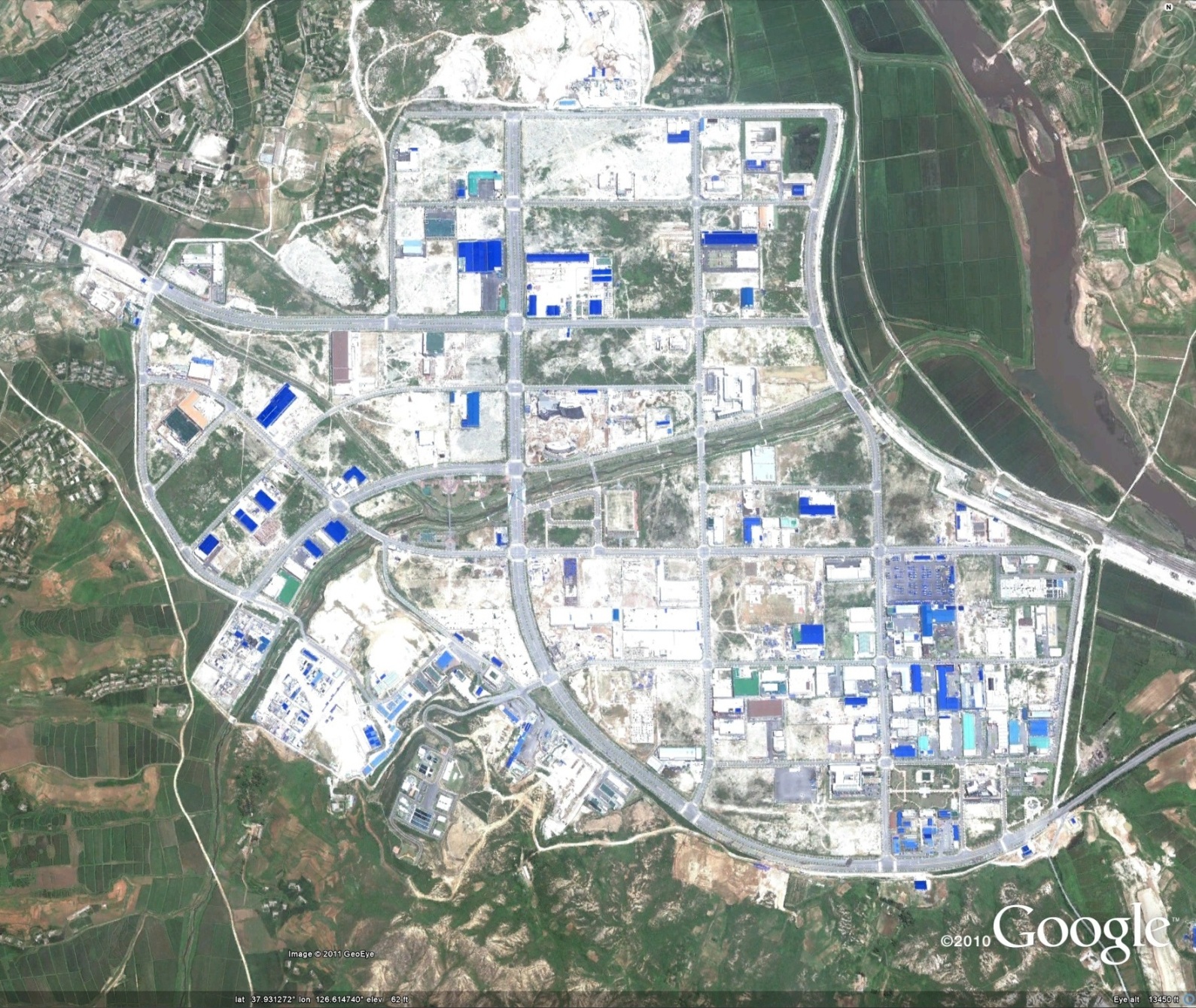
The Congressional Research Service has published an update to its paper on the Kaesong Industrial Complex.

You can download the paper here (PDF).

You can download other CRS reports on North Korea at my CRS Reports Page.

Below is the paper’s summary:

This purpose of this report is to provide an overview of the role, purposes, and results of the Kaesong Industrial Complex (KIC) and examine U.S. interests, policy issues, options, and legislation. The KIC is a six-year old industrial park located in the Democratic People’s Republic of Korea (DPRK or North Korea) just across the demilitarized zone from South Korea. As of the end of 2010, over 120 medium-sized South Korean companies were employing over 47,000 North Korean workers to manufacture products in Kaesong. The facility, which in 2010 produced $323 million in output, has the land and infrastructure to house two to three times as many firms and workers. Products vary widely, and include clothing and textiles (71 firms), kitchen utensils (4 firms), auto parts (4 firms), semiconductor parts (2 firms), and toner cartridges (1 firm).

Despite a rise in tensions between North and South Korea since early 2008, the complex has continued to operate and expand. The KIC was not shut down in 2010 despite two violent incidents between the two Koreas that year: the March sinking of a South Korean naval vessel, the Cheonan, which was found to be caused by a North Korean torpedo, and North Korea’s artillery attack on a South Korean island in November. Indeed, the complex has become virtually the last vestige of inter-Korean cooperation. After the Cheonan sinking, South Korea announced it would cut off all inter-Korean economic relations except the Kaesong complex. It also has reduced the number of South Korean workers—primarily government officials and business managers—at the complex because of worries about them being taken hostage by North Korea.

The KIC represents a dilemma for U.S. and South Korean policymakers. On the one hand, the project provides an ongoing revenue stream to the Kim Jong-il regime in Pyongyang, by virtue of the share the government takes from the salaries paid to North Korean workers. South Korean and U.S. officials estimate this revenue stream to be around $20 million per year. On the other hand, the KIC arguably helps maintain stability on the Peninsula and provides a possible beachhead for market reforms in the DPRK that could eventually spill over to areas outside the park and expose tens of thousands of North Koreans to outside influences, market-oriented businesses, and incentives.

The United States has limited direct involvement in the KIC, which the United States has officially supported since its conception. At present, no U.S. companies have invested in the Kaesong complex, though a number of South Korean officials have expressed a desire to attract U.S. investment. U.S. government approval is needed for South Korean firms to ship to the KIC certain U.S.-made equipment currently under U.S. export controls. The Korea-U.S. Free Trade Agreement (KORUS FTA), which has yet to be submitted to Congress for approval, provides for a Committee on Outward Processing Zones (OPZ) to be formed and to consider whether zones such as the KIC will receive preferential treatment under the FTA. Although the KORUS FTA says that the Executive branch will seek “legislative approval” for any changes to the agreement, Congress’s precise role in accepting or rejecting these changes is not clear.

Another issue raised by the KIC is whether components made in the complex can enter the United States if they are incorporated into products that are manufactured in South Korea and that qualify as originating in South Korea. This possibility is likely to be determined mainly by the KIC’s evolution; the more that is produced in the complex, the more products are likely to enter South Korea’s supply chain.

Share

Hanawon

Monday, March 28th, 2011

USA Today published a story on the ROK’s transition program for DPRK defectors, Hanawon (하나원).  There is not much new information in the story, but I wanted to address some of the criticisms the program receives.

Here is the most salient part of the article:

North Koreans who’ve gone through the program say it is helpful but not enough to prepare one for a Western-oriented society after a life in a Stalinist dictatorship cut off from the outside world.

Gwang Il Jung, who attended the program six years ago and runs an advocacy group, Free NK Gulag, says the courses have good intentions but gloss over too many details.

“They will tell you the basics,” he says. “But what can you really learn in three months? How do you teach someone to use an ATM or ride the metro in a classroom setting? The classes need to be more hands-on.”

He says the requirement that North Koreans remain on the school grounds for three months is unhelpful.

“They just got here in pursuit of freedom. And they’re locked in again. It’s like prison for them. All they think about is getting out. Let them live. They’ll make their share of mistakes, but many are eager and able to learn,” Jung says.

The two Koreas share a common heritage and language, but much has changed since the two countries were divided in 1948 after the United States and the Soviet Union agreed to temporarily occupy the country as a trusteeship following the Allied victory in World War II.

The students must complete 130 hours of language courses to get a better grasp of the Southern dialect that has been infiltrated by English and other foreign vocabulary, such as the words “Internet” and “computer,” “chicken” and “phone.”

“They may find a job as a waitress, but if they can’t take orders or understand a command like ‘Go get that key from the cabinet,’ it’s just a matter of time before they’re fired,” Youn says.

Personal finance courses, ranging from basic money management skills to the concept of private property ownership, are also mandatory, as many North Koreans are ill-equipped to handle the sudden exposure to welfare and settlement payments the South Korean government provides.

Stories of defectors falling victim to financial scams or bouts of compulsive shopping are common.

Students take lessons on using computers, child-rearing skills and even hairdressing.

First of all, there is no program that is going to suitably address the individual needs of all the defectors that enter the ROK. Individual capacities, experiences, and needs are simply to heterogeneous for a single government program to address.  This diversity of needs, however, presents a market opportunity for non-profits and education entrepreneurs.   Indeed I can think of  a few organizations that offer “continuing education” to former North Koreans as they adjust to life in their new homes.   So Hanawon should not be criticized for failing to meet all needs of all defectors, it should be seen as simply the first step.

Hanawon also draws criticism in the article for keeping North Korean defectors isolated on campus for three months.  This criticism stems from the fact that Hanawon serves more than one mission.  The first mission is to facilitate the transition of North Korean defectors to their new lives in the south.  The second mission is to facilitate the gathering of information on the DPRK and to protect South Korea (and the North Korean defector community) from infiltration by North Korean agents.  There are now 20,000+ North Korean defectors in the South and some +% of them are active agents.  Given the potentially high and visible cost of failing to catch a North Korean agent, South Korean policymakers have a bias toward preventing type 1 errors (allowing DPRK agents to enter the country).  They try to reduce this cost by extending the amount of time defectors spend under scrutiny while confined at Hanawon.  However, this produces a type 2 error: the unnecessary “holding” of innocent DPRK defectors who just want to get on with their lives.  These particular individuals (the vast majority) have every right to feel “mistreated” by this system, but the only politically feasible way to minimize this cost is to improve the ability of the South Korean security services to detect North Korean agents–something few people are able to do anything about.

It is also worth pointing out that there are quite a few North Koreans that don’t go through Hanawon when they come to the South.  I wonder why that is?

Previous posts on Hanawon here.  Previous posts on North Korean defectors here.

You can read the full USA Today story here.

Share

DPRK economic delegation visits US

Sunday, March 27th, 2011

UPDATE 4 (4/13/2011): The Street adds some more information:

A delegation of 12 North Korean economic envoys flew back to Pyongyang on Sunday after spending two weeks touring companies that “represent main strands of the U.S. economy.”

The group visited Google (GOOG), Home Depot (HD), Bloomberg, Citigroup (C), Qualcomm(QCOM), Sempra Energy(SRE), Union Bank, and Universal Studios, as well as a mushroom farm, a seafood wholesaler, and the Port of Los Angeles, where they leaned about trade infrastructure.

Journalists were not permitted access to the visitors (they entered the Googleplex through a back entrance under tight security), and no mention of the trip appeared in the American media. I stumbled upon the story after striking up a conversation with a DPRK official at the North Korean embassy in Berlin, Germany.

Located on Glinkastraße, an avenue in what was once East Berlin, the North Koreans built an 87,788 square foot compound during the 1970s. After the Cold War ended, staff numbers were significantly reduced, and, according to the surprisingly friendly official I spoke with through the embassy’s rear gate, two of the DPRK’s three buildings were leased out to private companies.

In nearly-unaccented English, he pointed out the main tenant — a youth hostel which opened for business in 2008. Though the North Korean flag flies out front, the decision to become landlords was strictly capitalistic, as years of economic sanctions have taken a tremendous financial toll on the DPRK.

After learning I was an American, the embassy official told me that a group of North Koreans happened to be in the States at that very moment.

Before I could inquire further, he was gone.

One of the few sources providing any details regarding the affair, South Korean newspaper JoongAng Ilbo, managed to obtain a copy of the delegation’s itinerary.

According to the report, “Six director-level officials were in the group, including the delegation’s head, Yon Il, a director at North Korea’s trade ministry. The other directors work for the trade ministry, agriculture ministry, finance ministry and industry ministry.”

Other delegates included lower level North Korean directors and managers, two advisors, and a researcher from a North Korean trade bank.

While Russian news outlet ITAR-TASS maintained that “[T]he initiator of these meetings is unknown,” the North Koreans were in fact invited to the U.S. by Susan Shirk, director of the Institute on Global Conflict and Cooperation at the University of California, “to see firsthand what improved relations with the United States might mean in terms of economic cooperation.”

From 1997-2000, Shirk served as Deputy Assistant Secretary of State in the Bureau of East Asia and Pacific Affairs from 1997-2000, and is the head of the Northeast Asia Cooperation Dialogue, an organization engaged in “track-two” diplomacy.

As described by Tong Kim, a research professor with the Ilmin Institute of International Relations at Korea University and an adjunct professor at Johns Hopkins University’s School of Advanced International Studies, the track-two approach “refers to contact, exchange of views, and other conduit activities between civilian organizations or individuals of two countries that are in dispute with each other.”

An email to Shirk seeking further details of last week’s visit was met with a terse “Sorry, no comment.” But sources say the North Koreans attended lectures at Stanford University and NYU, where they learned about “the market economy, consumer protection, what a CEO does, corporate strategies in the U.S., and an overview of the western legal system.”

This is one of the pillars of the track-two strategy. In “North Korea Inside Out: The Case for Economic Engagement,” a December, 2009 policy paper from an independent task force chaired by Dr. Shirk and Charles Kartman, former director of the Korean Peninsula Energy Development Organization, the case is made that:

The United States should adopt a long-term strategy of economic engagement with North Korea. North Korea’s attitude toward the world is closely related to the underlying structure of its domestic political-economy: a closed, command economy that favors the military and heavy industry and is isolated from the sweeping economic and political changes that have transformed the Asian landscape in recent decades. Encouraging a more open and market-friendly economic growth strategy would benefit the North Korean people as a whole and would generate vested interests in continued reform and opening, and a less confrontational foreign policy. In other words, economic engagement could change North Korea’s perception of its own self-interest. China’s economic transformation stands as an important precedent, showing how a greater emphasis on reform and opening can have positive effects on foreign policy as well. Economic change has the potential to induce and reinforce the D.P.R.K.’s peaceful transition into a country that can better provide for its people’s welfare and engage with other countries in a non-hostile manner.

Some, more hawkish Korea-watchers brush aside track-two diplomacy as a rube’s game being played with a staunchly anti-American entity that already knows far more about the outside world than it lets on.

However, there aren’t many other options in this increasingly unstable era, as a North Korean power handoff from Kim Jong Il to his son, Kim Jong Eun, is said to be in the offing.

Professor John W. Lewis of the Center for International Security and Cooperation at Stanford, who has been involved in track-two negotiations with North Korea since 1986, told the Stanford News Service, “They would definitely prefer to have these talks and meetings with American officials. But since American officials won’t talk to them, we’re the only game in town. We have this weird access.”

A wholesale transformation of the North Korean political-economy would surely reap unprecedented benefits for the world at large. Of course, it would also benefit tremendously the foreign business concerns that manage to be first to market.

In this instance, Susan Shirk’s deep connections in Washington certainly bear mentioning. Shirk is a Senior Director at the Albright Stonebridge Group, a “global strategy firm that helps corporations, associations and non-profit organizations around the world meet their core objectives in a highly competitive, complex and ever-changing marketplace,” which happens to be led by former National Security Advisor Samuel R. Berger, former Senator Warren B. Rudman, and former Secretary of State Madeleine Albright — the first American official ever to visit North Korea.

The company “address[es] challenges for clients in any country, and work[s] with them to develop and implement winning strategies for long-term growth and success” — something that dovetails nicely with the goals of Albright Capital Management, an “emerging markets investment firm” of which Albright Stonebridge is “a significant shareholder” and “strategic partner”, “leveraging collective networks and skills to enhance each firm’s ability to serve as a trusted advisor in the emerging markets.”

The kind of access someone like Madeleine Albright provides cannot be understated.

“We see a lot of potential in emerging markets for economic growth,” Jelle Beenen, a portfolio manager at Dutch investment firm PGGM, told Bloomberg in 2007. “The reason that investing there is always a problem is there are issues like fraud and political instability, so that’s why there’s value in political-risk management and the involvement of Secretary Albright is a valuable one.”

Could the “DPRK 12” be sending a signal that the North “is finally getting serious about introducing more market-based economic reforms?” JoonAng Ilbo asks. “Has the reformist message that China, its closest ally, has been hammering home for years finally gotten across? Or is the envoys’ mission just a conciliatory gesture to try to woo food aid from the U.S. amid a deepening food crisis?”

The short answer is, no one knows.

David Straub, a former Senior Foreign Service Officer who spent 30 years focused on Northeast Asian affairs declined a request for comment, but in a recent paper, asserted that, “The fact of the matter is that no one, not even in Pyongyang, really knows what is going to happen there. I believe there could be dramatic change in the regime in North Korea even as you are reading this, but I also believe it is possible that the regime could last many decades more.”

Henry Rowen, Co-director of Stanford’s Program on Regions of Innovation and Entrepreneurship, Director emeritus of the Shorenstein Asia-Pacific Research Center, and a Senior Fellow at the Hoover Institution who gave a presentation to the North Koreans, said in an email that he knew “very little about the group and its mission,” though he added a caveat that, “My hunch is that it was less significant than you suggest.”

Most optimistic of all seems to be Dr. Siegfried Hecker, former director of Los Alamos National Laboratory (1986-97) and current co-director of Stanford’s Center for International Security and Cooperation.

Hecker, who has been granted access to North Korea’s Yongbyon nuclear complex, told an audience about an experience he had during a recent visit to Pyongyang.

As Hecker entered a subway station in the capital city, he encountered a young man “wearing a backwards baseball cap with a Nike(NKE_) swoosh.”

“When he gets to be 21 years old, they’re gonna have a hard time keeping him down on the farm,” Hecker said.

“Where there is ‘swoosh,’ there is hope.”

UPDATE 3 (4/2/2011): The Delegation spent the day in Silicon Valley touring Google headquarters and attending a talk at Stanford University.  According to Yonhap:

A delegation of North Korean economic officials toured Silicon Valley on Friday, as their rare two-week trip to the United States was heading to a close.

The 12-member delegation, comprising mid-level officials from the trade, agriculture and other ministries, has been in the U.S. since March 19 at the invitation of the Institute on Global Conflict and Cooperation at University of California, San Diego.

The group also had visited New York earlier this week.

On Friday, the North Koreans toured Silicon Valley which included a visit to the world’s largest Internet firm, Google, for about an hour and 40 minutes amid tight security. The delegation got into the building through a backdoor, and security guards restricted journalists from accessing the visitors.

Officials from the San Francisco-based Asia Foundation accompanied the North Koreans.

After the visit to Google, the delegation moved to Stanford University and attended a lunch seminar organized by the school’s Asia-Pacific Research Center.

The two-hour seminar was about industry-university cooperation and also drew well-known U.S. experts on North Korea, such as nuclear scientist Siegfried Hecker and former Defense Secretary William Perry, according to a participant who requested anonymity.

The North Koreans were scheduled to leave for home on Sunday.

It is rare for North Korean officials to visit the U.S. The North and the U.S. fought in the 1950-53 Korean War and have no diplomatic relations. The two sides have also been at odds over Pyongyang’s nuclear programs and a series of provocations.

The Choson Ilbo also covered the visit to Google and Stanford–including a rather funny photo.

UPDATE 2 (3/27/2011): (New York, NY) According to Yonhap:

A delegation of North Korean economic officials arrived in New York on Sunday, saying that they want to explore the possibility of economic cooperation with the United States

The 12-member delegation, comprising mid-level officials from the trade, agriculture and other ministries, flew from San Diego, where they had stayed after arriving in the U.S. on March 19 at the invitation of the Institute on Global Conflict and Cooperation at University of California, San Diego.

The delegation’s trip to New York was organized by the Asia Society.

It is rare for North Korean officials to visit the U.S. The North and the U.S. fought in the 1950-53 Korean War and have no diplomatic relations. The two sides have also been at odds over Pyongyang’s nuclear programs and a series of provocations.

But the trip came amid recent talk of the possibility of the U.S. resuming food aid to the impoverished nation and as former U.S. President Jimmy Carter is preparing to visit the communist nation to broker rapprochement between the two Cold War foes.

“We’re an economic delegation. We’re here to discuss and look for the possibility of economic cooperation between us and the United States,” one member of the delegation said, without giving his name.

Washington has downplayed the significance of the North’s delegation, stressing that their visit is a privately organized event in which the government has played no part.

“Our assessment is that they are not here for talks between the North and the U.S., considering the agencies they belong to and their ranks,” a source here said. “It’s difficult to fathom the real intentions of the North, but for the U.S., it might have seen no reason to reject the North’s delegation coming to learn about the capitalist economy.”

In New York, the North Korean officials are expected to attend an Asian Society seminar and visit media firms and Wall Street. The Asia Society has strictly barred reporters from access to the North Koreans, saying their trip is part of private-level exchanges.

UPDATE 1 (3/26/2011): (San Diego, California)  According to the Joong Ang Ilbo:

A tour bus with black tinted windows pulled up to a hotel in La Jolla, San Diego, at 5:30 p.m. on Monday and from it stepped out 12 strangers from a strange land.

The 12 were so-called “economic envoys” from North Korea who, according to their host, came to learn about American-style capitalism for one week.

Susan Shirk, director of the Institute on Global Conflict and Cooperation (IGCC) at the University of California, San Diego, invited the envoys, all North Korean officials in charge of economic affairs.

The IGCC is one of the United States’ influential, private diplomatic channels for dialogue with the communist country.

The U.S. government calls the envoys’ mission a private trip, but some North Korea watchers are trying to read more into it.

Could it be a signal that the North is finally getting serious about introducing more market-based economic reforms as leader Kim Jong-il searches for substantial achievement to smooth his relinquishment of power to his youngest son Jong-un? Has the reformist message that China, its closest ally, has been hammering home for years finally gotten across? Or is the envoys’ mission just a conciliatory gesture to try to woo food aid from the U.S. amid a deepening food crisis?

One of the 12 North Koreans admitted to JoongAng Ilbo reporters that they came to the U.S. to study the market economy. But none answered why they wanted to.

The attempt to interview them was cut short when the North Koreans got nervous. The reporters only could ask one additional question about whether the envoys knew about the democratic movements in the Middle East.

“We are not deaf,” one replied.

For the week, they will study capitalism at the IGCC building, 10 minutes away from the hotel.

ORIGINAL POST (3/4/2011): According ot the Korea Times:

A North Korean economic delegation will visit San Diego and New York City for two weeks from March 20.

Susan Shirk, director of the Institute on Global Conflict and Cooperation at the University of California, San Diego, invited the ten-member delegation who will learn about Western economic systems and theory during their stay, the Voice of America (VOA) reported.

Between 1997 and 2000, Shirk served as deputy assistant secretary of state in the East Asia and Pacific Affairs bureau, and went to North Korea last year as a director of the institute, to discuss North Korea-U.S. cooperation on a private level.

Read the full story here:
N. Korean delegation to visit NY
Korea Times
Kim Se-jeong
3/4/2011

Share

India and the DPRK: aid and financial safeguards

Sunday, March 27th, 2011

India is providing the DPRK with USD$1m in assiatance via the UN World Food Program.  According to the WFP web page:

The United Nations World Food Programme (WFP) today welcomed a generous donation of US$1 million from the Government of India for its operation to reach the most vulnerable children and their mothers in the Democratic People’s Republic of Korea (DPRK).

In an event organised at the Government of India’s Ministry of External Affairs, Honourable Minister of State for External Affairs Mr. E. Ahmed handed over an official pledge letter to WFP India representative Mihoko Tamamura.

“We are delighted to accept this donation from the government on behalf of the people of India,” said Ms. Tamamura. “As the people of DPRK are coming to the end of one of the bitterest winters in living memory – this act of generosity is extremely timely.”

The donation from India is to be used to buy pulses, rich in protein, which is a key missing ingredient in the daily DPRK diet.

Meanwhile the Reserve Bank of India (India’s Central Bank) has issued a warning to Indian banks regarding North Korean funds.  According to the Business Standard:

Fearing possible money laundering and terror-financing risks from Iran and North Korea, the Reserve Bank of India (RBI) has asked banks and other financial entities to be cautious in dealings with entities and funds from these countries.

The RBI warning follows a fresh global caution notice issued by the Financial Action Task Force (FATF) on Iran and Democratic People’s Republic of Korea.

The FATF is an inter-governmental body responsible for making policies at national and international levels to combat money laundering and terror-financing.

The RBI said the FATF has issued a fresh public statement on February 25, 2011, “calling its members and other jurisdictions to apply counter-measures to protect the international financial system from the ongoing and substantial money laundering and terrorist financing (ML/FT) risks emanating from Iran and the Democratic People’s Republic of Korea (DPRK).”

“All banks and all-India financial institutions are accordingly advised to take into account risks arising from the deficiencies in AML/CFT regime of these countries, while entering into business relationships and transactions with persons (including financial institutions) from or in these countries/jurisdictions,” the RBI said in a March 24 circular.

A similar circular could be issued soon by the market regulator Sebi to warn market entities against their dealings with funds and entities related to these two countries.

An FATF public statement in this regard is always followed up by various regulators in India and other member countries asking the entities regulated by them to exercise extra caution in dealings with countries where anti-money laundering and terror-financing regulations have deficiencies.

The RBI and Sebi had last issued such a warning in January about Iran, pursuant to a directive from the FATF.

India became a member of the FATF last year. Following the nation’s accession into the global body, it is required to follow the global standards prescribed by the FATF to check money laundering and terror-financing activities.

As per the FATF warning, all financial institutions have been advised to give special attention to business relationships and transactions with Iran and North Korea, as well as their companies and financial institutions.

The FATF has urged member countries to take into account the risk of money laundering and terror-financing when considering requests by Iranian and North Korean financial institutions to open branches and subsidiaries.

Iran and North Korea have been subjected to various sanctions by the US and some European countries to thwart the flow of funds allegedly used to finance their nuclear weapon ambitions and sponsor terror-related activities.

You can read the full story here:
RBI warns banks against dealings with Iran, N Korea funds
Business Standard
3/27/2011

Share

South Korean entertainment increasingly popular

Thursday, March 24th, 2011

According to the Daily NK:

The names Kang Ho Dong and Yoo Jae Seok are growing in popularity in urban North Korea now that variety shows hosted by the two South Korean entertainers, KBS show “One Night, Two Days” and MBC’s “Endless Challenge”, are becoming popular there.

One source who trades in Pyongyang said, “I rented ‘X-Men’ (a variety show on another big South Korean station, SBS), the show hosted by Kang Ho Dong and Yoo Jae Seok, from a CD store; it was really entertaining.”

“One of the popular things with Pyongyang elementary and middle school students is the games they can see in this show,” he added.

He noted, “Parents believe the games in X-Men can develop their children’s brains, so they also try to occasionally show it to them. Kang Ho Dong and Yoo Jae Seok are really popular here; we laughed until we cried.”

According to the source, people in Pyongyang do not generally purchase CDs of North Korean products, but rent them for around 500 won each, while illegally-produced South Korean dramas and variety shows are generally 2,000 won each, approximately the price of a kilogram of rice.

Another source from Shinuiju said, “The shows with Kang Ho Dong and Yoo Jae Seok, ‘One Night, Two Days’ and ‘Endless Challenge’ are so popular that they sell for 4,800 won.”

The reason why people like ‘One Night, Two Days’, in which a number of South Korean entertainers, led by Kang, take a trip to little-known South Korean places to camp out, mingle with locals and play a range of games, the source said, is “because people can see a lot of the scenery of South Chosun, as if they were sightseeing for real. It gives comfort to those who are in the situation of being unable to so much as dream of a trip to Chosun.”

There is another background reason for their growing popularity: they are also popular among Korean-Chinese people in the border provinces of China, leading to these illegally copied CDs flowing into North Korea.

In Yanji, Dandong, Shenyang and other Chinese cities with big Korean-Chinese populations, internet cafes have their own servers to download South Korean TV shows so that local people can see them easily at a decent speed.

North Korean or Korean-Chinese smugglers then take illegally copied DVDs or CDs containing the shows into North Korea. One smuggler generally carries between 1,000 and 3,000 recordable CDs or DVDs including such shows into North Korea at any one time.

Another defector, Kim Seong Cheol explained, “I can copy thousands of CDs cheaply and send them to North Korea all at once.”

When he crosses the river, Kim says he ends up giving away a few hundred discs in the form of bribes, and wholesales a few hundred to each North Korean trader.

Read the full story here:
South Korean Entertainers Gaining in Popularity
Daily NK
Park Jun Hyeong and Jeong Jae Sung
3/23/2011

Share

DPRK-EU trade grows in 2010

Tuesday, March 22nd, 2011

According to KBS:

The Voice of America says that North Korea’s exports to the European Union more than doubled year-on-year in 2010 as the communist country exported petroleum products worth 55 million euros to the Netherlands in the first half of last year.

Quoting data from Eurostat, the statistic agency of the EU, the broadcaster said that North Korea’s exports to the EU surged from 50 million euros in 2009 to over one hundred million euros last year.

However, the North’s imports from the EU inched up only about two million euros from 70 million euros in 2009 to 72 million euros in 2010.

I am pretty swamped at the moment.  I did a quick search for the original data source with no success. If you have any idea where to find it, please let me know.

Read the full story here:
NK’s Exports to EU Doubled in 2010
KBS
3-22-2011

Share

An affiliate of 38 North