Archive for the ‘International Governments’ Category

Roundup of Kim Jong-il’s 2011 trip to Russia (and China)

Wednesday, August 31st, 2011

UPDATE 12 (2011-8-31): The North Koreans have made a short documentary of Kim Jong-il’s trip to Russia.  I have uploaded it to YouTube in three parts: Part 1, Part 2, Part 3.  The North Koreans published footage of Kim’s trip through China on the evening news (2011-8-30: Part 1, part 2, part 3) and in a separate documentary (2011-9-8: Part 1, part 2, part 3).

UPDATE 11 (2011-8-29): When Kim Jong-il returned to Pyongyang his trip was hailed as a success. A banquet was held for him and he attended a performance of the State Merited Chorus.  According to Yonhap:

North Korean leader Kim Jong-il attended a banquet held to congratulate him on his “successful” recent visits to Russia and China, the North’s state media said Monday.

The banquet was hosted by the Central Military Commission of the ruling Workers’ Party and the National Defense Commission, according to a brief dispatch by the Korean Central News Agency (KCNA), monitored in Seoul. It did not mention where or when the event took place.

KCNA has a little more on the banquet here and the chorus here.

Afterwards, Kim Jong-il returned to his never-ending work for the people. Just as he did following his previous trip to China, Kim visited the construction site of the Huichon Power Station.

UPDATE 10 (2011-8-27): According to Yonhap, Kim Jong-il’s train has crossed back into the DPRK.  Given the information provided, it appears that Kim entered the DPRK via the railroad crossing at Manpo (Manpho, 만포).  See the bridge in Google Maps here. According to Yonhap:

North Korean leader Kim Jong-il returned home by train Saturday, wrapping up a week-long trip to Russia and China, during which he discussed the resumption of stalled six-party talks on his country’s nuclear ambitions.

Kim’s special train was seen crossing into North Korea via the Chinese border city of Jian around 5 p.m. local time (6 p.m. Korean time). The train had left the northeastern Chinese city of Daqing on Friday evening and made a stop in the city of Tonghua on Saturday morning.

According to KCNA, Kim Jong-un and Kim Kyong-hui were there to welcome him.  Kim Jong-un played the same role on Kim’s previous trip to China in May.

UPDATE 9 (2011-8-26): While Kim travels in Russia and China, Yonhap reports a KCNA announcement that the DPRK and Russia signed a protocol calling for economic cooperation between the two countries.  According to the article:

A Russian economic delegation, led by Minister of Regional Development Viktor Basargin, was in North Korea to sign “a protocol of the 5th Meeting of the DPRK (North Korea)-Russia Intergovernmental Committee for Cooperation in Trade, Economy, Science and Technology,” the North’s Korean Central News Agency (KCNA) said.

Trade Minister Ri Ryong-nam inked the protocol on behalf of North Korea, said the KCNA report, monitored in Seoul.

The report did not give any details of the protocol.

Also on Friday, the North’s premier, Choe Yong-rim, met with the Russian economic delegation at the Mansudae Assembly Hall in Pyongyang, the KCNA said in a separate report.

UPDATE 8 (2011-8-26): Xinhua reports on Kim’s activities in China. According to the article:

Top leader of the Democratic People’s Republic of Korea (DPRK) Kim Jong Il visited northeast China’s Heilongjiang Province on Friday at the company of Chinese State Councilor Dai Bingguo.

During his stay in Heilongjiang, Kim visited the cities of Qiqihar and Daqing. In Qiqihar, Kim toured Qier Machine Tool Group Co., a large state-owned enterprise, and Mengniu Dairy, a leading Chinese dairy producer. In Daqing, he toured an urban planning exhibition hall and a residential district.

“I’ve seen new changes every time I came here,” he said. He wished that China would smoothly realize the goals set in its 12th Five-year Plan under the leadership of the CPC.

KCNA has a rather long (erm…detailed) update on Kim’s visit to China. Here is the report for August 25th:

He passed through the Inner Mongolian Autonomous Region of China on August 25.

He arrived in Manzhouli of the region, the border railway station, that afternoon.

When the train pulled in the railway station, he was warmly greeted by Wang Jiarui, Sheng Guangzu, Hu Chunhua, secretary of the Inner Mongolian Autonomous Regional Party Committee, Fu Taizeng, secretary general of the autonomous regional party committee, Luo Zhihu, secretary of the Hulun Buir City Party Committee, the mayor of Hulun Buir City, the secretary of the Manzhouli City Party Committee and other central and regional senior officials of China.

He exchanged cordial greetings with the senior officials present to greet him and had a talk with them.

Wang Jiarui said he was specially dispatched to conduct Kim Jong Il who is passing through Northeast China in the whole period of his visit upon the authorization of the collective leadership of China including Hu Jintao. He paid highest tribute to Kim Jong Il for having made a great contribution to boosting the friendship among countries and accomplishing the human cause of independence through his energetic external activities.

Kim Jong Il thanked Wang Jiarui and other senior central and local officials and people for their warm reception.

He, conducted by senior party and government officials of the autonomous region, toured Hailar District, Hulun Buir City of the region.

Commanding a bird’s-eye view of the night scenery, he got familiar with the history and culture of the region and the achievements made by its people in construction.

The Inner Mongolian Autonomous Regional Committee of the CPC gave a grand banquet in honor of Kim Jong Il visiting the region.

When he appeared in the banquet hall, women of the Mongolian tribe of the autonomous region presented him with a blue silk towel and liquor according to the customs peculiar to the nation, warmly welcoming him.

Hu Chunhua said that today they welcomed Kim Jong Il to the vast steppe where President Kim Il Sung was accorded enthusiastic welcome several times long ago, thereby seeing the desire of the party, the government and the people of the autonomous region come true at last.

Hu Chunhua noted that the traditional Sino-DPRK friendship will remain ever-green like the vast steppe along with history, expressing firm belief that the friendly Korean people would make fresh success in the efforts to improve the standard of people’s living and build a prosperous and powerful nation.

A specially prepared art performance was given in honor of Kim Jong Il.

The performers clearly reflected the boundless respect and reverence of the government and the people of the region for Kim Jong Il visiting China again for the development of the Sino-DPRK friendship.

Kim Jong Il conveyed a floral basket to the performers in congratulation of their successful performance and had a photo taken with them.

He was presented with a gift by Hu Chunhua on behalf of the party committee of the autonomous region.

He expressed thanks for the warm reception and cordial hospitality accorded him by the party, government and people of the Inner Mongolian Autonomous Region. He hoped the people of the region would achieve a fresh victory in their struggle for the prosperity and development of the country under the leadership of the CPC.

Here is the KCNA report for August 26th:

Kim Jong Il passed through Heilongjiang Province of China on August 26.

He arrived in Qiqihar City, Heilongjiang Province that morning.

When the train pulled in Qiqihar Railway Station, he was warmly greeted by Ji Bingxuan, secretary of the Heilongjiang Provincial Party Committee, Wang Xiankui, governor of Heilongjiang Province, the secretary of the Qiqihar City Party Committee, the mayor of Qiqihar City and other senior party and government officials of the province and the city.

He exchanged warm greetings with the senior officials present to greet him and had a talk with them.

Ji Bingxuan said it is great honor and pride to welcome again to their place Kim Jong Il on a long foreign tour for friendship among countries and warmly welcomed him on behalf of the party, the government and the people of Heilongjiang Province.

Kim Jong Il visited the Qiqihar Machine Tool Group Co. No. 2 that day.

After being briefed on its history by a senior official of the group, he went round several production processes to acquaint himself with its production, technological development and management in detail.

Then he visited the Qiqihar Branch Company of the Mengniu Dairy.

He went round the general control room, milk tank, packing shop and the products on display and wished the company greater progress in its work for the improvement of the standard of people’s diet and welfare.

Kim Jong Il also visited Daqing City that day.

He visited the urban planning exhibition hall in Daqing City and was briefed on the urban construction and long-term plan. Then he went round the housing construction district, a large bridge, Lake Liming Bridge now under construction and other places in the province.

The provincial party committee gave a banquet that evening in honor of Kim Jong Il visiting the province.

He was present at the banquet on invitation.

Ji Bingxuan said that the historic visit paid by Kim Jong Il to Heilongjiang Province again after the lapse of the three months is a striking demonstration of the Sino-DPRK friendship growing stronger day by day, adding that the provincial party, government and people would join the Korean people in playing a greater role in inheriting and developing the Sino-DPRK friendship generation after generation.

A special art performance was given in welcome of Kim Jong Il.

The performers successfully represented the excitement and joy of the Chinese people at welcoming again Kim Jong Il to meaningful Northeast China.

Kim Jong Il conveyed a floral basket to the artistes in congratulation of their successful performance.

He was presented with a gift by the provincial party and people’s government that day in welcome of him visiting the province.

He expressed thanks for the warm reception and cordial hospitality accorded to him by the party, government and people of Heilongjiang Province. He hoped the people of the province would achieve a fresh victory in their struggle for the prosperity and development of the country under the leadership of the CPC.

Here is the KCNA report for August 27th:

He arrived in Tonghua City, Jilin Province that morning.

When the train pulled in Tonghua Railway Station, he was warmly greeted by Sun Zhengcai, secretary of the Jilin Provincial Party Committee, Wang Rulin, governor of Jilin Province, Liu Baowei, secretary of the Tonghua City Party Committee, Tian Yulin, mayor of Tonghua City, and other senior party and government officials of the province and the city.

He exchanged warm greetings with the officials present there to receive him and visited the Tonghua Wine Co. Ltd., conducted by them.

He recollected with deep emotion the noble footprints left by President Kim Il Sung who was absorbed in thinking and made inquiry for the sake of the country and its people only when visiting the company nearly half a century ago.

He went round various places including the wine depot, its exhibition hall to learn in detail about the history of the company and its production system, storage of products and its taste. He wished the company greater progress in its work for the well-being of the people.

The party and government of the province hosted a grand banquet in honor of Kim Jong Il visiting the province.

He was present there on invitation.

Sun Zhengcai said that it was particular privilege and honor for his province to receive Kim Jong Il, the great leader of the Korean people, three times in a little more than one year. He offered the highest regard and warm welcome to Kim Jong Il on behalf of the party, government and people of the province.

Noting that all the Chinese people including the people of the province are rejoiced as over their own over the successes made by the Korean people recently in their efforts to significantly commemorate the centenary of birth of Kim Il Sung, Sun Zhengcai expressed expectation and belief that the Korean people would surely win a shining victory in the drive for building a prosperous and powerful socialist nation under the leadership of the Workers’ Party of Korea headed by Kim Jong Il.

Sun noted that the party, government and people of the province would join the Korean people in playing a bigger role in inheriting and developing the Sino-DPRK friendship generation after generation.

An art performance was given in welcome of Kim Jong Il.

The performance replete with the warm feelings of the DPRK-China friendship was acclaimed by the audience.

He was presented with a gift by the provincial party and people’s government that day in welcome of his visit to the province.

He expressed thanks for the warm reception and cordial hospitality accorded to him by the party, government and people of Jilin Province. He wished them a fresh success in their efforts for the prosperity of the country and the well-being of its people under the leadership of the CPC.

He wrapped up his 8 000 km odd-long trip to the Far East and the Siberian regions of Russia and Northeast China and left for the homeland that day.

Before his departure, he exchanged warm farewell greetings with central leading officials including Wang Jiarui and Sheng Guangzu who conducted him with sincerity in the whole period of his visit and leading officials of the party and government of the province and the city including Sun Zhengcai and Wang Rulin.

When the train started from the border station, central and local leading officials of China warmly sent him off, waving their hands for a long while.

Passing through several cities and regions of China, he acquainted himself with construction projects, ideas and feelings, politics, economy, history, culture, etc. of the Chinese people more deeply and conducted unremitting and energetic external activities, making another great contribution to the development of the DPRK-China friendship.

UPDATE 7 (2011-8-25/26): According to Voice of America, Kim Jong-il has left Russia and is returning to the DPRK via China.  His train crossed the Russia-China border at Zabaikalsk (Забайкальск, See in Google Maps here). Yonhap reports that on the Chinese side of the border Kim’s Train was greeted in Manzhouli by senior Chinese Communist Party envoy Wang Jiarui and other officials. Kim attended a banquet and arts performance before heading to nearby Hulunbeier (See in Google Maps here).

UPDATE 6 (2011-8-24): Kim Jong-il meets with Medvedev at Sosnovyy Bor east of Ulan-Ude (Сосновый бор, See in Google Maps here). The topics discussed are linked below:

According to the Los Angeles Times:

Medvedev ordered a commission to evaluate the parameters of laying a gas pipe through North Korea, according to the president’s statement posted on the Kremlin website. The pipe would stretch for more than 1,100 km, 700 of which would run through North Korea and would pump 10 billion cubic meters of gas annually.

The two leaders also discussed a plan for Russia to extend power lines into North Korea to sell electricity from facilities like the Bureya hydroelectric plant. Before arriving to meet Medvedev, Kim visited the Bureya plant, where he swam in a pool filled with water from Lake Baikal. Afterward, the North Korean strongman was treated to such local cuisine as meat dumplings and fish prepared over an open fire, press reports said.

Accoridng to UPI:

North Korea is willing to return to the six-party talks and to consider a moratorium on nuclear testing, Russian President Dmitry Medvedev said Wednesday.

Medvedev and North Korean leader Kim Jong Il met in Sosnovy Bor, a garrison town in the Russian Republic of Buryatia in South Siberia, RIA Novosti reported.

Natalia Timakova, a spokeswoman for Medvedev, said Kim was prepared to resume nuclear talks without any preconditions. The talks were suspended two years ago, and Russia and China have said they are prepared to return to the table immediately while the United States, Japan and South Korea want North Korea to show good faith first.

Kim also agreed to allow Gazprom, the state-owned Russian natural gas company, to build a pipeline to South Korea through his country. The two leaders also discussed North Korea’s outstanding debt to the former Soviet Union and possible food aid from Russia.

RIA Novosti said some reports estimate the project could bring about $100 million a year in much-needed hard currency to Pyongyang.

“We’ve ordered our government bodies to establish a special commission … to outline the details of bilateral cooperation on gas transit through the territory of North Korea and the joining of South Korea to the project,” Medvedev was quoted as saying.

The Russian leader said technical work on the pipeline would start soon.

South Korea is one of the largest buyers of natural gas, with imports of liquefied natural gas from Russia alone totaling 1.5 million tons last year, South Korea’s Yonhap news agency reported. The report said North Korea reacted favorably to the project during the visit of Gazprom officials.

Accoridng to Bloomberg:

North Korea owes Russia $11 billion of debt that dates back to the Soviet period and the two countries have resumed talks to restructure the Asian state’s liabilities, Deputy Finance Minister Sergei Storchak said.

Russia hasn’t lent money to North Korea since the collapse of the Soviet Union in 1991 because the communist state hasn’t settled its debt, Storchak told reporters at a military base near Ulan-Ude, a Siberian city close to the border with Mongolia. North Korea also has yet to recognize Russia as the successor to the Soviet Union, he said.

Russian President Dmitry Medvedev agreed on a joint approach to debt restructuring with North Korean leader Kim Jong Il at their meeting near Ulan-Ude today, said a Kremlin official, who declined to be identified in line with government policy. Russia and North Korea restarted talks on the issue a month and a half ago after a long pause, the official said.

The resumption of negotiations is seen as a breakthrough by the Russian delegation attending today’s meeting, according to the official.

According to RIA Novosti, the DPRK is interested in renting farm land in Eastern Siberia.

According to UPI, the Russians and the DPRK plan to increase naval cooperation.

According to the Choson Ilbo, the North Koreans might have been interested in acquiring Russian aircraft.


Andrei Lankov is skeptical any of the economic projects will become operational.

Aidan Foster-Carter believes the pipeline will be built.

UPDATE 5 (2011-8-22): Kim arrives in Ulan-Ude (Улан-Удэ), and tours Lake Baikal and an aircraft factory. See the Ulan-Ude train station in Google Maps here. See Lake Baikal on Google Maps here. See the Ulan-Ude Aviation Plant in Google Maps here. According to a video later released by the DPRK, Kim Jong-il also visited the Lenin-head statue at the seat Ulan Ude’s government (See in Google Maps here) and the “Mega Titan” super market (мега титан, See in Google Maps here).  Though the visit to the aircraft factory is never mentioned in KCTV coverage of the visit, the Choson Ilbo reports that the DPRK’s air force chief, Gen. Ri Pyong-chol (리병철), was also on the trip–leading to speculation that the DPRK air force was shopping for new aircraft.

According to the AP:

Kim took a two-hour Baikal tour on a yacht guarded by two North Korean boats, the Inform Polis Online website reported quoting eye-witness accounts. The water in Baikal is ice-cold even in summertime, so Kim had to take a swim onshore — in a pool filled with Baikal water. The speaker of Buryatia’s legislature joined Kim in the swim, the news website reported.

On the shore, the North Korean leader was treated to traditional Buryat food including meat dumplings and Baikal fish prepared over an open fire.

Later on Tuesday, Kim went back to Ulan-Ude to visit a major aircraft factory, which among other things produces Sukhoi attack planes, the ITAR-Tass news agency reported from the plant.

The North Korean leader’s visit is shrouded in mystery. A few people managed to take photos of Kim at his previous stop on Sunday, but heavy police cordons kept the media and onlookers in Ulan-Ude away from the train station and the adjacent square.

Anna Ogorodnik, a photographer from Ulan-Ude, told the Associated Press by phone that nearby streets were full of riot police. The station square looked clean and deserted after authorities had tugged away cars and local buses.

The windows of the station building overlooking the tracks were plastered with sheets of paper and station employees had been ordered to stay indoors, Ogorodnik said.

The photographer said she had been detained after trying to take pictures. She was released after she had presented her journalist ID.

The station square remains cordoned off and Kim’s train is still at the station, Ogorodnik said.

It is Kim’s first visit to his country’s Cold War ally in nine years.

Russian military officials arrived in the North Korean capital on Monday for a five-day visit. The Russian Defense Ministry said the talks will focus on the renewal of military cooperation between the countries, possible joint exercises “of a humanitarian nature” and an exchange of friendly visits by Russian and North Korean ships, ITAR-Tass reported from Pyongyang.

UPDATE 4 (2011-8-23): Writing in the Asia Times, Sunny Lee offers some political context of the trip as well as offering an estimated sum the DPRK can expect to earn if it agrees to the pipeline deal:

Cash-strapped North Korea, committed to staging a great national display of prosperity next year to mark the 100th anniversary of Kim Il-sung’s birthday, is likely to welcome any such deal. If realized, it could expect to earn more than US$500 million a year in handling charges over the gas pipeline alone. Russia is also interested in linking the Trans-Siberian Railways to both Koreas, with the aim of reviving the Far Eastern region’s economy.

The Daily NK puts that number signficantly lower:

For North Korea, the gas pipeline could provide a stable income of approximately $100 million-$150 million. Compared to the Kaesong Industrial Complex, which requires more than 47,000 workers and earns North Korea just $50 million, it is a very attractive figure.

UPDATE 3 (2011-8-21): Kim Jong-il arrives in Russia’s Amur region (Bureya, Бурея) on Sunday August 21 and tours Bureiskaya Power Station. See the Bureya Train Station in Google Maps here. See the Bureiskaya Power Station in Google Maps here.  According to the AFP:

North Korea’s reclusive leader Kim Jong Il and his wife received a red carpet welcome Sunday in Russia’s Amur region where they toured a giant power station ahead of talks with President Dmitry Medvedev.

It was the second day of Kim’s week-long visit to the Russian Far East and Siberia, a rare trip out of his country battling isolation and hunger.

Earlier on Sunday his special armoured train arrived at the small Bureya station in the Amur region and smiling Russian women dressed in red national costumes offered the high-profile guest a loaf of bread and salt, in accordance with Russian tradition.

The 69-year-old leader looked serious and slightly tired as flag-waving locals greeted him at the station.

Sporting sunglasses and his trademark khaki-coloured military-style suit, Kim broke off a piece of bread as the Kremlin’s regional envoy Viktor Ishayev and a throng of local officials looked on.

“He is rather simple, seems to be a genial man,” gushed a young Russian woman in the national dress, speaking later in televised remarks.

After the short welcome ceremony Kim got into an armoured Mercedes, which he brought with him on the train, to visit a nearby hydro-power station.

He appeared to take a keen interest in the 2,000 megawatt-strong Bureiskaya power station as Ishayev and the local governor gave him a tour of the plant.

South Korea’s Yonhap news agency, citing pictures taken at the plant, said 47-year-old Kim Ok — a former secretary known as Kim’s fourth wife — was accompanying the leader on the journey.

At the power station — the largest in Russia’s Far East — Kim was treated to a spectacular show of the water being discharged into the river, a local law enforcement official said.

He watched the water release from the safety of a white tent pitched at the station, next to a table with snacks, pies and a watermelon, and was also shown a film about the plant translated into Korean, the official said.

“Inexhaustible is the strength of the Russian people who occupied Bureya nature,” the official Korean Central News Agency quoted Kim as saying in the visitor’s book.

A Russian official familiar with the matter told AFP Kim had planned to visit the station earlier in the summer when he had been expected to hold a bilateral summit with Medvedev in or near Vladivostok.

A Kremlin official was quoted as saying at that time that Kim had cancelled due to media leaks about the visit.

Yelena Vishnyakova, a spokeswoman for state-run RusHydro which operates the power plant, said her company was not currently holding any talks with North Korea about any possible construction of power stations.

While Kim toured the power station, his entourage cleaned and polished his armoured train parked at Bureya, a tiny economically depressed town near the city of Blagoveshchensk on Russia’s eastern fringes.

After returning from the station he continued his journey along the famed Trans-Siberian railway.

According to the Washington Post, the Russia has proposed selling surplus electricity produced by this power station to both North and South Korea.

The New York Times also covered the trip to the power station.

UPDATE 2 (2011-8-20): The Washington Post offers some political and economic context of the trip:

Kim’s trip, Pyongyang said, came at the invitation of Medvedev, whose government in recent weeks has pushed North Korea to cooperate on plans to connect a railway and a gas pipeline that would run from Russia through the divided Korean Peninsula.

North Korea has remained largely a no-go zone for massive foreign projects, with outside economic investment allowed only in special development zones. But if North Korea goes along with the gas pipeline project — in which Russian exporter Gazprom will annually send 10 billion cubic meters of gas to South Korea for three decades — it stands to collect handling fees. It would also allow the North a measure of influence in Seoul’s economy.

Some North Korea analysts say that Kim has grown wary of depending so heavily on China, particularly as North Korea prepares for the 100th anniversary next year of the birth of founder Kim Il Sung. The North has promised to build a strong and prosperous economy to mark the occasion, but such a display is largely at the mercy of foreign aid.

“North Korea has had no choice but to deepen its dependence on China, so they now need some counterbalance,” said Yun Duk-min, a professor at Seoul’s Institute of Foreign Affairs and National Security. “Kim Jong Il uses such tactics. This is using Russia to check Chinese influence.”

UPDATE 1 (2011-8-20): KCNA takes the unusual step of confirming KJI is out of the country (rather than waiting until he has returned). According to KCNA:

Kim Jong Il Passes through Khasan Railway Station, Russia
Pyongyang, August 20 (KCNA) — Kim Jong Il, general secretary of the Workers’ Party of Korea and chairman of the National Defence Commission of the DPRK, passed through Khasan, the border railway station of Russia this morning on his way to pay an unofficial visit to Siberia and the Far East Region of the Russian Federation at the invitation of Dmitri Anatoliyevich Medvedev, president of the Russian Federation.

He was greeted at Khasan Railway Station by Viktor Ishayev, presidential envoy to the Far East Region of the Russian Federation, who came to Khasan to conduct him.

He was also greeted by Sergey Darikin, governor of Maritime Territory, Valery Sukhinin, Russian ambassador to the DPRK, Irina Skorobogatova, deputy governor of Maritime Territory, and other senior officials of Moscow, maritime territory, city and district.

When the train pulled in the station, the senior officials got on the train and offered greetings to him.

Medvedev, who has paid deep attention to the Russia-DPRK friendship, dispatched them to greet Kim Jong Il, Viktor Ishayev and other senior officials said, warmly welcoming him to Russia upon the authorization of its President.

Kim Jong Il’s current visit to Russia will mark a historic occasion in putting the Russia-DPRK friendly and cooperative relations onto a fresher and higher stage, they noted.

He said he was very pleased to see for himself the achievements made by the diligent and resourceful Russian people through his current visit, thanking the senior officials of Moscow and local areas and people for warmly greeting him.

He was presented with a souvenir by Sergey Darikin on behalf of the Maritime Territorial Government and people.

After a while, he left for his destination amid send-off by senior officials of Russia.

Prior to it, he left the country to pay an unofficial visit to Siberia and the Far East Region of the Russian Federation.

He is accompanied by Kim Yong Chun, member of the Political Bureau of the WPK Central Committee and minister of the People’s Armed Forces, Kang Sok Ju, member of the Political Bureau of the WPK Central Committee and vice-premier of the Cabinet, Jang Song Thaek, alternate member of the Political Bureau of the WPK Central Committee and vice-chairman of the NDC, Kim Yang Gon, Pak To Chun and Thae Jong Su, alternate members of the Political Bureau and secretaries of the WPK Central Committee, Ju Kyu Chang, alternate member of the Political Bureau and department director of the WPK Central Committee, Pak Pong Ju, first vice department director of the WPK Central Committee, O Su Yong, chief secretary of the North Hamgyong Provincial Committee of the WPK, Kim Kye Gwan, first vice-minister of Foreign Affairs, Kim Yong Jae, DPRK ambassador to Russia, and Sim Kuk Ryong, consul general of the DPRK Consulate General in Nakhodka of Russia.

His visit to Russia, another event in achieving world peace and security and the human cause of independence, will mark a historic occasion in boosting the DPRK-Russia friendship given steady continuity generation after generation and putting strong impetus to the drive of all the servicepersons and people to build a thriving socialist nation.

ORIGINAL POST (2011-8-20): Kim Jong-il has made a “surprise” trip to Russia.  According to the AFP:

North Korea’s reclusive leader Kim Jong-Il on Saturday arrived in his armoured train in Russia and plans to meet President Dmitry Medvedev, the Kremlin said.

During the visit, his first since 2002, Kim is expected to meet with the Kremlin chief for talks in Siberia to discuss North Korea’s nuclear programme, bilateral economic projects and a worsening food crisis in the isolated state.

“A meeting between Russian President Dmitry Medvedev and Kim Jong-ll will be the main event of the visit,” the Kremlin said in a statement, saying Kim would also visit the Far Eastern and Siberian regions.

The Kremlin did not release further details but a local official in the Far East told AFP Kim’s train crossed the border earlier in the day.

Kim, who is known to dislike air travel due to security concerns, arrived in Khasan district after crossing the Tumangan river at 12 pm local time (0100 GMT), Naryzhny said.

He said he was unaware of the North Korean leader’s programme in Russia, adding he did not leave his train upon arrival.

____________

Additional Information:

1. Here is a post on recent DPRK-Russia exchanges leading up to the visit.

2. Here and here are recent stories on DPRK laborers in Russia.

Share

Road to Rason (38 North)

Tuesday, August 30th, 2011

38 North
Andray Abrahamian
2011-8-29

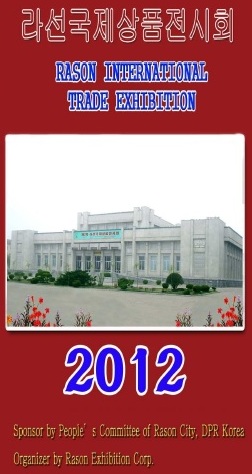
A bus bumps and bruises its way along the unpaved road, carrying would-be investors to Rason’s First Rason International Trade Exhibition which ran from August 21-25, 2011, in Sonbong. The windows are open, until a crimson humvee barrels past, its powerful suspension dancing on the road, leaving behind a plume of beige dust. The bus windows snap shut, the still air quickly gets hot and more than one of the passengers wishes we were Chinese high-rollers, being whisked to the Emperor Casino and Hotel, which sits beautifully on Korea’s East Sea, overlooking Bipa Island and flanked by lush green mountains and crystal waters.

The passengers of the humvee-part of the casino’s fleet-will long be checked in and gambling their fortunes away by the time we complete our two and a half hour journey. However, it won’t always be this way. Rason’s 50km road to the border is finally being upgraded. Indeed, the 2.5 hour journey took 3.5 hours in June. Since then, the road has been widened, the first stage of the construction plan, allowing for traffic to flow both directions more easily and smaller passenger vehicles to overtake the more cumbersome truckers who ply the road.

Its construction is an important sign in the development of the Rason Special Economic Zone. Rason, an amalgamation of the names of the area’s two biggest cities, Rajin and Sonbong, could theoretically be a vibrant hub for both logistics and manufacturing. It is located in the far Northeast of the Democratic People’s Republic of Korea, bordering Russia and China. It has abundant, cheap labor and the region’s northernmost ice-free port. It has been a legal entity since the early 1991, but has struggled to reach its potential in the face of ambivalence from Pyongyang and difficult geopolitical circumstances.

Local administrators have bold plans for this experiment in economic opening-up and to develop as the Rason Municipal People’s Committee has imagined, an efficient road link with China’s Northeastern provinces is vital. For about a decade, improvements to the road have been “under discussion” and “coming soon,” but it is now undeniably underway. Work began in May of this year…READ MORE HERE

Share

Foreign shareholding in Daedong Credit Bank sold

Sunday, August 28th, 2011

Pictured Above (Google Earth): The Taedong Credit Bank offices at the Potonggang Hotel.  See in Google Maps here.

London UK/Pyongyang DPRK, 26 August 2011
The Board of Daedong Credit Bank is pleased to announce that the foreign shareholding in Daedong Credit Bank has been sold to a Chinese based corporate entity, the “Nice Group”.

The foreign-appointed directors on the Board of Daedong Credit Bank have resigned with immediate effect, and have no further interests (financial or fiduciary) in the company.

Outgoing CEO of Daedong Credit Bank, Nigel Cowie noted:

“I am now heavily involved with a second joint venture company in the DPRK, Hana Electronics JVC. Established in 2003, this company has enjoyed solid commercial success and has recently opened its new headquarters building, together with the expansion of its business lines.

The success of both ventures has been such as to necessitate a decision to focus on one or the other, and a commercial decision had to be made.

The bank is continuing to enjoy the commercial success it has seen for the past 16 years, but ironically the decision has been made easier by the general sanctions-laden environment in which financial business here is framed these days.

As to the possibility of ever re-entering the bank, any decision we make will be based purely on commercial considerations.”

Both Hana Electronics and Phoenix Commercial Ventures bank with DCB, and will continue to do so.

About Daedong Credit Bank

Daedong Credit Bank is a joint venture retail bank based in Pyongyang. It was established in 1995 as “Peregrine Daesong Development Bank”. The Bank underwent a change of name and foreign ownership in 2000.

The wealth of experience garnered over Daedong Credit Bank’s 16 years of successful operation is unrivalled.

Daedong Credit Bank was the first, by fifteen years, foreign majority held bank in the DPRK. DCB is proud to be regarded as a flagship successful joint venture in the DPRK, and a key part of the infrastructure needed to assist the foreign-invested joint ventures, which contribute to the country’s economic development.

The bank’s principal function is to offer normal “high street” banking facilities in hard currency to foreign companies, joint ventures, international relief agencies and individuals doing legitimate business in the DPRK.

Daedong Credit Bank was the first bank in the DPRK to introduce, and vigorously implement, a comprehensive set of anti-money laundering procedures. DCB’s anti-money laundering procedure manual was introduced eight years ago, and subsequently updated based on anti-money laundering guidelines provided by the Asian Development Bank. The manual has been sent to, and accepted by, DCB’s international correspondent banks.

Daedong Credit Bank also maintains strict procedures for the detection and rejection of counterfeit bank notes; it uses regularly updated note checking machines, and has personnel with over 15 years of experience of handling notes.

Daedong Credit Bank is strongly positioned in relation to the future economic development of the DPRK, and, being the oldest established foreign invested commercial bank in the DPRK, it is the intention of the bank to capitalise on these advantages.

CONTACT INFORMATION
Daedong Credit Bank office address in Pyongyang is:
Daedong Credit Bank
Suite 401, Potonggang Hotel
Ansan-dong
Pyongchon District
Pyongyang
Democratic People’s Republic of Korea
www.daedongcreditbank.com

Share

2011 Women’s World Cup

Thursday, August 25th, 2011

UPDATE 6 (2011-11-18): An Australian Women’s team is unhappy with the way the DPRK doping scandal has erupted. Accoridng to the Herald Sun:

A doping storm surrounding the North Korea women’s soccer team has given the Matildas a glimmer of hope they will be able to compete at the London Olympic Games.

The Matildas failed to qualify for next year’s Games after finishing third in the Asian qualifying tournament in September behind Japan and North Korea.

But North Korea was contentiously allowed to contest the play-offs despite being banned by soccer’s ruling body FIFA following a doping scandal involving five players and a team doctor only three months earlier.

The furore erupted in the wake of this year’s World Cup in June and July when the five players tested positive to steroids, earning bans of up to 18 months.

The team doctor was barred for six years and the team was thrown out by FIFA until the 2015 World Cup.

But a FIFA disciplinary committee’s decision to penalise the Koreans in only the World Cup competition meant they were able to remain in Olympic contention.

The Matildas are furious at the decision, especially since no drug tests were taken at the Olympic qualifying tournament in China, where they endured a 1-0 loss to North Korea.

The Australian Olympic Committee has now asked the International Olympic Committee and the World Anti-Doping Authority to clarify North Korea’s Olympic eligibility.

Ultimately, it is understood the IOC will bow to FIFA rulings because FIFA runs the Olympic tournament.

Football Federation Australia national teams chief John Boultbee said FFA had also asked WADA to appeal FIFA’s decision.

But the FFA is also yet to make any inroads.

“We think it’s strange that a team is banned for 2015 and not 2012 so we have raised the issue with WADA, the IOC and FIFA but so far to no avail,” Boultbee told AAP.

“We recognise there’s an element of self interest from our point of view because we were third in the qualification tournament but also we are not happy that what FIFA has found to be systematic doping, has not been dealt with in the most effective way.”

It’s believed Matildas players were initially instructed not to comment on the issue but they’ve opted to speak publicly because of their frustration with the situation.

Matildas captain Melissa Barbieri stressed the women’s side did not want to make excuses for their failed campaign but simply could not fathom why no drug testing was done at the qualifying tournament.

“It’s surprising to say the least, especially when a team has been caught with drugs in their system for the World Cup a month beforehand and to have no drug testing,” Barbieri said.

“They (North Korea) played better than us and we lost the game.

“But it plays on your mind – do you really believe that they didn’t have any drugs in their system when they were playing us as well? Who knows?”

While the five North Korean players banned at the World Cup did not take part in the Olympic qualification and cannot compete in London, veteran Matildas defender Thea Slatyer said she was concerned a host of new players had been brought into the squad but not tested.

Slatyer, who would have played her last international tournament in London, said the players had been left disheartened.

“We’re a very fair country. We’ve always played fair and played by the rules,” Slatyer said.

“… It does make you really upset to know that a team that has conducted this behaviour is kind of allowed to get away with not being tested.”

FIFA told AAP in a statement the Asian Olympic qualifying tournament had not been considered a priority for doping control.

“As due to logistical reasons, FIFA cannot conduct at all qualifying games doping controls,” the statement read.

“Therefore, an assessment is done by the FIFA Anti-Doping Unit and it is decided at which matches doping controls will be performed.”

UPDATE 5 (2011-8-25): The DPRK women’s team has been banned from the 2015 Women’s World Cup.  According to USA Today:

FIFA banned North Korea from the 2015 Women’s World Cup after five players tested positive for steroids from traditional musk deer gland therapy at the tournament last month.

FIFA on Thursday imposed bans of up to 18 months on all five players, who North Korean officials said were treated with traditional therapy after being struck by lightning at a pre-tournament training camp.

Jong Pok Sim, Hong Myong Hui, Ho Un Byol and Ri Un Hyang were suspended from all soccer-related activity for 18 months, while Song Jong Sun was ineligible for 14 months, FIFA said.

North Korea’s soccer federation was fined $400,000, and team doctor Nam Jong Ae was banned for six years.

The fine “exactly corresponds to the prize money the association would have received for their 13th place in the final ranking of the Women’s World Cup in Germany,” FIFA said.

Defenders Song and Jong failed drugs tests before the World Cup game against Colombia. FIFA then tested the entire North Korean team after its final match.

FIFA’s disciplinary panel also banned Colombia backup goalkeeper Yineth Varon for two years for doping at the tournament.

The doping case was the most serious at a major FIFA tournament in 17 years.

In July, FIFA’s chief medical officer Jiri Dvorak said after extensive testing, “we can really say with far-reaching confidence that these steroids were the result of this so-callled Chinese traditional medicine.”

UPDATE 4 (2011-7-16): Once again, the North Koreans come up with a creative explanation for testing positive in doping tests.  According to the Associated Press:

North Korea officials blame traditional medicine using musk deer glands for five of their players testing positive for steroids at the Women’s World Cup in soccer’s biggest doping scandal in nearly two decades.

Their loss to the US was due to being struck by lightning (see below).

UPDATE 3 (2011-7-16): Three more players have tested positive.  According to Bloomberg:

Three more North Korean soccer players failed anti-doping tests given to the whole squad after two teammates failed a test earlier this month at the Women’s World Cup.

FIFA didn’t name the players or the substance in a statement today. All North Korean players were tested after Song Jong Sun and Jong Pok Sim were provisionally suspended July 7 before a game against Colombia in Bochum. The two had been tested after the team’s previous matches and the results received yesterday morning.

UPDATE 2 (2011-7-11): A new German language documentary has been released featuring may of the players and their training facilities.  See it here.

UPDATE 1 (2011-7-7): Two members of the DPRK Women’s team have been suspended for doping.  According to CNN:

World football’s governing body FIFA announced Thursday that two players from the North Korea side have been provisionally suspended from the Women’s World Cup after failing dope tests.

Jong Sun Song and Sim Pok Jong were prevented from playing in the tournament being held in Germany prior to their team’s Group C tie against Colombia in Bochum yesterday.

FIFA said in a statement that adverse “analytical findings” were present in “A” samples collected in two anti-doping tests conducted after the team’s previous matches.

The statement continued: “In accordance with article 58 of the FIFA Anti-Doping Regulations … the whole Korea DPR team was required by FIFA to undergo an anti-doping test after yesterday’s match between Korea DPR and Colombia. The target testing of the entire Korea DPR team was coordinated with WADA [World Anti-Doping Agency].”

North Korea drew 0-0 with Colombia in their third and final game at the event in which they failed to score a goal; previous defeats to Sweden and the USA consigning the team to an early exit.

Colombia finished below North Korea to bottom Group C after also failing to score a goal in their three group games, a result which preceded the announcement from FIFA that a player from their squad was also subject to suspension.

“In total, there have been three adverse analytical findings in connection with the Women’s World Cup. The chairman of the FIFA Disciplinary Committee [also] provisionally suspended the Colombian player Yineth Varon after an out-of-competition doping test conducted in Leverkusen on 25 June 2011.

“Disciplinary proceedings have since been opened and are still pending. FIFA would like to emphasize once again its determination to keep football free of doping.

“It is FIFA’s duty and will to protect players from harm and ensure that footballers can compete on an even playing field. FIFA is a reliable partner of the World Anti-Doping Agency (WADA) in the worldwide collaboration to safeguard the health of athletes and the spirit of fair competition,” the statement said.

Both North Korea and Colombia failed to progress from the group stage to the quarterfinals, the first of which will be played in Leverkusen when England take on France on Saturday.

Funny, this scene must have been cut from the recent DPRK-made television drama about the women’s football team.

The Middlesbrough Women’s team should demand a rematch!

This is one more sign that the North Koreans are just like everyone else—or rather, North Korean athletes respond to incentives in the same way as athletes from other countries.  They just can’t afford the kind of staff that is sophisticated enough to beat the doping tests. Unlike some sports purists, I would just assume allow doping in competition.

But despite being such a small country, the North Koreans do seem to draw their fair share of controversy at sporting events. Two North Korean athletes in the 2008 Olympiad were also punished for doping. North Korean gymnasts have been banned from international competition until October 2012 for age falsification. And up until 2008, the North Koreans were the only team ever disqualified from the International Mathematical Olympics.

ORIGINAL POST (2011-6-28): The US team wins 2-0.  The DPRK gave the Americans a good game for the first half I am told.

Most interestingly, the DPRK coach blamed the loss on a lightning strike!  According to the Los Angeles Times:

North Korea Coach Kim Kwang-Min had an extraordinary explanation for the loss.

“When we stayed in Pyongyang during training, our players were hit by lightning, and more than five of them were hospitalized,” he told the BBC.

“Some stayed in hospital and then came to Germany later than the rest of us. The goalkeeper and four defenders were most affected, and some midfielders as well. The physicians said the players were not capable of participating in the tournament.

“The fact that they played could be called abnormal, the result of very strong will.”

Additional information:
1. In the past, DPRK players have frustrated foreign sponsors by not thanking them for their victories, but rather “you know who”.

2. The DPRK 2011 women’s team was sponsored by Legea (Italy). The 2008 Olympic team and 2007 women’s football team were sponsored by China Hongxing.  Yet a recent North Korean television drama about the women’s team (broadcast last week) featured apparel by FILA.

3. Here is the BBC article mentioned above.

Share

The DPRK and Russia to Discuss Construction of Gas Pipelines

Wednesday, August 24th, 2011

Institute for Far Eastern Studies (IFES)
2011-8-24

Kim Jong Il’s visit to Moscow on August 20 is sparking interest for the future of economic cooperation between the two countries.

According to the KCNA, Russian President Dmitry Medvedev expressed interest to increase trilateral cooperation between the ROK-DPRK-Russia in the gas, energy, and railroad sectors. In the message sent from Medvedev to mark the 66th anniversary of independence from Japanese colonial rule, “plans to expand cooperation with the DPRK and the ROK in gas, energy, and railroad industry” were emphasized.

The cooperation projects are evaluated to have “great economic and political significance contributing to the stability in Northeast Asia and denuclearization of the Korean peninsula.”

In July 4, the KCNA reported that the delegates from the Russian energy giant Gazprom headed by Chairman Alekhsandr Ananenkov visited Pyongyang to discuss energy cooperation, although details of the visit was not elaborated. Ananenkov was reported to have met with North Korean officials in gas and oil industriesto discuss bilateral cooperation in these areas.

Russia has also expressed interest in linking gas pipelines to export natural gas to South Korea via inter-Korean railroad system.

A spokesperson of the foreign ministry of the DPRK reported on the recent visit from the vice-foreign minister and chief representative of Russia on Six-Party Talks, Aleksei Borodavkin, this past March. In the statement, the Russian government expressed concerns for improving inter-Korean relations and stressed prospects of the tripartite economic cooperation projects with North and South Korea including the construction of railways, gas pipeline, and a transmission line linking the three countries. The DPRK also expressed support for the upcoming economic cooperation projects.

In result, the main agenda in the bilateral economic cooperation between Russia and North Korea entails railway, gas pipeline, and transmission line construction.

President Lee Myung-bak has met with the Russian president Medvedev in September 2008 in Moscow. At the summit, the two presidents reached an agreement to pursue projects to export Russian PNG or pipeline natural gas to South Korea through a pipeline via North Korea from 2015.

Immediately following the summit, South Korea’s Korea Gas Corporation (KOGAS) and Russia’s Gazprom signed a memorandum of understanding (MOU) to jointly study the possibilities of constructing a long-distance pipeline running from Vladivostok. Under the contract, Russia will send at least 7.5 million tons of natural gas annually for a period of 30 years through a pipeline to South Korea via North Korea.

This joint study between ROK-Russia is expected to serve as a momentum in bringing diverse economic cooperation between North and South Korea as well.

While it is still premature to judge the long-term outlook for such trilateral economic cooperation, its effects are anticipated to contribute to stability and peace in the Northeast Asian region.

Additional Information: here is a summary of the recent Kim Jong-il — Medvedev summit.

Share

DPRK bringing domestic and Chinese tourists to Kumgang

Wednesday, August 24th, 2011

Pictured above: North Korean visitors to Kumgangsan wave to the camera in this video posted to Uriminzokkiri’s YouTube page.  The Video is dated 2011-8-20.

According to the Donga Ilbo:

North Korea has reportedly opened the Mount Kumgang resort to its nationals since April after having allowed only a select few to visit the scenic area before with permission.

Pyongyang apparently intends to pressure Seoul by opening the door to the mountain to the North Korean people after failing to attract foreign investment and tourists to the resort.

A Chinese source on North Korea said Tuesday, “North Korea effectively allowed all North Koreans from April to visit the entire Mount Kumgang area, including major rivers in the region.”

North Korea, however, allows only group tourists and not individual visits. North Korean authorities have ordered companies and businesses to visit the site for company picnics or events, and the mountain has 4,000 to 5,000 visitors per month.

A business unit that wants to visit files an application with the provincial government, which then reports to the international tourist authorities of Mount Kumgang. After screening candidates, authorities issue a tourist certificate that allows holders to pass checkpoints on the way to the mountain.

Two days are generally needed to travel the region, and visitors use the accommodation facility called Kumgangsan that can handle 500 people per day. The source said rooms are in short supply because of many visitors.

Each visitor should cover his or her own expenses. The estimated cost is around 1,700 North Korean won (1.43 U.S. dollars) for entry and 19 cents per night, so the combined expense amount is 2,500 to 3,000 North Korean won (2.10 to 2.53 dollars).

The source said, “The expenses almost equal a month`s salary but the popularity (of going to Mount Kumgang) has surprised everyone.”

Speculation is rising over whether the North will use South Korean real estate and equipment belonging to Hyundai Asan Corp., the South Korean operator of the tour, and others. Pyongyang announced Monday that it will dispose of South Korean assets and properties in the resort area.

“North Korea has not yet used any South Korean facilities but has apparently used them for local tourists,” the source said.

Also, according to KCNA, at least one Chinese tour group has visited the resort since July 30:

Pyongyang, July 30 (KCNA) — A Chinese tourist group led by Zhuang Jun, general manager of the Chinese Kanghui Xi’an International Tourist Agency, visited the Tower of the Juche Idea, Party Founding Memorial Tower, Pyongyang Students and Children’s Palace and Mangyongdae, President Kim Il Sung’s native place, in Pyongyang on Friday and Saturday.

The tourist group came to Pyongyang by the Pyongyang-Xi’an international air service.

Yang Rui, manager of the agency, told KCNA:

I was pleased to see an excellent performance of Korean schoolchildren. I hope they will perform in Xi’an. I have long looked forward to visiting Mt. Kumgang. In the afternoon we are leaving for the mountain. I will be happy to enjoy the beautiful scenery of the mountain.

Read about the continuing troubles at Kumgang from the shooting to the present day here.

Read the full story here:
N.Korea allowed its people to visit Mount Kumgang from April
Donga Ilbo
2011-8-24

Share

Inter-Korean trade statistics update

Wednesday, August 24th, 2011

According to the Choson Ilbo:

According to the Unification Ministry, 123 firms were operating in the industrial park as of July, with combined production output amounting to US$34.87 million in May, up 25 percent from $27.79 million year-on-year.

The total volume of inter-Korean trade through the industrial park reached $825.88 million in the first half of this year, up 19.5 percent from last year and a whopping 135.8 percent from 2009.

South Korean staff dwindled from 1,461 in 2008, when inter-Korean trade was at its height, to 801 in May this year, but the number of North Korean workers rose from 36,650 to 47,172. And some 3,700 more North Korean workers were hired even since May last year when the South banned new investments there after the North sank the Navy corvette Cheonon in March.

At the moment, the regime is unlikely to shut down the industrial park, since nearly 50,000 North Koreans are working there. But experts stress that the government should take the seizure of the properties in the resort as a warning and be prepared for anything that the regime could do.

“There’s nothing we can be sure of in inter-Korean relations,” said Dong Yong-seung, a researcher at the Samsung Economic Research Institute. “Risk factors always exist because the government launched the Kaesong project without providing any safety net to protect its people and properties, as in the case of the Mt. Kumgang tour project.”

South Korean investments in the industrial park amount to W920 billion (US$1=W1,079) — W540 billion invested by the 123 firms, and W380 billion from the government and public corporations to lay the infrastructure, including electricity and communications facilities, and landscaping.

If the regime shuts down the industrial park, the South would suffer double the losses it incurred from the regime’s seizure of the properties in Mt. Kumgang, which are worth W484.1 billion.

Read the full story here:
Kaesong Firms Worry as N.Korea Seizes Mt. Kumgang Assets
Choson Ilbo
2011-8-24

Share

PRC military exports to DPRK

Tuesday, August 23rd, 2011

The Choson Ilbo posts a video of dozens of military vehicles being shipped to the DPRK:

Left: Click image above to see video. Right: Dandong Customs House

According to the article:

Some 3,000 to 4,000 Chinese-made military trucks and jeeps entered North Korea last month, it was confirmed Monday. According to video clips obtained by the Chosun Ilbo, over 100 military trucks and jeeps made in China went to North Korea everyday last month after going through customs in Dandong.

There were eight video clips of varying lengths ranging from two minutes to 16 minutes. The footage shows Chinese-produced military vehicles standing in the 10,000 sq.m parking lot of the Dandong customs office waiting to be cleared along with other civilian cars, and two-story trailers loaded with military vehicles waiting on the side road to enter the customs office. A local source in Dandong said, “Normally, all Chinese-made vehicles going into North Korea were civilian, but in July, a massive number of military cars went to North Korea.”

A senior source in North Korea said that these cars were gifts to military officers by North Korea’s heir apparent Kim Jong-un in celebration of “Victory Day,” or the day the armistice in the Korean War was signed on July 27. “North Korean military vehicles produced in the 1970s and the 80s are too old to carry out drills, and many soldiers were dissatisfied. In order to buy the loyalty of the military and show what he can do, Kim Jong-un replaced the old vehicles thanks to the assistance of China,” the source added.

Jeeps were given to officers to be used to conduct operations, and the trucks were given to soldiers.

Analysis of the footage suggests the trucks were 6-ton trucks made by FAW Car Limited Company. North Korean leader Kim Jong-il visited the headquarters of this firm in Changchun, Jilin, during his visit to China in May. The military jeeps were manufactured by Beijing Automobile Works with engine capacity of 2,200 cc and 100 horsepower. BAW, which specializes in SUVs, trucks and military vehicles, is a subsidiary of Beijing Automotive Group, a partner of Hyundai Motor.

Dump trucks, large buses, sedans, oil trucks, agricultural machines and heavy machinery were also spotted in the video going into North Korea. In the windscreen, the name of the recipients is written. One is Korea Taesong Trading Company, a trading company under the Workers Party that manages Kim Jong-il’s slush funds. It was blacklisted by the U.S. as part of its economic sanctions against the North.

In one video clip, tourist buses pack one side of the parking lot. Another clip shows a queue of several dozens of LNG trucks. A South Korean government official commented, “North Korea depends on China for almost entire amount of fossil fuel it needs.”

Share

DPRK orders expulsion of South Koreans from Kumgang

Monday, August 22nd, 2011

According to the New York Times:

North Korea on Monday gave South Korean tourism officials 72 hours to leave a mountain resort, saying it would start auctioning off South Korean-owned hotels, restaurants and other remnants of what used to be a symbol of inter-Korean cooperation.

North Korea gave the ultimatum on Monday after talks failed to resolve a dispute over whether tourism in the resort should resume and under what conditions.

“We consider that the South has completely given up all rights on properties owned by South Korean companies and now start legal disposal of them,” the North’s official Korean Central News Agency quoted the North Korean tourism authorities as saying. “All assets owned by South Korean companies in the Geumgangsan resort are banned from being taken out as of Aug. 21.”

The South Korean assets in the resort amount to 480 billion won, or $443 million, according to government data. North Korea said last year that it had confiscated the assets, including a spa, a duty-free shop and other businesses built and owned by the South Korean government.

Fourteen South Koreans were staying in the area maintaining facilities owned by Hyundai and other private South Korean investors. The Unification Ministry, a South Korean government agency in charge of inter-Korean relations, said it would take “all possible diplomatic and legal measures to protect the property rights of our government and enterprises.”

Hyundai Asan, which developed and ran the resort, warned that anyone who bought facilities at the resort would be implicated in international lawsuits.

After attracting 2 million South Korean tourists by sea or by a road built across the nations’ heavily armed border, the project came to an abrupt halt in 2008, after the female South Korean tourist strayed outside the tourism zone one morning and was shot and killed by North Korean soldiers.

Xinhua, the Chinese state media outlet reports that the South Koreans have rejected this move by the North Koreans:

“The government cannot accept North Korea (DPRK)’s arbitrary measures, and we’d like to make it clear the North should be held responsible for all consequences,” Chun Hae-sung, spokesman for the unification ministry in Seoul, told reporters.

“The government will seek all necessary measures including legal and diplomatic ones, and will stay in close contact with business operators involved,” he added, calling Pyongyang’s announcement “regrettable.” The ministry oversees inter-Korean affairs.

The Choson Ilbo points out some additional points of economic interest:

The greatest concern for South Korean officials is the potential conflict over power generators Hyundai Asan installed at Kosong Port to supply electricity to the resort. Since 2008, Hyundai has been operating only one of them to supply power for the remaining staff. If Asan halts the power generators, North Korea cannot use the facilities in the resort. This may be why the North has threatened to take “stern measures” should South Korea “cause damage to assets” left in the resort.

While freezing the South Korean assets, North Korea has been trying to organize tours to Mt. Kumgang on its own. Some analysts say the North hopes to get another country to operate the tours to generate hard cash. Until the tours were suspended in 2008, North Korea made US$487 million from Hyundai Asan.

A separate Choson Ilbo article questions whether the operation will be as profitable if targeted at non-South Koreans:

But of the total 1.93 million visitors to the resort between 1998 and 2008, non-Koreans accounted for only 12,817, or less than 1 percent, which comes to just four a day. It was South Koreans who were willing to pay a large amount of money, including fees to cross the border, to briefly set foot on Korean soil on the other side of the demilitarized zone, But for foreigners, the resort is just a place in the middle of nowhere.

Foreign investors who were cautiously calculating the viability of investments in North Korea were probably shocked to see the seizure of South Korean assets. The North scrapped a 50-year contract with Asan as if it was not worth the paper it was written on and even invented a new law enabling it to sign a deal with somebody else. Which investor in his right mind would want to put his money in a country like that?

The Donga Ilbo breaks down the cost of the fixed capital investments Hyundai-Asan made in the Kumgang Resort:

South Korean assets seized by the North are worth 484.1 billion won (447.2 million dollars). Of the amount, Hyundai Asan invested 226.9 billion won (209.6 million dollars), including hotels in the resort, and the South Korean government spent 124.2 billion won (114.7 million dollars) to build a meeting venue for Korean families separated during the Korean War, duty-free shops and a cultural hall.

Hyundai Asan’s three power generators with a capacity of 1,700 kilometers at Goseong dock are one of the major assets in the tourist region.

North Korea, however, is unlikely to attract foreign tourists to Mount Kumgang on its own or sell the facility to foreign investors. It continues to search for a new partner in China, Japan and the U.S.

Rumor also has it that that North Korean leader Kim Jong Il has ordered that the Mount Kumgang tour be made into a luxury business but low feasibility has prevented progress in the project.

A timeline of Kumgang stories from the shooting until the present can be found here.

Read the full stories here:
North Korea to Auction Resort Owned by South
New York Times
Choe Sang-hun
2011-8-22

S. Korea rejects DPRK’s threatened disposal of properties
Xinhua
2011-8-22

N.Korea Orders S.Koreans Out of Mt. Kumgang
Choson Ilbo
2011-8-23

N.Korea Shoots Itself in the Foot Again
Choson Ilbo
2011-8-23

NK declares disposal of S.Korean assets in Mount Kumgang
Donga Ilbo
2011-8-23

Share

DPRK-China launch minerals – for – fertilizer program

Friday, August 19th, 2011

Pictured above (Google Earth): The Musan Mine, the DPRK’s largest.  See in Google Maps here.

According to the JoongAng Daily:

During his surprise May visit to China, North Korean leader Kim Jong-il secured free fertilizer and discounted food to help alleviate the impoverished country’s chronic food shortages.

A source in Beijing who monitors North Korea-China relations told the JoongAng Ilbo on Monday that Chinese officials agreed to provide 200,000 tons of fertilizer free of charge as well as 500,000 tons of corn at a discount in exchange for rights to North Korea’s abundant natural resources.

“When 200,000 tons of fertilizer is planted on North Korean soil, it can bring about a three-fold increase in the harvest,” the source said. “This can be the equivalent of giving 600,000 tons of food.”

The source added that China agreed to sell the 500,000 tons of corn for half of the international rate, which would be $30 per ton.

The corn, the source said, had already crossed the border into North Korea from northeastern China.

In exchange, Kim will allow China access to his country’s natural resources.

“The two parties agreed to participate in the extraction of buried rare earth minerals in Musan in Hamgyong Province,” the source said. “It’s quite a profit for China as it is thirsty for materials.”

North Korea is estimated to have around 20 million tons of rare earth minerals, which are vital in the production of high-tech goods.

The Beijing-based source said the agreement gives China the responsibility for the cost of building roads to transport the natural resources as well as lending equipment.

In exchange, North Korea will hand over 50 percent of the extracted rare earth minerals free of charge to China, with the rest to be sold to China at international market rates.

Meanwhile, other sources said that Kim also received a health checkup during his stay in China.

“When Kim Jong-il was visiting Yangzhou, he received a special examination from an oriental medicine doctor that the highest Chinese elite have gone to over the years,” a source familiar with North Korean issues said

The source added: “Kim Jong-il has never trusted China’s Western medicine. I heard from a Chinese official that Kim received an oriental medicine diagnosis by taking his pulse and that it did not involve drawing blood.”

Additional Information:

1. Here is a post linking to all the major DPRK food stories this year.

2. The media has reported on other DPRK food barter deals with Cambodia and Myanmar.

3. The role of the Musan Mine in DPRK-PRC relations has been quite interesting.  Here are previous posts on the mine.

Read the full story here:
North got fertilizer on Kim’s trip to China
JoongAng Daily
Chang Se-jeong
2011-8-19

Share

An affiliate of 38 North