Archive for the ‘International Governments’ Category

Chinese joint venture company takes over Hyesan Youth Copper Mine

Monday, September 19th, 2011

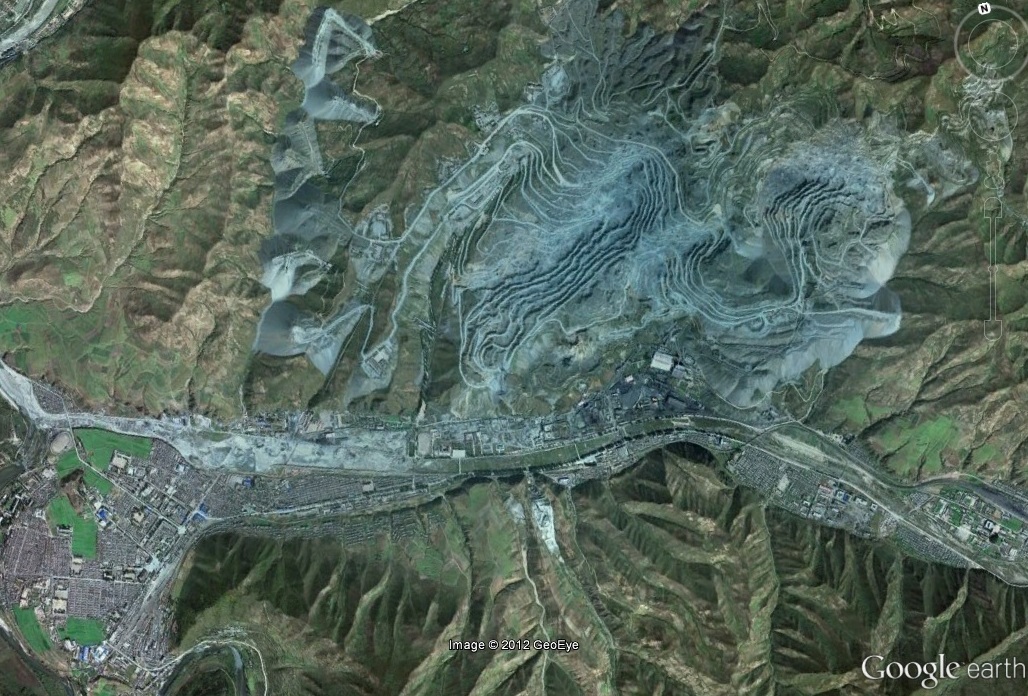
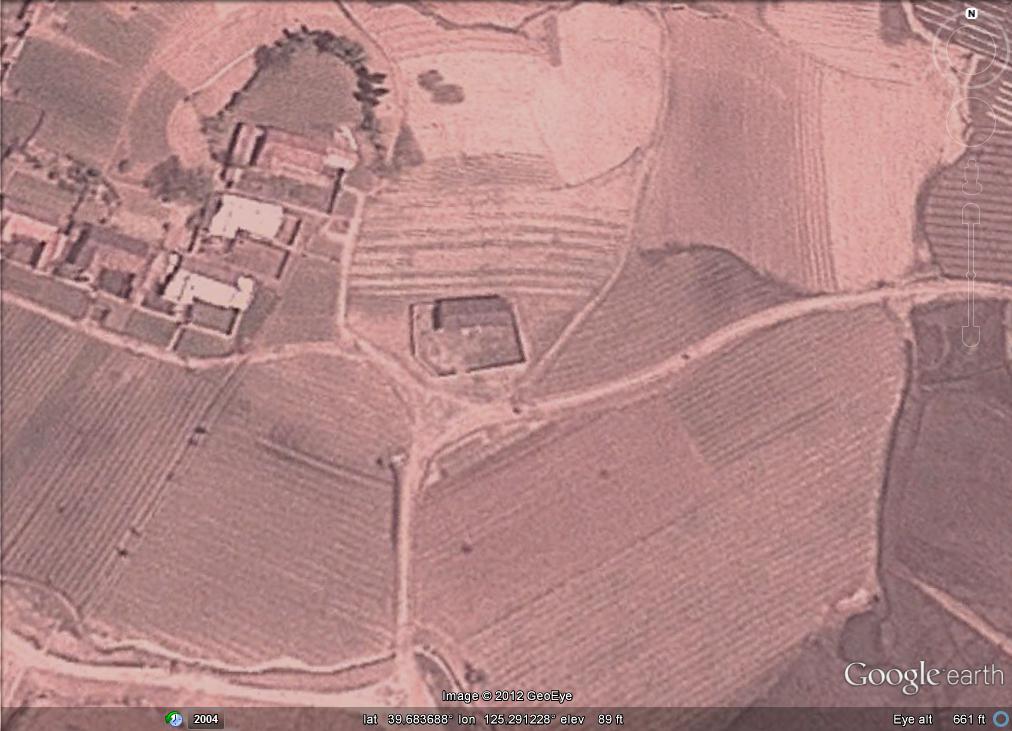
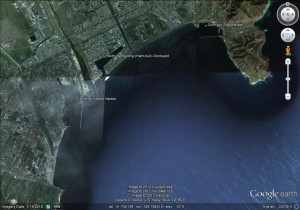
Pictured above (Google Earth): Hyesan Youth Copper Mine.  See in Google Maps here.

According to Xinhua (China):

Hyesan-China Joint Venture Mineral Company, a large joint project between China and the Democratic People’s Republic of Korea (DPRK), started operation at Hyesan of Ryanggang province on Monday.

The mineral company was jointly set up by Wanxiang Resources Limited Company of China and the Ministry of Mining Industries of the DPRK on Nov. 1, 2007. Its main business was to produce and sell copper.

DPRK Mining Industries Minister Kang Min Chol and Chinese ambassador Liu Hongcai attended the opening ceremony.

Kim Chol, chairman of the people’s committee of the Ryanggang province, said at the ceremony that the joint venture was one of the symbols of the development of the DPRK-China friendship and would be a model of modernization, science and economic benefits.

Liu believed the company would make profits for both sides, benefit the two peoples and promote traditional China-DPRK friendship.

According to Reuters:

The mine was located a few miles from the Chinese city of Changbai in the northeastern province of Jilin and was 51 percent owned by Wanxiang, a source with direct knowledge of the project told Reuters on Tuesday.

The mine had a designed annual capacity of 50,000-70,000 tonnes of copper concentrate, expected to contain 20-30 percent copper, he added.

“All the concentrate will be sold to China,” the source said.

The source said the joint venture would conduct second-phase construction to expand the capacity of the mine if production ran smoothly, but did not give details on timing or expanded capacity.

China is the world’s top copper consumer but does not produce sufficient concentrate to meet demand. The country imported 3.4 million tonnes of copper concentrate in the first seven months of 2011, down 11 percent from a year earlier.

According to KCNA:

The Hyesan Youth Mine in Ryanggang Province was successfully updated as required by the new century.

The workers and technicians of the mine together with Chinese technicians and skilled workers completed the vast modernization project and successively ensured their commissioning.

The modernization of various production processes including mining, carriage and ore dressing made it possible to boost mineral production and thus contribute to economic development and the improvement of the standard of people’s living.

A ceremony for the completion of the modernization project at the Hyesan Youth Mine and the Hyesan-China Joint Venture Mineral Company was held on Monday.

Present there were Kang Min Chol, minister of Mining Industry, Kim Hi Thaek and officials concerned, Liu Hongcai, Chinese ambassador to the DPRK, and staff members of his embassy and Han Youhong, president of the Wanxiang Resources Co., Ltd. of China, and personages concerned.

Ri Mun Yong, manager of the Ryanggang Provincial Mining Complex, made an address to be followed by congratulatory and other speeches.

At the end of the ceremony, the participants went round production processes.

That day a reception was given in connection with the ceremony.

Although foreign investors and aid groups frequently build/ repair / upgrade North Korea’s state owned enterprises, it is rare that they are given any credit for their work in the official media.

Previous posts about the Hyesan Mine:
1. Poor electricity supply (2011-5-16)

3. Mine is flooded (2007-11-1)

4. China investing in mine (2007-4-12)

5. Chinese investing in mine (2006-12-24)

Additional mining information:
1. DPRK – China minerals for food program (2011-8-19)

2. DPRK looking to export rare earths (2011-7-23)

3. DPRK – China trade: 1995 – 2009 (2011-6-7)

4. Increase in DPRK’s mineral resources exports to China expected again for this year (2011-2-28)

5. DPRK – China mining deal (2011-2-6)

6. China expanding mining rights in DPRK (2010-1-15)

Share

DPRK luxury imports 2011

Monday, September 19th, 2011

Pictured above in Wonsan: Possibly a new yacht (see more here)

According to the Choson Ilbo:

The North Korean regime has spent US$1.04 billion since 2008 importing luxury goods in contravention of UN Security Council resolutions.

According to data Grand National Party lawmaker Yoon Sang-hyun obtained from the Foreign Ministry and other government agencies, the regime imported luxury goods worth $272.14 million in 2008, $322.53 million in 2009, and $446.17 million in 2010.

TVs, digital cameras, and video recorders made up the largest proportion, jumping from $115.47 million in 2008 to $215.95 million in 2010.

Luxury cars and parts came second and movie equipment such as film cameras and projectors third.

UN Security Council resolutions 1718 and 1874 ban exports of luxury goods and weapons of mass destruction to the North.

The amount the regime spent buying luxury goods was about 10 times the total humanitarian aid of $107.29 million it received from South Korea and the international community over the same period.

Read the full story here.

Additional information:
1. Back in July, there were several estimates of DPRK luxury goods imports based on Chinese data.

2. The DPRK maintains appx 200-300 foreign trade companies.

3. Office 38 is reportedly responsible for engaging in trade deals.

4. On the life of an overseas North Korean trade agent.

5. Here is an American Hummer parked at the Yangakdo Hotel.

Share

North Korea Encourages Investment in Rajin-Sonbong (Rason) Economic and Trade Zone

Friday, September 16th, 2011

Institute for Far Eastern Studies (IFES)
2011-9-14

At the seventh China Jilin and Northeast Asia Investment and Trade Expo (NEASIAEXPO), the North Korean delegation actively promoted the Rajin-Sonbong (Rajin) Economic and Trade Zone to attract investment.

During the expo, the DPRK’s Ministry of Trade and China’s Ministry of Commerce and People’s Government of Jilin Province co-sponsored the “(North) Korean Business Day and China-DPRK Trade and Investment Session” at the Changchun International Conference and Exhibition Center on September 7. Hwang Chol-nam, the vice mayor of Rason City, briefed the attendees on the current situation, advantages, and special benefits of his city.

According to Hwang, “The spacious 470 square-kilometer Rason Economic and Trade Zone is one of the largest economic trade zones,” and advertised the geographic and economic advantages of Rason as the “transportation hub of Northeast Asia that connects China and Russia via Tumen River and with Japan across the East Sea.”

He also introduced the three ports in the region. “Rajin Port is equipped with the annual loading capacity of 3 million ton and Sonbong Harbor is able to transport 2 to 3 million ton of oil while Ungsang Harbor is able to handle up to 600,000 cubic-meter of lumber annually.” He also boasted the ports to be deep enough where it does not freeze during the winter.

Rason was also introduced to have received the “special city” designation in 2010 and will grow to have a population of one million. The recently amended “Law on the Rason Economic and Trade Zone” was revised and supplement with over 50 articles.

Hwang also elaborated on the eight preferential policies providing special tax benefits to foreign investors. He asserted, “The government of North Korea will guarantee the investment of the foreign investors by not nationalizing or demanding requisitions. For inevitable cases where such demands occur, proper compensation will be provided.”

The income tax is also at 14 percent, which is 11 percent lower than other areas in North Korea. For companies with business plans over ten years, foreign capital companies will receive three years of tax-free benefit starting from the profit earning year and two years thereon after will receive 50 percent tax-free benefits. According to Hwang, over 100 foreign companies and offices are operating businesses currently in the special economic zone.

He also announced that the current highway construction project connecting Rajin with Wonjung is expected to be completed in October, and that the Tumen-Rajin port railway system is to be upgraded to a broad gauge railway next month.

Specifically, Russian Railways reached an agreement with North Korea to repair the Hasan-Rajin Railway and improve the Rajin port facilities, especially focusing on Pier 3. The plans include upgrading Rajin as a container harbor to be capable of transporting twenty-foot equivalent units annually. Russia and the DPRK have already conducted measurement and geological surveys and reached the process design phase.

However, Seo Gil-bok, the DPRK’s vice minister of commerce, stated in a speech that North Korea would “actively work hard to make the Rason region a successful collaboration between the DPRK and China,” saying further that they would “pull out all the stops to realize the goals agreed by the best leaders from both nations.”

Many foreign media and correspondents were present at the event to cover the “Korean Business Day.” At the event, North Korea actively promoted the Rason Economic and Trade Zone by also presenting a promotional video of the zone.

Share

Rajin market on display to foreigners

Tuesday, September 13th, 2011

Pictured above: (L) satellite image of the Rajin Market, (R) a ground-level photo taken in 1999

Among the the flurry of activities that comprised the DPRK’s recent public relations campaign in Rason (Rajin-Sonbong), the Rajin Market appeared on the itineraries of a few visiting delegates. Alexa Olsen writes about the market for the Associated Press:

Chinese travel agents, potential investors and foreign journalists recently traveled into the North to get a look at the special economic zone Pyongyang is promoting in Rason. It lies in the far northeastern tip of North Korea, 600 miles (1,000 kilometers) from Pyongyang, but will be about an hour’s drive from China once the road is completed.

Rumbling Chinese cargo trucks already ply the route, churning up plumes of choking dust and ferrying containers of Chinese-made shoes, plastic toys, computer speakers, T-shirts and DVDs to the Rason Free Trade Market.

The market, a 13-year-old experiment in small-scale capitalism, has been so successful that the Chinese managing company, the Tianyu Group, is planning to expand the jam-packed 54,000-square-foot (5,000-square-meter) market to 320,000 square feet (30,000 square meters), Tianyu vice director Zheng Zhexi said.

“As I see it, this is the way of economic development, and it’s something that the people want,” Zheng said. “I think it’s reached a point where it cannot be reversed.”

North Korea declared the area a special economic zone 20 years ago. But after a brief flurry of activity and funding from the U.N. Development Program, the project languished without backing from Pyongyang’s leadership.

Rason has benefited from the shift in Pyongyang’s priorities. When Zheng arrived in 1997 to set up the market, people were hesitant to get involved. Now Tianyu doesn’t have the space to approve even a fraction of the applications from prospective vendors, he said.

“Ordinary people’s sense and the awareness of the market, and their views on the economy — all these have changed a lot,” Zheng said.

Foreign journalists, who typically are barred from local markets, were taken on a strictly controlled, 15-minute tour. No photos, no notes, the guide instructed: “Just use your eyes.”

Vendors, mostly women, stood behind stands loaded with freshly skinned rabbit and live chickens, as well as goods mostly imported from China: blouses, speakers, refrigerators, sofas, shampoo, playing cards, binoculars.

High heels went for 25 yuan (US$4), a Kim Jong Il-style beige suit for 85 yuan ($13) and a container of sea salt for 3 yuan ($0.47).

North Korean tour guide Mun Ho Yong, 25, said his family shops at the market several times a week to supplement state rations of rice, oil and fish.

Everything Mun wore — striped dress shirt, belt, polyester trousers and black dress shoes — was bought at the market except his pin of late President Kim Il Sung attached to his shirt, over his heart.

One major challenge will be to successfully leap from the market’s small-scale commerce to full-fledged manufacturing and trade.

(UPDATE) In an article published later in the New York Times (2011-10-12):

A Chinese company critical to Rason’s development, the Yanbian Tianyu International Trade Company, got involved here 13 years ago. It began by erecting the bazaar, then built the casino, a hospital, a bread factory and a telecommunications building. It is now working on a cement factory, and operates two iron mines.

“The policy environment has been improving continuously,” said Zheng Zhexi, 58, the company’s vice president. “It’s moving towards a market economy.”

He pointed to the official tolerance for the bazaar, where merchants rent stalls from the government to sell goods that they buy from Chinese traders. Prices fluctuate and shoppers haggle. The bazaar has proved so successful that it is expanding to six times the current size.

These kinds of markets have sprung up all over the country to supplement the government’s weak food distribution system. Still, the government is sensitive to their capitalist nature, and some top officials have tried to set limits on them. Foreign journalists were permitted a 15-minute tour of the Rason market on the condition that they not photograph it or take notes.

The market, open just a few hours each day, was bustling, with goods like skinned rabbits, sofas, Sony headphones and Dell computer mice. A soldier with a Kalashnikov slung over his back walked among the aisles, looking to buy, and women running stalls wore red vests, the uniform of officially registered merchants.

In one corner was an office with the English words “Foreign Exchange” above the door. In Rason, currency is exchanged at the market rate — one Chinese renminbi to 350 North Korea won — rather than at the official rate, which values one renminbi at 15 won.

Additional Information:

1. Previous posts on Rason can be found here.

2. Additional information can be found here.

3. Source:
Tending a Small Patch of Capitalism
New York Times
Edward Wong
2011-10-12

Share

Dandong customs house is busy, busy, busy

Tuesday, September 13th, 2011

In the last decade we have seen the expansion of trade between the DPRK and the PRC.  You can see the data here (KEI) and here (Natuilus). You can also see this trend using satellite imagery:

Above image date: 2002-4-29

Pictured above (2002) is the former coal yard next to the Dandong train station in China.  Through this facility, China managed its DPRK coal trade.

Above image date: 2005-1-19

By January 2005, the coal field had given way to the construction of what was to become the Dandong Customs House, which manages rail and vehicle trade with the DPRK city of Sinuiju on the other side of the Amnok (Yalu) river. There are three things to notice in the picture above: New registration office (yellow box on the right), new main building (blue roof), preservation of nearby apartment blocks (yellow box on left).

Above image date: 2009-10-11

Above is the first photo of the completed facility which was taken in October 2009.  As is usually the case the parking lot is nearly entirely full.

Above image date: 2010-4-5

In the picture above we can see trucks moving in both directions through the registration office.  This facility is the first port of call for vehicles crossing the Friendship Bridge from Sinuiju, DPRK. Again we can see that the customs house is busy.


Above image dates: 2010-6-7, 2010-10-28

The above pictures (most recent on Google Earth) again reinforce the notion that the Dandong-Sinuiju trade route is bustling.

For the record, the North Koreans have expanded their customs facilities on the Sinuiju side of the border in relationship to the growing levels of trade:

Above image dates: 2002-4-29, 2010-10-28

But this is not all.  The North Koreans and Chinese are also building a second bridge and additional trade infrastructure in Ryongchon County, south-west of Sinuiju.  Learn more about that here.

Share

Optimism remains on gas pipeline between North and South Korea

Tuesday, September 13th, 2011

Institute for Far Eastern Studies (IFES)
2011-9-7

An article entitled, “Joint energy project on the agenda” was featured in the KCNA on August 31, which elaborated on the agreement reached between the DPRK and Russia on August 24 for the construction of a gas pipeline. The joint project is also inclusive of South Korea.

The KCNA said in the article, “The three countries have explored various options in transporting gas and have reached a consensus on building a gas pipeline running through North Korea will be the most cost-effective option.”

It also stressed this project will be beneficial for all three parties. In addition, Russia was commended as the major world power in natural gas and oil reserves and production and stressed Russia is turning its attention to expanding the energy sector.

When the Sakhalin – Komsomolsk – Khabarovsk pipeline that began construction in 2009 is completed, it will be equipped to provide enough gas not only domestically but across the Pacific-Asia region, producing a capacity of 30 billion cubic meters of gas per year.

The news also covered the specific plans of the Russian government to expand its energy supply; to boost the exports of oil and gas from three to thirty percent and five to twenty-five percent respectively, until the year 2020.

Therefore, the inter-Korean gas pipeline construction between the DPRK and Russia will be a vital project for Russia.

On August 30, the ROK’s Grand National Party (GNP) chairman Hong Jun-pyo declared, “The trilateral negotiation will be expected to take place sometime in November on the inter-Korean gas pipeline project.”

Hong also stated, “The ROK-Russia and the DPRK-Russia bilateral agreements have already been reached. Once the three parties meet to sign the tripartite agreement, the project will soon take off.” He also added, “President Lee Myung-bak has quietly pushed forward with the gas pipeline project since he first took office and it will be his major accomplishment.”

After the bilateral summit was held between the two leaders of Russia and the DPRK on August 24, the two nations have consented to establish a special commission to work cooperatively on the gas transit project running through the territories of North Korea to South Korea.

Share

2011 flooding reports, studies

Wednesday, September 7th, 2011

UPDATE 9 (2011-9-6): South Korea is slated to deliver flood relief assistance next week.  According to Yonhap:

South Korea’s Red Cross said Tuesday it will send baby food to North Korea across their heavily fortified border next week as its first batch of its emergency aid to North Korea’s flood victims.

The move came a month after Seoul offered to send 5 billion won (US$4.7 million) worth of emergency relief aid, including baby food, biscuits and instant noodles, to North Korea.

South Korea’s Red Cross said in a message to its North Korean counterpart on Tuesday that it will truck 200,000 packs of baby food in the eastern and western sections of the border next Thursday.

The Red Cross said it will send other relief items by the middle of October and it proposed holding consultations with North Korea to ensure Seoul’s aid to North Korea reaches the intended beneficiaries.

Last year, Seoul sent 5,000 tons of rice, 3 million packs of instant noodles and 3,000 tons of cement to North Korea to help it recover from devastating floods.

UPDATE 8 (2011-9-4): The US Government has send flood relief supplies to the DPRK. According to CBS News:

State Department spokeswoman Victoria Nuland says the plane is carrying blankets, soap and hygiene kits. It will arrive in Pyongyang this weekend.

The U.S. has said it will provide North Korea $900,000 in emergency aid through U.S. charities.

On September 4th, KCNA posted video of the plane arriving.  See it here (if you are allowed).

Samaritan’s Purse also posted two videos of their departure to and arrival in Pyongyang.

According to the Associated Press:

Samaritan’s Purse said it has pledged $1.2 million in addition to the $900,000 that the U.S. government has allocated for aid to North Korea through U.S.-based charities.

Ken Isaacs, a Samaritan’s Purse vice president, said the group has worked with the U.S. government and several other Christian organizations to send the aid as they try to “continue gaining humanitarian access into North Korea.”

Here is a list of US-DPRK engagement in 2011.

At least one report from Rason seems to indicate that the DPRK’s impending food shortage is not so severe of a problem.

UPDATE 7 (2011-8-23): United Grain Sends First Wheat Shipment to North Korea as Aid. According to the San Francisco Gate:

United Grain Co., Russia’s state grain trader, sent its first shipment of 3,560 metric tons of milling wheat to North Korea as humanitarian aid, the company said in an e-mailed statement today.

The ship arrived at the North Korean port of Hynnam, from Russia’s Vladivostok port on Aug. 20, the company said. It was the first of several shipments.

United Grain will send 50,000 tons of wheat from ports in Vladivostok and Novorossiysk to North Korea, the statement said.

UPDATE 6 (2011-8-22): According to this article in The Telegraph, the North Korean Red Cross has launched a £2.7m emergency appeal to help the victims of a series of floods and storms.  More information can be found here and here.

UPDATE 5 (2011-8-19): The IFRC has posted a map of the counties in which they are involved in flood relief.  See it here. The IFRC has also posted an emergency appeal for assistance.  You can see it here.

UPDATE 4 (2011-8-18): US to provide $900,000 in emergency relief supplies to North Korea after devastating floods. Read more at the AP (Via Washington Post) and Reuters.  Here is a collection of stories related to the DPRK’s alleged food shortage this year.  Here is a list of DPRK-US engagement events this year.

UPDATE 3 (2011-8-10): ROK lists food items it will donate to the DPRK in the wake of flooding. According to the Daily NK:

The South Korean government today transmitted to the North a list of the aid items it will deliver in response to recent flooding.

A spokesperson for the Ministry of Unification reported the news this afternoon, saying, “We transmitted a communication containing a concrete list of aid items to the North this afternoon in the name of the president of the Korea National Red Cross.”

The aid includes; 1.4 million units of high protein food, 300,000 units of snacks, 1.92 million Choco Pies and 1.6 million units of instant noodles, but, as previously reported, does not include rice, wheat flour or building materials.

The aid is expected to be conveyed overland along the west and east coasts to areas of Hwanghae and Gangwon Provinces.

“We excluded North Korea’s requested food and cement, but with the exception of medicines the emergency aid was modified mostly as per the North’s request,” the spokesperson explained.

UPDATE 2 (2011-8-10): ROK offers to send relief items to flood-hit DPRK.  According to Yonhap:

South Korea sent North Korea a list of relief items it is willing to deliver to flood victims in the impoverished nation, an official said Wednesday.

The South’s Red Cross delivered the message to the North earlier Wednesday, offering 5 billion won (US$4.6 million) worth of emergency staples including nutritional foods for infants, biscuits and instant noodles, according to the official from the Unification Ministry.

UPDATE 1 (2011-8-9): EU provides resources for flood victims. According to the Korea Herald:

The EU, which shipped food aid to the impoverished state to feed its starving people last month, has donated 200,000 euros ($280,000) to the International Federation of Red Cross in flood aid, Voice of America reported, quoting an EU official.

ORIGINAL POST (2011-8-9): Relief Web has put together a compendium of stories and reports (DPRK, ROK, IFRC, and UN) related to recent flood damage in the DPRK (July and August). Below are links and descriptions:

Briefing kit 1: Situation reports (PDF) on the flooding:

1. DPRK affected by serious floods following torrential rains in July
2. GIEWS Country Brief: Democratic People’s Republic of Korea 08-August-2011
3. Democratic People’s Republic of Korea: Floods DREF operation n° MDRKP003
4. Heavy Rain Damage: Situation Report #2
5. Floods: Situation Report #1

Briefing kit 2: This report (PDF) is an update of the August 7 collection and features media clippings and situation reports:

1. Democratic People’s Republic of Korea – Flood Update
2. Russia to Send 50,000 Tons of Food Aid to N.Korea
3. DPRK affected by serious floods following torrential rains in July
4. GIEWS Country Brief: Democratic People’s Republic of Korea 08-August-2011
5. Flood Damage Gets Serious
6. Seoul Greenlights Food Aid for N.Korea, But Not Rice, Cement
7. Nationwide Relief Effort Launched for S. Hwanghae Province
8. Downpour Batters DPRK Again
9. Damage from Heavy Rains
10. Red Cross Relief Activities Launched in DPRK
11. S. Korea offers N. Korea flood aid
12. Floods (as of 29 Jul 2011)
13. Democratic People’s Republic of Korea: Floods DREF operation n° MDRKP003
14. N. Korea PM inspects flooded region: state media
15. N. Korea storm, rains ‘kill dozens’: state media16. N. Korea state media says China to send flood aid
17. Rain leaves trail of destruction in North Korea
18. Floods wash N. Korean landmines into S. Korea
19. DPRK Hit by Heavy Rain Again
20. S.Koreans on landmine alert after deadly mudslides
21. Floods – July 2011
22. Heavy Rain Damage: Situation Report #2
23. Floods: Situation Report #1
24. Coal Mines Damaged by Heavy Rain
25. Floods Hammer Homes And Fields
26. Heavy Rains Hit DPRK
27. DPRK Hit by Heavy Rainfalls Again
28. Some Areas of DPRK Hit by Heavy Rain

Share

The Environmental Protection Law amended — environmental certification system to be newly introduced

Thursday, September 1st, 2011

Institute for Far Eastern Studies (IFES)
2011-8-31

According to the KCNA, North Korea amended its environmental protection law on August 18, adding development of energy and environmental certification system into the revised act.

The environmental protection law is comprised of four sections and 50 articles, in which articles 38, 39, and 40 were added recently. These contain laws related to the development and usage of renewable energy resources, recycling technology, and implementation of environmental certification system. In addition, articles 44 and 48 were also supplemented in Section 4. They include plans for setting up environmental economic indicators.

According to the KCNA, “Based on this law, each agencies, companies and organizations are reducing fossil energy consumption to protect the environment and promote continuous economic growth. In its place, renewable energy resources such as solar, wind and geothermal energy are currently being explored.”

North Korea has registered eight hydroelectric plants with the UNFCCC (United Nations Framework Convention on Climate Change) to receive carbon credits which can be sold to earn hard currency. Receiving accreditation toward the CDM (Clean Development Mechanism) will allow developing countries to earn tradable carbon credits for emissions reductions from clean-energy projects.

Currently, Ryesonggang Hydropower Plant No. 3, 4, 5 and Wonsangunmin Hydropower Plant No. 1 reached the validation phase while the other four plants are at the prior consideration phase.

On July 26, the KCNA explained the environmental protection law was revised “to beautify our homeland, protect the health and wellbeing of our people, and provide culturally hygienic environment with favorable working conditions.” Accordingly, the environmental protection law passed in 1999 is now ineffective.

In recent years, North Korea seems to be paying keen attention to environmental protection issues. From May 16 to June 10, ten senior officials from the DPRK Ministry of Land and Environmental Protection and National Science and Technology Commission were invited to a training course at the Asian Institute of Technology in Thailand.

The program was implemented by the United Nations Economicand Social Commission for Asiaand the Pacific (ESCAP) as a part of the project “Promoting Regional and Economic Cooperation in Northeast Asia.” The four-week training program provided highly specialized training on integrated watershed management and reforestation.

Additional Information: You can read more about the DPRK’s CDM efforts here, here, and here.

Share

DPRK to rent farmland in Russia

Thursday, September 1st, 2011

Over the last couple of decades, Pyongyang has shown a callous reluctance to part with its foreign currency reserves to acquire the necessary amount of food needed to sustain its population.  The DPRK government has, however, promoted a number of domestic initiatives, some financed locally and others with international assistance, intended to boost regional food security (and decrease individual mobility) which have cost it little in the way of scarce foreign currency. Some of these projects have been previously documented on this web page: The construction of regional fish and fruit farms, as well as large-scale land rezoning, land-reclamation (and here), and sea-scaping projects.

Today the Russian media reports yet another clever idea the North Koreans are pursuing to increase domestic food production: renting farmland in Eastern Russia.  According to RIA Novosti:

A delegation from North Korea, which is facing severe food shortages, has held talks with authorities of the Amur region in Russia’s Far East on leasing land to grow vegetables and grain, a regional official said on Thursday.

North Korea plans to rent several hundred thousand hectares of land in the Amur region, which has about 200,000 hectares of idle land in regional, municipal or private ownership.

“The North Korean authorities are planning an unprecedented agricultural project – to create a farm in the Far East to grow soybeans, potatoes, corn and other crops. Everything that Korean citizens need, because the issue of food shortages there are acute from time to time due to land shortages,” the official told RIA Novosti.

North Korean state media said the country’s chronic food problems have been exacerbated by heavy rains in June and July. A tropical storm washed away or inundated 60,000 hectares of land in farm regions.

Amur region minister of foreign economic relations Igor Gorevoi said the land must not be abandoned.

“We are also interested in investment in farm machinery and equipment. Another key condition is that the newly-formed Korean company must be registered in the Amur region, which means tax revenue for the budget,” he said.

The initial lease of the land, which is to be auctioned off, amounts to 50 rubles ($1.70) a year per hectare.

The Korean delegation plans to consider the terms of the lease next week.

North Korean leader Kim Jong-il, whose country faces increasing international isolation because of its nuclear program, visited Russia in August in his own armored train on a rare foreign trip and had talks with Russian President Dmitry Medvedev. Russia then promised to send 50,000 tons of grain to Pyongyang.

It will be interesting to see if this project can be realized.

Additional Information:

Kim Jong-il recently met Russian president Medvedev in this area.

Russia is sending 50,000 tons of grain to the DPRK in flood relief.

Read the full story here:
North Korea to rent farm land in Russia’s Far East
RIA Novosti
2011-9-1

Share

Chinese foreign ministry publication frank on Rason and Hwanggumphyong

Wednesday, August 31st, 2011

The Choson Ilbo reports:

The World’s Knowledge biweekly published by World Knowledge Publishing House under the [Chinese] Foreign Ministry supervision dismissed the North Korean plan to build what it called “its own Hong Kong.” In its latest edition, Tang Longwen, an associate professor at the Dandong party school, said, “The North’s plan to develop the two islands by leasing them to Chinese enterprises costs too much.”

Chinese businesses “need to check if it is worth making huge investment in areas that neither have abundant resources nor are worth developing,” Tang wrote.

Tang also mentioned risks from the lack of proper governance in North Korea. Citing the joint Korean Kaesong Industrial Complex as an example, he said, “What is important is not the development of the two islands but whether the North genuinely intends to open its doors. Everybody worries that the North will just open and close the islands as it likes.”

He cited the North’s habitual disregard for international norms, apparently referring to its unilateral abrogation of its contract with Hyundai Asan in the Mt. Kumgang package tour project and repeated bans on passage to the Kaesong industrial park.

“The North is calling for simultaneous development of the Rajin-Sonbong area and Hwanggumpyong, but China is more interested in the Rajin-Sonbong area, which would give it access” to the East Sea, he said. As Chinese President Hu Jintao said during Kim’s visit to China in May, “the two countries should seek ‘win-win’ economic cooperation. It should not be sought through one-sided aid.”

On three visits to China between May last year to May this year, Kim asked China to support the development of Wihwa and Hwanggumpyong islands, but Beijing told him cooperation “should be sought based on market principles.”

Chinese officials attended a ground-breaking ceremony on Hwanggumpyong at the North’s request in June, but there has reportedly been no progress in construction since then.

A recent in the Financial Times article quotes another Chinese academic who expresses some skepticism about the success of the new ventures:

North Korea’s past experience of working with other countries has left it with a serious credibility problem and this will stop a lot of foreign investment from even considering these new zones,” says Zhang Liangui, a professor of international strategic research at China’s central Communist party school.

Mr Zhang graduated from the Kim Il-sung University in North Korea and is considered one of China’s top experts on the country. “Even though Chinese entrepreneurs are being encouraged and supported by China to invest there, they are still very cautious about considering the Hwanggumphyong Island Economic Zone, and investors from other countries will be even more circumspect,” he explains.

“It will be very difficult to build this zone up,” he adds, citing the unpredictability of the political situation in North Korea and UN sanctions which would prevent many investors from considering the venture.

In addition, analysts warn that similar moves in the past have led to nothing. The Rason zone that Chinese and North Korean officials broke ground on in June will incorporate an area that was designated as an investment zone in the early 1990s but never attracted any real interest.

Previous posts on Hwanggumphyong here.

Previous posts on Rason here.

Read the full story here:
Chinese Magazine Dismisses N.Korean Development Dreams
Choson Ilbo
2011-8-31

Share

An affiliate of 38 North