UPDATE 12 (2011-8-31): The North Koreans have made a short documentary of Kim Jong-il’s trip to Russia. I have uploaded it to YouTube in three parts: Part 1, Part 2, Part 3. The North Koreans published footage of Kim’s trip through China on the evening news (2011-8-30: Part 1, part 2, part 3) and in a separate documentary (2011-9-8: Part 1, part 2, part 3).
UPDATE 11 (2011-8-29): When Kim Jong-il returned to Pyongyang his trip was hailed as a success. A banquet was held for him and he attended a performance of the State Merited Chorus. According to Yonhap:
North Korean leader Kim Jong-il attended a banquet held to congratulate him on his “successful” recent visits to Russia and China, the North’s state media said Monday.
The banquet was hosted by the Central Military Commission of the ruling Workers’ Party and the National Defense Commission, according to a brief dispatch by the Korean Central News Agency (KCNA), monitored in Seoul. It did not mention where or when the event took place.
KCNA has a little more on the banquet here and the chorus here.
Afterwards, Kim Jong-il returned to his never-ending work for the people. Just as he did following his previous trip to China, Kim visited the construction site of the Huichon Power Station.
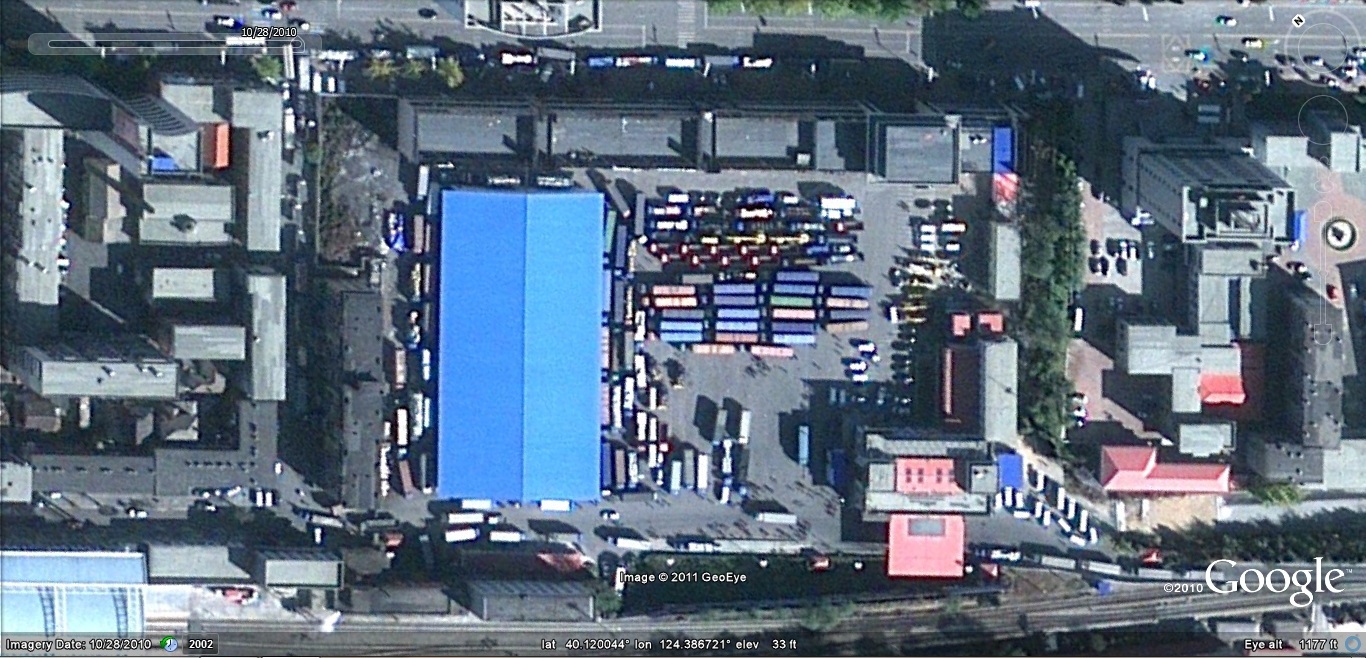
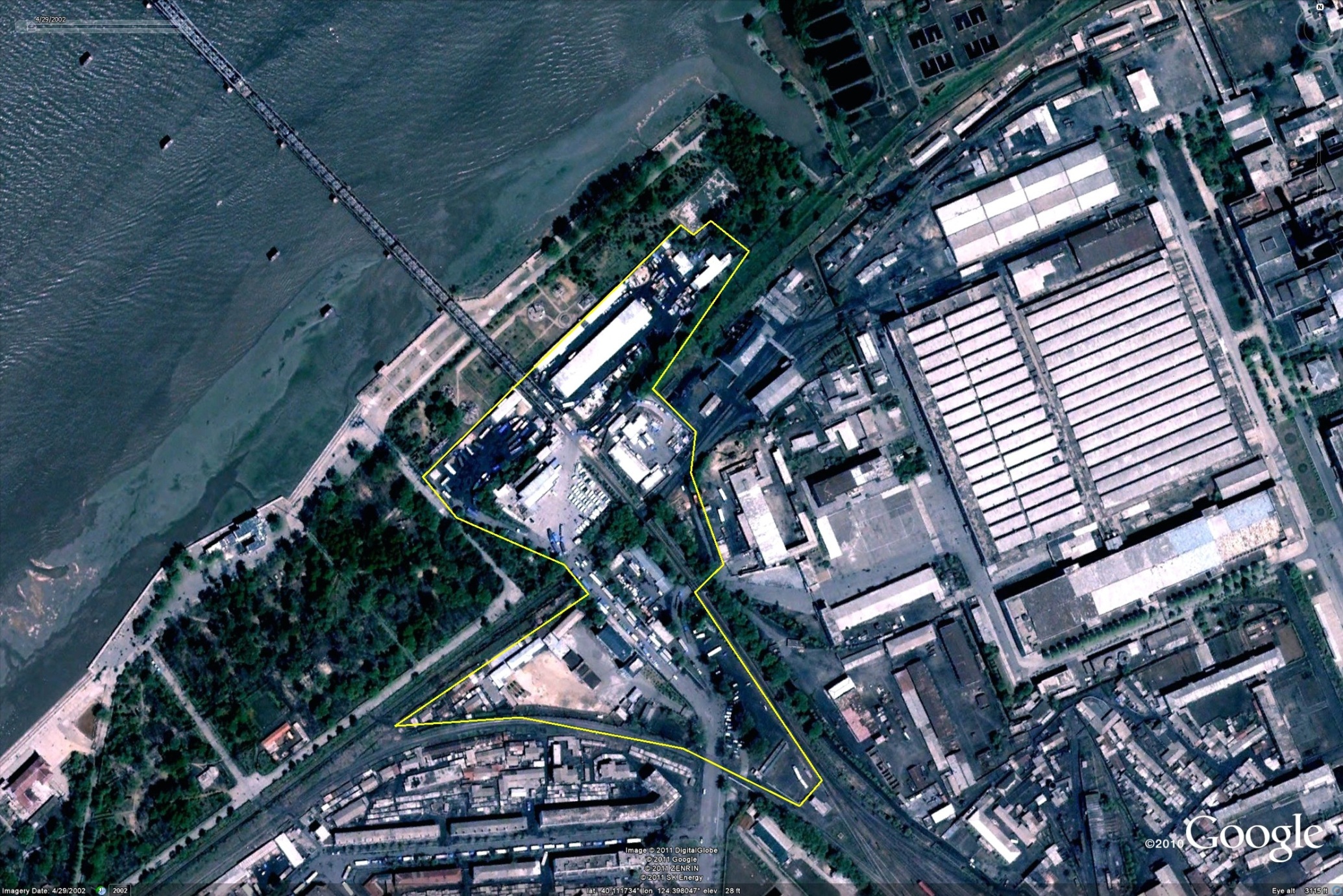
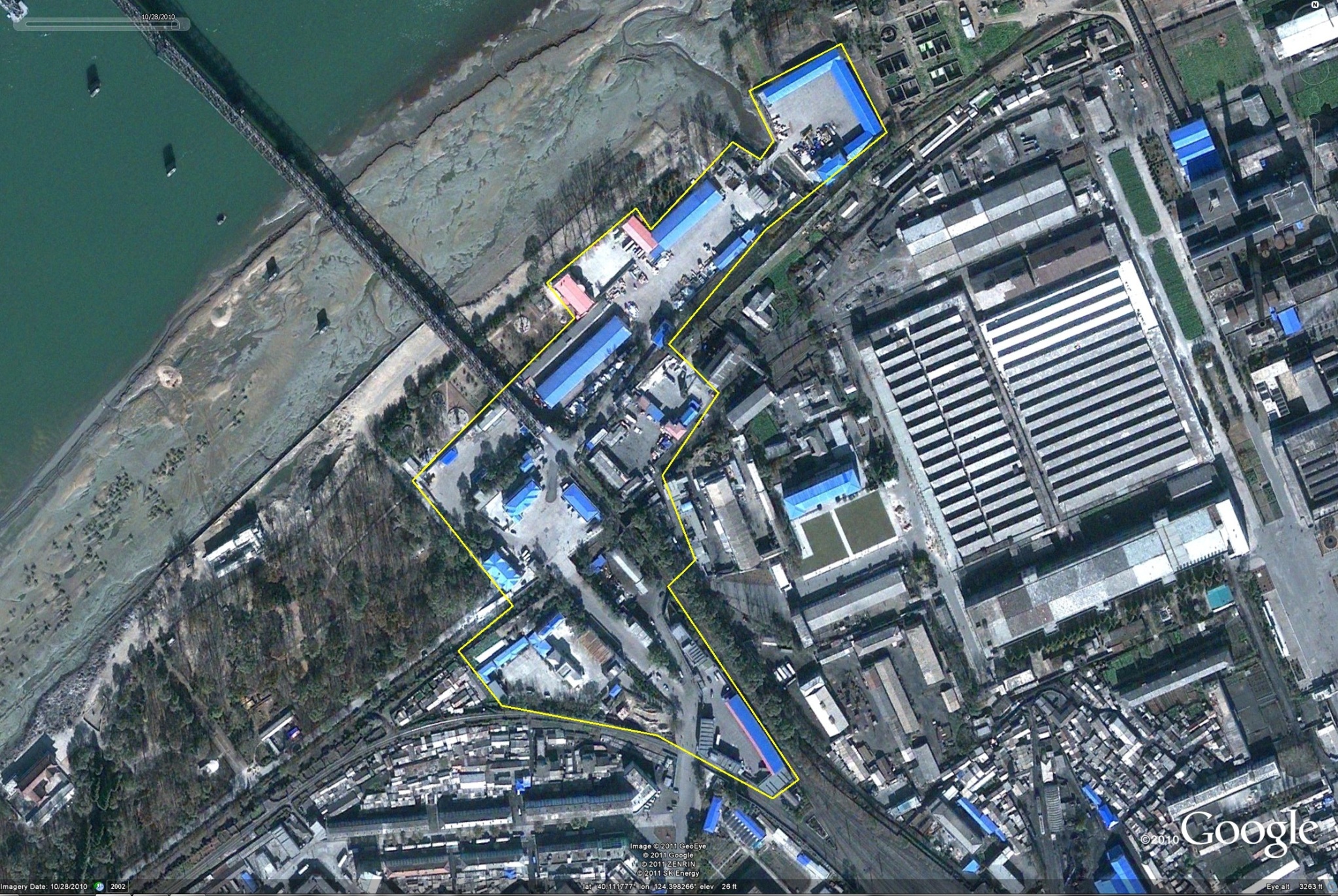
UPDATE 10 (2011-8-27): According to Yonhap, Kim Jong-il’s train has crossed back into the DPRK. Given the information provided, it appears that Kim entered the DPRK via the railroad crossing at Manpo (Manpho, 만포). See the bridge in Google Maps here. According to Yonhap:
North Korean leader Kim Jong-il returned home by train Saturday, wrapping up a week-long trip to Russia and China, during which he discussed the resumption of stalled six-party talks on his country’s nuclear ambitions.
Kim’s special train was seen crossing into North Korea via the Chinese border city of Jian around 5 p.m. local time (6 p.m. Korean time). The train had left the northeastern Chinese city of Daqing on Friday evening and made a stop in the city of Tonghua on Saturday morning.
According to KCNA, Kim Jong-un and Kim Kyong-hui were there to welcome him. Kim Jong-un played the same role on Kim’s previous trip to China in May.
UPDATE 9 (2011-8-26): While Kim travels in Russia and China, Yonhap reports a KCNA announcement that the DPRK and Russia signed a protocol calling for economic cooperation between the two countries. According to the article:
A Russian economic delegation, led by Minister of Regional Development Viktor Basargin, was in North Korea to sign “a protocol of the 5th Meeting of the DPRK (North Korea)-Russia Intergovernmental Committee for Cooperation in Trade, Economy, Science and Technology,” the North’s Korean Central News Agency (KCNA) said.
Trade Minister Ri Ryong-nam inked the protocol on behalf of North Korea, said the KCNA report, monitored in Seoul.
The report did not give any details of the protocol.
Also on Friday, the North’s premier, Choe Yong-rim, met with the Russian economic delegation at the Mansudae Assembly Hall in Pyongyang, the KCNA said in a separate report.
UPDATE 8 (2011-8-26): Xinhua reports on Kim’s activities in China. According to the article:
Top leader of the Democratic People’s Republic of Korea (DPRK) Kim Jong Il visited northeast China’s Heilongjiang Province on Friday at the company of Chinese State Councilor Dai Bingguo.
…
During his stay in Heilongjiang, Kim visited the cities of Qiqihar and Daqing. In Qiqihar, Kim toured Qier Machine Tool Group Co., a large state-owned enterprise, and Mengniu Dairy, a leading Chinese dairy producer. In Daqing, he toured an urban planning exhibition hall and a residential district.
“I’ve seen new changes every time I came here,” he said. He wished that China would smoothly realize the goals set in its 12th Five-year Plan under the leadership of the CPC.
KCNA has a rather long (erm…detailed) update on Kim’s visit to China. Here is the report for August 25th:
He passed through the Inner Mongolian Autonomous Region of China on August 25.
He arrived in Manzhouli of the region, the border railway station, that afternoon.
When the train pulled in the railway station, he was warmly greeted by Wang Jiarui, Sheng Guangzu, Hu Chunhua, secretary of the Inner Mongolian Autonomous Regional Party Committee, Fu Taizeng, secretary general of the autonomous regional party committee, Luo Zhihu, secretary of the Hulun Buir City Party Committee, the mayor of Hulun Buir City, the secretary of the Manzhouli City Party Committee and other central and regional senior officials of China.
He exchanged cordial greetings with the senior officials present to greet him and had a talk with them.
Wang Jiarui said he was specially dispatched to conduct Kim Jong Il who is passing through Northeast China in the whole period of his visit upon the authorization of the collective leadership of China including Hu Jintao. He paid highest tribute to Kim Jong Il for having made a great contribution to boosting the friendship among countries and accomplishing the human cause of independence through his energetic external activities.
Kim Jong Il thanked Wang Jiarui and other senior central and local officials and people for their warm reception.
He, conducted by senior party and government officials of the autonomous region, toured Hailar District, Hulun Buir City of the region.
Commanding a bird’s-eye view of the night scenery, he got familiar with the history and culture of the region and the achievements made by its people in construction.
The Inner Mongolian Autonomous Regional Committee of the CPC gave a grand banquet in honor of Kim Jong Il visiting the region.
When he appeared in the banquet hall, women of the Mongolian tribe of the autonomous region presented him with a blue silk towel and liquor according to the customs peculiar to the nation, warmly welcoming him.
Hu Chunhua said that today they welcomed Kim Jong Il to the vast steppe where President Kim Il Sung was accorded enthusiastic welcome several times long ago, thereby seeing the desire of the party, the government and the people of the autonomous region come true at last.
Hu Chunhua noted that the traditional Sino-DPRK friendship will remain ever-green like the vast steppe along with history, expressing firm belief that the friendly Korean people would make fresh success in the efforts to improve the standard of people’s living and build a prosperous and powerful nation.
A specially prepared art performance was given in honor of Kim Jong Il.
The performers clearly reflected the boundless respect and reverence of the government and the people of the region for Kim Jong Il visiting China again for the development of the Sino-DPRK friendship.
Kim Jong Il conveyed a floral basket to the performers in congratulation of their successful performance and had a photo taken with them.
He was presented with a gift by Hu Chunhua on behalf of the party committee of the autonomous region.
He expressed thanks for the warm reception and cordial hospitality accorded him by the party, government and people of the Inner Mongolian Autonomous Region. He hoped the people of the region would achieve a fresh victory in their struggle for the prosperity and development of the country under the leadership of the CPC.
Here is the KCNA report for August 26th:
Kim Jong Il passed through Heilongjiang Province of China on August 26.
He arrived in Qiqihar City, Heilongjiang Province that morning.
When the train pulled in Qiqihar Railway Station, he was warmly greeted by Ji Bingxuan, secretary of the Heilongjiang Provincial Party Committee, Wang Xiankui, governor of Heilongjiang Province, the secretary of the Qiqihar City Party Committee, the mayor of Qiqihar City and other senior party and government officials of the province and the city.
He exchanged warm greetings with the senior officials present to greet him and had a talk with them.
Ji Bingxuan said it is great honor and pride to welcome again to their place Kim Jong Il on a long foreign tour for friendship among countries and warmly welcomed him on behalf of the party, the government and the people of Heilongjiang Province.
Kim Jong Il visited the Qiqihar Machine Tool Group Co. No. 2 that day.
After being briefed on its history by a senior official of the group, he went round several production processes to acquaint himself with its production, technological development and management in detail.
Then he visited the Qiqihar Branch Company of the Mengniu Dairy.
He went round the general control room, milk tank, packing shop and the products on display and wished the company greater progress in its work for the improvement of the standard of people’s diet and welfare.
Kim Jong Il also visited Daqing City that day.
He visited the urban planning exhibition hall in Daqing City and was briefed on the urban construction and long-term plan. Then he went round the housing construction district, a large bridge, Lake Liming Bridge now under construction and other places in the province.
The provincial party committee gave a banquet that evening in honor of Kim Jong Il visiting the province.
He was present at the banquet on invitation.
Ji Bingxuan said that the historic visit paid by Kim Jong Il to Heilongjiang Province again after the lapse of the three months is a striking demonstration of the Sino-DPRK friendship growing stronger day by day, adding that the provincial party, government and people would join the Korean people in playing a greater role in inheriting and developing the Sino-DPRK friendship generation after generation.
A special art performance was given in welcome of Kim Jong Il.
The performers successfully represented the excitement and joy of the Chinese people at welcoming again Kim Jong Il to meaningful Northeast China.
Kim Jong Il conveyed a floral basket to the artistes in congratulation of their successful performance.
He was presented with a gift by the provincial party and people’s government that day in welcome of him visiting the province.
He expressed thanks for the warm reception and cordial hospitality accorded to him by the party, government and people of Heilongjiang Province. He hoped the people of the province would achieve a fresh victory in their struggle for the prosperity and development of the country under the leadership of the CPC.
Here is the KCNA report for August 27th:
He arrived in Tonghua City, Jilin Province that morning.
When the train pulled in Tonghua Railway Station, he was warmly greeted by Sun Zhengcai, secretary of the Jilin Provincial Party Committee, Wang Rulin, governor of Jilin Province, Liu Baowei, secretary of the Tonghua City Party Committee, Tian Yulin, mayor of Tonghua City, and other senior party and government officials of the province and the city.
He exchanged warm greetings with the officials present there to receive him and visited the Tonghua Wine Co. Ltd., conducted by them.
He recollected with deep emotion the noble footprints left by President Kim Il Sung who was absorbed in thinking and made inquiry for the sake of the country and its people only when visiting the company nearly half a century ago.
He went round various places including the wine depot, its exhibition hall to learn in detail about the history of the company and its production system, storage of products and its taste. He wished the company greater progress in its work for the well-being of the people.
The party and government of the province hosted a grand banquet in honor of Kim Jong Il visiting the province.
He was present there on invitation.
Sun Zhengcai said that it was particular privilege and honor for his province to receive Kim Jong Il, the great leader of the Korean people, three times in a little more than one year. He offered the highest regard and warm welcome to Kim Jong Il on behalf of the party, government and people of the province.
Noting that all the Chinese people including the people of the province are rejoiced as over their own over the successes made by the Korean people recently in their efforts to significantly commemorate the centenary of birth of Kim Il Sung, Sun Zhengcai expressed expectation and belief that the Korean people would surely win a shining victory in the drive for building a prosperous and powerful socialist nation under the leadership of the Workers’ Party of Korea headed by Kim Jong Il.
Sun noted that the party, government and people of the province would join the Korean people in playing a bigger role in inheriting and developing the Sino-DPRK friendship generation after generation.
An art performance was given in welcome of Kim Jong Il.
The performance replete with the warm feelings of the DPRK-China friendship was acclaimed by the audience.
He was presented with a gift by the provincial party and people’s government that day in welcome of his visit to the province.
He expressed thanks for the warm reception and cordial hospitality accorded to him by the party, government and people of Jilin Province. He wished them a fresh success in their efforts for the prosperity of the country and the well-being of its people under the leadership of the CPC.
He wrapped up his 8 000 km odd-long trip to the Far East and the Siberian regions of Russia and Northeast China and left for the homeland that day.
Before his departure, he exchanged warm farewell greetings with central leading officials including Wang Jiarui and Sheng Guangzu who conducted him with sincerity in the whole period of his visit and leading officials of the party and government of the province and the city including Sun Zhengcai and Wang Rulin.
When the train started from the border station, central and local leading officials of China warmly sent him off, waving their hands for a long while.
Passing through several cities and regions of China, he acquainted himself with construction projects, ideas and feelings, politics, economy, history, culture, etc. of the Chinese people more deeply and conducted unremitting and energetic external activities, making another great contribution to the development of the DPRK-China friendship.
UPDATE 7 (2011-8-25/26): According to Voice of America, Kim Jong-il has left Russia and is returning to the DPRK via China. His train crossed the Russia-China border at Zabaikalsk (Забайкальск, See in Google Maps here). Yonhap reports that on the Chinese side of the border Kim’s Train was greeted in Manzhouli by senior Chinese Communist Party envoy Wang Jiarui and other officials. Kim attended a banquet and arts performance before heading to nearby Hulunbeier (See in Google Maps here).
UPDATE 6 (2011-8-24): Kim Jong-il meets with Medvedev at Sosnovyy Bor east of Ulan-Ude (Сосновый бор, See in Google Maps here). The topics discussed are linked below:
According to the Los Angeles Times:
Medvedev ordered a commission to evaluate the parameters of laying a gas pipe through North Korea, according to the president’s statement posted on the Kremlin website. The pipe would stretch for more than 1,100 km, 700 of which would run through North Korea and would pump 10 billion cubic meters of gas annually.
The two leaders also discussed a plan for Russia to extend power lines into North Korea to sell electricity from facilities like the Bureya hydroelectric plant. Before arriving to meet Medvedev, Kim visited the Bureya plant, where he swam in a pool filled with water from Lake Baikal. Afterward, the North Korean strongman was treated to such local cuisine as meat dumplings and fish prepared over an open fire, press reports said.
Accoridng to UPI:
North Korea is willing to return to the six-party talks and to consider a moratorium on nuclear testing, Russian President Dmitry Medvedev said Wednesday.
Medvedev and North Korean leader Kim Jong Il met in Sosnovy Bor, a garrison town in the Russian Republic of Buryatia in South Siberia, RIA Novosti reported.
Natalia Timakova, a spokeswoman for Medvedev, said Kim was prepared to resume nuclear talks without any preconditions. The talks were suspended two years ago, and Russia and China have said they are prepared to return to the table immediately while the United States, Japan and South Korea want North Korea to show good faith first.
Kim also agreed to allow Gazprom, the state-owned Russian natural gas company, to build a pipeline to South Korea through his country. The two leaders also discussed North Korea’s outstanding debt to the former Soviet Union and possible food aid from Russia.
RIA Novosti said some reports estimate the project could bring about $100 million a year in much-needed hard currency to Pyongyang.
“We’ve ordered our government bodies to establish a special commission … to outline the details of bilateral cooperation on gas transit through the territory of North Korea and the joining of South Korea to the project,” Medvedev was quoted as saying.
The Russian leader said technical work on the pipeline would start soon.
South Korea is one of the largest buyers of natural gas, with imports of liquefied natural gas from Russia alone totaling 1.5 million tons last year, South Korea’s Yonhap news agency reported. The report said North Korea reacted favorably to the project during the visit of Gazprom officials.
Accoridng to Bloomberg:
North Korea owes Russia $11 billion of debt that dates back to the Soviet period and the two countries have resumed talks to restructure the Asian state’s liabilities, Deputy Finance Minister Sergei Storchak said.
Russia hasn’t lent money to North Korea since the collapse of the Soviet Union in 1991 because the communist state hasn’t settled its debt, Storchak told reporters at a military base near Ulan-Ude, a Siberian city close to the border with Mongolia. North Korea also has yet to recognize Russia as the successor to the Soviet Union, he said.
Russian President Dmitry Medvedev agreed on a joint approach to debt restructuring with North Korean leader Kim Jong Il at their meeting near Ulan-Ude today, said a Kremlin official, who declined to be identified in line with government policy. Russia and North Korea restarted talks on the issue a month and a half ago after a long pause, the official said.
The resumption of negotiations is seen as a breakthrough by the Russian delegation attending today’s meeting, according to the official.
According to RIA Novosti, the DPRK is interested in renting farm land in Eastern Siberia.
According to UPI, the Russians and the DPRK plan to increase naval cooperation.
According to the Choson Ilbo, the North Koreans might have been interested in acquiring Russian aircraft.
Andrei Lankov is skeptical any of the economic projects will become operational.
Aidan Foster-Carter believes the pipeline will be built.
UPDATE 5 (2011-8-22): Kim arrives in Ulan-Ude (Улан-Удэ), and tours Lake Baikal and an aircraft factory. See the Ulan-Ude train station in Google Maps here. See Lake Baikal on Google Maps here. See the Ulan-Ude Aviation Plant in Google Maps here. According to a video later released by the DPRK, Kim Jong-il also visited the Lenin-head statue at the seat Ulan Ude’s government (See in Google Maps here) and the “Mega Titan” super market (мега титан, See in Google Maps here). Though the visit to the aircraft factory is never mentioned in KCTV coverage of the visit, the Choson Ilbo reports that the DPRK’s air force chief, Gen. Ri Pyong-chol (리병철), was also on the trip–leading to speculation that the DPRK air force was shopping for new aircraft.
According to the AP:
Kim took a two-hour Baikal tour on a yacht guarded by two North Korean boats, the Inform Polis Online website reported quoting eye-witness accounts. The water in Baikal is ice-cold even in summertime, so Kim had to take a swim onshore — in a pool filled with Baikal water. The speaker of Buryatia’s legislature joined Kim in the swim, the news website reported.
On the shore, the North Korean leader was treated to traditional Buryat food including meat dumplings and Baikal fish prepared over an open fire.
Later on Tuesday, Kim went back to Ulan-Ude to visit a major aircraft factory, which among other things produces Sukhoi attack planes, the ITAR-Tass news agency reported from the plant.
…
The North Korean leader’s visit is shrouded in mystery. A few people managed to take photos of Kim at his previous stop on Sunday, but heavy police cordons kept the media and onlookers in Ulan-Ude away from the train station and the adjacent square.
Anna Ogorodnik, a photographer from Ulan-Ude, told the Associated Press by phone that nearby streets were full of riot police. The station square looked clean and deserted after authorities had tugged away cars and local buses.
The windows of the station building overlooking the tracks were plastered with sheets of paper and station employees had been ordered to stay indoors, Ogorodnik said.
The photographer said she had been detained after trying to take pictures. She was released after she had presented her journalist ID.
The station square remains cordoned off and Kim’s train is still at the station, Ogorodnik said.
It is Kim’s first visit to his country’s Cold War ally in nine years.
Russian military officials arrived in the North Korean capital on Monday for a five-day visit. The Russian Defense Ministry said the talks will focus on the renewal of military cooperation between the countries, possible joint exercises “of a humanitarian nature” and an exchange of friendly visits by Russian and North Korean ships, ITAR-Tass reported from Pyongyang.
UPDATE 4 (2011-8-23): Writing in the Asia Times, Sunny Lee offers some political context of the trip as well as offering an estimated sum the DPRK can expect to earn if it agrees to the pipeline deal:
Cash-strapped North Korea, committed to staging a great national display of prosperity next year to mark the 100th anniversary of Kim Il-sung’s birthday, is likely to welcome any such deal. If realized, it could expect to earn more than US$500 million a year in handling charges over the gas pipeline alone. Russia is also interested in linking the Trans-Siberian Railways to both Koreas, with the aim of reviving the Far Eastern region’s economy.
The Daily NK puts that number signficantly lower:
For North Korea, the gas pipeline could provide a stable income of approximately $100 million-$150 million. Compared to the Kaesong Industrial Complex, which requires more than 47,000 workers and earns North Korea just $50 million, it is a very attractive figure.
UPDATE 3 (2011-8-21): Kim Jong-il arrives in Russia’s Amur region (Bureya, Бурея) on Sunday August 21 and tours Bureiskaya Power Station. See the Bureya Train Station in Google Maps here. See the Bureiskaya Power Station in Google Maps here. According to the AFP:
North Korea’s reclusive leader Kim Jong Il and his wife received a red carpet welcome Sunday in Russia’s Amur region where they toured a giant power station ahead of talks with President Dmitry Medvedev.
It was the second day of Kim’s week-long visit to the Russian Far East and Siberia, a rare trip out of his country battling isolation and hunger.
Earlier on Sunday his special armoured train arrived at the small Bureya station in the Amur region and smiling Russian women dressed in red national costumes offered the high-profile guest a loaf of bread and salt, in accordance with Russian tradition.
The 69-year-old leader looked serious and slightly tired as flag-waving locals greeted him at the station.
Sporting sunglasses and his trademark khaki-coloured military-style suit, Kim broke off a piece of bread as the Kremlin’s regional envoy Viktor Ishayev and a throng of local officials looked on.
“He is rather simple, seems to be a genial man,” gushed a young Russian woman in the national dress, speaking later in televised remarks.
After the short welcome ceremony Kim got into an armoured Mercedes, which he brought with him on the train, to visit a nearby hydro-power station.
He appeared to take a keen interest in the 2,000 megawatt-strong Bureiskaya power station as Ishayev and the local governor gave him a tour of the plant.
South Korea’s Yonhap news agency, citing pictures taken at the plant, said 47-year-old Kim Ok — a former secretary known as Kim’s fourth wife — was accompanying the leader on the journey.
At the power station — the largest in Russia’s Far East — Kim was treated to a spectacular show of the water being discharged into the river, a local law enforcement official said.
He watched the water release from the safety of a white tent pitched at the station, next to a table with snacks, pies and a watermelon, and was also shown a film about the plant translated into Korean, the official said.
“Inexhaustible is the strength of the Russian people who occupied Bureya nature,” the official Korean Central News Agency quoted Kim as saying in the visitor’s book.
A Russian official familiar with the matter told AFP Kim had planned to visit the station earlier in the summer when he had been expected to hold a bilateral summit with Medvedev in or near Vladivostok.
A Kremlin official was quoted as saying at that time that Kim had cancelled due to media leaks about the visit.
Yelena Vishnyakova, a spokeswoman for state-run RusHydro which operates the power plant, said her company was not currently holding any talks with North Korea about any possible construction of power stations.
While Kim toured the power station, his entourage cleaned and polished his armoured train parked at Bureya, a tiny economically depressed town near the city of Blagoveshchensk on Russia’s eastern fringes.
After returning from the station he continued his journey along the famed Trans-Siberian railway.
According to the Washington Post, the Russia has proposed selling surplus electricity produced by this power station to both North and South Korea.
The New York Times also covered the trip to the power station.
UPDATE 2 (2011-8-20): The Washington Post offers some political and economic context of the trip:
Kim’s trip, Pyongyang said, came at the invitation of Medvedev, whose government in recent weeks has pushed North Korea to cooperate on plans to connect a railway and a gas pipeline that would run from Russia through the divided Korean Peninsula.
North Korea has remained largely a no-go zone for massive foreign projects, with outside economic investment allowed only in special development zones. But if North Korea goes along with the gas pipeline project — in which Russian exporter Gazprom will annually send 10 billion cubic meters of gas to South Korea for three decades — it stands to collect handling fees. It would also allow the North a measure of influence in Seoul’s economy.
…
Some North Korea analysts say that Kim has grown wary of depending so heavily on China, particularly as North Korea prepares for the 100th anniversary next year of the birth of founder Kim Il Sung. The North has promised to build a strong and prosperous economy to mark the occasion, but such a display is largely at the mercy of foreign aid.
“North Korea has had no choice but to deepen its dependence on China, so they now need some counterbalance,” said Yun Duk-min, a professor at Seoul’s Institute of Foreign Affairs and National Security. “Kim Jong Il uses such tactics. This is using Russia to check Chinese influence.”
UPDATE 1 (2011-8-20): KCNA takes the unusual step of confirming KJI is out of the country (rather than waiting until he has returned). According to KCNA:
Kim Jong Il Passes through Khasan Railway Station, Russia
Pyongyang, August 20 (KCNA) — Kim Jong Il, general secretary of the Workers’ Party of Korea and chairman of the National Defence Commission of the DPRK, passed through Khasan, the border railway station of Russia this morning on his way to pay an unofficial visit to Siberia and the Far East Region of the Russian Federation at the invitation of Dmitri Anatoliyevich Medvedev, president of the Russian Federation.
He was greeted at Khasan Railway Station by Viktor Ishayev, presidential envoy to the Far East Region of the Russian Federation, who came to Khasan to conduct him.
He was also greeted by Sergey Darikin, governor of Maritime Territory, Valery Sukhinin, Russian ambassador to the DPRK, Irina Skorobogatova, deputy governor of Maritime Territory, and other senior officials of Moscow, maritime territory, city and district.
When the train pulled in the station, the senior officials got on the train and offered greetings to him.
Medvedev, who has paid deep attention to the Russia-DPRK friendship, dispatched them to greet Kim Jong Il, Viktor Ishayev and other senior officials said, warmly welcoming him to Russia upon the authorization of its President.
Kim Jong Il’s current visit to Russia will mark a historic occasion in putting the Russia-DPRK friendly and cooperative relations onto a fresher and higher stage, they noted.
He said he was very pleased to see for himself the achievements made by the diligent and resourceful Russian people through his current visit, thanking the senior officials of Moscow and local areas and people for warmly greeting him.
He was presented with a souvenir by Sergey Darikin on behalf of the Maritime Territorial Government and people.
After a while, he left for his destination amid send-off by senior officials of Russia.
Prior to it, he left the country to pay an unofficial visit to Siberia and the Far East Region of the Russian Federation.
He is accompanied by Kim Yong Chun, member of the Political Bureau of the WPK Central Committee and minister of the People’s Armed Forces, Kang Sok Ju, member of the Political Bureau of the WPK Central Committee and vice-premier of the Cabinet, Jang Song Thaek, alternate member of the Political Bureau of the WPK Central Committee and vice-chairman of the NDC, Kim Yang Gon, Pak To Chun and Thae Jong Su, alternate members of the Political Bureau and secretaries of the WPK Central Committee, Ju Kyu Chang, alternate member of the Political Bureau and department director of the WPK Central Committee, Pak Pong Ju, first vice department director of the WPK Central Committee, O Su Yong, chief secretary of the North Hamgyong Provincial Committee of the WPK, Kim Kye Gwan, first vice-minister of Foreign Affairs, Kim Yong Jae, DPRK ambassador to Russia, and Sim Kuk Ryong, consul general of the DPRK Consulate General in Nakhodka of Russia.
His visit to Russia, another event in achieving world peace and security and the human cause of independence, will mark a historic occasion in boosting the DPRK-Russia friendship given steady continuity generation after generation and putting strong impetus to the drive of all the servicepersons and people to build a thriving socialist nation.
ORIGINAL POST (2011-8-20): Kim Jong-il has made a “surprise” trip to Russia. According to the AFP:
North Korea’s reclusive leader Kim Jong-Il on Saturday arrived in his armoured train in Russia and plans to meet President Dmitry Medvedev, the Kremlin said.
During the visit, his first since 2002, Kim is expected to meet with the Kremlin chief for talks in Siberia to discuss North Korea’s nuclear programme, bilateral economic projects and a worsening food crisis in the isolated state.
“A meeting between Russian President Dmitry Medvedev and Kim Jong-ll will be the main event of the visit,” the Kremlin said in a statement, saying Kim would also visit the Far Eastern and Siberian regions.
The Kremlin did not release further details but a local official in the Far East told AFP Kim’s train crossed the border earlier in the day.
…
Kim, who is known to dislike air travel due to security concerns, arrived in Khasan district after crossing the Tumangan river at 12 pm local time (0100 GMT), Naryzhny said.
He said he was unaware of the North Korean leader’s programme in Russia, adding he did not leave his train upon arrival.
____________
Additional Information:
1. Here is a post on recent DPRK-Russia exchanges leading up to the visit.
2. Here and here are recent stories on DPRK laborers in Russia.