Archive for the ‘China’ Category

Chinese tours to North Korea growing

Thursday, April 15th, 2010

Institute for Far Eastern Studies (IFES)
NK Brief No. 10-04-15-1
4/15/2010

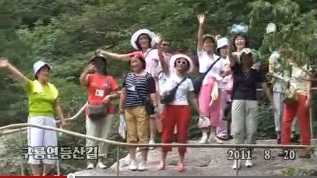
As North Korean tours to Keumgang Mountain and other trips aimed at South Korean visitors are all currently frozen, trips into the DPRK by Chinese tourists are beginning to grow. On April 10, a North Korean official revealed that Chinese group tours would be warmly welcomed by Pyongyang, and on April 12, a group of approximately 400 Chinese visitors and officials arrived in the North. Pyongyang and Beijing reached an agreement on tours last February. Cho Seong-kyu, director of the Choson International Tours, stated that his office, responsible for tours for foreigners to North Korea, is preparing a tour course to Pyongyang, Kaesong, Myohyang Mountain and Nampo for Chinese visitors. He explained that since 1988, 20,000 Chinese tourists annually visit Pyongyang, and that many more tour courses were being prepared.

For the past four years, the Chinese government has banned group tours to the DPRK, but that restriction has been completely lifted. Now, tourist trains are being operated and the range of tours offered is growing. Group tours to North Korea were banned in 2006 after Chinese officials were found to have been inappropriately gambling during their trips, but tours will resume on May 12. With 800 Chinese tourists set to board a DPRK-bound train leaving from Hangzhou, it appears that many Chinese are interested in tours of North Korea. On March 18, China’s National Development and Reform Commission and its Bureau of Travel and Tourism released a “Northeast China Tourism Industry Development Plan,” in which it revealed the plan to permit tours to North Korea. Following last year’s measures to improve industry in the northeast provinces, Beijing is now aiming specifically to bolster the tourism industry in the region by arranging overland tours to Russia and North Korea, as well as developing other new domestic and international tour destinations.

In addition to the existing tour to Sonyang-Dandong-Pyongyang, new routes from Baishan (Jilin Province)-Changbai-Hyesan and Yanji-Hunchun-Fangchuan-Rajin/Chungjin have been included. Until now, tour courses to North Korea were limited to Dandong-Sinuiju-Pyongyang, Sanhezhen-Chungjin/Mount Chilbo, and Mount Baekdu-Samjiyon-Pyongyang. As Rajin Port is opened, the Bureau of Travel and Tourism also plans overland trips to the city, in conjunction with a ferry shuttling Chinese tourists to Vladivostok, South Korea, and Japan. In addition, the Yanbian Autonomous Prefecture is promoting the development of a longer tour, from Hunchun through Rajin, on to Pyongyang and even down to Panmunjom.

North Korea has announced the seizure of South Korean property at the Keumgang Mountain tourist resort, and now Chinese travel agents are signing contracts to sell tours to the resort developed mainly by Hyundai-Asan and South Korean government investment. North Korean authorities have offered six-month contracts allowing the Chinese tour operators to book Keumgang tours, guaranteeing them access to hotels and other facilities in the resort area. Over 1,000 Chinese tourists have already booked tours to Keumgang, to begin after April 20.

North Korea froze South Korean government assets in the resort, including the Visitors’ Center, a spa, and a duty-free store, and deported South Korean employees in a first stage of measures to pressure the South into restarting cross-border tours. On April 13, the North stepped up the measures, freezing Hyundai-Asan and other South Korean private-sector assets, ordering the deportation of employees related to these businesses as well. Korean Central Broadcasting reported on April 8, “Because of south Korean authorities, Hyundai’s tourism agreement and contract have become invalid,” announcing that domestic and international tours would begin again with a new tour operator.

And according to the Choson Ilbo:

The first tour groups from across China started off on their way to North Korea on Monday. China has organized group tours of North Korea since 1988, but they were available only to provinces bordering the North such as Liaoning and Jilin.

But on Monday, a group of 395 Chinese tourists left for North Korea by air or train from Beijing, Shenyang and Dandong, the China National Tourism Administration said. They will gather in Pyongyang before starting an eight-day tour of tourist spots in the capital like the Kim Il-sung statue and Mansudae, as well as Kaesong, Panmunjeom, Mt. Myohyang and Nampo.

Mt. Kumgang is not included in their itinerary, despite threats by the North to find another partner for visits to the scenic resorts. South Korea declined to resume tours there in the wake of the fatal shooting of a tourist in 2008 unless the safety of travelers is guaranteed.

However, some Chinese travel agents are offering tour programs that include Mt. Kumgang.

Share

DPRK imports hundreds of cars in last week

Wednesday, April 14th, 2010

According to the Choson Ilbo:

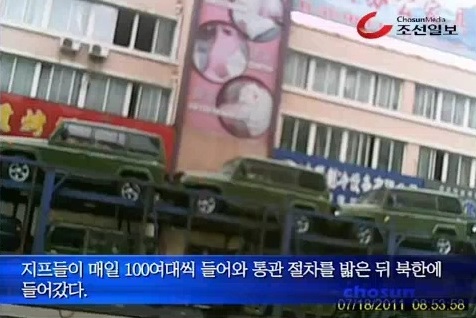
A North Korean source saw around 30 identical vehicles crossing the bridge across the Apnok (or Yalu) River into Sinuiju at around 9 a.m. The vehicles were the Chinese compact sedan F3 manufactured by BYD, referred to as the “people’s car” in China due to its popularity. Around 100 cars reportedly crossed the border into North Korea on Tuesday alone. Starting last week, North Korea brought in more than 200 cars, including luxury foreign cars, jeeps and large vans. The total value of the imported cars is believed to be around US$5 million.

The North Korean regime often seeks to ensure the loyalty of senior officials by handing out the latest foreign-made cars on Kim Il-sung’s or Kim Jong-il’s birthday, but the Chinese-made cars imported this time are believed to be gifts for the middle ranks. “To my knowledge, the latest cars are gifts for mid-level officials at North Korea’s prosecution and state security agency and have been allocated to specific people in different regions,” the source said.

North Korea watchers believe the cars were bought to boost the morale of such officials, who were hit hard by the botched currency reform in December. “Failing to take care of mid-ranking officials could jeopardize the transfer of power to Kim Jong-il’s third son Jong-un,” said one North Korea expert. “The purpose of the gifts is to appease discontent.”

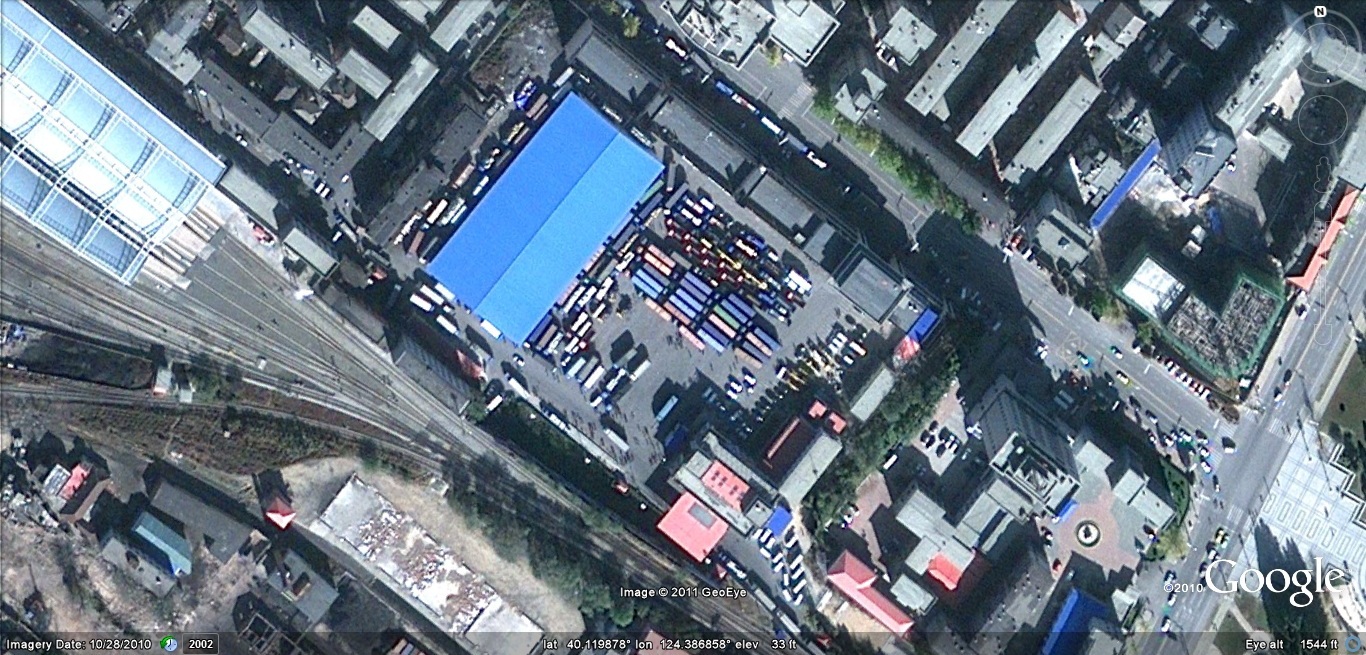
Judging from the pictures, it looks like the cars were driven across the Sinuiju/Dandong Sino-DPRK Friendship Bridge.  Satellite image here

So it appears the Kim Jong il uses automobiles in the same way foreign governments use international aid in North Korea–to “purchase” influence and support.  If the strategy works on a domestic level (within the DPRK), why does it have so much trouble on an international level?  Feel free to discuss.   

Read the full story here:
Kim Jong-il Imports Hundreds of Cars for Loyal Officials
Choson Ilbo
4/14/2010

Share

Chinese company offering Kumgang Tours

Tuesday, April 13th, 2010

According to Yonhap:

Chinese travel agencies are selling tour programs to North Korea’s Mount Kumgang amid Pyongyang’s announcement that it will find a new partner in retaliation for Seoul’s reluctance to resume cross-border tours, tourism sources said Sunday.

Two Chinese agencies in the city of Tongcheng and the southern province of Guangdong are taking reservations for tour programs that include the scenic mountain and other sights, including Pyongyang, the ancient city of Kaesong and the border with South Korea.

However, it was unclear if the programs are related to the North Korea’s decision last week to dump South Korea’s Hyundai Asan for an unidentified new partner for the mountain tours. Sources in Beijing said that the link appears to be weak, as the Chinese programs had been under preparation before Pyongyang’s announcement last week.

North Korea is angry over South Korea’s reluctance to resume tours to the mountain, which had been a key source of foreign currency for the impoverished nation since 1998. They were suspended in 2008 following the shooting death of a South Korean tourist near the resort.

South Korea demands the North agree to a joint on-site investigation into the death and safety measures for tourists.

Some South Korean media reported last week that the North formed a partnership with a Chinese tour organizer to run tours to the mountain, but Seoul’s Unification Ministry said the reported partnership has not been confirmed.

North Korea’s already serious economic troubles have deepened in the wake of U.N. sanctions for its nuclear test last year, while the regime’s failed currency reform has fueled inflation, food shortages and even rare social unrest.

Meanwhile, about 400 Chinese people are scheduled to embark on a tour of key sights in North Korea. In February, Beijing formally granted permission to its citizens to go deep into the communist neighbor, lifting its previous policy of limiting tourism to the border area.

Read the full story here:
Chinese agencies sell tour programs to N. Korea’s Mount Kumgang
Yonhap
4/11/2010

Share

Chinese tourists rarin’ to go to North Korea

Sunday, April 11th, 2010

By Michael Rank

Chinese tourism to North Korea seems set to boom, with groups from several provinces about to set off and Pyongyang clearly eager to earn much needed extra revenue.

Tourists are warned that they can’t bring in mobile phones and must “respect Korean customs” by avoiding getting into arguments and “not saying or doing anything which is not good for Chinese-Korean friendship”. They are also told not to aim their cameras at “things which may be seen as the dark side of life”, such as litter or people who are not properly dressed.

But demand is strong despite these restrictions, says a report from the booming, export-oriented province of Zhejiang.

The tourists are mainly middle-aged or elderly and include a large proportion of Korean war veterans, says the report, which notes how Pyongyang was devastated in the war and was the victim of 1,400 American bombing raids.

North Korea agreed to welcome Chinese tourists under an agreement signed in September 2008, but implementation was held up by bureaucracy and problems over high costs, and the doors are only opening this month, according to a report from the southern province of Guangdong. It says people are not put off by the fact that tours are quite expensive at about 5,000 yuan ($730) for five days or 6,000 yuan ($880) for six days, and applicants have to fill in plenty of forms and show their work ID and other documents.

The itinerary is much the same as for Western visitors – Pyongyang, the Myohyang mountains and Panmunjom – although in the North Korean capital the Chinese-Korean Friendship Tower is a must-see, featuring a memorial to the “martyrs” of the Chinese People’s Volunteer Army who fell in the Korean war, including Mao Zedong’s son Mao Anqing.

A total of 800 tourists from Wenzhou in Zhejiang are due to leave on April 20, as well as another group from the provincial capital Hangzhou. There are no direct flights at present, so they have to fly via Beijing, while tourists from Guangdong fly to Dalian or Shenyang and then take the train to Pyongyang via Dandong.

One Zhejiang travel agent goes so far as to say there is so much interest in North Korea that “It will become a tourism destination second only to Taiwan.”

Further tours are planned from Nanjing, Fuzhou, Jiangxi, Shandong and other cities and provinces, and border tourism is also booming, as noted in several reports on NKEW recently. According to the latest report, a tourism agreement has just been signed between the border town of Ji’an in Jilin province and Manpo, just across the Yalu river.

Share

China plans more tours to North Korea

Tuesday, April 6th, 2010

By Michael Rank

The Chinese government is planning to increase tourism to North Korea as part of plans to boost tourism in China’s rustbelt northeast, according to a newly published official report (MS Word download here).

The report focuses mainly on domestic tourism, but also mentions plans for increased numbers of Chinese tourists to cross into North Korea. Tours include from Changbai county in Jilin province to the North Korean city of Hyesan, just over the border, and from Yanji and Hunchun to Bangcheon, which is also just over the border. Other tours are to include the east coast North Korean port of Rajin and Vladivostok in Russia well as South Korea and Japan. North Korea-related aspects of the 32-page report are summarised here  (both reports are in Chinese).

Incidentally in researching this article I discovered that various cross-border tours are advertised on the internet, e.g. a one-day tour from Tumen that includes Namyang-gun, the home  village of Kim Il-sung’s first wife, Kim Jeong-suk, mother of Kim Jong-il, and also the spot where China, North Korea and Russia meet. Cost: 140 yuan ($20), but we can assume they are for Chinese citizens only.

The government report says it is planned to increase the number of tourist trips from and around northeast China from 350 million to 800 million a year between now and 2015.

Andrei Lankov adds in the comments: In the borderland areas they sell a number of tours tgo NK (Chinese citizens only), with costs between 180 RMB (one day tour from either Yanji or Dandong) to 2500 RMB (four days to Pyongyang). Koryo Tours people told me that until 2009 in order to apply one had to be not merely a Chinese citizen, but a registered resident of the three north-eastern provinces. According to Koryo tours people, this restriction has been lifted, but few people from outside Dongbei are interested.

Share

Scott Snyder on Rason

Monday, April 5th, 2010

Scott Snyder wrote a good piece on recent developents in Rason fo rthe Jamestown Foundation’s China Brief:

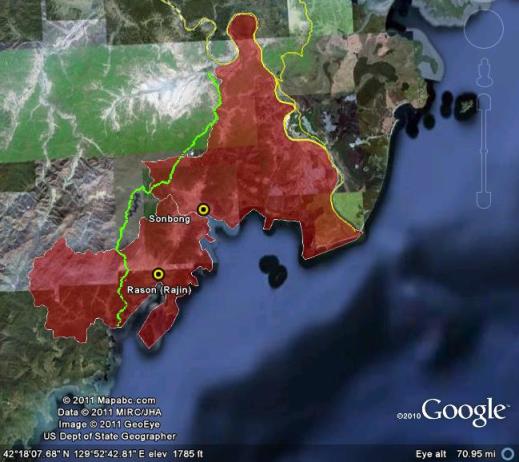
The Rajin-Sonbong region in North Korea (also known as Rason following a 2004 administrative reorganization by central authorities) is an underdeveloped backwater near the far northeastern tip of the Korean peninsula bordering Jilin province of China and Primorsky Krai of Russia. Although the area is far from the nerve center of the North Korean regime, Pyongyang, Rajin-Sonbong has strategic significance as the northern-most year-round ice free port in Northeast Asia and therefore is an attractive geostrategic transit point for the shipment of goods to landlocked Northeastern China and the Russian Far East. For this reason, recent reports of new Russian and Chinese investment deals following a rare personal visit by North Korea’s supreme leader, Kim Jong Il, to Rajin-Sonbong in December of last year merit closer scrutiny.

Rajin-Sonbong has been the focal point of periodic efforts by Pyongyang to experiment with economic reforms since it named the area a free economic trade zone in late 1991. At that time, the Rajin port was an essential piece of a UN-sponsored regional development effort known as the Tumen River Area Development Project (TRADP)—which encompasses areas within China, Mongolia, Russia and South Korea—but the project never attracted sufficient international investment to take off. The spotlight returned to Rajin-Sonbong briefly in 1996 when North Korea sponsored an investor forum there in an attempt to stir up interest in a revamped set of investment laws for the region, but few investors came and North Korea’s famine later that year diverted attention away from the effort. 

(more…)

Share

Pramod Mittal eyes stake in DPRK mines

Sunday, April 4th, 2010

According to the Economic Times of India:

Pramod Mittal, the younger sibling of steel tycoon LN Mittal and head of Global Steel Holdings, is negotiating with the North Korean government for a stake in the country’s Musan Iron Ore mines, estimated to hold reserves of more than seven billion tonnes. The move by Global Steel is aimed more at accessing the mineral resource, as the ore is in sharp demand with steelmakers expanding capacity and iron ore miners moving to a quarterly price regime to meet growing markets in Asia and Africa.

Mr Mittal, who is chairman of Global Steel, a closely-held company of the Mohan Lal Mittal family, had visited Pyongyang last week to talk to senior government officials to work out the modalities of a share of Musan’s reserves. The ML Mittal family consists of elder son LN Mittal, Pramod Mittal and younger brother Vinod Mittal, who looks after the Mumbai-based Ispat Industries. When contacted, Pramod Mittal declined to comment. “Our visit to North Korea is to further business interests. We are not looking for any stake in Musan,” he told ET .

According to people familiar with the development, Global Steel could likely be negotiating with Pyongyang for development rights to Musan for a fixed peiod, where Global Steel would do the mining and get to buy an agreed portion of the reserves. Typically, in the mining industry, such development rights are for a long term period of 20 to 50 years.

Global Steel, which is registered in the tax haven Isle of Man, has steelmaking operations in Bulgaria and Nigeria and a 20-year management contract to operate Zimbabwe Iron & Steel. Although Global Steel has a small steelmaking capacity of just more than 2 million tonnes, iron ore from Musan would not be used for Global Steel’s operations. Global Steel also owns two coal blocks in Mozambique where ArcelorMittal, controlled by elder brother LN Mittal, also has coal mines. While the Mittal family has maintained that Global Steel has no link to ArcelorMittal, the world’s largest steel company has been reportedly keen on Global Steel’s assets.

Two years ago, North Korea had granted development rights on Musan to China’s Tonghua Iron & Steel Group for a period of 50 years. However, Pyongyang recently terminated that agreement without offering any reason. People connected with the issue said Global Steel is negotiating with Musan on the amount of investment needed for developing the mines and also on building infrastructure, which is integral to any mining activity.

While the talks with Pyongyang is at an initial stage, under the previous agreement with Tonghua, the Chinese company had reportedly agreed to put in about 7 billion yuan, and had also planned to produce 10 million tonnes of iron ore each year. Of the total investment, about $240 million was for building roads and railways from Musan to Tonghua in China. The Musan iron ore mines are close to the Chinese border. The secretive North Korean government has recently been sending out feelers to global mining companies for developing its vast mineral deposits, said to contain one of the world’s largest reserves, closely rivalling Brazil.

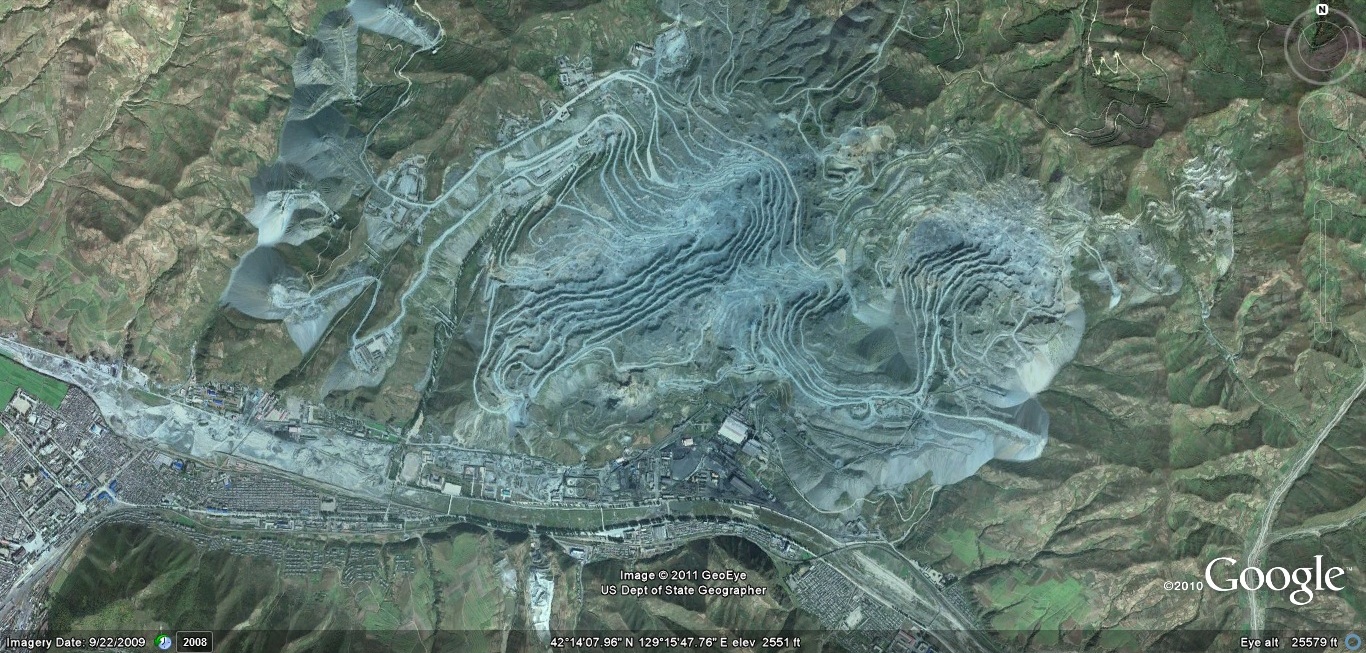
The Musan Mine is the DPRK’s largest and satellite imagery of it can be seen here.

Here is a story about Tonghua’s Musan deal

Read the full story here:
Pramod Mittal eyes stake in North Korea’s Musan mines
The Economic Times
MV Ramsurya
4/5/2010

Share

Jin Hualin, Yanbian University, on Chinese investment in DPRK.

Sunday, April 4th, 2010

Jin Hualin, dean of the College of Economics and Management at Yanbian University, talks about Chinese investment in Rason in China’s Global Times.  Here is an excerpt:

GT: If China does continue to rent Rajin harbor for another 10 years, what will the effects be?

Jin: China has reached an agreement to rent a pier at Rajin Port for another decade. A Dalian-based Chinese company has invested 26 million yuan ($3.8 million) in the reconstruction of Rajin Port No.1 Pier. Park also said that China may enjoy more favorable conditions there, such as more berths.

I think Chinese companies’ participation is good for promoting the North Korean economy and building logistical infrastructure in the area, which is beneficial to China, North Korea and the Northeast Asian countries.

When the Sino-Mongolia route is finished, raw materials and natural resources from Mongolia can be shipped to Japan and South Korea via Rajin harbor, and then China’s northeastern regions and North Korea can both benefit.

GT: What should China do to promote Northeast Asian cooperation and devel-opment?

Jin: I suggest Chinese governments at all levels consider the following issues. They should accelerate trade and tourism and build cooperation on logistics, and support Chinese companies going global and investing in North Korea.

Actually, China now has many companies capable of investing abroad. The point is foreign countries’ investment environment.

We should strengthen cooperation on education with North Korean universities and colleges, sending students to study there and exploring research in new areas together.

We can also strengthen regional cooperation. We can designate China’s Hunchun city and North Korea’s Rason city as pilot cities and permit China’s commercial banks to open yuan-based accounts in Rason’s commercial banks.

Relations between Northeast Asian countries are subtle and complicated because of geopolitical contradictions, different political systems, the influence of the Cold War, historical issues, territorial disputes and sentiments caused by historical and territorial issues.

Mutual distrust fundamentally hinders cooperation. China needs to take the responsibility to promote regional cooperation and make it institutionalized and legally guaranteed as soon as possible.

GT: How do you evaluate the political and economic risks for Chinese companies going into North Korea? What advantages do Chinese companies have?

Jin: There are always political and economic risks involved in trade between different countries. The first major solution is to establish a mutual investment guarantee agreement, so that the two countries’ economic cooperation will be protected legally.

We hope that North Korea can keep the stability and consistency of its policies and issue development policies that is in line with international conventions. As long as North Korea adopts consistent policies, Chinese companies won’t encounter great political and economic risks there.

China and North Korea are believed to enjoy good mutual trust. China has experience from its reform and opening-up and plenty of investment capability. North Korea has a good educational foundation, low labor costs, and rich natural resources.

Chinese companies are active participants in investing in North Korea and I believe they’ll do well there.

Read the full interview here. Hat tip to Adam.

Share

DPRK-PRC plan two more Yalu River dams

Sunday, April 4th, 2010

UPDATE: According to Michael Rank:

Two power stations are under construction on the Yalu river between China and North Korea, a Chinese website reports.

They are both small plants with an installed capacity of 40,000 kilowatts and both are situated near the border town of Ji’an 集安 in southwestern Jilin province, near the border with Liaoning.

The dams are set to be finished in 2013. Negotiations concerning construction have been protracted: a preliminary agreement was reached in July 2004, followed by a further agreement in August 2008 and a final accord last January.

The Wangjianglou or Lintu 望江楼(林土)dam will be based on the Chinese side of the river with investment totalling 600 million yuan ($88 million), while the Wenyue or Changchuan 文岳(长川)dam will be based on the North Korean side with investment put at $500 million ($73 million). The report did not say how power, or costs, would be shared between the two countries.

A ceremony marking the beginning of construction was held on March 31, attended by North Korean vice-minister of electricity industry Kim Man-su and Jilin vice-governor Chen Weigen.

The plants will each produce 154 million kilowatt-hours per year. The Wangjianglou dam is 397 metres long and 16 metres high, while Wenyue is 602.7 metres long and 15.5 metres high. They are 36 and 24 km from Ji’an, respectively and are 1.5 and 5.5 km from North Korean railway stations (Rinto린토 and Mun’ak 문악 – these are the Korean names of the dams).

These dams are very small scale compared with the world’s largest dams, which run into thousands of megawatts (440 kW is just 0.44 MW).

ORIGINAL POST: According to the AFP:

China and North Korea will build two hydro-electric dams on the Yalu River that marks their border, Chinese state media reported on Thursday.

The dams will cost a total of 1.1 billion yuan (161 million dollars) and generate a combined 308 million kilowatt hours of electricity when completed, China Central Television reported.

The announcement came amid reports that North Korean leader Kim Jong-Il would soon visit China in a trip that could revive talks on ending Pyongyang’s nuclear drive.

Xinhua news agency said one dam would be built at Wangjianglou in China’s northeastern Jilin province and the other at Changchuan.

Electricity from the dams would help “drive economic growth in Jilin and North Korea,” it added.

It was not immediately clear how the two sides would share the cost of the projects or the electricity.

Construction would begin this year.

North Korea, desperately poor after decades of isolation and Stalinist economic policies, is heavily dependent on China for trade and aid.

South Korea’s government said this week there was a “high level of possibility” that Kim would pay a visit to China, the reclusive regime’s closest ally.

The South’s Yonhap news agency cited diplomatic sources saying he might leave for China as early as Thursday or Friday.

China’s foreign ministry declined to confirm the reports.

After an October visit to Pyongyang by Chinese Premier Wen Jiabao, Kim said his nation would rejoin the six-nation denuclearisation talks which the North stormed out of in April of last year.

The talks group hosts China, the two Koreas, Japan, the United States, and Russia.

Adam Cathcart offers a translation of the Xinhua dispatch:

中朝两国在鸭绿江新合建的两座水电站开工   // China and North Korea to Begin Construction on Two New Shared Hydroelectric Plants

Huanqiu Shibao, April 2, 2010 [translated by Adam Cathcart]

新华网吉林频道3月31日电(记者李双溪)31日, 中国与朝鲜在界河鸭绿江上共同建设的两座水电站开工。这两座电站总投资为11亿元人民币 ,建成后年发电量达3.08亿千瓦时。其中,望江楼(朝鲜称林土)电站计划投资6亿元,发电厂位于中方一侧,电站主要由混凝土重力坝、泄水闸、电站厂房及变电站等部分组成。On Jilin’s newschannel on 31 March, Xinhua’s reporter Li Shuangxi broadcast that China and North Korea would start joint construction on two hydropower plants in the border areas of the Yalu River. Investment on these two power plants will total 1.1 billion yuan, and the year after completion, they are projected to have a power generation capacity of 308 million kilowatts.  Among these plants are the Wangjiang Station (called Lintu by the Koreans), which is slated for 6oo million RMB of investment.   The power plant on the Chinese side will be a concrete gravity dam with a sluice gate and substation components.

[Lots of details follow on dam dimensions, projected electric output…It seems clear that China will bear all of the cost, though.]
2004年7月中朝双方审查通过了两座电站的初步设计,2006年中国有关部门批准了建设方案。2010年1月,双方在朝鲜签署了《中朝建设鸭绿江望江楼和文岳电站第九次会议纪要》,一致同意两电站开工建设。 In July 2004, China and the DPRK jointly reviewed the preliminary design of the two power stations.   In 2006, the Chinese authorities approved the construction plan.  In  January 2010, the two sides signed an agreement in North Korea known as the “Minutes of the Ninth Meeting on Sino-North Korean Construction of Yalu River Dams at Wangjianglou and Wenbing,” in which it was agreed to commence with the construction of the two power stations.

发源于长白山主峰、总长约795公里鸭绿江水能资源丰富,流经过吉林省和辽宁省。 目前在吉林省境内中朝双方已建有云峰、渭源两座水电站。 望江楼、文岳电站将成为双方共同受益的水电站,对开发鸭绿江、拉动吉林省和朝鲜的经济增长将起到积极的促进作用。Originating in the main peak of the Changbai Mountain range, with a total length of 795 km, the Yalu River is a rich resource flowing through Jilin and Liaoning provinces.  Currently, on the borders of Jilin Province, China and the DPRK have already built two jointly benefitted-from hydropower plants called Yunfeng and Weiyuan.  The Wangjianglou and Wenbing power stations will be built for of mutual benefit, developing the Yalu River, driving forward continued economic development between Jilin province and North Korea, playing a positive role.

I am not sure where these dams are going just yet.  The DPRK and China already share 4 dams across the Yalu. Here are satellite images of them (Dam 1, Dam 2, Dam 3, Dam 4).  Unfortunately I do not know the names of most of them, but Dam 2 is now known as the Suphung Dam.  It used to be called the Suiho Dam and it was bombed during the Korean war:

Read the full story here:
China, N.Korea plan Yalu hydropower dams: reports
AFP
4/1/2010

Share

DPRK looking to greater Chinese investment

Thursday, April 1st, 2010

According tot he Washington Post:

Squeezed by food shortages and financial sanctions, North Korean leader Kim Jong Il appears to be reaching out to China and Chinese investors in a way that could mark an extraordinary opening in the insular nation’s shuttered economy.

Kim might soon travel to China, according to the office of South Korea’s president and U.S. officials. They cited preparations that appear to be underway in the Chinese border city of Dandong and in Beijing. The Chinese Foreign Ministry said Thursday it does not have information on whether Kim will visit China.

“The North is now planning to open foreign-owned factories not just in closed-off special economic zones, but in major cities like Nampo and Wonsan,” Lim said. Until now, the government has confined nearly all foreign business operations to sealed-off economic zones, such as Kaesong near the South Korean border. “The military is closely cooperating with the State Development Bank to try to increase foreign investment.”

Although the repressive power of the army and security forces remains strong, the North’s command-style economy is a ruin. There were unconfirmed reports of starvation deaths in some areas this winter.

Kim, 68, and showing the effects of a 2008 stroke, is in the early stages of handing power over to his untested 27-year-old son, Kim Jong Eun. But the legitimacy of the succession — and of the state itself — is being weakened by the growth of the markets and increased public access to foreign media.Refugee surveys show that many North Koreans blame Kim’s government for food shortages, corruption and incompetence.

In South Korea and China, there is widespread skepticism about North Korea’s willingness to create modern banking systems and enforce laws that allow foreign companies to operate under standardized accounting rules.

Companies that have invested in North Korean mineral ventures have complained for years of corruption and outright theft by the government.

Read the full story here:
Overtures to China may signal opening of North Korea’s economy
Washington Post
Blaine Harden
4/2/2010

Share

An affiliate of 38 North