Archive for the ‘China’ Category

Statue of Mao’s son killed in Korean war unveiled on North Korean border

Tuesday, December 21st, 2010

By Michael Rank

A statue of Chairman Mao’s son Mao Anying 毛岸英, who was killed in the Korean war, has been unveiled in a town on the North Korean border where he served, a Chinese website reports.

The 2.7 metres high statue has been erected in Hekou 河口村 village in Changdian 长甸 county, in Liaoning province, which was on an important supply route and from where Mao Anying left for Korea. It is almost certainly the only monument in China to Mao Anying, who was killed in an American bombing raid on November 25, 1950, aged 28. He served in the war as a Russian-language interpreter.

A separate Chinese report shows the Mao Anying school in Changdian which was opened in 2003, replacing three previous schools. It describes in some detail how the area was affected during the Korean war, including how a nearby railway bridge was destroyed in the war and is known as the duan qiao or “broken bridge”, just like the better known bridge in Dandong, about 60 km away.

It quotes Mao Zedong as saying, “People always die in wars, the Chinese Volunteers People’s Army has already contributed many lives, their sacrifice is glorious. Anying was an ordinary soldier, so this should not be considered a big thing just because he was my son.”

Mao Anying is buried in North Korea, in Hoechang county in South Phyongan province about 100 km east of Pyongyang. It is a leading pilgrimage site for Chinese visitors, and Premier Wen Jiabao paid tribute there in 2009.

Additional Information:
1. Here is a satellite image of the destroyed bridge in Changdian.

2. Here is the location of Mao Anying’s official grave.

3. Here are the locations of three other Chinese People’s Volunteer (CPV) Cemeteries in the DPRK: Pyongyang, Kaesong, Namyang.

4. More information in the comments.

Share

Recent papers on DPRK topics

Friday, December 17th, 2010

Forgotten People:  The Koreans of the Sakhalin Island in 1945-1991
Download here (PDF)
Andrei Lankov
December 2010

North Korea: Migration Patterns and Prospects
Download here (PDF)
Courtland Robinson, Center for Refugee and Disaster Response, Bloomberg School of Public Health, Johns Hopkins University
August, 2010

North Korea’s 2009 Nuclear Test: Containment, Monitoring, Implications
Download here (PDF)
Jonathan Medalia, Congressional Research Service
November 24, 2010

North Korea: US Relations, Nuclear Diplomacy, and Internal Situation
Download here (PDF)
Emma Chanlett-Avery, Congressional Research Service
Mi Ae-Taylor, Congressional Research Service
November 10, 2010

‘Mostly Propaganda in Nature:’ Kim Il Sung, the Juche Ideology, and the Second Korean War
Download here (PDF)
Wilson Center NKIDP
Mitchell Lerner

Drug Trafficking from North Korea: Implications for Chinese Policy
Read here at the Brookings Institution web page
Yong-an Zhang, Visiting Fellow, Foreign Policy, Center for Northeast Asian Policy Studies
December 3, 2010

Additional DPRK-focused CRS reports can be found here.

The Wilson Center’s previous NKIDP Working Papers found here.

I also have many papers and publications on my DPRK Economic Statistics Page.

Share

Chinese trade undermining DPRK information blockade

Thursday, December 16th, 2010

According to the Korea Herald:

Although not so explicitly, the communist North Korea appears to be becoming more aware of capitalist cultures and trends, a change the Kim Jong-il regime has feared the most and tried to prevent for decades.

Not only the social upper crust, but the majority of the general public has seen popular South Korean TV series through copies that flow in from China and is aware of the financial gap between the two divided states, North Korean defectors said during a recent forum in Seoul.

According to the defectors ― among hundreds of others who attempt to abandon their impoverished state and escape to the wealthier South each year ― such changes are causing a headache for the North Korean leader trying to secure internal unity before handing over the regime to his youngest son.

“It is difficult to fend off South Korean products and TV shows from entering the country so as long as China remains to be its main trade partner and financial donor,” said Ju Seong-ha, a North Korean defector who graduated from the North’s top Kim Il-sung University.

“The recent phenomena may result in North Koreans choosing South Korea over their own country when the time comes for them to decide.”

North Korea, which is one of the world’s last remaining totalitarian states and also one of the most secretive nations, keeps its people largely isolated from outside news and strictly forbids them from possessing goods that are not distributed by the ruling Workers’ Party.

But the impoverished state’s heavy dependence on Beijing for food and other commodities is inevitably opening up its people to goods and cultures from capitalist nations, particularly South Korea.

China has emerged as the world’s second largest economy after abandoning Stalinist policies and is one of the largest markets for South Korean pop culture, also widely known as “hallyu.”

Most copies of popular South Korean TV series and news that flow into North Korea are produced in China, which is notorious for illegally making cheap, low-quality copies of copyrighted materials.

A 20-something North Korean who escaped to Seoul last year said he had been “shocked” at the sight of South Korea the first time he saw a soap opera starring the country’s top celebrities.

“We had been told South Korea was an underdeveloped country full of beggars,” the defector said, requesting not to be named for safety reasons. “What I saw were beautiful, trendy people living in a glamorous city.”

“I say 90 percent of North Koreans have seen a South Korean TV series at least once,” he said.

Even security and judiciary officials watch popular South Korean soap operas in secret, another unnamed defector told the Dec. 10 forum in Seoul.

“Because the DVD players are sold at a relatively cheap price in North Korea, many households possess them and share CDs among themselves,” the defector said. “Seeing for themselves how well-off and happy people in the South seem, many people build up admiration for the country.”

The apparent popularity of South Korean culture in North Korea coincides with President Lee Myung-bak’s recently made remarks during his trip to Malaysia.

“No one can possibly stop the changes brewing among the general North Korean public,” the South Korean president had said.

Read the full story here:
Changes brewing in ‘not so isolated’ North
The Korea Herald
Shin Hae-in
12/15/2010

Share

DPRK-PRC trade up 26.7 percent

Friday, December 3rd, 2010

Institute for Far Eastern Studies (IFES)
NK Brief No.10-12-3-2
12/3/2010

North Korean trade with China has jumped 26.7 percent during the first eight months of the year, with the bulk of its imports made up of crude oil, and its largest export being coal. Despite the increasingly severe food shortages in the North, food imports from China were actually down 7.5 percent, while on the other hand, fertilizer imports shot up by 162 percent.

The Korea Trade-Investment Promotion Agency (KOTRA) looked into the Chinese government’s import and export figures and determined that North Korean exports to China during the first eight months of the year were worth 650,000 USD, 20.6% more than during the same period last year, while DPRK imported 1.345 billion USD-worth of goods (30% increase), for trade worth a total of 1.995 billion USD, 26.7 percent more than 2009.

“Mineral fuel and mineral oil” topped the list of North Korean imports (321,000 USD), with crude oil (229,000 USD) and oil (63,000 USD) making up 90.7 percent of imported goods. However, while crude imports were 53 percent more expensive, the amount of oil imported only rose by 2.3 percent; the sharp increase in expenditure was due to climbing international oil prices. The second- and third-largest imports were listed as “nuclear reactor, boiler, and machinery” (127,000 USD) and “electromagnetic machinery, sound and video equipment” (106,000 USD). Other imports included cars and car parts, steel and steel goods, plastic and plastic goods, artificial filament, fertilizer, and grain. A KOTRA official stated that while “nuclear reactor” was listed among the goods imported by the North, there is no way to verify the Chinese statistics.

North Korea’s grain import expenditures increased by five percent, to 34,000 USD, but overall grain imports fell 7.5 percent, to 102,000 tons, due to increased costs. More specifically, rice import expenditures were up 8.4 percent to 16.6 million USD, but the amount of rice imported fell by six percent, to 38,400 tons. Corn expenditures dropped by one percent to 16.3 million USD while the amount imported fell by ten percent, to 62,000 tons. The cost of barley imports grew 190 percent, to 353,000 USD, with the amount of barley brought into the country up 89 percent to 1,011 tons. 277,000 tons of fertilizer were imported, 162 percent more than last year, at a cost of 40 million USD, 85 percent more than 2009. Almost all of the fertilizer was nitrogenous.

North Korea’s exports to China were made up largely of mining and fisheries. Coal topped the list (191,000 USD), although the amount sent across the border was 31 percent less than last year. Iron ore was second, and was not only down by 34 percent, it brought in 134 percent less than 2009, as it was worth only 111 million USD. Textiles and accessories worth 81 million USD, steel worth 64 million USD, and mollusks worth 32 million USD were also sent to China.

Share

Dandong-DPRK trade and growth

Thursday, December 2nd, 2010

As the focal point of DPRK-PRC trade, Dandong has seen phenomenal growth in the last 5 years.

Here is just one area in southern Dandong:


Here is a separate area in northern Dandong where Yalu River high-rise development is underway:


And here is another island in the Yalu River:


Dandong has been the focus of increasing media attention over the last 10 years because it has economically benefitted from increased trade (and expected future trade) between the PRC and DPRK.  

Today it is probably the easiest place to collect “survey data” on the DPRK’s business environment. According to a recent article in the Associated Press (via San Francisco Examiner), the DPRK still has a long way to go before foreign investors will see a climate ripe for investment:

Just across the Yalu River from North Korea, this sleepy border town in China’s Rust Belt is booming.

Towering apartment blocks are going up on the city’s western edge near the new Friendship Road Bridge, which will soon be the second bridge connecting Dandong to the North Korean city of Sinuiju.

Offices for trade and export-import companies dot the main road along the riverfront. A new airport is being built. Shops sell North Korean liquor, blueberry wine, ginseng, stamps and music CDs. And North Korean restaurants offer popular Korean dishes such as stewed dog leg and spicy deep-fried dog.

Dandong – like other parts of northeastern China along the 870-mile border – aims to profit from China and North Korea’s growing cross-border trade, now close to $3 billion a year. At a time when the United States and its allies are looking to isolate the Pyongyang regime for its nuclear program and erratic behavior, including this week’s artillery attack on a South Korean island, this hardscrabble part of China is finding that being North Korea’s back door to the world can be a lucrative business.

China already provides an estimated 90 percent of North Korea’s energy needs and most of its food and weapons. And the most recent gauge of trade between the two countries, from 2008, showed an increase of more than 40 percent from the previous year, according to the Council on Foreign Relations.

But even as officials map out grand plans for more cooperation, merchants and small-scale traders say doing business with North Korea remains problematic at best.

The government is unpredictable, they say, and rules change without warning. They tell horror stories about Chinese traders who have lost millions of dollars in goods or equipment that is expropriated or stolen outright. Many now insist on cash-up-front transactions and mostly conduct business on the Chinese side of the border, where they say they have more protections.

Moreover, while North Korean leaders have visited this part of China and professed admiration for China’s economic boom, local Chinese traders and businessmen in close contact with North Koreans say they don’t expect the country to shift to a market economy anytime soon.

“I haven’t seen any sign the North Korean government wants to open up,” said Cui Weitao, 47, who has been trading fruit, clothing, plastic bowls and chopsticks to North Korea for the past decade. “If they really wanted, they could learn from China and Russia. If they wanted, they could let people go back and forth and trade freely. . . . If they opened the border, their whole country would benefit.”

His friend, Wang Tiansheng, 47, another small-scale trader, agreed. “The thought of economic reform has been there for years but never happens. Not while the father is alive,” he said, referring to the country’s leader, Kim Jong Il. “Maybe when the son takes office.”

China and North Korea have been close allies since Chinese troops crossed the Yalu River to help North Korea fight American and South Korean troops during the Korean War, which is referred to here as the “War to Resist U.S. Aggression and Aid Korea.”

Yet Chinese leaders themselves consider North Korea’s leader an often-troublesome ally because of his brinkmanship with the United States over his country’s nuclear capability and incidents such as this week’s artillery barrage of Yeonpyeong Island, which killed two South Korean marines and two civilians, and the sinking of a South Korean warship in March.

Chinese leaders are reported to be concerned about North Korea’s economic crisis, and they encouraged Kim to embrace market-based economic reforms when he visited China in May and August this year and met with Chinese President Hu Jintao, according to some Hong Kong and South Korean media reports of the visits.

In a bow to reforms, North Korea sent a dozen mayors and provincial chiefs to northeastern China in October to visit factories and chemical plants. Earlier this month, North Korean Premier Choe Yong Rim visited Harbin, in Heilongjiang province, to discuss joint economic projects.

North Korea agreed to lease two Yalu River islands to China to develop into “free trade zones.” Chinese high-tech companies were encouraged to signed agreements to hire North Korean computer experts. In September, after Kim’s second visit, China established a new 100,000-square-foot marketplace in Tumen – across from Namyang in North Korea – for North Koreans to come on one-day passes to sell or trade their goods.

But the Tumen market in many ways illustrates the difficulties of coaxing North Korea to open up. The vast market is now mostly empty because the North Korean government changed its mind about allowing its citizens to come to China to trade freely, Tumen residents said.

One of the few Chinese vendors in the market during a recent visit, who was selling North Korean crab, shrimp and frozen fish, said he lost a lot of money because his North Korean supplier increased prices without warning.

“It’s been really hard and risky to do business with North Korea, firstly because of the complicated procedures of going there,” the seafood vendor said, speaking on the condition of anonymity. He said Chinese traders need an invitation from a state-owned company and three stamps from three departments.

Once inside North Korea, he said, officials “are very greedy. They asked us for digital cameras or DVD players or even computers. We have to buy them dinner, and booze is a must for every time we meet.”

Even the new Friendship Road Bridge being constructed – to augment the existing single-lane bridge – has been difficult to negotiate. China agreed to foot the bill for building the bridge, more than $200 million. But then North Korea demanded China also build a five-star hotel and other infrastructure on the North Korean side, local businessmen said.

Economists said the experience of the local traders confirms their own research: that while North Korean officials publicly claim to want to pursue economic reform, and may speak of emulating China’s success, North Korea’s ruling elite remains deeply ambivalent about anything that might dilute its grip.

“The state has never been comfortable with the market,” said Marcus Noland, senior researcher with the Peterson Institute for International Economics in Washington, who surveyed 300 Chinese companies operating in North Korea. “They see the market potentially as an alternative path to wealth and prestige, and perhaps political power.”

While trying to “deepen their economic integration with China” at the official level, Noland said, North Korean leaders at the same time take steps “to eradicate this kind of normal trading activity at the border” by denying visas and constantly changing the regulations.

“The Chinese do not trust the North Koreans at all,” Noland said.

According to a recent story in the Wall Street Journal, the second DPRK-PRC bridge in Dandong is still tentative:

Construction of the new bridge was originally slated to start in August. Zhao Liansheng, Dandong’s mayor, said in March that building would start in October, and be finished within three years.

“The new bridge is still waiting for the approval of central government,” said an official from the Dandong Transportation Department. “As far as I know, this project is not definite yet.”

I am not sure of the exact location of the new bridge.  If any readers are aware, please let me know.

Read the full stories here:
In Chinese Border Town, Trade With North Korea Can Be Lucrative but Problematic (Dandong, China).
Associated Press (via San Francisco Examiner)
Keith B. Richburg
11/26/2010

Border Bridge Reflects Dilemma
Wall Street Journal
Jeremy Page
11/28/2010

Share

DPRK defectors in China

Thursday, November 18th, 2010

Andrei Lankov writes in the Korea Times:

Nowadays, there are between 20,000 and 30,000 North Koreans hiding in China, and roughly three quarters of them are women.

But what are they doing there? Of course, the major motivation behind their decision to flee was the disastrous economic situation in North Korea.

In the late 1990s, the refugees fled a very real threat of starving to death, while nowadays it is most likely that destitution and malnutrition drive them across the border. For men it is not so easy to move, since for them the stakes are higher. If caught, men are likely to face greater problems than women.

But there is another reason: large-scale trafficking of women (well, as will be explained later, the present author is somewhat wary about using the word “trafficking” to describe this phenomena).

Once a North Korean woman finds herself in China, she soon realizes that without ability to speak at least some Chinese, and with police constantly on alert against refugees, one of the best survival strategies available for her is to become a “live-in” partner of some local Chinese man.

The patterns differ greatly. In some cases, women are kidnapped or lured by false promises and then sold to Chinese husbands who might be very abusive and cruel. In some other cases, women make their own choice, often after spending years in China and acquiring a good command of the language as well as a good understanding of the situation.

The first is human trafficking, pure and simple. The second can hardly be described as anything but a normal marriage. But it seems that most cases lie somewhere between these two extremes.

When the border controls nearly collapsed in 1998-99, cross-border match-making services began to develop. The brides are in great demand in the poorer rural parts of northeast China. Similar problems are well-known in the South Korean countryside, too.

Single men cannot find wives since most girls go to cities and few of them would consider a farmer as a suitable husband anyway.

In the case of South Korea such a phenomenon recently produced an explosive growth in the number of the interracial marriages, with Korean farmers marrying Vietnamese and Chinese girls. In the case of China, the illegal migrants from the North are a substitute.

In some cases, a desperate bachelor pays mobsters or their intermediaries to get a wife whom he might eventually keep under house arrest, for fear that the kidnapped woman might escape.

However, more frequently families use the intricate network of inter-border connections to arrange a bride. Often the prospective wife is located on the other side of the border, but it is not a major obstacle as long as people have some cash to pay North Korean border guards.

Thus, many young Korean women enter the game willingly, even if their expectations about their future might be overly optimistic as they are often misled.

Frankly, I have serious problems with describing this particular type of arrangement as “human trafficking.” Our modern sensitivities might indeed be offended by an idea of a woman marrying somebody whom she has never seen, purely on assumption this is the surest way to guarantee her livelihood.

However, this is how nearly all marriages were concluded a century ago. The idea of romantic love union based on the mutual attraction is a novelty, invented in the 19th century Europe and still unusual in poorer parts of the world.

After all, many women get what they want: a stable life, free from hunger. They would never have such a life “under the fatherly care of the Dear Leader.”

However, these women are illegal immigrants and they have no way to protect themselves if the relationship turns abusive. If they escape, they are very likely to be caught by mobsters and sold again, or caught by police and extradited back to their home country (god knows what is worse).

However, it is also important and telling that a large number of such women, if they are indeed deported to the North to spend some time in jail there, use the first opportunity to come back to China in order to reunite with their husbands again.

Still, the North Korean authorities make sure that all women who are caught pregnant have abortions: perhaps, on the grounds of habitual racism, so common in the Kim Jong-il’s kingdom.

Many Chinese husbands try hard to do something about their Korean wives’ official standing. If the husbands are willing to contribute enough resources, sooner or later, the women acquire Chinese Resident Identity Card where they are registered as China-born ethnic Koreans.

Such an ID costs a lot in bribes to officials, but once it is secured the former hapless refugee becomes a proud citizen of the People’s Republic of China.

It is also important that children born out of such unions usually get the Chinese Resident Identity Card as well. This means that they will go to the Chinese schools and receive a standard education in Korean and/or Chinese.

However, apart from this cross-border movement of brides there is trafficking pure and simple. The Chinese sex industry is controlled and restricted, but exists, and North Korean girls form a large part of the sex workers in the cities of northeast China.

They are even more hapless than Chinese prostitutes, since they are probably more afraid of deportation than of their captors. But their sorry fate should probably become a topic of another story …

Read the full story here:
North Korean defectors
Korea Times
Andrei Lankov
11/18/2010

Share

DPRK eases China travel

Wednesday, November 10th, 2010

According to the Daily NK:

A source has reported that the North Korean authorities are allowing ordinary people to visit China again, while claiming it as an example of “Kim Jong Eun’s consideration” for the people.

A lengthy ban on cross border visits was imposed in late August to cover the anniversary of the regime founding on September 9th, Party Delegates’ Conference on September 28th and anniversary of the Workers’ Party founding on October 10th. This has now been lifted.

The source said, “Visiting relatives in China has been allowed since the 5th.“ According to his explanation, the propaganda department of provincial committees of the Party held a lecture on the 5th targeting those requesting permits to visit China so as to educate them on things to keep in mind. During which, a cadre in one lecture reportedly claimed, “Thanks to the consideration of Comrade Youth Captain, private tours to China are to be allowed, and in future will progress in the form of state business.”

The National Security Agency is responsible for preparatory lectures for would-be North Korean tourists; the NSA makes them sign an oath not to reveal any national secrets, not to have any connection with South Koreans or Chinese religious organizations in China, and to submit items that they cannot bring back into North Korea.

However, the source sought to emphasize, “The propaganda department of the Party has carried this out this time in an attempt to let the North Korean tourists know that it is part of “Kim Jong Eun’s consideration.”

Additionally, the source said that the lecturing cadres were keen to encourage tourists to “receive actively and willingly help from Chinese relatives” and told them “there is no limit, so bring as many products and as much money as you want.” However, there was one limitation, “You should not meet South Chosun people or bring South Chosun products.”

The source added also, “The department demanded that would-be tourists offer donations,” saying, “Since the Comrade Youth Captain has done you a special favor, it is reasonable for you to prepare the necessary goods for local kindergartens, schools or other social facilities.”

Interestingly, the process of issuing passports, visas and permits has apparently been significantly quickened.

Normally, when a North Korean who has relatives in China submits an application form to a municipal or provincial office of the National Security Agency, the application goes to Pyongyang NSA via the foreign affairs section in each city or province. The NSA confirms that the applicant has relatives in China through the Chinese authorities, and then the authorities issue permits and visas.

Going through the whole process generally takes between three and six months. Of course, bribes are needed to keep an application moving along, and the process can be expedited depending on the value of the bribe.

However, this time the process, from submitting the application form to receiving the permit, is only 15 to 20 days.

Looking at the situation, the source added wryly, “Since the authorities are encouraging people to take trips to China and therefore tourist numbers will increase, cadres in foreign affairs sections of the local NSA will be in a favorable situation.”

Read the full article here:
North Korean Tourists Back in China
Daily NK
Im Jeong Jin
11/10/2010

Share

KJU and the realignment of patronage

Tuesday, November 9th, 2010

According ot the Daily NK:

The rapid ascent of Kim Jong Eun and the building of a new ruling cast in Pyongyang is causing ripples to be felt in North Korea’s foreign currency earning apparatus. In Beijing, it is clear that anyone considered a supporter of Kim Jong Nam or Oh Keuk Ryul faces a rough ride.

One of the most prominent cases is that of Kang, a pro-Kim Jong Nam foreign currency earner who has distinguished himself in various ways, including by installing air conditioning in the Mansudae Assembly Hall. He is noteworthy among North Korea trade workers in China, and was mentioned in articles released by The Daily NK in June on the subject of emergency inspections over North Korean trade departments.

According to the testimony of Kang’s acquaintances, Kang was supposedly summoned to Pyongyang in early July, whereupon he was violently beaten by agents of the National Security Agency. The alleged reason behind the summons was that Kang was guilty of embezzling national assets and corruption; however, trade workers in China generally assume that it was a part of systematically “taking care” of Kim Jong Nam‘s closest associates.

In North Korean diplomatic circles in Beijing, the general interpretation is that Kim Jong Nam‘s outspoken negativity towards North Korea‘s third generation succession has helped to bring trouble upon his supporters.

One Chinese building contractor, Jwa, who sells construction materials to North Korean traders, commented, “Kang pledged allegiance to Kim Jong Nam and received a lot of favors as his affiliate. But a battle between Kim Jong Eun and Kim Jong Nam is taking place, and trade workers are suffering.”

However, the more surprising fact was the return of Kang to Beijing in October. It is highly unusual for someone from a privileged office to be so severely “investigated” by the National Security Agency but then return to their former seat in a foreign trade office.

According to one of Kang’s acquaintances, this was down to the fact that he is actually the person in charge of the North Korean Liaison Office in Beijing.

One Chinese trader who has done business directly with Kang told The Daily NK, “Kang, who is well known as a famous trade worker, was really in charge of North Korean maneuvers for more than ten years while maintaining the identity of a trade worker. This fact has been confirmed through several sources.”

However, South Korean intelligence has neither confirmed nor denied Kang’s true role.

The North Korean Liaison Office is an organization said to be responsible for maneuvers against South Korea, and is thought to have pulled the strings in the South Korean Chosun Workers‘ Party incident of 1992, in which the largest spy ring since the liberation was uncovered, that of Kim Dong Sik, an armed espionage agent arrested in 1995, Choi Jung Nam and Kang Yeon Jung, an agent couple who committed suicide in 1997, the assassination of Lee Han Young, Kim Jong Il’s nephew, in 1997, and the 2006 Ilsimheo spy ring incident.

Mr. Kang also owns a well-appointed villa, recent sedan and VIP membership of the fitness center at a five-star hotel.

Generally, North Korean employees abroad have to leave one of their children in Pyongyang as what can only be described as hostages to loyalty. However, the testimony of Kang’s acquaintances states that he is permitted to live in Beijing with his wife, daughter and son, who has studied in England. This is due to Kim Jong Nam’s full support, an extraordinary level of operational funding and the superior status of a person in charge of a covert operation.

He has avoided being outright purged, despite the fact that he is an affiliate of Kim Jong Nam, thanks to the fact that he is the person in charge of operations against the South. However, other trade workers in China who are also affiliated with Kim Jong Nam are desperate to forge new connections in Pyongyang to secure their positions, and, as such, many seem to have been absorbed by the Jang Sung Taek camp.

Other overseas officials are also on the back foot. Not only are affiliates of Kim Jong Nam being called into Pyongyang, but affiliates of Oh Keuk Ryul, a Vice Chairman of the National Defense Commission who is also actively involved in bringing foreign capital into North Korea in de facto competition with Jang Sung Taek, are also being summoned. Oh Keuk Ryul was shut out of the recent process of realigning the Chosun Workers’ Party and has lost a lot of his former influence as a result.

North Korean foreign trade departments are a target of veneration within North Korea. However, trade workers must strive to preserve their status with bribes like supplies which are hard to find within North Korea or large amounts of money. Now the dynamic is changing, so it is proving difficult to preserve their desirable positions.

Read the full story here:
Traders Living in Fear of Pyongyang Summons
Daily NK
Shin Joo-hyun
11/8/2010

Share

DPRK cabinet discusses 4th quarter projects as Chinese participation grows in the Pyongyang International Trade Fair

Monday, November 8th, 2010

Institute for Far Eastern Studies (IFES)
NK Brief No. 10-11-8-1
11/8/2010

North Korea held an extended meeting of the entire Cabinet in order to discuss the types of projects to be pursued in the last quarter of the year, and to strategize on how these projects should be implemented.

On October 28, the CHOSUN SHINBO reported on an article in the MINJU CHOSUN, which is under the control of the North Korean Cabinet. According to the article, efforts are being made to strongly construct the foundation upon which exemplars of the ‘military-first’ era will be erected. Production lines and facilities in all realms of the People’s Economy need to come into alignment with CNC, and efforts need to be made toward modernization, environmental protection, and reforestation. In particular, the Cabinet has pledged to decisively improve city management and restore socialism in cities and agricultural villages. Efforts will be focused on restoring socialist principles to economic management and ensuring that the centrally planned national economy is implemented.

The newspaper also reported that the North’s Cabinet held discussions on how to successfully fulfill all the goals set for the third quarter while creating a strategy to meet all of the targets set for the annual People’s Economy. It is unknown exactly when this meeting was held, but Premier Choi Yong-rim and other Cabinet members were all in attendance, as were city and town People’s Committee representatives, committee members from factories and farming communities, economic planners, and managers from critical factories and organizations.

As officials discuss economic reforms, the sixth annual autumn Pyongyang International Trade Fair was held from October 18-21, and it saw a greater Chinese presence than the thirteenth annual spring trade fair held last May. This could be the result of Kim Jong Il’s August visit to China. According to the newspaper, seventeen countries were represented by over 140 companies (48 from North Korea, 93 from abroad) — This was three countries and over twenty companies more than were at the spring fair. India participated for the first time this fall.

An official from the trade fair told the newspaper that the increased participation from Chinese companies was a direct result of Kim Jong Il’s recent visit to China’s northeastern region and the improved economic relations between Pyongyang and Beijing that came out of that visit. From machinery and equipment to steel products, electronic goods and light industrial products, food, pharmaceuticals, traditional herbal medicines and chemical products, over 57,000 products in over 2,300 different categories were on display. This is more than 600 categories of goods not seen last year.

Foreign companies participating in the fair signed contracts with North Korean offices for sales, technology exchanges, joint ventures, and investment opportunities, building on the ‘Introduction and Negotiations on the Investment Environment of the Democratic People’s Republic of Korea’ held on October 18.

Share

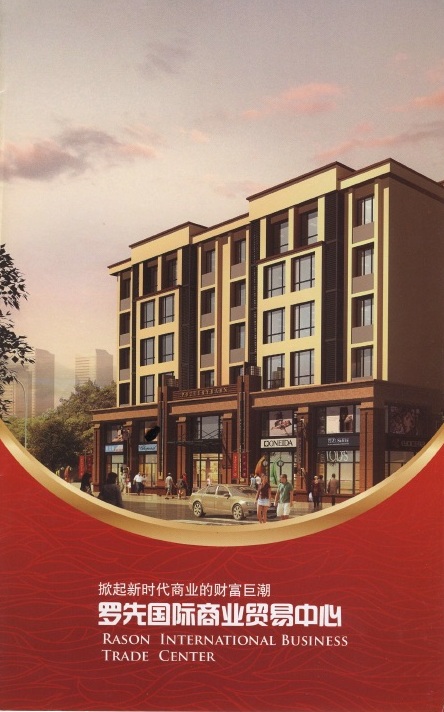
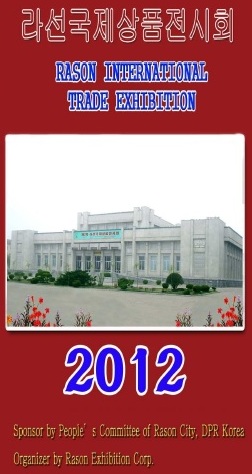
DPRK presents vision of Rason

Friday, November 5th, 2010

According to the Choson Ilbo:

North Korea is pushing the implausible dream of turning the city of Rajin-Sonbong in North Hamgyong Province into an international freight brokerage, export processing and finance hub. A 3D video elaborating on a blueprint for the development of the city was made right after leader Kim Jong-il visited China in May.

The video, obtained by the Chosun Ilbo from a North Korean source in China, says the North worked out a plan in June to develop the city by giving distinctive roles to each of its six districts. “The video was made as material for reporting to Kim Jong-il,” the source said. “Discussion on the blueprint started right after Kim’s visit to the city in December last year and it was then hastily completed when people were talking about possible Chinese aid to the North after Kim’s visit to China in May.”

In December, Kim reportedly reprimanded senior officials there for making no progress in two decades since it was designated a development zone.

The regime upgraded Rajin-Sonbong to a special city in January. Rumor has it that Kim’s brother-in-law Jang Song-taek, the influential director of the Workers Party’s Administration Department, is pushing for development there.

The narrator in the video says, “In the future, Rajin-Sonbong will turn into a world-class economic and trade zone based on international freight brokerage, export processing and finance business and into a beautiful cultural port city in the era of the Songun (military-first) ideology.”

The narrator quotes regime founder Kim Il-sung as saying, “Rajin-Sonbong must become a better city than Singapore when you establish an economic and trade zone there.” Kim Jong-il is quoted as saying, “To build Rajin-Sonbong well, we must carry out the construction project according to an urban development plan.”

The video says the regime made a detailed plan to develop the city. A Kim Il-sung statue and public buildings such as an exhibition hall will be built in the Jungsim District. Changpyong District, which lies close to Rajin-Sonbong Port, will become a residential area. Anju District will become a finance center with hotels, banks and a department store will be built. High-risers including a 40-story office building will be built in Sosan and Dongmyong, and light industry will be built on both sides of Rajin Railway Station in Yokjon District.

Six design research centers in Pyongyang and Rajin-Sonbong were tasked with producing the blueprints.

But experts say chances that the project will come to fruition are near zero. “If Rajin-Sonbong is to be developed according to the blueprint in the video, the North would have to reform and open up. It can’t become an international trade and finance center without huge investment from South Korea, the U.S. and Japan,” a South Korean government official said.

So far, only a road linking the Chinese city of Hunchun with Rajin-Sonbong Port is being built in accordance with Chinese plans to ship goods from there.

Cho Bong-hyun, a researcher at the Industrial Bank of Korea’s economic research center, said an estimated 5 million tons a year of grain, coal and timber from northeastern China are being transported to southern China, and China can save up to US$10 per ton or $50 million a year in transport costs if it uses Rajin-Sonbong Port instead of railways.

The port could also be of help to China for exports. There are also rumors of a joint industrial complex in the area where North Korea would provide the labor for Chinese firms.

But a Chinese businessman operating in the North said the North and China have different ideas about the development plan, so nobody knows if and when development will get under way.

The video can be seen at the Choson Ilbo web page below.

Read the full story here:
N.Korea Pursues Dream of Int’l Business Hub
Choson Ilbo
11/5/2010

Share

An affiliate of 38 North