‘High-temperature air-combustion technology’ developed

April 23rd, 2015

Institute for Far Eastern Studies (IFES)

At the Third Session of the 13th Supreme People’s Assembly (SPA) held on April 9, Premier Pak Pong Ju of the DPRK Cabinet delivered a progress report on the Cabinet’s performance for the previous year and goals for this year. He said, “High-temperature air-combustion technology and other technologies that do not require the use of heavy oil should be introduced into various fields of the national economy.” As North Korea is a non-oil producing country, such technology would be beneficial. But whether this technology is possible requires careful consideration.

According to various state media reports, “high-temperature air-combustion technology” maintains the internal temperature of the furnace by combusting gas or liquid raw material into the air by heating it to high temperature, wherein high temperature needed at the time is acquired through the gasification of anthracite. Respectively, this technology is also called the high-temperature, air-combustion technology by the gasification of anthracite.

This technique is known as energy-saving advanced technology that manages the thermal efficiency which greatly lowers the heat loss that occurs from the used gas discharge. This technology is characterized by its wide range of application that includes heating of the metal factory that uses heavy oil as fuel, as well as glass melting furnace, furnace refractories (or kilns), pottery baking furnace, and heat treatment furnace.

For the production or heating of rolled steels, application of this technology allows for effective production without the use of heavy fuel oil.

Accordingly, the Ministry of Metal Industry has begun to implement projects with major metal industry enterprises such as Kim Chaek Iron and Steel Complex, Hwanghae Iron and Steel Complex, and Chollima Steel Complex. This technology is being introduced into various enterprises including all steel production process and refractories that use heavy oil.

In 2011, North Korea emphasized “vanguard technological breakthroughs” and constructed heating furnace equipped with high-temperature air combustion technology at the Kim Chaek Iron and Steel Complex for the commemoration of Kim Il Sung’s 100th birthday. It was widely publicized that introduction of this technology has put an end to the steel billets production system that uses heavy fuel oil.

In this regard, Rodong Sinmun reported on January 11 that Kaesong Insulator Factory in North Hamgyong Province succeeded in the complete domestic production of high-speed transfer switch and thermal mass which is the core of the high-temperature air-combustion technology. It also drew particular attention as the news touted that this was the first successful introduction of “large-scale continuous furnace.”

The newspaper boasted that, “the introduction of the high-temperature air combustion technology was introduced with a small investment into the heating furnace and kilns in each sector of the people’s economy,” and evaluated this as a result of “our capabilities and technology that proceeded in accordance with the principles of ‘our-style’ modernization.”

Share

Solar panel boom in North Korea

April 22nd, 2015

solar-equipment-center-2014-9-21

Pictured Above: Solar Equipment Center in Pyongyang

According to Reuters:

In a country notorious for a lack of electricity, many North Koreans are taking power into their hands by installing cheap household solar panels to charge mobile phones and light up their homes.

Apartment blocks in Pyongyang and other cities are increasingly adorned with the panels, hung from balconies and windows, according to recent visitors to the isolated country and photographs obtained by Reuters.

“There must be at least a threefold increase in solar panels compared to last year,” Simon Cockerell, who visits North Korea regularly as general manager of Beijing-based Koryo Tours, told Reuters from Pyongyang. “Some are domestically made, so that may have driven prices down.”

North Korea has long suffered from electricity shortages which plunge large parts of the country into darkness, providing a stark contrast in night-time photos taken from space to prosperous and power-thirsty South Korea.

The soaring sales of cheap and easily-installed solar panels reflect rising demand for electricity in North Korea as incomes rise and people buy electronic goods like mobile phones and the “notel” media player that need regular charging. North Korea, one of the poorest countries in the world, is home to 2.5 million mobile phone users, about 10 percent of the population.

Once reserved for Workers’ Party cadres, solar panels and voltage stabilisers are now sold openly both in markets and the hardware section of Pyongyang department stores, where small 20 watt panels cost just under 350,000 won – $44 at the widely-used black market exchange rate where a dollar is about 8,000 won, instead of the official 96 won.

Obtaining accurate data from North Korea is difficult, but roughly 10-15 percent of urban apartments in a series of recent photographs in North Korean cities obtained by Reuters appeared to have small solar panels attached to windows or balconies.

Whether that number translates nationally is unclear, but regular visitors have noted a significant increase in solar panel use across the country in recent months, either in urban areas or in one case in the backyard vegetable plot of a rural house.

MONEY IS POWER

Private solar panels are not illegal in authoritarian North Korea, where in recent years the government has tacitly allowed greater economic freedoms. However, some local authorities may demand a bribe for permission to install them, a defector said.

Electricity supply in North Korea is prioritised for factories or areas of political importance, but those with money or connections are often able to tap those lines illegally.

The country could be generating about 33 terawatt-hours of electricity a year, or just 7 percent of what South Korea generates, according to Tristan Webb, a former British Foreign Office analyst who visited North Korean power plants in 2013.

North Korea suffers from dry winters where Siberian winds can keep temperatures below freezing for months. The state exports much of its mined coal and relies heavily on hydro power, meaning electricity is in especially short supply in winter.

“We can heat our homes with a heater powered by a solar panel,” said Kim Yeong-mi, a North Korean defector who came to the South in 2012.

Pyongyang is home to a solar panel factory, and state propaganda has said the technology is in “effective use” in solar-powered lamp posts in other cities. North Korea is trying to use renewable energy to “make up the shortage of electricity,” state media said on Tuesday.

“Develop and make effective use of wind, tidal, geothermal and solar energy!,” was one of a barrage of slogans released by the ruling party in February.

A typical solar power set-up includes a panel, battery, and inverter for charging phones or powering appliances. Private car ownership remains rare in North Korea, but car batteries are popular in households to store power for blackouts.

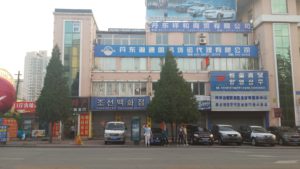
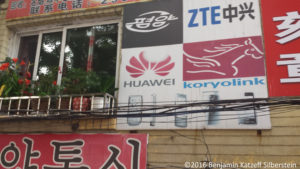
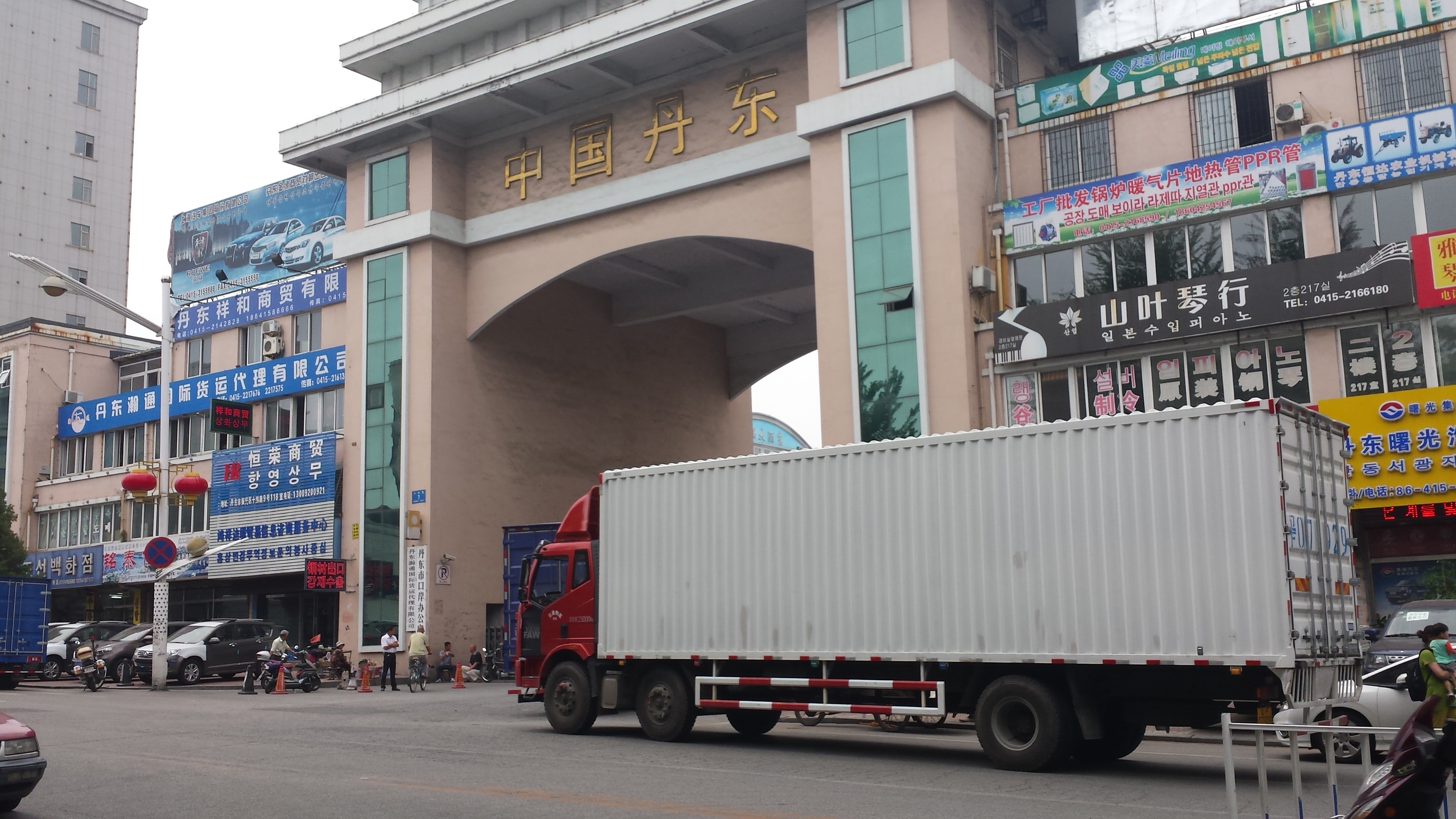
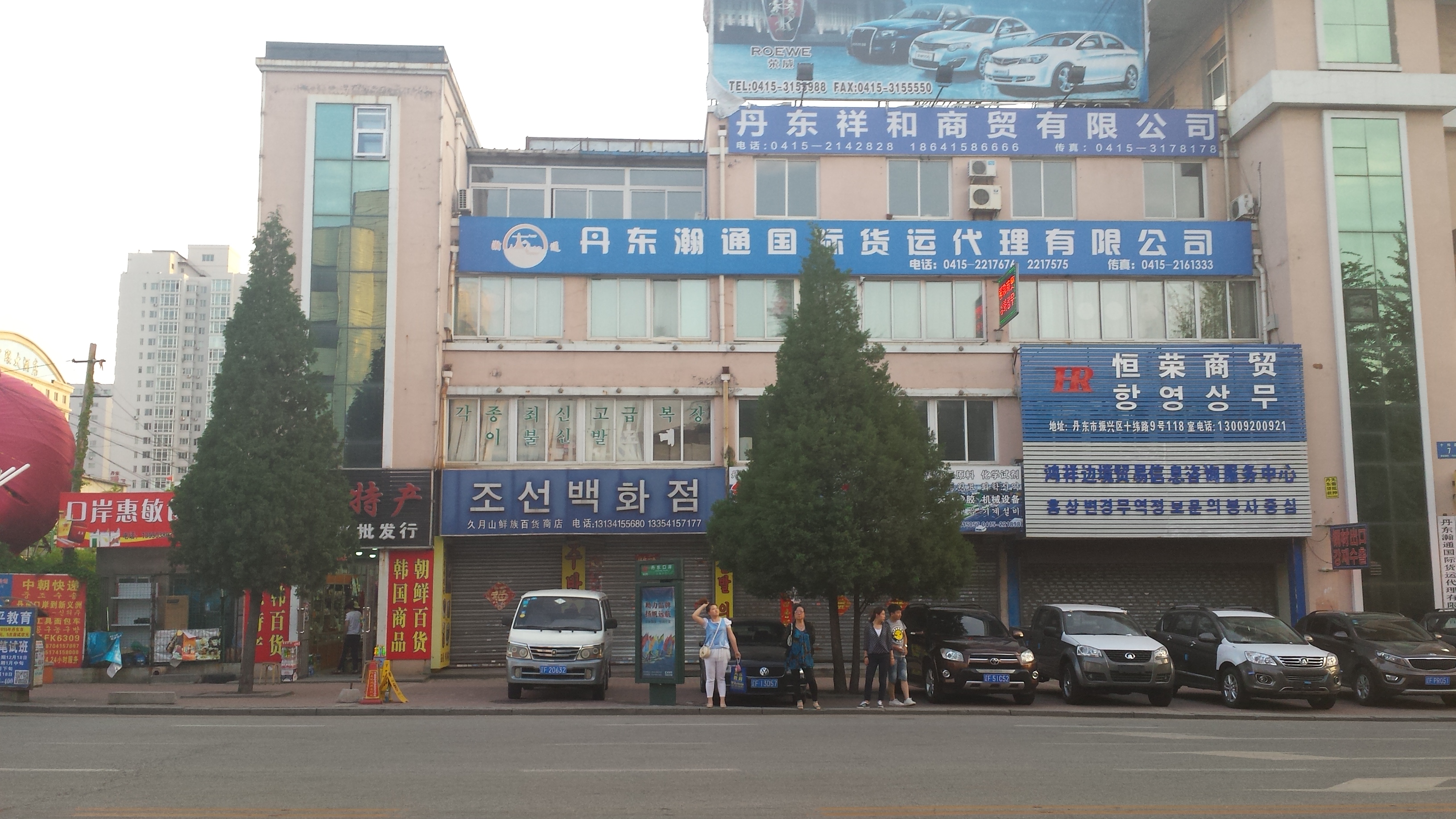
In the Chinese city of Dandong on the frontier with North Korea, large red signs outside shops advertise solar panel and battery kits, aimed at traders from across the border. At one shop, the largest set-up on sale produces enough power to run a TV, laptop, mobile phone, fridge, washing machine, rice cooker and even an electric blanket – all increasingly common household goods for moneyed North Koreans.

“North Koreans didn’t really buy solar panels from us until two years ago,” said Yang Yanmeng, a trader in China’s Shandong province who has been selling solar panels since 2012.

“Now, up to 80-90 percent of our company’s products are sold to North Koreans,” he told Reuters by phone.

Read the full story here:
In North Korea, solar panel boom gives power to the people
Reuters
James Pearson
2015-4-22

Share

North Korea to concentrate state budget towards economic construction

April 20th, 2015

Institute for Far Eastern Studies (IFES)

North Korea has drafted a budget that emphasizes improving the lives of its citizens and the establishment of an economic power this year.

The state-run Korean Central News Agency (KCNA) reported that on April 9, 2015, North Korea held the 3rd Session of the 13th Supreme People’s Assembly (SPA), where authorities balanced accounts from last year’s spending and decided the budget for this year.

“This year the state budget was designed to further strengthen the self-defense capabilities of national defense while putting technology firmly at the front and bringing about a transformation in the building of an economic powerhouse,” North Korea’s head of the Finance Ministry, Ki Kwang Ho, explained at the session.

First, North Korea decided to raise the entire budget expenditures over last year by 5.5 percent to celebrate the 70th anniversary this October of the establishment of the Worker’s Party of Korea (WPK).

This year the national defense expenditures represent 15.9 percent of the budget, the same as last year. Meanwhile, authorities decided to increase investment in the technology sector over last year by 5 percent.

The following areas were also increased over last year: forestry (9.6 percent), basic construction (8.7 percent), physical education (6.9 percent), education (6.3 percent), culture (6.2 percent), general industry and light industry (5.1 percent), fisheries (6.8 percent), agriculture (4.2 percent) and health (4.1 percent).

Every aspect of the budget is designed to improve the citizens’ lives and further economic development. Finance Ministry Director Ki Kwang Ho explained, “[the budget] enables the state to raise the entire People’s economy and drastically improve the lives of the people while fully engaging in the forest restoration battle and the construction of monumental building projects.”

North Korea, however, did not disclose the full amount of the budget. Based on the budget, it is predicted that North Korea will concentrate state management this year on improving the people’s quality of life.

In his New Year’s address, First Chairman Kim Jong Un intimated his intentions to better the lives of the people through economic reform this year.

“We need to solve the people’s food issue through the three axes of agriculture, livestock and fisheries and bring the food situation to the next level […] We need to encourage businesses to be proactive and creative to take the lead in business activities,” he proclaimed in his address.

Share

DPRK boosts food imports from Russia

April 17th, 2015

According to the Daily NK:

Rice prices in North Korea’s North Hamkyung and Yangkang Provinces have dropped despite general stability in market prices around the country. This is largely due to an influx of rice from Russia, offsetting regular price increases that come during the spring when grains fall short in supply.

“Rice sold for about 5,000 KPW [0.63 USD] per kg in Onsong County at the beginning of March, but recently that has dipped to about 4,200 KPW [0.53 USD],” a source in North Hamkyung Province told Daily NK on Wednesday. A source in Yangkang province confirmed a similar trend, saying, “The price of rice has been continually dropping in Hyesan Market, recently falling to the 4,000 KPW [0.5 USD] mark.”

Public demand for rice usually surges in April, and expectations were the cost would jump due to a clampdown on border movements this month that would block smuggled supplies. However, the supply from Russia has reversed these projections, multiple sources confirmed.

“Ships that can hold over 10,000 tons are carrying in wheat or rice from Russia through the harbors of Chongjin and Rasun,” the North Hamkyung source said. “These grains go to the military first, but then are flowing into the markets through back channels.”

He added that the North has been emphasizing relations with Russia more than with China this year, spurring a surge in trade as well as the dispatch of more workers to Russia to pull in foreign currency. This same source also reported multiple sightings –not only by him but but a host of residents–of shipments of oil and grains coming into the North from Russia.

Fluctuations in rice prices have not yet been confirmed in provinces other than the two cited above. Markets in Pyongyang and North Pyongan Province’s Sinuiju have held rice prices at the 5,000 KPW [0.63 USD] level as of mid-April, according to research by Daily NK. This is likely due to the added time it takes to transport rice to the inner areas of the country from the borders.

Both sources blamed power shortages for the delay, exacerbated by state crackdowns preventing traveling peddlers selling goods out of their trucks from entering the markets to do business. While this has contributed to the sluggish supply inland in the very short-term, prices are expected to level out soon.

Read the full story here:
Russian Supply Drives Down Rice Prices
Daily NK
Lee Sang Yong
2015-4-17

Share

Chinese car tours to DPRK continue following Ebola quarantine

April 15th, 2015

According to Yonhap:

A Chinese border city has offered its first driving tour to North Korea since the North lifted travel restrictions it imposed due to concerns over the Ebola virus, according to a local media report on Monday.

The report was the latest sign that North Korea has approved more cross-border tours for Chinese nationals after lifting the travel restrictions about a month ago.

A group of 11 Chinese tourists drove their cars across the border from the Chinese city of Hunchun to North Korea’s northeastern coast port of Rajin on April 6, the Yanbian Daily newspaper reported, citing an unnamed tour guide who led the Chinese tour group.

The Chinese tourists gave “favorable comments” about the three-day trip as North Korea provided them with almost hassle-free visas, the report said.

In October, North Korea banned foreign tourists from visiting the isolated country and imposed a strict 21-day quarantine on all people, including diplomats, entering the country.

Meanwhile, North Korea hosted an international marathon race on Sunday, drawing about 650 foreign runners from more than 30 countries, China’s Xinhua news agency reported from a dispatch from Pyongyang.

Read the full story here:
China offers 1st driving tour to N. Korea after Ebola ban
Yonhap
2015-4-13

Share

Gause on Kim Jong-un’s power consolidation

April 14th, 2015

According to Yonhap:

North Korean leader Kim Jong-un has not fully consolidated his power and could be marginalized into a “puppet” unless he brings in more money and buys support from within the regime in a couple of years, a U.S. expert said Monday.

That is why Pyongyang is largely maintaining its charm offensive toward South Korea while refraining from major provocations in an attempt to prod Seoul to improve inter-Korean relations and “open up the coffers,” said Ken Gause, a top North Korea expert at CNA Corp., during a lecture.

“The royal economy, which is part of the economy surrounding the Kim family, is losing money. They can’t bring in as much money. He’s having to spend about twice as much money than his father did to buy support within the regime,” Gause said. “He doesn’t have the resources to be able to consolidate his power and buy relationships.”

Power struggles, which have been frozen in place since Kim’s execution of his uncle Jang Song-thaek, could thaw out in one to two years, and if those power struggles happen, Kim no longer has the regent structure around to protect him, the expert said.

“He is now directly exposed to those power struggles and he can be undermined by that. Not toppled, not coup, but marginalized and turned into a puppet. I think that would happen within the next two to five years. I really think he needs to do this within the next couple of years,” Gause said.

The economic problem is one of three things Kim must address to consolidate the power he inherited from his father, Kim Jong-il, who died in late 2011, the expert said. The two other tasks are to purge potential adversaries and bring in people and to make progress in defense systems, such as the missile and nuclear programs.

The economic question is why North Korea reached out to Japan and Russia, he said.

“A part of why they reached out to Japan was to put pressure on South Korea. It’s all about South Korea. That’s why they’re playing ball with the Russians right now,” he said. “It’s all getting South Korea to open up the coffers. That’s what it’s about.”

The economic reason also explains why the North hasn’t launched another provocation, Gause said.

“They don’t want to undermine the charm campaign. There’s still, if you read their rhetoric, if you read the media, it does suggest that even though they’re talking a harsh language towards the South Koreans, they’re keeping the door open for potential engagement,” he said.

“If they go and test a missile and especially if they test a nuke, that’s going to really undermine that, especially if they return to something like Cheonan, or whatever. It’s game over at that point,” he said, referring to the North’s 2010 sinking of the South Korean warship Cheonan.

However, if the North makes a determination at some point in the near future that South Korea is not going to play ball, the North may become much more aggressive in terms of provocations, he said.

Should the North’s young leader visit Moscow next month for celebrations marking the 70th anniversary of the Soviet Union’s victory in World War II, it would suggest there’s “stability inside the regime, that he can leave the country,” the expert said.

Another factor that should be watched closely is whether Kim’s second child is a girl or boy, Gause said. Kim’s first child is a girl.

“If it’s a girl and Kim Jong-un were to die or become incapacitated, then you’ve got a major transfer of power issue,” he said, raising the possibilities that Kim’s brother, Jong-chol, could take over or the North could establish collective leadership.

Read the full story here:
N.K. leader has yet to consolidate power, could be marginalized into ‘puppet’: U.S. expert
Yonhap
Chang Jae-soon
2015-04-14

Share

ROK report on DPRK military spending

April 14th, 2015

According to Yonhap:

North Korea has increased its defense spending by 16 percent over the past five years despite a moribund economy, Seoul’s defense ministry said Tuesday.

The communist North is presumed to have spent US$10.2 billion for national defense last year in accordance with the calculation based on purchasing power parity (PPP) terms, the ministry said, citing figures by the state-run Korea Institute for Defense Analyses (KIDA).

The amount is about 16 percent more than the $8.77 billion in 2009, the ministry said, adding that Pyongyang spent $10.1 billion on its military last year.

The world’s most reclusive nation has not made public the exact amount of its defense budget.

“North Korea said in April that it spent some 15.9 percent of the total budget last year for national defense, which translates into a mere $1.15 billion. But the amount was solely for maintenance and does not include costs for its military build-up and investment,” a ministry official said, requesting anonymity.

South Korea’s defense budget last year came to $32.5 billion, some three times larger than that of its communist neighbor.

North Korea has been pushing for its military-first policy at the expense of its moribund economy. Its gross national income stood at 33.8 trillion won ($30.9 billion) in 2014, compared with South Korea’s 1,441 trillion won, according to the data by Statistics Korea.

Read the full story here:
N. Korea’s defense spending rises 16 pct over 5 yrs: Seoul ministry
Oh Seok-min
Yonhap
2015-4-14

Share

DPRK real estate market: sustained boom, or bubble?

April 11th, 2015

According to the Hankyoreh:

“They say there are apartments in Pyongyang selling for US$200,000.”

Jung Eun-yi, a research professor at Gyeongsang National University, was talking about how rapidly housing prices in North Korea have been rising. Jung had just returned from spending January and February in Dandong, China, where she had been tracking trends in the North Korean housing market. In July 2014, the highest price for an apartment in Pyongyang that heard about in Dandong had been US$100,000.

Needless to say, this doesn’t mean that an apartment worth US$100,000 had doubled in value to US$200,000 in the past six months. Nevertheless, the appearance of apartments worth US$200,000 indicates just how quickly Pyongyang apartments are increasing in quality, size, and value.

Jung is one of the foremost experts in South Korea on prices in the North Korean housing market. She received considerable interest from the media because of a paper that she presented at the World Conference on North Korean Studies at the end of Oct. 2014 in which she reported that some apartments in Pyongyang were selling for US$100,000.

In 2013, she had gained attention in the academic community by publishing a paper that included a detailed breakdown of housing prices in the North Korean city of Musan, North Hamgyong Province, down to the neighborhood.

Based on the data collected during her most recent stay in Dandong, Jung argues that there are signs that the housing market in North Korea is turning into a real estate market, rather like South Korea. If a housing market is one in which houses are bought simply for the purpose of living in them, a real estate market is formed when people start to see the houses they buy both as a residence and an investment.

What enabled Jung to publish such a pioneering paper on the North Korean housing market is that she spends all four months of her summer and winter vacations each year in Dandong, where she researches trends in the North Korean housing market.

Jung says that there are several reasons why she is interested in the North Korean housing market. The market offers hints at how the North Korean market economy is developing; it reflects the economic policies that the Kim Jong-un regime are adopting; and it provides a great deal of information about the appearance of a propertied class inside North Korea and about the growing wealth gap between the rich and poor.

What follows is a summary of the interview that Jung gave to the Hankyoreh on Mar. 30, organized by topic.

North Korea’s housing market: most profitable business area

Jung explains that one of the biggest recent changes in the North Korean housing market is the participation of North Korean trading companies. The reason, she says, is that building and selling houses has become even more lucrative than trade.

Why would that be? Jung explains that, while there is a lot of potential demand, there is a limited number of suppliers, creating a monopoly in the market. In other words, it’s easy to find buyers once you build a house.

But there’s just one catch. Before trade companies can jump into the housing market, they have to be working with someone who has connections in North Korea’s bureaucratic system.

As of now, housing transactions in North Korea are technically illegal. Given this situation, it is essential that a business have access to someone who can negotiate the bureaucracy so that it can provide the person buying the house with the permit that is legally required for them to move in.

According to Jung, no matter how much financial backing a developer may have, “they will fail without a partner who can cut through all the red tape.”

The growth of the house-buying class

Jung says that the price of housing in North Korea is linked to rice and US dollars (the exchange rate). When calculations are made in rice, the preferred unit is the ton.

The growth in a housing market that involves the movement of such huge amounts of rice and dollars implies that an increasing number of people in North Korea have that much purchasing ability.

The increasing level of purchasing power, or disposable income, can also be verified in the fact that houses in North Korea are improving in quality every day.

The concept of the “front room” was introduced in some ritzier North Korean houses back in the 1990s. Front room means a living room that includes a kitchen with a sink, rather than the traditional coal-burning kitchen. But even since then, houses have been becoming more elaborate, some using high-quality materials from China.

However, the very increase in the number of people with property – the consumers of these new houses – also implies that the gap between the rich and the poor is widening. Behind every house that is sold is a family whose financial destitution leaves them no choice but to sell the house in which they had been living. In this way, the growth of the housing market in North Korea offers another glimpse at the growing wealth disparity there.

Predictions for the North Korean housing market 

Jung expects that the North Korean real estate market will continue to expand for a significant period of time. Just as in South Korea, there was also an explosion in demand for houses in North Korea starting in the early 1980s because of the baby boomers, the generation of those born around 1957.

However, the demand in North Korea was suppressed by the “arduous march,” Jung believes. During this famine in the mid-1990s, when the severe shortage of food caused people to starve to death, the massive flight of people out of the country actually led to an increase in the number of vacant houses around North Korea’s border with China.

But with the subsequent development of private markets and the appearance of people with money to spend in the 2000s, these vacant residences were the first to be sold at cut-rate prices. This signaled the beginning of growth in the housing market.

Housing prices in North Korea increased rapidly then faltered during the currency reform in 2009, when the Kim Jong-il regime attempted to put limits on these markets. But from 2011 to 2014, after the North Korean government started to tolerate the markets again, housing prices soared once more.

Jung believes that the growth trend in North Korean housing prices will continue for the time being. The reason is that demand for housing both among baby boomers and among new members of the propertied class is likely to continue.

The North Korean housing market and Kim Jong-un’s economic reforms

Jung explains that the regime of Kim Jong-un is taking steps toward normalizing the housing market. Presumably, the regime has concluded that the official economy of the country is suffering major losses because the housing market is outside of the system.

As one example, Jung cites housing deals between private citizens in the 1990s. While the volume of transactions greatly increased during this period, the failure to solve the issue of legal collateral resulted in unending disputes about these transactions.

There was also widespread corruption connected with them. Jung says that sometimes the housing allocation department of the urban management bureau of the people’s committee – which is in charge of issuing residential licenses – would confiscate houses that had been illegally bought by low-ranking officials and then conduct business with those houses themselves. Since the housing market did not go beyond individuals making money, it did not benefit government finances.

Jung believes that the Kim Jong-un regime was trying to stamp out this kind of corruption when it established housing delegation offices in 2013. These offices are public organizations whose purpose is to take money from public citizens and to build them a new house. The existence of this organization is another example that both central planning and market forces are at work in the North Korean economy today.

Jung sees this as being part of efforts to institutionalize market mechanisms. “This is evidence that the Kim Jong-un regime is going beyond the military-first policy known as Songun that was instituted by Kim’s father and moving down the path toward socialist capitalism,” she said.

Housing market: A market economy learning center

According to Jung, the housing market is turning into a “learning center” writ large for the market economy – not just for the Kim regime, but for the North Korean public. Most crucially, housing prices in North Korea are already being decided based on a variety of factors, including access to transportation, markets, nearby facilities, and even the number of floors. As an example, Jung mentioned the price of apartments in Musan, a county in North Hamgyong Province. The most expensive apartments on the market there are seven-story buildings for “people of national merit.” But the most expensive, she said, are not the seven-story blocks, but the five-story ones. The smaller buildings go for more because they don’t have elevators, which makes them better for moving firewood. One- to two-story buildings are less popular because they are seen as similar to South Korea’s, Jung added. Even in North Korea, a number of different variables go into shaping housing market prices.

Chinese presence in the North Korean real estate market 

Jung also noted that some Chinese people have begun branching into the North Korean real estate market. Chinese residents of North Korea who were interviewed in Dandong indicated that more and more Chinese have begun investing after seeing the real estate. North Korea has not yet made its housing fully open to foreigners, but those who invest in North Korea are reportedly allowed to buy housing for temporary residence. It’s a sign that regulations on foreign activities are being relaxed. As a result, an increasing number of Chinese people are investing in needed areas such as toll processing and solar energy development in Pyongyang and other places – and acquiring housing and land in the process. The strategy is twofold: immediate gains, along with more long-term profits from the land.

The real estate housewives of North Korea? 

“It hasn’t reached that point yet, but the signs are there.” According to Jung, relatively rigid enforcement of the one-family, one-home rule in North Korea means the country has yet to develop a visible community of “housewife speculators” buying and selling homes for profit. But there have been cases of people buying homes under their mother’s name, or investing when a house is still incomplete and cheaper before turning around and selling at a higher price when it is finished, she added. Both are similar to the kinds of behaviors seen among South Korea’s housewife speculators. As these activities increase, Jung notes, the idea of the home as a place of residence only is giving way to the idea of real estate as an investment – even in North Korea.

The increasingly market-oriented nature of the North Korean housing market, and the Kim Jong-un regime’s attempts to incorporate the changes into its system, led Jung to predict that the shift toward market economy principles will only grow and intensify going ahead. The question now is whether this market-oriented real estate market will lead North Korea to reprise the disastrous experience of ’70s-era Gangnam as the economy grows – or whether the result will be something completely different.

Read the full story here:
North Korean real estate market: sustained boom, or bubble?
Hankyoreh
Kim Bo-geun
2015-4-11

Share

DPRK doctors murdered in Nigeria

April 10th, 2015

According to the Diplomat:

In February, three North Korean men were murdered in their homes in Yobe, Nigeria. Their bodies bore wounds indicative of machete blows, most likely inflicted by members of the jihadist group Boko Haram, whose bloody war has claimed up to 15,000 lives across the country since 2009. One of the men was beheaded. Two were slashed across the throats. Their wives were found hiding in the flowerbeds. The Associated Press report on the murders contained scant details about the lives of the men, who were not named, besides their profession: they were doctors. They arrived in 2005 as part of a ‘technical exchange’ with a local hospital and stayed a decade. They lived in modest homes in a quiet neighborhood and rode three-wheeled taxis around town.

You can read the full story here:
The Curious Case of North Korea’s Overseas Doctors
Poppy McPherson
Diplomat
2015-4-10

Share

DPRK pushing forest restoration

April 10th, 2015

According to Radio Free Asia:

North Korea’s regime has increased the power of the country’s forest management departments to assist in a “greenification” scheme of the barren nation, but the campaign is facing setbacks as central authorities push ahead with planting unsuitable trees despite warnings from local officials, sources said.

Last year, authorities in North Korea launched a campaign of “nationwide greenification,” sources said, with the primary goal of planting trees to replenish soil nutrients and prevent erosion in the country, which has been ravaged by decades of environmental degradation.

As part of the campaign, authorities enlarged the size of state-run tree nurseries and fields for planting seedlings, while North Korean leader Kim Jong Un recently announced that the public should “not lament the denudation of the forests, and organize trees species systematically and economically.”

The central government increased the size of each province’s forest management department, which had formerly been considered a hardship placement because of environmental neglect, and elevated its status to that of other state organs, a source from Yanggang province told RFA’s Korean Service.

“Provincial forest management departments have now become popular enough to compete against other organs of power,” the source said, speaking on condition of anonymity.

“Forest planning experts who had not been treated well before are now eligible as provincial committee members,” he said.

As part of the “greenification” campaign, the government significantly increased the supervisory power of the forest management departments, granting them control of tree nurseries and seedling production, sources said.

“This is because Kim Jong Un’s regime needs the agency to not only design forest restoration projects, but also determine how much land should be used, and even what species of trees should be planted on it,” the source said.

The forest management departments soon realized that existing plans, which relied on whatever saplings were available, had to be revamped to incorporate criteria such as species of tree, quality of soil and local climate into the planting process, a source from North Hamgyeong province told RFA.

Tree species requested by the forest management departments to suit their local conditions require at least three years to produce, the source said, but central authorities—eager to meet targets set as part of the “greenification” campaign—are demanding that the planting campaign proceed regardless.

“Even though it will take additional time, [local authorities] have to organize the forest scientifically and systematically, according to the requests of the forest management departments,” he said.

“There are lots of complaints to the forest organizing committees [under the forest management departments] pushing people to plant trees even though the correct species by region have not been produced.”

Barren landscape

According to the Seoul-based Korea Environment Institute, forest cover in North Korea dropped by 17 percent from the 1970s to the late 1990s.

Following the collapse in the early 1990s of the Soviet Union—which provided discounted oil to its communist ally—oil imports into North Korea dropped by more than half, while the use of firewood for heating more than doubled.

The Soviet Union had also provided fertilizer to the North, and when farmers were unable to produce enough food, forest area was cleared to make room for additional farmland.

Only 44.95 percent of North Korea was covered by forest in 2012, according to the World Bank, which says that the area has decreased every year since 2000, when 57.58 of the nation was forested.

Residents of the impoverished country routinely scavenge any organic material they can find for food, fuel or animal food, leaving little that contributes nutrients to the soil.

Without trees to hold the soil, rains frequently lead to flash floods and landslides in the country.

Read the full story here:
North Korea Pushes Ahead With ‘Greenification’ Despite Lack of Suitable Trees
Sung-hui Moon
Radio Free Asia
2015-04-10

Share

An affiliate of 38 North