Daily NK sources reject starvation reports

July 6th, 2010

According to the Daily NK:

A report by aid organization Good Friends stating that widespread starvation is happening again in North Korea has been vehemently denied by inside sources.

In the June report, Good Friends, citing its own sources, asserted that the Chosun Workers’ Party had dispatched an investigation team to each area of the country following the June 7th Supreme People’s Assembly meeting, and that the teams had found up to two hundred people dead in each district of South Hamkyong Province.

According to Good Friends, “The first report from South Hamkyong reached the central party on June 18th, saying that for the four months from March to June in Hamheung, Heungnam and Sinpo, 100 or so people had died of starvation.”

However, a Daily NK source from Hoiryeong who recently visited Chongjin in North Hamkyong Province was incredulous when informed of the report, saying, “Who told you that? I have heard nothing about so many people dying of starvation in either Hoiryeong or Chongjin.”

Another source from Yangkang Province who said he visits Heochon County in South Hamkyong regularly said, “Although it is hard to live in South Hamkyong, people who made it through the ‘March of Tribulation’ know very well how to survive. There are newly harvested potatoes, and if you are really struggling then you can always eat herbs.”

NK Intellectuals Society (NKIS), a leading defector organization, agrees that the report is false, saying, “We have checked the report of widespread starvation in South Hamkyong with a resident of Danchon, and he has confirmed that no such thing has happened. Some elderly people with immune systems weakened by spring food shortages have died of disease, but that number is not more than ten or twenty in Danchon.”

Good Friends has tended to warn of impending mass starvation almost every year, but inside informants and the South Korean authorities often assert otherwise.

In a separate report, Good Friends also recently claimed that there was to be no more public distribution as of late last month, and that market transactions had been fully liberalized to allow the people to look after themselves.

The so-called “May 26th Measure”, Rev. Bomryun of Good Friends said at the time, was “reluctantly done as a result of a lack of the anticipated food aid from China after Kim Jong Il’s visit,” and claimed, “This time, the starvation cannot be dealt with over a short period of time, and might result in a larger number of deaths like in the mid-1990s.”

However, the actual existence of the May 26th Measure has not been proven, and markets in Sinuiju, Pyongyang, Hyesan and other main cities remain open from 10 AM to 6 PM as normal.

Won Sae Hoon, South Korea’s National Intelligence Service chief, also testified before the National Assembly’s Intelligence Committee last Thursday that North Korea probably has enough food overall to survive, saying, “This year, North Korea seems to have more than 4.3 million tons of grain, including its own production and imports, and food supply difficulties can be managed.”

Read the full story here:
Starvation Report Rejected by Sources
Daily NK
Shin Joo Hyun
7/2/2010

Share

Life tough in Pyongyang

July 6th, 2010

According to the Daily NK:

The gap between the rich and poor in North Korea is growing as the number of people trying to sell their family home to buy food expands in the aftermath of last November’s currency reforms, according to a source from inside the country.

The source from South Pyongan Province told The Daily NK on Thursday, “An increasing number of homes are being sold to buy food, and now it seems like about two out of every ten people around here have lost their home.”

According to the source, the rich buy up the houses, demolish them and build new ones to sell for a profit. Those who have amassed dollars or Chinese Yuan from trading are now turning to the housing market.

Even in Pyongyang, where the public distribution system continues to function, there are homeless people on the street, according to the source, who added, “When I was in Pyongyang, there were homeless people sleeping in the subway in large numbers.”

The source went on, “People’s lives are very difficult. There are even some who rely on digging up 5kg of wormwood, walking three hours to sell it, and only getting 100 won per kg.”

Currently, 1kg of rice sells for 400 to 500 won in Pyongyang, and 500 to 600 won in other areas.

The source also explained, “While public distribution still functions in Pyongyang, there are strict restrictions on movement, and even with our salaries we can’t buy food because there is too little.”

Since the economy is so bad, the crime rate is also going up, he added, “There are now more and more pick pocketing cases, and these days, they not only use small knives to steal purses, but even tweezers to pick stuff from pockets.”

The source’s assertion that there was public distribution until mid-June contradicts the claim of one NGO, which said that on May 26 the authorities ordered each area to look out for its own food supply. The source, when asked about the decree, said he was unaware of its existence.

Read the full story here:
Life Even Tough in Pyongyang
Daily NK
Kim So Yeol
7/2/2010

Share

Bigwigs in North vie for power over investments

July 5th, 2010

According to the Joong Ang Daily:

Two men near the top of the North Korean power structure are competing against each other to become foreign investment czar for the cash-strapped country, according to sources with knowledge of North Korea.

North Korea experts say the contest could influence who eventually succeeds Kim Jong-il.

The sources told JoongAng Ilbo yesterday that Jang Song-thaek and O Kuk-ryol, both vice chiefs of North Korea’s National Defense Commission, are competing over who can attract more foreign investment to the North. The National Defense Commission, the country’s top state organization, is chaired by Kim.

“O Kuk-ryol dominated the foreign investment coming into the North because of his military power,” said one of the sources, “but he is in a hegemony struggle in that area with Jang Song-thaek, who thrust himself into foreign investment promotion later than [O Kuk-ryol].”

Jang is the husband of Kim Kyong-hui, Kim’s younger sister, and is one of Kim’s close confidants. Jang was also promoted to vice chairman of the National Defense Commission on June 7 at the Supreme People’s Assembly.

The sources said O, since being appointed a vice chairman of the National Defense Committee in February 2009, has capitalized on his position to expand his influence in attracting foreign investment.

O and his aides established Choson Kukje Sanghoe (Korean International Trading Company) as the organization solely responsible for foreign investment promotion and received approval for the organization from the presidium of the Supreme People’s Assembly on July 1, 2009.

Meanwhile, Jang named Park Chol-su, a Korean-Chinese businessman, president of Korea Taepung International Investment Group, which he re-purposed to attract foreign investment.

The company initially belonged to the cabinet, but Jang absorbed it into the National Defense Commission and announced the establishment of the re-purposed company in a January 20 report from the official Korea Central News Agency. The news report said Kim Jong-il issued an “order” that the state guarantee that Taepung be able to attract foreign investment.

“O Kuk-ryol is very displeased that Jang jumped into the foreign investment business that he led,” said the sources. “Currently, Choson Kukje Sanghoe and Korea Taepung International Investment Group are vying against one another.”

The sources said that the power struggle is already being watched with concern by the State Security Department, the North’s supreme intelligence agency.

The agency, the sources said, suspects that China is behind Taepung and is trying to control the North Korean economy by injecting capital through Park and the group. The sources said the agency is hesitant to report its suspicions to Kim, given his close relationship to Jang.

Jang has cultivated power through economic projects Kim has entrusted him with, such as a project to build 100,000 houses in Pyongyang. Since he was promoted to vice chairman last month by Kim, he is thought to have increased his political clout as well.

Ri Je-kang, a rival with Jang, also died in a mysterious, recent traffic accident.

“If a rivalry between Jang Song-thaek and O Kuk-ryol, both key axes of North Korean power, becomes a full-fledged power struggle, it could have a subtle effect on a North Korean succession scenario,” said Kim Yong-hyeon, professor of North Korean Studies at Dongguk University.

Read the full story here:
Bigwigs in North vie for power over investments
Joong Ang Daily
7/5/2001

Share

RoK and Japan to step up port inspections

July 3rd, 2010

According to Yonhap:

South Korea is inspecting its major ports to keep North Korean products from entering its soil after Seoul banned trade with the communist state over the sinking of a warship, an official said Thursday.

The ban took effect in late May when Seoul announced that a multinational probe found Pyongyang responsible for the March 26 sinking of the 1,200 Cheonan corvette. Forty-six South Korean sailors died in the sinking for which North Korea denies any role.

According to KBS:

Japan is reportedly planning to implement on Sunday its special law on cargo inspections of ships with suspected illicit ties to North Korea.

Kyodo News reported Friday that the law allows inspections of cargo if there are suspicions that nuclear weapons or missile-related goods are being transported by ships that visit North Korea. Consent from the country to which the vessel belongs will be required for inspections of ships from a third nation.

The law passed the Japanese parliament in May 2009 after sanctions were adopted by the United Nations Security Council in response to North Korea’s nuclear tests.

The Japanese government also plans to hold joint drills in the waters off its island of Kyushu under the assumption that a North Korean-related ship appears in Japanese waters.

Share

July 4

July 2nd, 2010

To the American readers I wish you a happy July 4th weekend.  I have already read the Declaration of Independence today and plan on doing some scuba diving and spear fishing this weekend.  For readers in other countries, have a great weekend.

 The signing of the Declaration of Independence was portrayed well in the HBO series John Adams See it here.

Share

Rakwon Department Store

July 2nd, 2010

According ot the Daily NK:

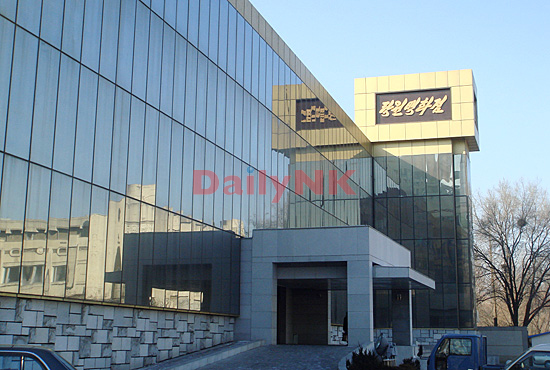
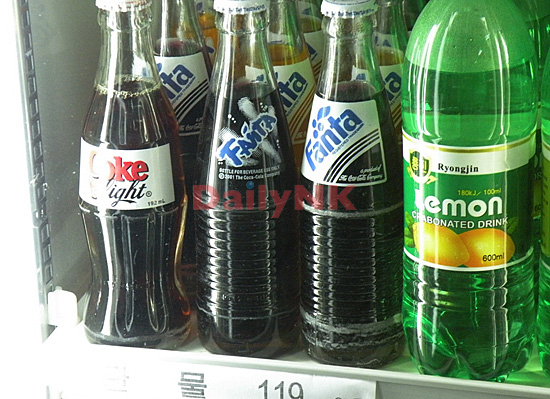
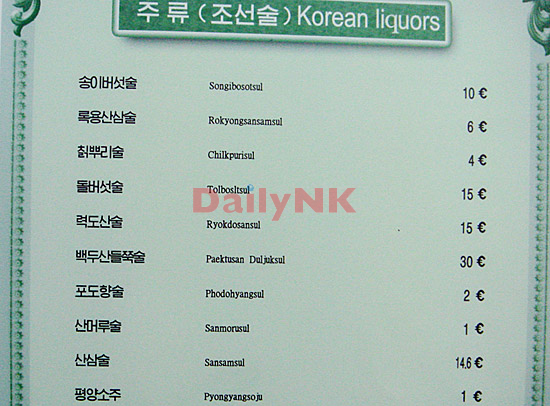
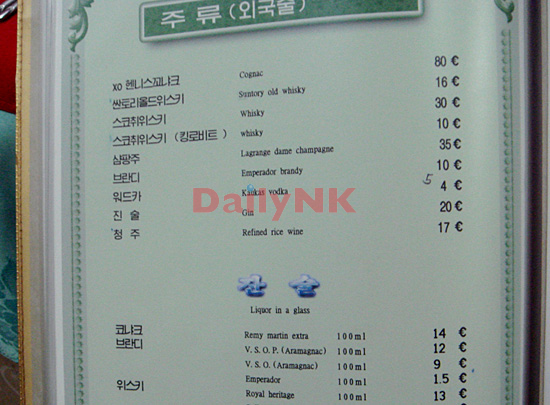
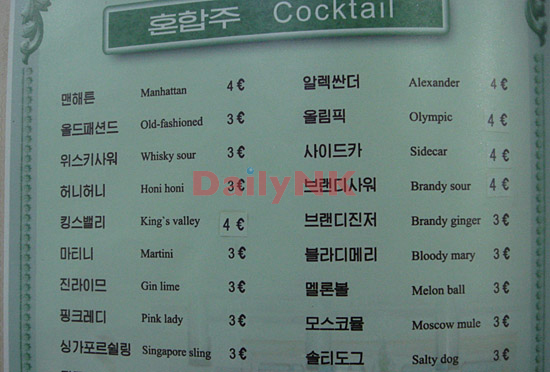
A source from inside North Korea has offered an insight into the lives of the rich and powerful Pyongyang elite thanks to some rare pictures of the Rakwon Department Store.

Rakwon Department Store, which can be found on Changgwang Street in the capital’s central district, is operated by Daesung Corporation, part of the powerful No.39 Department of the Chosun Workers’ Party. Lying in an area near Changgwangwon, Air Koryo HQ and the Changgwangsan Hotel, with one of the city’s nicest apartment complexes directly behind it, the store boasts state-of-the-art facilities.

On the first floor, there is a supermarket selling food and other daily requirements, while electronics and clothes are to be found on the second floor.

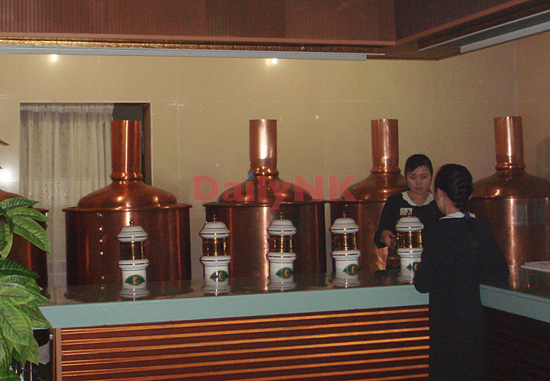
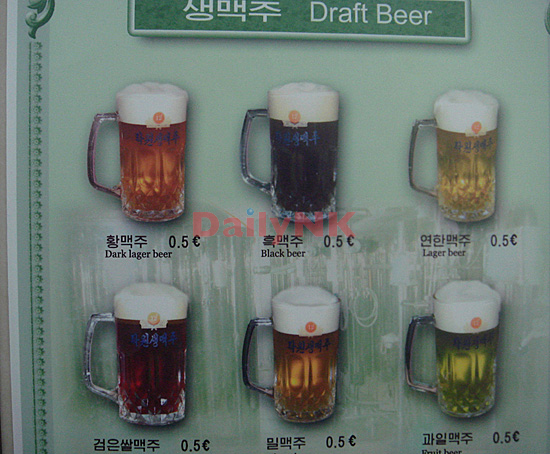
On the third floor, there is a restaurant with a separate exit to the street which boasts an advanced microbrewery imported from Germany to produce various draft beers.

The restaurant has a main area with twelve tables and a further fifteen rooms. Each room houses a 30” wall-mounted TV and karaoke facilities used by Party officials and their families. The restaurant is known to be among the best in the city, comparable with Roksanwon, which is run by the People’s Security Ministry.

The restaurant’s draft beers are particularly popular with the rich, and other restaurants in the city are now also seeking to import similar facilities, the source told The Daily NK.

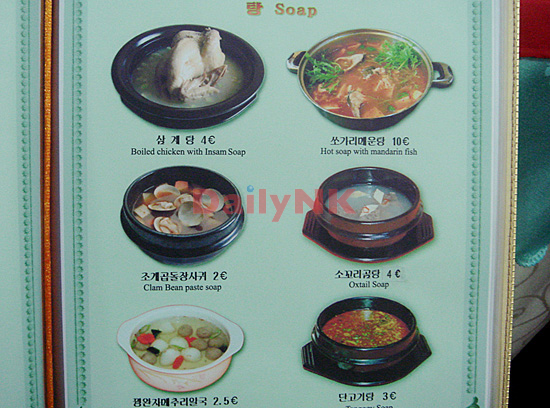
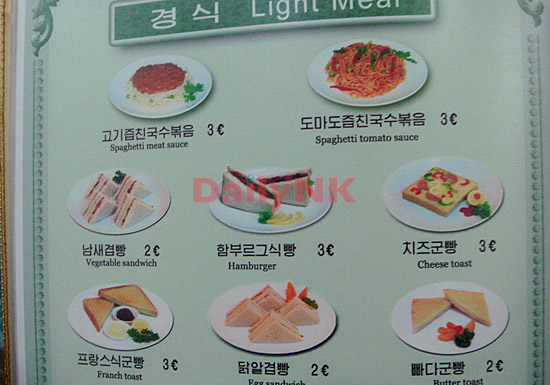
As the pictures show, all restaurant prices are denominated in Euro.

There is also a sauna in the basement, the source said. Inside the sauna, there is both a swimming pool and family bathing area. As it happens, there is another popular swimming pool, Changgwangwon, right next door, but The Daily NK’s source explained which is better, saying, “Changgwangwon is for middle-class Pyongyang residents, but they really envy those Party officials and the privileged few who can go to Rakwon Department Store.”

A $30,000 grand piano was sold by Rakwon Department Store even during the currency reform period, causing a sensation among Pyongyang insiders, he added.

Here are the pictures from the story:

rakwonstore-1.jpg rakwonstore-2.jpg rakwonstore-3.jpg rakwonstore-4.jpg rakwonstore-5.jpg rakwonstore-6.jpg rakwonstore-7.jpg rakwonstore-8.jpg rakwonstore-9.jpg  

The Rakwon Department store used to sell the highly-demanded, high-quality Japanese goods for yen.  It is interesting to see how their business model has changed since the 1980s.

Read the full story here:
Pyongyang’s Fine Dept. Store, Rakwon
Daily NK
Park In Ho
7/2/2010

Share

Friday grab bag: softball, kremlinology, reminiscences, and reparations

July 1st, 2010

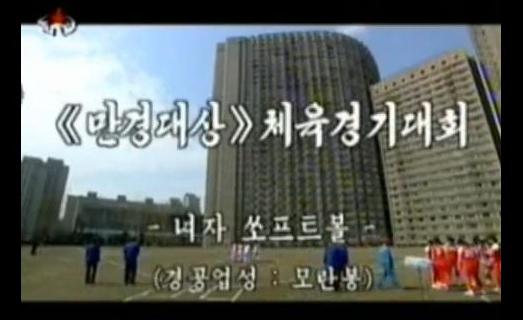
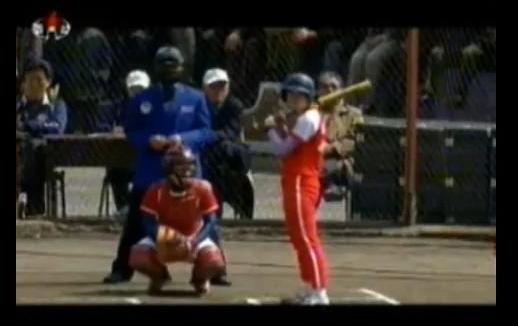
DPRK Women’s Softball
North Korean state television broadcast a women’s softball game last May.  I found it fascinating viewing.  The full seven-inning game was just over 40 minutes long.  I posted 10 minutes of it on YouTube, which you can watch here.

 softball1.JPG   softball2.JPG

There is much in this game with which Americans can identify.  The mannerisms, look, and feel of the game are just like any game here in the US.  The North Korean women wear similar styled uniforms and equipment.  The two teams walk across the field and slap hands together after the game.  The umpire shouts “strike”, and the television announcers even maintain a familiar banter about the game.  The match also offers a unique glimpse into North Korean civil society.  There is nothing nationalistic, political, or staged about the game–just people out enjoying themselves.

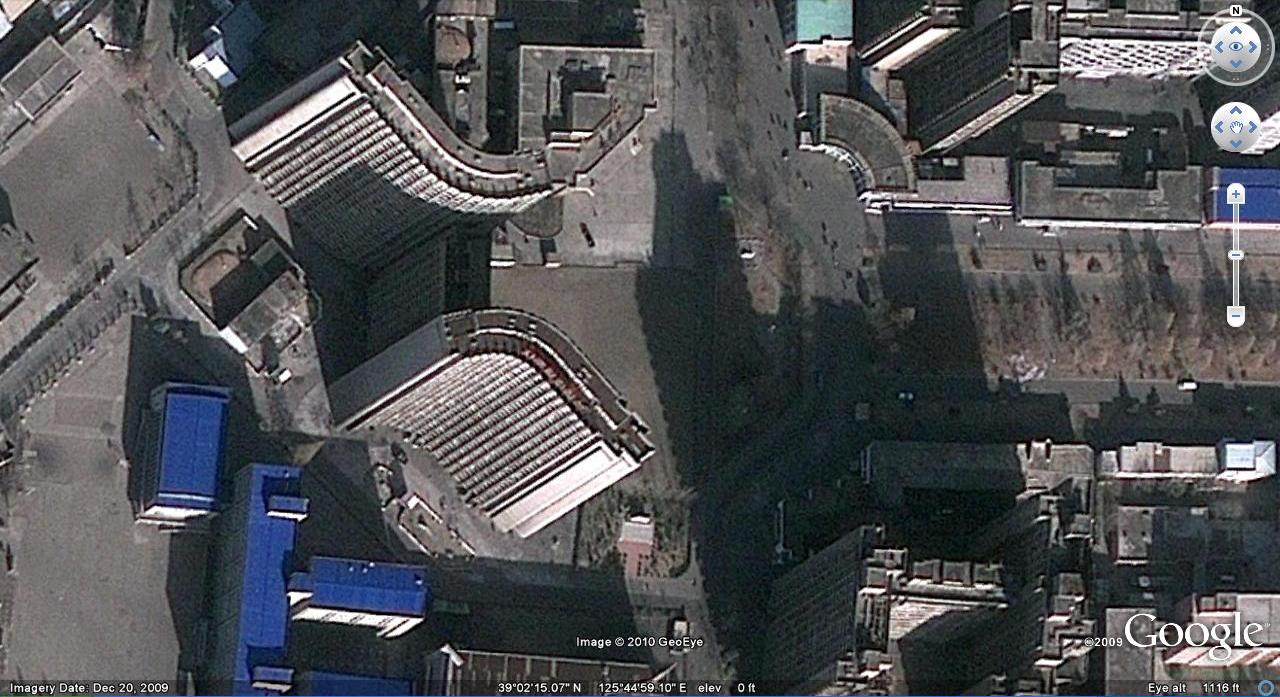
I do not believe that softball is widely played in the DPRK.  In fact, the field used in this match is the only functional field I have located in the entire country.  It is in Moranbong (Pyongyang), just north of the Moranbong Middle School.  Here is a GeoEye satellite image from Google Earth (Coordinates on the image):

moranbong-softball-field.JPG

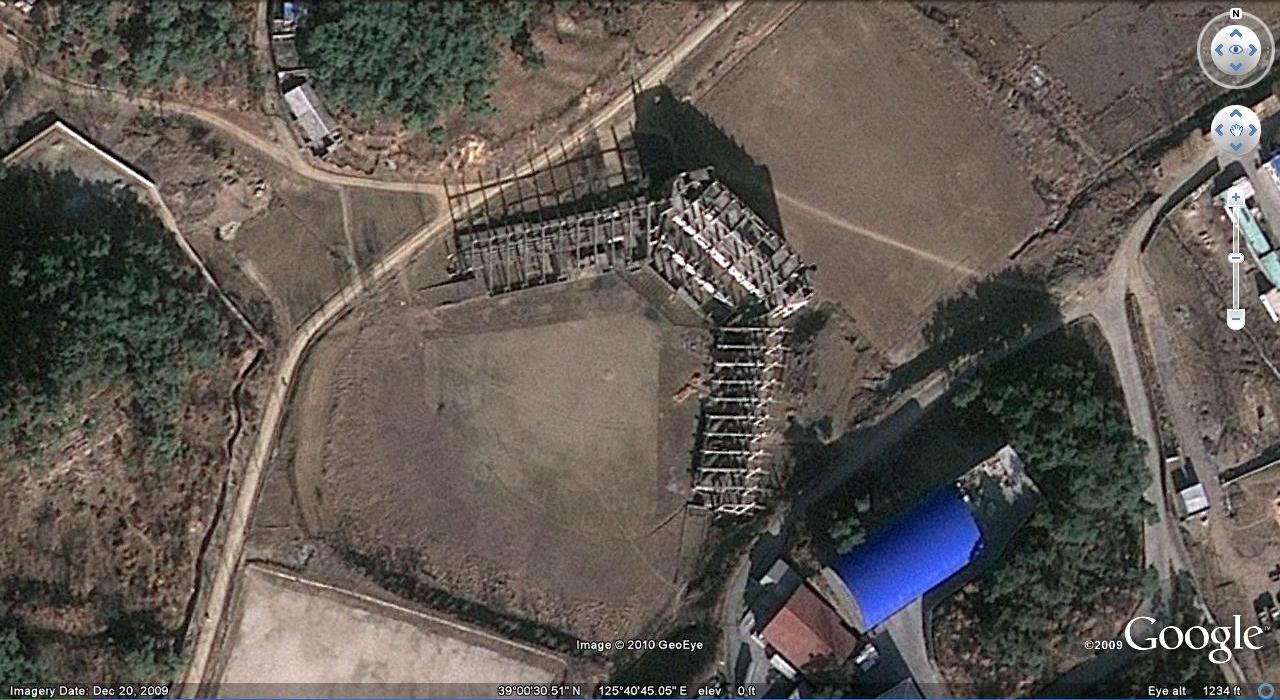
Pyongyang began construction of a softball field in the Sosan Sports District in Manyongdae sometime before 2000.  It is still uncompleted today:

manyongdae-softball-field.JPG

A softball field used to be located on May Day Island but it was converted into a soccer field in 2006.  The coordinates are 39° 3’10.61″N, 125°46’54.73″E.

Kremlinology
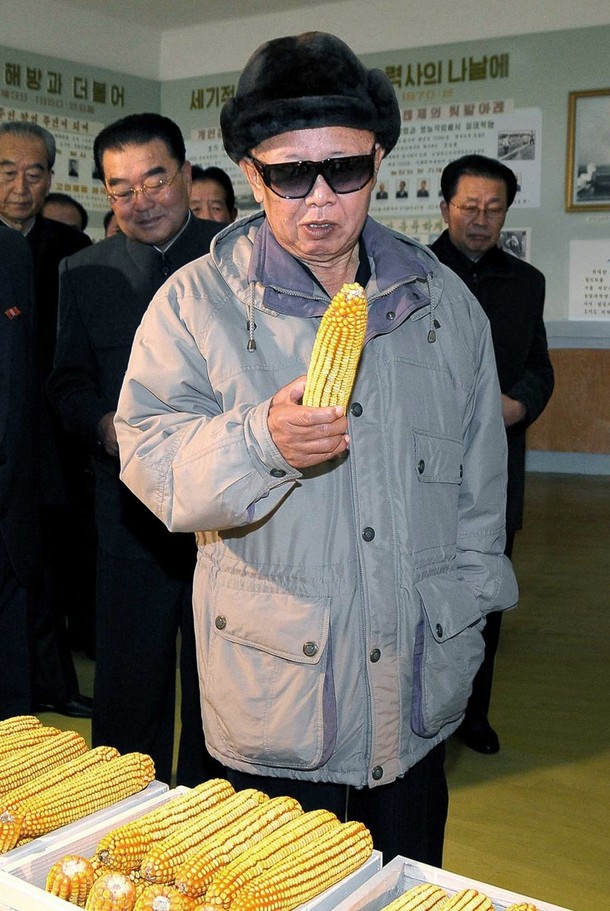
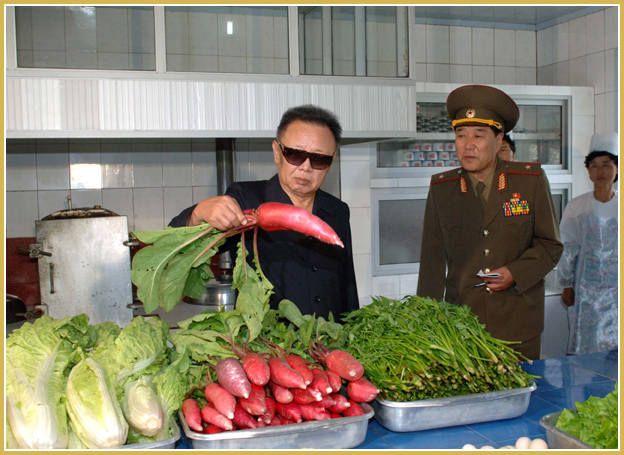
Perhaps Kim Jong-il is sending us a signal that something has changed?

kim-jong-il-corn.jpg    kim-jong-il-radish.jpg

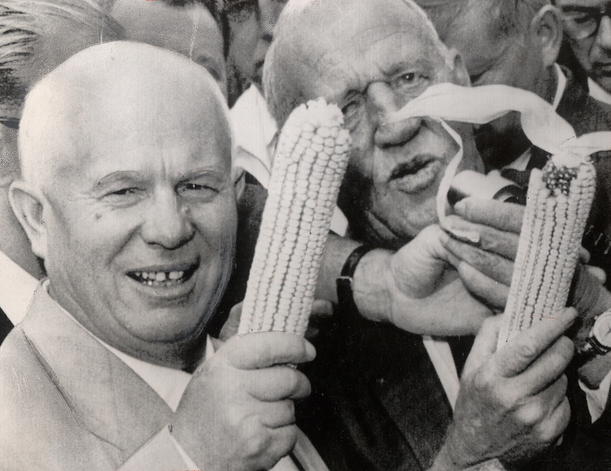
Nikita Khrushchev did not mix signals:

krushchev-corn.jpg

Kim Il-sung Reminiscences
Kim Il-sung Reminiscences is an eight-volume text—and probably unread by most modern-day DPRK watchers.  You can read all eight volumes on the Chongryun site uriminzokkiri.com (click here). The eight volume set, however, does not contain an index.  Long-time DPRK watcher Paul White (author of a new monthly DPRK business newsletter) has made one.  You can download the indexes for all eight volumes below:

Volumes 1 & 2
Volume 3
Volume 4
Volume 5
Volume 6
Volume 7
Volume 8

Pyongyang gets more bars!
(h/t Zen Kimchi and Yonhap)

There are more than 150 beer houses in North Korea’s capital Pyongyang, which provide customers with a variety of draft and bottled beer, the official state media reported on May 27.

“More than 150 beer parlors in different parts of Pyongyang are alive with customers every day,” said the (North) Korean Central News Agency (KCNA).

On the back of increasing demand for alcohol in the North, Taedong River Beer Factory has recently modernized its production and management system, which are all computer-controlled, and has also set up new facilities.

The KCNA said the production capacity of the factory, which was established in 2002, has doubled through the modernizing process since its establishment.

The country’s No. 1 beer maker, Taedong River Beer, is a globally certified brand, acquiring the international standard quality certificate ISO 9001 in 2008, the state media added. The certificate acknowledges it has reached the global standard in 10 categories such as hygienic security, alcohol quality and purity.

The beer brand has also succeeded in developing rice beer and black beer, the KCNA reported, enabling it to satisfy various customers’ needs and preferences.

The beer, which allegedly has a mild and pure taste due to its high degree of fermentation, is popular among North Koreans, it said.

I am aware of a couple of bars in Pyongyang, so if you happen to see one, please let me know where it is.

The Taedonggang Beer Factory is located at  38°59’41.07″N, 125°48’28.14″E and was shipped to the DPRK from the UK, where it was known as the Ushers Brewery.

DPRK demands USD$65 TRIllion!
According to the Associated Press:

North Korea blames the 1950-53 war on the United States and on Thursday said the moneterary [sic] cost for North Korean suffering from the conflict amounted to $65 trillion — five times the U.S. national debt.

Share

Chongryon headquarters on block after ruling

June 30th, 2010

According to the Daily NK:

Japan’s Supreme Court has ruled that Chongryon headquarters are a legitimate Chongryon asset which may be seized and auctioned as part of proceedings to recover loans made by a defunct credit union to the organization, Japanese broadcaster NHK reported on Tuesday.

A collection agency recently took over a number of bonds issued by the bankrupt Joeun Credit Union, which loaned around $700 million to Chongryon, the organization of North Koreans in Japan. The agency then announced its intention to pursue collection by putting Chongryon headquarters land and buildings in the Chiyoda district of Tokyo up for auction.

However, since the land and buildings are registered under a separate firm, Chosun Central Hall Management Association, the collection agency was required to file a lawsuit to get the necessary recognition of its right to seizure.

The court initially dismissed the collection agency’s claim on the grounds that the assets are held by a separate entity, but accepted, “It is possible to seize (the assets) if they can be shown to be actual Chongryon assets.”

Therefore, the collection agency filed a separate lawsuit to ask for recognition of the Chongryon headquarters estate and buildings as such an asset, and the Supreme Court has now ruled in its favor.

If the judgment is allowed to stand, the collection agency will be able to legally seize the estate and buildings of the Chongryon headquarters, adding to the organizations mounting woes.

Read the full story here:
Chongryon HQ on Block after Ruling
Daily NK
Yang Jung A
6/30/2010

Share

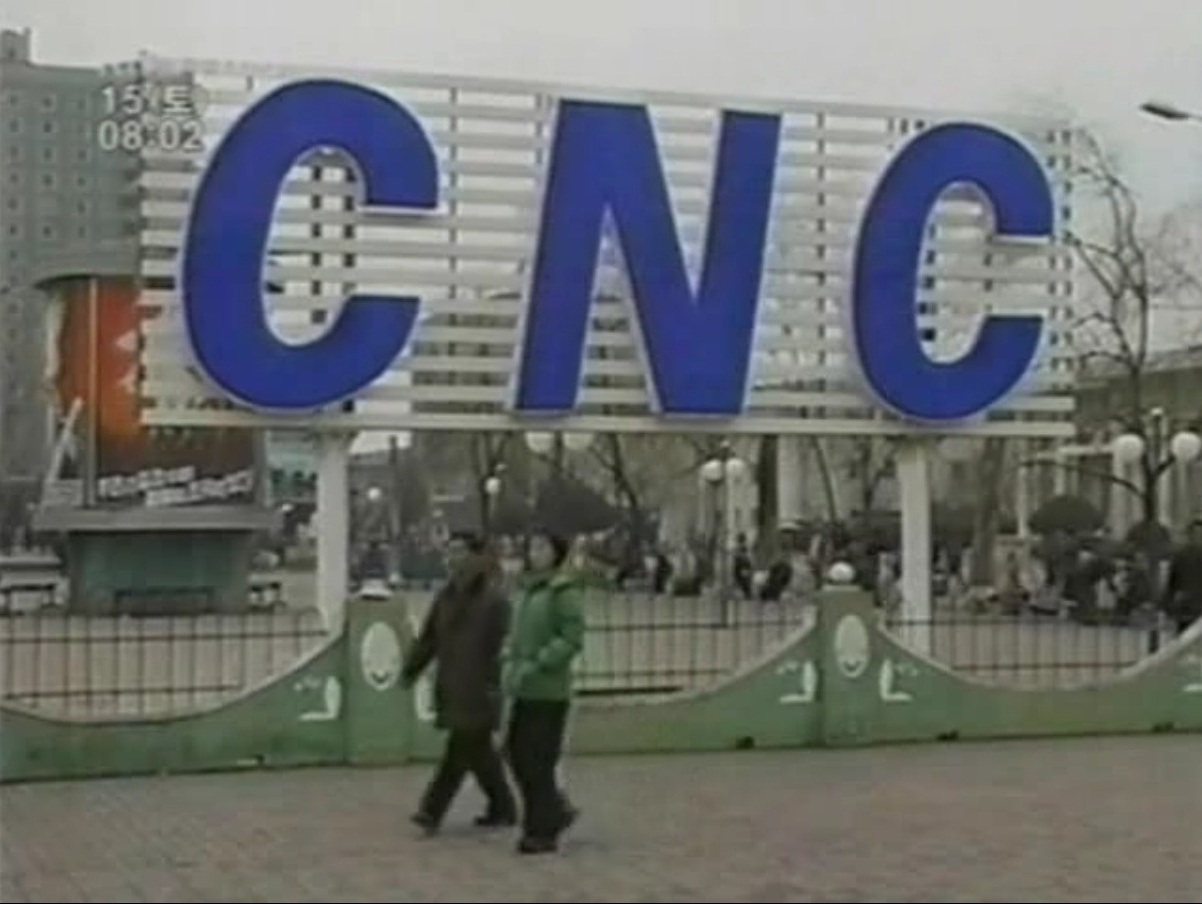
CNC – Juche’s industry power

June 30th, 2010

For those of you who have recently visited the DPRK or who spend too much time perusing Elufa.net or reading KCNA, you are undoubtedly aware of the DPRK’s recent emphasis on something called “CNC”.  I had no idea what CNC was, so I began collecting as much information as I could find on the net and I have posted it below.

Here is the Wikipedia page for CNC.  For those of you in China, here is what it says:

Numerical control (NC) refers to the automation of machine tools that are operated by abstractly programmed commands encoded on a storage medium, as opposed to manually controlled via handwheels or levers, or mechanically automated via cams alone. The first NC machines were built in the 1940s and ’50s, based on existing tools that were modified with motors that moved the controls to follow points fed into the system on paper tape. These early servomechanisms were rapidly augmented with analog and digital computers, creating the modern computed numerically controlled (CNC) machine tools that have revolutionized the design process.

In modern CNC systems, end-to-end component design is highly automated using CAD/CAM programs. The programs produce a computer file that is interpreted to extract the commands needed to operate a particular machine via a post processor, and then loaded into the CNC machines for production. Since any particular component might require the use of a number of different tools—drills, saws, etc.—modern machines often combine multiple tools into a single “cell”. In other cases, a number of different machines are used with an external controller and human or robotic operators that move the component from machine to machine. In either case, the complex series of steps needed to produce any part is highly automated and produces a part that closely matches the original CAD design.

That description is not nearly as helpful as this video on CNC: Click here (Might not work for readers in China).

The Asia Times ran a story which included a short history of CNC in the DPRK:

The name of the game is CNC – Computer Numerical Control – machine tools that have revolutionized the design process and said to be developed in the DPRK and already exported, for example, to China. Top exponents are the Korea Ryonha Machine Tool Corporation and the Taean Heavy Machine Complex. CNC billboards are all over Pyongyang. Inevitably CNC has its own dedicated patriotic song (no music video yet). Here are the lyrics, as translated by Andray Abrahamian, a doctoral candidate at the University of Ulsan in South Korea:

If you set your heart on anything
We follow the program making the Songun era machine technology’s pride
Our style CNC technology

(chorus)

CNC – Juche industry’s power!
CNC – an example of self-strength and reliance!
Following the General’s leading path
Breakthrough the cutting edge

Arirang! Arirang! The people’s pride is high
Let’s build a science-technology great power
Happiness rolls over us like a wave

So the narrative of building a “socialist paradise” is now being supplanted by the narrative of developing and producing state-of-the-art technology to, as the Pyongyang Times indelibly put it, “improve the people’s living standard on the word level”. This is how the DPRK is mobilizing its people to “open the gate to a thriving nation in 2012”. South Korea, watch out.

By way of luck, I managed to obtain a copy of the DPRK’s CNC song. You can download the MP3 by right clicking here.

UPDATE: A reader did find this DPRK karaoke version of the CNC song complete with lyrics (in Korean).  Watch it here.

UPDATE 2: A reader also sends in this acoustic version of the CNC song (YouTube).

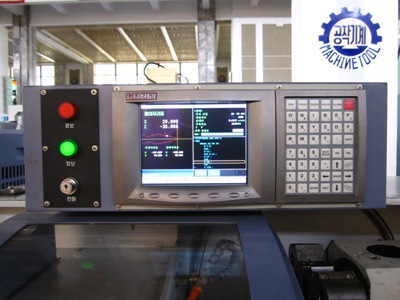
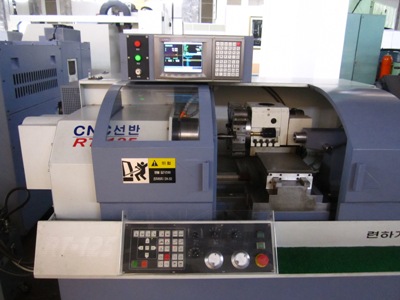
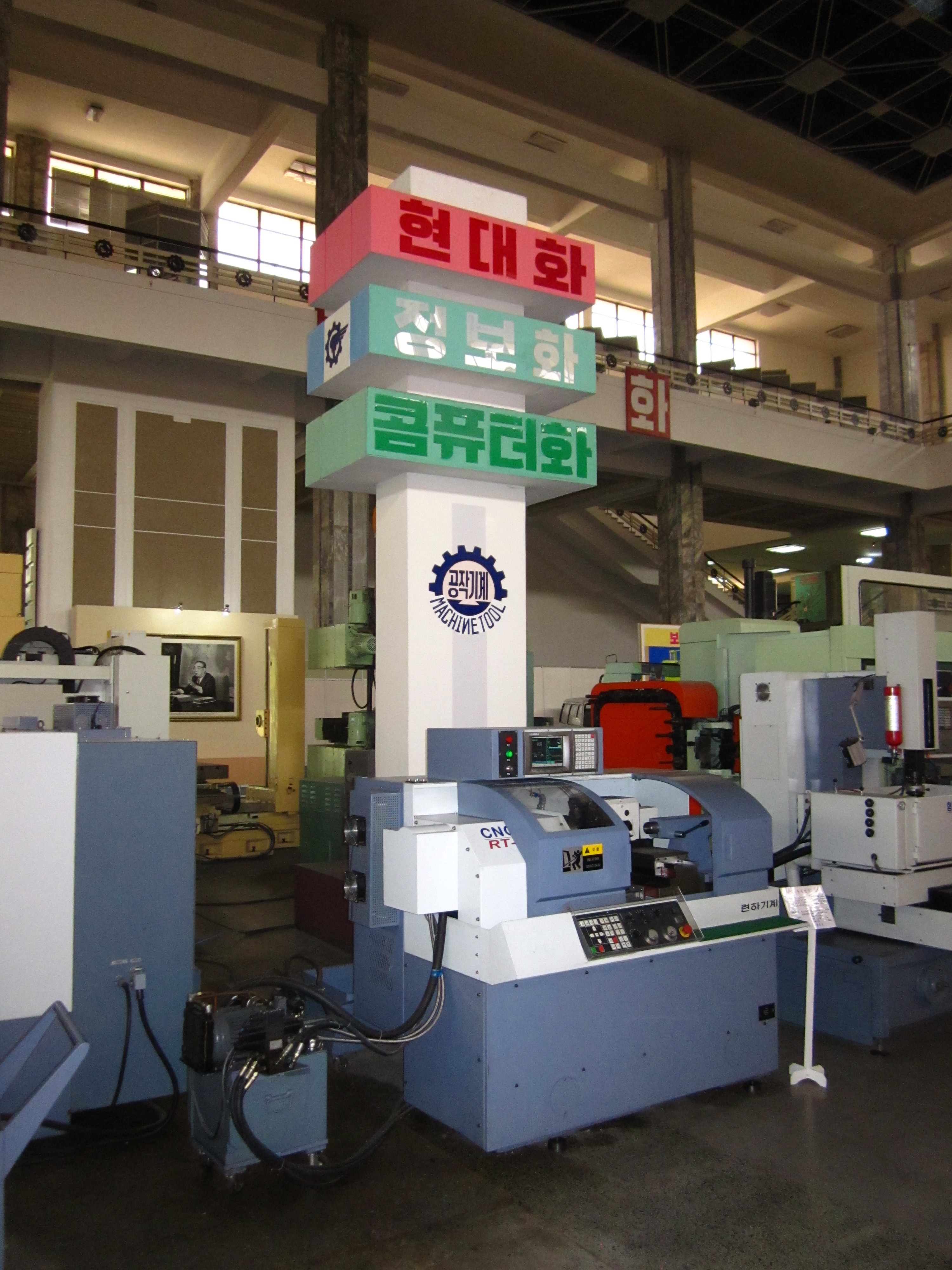
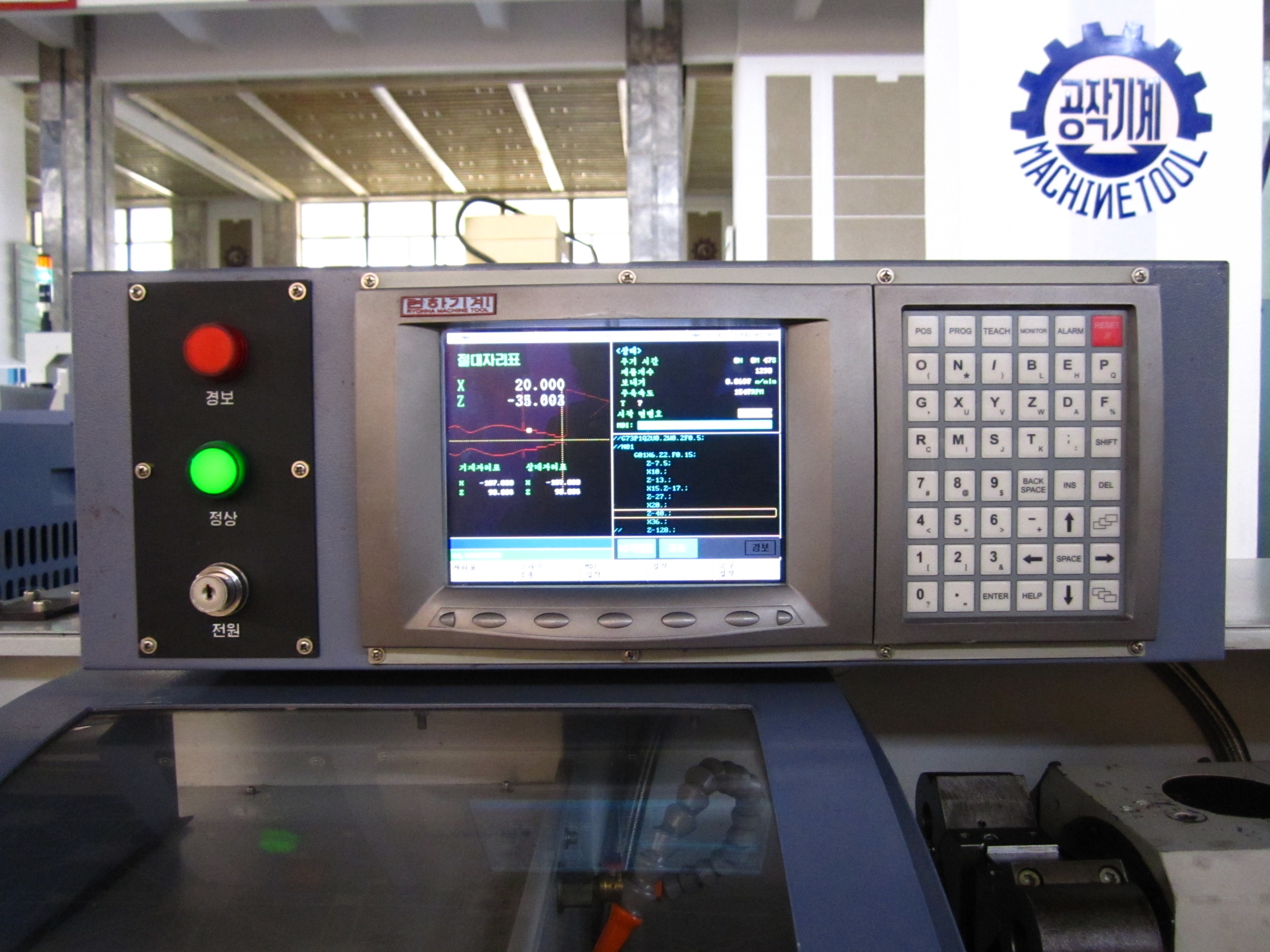
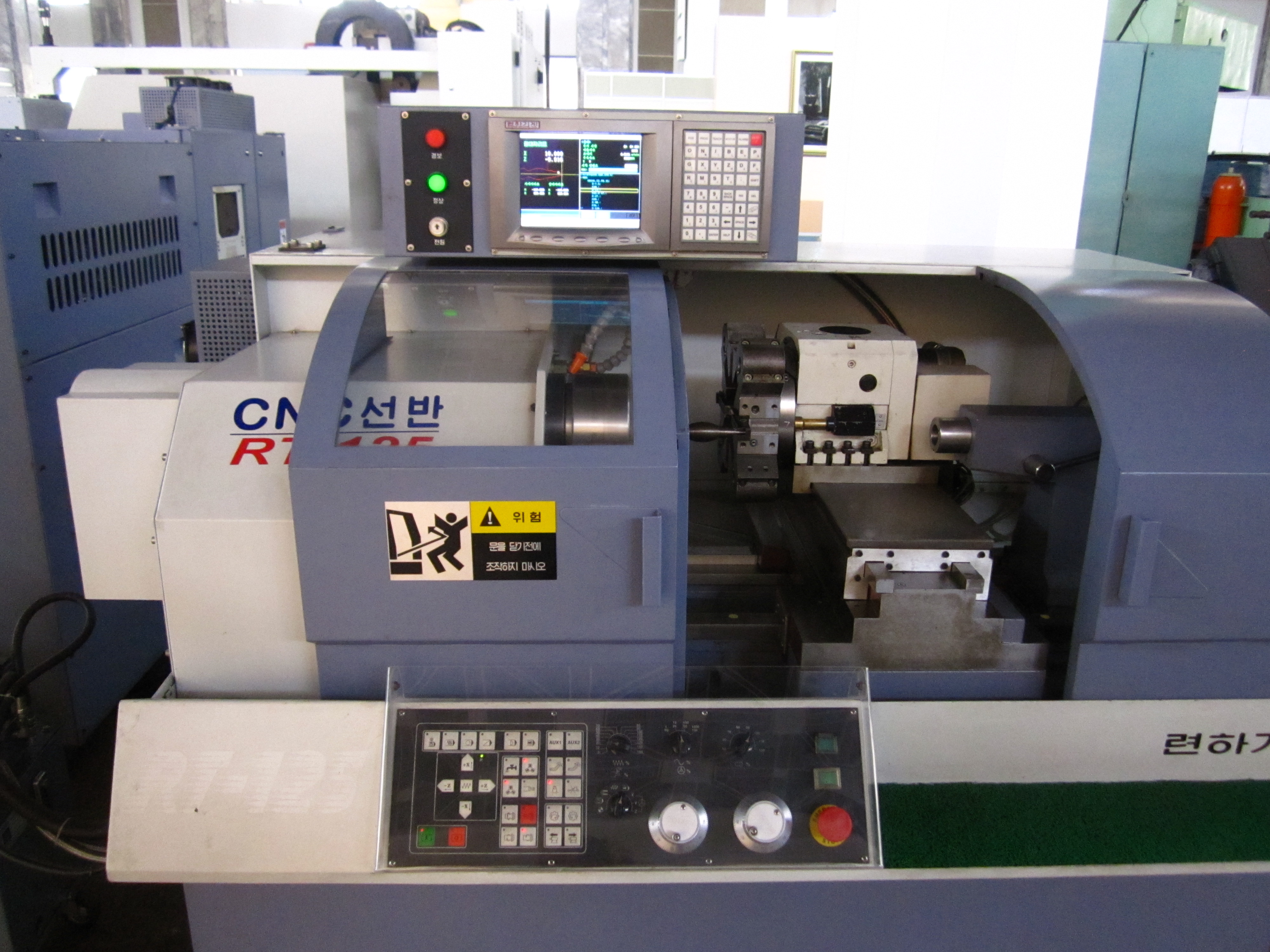
If you are itching to know what the DPRK’s CNC machines look like, here is one display at the Three Revolutions Museum in Pyongyang:
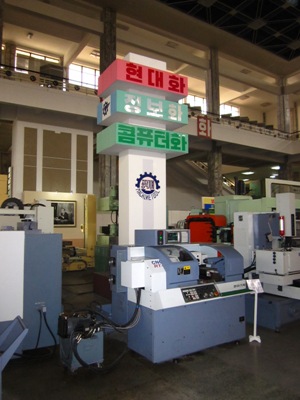
cnc1-thumb.jpg cnc2-thumb.jpg cnc3-thumb.jpg

Click images for larger versions

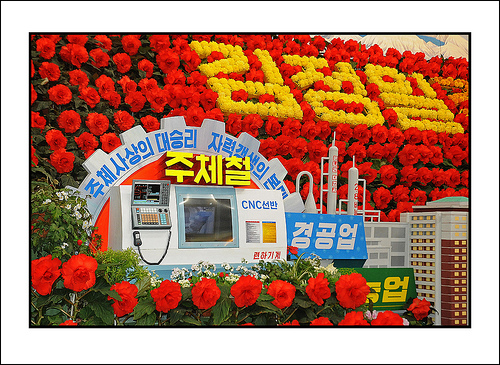
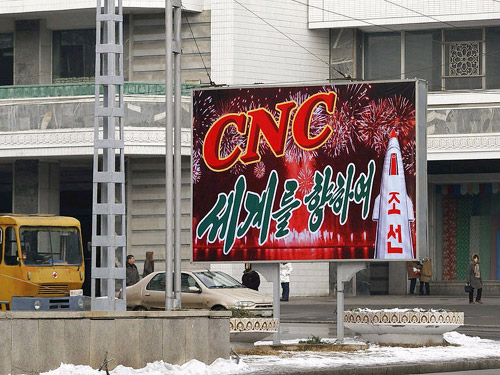
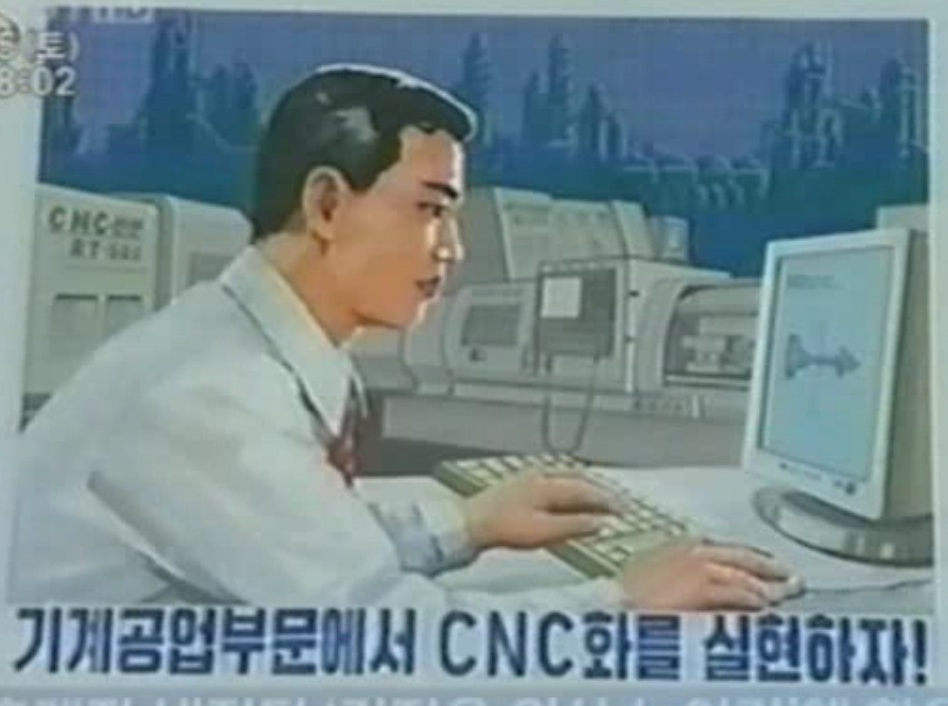
And here is some CNC propaganda that has appeared around Pyongyang:
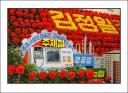
cnc-prop-1.jpg cnc-prop-2.jpg cnc-prop-3.jpg cnc-prop-4.jpg

Click images for larger versions

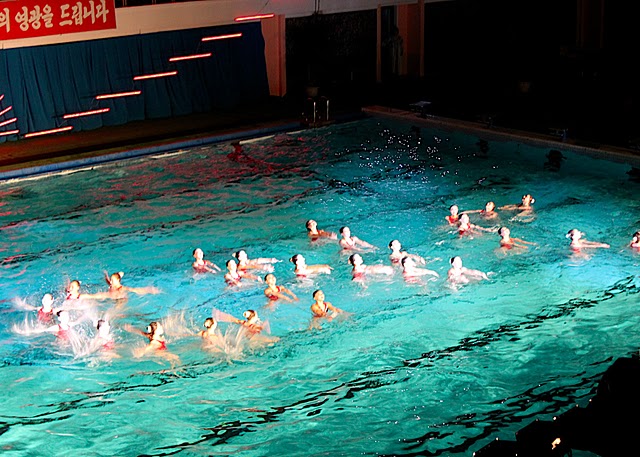
UPDATE: here is an additional photo taken by an anonymous tourist:
 

cnc-pool.JPG

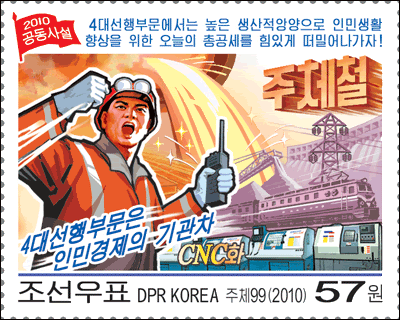
UPDATE: Here are some CNC postage stamps:
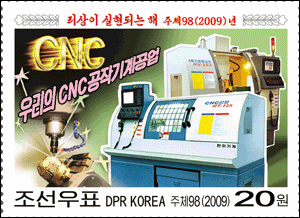
 

dprk-cnc-stamp.gif

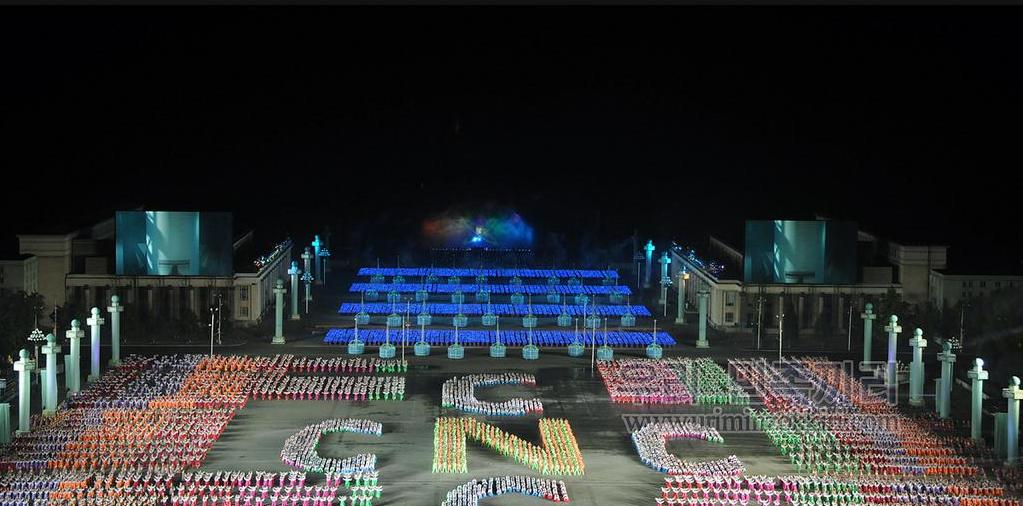
UPDATE: And CNC made part of the 2010 Mass Games (You Tube at the 1:25 mark). See a photo here.

KCNA has published plenty of news stories about CNC.  You can see them here courtesy of the Stalin Search Engine. CNC was first first mentioned on January 15, 2002 (KCNA) .  One phrase that is frequently mentioned is that thanks to innovations like CNC the DPRK is “Pushing back the frontiers of science”.  Indeed North Korean economic policy seems hell-bent to do just that.  Hopefully we will soon see them change their policies to “push back the frontiers of ignorance”.

CNC machines are produced by the Ryonha Machine [Tool] Factory (KCNA) and they have been widely promoted in the official media (here, here, here, here, and here for example).  It appears also that the Ryonha Machine Tool Factory has partnered up (with someone) to form a JV company which focuses on international trade, the Ryonha Machinery Joint Venture Corporation. Here is a PDF flyer of their products taken from the KFA web page, and some of the items they are selling can be seen here and here.

They Ryonha Machine Joint Venture Company, however, seems to have a history that might scare away many potential customers.  According to the US Treasury Department:

The U.S. Department of the Treasury today designated eight North Korean entities pursuant to Executive Order 13382, an authority aimed at freezing the assets of proliferators of weapons of mass destruction (WMD) and their delivery vehicles.  Today’s action prohibits all transactions between the designated entities and any U.S. person and freezes any assets the entities may have under U.S. jurisdiction.

“Proliferators of WMD often rely on front companies to mask their illicit activities and cover their tracks,” said Stuart Levey, the Treasury’s Under Secretary for Terrorism and Financial Intelligence (TFI).  “Today’s action turns a spotlight on eight firms involved in WMD proliferation out of North Korea.  We will continue to expose and designate these dangerous actors.”

Today’s action builds on President Bush’s issuance of E.O. 13382 on June 29, 2005.  The Order carried with it an annex that designated eight entities – operating in North Korea, Iran, and Syria – for their support of WMD proliferation.  The President at that time also authorized the Secretaries of Treasury and State to designate additional entities and individuals proliferating WMD and the missiles that carry them.

Korea Mining Development Corporation (KOMID), which was designated in the annex of E.O. 13382, is the parent company of two of the Pyongyang-based entities designated today, Hesong Trading Corporation and Tosong Technology Trading Corporation.  These direct associations meet the criteria for designation because the entities are owned or controlled by, or act or purport to act for or on behalf of KOMID.

Korea Ryonbong General Corporation, also named in the annex, is the parent company of the remaining six Pyongyang-based entities designated today.  These entities include Korea Complex Equipment Import Corporation, Korea International Chemical Joint Venture Company, Korea Kwangsong Trading Corporation, Korea Pugang Trading Corporation, Korea Ryongwang Trading Corporation, and Korea Ryonha Machinery Joint Venture Corporation.

As subsidiaries of KOMID and Korea Ryonbong General Corporation, many of these entities have engaged in proliferation-related transactions.

I have been unable to locate the Ryonha Machine Tool Factory on Google Earth. If anyone has any pointers, please let me know.

Here is a list of factories the DPRK claims to be using CNC technology:

Amnokgang Daily Necessities Factory (KCNA)
Amnokgang Gauge and Instrument General Factory (KCNA)
Cholima Steel Complex (KCNA, Naenara)
Chonma Electrical Machine Plant (KCNA)
Feb 8 Vinalon Complex (KCNA)
Hamhung Wood Processing (KCNA)
Huichon Machine Tool Plant (KCNA)
Kangdong Weak Current Apparatus Factory (KCNA)
Kanggye General Tractor Plant (KCNA) (Underground)
Kanggye Knitted Goods Factory (KCNA)
Kanggye Wine Factory (KCNA)
KimChaek Iron and Steel Complex (KCNA)
Kusong Machine Tool Factory (KCNA)
Kwanmobong Machine Building Plant (KCNA)
October 10 Factory (KCNA)
Pukjung Machine Complex (KCNA)
Pyongyang Cornstarch Factory (KCNA)
Rakwon Machine Complex (KCNA)
Ryongsong Machine Complex (KCNA)
Sinuiju Spinning Machine Factory (KCNA)
Suphung Bearing Factory (KCNA)
Sungri Motor complex (KCNA)
Taean Heavy Machine Complex (KCNA)
Taedonggang Brewery (KCNA)
Tahungsan Machine Plant (KCNA)
Unsan Machine Tool Factory (KCNA)

I know the locations of many of these factories but not all.  If anyone has any information on their coordinates, please let me know.

Share

Kim Jong Il, the reformer?

June 28th, 2010

Bradley Martin, author of Under the Loving Care of the Fatherly Leader, writes in the Global Post:

Now that food shortages reportedly have forced North Korea to reverse its crackdown on capitalist-style markets, more systematic reforms for its collapsed economy may not be far behind.

The markets policy reversal came May 26 in directives issued by the cabinet and the ruling Workers’ Party to subordinate organizations, according to a report by the Seoul-based newsletter North Korea Today, which gets its information from officials and ordinary citizens inside the North. “The government cannot take any immediate measures” to relieve a food shortage that is “worse than expected,” the newsletter quoted one of the directives as saying in explanation for the policy change.

The same authorities only late last year decreed a sudden currency revaluation that crippled the “anti-socialist” markets, where stallholders had been trading for individual profit, by confiscating the traders’ wealth. The new decrees bless and deregulate what’s left of the markets, which have shrunk and in some cases closed completely in the interim, in the hope that market trading will keep people from starving. And the directives instruct managers of state-run enterprises to pursue lucrative deals — especially in foreign trade — that could help feed their employees.

This could all turn out to be the big event that finally pushes the very reluctant leadership into a multi-year campaign of serious reforms of the sort that began decades ago in Vietnam and China, according to Felix Abt, a Swiss involved in North Korean joint ventures in pharmaceutical manufacturing and computer software.

“Given an industrial stock and an infrastructure beyond repair, and the impossible task of maintaining a huge army, economic reforms appear unavoidable in the very near future,” Abt, a former president of Pyongyang’s European Business Association, wrote in an email exchange.

“It looks intriguing and it reminds me of Vietnam’s history of reforms,” said Abt, who did business for years in Vietnam before going to Pyongyang and recently has moved back to Vietnam while maintaining his involvement in North Korea.

“The Vietnamese economic situation looked dire at the beginning of the 1980s,” he explained. “Nguyen Van Linh, party secretary in Ho Chi Minh City, favored moderate economic reforms. He tried too early, lost his job and left the political bureau in 1982.

“Le Duan, secretary general of the Communist Party, was categorically against any economic reforms. He died in 1986, the year of the five-year party congress which brought Nguyen Van Linh back and elected him as his successor. The new party secretary general immediately launched the Doi Moi policy — ‘reforms.’”

Abt ventured the lesson that triggering reforms “takes something big like the death of a leading politician” in Vietnam — or, in North Korea, a “ruinous” currency revaluation.

Not every foreigner who has had firsthand economic dealings with North Korea is convinced the recent events constitute that trigger. Some worry that U.S.-led sanctions could nip any flowering of capitalism in the bud.

“The problem is still U.S. Treasury’s attitude,” said one such foreigner, who asked not to be identified further. Treasury Department officials began working several years ago to take North Korea “out of the international banking system,” discouraging trade, he noted.

Some U.S.-sponsored sanctions subsequently were eased in an effort to persuade Kim Jong Il to negotiate away his nuclear weapons capability, but after those talks went nowhere — and especially after North Korea allegedly torpedoed a South Korean warship earlier this year — enthusiasm for compromise cooled. Recent reports say Washington is moving toward aggressively strangling cash flow into the country.

There is also the argument that Kim believes he cannot afford to reform the economy because it would let in information and influences that would undermine his family’s rule by letting his isolated subjects learn that the rival South Korean system works much better.

According to Abt, one answer to both concerns could be China, which “will provide all the support necessary to the DPRK party and government to enable economic reforms without regime change.” He used the abbreviation of Democratic People’s Republic of Korea, the country’s official name. “The DPRK may expect support from other quarters, for example, the European Union, too,” he said.

“I think the dilemma of the leadership — economic upsurge versus the inflow of ‘subversive’ system-destabilizing information and ideas, particularly regarding the South — can be overcome with the necessary Chinese support,” Abt said. “Though the division of Korea can only be compared with that of Germany before 1990, China’s division — capitalist Hong Kong, capitalist Taiwan — was a sort of challenge to Deng Xiaoping and successors, too, but they learnt to manage that quite well.”

Read the full the story here:
Analysis: Kim Jong Il, the reformer?
Global Post
Bradley Martin
6/24/2010

Share