Archive for the ‘Political economy’ Category

DPRK premier apologizes over currency revamp

Thursday, February 11th, 2010

According to the Chosun Ilbo:

A North Korean source has shed more light on an apology by Premier Kim Yong-il on Feb. 5 which apparently acknowledged that the currency reform in late December went disastrously wrong.

The source said Kim, not to be confused with leader Kim Jong-il, read out an hour-long statement before village chiefs and other party officials at the People’s Palace of Culture in Pyongyang on Monday morning. “I sincerely apologize for having caused great pain to the people by recklessly enforcing the latest currency reform without making sufficient preparations or considering the circumstances,” the source quoted him as saying.

Kim also pledged to rectify the mistakes, saying he would do “my best” to stabilize people’s financial circumstances. The revaluation of the won, instead of curbing inflation, led to skyrocketing prices of daily necessities.

He indicated that the regime will allow people to use foreign currency, which has been banned since the reform, and permit open-air markets to return to normal after a crackdown that seemed aimed at strangling a nascent market economy.

But Kim at the same time stressed the need to stick to state-set prices, adding that the government will strictly crack down on the hoarding of goods.

Some experts say the situation in the North has returned to almost the state before the currency reform. A South Korean official said North Korean authorities loosened their control of the markets since there has been unprecedented resistance from ordinary people. This seems to have forced Kim’s hand.

After Kim’s apology, most money changers and illegal traders who had been arrested were reportedly freed. The number of people leaving for China has grown noticeably as offices of state agencies or state-run corporations involved in earning dollars, which suspended business due to the ban on use of foreign currency, have resumed business.

The apology apparently quenched a lot of the simmering public anger.

“Premier Kim Yong-il’s direct apology to village chiefs, who are representatives of the people of each region, is tantamount to an apology to the people themselves. It’s a big event in the history of North Korea,” a former senior North Korean official who defected to the South said. “Authorities have never apologized to the people for wrong policies before.”

He believes the apology came “because discontent with the currency reform had spread widely even among core supporters of the regime,” he added.

Residents in Hwanghae Province are in some cases said to have beaten security officers who were cracking down on the use of dollars.

Since the climbdown, there have reportedly been calls to return the money the authorities confiscated. The won was revalued at a rate of 100:1, but the new won immediately plummeted in value, and those who saw their savings disappear into thin air have been demanding compensation.

The source said the apology may encourage North Koreans to become more assertive in the future.

The AP (Via Washington Post) adds:

South Korea’s National Intelligence Service and the Unification Ministry said they couldn’t confirm the Chosun Ilbo report. But Unification Ministry spokeswoman Lee Jong-joo said it would be “very rare” for a top North Korean official to issue a public apology.

Kim is believed to be the North’s No. 3 man in the country’s power hierarchy after autocratic leader Kim Jong Il and Kim Yong Nam, president of the Presidium of the Supreme People’s Assembly, according to South Korean media reports.

Last week, South Korean media reported that leader Kim Jong Il sacked a senior communist party official who spearheaded the currency reform, following arguments within the country’s elite over who should take responsibility for the fiasco.

Wow.

UPDATE: Good Friends reports that DPRK authorities are repealing market regulations.  According to the AFP:

Communist North Korea has allowed private markets to reopen nationwide after a bungled currency revaluation worsened food shortages and fuelled anger at the regime, a Seoul welfare group said Thursday.

“All the markets across the country should be reopened — without exceptions — as before,” Good Friends said in a newsletter, citing what it said was a special order from the central committee of the ruling Workers’ Party.

It said security organisations across the nation were also ordered to launch “absolutely no crackdowns on trading in food” at the markets.

The official policy turnaround came last week, “based on assessments that the currency reform has caused enormous pain to people by paralysing distribution networks”, group director Lee Seung-Yong told AFP.

“I believe North Korea will not clamp down on market activities for a considerable period, or at least until its state distribution system is back to normal.”

The South’s unification ministry, which handles cross-border relations, could not confirm the welfare group’s report.

“We’ve heard the North gradually easing curbs on the markets but it is difficult to verify the full-scale reopening,” said spokeswoman Lee Jong-Joo.

Good Friends said this week that about 2,000 people had starved to death across the nation this winter.

Read the full article here:
N.Korea eases curbs on markets nationwide: group
AFP
Jun Kwanwoo
2/18/2010

Share

North Korea’s regime stumbles

Wednesday, February 10th, 2010

The Economist
2/10/2010

However loathsome his neighbours find Kim Jong Il, the nuclear-armed North Korean dictator, there are few who do not also admit that beneath the big hair lurks a tactical genius with a flair for survival. At home, North Koreans are smothered by his ruthless personality cult. With the outside world, he is an adept blackmailer: act mad enough to be dangerous; then be conciliatory in exchange for cash.

Recently, however, on both counts he has made tactical mistakes. None of these are serious enough to endanger his regime, diplomats say. But they are encouraging to those who believe they can eventually push North Korea back to talks about dismantling its nuclear arsenal. And they reaffirm the benefits of what the Americans call “strategic patience”: waiting until North Korea is desperate enough to offer concessions.

Even the regime appears, in its oddball way, to have acknowledged the most recent blunder. News reports this month suggest that North Korea has reversed some elements of a crackdown on private enterprise that it unleashed with a cack-handed redenomination of the won on November 30th.

In the interim, the currency collapsed, the price of rice surged by as much as 50 times, and much of traders’ working capital for buying and selling goods was wiped out. Amid a seizing up of food distribution, there were some rare grumbles of protest.

But since early February, regulations on trading in the jangmadang, or markets, across North Korea appear to have been lifted, according to news reports. Official prices (which are not necessarily what are paid) have been posted. A kilo of rice costs 240 won ($1.80) (a bit less than a pair of socks), a toothbrush is 25 won.

Meanwhile, the Dear Leader has made what some observers believe to be an unprecedented apology to his people for feeding them “broken rice” and not providing enough white rice, bread and noodles. He was, he said, “heartbroken”, and implicitly acknowledged he had violated an oath to his godlike father, Kim Il Sung, to feed the people rice and meat soup.

Adding to the poignancy, experts say the bungled reforms were done in the name of Kim Jong Un, the dictator’s third son and potential heir. The young man’s involvement may have been part of a strategy to reassert Stalinist-style state control of the enfeebled economy ahead of 2012, the 100th anniversary of grandfather Kim’s birth.

People knowledgeable on North Korea are loth to believe that such a plan has been abandoned, not least because the small markets that have flourished since the famine of the 1990s represent such a challenge to the state’s authority. But they say the ineptitude must have been glaringly obvious, even in the hermetic state.

“The government has never said sorry to the people, especially on a topic as sensitive as rice,” says Andrei Lankov of Kookmin University in Seoul, who has written a lot on North Korea and has described its leaders as brilliant Machiavellians. “Because of Kim Jong Il’s age and the age of those around him, it looks like he may be losing touch with reality.”

Mr Lankov believes there may have been a similar miscalculation in North Korea’s recent behaviour towards America, China, South Korea, Japan and Russia, the countries with whom in 2003 it started on-again, off-again denuclearisation negotiations, known as the six-party talks. Its firing of a long-range missile and explosion of a nuclear bomb in quick succession last year hardened the resolve of the five to strengthen United Nations sanctions against Pyongyang and maintain them until it gives ground on its nukes. However much Mr Kim has cajoled and coaxed in the months since, he has not yet managed to divide them.

What’s more, diplomats say he appears to be increasingly open to discussing a return to the six-party talks, something which last year he vowed “never” to do. China, which is closest to North Korea and chairs the six-party forum, sent Wang Jiarui, a senior Communist Party official, to meet Mr Kim this week and invite him to Beijing. Mr Kim made no public commitment regarding the six-party talks. But his nuclear negotiator returned with Mr Wang to the Chinese capital.

Lee Myung-bak, South Korea’s president, surprised his countrymen by saying that he, too, hoped to meet Mr Kim “within this year”. The timing was odd. His statement came at about the time North Korea was lobbing artillery shells threateningly into the Yellow Sea. But it revealed what officials say is a twin-track process in Seoul to engage North Korea: bilaterally and via the six-party framework. “My impression is that the North Koreans are moving in the direction of talks,” says Wi Sung-lac, South Korea’s special representative for peace on the peninsula.

Both North Korea and its six-party counterparts have set such tough conditions on coming together that it would be foolhardy to be optimistic. North Korea wants a lifting of the UN sanctions and a peace treaty with America to out a formal end to the 1950-53 Korean War before restarting talks. Washington has resisted both. An East Asian diplomat said the other five countries are demanding that North Korea take “concrete measures” towards denuclearisation as a pre-condition for talks and the lifting of sanctions. “We’re not giving any carrots.”

Underscoring the resolve, humanitarian assistance to North Korea has slowed to a trickle. South Korea sent only $37m of public aid north last year, compared with $209m in 2007. Officials say Mr Lee is adamant no money will go to North Korea to coax it into agreeing to a summit. Talks on cross-border tourism and factories, another means for Pyongyang to extort hard currency from the south, have made no progress.

Mr Kim still has some good cards up his sleeve. Tensions between China and America over Taiwan and Tibet provide a thread of disharmony that he can tug upon. And China has a strategic eye on North Korea’s ports and minerals, which may encourage it to be overly generous to the regime.

But the mere hint of economic and diplomatic fallibility in a regime that demands almost religious devotion from its subjects may be significant. It comes at a time when North Koreans, via smuggled DVDs and telephones, have a greater idea than ever before of how far their living conditions fall short of their neighbours’. That is a rare point of vulnerability for Mr Kim’s interlocutors to exploit.

Share

Head of Office 39 replaced

Thursday, February 4th, 2010

According to the Guardian:

It is the nerve centre of North Korea’s money-making operations, the department dedicated to raising hard currency for Kim Jong-il while his country teeters on the brink of collapse.

Room 39 is responsible for some legal ventures, such as the country’s limited exports of ginseng and other items. But according to defectors, most of its energy goes into drug-trafficking, sales of weapons and missile technology, and the production of counterfeit US dollar bills.

Today, it was reported the department’s head – Kim Jong-il’s personal finance manager – has been sacked, possibly in response to international action against the alleged illegal moneymaking. South Korea’s Yonhap news agency said Kim Dong-un was dismissed because he had been blacklisted by so many foreign governments, including the EU in December, leaving him unable to travel on behalf of Room 39’s legal companies. He has been replaced by his deputy, Jon Il-chun, Yonhap said, citing an unidentified source.

Housed in an unremarkable government compound in Pyongyang, Room 39 oversees 120 companies and mines, accounting for a quarter of all North Korean trade and employing 50,000 people, according to Lim Soo-ho, a research fellow at the Samsung Economic Research Institute. He said Kim’s dismissal may be part of attempts to get around international sanctions.

While its inner workings remain a mystery to all but its occupants and the family they serve, Room 39’s role in enabling the regime to survive even in times of widespread famine and international pressure, has come under greater scrutiny since the imposition last year of tough UN sanctions over its nuclear programme.

Some of the money generated by Room 39 is used to buy the loyalty of senior party officials, a role that may take on greater prominence as Kim Jong-il, who suffered a stroke in 2008, prepares to hand over power to his third son, Kim Jong-un. Analysts have estimated that illegal activities account for up to 40% of all North Korean trade and an even higher share of total cash earnings.

Additional information: 

1. More on the EU travel ban is here.

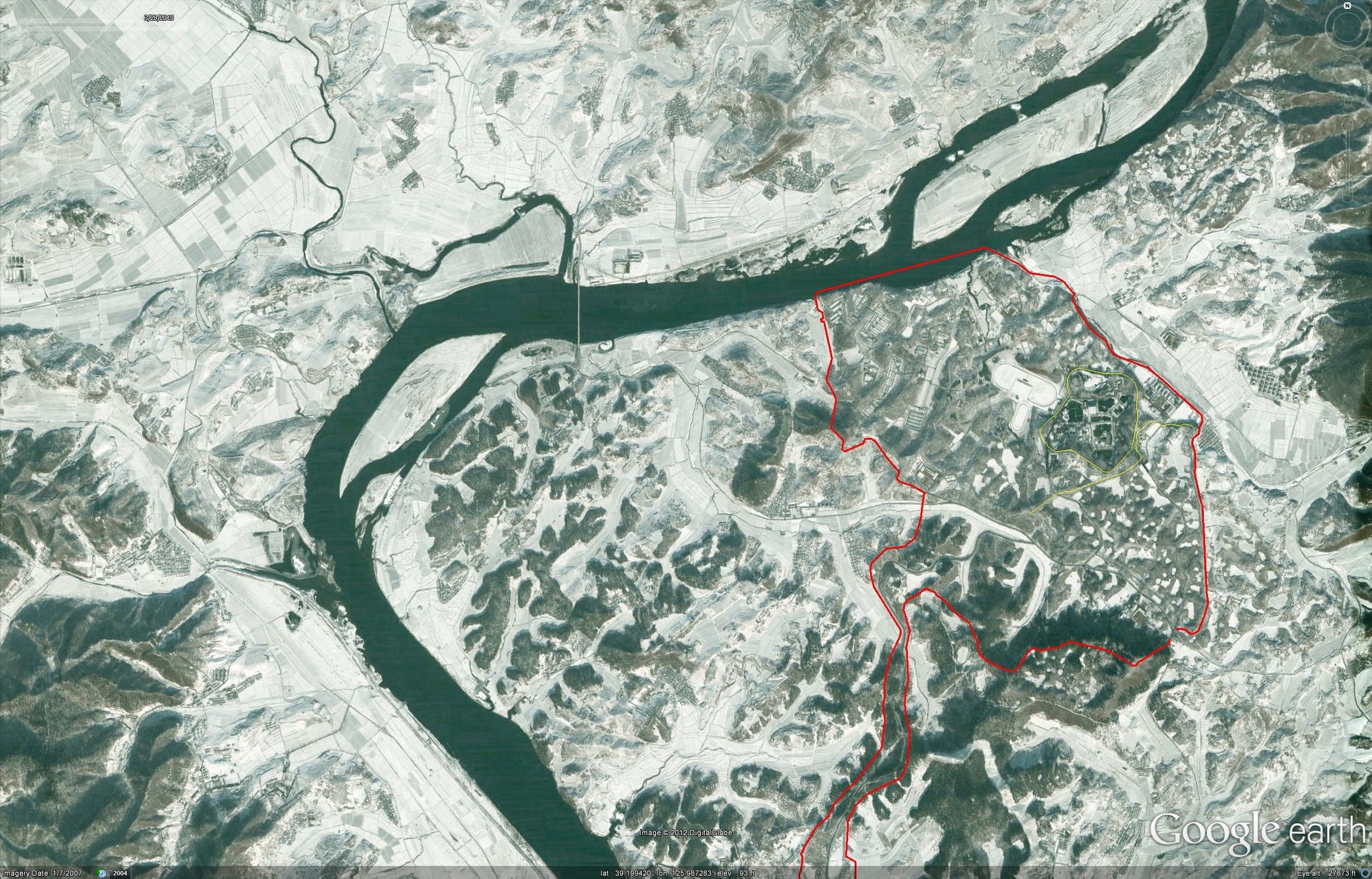
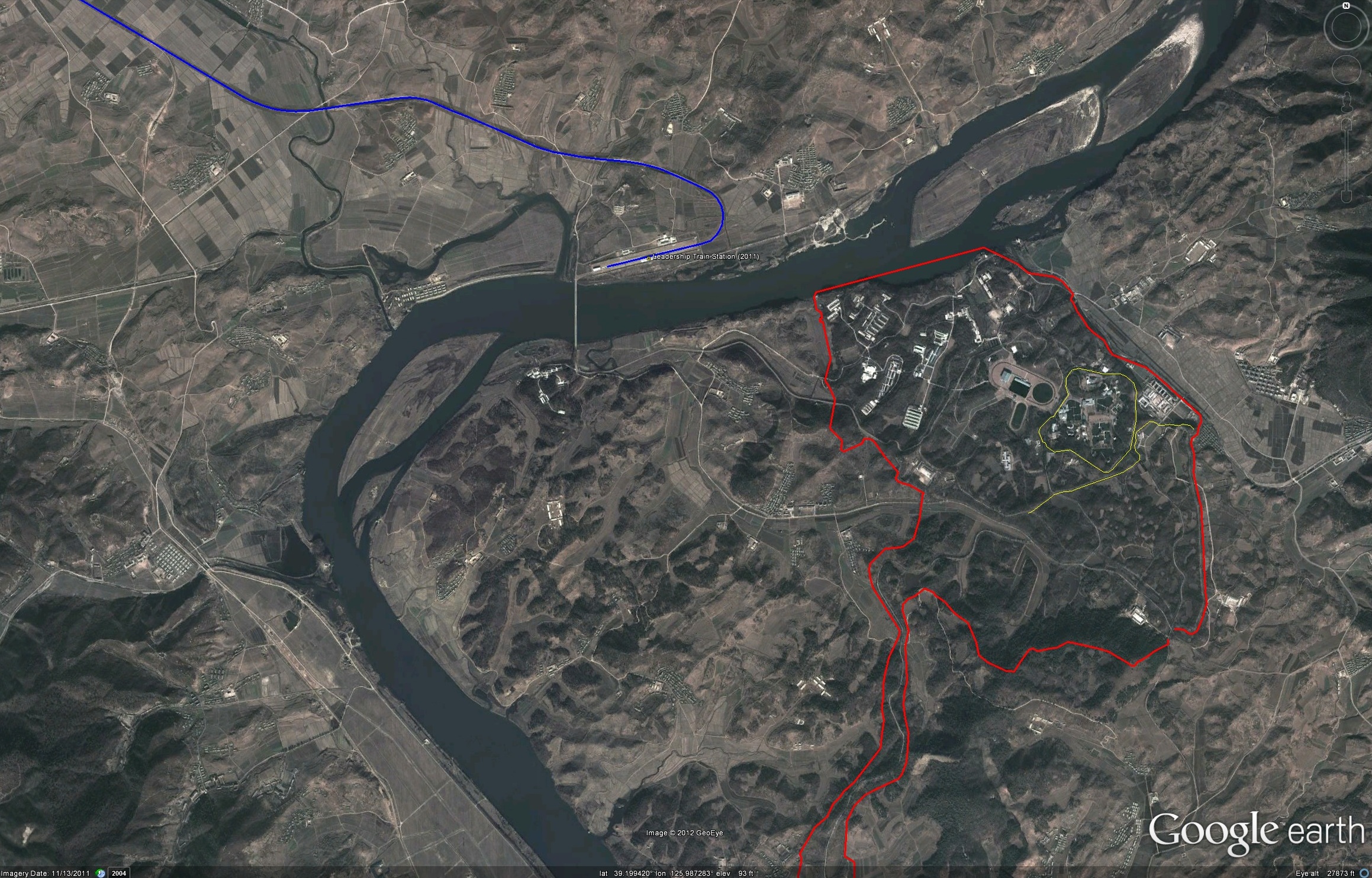
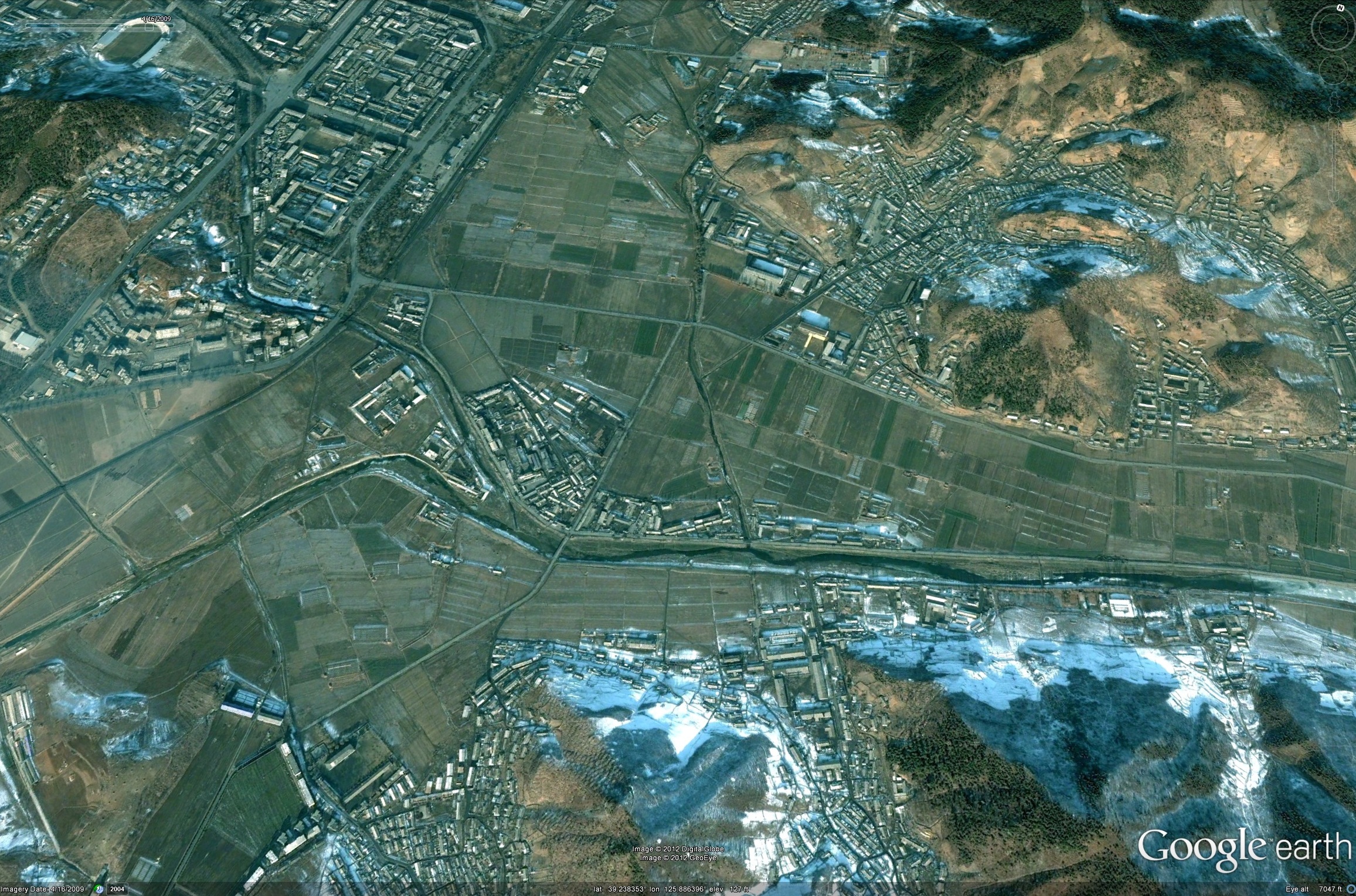
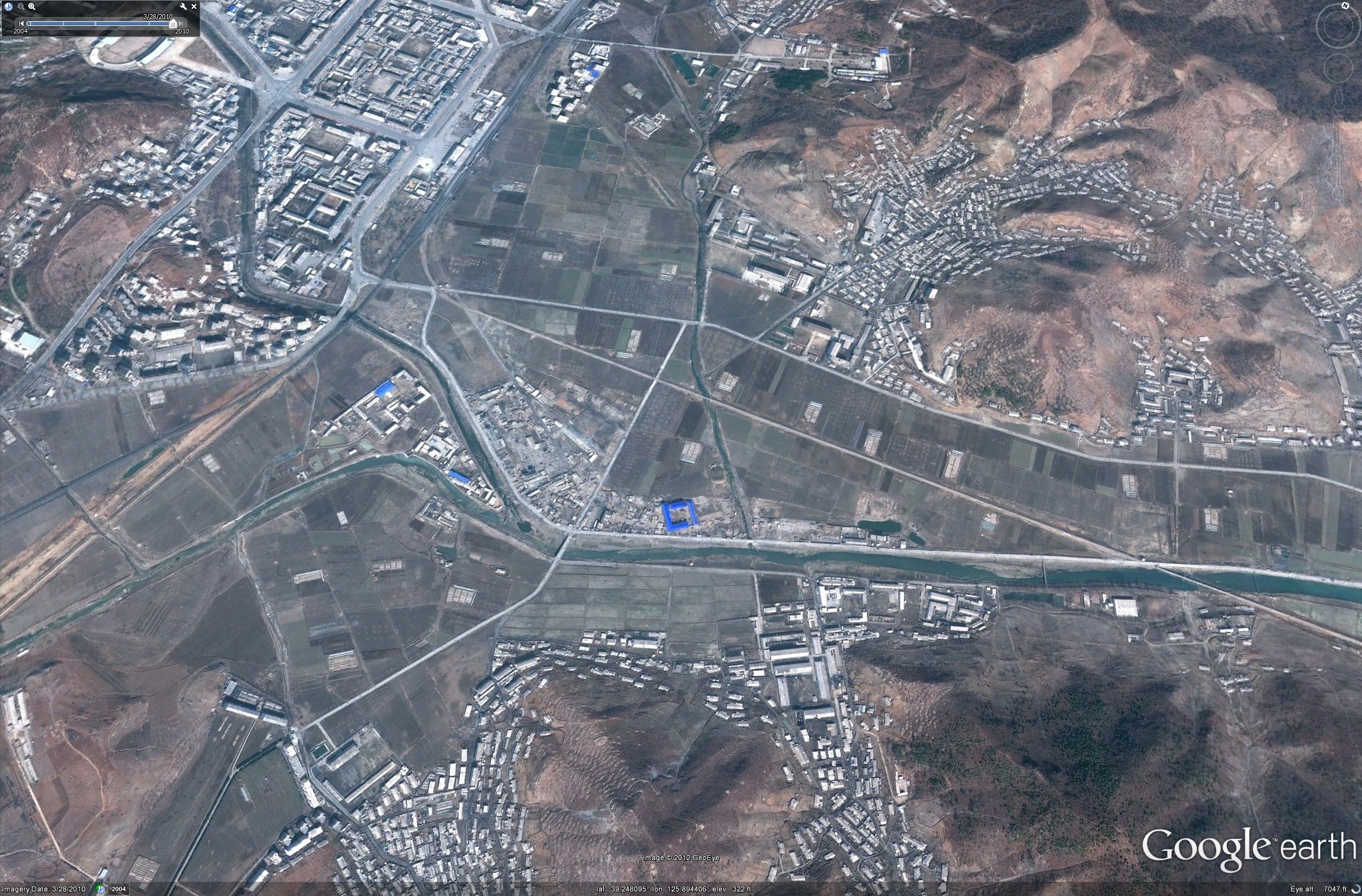
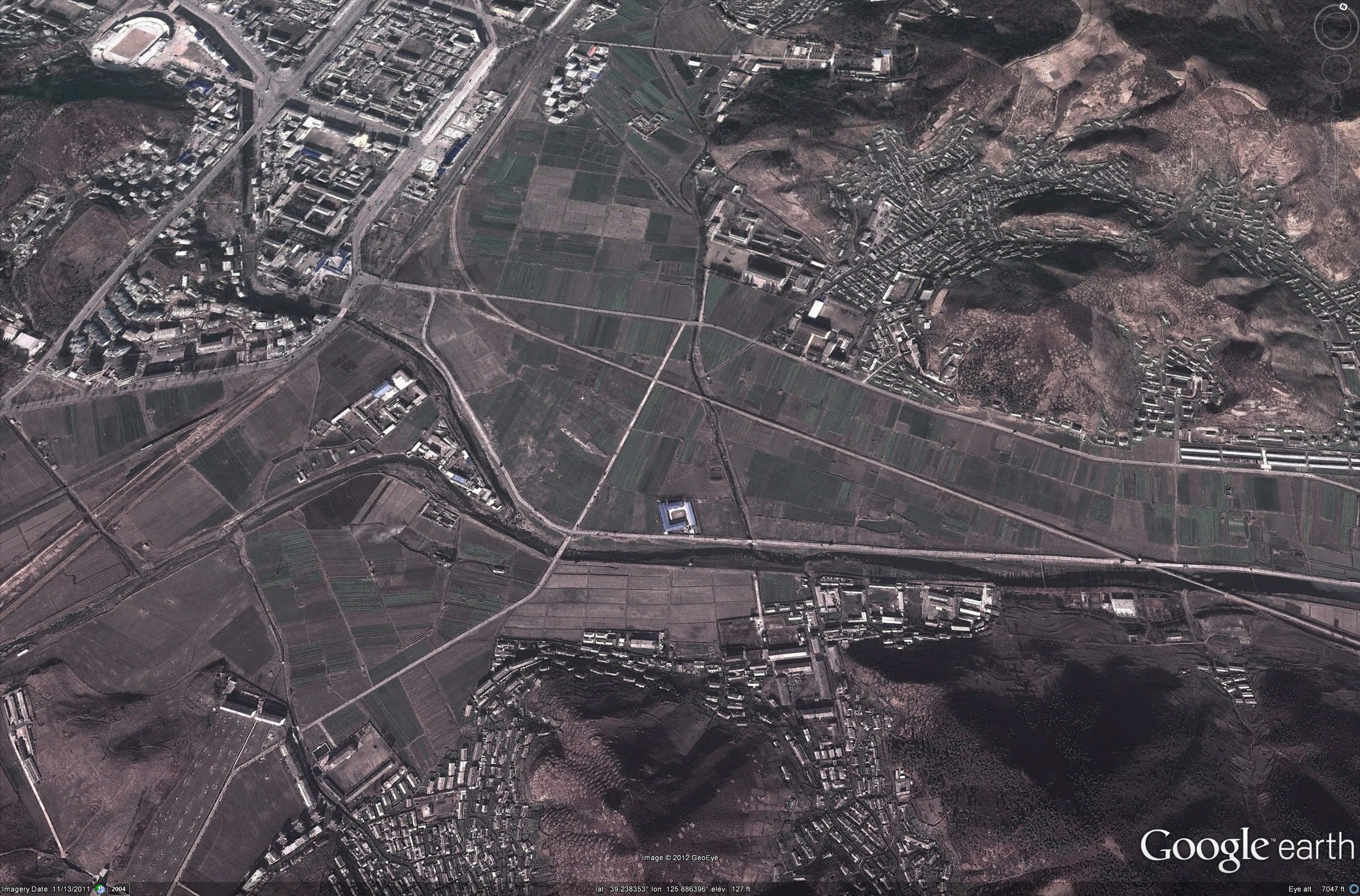
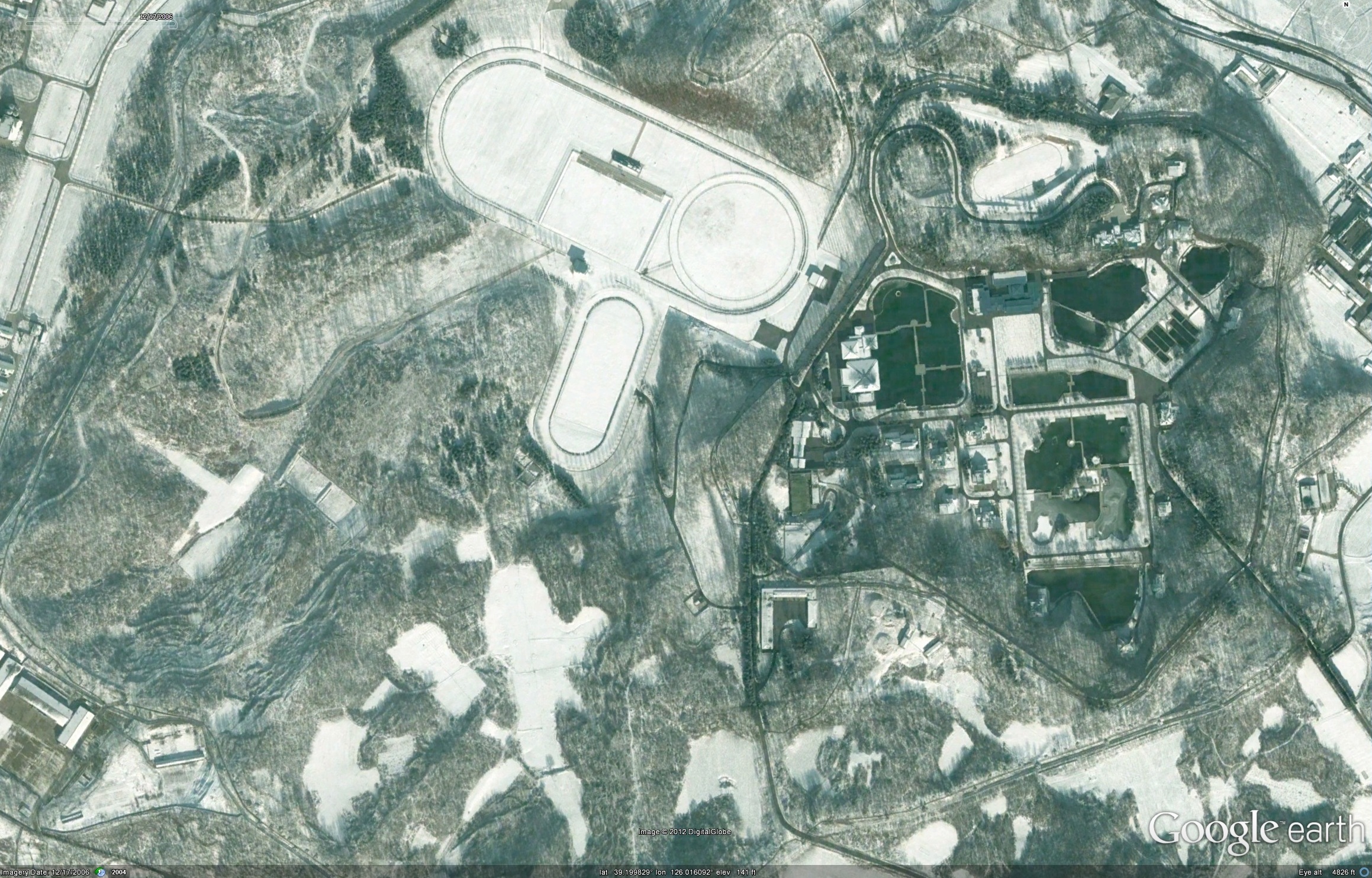
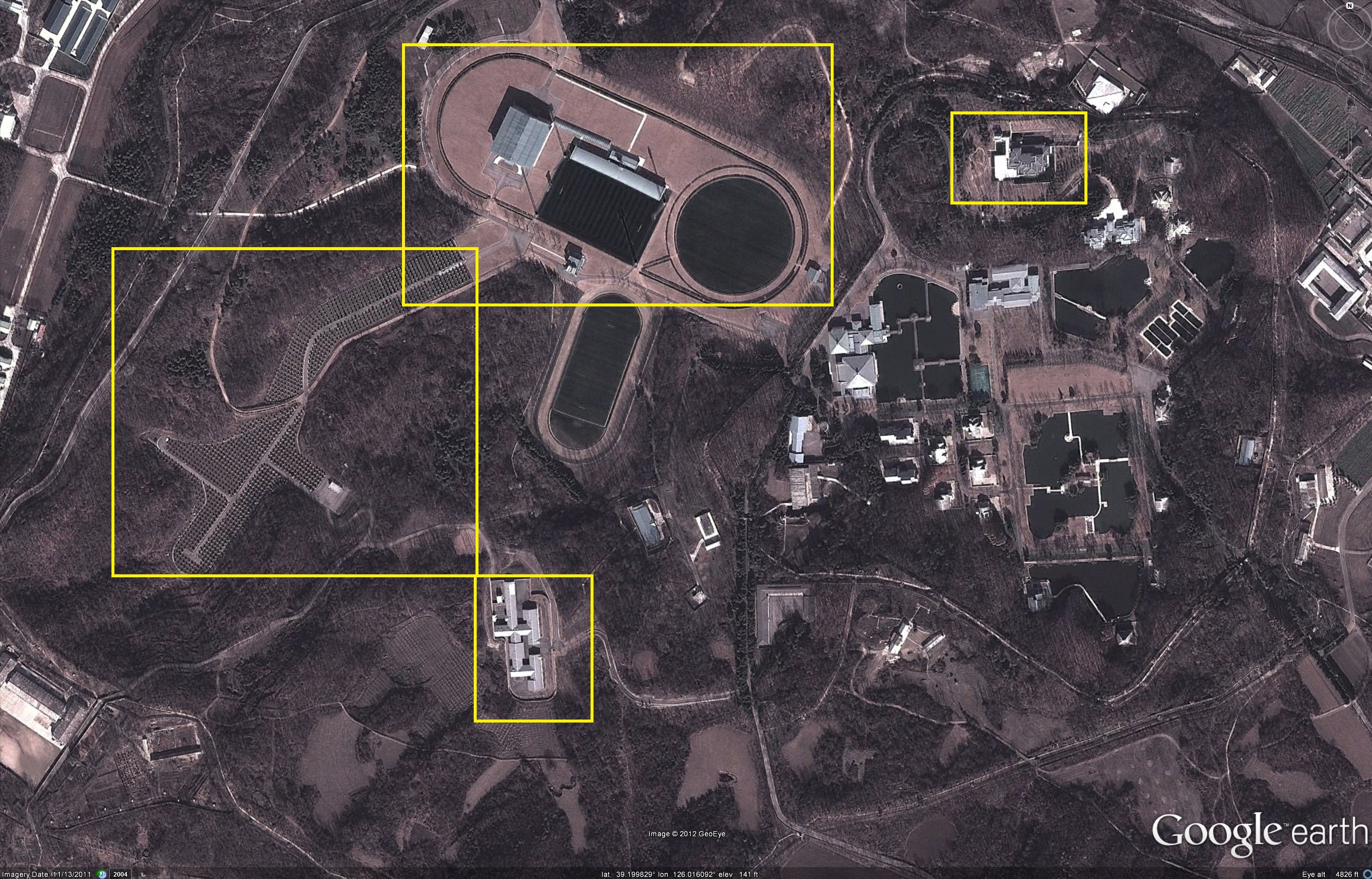
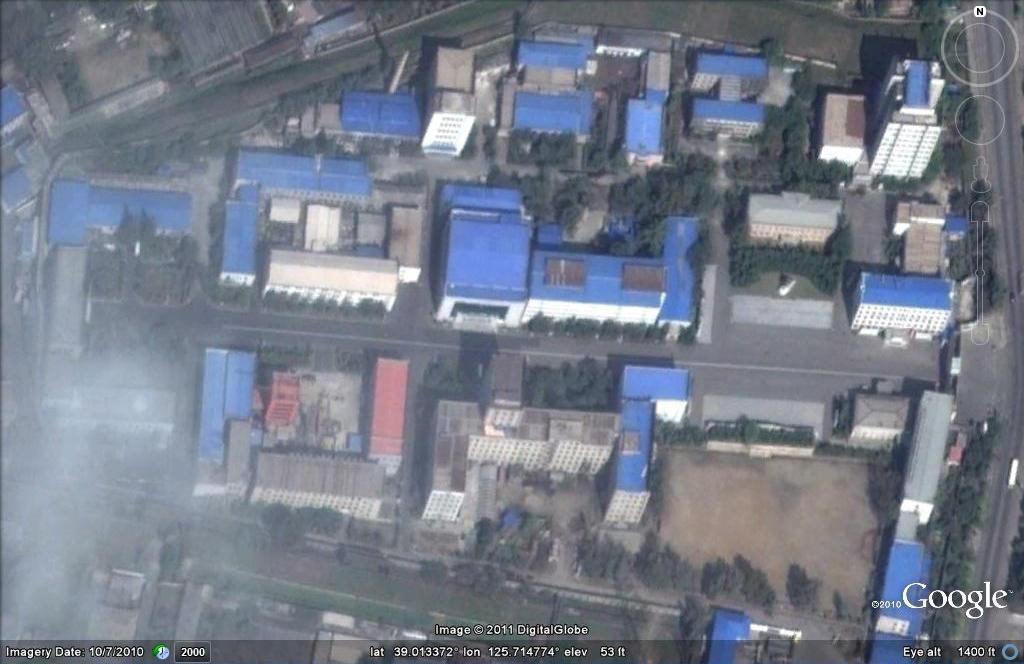
2. Office 39 is reportedly located here.  Kim Jong Il’s office is reportedly nearby here.

3. This week the KWP’s finance director, Pak Nam-gi, was also let go.

4. Mike Madden notes the new director’s  appearance with KJI at an “On the Spot Guidance” visit this week.  Mike also points to a possible appearance the Korea Taepung International Investment Group meeting.

Share

DPRK launches all-out offensive to meet 2010 economic goals

Wednesday, February 3rd, 2010

Institute for Far Eastern Studies (IFES)
NK Brief No.10-02-03-1
2/3/2010

In order to meet this year’s economic goals, North Korean authorities are calling on the people to launch an “all-out offensive”. Day after day, North Korea media outlets are calling for “continuing reform” and “continuing improvements,” even introducing a new motivational song titled, “It’s a war of attack.”

The slogan “all-out offensive” is designed to encourage the people of North Korea to pour all efforts into attaining the best results in each area of the economy. It is not uncommon for the North to use military terms such as this to motivate its citizens for non-military mobilization drives.

According to the (North) Korean Central News Agency (KCNA), the front page of the January 29 issue of the Rodong Sinmun carried an editorial titled, “Raise the fighting spirit of 10 million soldiers, and advance the all-out fighting spirit of this year,” while the second page of the same paper carried a political commentary titled, “Let’s practically demonstrate.”

The editorial called on citizens of the North to work toward improving the standard of living and improving the lives of the people, and stressed, “The on-going ideological campaign is an all-out offensive for remarkably increasing the speed of the advance for effecting a great surge with the might of the perfect unity of the leader and all the service personnel and people and a charge for giving fullest play to their mental power so that events adding luster to the era of Songun may take place one after another,” and, “The on-going general offensive is sure to triumph when all the people live and struggle as the brave, staunch and devoted vanguard in the advance for effecting a great surge.” On January 20 and 22, the same paper had run similar articles, calling for the “spirit of victors” and “marching forward as quickly as possible.”

That North Korean authorities have gone so far as to launch the song “It’s a war of attack” gives the impression that there is an air of urgency surrounding these ongoing efforts to mobilize the people. Also reflecting this urgency is the fact that this year, Kim Jong Il has carried out more public activities than during January 2009. As of January 26, Kim Jong Il had made 14 public appearances. This was 56% more than the first month of last year, during which Kim had made the most visits since launching the 1st Kim Jong Il regime in 1998.

Of those 14 appearances, 7 were on-site inspections of enterprises and other economic sites, while only 6 visits were military-related. The remaining visit was to the central court; There were no meetings with foreign dignitaries or other foreign diplomacy-related activities. One military-related visit of interest was to a self-sufficient pig farm run by the army. January’s visit was Kim’s third to the farm, where he advised managers to “raise more pigs and provide more pork and pork products to the soldiers,” an indirect reference to the seriousness of food shortages among the North’s military.

Share

Kim Doubles His Visits to North Korea’s Factories

Tuesday, February 2nd, 2010

According to Bloomberg:

North Korean leader Kim Jong Il has doubled the number of trips he makes to factories and power stations, signaling his regime’s growing efforts to prop up a failing economy hit by United Nations sanctions.

Half of the 20 visits Kim made in January were to economic projects, more than double the four economy-related trips he made a year earlier, according to South Korea’s Unification Ministry. Kim made a total of 13 outings in January 2009.

“It clearly shows how Kim Jong Il wants to show his people his eagerness to overcome economic difficulties,” said Kim Yong Hyun, professor of North Korean studies at Dongguk University in Seoul. “He wants to tell them the leader himself will be at the forefront of improving their livelihoods, which have obviously got worse.”

Kim, 68, braved temperatures of minus 30 degrees Celsius (minus 22 degrees Fahrenheit) to tour a power station under construction in Huichon, North Korea’s official Korean Central News Agency said on Jan. 3 in reporting his first trip of the year. He visited a flour-processing factory in Pyongyang and ordered that machinery be modernized to increase production of bread, biscuits and noodles, KCNA said Jan. 23.

Kim’s “robust” activities suggest his health is not in critical condition, Unification Minister Hyun In Taek told reporters today in Seoul. Kim reportedly suffered a stroke in 2008, raising speculation last year that he may transfer power to one of his sons.

“We believe he is healthy enough to handle daily affairs,” Hyun said. “We are not concerned about his health.”

My friend Mike Madden did a pretty thorough analysis of Kim Jong il’s Jan 2010 actvities which is a bit more clear. Read it here.

Share

After Kim Jong il

Thursday, November 19th, 2009

UPDATE:  The full transcript of Mr. Kim’s presentation at the Brookings Institution has been posted to the Brookings web page in PDF format here.

ORIGINAL POST: Kim Kwang Jin’s  curriculum vitae is one of the more interesting I have seen.  He received a bachelor’s degree in English from the Pyongyang Foreign Language Institute and a degree in British literature from Kim Il Sung University.  His work experience includes time spent on a Three Revolution Work Team, a professorship at Pyongyang Computer College, and finally posts at the DPRK’s Foreign Trade Bank and the Korean Foreign Insurance Company.  At the Korean Foreign Insurance Comany, Mr. Kim’s job performance garnered international headlines (here and here) .

Today Mr. Kim is a fellow at the US Committee for Human Rights in North Korea where he has written a paper on potential scenarios that might emerge in a post-Kim Jong il DPRK. This paper draws on Mr. Kim’s unique knowledge of the relevant actors and political institutions — as well as a thorough understanding of DPRK culture — to assess the viability of competing visions of the DPRK’s future.

US Committee for Human Rights in North Korea has given me permission to post a PDF of the paper below for you to download:

After Kim Jong-Il:
Can We Hope for Better Human Rights Protection?
Kim Kwang Jin
HRNK
October 2009
(Click here to download PDF)

Share

Changing North Korea

Tuesday, October 13th, 2009

UPDATE:  Here is a longer version of this article in Foreign Affairs.

ORIGINAL POST: Andrei Lankov offers policy prescriptions for changing North Korea in today’s New York Times. Below are some excerpts from the article which is worth reading in full:

…Since outside pressure is ineffective, change will have to come from the North Koreans themselves. The United States and its allies can best help them by exposing them to the very attractive alternatives to their current way of life.

…To crack Pyongyang’s control over information and bring about pressure for change from within, truth and information should be introduced into North Korean society. As the Cold War demonstrated, cultural exchanges can be effective in transferring forbidden knowledge and fostering critical thinking. Exchanges can also bring young members of the North Korean intelligentsia into contact with the outside world. Away from police surveillance (and close to Internet-equipped computers), they would learn much about the true workings of the world.

Of course, the regime might be disinclined to support any initiative with subversive potential. But since the immediate-term beneficiaries of such initiatives would be self-interested members, relatives and clients of the ruling class, they would likely support opportunities for exchange and professional training even if they posed longer-term risks to the system.

The importance of encouraging North Korean rulers to support exchanges is one reason why talks with the regime are important, whether through the six-party structure or not. Although talks will not solve the nuclear issue, they can reduce the likelihood of confrontations and support an environment conducive to exchange and interaction.

…There are other ways to weaken the regime through the spread of information. As during the Cold War, radio broadcasts remain a reliable method of disseminating information, and an increasing number of tunable radios are being smuggled into North Korea. Videos and DVDs smuggled from South Korea are watched widely. It makes sense, then, to support the production of documentaries that inform North Koreans about daily social and economic life in South Korea, contemporary history and political matters such as reunification. And instead of continuing its current harmful ban in the sale of Pentium-class personal computers, the United States should encourage their spread inside North Korea.

Broadly, the U.S. government can take part in cultivating a political opposition and alternative elite that could one day replace the current regime. Due to many factors, those few North Koreans who are politically aware hardly constitute a community of dissenting intellectuals. An increasing number of North Koreans have doubts about the system, but they remain isolated and terrified. Washington should focus, therefore, on aiding the dissident community in South Korea, where some 16,000 North Korean defectors live.

Combining engagement, information dissemination and support for émigrés is the only way to promote change. This approach, however, might be a hard sell to most Americans. It is likely to bring about only incremental change — at least until the situation reaches a breaking point, which could be years away.

But Americans should recognize that there are no quick fixes. For two decades, Washington has searched for solutions, sometimes by way of concessions, sometimes by way of threats. Both approaches have failed and — given the goals of the North Korean regime — would fail again and again. Only low-profile and persistent efforts aimed at promoting change from within will make a difference.

Read the full article below:
Changing North Korea
New York Times
Andrei Lankov
10/13/2009

Share

No more “communism” in DPRK “constitution”

Sunday, October 11th, 2009

UPDATE 5: Dr. Petrov has some great commentary on the new constitution:

A rough English translation as offered by Northeast Asia Matters in their report here but it mistranslates Article 8 of the Constitution, calling “근로인민의 리익” or “the interests of the workers” as “human rights”, which is not the same.

As for dropping the word 공산주의  or “communism”, indeed is happened in Articles 29 and 40 (Economy and Culture respectively). The mystery is in why Naenara keeps the old English version, where the sensational new Section 2 of Chapter VI “Chairman of the National Defence Commission” is missing?

UPDATE 3: Northeast Asia Matters has posted a copy of the DPRK constitution in English.  Click here to read.

UPDATE 2: A reader has posted the new constitution (in Korean) in the comments section below.  Click here to read. 

UPDATE 1:  From the Wall Street Journal:

The average North Korean doesn’t know the country’s national constitution well, but at least he has a solid excuse: Kim Jong Il keeps the working masses ignorant of the rights that are formally granted them, which include freedom of speech and demonstration. But just because Pyongyang’s constitution is hardly worth the paper it is written on does not mean that alterations to it are beneath notice. For the ruling elite, its preamble and first few articles serve as a broad indication of the regime’s ideological direction.

ORIGINAL POST: According to Reuters:

North Korea has revised its constitution to give even more power to leader Kim Jong-il, ditch communism and elevate his “military first” [Songun] ideology, South Korea’s Unification Ministry said on Monday.

Though there is little doubt over the 67-year-old Kim’s power, secured by his role as chairman of the National Defence Commission, the new constitution removes any risk of ambiguity.

“The chairman is the highest general of the entire military and commands the entire country,” according to a text of the constitution enacted by the reclusive North in April and only now released by the South Korean government.

The chairman is now the country’s “supreme leader”. Though the position had become the seat of power under Kim, the previous constitution in 1998 simply said the chairman oversees matters of state.

But the Unification Ministry said the new charter removes all reference to communism, the guiding ideology when Kim’s father Kim Il-sung founded North Korea — of which since his death in 1994 he has been eternal president.

Often in its place is “songun”, the policy of placing the military first and which has been Kim junior’s ruling principle.

South Korean media quoted an official from the North as saying that it made the change because it felt the ideals of communism are “hard to fulfil”.

The new constitution adds assurances for protecting human rights, even though North Korea has one of the world’s worst records.

Experts on the North’s state propaganda said the military first ideology has helped Kim dodge responsibility for the country’s sharp economic decline by arguing that heavy defence spending was needed to overcome threats posed by the United States.

It has also meant that the bulk of the North’s limited resources have gone into beefing up a million-strong military at the expense of the rest of the population who make up one of Asia’s poorest societies.

According to the Associated Press:

Yang Moo-jin, a professor at Seoul’s University of North Korean Studies, says it is the first time the North’s constitution has mentioned human rights.

“I think they created this clause, mindful of international criticism of their human rights record,” Yang said. “It lacks details, such as how they will respect and protect human rights. I think it’s just a formality.”

The new constitution also defined Kim Jong Il as the country’s highest leader in a clearer term, saying that the chairman of the all-powerful National Defense Commission — Kim’s title — is the nation’s “supreme leader.”

The previous version only said the commission is the country’s highest organization.

The new constitution also dropped references to communism and only mentions socialism.

But Yang said the change does not mean much because the charter of the North’s ruling Workers’ Party, which is considered higher than the constitution, still says its goal is to build a communist nation.

New York Times:

…Analysts saw the changes as signs that one of the last holdouts from the former Communist bloc was trying to improve its international image in an effort to engage the United States and that the ailing Mr. Kim was trying to burnish his legacy.

North Korea revised its Constitution in April when its rubber-stamp Parliament re-elected Mr. Kim as chairman of the National Defense Commission amid uncertainty over his health. But the outside world was kept in the dark about the details of the amendment until Monday, when South Korea released what it called the text of the North Korean Constitution.

The new Constitution defined one of several titles Mr. Kim holds, chairman of the National Defense Commission, as “supreme leader” of the country. Though Mr. Kim has ruled the country as an undisputed leader, the Constitution revision is the first time he has acquired such an official designation since the death of his father, Kim Il-sung, in 1994.

The chairman “oversees the entire national business,” appointing important military figures, ratifying or abrogating treaties with foreign nations, appointing special envoys and declaring states of emergency or war, the new Constitution said.

The government of South Korea declined to comment, saying it was still scrutinizing the changes. But analysts said Mr. Kim was reasserting his rule by stamping his imprint on the Constitution at a time when doubt persisted at home and abroad about his health and his grip on power.

“After he overcame his health crisis, Kim Jong-il revised the Constitution to show that he was in control and was the person the United States must deal with,” said Kim Yong-hyun, a North Korea analyst at Dongguk University in Seoul. “By mentioning human rights and giving up communism, which sounded hollow to his people after the collapse of the Eastern bloc, he is also trying to show that he is a flexible leader sensitive to the changing world order.”

The constitutional revision does little to add to his already absolute grip on power, said Cheong Seong-chang, a senior analyst at Sejong Institute in South Korea. Mr. Kim is already head of the ruling Workers’ Party and the People’s Army. The new Constitution stuck to a socialist system, though it abandoned communism.

But by bringing more portfolios under his National Defense Commission, “Kim Jong-il showed an intention to focus more on the military and foreign affairs” while leaving party matters to Kim Jong-un, the youngest of his three sons, who is reportedly being groomed as his successor, Mr. Cheong said.

North Korea is now ruled by a “Kim Jong-il and Kim Jong-un coalition,” he added.

In 1998, four years after the death of Kim Jong-il’s father, North Korea revised its Constitution to leave the senior Kim’s title, president, “eternally vacant,” dispersing the roles of the presidency to different agencies. That left outside analysts wondering who officially represented the country, though few disputed Mr. Kim’s authority. With the April revision, Mr. Kim has now left no doubt where the power resides both in reality and in document, analysts said.

Read the full stories below:
North Korea drops communism, boosts “Dear Leader”
Reuters
Jon Herskovitz and Christine Kim
9/28/2009

North Korea’s new constitution calls for respecting human rights for first time
Associated Press
9/28/2009

New Constitution Bolsters Kim’s Power
New York Times
Choe Sang-hun
9/28/2009

Share

Reluctant succession update

Thursday, October 8th, 2009

UPDATE 4:  Vice Unification Minister Hong Yang-ho chimes in on the DPRK succession issue.  According to Yonhap:

Kim, 67, who reportedly suffered a stroke in August last year, is believed to have named his third and youngest son, Kim Jong-un, as his successor and to be now grooming him for an official debut as the next leader.
“North Korean media continued to broadcast reports that appeared to indicate the legitimacy of a hereditary succession since the end of 2008, but such reports were put on hold after July 15, 2009,” Hong said at a closed-door civic forum on North Korea policy. A transcript of his remarks was released by the ministry.

North Korean media often employed phrases like “bloodline of Mount Paektu,” Kim Jong-il’s supposed birthplace, or “inheritance” when lauding the country’s leadership, something analysts here saw as a reference to the planned succession. The use of such terms also peaked around the time the senior Kim was being trained as heir, they say.

Kim Jong-un, believed to be born in 1984 to the leader’s third wife Ko Yong-hui, is said to most resemble his father in appearance and temperament among the three sons. His older brother, Jong-chol, is 28, and half-brother, Jong-nam, is 38.

While references to the succession have subsided, the vice minister said, North Korea appeared to be intensifying social control to maintain national unity around the senior Kim. Media reports of Kim’s public activities totaled 110 as of Oct. 1, compared to 74 reported during the same period last year, the vice minister noted.

Also, a statement by Kim regarding the building of a “prosperous” nation by 2012 was reported five times over the span of five days from Aug. 24 to 28, he noted.

Such intense publicity on Kim “shows he is in firm control” and “puts emphasis on traditional ideology to protect the regime,” he said.

The current leader was internally designated as successor at age 32 in 1974 during a Workers’ Party meeting and publicly declared as the heir to his father during a party convention in 1980. His father and the country’s founder, Kim Il-sung, died of a heart attack in 1994.

Despite the drop in media references, watchers say the succession process is picking up pace internally. A Taiwanese photographer recently posted a photo on the Internet taken in the northern North Korean town of Wonsan last month, showing a poster that carried the heir’s name in red alongside his father’s name.

Cheong Seong-chang, an expert with the non-governmental Sejong Institute south of Seoul, said the North is now directing the succession process in a more subtle way, in contrast to its earlier nuclear and missile tests that were believed to have been aimed at supporting the power transition.

Read the full article here:
N. Korea halts media propaganda for heir apparent: Seoul official
Yonhap
Kim Hyun
10/8/2009

UPDATE 3: As I mentioned below, I am reluctant to post much on the succession issue. There is much speculation out there and not much concrete information which is ‘actionable’. Evey now and then, however, some nuggets of information come out.  Such as this…

flickrjongeun.jpg

On September 19, a tourist to the Chonsam Cooperative Farm (location here) snapped a photo of a local propaganda poster (click here for full sized version).  According to the Choson Ilbo, and confirmed by my crack translator, G, the poster reads, “Kim Jong-eun (김정은), [NOT Jong-un] a young leader who succeeds the lineage of Mangyongdae and Mt. Baekdu,” along with the full lyrics of a song related to the succession.

Read more below:
N.Korean Poster Seems to Confirm Succession
Choson Ilbo
9/30/2009

Why N.Korean Regime Succession Is a Delicate Matter
Choson Ilbo
9/30/2009

UPDATE 2: Fox News reports on a Yonhap story which claims that Pyongynag residents have heard KJU’s name mentioned via their “cable radios” (these devices are built into the homes in many Pyongyang residencies, and you can see them in the documentary A State of Mind):

North Korea has mentioned Kim Jong Un by his full name — which it had not done in the past — and his qualifications in broadcasts through speakers installed in each house, Yonhap news agency reported, citing an unidentified source on North Korean affairs.

The broadcast campaign was launched in Pyongyang about two months, but it was not clear if it had been extended to other parts of the country, Yonhap said.

North Koreans are obligated to install speakers in their homes to listen to broadcasts on policy of the ruling Workers’ Party and its propaganda, according to North Koreans who have defected to the South.

UPDATE 1: Blane Harden has added additional information in the Washington Post.

ORIGINAL POST: In general I have avoided discussion of the DPRK succession issue because much of it is based on speculation and rumor. Lankov, however, managed to chime in on the topic with some interesting facts and insight. Quoting from the article:

However, by April there were no doubts: Kim Jong-un, Kim’s youngest son, began to be frequently mentioned in the North Korean classified propaganda materials. These publications are off-limits for common North Koreans, but the message was clear: the virtues of the “brilliant comrade” Kim Jong-un were extolled in way which would be proper only for the next leader. So, Kim Jong-il finally made up his mind about succession – or at least that is what most observers came to believe.

But in August the situation took an unexpected turn; today, the prospect of a power transition to Kim Jong-un looks far less certain than a month ago.

These days, while North Korean borders are transparent enough, it takes a few weeks for the rest of the world to learn what is going on behind the closed doors of supposedly “classified” indoctrination sessions for junior officials (the situation at higher levels is far less transparent). But a few days ago, entrepreneurial journalists smuggled from North Korea classified propaganda materials which were issued in July for military indoctrinators.

The materials describe the charisma of the “Young General Kim” and call him a “genius of military affairs”. They also explained his strategy was “the strategy of shock and offense” and told their listeners that the boldness of the “young general” caught the “enemy” (obviously, the United States) by surprise.

It is hinted that the missile launch in April and nuclear test in May were manifestations of the brilliant new strategy, created by Kim Jong-un.

Meanwhile, members of the North Korea’s Communist Youth Union were instructed to sing “Footsteps”, a new song that extolled the virtues of an unnamed young general, whose surname happened to be Kim. North Koreans got the message: the titles which were used in the song are different from those which are normally applied to any of two older “General Kims”, so the person must have been a new Kim.

Functionaries of the Communist Youth were also told that the ongoing “150 days battle” (a Maoist-style shock labor campaign, quite normal for North Korea) is managed by Kim Jong-un and hence will certainly lead to a major success.

Interestingly, the North Korea material reported that Kim Jong-un was 30 years old: obviously, any idea of an heir who just turned 26 was seen as offensive in a Confucian country.

Nonetheless, no references to Kim Jong-un’s name, let alone to his promotion, have appeared in North Korea’s general access media. The propaganda campaign was conducted behind closed doors, and targeted either military personnel (largely officers) or activists of the Party Youth. The average North Korean still has no clue about who Kim Jong-un is. If he or she does, it is probably due to exposure to marketplaces where merchants actively exchange rumors that have filtered in from overseas.

However, about a month ago the entire campaign was halted abruptly. Sources inside North Korea report that since early August the name of Kim Jong-un is not heard any more. Even “Footsteps”, his “promotional song”, suddenly ceased to be performed, and people are now advised not to sing it – for the time being, at least. The “150 day battle” continues, but without references to the decisive role of Kim Jong-un’s managerial genius.

No explanations have been given – this is North Korea, after all. In a different country such turn of events would produce a tidal wave of rumors, but North Koreans are well aware that matters of succession (as well as things related to Dear Leader’s family and health) are too dangerous to be discussed or even mentioned.

The article goes on to offer reasons why the succession machinery has apparently ground to a halt and it is all well worth reading.

Find the full article here:
North Korea’s Succession gets twisted
Asia Times
Andrei Lankov
9/11/2009

Share

Reform from Below: Behavioral and Institutional Change in North Korea

Wednesday, September 30th, 2009

Peterson Institute Working Paper (Sept 2009)
Stephan Haggard and Marcus Noland

(Download PDF here)

Abstract: The state is often conceptualized as playing an enabling role in a country’s economic development—providing public goods, such as the legal protection of property rights, while the political economy of reform is conceived in terms of bargaining over policy among elites or special interest groups. We document a case that turns this perspective on its head: efficiency-enhancing institutional and behavioral changes arising not out of a conscious, top-down program of reform, but rather as unintended (and in some respects, unwanted) by-products of state failure. Responses from a survey of North Korean refugees demonstrate that the North Korean economy marketized in response to state failure with the onset of famine in the 1990s, and subsequent reforms and retrenchments appear to have had remarkably little impact on some significant share of the population. There is strong evidence of powerful social changes, including increasing inequality, corruption, and changed attitudes about the most effective pathways to higher social status and income. These assessments appear to be remarkably uniform across demographic groups. While the survey sample marginally overweights demographic groups with less favorable assessments of the regime, even counterfactually recalibrating the sample to match the underlying resident population suggests widespread dissatisfaction with the North Korean regime.

JEL Codes: P2, P3, F22
Keywords: failed states, transition, reform, North Korea, refugees

Share

An affiliate of 38 North