Archive for the ‘Economic reform’ Category

Park’s Appearance Unlikely to Mean Real Reform

Monday, December 13th, 2010

According to the Daily NK:

An oft-cited example of an advocate of reform within the North Korean leadership, former Prime Minister Park Bong Ju [aka Pak Pong-ju] appeared alongside Kim Jong Il during a recent onsite inspection at a Pyongyang sock factory, leading to suggestions that North Korea may again be contemplating the idea of embracing economic reform.

However, this is less likely than another explanation; that Park was brought back into the fold to oversee a number of revisions to the legal code during 2010.

Park, whose appearance at the onsite inspection was verified in five images broadcast by Chosun Central Television on the 11th, was a leading architect of the July 1st Economic Management Reform Measure of 2002, which formalized a number of relatively liberal economic policies.

He then became Prime Minister in September 2003, but was deposed during a period of economic retrenchment in April 2007, sent into virtual exile in South Pyongan Province as manager of Suncheon Vinalon Complex.

As a result of this career path, Park is seen by many as a reformist thinker in the North Korean elite.

Therefore, when he stepped back onto the main political stage this August, three years and four months later, mentioned in a report published by Chosun Central News Agency on August 21st about the 50th anniversary of a well-known Pyongyang restaurant, Okryugwan, it led to suggestions that North Korea might be set to head down the road to economic reform, led by Park as Party First Vice Director.

However, Park’s re-emergence does not mean that North Korea is about to turn towards market mechanisms on an official basis; conversely, it is more likely to be related to the revision this year of a number of laws which were actually designed to strengthen the control and supervisory functions of state institutions.

North Korea officially revised the People’s Economic Planning Law on April 6th alongside the Pyongyang Management Law, revised on March 30th, and both its Labor Protection and Chamber of Commerce and Industry Laws, revised on July 8th.

In revealing the legal revisions to The Daily NK in an interview in November, an inside North Korean source commented on the intention behind the changes, saying, “The People’s Economic Planning Law of 2001 alleviated national controls and supervision, even though it came before the July 1st measure of 2002. However, the revised bill strengthens national controls.”

Additionally, the source went on, “This series of bills including the revised People’s Economic Planning Law are the basis of the nation’s control, management and supervision. It should be understood as being part of the same flow as the series of measures undertaken during the succession process since October of 2007, when market controls began wholeheartedly; the 150-day Battle, 100-day Battle and currency redenomination.”

Accordingly, research suggests that North Korea probably chose to play the Park Bong Ju card now to revise state policy to try and sort out the problems left behind by the failure of the 2009 currency redenomination and to address the pressing need to improve the state of the domestic economy, whilst also hoping that the appointment of an official with a reformist image might attract investment from Northeast China and further afield.

Michael Madden has written a bio of Pak Pong-ju. Read it here.

Read the full Daily NK sotry below:
Park’s Appearance Unlikely to Mean Real Reform
Daily NK
Kim So-yeol
12/13/2010

Share

Kim Jong-il focuses on economic sites for ‘field guidance’ trips this year

Monday, December 6th, 2010

According to Yonhap:

North Korean leader Kim Jong-il paid more visits to factories and other economy-related sites than to military units and other locations this year in a sign that the autocratic leader is trying to improve internal unity, Seoul’s Unification Ministry said Monday.

Kim has made a total of 148 “field guidance” trips across the country this year, with 58 of them, or 40 percent, made to economic sites and 33 visits to military units, ministry spokesman Chun Hae-sung told reporters.

In particular, Kim made 16 public appearances in November, and only one of them was a visit to the military while seven were to economic sites, a ministry official said on condition of anonymity.

“This is seen as an attempt to promote internal unity or to demonstrate he is in charge,” the official said.

Kim’s sister, Kim Kyong-hui, and his brother-in-law, Jang Song-thaek, accompanied Kim on most of the field trips in November, the official said.

Since the North’s deadly shelling of South Korea’s Yeonpyeong Island on Nov. 23, Kim has made a dozen public appearances, with seven of them to economic sites.

Kim’s heir-apparent and youngest son, Kim Jong-un, accompanied his father on 28 of the 148 field trips this year, according to the ministry.

Read the full story here:
Kim Jong-il focuses on economic sites for ‘field guidance’ trips this year
Yonhap
12/6/2010

Share

Businesses in Kaesong Industrial Park struggling

Friday, December 3rd, 2010

According to Yonhap:

Once hailed as vanguards of reconciliation but now threatened by simmering animosity between the Koreas, a group of South Korean businessmen pleaded Thursday with senior lawmakers to safeguard their operations in North Korea against further political fallout.

Since North Korea mounted a deadly artillery attack on the South Korean island of Yeonpyeong on Nov. 23, these seasoned businessmen have had jitters over the fate of their factories built in the western North Korean border town of Kaesong.

Considered the last remaining symbol of reconciliation between the divided countries, the joint industrial complex houses more than 120 South Korean firms employing 44,000 North Korean workers.

Holding a commercial fair at the National Assembly, representatives from eight companies and officials from their association mingled with two dozen lawmakers and scrambled to tout their products as bearing the messages of hope and peace.

“We have achieved a level of quality that enables us to compete with any other industrial complexes in the world,” Bae Hae-dong, chief of the association of South Korean factories, said in a speech. “Yet, we remain easily affected by inter-Korean political circumstances. We especially deplore the situation that has arisen since North Korea attacked Yeonpyeong.”

The shelling of the small fishing community killed two marines and two civilians in the most indiscriminate attack on South Korean soil since the 1950-53 Korean War that ended in a truce.

A travel ban imposed on North Korea a day after the attack remains in place, allowing only a limited amount of raw materials to be sent to Kaesong and hamstringing manufacturing operations there.

“We are suffering a 10-15 percent decline in production due to the ban,” said Kim Ssang-kyu, general manager at Pyxis Inc., which produces jewelry cases and other accessories.

Sung Hyun-sang, president of Mansung Corp., which makes women’s clothing, claimed the damage in production amounts to as much as 50 percent.

“We understand the ban is for the sake of our safety, but we’re sure the North Koreans won’t hurt us. They know how important we are” to their cash-strapped economy, Sung said.

“We can only worry and pray for now,” an official at Shinwon, which produces men’s suits, said, asking not to be named because his remark could be taken sensitively.

About 410 South Koreans remained in Kaesong as of Thursday, a drop from 760 on Nov. 23 when the artillery exchange erupted between the Koreas, according to the Unification Ministry in Seoul.

The Kaesong complex produced its first articles — kitchen pans — in 2004 even though the two Koreas had agreed four years earlier on the project in an effort to lessen border tension.

Combining South Korean capital and know-how with the cheap labor in North Korea, the park recently reached a total of US$1 billion in production. Supporters of the estate say its significance goes far beyond economic benefits.

“Kaesong has been a safety pin whenever the security on the Korean Peninsula sagged to a dangerous level,” Kim Choong-whan, a legislator with the ruling conservative Grand National Party (GNP), said in a speech.

Park Joo-sun, who is with the liberal Democratic Party (DP) and sponsored the fair, expressed hope that the park will survive the crisis sparked by the North’s shelling.

The fair was scheduled before the crisis, organizers said. The lawmakers who attended it included Park Jie-won, a DP lawmaker who led the organization of the 2000 summit, and Lee Sang-deuk, President Lee Myung-bak’s older brother who is a GNP legislator.

“Sir, please help us,” Bae told the influential lawmaker touring the booths set up at the fair.

Gently embracing Lee with his arm in a show of friendship, another businessman smiled widely and whispered to Lee, “This is the lifeline of peace.”

In a brief interview on the sidelines, Lee downplayed the economic damage the South Korean firms said they have incurred since the travel ban on North Korea came into effect on Nov. 24.

“They should and can withstand this. It is a risk they were willing to take,” he said as he stepped onto the elevator taking him to his office inside the building.

Vice Unification Minister Um Jong-sik, who admitted in a speech that the companies were suffering drops in production, would not say how long the ban will stay in effect.

“All things and situations must be considered before we can make a decision,” he said after a long pause, when asked if South Korean artillery drills planned for next week in the Yellow Sea would prompt the ministry to extend the ban.

“For now, we’re doing our best to listen to these companies and address their needs as much as we can,” he said as he left the fair with two bags full of clothing he bought from Mansun Corp.

South Korea and the United States ended their four-day joint naval drills mobilizing an American aircraft carrier in the Yellow Sea on Wednesday, a move they believed would intimidate North Korea into calling off further acts of provocation.

The U.S. has 28,500 forces stationed in South Korea, a legacy of the Korean War in which it led U.N. forces to fight against North Korea. Since a U.S. commander drew a line separating the waters of the Koreas at the end of the war, the North has denied its validity, triggering a series of deadly naval clashes there with the South.

North Korea says any further artillery drills by the South on Yeonpyeong, less than 10 kilometers from the North Korean coast, are bound to violate its waters because the Northern Limit Line is null.

The communist state maintains that it fired at Yeonpyeong because it had been provoked by South Korean forces shooting artillery shells at its side across from Yeonpyeong.

Read the full story here:
Businessmen plead for help as tension threatens their factories in N. Korea
Yonhap
Sam Kim
12/2/2010

Share

Buying into the Hermit Kingdom

Thursday, December 2nd, 2010

A couple of Weeks ago, the Korea Economic Institute released a paper by Kevin Shepard on foreign direct investment and trade with the DPRK.  May of the topics discussed will be familiar to readers of this blog, so I thought I would repost it here.

Buying into the Hermit Kingdom: FDI in the DPRK (PDF)
Korea Economic Institute Academic Paper Series: November 2010, Volume 5, No. 11
Kevin Shepard

Additional Informaiton:
1. Previous KEI academic papers can be found here.

2. North Korea CRS reports.

3. My DPRK Economic Statistics Page

4. My DPRK Business Resources Page (which needs updating)

Share

Rice price up 40-fold in last year

Thursday, December 2nd, 2010

According ot the Korea Herald:

The price of rice in North Korea has soared nearly 40-fold in the year after the country’s botched currency reform.

Rice is now traded at around 900 North Korean won per kilogram in Pyongyang’s markets, according to online media outlet Daily NK. This is up 3,990 percent from 22 won late November last year in the newly introduced currency.

The North knocked two zeros off the face value of its old currency on Nov. 30 last year, exchanging 100-won bills for new 1-won notes. Therefore the price of a kilogram of rice, which was 2,200 won in the old currency, was redenominated to 22 won.

Under the currency reform plan, a 100-won note in the new currency should have the exchangeable value of a 10,000-won bill in the old currency. However, due to 4,000 percent inflation, the new 100-won note is now only worth 250 won in the old currency.

The price of rice in North Korea is deemed the benchmark of all prices in commercial trade.

“The apparent purpose of the North Korean currency reform was to reduce the amount of money in the markets to stabilize prices, but it failed to achieve this due to an absolute lack of commodity supplies,” said Cho Myung-chul, a senior fellow at the Korea Institute for International Economic Policy.

“The fact that rice prices jumped 4,000 percent based on the currency’s exchangeable value shows that the effect of the 100-fold revaluation has mostly disappeared.”

After major markets in the reclusive state were shut down in mid-January this year, rice prices in Pyongyang soared, hitting 1,300 won per kilo in early March. They dropped to the 400-won range in May as markets began to function again, but soared over the 1,000-won mark in August due to an exchange rate hike and damage caused by heavy rains.

When the North redenominated its currency, it placed a cap on the amount of money that could be converted per person, telling people to deposit the rest in state-run banks.

The measure, which was aimed at crippling the growing merchant class and reasserting control over market activities, tightened the distribution of food and stirred anti-regime sentiment.

This Daily NK story asserts that the average salary of a general worker is around 1,500 won a month, and it is not paid regularly.

Read the full story here:
N.K. rice price soars nearly 40-fold in a year
Korea Herald
Kim So-hyun
11/20/2010

Share

Dandong-DPRK trade and growth

Thursday, December 2nd, 2010

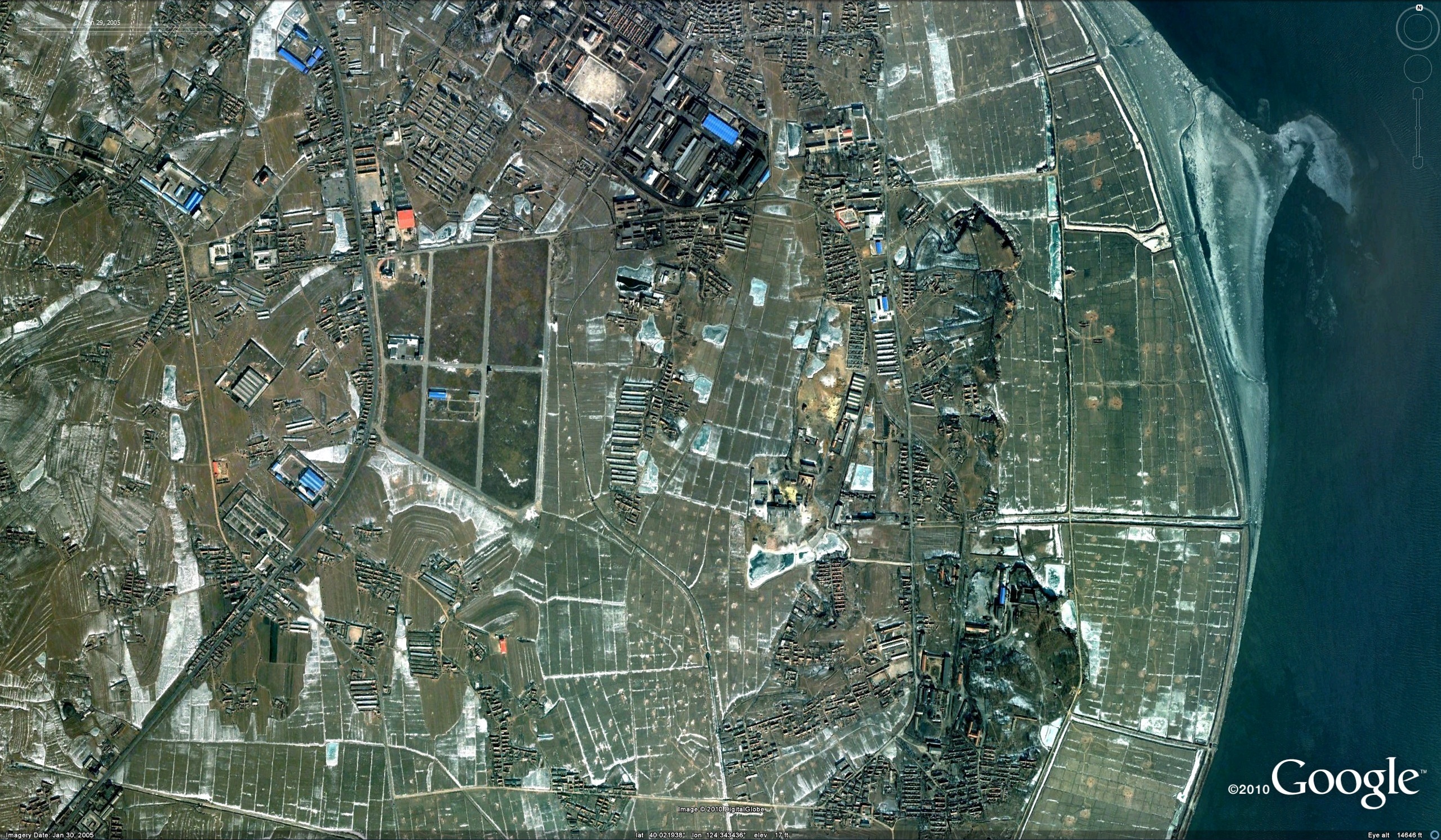
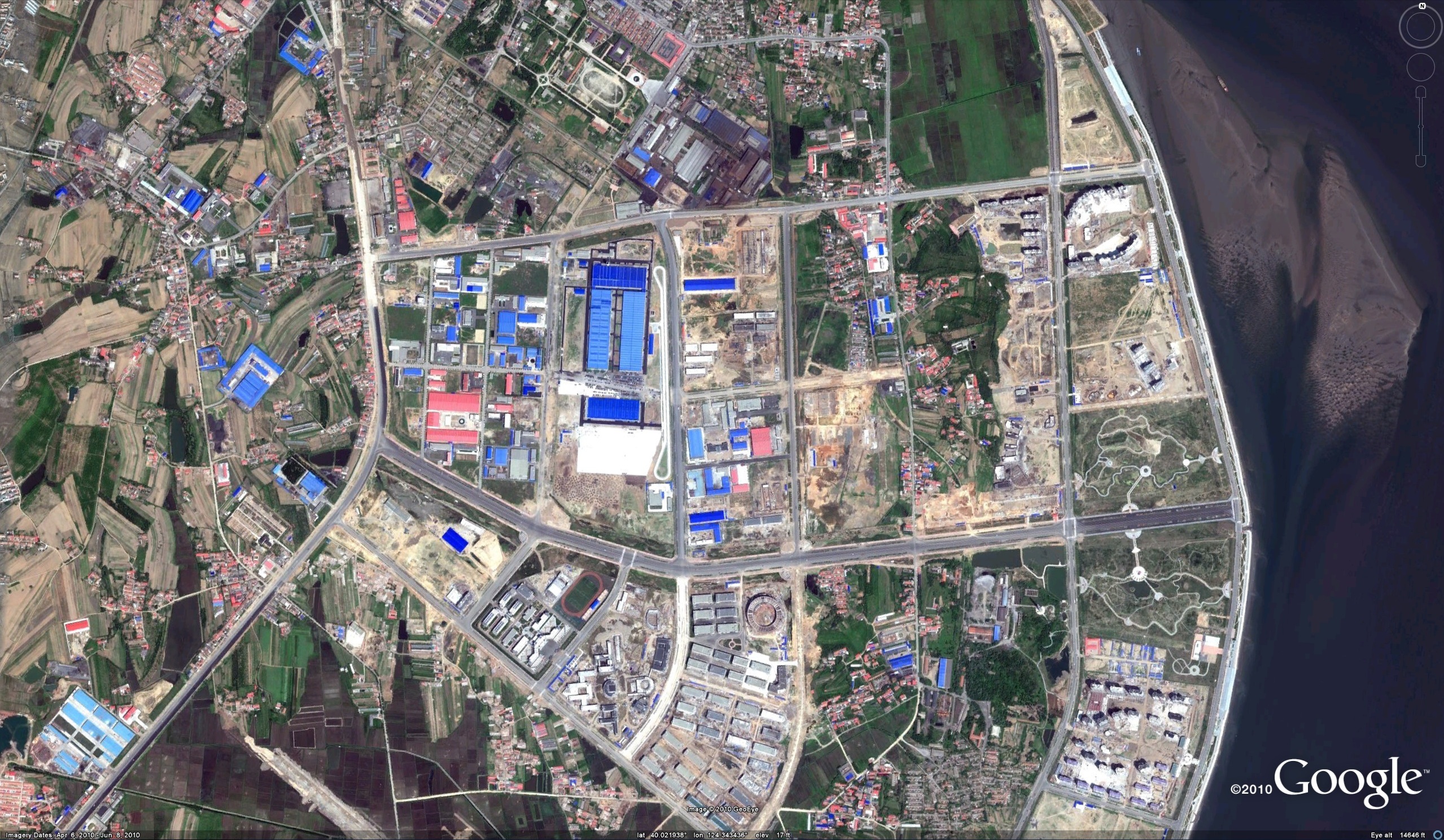
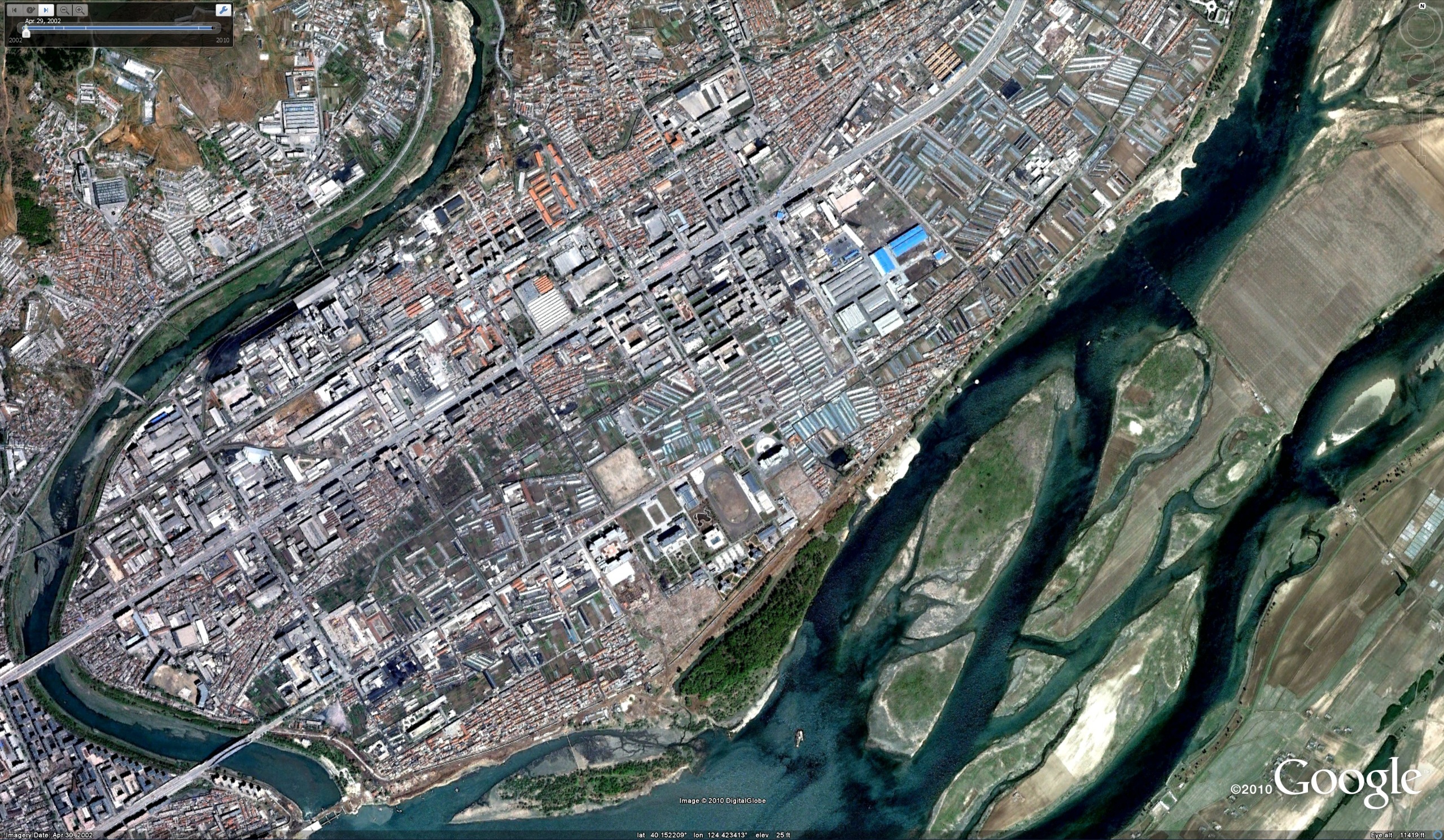
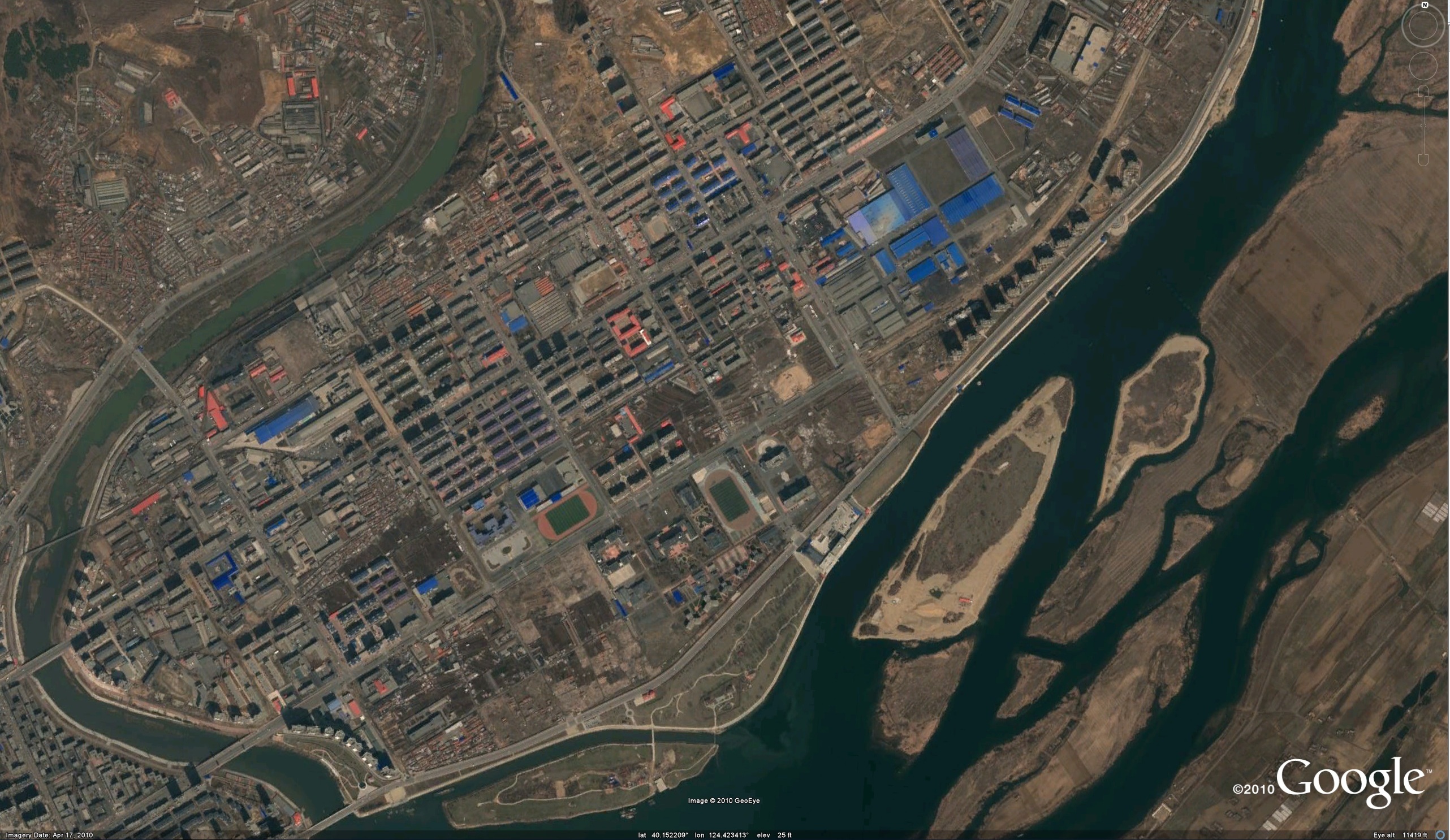
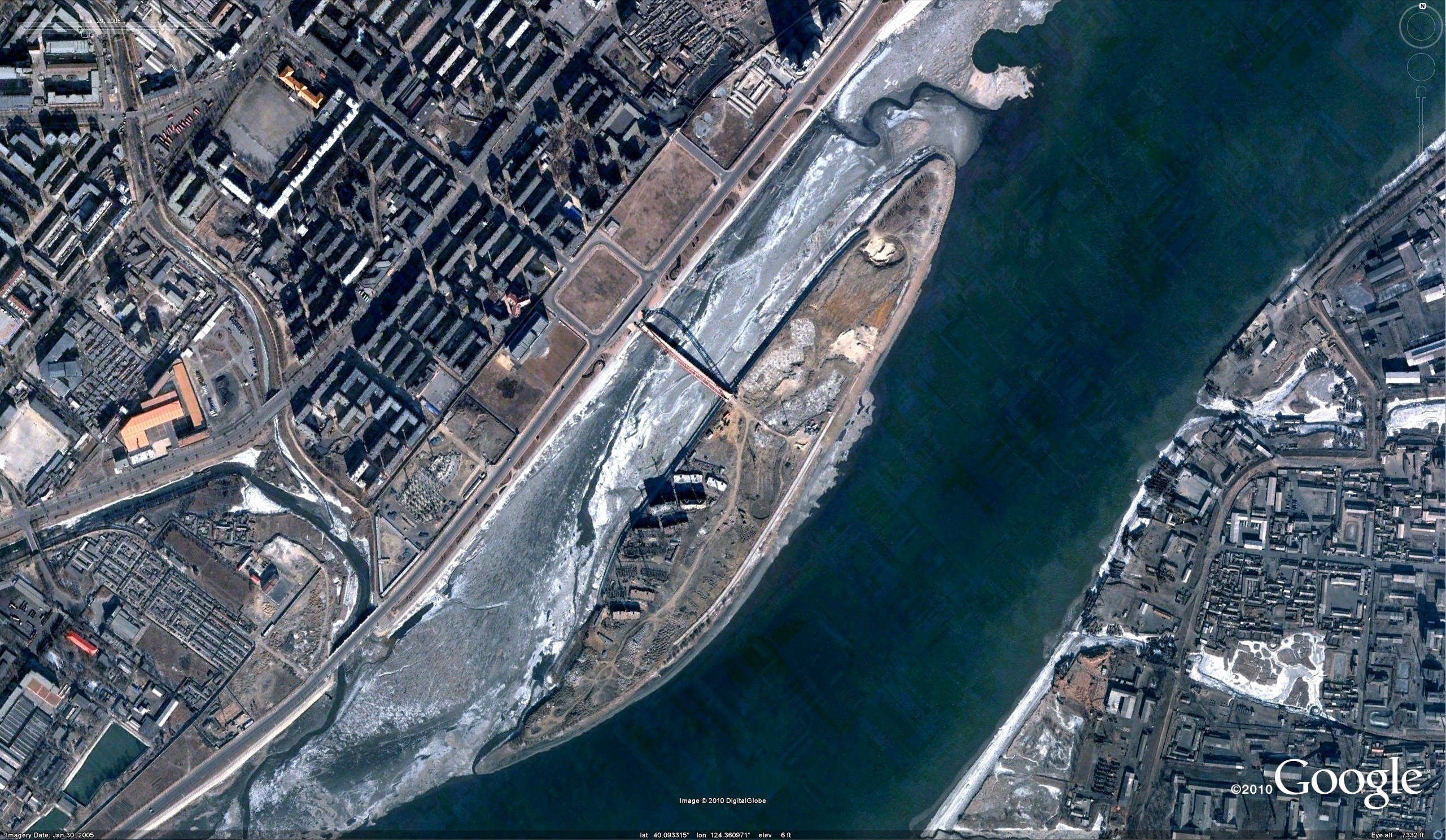
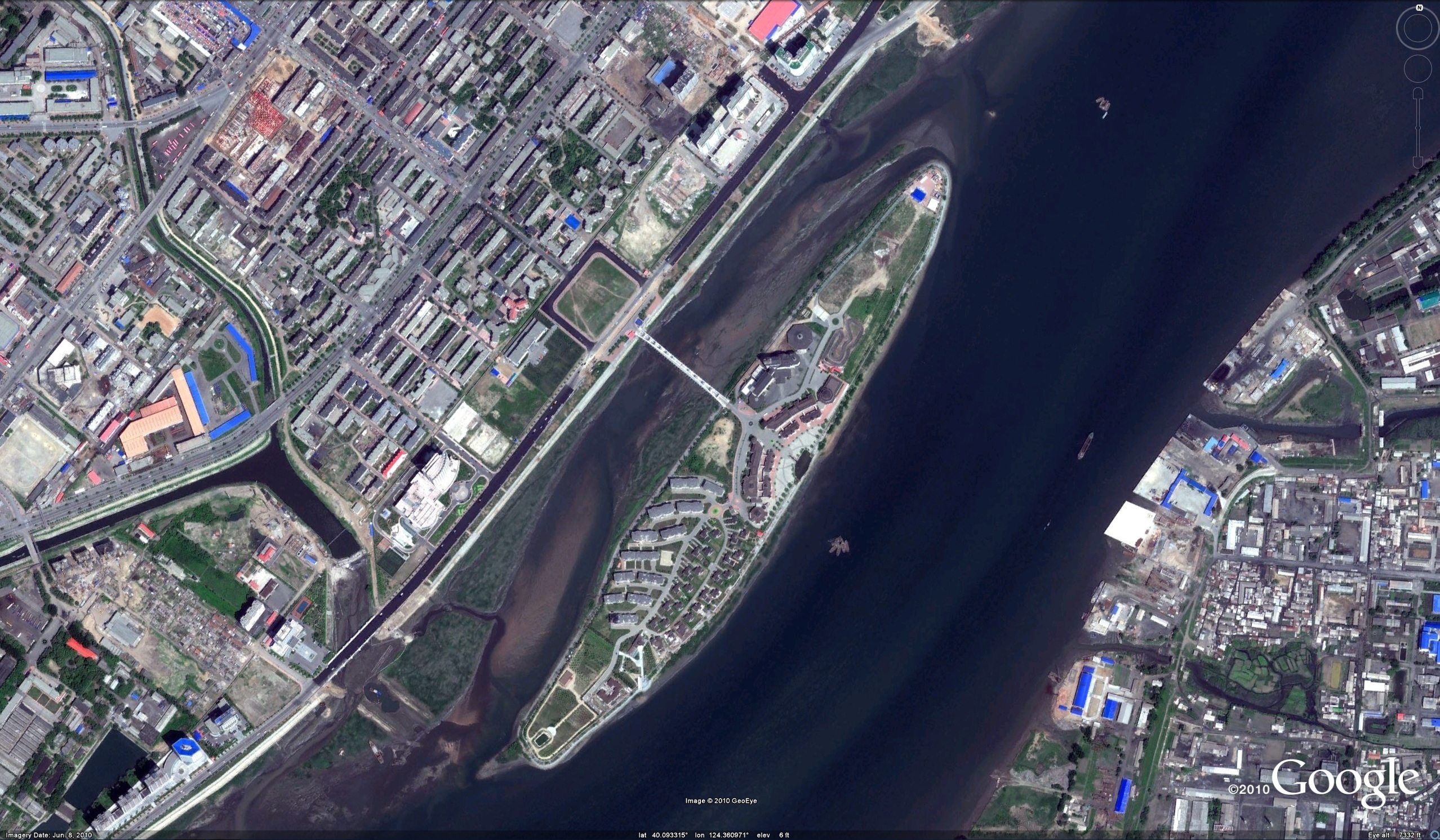
As the focal point of DPRK-PRC trade, Dandong has seen phenomenal growth in the last 5 years.

Here is just one area in southern Dandong:


Here is a separate area in northern Dandong where Yalu River high-rise development is underway:


And here is another island in the Yalu River:


Dandong has been the focus of increasing media attention over the last 10 years because it has economically benefitted from increased trade (and expected future trade) between the PRC and DPRK.  

Today it is probably the easiest place to collect “survey data” on the DPRK’s business environment. According to a recent article in the Associated Press (via San Francisco Examiner), the DPRK still has a long way to go before foreign investors will see a climate ripe for investment:

Just across the Yalu River from North Korea, this sleepy border town in China’s Rust Belt is booming.

Towering apartment blocks are going up on the city’s western edge near the new Friendship Road Bridge, which will soon be the second bridge connecting Dandong to the North Korean city of Sinuiju.

Offices for trade and export-import companies dot the main road along the riverfront. A new airport is being built. Shops sell North Korean liquor, blueberry wine, ginseng, stamps and music CDs. And North Korean restaurants offer popular Korean dishes such as stewed dog leg and spicy deep-fried dog.

Dandong – like other parts of northeastern China along the 870-mile border – aims to profit from China and North Korea’s growing cross-border trade, now close to $3 billion a year. At a time when the United States and its allies are looking to isolate the Pyongyang regime for its nuclear program and erratic behavior, including this week’s artillery attack on a South Korean island, this hardscrabble part of China is finding that being North Korea’s back door to the world can be a lucrative business.

China already provides an estimated 90 percent of North Korea’s energy needs and most of its food and weapons. And the most recent gauge of trade between the two countries, from 2008, showed an increase of more than 40 percent from the previous year, according to the Council on Foreign Relations.

But even as officials map out grand plans for more cooperation, merchants and small-scale traders say doing business with North Korea remains problematic at best.

The government is unpredictable, they say, and rules change without warning. They tell horror stories about Chinese traders who have lost millions of dollars in goods or equipment that is expropriated or stolen outright. Many now insist on cash-up-front transactions and mostly conduct business on the Chinese side of the border, where they say they have more protections.

Moreover, while North Korean leaders have visited this part of China and professed admiration for China’s economic boom, local Chinese traders and businessmen in close contact with North Koreans say they don’t expect the country to shift to a market economy anytime soon.

“I haven’t seen any sign the North Korean government wants to open up,” said Cui Weitao, 47, who has been trading fruit, clothing, plastic bowls and chopsticks to North Korea for the past decade. “If they really wanted, they could learn from China and Russia. If they wanted, they could let people go back and forth and trade freely. . . . If they opened the border, their whole country would benefit.”

His friend, Wang Tiansheng, 47, another small-scale trader, agreed. “The thought of economic reform has been there for years but never happens. Not while the father is alive,” he said, referring to the country’s leader, Kim Jong Il. “Maybe when the son takes office.”

China and North Korea have been close allies since Chinese troops crossed the Yalu River to help North Korea fight American and South Korean troops during the Korean War, which is referred to here as the “War to Resist U.S. Aggression and Aid Korea.”

Yet Chinese leaders themselves consider North Korea’s leader an often-troublesome ally because of his brinkmanship with the United States over his country’s nuclear capability and incidents such as this week’s artillery barrage of Yeonpyeong Island, which killed two South Korean marines and two civilians, and the sinking of a South Korean warship in March.

Chinese leaders are reported to be concerned about North Korea’s economic crisis, and they encouraged Kim to embrace market-based economic reforms when he visited China in May and August this year and met with Chinese President Hu Jintao, according to some Hong Kong and South Korean media reports of the visits.

In a bow to reforms, North Korea sent a dozen mayors and provincial chiefs to northeastern China in October to visit factories and chemical plants. Earlier this month, North Korean Premier Choe Yong Rim visited Harbin, in Heilongjiang province, to discuss joint economic projects.

North Korea agreed to lease two Yalu River islands to China to develop into “free trade zones.” Chinese high-tech companies were encouraged to signed agreements to hire North Korean computer experts. In September, after Kim’s second visit, China established a new 100,000-square-foot marketplace in Tumen – across from Namyang in North Korea – for North Koreans to come on one-day passes to sell or trade their goods.

But the Tumen market in many ways illustrates the difficulties of coaxing North Korea to open up. The vast market is now mostly empty because the North Korean government changed its mind about allowing its citizens to come to China to trade freely, Tumen residents said.

One of the few Chinese vendors in the market during a recent visit, who was selling North Korean crab, shrimp and frozen fish, said he lost a lot of money because his North Korean supplier increased prices without warning.

“It’s been really hard and risky to do business with North Korea, firstly because of the complicated procedures of going there,” the seafood vendor said, speaking on the condition of anonymity. He said Chinese traders need an invitation from a state-owned company and three stamps from three departments.

Once inside North Korea, he said, officials “are very greedy. They asked us for digital cameras or DVD players or even computers. We have to buy them dinner, and booze is a must for every time we meet.”

Even the new Friendship Road Bridge being constructed – to augment the existing single-lane bridge – has been difficult to negotiate. China agreed to foot the bill for building the bridge, more than $200 million. But then North Korea demanded China also build a five-star hotel and other infrastructure on the North Korean side, local businessmen said.

Economists said the experience of the local traders confirms their own research: that while North Korean officials publicly claim to want to pursue economic reform, and may speak of emulating China’s success, North Korea’s ruling elite remains deeply ambivalent about anything that might dilute its grip.

“The state has never been comfortable with the market,” said Marcus Noland, senior researcher with the Peterson Institute for International Economics in Washington, who surveyed 300 Chinese companies operating in North Korea. “They see the market potentially as an alternative path to wealth and prestige, and perhaps political power.”

While trying to “deepen their economic integration with China” at the official level, Noland said, North Korean leaders at the same time take steps “to eradicate this kind of normal trading activity at the border” by denying visas and constantly changing the regulations.

“The Chinese do not trust the North Koreans at all,” Noland said.

According to a recent story in the Wall Street Journal, the second DPRK-PRC bridge in Dandong is still tentative:

Construction of the new bridge was originally slated to start in August. Zhao Liansheng, Dandong’s mayor, said in March that building would start in October, and be finished within three years.

“The new bridge is still waiting for the approval of central government,” said an official from the Dandong Transportation Department. “As far as I know, this project is not definite yet.”

I am not sure of the exact location of the new bridge.  If any readers are aware, please let me know.

Read the full stories here:
In Chinese Border Town, Trade With North Korea Can Be Lucrative but Problematic (Dandong, China).
Associated Press (via San Francisco Examiner)
Keith B. Richburg
11/26/2010

Border Bridge Reflects Dilemma
Wall Street Journal
Jeremy Page
11/28/2010

Share

DPRK builds hundreds of cell towers, expands distance education opportunities

Monday, November 22nd, 2010

Institute for Far Eastern Studies (IFES)
NK Brief No. 10-11-22-1
11/22/2010

The Chosun Sinbo reported on November 15 that North Korea has erected hundreds of cellular signal towers throughout the country, providing phone service to every province, city, and town in North Korea. According to the report, the expansion of the North’s 3G network has really taken off in 2010, and the number of subscribers within the country has grown 2.5 times in the latter half of the year, as has the available coverage area.

This initiative has focused on setting up hundreds of cell towers near major highways, cities, and industries important to economic advancement. It was also reported that industry insiders had revealed that not only towns, cities, and provinces were targeted for the expansion of cellular service, but that there was a plan to erect towers in the back country, as well, and that authorities aimed to extend service to every village in the country by next year.

To this end, the Chosun Sinbo reported, the Pyongyang-based DPRK-PRC JV Checom Joint Venture Company has set up a “flow manufacturing process and is producing hundreds of high-performance cellular phones each day” and, “Related sectors are testing new devices and actively working on a project aimed at modifying the operating software to suit the needs of North Koreans.”

The paper also reported that North Korea’s academics and scientists collaborated to develop such a system in a short time, and that the system was also integrated into the nation’s Intranet. This system is different from the previous configuration in that videos, recordings, and text messages can be sent both ways, so that the system better supports an exchange of information rather than merely a transfer.

The paper emphasized that by providing distance education service to every local academic office, city and town library, and science and educational facility, the North has enacted a state-of-the-art, nationwide education system. In addition, by providing the infrastructure for real-time interactive lectures, workers and children in every region of the country can easily pursue their education by actively participating in a wide range of lectures.

Share

DPRK signals strengthening central government

Wednesday, November 17th, 2010

According to the Choson Ilbo:

The North Korean regime is enacting sweeping changes to the law to bolster state control. A source familiar with North Korean affairs on Tuesday said four North Korean laws covering economic planning were revised in April and laws governing management of Pyongyang were revised in March.

The revised laws, which the source claims to have seen, “show the central regime’s intention to control everything, from the economy to the daily lives of the people.” North Korea has changed or enacted at least 17 different laws since November last year, just before a botched currency reform.

The revised economic planning law deletes a phrase in Article 17, which stipulated that the economy is planned “in line with methods that are presented from lower levels.” According to the source, the regime inserted the phrase when it announced timid economic reforms in July 2001 in order to give more authority over production to individual factories and businesses. “The deletion of the phrase demonstrates the intention to retrieve that authority,” the source said.

Instead, the terms “provisional figures” and “control figures” were revived after their omission in 2001. “The term ‘provisional figures’ refers to the potential output each factory sets, while ‘control figures’ represent the actual output amount assessed by the central government,” the source said. “So the terms strengthen the centralized economic planning regulations of the past.”

In Article 27, a new clause was inserted which reads, “The planning of the people’s economy is a legal task.” The source said, “This means that the partial freedom given to individual factories over production has now been taken away completely.”

The law on the management of Pyongyang, which was revised on March 30, also stresses the role of the state. Originally, maintenance and management of the capital were up to the Pyongyang City People’s Committee. But under the revision it falls into the hands of the State Planning Committee and the Cabinet. Also, all Pyongyang residents over the age of 17 have been ordered to carry their resident identification cards at all times.

Also added were articles that bind the central government to guarantee housing and the supply of necessities for the residents of Pyongyang. This shows the clear intention of the regime to take charge of housing and goods supply. “Labor and commercial laws also contain clear intentions to bolster government control,” the source said.

Kim Yong-hyun of Dongguk University, said as conditions worsened after the failed currency reform and North Korean leader Kim Jong-il’s son has been lined up to succeed his father, “the regime seems to feel that tighter internal control is better than aggressive reform. Even if North Korea is looking to partially open up through economic cooperation with China, this will be difficult to achieve with such a conservative approach.”

The Donga Ilbo also covered the story.

Read the full story here:
N.Korea Reverts to Hardline State Control
Choson Ilbo
11/17/2010

Share

MacArthur Foundation working papers on DPRK collapse

Monday, November 15th, 2010

Here is the text from the MacArthur Foundation:

North Korean Contingency and Prospects of China’s Military Intervention (PDF)
Park Changhee considers whether China would intervene with its military in the event of breakdown. A number of contingencies could occur in North Korea which could pose a direct threat to Chinese security and, Park argues, the prospect that the reunification of North and South Korea could result in a unified Korea as a U.S. ally means that China’s security is at stake even without direct threats in the form of refugee flows or instability among China’s Korean community. He concludes that given what is at stake on the peninsula for China, South Korea should expect and plan for Chinese involvement in a regime crisis in North Korea.

A Review of the Legacies associated with a Sudden Change in North Korea (PDF)
Shin Beomchul reviews legal issues surrounding regime collapse and reunification. Regime breakdown and reunification pose challenges in light of international law and South Korean domestic law. The latter especially could be problematic as South Korea will have to determine how to integrate the civil, criminal, and public legal codes of the two countries, and could also have to draft and enact a new constitution.

The Economic Impacts of a North Korean Collapse (PDF)
Deok Ryong Yoon considers the economic consequences of regime collapse. Regime collapse followed by rapid reunification could shock South Korea’s economy in the short term, producing a capital outflow, devaluation of the won, and asset market crashes. Over the longer term, South Korea will have to manage the unification of labor markets and currencies, and will have to cope with the potentially steep administrative costs of national reunification.

Here is a link to the Ilmin International Relations Institute (IIRI) which produced the papers.

Share

DPRK re-freezes Kumgang facilities

Monday, November 15th, 2010

According to the Donga Ilbo:

North Korea has re-frozen and re-seized South Korean facilities at the Mount Kumgang resort that were reopened in the latest reunions of inter-Korean separated families.

An official at the South Korean Unification Ministry said Sunday that the North attached “frozen” labels on dining and container-type lodging facilities and a vehicle maintenance plant at the resort owned by Hyundai Asan Corp. of South Korea.

Pyongyang will also likely attach “seized” labels on a family reunion center owned by the South Korean government where the reunions took place.

You can read about the family reunions here.

Read the full story here:
NK Re-freezes S. Korean Facilities at Mount Kumgang
Donga Ilbo
11/15/2010

Share