Archive for the ‘Economic reform’ Category

China does [not?] commit to new infrastructure investment in Rason

Wednesday, February 15th, 2012

UPDATE 2 (2012-4-12): North Korea and China attracting investors for Rajin Port development (IFES):

China is currently actively recruiting investors to build additional wharfs in Rajin Port.

China’s Dandong City Industrial and Information Association (丹东市信息协会) announced that it is seeking investments for the construction of tanker wharf under 10,000 ton and affiliated facilities. This organization has received 45 year usage rights from the Rason City People’s Committee and stated that it needed 330 million CNY (52 million USD) to cover the construction cost. According to the association, the investment is attractive because of its geographic location, reduced transit time and costs, and tax-free benefits, for which a special permit was obtained from the North Korean authorities granting trade goods coming from Jilin Province at the Hunchun Port to be allowed entry tax-free. In addition, cargo will be permitted to be sent from Rajin Port to other ports in China.

Meanwhile, North Korea is also planning to build a new port in the Rajin-Sonbong area with a state-of-the-art container distribution capacity. According to the “Rajin New Port Development Plan,” Rajin port development will undergo major transformation as an international hub port, similar to Busan Harbor, unlike the previous small-scale renovations of Piers 1, 2, and 3. This new port is expected to be built across from the current Rajin Port.

Rajin Port development was initially considered as a remodeling project to update the existing wharfs. In 2003, China began to implement construction of Piers 1, 2, and 3. However, the piers began to deteriorate and for the lack of railway and road infrastructure in the area, it delayed the transportation and distribution and could not perform its full function. As a solution, in 2008, North Korea transferred the usage right of Pier 1 to China and Pier 3 to Russia. At that time, Pier 1 was developed to primarily transport chemical fertilizers but it was recently updated as a transportation dock for coal. Russia, in addition to the port, also carried out a modernization project of the Rajin-Hassan railway system to improve the transport of containers.

The new port development plan as suggested by North Korea indicates Jian Group of China as the responsible party for developing the new port into a container port. However, considering that North Korea’s industry does not call for container ports, it is more likely that North Korea is expanding the port to make it a hub port to ship cargo to China, Russia, and Europe. Considering Rajin Port’s geographical advantage, it is likely that North Korea is striving to make it into an international hub port that connects the Pacific with Northeast Asia.

China’s recent advertisement of investment is also considered to be linked with the new port development in Rajin Port.

UPDATE 1 (2012-3-1): Accoridng to Stratfor, the Chinese have denied they plan to make this investment.

The Chinese Foreign Ministry denied allegations made in a Feb. 16 South Korean media report regarding its agreement with North Korea to jointly develop the Rajin-Sonbong Special Economic Zone (SEZ), a port area in northeast North Korea commonly referred to as the Rason Special Economic Zone.

According to the Yonhap news agency, Beijing agreed in late 2011 to invest about 19 billion yuan ($3 billion) into Rason, for which it would receive the lease of three piers for 50 years. Under the agreement, Beijing would also build an airfield, a thermal power plant and a 55-kilometer (34-mile) railway track connecting Rason to Tumen, China. The Chinese Foreign Ministry claimed that the specific details of the report are untrue and that China and North Korea had agreed only in principle to develop the zone.

China has long exerted its economic influence in North Korea and has an interest in the strategically important Rason Special Economic Zone. Chinese involvement in Rason dates back to the 1990s, though Beijing increased its involvement considerably in 2005 when it secured the rights to one of the port’s piers. Beijing has been particularly involved over the past few years. While the details of the deal remain unknown, it is clear that Beijing has arranged to help Pyongyang develop Rason, possibly by connecting the remote port to northwest China. Such a development would revitalize the zone — to the benefit of both countries.

ORIGINAL POST (2012-2-15): China has committed to infrastructure projects in Rason. According to Yonhap:

China has secured the rights to build three new piers in a special economic zone in North Korea’s northeast and use them for 50 years, sources said Wednesday.

China will also build an airfield and a thermal power plant in the special economic zone known as Rason, as well as a 55-kilometer railway track between China’s northeastern city of Tumen and Rason.

North Korea and China reached an agreement late last year to build infrastructure in Rason with Chinese investment of about US$3 billion, according to the sources in Seoul and Beijing.

The Daily NK offers some more data:

China has agreed to dig out dock 4 at Rasun to make it possible for 70,000 ton vessels to dock and to construct a runway long enough to accommodate passenger and cargo aircraft within the SEZ; the railroad is due to be complete by 2020, while the development of dock 5 and 6 will follow that of dock 4, Yonhap sources claim.

This agreement was reportedly signed quietly by North Korea’s Joint Ventures Committee and the Chinese government shortly before Kim Jong Il’s death.

The North Koreans have sought the construction of an airport and expansion of the port  for some time.
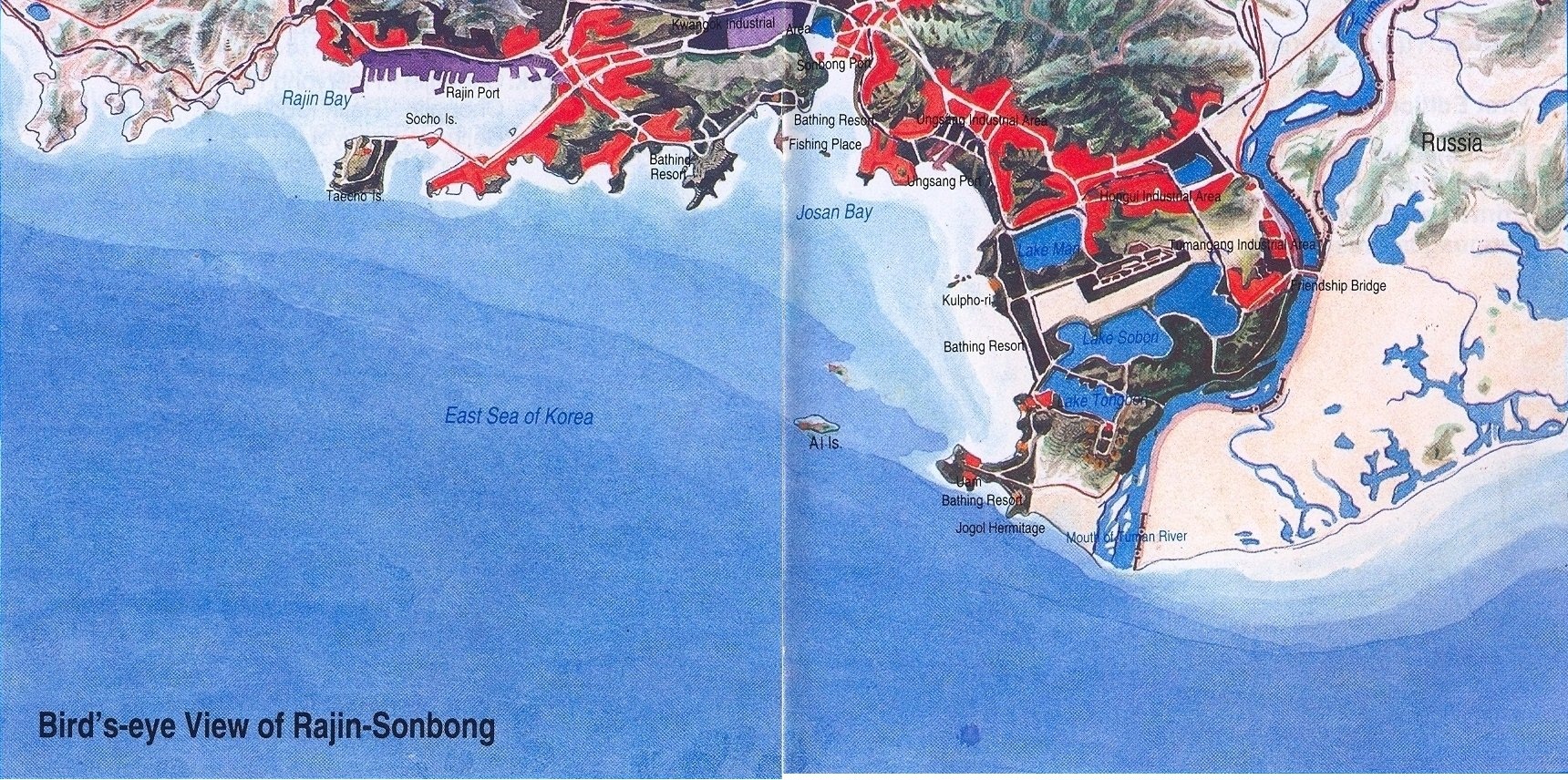
KITC published the image above in 1995 (Source here).  If you look carefully on the right side of the picture you will see the site of a proposed airport.
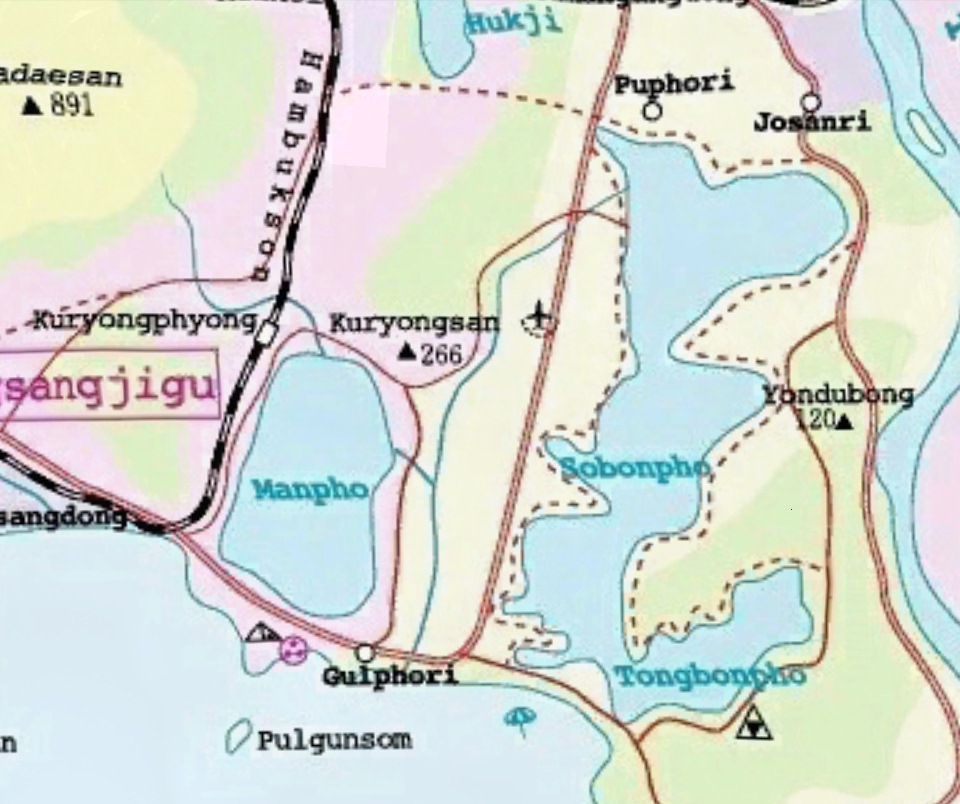
Above is a more recent map of Rason published by the DPRK. In the middle of the above map you can see a small airplane which represents the desired location of a future airfield. It is in the same location as shown on the KITC map.

Here is the approximate location on Google Earth (42.397884°, 130.592084°):
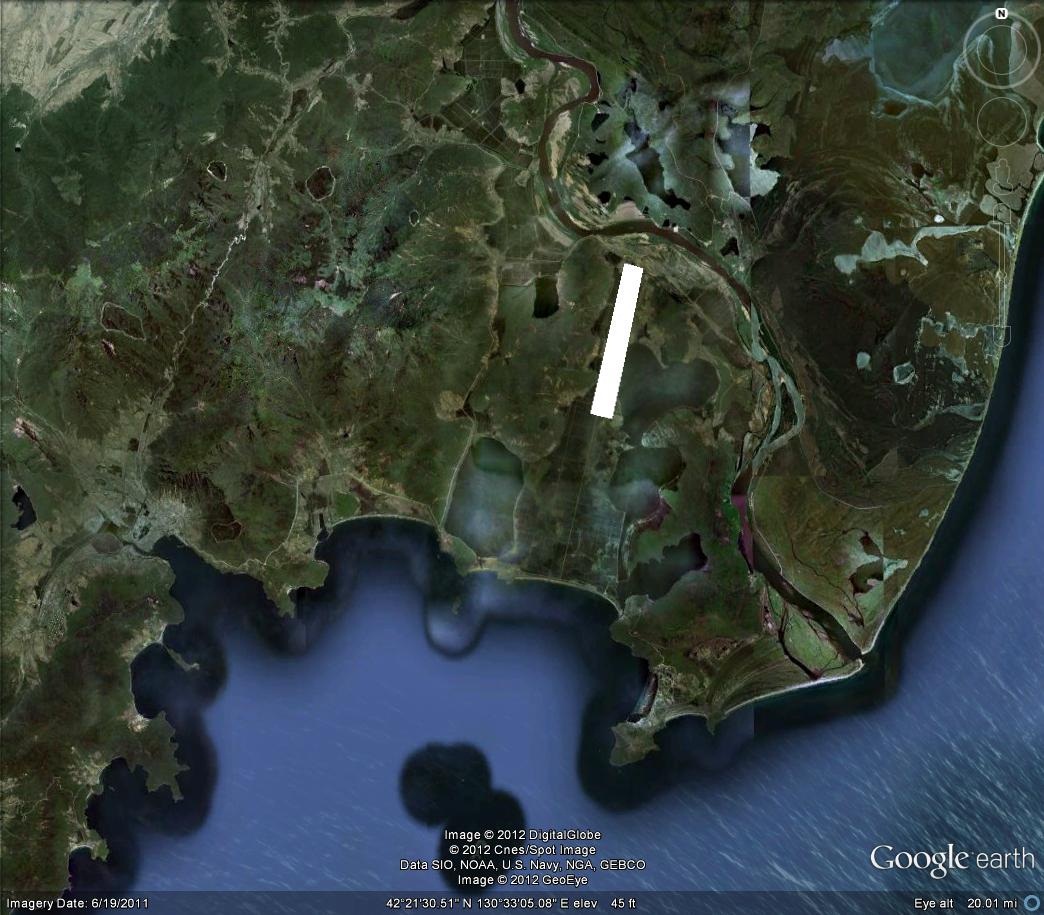
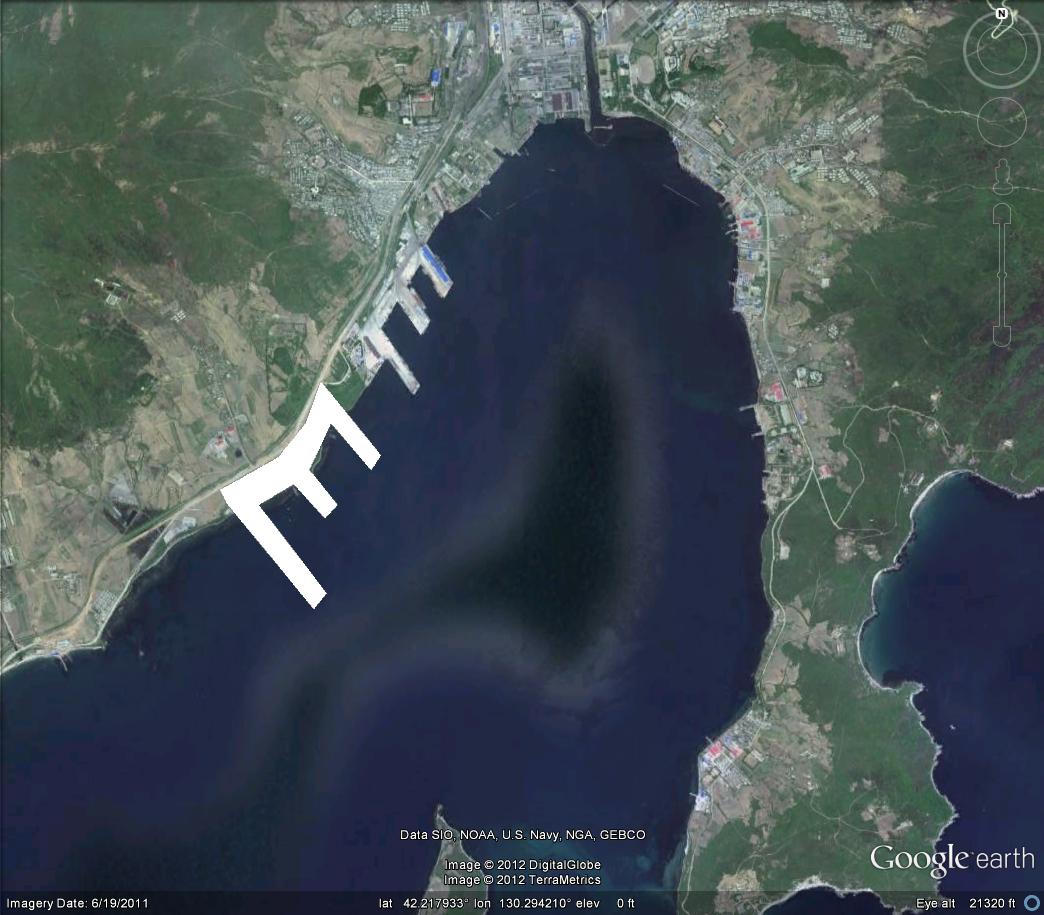
If you look at the left side of the KITC photo you can also see that there are many piers, however today there are only three.  I suspect that the new piers will be constructed south of the current piers and will look something like this:
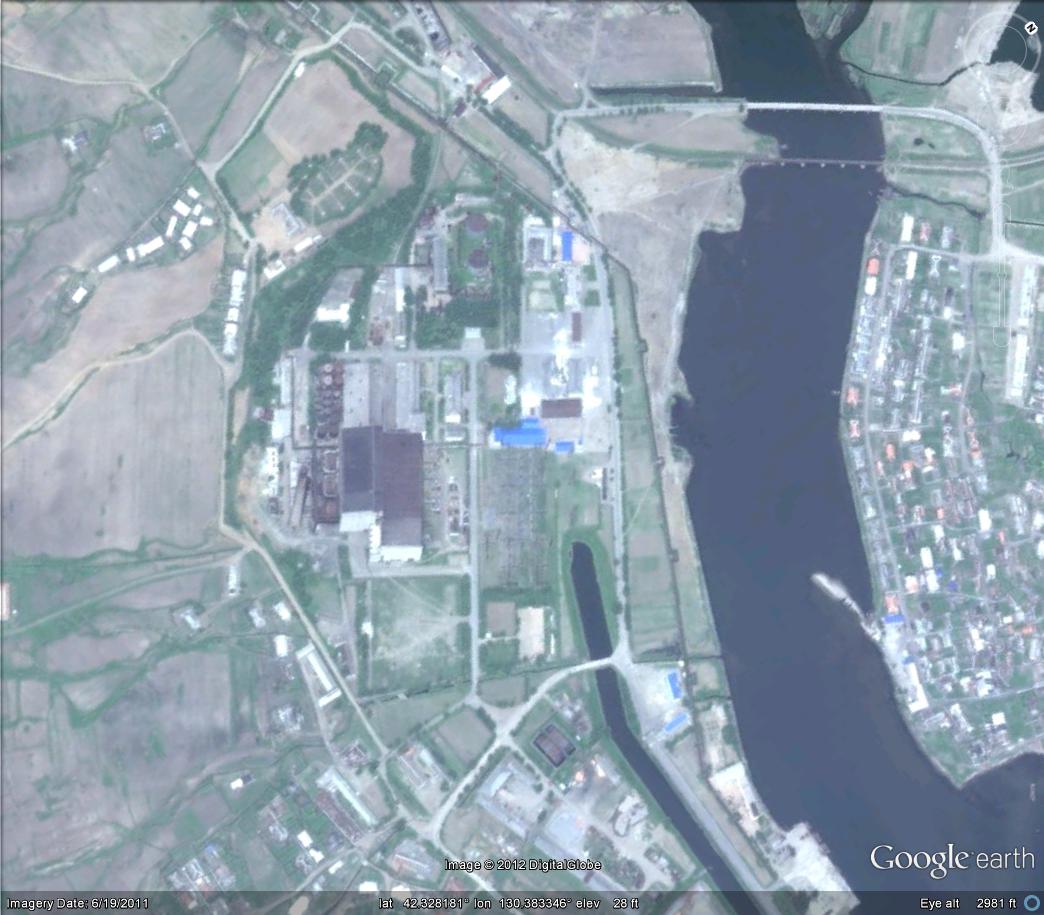
The railway and power plant projects are intereting as well.  There is already a thermal power plant in Sonbong, so I expect that the Chinese are simply renovating it so that it generates more power or is simply more reliable (Google Earth:  42.327275°, 130.382585°):
At a presentation at the Korea Economic Institute in Washington, DC, Andray Abrahamian reported that increased electricity supplies for the Rason Zone could come from China.

As for the Tumen (China) – Rason railway line…this already exists as well.  The DPRK’s Hambuk Line (함북선) runs from Chongjin to Namyang (border with Tumen) to Rason:
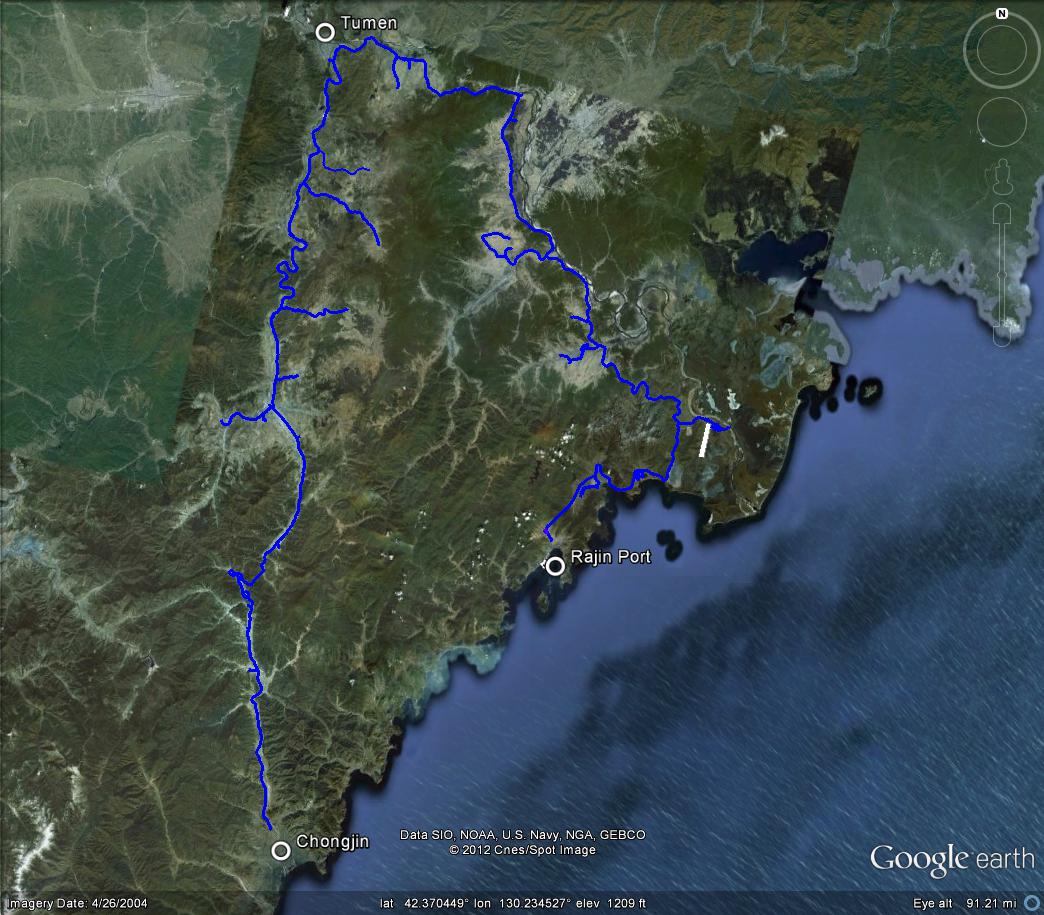
The Tumen to Rason leg of this railway line, however, is approximately 156km (according to Google Earth) and likely runs pretty slowly.  The proposed new Chinese-built Tumen-Rason line is intended to be just 1/3 the distance!

Additional Information:

1. The Russians built a railway line from their border to the Rajin Port. Learn more here.

2. The Chinese and Russians have already rented two of Rajin’s three ports.

Read the full stories here:
China secures right to use 3 piers to be built on N. Korean port for 50 years
Yonhap
2012-2-15

China Reportedly Grabs 3 Docks and More
Daily NK
2012-2-15

Share

On DPRK remittances

Wednesday, February 15th, 2012

Chico Harlan writes in the Washington Post:

Recent North Korean defectors in South Korea sometimes joke that their transition to capitalist life begins with two key steps. First, they buy a smart phone. Then, they get a lesson about phone banking.

With those two things, defectors can then transfer money back to North Korea, where many still have family or friends. The money doesn’t go directly to the North; rather, it’s channeled through a series of brokers, routed through China, and trimmed by handling fees and commissions.

But as underground systems go, this one is quite functional. Some 50 percent of North Korean defectors have transferred money back home. Those who try once almost always do it again.

Just a decade ago, almost no money flowed back to the North in the form of remittances. But the number of defectors here has skyrocketed, and the amount of cash they send back home has surged as well.

Some 23,000 defectors now live in South Korea, with the number jumping more then 2,500 every year. (Just 12 years ago, a total of 1,400 North Koreans lived in the South.)

The defectors don’t make much money — about $1,000 per month on average — but that doesn’t stop them from sharing it generously, shipping it back to a country where $1,000 can feed a family for a year.

According to a January 2011 survey from the Database Center for North Korean Human Rights, some 56 percent of defectors who send money give more than $900 (1.01 million won) annually. Another 12.5 percent give more than $4,500 (5.01 million won) annually.

North Korea scholar Andrei Lankov, in this April 2011 essay, estimated that the total money given each years totals $10 million–an enormous influx of cash into the extremely impoverished North.

One recent defector, Ju Kyeong-bae, described during a recent interview at his apartment in Seoul how he transfers money to his friends in the North, who live in a village some 25 miles from the Chinese border.

First, one of his friends — let’s call him Mr. Jeong — calls Ju from North Korea, using a Chinese cell phone that gets a signal from towers just beyond the border.

Mr. Jeong provides a telephone number for a broker in China. Ju calls the broker.

The broker then gives Ju the name of a bank in South Korea, along with a particular account number.

Ju determines the amount of money he wants to send, punches a few buttons on his iPhone, and transfers the money, which then pinballs from the South Korean bank to a Chinese bank, using two brokers.

The Chinese bank account belongs to a businessman (let’s call him Mr. Kim) who does frequent work in North Korea — and who holds lots of private wealth stashed away in the North. When Ju’s money lands in Mr. Kim’s account, Kim just lets it sit there. He never withdraws it and takes it across the border. Rather, he distributes money he already has stashed in North Korea to Mr. Jeong, who in turn gets it to the person Ju’s payment is intended for.

Mr. Jeong then places another call to Ju — a confirmation.

“Some of the middle men, I never even know their names,” Ju said. “It’s all based on trust. If you don’t trust the system, you’re better off not even sending money.”

According to the 2011 survey of defectors, the commission on transfers is generally between 21 and 30 percent. It’s almost never higher than 50 percent. Some 90 percent of defectors say they receive a phone call from their friend or family member confirming that they received the payment.

One of every two defectors thinks his or her money transfers will spark admiration toward the South. About one in every 10 thinks the money will raise resistance against North Korean society.

South Korea technically bans the transfers, but an official at Seoul’s Ministry of Unification, which handles North Korea policy, says that the government has little incentive to stop the remittances.

“They fall into a gray area,” said the official, requesting anonymity because he was unauthorized to speak about the policy on record. “We always say no money should be sent to North Korea in case it is diverted for military purposes. But in this case, we’re not talking about huge amounts. And it’s for humanitarian purposes. So long as that’s the case, we won’t pursue it.”

Additional posts on remittances:

1. ROK moves to control inter-Korean remittances (2011-5-26)

2. ROK seeks to gain greater control of sanctioned cash flows to DPRK (2011-05-25)

3. Remittances from North Korean defectors (2011-4-21)

4. Defectors remit US$10m a year to DPRK (2011-2-23)

Read the full story here:
North Korean defectors learn quickly how to send money back home
Washington Post
Chico Harlan
2012-2-15

Share

DPRK takes steps to reduce access to foreign media

Monday, February 13th, 2012

According to the Daily NK:

A new unit was formed in mid-January to deal with the amount of ‘illegal’ media circulating in North Korea.

“Unit 114 has been formed following a January 14th order handed down by General Kim calling for a concentrated crackdown on suspicious songs, recorded materials and impure published media,” a source from Yangkang Province told Daily NK on the 12th.

The source went on, “The unit has been organized by the Propaganda Department of the central Party, but the interesting thing is that it also contains people from the National Security Agency.” Interesting, the source noted, because such units, also a very regular feature of the Kim Jong Il era, are commonly made up of people dispatched by the central Party. Indeed, there is already Unit 109 similarly charged with dealing with inflows of outside media.

In addition, the format of the unit’s activities is in marked contrast to some of the past, the source said. “These inspections have not been announced in people’s unit meetings and, since the inspectors are circulating undercover in the jangmadang, people are much more frightened,” she explained. “Someone who was caught selling CDs in the area in front of the jangmadang here told me that the investigation was done by an NSA agent and someone from the central Party Propaganda Department.”

According to the source, the trader in question was selling copies of a recently released North Korean film, ‘Brotherly Love’, when he came under suspicion. Even though it is a North Korean film which portrays Chinese troops in the Korean War and the lives of North Koreans at the time, the trader nevertheless got in trouble because the film was copied rather than being an original.

“The trader made and signed a written statement saying ‘I will not sell copied films again’ and so was let go, but as he was leaving he was asked by an NSA agent to report people possessing or selling South Chosun films and songs or American films. He got really shocked by the experience, and is now at home resting up,” the source said.

“A lot of traders who used to make a living selling CDs are now in hiding. The investigation is harsh, so people with experience selling South Korean CDs in the past are hiding to avoid getting caught.”

Read the full story here:
More Pressure on Illicit Media
Daily NK
Lee Seok Young
2012-2-13

Share

Viennese Coffee now available in Pyongyang

Monday, February 13th, 2012

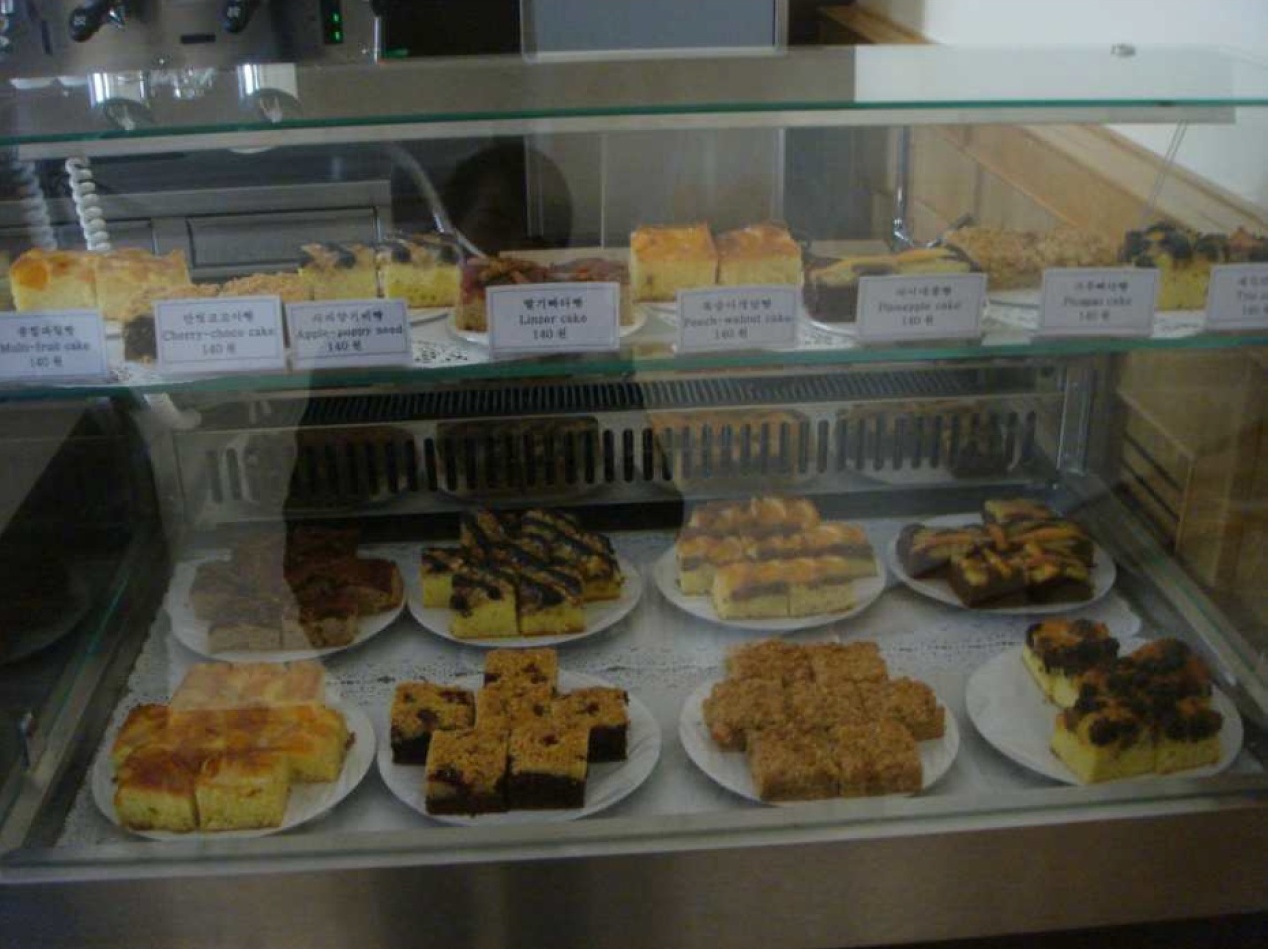
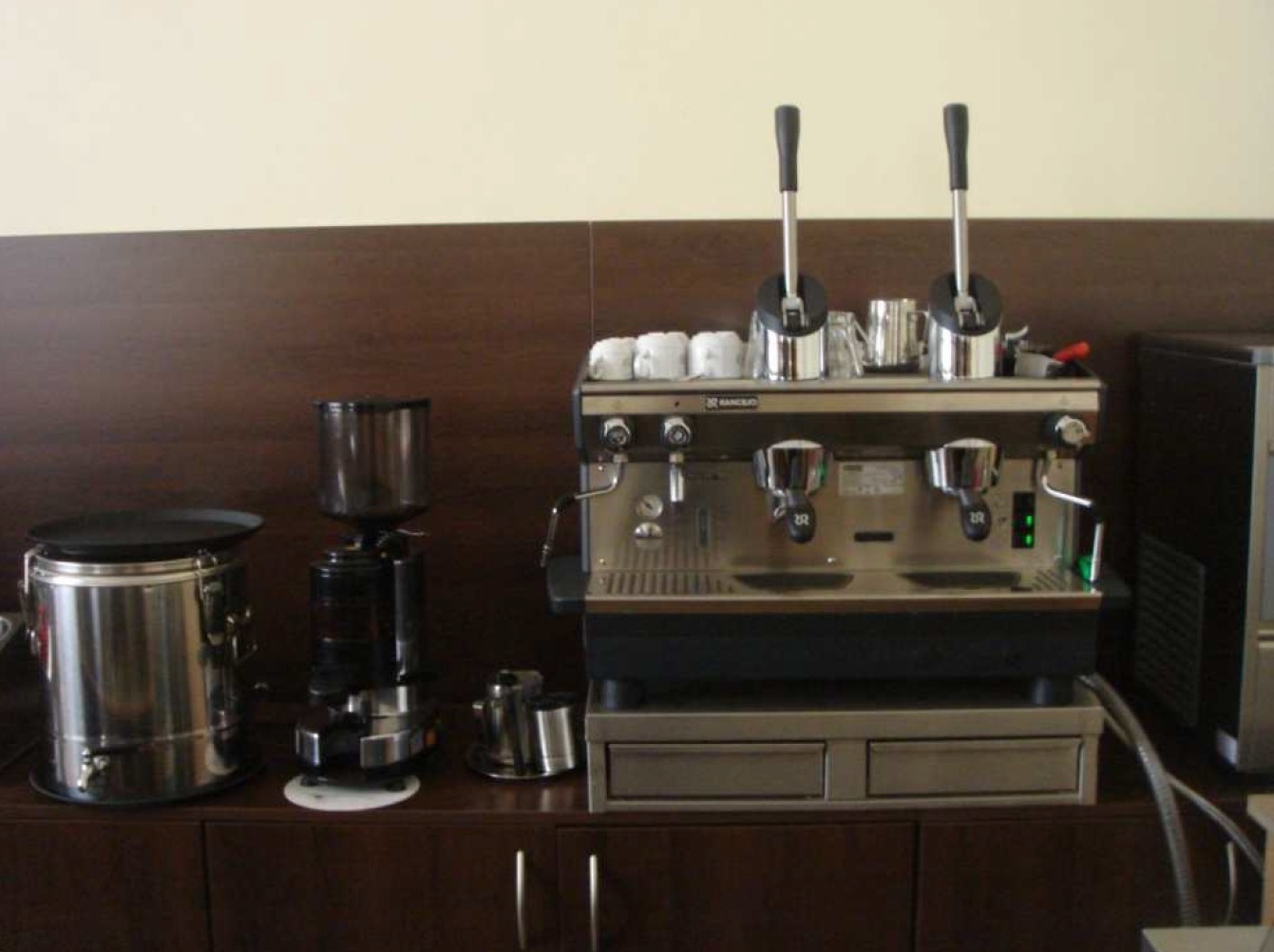
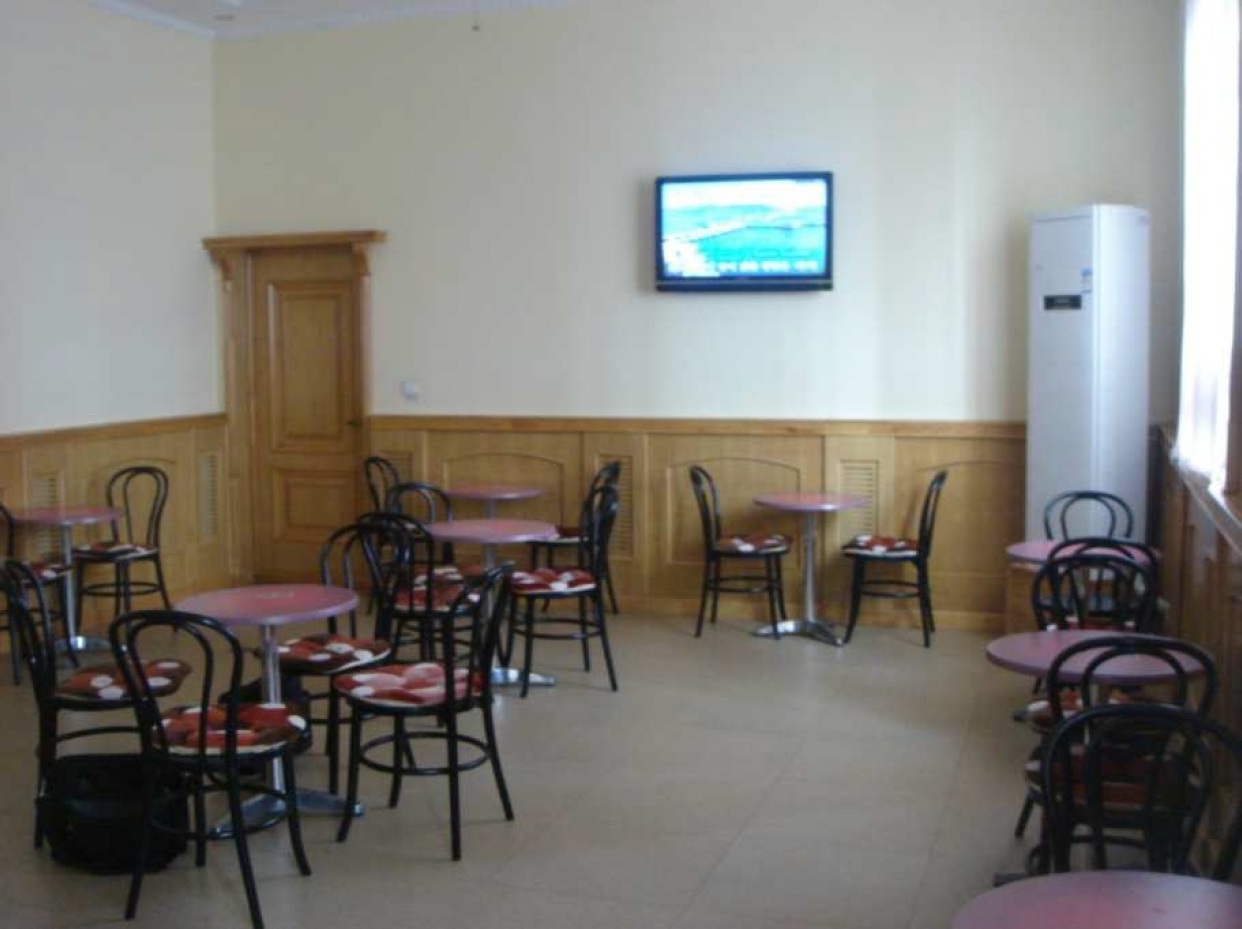
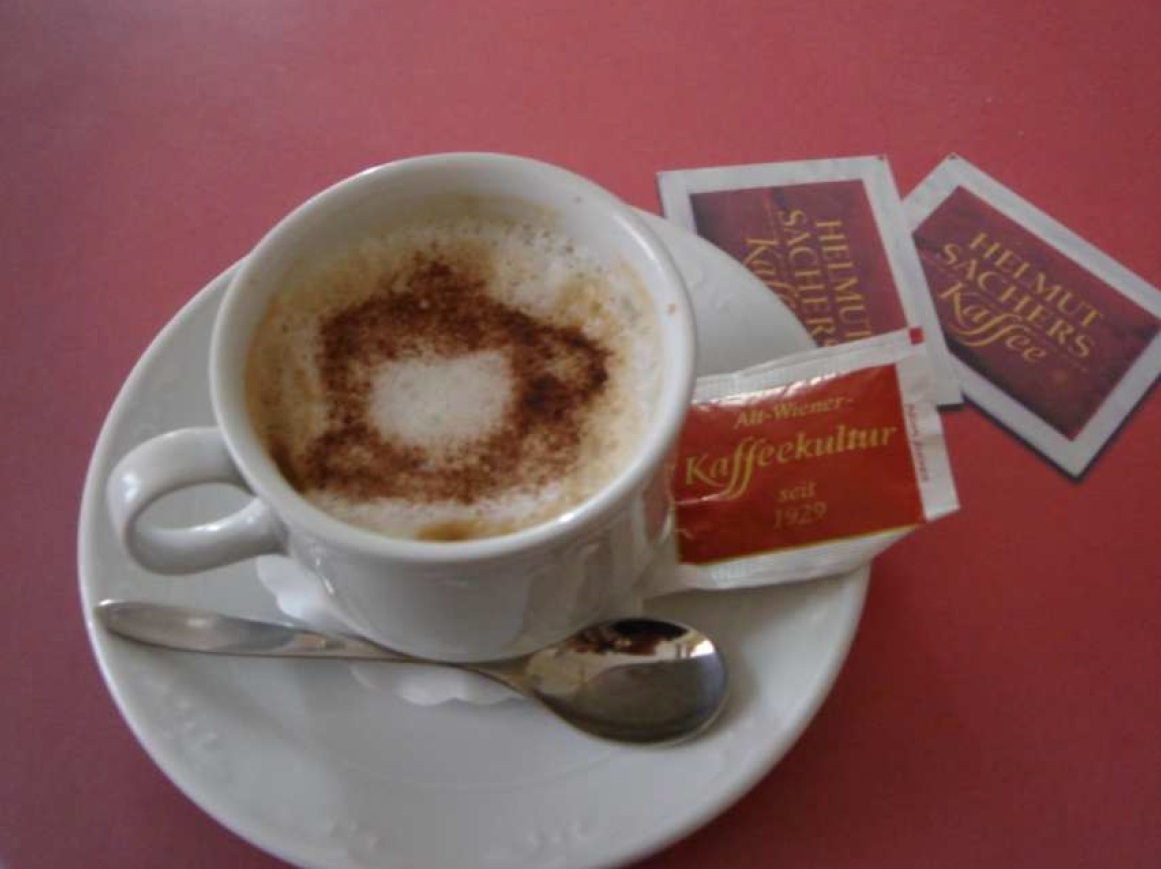
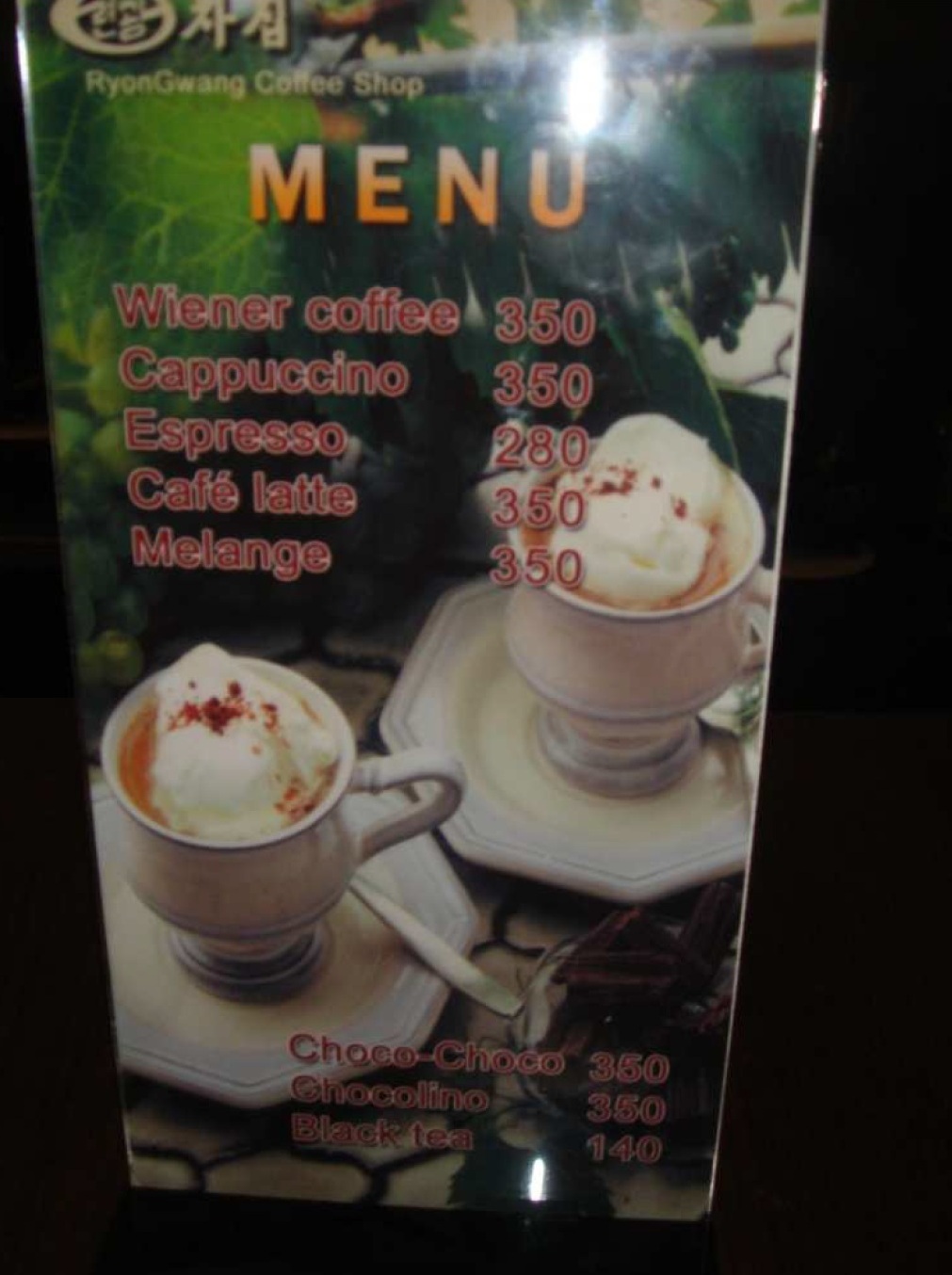
UPDATE 1 (2012-2-13): Thanks Dr. Seliger we now have some photos of the interior of the newly opened Viennese Coffee Restaurant:

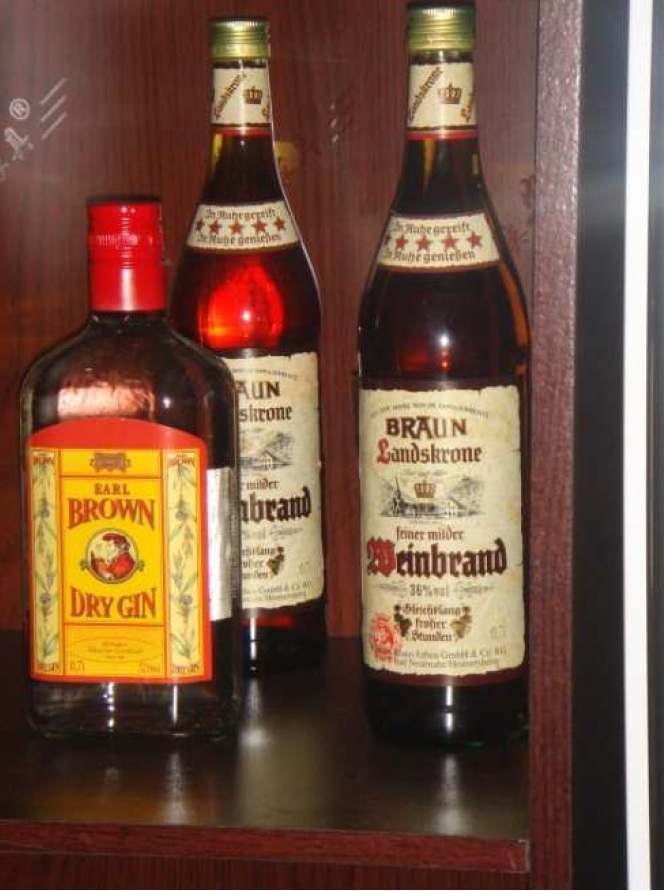
And if you don’t feel like coffee, they have more “traditional” drinks on offer:

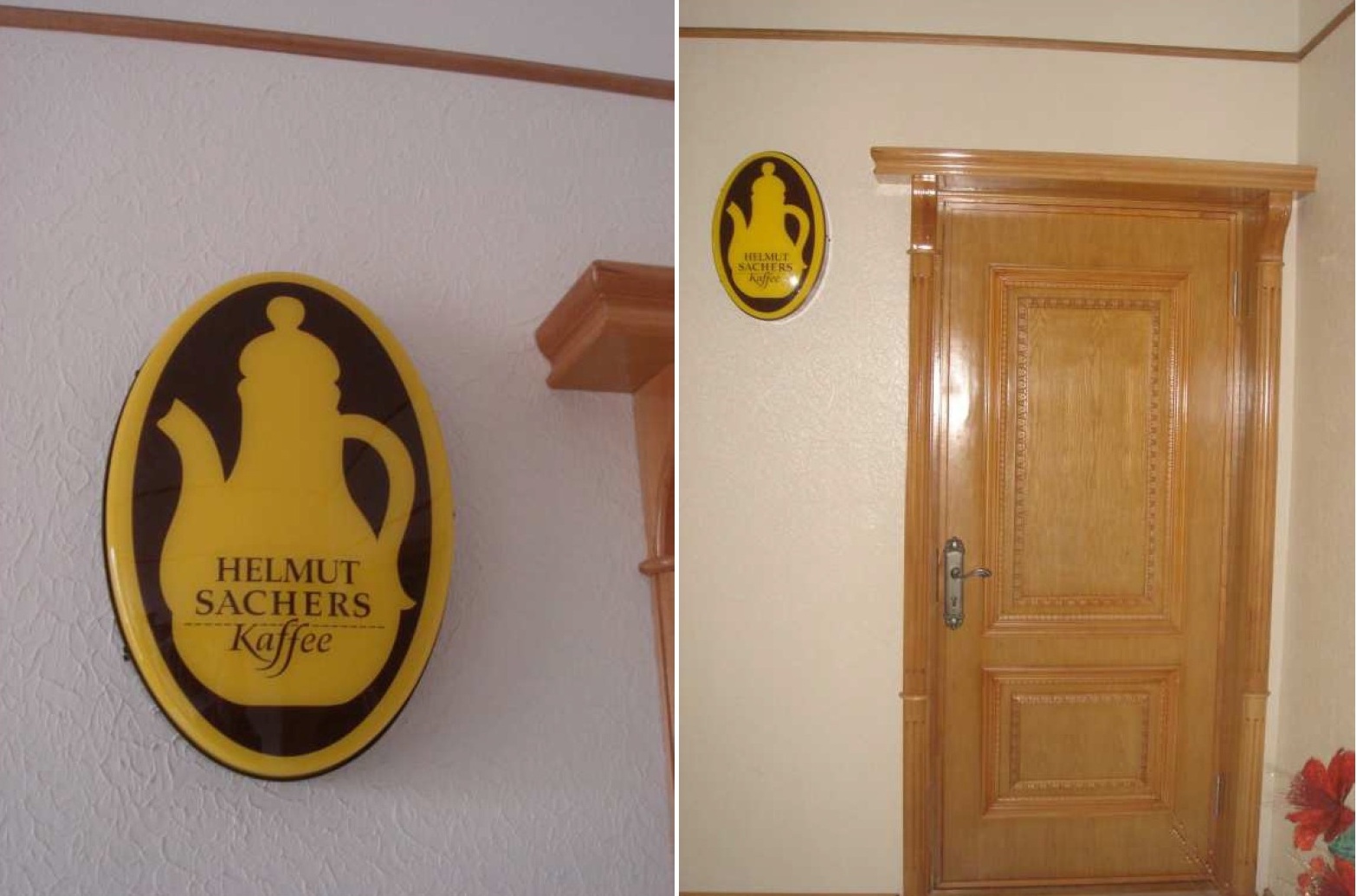
The sign on the front door reads “Helmut Sachers Kaffee,” but the menu shows another name: Ryongwang Coffee Shop (련광). Perhaps this is the name of the Korean Join-Venture company, but I cannot find any additional information on it.

A reader notes the following:

Helmut Sacher is an Austrian coffee roaster (web page here). It is probably that Ryon’gwang buys beans from Sacher, and/or Sacher owns part of the joint company.

ORIGINAL POST (2011-12-4):

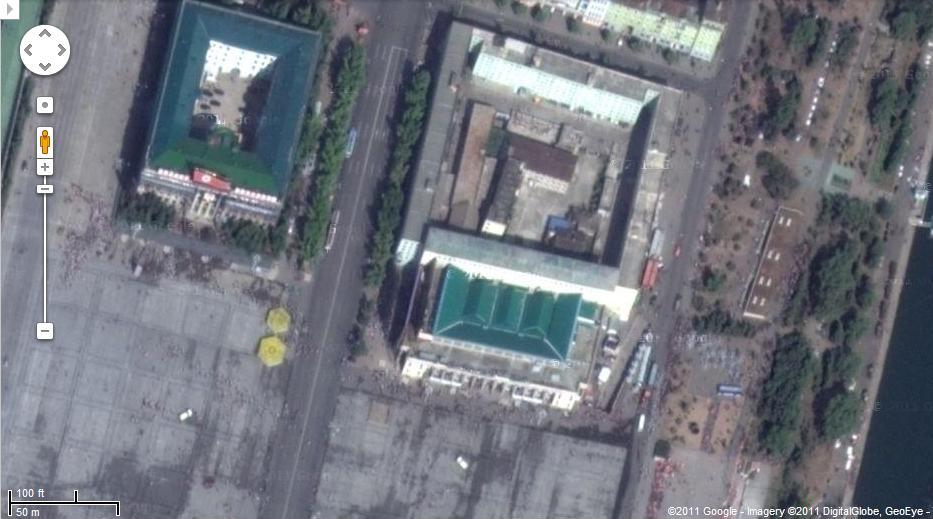
Pictured above (Google Maps): Korean Central History Museum on Kim Il-sung Square–site of the new coffee house.

According to a German reader:

A report published [2011-11-24] in the German Daily “Frankfurter Rundschau” reports on the opening of a “Viennese Coffe House” right on Kim Il Sung Square inside the Museum of Korean History (the one wih the “trumpet soldier”).

In brief: Austrian enterpreneur Helmut Sachers has opened this new Vienna style cofee house in October after training Korean service- and bakery staff. It says that it mainly serves the foreign community in Pyongyang, but alo an increasing number of Koreans appear to be able to pay EUR 2, the equivalent of 5000 Won, for a cup of cappucino.

Then reference is made to two older pizza-places and a a Swiss coffe house …. and various duty free shops serving the international community and wealthy North Koreans… which is contrasted with the children and young soldiers exercising on Kim Il Sung Square, who show indications of malnurishment.

You can read a PDF of the German article here. If a reader has the ability and inclination to provide an English-language copy of this article, I would appreciate it.

UPDATE: Thanks to Mr. Knoll I have a full English translation of the article:

Whipped Cream in Pyongyang

The heart of the North Korean capital Pyongyang now boasts a Viennese coffee house – a sign that the isolation of the country is showing cracks.

By Bernhard Bartsch

A cappuccino is not political, in most places in the world. But the milk foam coffee now being served on Pyongyang´s Kim Il Sung Square has an unmistakably political flavor – and some customers think that´s why it tastes so good. Right next to the parade ground in the heart of the North Korean capital, a Viennese café has opened its doors in late October – a sign the isolation of the arch-communist regime is slowly showing cracks.

The Austrian operator could hardly have asked for a more iconic building: the Museum of Korean History, a Stalinist representative structure, on its roof, a 10 m (30 ft) tall soldier is sounding the charge. Inside, you get a crash course in the history of the Korean revolution, and you´ll be served “Viennese coffee with whipped cream”, but only after passing through a door inconspicuously marked “café” in Korean. Only then the yellow coffeepot-shaped emblem marked “Helmut Sachers Kaffee” becomes visible.

“We have thirty to fourty customers per day” the young waitress says. “Most of them are diplomats or other foreigners living here”. She wears a black pantsuit, and like most North Koreans, she is rather tight-lipped when talking to foreigners. A couple sitting at one of the eleven tables is examining the room, a peculiar mix of Austrian gemuetlichkeit and North Korean drabness. Two fans with gaudily-colored lamps are hanging from the ceiling, there´s wood paneling to half height, pink blinds cover the windows. A large flat screen TV is showing Austrian scenery, waltz is being played as background music.

Payment in hard currency

Expensive coffeemakers can be seen behind the bar, a vitrine shows a variety of cakes: apple tart, cherry streusel, poppyseed-walnut-vanilla. They won´t win any prizes in Vienna, they might in Pyongyang, though. The coffee, the dishes, even the sugar packs are imported from Austria. A cappuccino is two euros, you pay in hard currency. The Koreans prefer euros, Chinese yuan, even US dollars, over their own currency. Two euros are worth about 5,000 Korean won on the black market. That´s about a month´s salary for the average North Korean, not counting food and clothing rations.

The man the café is named after is living in Oeynhausen, near Vienna. “We seem to have a monopoly on exotic export markets” explains Helmut Sachers, owner of a long-standing family-owned coffee-roasting establishment, now doing business in 25 countries. “There´s a Café Sachers in the Mongolian capital Ulan Bator, too”. The cafés, however, are not operated by Sachers himself, but by importers. The one in Pyongyang was the brainchild of Vienna entrepreneur Helmut Brammen. “In 2009 he told me he´s doing business in very unusual destinations”, Sachers says. The negotiations went on for two years, before Sachers and Brammen flew to Pyongyang in March, accompanied by an Austrian baker to train staff. They met very eager men and women, Sachers says. The North Koreans soaked up Austrian coffee culture like a sponge.
The fact that a Viennese coffee house can open its doors in Pyongyang shows that behind the rigid façade things are in a state of flux, a European diplomat says. “Ordinary North Koreans won´t come here, of course, but the elites know what life is like outside the country, and they want a part of it to enjoy at home.

Communist Pizza

The Viennese café is not the first international establishment in the city. A member of the Italian Communist Party opened a pizzeria in 2009, the second in Pyongyang, but the first that is partly owned by foreigners. Adra, an aid organization run by Swiss Adventists, opened a Swiss café a few years ago, serving cheese fondue to North Koreans. There are also several stores selling exclusive imported goods. At the “Pyongyang Shop”, where the clientele consists of embassy staff and members of international aid groups, Italian pasta, German jam, Swiss chocolate, and a large selection of wine and whisky are available.
“Those with money can buy almost anything they want in North Korea” the diplomat says. “It is remarkable that more and more customers are North Koreans.” Despite the egalitarian rhetoric in the Communist country, the real-life wealth disparities are much more blatant than in capitalist countries.

The scene outside the Viennese café on Kim Il Sung Square is no exception. Schoolchildren are rehearsing in the cold for the celebrations planned for April 2012, the 100th birthday of the country´s founder. A gigantic mass gymnastics show involving hundreds of thousands of participants is supposed to strengthen unity among the Korean people. By command, children turn cartwheels and do flic-flacs, a student band plays military marches. On the other side of the street, an army unit doing construction work has pitched its tents. Clothing has been left to dry on bushes, there are lines of cabbage leaves to be pickled by the unit´s chef, to make kimchi, the national dish.

Almost all of the young soldiers are stunted – a result of the famine in the 1990s that killed millions of North Koreans and left many survivors with permanent health problems. “The food situation is still very bad, but a catastrophe as in those days seems unimaginable today”, says a Western aid worker, who is almost a regular at Helmut Sachers`s. “The country is opening up, and this is irreversible.

Share

Daewoo Shipbuilding [not] to invest in DPRK SEZ

Friday, February 10th, 2012

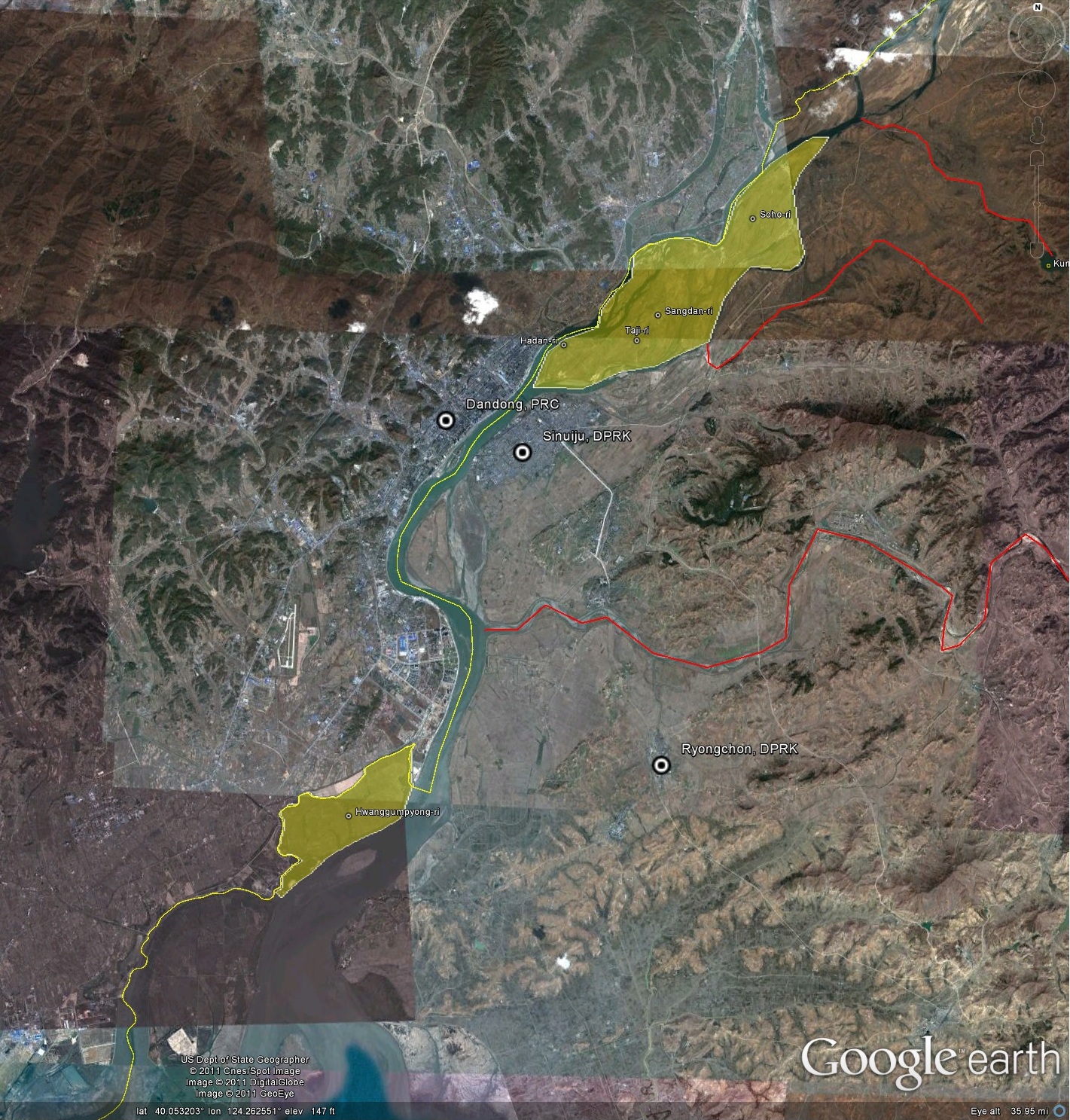
Pictured Above (Google Earth): The Hwanggumphyong and Wiwha Island SEZ on the Yalu/Amnok River which separates the DPRK and PRC.

On Friday, the Donga Ilbo reported that Daewoo Shipbuilding was going to invest in the DPRK’s Hwanggumphyong SEZ (see the original post below).  Today the report appears to be incorrect. According to the Wall Street Journal:

Daewoo Shipbuilding & Marine Engineering Co. on Monday shot down news reports that it had agreed to build a shipyard in North Korea.

“We don’t have any plans to do that,” a spokesman said.

According to some South Korean news accounts over the weekend, the company, which is the world’s second-largest builder of ships and whose controlling stake is owned by the South Korean government, had agreed to help a Chinese company develop an island off North Korea’s northwest coast, near the Chinese city of Dandong.

The DSME spokesman said the company held discussions with the Chinese company but isn’t close to an agreement.

The news accounts said DSME would build a shipyard that would be devoted to repair work. One report said the idea would be presented to DSME’s directors and announced in April.

The company spokesman said it’s unclear how the accounts originated.

See the original report bleow:

(more…)

Share

Law on Foreign-funded Banks Amended

Thursday, February 9th, 2012

According to KCNA (2012-2-9):

Law on foreign-funded banks has been amended in the Democratic People’s Republic of Korea.

The law, which breaks into 32 articles in five chapters, deals with classification, residence, property right and independent management of foreign-funded banks.

The law stipulates that the banks with 10 or more years of banking activities shall be exempted from paying income tax for the first-year profits.

It also provides that business taxes shall not be levied on the interest receipts from loans that were credited to local banks and businesses in their favor.

Share

North Korean workers in Kaesong exceeds 50,000

Thursday, February 9th, 2012

Institute for Far Eastern Studies (IFES)
2012-2-8

As of January 2012, the Kaesong Industrial Complex (KIC) employs over 50,000 North Korean workers.

South Korea’s Ministry of Unification (MOU) reported that North Korea sent 449 additional workers to the complex last month, bringing the total number of North Korean employees at the KIC to 50,315.

The majority of the workers are women, comprising 72 percent of the total employees. A total of 81.8 percent are high school graduates, while 9.5 percent are college graduates and 8.7 percent are graduates from specialized/professional schools.

The KIC has had a low worker turnover rate. Some of the workers are licensed doctors and nurses, signifying the popularity of employment at the complex.

However, the MOU added that, “in order to meet the demands of the South Korean corporations in the KIC, 20,000 more workers are needed.”

Currently the average monthly wage of the workers is 110 USD, which is paid directly to the North Korean authorities in US dollars by the South Korean companies.

Out of the total wage, 45 percent is deducted and collected by the North Korean government as social security (15 percent) and social cultural policy funds (30 percent). The North Korean workers receive 55 percent of the total wage, which is paid either in coupons or North Korean currency.

Since the KIC’s opening in 2004, the total amount paid to the KIC workers reached 193.58 million USD as of November 2011.

Despite the deadlocked relations between the two Koreas, the number of employees, along with production and number of businesses, has steadily increased.

The number of employees in 2007 was 23,529. Thus the number has increased to over 50,000 in just four years, and the yearly production output has risen from 180 million to 400 million USD.

Cumulative production also increased from 310 million USD in March 2008 to 1.19 billion USD as of last year. During this time, 55 additional South Korean companies joined the KIC.

Yearly export output jumped from 870,000 USD in 2005 to 36.87 million USD in 2011. However, this is a drop from the previous year’s export of 39.67 million USD. Cumulative export as of November 2011 was 190 million USD.

In the assessment of the MOU, “the decrease in export reflects buyer’s anxiety from instability in inter-Korean relations and North Korean military provocations and many of the manufactured goods were sold domestically in South Korea.”

In addition, the issue of KIC-made products to be granted a “made in Korea” label is still under debate. According to an undisclosed MOU source, “This July will mark the one year anniversary of the ROK-EU FTA and the Committee on Outward Processing Zones (OPZ) is scheduled to meet to discuss the matter of KIC’s recognition as OPZ. But it will not be an easy game to win.”

UPDATE:  The Hankyoreh also wrote about the Kaesong Zone’s growth.

Share

KEDO again seeks compensation for equipment in DPRK

Tuesday, February 7th, 2012

According to Yonhap:

A U.S.-led international consortium plans to renew its call this month for North Korea to compensate for losses incurred from scrapping a project to build two light-water reactors for the communist state, a senior Seoul official said Tuesday.

The move, which is likely to irritate North Korea after the death of Kim Jong-il, had been originally decided upon just weeks before Kim died of a heart attack in December last year. The Korean Peninsula Energy Development Organization (KEDO) decided not to drop the demand for compensation from the North.

“The KEDO will send an official letter this month to North Korea, demanding it compensate US$1.89 billion for the termination of the light-water reactor project,” the official at Seoul’s foreign ministry said.

The KEDO, which also includes South Korea, Japan and the European Union, officially shut down the multi-billion-dollar project in 2006 after North Korea was caught by the U.S. pushing a second nuclear weapons program based on enriched uranium in addition to its widely known plutonium-based program.

The consortium has since been asking North Korea to return the money it poured into the project. Prospects for the call have remained dim, however, given the North’s economic hardship and belligerency.

The $4.5 billion project, which was about 35 percent complete, dated back to a 1994 deal linked to North Korea’s promise to denuclearize. In return, the KEDO agreed to build two 1,000-megawatt light-water reactors.
In September last year, amid renewed diplomatic efforts to resume the six-party talks on ending the North’s nuclear drive, Pyongyang abruptly demanded $5.7 billion in compensation, claiming that failure by the KEDO to build the reactors caused it heavy financial and other losses.

“The KEDO’s renewed call for compensation would be an official reply to counter the North’s demand last September and has nothing to do with the passing of Kim Jong-il,” the official said on the condition of anonymity, brushing off concerns about possible irritation at the North.

The official believed that North Korea demanded compensation last September as part of its “negotiating ploy” to raise the issue of the halted project if the six-nation talks resume.

The death of Kim left many policymakers and analysts wondering if his youngest son and chosen heir, Kim Jong-un, will be able to successfully consolidate power in Pyongyang.
Shortly before Kim died, the United States and North Korea were apparently poised to announce a breakthrough toward the resumption of multilateral talks, which has been dormant since late 2008. Other members of the talks include South Korea, China, Russia and Japan.

South Korea, the U.S. and Japan have insisted that the North must accept a monitored shutdown of its uranium enrichment program before the aid-for-disarmament talks can resume.

Read the full story here:
Consortium to renew call for Pyongyang to reimburse reactor project losses
Yonhap
2012-2-7

Share

DPRK exercising stricter enforcement of official prices

Tuesday, February 7th, 2012

According to the Daily NK:

At the beginning of last month, the North Korean authorities ordered local commercial management offices to strengthen oversight to ensure that products were being sold at official state prices, according to a source from Shinuiju on February 6th.

Meeting with Daily NK on a visit to Dandong, China, the source explained, “Friction has started up again between market managers and traders because of orders at the start of the year to make sure that everything is sold at the state-designated price. They do this every year, but this year they are confiscating products and transferring them for sale in state stores.”

Price-related orders are issued annually in North Korea, where the authorities are still reluctant to countenance market price autonomy despite fifteen years of ad hoc marketization. As such, the Ministry of Procurement and Food Policy sets the prices of key goods and posts them at the entrance to markets. These prices are approximately uniform across the country.

Only ‘regional’ items being treated differently; prices for these items are set by pricing bureaus established under provincial People’s Committees. Most obviously, the state price of seafood is cheaper in coastal areas than in inland parts of the country.

However, real price differentials make selling at these state prices untenable; for example, the market price of a kilo of rice in Shinuiju is currently hovering around 3,200 won, while that for corn is 2,200 won, yet the state prices are 1,600 won and 690 won respectively. Therefore, traders traditionally simply pretend to sell at state prices when inspectors turn up, before resuming trade at market prices once they have left.

But the problem this year is that enforcement is stricter than usual, with illegally priced products being confiscated, transferred directly to state stores and sold at state prices. According to the source, “In the past state prices were only symbolic and inspectors didn’t enforce them. Even if they confiscated something you could pay them a little and get it back. But now they are just selling those products directly at state prices, so a lot of people who have ignored the crackdowns are ending up in a real fix.”

Not only that. “People who are caught like this are banned from trading from a stall for a month,” the source added. “Traders are reacting very carefully now as a result.”

However, history has taught traders that the crackdown is unlikely to last too long, and anticipate a return to less strict oversight in due course.

Read the full story here:
Annual Market Crackdown Ensnaring the Careless
Daily NK
Park Jun Hyeong and Jeong Jae Sung
2012-2-7

Share

Sawaris second DPRK trip and KoryoLink subscription data

Friday, February 3rd, 2012

The CEO of Egypt’s Orascom Telecom, Naguib Sawiris, has made his second visit to the DPRK. You can read about his first visit in January 2011 here.

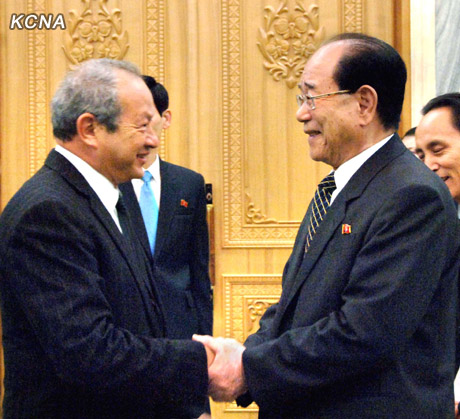
Pictured above (KCNA): Naguib Sawiris meets with Kim Yong-nam.

KCNA reported that Mr.Sawiris arrived on February 1 (video here):

Pyongyang, February 1 (KCNA) — Naguib Sawiris, executive chairman of the Orascom Telecom Media and Technology Holdings SAE, and his companion arrived here on Wednesday.

On February 2, KCNA reported that Mr. Sawiris met with Kim Yong-nam (video here):

Kim Yong Nam, president of the Presidium of the DPRK Supreme People’s Assembly, met and had a friendly talk with Naguib Sawiris, executive chairman of the Orascom Telecom Media and Technology Holdings SAE of Egypt, and his companion who paid a courtesy call on him at the Mansudae Assembly Hall Thursday.

KCNA reported that Sawiris left on February 3, however, before leaving he praised Kim Jong-il and offered a gift to Kim Jong-un. Accoridng to KCNA:

Naguib Sawiris, executive chairman of the Orascom Telecom Media and Technology Holdings SAE of Egypt, was interviewed by KCNA before his departure from here.

Expressing profound reverence for leader Kim Jong Il, he said:

The Korean people lost a great leader. I also lost the most friendly man. General Kim Jong Il was a great father of the people.

I can never forget the day when I had the honor of being received by him.

While meeting him, I was totally attracted by his humanity.

He was the greatest man possessed of the noblest virtue.

His untimely passing was a great loss not only to the Korean people but to progressive humankind.

He devoted his all to his people with ardent love for the people.

While staying in the DPRK I was deeply moved to visit the Pyongyang Children’s Foodstuff Factory honored with the leadership provided by Kim Jong Il.

He paid deep attention to the operation of the factory.

The tireless efforts made by him for the happiness of the people will be conveyed to posterity for all ages.

The Korean people are energetically pushing forward socialist construction under the sagacious leadership of supreme leader Kim Jong Un.

I sincerely rejoice over the achievements made by the Korean people.

I wish the Korean people greater progress.

I would like to make a positive contribution to boosting the exchange with the DPRK.

His gift to Kim Jong-un remains unknown for now:

The dear respected Kim Jong Un, supreme leader of the Workers’ Party of Korea and the Korean people, received a gift from the executive chairman of the Orascom Telecom Media and Technology Holdings SAE of Egypt.

Chairman Naguib Sawiris handed it to an official concerned on Thursday.

While in the DPRK, Orascom holding announced that it had reached 1 million mobile phone subscribers in the DPRK. According to Bloomberg:

Orascom Telecom Media & Technology Holding SAE, an Egyptian mobile-phone operator headed by billionaire Naguib Sawiris, said its subscribers in North Korea exceeded 1 million.

The Cairo-based company made the annoucement in a regulatory filing today.

The Economist offers some business statistics:

Koryolink earns a gross margin of 80%, making North Korea by far the most profitable market in which Orascom operates. The company has worked hard to court the regime, its chairman travelling to Pyongyang last year to meet the late supreme leader, Kim Jong Il.

North Korean mobile-phone users spend an average of $13.90 a month on calls and text messages, and they tend to pay in hard currency. According to a foreign diplomat, many customers turn up at Koryolink shops with bundles of euro notes. There are even incentives for paying in euros, such as free off-peak calls. This provides foreign currency for a government that craves it.

Mobile-phone customers obtain the hard currency from the informal private trading on which many North Koreans depend. Such business is forbidden, but the government has failed to feed its people, forcing it to turn a blind eye to some capitalist practices. Many insiders benefit: Pyongyang’s “golden couples” consist of a government-official husband and an entrepreneur wife.

Mobile usage now appears to be spreading beyond Pyongyang. The gadgets are a common sight in other cities such as Nampo, not far from the capital, and increasingly are owned by non-officials. As yet, though, only a sixth of the country has a mobile signal.

Martyn Williams has specifics on the corporate structure of the service and service statistics:

The company is operated by Cheo Technology, which is a joint venture between Egypt’s Orascom Telecom Media And Technology Holding (OTMT) and North Korea’s Ministry of Posts and Telecommunications. OTMT holds a 75 percent stake and the North Korean government owns the remaining 25 percent.

Koryolink’s service has popularized cell phones and visitors to Pyongyang say they are now a common site on the city streets. The Koryolink network covers the capital city in addition to 14 major cities, 86 smaller cities, and 22 highways. That equals 14 percent of the landmass but about 94 percent of the population, according to Orascom.

Share