Archive for the ‘DPRK organizations’ Category

Aminex to begin oil exploration in the DPRK

Thursday, June 3rd, 2010

UPDATE 2: According to Yonhap:

North Korea has inked a 10-year contract with British oil and gas company Aminex to explore and extract oil on the seabed off the country’s east coast, the Financial Times (FT) in London reported on June 1.

For the deal, North Korea presented Singapore-registered Chosun Energy as its representative to establish a 50-50 joint venture, Korex, with Aminex, the FT said, noting a filing with Singapore’s Accounting and Corporate Regulatory Authority.

Chosun Energy is an investment holding company operated by North Korea with a paid-up capital of US$1.2 million, according to the newspaper. But the newspaper did not elaborate further details on the company.

Korex will search for oil in an area of 50,681 square kilometers (20,272 square miles) in parts of North Korea’s east coast, Aminex said in a statement.

The contract with the British company, which is listed in London and Dublin, was signed around mid-May in London by officials from the North’s oil company and a head official for Aminex.

“Officials from North Korea’s state oil company traveled to London two weeks ago to conclude the 10-year contract. Lord Alton, chairman of Britain’s parliamentary North Korea group, says he showed the officials around parliament,” the FT added.

North Korea has contacted foreign companies and investors to attract foreign capital for searching for its rich natural resources, including crude oil. In 1997, the North claimed it had reserves of 5 to 40 billion barrels of oil.

North Korea has maintained ties with Animex since 1998. Aminex has been hunting for potential oil reserves in the North Korean portion of the Yellow sea since it signed with the country for joint oil and gas development in January 2005.

UPDATE 1: According to the AFP:

The head of a London-based energy firm that signed a deal to search for oil off North Korea said on Thursday he hoped to start exploring in a year but was closely monitoring tensions on the peninsula.

Aminex PLC executive chairman Brian Hall told AFP he expected “field work in about a year” off the communist nation’s east coast and aimed to “find substantial reserves”.

However, relations on the peninsula have become strained after North Korea was accused of carrying out a torpedo attack on a South Korean warship in March that left 46 sailors dead and stoked fears of an armed conflict.

Pyongyang has denied involvement in the sinking and threatened war in response to a trade suspension and other reprisals by the South.

Asked about the timing of the North Korea contract, Hall said “we have been working with (the) North Koreans for over a decade and an agreement such as the one we have recently signed takes many months to negotiate”.

He added: “Naturally we will keep a very close eye on the tensions on the peninsula, as we have done during previous incidents, but our project is of a long-term nature and well thought through.”

Aminex announced last week that an associate company had signed a 10-year contract with North Korea to search for oil in an area of about 50,681 square kilometres (20,272 square miles) in the Korean East Sea.

Hall declined to give an estimate of the potential deposits.

The contract was signed by Korex — a 50-50 venture between Aminex and Singapore-registered Chosun Energy — and the Korean Oil Exploration Company, the North’s state oil firm.

Victor Shum, an analyst with energy consultancy Purvin and Gertz, said there was every chance that oil would be found in the area but stressed the reserves must be of a significant size in order for exploration to progress further.

“The question is whether any oil reserves that may be discovered there are going to be economically viable to extract,” Singapore-based Shum told AFP.

“I think there has been interest certainly by oil companies so there is therefore a possibility of something there … So far the production isn’t large,” he said.

Aminex, with listings on the London and Irish stock exchanges, describes itself as an upstream oil and gas company with concessions in several countries including the United States, Kenya and Egypt.

According to a filing with Singapore’s Accounting and Corporate Regulatory Authority obtained by AFP, Aminex’s partner Chosun Energy is an investment holding company with a paid-up capital of 1.2 million dollars.

It listed its address as the German Centre in Singapore, a building that hosts small and medium-sized foreign companies, and named three directors — an American, one Briton and a Singaporean.

But staff at the German Centre told AFP the company had moved out.

Singapore is a major financial centre and corporate hub, attracting companies from all over the world because of the ease of doing business and access to funding.

North Korea, one of the world’s most impoverished countries, is starved of energy and foreign exchange after decades of isolation as well as economic sanctions, but is believed by US officials to have up to six nuclear weapons.

South Korea’s ban on most trade with North Korea in response to the ship sinking will cost the communist state hundreds of millions of dollars a year, according to figures from the Seoul-based Korea Development Institute.

ORIGINAL POST: According to the Financial Times:

Aminex, listed in London and Dublin, has formed a company, Korex, to pursue the project jointly with Chosun Energy, a Singapore-listed company that identifies James Passin as one of its directors, according to a filing with Singapore’s Accounting and Corporate Regulatory Authority.

Mr Passin is a New York-based fund manager. His Firebird Global Master Fund II half owns Chosun Energy and targets resource deals in frontier markets.

Officials from North Korea’s state oil company travelled to London two weeks ago to conclude the 10-year contract. Lord Alton, chairman of Britain’s parliamentary North Korea group, says he showed the officials around parliament.

Brian Hall, chairman of Aminex, acknowledged the contract had been concluded at a sensitive time given the rising tensions between Seoul and Pyongyang, but stressed he had opened ties with energy-starved North Korea in 1998. Since then, securing output rights from an exploration block had been “stop-go”.

Additional Information/thoughts: 
1. Here is a previous short post on Aminex.

2. The economics literature overwhelmingly suggests that natural resource windfalls are generally bad news for weak states/developing countries—often fueling corruption, repression, and violence.  The windfall almost never translates into better general working conditions or increases in general income (Botswana being an exception).  There are plenty of papers out there making this point (“Natural Resource Curse”), so feel free to refer to your favorite.

3. I would be weary of building an offshore oil rig in the DPRK.

4.  If oil is discovered in Korea’s East Sea, look for Japan, South Korea, and Russia to begin “drinking from their milkshake”.

Read the full stories here:
Oil firm says N.Korea exploration to start in a year
AFP
Bernice Han
6/2/2010

Anglo-Irish group seeks North Korean oil
Financial Times
Christian Oliver, Kevin Brown
6/1/2010

Share

‘Private’ real estate rentals approved, DPRK real estate management law enacted

Thursday, May 20th, 2010

Institute for Far Eastern Studies (IFES)
NK Brief No. 10-05-19-1
5/19/2010

On November 11, 2009, North Korea enacted a ‘Real Estate Management Law’ consisting of six sub-sections and 47 articles. The new law revised the terms for sale and use of real estate, banning the unapproved rental of property and allowing the state to collect a ‘usage fee’ (rent). In addition to the law on real estate management, immediately after the North’s currency reforms at the end of last November, the government enacted or revised a total of 11 laws related to the economy, including the Food Administration Law, Agricultural Law, Goods Consumption Standards Law, and the Labor Law. This raises the question of whether the regime is strengthening its economic control mechanisms.

According to the Socialist Property Management Law of 1996, only ‘enterprises, institutes, and groups’ were allowed the use of properties, but the latest Real Estate Management Law includes individuals as those allowed to use property.

North Korea’s KCNA reported the enactment of the new law on real estate in the middle of last December, but only revealed that “basic issues of real estate’s registration and inspection, use and collection of rents are regulated,” while the more detailed contents were revealed in a three-part series of articles on the Real Estate Management Law that ran in the Minju Chosun, which was published by the Cabinet and Presidium of the Supreme People’s Assembly between March 17 and April 3.

In North Korea, where all real estate is property of the government, the sale or rent of properties between individuals or groups is, on principle, not possible, but after the July 1, 2002 Economic Management Reform Measure, the regime’s inability to provide housing led to significant growth in the size of the black market for real estate.

On a related note, during the 4th session of the 11th Supreme People’s Assembly, which opened in April 2006, a campaign to assess properties throughout the entire country and establish a system of rent was revealed, after which ‘property usage fees’ were included in the annual national budget.

Ultimately, the enactment of this law on real estate strengthens the state’s control over the socialist economy and over the country as a whole. From South Korea’s perspective, it appears the integrated land tax, property tax and other similar systems are North Korea’s attempt to prepare an important legislative precedent for expansion of the state coffers.

However, the portion of the newly-enacted Real Estate Management Law that really catches the eye is the authorization of ‘individuals’ to rent real estate. While it takes on the form of property leasing, it is also an expanded measure in that it permits individuals to use socialist property. Giving individuals the right to use real estate increases productivity and helps ease the North’s current economic woes.

According to the Minju Chosun, the new law “says one must not buy and sell real estate, and the nature and use of property cannot be changed without permission from the management authorities, so that property cannot be handed over to or lent to other organizations, enterprises, groups or individuals.”

The law also stipulates that a property rents will be paid to a ‘State Pricing Establishment Organization’, and that the intended use for the property must be registered, after which rents will be set in either goods or currency, and if rents are not paid in currency, they can be paid in kind.

In particular, this law stipulates, “Land is not to be abused or used in a way that makes it barren,” and that any historic or revolutionary landmark, or idolation of Kim Il Sung or Kim Jong Il must be thoroughly protected.

Through a special measure by the Cabinet, a National Real Estate Management Committee was established, and management offices and chains of command were established for the cabinet.

Share

DPRK announces another SPA session

Wednesday, May 19th, 2010

According to Yonahp:

North Korea will open its rubber-stamp parliament for the second time in less than two months, a session analysts say is likely to be joined by leader Kim Jong-il who recently returned from a trip to China amid rising tension on the Korean Peninsula.

The communist state’s official media reported Tuesday the Supreme People’s Assembly (SPA) will convene on June 7, exactly a month after Kim returned from his summit meeting with Chinese President Hu Jintao in Beijing.

The last session, which was skipped by Kim, convened on April 9.

The 687-member assembly has not opened twice in one year since 2003. Even then, each session was held by a separate group of representatives, a Unification Ministry official here said.

“The (South Korean) government will closely monitor the upcoming session,” the official said, asking not to be named.

“This should be seen as an extraordinary session at an extraordinary time,” Paik Hak-soon, a North Korea researcher at the Sejong Institute, said. “Kim will likely be present to oversee it.”

Paik was referring to heightened tensions between the divided Koreas since a South Korean warship sank on March 26 near the western sea border with North Korea.

A ranking South Korean defense official said Tuesday investigators have found evidence that points to a North Korean attack on the 1,200-ton Cheonan. Forty-six of the ship’s crew members died when the ship split in half.

“The parliament will also declare its support for economic cooperation projects Kim has brought from China,” Paik said, adding that North Korea fears sanctions on it will tighten if Seoul and Washington conclude Pyongyang is to blame for the ship sinking.

Baek Seung-joo, a researcher from the Korea Institute for Defense Analyses, said Kim is likely to call for support for a power succession that has been secretly underway in Pyongyang.

“This will be much focused on domestic politics,” Baek said, discounting the significance of the meeting between the North Korean and Chinese leaders.

“We may see clear moves that indicate Kim’s third son is rising up the ladder,” he said, adding the ship sinking is unlikely to be a major topic as Pyongyang has already denied any link to the incident.

Pyongyang held its first session of the newly elected SPA last year, reappointing leader Kim Jong-il to another five-year term as head of the National Defense Commission, the highest seat of power.

A member of the 13-man commission was retired earlier this month due to his age, and Baek said that opens up room for a cascade of reshuffles that can help pave the way for a power transfer.

The coming session also comes as North Korea remains reluctant to return to stalled six-party talks on its nuclear weapons programs.

Pyongyang says it will rejoin the aid-for-denuclearization talks only if Washington agrees to launch separate talks toward a peace treaty to formally close the 1950-53 Korean War and the United Nations lifts its sanctions on the country.

The six-nation talks include the two Koreas, the U.S., China, Russia and Japan. Kim pledged to work with China to create “favorable conditions” for their resumption in his summit meeting in China, but Seoul and Washington say it depends on the outcome of the investigation into the ship sinking.

Cho Myung-chul, a North Korea researcher at the Korea Institute for International Economic Policy in Seoul, said the SPA may issue a statement denouncing any South Korean or U.S. moves linking the sinking to the North.

He noted that the U.S. Senate last week passed a resolution calling for a thorough probe of the incident, while South Korea will announce the results of a multinational investigation later this week.

“The SPA may announce measures and warning against South Korea and the United States,” Cho said.

Read the full story here:
N. Korea unexpectedly calls rubber-stamp parliament into session
Yonhap
Sam Kim
5/18/2010

Share

Bermudez on the North Korean Navy

Sunday, May 16th, 2010

According to News.Scotsman.com:

Experts claim North Korea’s submarine fleet is technologically backward, prone to sinking or running aground and all but useless outside its own coastal waters.

And yet many are asking: Could it have been responsible for the explosion that sank a South Korean warship in March? And, if so, how could a submarine have slipped through the defences of South Korea, which maintains a fleet far more sophisticated than its northern neighbours?

Evidence collected thus far indicates a torpedo hit the Cheonan, killing 46 sailors, and suspicion is growing that it was launched from a small North Korean submarine. That would make it the most serious attack on the South Korean military since the peninsula’s war ended in a truce in 1953.

“While the North Korean submarine force reflects dated technology by Western standards, North Korean submarines during wartime would present significant challenges, particularly in coastal areas,” according to the Arlington, Virginia-based Global Security think-tank.

“North Korea has placed high priority on submarine construction programmes, which are ongoing despite its economic hardships.”

Without witnesses or communications traffic to use as evidence, proving North Korea was behind the attack is difficult. Still, teams conducting an intensive salvage and analysis mission are beginning to put the pieces together.

Officials say they know the 1,200-ton warship – a small, lightly armed frigate that split in half while on patrol in waters near the Koreas’ tense western maritime border – sank after a powerful external blast created a shock wave of the sort normally associated with a torpedo or mine.

South Korean media has reported that traces of the high explosive RDX have been found in the wreckage, which would also be consistent with a torpedo attack.

“It is plausible that the ship was hit by a torpedo,” Joseph Bermudez, a North Korea military expert and senior analyst for the London-based Jane’s Information Group, said.

North Korean submarines are not state-of-the-art. Instead, they underscore impoverished North Korea’s focus on “asymmetric” warfare – the use of stealthy, relatively low-cost weapons that many a ragtag fighting force has proved can open up big holes in conventional defences.

The “vast majority” operated by the North Korean navy and intelligence agencies are capable of carrying torpedoes and sea mines, as are some of the intelligence agencies’ semi-submersible infiltration landing craft, Mr Bermudez said.

“If the sinking was caused by a torpedo, then I would say this was a deliberate act of aggression,” he added.

Investigation results are expected within weeks, reports say, and Seoul has been extremely cautious in its comments on the sinking. It initially said there was no indication the North was to blame, and publicly fingering the North appears to hold little upside for Seoul, at any rate. Pyongyang has denied any role in the disaster.

But the idea that a North Korean submersible may have slid so close to the Cheonan undetected has been a wake-up call for the South, which has vowed to strengthen its defences against low-tech, asymmetric warfare. This weekend, Seoul set up a task force to review and revamp its defences.

Many South Korean experts had previously thought that such subs were unable to launch effective attacks, and were of more use for simply crossing the border.

“It shows that both the South Korean and US surveillance and reconnaissance missions either failed or were not in operation in the area where the incident took place,” Tong Kim, a visiting professor at Korea University in Seoul, said. “Apparently there was no signal or geospatial intelligence on the movement of a North Korea submarine, if it was involved in the incident. The Cheonan’s submarine detector must have failed.”

It would not be the first time North Korean submarines have been used to harass or spy on the South.

In 1996, a North Korean submarine ran aground on underwater rocks north-east of Seoul. The 26 commandos aboard tried to flee overland back to the North, but after several skirmishes all but one were killed, along with 17 South Koreans.

Two years later, another submarine was entangled in South Korean fishing nets.

Share

DPRK takes Chinese investors to Kumgang

Sunday, May 16th, 2010

According to Yonhap:

North Korea invited a group of Chinese investors to its joint factory park with South Korea early this month, raising suspicions about its intent amid strained inter-Korean relations, an official here said Tuesday.

About 20 business executives, led by senior officials of North Korea’s state investment group, visited the industrial complex in the border town of Kaesong near the west coast on May 1, a Unification Ministry official in Seoul said.

More than 110 South Korean firms operate there to produce labor-intensive goods by employing 42,000 cheap but skilled North Korean workers. The joint park, which began operating in 2004, is considered the last remaining major symbol of reconciliation between the divided Koreas.

“We’re not clear about what the North is trying to achieve by inviting the Chinese investors,” the Unification Ministry official told reporters on the condition of anonymity.

The official said the investors visited two companies in the factory park and asked general questions about their operations while being escorted by North Korean authorities.

Under an agreement with South Korea, North Korea is allowed to draw investors from other countries. The visit comes after North Korea either seized or froze South Korean assets at a joint mountain resort on its east coast last month.

On April 9, North Korea said it would also “entirely review” the Kaesong venture with South Korea if relations between the two sides do not improve.

And according to the Choson Ilbo:

The businessman who has been put in charge of wooing foreign investment to North Korea visited the inter-Korean Kaesong Industrial Complex on May 1 along with some 15 investors from China and Hong Kong.

Sources said Pak Chol-su, who heads the Taepung International Investment Group, toured a handful of firms and a water purification plant based in the complex as part of the one-day visit. They were escorted by a deputy head for the complex development project.

North Korea hired Pak, an ethnic Korean from China, in January as president of Taepung to attract foreign investment and to develop the North’s industrial complexes. Kim Yang-gon, the director of North Korea’s Workers’ Party’s United Front Department who heads the board of the company’s directors, accompanied North Korean leader Kim Jong-il on his recent trip to China.

Pak is also assistant chief of a state development bank North Korea opened recently to handle international financing operations.

There are rumors that North Korea is seeking to build industrial complexes in Sinuiju and other locations, said Cho Bong-Hyun, a North Korea analyst with the Industrial Bank of Korea. “It’s possible that Pak took Chinese investors to the Kaesong Industrial Complex to demonstrate that Chinese capital could be invested in North Korean labor.”

The South Korean Ministry of Unification remains publicly uninterested.  According to KBS:

South Korea’s Unification Ministry says it does not give much weight to a North Korean investment group’s reported visit to the Gaeseong Industrial Complex in North Korea with a group of Chinese investors.

A ministry official told reporters Tuesday morning that Seoul does not consider the Taepung International Investment Group a company officially representing the North Korean government and thus is not overly concerned about the visits.

The official added that recently the North has often been taking Chinese investors on tours of Gaeseong.

Share

North Korea: Changing but Stable

Sunday, May 16th, 2010

Nautilus Institute Policy Forum
Policy Forum Online 10-027A
5/12/2010

Alexander Mansourov

North Korea is not static and inflexible. Indeed, there tends to be a very dynamic picture once you look below the surface. Change is a constant but, as in almost any state or society, it brings about tension. However, there is little or no sign that current tensions, caused by changes in the distribution of power within the leaderships’ core cadre, positioning for succession, or economic reforms are eroding the overall strength of the regime. While such tensions may spill over into society, there have been no signs that they have risen to a level that significantly weakens the regime or have made it feel that drastic action is needed.

Contrary to the popular view, North Korea is not being torn apart by an epic battle between the state and markets. The two have over time established an uneasy but symbiotic relationship. The state still considers the markets as parasites and vice versa, but each has learned to exist with the other. The popular argument that the reopening of markets in the North after their alleged (but unverified) closure is a sign of government capitulation before their power is not persuasive.

Much of the “evidence” we have for the latest uptick in internal tensions following the currency redenomination consists of recycled stories from unproven or unreliable sources relating anecdotes from small slices of the country. These publicly available sources for North Korea are very subjective and come through the lens of defector groups and humanitarian non-governmental organizations that, quite frankly, have their own agendas. Corroborating these reports is often impossible. Separating speculation from rumor and fact is difficult. The best we can do is to strip back some of the speculative veneer and establish hypotheses we can test over time.

What is Really Happening?

In spite of recent speculation in the New York Times and other Western media about North Korea’s growing economic desperation and political instability, Pyongyang is, in fact, on a path of economic stabilization. Last year’s harvest was relatively good-the second in a row-thanks to a raft of developments including favorable weather conditions, no pest infestations, increased fertilizer imports from China, double-cropping, and the refurbishment of the obsolete irrigation system. Thanks to the commissioning of several large-scale hydro-power plants which supply electricity to major urban residential areas and industrial zones, North Korea generated more electricity in 2009 than the year before, although losses in the transmission system remain significant.

According to China’s Xinhua news agency, industrial production in North Korea grew by almost 11 percent last year and 16 percent in the first quarter of 2010, compared to the first quarter of 2009. That positive development was facilitated by two nationwide labor mobilization campaigns-the “150-day campaign” and “100-day campaign” as well as growth in extractive industries, construction, a revival of heavy industries, modernization of the consumer-oriented industries and the expansion of the high-tech sector, especially, information and biotechnology.

Despite a decline in inter-Korean commerce and international sanctions imposed after the North’s missile and nuclear tests in early 2009, foreign trade did not contract in any meaningful way thanks to burgeoning ties with China. Moreover, Beijing seems to be committed to dramatically expanding its direct investments in the development of the North’s infrastructure, manufacturing, and service sectors.

There is no question that, for ideological, political, and national security reasons, North Korea’s macroeconomic policy has always been oriented towards the needs of domestic producers. The requirements of large-scale munitions and heavy industries have been the top priority, an orientation that has handicapped the development of domestic consumer-oriented industries. Since the collapse of the government-run, public food distribution system in the 1990s, Pyongyang has largely neglected the interests of individual consumers. It has allowed inflation to eat away at their disposable income, leaving them with only a few possible coping strategies. Those strategies have included pilferage of state assets, official corruption and participation in emerging retail markets where quasi-private merchants have been trading mostly in domestic agricultural produce and Chinese manufactured goods.

As the state-owned economic sector began to recover in the past two years, it had to confront labor shortages, rising production costs, and a powerful competitor-China. Whereas the extractive industries (especially coal and ore mining) benefitted from skyrocketing global raw materials prices as well as proximity and access to the ever-hungry Chinese market, the manufacturing industries hit the “Great Chinese Wall” of cheap consumer goods and industrial products that flooded the country. The competition was killing North Korea’s domestic manufacturers, who had barely begun to recover from two decades of depression.

At the same time, the North’s consumers-always conscious of rampant inflation-dodged mandatory savings requirements and began to increase consumption. They started to develop a clear preference for spending their meager disposable incomes on foreign-made goods in the newly emerging farmers’ and general industrial markets rather than in state-owned stores. Insensitive to the plight of the domestic industries, consumers voted with their purses for better quality, albeit more expensive, imports.

In addition, this development helped drain liquidity from the state banking system. Since the post-July 2002 economic reforms, salaries and money earned by private merchants were rarely deposited in bank accounts and returned to regular state banking channels. Instead, they circulated in emerging markets, were stored in kimchi jars, buried underground, or exchanged for renminbi or euros and taken out of the country by foreign (mostly Chinese) traders. Despite the Central Bank’s proclivity to print more money to increase the supply needed for state investment (which in turn fueled inflation), industrial producers were confronted with increasing difficulty in procuring investment funds from the state banking system, which was running short on previously mandatory individual bank deposits.

Rationale for Current Macroeconomic Stabilization Measures

In formulating the current round of measures, the authorities had to figure out how to cut a political, economic and social Gordian knot. Their options were restricted by an uncertain leadership agenda, ideological confines, political biases, lack of extensive macroeconomic stabilization experience, and scarce resources.

First, they had to reconcile the interests of domestic producers, very well represented by senior managers of state-owned enterprises at all levels of state power, otherwise known as the red directorate, who pressed the government to lower their rising production costs and to protect them from foreign (Chinese) competition. At the same time, consumers, asserting themselves through the nationwide structures of people’s committees and public organizations, sought higher salaries and alternative employment in the non-state sector, with a preference to consume higher quality imports.

Second, they had to reconcile the interests of state bankers-who were urging modernization and re-capitalization of the state banking system in the throes of an unprecedented credit squeeze-with those of the general population worried about inflation, mistrustful of the system, and reluctant to keep their savings in banks.

Third, they needed to find a way to repay the people’s life bond funds “borrowed” from the population in 2003 while also mobilizing additional funds for future capital investment even through confiscatory measures.

Fourth, they probably wanted to restore public confidence in the national currency and must have been motivated by a desire to combat inflationary expectations as well as to signal that inflationary days were over.

Fifth, they probably wanted to curb the growing influence of the new moneyed class demanding fewer restrictions on its businesses and foreign exchange transactions, while placating the regime loyalists, who still believed official propaganda and defended the advantages of the socialist economic system.

Sixth, they wanted to restore the credibility of the state-centered economic management system as demanded by the anti-market neo-conservatives from the party establishment. At the same time, policy-makers wanted to restrain the ever-present bureaucratic class seeking to control, license, and regulate anything and everything, which gave rise to rampant official corruption.

Finally, they wanted to re-assert monetary sovereignty since growing foreign currency substitution was undermining the central bank’s control over the money supply. The loss of monetary sovereignty would have become an insurmountable practical obstacle to building a “strong and powerful state” by 2012, North Korea’s publicly stated objective, and could not be tolerated politically, especially during a leadership transition period.

In an interview with Kyodo News on April 18, 2009, Ri Ki Song, economics professor at the Economic Institute of the Academy of Social Sciences, a North Korean government think tank, pointed out that “redenomination was intended to curb inflation, enhance currency values and create a favorable environment for economic management, and it was also aimed at stabilization and improvement of the people’s livelihood by supplying goods through a systematic national distribution system.”

Outlines of the New “Package Deal”

The currency redenomination began to unfold in late 2009. In November, the Supreme People’s Assembly (SPA) Presidium issued a decree “On Issuing New Currency.” At the same time, the Cabinet of Ministers promulgated two decisions entitled “On Stabilizing People’s Livelihood” and “On Establishing Proper Order in Economic Management System.” These were quickly followed by a series of new regulations issued by the Central Bank, Ministries of Finance and Commerce, Price Regulation Bureau, General Bureau of Customs, and other government agencies.

The purpose of these initial steps appears to have been two-fold. First, the North wanted to reinvigorate domestic production of consumer goods. That would be done through import substitution as well as rebuilding the purchasing power and stabilizing the living standards of the mass of budgetary employees. The livelihood of these people-who constitute the overwhelming majority of the workforce, are employed at institutions such as state-owned industries, hospitals and schools and are paid out of the state budget-had been gradually eroded by marketization and high inflation. Second, the reform was designed to encourage savings as well as induce cash flow from proliferating black markets to the state banking system, which had been rapidly losing its handle on money in circulation.

While this move has been portrayed in much of the Western media as a “failure” that has caused significant tensions inside the North, in fact, it is too early to declare these measures either a failure or success. Such redenominations are almost always a source of tension when they are carried out in any country and often need to be adjusted or implemented again before achieving the intended results. North Korean economist Ri Ki Song admitted that “Price adjustments and other related measures were not implemented quickly enough, and there was a situation where [North Korea] could not open the market for several days.” But he took issue with “some Western reports that did not reflect what actually happened.” Ri noted that “In the early days immediately after the currency change, market prices were not fixed, so markets were closed for some days, but now all markets are open, and people are buying daily necessities in the markets.”[1] If inflation is eventually tamed and the currency exchange rate stabilized in the long run-the verdict is still out on both accounts-then these measures may eventually be viewed as a partial success.

As always, there were winners and losers but, once again, the reality appears to be somewhat less clear-cut than has been assumed by the Western media, economists and other analysts. In view of the ongoing preparations for the leadership succession, the redenomination could be viewed as a populist measure aimed at inflicting pain on less than 10 percent of the population through wealth redistribution in order to win support from more than 90 percent of the population who still live on state salaries and have not seen any improvement in their life despite burgeoning market activities. North Korea is still fundamentally a socialist society, and Kim Jong Il’s regime probably won some measure of support from the vast majority of North Koreans for its crackdown on corruption and abuses by rich traders and corrupt government officials who benefitted the most from bustling activity in black markets.

Private merchants may have felt some pain (although likely had stored their wealth in goods, commodities or foreign exchange rather than the old North Korean currency). But the heaviest losses appear to have been suffered by corrupt low and mid-ranking officials from the “power organs” (People’s Security and State Security officers as well as officials from courts and prosecutors’ offices) and government bureaucrats who wielded licensing, auditing, or controlling authority at the county and provincial levels. They had allegedly accumulated substantial savings through bribes and abuse of power and kept their ill-gotten gains in kimchi jars and under the mattresses at home. As a result, these officials could not find a way to get these stacks of old banknotes exchanged for new ones. According to a knowledgeable South Korean source, it is their money that was reported floating in sacks down the Yalu River after redenomination, not the traders’ capital. In short, the currency move may have ended up as more of a strike against corrupt officials and local elites rather than private traders. With markets re-opening and private trade resuming in late January, the latter rebounded fairly quickly, whereas it is likely to take a long time for the corrupt mid-level bureaucrats to recoup their losses through a new round of bribes and extortion.

In Ri Ki Song’s judgment, “an unstable situation occurred temporarily and partially after the currency redenomination,” but, “it did not lead to social chaos at all, and the unstable situation was quickly brought under control.”[2]

Following the currency redenomination, the next government move was to reset the official prices for commodities, such as grains, meats, and fuel, manufactured goods including textiles and daily necessities, and real estate use and utility fees to the pre-2002 level. Salaries of employees in the state sector of the economy were also adjusted, but at a much higher level. Reportedly, those who previously were paid up to 3,000 old won per a month saw an average 8 percent raise in their salaries, whereas those who used to receive a salary of more than 3,000 old won per month saw a decrease on the average of 10 percent per month. Farmers in the cooperative sector were reported to have received a one-time cash payout from 50,000 to 150,000 won in new money. These economic measures initially increased the purchasing power of most consumers in the country, especially those who depended solely on state salaries and wages for their income.

Even according to the Seoul government, the DPRK’s market prices and currency exchange rate appear to be stabilizing after predictable fluctuations from the surprise government-led currency redenomination last year. In its latest report on North Korea submitted to the National Assembly’s foreign affairs committee, the Unification Ministry said that market prices in the country were on a “downward path” following recent measures by the authorities. A kilogram of rice, which cost around 20 DPRK won immediately after the revaluation, soared to 1,000 won in mid-March but dropped to the 500-600 won range in early April, according to the ministry.

Furthermore, the North Korean government released another broadside of legislation in December and January: the Presidium of the Supreme People’s Assembly revised a number of laws pertinent to economic management ranging from those governing real estate management and commodities consumption to general equipment import, labor accounting, agricultural farms, water supply, sewage, and ship crews. These measures were aimed at bringing the existing regulatory framework in line with the new realities of an emerging market economy, where a growing number of corporate and private interests compete for access to and use of public assets. For example, the Real Estate Management Law is aimed at restructuring existing regulations for the use of public lands, especially for corporate and private purposes, and strengthening the ability of the state to collect real estate taxes and land use fees. It also stipulates the new right to grant “long-term land leases” to foreigners, which is especially important in promoting foreign investment in special economic zones such as Rason and Kaesong.

In January, the North’s Foreign Trade magazine unveiled the contours of the new tariff system established in accordance with the latest revisions in the regulations for the implementation of the DPRK Customs Law and the provisions of the Customs Law. In addition, late last year Kim Jong Il reportedly authorized the restructuring of the foreign trade management system, expanding the prerogatives of general trading companies and upgrading the status of special economic zones, in hopes of boosting domestic production of the export-oriented goods, encouraging import substitution, and attracting foreign investment in the consumer goods sector.

Also in January, the North Korean authorities revealed their intention to seek foreign investment and to reform the state banking system by establishing the second tier of quasi-commercial banks-the State Development Bank, Export-Import Bank, and State Science and Technology Fund-backed partially by the Central Bank and partially by foreign capital.

The stated goals behind this innovation in banking policy are to create favorable financial conditions for the implementation of a 10-year economic infrastructure development plan and five-year science and technology development plan, as well as to facilitate further expansion of foreign trade. The first plan envisions the implementation of six major projects-the development of food production, modernization of railways, construction of roads, expansion of ports, modernization of electric power grid, and development of the energy sector-within the next ten years, to be funded outside the regular state budget channels, primarily relying on Chinese venture capital. The five-year plan stipulates an increase in the state’s investment in science and technology as one of the pillars for a “prosperous, powerful nation,” with a focus on information technology, nano technology and bioengineering.

The notion that all of the measures announced in December 2009 and January 2010 were a hurried response to negative public reaction to problems in the currency revaluation is a little hard to accept. More likely, these were part of a longer-term development strategy of which the currency measures were only one component.

To sum up, North Korea is changing. The latest demonstration of the government’s desire to facilitate change is the new package of economic adjustment measures. Those measures seek to displace imports, restore self-reliance, and consolidate state control over the economic system at the expense of the newly emerging proto-markets in retail trade and the small private merchant class that may create political headaches for the regime down the road.

Subsequently, we may see the establishment of a new-more protectionist and statist-equilibrium in the relationship between domestic producers (industrial factories and plants), importers (trading companies), financiers (state bankers and foreign capital), and consumers (state retail industry and private markets). This might involve the government’s efforts to further control the demand, regulate the supply of imported goods through selective protectionist tariff measures, raise funds for new infrastructure and facility investment, boost the supply of domestically manufactured goods and make them more competitive and affordable.

How this will all work out remains to be seen. Whether the new equilibrium will facilitate economic growth and contribute to increasing production, trade, and consumption, or end up in economic failure causing social chaos and political instability is obviously the core question. Contrary to the rampant, often inaccurate speculation in the Western media, it’s much too soon to tell.

Share

DPRK-PRC summit and the outlook for bilateral economic cooperation

Wednesday, May 12th, 2010

Institute for Far Eastern Studies (IFES)
NK Brief No. 10-05-11-1
5-11-2010

As North Korean leader Kim Jong Il spent four nights and five days in China, meeting with President Hu Jintao, Premier Wen Jaibao, and other top Chinese leaders, it appears that the issue of bilateral economic cooperation was high on the agenda, and was discussed in depth.

‘Strengthening economic and trade cooperation’ was one of the five proposals for bolstering PRC-DPRK relations made by Hu Jintao during the May 5 summit meeting with Kim Jong Il, giving some indication of just how much emphasis he and Kim were putting on economic cooperation during the latest visit.

Hu stated that strengthening cooperation between Beijing and Pyongyang would help both countries build their socialist systems, and would be in their shared interests as it would further development and help to bring peace, stability and prosperity to the region. According to China Daily, the five suggestions made by Hu Jintao are as follows:

1) To maintain high-level contacts. The leaders of the two countries should keep in touch by exchanging visits, as well as sending special envoys and messages.
2) To reinforce strategic coordination. The two sides should exchange views in a timely manner and regularly on major domestic and diplomatic issues, international and regional situation, as well as on governance experience.
3) To deepen economic and trade cooperation. The relevant departments of the two governments should discuss and explore ways of expanding economic and trade cooperation.
4) To increase personnel exchanges. The two sides should expand exchanges in the cultural, sports, and educational fields, and the contacts between the youth in particular to inherit the traditional friendship from generation to generation.
5) To strengthen coordination in international and regional affairs to better serve regional peace and stability.

In response, Kim Jong Il expressed his appreciation for Hu Jintao’s heartfelt invitation and warm greeting, and agreed with Hu’s five suggestions for developing bilateral cooperation. He highlighted the construction of a new bridge over the Yalu River as the latest sign of friendly cooperation between China and North Korea, and added that he “welcomes investment in North Korea by Chinese companies and boosting bilateral working-level cooperation based on the principle of mutual prosperity.”

Economic issues were at the heart of Kim Jong Il’s meeting with Premier Wen Jiabao, as well. Following their meeting, Wen said, “PRC-DPRK economic cooperation has great potential,” and that he actively supports bilateral efforts. He stated that he had high hopes for infrastructure projects and other cooperative efforts in the border region.

He went on to say, “China actively supports North Korea’s economic development and improvements in the lives of its people,” and that he would like to introduce to North Korea “Chinese-style know-how” by sharing China’s experiences with reform and economic construction.

In October of last year, Premier Wen introduced the “Chang-Ji-Tu Development Plan” during his visit to North Korea, pushing hard for the North’s cooperation in developing the border region. That, along with North Korea’s extension of the contract giving Chinese companies access to Rajin Port and the latest talks during Kim’s visit to China give a clearer picture of the future direction of PRC-DPRK cooperative economic efforts.

The Chang-Ji-Tu plan to develop the Jilin and Tumen River regions calls for the establishment of an economic ‘beltway’ by 2020, and the revival of the antiquated industrial areas of China’s three northeastern provinces. To be successful, the plan requires North Korean cooperation on securing access to the East Sea. In 2008, North Korea granted China usage rights to Pier 1 in Rajin Port, and then signed an agreement with China last November on the joint development of the port into an ‘international distribution hub’ providing a link for China to the global market. China’s Jilin Province has already earmarked 3 billion yuan (500 billion won) for Rajin Port’s development.

This, along with the construction of a new border-crossing bridge on the Tumen River and other similar projects, reflects the infrastructure development plans for the border region. Construction on the new 33 meter-long bridge began last October, and China is bearing the burden of a 1.7 billion yuan (290 billion won) price tag. In March, China also began restoration of the bridge over the Tumen River linking Hunchun and North Korea, and is expected to move forward quickly with a road construction project linking the bridge to Rajin Port.

Another cooperative effort is focused on the development of the Hwangeum Industrial Complex, a free trade zone on Hwanggeum Island, in the Tumen River. Ryongaksan General Trading Company, which currently holds the development rights to Hwanggeumpyeong and Uihwa islands, is actively seeking to attract foreign investment. Kim Jong Il’s latest trip to China is seen by some as an opportunity to push for increased Chinese investment and assistance in developing the region.

Workers’ Party of Korea Unification Strategy Department Director Kim Yang Gong, as chairman of the Korea Taepung International Investment Group, traveled with Kim Jong Il in China, and it appears to have been in order to more strongly call for investment in North Korea, and the development of Rajin Port, in particular.

Beijing permitting North Korean sight-seeing tours and joint development in its three northeastern provinces indicates its support for the increasing pace of bilateral economic cooperation with Pyongyang.

Share

Chinese Take Complete Control of Mines

Tuesday, May 11th, 2010

Daily NK
Min Cho Hee
5/11/2010

In a move sure to add weight to suspicions that North Korean industry is in the midst of a very serious funding crisis, a source has reported to The Daily NK that the Chinese partner has taken unprecedented power in a new mining joint venture in North Hamkyung Province.

The inside source reported on Sunday that when Saebyul Coal Mining Complex, a North Korean mining management organization, sealed a contract between Gogunwon Coal Mine, Ryongbuk Youth Coal Mine and a Chinese enterprise, it agreed to hand over an unheard of degree of discretion in affairs of personnel management, materials and working methods to the Chinese enterprise.

The source explained, “Now, the Chinese enterprise has authority over staffing, food distribution, wages and materials. Accordingly, it has reduced the administrative staff and drastically improved productivity.

According to the source, the Chinese are guaranteed operational independence free from the control and instruction of the Saebyul Party committee, and take 60% of net profits. If true, this is a new model of collaboration and cooperation in business between China and North Korea.

The source added, though, “The number of people in the Party committee has also been reduced, though it is unlikely to be got rid of completely due to the nature of the North Korean system.”

He said, “Since last year, North Korea has been trying to attract Chinese investment and three or four Chinese companies have been in negotiations over mine development in this way.”

The Chinese enterprise plans to convey the lignite produced in the mines to China, process it there and sell it domestically.

The source noted, “North Korean workers are delighted with this method of collaboration. They get guaranteed wages and food, and the working environment has also improved thanks to new, stronger mining timbers, so productivity has increase.”

In the cafeterias at the mines, they serve 900g of rice to everyone, and pork and eggs, which workers like. According to the source, “Workers want to take meals served in the cafeteria home for their family members. In this worker-friendly mood, Party cadres are unable to complain.”

Gogunwon Coal Mine and Ryongbuk Youth Coal Mine are both located in the “Gogunwon Workers” district of Saebyul, North Hamkyung Province. They both contain good quality coal seams, and are among the best coal mines in North Korea.

Another source from North Korea suggested on Monday that North Korea is losing a lot of control of the economy in its northern provinces, saying, “The purse strings in the border regions of our country have basically been handed over to China, and ‘our socialist pride’ is in the hands of China. Any factory where they produce even a small amount of goods has been invested in by the Chinese”

Share

Bermudez publishes KPA Journal, Vol. 1, No.4

Wednesday, May 5th, 2010

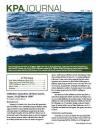
kpa-journal-vol-1-no-4.JPGJoseph Bermudez, military analyst for Jane’s Intelligence Review and author of The Armed Forces of North Korea, has published the fourth issue of his very fascinating KPA Journal.

Click here to download the full issue (PDF).

Topics include: Noto-Hanto infiltration, Pokpoong main battle tank, DPRK intelligence agencies.

Previous issues of KPA Journal can be downloaded here.

Share

DPRK looking for Chinese investors in Taebong gold mine

Tuesday, May 4th, 2010

According to the Daily NK:

The chairman of North Korea’s State Development Bank, Jeon Il Chun visited China on April 8, reportedly to try and bring Chinese investment to Daebong Mine, located near Hyesan, Yangkang Province.

Daebong Mine is one of North Korea’s major gold mines, managed under the auspices of the No. 39 Department of the Central Committee, a special department charged with raising funds for Kim Jong Il’s personal use. Jeon Il Chun is the person in charge of the No. 39 Department.

Attempts to sell shares in a gold mine directly controlled by the 39 Department, Kim Jong Il’s own private safe, to China seem to indirectly imply that Kim is suffering from a debilitating foreign currency supply crisis.

One Daily NK source in China who is well-acquainted with North Korean affairs reported that while Jeon was in China, he met with the management of three or four Chinese enterprises which already have investments in North Korea, and suggested investment conditions under which the North could transfer some of its mineral rights to them and receive capital investments in return.

The source said, “For now, as far as I know, executive managers of the No. 39 Department have been in contact with Chinese enterprises. Since the Workers’ Party is trying to sell shares in a gold mine, it seems the funding of the Party might be serious.”

“It is not clear whether or not this attempt was done on Kim Jong Il’s instructions, but attracting foreign investment in a gold mine is not a commonplace affair,” the source pointed out, adding that an investor has not yet been put in place.

What is the Daebong Mine for?

The Daebong Mine is a relatively large gold mine on the border of Woonheung and Gapsan in Yangkang Province. Until 2001, a Yangkang provincial foreign currency earning enterprise and the foreign currency earning department of the People’s Safety Agency jointly managed it. However, in May, 2002, it became a No. 39 Department affiliated enterprise.

The No. 39 Department has been raising private funds for the leader and Party operations under the Finance and Accounting Department of the Central Committee since the mid-1970s. According to defectors, it has the highest authority and the largest funds of all North Korea’s foreign currency earning enterprises. Especially, it has the ability to mobilize tremendous financial resources since it manages and controls supplies of gold and silver and rare non-ferrous metals.

A source from Yangkang Province explained, “According to Chongjin University of Mining and Metals and Kim Chaek University of Technology, the purity of the gold from the Daebong Mine is more than 76 percent, while production from Hoichang and Eunsan in South Pyongang Province is 63 percent and 61 percent respectively. More than 150kg of solid gold is produced annually, so this mine is known as the ‘loyalty mine’.”

“People say that the government earns four or five million dollars a year through this mine. Neither Yangkang Provincial Committee nor Hyesan Municipal Committee is involved with the business of the mine.”

The source added, “Since the No. 39 Department deals with the mine, only those discharged soldiers with good family backgrounds are dispatched there by the Central Committee. In October of last year, around 200 discharged soldiers with good family backgrounds came to the mine.”

Almost all the gold produced in the Daebong Mine is stored in Swiss and Austrian banks in gold bars.

A Chinese company had a contract with the DPRK’s Musan Mine which has been canceled for an unknown reason.

Click here to see what I believe is the mine’s location.

Read the full article here:
No. 39 Department Hawking Shares in Key Gold Mine
Daily NK
5/3/010
Lee Sung Jin

Share
