Archive for the ‘DPRK organizations’ Category

Kim Jung-rin’s farewell ride

Sunday, May 2nd, 2010

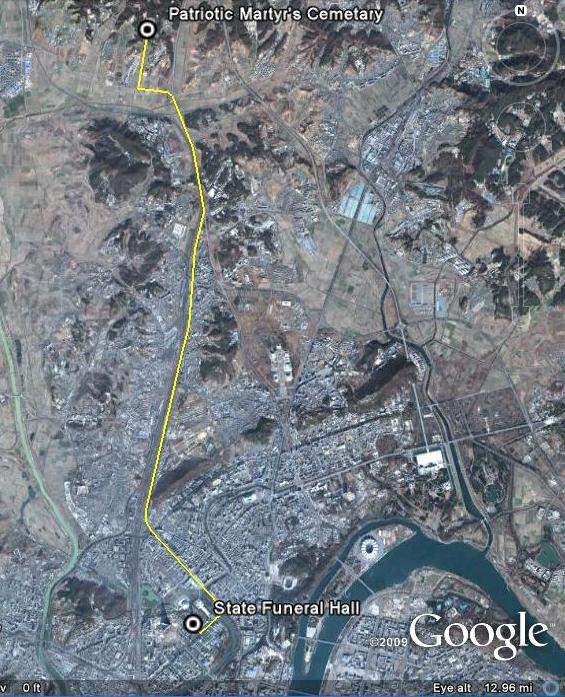
Last week, NK Leadership Watch wrote about the funeral of Kim Jung-rin.  Using a video of the funeral I was able to map out the procession and solve a mystery I have wondered about for some time: Where does the DPRK hold state funerals?

First, below is a map of the likely funeral procession.  It starts in Potonggang District and travels to the Patriotic Martyr’s Cemetery in the north of the city.   It is probably safe to assume that most state funerals these days follow the same route.  I only offer one caveat, however, it is possible state funeral processions drive past Kamsusan Memorial Palace rather than taking the most direct route:

funeral-procession.JPG

Click image for larger version.

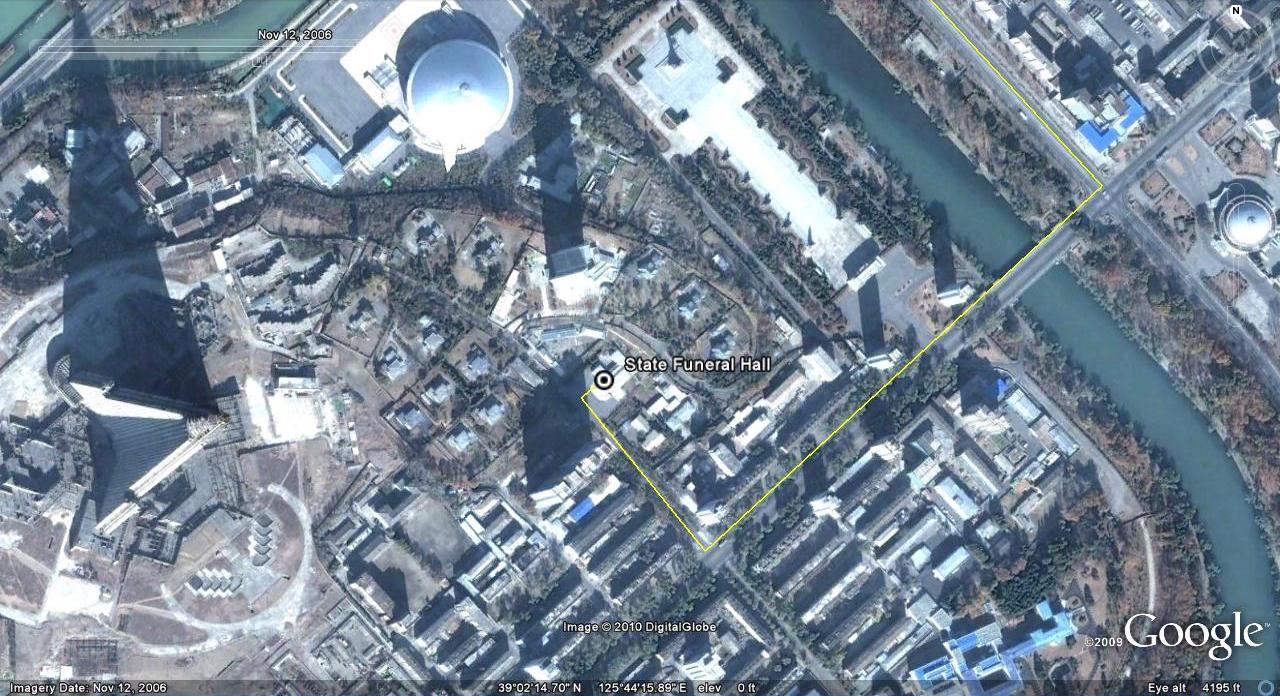
Below is an image of the building where the funeral was held.  I am told by a North Korean defector that it is called Sojang Hall (서장구락부). It is managed by the State Funeral Committee.  Its coordinates are  39° 2’13.73″N, 125°44’14.74″E.

state-funeral-hall.JPG

Click image for larger version

I did some  quick research with the indispensable Stalin Search Engine and put together a list of officials who have received state funerals since 1996 (all Central Committee members):  Kim Jung Rin, Hong Song Nam, Pak Song Chol, Yon Hyong Muk, Ri Tu Ik, Ri Jong Ok, Kim Pyong Sik, Jon Mun Sop, Kim Kwang Jin, Choe Kwang.

There is apparently another kind of prestigious funeral in the DPRK called a “People’s Funeral,” however, I can only find one individual who received one: Ri In Mo.  Indeed it appears that the “People’s Funeral” was created specifically to honor him.  Read more in KCNA here, here, and here.

Share

KPA Reconnaissance Bureau (Unit 586) located

Wednesday, April 28th, 2010

UPDATE:  The Reconnaissance Bureau was recently reorganized.  Joeseph Bermudez has all the information on the reorganization.  Check it out here.

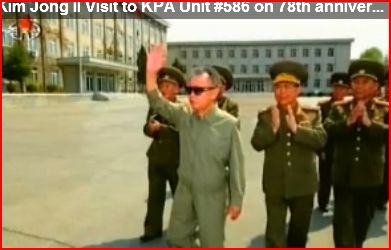
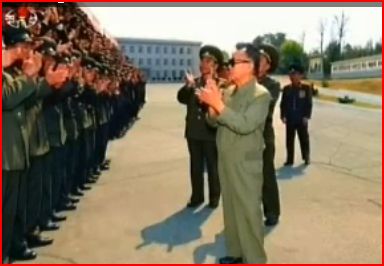
ORIGINAL POST: Kim Jong-il recently visited the Reconnaissance General Bureau (formerly Reconnaissance Bureau) which is assigned the military cover designation of 586 and is frequently known as 586th Army Unit.  The bueau was recently accused of ordering the assassination of Hwang Jang-yop (A claim the DPRK denies).  NK Leadership Watch has full video  of the visit, but here are some photos:

kpa-kji-recon-bureau1.JPG

 kpa-kji-recon-bureau2.JPG

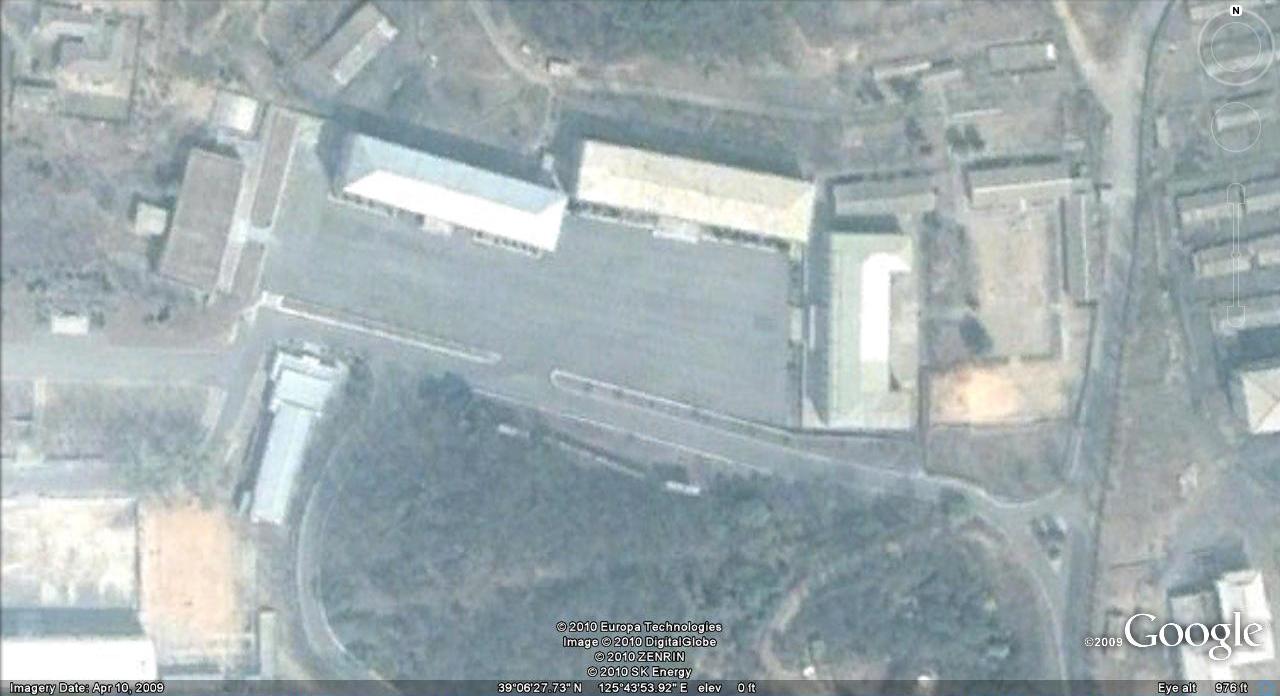
Today a  reader contacted me claiming to have located this facility on Google Earth.  I believe this person is correct. Here is the satellite image:

kpa-recon-bureau.JPG

Click on the image for a larger version.  The coordinates are:  39° 6’28.45″N, 125°43’53.86″E.  You can see it in Wikimapia here.

The Korea Herald has more.

My congratulations to the reader for finding this one.

Share

More on Kim Jong-il’s court economy

Wednesday, April 28th, 2010

According to the Choson Ilbo:

North Korean leader Kim Jong-il’s youngest son and the heir apparent Kim Jong-un is already said to be busy amassing his own slush fund. Despite North Korea’s dire economic difficulties, Kim Jong-il himself is said to have stashed away between US$200-300 million every year to finance his lavish lifestyle and maintain the party elite’s loyalty to him.

With the money, North Korea would be able to import between 400,000 to 600,000 tons of rice, which would be enough to cover half the country’s food shortage of 1 million tons of rice per year.

Key departments within the Workers Party are pressuring agencies under their control to offer “loyalty funds” for the successor, a source familiar with North Korean affairs said. “A separate company has been established under the leadership of Kim Jong-un to secretly amass foreign currency.”

The source said Kim senior uses his slush fund to finance his expensive tastes, build monuments in his own honor and buy gifts for his loyal aides. Faced with increasing difficulties bolstering his slush funds under international sanctions, the Kim is said to have issued an ultimatum to his top officials in February, saying from now on he would judge their loyalty based on the amount they contribute to the fund.

The North is estimated to have imported more than $100 million worth of high-quality liquor, cars and other luxury goods in 2008. And also on the list are pet dogs, which the Kim family are said to adore. Kim buys dozens of German shepherds, Shih Tzus and other breeds from France and Switzerland every year. He also buys dog food, shampoo and other pet products as well as medical equipment for the dogs and has foreign veterinarians check their health.

Before nation founder Kim Il-sung’s birthday on April 15 this year, Kim imported around 200 high-end cars from China at a cost of some $5 million. A North Korean source said secret funds are also used to finance nuclear missile development and other state projects Kim Jong-il orders personally.

It is difficult to estimate the total amount of Kim’s slush fund. Experts can only guess that Kim has stashed huge sums of money in Swiss or Luxembourg bank accounts, as did other dictators like former president of the Philippines Ferdinand Marcos and ex-Iraqi leader Saddam Hussein. The international press estimates Kim’s slush fund to be worth around $4 billion.

Kim started amassing his slush fund as soon as he was picked as the next leader of North Korea in 1974 to be able to buy the loyalty of top officials. A special department within North Korea’s Workers’ Party called Room 39 which manages Kim’s slush fund by collecting the loyalty funds, exporting local staples including pine mushrooms and operating stores in hotels. A large portion of the $100 million to $200 million North Korea makes each year from exporting weapons, producing counterfeit dollars, smuggling fake cigarettes and selling drugs are also put into Kim’s slush fund.

A North Korean source said a lot of the cash profits generated by the joint tourism business with South Korea end up inside Kim’s personal slush fund too, judging by the fact that Daesong Bank and Zokwang Trading, which do business with the South, are both controlled by Room 39.

Early this year, Kim appointed his high school friend Jon Il-chun to head Room 39. Jon was made the chief of a state development bank North Korea opened recently to lure foreign investment. A South Korean government official said there are suspicions that Kim is diverting some of the profits of the state development bank into his own slush fund as well.

Read the full story here:
How N.Korea’s Ruling Family Swells Its Private Coffers
Choson Ilbo
4/28/2010

Share

NDC takes over Kumgang tours

Monday, April 26th, 2010

According to the Donga Ilbo:

North Korea seeks to directly handle tours to the Mount Kumgang area after forcing South Korea out of the venture, said a source on North Korean affairs yesterday.

Korea Taepung International Investment Group, an agency under the North’s powerful National Defense Commission, has reportedly recruited Chinese companies to help operate the tour since January this year.

The source said, “Negotiations have significantly progressed in certain aspects,” adding, “I understand the North Korean leadership is considering directly operating the Mount Kumgang tour by getting Taepung or an agency under the National Defense Commission to hire multiple Chinese companies as agencies after forcing the Hyundai Group out of Mount Kumgang and Kaesong.”

Another informed source said, “Since Taepung is an agency that holds overall authority over attracting investment for the North’s national development, the group is believed to be advising and supervising efforts to resume the Mount Kumgang tour as well.”

On this, a South Korean government source said, “Even if the North severs ties with Hyundai Asan Corp., complicated legal action will continue over the North’s violation of the contract,” adding, “No Chinese company will seek to serve as a comprehensive business operator, so the new plan appears to be the most practical alternative for North Korea.”

If Taepung or an agency under the defense commission starts to operate the tour directly, the tour program will likely be operated under a completely different system.

The tour’s South Korean operator, Hyundai Asan, has wielded comprehensive and monopolistic rights to the venture, but North Korea appears to have taken over as the operator, with multiple foreign companies taking part.

An agency under the North’s defense commission or military will likely step forward to operate the tour in lieu of Pyongyang’s Asia-Pacific Peace Committee under the ruling Workers’ Party or the Landmark General Development Bureau under the North Korean Cabinet.

And according to Yonhap:

Dozens of South Korean business officials will visit North Korea this week to comply with Pyongyang’s demand that they be present when the communist state freezes their assets at a joint mountain resort, officials said Monday, amid fears of further confiscation.

North Korea already confiscated five South Korean government-run facilities, including a family reunion center and a fire station, at its Mount Kumgang resort on the east coast last week.

The move reflected Pyongyang’s anger over Seoul’s refusal to resume cross-border tours that were halted in 2008 after the fatal shooting of a South Korean tourist by a North Korean guard near the resort.

North Korea insists it has done everything to explain the shooting and guarantee safety for future South Korean visitors. South Korea doubts the genuineness of the gestures, demanding an on-site probe participated in by its officials and tangible safety measures.

The tours earned millions of U.S. dollars for the sanctions-hit North Korean regime before they were suspended. The North Korean demand for their resumption comes as the isolated state struggles to curb its economic troubles that deepened under U.N. sanctions imposed for its two nuclear tests, the latest in May last year.

An official at Hyundai Asan, the chief South Korean operator of the now-suspended tours, said 40 people from 31 companies, including his own, applied for permits to visit North Korea on Tuesday.

The North last week demanded “real estate proprietors and agents” attend the implementation of its plan to freeze their assets, which include hotels, a golf course and a variety of shops.

Officials at the Unification Ministry in Seoul said they plan to grant the permits.

“It is our basic stance that we respect the decisions of the companies,” spokesman Chun Hae-sung said.

Dozens of South Korean firms possess 360 billion won (US$320 million) worth of real estate in the mountain tourist zone.

During a meeting with Hyundai Asan officials stationed at the resort Monday morning, North Korea did not specify which companies should attend the freeze this week, a ministry official here said.

“The North Korean authorities remained ambiguous,” the official said, declining to be identified. “That will leave the door open for anyone wanting to visit North Korea this week.”

South Koreans fear Pyongyang may be taking steps to confiscate more South Korean assets. The North seized the Seoul government-run facilities 10 days after freezing them and expelling personnel.

South Korea has pledged retaliatory measures without being specific. A senior Unification Ministry official, who spoke on the condition of anonymity, said Monday the measures would be announced by early May.

South Korea also warned North Korea will be to blame for any further deterioration of relations between the divided states.

The Korea Herald speculates on how the South Korean government might retaliate:

The government is reportedly considering limiting the volume of agricultural and marine products from North Korea or tightening regulation of imports in other ways.

Certain North Korean items, such as sand, hard coal and mushrooms, already require the unification minister’s approval each time someone wants to bring them into the South. Seoul could expand the number of such items, making the import process more troublesome.

Currently, South Korean materials going into the joint industrial park in the North’s border town of Gaeseong and products rolled out from factories there account for more than 60 percent of inter-Korean trade.

Last month’s inter-Korean trade volume amounted to $202 million, 63 percent of which were goods going in and out of the Gaeseong park.

Since cross border tours to Mount Geumgang have been stalled, most of the remaining inter-Korean trade volume (35 percent) consists of agricultural and marine products.

Although the growth of inter-Korean trade has slowed under the Lee Myung-bak administration, South Korea is still the North’s second largest trading partner after China, according to the Unification Ministry.

Inter-Korean trade accounts for about 30 percent of the North’s trade with other countries, while China takes up about half.

The Seoul government could also further restrict nongovernmental aid to the North, which it has limited ever since Pyongyang launched a rocket in April last year.

It could also engage to the international community about the North’s “wrongful measures.”

Read the full stories here:
N. Korea to Directly Take Over Mt. Kumgang Tour
Donga Ilbo
4/26/2010

S. Koreans to visit N. Korea as Pyongyang moves to freeze their assets
Yonhap
Sam Kim
4/26/2010

Seoul may cut trade with N. Korea
Korea Herald
Kim So-hyun
4/25/2010
Share

DPRK to promote production of consumer goods

Thursday, April 22nd, 2010

According to the People’s Daily (Xinhua):

The Democratic People’s Republic of Korea (DPRK) has decided to promote the production of consumer goods in order to improve people’s lives, the Rodong Sinmun newspaper reported Wednesday.

The major task was to continue exploiting the potential of the light industry, raising production, improving quality, promoting the modernization of enterprises and guaranteeing its operation at full capacity, a cabinet meeting has agreed.

Besides, the ministers underlined the importance of the spring ploughing and sowing, saying supply to the rural area should be ensured.

They also demanded sectors such as metal, electricity, coal and railway continue promoting production to create condition for the improvement of people’s lives.

The newspaper said DPRK’s Premier Kim Yong Il attended the cabinet meeting, but did not mention the exact date.

Industrial production grew 16 percent in the first quarter, compared to the same period a year before, said the paper.

Consumer goods are part of Kim Kyung-hui’s (Kim Jong-il’s sister) portfolio as head of the KWP’s light industry department.

Read the full story here:
DPRK to promote production of consumer goods
People’s Daily (Xinhua)
4/21/2010

Share

DPRK Economist: Currency reform caused instability

Wednesday, April 21st, 2010

Institute for Far Eastern Studies (IFES)
NK Brief No. 10-04-20-1
2010-04-20

Ri Ki Song, a professor at the Institute of Economics, a part of North Korea’s Academy of Social Sciences, acknowledged during an interview on April 18 that the North’s currency revaluation of last November had caused some instability to unfold across the country. Professor Ri emphasized during an interview in Pyongyang with Kyoto News, “there was some temporary unrest in some areas . . . but there was absolutely no social upheaval and unstable situations were immediately controlled.”

Professor Ri, in answering questions for the Japanese news agency, was the first North Korean to acknowledge the problems caused by the reform. Regarding foreign media reports of the currency reform, Ri stated that the articles did not reflect the reality of the situation, and that the reforms had not destabilized the North Korean society. These comments were in line with those he made on April 1, when he stated at an APTN press conference, “Many people outside of North Korea have been noisily prattling on about problems emerging during exchange rate fluctuations, but there is no social unrest of the kind they speak of.”

He explained that some instability had occurred because price controls and other measures had not immediately followed the revaluation, and that “markets did not open for a few days [after the currency reform],” acknowledging that preparations for the measures had been insufficient. He also explained that following the currency reform, North Korean authorities had taken steps such as reducing prices on some foods and slashing unproductive expenditures. The government also encouraged women to take up jobs in light industry and in the service sector, and repaired the transport system. In an effort to develop the economy in 2010, the North Korean government boosted the budgets for the light industrial sector by 10.1 percent, and that of agriculture by 9.4 percent.

Professor Ri went on to say that authorities had reduced the price of a kilogram of rice from 40 won to 24 won, had lowered the price of eggs to 8 won, and had cut the prices on cooking oil and soap, as well. He added that this trend will continue for the near future.

The currency revaluation, the first of its kind since 1992, was aimed primarily at increasing the value of the North’s money and harnessing inflation, but despite the reform, the government is still managing foreign exchange rates. While keeping exchange rates under control, Ri stated that authorities could still adjust the value of the won, depending on economic developments as well as other domestic and international conditions.

In both the APTN and Kyoto interviews, Professor Ri called foreign coverage of the North’s economic situation “exceptional,” and insisted that nothing was wrong with the DPRK economy.

Share

DPRK’s NDC inspects Kaesong zone

Wednesday, April 21st, 2010

According to Yonhap:

A group of North Korean officials, including military officers, were inspecting an inter-Korean factory park in the North this week, a Seoul official said Tuesday, amid concerns Pyongyang may be moving to put the brakes on the long-running symbol of reconciliation.

The inspection, which began Monday with an abrupt notice, was reminiscent of a similar visit in December 2008. Six days later, the communist state temporarily banned South Korean access to it.

Eight North Korean officials, including a senior director of the National Defense Commission (NDC), inspected a South Korean company and some facilities such as a substation and roads in Kaesong on Tuesday, Unification Ministry spokesman Chun Hae-sung said.

The NDC is the highest seat of power in the North, chaired by leader Kim Jong-il. The visitors included uniformed officers who asked both South Koreans and North Koreans at the park rudimentary questions about their operations, Chun said.

“A wide range of questions was asked, such as items produced, the productivity of North Korean workers, the capacity of the sewage, and how certain facilities are maintained,” Chun told reporters.

More than 110 South Korean firms employ some 42,000 North Korean workers at the Kaesong industrial park, born out of the first inter-Korean summit in 2000. The park began operating in 2004.

Pyongyang said on April 8 that it would “entirely reevaluate” the park if relations between the sides do not improve, while ditching Seoul as a partner for joint tours to its eastern mountain resort.

The DRPK recently inspected the Kumgangsan resort before “seizing” several of the facilities.  The Kaesong Zone has been inspected several times before as well.

Share

DPRK to make appearance at Shanghai Expo

Monday, April 19th, 2010

UPDATE 4: Here is the DPRK Pavilion’s web page (h/t NKNews.org).

UPDATE 3: A video of the DPRK pavilion at the Shanghai expo can be seen here.

UPDATE 2: Voice of America offers a description of the interior of theD PRK’s Pavilion:

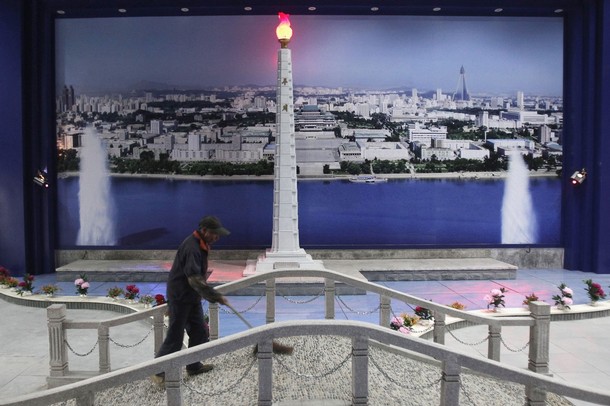
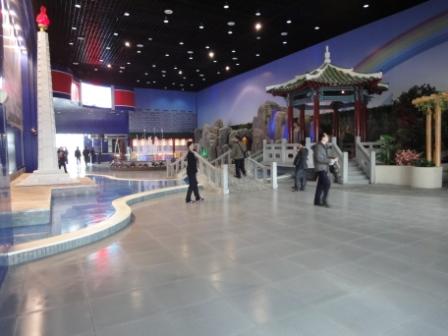
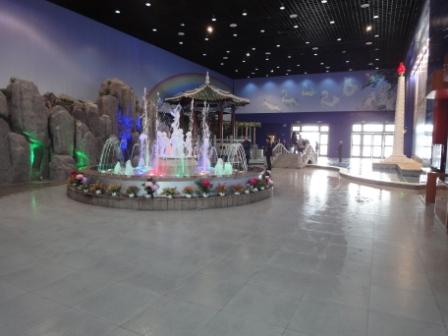
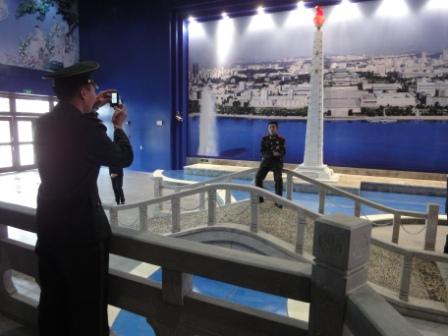
Inside, there is a replica of Pyongyang’s Juche Statue, a small waterway that represents the North’s Taedong River, a traditional bridge and large fountain with colored lights.

On top of the fountain, a group of white marble statues of naked boys encircle two others. One boy holds the other up in the air as he lifts a dove into the sky.

In one corner, there is a small cave that contains a reproduction of a mural from the North’s Koguryo Tombs, a World Heritage site.

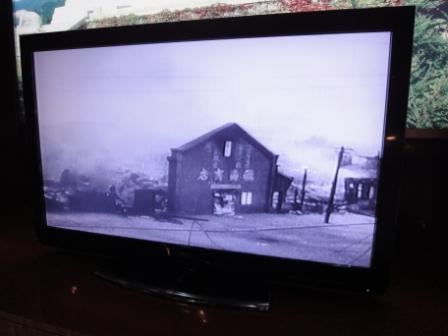
Along a wall, beneath the phrase “Paradise for the People,” a row of television sets plays videos depicting everyday life in North Korea.

Some of the videos show North Koreans leisurely bowling, playing golf and ice skating. Although some of the footage appears to be recent, other shots seem to be decades old.

Many who visited the pavilion Tuesday say that aside from the fact that there were no lines to get in, they wanted to visit because, as they put it, North Korea is so mysterious.

UPDATE 1:  The Shanghai Expo has posted some information on the DPRK’s Pavilion. Here are some of the details:

Theme: Urban Development of Pyongyang, the Capital of DPR Korea (Prosperous Pyongyang based on the River Taedong Culture)

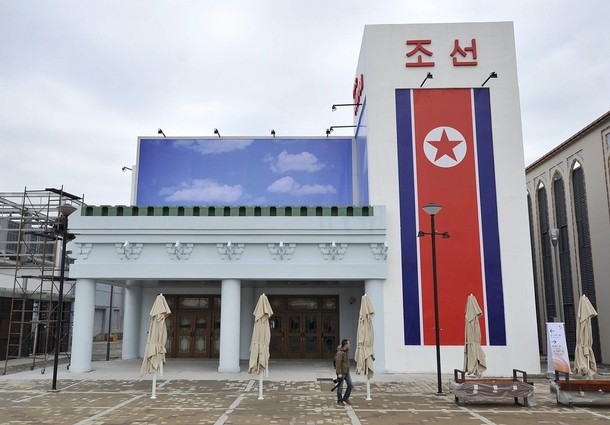
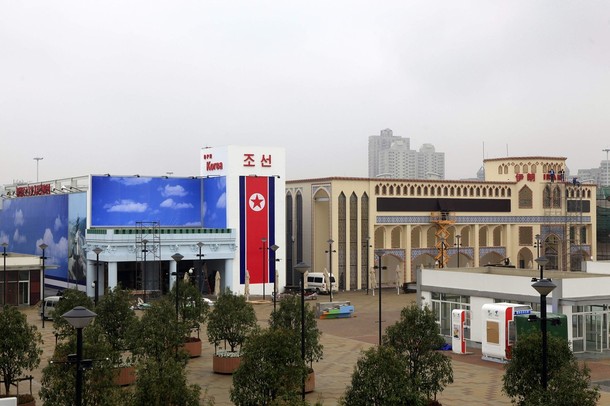
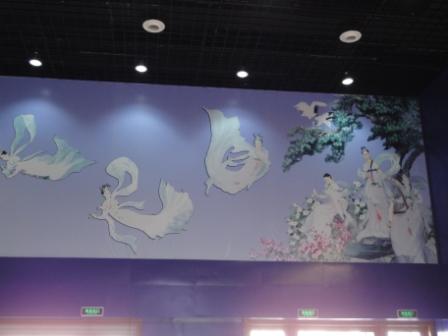
Pavilion Features: The pavilion perfectly merges national characteristics of DPRK together with its modern beauty. Outer walls are decorated with national flags and a winged steed bronze statue. Main items exhibited in the pavilion include Juche Tower, Taedong River, Korean-style pavilions, rockeries and small stone caves. All of them present a prosperous and modern Pyongyang based on the traditions of DPRK, where education, science, culture and sports have achieved great development during its long history.

Pavilion Highlights
Highlight 1: The Juche Tower Model — 4.5-meter-high model of Juche Tower is exhibited in the pavilion.
Highlight 2: Symbol of Taedong River — winding river flows across the pavilion, reminding people of the stretching Taedong River.
Highlight 3: National Section and Stone Caves — national section and stone caves are exhibited on the right side of the pavilion. Inside the cave the world heritage of tomb murals in Jiangxi County and paintings of DPRK style are displayed.

Here are some photos of the DPRK’s pavilion (h/t Daylife):

expo1.jpg expo2.jpg expo3.jpg

And here are some photos from the Shanghai Scrap blog:

shanghai-expo-4.jpg shangahi-expo-5.jpg shanghai-expo-6.jpg shanghai-expo-7.jpg shanghai-expo-8.jpg shanghai-expo-9.jpg shanghai-expo-10.jpg shanghai-expo-11.jpg shanghai-expo-12.jpg shanghai-expo-13.jpg shanghai-expo-14.jpg shanghai-expo-15.jpg

ORIGINAL POST: According to the PRC’s People’s Daily:

China welcomes countries including the Democratic People’s Republic of Korea (DPRK) to participate in the 2010 Shanghai World Expo, a Foreign Ministry spokesman said Tuesday.

DPRK Chamber of Commerce Vice-Chairman Ri Song Un told Xinhua on March 18 that the country had already finished preparatory work for the 2010 Shanghai World Expo, its first Expo appearance.

Situated in an area of 5.28 square kilometers at the core the city of Shanghai to exhibitions, events and forums, the six-month expo starting from May 1 will attract about 200 nations and regions and international organizations’ participation, as well as 70 million visitors from home and abroad.

Read the full story here:
China welcomes DPRK in attending Shanghai World Expo: FM spokesman
People’s Daily
3/30/2010

Share

New evidence on clandestine South Korean members of the KWP

Monday, April 19th, 2010

According to the Wilson Center’s North Korea International Documentation Project (NKIDP):

Documents obtained by NKIDP scholar Bernd Schaefer from the archives of East Germany’s state security service, or Stasi, were featured in an article in South Korea’s Dong-a Ilbo. The documents detail procedures for admitting clandestine members of the Korean Workers’ Party from South Korea to East Germany for meetings with North Korean officials. According to the documents, North Korea and East Germany established special procedures for South Korean “comrades” to secretly enter the GDR for meetings with North Korean officials at the DPRK embassy. East Berlin was also used as a stopover for these South Korean “comrades” traveling to Pyongyang for meetings with North Korean officials.

View the article in Korean at the Dong-a Ilbo website.  There were additional articles in Korean (here and here) and one in English here.

Share

DPRK 2009, 2010 budgets

Friday, April 16th, 2010

According to KCNA:

Report on Implementation of 2009 Budget and 2010 Budget
 
Pyongyang, April 9 (KCNA) — Deputy Pak Su Gil, vice-premier and minister of Finance, delivered a report on the results of the implementation of the DPRK state budget for last year and its state budget for this year at the 2nd Session of the 12th Supreme People’s Assembly held on Friday.

According to the report, the state budget for last year was successfully implemented and, as a result, the state budgetary revenue was overfulfilled 1.7 per cent, an increase of 7 per cent over the previous year.

Ministries, national institutions, management bureaus and complexes overfulfilled the national plans for budgetary revenue and all provinces, cities and counties across the country also overfulfilled their plans for local budgetary revenue.

Last year’s plan for state budgetary expenditure was carried out at 99.8 per cent.

An investment from the state budget was focused on the development of metal industry while a huge financial allocation was made for the power and coal industries and the railway transport.

8.6 per cent more funds than the previous year were spent for capital construction and expenditure was increased for agriculture and light industry.

A 7.2 per cent greater financial disbursement than the previous year was made for the field of science and technology, surpassing the level of the latest science and technology in domains of space technology, nuclear technology and CNC technology and putting the key industries of the national economy on a high scientific and technological basis.

A large amount of fund went to the field of cultural construction and 15.8 per cent of the total state budgetary expenditure was spent for national defence.

The reporter said that the scale of revenue and expenditure in the state budget for this year has been set on the principle of improving the people’s standard of living to meet the requirements of the policy of the Workers’ Party of Korea on conducting a great offensive to bring about a decisive turn in the above-said work.

This year’s plan for state budgetary revenue is expected to grow 6.3 per cent over last year. The revenue from the profits of state enterprises, the main source of state budgetary revenue, is expected to go up 7.7 per cent over last year, that from the profits of cooperative organizations 4.2 per cent, that from the fixed asset depreciation 2.5 per cent, that from real estate rent 2 per cent and that from social insurance 1.9 per cent.

This year’s plan for state budgetary expenditure is expected to show an 8.3 per cent increase over last year.

The spending for the light industry is expected to go up 10.1 per cent, that for agriculture 9.4 per cent and that for metal, power and coal industries and railway transport 7.3 per cent as compared with last year.

The expenditure for the machine-building industry is expected to go up and an 8.5 per cent bigger financial allocation will be made for scientific researches and the introduction of new technologies.

A 6.2 per cent bigger financial disbursement than last year is expected to be made to more successfully enforce the popular policies, a proof of the advantages of Korean-style socialism centered on the popular masses.

15.8 per cent of the total state budgetary expenditure for this year is expected to be spent for national defence.

It is expected that a large amount of educational aid fund and stipends will be sent for the children of Koreans in Japan this year, too.

In order to successfully implement this year’s state budget, all domains and units of the national economy should work out enterprising and realistic business strategy and management strategy and tenaciously carry them out by relying on a high degree of mental power of the producer masses and thus fulfill the plans for budgetary revenue without fail, stressed the reporter.

And according to the Choson Ilbo:

North Korean leader Kim Jong-il can freely dispose of 20 percent of his country’s budget, a former secretary of North Korean Workers’ Party has said that. Hwang Jang-yop told the Asahi Shimbun, “Only 30 percent of the budget is spent on public services, while 50 percent is earmarked for military spending.” Hwang defected to South Korea in 1997.

Hwang was interviewed by the daily during his visit to Japan on April 4-8. “Kim Jong-il’s dictatorship is 10 times worse than his father’s. People have a painful life,” he said.

Asked if the North is likely to abandon its nuclear weapons program, he said, “There is no such possibility. But the North won’t use the weapons. They’re a means to maintain the regime.”

To the question why Kim’s eldest son Jong-nam was passed over for the succession, he said, “At first, Kim Jong-il thought of choosing his eldest son as his successor. But he seems to have changed his mind as he fell in love with Ko Young-hee, the mother of Jong-un, his third son, after Jong-nam’s mother Song Hye-rim died.”

Commenting on the North’s bizarre abductions of Japanese citizens in the 1970s and 80s, he said, “The North needed native Japanese to train agents who would work in Japan.”

Read the full story here:
Kim Jong-il ‘Gets 20% of N.Korea’s Budget for His Own Use’
Choson Ilbo
4/12/2010

Share