Archive for the ‘DPRK organizations’ Category

KWP acsends in September

Wednesday, July 14th, 2010

UPDATE:  The Daily NK also offers some propaganda posters leading up to the event.

ORIGINAL POST: According to the Daily NK:

Hwang Jang Yop, President of the Committee for the Democratization of North Korea, believes the motivation behind the Chosun Workers’ Party (KWP) delegates’ conference, which is to be held for the first time in 44 years this September, is Kim Jong Il’s belief that the power of the Party needs to be increased since too much authority is currently concentrated in the National Defense Commission, and this could represent an obstacle to the establishment of Kim Jong Eun’s succession.

Hwang, who was speaking at a forum in Seoul on July 13th, explained, “Kim Jong Il relies on the military to reign, and the core of that power is the National Defense Commission, but he is trying to solve the succession issue by strengthening the authority of the Party.”

“Kim wants to return the National Defense Commission to its previous role, which was to devote itself to military duty,” he added.

Hwang stated, “Kim Jong Il believes that Kim Jong Eun’s succession cannot be same as his own, which was done through the military. He believes that Kim Jong Eun cannot manage the military as well as he could, and therefore, if Kim Jong Il dies with power concentrated in the National Defense Commission, stabilizing the succession will be difficult.”

“The military is difficult to control if there is a problem, and since Kim Jong Il understands this fact, he is intending to control the military through the Party. Also, Kim will want to announce the succession issue to the North Korean people through the Party rather than the military.”

“The previous Military Commission of the Chosun Worker’s Party served the role of an administrative organization,” Hwang reminded listeners. “Taking the opportunity offered by the Chosun Workers’ Party delegates’ conference, the functions of the Party will be acknowledged and strengthened, while the military will be refocused on military work.”

He also commented, “Kim Jong Il has threatened the international community through the military in difficult political and economic times, and run North Korea by directly mobilizing the army. However, the cultural and ideological unification of North Korean citizens is impossible through the military so, Kim Jong Il will actively use the Party in the establishment of the succession.”

“Kim Jong Il believes that only the Party can unite the North Korean people ideologically during the establishment of the succession, so therefore he is hosting the Chosun Workers’ Party delegates’ conference to begin the process by reinforcing Party authority,” Hwang concluded, returning to the main theme.

Previous posts on September conference here and here.

Read the full story here:
KWP to Take the Power Back in September
Daily NK
Kim Yong Hun
7/14/2010

Share

DPRK says upcoming party meeting will be historic

Tuesday, July 13th, 2010

According to Yonhap:

North Korea stressed on Tuesday the historical importance of its upcoming meeting of core ruling party delegates, urging the younger generation of party members to be as loyal to the leadership as their predecessors.

In September, the communist state will hold its first meeting of senior Workers’ Party delegates in 44 years, a move that observers say may be aimed at paving the ground for leader Kim Jong-il to transfer his power to his third son, Jong-un.

Kim, 68, made his first public appearance in a 1980 convention, considered to be more authoritative, and sealed himself as the successor to his father, Kim Il-sung, who founded the North and died in 1994.

In an editorial seen here on Tuesday, the Rodong Sinmun, the party’s daily, heaped praise on party members who died loyal to the founder and called on new members to “follow suit.”

The paper, considered to be Pyongyang’s main mouthpiece, also described the September meeting as one that will “shine as a notable event in the history of the holy Workers’ Party.”

Late last month, the paper said that the party will expand its role and function through the meeting, stressing the importance of the central party organ that had once served as a venue for Kim Jong-il to rise up the power ladder when he was young.

Kim is believed to be quickening his power transfer after suffering a stroke two years ago. Earlier this year, North Korea promoted Kim’s brother-in-law as a vice head of the National Defense Commission, the highest seat of power. Jang Song-thaek is believed to be the central figure behind the succession process.

Read the full story here:
N. Korea says upcoming party meeting will be historic
Yonhap
Sam Kim
7/13/2010

Share

Aidan Foster-Carter offers DPRK current events summary…

Thursday, July 8th, 2010

In the East Asia Forum:

June 2010 saw two major anniversaries on the Korean peninsula. On June 25 sixty years ago the Korean People’s Army (KPA) invaded the South launching a bitter three-year war. North Korea still denies culpability, claiming it was repelling a Southern invasion; despite overwhelming evidence, now backed by Soviet archives, that it was the aggressor. No less mendaciously Pyongyang nonetheless celebrates the July 27, 1953 Armistice which ended open hostilities as a ‘brilliant victory in the Fatherland Liberation War’ — even though this left the North bombed and napalmed to ruination.

China still formally backs the North’s version, but this year some brave soul decided to take seriously the late Deng Xiaoping’s instruction to ‘Seek truth from facts.’ The International Herald Leader, an affiliate of Xinhua news agency let the cat out of the bag. It featured interviews with Chinese historians telling the true story, and a timeline stating that ‘The North Korean military crossed the parallel on June 25 1950 and Seoul was taken in four days.’ Naturally, the article rapidly vanished from the web. But many Chinese now are openly critical of the DPRK, and embarrassed that Beijing continues to toe Pyongyang’s line.

North Korea itself sticks to the old tunes. On June 22 the Korean Central News Agency (KCNA) reported what it headlined as ‘Revenge-vowing Meetings.’

Youth and students and agricultural workers gathered in Susan-ri… and in Sinchon … Tuesday to vow to take revenge upon the U.S. imperialists on the occasion of the ‘June 25, the day of the struggle against the U.S. imperialists’.

The reporters and speakers at the meetings recalled that the U.S. imperialists brutally destroyed cities, villages, factories and farms and killed innocent civilians…denouncing the Yankees as a herd of wolves in human skin and the Koreans’ sworn-enemy with whom they cannot live under the same sky…

They bitterly condemned the U.S. imperialists and the Lee group of traitors for totally negating the historic June 15 North-South Joint….

If the U.S. imperialists intrude into the DPRK even an inch, all the servicepersons and people will mercilessly wipe out the aggressors.

Rhetoric like the above is clearly intended to fan the flames of hatred.

A further KCNA item on June 24 purported to list the ‘Tremendous Damage Done to DPRK by US.’ The KCNA, with unusual precision, computed a total of nearly 65 trillion dollars for human and material losses inflicted from 1945 up to the present. Considering the state of US public finances, Kim Jong-il should not expect a cheque any time soon. There is also a degree of inflation; last time KCNA published such an exercise, in November 2003, the bill was a mere US$ 43 trillion. One can only wonder what is the point of such grandstanding.

So savage a mood has torpedoed a second anniversary; one which should have been happier. On June 13 2000 South Korea’s then president, the veteran democrat Kim Dae-jung flew to Pyongyang for the first ever inter-Korean summit with the North’s leader, Kim Jong-il. On June 15 they signed a North-South Joint Declaration; Kim Dae-jung was awarded that year’s Nobel Peace Prize. Thus began a decade of unprecedented North-South cooperation, albeit patchy and one-sided. This ‘sunshine’ policy was ended by South Korea’s current president, Lee Myung-bak, who insists that the North must give up its nuclear weapons first if it wants better ties with the South. That sounds fine in theory, but few expect it will ever happen.

North Korea made much of the June 15 anniversary, even while excoriating the ‘traitor’ Lee Myung-bak for trampling on it. Pyongyang warmly welcomed a South Korean radical priest, Han Song-ryeol, who made the trip illegally to mark the occasion.

South Korea by contrast played up the war anniversary more than the inter-Korean one. Lee Myung-bak used this occasion to once again call on the North to admit that it sank the ROK corvette Cheonan on March 26, and to apologise.

Will the Cheonan go unpunished?
Nevertheless, it looks increasingly like Pyongyang has got away with it. June brought Lee Myung-bak little joy on the issue, at home or abroad. Local elections in South Korea on June 2 saw his ruling Grand National Party (GNP) rebuffed. Many voters saw Lee’s tough first reactions, which roiled global markets, as adding to rather than reducing risk.

Abroad too Lee has met obstacles. Assured of firm US and other Western support he is struggling to convince Russia and China. That was predictable: for Beijing and Moscow, unwillingness to paint Pyongyang into a corner was always going to trump the facts. A Russian naval team visited Seoul to inspect the Cheonan wreckage, including DPRK torpedo parts, but is not expected to report until July. In this light the ROK government will be relieved that the G-8 summit in Canada on June 25 issued a strong statement on the Cheonan – after energetic lobbying by Japan’s new prime minister Naoto Kan, which will get his relations with Lee Myung-bak off to a good start. Connoisseurs of diplomatic wordplay noted that while the G-8 condemned the attack, noted that an international team had blamed it on Pyongyang, and called on the DPRK to avoid any attacks against the ROK, it did not quite join up all those dots; doubtless at Moscow’s behest. Lee may lobby similarly when he arrives for the ensuing G-20 summit; although since South Korea chairs the group and will host its next jamboree in Seoul in November, it may look bad if he were perceived as acting in too particularist a way.

Earlier, on June 4 South Korea formally referred the Cheonan incident to the UN Security Council (UNSC). On June 14 both Korean states briefed the UNSC, with the North as ever denying all responsibility and urging the Council not to consider the matter. No official response is expected until July. With Russia and China likely to abstain at best, whatever the Security Council eventually comes up with looks set to be a damp squib. South Korea has already said it will not seek further sanctions, on top of those already in force under earlier UNSC resolutions from 2006 and 2009 after the North’s two nuclear tests. But it would like a clear, resounding condemnation, preferably in the form of a resolution.

Looking ahead, it is not too soon to wonder how the two Koreas will get past Cheonan. Record numbers of DPRK workers at the Kaesong Industrial Zone (KIZ) – 44,000 as of June, according to the ROK unification ministry (MOU) – are seen in Seoul as a sign that at some level Pyongyang remains committed to this joint venture at least.

A big event in September
Meanwhile North Korea looks more preoccupied with the succession issue than in reaching out to South Korea.

On June 26 KCNA reported that ‘the Political Bureau of the WPK [Workers’ Party of Korea] Central Committee decides to convene early in September … a conference of the WPK for electing its highest leading body reflecting the new requirements of the WPK.’

Though nominally it is North Korea’s ruling communist party, and still an important tool of control at lower echelons, the WPK has seen its topmost organs atrophy under Kim Jong-il. Neither the rarely mentioned Politburo nor the Central Committee (CC) is known to have met at all in the 16 years since Kim Il-sung died. Kim Jong-il has favoured the army, ruling through the NDC and informally via a kitchen cabinet of trusted cronies. The dear leader is also of course secretary-general of the WPK, but he acquired that post irregularly: by acclamation at a series of local Party meetings, rather than being duly elected by the CC.

Hence while the precise nature of September’s meeting remains vague, like its exact date, it looks like a long overdue effort to restore a measure of due process to the Party. If this is in fact a full formal WPK congress, it would be the first since the Sixth Congress thirty years ago in October 1980. It was then that Kim Jong-il, hitherto veiled behind coded references to a mysterious ‘Party Centre’, was finally revealed in the flesh. The speculation is that this new meeting similarly will finally give the world a glimpse of the enigmatic Kim Jong-eun.

While all rumours emanating from Seoul should be treated carefully it’s hard not to link this news with reports that Kim Jong-il’s health is worsening. There are claims that on some aides including his son are duping him with Potemkin factories to hide from him how dire the economy really is. An already tardy succession can clearly brook no further delay, or else regime stability and continuity may be gravely imperilled.

The economy shrank again last year
If Kim Jong-il wants to know how his economy is really doing, he could look at the latest estimates from the enemy.

The (southern) Bank of Korea (BOK) published its latest estimates, covering 2009, on June 24, just in time for Seoul to crow about them as it marked the Korean War anniversary. By this reckoning North Korea’s real annual gross domestic product (GDP) shrank by 0.9 per cent last year. Unlike most other countries this had little to do with the global financial crisis. Rather it reflected local conditions, natural and man-made.

The gaps just get wider
The result is a huge and ever widening gap. North Korea’s gross national income (GNI) in 2009 was a mere 2.7 per cent of the South’s. BOK cites Northern GNI in 2009 was US$22.4 billion, compared to US$837 billion for the South. True, the South has over twice as many people. But the average North Korean per capita income too is a minute fraction of the South’s, with the ROK topping US$17,000 while the DPRK’s is a paltry US960. (Some experts, including a former unification minister, think even this is too high and posit a figure nearer US$300, putting North Korea among the poorest nations on earth.)

With trade figures the gap is even wider. This year inter-Korean trade will fall, since Seoul has banned most of it (except the Kaesong zone, which accounts for over half) as punishment for the Cheonan. Peanuts to the South, this has been crucial for the North: South Korea is its largest market, taking almost half of its meagre total exports. Last year inter-Korean trade like DPRK trade overall fell slightly, from US$1.82 to US$1.68 billion. Yet Northern exports crept up, from US$932 to 934 million.

In 2009 North Korea’s real trade totals were just under US$2 billion in exports and US$3.1 billion in imports. They are still dwarfed by South Korea’s respective figures of US$364 and US$324 billion – and this in a bad year for the South, due to the downturn.

Every year the gap widens further, yet still Kim Jong-il refuses economic reform. It is hard to fathom a mind-set which can inflict such disaster and tragedy on a once proud land and people – and whose idea of a way out of its self-dug hole is to fire a sneaky torpedo.

Good losers
It was left to North Korea’s footballers to remind the world that their country does not lack for talent and virtue. As one would expect, North Korea were a disciplined team. They kept to themselves and avoided the press – with one striking exception, Jong Tae-se. Born in Japan to a South Korean father and a pro-North Korean mother, and having attended schools run by Chongryun – the organisation of pro-North Koreans in Japan – he elected to play for the DPRK; although he still holds ROK nationality, lives in Japan and plays in the J-League for Kawasaki Frontale.

A young man whose talk is as uninhibited as his style of play, Jong cried when the DPRK anthem was played before the Brazil match. Yet his love for his adopted homeland is not uncritical. ‘Everybody thinks about our country as being closed and mysterious, so we have to change that,’ he told AFP. ‘We can change for the better if we are more open with the way we talk to people and it would make a better team.’

It would make a better country too. If North Korea’s fate must rest in the hands of an untried youth, better it were the warm-hearted and wised-up Jong Tae-se than Kim Jong-eun.

Read the full story here:
North Korea: Unhappy anniversaries
East Asia Forum
Aidan Foster-Carter
7/6/2010

Share

Burma-North Korea Ties: Escalating Over Two Decades

Wednesday, July 7th, 2010

According to the Irrawaddy:

A recent New York Times op-ed article by Aung Lynn Htut, formerly a high-ranking Burmese military intelligence officer who defected in 2005 while he served as an attaché at the Burmese embassy in Washington, shed new light on the history of the still murky relationship between Burma and North Korea, two of the world’s most isolated, secretive and oppressive regimes.

Burma broke diplomatic relations with North Korea in 1983, when North Korean agents attempted to assassinate the South Korean president on Burmese soil. But according to Aung Lynn Htut, shortly after current junta-chief Snr-Gen Than Shwe assumed power in 1992, he surreptitiously moved to renew ties with Pyongyang.

“Than Shwe secretly made contact with Pyongyang. Posing as South Korean businessmen, North Korean weapon experts began arriving in Burma. I remember these visitors. They were given special treatment at the Rangoon airport,” Aung Lynn Htut said in his June 18 article.

The junta kept its renewed ties with North Korea secret for more than a decade because it was working to establish relationships with Japanese and South Korean businesses, Aung Lynn Htut said. By 2006, however, “the junta’s generals felt either desperate or confident enough to publicly resume diplomatic relations with North Korea.” 

In November 2008, the junta’s No 3, Gen Shwe Mann, visited North Korea and signed a memorandum of understanding, officially formalizing military cooperation between Burma and North Korea. Photographs showed him touring secret tunnel complexes built into the sides of mountains thought to store and protect jet aircraft, missiles, tanks and nuclear and chemical weapons.

According to Aung Lynn Htut, Lt-Gen Tin Aye, the No.5 in the Burma armed forces and the chief of Military Ordnance, is now the main liaison in the relationship with Pyongyang. Tin Aye has often traveled to North Korea as well as attended ceremonies at the North Korean embassy in Rangoon.

In September 2009, The New Light of Myanmar reported that Tin Aye went to the anniversary celebration of the Democratic People’s Republic of Korea (DPRK), held in a hotel in Rangoon. In February, Tin Aye, along with other senior officials, attended the birthday event of the Dear Leader of North Korea at the embassy.

Flights and ships from North Korea to Burma have been carrying more than just Burmese generals. Analysts, including Burma military expert Andrew Selth, say that for years Burma and North Korea have used a barter system whereby Burma exchanges primary products for North Korean military technologies.

In June 2009, a North Korean ship, the Kang Nam I, was diverted from going to Burma after being trailed by the US navy. Then in April, another North Korean ship, the Chong Gen, docked in Burma carrying suspicious cargo, allegedly in violation of the UN Security Council Resolution 1874, which restricts North Korea from arms deals and from trading in technology that could be used for nuclear weapons.

In May, the seven-member UN panel monitoring the implementation of sanctions against North Korea said in a report that Pyongyang is involved in banned nuclear and ballistic activities in Iran, Syria and Burma with the aid of front companies around the world.

According to the UN report, a North Korean company, Namchongang Trading, which is known to be associated with illicit procurement for Burma’s nuclear and military program and is on the US sanctions list, was involved in suspicious activities in Burma.

The report also noted three individuals were arrested in Japan in 2009 for attempting to illegally export a magnetometer—a dual-use instrument that can be employed in making missile control system magnets and gas centrifuge magnets—to Burma via Malaysia allegedly under the direction of another company known to be associated with illicit procurement for North Korea’s nuclear and military programs.

The UN experts also said that the Korea Kwangson Banking Corporation has handled several transactions involving millions of dollars directly related to deals between Burma and the Korea Mining Development Trading Corporation.
 
With this string of events and the suspicions surrounding them as a dramatic lead in, on June 4, Al Jazeera aired a news documentary prepared by the Democratic Voice of Burma (DVB) which was written by Robert Kelley, a nuclear scientist and former director of the International Atomic Energy Agency (IAEA). The DVB report claimed that the ruling military junta in Burma is “mining uranium, converting it to uranium compounds for reactors and bombs, and is trying to build a reactor and/or an enrichment plant that could only be useful for a bomb.”

The IAEA wrote to Burma’s agency representative, Tin Win, on June 14 and asked whether the information provided in the DVB report was true. Burma, which is a member of the IAEA, a party to the Nuclear Non-Proliferation Treaty and a signatory to the Southeast Asia Nuclear-Weapon-Free Zone Treaty, responded with a letter stating that the DVB report allegations are “groundless and unfounded.”

“No activity related to uranium conversion, enrichment, reactor construction or operation has been carried out in the past, is ongoing or is planned for the future in Myanmar [Burma],” the letter said.

The letter also noted that Burma is a signatory of the Nuclear Non-Proliferation Treaty and the agency’s so-called safeguards agreement. “As stated in the safeguards agreement, Myanmar will notify the agency if it plans to carry out any nuclear activities,” the letter said.

The regime, however, has not signed the IAEA’s Additional Protocol, meaning that the agency has no power to set up an inspection of Burma’s nuclear facilities under the existing mechanism known as the Small Quantities Protocol.

Previously, on June 11, Burma’s state radio and television news had reported the Foreign Ministry’s denial of the allegations in the DVB report. The denial claimed that anti-government groups in collusion with the media had launched the allegations with the goal of “hindering Burma’s democratic process and to tarnish the political image of the government.”

The Foreign Ministry denial also addressed Nyapyidaw’s relationship with Pyongyang. “Following the re-establishment of diplomatic relations, Myanmar [Burma] and the DPRK, as independent sovereign states, have been engaging in promoting trade and cooperation between the two countries in the same way Myanmar is dealing with others,” the ministry said in its statement.

The regime did acknowledge that the Chong Gen docked at Thilawa Port near Rangoon in April. But the statement said the North Korean vessel was involved in importing cement from North Korea and exporting rice from Burma.

But in an article for Asia Times online, Burma analyst Bertil Linter noted that, “if carrying only innocuous civilian goods, as the statement maintains, there would seemingly have been no reason for authorities to cut electricity around the area when the Chong Gen, a North Korean ship flying the Mongolian flag of convenience, docked on the outskirts of Yangon.”

“According to intelligence sources, security was tight as military personnel offloaded heavy material, including Korean-made air defense radars. The ship left the port with a return cargo of rice and sugar, which could mean that it was, at least in part, a barter deal. On January 31 this year, another North Korean ship, the Yang M V Han A, reportedly delivered missile components also at Yangon’s Thilawa port,” Linter said.

Strategypage.com, a military affairs website covering armed forces worldwide, said, “Indications are that the North Korean ship that delivered a mysterious cargo four months ago, was carrying air defense radars (which are now being placed on hills up north) and ballistic missile manufacturing equipment. Dozens of North Korean technicians have entered the country in the last few months, and have been seen working at a military facility outside Mandalay. It’s unclear what this is for. Burma has no external enemies, and ballistic missiles are of no use against internal opposition.”

In his Asia Times online story, Lintner noted that on June 24, the DVB reported that a new radar and missile base had been completed near Mohnyin in Myanmar’s northern Kachin State, and he reported that work on similar radar and missile bases has been reported from Kengtung in eastern Shan State,160 kilometers north of the Thai border town of Mae Sai.

“Since Myanmar is not known to have imported radars and missile components from any country other than North Korea, the installations would appear to be one of the first visible outcomes of a decade of military cooperation,” Lintner said.

Lintner also reported that Western intelligence sources know that 30 to 40 North Korean missile technicians are currently working at a facility near Minhla on the Irrawaddy River in Magwe Division, and that some of the technicians may have arrived overland by bus from China to give the appearance of being Chinese tourists. 

North Korea has also issued adamant denials with respect to allegations regarding its relationship with Burma.

According to the Korean Central News Agency (KCNA), on June 21 Pyongyang said, “The US is now making much fuss, floating the sheer fiction that the DPRK is helping Myanmar [Burma] in its nuclear development.”

The KCNA often highlights the close relationship between North Korea and Burma.

On June 20, the Pyongyang news agency reported that ex-Col Than Tun, deputy chairman of the Union of Myanmar Economic Holding Ltd., sent a statement cheering Kim Jong Il’s 46th anniversary at the Central Committee of the ruling Workers’ Party of Korea.

On April 18, Korean state-run- media reported that Than Tun also issued a statement cheering the 17th anniversary of Kim Jong Il’s chairing of North Korea’s National Defense Commission.

“Kim Jong Il’s field inspection of KPA [Korean People’s Army] units served as a main source that helped bolster [North Korea’s] self-reliant defense capability in every way,” the statement noted.

Military sources said the Union of Myanmar Economic Holding Ltd, managed by the junta, is responsible for purchasing imported weapons for Burma’s armed forces, including transferring money to overseas banks such as Korea Kwangson Banking Corporation.

Meanwhile, in addition to its escalating relationship with North Korea, the Burmese military regime has recently boosted ties with Iran, which according to the UN report is also allegedly receiving nuclear and missile technologies from North Korea.

In recent years, Burmese and Iranian officials visited their counterparts homeland for the purported purpose of improving economic ties. Observers, however, said Than Shwe has made a tactical decision to develop relationships with other “pariah states,” particularly enemies of the US, to relieve Western pressure on his regime.

Iranian Deputy Foreign Minister Mohammad Ali Fathollahi met Burmese Foreign Minister Nyan Win and Minister of Energy Lun Thi during his trip to Burma on June 15-17.

“The two sides reiterated their desire to further expand the ties of friendship and economic cooperation and to increase cooperation in the regional international forums such as [the] United Nations and Non-Aligned Movement,” The New Light of Myanmar reported on June 18.

Fathollahi’s visit came three months after Maung Myint’s visit to Iran on March 8-11, when he met Iranian Foreign Minister Manochehr Mottaki and Deputy Minister of Petroleum H. Noghrehkar Shirazi.

Read the full story below:
Burma-North Korea Ties: Escalating Over Two Decades
Irrawaddy
Wai Moe
7/7/2010

Share

Life tough in Pyongyang

Tuesday, July 6th, 2010

According to the Daily NK:

The gap between the rich and poor in North Korea is growing as the number of people trying to sell their family home to buy food expands in the aftermath of last November’s currency reforms, according to a source from inside the country.

The source from South Pyongan Province told The Daily NK on Thursday, “An increasing number of homes are being sold to buy food, and now it seems like about two out of every ten people around here have lost their home.”

According to the source, the rich buy up the houses, demolish them and build new ones to sell for a profit. Those who have amassed dollars or Chinese Yuan from trading are now turning to the housing market.

Even in Pyongyang, where the public distribution system continues to function, there are homeless people on the street, according to the source, who added, “When I was in Pyongyang, there were homeless people sleeping in the subway in large numbers.”

The source went on, “People’s lives are very difficult. There are even some who rely on digging up 5kg of wormwood, walking three hours to sell it, and only getting 100 won per kg.”

Currently, 1kg of rice sells for 400 to 500 won in Pyongyang, and 500 to 600 won in other areas.

The source also explained, “While public distribution still functions in Pyongyang, there are strict restrictions on movement, and even with our salaries we can’t buy food because there is too little.”

Since the economy is so bad, the crime rate is also going up, he added, “There are now more and more pick pocketing cases, and these days, they not only use small knives to steal purses, but even tweezers to pick stuff from pockets.”

The source’s assertion that there was public distribution until mid-June contradicts the claim of one NGO, which said that on May 26 the authorities ordered each area to look out for its own food supply. The source, when asked about the decree, said he was unaware of its existence.

Read the full story here:
Life Even Tough in Pyongyang
Daily NK
Kim So Yeol
7/2/2010

Share

Bigwigs in North vie for power over investments

Monday, July 5th, 2010

According to the Joong Ang Daily:

Two men near the top of the North Korean power structure are competing against each other to become foreign investment czar for the cash-strapped country, according to sources with knowledge of North Korea.

North Korea experts say the contest could influence who eventually succeeds Kim Jong-il.

The sources told JoongAng Ilbo yesterday that Jang Song-thaek and O Kuk-ryol, both vice chiefs of North Korea’s National Defense Commission, are competing over who can attract more foreign investment to the North. The National Defense Commission, the country’s top state organization, is chaired by Kim.

“O Kuk-ryol dominated the foreign investment coming into the North because of his military power,” said one of the sources, “but he is in a hegemony struggle in that area with Jang Song-thaek, who thrust himself into foreign investment promotion later than [O Kuk-ryol].”

Jang is the husband of Kim Kyong-hui, Kim’s younger sister, and is one of Kim’s close confidants. Jang was also promoted to vice chairman of the National Defense Commission on June 7 at the Supreme People’s Assembly.

The sources said O, since being appointed a vice chairman of the National Defense Committee in February 2009, has capitalized on his position to expand his influence in attracting foreign investment.

O and his aides established Choson Kukje Sanghoe (Korean International Trading Company) as the organization solely responsible for foreign investment promotion and received approval for the organization from the presidium of the Supreme People’s Assembly on July 1, 2009.

Meanwhile, Jang named Park Chol-su, a Korean-Chinese businessman, president of Korea Taepung International Investment Group, which he re-purposed to attract foreign investment.

The company initially belonged to the cabinet, but Jang absorbed it into the National Defense Commission and announced the establishment of the re-purposed company in a January 20 report from the official Korea Central News Agency. The news report said Kim Jong-il issued an “order” that the state guarantee that Taepung be able to attract foreign investment.

“O Kuk-ryol is very displeased that Jang jumped into the foreign investment business that he led,” said the sources. “Currently, Choson Kukje Sanghoe and Korea Taepung International Investment Group are vying against one another.”

The sources said that the power struggle is already being watched with concern by the State Security Department, the North’s supreme intelligence agency.

The agency, the sources said, suspects that China is behind Taepung and is trying to control the North Korean economy by injecting capital through Park and the group. The sources said the agency is hesitant to report its suspicions to Kim, given his close relationship to Jang.

Jang has cultivated power through economic projects Kim has entrusted him with, such as a project to build 100,000 houses in Pyongyang. Since he was promoted to vice chairman last month by Kim, he is thought to have increased his political clout as well.

Ri Je-kang, a rival with Jang, also died in a mysterious, recent traffic accident.

“If a rivalry between Jang Song-thaek and O Kuk-ryol, both key axes of North Korean power, becomes a full-fledged power struggle, it could have a subtle effect on a North Korean succession scenario,” said Kim Yong-hyeon, professor of North Korean Studies at Dongguk University.

Read the full story here:
Bigwigs in North vie for power over investments
Joong Ang Daily
7/5/2001

Share

CNC – Juche’s industry power

Wednesday, June 30th, 2010

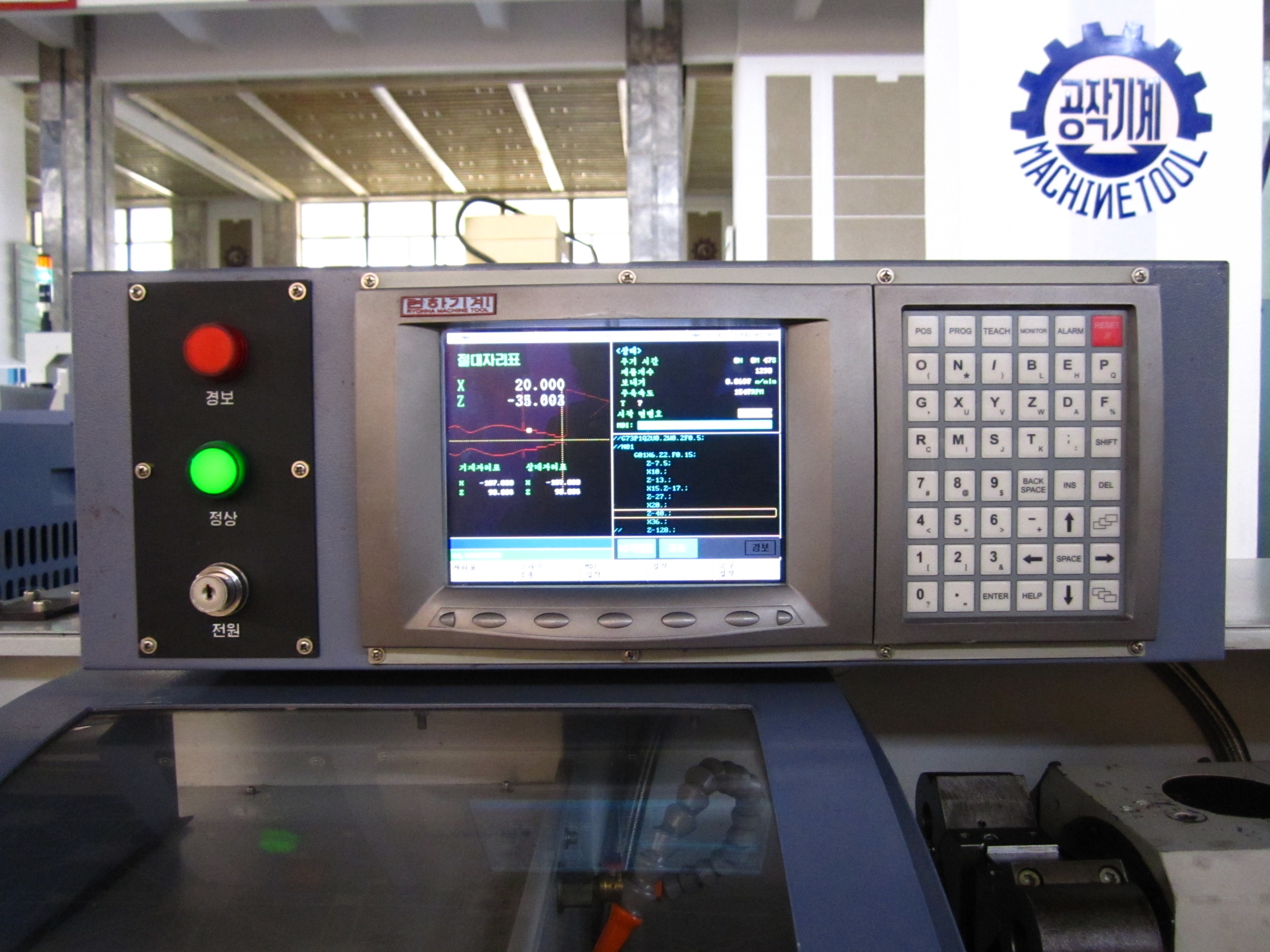
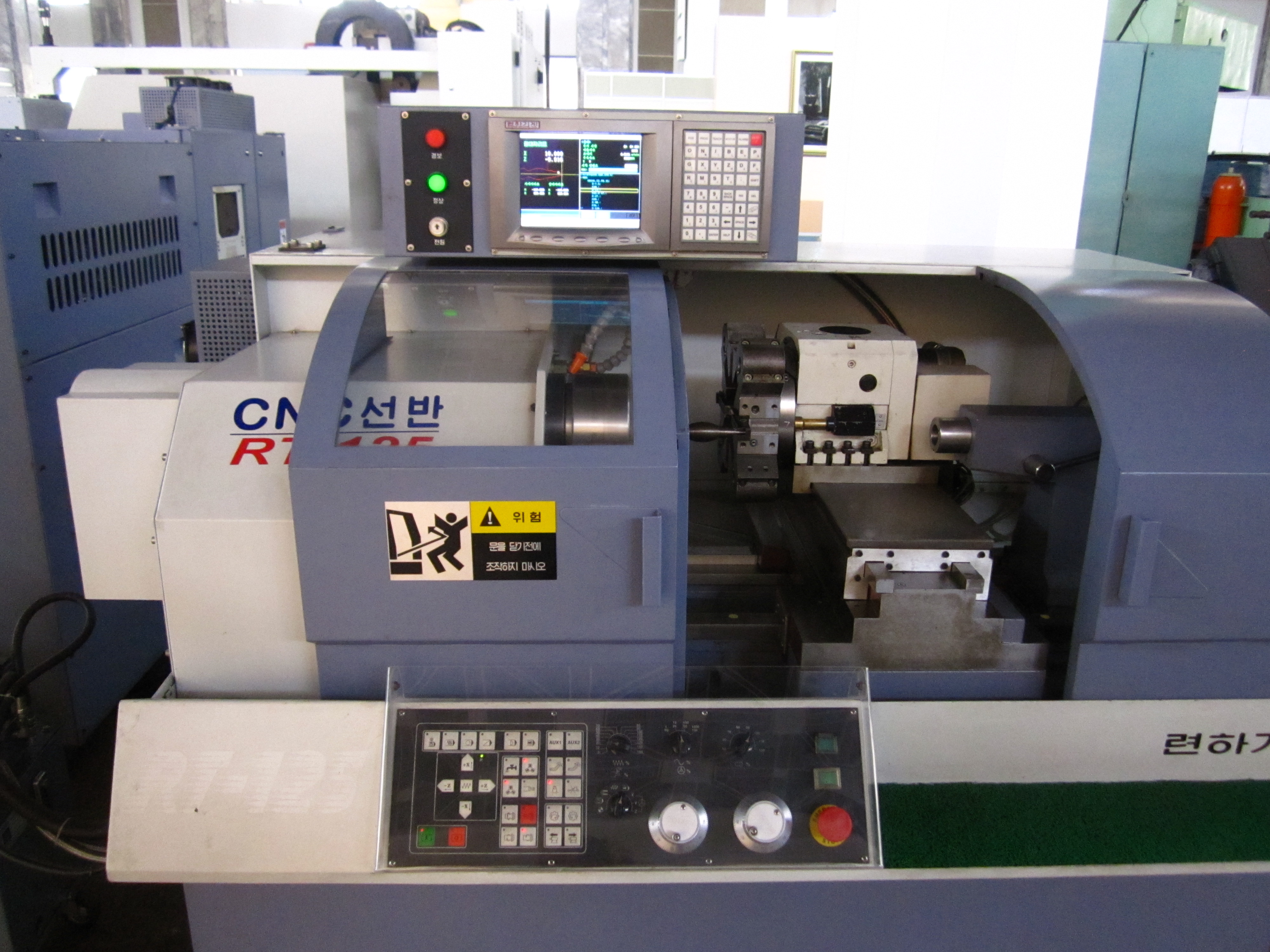
For those of you who have recently visited the DPRK or who spend too much time perusing Elufa.net or reading KCNA, you are undoubtedly aware of the DPRK’s recent emphasis on something called “CNC”.  I had no idea what CNC was, so I began collecting as much information as I could find on the net and I have posted it below.

Here is the Wikipedia page for CNC.  For those of you in China, here is what it says:

Numerical control (NC) refers to the automation of machine tools that are operated by abstractly programmed commands encoded on a storage medium, as opposed to manually controlled via handwheels or levers, or mechanically automated via cams alone. The first NC machines were built in the 1940s and ’50s, based on existing tools that were modified with motors that moved the controls to follow points fed into the system on paper tape. These early servomechanisms were rapidly augmented with analog and digital computers, creating the modern computed numerically controlled (CNC) machine tools that have revolutionized the design process.

In modern CNC systems, end-to-end component design is highly automated using CAD/CAM programs. The programs produce a computer file that is interpreted to extract the commands needed to operate a particular machine via a post processor, and then loaded into the CNC machines for production. Since any particular component might require the use of a number of different tools—drills, saws, etc.—modern machines often combine multiple tools into a single “cell”. In other cases, a number of different machines are used with an external controller and human or robotic operators that move the component from machine to machine. In either case, the complex series of steps needed to produce any part is highly automated and produces a part that closely matches the original CAD design.

That description is not nearly as helpful as this video on CNC: Click here (Might not work for readers in China).

The Asia Times ran a story which included a short history of CNC in the DPRK:

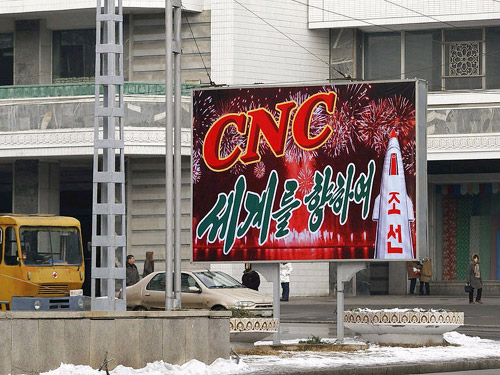
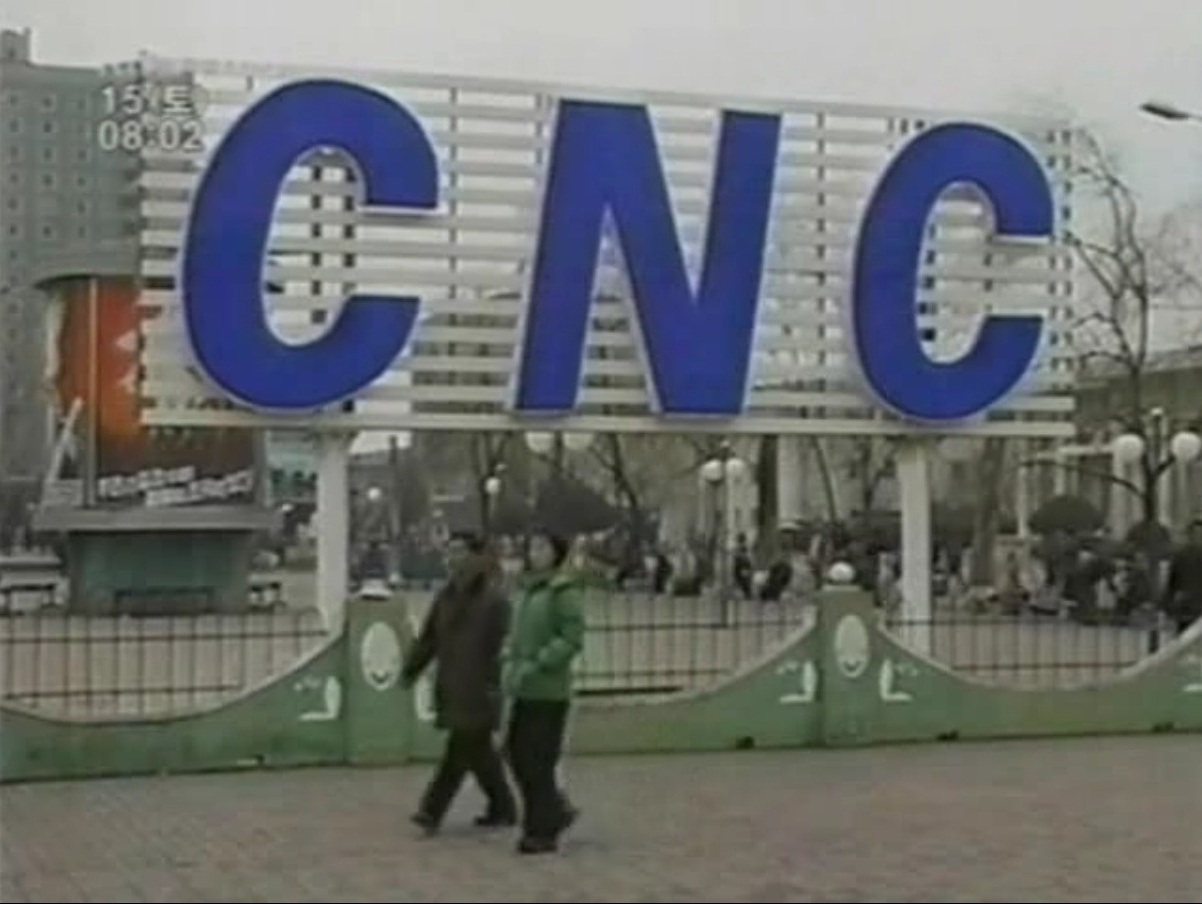
The name of the game is CNC – Computer Numerical Control – machine tools that have revolutionized the design process and said to be developed in the DPRK and already exported, for example, to China. Top exponents are the Korea Ryonha Machine Tool Corporation and the Taean Heavy Machine Complex. CNC billboards are all over Pyongyang. Inevitably CNC has its own dedicated patriotic song (no music video yet). Here are the lyrics, as translated by Andray Abrahamian, a doctoral candidate at the University of Ulsan in South Korea:

If you set your heart on anything
We follow the program making the Songun era machine technology’s pride
Our style CNC technology

(chorus)

CNC – Juche industry’s power!
CNC – an example of self-strength and reliance!
Following the General’s leading path
Breakthrough the cutting edge

Arirang! Arirang! The people’s pride is high
Let’s build a science-technology great power
Happiness rolls over us like a wave

So the narrative of building a “socialist paradise” is now being supplanted by the narrative of developing and producing state-of-the-art technology to, as the Pyongyang Times indelibly put it, “improve the people’s living standard on the word level”. This is how the DPRK is mobilizing its people to “open the gate to a thriving nation in 2012”. South Korea, watch out.

By way of luck, I managed to obtain a copy of the DPRK’s CNC song. You can download the MP3 by right clicking here.

UPDATE: A reader did find this DPRK karaoke version of the CNC song complete with lyrics (in Korean).  Watch it here.

UPDATE 2: A reader also sends in this acoustic version of the CNC song (YouTube).

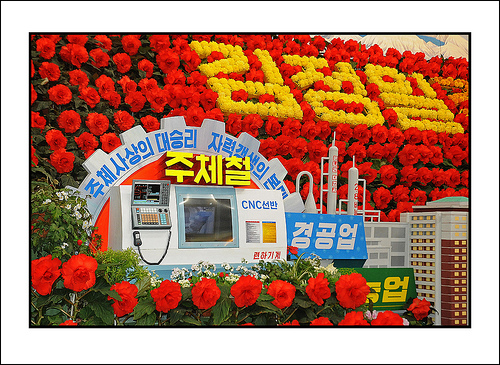
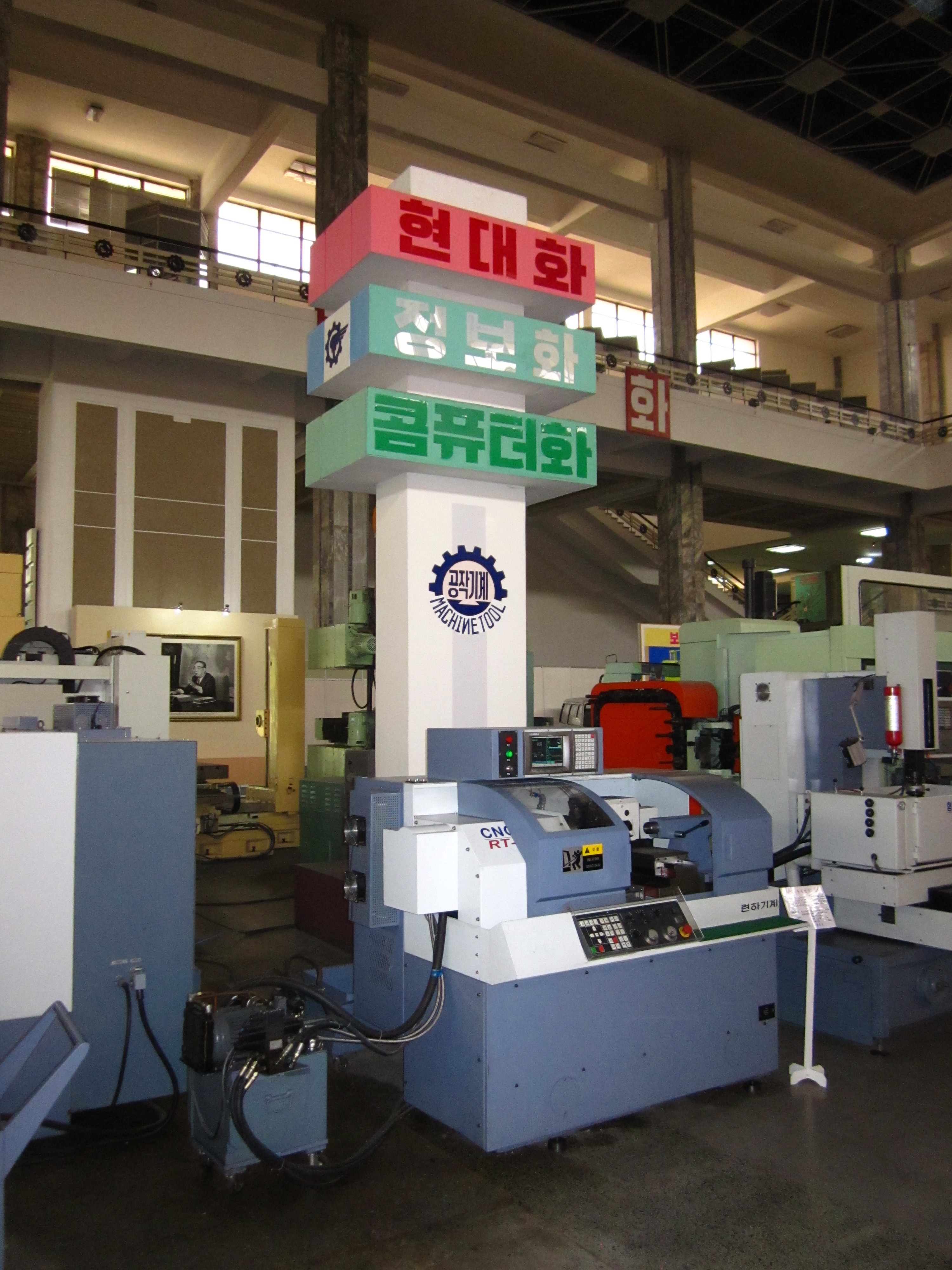
If you are itching to know what the DPRK’s CNC machines look like, here is one display at the Three Revolutions Museum in Pyongyang:

cnc1-thumb.jpg cnc2-thumb.jpg cnc3-thumb.jpg

Click images for larger versions

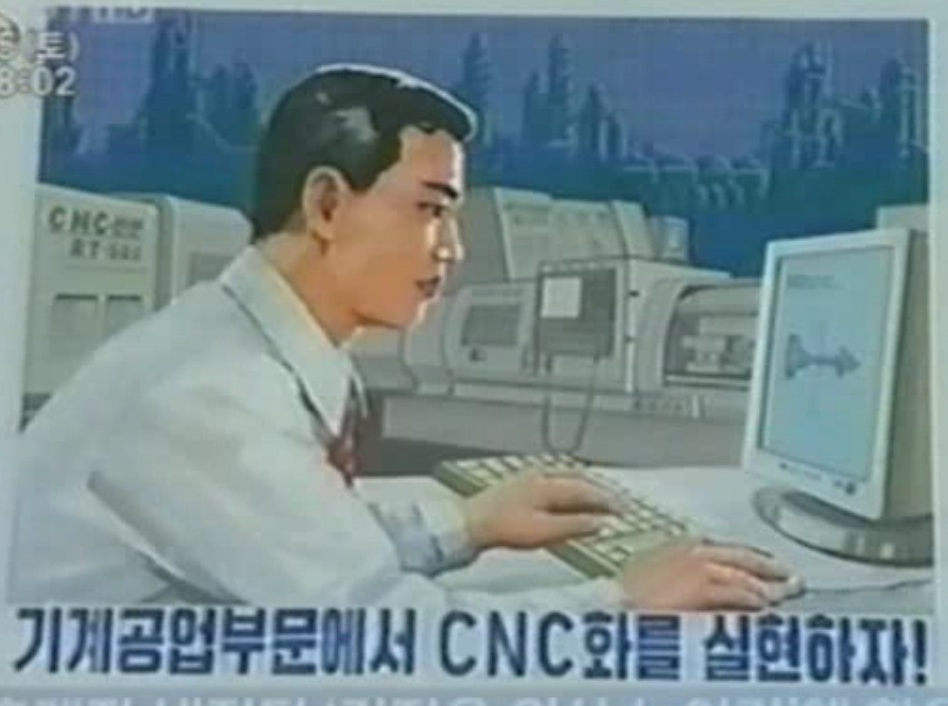
And here is some CNC propaganda that has appeared around Pyongyang:

cnc-prop-1.jpg cnc-prop-2.jpg cnc-prop-3.jpg cnc-prop-4.jpg

Click images for larger versions

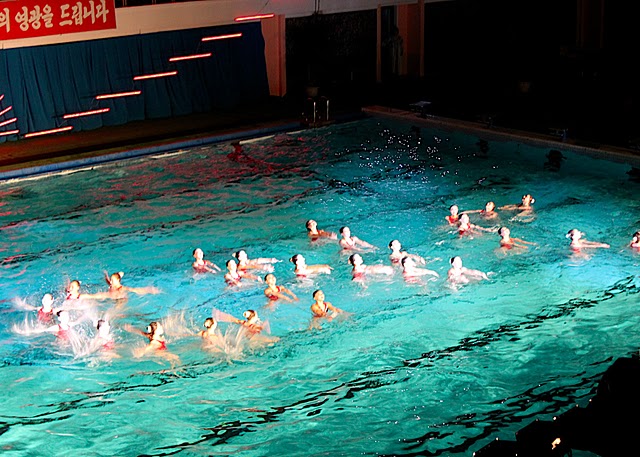
UPDATE: here is an additional photo taken by an anonymous tourist:


cnc-pool.JPG

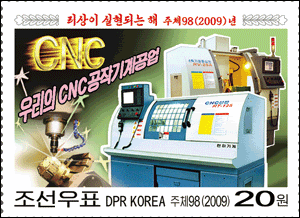
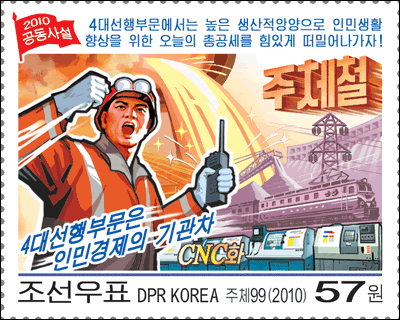
UPDATE: Here are some CNC postage stamps:


dprk-cnc-stamp.gif

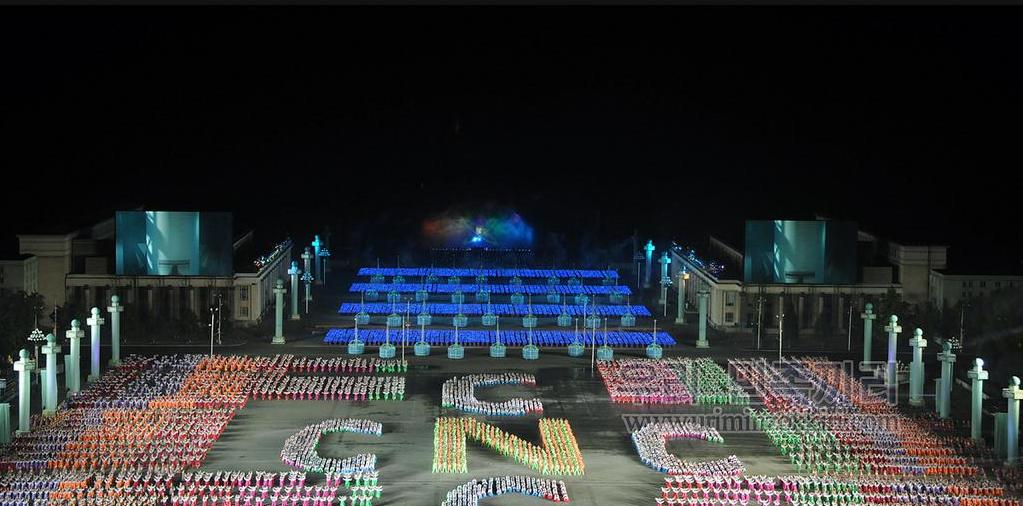
UPDATE: And CNC made part of the 2010 Mass Games (You Tube at the 1:25 mark). See a photo here.

KCNA has published plenty of news stories about CNC.  You can see them here courtesy of the Stalin Search Engine. CNC was first first mentioned on January 15, 2002 (KCNA) .  One phrase that is frequently mentioned is that thanks to innovations like CNC the DPRK is “Pushing back the frontiers of science”.  Indeed North Korean economic policy seems hell-bent to do just that.  Hopefully we will soon see them change their policies to “push back the frontiers of ignorance”.

CNC machines are produced by the Ryonha Machine [Tool] Factory (KCNA) and they have been widely promoted in the official media (here, here, here, here, and here for example).  It appears also that the Ryonha Machine Tool Factory has partnered up (with someone) to form a JV company which focuses on international trade, the Ryonha Machinery Joint Venture Corporation. Here is a PDF flyer of their products taken from the KFA web page, and some of the items they are selling can be seen here and here.

They Ryonha Machine Joint Venture Company, however, seems to have a history that might scare away many potential customers.  According to the US Treasury Department:

The U.S. Department of the Treasury today designated eight North Korean entities pursuant to Executive Order 13382, an authority aimed at freezing the assets of proliferators of weapons of mass destruction (WMD) and their delivery vehicles.  Today’s action prohibits all transactions between the designated entities and any U.S. person and freezes any assets the entities may have under U.S. jurisdiction.

“Proliferators of WMD often rely on front companies to mask their illicit activities and cover their tracks,” said Stuart Levey, the Treasury’s Under Secretary for Terrorism and Financial Intelligence (TFI).  “Today’s action turns a spotlight on eight firms involved in WMD proliferation out of North Korea.  We will continue to expose and designate these dangerous actors.”

Today’s action builds on President Bush’s issuance of E.O. 13382 on June 29, 2005.  The Order carried with it an annex that designated eight entities – operating in North Korea, Iran, and Syria – for their support of WMD proliferation.  The President at that time also authorized the Secretaries of Treasury and State to designate additional entities and individuals proliferating WMD and the missiles that carry them.

Korea Mining Development Corporation (KOMID), which was designated in the annex of E.O. 13382, is the parent company of two of the Pyongyang-based entities designated today, Hesong Trading Corporation and Tosong Technology Trading Corporation.  These direct associations meet the criteria for designation because the entities are owned or controlled by, or act or purport to act for or on behalf of KOMID.

Korea Ryonbong General Corporation, also named in the annex, is the parent company of the remaining six Pyongyang-based entities designated today.  These entities include Korea Complex Equipment Import Corporation, Korea International Chemical Joint Venture Company, Korea Kwangsong Trading Corporation, Korea Pugang Trading Corporation, Korea Ryongwang Trading Corporation, and Korea Ryonha Machinery Joint Venture Corporation.

As subsidiaries of KOMID and Korea Ryonbong General Corporation, many of these entities have engaged in proliferation-related transactions.

I have been unable to locate the Ryonha Machine Tool Factory on Google Earth. If anyone has any pointers, please let me know.

Here is a list of factories the DPRK claims to be using CNC technology:

Amnokgang Daily Necessities Factory (KCNA)
Amnokgang Gauge and Instrument General Factory (KCNA)
Cholima Steel Complex (KCNA, Naenara)
Chonma Electrical Machine Plant (KCNA)
Feb 8 Vinalon Complex (KCNA)
Hamhung Wood Processing (KCNA)
Huichon Machine Tool Plant (KCNA)
Kangdong Weak Current Apparatus Factory (KCNA)
Kanggye General Tractor Plant (KCNA) (Underground)
Kanggye Knitted Goods Factory (KCNA)
Kanggye Wine Factory (KCNA)
KimChaek Iron and Steel Complex (KCNA)
Kusong Machine Tool Factory (KCNA)
Kwanmobong Machine Building Plant (KCNA)
October 10 Factory (KCNA)
Pukjung Machine Complex (KCNA)
Pyongyang Cornstarch Factory (KCNA)
Rakwon Machine Complex (KCNA)
Ryongsong Machine Complex (KCNA)
Sinuiju Spinning Machine Factory (KCNA)
Suphung Bearing Factory (KCNA)
Sungri Motor complex (KCNA)
Taean Heavy Machine Complex (KCNA)
Taedonggang Brewery (KCNA)
Tahungsan Machine Plant (KCNA)
Unsan Machine Tool Factory (KCNA)

I know the locations of many of these factories but not all.  If anyone has any information on their coordinates, please let me know.

Share

Kim Jong Il, the reformer?

Monday, June 28th, 2010

Bradley Martin, author of Under the Loving Care of the Fatherly Leader, writes in the Global Post:

Now that food shortages reportedly have forced North Korea to reverse its crackdown on capitalist-style markets, more systematic reforms for its collapsed economy may not be far behind.

The markets policy reversal came May 26 in directives issued by the cabinet and the ruling Workers’ Party to subordinate organizations, according to a report by the Seoul-based newsletter North Korea Today, which gets its information from officials and ordinary citizens inside the North. “The government cannot take any immediate measures” to relieve a food shortage that is “worse than expected,” the newsletter quoted one of the directives as saying in explanation for the policy change.

The same authorities only late last year decreed a sudden currency revaluation that crippled the “anti-socialist” markets, where stallholders had been trading for individual profit, by confiscating the traders’ wealth. The new decrees bless and deregulate what’s left of the markets, which have shrunk and in some cases closed completely in the interim, in the hope that market trading will keep people from starving. And the directives instruct managers of state-run enterprises to pursue lucrative deals — especially in foreign trade — that could help feed their employees.

This could all turn out to be the big event that finally pushes the very reluctant leadership into a multi-year campaign of serious reforms of the sort that began decades ago in Vietnam and China, according to Felix Abt, a Swiss involved in North Korean joint ventures in pharmaceutical manufacturing and computer software.

“Given an industrial stock and an infrastructure beyond repair, and the impossible task of maintaining a huge army, economic reforms appear unavoidable in the very near future,” Abt, a former president of Pyongyang’s European Business Association, wrote in an email exchange.

“It looks intriguing and it reminds me of Vietnam’s history of reforms,” said Abt, who did business for years in Vietnam before going to Pyongyang and recently has moved back to Vietnam while maintaining his involvement in North Korea.

“The Vietnamese economic situation looked dire at the beginning of the 1980s,” he explained. “Nguyen Van Linh, party secretary in Ho Chi Minh City, favored moderate economic reforms. He tried too early, lost his job and left the political bureau in 1982.

“Le Duan, secretary general of the Communist Party, was categorically against any economic reforms. He died in 1986, the year of the five-year party congress which brought Nguyen Van Linh back and elected him as his successor. The new party secretary general immediately launched the Doi Moi policy — ‘reforms.’”

Abt ventured the lesson that triggering reforms “takes something big like the death of a leading politician” in Vietnam — or, in North Korea, a “ruinous” currency revaluation.

Not every foreigner who has had firsthand economic dealings with North Korea is convinced the recent events constitute that trigger. Some worry that U.S.-led sanctions could nip any flowering of capitalism in the bud.

“The problem is still U.S. Treasury’s attitude,” said one such foreigner, who asked not to be identified further. Treasury Department officials began working several years ago to take North Korea “out of the international banking system,” discouraging trade, he noted.

Some U.S.-sponsored sanctions subsequently were eased in an effort to persuade Kim Jong Il to negotiate away his nuclear weapons capability, but after those talks went nowhere — and especially after North Korea allegedly torpedoed a South Korean warship earlier this year — enthusiasm for compromise cooled. Recent reports say Washington is moving toward aggressively strangling cash flow into the country.

There is also the argument that Kim believes he cannot afford to reform the economy because it would let in information and influences that would undermine his family’s rule by letting his isolated subjects learn that the rival South Korean system works much better.

According to Abt, one answer to both concerns could be China, which “will provide all the support necessary to the DPRK party and government to enable economic reforms without regime change.” He used the abbreviation of Democratic People’s Republic of Korea, the country’s official name. “The DPRK may expect support from other quarters, for example, the European Union, too,” he said.

“I think the dilemma of the leadership — economic upsurge versus the inflow of ‘subversive’ system-destabilizing information and ideas, particularly regarding the South — can be overcome with the necessary Chinese support,” Abt said. “Though the division of Korea can only be compared with that of Germany before 1990, China’s division — capitalist Hong Kong, capitalist Taiwan — was a sort of challenge to Deng Xiaoping and successors, too, but they learnt to manage that quite well.”

Read the full the story here:
Analysis: Kim Jong Il, the reformer?
Global Post
Bradley Martin
6/24/2010

Share

Mansudae Overseas Development Group Projects

Wednesday, June 23rd, 2010

According to the Daily NK:

North Korea has earned more than $160 million in the last ten years thanks to the construction of sculptures and other edifices in countries across Africa.

A Daily NK source in China revealed on the 18th, “Since 2000, North Korea has been earning colossal quantities of dollars through contracts for the Mansudae Overseas Project Group of Companies under the Mansudae Art Institute to construct sculptures.”

Mansudae Art Institute is an organization primarily dedicated to the idolization of Kim Il Sung and Kim Jong Il through public works, one whose construction of edifices such as the Juche Tower and Arch of Triumph in Pyongyang has added to the status of the country.

It has also been building revolutionary monuments in African countries such as Ethiopia since the 1970s in order to maintain cordial relations with socialist states, but in the early 2000s started doing work in African countries to earn foreign currency as well.

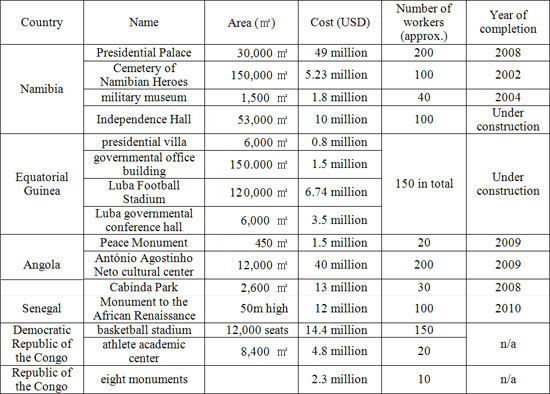
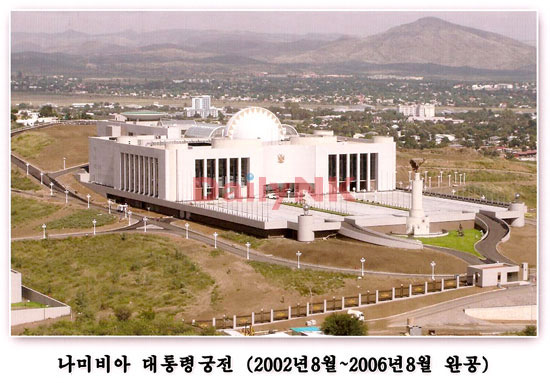
According to the source, North Korea has earned $66.03 million from Namibia alone thanks to the construction of the Presidential Palace ($49 million); the Cemetery of National Heroes ($5.23 million); a military museum ($1.8 million); and Independence Hall ($10 million).

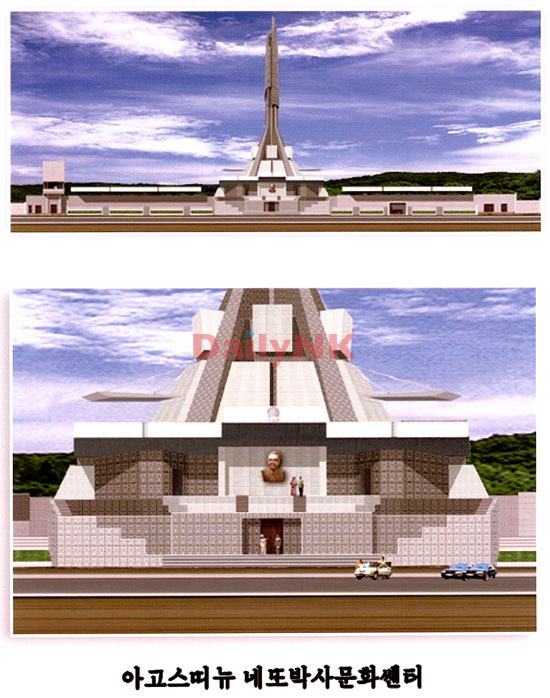
It has also earned almost $55 million from Angola via the António Agostinho Neto culture center ($40 million); Cabinda Park ($13 million); and the Peace Monument ($1.5 million).

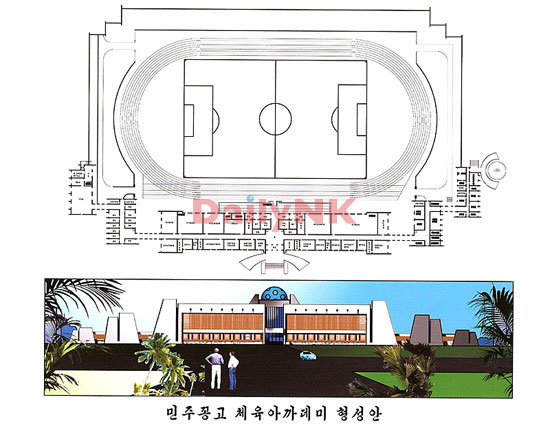
Additionally, the North has constructed a basketball stadium ($14.4 million) and an athlete academic center ($4.8 million) in the Congo, earning almost $20 million dollars in total.

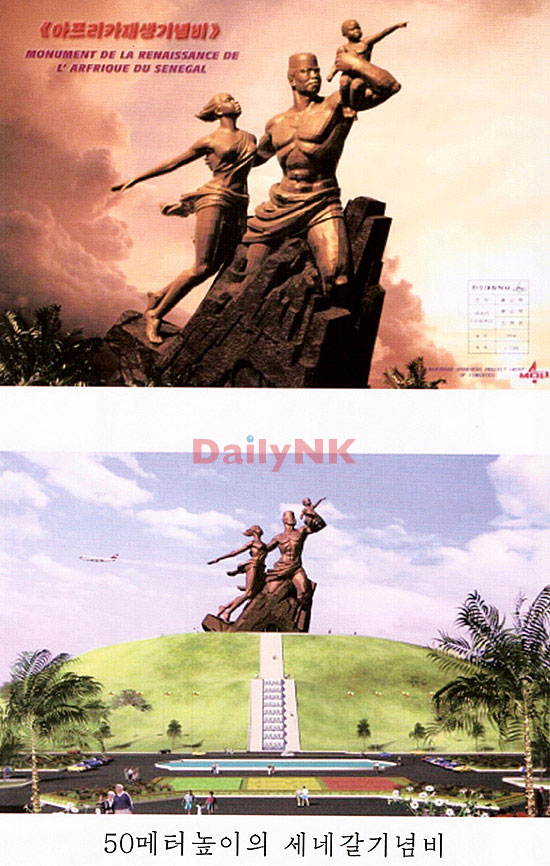
Thanks to the Monument to the African Renaissance in Senegal, the North has made another $12 million dollars.

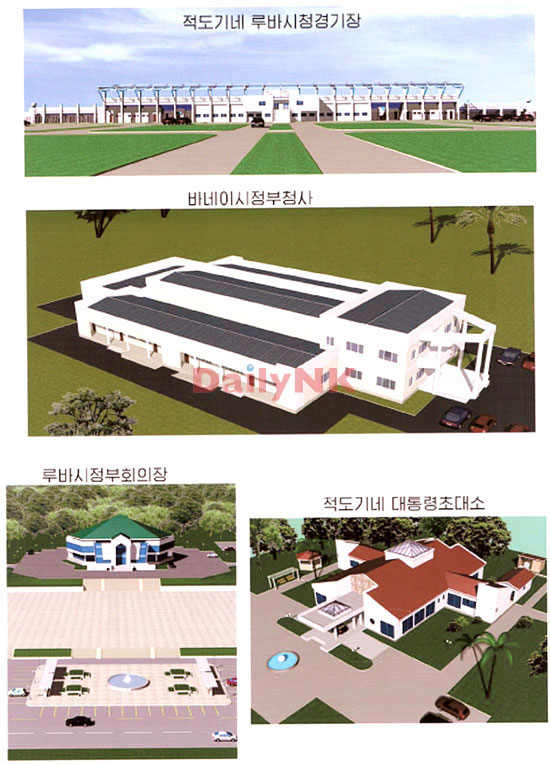
There are around 19.8㎢ set aside for a vacation spot for the president of Equatorial Guinea, which is supposed to earn Mansudae around $800,000, not to mention a government office building ($1.5 million), Luba Stadium ($6.74 million) and conference halls ($3.5 million).

The source also reported, “The money earned from these construction projects is managed by the No. 39 Department. Some of these dollars are used for domestic governance, while the rest go to secret accounts in Switzerland or Macau to become Kim Jong Il’s secret funds.”

Here are the images from the story including a table of financial data (which I would take with a grain of salt):

dnk-mansudae-1.jpg dnk-mansudae-2.jpg dnk-mansudae-3.jpg dnk-mansudae-4.jpg dnk-mansudae-5.jpg dnk-mansudae-6.jpg dnk-mansudae-7.jpg

Additional Information:

1. I blogged here about the Derg Monument in Ethiopia.

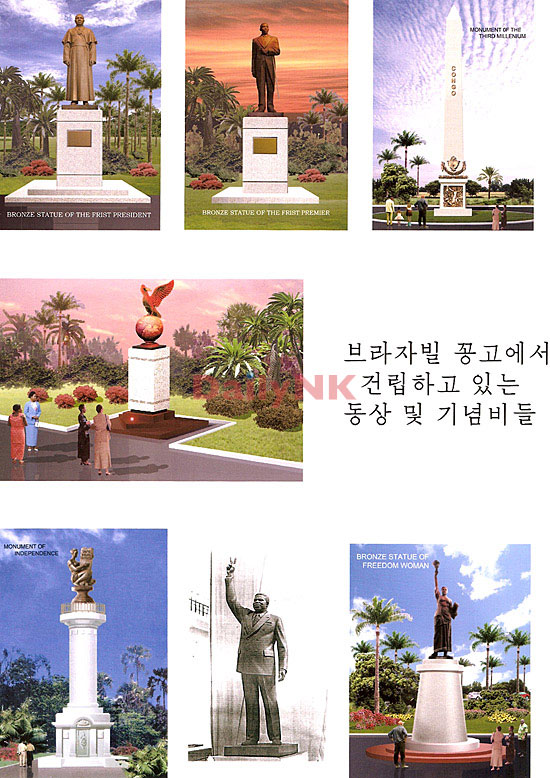
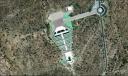
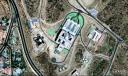
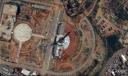
2. I have located some of the Mansudae Overseas projects mentioned in this story (as well as numerous other places not menioned in this story: Egypt and Syria, Zimbabwe, DR Congo). However, here are GeoEye satellite images of some of the Namibia and Angola projects mentioned above courtesy of Google Earth:  

Namibia National Heroes Acre (22°39’46.02″S,  17° 4’41.06″E):

national-heroes-acre-namibia-thumb.jpg

Namibia State House (22°35’28.83″S,  17° 6’2.76″E)

namibia-state-house-thumb.jpg

Cultural Center of António Agostinho Neto (Mausoleum) (8°49’24.73″S,  13°13’8.52″E)

angola-nehro-thumb.jpg


Share

Room (Bureau) 38 allegedly restored

Wednesday, June 23rd, 2010

According ot the Choson Ilbo:

North Korea in March restored a special department in the Workers Party codenamed Room 38 which manages leader Kim Jong-il’s coffers and personal slush funds, it emerged Monday. The North last fall merged Room 38 with Room 39, which manages party slush funds.

“Rooms 38 and 39 were merged to simplify Kim Jong-il’s slush funds,” said a North Korean source. “But when it became difficult to secure hard currency due to international sanctions, Room 38 seems to have been restored because there was a feeling that Room 39 alone can’t meet the need.”

Room 38 is reportedly led by Kim Tong-il, who heads three regional departments in charge of earning hard currency.

Room 39 tries to maximize earnings from gold and zinc mining and farming and fisheries. It also manages stores and hotels exclusively for foreigners in Pyongyang. Room 39 seems to have suffered badly due to the recent suspension of inter-Korean trade. “Taesong Bank and Zokwang Trading, which received remittances from Mt. Kumgang tourism, are both controlled by Room 39, and is also in charge of the exports of agricultural and fisheries products,” said a government source.

Kim Jong-il needs dollars to maintain the party elite’s loyalty to him and his heir presumptive. He is said to have told party bigwigs in February, “From now on I will judge your loyalty based on the amount you contribute to the fund.” His son Jong-un is also said to be amassing separate slush funds for his own use.

But international sanctions on exports of weapons, counterfeit dollars, fake cigarettes and drugs remain in place, and the United States is pushing ahead with additional financial sanctions over the North’s sinking of the South Korean Navy corvette Cheonan in March. Pyongyang was dealt a heavy blow in 2005 when the U.S. froze US$25 million in the Banco Delta Asia in Macao which was apparently for Kim’s personal use.

Kim earlier this year appointed his high school friend Jon Il-chun head of Room 39. Jon was also named chairman of the National Development Bank, established early this year with a view to conducting normal international financial transactions to induce foreign investment. “North Korea seems to be planning to divert part of foreign investment to Kim’s slush fund,” said a government official.

NK Leadership Watch has more

Read the full story here:
Kim Jong-il Restores Special Department to Swell Coffers
Choson Ilbo
6/24/2010

Share