Archive for the ‘DPRK organizations’ Category

Western Aid: The Missing Link for North Korea’s Economic Reviva

Monday, May 9th, 2011

AEI Working Paper
Nicholas Eberstadt

Download PDF here

[T]his past January, for the first time in over two decades, Pyongyang has formally unveiled a new multi-year economic plan: a 10-year “strategy plan for economic development” under a newly formed State General Bureau for Economic Development. The new economic plan is intended not only to meet the DPRK’s longstanding objective of becoming a “powerful and prosperous country” [Kangsong Taeguk] by 2012 (the 100th anniversary of the birth of Kim Il Sung), but also to promote North Korea to the ranks of the “advanced countries in 2020.”

Details on the new 10-year economic plan are as yet sketchy. South Korean analysts report that the plan envisions massive amounts of new investment in North Korea: up to $100 billion, by some accounts.3 But even if the investment target is more modest than such rumors suggest, North Korea will be counting on more than just domestic capital accumulation to secure this funding. It will have to rely upon major inflows of both foreign private capital–and foreign aid.

Additional Information:

1. This report has been added to the DPRK Economic Statistics Page.

Share

Hyesan rail incident reported

Friday, May 6th, 2011

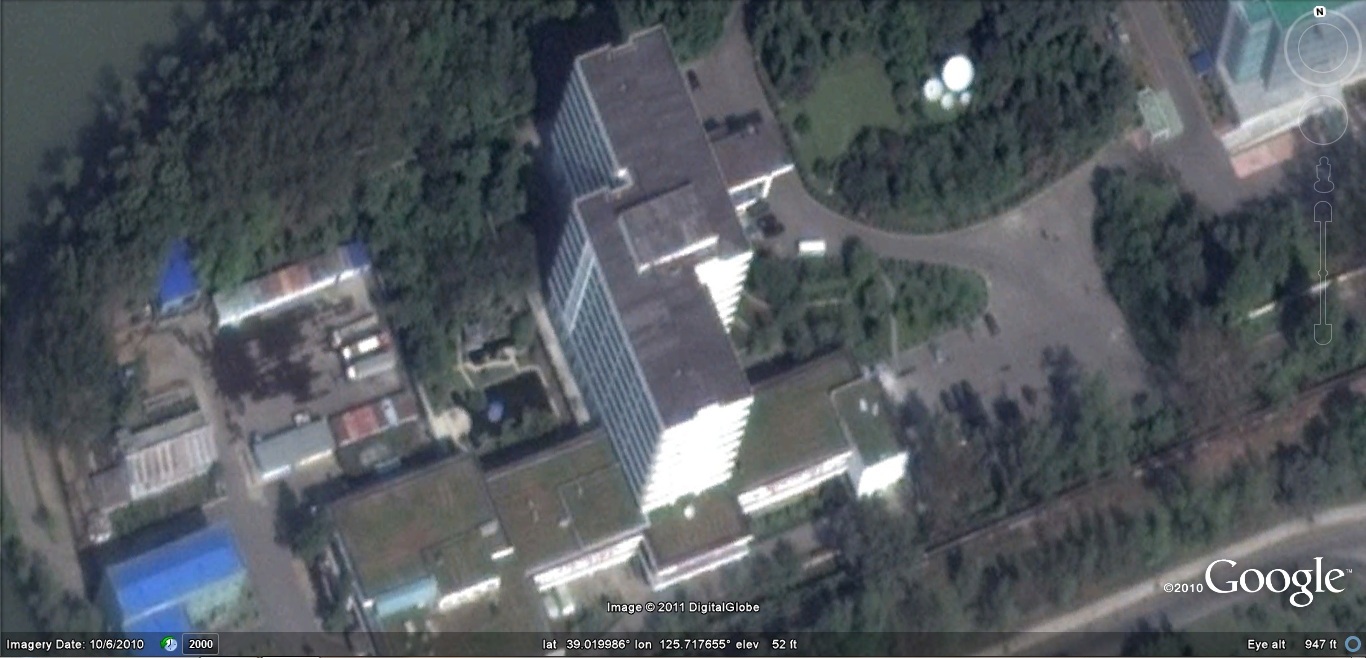
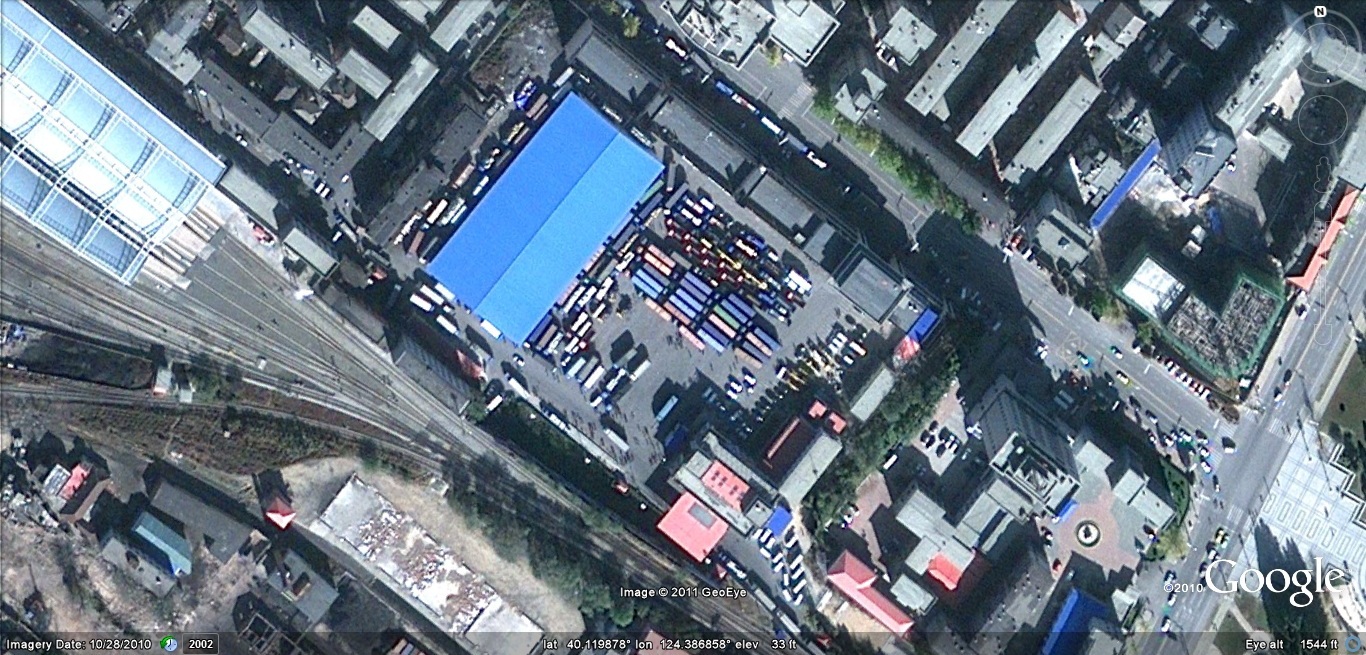
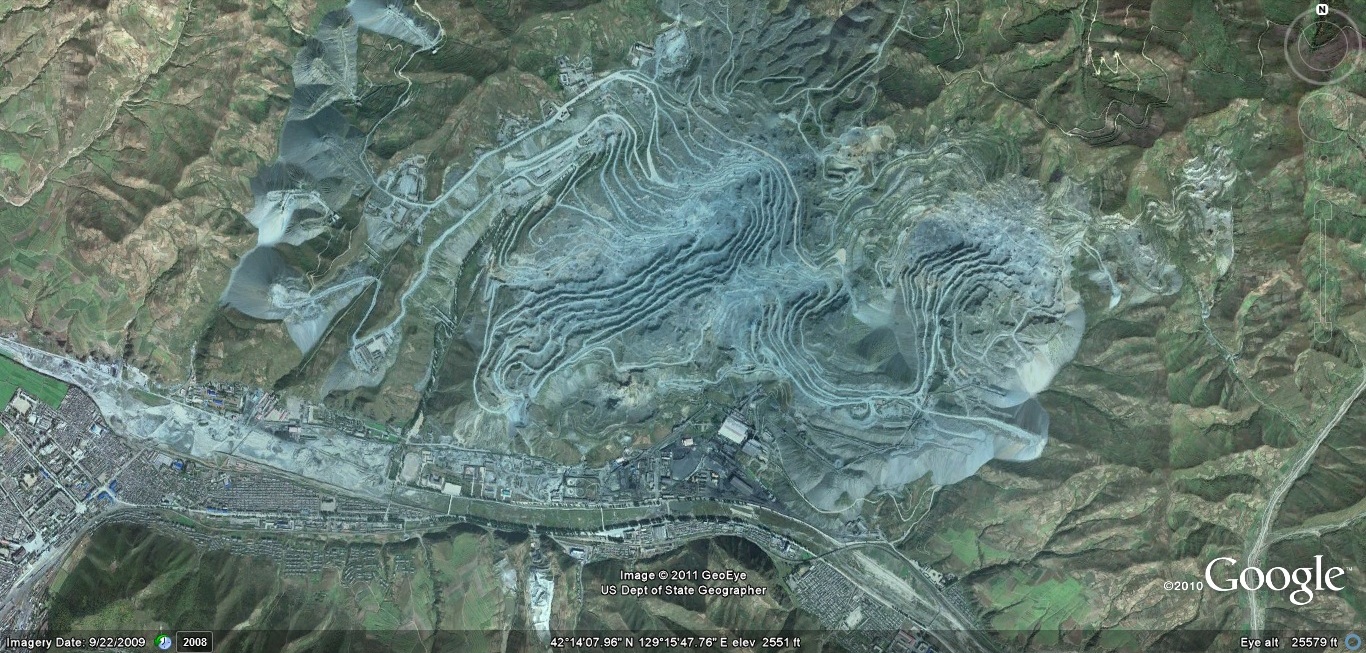
Pictured above (Google Earth): Komsan Station in Hyesan

According to Open Radio:

A source in Yanggang province reported May 4th, “A Hyesan – Pyongyang train derailed on May 2nd somewhere in the region of Geomsan station in Hyesan killing at least ten passengers and injuring many others.” The injured are being treated at a nearby hospital but the dead have not been formally identified and are yet to be transferred home.

“The North Korean police and security agencies are both investigating the case,” said the source. “So far they have been unable to establish the incident’s cause.” They are said to be investigating the possibility that a track sleeper became unhinged.

The possibility, however, that this is not merely an accidental occurrence is raised by the fact that the Pyongyang – Hyesan line is known by the population not just to be a route used by citizens travelling between the cities but is also one of national significance.

There are both a security agency detention center and a munitions factory in the Geomsan area of Hyesan. Before he died Kim Il-sung travelled only via station number 1 at Geomsan.

Five of twelve passenger carriages were overturned when they became disconnected from a connecting link. Subsequent repair operations have caused much disruption to regular line service. Stranded passengers are staying in the station’s vicinity as locals take advantage of the situation, catering to them with impromptu vending operations.

Read the full story here:

Ten Die in Pyongyang – Hyesan Rail Incident
Open Radio
2011-5-6

Share

Star JV Co. takes over .kp domain

Thursday, May 5th, 2011

UPDATE (2011-5-19): Martyn Williams writes in PC World:

Control of North Korea’s top-level Internet domain has been formally assigned to a government-backed venture after the previous operator, a German company, let the national domain disappear from the Internet for several months.

The dot-kp domain was officially transferred at the beginning of May to Star Joint Venture, a North Korean-Thai company that has been chartered with providing “modern Internet services” to the insular country. Star JV has been in de-facto control of the domain name since December last year.

Dot-kp was first assigned in 2007 to the Korea Computer Center, one of the country’s top computer science establishments. KCC had agreed to let a German businessman, Jan Holtermann, set up a satellite Internet connection to North Korea and run the dot-kp domain through a German company, KCC Europe.

The company ran the domain and a handful of North Korean websites from servers in Berlin until mid 2010 when they suddenly disappeared from the Internet.

“In 2010, the authoritative name servers for the .KP became completely lame, effectively stopping the top-level domain from operating,” said the Internet Assigned Numbers Authority (IANA), the body that coordinates basic addressing functions of the Internet, in a report published this week.

“Korea Computer Center reached out to KCC Europe, its Germany-based technical registry provider, to have service reinstated. After several months without response, Korea Computer Center terminated KCCE’s agreement to operate the .KP domain,” the report said.

At around the same time, Star JV was beginning to bring Internet connectivity to Pyongyang via China. The company had already taken control of IP (Internet Protocol) addresses long reserved for North Korea but never used, and it brought the country’s first website onto the global Internet around October 2010.

The site, for the domestic news agency, was initially only accessible via its IP address since the dot-kp DNS (Domain Name Service) was still under the control of KCC Europe.

But that changed in December “in light of the continuing lack of operation of the dot-kp,” said the IANA report.

The Korea Computer Center supported giving Star JV interim control of the dot-kp domain and the first websites began using North Korean domain names in January this year.

The change was made official in May when the IANA database was updated to show Star JV as the coordinator of the domain.

Several attempts to contact Jan Holtermann, the German businessman that ran KCC Europe, both for this story and previous stories have proved unsuccessful. German company records show KCC Europe was dissolved on Jan. 31 this year.

ORIGINAL POST (2011-5-5): According to Martyn Williams:

Control of North Korea’s dot-KP Internet top-level domain has been assigned to Star JV, the North Korean-Thai joint venture that’s behind the recent wiring of Pyongyang to the global Internet.

The Internet Assigned Numbers Authority (IANA), which administers country code domains, updated its database on Monday, May 2, to assign the KP domain to “Star Joint Venture Company.”

This means control for the KP domain now rests with Star JV. Star took control of North Korea’s Internet address space last year and has been building up the North Korean Internet.

Switch of control to Star doesn’t come as a surprise as the company started issuing dot-kp domains in January this year. It’s a further sign that the joint venture between the North Korean government and Thailand’s Loxley Pacific is now responsible for the DPRK’s Internet links with the rest of the world.

The administrative and technical contact details are now listed as:

President
Star Joint Venture Company
Potonggang2-dong, Potonggang District
Pyongyang
Democratic People’s Republic of Korea
Email: mptird@star-co.net.kp
Voice: +8502 381 3180
Fax: +8502 381 4418

That’s the address and contact details of the international relations department of North Korea’s Ministry of Posts and Telecommunications.

The website for domain name registration is listed as www.star.co.kp. This website came online in the last few weeks, but it’s still being built.

Administrative control of the domain name was previously held by the Korea Computer Center with technical control in the hands of Jan Holtermann, the German businessman who previously ran a satellite-Internet connection to the country.

Martyn has been keeping an eye on the Star JV co for some time.  See here, here, and here.

Previous posts on the Korea Computer Center are here.

Share

DPRK accused in DDoS attack

Wednesday, May 4th, 2011

According to Bloomberg:

North Korea was responsible for paralyzing the National Agricultural Cooperative Federation’s computer network in April in a second online attack in two months linked to the Kim Jong Il regime, South Korean prosecutors said.

Hackers used similar techniques employed in cyber assaults that targeted websites in South Korea and the U.S. earlier this year and in 2009, the Seoul Central District Prosecutors’ Office said in an e-mailed statement today. The Unification Ministry criticized the “provocation” and urged North Korea to stop such attacks immediately.

The network of the bank better known in Korean as Nonghyup was shut down on April 12, keeping its almost 20 million clients from using automated teller machines and online banking services. In all of the three bouts of online attacks, a method called “distributed denial service” was used, according to the statement.

Under the DDoS tactic, malicious codes infect computers to trigger mass attacks against targeted websites, according to Ahnlab Inc. (053800), South Korea’s largest maker of antivirus software.

Nonghyup will spend 510 billion won ($477.2 million) by 2015 to boost network security, the bank said in an e-mailed statement. The company received 1,385 claims for compensation related to the network disruption as of May 2, and 1,361 of them have been settled, according to the statement.

North Korea’s postal ministry was responsible for the 2009 attacks, Won Sei Hoon, head of South Korea’s National Intelligence Service, told lawmakers in October that year.

Attacks in March this year targeted 40 South Korean websites, including at the presidential office, the National Intelligence Service, and Ministry of National Defense. They were traced to the same Internet Protocol addresses used in the 2009 episodes, South Korean police said last month.

The hackers prepared for the April 12 attack on Nonghyup for more than seven months, the Seoul Central District Prosecutors’ Office said today.

According the Hankyoreh:

Prosecutors stated that a notebook computer belonging to an employee of the company managing the Nonghyup server became a so-called “zombie PC” after being infected in September 2010 by malicious code distributed by the North Korean Reconnaissance General Bureau, and that North Korea subsequently operated the notebook remotely to attack the Nonghyup computer network.

North Korea did not initially target Nonghyup, but the bank was exposed as a result, prosecutors explained.

As bases for this conclusion, prosecutors cited the fact that one of the IP addresses for the server ordering the attack was confirmed to be administered by the North Korean Reconnaissance General Bureau, along with the strong similarity between the malicious code and distribution methods with previous DDoS attacks concluded to be North Korea’s doing.

Some experts at security companies reacted with skepticism to the prosecutors’ contentions. One expert questioned the explanation that the parties behind the attack used the same overseas command server employed by hackers in the DDoS attacks for operating zombie PCs, noting that its IP address was blocked through the Korea Internet Security Agency.

A computer systems design expert said, “The back door program on the notebook used in the attack could not function if linked with Nonghyup’s internal network, which is cut off from the Internet.”

The argument is that it would have been effectively impossible for an outside party to precisely determine and attack Nonghyup’s computer system structure and work currents and those notebooks authorized for top access without assistance from an inside party.

When questioned about their evidence of North Korea’s direct involvement, prosecutors reiterated that they could not disclose the information because it was related to national security.

The story was also covered by the Daily NK and the AFP.

The Choson Ilbo reports that 200 additional infected computers have been discovered.

Authorities have discovered 200 more so-called zombie computers that have been infected with viruses North Korean hackers planted in September last year. They came across them in the process of investigating the laptop computer of an IBM employee that was used to paralyze the computer network of agricultural cooperative lender Nonghyup.

Prosecutors said Monday that the National Intelligence Service identified 201 port numbers that have been infected with viruses so that they can serve as zombie computers, and the IBM employee’s laptop is one of them. This means not only Nonghyup but any state agency could be the target of a North Korean cyber attack.

Growing Sophistication

South Korean authorities and computer experts say the Nonghyup incident demonstrates the increasing sophistication of North Korea’s cyber warfare capabilities. During a so-called distributed denial-of-service attack on July 7, 2009, North Korean hackers used 435 servers in 61 different countries to spread just one type of virus. During a DDoS attack in March this year, 746 servers in 70 countries were used to plant more than three different types of viruses. The cyber attack against Nonghyup involved a different virus which directly infiltrates the computer network of a bank and deletes not just data but its own tracks as well.

Authorities say finding the 200 zombie computers is as difficult as locating a mole planted by North Korean intelligence. As long as the zombie PCs remain dormant, it is impossible to trace them.

The Korea Herald raises points of skepticism:

Despite prosecutors’ announcement pinpointing North Korea as the culprit for the April 12 cyber attack, security experts say that it is difficult to identify its instigator given the complicated nature of the hacking process.

On Tuesday, investigators at the Seoul Central District Prosecutors’ Office said the Reconnaissance General Bureau, the North’s premier intelligence body, orchestrated the “unprecedented cyber terror” that paralyzed the banking system of the National Agricultural Cooperative Federation, or Nonghyup, for several weeks.

They said that the conclusion came as the methods used in the previous two cyber attacks on a number of key South Korean government and business websites in July 2009 and in March last year were similar to the ones used in last month’s attack.

They also stressed that one of the Internet Protocol addresses used in the attack on the cooperative was identical to that used in last year’s attack.

Experts, however, said that evidence of North Korea’s involvement in the worst-ever cyber attack was too “weak” and only based on “circumstantial assumptions” and that the case could remain unaddressed forever given that identifying the hackers is extremely difficult.

First of all, experts pointed out that hackers usually change IP addresses frequently or use someone else’s address to disguise their identity. Thus, an IP address cannot serve as credible evidence to identify the culprit.

“It appears that prosecutors believe the owner of an empty house with a certain address is the thief who broke into the house while the owner is away,” said a security expert in a media interview on condition of anonymity.

Prosecutors also presented a Media Access Control address which was found on a laptop computer used by the North to launch the attack as evidence. But experts say that the address cannot be reliable as it kept changing on the Internet.

The hacking methods similar to the previous North Korean attacks cannot be clear evidence, either, to hold the North responsible, experts added. They said hackers tend to copy effective methods used by others.

During the announcement, investigative authorities stressed that they could not reveal all pieces of “critical” evidence to the public, citing security concerns. However, their concerns fail to ease doubts over whether the weeks-long result of the prosecutorial investigation is credible.

The North has long focused on cyber warfare. It is known to have established many college-level institutions to produce hackers and stationed cyber warfare personnel in China. The North has used cyber attacks to spy on South Korean government bodies or glean crucial intelligence.

Read more about the DPRK organizations thought to be responsible here.

Share

ROK denies labor groups’ visit to DPRK

Thursday, April 28th, 2011

According to Yonhap:

South Korea has turned down a request by two umbrella labor unions to visit North Korea for talks with their counterparts, an official said Thursday, attesting to ongoing hostilities between the sides.

South Korea’s two main umbrella unions — the Korean Confederation of Trade Unions (KCTU) and the Federation of Korean Trade Unions — applied for permission earlier this week to send four of their members to the North Korean border town of Kaesong for talks with their northern counterparts. They hoped to discuss possibilities for another general meeting among their members, the last of which was held in 2007 before inter-Korean relations grew tense.

South Korea’s Ministry of Unification, which handles inter-Korean affairs, rejected the visit planned for Thursday, citing a breach of regulations enforced after last year’s deadly sinking of a South Korean warship. Seoul blames Pyongyang for the March torpedo attack that killed 46 South Korean sailors, an allegation that the North vehemently denies.

“Not only is it required by law to apply for permission at least a week in advance, but our nationals are currently prohibited from visiting North Korea” under a set of post-attack measures that also ban cross-border trade, a ministry official said on customary condition of anonymity.

The two labor groups were informed of the decision on Wednesday, he added.

In protest, the KCTU held a rally outside the main government complex in Seoul earlier in the day, saying the ministry denied “the earnest request of workers from the South and North who long for peace on the Korean Peninsula.”

“We will achieve a South-North workers’ general meeting at all costs even if we can’t be together in one place,” the KCTU said in a statement, indicating it may issue a joint statement with its North Korean counterparts after holding separate meetings in Seoul and Pyongyang.

The South Koren government has been allowing some private aid to be delivered to th DPRK.

Read the full story here:
Gov’t rejects labor groups’ request to visit N. Korea
Yonhap
4/28/2011

Share

What military unit is most desired by DPRK soldiers?

Tuesday, April 26th, 2011

According to the Daily NK:

Which military unit is the most popular for North Korean soldiers about to serve their ten-year term in the army?

In the end, the answer is undoubtedly the Escort Bureau.

Although all North Korean middle school students submit an application, in which they write which unit they want to serve in to their city or county’s Military Mobilization Department before they graduate, the Escort Bureau is literally the only corps they “want.” Placement in the bureau, however, depends entirely on the applicant’s family background.

Only those students who have passed the military physical exam and have a good family background are allowed to participate in the two-month educational training sessions that are offered when students graduate from middle school around the age of seventeen. These sessions are offered to recruits at the training center of each unit or division and differ according to the branch of the military that the recruit will be serving in. However, the branches have in common the fact that if a recruit comes from a family of good political or economic standing or has a strong family background, he will be able to serve in a favorable unit.

Once soldiers serve in the Escort Bureau, they can live in Pyongyang and, if lucky, be allowed to remain in the capital after their discharge from the military. Additionally, they may receive a recommendation for college due to Kim Jong Il’s especial consideration for discharged soldiers from the Escort Bureau.

In addition, since it is a well-known fact that discharged soldiers from the Escort Bureau have good family backgrounds in politics and the economy, they become sought after by women as desirable bridegrooms.

The military attire of the Escort Bureau, including its hat, uniform, shoes, and belt, for even regular privates are furthermore special on a level similar to that of generals’ attire.

When they are discharged from the army, these soldiers must pledge not to expose what they have seen, listened to, and felt to the rest of society.

Lee Young Kuk recalls the time when he was being discharged from the army in his book I Was Kim Jong Il’s Bodyguard (Zeitgeist 2004), “When bodyguards are discharged from the army, they have to attend a debriefing lecture and sign a written pledge with their thumb, avowing that they will never disclose the secrets they know about Kim Jong Il .”

The border guard units dispatched to Shinuiju, North Hamkyung Province, Yangkang, North Hamkyung Provinces, and other border areas have also emerged recently as units popular with incoming recruits. The head officers of the border guard even come directly to the Military Mobilization Department of each area to select recruits for themselves.

Parents tend to do their best to have their children serve in border guard units through the use of human networking as well as bribes. The reason for this is that soldiers in border guard units are able to earn enough money to afford a wedding after their discharge from the military through the taking of bribes from traders and smugglers.

Choi Cheol Ho, who served in a border unit stationed in Manpo, Jagang Province, and defected in 2007, stated that, “Parents try to send their children to border units even if it means they must give up all of their property because they believe that the cost will be worth it for their children after just three years in the border unit.”

He added that he also offered a substantial bribe in order to enter the unit.

The next most popular areas of the military are the air force and navy. In order to serve in both the air force and navy, applicants must have a good family background and be in good health. If any of their relatives have crossed over to South Korea, they are automatically disqualified from serving in the air force and navy.

On the other hand, if a suspected criminal has relatives serving in air force or navy, they may be able to escape punishment.

Kim Dong Il, who defected to the South from Hamheung, South Hamkyung Province, in 2009, testified to this situation, “A friend of mine, Cheol Nam, went through a preliminary trial on suspicion of selling ‘Bingdu’ (methamphetamines) and was sentenced to a few months in a labor-training camp, which is like a detention center, while his accomplice was sentenced to three years in a reeducation camp, which is tantamount to being sentenced to time in a regular prison in most countries. The reason for the leniency Cheol Nam was shown was that his brother was a pilot in the air force.”

Some applicants attempt to serve in the Civilian Affairs Administrative Police Unit, which is located in the Panmunjom area and along the border with South Korea, out of curiosity.

The Civilian Affairs Administrative Police Unit and light infantry are special branches, so life for these soldiers is tough. However, soldiers discharged from these units are often able to receive a recommendation to enter a university after their military service.

“While I was serving in the Civilian Affairs Administrative Police Unit, I was able to listen to South Korean broadcasts. Therefore, we had to sit through ideology lectures every day,” Park Cheol, a defector who came to South Korea in 2009, recalled about his military service.

He added, “After they discharge soldiers from these units, the authorities send them to local universities. If they want to enter a university in Pyongyang, their family background must be superior to that of others. Entering even a regular university is quite advantageous because most discharged soldiers are sent to mines or other rural areas.”

Those who are rich but have been deprived of the chance to send their children to popular and advantageous military units because cadres’ children have taken all of the spots in these units tend to choose a different route, which is to have their children enter an infantry unit in Pyongyang. To achieve this, they need to offer bribes to the Military Mobilization Department. Units in Pyongyang have better food provisions than those in the provinces, and parents also have the chance to see the capital when they visit their children.

Read the full story here:
What Military Unit Is Most Sought After by North Korean Soldiers?
Daily NK
4/26/2011
Lee Seok Young

Share

NIC: Kim Jong-un in charge of intelligence

Thursday, April 21st, 2011

According to the Joong Ang Daily:

The son of North Korean leader Kim Jong-il is even more clearly on the fast track to becoming his father’s successor, with the South Korean intelligence agency revealing Tuesday during a session of the National Assembly’s Intelligence Committee that Kim Jong-un is currently head of North Korea’s State Security Department.

The State Security Department is an autonomous bureau directly under Kim Jong-il’s command and has often been referred to as the “secret police.” The department was separated from the regular police force in 1973. The department has been known to have great power over the lives of ordinary North Korean citizens and is thought to be behind severe violations of human rights.

Kim Jong-un’s involvement with the secret police is believed to date back to April 2009, when South Korean intelligence sources said he ordered a sting on a vacation house frequented by his older brother, Kim Jong-nam.

The house had been occupied by people supporting Kim Jong-il’s eldest son and the secret police’s abrupt crackdown was in order for Kim Jong-un to gain the upper hand in the power struggle between the brothers. Those who were at the house were dragged away by the State Security Department, according to sources. Kim Jong-nam was not at the scene.

The position of State Security Department chief has been empty since the death of the last security head, Rhee Jin-su, in 1987. The South Korean intelligence agency believes that Kim Jong-il took over the department himself after Rhee’s death.

Experts believe this powerful position was handed over to Kim Jong-un to hone him for his ascension.

“The position will suit the young successor well in order for him to take control of the Workers’ Party and the North Korean military’s elite,” said Cheong Seong-chang of the Sejong Institute, indicating that Kim Jong-il’s plans are for the son to receive his successor training in private, which would explain why Kim Jong-un has not received additional positions since last September.

The father and son were also reported by North Korea’s official news agency to have made a visit to the secret police headquarters on April 15, founder Kim Il Sung’s birthday.

The South Korean government is keeping a careful watch on the situation but was unable to confirm the report.

“As North Korean media have not said anything about appointing anyone to the position, it is difficult to confirm it,” Lee Jong-joo, spokeswoman of the South Korean Ministry of Unification said yesterday.

Read the full story here:
Kim Jong-un in charge of intelligence: Source
Joong Ang Daily
Christine Kim
4/21/2011

Share

DPRK 2011 foot and mouth disease outbreak

Wednesday, April 20th, 2011

UPDATE 6 (2011-4-20): The DPRK is experiencing a new wave of foot and mouth outbreaks.  According to Yonhap:

A new outbreak of foot-and-mouth disease (FMD) occurred in four counties in North Korea last month and infected nearly 300 pigs and cows, a news report said Wednesday.

A total of 141 out of 298 animals died after being infected with the disease, the Voice of America said, citing a North Korean report submitted to the World Organization for Animal Health (OIE) on Monday. The news report said Pyongyang quarantined the infected areas in an apparent attempt to stem the spread of the disease.

The North confirmed its first case of the disease in December, and the virus has since spread to six other cities and provinces, Seoul’s Agriculture Minister Yoo Jeong-bok said in February.

Last month, the World Organization for Animal Health said North Korea urgently needed around US$1 million worth of equipment and vaccines to help stem outbreaks of the deadly disease.

The disease does not pose a direct health threat to humans, but affects cows, sheep, goats and other cloven-hoofed animals, causing blisters on the nose, mouth, hooves and teats.

North Korea has 577,000 heads of cattle, 2.2 million pigs and 3.5 million goats, according to the OIE.

The OIE data mentioned in the above Yonhap story can be found here.

The OIE provides the map below as well as details about the outbreaks:

Three of the four cases take place in North Hwanghae:

Sinphyong county, Myongri district (2011-3-21)

Sangwon county, Rodong-ri (2011-3-16)

Hwangju county, Ryongchon-ri (2011-4-4)

The final case is in Singyo-ri, Kumgang County, Kangwon Province. It reportedly took place on 2011-4-6.

The data is also available here.

UPDATE 5 (2011-3-24): UN FAO Press Release:

North Korea: FAO says urgent vaccine and equipment needed to contain Foot-and-Mouth Disease

Capacity of national veterinary services to manage animal disease must also be strengthened

24 March 2010, Rome/Paris – Around a million dollars of equipment and vaccines are urgently required to help stem outbreaks of deadly Foot-and-Mouth disease (FMD) in North Korea, followed by a more prolonged and concerted effort to modernize veterinary services in the country.

A joint FAO and World Organization for Animal Health (OIE) mission travelled to North Korea at the government’s request between 27 February and 8 March. The mission found that the country’s capacity and that of veterinary services to detect and contain FMD outbreaks need significant strengthening — in particular as regards implementing best-practices in biosecurity measures and improving laboratory infrastructure and capacity.

Outbreaks of Type-O FMD have been reported in diverse locations in eight of North Korea’s 13 provinces. To bring the situation under control, the team recommended the following steps:

  • Thorough surveillance to locate and map disease clusters
  • Protecting unaffected farms through movement controls and biosecurity measures
  • Adequate sampling in order to correctly identify the virus strain or strains involved
  • Improving biosecurity measures to prevent further spread of the disease
  • The strategic use of the appropriate vaccines to contain and isolate disease clusters

FAO estimates around $1 million is required immediately for training, supplies and infrastructure, vaccine acquisition and the setting up of monitoring, reporting and response systems.

The FAO-OIE mission visited several collective farms as well as the national veterinary laboratory and various animal health field stations.

Virus identification

FAO and OIE provided guidance to North Korean veterinary authorities on taking and handling of FMD samples — new samples will be collected by North Korea and sent to an international reference laboratory for testing.

Only by accurately typing the virus or viruses involved in the outbreaks will it be possible to identify the most effective vaccine to use against it.

Food security bulwark

FMD does not pose a direct health threat to humans, but affected animals become too weak to be used to plough the soil or reap harvests, suffer significant weight loss, and produce less milk. Many animals are dying from the disease.

Farm animals are crucial to food security in North Korea. Cows and oxen are primarily used for dairy production and are a key source of draft power in agricultural production. Goats and pigs, also susceptible to FMD, are important source of dairy products and meat.

Current North Korea’s livestock population consists of 577,000 head of cattle, 2.2 million pigs and 3.5 million goats.

FMD affects cattle, buffaloes, sheep, goats, swine and other cloven-hoofed animals. It is highly contagious and spreads through mucus, saliva or body fluids that can contaminate materials such as clothing, crates, truck beds, and hay and be transmitted to other animals.

UPDATE 4 (2011-3-22): Pork prices rising with FMD meat on sale.  According to the Daily NK:

With North Korea seemingly unable to bring an outbreak of foot-and-mouth disease centered on the Pyongyang region under control, inside sources have revealed that the price of good pork in the markets is skyrocketing as a result of diminishing supplies, while infected meat is being sold on the quiet for lower prices.

Speaking with The Daily NK on the 22nd, a source from North Pyongan Province explained, “Pork is right now selling for 6,000 won per kilo in the market. The price, which was 2,600 won in the market last December, is climbing all the time, and now is at the point where the average person has no chance of being able to buy it.”

According to sources, the situation is similar in Nampo, where pork was selling for 3,500 won in December, but had reached 6,500 won by February. In Sariwon in North Hwanghae Province, the price had hit 5,000 won by the end of February.

The news of an emerging foot-and-mouth disease problem in North Korea first emerged through sources earlier this year, but the authorities only confirmed it officially and reported control measures via Chosun Central News Agency on February 10th.

According to an official report submitted by the North Korean authorities to the World Organization for Animal Health (OIE) at around the same time, the outbreak had by then spread to 48 places across much of south and central North Korea, with 15 of those places falling within the Pyongyang administrative region.

The report outlined how North Korea first attempted to combat the outbreak with an indigenously produced vaccine, but this was of limited use. It also noted that official North Korean policy is to bury those animals that die from the disease and quarantine those that are infected.

However, inside sources say that in reality people are digging up buried animals in order to sell the meat in the market at a lower price.

The North Pyongan Province source explained, “Meat infected with foot-and-mouth disease is being sold in the market tacitly; the price of it is somewhat lower. The work of burying pigs with foot-and-mouth disease is being done, he said, but it is said that animals continue to be dug up and are sometimes being sold in the market.”

The source gave the example of a pig farm in Pyongsung, where 6 people dug up previously buried pigs last December to sell in Pyongsung Market. They were selling the meat for 2,000 won/kg, he said, but were caught by the authorities.

The source also revealed that on December 30th, 2010, 500 pigs were buried near Pyongyang, but two days later had disappeared, while in Sinuiju it is said that “If it is buried in the daytime, people say that by that very evening it will appear in the market.”

Of course, the fact is that the North Korean authorities are unable to put in place an efficacious policy to combat the outbreak of foot-and-mouth disease or the selling on of infected meat, not least because persons caught for selling infected meat can simply navigate their way out of trouble and go back to their activities.

UPDATE 3 (2011-3-2): A UN FAO team is in the DPRK to inspect the foot-and-mouth outbreak.  According to the Joongang Ilbo:

An official at the FAO was quoted by RFA as saying that the scale and variety of the aid would be determined after discussions with North Korean government officials. The exact itinerary of the group was not released.

The UN food agency also said that along with the team that arrived in North Korea last month, additional officials, including an expert on contagious diseases, would be sent to the area.

The South Korean government has said that it has been monitoring the development of the outbreak. However, the South Korean Ministry of Unification said after North Korea’s official report on the disease that Pyongyang has not made any requests for aid nor did Seoul have plans to offer any assistance.

North Korea announced on Feb. 10 that over 10,000 pigs and cattle had been infected with FMD, prompting North Korean officials to alert the UN of the outbreak.

The North struggled with FMD cases in 2007 and 2008, which led to the culling of thousands of pigs and cattle. During those episodes, the FAO and the South Korean government provided aid.

UPDATE 2 (2011-2-27): The Daily NK reports that the OIE report shows animals are not being culled:

Unlike in 2007, when North Korea reacted swiftly to an outbreak of the disease by culling animals, this time the authorities appear to have reacted poorly despite the fact that the disease has now been found at more than 48 locations in Pyongyang City and Pyongan, Hwanghae and Kangwon Provinces.

According to an OiE report derived from the letter, in which the North finally confirmed the rumored outbreak after a month of silence, Pyongyang has apparently tried to address the situation using a combination of disinfection measures and a domestically produced vaccine, but this has met with little success.

“Given the number of livestock which have died of foot-and-mouth disease, it is uncertain just how far the infection has spread,” Korea Rural Economic Institute Vice-President Kwon Tae Jin explained to The Daily NK. “The small number of infected heads of cattle reported by North Korea is also difficult to accept at face value.”

“If the North Korean authorities have not destroyed the infected cows and pigs in the hope that they will recover, then it is a serious problem. It means we have no idea how far the disease has spread,” Kwon added.

15 of the existing locations in which the disease has so far been detected are in Pyongyang and surrounding areas. In order to combat the spread of the disease to other regions, the authorities are said to have implemented across-the-board restrictions on movement into and out of the city.

However, news of the disease has still not been reported officially, and domestic sources have told The Daily NK that they have not heard anything about it to date.

UPDATE 1 (2011-2-18): DPRK report (below) shows extensive damage from foot-and-mouth disease.  According to Yonhap:

North Korea has reported to a global animal health agency that it had suffered a total of 48 outbreaks of foot-and-mouth disease (FMD) since Christmas last year.

The impoverished communist state made the report to the Paris-based World Organization for Animal Health (OIE) on Feb. 8, saying about half of 17,522 “susceptible” pigs had died from the disease.

Only 3 percent of 1,403 cows suspected of being infected had died from the disease, according to the report posted on the OIE Web site, while none of the 165 susceptible goats had died.

At the time the report was filed, no livestock were yet culled as a preventive measure, according to the report created by Ri Kyong-gun, a quarantine director for the Ministry of Agriculture. A map of outbreaks showed the disease had spread out over almost half of North Korea.

“Vaccination has been applied with a locally developed vaccine but was not effective to control the disease,” the report said, adding that the origin of the outbreak remains “unknown or inconclusive.”

North Korea has banned the inflow of pork and beef from South Korea since late last year for fear that the disease — rampant south of the heavily armed border — may spread there.

Despite the measure, the North, which suffers serious food shortages, reported the outbreak to the United Nation’s Food and Agriculture Organization earlier this year.

The country said in the OIE report that it has restricted movement and conducted “disinfection of infected premises and establishments” to fight the spread of the animal disease.

In 2007, North Korea suffered similar outbreaks, prompting South Korea to dispatch a team of animal health experts amid a mood of reconciliation.

FMD is highly contagious and affects cloven-hoofed animals like cattle, pigs, deer, goats and sheep. The disease causes blisters on the mouth and feet of livestock and leads to death. It is rarely transmitted to humans.

ORIGINAL POST (2011-2-18): Below is a map and list of reported foot and mouth disease outbreaks in the DPRK:

The World Organisation for Animal Health (OIE) has reported 48 outbreaks of foot and mouth disease (FMD) in Democratic People’s Republic of Korea.

The outbreaks are located in:

–Kangwon (Anbyon, Kimhwa, Phangyo, Phyonggang)
–Kumgang
–Pyongyang (Sadong, Ryokpo, Rakrang, Kangdong, Mangyongdae)
–Nampho (Nampho and Kangso)
–North Hwanghae (Kangnam, Sangwon, Hwangju, Yonsan, Sinphyong, Suan, Songrim)
–North Pyongan (Thaechon, Pakchon)
–South Hwanghae (Chongdan)
–South Pyongan (Anju, Phyongwon)

The OIE posted a report developed from an official letter sent by the DPRK dated 7 February 2011 and received on 8 February 2011.  You can see the OIE report here.

Share

Gyeongui line to resume normal operations

Wednesday, April 20th, 2011

Institute for Far Eastern Studies (IFES)
NK Brief (11-04-20)

Railroad services to Kaesong Industrial Complex on the Gyeongui Line increased from 21 to 23 times a day from April. Mainly a seasonal change, the last departure service into Kaesong has been pushed back to 5:00 pm from 4:30 pm and the arrival time also changed accordingly from 5:00 pm to 5:40 pm.

With the half of the Mount Kumgang tours, the Donghae Line is running on a more flexible schedule based on demand. Currently both lines are operating. There are 417 South Korean citizens currently residing in North Korea, with the majority (404 people) at the Kaesong Industrial Complex.

According to the Export-Import Bank of Korea, the volume of loans by the businesses operating economic cooperation with North Korea increased over the years, from 10.8 billion KRW in 2008, to 15.4 billion KRW in 2009, and 41.6 billion KRW in 2010. The increase comes as a surprise considering the enforcement of sanctions against the North from the Cheonan incident caused all inter-Korean exchanges and cooperation to discontinue except for the KIC.

The Export-Import Bank (Exim Bank) in coordination with the Ministry of Unification has continued to provide loans to businesses engaged in inter-Korean cooperation through a special loan program called, “Special Economic Exchanges and Cooperation Loan.” Special consideration was given to these small businesses suffering since the imposition of government sanctions.

Last year, a total of 25 businesses (11 economic cooperation-related, 13 exchange-related) received special loans from the Exim Bank. The loans were used mainly for stabilizing the business management to cover various business expenses including tariffs, shipping, material, distribution, manufacturing and labor costs, as well as other additional taxes and interests.

On the other hand, North Korea’s Korean Asia-Pacific Peace Committee informed Hyundai that it would retract the company’s monopoly over the tour of Mt. Kumgang, which was supposed to expire in 2028. Hyundai Asan expressed regret over the North’s decision by saying, “The agreements that were reached on Mt. Kumgang tourism must be honored and cannot be declared void or lose their validity on unilateral notification. The North’s statement should be withdrawn.”

The spokesperson of Hyundai also stated, “The root of this problem is caused by the stalled tourism project. The only solution is to resume the tours to Mt. Kumgang at the earliest time possible.” It further added its intention of working closely with the South Korean government to restart the tours. Since the suspension of Mt. Kumgang tours after a female tourist was shot and killed in July 2008, Hyundai Asan has been hitting dead ends with the project.

Regarding its plan to retract Hyundai, North Korea is pointing the finger at the “South Korean government’s vicious North Korea policy.” According to North’s Uriminzokkiri website, terminating Hyundai’s monopoly rights was an “inevitable decision based on low prospect for resuming the tours of Mount Kumkang.” It further added, “Although the South Korean government is condemning our decision as against international norms, the situation is compelling the DPRK to exercise our rights which is in accordance with domestic and international laws.”

Share

On DPRK information sources…

Tuesday, April 19th, 2011

UPDATE: On a related note…

North Korea’s Digital Underground“, The Atlantic, April 2011

ORIGINAL POST: The following blurb appeared in a recent article on 38 North:

Feeding this confusion are serious problems with information collection about the domestic situation in North Korea. Policymakers in Seoul and Washington rely heavily (whether they know it or not) on testimony or information provided by North Korean defectors. Defectors and networks of informants who move across the China-North Korea border, are key sources for a new constellation of media organizations like Daily NK, Open North Korea Radio, Free North Korea Radio, Good Neighbors, Radio Free Asia (U.S.), Asia Press (Japan), and other internet media. To be sure, people coming out of the DPRK can be important sources of information—for example, these networks brought out information about the 2009 currency reform. However, the new “media” organizations are not staffed by independent, professional journalists. To the contrary, they are propaganda organs and advocacy organizations designed to undermine regime stability in the North. Their reports frequently lack verification, yet regularly appear in Yonhap News, the leading South Korean government news agency, without any filtering. Major conservative newspapers, such as Chosun Ilbo, Joongang Ilbo, and Donga Ilbo, quote them as is. International news media, including the wire services and leading American newspapers, in turn, reprint them as world news. Unverified reports and politically motivated characterizations of North Korean instability are transmuted into truth. There are even cases of defectors reportedly being pressured to tow the official line. For example, Yonhap News was pressured to remove a senior reporter, herself a defector, from its North Korea desk when she discounted exaggerated reports by defector organizations of instability around the Kim family succession and currency reform failures.

Aidan Foster-Cater responds in this Asia Times article:

How do we know anything about North Korea? Where can you find reliable information? If sources conflict, how does one judge between them? Bottom line: Who ya gonna trust?

These are key questions. And they’re as old as the hills – which North Korea has more of than facts. My own interest in the Democratic People’s Republic of Korea is now, dare I confess, in its fifth decade. Even when I started, back in the 1960s, data of any kind were a problem. There were almost none to speak of.

No point asking Pyongyang. I was a fan in those days, but even so I winced at the regime’s clunky propaganda, and its emptiness: the absence of even the most basic facts and figures.

In the 1950s, North Korea did publish some statistics, but in the 1960s they stopped. Why? As growth slowed, paranoia and secretiveness ballooned. Nicholas Eberstadt has noted it was the same in the USSR and China, when Stalin’s and Mao’s excesses were at their height [1]. In Moscow and Beijing the mad blackouts eventually ended. In Pyongyang, darkness still rules.

Normal countries need numbers. A national budget with no figures: What a crazy idea! Not in North Korea, where this bizarre charade is enacted every year, most recently on April 7.

What passes for a parliament in Pyongyang usually meets for just one day a year, in spring. The main business is to pass the budget, which they duly do. (There’s no debate, obviously.)

And no numbers, either. Take a look at the official Korea Central News Agency [2]. Finance minister Pak Su-gil uttered a few percentages, but not a single actual solid figure. Weird.

Until 1994, they at least gave the budget totals, so we could work out some of the rest. South Korea’s Unification Ministry (MOU) reckons it heard a real number on the radio, once, and on that basis offers its own guesses here and there. Yet this is meagre stuff. A joke, really.

But I’ve banged on about this before in these pages [3], so what’s new pussycat? Two things.

First, I personally have taken this matter up, at the highest level. Only the other day I had words on the subject with the Speaker of the Supreme People’s Assembly (SPA) himself. No really, I did. Choe Thae-bok, an urbane gent of 82 and a very senior figure, spent a week in London just before the SPA session. Tea at the House of Lords, that sort of thing. All a bit surreal, and it’s easy to scoff. But at times like these, it’s important to keep the doors open.

Over a convivial dinner at Asia House, I asked Choe about those budget blanks. He said he’d look into it, but I admit I wasn’t holding my breath. Ah well. He must be a busy chap.

Fortunately in 2011 we can supplement Pyongyang’s crummy crumbs with more solid fare. It’s a new world: the information age! NK may resist, but two things have changed – a lot.

First, and obviously, the Internet has been a boon. We who follow North Korea are no longer sad lonely nutters. Online we can find each other – we are legion! – and pool our knowledge. Kind folks like Curtis Melvin at NKeconwatch and Tad Farrell at NKNews, among others, have put a lot of work into creating crucial online resources on North Korea. (For their pains, they have survived more than one cyber-attack [4]. Who on earth would do a thing like that?) So now we can collate and compare notes.

Read the rest below the fold….

(more…)

Share

An affiliate of 38 North