Archive for the ‘DPRK organizations’ Category

DPRK’s new magic show: Koryo Tours newsletter (Feb 2011)

Monday, April 18th, 2011

UPDATE 4 (2011-11-16): An American magician performed in the magic show.  According to Foreign Policy:

An English literature professor from Southern California by day and a world-class magician by night, Dale Salwak holds the distinction of being the only American invited to perform his act in North Korea. At SAIS recently, Salwak chronicled his experiences in Pyongyang in 2009 and this past April for the Grand Magic Show, the largest ever in the country’s history. His perspective on North Korea offered a look beyond stereotypes of a totalitarian system, mass famine, and nuclear proliferation, and focused instead on magic as a great leveler which emphasized entertainment value before political differences between two countries.

–Magic, as a trade, is taken very seriously in North Korea. Similar in structure to the Chinese system, admission into its exclusive society is followed by a father-son bond of lifelong apprenticeship. Isolated from the West and having limited or no access to DVDs, books and the Internet, North Korean magicians have devised their own methods to magic that have long been known to performers like Salwak. A typical range of acts includes balancing telephones on handkerchiefs and life-sized dolls performing choreographed dance routines to traditional music. The local performers Salwak encountered on his trips cherished every new trick acquired and pleaded with him to share current “world trends” on magic.

–The culmination of Kim Jong Il’s investment in the arts took place this past April at the Grand Magic Show, a tribute to the late Kim Il Sung. Like his father, Kim Jong Il appears to hold a great interest in magic and the circus, dating back to the country’s early history of Soviet influence. In a place where high-tech entertainment is hard to come by, the Grand Magic Show dazzled a crowd of 150,000 at May Day Stadium, which is the site of the Arirang Games, an annual two-month-long gymnastics festival also in honor of Kim Il Sung. As a spectator at the Grand Magic Show, Salwak watched as the country’s most famous magician, Kim Chol, appeared in a cloud of smoke and fireworks, forcing a bus full of giddy local residents to levitate several feet above the ground, and later, make a horse, an elephant and a helicopter materialize out of thin air. What would have otherwise invoked a roaring response from a typical American audience, the crowd respectfully cheered with subdued, tepid applause.

UPDATE 3 (2011-4-18): The DPRK has finally put on the long anticipated magic show.  According to the Associated Press (via ABC News):

Amid a burst of fireworks and a haze of smoke, a burly showman in a white sequined suit and gold lame cape appears with a flourish. Over the next 45 minutes, he appears to make a Pyongyang bus levitate and wriggles free from a box sent crashing to the stage through a ring of fire.

This is magic North Korean-style performed in a show touted as the country’s biggest ever and mounted in a city where good, old-fashioned illusion, a dancing bear and a dose of slapstick comedy can still command the biggest crowds of the year.

The country’s love for magic is a legacy of the circus traditions they inherited decades ago, during an era of Soviet influence.

North Korean founder Kim Il Sung ordered the creation of the Pyongyang Circus in 1952 in the middle of the Korean War. The tradition of highly technical stagecraft — including the Arirang mass games, where 100,000 performers move in sync in a feat that has come to embody North Korean discipline and regimentation — still dazzles in a country where high-tech entertainment is scarce.

“They love magic shows, together with the circus,” said Tony Namkung, a scholar who often serves as a liaison between North Korea and the U.S. and other governments. “Like so many other things, it harkens back to a pre-electronic past when things were much simpler.”

In fact, North Koreans so love magic that two diplomats dispatched to the United Nations had a special request in 1995 of their American hosts: They wanted to go to Las Vegas to see David Copperfield.

Wowed by the world-famous illusionist, the diplomats were determined to bring Copperfield to Pyongyang. But politics and finances trumped entertainment, and plans to bring the American magician to a nation still technically at war with the United States vanished in the haze of diplomatic tensions.

Undeterred, North Korea has kept putting on shows of its own, and it unveiled a massive one Monday at the capital’s May Day Stadium. It was designed by Kim Chol, dubbed the “David Copperfield of North Korea,” and will include seven performances in all.

The show stars Ri Thai Gum, a beefy showman with the extravagant flair — and physique — of a pro wrestler and the skills of Houdini. He whips off his white suit with silver-sequinned lapels to reveal a tank top and then straps on a gold-appliqued cummerbund onto his hefty waist.

The event was a highlight in a week of festivities surrounding Kim Il Sung’s April 15 birthday. Many of the women turned out in festive traditional Korean dresses reserved for special occasions, sparkles sprinkled into their hair and wearing fur-lined vests to keep warm in the spring chill. Outside, pink and yellow lights illuminated a fountain as music played to crowds enjoying an evening out.

An advertisement boasts that the show features “aircraft and a large bus appearing and then suddenly disappearing, elephants and other heavy animals appearing mysteriously, a motorcyclist performing fantastic skills, magicians floating in the air as if in a gravity-free space.”

And it does, adding in a healthy dose of slapstick comedy.

The tricks are simple crowd pleasers: A Pyongyang city bus filled with waving passengers appears to levitate and then disappear; an acrobat seems to float through a magical skyscape of clouds.

There’s the classic magician’s assistant dressed in traditional Korean dress who gets into a box and reappears halfway across the stadium.

In another trick, a man goes into a box but after a wave of the Korean Houdini’s hand, out comes a girl in a short, spangly miniskirt with a prancing baby bear on a leash bowing hello to the audience

The highlight involves a helicopter and a ring of fire that aim to have the clapping audience, mostly Koreans and a smattering of tourists and foreign dancers and musicians visiting the city for an arts festival, on edge.

“I thought it was great. The quality of the tricks that they pulled off was really high,” said Chris Andrews, a tourist from Sydney, Australia. “That bear trick I thought was one of the coolest things I’ve ever seen.”

Current leader Kim Jong Il is said to have inherited his father’s love of the circus and is thought to be the one to push to bring Copperfield to North Korea.

Copperfield’s stage manager once called North Korea’s staging technology “among the most sophisticated in the world,” according to Namkung.

Namkung, who took the North Korean diplomats to Vegas and later brought a Copperfield delegation to Pyongyang to discuss a visit, recalled that the time was ripe to bring a big American star to the North Korean capital.

The U.S. and North Korea had just signed an agreement for Pyongyang to freeze its nuclear power plants and to replace them with light water reactors less prone to weapons proliferation as part of a plan to normalize relations between the longtime enemies.

There were high hopes that Copperfield’s show — to be broadcast live on state TV in North Korea — could pave the way for a new era in relations between the bitter wartime foes. And in a symbolic show of support for reunification, Copperfield agreed to travel through the Demilitarized Zone dividing the two Koreas and perform for the South Koreans as well.

“This was right after the ‘agreed framework’ signing at a time when it looked as if the two nations would go down an entirely new path, and the atmosphere in Pyongyang was giddy,” said Namkung, who also serves as a consultant to The Associated Press.

Copperfield himself was game, promising to make the city’s iconic Juche Tower disappear, just as he did the Great Wall of China and the Statue of Liberty.

So seriously did the North Koreans take Copperfield’s visit that they staged a private viewing of the circus for his production team’s visit to Pyongyang and promised to give the illusionist a vast suite once used by former President Jimmy Carter on his visit in 1994, Namkung recalled.

But the State Department thought it was too early to back the venture, and the plan eventually foundered over how to finance the trip.

The AP was not allowed shoot video of the performance, but here is the AP’s video coverage of the event.

UPDATE 2 (2011-3-14): KCNA reveals a little more information about the DPRK’s upcoming magic show:

A large-scale magic performance will take place in Pyongyang, the capital of the Democratic People’s Republic of Korea.

The program will include appearance and disappearance of aircraft, large bus with full passengers and big animals like elephant, as well as a motorcyclist’s fantastic skill and the magician’s floating in the air as if in a gravity-free space.

The aircraft, large bus and elephants are all real ones.

The spectators will enjoy a new form of magic show with several numbers connected with each other.

The performer is Kim Chol (50), a vice-chairman of the Magicians Association of Korea and head of the magic creation group of the Pyongyang Circus.

His father Kim Thaek Song and his younger brother Kim Kwang Chol are also talented magician.

He became an eye-catcher already in his teens, drawing the limelight of the magic circles.

He began to distinguish himself with his marked individuality at international magic festivals from the 1980s.

His masterpieces are “Girls Reflected in a Mirror” and “A Rich Catch of Catfish”.

Magic pieces of the DPRK won more than 20 top prizes at international magic festivals..

Founded in Juche 41 (1952), the Pyongyang Circus has produced 1,200 acrobatic works, winning more than 70 awards including 36 gold prizes at 38 international circus festivals.

The circus has performed on 35,000 occasions in total at home and abroad, including 250 tours around the globe, earning international prestige.

The premiere of the magic show will be given on April 18, a day of the 27th April Spring Friendship Art Festival.

The performance will be staged about six times, twice a week.

Its venue is May Day Stadium, well known for the grand gymnastic and artistic performance “Arirang.”

Many local and foreign people have booked tickets for the spectacle.

UPDATE 1: Xinhua (PRC, 2011-3-9) offers some more information on the DPRK’s upcoming magic show mentioned in the Koryo Tours newsletter below:

According to the KCNA, the performance will include the appearance and disappearance of an airplane, bus and elephant, and a magician floating in a weightless state.

Kim Chol, the performer, is a magician with the Pyongyang Circus, according to the report.

It would premiere on April 18 at the stadium, which was also the venue for the grand gymnastic and artistic performance “Arirang,” the report said. There would be six performances in total, given twice a week.

ORIGINAL POST:

Koryo Tours is the leading DPRK travel coordinator.  The company is operated by some very pleasant Brits based in Beijing.  Each year they expand the range of options available for visitors to the DPRK, and this year seems to be no exception.  According to their most recent email newsletter they are offering trips to the DPRK’s first ‘Grand Magic Festival’, the Tax Abolition Day tour, and resuming the fascinating Tumen Triangle tour.  See excerpts from their email below:

Grand Magic Festival in May Day Stadium
This is an all new event that is taking place for the first time this year between April 18th and May 9th in the massive May Day Stadium in Pyongyang. The exact nature of the event is thus-far unclear so we cannot confirm or deny that any actual ‘magic’ will take place but suffice to say it will be an event on a very large scale comparable to the Arirang Mass Games (running this year from Aug 1st – Sept 10th). We Will be able to take anyone who visits DPRK during this time to the event which is running every Wednesday and Saturday night.

This should be something not to miss and anyone who goes will be seeing one of North Korea’s trademark spectacular events for the first time, something to make all your friends jealous!

Our full tour list is online here and any tour during that date will get you to the Grand Magic Festival!

No tax on the March tour!
Our March Madness tour this year is closing fast but we still have time and space to add more people to this economically priced but amazing trip. The full details are online here and we’re accepting applications until the end of this month. The chance to be in North Korea on the anniversary of tax abolition is priceless indeed!

Tuman Triangle May Tour
For the second year running Koryo Tours is proud to run this utterly unique tour, something available only through us and we would love you to come along and join us on this amazing trip that goes from North East China into the obscure and little-known North Korean free trade zone of Rason, then to become only the second ever tour group (our group last year being the first) to cross into Russia by train, we enjoy sometime at and around a local beach there before heading to Vladivostok, the main city of far-eastern Russia to see what this previously-closed city is all about.

The full details for this tour are online here. Please ask us any questions about this tour, if you ever wanted to do anything completely unique then this is your chance. It’s an amazing trip and something truly memorable!

Although I have never traveled with Koryo Tours to the DPRK, I have traveled with them to Turkmenistan and that was an amazing trip.

Also, “Magic” seems to be popular in the DPRK.  A quick search through YouTube finds lots of North Korean magic shows.  I even posted a North Korean magic show that aired on TV earlier this year.  You can see it all on YouTube starting here.

Share

KCNA web page gets a makeover

Thursday, April 14th, 2011

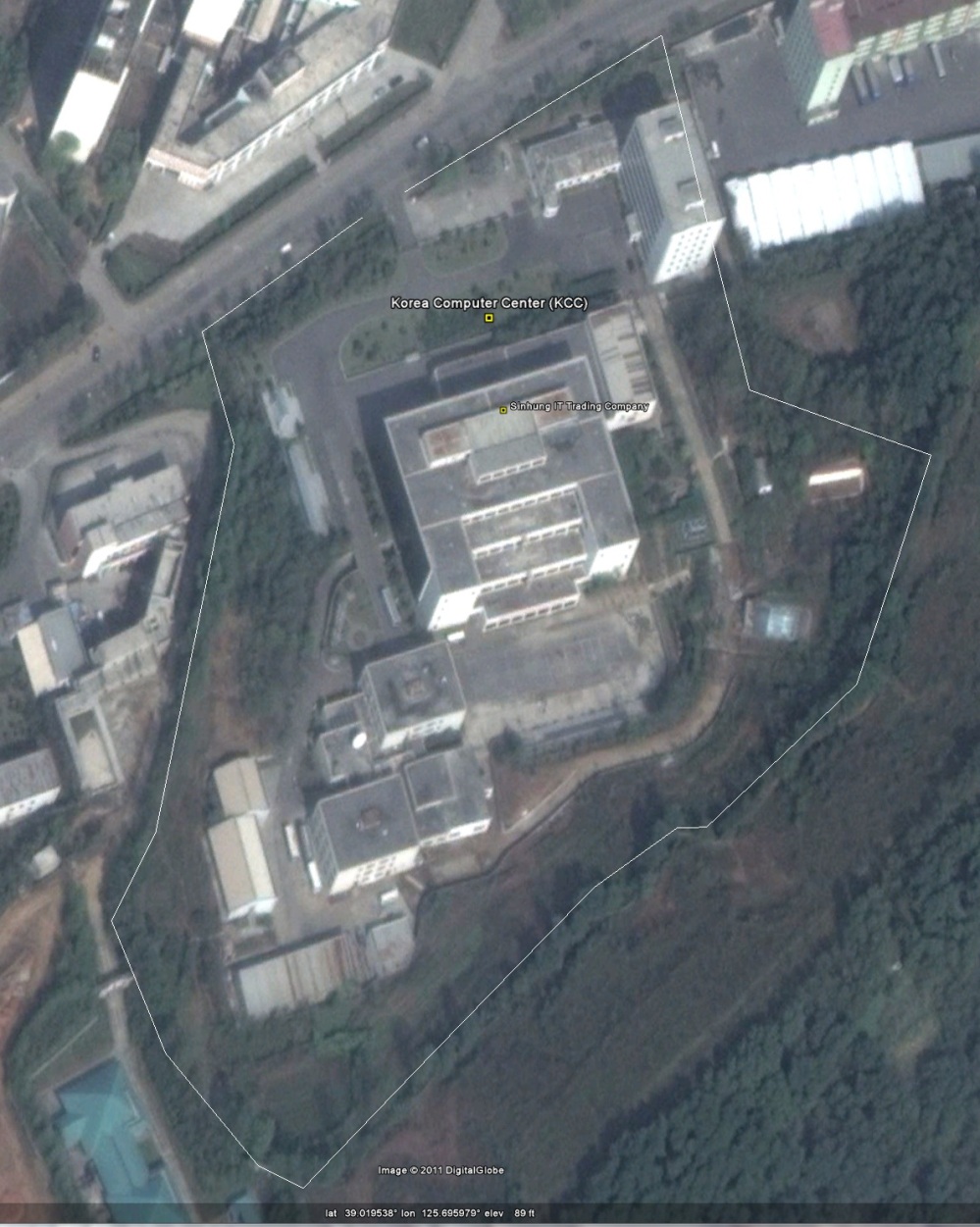
There are two KCNA web pages.  The older one is run by the Chongryun in Japan (here). The newer one is managed by the Korea Computer Center (KCC). This newer web page was recently updated. It went off line a few days ago and emerged today with a different format. You can see a screen shot above.

The URL is slightly different.  The previous version of the KCC’s KCNA web page was http://www.kcna.kp/kor.  The new one is simply http://www.kcna.kp. The default language is Korean, but if you can read a little Korean, you can find the language settings and change the language to:

English: http://www.kcna.kp/goHome.do?lang=eng

Spanish: http://www.kcna.kp/goHome.do?lang=spa

Japanese: http://www.kcna.kp/goHome.do?lang=jpn

Another great change has been the addition of a reasonably functional search bar.  The older Chongryun KCNA web page has no search function (Hooray for the Stalin Search Engine).  The previous version of the KCC’s KCNA web page contained a search bar that was too small to type “Kim Jong il”.  Now you can do a search for “The Great Leader Comrade Kim Jong il”–which produces one result.

No doubt Martyn Williams will have more to say about this page when the sun gets to his side of the planet.  Today he reports on the launch of the DPRK’s new Voice of Korea web page.

Below are some recent posts on the DPRK’s moves to the internet:

KCNA re-launched on DPRK-owned IP address

Hackers find creative way to celebrate KJU birthday

DPRK organization opens Twitter account

Uriminzokkiri on Youtube

Naenara, TaeMun, and KCNA get new URLs

Martyn William’s list of DPRK web pages

Share

DPRK allegedly executed two officials in 2010

Thursday, April 14th, 2011

UPDATE 1 (2011-4-15): Andrei Lankov reminds us of some historical lessons when it comes to Pyongyang-ology.  According to his article in the Asia Times:

Last week, world media reported that two key North Korean officials were executed a few months ago. One was Kim Yong-sam, the former minister for railways. Reportedly, he was held responsible for a mysterious explosion that in 2004 wiped out the entire railway station of Ryongchon a few hours after the armored train of Dear Leader Kim Jong-il had passed through – a suspected assassination attempt.

The other North Korean official was Mun Il-bong, the finance minister. His alleged crime was the inability to handle the currency reform that in late 2009 nearly brought the North Korean economy to a complete standstill.

This news was first broken by the major South Korean newspaper Chosun Ilbo, which cited its North Korean sources. The newspaper has good connections among the North Korean refugee community, whose members are in touch with officials in North Korea.

These reports were widely discussed in the media, and produced the usual wave of speculation about supposed factional disagreements in the North Korean leadership. However, such speculation might be premature. There is no way to verify with sufficient confidence whether the alleged executions actually took place. We do not know – and, in all probability, are not going to know anytime soon – whether the North Korean ex-ministers indeed met their ends.

Those who do not deal with North Korea seldom realize how little outside observers know about its high politics. North Korean media stretch the definition of state secret to an extent that would likely appear excessive even to Joseph Stalin. There have been numerous cases where North Korean media chose not to report some very important (and, interestingly, very public) events that had a profound impact on the lives of every North Korean.

For example, the 2009 currency reform which, if the above-mentioned reports are to be believed, led to the lethal downfall of Mun Il-bong, one of its major planners. Generally speaking, the reform emulated the Soviet currency reform of 1947 that for decades has served as a prototype of currency reforms in all communist countries. There was an important difference, though.

In 1947, all major Soviet newspapers ran lengthy front-page stories about the currency reform, extolling its timeliness and explaining the need to improve the lives of the good common Soviet citizen by wiping out the ill-gotten cash holdings of shameless profiteers.

In 2009, no North Korean media even mentioned the planned reform, which was by far the most important news of the time and had a dramatic impact on the lives of every North Korean. Information about the changes and their conditions was delivered via public notices pinned to the doors of banks, as well as through confidential messages to local authorities.

Foreign embassies were notified by a short official letter. Finally, the Pyongyang-sponsored Korean newspaper in Japan ran a couple of stories about the reform. But mainstream media within North Korea remained completely silent about the dramatic upheaval.

Those who keep a track of North Korean affairs might remember the so-called “July 1 reforms” of 2002. These were once heralded (wrongly, as it turned out) as a sign of Pyongyang’s willingness to emulate the Chinese reformist policy. Few people are aware, though, that North Korean media first mentioned the ongoing reform in September, a few months after its launch.

This is especially relevant in regard to promotions and demotions, as well as purges and persecution of the regime’s top officials. The North used to stage open show trials in the 1950s, but this Stalinist tradition was discarded. In subsequent decades, disgraced officials simply ceased to be mentioned in media and disappeared from the public view, so the general public – including the lower reaches of the elite – could only guess the reasons behind the sudden disappearance of some powerful minister or, say, a Central Committee secretary.

The disappearance of a dignitary is nearly always interpreted as a sure sign that he or she has been purged. The North Korean public inevitably starts to circulate a rumor that the hapless official was not just removed from office, but arrested or even executed.

After some time these rumors reach foreign media, often through the North Korean refugee organizations that have good networks inside the North. Consequently, the world’s media run another story about a North Korean minister who was allegedly executed for his wrongdoings or as a result of alleged factional strife.

Very often, impressive details are added – for example, it is frequently stated that the alleged execution was public or, at least, held in the presence of other top dignitaries (as a matter of fact, the present author has never seen any reliable evidence of a public or semi-public execution of a former dignitary – this type of brutal show seems to be reserved only for humble folks).

There have been a number of cases, to be sure, when these rumors were eventually confirmed. For example, we now know for certain that the state security minister Kim Pyong-ha, who disappeared in 1982, was either executed or committed suicide during his arrest (his downfall was followed by a large-scale purge of the North Korean secret police).

There is little reason to doubt that So Kwang-him, the party secretary for agriculture, was indeed executed in 1997. The aging bureaucrat was accused of espionage and subversion. The charge was that he had deliberately ruined the North Korean agriculture sector and provoked a disastrous famine, being on the payroll of the US Central Intelligence Agency and other foreign intelligence agencies.

However, things are not that simple. There have been numerous cases when prominent dignitaries first disappeared and were universally believed to be arrested and executed – but then made a comeback and re-entered North Korean politics. A good example of such political resurrection is the fate of Pak Chong-ae, a Soviet Korean who was dispatched to Korea for intelligence gathering and subversion in the early 1930s.

After 1945, she became a prominent member of the North Korean leadership. Unlike a majority of Soviet Koreans, Pak Chong-ae survived a mass purge of pro-Soviet elements in 1956-1961, but suddenly disappeared in 1985. At the time, everybody, including the Soviet diplomats, were certain that she had been shot or probably died in prison – and this is what the rumors confidently told. However, in 1986, Pak Chong-ae re-emerged in the Korean political scene, albeit in secondary roles.

Even more interesting is the case of Ch’oe Kwang, a former chief of staff. Ch’oe Kwang disappeared in 1969, and rumors held that he was shot soon afterwards. This was hardly the case, since in the late 1970s, Ch’oe Kwang first appeared in secondary positions, then re-launched his career and in 1988 was again appointed chief of general staff!

So how should one treat the reports about the execution of Kim Yong-sam and Mun ll-bong? With caution. There is no reason to reject the reports completely – they might indeed be true. There is no doubt that rumors about the execution of ex-ministers are now circulating widely among North Korean officials. The 2009 currency reform was indeed a disaster, arguably, the worst prepared currency reform in the entire history of communist countries.

The 2004 Ryongchon explosion also was an exceptional event, irrespective of whether it was an assassination attempt targeting the Dear Leader, or a result of bad luck and remarkable negligence. Therefore, one may well expect the severe punishment of people who were responsible for both disasters. However, the experiences of previous decades demonstrate that such rumors be taken with healthy skepticism.

Incidentally, about a year ago, rumors persisted that another high-ranking official, the head of the party finance department, Pak Nam-gi, had been executed for his alleged mishandling of the currency reform. This story was universally believed, but so far no definite evidence of his sorry fate has emerged.

To complicate things further, a few weeks ago a well-informed defectors’ group reported that Pak Nam-gi, alive and well, was spotted in Europe where he is managing the personal funds of the Kim family. So, is Pak Nam-gi dead, with all his family shipped to a prison camp? Or is he running a multi-billion dollar business from a North Korean embassy in Switzerland? We know not. But this is another reminder of the many uncertainties a North Korean watcher has to deal with.

So, the rumors (and rumor-based reports) about Kim and Mun’s execution may well be true, but at the moment it is virtually impossible to talk about this with certainty. Things will become clear eventually, but this will happen, probably, only after several years. Sooner or later some relevant documents will be leaked.

Even before that, some trustworthy witness of their execution will emerge. It is also possible, though, that one day the allegedly executed ex-ministers will reappear, alive and healthy for their advanced age. However, by that time this entire story will be of greater interest for historians, not journalists or policy analysts.

ORIGINAL POST (2011-4-4): According to the Choson Ilbo:

The North Korean regime in June last year executed the ex-minister of railways Kim Yong-sam on espionage charges and ex-finance minister Mun Il-bong over a botched currency reform in late 2009, it has belatedly emerged.

A South Korean government official confirmed Kim’s execution but was not clear about Mun’s, saying, “We have relevant intelligence, which we are checking.”

According to a North Korean source, Kim, who was minister of railways between 1998 and 2008, was executed for involvement in a massive explosion at Yongchon Station in North Pyongan Province in April 2004 that allegedly targeted a special train carrying leader Kim Jong-il.

Kim Yong-sam was accused of leaking information about the timetable of the train, which was returning from China. Kim Jong-il’s travel itineraries are known only to his personal guards and secretaries and the railways minister.

Mun, who was finance minister between 2000 and 2008, apparently took the fall for the botched currency reform alongside then director of the Workers Party’s Planning and Finance Department Pak Nam-gi.

The regime executed Pak by firing squad on the same charges in April last year. “It seems Mun was executed because public discontent got worse even though, unlike Pak, he had nothing to do with the actual preparations for the currency reform,” the source said.

About 20 senior officials in the munitions industry ministry and the second economic committee in charge of munitions were also purged for embezzlement late last year. They had reportedly been caught by the State Security Department attempting to siphon off money from arms exports.

Another source said, “Rumor has it that the purge targeted long-serving senior officials in the military who have the authority to export arms overseas.”

The purge has been raging in Pyongyang since early last year, when Kim’s son Jong-un was named as the successor to his father and the currency reform was sweeping the North, a third source said. “It seems Kim Jong-il is trying to remove obstacles to the transition of power with his own hands.”

Regarding the suspected fate of Kim Yong-sam, I find it odd that the DPRK would execute him six years after his alleged offense.  There are only a couple of reasons I can guess as to why the situation was handled this way: 1. If he was executed, he was executed for another reason, 2.  If he was executed too soon after the April 2004 explosion, it would cast doubt on the DPRK’s official claim that the Ryongchon explosion was caused by an accidental train collision rather than an internal conspiracy to eliminate the leader.

UPDATE: A reader (in the comments) reminds me that Kim Yong-sam’s demise was also reported in the media back in July 2010.  At the time, his punishment was due to his failure to maintain locomotive trains that had been in store for wartime.  So maybe his death has nothing to do with Ryongchon at all but a failure to carry out his duties.

Regarding the execution of Mun Il-bong:  The DPRK allegedly executed Pak Nam-gi over the currency reform in early March 2010.  If Mr. Mun shared the same fate three months later, then the number of public officials executed over the country’s disastrous currency reform now stands at two.

Additional Information:

1. Last I heard, Jon Kil-su is the DPRK’s Minister of Railways, being named just before the last SPA elections.

2. Here are satellite images of Ryongchon from before and after the explosion.  Most of these can now be seen on Google Earth.

3. The story above mentions a purge in the munitions industry, but Kim Jong-il recently praised their efforts.

4. The Daily NK and Yonhap also reported on this story.

Read the full story here:
2 Senior N.Korean Apparatchiks Executed
Choson Ilbo
4/4/2011

Share

12th SPA’s 4th session roundup

Thursday, April 7th, 2011

UPADTE 5 (2011-4-13): The Daily NK reports that the NorthKorean people have yet to be informed of any decisions made at the SPA:

Even though six days have passed since the end of the Supreme People’s Assembly (SPA), decisions and instruments taken there have yet to be handed down to the people in local meetings.

Although the North Korean media did release the agenda of the SPA, there has been no comment on the implementation of decisions. Diverse sources also reported on the 13th that people’s unit meetings have not contained anything about the SPA.

SPA decisions are conventionally discussed in people’s unit meetings two or three days after the event and the people’s unit allocates assignments to residents according to its decisions. Of course, propaganda urging residents to carry out their assigned tasks then follows.

Whereas this year, there has been nothing. Not that people have any interest in the SPA, anyway. As one source from Yangkang Province said, “There have been no decrees on the SPA, and anyway we don’t have enough time to pay attention to it since even living is tough. We don’t have any interest in it. Can the SPA keep us alive?”

“If the SPA gave us as little as one kilogram of potatoes or corn, we would pay attention to it, but for us who must prepare meals every day we don’t pay it any attention. If something like changing of the president happened we would pay attention to it,” another source from North Hamkyung Province agreed,

Nevertheless, the SPA agenda items Chosun Central News Agency (KCNA) reported were as follows: the business of the Cabinet in 2010; the settlement of national accounts in 2010 and budget for 2011; and organizational issues.

The North Korean media also reported some personnel changes, notably the movement of Lee Myung Su from Administrative Director of the National Defense Commission to head of the People’s Safety Ministry.

UPDATE 4 (2011-4-12): Institute for Far Eastern Studies:

On April 7, 2011, the fourth session of the 12th Supreme People’s Assembly of the DPRK was held at the Mansudae Assembly Hall. At the session, Deputy Choe Yong Rim, premier of the DPRK, reported on the “Work of the DPRK Cabinet in 2010 and its tasks for 2011.”

The main tasks for this year stated by Premier Choe included increasing the production of consumer goods and realizing the goal of grain production in order to improve the standard of living for the people of North Korea. He also advised that production should be increased in all sectors of the economy while steadily pushing towards modernization of the national economy.

The Cabinet placed emphasis on last year’s achievements in the light industry and agricultural production while stressing the importance of modernizing consumer goods production and the development of science and technology as the goal of this year.

In addition, Choe highlighted, “production in all sectors of the national economy including the four pilot sectors must be increased to support the ongoing march to improve the standard of people’s living.”

Specific improvements in the four pilot sectors were mentioned, with plans to “operate all generating power equipment in full capacity while forming a system of transmission and distribution to make the most effective use of the electricity produced.” Additional focus was placed on calling for national efforts to reach the goal of electricity production through the construction of the Huichon Power Station and building other large-scale hydro and thermal power plants.

The Cabinet also stressed on diversifying trade and promised to “work towards the improvement of the DPRK’s socialist self-supporting economy by actively seeking out projects that effectively incorporate economic and technological cooperation.”

In evaluating the previous year’s accomplishments, Choe declared, “The most significant achievement in economic development was the progress made in placing national economy in line with Juche ideology.”

Other achievements mentioned were: 1) the inter-departmental structure of the metal industry was revamped and the Juche iron production system was successfully established at major metal plants as well as new alloy steel production bases; 2) large chemical industrial centers were updated to the latest technology to bring about the mass production of Juche fiber and fertilizers; 3) the coal production capacity increased and the construction of hydropower stations was completed to add to the power generating capacity. The construction of Huichon Power Station is making rapid progress for completion by 2012; and lastly 4) strong foundation was laid to bring about a huge development in the light industry and agriculture production.

Lastly, Choe praised the development in the science and technology sector for adopting CNC (computer numerical control) system in all sectors of the national economy and scientific research in IT and biotechnology.

Deputy Pak Su Gil, vice-premier and Minster of Finance presented the state budget for 2010 and 2011. He expected the state budgetary revenue to grow 7.5 percent and the expenditure is expected to grow 8.9 percent against the previous year. The state budget allocation is focused on strengthening the light and agriculture industries and improving the national economy by bringing state-of-art technologies in all sectors.

The expected state budgetary revenue is 83.9 percent of the total state budgetary revenue and local budgetary revenue is at 16.1 percent. The revenue from transaction and the profits of state-run enterprises are expected to hold 78.5 percent of the total state budgetary revenue this year and the profits of cooperative organizations, the fixed asset depreciation, the income from real estate rent and social insurance are expected to rise 3.8 percent, 1.4 percent, 0.7 percent and 0.4 percent respectively as compared with those of last year.

The current year’s plan for state budgetary expenditure is expected to show an 8.9 percent increase over last year. The budgetary allocation for the light industry is expected to climb 12.9 percent and a large amount is also expected to be distributed to the local industry.

The budgetary expenditure by category compared to the previous year is as follows: 1) 9 percent more funds will go into agriculture; 2) funds needed for farming will be provided on a priority basis and the expenditure for the basic industries of the national economy is expected to go up 13.5 percent; 3) the financial allocation for the capital construction will go up 15.1 percent; 4) 10.1 percent increase will be made for scientific and technological development.

Especially in the science and technology sector, emphasis is being placed on fulfilling the five-year plan of modernizing and building an economic power and successful implementation of CNC system.

Lastly, 15.8 percent of the total expenditure is expected to be spent on national defense.

UPDATE 3 (2011-4-10): News is trickling out about the 12th SPA’s 4th session.  I will keep adding stories below as they roll in:

Yonhap: N. Korea ups budget for construction projects this year

North Korea’s parliament dramatically increased a budget for major construction projects as Pyongyang prepares to throw a massive celebration next year, Seoul said Friday.

North Korea has vowed to achieve its goal of becoming a “great, prosperous and powerful country” by 2012, the centennial of the birth of its late founder Kim Il-sung, father of current leader Kim Jong-il.

The legislature endorsed 567 billion (North Korean) won (US$5.73 billion) for this year’s total budget in a session on Thursday, according to the Unification Ministry, which handles inter-Korean affairs in Seoul.

The budget for construction projects jumped by 15.1 percent from last year as the North plans to build 100,000 houses in Pyongyang and a massive power plant in the country’s northwest region, said the ministry.

The North also earmarked 15.8 percent of the total state budget for national defense this year as it did last year, said the ministry.

North Korean Premier Choe Yong-rim vowed to strengthen military capabilities, improve economy and increase grain production amid the country’s chronic food shortages.

The cabinet “will make sustained great efforts for the provision of materials needed for boosting the combat capability of the People’s Army and the defense capability of the country in every way,” Choe said at the session.

Last year, the North recorded a fiscal surplus of 7.3 billion (North Korean) won, said the ministry.

North Korea’s official Korean Central News Agency also reported on the country’s spending and budget, though it didn’t give any monetary figures.

Daily NK: North Korea’s Rubber Stamp Parliament Explained

The 4th meeting of the 12th session of North Korea’s Supreme People’s Assembly (SPA) will convene at Mansudae Assembly Hall in Pyongyang today.

The official North Korean translation of Article 87 of the Socialist Constitution of the Democratic People’s Republic of Korea proclaims, “The Supreme People’s Assembly is the highest organ of State power in the Democratic People’s Republic of Korea.”

SPA delegates are elected every five years (every four years until 1992), while meetings are normally convened once a year; however, there were two meetings during 2010, which is why today’s gathering will actually be the 4th of the 12th session, which began in 2009.

However, the SPA is by no means as important as the constitution claims; instead, it is a political show. As soon as one takes a look at the delegates, their selection method and the SPA’s practical role, it becomes clear that it is a symbolic organ with no practical function.

Let’s look in more detail at the SPA via a brief Q&A.

– What are the principle tasks of the Supreme People’s Assembly?

The role of the Supreme People’s Assembly prescribed in North Korea’s constitution is no different from that of South Korea’s National Assembly. The Supreme People’s Assembly is the highest sovereign organization and legislative organ which has the authority to adopt and revise the constitution and laws of the land. In addition, it establishes the basic principles of internal and external policy and manages the personnel matters of state apparatus. During annual meetings, the results of the previous year’s budget and the budget for the coming year are at the top of the agenda.

However, general matters of government administration are decided by the Chosun Workers’ Party; the SPA is a propaganda organization aimed at the people. The SPA simply approves the policy of the Chosun Workers’ Party as the representative of the North Korean people.

– Who are the SPA delegates?

A delegate is not a full time politician, unlike a member of the South Korean National Assembly, and they come from every region and sector of society, including a small number of workers, farmers and soldiers. They are selected to justify calling the SPA the representative of the people, but are expected to nod through Party decisions without meaningful debate.

Candidates become delegates after being recommended by their local Party, which is led by the Central Committee in Pyongyang. There is a screening committee for delegates but it does not reject them. Delegates are always elected with implausible majorities.

The period of a delegate is five years, but since the 687 delegates tend to stay in post, the term does not have much meaning. North Korea held a delegates’ election for the 12th session of the SPA on March 8th, 2009, electing a total of 687 members. Kim Jong Il is a delegate, as reflected in his official title, ‘Kim Jong Il, 333rd Election Precinct and General Secretary of the Chosun Workers’ Party, Chairman of the National Defense Commission’, although he doesn’t always attend meetings. Rumor has it that Kim Jong Eun is a delegate under an assumed name, but that has not been proven.

– In that case, what kind of organ is the Standing Committee of the Supreme People’s Assembly?

The Standing Committee and departmental committees are branches of the SPA. When the SPA is not in session (meaning most of the time), the Standing Committee operates as the state’s highest sovereign organization. The chair of the Standing Committee is also the head of state according to the constitution, but the chairman of the National Defense Commission, currently Kim Jong Il, leads all government administration in practice. The chair of the Standing Committee is Kim Young Nam, who frequently receives foreign visitors and operates as one of the regime’s more prominent public faces.

– What privileges accrue to SPA delegates?

The practical role of a delegate is almost non-existent, but there are some perks. Delegates get priority use of transportation and are immune from prosecution unless expressly stripped of that right by the Party Central Committee. National Assembly lawmakers in South Korea have similar privileges, of course. Notably, SPA delegates do not receive priority food distribution.

Even though the SPA is North Korea’s highest sovereign organization, delegates are not envied by ordinary North Koreans. Since the Supreme People’s Assembly does not have the authority to influence people’s lives, those people accord them little interest.

One North Korean defector commented, “Delegates are usually factory managers or similar, so people are only really envious of his job, in which he can make a lot of money, than in his work as a delegate.” Being a delegate does not directly improve a person’s economic status.

And more here from the Pyongyang Times.

UPDATE 2 (2011-4-7): Below is the first round of media stories about the SPA’s 4th session.

KCNA: DPRK Supreme People’s Assembly Meets

The Fourth Session of the 12th Supreme People′s Assembly of the DPRK was held at the Mansudae Assembly Hall Thursday.

Present there were deputies to the SPA.

Also attending it as observers were officials of party, armed forces and power organs, public organizations, ministries and national institutions and those in the fields of science, education, culture and arts, public health and media.

The Session discussed the following agenda items:

On the work of the DPRK Cabinet in Juche 99 (2010) and its tasks for Juche 100 (2011)

On the results of the implementation of the DPRK state budget for Juche 99 (2010) and its state budget for Juche 100 (2011)

Organizational matter

Deputy Choe Yong Rim, premier of the DPRK, made a report on the first agenda item.

He said that last year witnessed the signal advance in making the national economy Juche-oriented and the solid foundation for a drastic turn in developing the light industry and agricultural production. Big successes were made in development of science and technology, cultural construction and other fields, he noted.

He referred to the concrete tasks for this year, stressing the need to remarkably increase the production of consumer goods and attain the goal of grain production without fail to bring about decisive turn in improving the standard of people′s living. Production should be increased in the economic field as a whole while steadily pushing ahead with the drive to put the national economy on a modern basis, he added.

Deputy Pak Su Gil, vice-premier and minister of Finance, made a report on the second agenda item.

He noted that last year′s state budget revenue was overfulfilled 1.3 percent and the state budgetary expenditure was implemented at 99.9 percent. The revenue increased 7.7 percent while the expenditure swelled 8.2 percent over the previous year, he said, adding:

The state budgetary allocations for light industry and agriculture last year showed 10.9 percent and 9.4 percent increase respectively as compared with that in the previous year. The state budgetary expenditure for the pilot domains of the national economy, basic industrial domains and capital construction last year went up 8 percent and 12.9 percent respectively over the previous year.

8.1 percent greater financial disbursement than the previous year was made for the field of science and technology and 6 percent bigger fund than that in the previous year was spent for the implementation of the popular policies.

15.8 percent of the total state budgetary expenditure was spent for national defence last year.

He further said:

This year the state budgetary revenue is expected to grow 7.5 percent over last year′s and the state budgetary expenditure is expected to show an 8.9 percent increase over last year. Huge funds will go to the light industry, agriculture, etc. and 15.8 percent of the total state budgetary expenditure will be spent for national defence.

Speakers at the Session pointed out that the Cabinet′s work last year and the implementation of the state budget were properly reviewed and summed up. This year′s tasks have been clearly laid down and the state budget correctly shaped in such a way as to give full play to the advantages of the socialist system in the DPRK, they said, expressing full support and approval of them.

They also manifested their will to push ahead with the general offensive for bringing about a decisive turn in building a thriving nation by increasing the political and military power of the country in every way and intensifying the drive for great surge for improving the standard of people′s living.

The Session adopted with the unanimous approval of deputies the SPA decision “On approving the report on the work of the DPRK Cabinet and the results of the implementation of the DPRK state budget for Juche 99 (2010)” and the DPRK SPA ordinance “On the DPRK state budget for Juche 100 (2011) “.

Then the Session discussed the organizational matter.

Deputy Jon Pyong Ho was recalled from member of the DPRK National Defence Commission due to the transfer to other post and Deputy Pak To Chun was elected to fill the vacancy.

Deputy Ri Myong Su was appointed as minister of People′s Security of the DPRK NDC.

Deputy Jang Pyong Gyu was elected chairman of the SPA Legislation Committee to fill the vacancy.

Deputy Ri Thae Nam was relieved of vice-premier of the Cabinet for his health reason.

KCNA: Report on the work of the DPRK Cabinet last year and for this year:

Deputy Choe Yong Rim, premier of the DPRK Cabinet, made a report on its work last year and its tasks for this year at the Fourth Session of the 12th Supreme People′s Assembly of the DPRK held Thursday.

He said that the most important achievement gained in the nation′s economic development last year was that signal progress was made in putting the national economy on a Juche-basis.

The inter-departmental structure of the metal industry was refurbished with the new one. The Juche iron production system was successfully established at major metal plants and new alloy steel production bases sprang up.

Large chemical industrial centres were updated on the basis of the latest science and technology to bring about the mass-production of Juche fiber and Juche fertilizers, signal events.

The coal production capacity increased in the field of coal industry. The construction of hydropower stations was completed to create huge additional generating capacity in the field of power industry. The construction of the Huichon Power Station made unprecedentedly rapid progress, opening a bright prospect for completing it by 2012.

It was another signal success made in the development of the national economy last year that a solid foundation was laid to bring about a radical turn in the development of light industry and the agricultural production.

Spectacular successes were made in the development of science and technology last year and the work to put all sectors of the national economy on a CNC basis made dynamic progress.

Scientists and technicians succeeded in the nuclear fusion, stunning the world. Products based on cutting-edge technology were developed and big progress was made in the development of bio-engineering.

The reporter said that this year the DPRK Cabinet would significantly boost the production of consumer goods and attain the target of grain production without fail and thus bring about a decisive turn in improving the standard of people′s living and continue energetically pushing forward the updating of the national economy while forcefully waging the drive for increased production in all economic sectors.

He went on:

The Cabinet will make this year a year in which light industry will advance in full gear and the people will benefit from it and, at the same time, dynamically push ahead with the work to put the production of consumer goods on a modern and scientific basis.

It will focus all efforts on attaining the target of grain production by bringing about signal innovations in farming with the whole party, country and army and all the people involved.

It will thoroughly establish a food production system of agricultural production and stock breeding and that of fruit farming and stock breeding and reenergize the production at the modern stock breeding and fruit production centers in a bid to simultaneously boost the production of livestock products, fruits and grain. It will make sure that a turn is effected in the development of fruit farming, in particular, this year.

The Cabinet will see to it that the material and technical foundation will be consolidated in the fishery domain to conduct deep-sea fishing, small-scale fishing and shallow-sea culture in a big way and put fish farming on a scientific and intensive basis to produce and supply greater quantities of aquatic products and processed fishes and seafood to the people.

It will improve and strengthen the service to the people to fully meet their need and provide better convenience in their lives.

It will decisively increase the production in all sectors of the national economy including the four pilot sectors in an effort to give strong spurs to the ongoing march for a signal improvement in the standard of people′s living.

The Cabinet will make sure that the coal production will be radically boosted in the field of coal industry while the coal production capacity will be increased under a long-term plan.

It will see to it that the field of power industry will operate all generating equipment in full capacity while rationally forming a system of transmission and distribution to make the most effective use of the electricity produced.

It will accelerate the building of large-scale hydro and thermal power plants while focusing sustained state efforts on the construction of the Huichon Power Station in a bid to provide a sure guarantee for hitting the target of electricity production.

The Cabinet will make sure that the field of metal industry will consolidate and develop the Juche-oriented iron production system and method. It will see to it that the introduction of heavy duty rails and the modernization of railways will be accelerated and transport capacity boosted in the field of railway transport to satisfactorily ease the strain on transport.

It will make sure that the field of mining industry will keep production going at a high rate and dynamically push forward updating while laying a foundation for ensuring a more satisfactory production and supply of nonferrous metal products under a long-term plan.

The field of machine-building industry will energetically step up the work to put machine plants on a CNC basis, ensure a satisfactory production and supply of generating equipment and machines and equipment necessary for the modernization of the national economy. The field of electronics industry will boost the production of varieties of electronic elements and products and the IT field would contribute to putting the national economy on an IT basis.

The field of construction will dynamically push forward the construction of important projects including the Hungnam gasification project, Tanchon Port, the sacred site of Thaekwon-Do and the building of 100 000 flats in Pyongyang so as to complete them at the earliest possible date.

The fields of land administration and urban management will radically change the appearance of the country as befitting a thriving nation and provide better living conditions and environment to the people.

The field of scientific research will radically develop such core basic technologies and cutting-edge science and technology including IT and bio-engineering and satisfactorily settle scientific and technological issues arising in building an economic power.

The Cabinet will see to it that foreign trade will be diverse and multi-faceted to decisively increase the volume of export.

The Cabinet will conduct a positive work for making an effective use of levers for economic and technological cooperation in the direction of consolidating the foundation of the DPRK′s socialist self-supporting economy.

It will make sustained great efforts for the provision of materials needed for boosting the combat capability of the People′s Army and the defence capability of the country in every way and the development of the field of socialist cultural construction.

The reporter called on everybody to work hard to emerge honorable victors in the general offensive this year to significantly greet the centenary of birth of President Kim Il Sung, united close around the Central Committee of the Workers′ Party of Korea headed by leader Kim Jong Il.

KCNA: Report on the implementation of state budget for 2010 and state budget for 2011

Deputy Pak Su Gil, vice-premier and minister of Finance, delivered a report on the results of the implementation of the DPRK state budget for last year and its state budget for this year at the Fourth Session of the 12th Supreme People′s Assembly held on Thursday.

According to the report, last year′s state budgetary revenue was overfulfilled 1.3 percent and its plan for state budgetary expenditure was carried out at 99.9 percent.

The state budgetary allocations for light industry and agriculture last year showed a 10.9 percent and 9.4 percent increase respectively as compared with that in the previous year. The state budgetary expenditure for the pilot domains of national economy, basic industrial domains and capital construction last year went up 8 percent and 12.9 percent respectively over the previous year.

8.1 percent greater financial disbursement than the previous year was made for the field of science and technology and 6 percent bigger fund than that in the previous year was spent for the implementation of the popular policies.

15.8 percent of the total state budgetary expenditure was spent for national defence last year.

The state budget for this year has been shaped in such a way as to radically boost the light industry and agricultural production, revitalize the overall economic construction and conduct a dynamic drive to break through the latest science and technology in all fields to lay a solid foundation for an economic power.

This year′s plan for state budgetary revenue is expected to grow 7.5 percent over last year′s.

The national budgetary revenue is expected to hold 83.9 percent of the total state budgetary revenue and local budgetary revenue 16.1 percent.

The revenue from transaction and the profits of state-run enterprises are expected to hold 78.5 percent of the total state budgetary revenue this year and the profits of cooperative organizations, the fixed asset depreciation, the income from real estate rent and social insurance are expected to swell 3.8 percent, 1.4 percent, 0.7 percent and 0.4 percent respectively as compared with those last year.

This year′s plan for state budgetary expenditure is expected to show an 8.9 percent increase over last year. The budgetary allocation for the light industry is expected to go up 12.9 percent and a huge budgetary disbursement will be made for local industry, too.

9 percent more funds than last year will go to agriculture, funds needed for farming will be provided on a priority basis and the expenditure for the pilot domains and basic industries of the national economy is expected to go up 13.5 percent over last year.

The financial allocation for the capital construction will go up 15.1 percent over last year to hasten the construction of important objects and complete them at the earliest possible date. 10.1 percent bigger financial allocation than last year will be made for scientific and technological development in order to fulfill the five-year plan for state scientific and technological development, positively push forward the work for putting industrial domains on a modern and CNC basis and successfully solve scientific and technical issues arising in the building of an economic power.

Huge funds will go to the cultural construction and land improvement and city management.

15.8 percent of the total state budgetary expenditure is expected to be spent for national defence for this year.

A large amount of educational aid fund and stipends will be sent for the children of Koreans in Japan this year, too.

For the successful fulfillment of the state budget for this year it is necessary for all domains and units of the national economy to give full play to the mental power of the producer masses, economize manpower, materials and funds and cut down as much as possible nonproductive expenditure and thus carry out the monthly and quarterly plans for budgetary revenue without fail, the reporter stressed.

The absense of Kim Jong-un is fomenting speculation.  See here, here, herehere, and here.

Michael Madden offers information on the individuals mentioned above.

UPDATE 1 (4/1/2011): The Institute for Far Eastern Studies (IFES) issues the following information (NK Brief No 11-03-30):

On March 15, the Standing Committee of the Supreme People’s Assembly (SPA) announced that the 4th Session of North Korea’s 12th SPA will convene on April 7 in Pyongyang, ordering all the SPA members to pre-register from April 5 to 6.

The SPA is the highest organ of state power according to the Constitution of the DPRK. The Assembly is convened once or twice a year in regular sessions and called to meet in two to three weeks in advance. Its functions include adopting, amending or supplementing enactments to the constitution, determining state policy and budgets, and organizing elections of National Defence Commission (NDC) and other state organs.

Although the KCNA did not report on the specific agenda for the session, it is most likely to resemble the other regular sessions of the SPA, consisting of discussions of the final budget from last year as well as the budget for this year; organizational and personnel issues; and the direction of economic policy. In addition, organizational and personnel changes within the Cabinet and the NDC will likely be on the top agenda.

Particular attention is drawn to whether the heir-apparent Kim Jong Un will be appointed as the vice chairman of the NDC at this session to add to his new title of vice chairman of the Party’s Central Military Commission, which he received earned last year. Another point of interest is on who will replace Ju Sang Sung, who was suddenly dismissed from his post as the Minister of People’s Security. The personnel changes made at the session will play an important role in cementing the succession process of Kim Jong Un.

At the first session of the 12th Presidium of the Supreme People’s Assembly held in April 2009, the Constitution was amended to name the NDC chairman as the “highest leader”, further strengthening the power of the Commission and Kim Jong Il.

Additionally, the second session of the 12th SPA was held on April 9, 2010 followed by the third session which was held on June 7, 2010.

ORIGINAL POST (3/22/2011): According to KCNA:

The fourth session of the 12th SPA of the DPRK will be held in Pyongyang on April 7, Juche 100 (2011).

The Presidium of the Supreme People’s Assembly of the DPRK made public a decision on it on Tuesday.

According to the AFP:

Pyongyang usually convenes its rubber-stamp parliament twice a year for a day or two to pass government budgets and approve personnel changes.

Attention is focused on whether Kim Jong-Un, leader Kim Jong-Il’s youngest son and heir apparent, will be promoted to become one of the vice-chairmen of the powerful National Defence Commission (NDC).

Jong-Un, believed aged 27, was made a four-star general in September and appointed as one of vice-chairmen of the party Central Military Commission, which oversees the 1.2 million-strong armed forces headed by his father.

“It is interesting to see whether the son becomes an NDC vice-chairman or even the first NDC vice-chairman,” Professor Yang Moo-Jin, of the University of North Korean Studies, told AFP.

“It will give us an indication as to where the North stands in its efforts to endow him with power and authority needed to become an eventual successor,” Yang said.

If Jong-Un emerges as the NDC first vice-chairman, he is likely to be given the same title in the Central Military Commission sooner or later, Yang added.

“This will pave the way for the son’s eventual ascension to the throne,” he said.

North Korea’s 2009 constitution says the NDC chairman, currently the senior Kim, is “the highest leader” of the communist state.

The need for new appointments has become acute after the death of the first NDC vice-chairman, Vice Marshall Jo Myong-Rok, in November last year, and the sudden dismissal of the North’s police chief, Ju Sang Song.

According to the Choson Ilbo:

The rubberstamp parliament […] approves senior members of the National Defense Commission, the top decision-making body, and the Cabinet.

Kim Jong-un has already been appointed vice chairman of the commission, and the SPA is expected to approve the appointment.

“Kim Jong-un will need the title if he is to visit China as his father’s heir and meet Xi Jinping,” who is widely tipped as the next Chinese president, a Unification Ministry official speculated.

Below is past information on the 12th Supreme People’s Assembly:

Elections were held in March 2009.  See here, here, here.

12th SPA’s First Session (April 9th, 2009):  KCNA and here.

12th SPA’s Second Session (April 9th, 2010): KCNA 1,KCNA 2,  here, and here.

12th SPA’s Third Session (June 7th, 2010): KCNA 1KCNA 2KCNA 3KCNA 4KCNA 5KCNA 6KCNA 7KCNA 8, here, here, and here.

Share

Exchange rate data

Wednesday, April 6th, 2011

The The UN World Food Prgram’s Rapid Food Security Assessment Mission (RFSA) offered some exchange rate data that I thought was worth pointing out:

Currently the official exchange rate is about USD1=KPW100 yet the market rate is closer to USD1=KPW3000. In other words, the redenomination of the national currency that occurred in November 2009 is all but neutralized. The effects of this policy on ordinary citizens appear to be mixed where people with over KPW 100,000 lost their savings. The purpose of such a policy was to control inflation by reducing money supply and to curb the growth in private enterprise. Worker salaries remained the same, but prices were reduced significantly.

The PDS prices were revised downwards in the wake of the currency revaluation making it even more affordable, at least in principle. For example, PDS prices of rice declined from KPW 44 to KPW 24 per kg and maize declined from KPW 24 to KPW 14. At these low prices the issue is the lack of commodities in the market, rather than consumers lacking money to purchase them.

An average worker makes around KPW 3,000 to KPW 4,000 per month. This translates into a dollar per month which only works in DPRK because everything is heavily subsidized and ordinary citizens do not rely on direct purchases of imported commodities. If PDS were to run out of cereals at the end April, people would not have the means to purchase cereals on the black market, where prices are KPW2000 per kilogram of rice and about KPW 1000 for maize. It is highly doubtful that the barter system which is the backbone of this informal economy will be able to withstand a shock of this magnitude over more than a couple of weeks. A humanitarian crisis is the likely outcome of such a series of events.

Share

Some recent material on DPRK markets

Wednesday, March 30th, 2011

First, Kim Song Min  (김성민), founder of Free North Korea Radio, has posted another clandestine video of a North Korean market:

You can (probably) see the ten-minute video here.  It will not work in China.  Again, the market is surprisingly ordinary; lots of fish, potatoes, and greens.

I posted a similar video several weeks ago which you can see here.

Secondly, the March 24th WFP/FAO/UNICEF Rapid Food Security Assessment Mission (PDF of the report here) included some interesting information on the DPRK’s markets:

5.2. Markets
The mission had unprecedented access to markets in the country. All teams spent a considerable amount of time surveying different markets and their attributes. In DPRK there are three main types of markets where people can buy food and non-food stuff: 1) State Shops; 2) Farmer’s Markets; and 3) City Markets.

State Shops
State Shops are open seven days a week to provide families with such essentials like the soyabean sauce, soya-bean paste, and cooking oil at discounted prices. Each household is assigned to a state shop and, for certain commodities, is entitled to a monthly quota that is set by the Ministry of Commerce. Essential food items include: soya-bean sauce (50 grams /person/day); soya-bean paste (30 grams/person/day); and cooking oil (20 grams/person/day).

Whether households can purchase their full allocation primarily depends on availability. For example, many households reported that soya-bean oil has not been available since early February. Others households informed that meat is only available on special occasions like the New Year or the birthdays of Kim Il Sung (15 April) and Kim Jong Il (16 February).

The Peoples Neighborhood Unit (PNU) [Inminban] announces when new supplies arrive and informs the household’s entitlement. Payment is collected from the households and tokens are issued, specifying items and quantities that can be collected from the state shops.

The variety and quantity of food and non-food commodities varies from county to county. Some shops were observed to have other food items for sale, such as wild vegetables, biscuits and salt. The mission observed that State Shops in rural areas have fewer commodities available than those in large urban centres.

The mission also observed non-food commodities in State Shops, including: school supplies, clothes, shoes, blankets, kitchen utensils, ceramics, cigarettes, beer, rice wine, children’s toys, and single-band radios.

Farmers Markets
The Farmers’ Markets occur every ten days or three times each month. Sellers bring their food and non-food produce to the market where they pay a fee of KPW10 to secure a two meter stall for the day. The sale of cereals is officially prohibited. The mission did not observe any cereals being sold. The main food items observed in these markets were vegetables, potatoes, fruits, eggs, meat, fish, lentils and spices. Non-food items included basic farming equipment, woven baskets, school supplies, clothes, knitted socks and gloves.

Any exchange of cereals between households is privately done through barter trade or households who are PDS [Public Distribution System] dependants get cereals as gifts from relatives and friends in Cooperative farms. The surplus cereal produced by the farmers over and above their grain allocation for home consumption has to be sold to the State Food Procurement Agency.

Some sellers were able to quote terms of barter trade including: two kilograms of maize can be exchanged for one kilogram of rice; one kilogram of fish can be exchanged for one kilogram of rice; one-half kilogram of pork meat can be exchanged for one kilogram of rice; and five eggs can be exchanged for one kilogram of rice. Sellers were hesitant to quote rice and maize prices in KPW other than what is paid through the PDS.

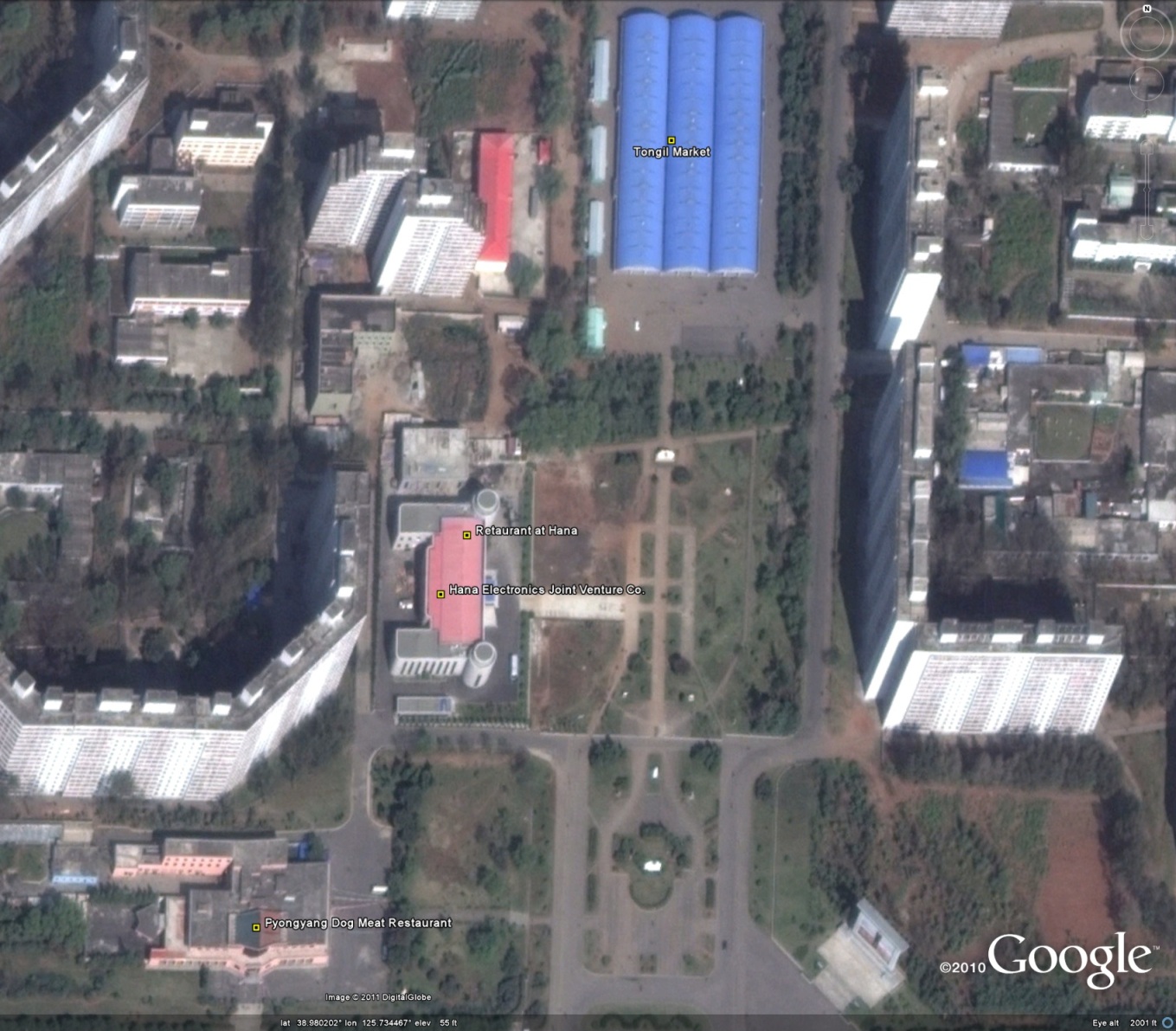
Interestingly sellers only brought commodities in small quantities despite the fact that these markets happen only three times a month. The number of sellers out numbered the buyers but that could be the mission effect as people were wary of foreigners asking questions, particularly outside Pyongyang. The difference in the prices paid in these rural markets compared to Tongil market in Pyongyang was astounding. A bundle of spinach that cost KPW 20 in rural market was being sold for KPW 1000 in Tongil market—50 times more. However, this may not be of concern to ordinary citizens as Tongil caters more to the foreigners and DPRK elite.

City Markets
City markets are held daily in cities and often in the same structures as the farmers markets.Mission members did not observe any cereals for sale in the market. Food items observed were potato, vegetables, pulses, wild vegetables, seafood, fish, eggs, and meat, including rabbit, chicken, and duck. Non-food items included farming tools, baskets, brooms, school supplies, clothing, and other household items. Commodities were available in small quantities speaking to the size of the market. The prices in these markets were competitive and the produce similar to the farmers market.

Finally, Yonhap reports on the travels of a British Envoy to the DPRK:

Martin Uden, Britain’s ambassador to South Korea, said Sunday that a marketplace in Pyongyang, the capital of North Korea, appear to be stocked with large amounts of food, poultry and electronic products, despite the communist state’s ongoing search for food aid abroad.

Uden, who traveled to Pyongyang and Wonsan, a port on North Korea’s east coast, from March 11-14, said he witnessed plenty of chicken, fish and vegetables and an array of computer and camera accessories during his visit to the “Dong-il” market in the capital city.

In his travelogue that was written after his second trip to the North following the first in 2008 and sent to Yonhap News Agency, Uden said that overall, both the variety and quantity of food products available at the Pyongyang market were a “fair bit less” compared with three years ago, noting the absence of beef was especially noticeable.

“This March, I saw no beef and a tiny amount of pork. But plenty of chicken of all sizes, both cooked and uncooked, and some duck. Large amounts of good-looking fish and plentiful root vegetables,” the British diplomat said in his travelogue that offers insights into the daily life of ordinary Pyongyang citizens.

“In terms of the food aid that the DPRK is seeking at present, it’s worth remembering that even if this one market appeared reasonably stocked, it’s not possible to draw wider conclusions from that,” he said, using the abbreviation of the North’s official name.

Uden said he arrived in Pyongyang on the second Friday of March, the day of a devastating earthquake and tsunami in Japan, but was kept in the dark about the disaster until Monday, when the state news organizations carried reports about it. He called the incident an eloquent example of information control by the government.

“In (North Korea), you can only know what the state wants you to know,” he said.

The full text of his travelogue can be found here.

Share

North Korea Resumes Military Rice Procurement Drive from January

Wednesday, March 23rd, 2011

Institute for Far Eastern Studies (IFES)
NK Brief No. 11-03-23
3/23/2011

A nationwide drive for military rice procurement was reported to have resumed from January this year in North Korea. The DPRK authorities halted the collection of rice for the military early last year with a sharp decrease in food production after suffering from repeated flood damages. However with their efforts to find aid from China and other foreign means to little avail, restarted the military procurement from early this year, collecting 2 to 3 USD worth of rice per person on a national level. North Koreans are reported to be strongly against the resurgence of the collection.

According to the Daily NK, sources from Pyongyang revealed that “Orders came from the Central Committee of the Party last December to begin a nationwide collection from January on the grounds of deficient military food supply. Although the order encouraged the drive to be voluntary and not obligatory, the department in charge of procurement is placing pressure on merchants and workers and officials of various corporations for donation.”

The Pyongyang source added, “In the case of Jung District Market (Jungguyeok Market) [satellite image here], the merchants were coerced into paying additional forty to fifty thousand KPW per person. The police are pressuring people that those who fail to pay will be forced to leave their lucrative spot in the market and replaced by those that paid.” Given the price of rice at the end of February was 1,900 KPW per/kg, each merchants was donating about 20 to 25kg of rice to the military.

On the other hand, workers in corporations were paying about 10 kg/person while the cadres were instructed to pay 30 kg/person. “The authorities did not hesitate to criticize and condemn those who dawdled on paying,” the source disclosed.

Another source from Sariwon in North Hwanghae Province also confirmed the account, “The Central Committee instructed the donations to be based on people’s consciences, but local authorities are demanding ‘each person must give specified kilos of rice,’ and ‘those that paid over a ton (1,000 kg), were given party membership right there and then with no inquiries about the source of the rice.”

Thus far, two people were reported to have given ten tons of rice and corn each, 50 people offered two tons of rice, and 200 people donated one ton of rice.

The source further added, the Party’s original target of 800 tons of rice for Sariwon was exceeded by a large margin, reaching over 2,400 tons.

However, disgruntled voices of North Koreans are also reported to be heard for the half-forced “military rice procurement drive,” raising questions about “where the food was going,” and “unhappy about taking rice for the military when there are no food rations for the people and factories no longer in operation.”

Previous stories on the DPRK’s food situation this year can be found here.

Share

DPRK expanding submarine force

Tuesday, March 22nd, 2011

pipagot-2.jpg

Pictured Above: Pipagot Naval Base  (Google Earth: 38°35’40.17″N, 124°58’38.49″E)

UPDATE (3/28/2011): According to Strategy Page:

North Korea has apparently been building an improved version of its Song (Shark) class mini-sub. The 250 ton Sang is actually a coastal sub modified for special operations. The original design is a 34 meter (105 feet) long boat with a snorkel and a top submerged speed of 17 kilometers an hour (or 13 kilometers an hour when at periscope depth using the snorkel to run the diesel engines). Top surface speed is 13 kilometers an hour. Max diving depth is 150 meters (465 feet) and the boat is designed to rest on the ocean bottom (useful when trying to avoid enemy search). There is a crew of 15, plus either six scuba swimmer commandos, or a dozen men who can go ashore in an inflatable boat. Some Songs have two or four torpedo tubes. Max endurance is about eight days. The new model is 39 meters (121 feet) long and is believed to have a max submerged speed of 27 kilometers an hour. Over 40 Songs have been built so far, and one was captured by South Korea when it ran aground in 1996. At least half a dozen are of the new model.

North Korea has a fleet of over 80 mini-subs, plus about 24 older Russian type conventional boats (based on late-World War II German designs, as adapted for Russian service as the Whiskey and Romeo class). China helped North Korea set up its own submarine building operation, which included building some of the large Romeo class subs. North Korea got the idea for minisubs from Russia, which has had them for decades. North Korea has developed several mini-sub designs, most of them available to anyone with the cash to pay.

The most popular mini-sub is the M100D, a 76 ton, 19 meter (58 foot) long boat that has a crew of four and can carry eight divers and their equipment. The North Koreans got the idea for the M100D when they bought the plans for a 25 ton Yugoslav mini-sub in the 1980s. Only four were built, apparently as experiments to develop a larger North Korean design. There are to be over 30 M100Ds, and they can be fitted with two torpedoes that are carried externally, but fired from inside the sub.

North Korea is believed to have fitted some of the Songs and M100Ds with acoustic tiles, to make them more difficult to detect by sonar. This technology was popular with the Russians, and that’s where the North Koreans were believed to have got the technology.

The most novel design is a submersible speedboat. This 13 meter (40 foot) boat looks like a speedboat, displaces ten tons and can carry up to eight people. It only submerges to a depth of about 3.2 meters (ten feet). Using a snorkel apparatus (a pipe type device to bring in air and expel diesel engine fumes), the boat can move underwater. In 1998, a South Korean destroyer sank one of these. A follow-on class displaced only five tons, and could carry six people (including one or two to run the boat). At least eight of these were believed built.

The use of a North Korea midget sub to sink a South Korean corvette in March, 2010, forced the United States, and South Korea, to seriously confront the problems involved in finding these small subs in coastal waters. This is a difficult task, because the target is small, silent (moving using battery power) and in a complex underwater landscape, that makes sonar less effective.

There are some potential solutions. After the Cold War ended in 1991, the U.S. recognized that these coastal operations would become more common. So, in the 1990s, the U.S. developed the Advanced Deployable System (ADS) for detecting non-nuclear submarines in coastal waters. The ADS is portable, and can quickly be flown to where it is needed. ADS is believed to be in South Korea. ADS basically adapts the popular Cold War SOSUS system (many powerful listening devices surrounding the major oceans, and analyzing the noises to locate submarines) developed by the United States.

ADS consists of battery powered passive (they just listen) sensors that are battery powered and deployed by ship along the sea bottom in coastal waters. A fiber optic cable goes from the sensors (which look like a thick cable) back to shore, where a trailer containing computers and other electronics, and the ADS operators, runs the system. ADS has done well in tests, but it has never faced the North Korean mini-subs.

ORIGINAL POST (3/22/2011): According to the Choson Ilbo:

North Korea is building up its submarine force, deploying new Shark-class K-300 submarines with better performance, a longer body and higher underwater speed than the old model which infiltrated South Korean waters in 1996.

A South Korean government official said Sunday, “We’ve confirmed U.S. satellite images and other intelligence that the North has been building and deploying new Shark-class submarines for a few years now.

They’re about 5 m longer than the old 34 m-long model and capable of traveling submerged more than 10 km/h faster.”

The North has about 70 submarines and submersibles. The Shark class, which accounts for about 40 of them, is its main submarine force.

Below are additional stories about the DPRK’s submarine fleet and navy:

Still Waters Run Deep

DPRK’s midget subs torpedo equipped

DPRK naval bases near Baengnyong Island

KPN submarine bases in the East Sea

North Korea supplied submarines to Iran

Bermudez on the North Korean Navy

NKeconWatch Military resources page

Share

DPRK attempts to block ROK GPS signals

Sunday, March 20th, 2011

UPDATE 3 (4/1/2011): The International Civil Aviation Organization (ICAO) is considering measures against North Korea after the reclusive state was accused of jamming satellite navigation signals.  According to Flight Global:

The organisation is intending to co-operate with South Korea over the matter, says the Korean ministry of foreign affairs.

It follows a meeting between Korean foreign minister Kim Sung-Hwan and ICAO secretary general Raymond Benjamin yesterday.

The ministry says that ICAO has accepted its position of “pointing out the illegality” of Global Positioning System signal jamming by North Korea in early March, and that a “recurrence of such [an] incident must not occur”.

It also says that ICAO has agreed to “co-operate with Korea in taking necessary measures” should there be another incident, because North Korea’s action “threatens civil aviation safety, of not only Korea but also other countries”.

ICAO was not immediately available to comment on the foreign ministry’s statement.

UPDATE 2 (3/20/2011): According to Strategy Page:

Since the 18th, North Korea has been directing a GPS jamming signal across the border, and towards the southern capital, Seoul. The jamming signal can be detected up to a hundred kilometers south of the DMZ. The North Korea GPS jammers are based on known Russian models that North Korea bought and copied. The usual response for GPS jamming is to bomb the jammers, which are easy to find (jamming is nothing more than broadcasting a more powerful version of the frequency you want to interfere with). But such a response could lead to more fighting, so the south is still considering what to do. The jamming is a nuisance more than a threat, and most military equipment is equipped with electronics and other enhancements to defeat it. This is the third time in a year that the north has attacked the south. The first was the torpedoing of a South Korean warship a year ago, then the shelling of a South Korean island off the west coast last November. Now this jamming, and DDOS attacks on government websites.

UPDATE 1 (3/15/2011): According to Yonhap, the DPRK has rejected a letter of complaint from the South over GPS jamming:

North Korea on Tuesday rejected a letter from South Korea demanding that the communist nation stop sending jamming signals across the border, Seoul’s Unification Ministry said.

South Korea’s communications watchdog, Korea Communications Commission (KCC), asked the ministry earlier in the day to send the North a letter in which it complained of the trouble caused by disruptions to Global Positioning System (GPS) signals in the South.

South Korean officials have blamed North Korea for jamming the signals early this month in what they believe was an attempt to interrupt ongoing military drills between South Korean and U.S. forces. GPS-based mobile phones and certain military equipment in the South’s northwestern areas experienced minor errors due to the disruption, according to officials.

“Following KCC’s request, we tried to deliver to the North a letter of complaint written in the name of KCC Chairman Choi See-joong through the liaison office at Panmunjom,” the ministry said, referring to the inter-Korean truce village. “But the North’s liaison officer refused to receive it.”

In the letter, the KCC said it demanded that the North “instantly stop jamming activities and provide measures against similar incidents in the future.”

The commission also wrote that the jamming of GPS signals is “causing an inconvenience to our people and threatening their safety,” adding that such actions are “unacceptable” under International Telecommunications Union regulations. Both South and North Korea are members of the Union.

North Korea was accused of jamming GPS signals across the border last year, but this is the first time the South has tried to lodge an official complaint on the matter.

South Korea has already sought international action against the sabotage, with the foreign ministry sending a letter of inquiry to a United Nations agency in charge of information and communication technologies, a presidential official said earlier this month.

ORIGINAL POST (3/8/2011): According to the AFP (via Singapore’s Straits Times):

Seoul confirmed on Monday that North Korea has been trying since Friday to jam communications signals across the border, where the US and South Korea are holding a major joint military exercise.

Signals are being emitted from near the North’s border city of Kaesong to disrupt navigational devices using GPS (the Global Positioning System) north-west of Seoul, the Korea Communications Commission said.

They caused minor inconvenience on Friday and Saturday, it said, while weaker signals are ongoing. ‘Intermittent (GPS) disruptions are still continuing, although signals are weak,’ the commission said in a statement, adding that it was working with government agencies and security authorities to counter the jamming.

The South’s defence ministry confirmed the intermittent failure of GPS receivers last week, but refused to give details for security reasons. It was not clear whether the disruption caused problems to the war games.

The North’s military operates dozens of bases equipped for an electronic war to disrupt South Korean military communications, the South’s Yonhap news agency said. The communist country has imported GPS jamming devices from Russia, while South Korea uses French equipment to disrupt or monitor the North’s military communications systems, it said.

How do these kinds of attacks work and how effective are they? According to Wired:

North Korea is reportedly jamming Global Positioning System (GPS) signals in South Korea, possibly in an attempt to interfere with the U.S.-South Korean annual Key Resolve/Foal Eagle drills, which kicked off on February 28.

GPS jammers work by sending a signal that interferes with the communication between a satellite and GPS receiver. It’s a relatively simple operation, with relatively short-range effects. Thus far, cell phones used by civilians and troops and some military equipment have been put on the fritz by the disruption attempts.

But the juiciest target for the North’s jamming efforts would be the U.S. and South Korean arsenals of GPS-directed bombs.

If it works just right, the GPS jammer can cut off a satellite-guided bomb’s ability to guide itself to target. The bomb simply continues hurtling towards the ground in the direction it was when it lost contact with a satellite.

However, these weapons have other means of guiding themselves in the event of jamming. Take the Joint Direct Attack Munition (JDAM), a guidance kit that’s strapped to older, “dumb” bombs to make them more accurate. In addition to GPS, the JDAM kit comes equipped with an Inertial Navigation System (INS), which measures a bomb’s acceleration and uses the information to plot its way to a target. In the event a JDAM’s GPS signal is successfully jammed, it can rely on its INS to guide it, although accuracy is reduced from 5 to 30 meters.

That’s not the only backup for U.S. bombs. “Increasingly you see that there are multi-mode smart munitions that have both GPS and laser guided so that if one is not working, the other can,” says John Pike, a defense and aerospace expert and president of Globalsecurity.org.

Though he’s not familiar with the specific systems used by the North Korea, Pike says other incidents make him think the U.S. might not have much to worry about in this case.

“The jammings that I have been aware of in other instances I would place into the category of ’seriously annoying.’”

North Korea is believed to have both a GPS jamming system imported from Russia and a modified version its been shopping around the Middle East, according to South Korea’s Chosun Ilbo. Russia reportedly sold a GPS jamming system to Iraq on the eve of the second Gulf War. And in case you missed that one, jamming wasn’t much of an issue for U.S. bombs.

But jamming might not be the only info war trick North Korea’s been up to lately.

Last week, at least 29 websites were affected by a distributed denial of service (DDoS) attack, which targeted a number of South Korean government, U.S. military and private sector sites. At the moment, the origin of the web traffic flood remains unknown, but North Korea is widely suspected because of its prior history. In June 2009, South Korea intelligence attributed a series of DDoS attacks which targeted a similar portfolio of sites to North Korea.

Which organizations in the DPRK carry put these kinds of operations? The Choson Ilbo highlights the well known Mirim College for Electronic Warfare Research

Pictured above on Google Earth: Suspected initial location of the Mirim War College in Pyongyang (39.013904°, 125.877156°) (via Michael Madden).  Reports now indicate it has been moved to the other side of Pyongyang in Hyonjesan-guyok.


According to the Choson Ilbo:

Pyongyang began developing electronic warfare capabilities in 1986 when it founded Mirim University, the present-day Automation University, to train specialists.

A defector who graduated from the university recalled that 25 Russian professors were invited from the Frunze Military Academy in the former Soviet Union to give lectures, and some 100 to 110 hackers were trained there every year.

Mirim is a five-year college. The Amrokgang College of Military Engineering, the National Defense University, the Air Force Academy and the Naval Academy are also reportedly training electronic warfare specialists.

Jang Se-yul of North Korean People’s Liberation Front, an organization of former North Korean military officers and servicemen, recalled that when he fled the North in 2007, “I heard that the North Korean military has about 30,000 electronic warfare specialists, including some 1,200 personnel under two electronic warfare brigades.”

“Each Army corps operates an automation unit, or an electronic warfare unit.” Jang used to be an officer of a North Korean electronic warfare command.

Material published by the North Korean Army in 2005 quotes leader Kim Jong-il as saying, “Modern war is electronic warfare. Victory or defeat of a modern war depends on how to carry out electronic warfare.”

In a 2006 report, the South Korean military warned North Korean hackers could paralyze the command post of the U.S. Pacific Command and damage computer systems on the U.S. mainland.

Experts believe that the North’s 600 or so special hackers are as good as their CIA counterparts. They attempted in August 2008 to hack the computer of a colonel in South Korean Field Army headquarters. In 1999, the U.S. Defense Department said the most frequent visitor to its website was traced to North Korea.

Due to economic difficulties since the 1990s, the North Korean regime had a hard time boosting its conventional military capabilities and instead focused on strengthening so-called asymmetric capabilities that would allow it to achieve relatively large effects with small expenses. That includes not only nuclear and biochemical weapons and missiles but also special forces and hackers.

FAS has more on the Mirim-based school here.

A couple of years ago, the Daily NK mentioned another possible contender: Moranbong University

Pictured above on Google Earth: Korean Workers’ Party Building 3 complex in Pyongyang (39.057894°, 125.758494°)

According to the Daily NK:

Moranbong University, which is directly managed by the Operations Department of the Workers’ Party, is said to be leading technical developments in cyber war against foreign countries.

A North Korean source said in a telephone interview with Daily NK on the 10th, “I heard that the U.S. and South Korea were attacked. If it were confirmed that North Korea was responsible, it would have been by the graduates of Moranbong University.”

According to the source, since the mid-1990s, the Workers’ Party has been watching the worldwide trend whereby the IT field started dominating, and founded Moranbong University in 1997 in order to train experts in data-processing, code-breaking, hacking and other high-tech skills. The results of new student selections, curricula and training are reported only to the Director of the Operations Department, Oh Keuk Ryul.

The foundation of the University was spurred by the North Korean invasion of the South in Kangreung, Kangwon Province in 1996. 26 North Korean special agents tried to infiltrate South Korea after passing under the Northern Limit Line in a special, mini-submarine, but they were all killed or committed suicide after the operation failed. After that, there was a debate within the South Korean Liaison Office under the Operations Department of the Party about the sending of spies to the South and collecting intelligence through contact with resident spies in South Korean society. After listening to such suggestions, Kim Jong Il approved the establishment of the university.

It is a five-year university which selects 30 freshmen every year. The university makes every freshman a military first lieutenant. In sophomore year, students take courses in martial arts, shooting and other special skills, and then they take courses in assembly languages, wiretapping, code-breaking, and hacking.

Graduates are dispatched to the headquarters of the Operations Department of the Party or local South Korea Liaison Offices, where they are put in charge of collecting intelligence from intelligence organizations and the military of South Korea, the U.S., Japan, China and other neighboring countries, or demolishing programs.

Since 2003, more than 200 graduates from the University have started working for the Operations Department or as professors of Moranbong University. Some of them have been dispatched to China in order to train in international techniques or to earn foreign currency as Chosun Computer Center (KCC) workers.

According to the source, Moranbong Univeristy is better than Mirim University, the former main educational institution for North Korean hackers, in terms of equipment, technology and curricula. It is located in Jung-district, just across from the No. 3 Government Building, in which the United Front Department, the Liaison Department and the Operation Department are stationed. The real purpose of the university is not officially revealed even to general agents of the Operations Department, because it is treated as top secret.

The source concluded, “Wiretapping has its limits because of a lack of equipment, but they have world-class hacking technology.”

The Daily NK,  Choson Ilbo, and Strategy Page later posted additional information on these organizations.

South Korea is said to be seeking additional sanctions on the DPRK for these activities.  According to Yonhap:

But they said the North should not go unpunished for the sabotage, with a senior presidential official hinting at the possibility of seeking sanctions against the communist nation.

A charter of the International Telecommunication Union (ITU) bans a country from doing damage to electric waves of other nations. Both South and North Korea are members of the ITU.

The foreign ministry already sent a letter of inquiry to a United Nations agency in charge of information and communication technologies, the presidential official said on condition of anonymity.

Read the full stories here:
N. Korea launches electronic attacks on S. Korea
AFP (Straits Times)
3/7/2011

North Korea Jams GPS in War Game Retaliation
Wired
Adam Rawnsley
3/7/2011

N.Korea Trains Up Hacker Squad
Choson Ilbo
3/9/2011

Mecca for North Korean Hackers
Daily NK
Jung Kwon Ho
7/13/2009

Share

The heads of the Central Bank and State Price Commission appointed

Wednesday, March 16th, 2011

Institute for Far Eastern Studies (IFES)
NK Brief No. 11-03-15
3/15/2011

Recently, Paek Ryong Chon was appointed as the new President of the Central Bank of the DPRK. Paek is known as the third son of late Paek Nam Sun, the former Foreign Minister of the DPRK.

According to the DPRK’s official news agency KCNA, a national meeting of commercial officials was held at the People’s Palace of Culture in Pyongyang on March 7, 2011. The list of attendees at this event included Paek Ryong Chon as the President of the Central Bank.

The senior Paek served as the Foreign Minister of the DPRK from 1998 to 2007 before he passed away in January 2007. His third son, Paek Ryong Chon, 49, made his public political appearances at the North-South Premier Talks and the Joint Committee for Inter-Korean Economic Cooperation meetings in Seoul on December 2007 as a department director of the Secretariat of the Cabinet.

Previously, he visited South Korea as a part of the North Korean delegation in 2002 at the first working-level talks of inter-Korean economic cooperation and again in June 2006 for the Inter-Korean Joint Event held in Kwangju.

The Central Bank was established in 1946 and is responsible for issuing bank notes, currency control and regulating other banks. The Central Bank also operates as a savings and insurance institution that provides services for the general population of North Korea through regional branch offices.

Paek’s new appointment is believed to be largely in consideration for the late foreign minister, Paek Nam Sun.

Meanwhile, Ryang Ui Gyong was appointed as the Chairman of the State Price Commission, which was formerly known as the State Price Bureau.

The KCNA made a referral to Ryang Ui Gyong as the Chairman of the State Price Commission in a recent report on a national meeting of commercial officials.

Not much is known about Ryang. He is speculated to have built his career in the State Price Bureau as a technocrat.

The State Price Commission is responsible for the price control of agricultural and industrial prices and wage systems, calculating the living costs for the people. The recent upgrade from a bureau to a commission is analyzed by many experts as North Korea’s move toward stronger price control policy to stabilize prices.

The Commission is also in charge of regulating import and export prices twice a year. This is evaluated as an attempt to prevent imports from being imported at a higher price and exports from being exported at a lower price than the international market average.

In the past, the State Planning Commission and the State Science and Technology Commission were the two main commissions in North Korea. However, since June 2010, the number of commissions has risen to five, a result of the reorganization of the Ministry of Education to Education Commission, the Joint Venture and Investment Guidance Bureau to the Committee of Investment and Joint Ventures, and the State Price Bureau to the State Price Commission.

Share

An affiliate of 38 North