Archive for the ‘DPRK organizations’ Category

More rumors of changing DPRK ID cards

Wednesday, August 3rd, 2011

dprk-id-cards.jpg

Pictured above (Daily NK): A DPRK ID card from 2004.  Click image for larger version.

UPDATE 2 (2011-8-3): According tothe Daily NK:

North Korea is apparently gearing up to make one of its regular changes to the nationwide system of ID cards. According to inside sources, the authorities have been gathering in the current ID cards from citizens, a process that has been completed in some areas including parts of Yangkang Province.

Notably, the new ID cards are set to include information on an individual’s job. For more than ten years, North Korea has kept watch on the activities of the people via their places of work, meaning that the inclusion of a person’s job on his or her ID card implies modifications to the existing system of controls.

A Pyongyang source explained, “People’s unit chairpersons have been taking IDs from the people and presenting them to the People’s Safety Ministry (PSM) since earlier this year. The rumor is that a new card clearly recording a person’s job, family and marital relations will come out, just like the old card.”

Another source from northerly Yangkang Province confirmed the story, saying, “We already gave in all our ID cards,” and adding, “I just heard from the PSM agent in charge of citizen registration that the new ID cards would be exactly the same as the old style ID card, including family, marriage and job.”

Understandably, having to give in existing ID cards has made life difficult for those people needing permission to travel, since every time they want to go anywhere they have to visit the local People’s Safety Ministry office to retrieve their card and explain the situation in order to get a permit.

Similarly, people had to retrieve their cards in order to vote in local elections on the 24th of last month, before returning them to the security authorities.

All the sources The Daily NK spoke to about the changeover regard the addition of job information as the most interesting aspect of the new card. As the Pyongyang source explained, the current ID cards do not include job information, meaning that the authorities “don’t know what work we are doing, and so are unable to control us properly. As a result of this, talk about the release of the new card is doing the rounds.”

One Chinese-Korean who regularly visits China for trade agreed, adding, “The absence of jobs from the current ID makes management of citizens difficult, so word is that they will completely return to the old style cards.”

Until 1999, North Korea included all the information now being mooted on ID cards in the shape of a small passport shaped book; however, the authorities then moved to a single card-based system featuring just name, birth date, address, marital status, an image and an ID number.

In North Korea, everyone over the age of 16 has an ID card, a system that began on September 1st, 1946. They have been regularly changed as part of official record keeping for the purposes of control. Previous known changeovers occurred in 1953, 1958, 1964, 1974, 1984, 1999, and 2004.

UPDATE 1 (2010-5-12): According to the Daily NK:

A source from Pyongyang reports that a new national identification card will begin to be issued on May 17th in the capital, and thereafter the project to replace old cards and issue the new version is supposed to begin in the provinces.

This project is the culmination of a project begun in 2004, when the North Korean authorities tried to computerize citizen databases and issue a new form of ID card but were apparently not able to complete the project due to a lack of funds. Now, they have resumed the project for those who did not receive the new ID card in 2004 and those who turned 17, the legal age for receiving the card, between 2004 and 2010.

The source explained during a phone call with a Daily NK journalist today, “Since early May, people’s unit chairpersons have been calling door to door to let residents know about the new ID card and check the record of who lives where.”

He added, “Those who are away from their recorded locations for any reason have been instructed to return and receive the new ID cards.”

The new ID card is plastic, and contains a picture and personal information such as name, gender, race, birthplace and residence. Alongside the process of issuing the new ID card, computerization of resident records will also resume. Therefore, families of defectors and people in China temporarily are about to get in hot water.

The source said, “This must be a risk to households which are found to contain missing persons or absent members. Some of those whose family members already left for China or elsewhere will doubtless go to local People’s Safety Ministry offices to explain their situation and offer bribes.”

In the case of defector families, if they have not previously reported missing family members, they will be treated as suspicious, and be placed under increased monitoring. However, the families of those who are visiting China legally with permits will also have problems.

The basic permit issued by the authorities is generally like a single entry visa, valid for at least thirty days plus a ten-day extension. However, most visitors tend to stay in China to earn money for up to a year. After returning home, they have to offer bribes to the National Security Agency (NSA), which polices the border, to avoid punishment.

However, if the situation is revealed during the new ID card project, it will be a bigger issue which might not be solved with a bribe for the local NSA. Therefore, such people face a serious worry.

In North Korea, the People’s Safety Ministry is in charge of management and control of the residents’ database. In the mid-1990s, when the precursor to the Ministry, the People’s Safety Agency, was registering all residents’ identifications, the Shimhwajo Case, one of the biggest purges in North Korean history, took place.

Read the full story here:
New ID Card Project Ready for Launch
Daily NK
Yoo Gwan Hee
2010-5-12

ORIGINAL POST (2010-3-5): According to the Daily NK:

A rumor that the North Korean authorities are working towards issuing a new form of identification card to all citizens is circulating, according to sources inside North Korea.

This rumor has been reported from some areas of Shinuiju and Yangkang Province. However, there has been no word from Pyongyang or any other provinces.

To date, North Korea has tended to issue new ID cards once every 10-15 years. However, the last time was in 2004, which has led some to suggest that there might be additional reasons for the changes this time besides standard administrative requirements.

Indeed, this may have been borne out by a Daily NK source from Shinuiju, who cited a cadre from a neighborhood government office as saying to him, “We decided to change the form of the ID card because spies from the South Korean intelligence agency (National Intelligence Service) are trying to infiltrate our society by copying our cards,” leading another source to comment, “We are so busy and the situation is so terrible, so why must we try to switch it?”

Free North Korea Broadcasting (Free NK) has released the same news, citing a source from Daehongdan in Yangkang Province. “The authorities are reorganizing and confirming all identification records,” the source explained to Free NK, “We presume that once the process is complete; they will change the ID card system.”

One defector familiar with the system added a further rationale for the possible move. “The reorganization is designed to confirm whether residency records are correct by making citizens re-register their residency in their locality,” he said, “This can also be a measure used to identify defectors and vagabonds.”

There is a market for North Korean ID cards in China.  Find out why here.

Read the full story here:
North Korea Changes ID Cards
Daily NK
2010-3-5

Share

Premier Choe Yong-rim is making unprecedented but vigorous economic inspections

Wednesday, July 20th, 2011

Institute for Far Eastern Studies (IFES)
2011-7-13

Kim Jong Il’s field guidance visitations decreased significantly in recent weeks. In place of the North Korean leader, Premier Choe Yong-rim is known to be making solo economic inspection visitations.

According to South Korea’s Ministry of Unification, Premier Choe has made a total of 17 on-site inspections from February. Starting with Huichon Power Plant, four trips in March, two in April, six in May, and lastly, four visits in June were recorded. A high-level official to make on-site inspections unaccompanied by its leader is an unprecedented case. This suggests major change for North Korea in which the chief of Cabinet is now directly heading the economy.

Although these inspections were short day trips, sites visited concentrated mainly on factories, power plants, cooperative farms, and construction sites. While making inspection rounds, Choe’s main duty is to deliver the orders of Kim Jong Il, but he was also witnessed actively suggesting measures to resolve problems that were raised at the sites.

Premier Choe’s economic inspections correspond with the DPRK’s plan of building a strong and prosperous nation by 2012 and an effort to propagate the spirit of self-sufficiency and encourage Juche or self-reliance of the economy throughout the country.

The last report of Kim Jong Il’s official field guidance was on June 3, at the Kosan Fruit Farm located in the Kosan City of Gangwon Province. For more than a month, Kim Jong Il allegedly has not provided any onsite inspections.

There are numerous speculations on the cause of the reduced inspections but many are linking it to Premier Choe.

Many news outlets in North Korea have begun to report on Premier Choe’s economic inspection visits in isolation from Kim Jong Il and related news are on the rise. The details include visits to Kim Chaek Iron and Steel Complex, Nanam Coal Machine Mining Complex, and Chongjin Steel Mill from June 23 to 25 and Chollima Steel Complex on June 29.

On July 2, KCNA covered the news about Choe’s visits to Bukchang Thermalelectric Power Plant. There he presided over meetings discussing the issues of securing raw and building materials to improve facility and technological management as well as specific plans to increase energy production.

Choe’s frequent visits are interpreted to demonstrate the rise in power of the Cabinet compared to its relatively weak position of the past, compared to the Workers’ Party of Korea and National Defence Commission.

Others construe the developments as an effort to weaken any internal dissatisfaction or negative sentiments towards the regime by emphasizing the premier’s active involvement with the economic development to achieve the national goal of becoming powerful socialist state by 2012.

The decline in field inspections by Kim has raised suspicion about the health of North Korean leader. Some suggest that Kim is taking time off to recuperate from the tight schedule of his recent China visit in late May.

Recently, Japanese Kyodo News reported that Kim Jong Il cancelled plans to visit Russia on June 29 for health reasons.

Some speculate Kim is behind the scenes contemplating the changing foreign policies, deterioration of North-South relations, and food shortages.

I am not sure where the Ministry of Unification is getting their numbers. I just did a tabulation of Kim Jong-il’s and Choe Yong-rim’s economic guidance trips and public appearances from February 2011 — July 13 and get very different results than they are announcing: 36 visits for Kim Jong-il and 47 for Mr. Choe.  All the data, including links to the KCNA sources are here in an Excel Spreadsheet.

Also worth mentioning is that between June 3 and July 13 (contrary to the report) Kim Jong-il made 11 or 12 public appearances–four of which were guidance trips. See them here in an Excel Spreadsheet with links to the KCNA source.

Share

Kim Jong il’s visit to KPA Unit 963

Monday, July 18th, 2011

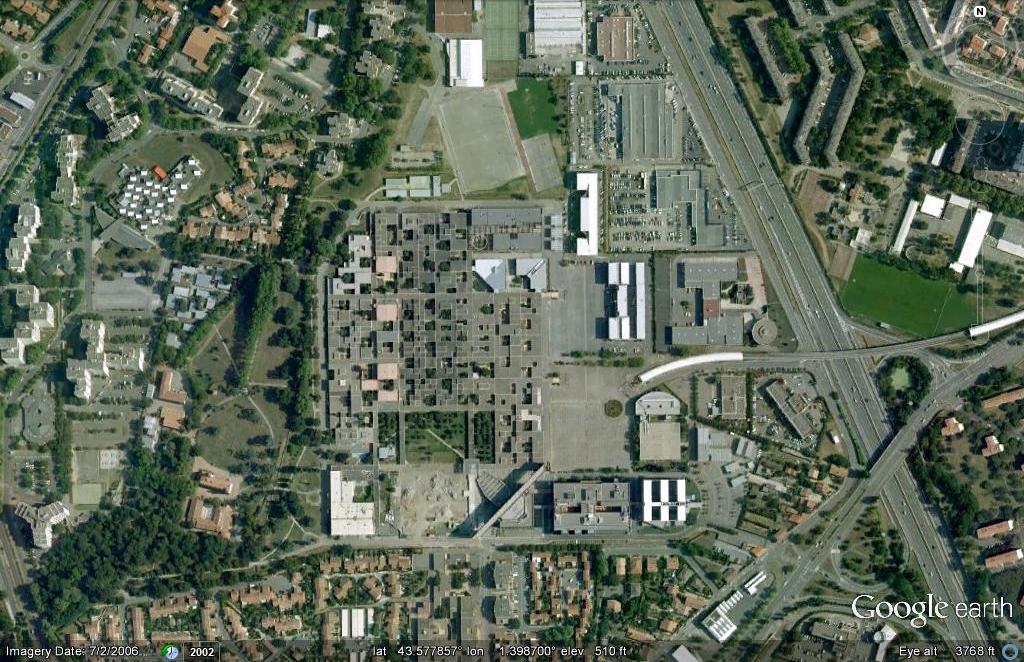
Pictured above (Google Earth): KPA Unit 963 (Escort Bureau/Guard Command) in Pyongyang.  See in Google Maps here.

On July 14th, KCNA reported that Kim Jong-il visited the command of KPA Unit 963.   According to the Daily NK:

Kim Jong Il has conducted an onsite inspection at No. 963 Base of the Chosun People’s Army, Chosun Central News Agency reported this morning. No. 963 Base is operated by Escort Command, the unit charged with overseeing the safety of the Kim family.

Taking in the base’s revolutionary history museum, Kim is said to have proclaimed, “This army base repelled the united imperialist factions including America, carrying out the noble mission and duty of the Fatherland Liberation War. The personnel from this base are keeping alive this proud tradition, and will surely be known in future too for the splendor of protecting the fatherland with one hundred wins in one hundred battles.”

Kim also expressed his great satisfaction at the work of the officers in command of the base, commending their readiness to carry out their duty on the battlefield with superior strategic and command abilities.

The report also went on to explain, “This base has inherited the bright tradition of defending the Suryeong with their lives pioneered in the forests of Mt. Baekdu and our revolutionary chronicles, has defended the Party and Suryeong and in the process turned out dozens of distinguished individuals, including 72 heroes of labor and 28 heroes of the Republic.

Kim was accompanied on the inspection by son Kim Jong Eun, Jang Sung Taek and another member of the Party Central Military Commission, Kim Kyung Ok.

According to Joseph Bermudez (The Armed Forces of North Korea):

The State Security Department and the Guard Command are the agencies most directly responsible for the security of Kim Chong-il and only he is reportedly exempt from their scrutiny. (p 199)

This compound recently acquired a new facility (probably the focus of the visit):

Additional information:
1. Here, here, and here is some additional information on the Escort Bureau (Guard Command).

2. Kim Jong-il’s military related visits this year: On February 2 Kim Jong-il visited KPA Unit 6556 and the Jongsong Combined Medical Institute of the Korean People’s ArmyOn March 16th he visited a factory under KPA Navy Unit 597. On May 4th he visited an undisclosed new KPA Sports Complex (This could possibly be at Kim Jong-il Political Military University which recently received a similar new facility).  Kim Jong-il also attended KPA cultural events on February 2, February 9, March 13, April 15, April 22, June 10, July 1, and July 2.

These are not his only military-related public appearances since he has also visited several factories suspected of being dual-use complexes, including the Namhung Youth Chemical Complex, Kanggye General Tractor Plant, Hungnam Fertilizer Complex, and the January 18 General Machinery Plant.

Share

Phoenix Commercial Ventures update

Friday, July 8th, 2011

Pictured above (Google Earth): The recently completed Hana Electronics and restaurant building in Rakrang-guyok (락랑구역).  See in Google Maps here.

Phoenix Commercial Ventures has recently launched a new web page and issued the following press release on their latest projects in the DPRK:

FOR IMMEDIATE RELEASE:
Hana Electronics Opens “The Restaurant at Hana”
Pyongyang/London, July 8th 2011

Phoenix Commercial Ventures Ltd (www.pcvltd.com) is proud to announce that Hana Electronics JVC (a 50/50 joint venture based in the DPRK)  completed and moved into its new headquarters based near the T’ongil Market in Pyongyang in Q1 2011.

Having moved in and set up its production facilities, Hana has now opened a restaurant (“The Restaurant at Hana”) and related leisure facilities (swimming pool, sauna, hairdresser, bar, gym etc) in its headquarters.

The restaurant (which comprises a main dining room and several private ones) and leisure facilities are open to locals and foreigners alike. Food for the restaurant is sourced from local markets.

A video and photos of the restaurant can be viewed on the Phoenix website.

About Phoenix Commercial Ventures Ltd
Phoenix Commercial Ventures Ltd offers investors business and investment opportunities in the Democratic People’s Republic of Korea (DPRK), enabling them to take advantage of the economic reforms that are taking place there.

Phoenix Commercial Ventures Ltd maintains an office in Pyongyang, almost the only European company to do so, and operates with the following specific aims:

• Identify commercially viable investment projects in the DPRK, on a case by case basis

• Identify reliable local partners for all forms of business in the DPRK, either trade or investment

• Seek overseas investment sources for such projects

• Minimise the risk in such projects, by taking responsibility for supervision of the local set-up procedures and management of the projects

About Hana
Hana was established in May 2003. In 2004 it began manufacturing and selling DVD and VCD players, as well as pressing and selling CD’s.

When the company first began operations it employed barely a handful of people. Now it employs over 200 people, and has thus become a major employer with significant social responsibilities which it takes very seriously.

Hana have established a nationwide distribution network throughout the major cities in the DPRK. Whilst they manufactured and marketed CD’s, they had an exclusive long term contract with the Mansudae Arts Centre, which belongs to the Ministry of Culture, one of the partners in the JV, for 300 works including; movies, karaoke and other music.

They now produce and sell a range of DVD players, and will move into other consumer electronics products.

Hana is now ranked as one of the top three best performing joint ventures in DPRK, as assessed by the Ministry of Finance.

Hana is proud to have introduced a number of firsts, which show the evolution of the DPRK to a market economy. These include:

• Advertising – the Hana logo, together with the company’s telephone number, appear on every product and packing case

• Offering a guarantee – Hana has also introduced a six-month, no questions asked, guarantee on all products

• Distribution System – Hana have gradually established, from a zero base, a distribution system covering the whole country. They have set up sales offices – for example, in Chongjin, they now have one main office and 13 sub-branches; in Hamhung, they have one main office and 3 sub-offices, and also have offices in Nampo, Sariwon and Sinuiju. They plan to open more outlets, first in the other provincial cities, then in the smaller county seats

• Hana intends to diversify and expand their range of products.

• Hana moved into its newly constructed building, next to the T’ongil Market, in Q1 2011.

• Hana has also opened a restaurant (“The Restaurant at Hana”) and leisure facilities (including a swimming pool) in its new building. The restaurant and leisure facilities are open to locals and foreigners alike.

CONTACT INFORMATION:
Phoenix Commercial Ventures Limited
No. 901
International House of Culture
Ryonhwa-dong
Central District
Pyongyang
Democratic People’s Republic of Korea
Corporate Website www.pcvltd.com

Share

Philippines donates to DPRK school

Thursday, July 7th, 2011

Pictured above (Google Earth): Suspected location of Kaeson Middle School (Google Maps)

According to the Philippine Department of Foreign Affairs:

Foreign Affairs Undersecretary for Policy Erlinda F. Basilio turned over to the Pyongyang Kaeson Middle School a Philippine donation of Philippine and ASEAN books, as well as a computer set consisting of one desktop computer, one laptop computer, and one printer last July 1.

Undersecretary Basilio was in Pyongyang with other Philippine officials to take part in scheduled Policy Consultations with the Foreign Ministry of the Democratic People’s Republic of Korea (DPRK).

Established in August 1960 and located in Pyongyang’s Moranbong District, Pyongyang Kaeson Middle School was designated the Philippines-DPRK Friendship School on 23 August 2010, as part of the 10th anniversary of the establishment of diplomatic relations between the two countries. The school is run by nine officials and 79 teachers, and has a student population of 1,454.

The donation was undertaken in cooperation with the Philippine Embassy in Beijing and the PH-Korea Friendship Society, based in Pyongyang.

The Philippines and the DPRK established diplomatic relations on 12 July 2000.

Additional information:

1. The DPRK routiney names schools and farms as “Country X-DPRK Friendship school/farm”.   For example, the Songyo Secondary School is also the “DPRK-Mongolia Friendship School”.  I have written about “friendship farms” before (here and here).

2. The PH [Philippine]-Korea Friendship Society is an “organization” in the “TaeMun” (대문) portfolio.  대문 is the North Korean abbreviation for 대외문화련락위원회, or in English, the Committee for Cultural Relations with Foreign Countries.  I say “organization” because in reality this friendship society, like all of the others, contains only one or two part-time members.  TaeMun takes its origins from an imported Soviet office named the All Union Society for Cultural Relations with Foreign Countries (Всесоюзное общество культурных связей с заграницей), known in the West by the acronym VOKS (from the Russian “BOKC”).  Historically, its  job was to create sympathetic constituencies in foreign countries and provide the North Korean government with an alternate channel of foreign information, but since the Arduous March they have transformed their mission to focus more directly on resource acquisition.  There is some tension between TaeMun and the DPRK Foreign Ministry.  TaeMun has a web page here.

3. Here are some previous posts on the DPRK-Philippines relationship: here, here, here and here.

Share

The Rason Economic and Trade Zone to Adopt the Singapore Model

Thursday, June 30th, 2011

Institute for Far Eastern Studies (IFES)
2011-6-25

Since the June 8 and 9 groundbreaking ceremonies for joint development projects between North Korea and China were held, attention has been directed toward North Korea’s international economic activities. The Japan-based newspaper, Chosun Shinbo, featured an interview article regarding these collective projects, including the areas of Hwanggumpyong and Wiwha Islands and the Rason Economic and Trade Zone.

According to North Korea’s Committee of Investment and Joint Venture, Rason Economic and Trade Zone is, “an important national undertaking following the teachings of Kim Il Sung. . . . Rason will soon become the entrepot port like Singapore, enhancing the lives of North Korean people.”

In addition, it was mentioned that the development of economic zones in Hwanggumpyong and Wiwha Islands will solidify the already strong DPRK-China friendship and expand the boundaries of international economic relations.

According to North Korea’s Committee of Investment and Joint Venture, politically, “Stable political atmosphere allow investors to engage freely in investment activities and necessary legal measures were taken creating favorable legal conditions for foreign investments. This includes the establishment of Joint Venture Law (of 1984) and other related laws.” Economically, “All the necessary substructures supporting the business operation are set. Workers will all be provided free 11-year education and tax rates are the lowest in the region and for those investors investing in sectors that the DPRK is promoting, will be provided with preferential treatment.”

North Korea is encouraging foreign investments especially in the industrial, agricultural, transportation, construction, financial, and tourism sectors. In particular, adopting state-of-the-art production technology is considered most important. This is to increase the area’s competitiveness in the international market through the production of items that have high export value. However, investment restrictions are placed preventing exports on natural resources like ore and coal.

The Committee also stressed the accomplishments of economic cooperation with China and Egypt and revealed plans of passing a double tax avoidance agreement with China, who is the largest foreign investment for North Korea.

The Egyptian company Orascom Telecom has invested in telecommunications, construction, and financial sectors in North Korea. The president of Orascom is said to have met with Kim Jong Il early this year, announcing his plans of expanding investment in the country.

In addition, the Committee reiterated building an independent national economy does not exclude international economic relations. It explained, “We are trying to resolve our shortcomings through international economic activities while maximizing our domestic technology and resources. This is the principle of socialist economic construction.

The Committee of Investment and Joint Venture was established last July, which is a central state organization under the Cabinet overseeing joint ventures and investments. It is in charge of guiding, supervising and administering the inducement of investments from abroad. It is a government body on the level of the Ministry of Trade, which it has close affiliations with. The Ministry is a central organization controlling general trade activities while the Committee is mostly responsible for attracting foreign investment, joint investment, and ventures.

Share

Aid worker claims DPRK cut food rations

Wednesday, June 29th, 2011

According to the AFP:

North Korea has drastically cut public food handouts as it heads towards a new hunger crisis with people again eating grass to survive, one of the most experienced aid workers in the isolated nation said.

Food rations have been cut to as low as 150 grammes (5.3 ounces) a day per person in some parts of the country as foreign donations collapse and higher international prices make imports more expensive, said Katharina Zellweger, head of a Swiss government aid office in Pyongyang.

Food supplies to the estimated population of 23 million people have been controlled through a public distribution system for decades.

“It works sometimes and sometimes it doesn’t work,” the head of the Swiss Agency for Development and Cooperation office in Pyongyang told a group of UN correspondents.

“The lowest I heard was 150 grammes per person per day, and I even heard that in Pyongyang the rations are cut to 200 grammes per person per day.”

Diplomats say the rations have been halved over the past 18 months. One hundred grammes of rice produces about 250-350 calories a day, experts said.

Zellweger said she had seen “a lot more malnourished children” on recent travels around the country.

“You see more people out in the fields and on the hillsides digging roots, cutting grass or herbs. So there are signs that there is going to be a crisis.”

At the same time the Daily NK reports:

Anecdotal evidence suggests that the market price of potatoes in North Korea has risen substantially in recent weeks, with farms unable to supply the jangmadang because drought and a lack of fertilizer have had a detrimental effect on this year’s spring harvest.

One farmer from North Hamkyung Province revealed his concerns in a phone interview with The Daily NK on the 26th, saying, “This year, potatoes have not done well because of the drought and fertilizer situation, so I have nothing to sell in the market. I am worried about what we are going to do until the corn comes in August.”

Spring potatoes harvested in early June are a decisive food for North Korean farmers. They receive their share of the autumn harvest in December, but once the People’s Army has received its share and various debts have been repaid, they only get enough food for three or four months. After this, potatoes are an important staple to see them through until corn can be harvested in July and August.

However, after deducting cost incurred in bringing together seeds, fertilizer, agricultural chemicals, farm machinery, irrigation equipment and fuel, a farmer receives distribution depending upon his individual work points, decided according to his/her working hours. Since deductions are high, the share for farmers is low, sources say.

The price of potatoes has even risen sharply in Yangkang Province, the center of North Korean potato production. According to Yangkang Province sources, potatoes there are currently selling for between 900 and 1,000 won/kg, double the price of last year.

Fortunately, the high price of potatoes has not had any influence on rice prices. According to one source, “Rice is being sold steadily, and the price is stable not rising.” In the market in Hyesan, rice is now on sale for between 1,900 and 2,100 won/kg, not much more than it was before the spring shortages began.

Finally, new video footage smuggled out of the DPRK suggested that food supplies are particularly tight in distant towns, even for soldiers:

“Everybody is weak,” says one young North Korean soldier. “Within my troop of 100 comrades, half of them are malnourished,” he said.

The DPRK has requested food aid this year, but donors have been reluctant to meet their demands for a number of reasons.  See related stories here.

According to the Chirstian Science Monitor:

A central question is whether North Korea needs emergency shipments as called for by the World Food Program. Yes, Ms. Park acknowledges, “The problem this year is changed by flood and winter cold,” but the widespread view here is that North Korea basically has enough food.

It’s believed that North Korea wants to stockpile food for celebrations planned next year to mark the 100-year anniversary of the birth of the late Kim Il-sung, the long-reigning “Great Leader” who died in 1994 after passing on power to his son, current leader Kim Jong-il.

“There’s a need, but we don’t know how great it is,” says a knowledgeable western observer. “My hunch is it’s less about a shortage of food and more about unequal distribution. You can buy rice in the markets if you have the means.”

South Korean leaders appeared relieved when Secretary of State Hillary Clinton recently made it clear that the US did not believe North Korea had addressed “serious concerns about monitoring” food distribution. The US still wants to know what happened to 20,000 tons of rice that’s strongly believed to have gone to North Korean soldiers when a US food aid program was suspended two years ago.

And on June 30, Yonhap reported:

North Korea imported more than 50,000 tons of grains from its key ally China in May, an expert said Thursday, amid chronic food shortages in the North.

The North purchased 50,328 tons of corn, flour and rice in May, up 31.5 percent compared to the same period last year, said Kwon Tae-jin, a North Korea expert at the Korea Rural Economic Institute.

The North also imported 114,300 tons of fertilizer from China in the first five months, a rise of 39 percent compared to the same period last year, Kwon said, citing figures from Seoul’s Korea International Trade Association.

China is the North’s last remaining ally, key economic benefactor and diplomatic supporter.

Share

Daily NK on anti-socialist activities

Thursday, June 23rd, 2011

Part 1: The Illogicality of Anti-Socialist Policy
Lee Seok Young
2011-6-22

In North Korea today, those actions which are subject to the harshest oversight and most excessive punishment are those deemed anti-socialist, an expression of the extent to which such actions are seen as a threat to the regime.

Yet these very actions have already taken deep root in people’s lifestyles, spreading rapidly as a result of chronic economic difficulties, food insecurity, endemic corruption and the inflow of information from abroad.

First of all, every North Korean and defector the Daily NK meets says much the same thing; that if people had not followed an ‘anti-socialist’ path during the mid-90s famine, they could not have survived. The power which maintains North Korean society through the hardest times is that derived from anti-socialist actions, and it is those actions which the authorities would like to put an end to.

The blocking of these so-called ‘anti-socialist trends’ nominally began with Kim Jong Il’s 1992 work, ‘Socialism Is a Science’, issued following the fall of the Eastern Bloc. A time of great fear for the regime, ‘Socialism Is a Science’ expressed a determination to block out anti-socialist phenomena.

However, a famine exploded nationwide shortly after the publication of the thesis, placing these very anti-socialist modes of behavior at the core of the lives of almost everybody in the nation.

Having completely replaced Kim Jong Il and the Chosun Workers’ Party as the alpha provider of sustenance, money is now uppermost in the minds of the people. If they can, they are moving away from the collective farms, factories and enterprises to become more active in the market.

“At a time when the state didn’t provide rations and workers were not even receiving their monthly wages, the ones who started trading early on were all best able to avoid this predicament,” said one defector, “Others followed after their example and, rather than trying to find work, went straight into the market.”

Money, then, is the fundamental toxin that now threatens to shake the very basis of the Kim regime, completely undermining the ‘let’s work the same, have the same and live well’ lifestyle that the regime has long been demanding from the people.The authorities, as part of a losing battle to halt this slide, ‘educates’ the people with the mantra, “Don’t become a slave to money,” but it makes no difference.

People are growing more and more money-oriented. What simply began as a desperate rearguard action to survive extreme poverty has become a preoccupation with accumulating wealth. The many who don’t have the capital to start a business are keen to work with those who do.

One interviewee, a woman hailing from North Hamkyung Province, told The Daily NK, “They have to keep trying, but they can’t eliminate it. How could they, when the state itself is actually encouraging its spread? Everywhere you go, they demand bribes, and people with money never get punished even when clearly guilty, because everyone is desperate to earn money.”

Given that the central authorities demand Party funds from regional bodies, and regional Party and military cadres in turn work with smugglers, and the cadres charged with inspection turn a blind eye to criminal acts in exchange for bribes, the whole system is, as the interviewee said, rotten from the top down.

One defector who left his position as a cadre in a Yangkang Province enterprise agreed, recalling, “The Party periodically collected money from our factory, but since all the machinery had long since stopped running, they made us work in the market and give 30% of the profits to the authorities. It was the state that promoted anti-socialism in consequence.”

Another defector originally from North Hamkyung Province said in a similar vein, “The National Security and People’s Safety agents stationed on provincial borders stop people without the right permit to travel, but let them pass in exchange for a few packs of cigarettes. Some even ask for your wrist watch. It’s not just the people; the whole nation is busy being anti-socialist.”

Increasing exposure to foreign materials is also influencing the situation somewhat. Such things are especially popular with students and women working in the markets, two groups which are more up-to-date than most.

South Korean and Western culture is being transmitted quickly via DVD, and materials that are brought into the state from China by traders and smugglers are also pushing forward new trends such as the ‘Korean Wave.’

To the North Korean people, who once lived in near complete isolation from the rest of the world, the introduction of foreign materials has intensified their yearnings for a new life style. The stricter the regulations become, the thirstier for something else the people become.

Part 2: Crackdowns Enhancing Anti-Socialist Cycle
Mok Yong Jae
2011-06-23

‘Anti-socialism’ in North Korea is a destabilizing force disturbing the foundations of the system. For that reason, the authorities place a great emphasis on rooting it out. Inspections are frequent and their targets varied. But the fact is that this has done little to stop the growth of such activities; in fact, quite the opposite; some believe that targeted inspections actually increase instances of smuggling, for example.

These focused inspections are handed down in the name of the ‘Party Center’ in other words Kim Jong Il. The latest inspections over anti-socialist trends in border areas have been being carried out by Kim Jong Eun’s direct instruction. First people are educated about and warned against ‘anti-socialist behavior’, then provincial Party and military cadres launch an inspection.

If a concerted inspection is to be unleashed on a given area, an inspection unit is set up, and it does the work. In the case of recent inspections targeting drugs and defection, the inspection units have even been sent from the Central Committee of the Party. The makeup of the unit can differ slightly depending on the target of the inspection, but usually includes agents from the National Security Agency (NSA), People’s Safety Ministry and Prosecutors Office. Precise search sites are usually selected at random and the searches conducted without warning, while ‘criminals’ are flushed out in part by getting citizens to report on one another.

However, the effectiveness of this system has a limit. This is primarily due to an overwhelming degree of official corruption at nearly all levels.

The Spread of Bureaucracy and the Limits of Inspections

The primary agents conducting the inspections, agents from the NSA and PSM, collude with smugglers for their own benefit. Anti-socialist activities are not a new means of survival, and the more commonplace the inspections become, the more focused the agents doing it become on their own self-interest; i.e. rent seeking rather than uncovering instances of wrongdoing.

For example, agents seek out big smugglers only in order to offer them an opportunity for their actions to be ignored, something they will do for a price. A source from Yangkang Province explained to The Daily NK, “Hoping not to lose their goods, also so as to avoid prison, in many cases smugglers try to win over agents. They talk to the official for a while, and if they think ‘this guy can be won over’ then some even gently encourage them to find a way to forego any punishment.”

Then, when the inspecting agents begin dropping heavy hints about expensive merchandise, electronics or a piano, for example, the smugglers say, “I’d be delighted to buy that for you,” and for that receive their freedom.

Thus, it is rare for money to change hands directly; goods are bought in China and handed over when the inspection period has come to a close. The smuggler also obtains a permit to import a certain amount of other goods without penalty in the future. By winning over agents in this way, assistance in future times of trouble can also be secured.

In addition, as Lee Jae Won, the former chairman of the Korean Bar Association Committee on Human Rights in North Korea and someone who has interviewed a great number of defectors as author of the 2010 White Paper on Human Rights in North Korea, concludes, “Anti-socialist activities are extremely common for North Korean cadres in public positions such as prosecutors and judges.” The bribing of prosecutors and judges in exchange for leniency or to escape conviction is a daily occurrence, as much as bribing the security forces and cadres.

What Anti-socialist Counteroffensive? Officials are the source of Antisocialism

Now much more so than in the past, cadres and agents are directly involved in the antisocialist activities.

A Chinese-Korean trader who often goes between Dandong and Shinuiju told The Daily NK, “There are so many drugs in North Korea that even the officers supposed to be policing it are taking drugs themselves. Some of them even asked me to take opium to China and sell it. I go back to North Korea every year to visit relatives, and I’ve seen officers there doing bingdu (methamphetamines) with my own eyes.

It is also said that the families of cadres are the main source of South Korean movies and dramas on DVD. Party cadres are, in effect, the very source of the Korean Wave that their bosses in Pyongyang ban on the premise of defending the state from the ‘ideological and cultural invasion of the South Chosun reactionaries’.

A source from Pyongan Province confirmed the story, telling The Daily NK, “These DVDs and VCDs come from the houses of cadres who travel overseas a lot. The children of cadres love watching them. The families of traders have a lot of them, too, but it’s the cadres they’re spreading from.”

Thus, while the central Party single-mindedly attacks anti-socialist behaviour, the cadres and agents who are meant to be carrying out the orders are deeply involved in the ‘anti-socialism’ themselves. The more crackdowns that occur, the more contact there is between the elite and security forces on the one hand and smugglers and traders on the other, offering more opportunities for symbiosis. It is for this reason that some claim the inspections are actually catalyzing the anti-socialism.

Meanwhile, An Chan Il of the World North Korea Study Center pointed out to The Daily NK that the whole thing is completely inevitable, saying, “These inspection teams are not receiving proper rations from the state, so of course they take bribes instead when sent out into the field. Administrative irregularities and corruption are at the very heart of these anti-socialist inspections. The only way for the families of inspecting agents to survive is for the father to be a part of this anti-socialist behavior.”

Choi Yong Hwan from the Gyeonggi Research Institute agreed, adding, “These inspections are intensifying social inequality. The fundamental cause of this is the collapse of the state rationing system due to economic difficulties. It’s a situation where even the agents are hungry, so there is a permanent pattern of them attempting to guarantee their own survival via corruption. There is a vicious cycle repeating here, whereby those who are able to ingratiate themselves with the inspecting agents and cadres survive, and those who do not or cannot get punished.”

Share

South Korean churches change DPRK strategies

Thursday, June 23rd, 2011

According to the Daily NK:

For the ten years from 1995 to 2004, churches in South Korea sent a total of 270 billion South Korean won in aid to North Korea’s Chosun Christians Federation to fund projects including the building of an orphanage.

This money represented fully 77% of all private donations sent to North Korea in the same period. However, the truth is that nobody knows how the money has been spent, or by whom.

Such religiously motivated support for the Chosun Christians Federation results in not only problems for other missionary work, but also prolongs the suffering of the people, according to Yoo Suk Ryul, the director of Cornerstone Church, an active missionary group working along the North Korean-Chinese border. He has just released a new book, ‘The Collapse of the Kim Jong Il Regime and North Korean Missionary Work.’

In it, Yoo writes, “The Chosun Federation first came to our attention as an association affiliated to the United Front Department of the Chosun Workers’ Party so, to that extent, funds from missionary organizations are obviously propping up the Kim Jong Il regime.”

“The rebuilding of the church should not be done through an organization affiliated to the Kim Jong Il regime or the Chosun Workers’ Party,” Yoo therefore asserts. Rather, he believes assistance should be rendered to underground churches, to begin the spread of the gospel from the bottom up.

In addition, “To date, Chinese-Koreans and our defector brethren have received training in China, and through this indirect method have entered North Korea to establish underground churches.” However, “North Korea’s situation both at home and abroad is change rapidly now, so missionaries need to turn to a strategy that is more direct.”

Additionally, he goes on, “The Bible, radio, TV and DVDs should continue to be sent by balloon, along with all other methods of advancing the spread of the gospel,” and explained, “This is a strategy to force Pyongyang’s fall through the gospel.”

Yoo has invested much time and effort into persuading Korean churches to end their existing missionary work in North Korea, and follow a new path. “Missionary work in North Korea is not something that can be accomplished with a strategy of passion alone,” he writes, “This missionary strategy does not grasp the essence of the North Korean system; it is a house of cards.”

Read the full story here:
New Religious Strategy Is Needed
Daily NK
Cho Jong Ik
2011-6-22

Share

Younger cadres gaining security posts

Thursday, June 23rd, 2011

According to the Daily NK:

Recently, younger cadres have started being posted to city and county units of the National Security Agency (NSA) and People’s Safety Ministry (PSM), according to sources.

One such source from North Pyongan Province explained on Sunday, “NSA and PSM cadres are being rapidly changed for younger men, who are now playing a pivotal role. There are now two or three men in their late 20s and early 30s in the case of an NSA office, and among the ten men in a PSM office, five or six are in their 30s.”

“The change to younger agents began last year, making men in their mid-40s who should be at peak capacity start looking over their shoulder,” the source added.

A source from Yangkang Province concurred, adding, “Just now in the local NSA, prosecutors’ office and PSM, early- to mid-30s people have been stationed in almost all posts. These early- and mid-30s people are even taking places as high as vice director of the city or county NSA.”

The NSA and PSM represent the domestic force behind the Kim dictatorship, the tools of both policing and intelligence functions. As such, experts assert that if people loyal to the Kim Jong Il system are being replaced, that is another telling sign that North Korea is edging towards a system led by successor Kim Jong Eun.

Cheong Seong Chang of Sejong Research Institute explained, “This looks like generational change to facilitate the Kim Jong Eun succession system. To increase Kim Jong Eun’s ability to secure the system, they are changing existing cadres for younger men at a rapid pace.”

Even as late as the early 2000s, to become an NSA or PSM agent required an individual to have ten years of military service and two years of civilian work under his belt, and to have passed through a political college dedicated to the respective service.

Having gotten a foot in the door, an individual needed at least three to five years to gain promotion through local agent, vice section chief, section chief, vice director and then director positions, and as a result one would often be in one’s 50s before reaching the vice director’s chair. Of course, family background and political conditions also had to be met.

However, now there is an alternative course, with viable candidates being plucked from military service of only five or six years to enter an ordinary civilian college, and thereafter being stationed with the security forces.

After which, following two or three years as an entry-level agent, those who enter via this foreshortened route are sent for six months of political education, graduating whilst still in their late 20s or early 30s. It is these individuals who are now emerging early into mid-level positions in the security forces.

While it is claimed that this process is open to all soldiers with good backgrounds and represents an example of “Kim Jong Il’s consideration” of his subjects, the reality is that only a minority of young people, noticeably the children of cadres, can benefit from it, according to sources.

Regardless of which, the Pyongan Province source said that this policy change is causing problems, with the younger men speaking disrespectfully to people who are below them but who society traditionally views as their elder.

The Yangkang Province source explained, “Because they got pushed down the pecking order overnight, got hurt or feel betrayed, many are driven to drink. These older men are complaining at getting nagged by younger people.”

Alongside this, recently most new placements are far from an individual’s home.

A Shinuiju source commented, “In the past, prosecutors or People’s Safety agents were people born locally, but since August they have been coming from other provinces or counties. This seems to be a policy handed down to combat the many cases of agents turning a blind eye to the actions of family and friends.”

However, “These days, if you have money you can solve anything, so the interpersonal connections of these people make no difference,” the source concluded.

Read the full story here:
Younger Men Taking Over Security World
Daily NK
Lee Beom Ki and Lee Seok Young
2011-6-21

Share

An affiliate of 38 North