Archive for the ‘Construction’ Category

DPRK outlines region-specific economic growth plans

Saturday, January 24th, 2009

Institute for Far Eastern Studies (IFES)
Nk Brief No. 09-1-23-1
1/23/2009

Following the recent North Korean New Year’s Joint Editorial and its calls for economic measures, on January 5, more than 100,000 people attended a rally in Pyongyang at which customized economic tasks were presented for each of the North’s provinces, taking into account each region’s particular industrial concentration or specialty.

According to North Korean media reports on January 20, Pyongyang stressed reforms in steel, power, coal, railway, and other sectors it considers ‘Priority Sectors of the People’s Economy.” It also presented tasks for the promotion of housing construction, refurbishment of pig farms, and the increase in production of farms and light industries providing daily necessities to the people of the North.

South Pyongan Province was tasked with increasing the production of ‘Juche’ steel’ at the Chollima Steel Complex, which kicked off the “new revolutionary upsurge” late last year during an on-site inspection by Kim Jong Il, as well as full operation of the newly built ‘superpower electric furnace’, and called on all the people of the province to increase production of organic fertilizer in order to boost food production.

For North Pyongan Province, “mass reforms” for the metalworks sector and concentrated efforts to increase electrical production at the Supung and Taechon power plants were called for. In addition, increased production at the Kujang Earth Colliery Complex, Rakwon Machinery Complex, and the Sinuiju Cosmetics Factory were ordered, as was the institution of advanced agricultural management methods.

Efforts in South Hwanghae Province are to be focused on increasing iron ore mining and scrap iron collection at sites such as the Eunryool and Jaeryung mines, and agricultural production goals are to be met through the introduction of high-yield crops and double-cropping.

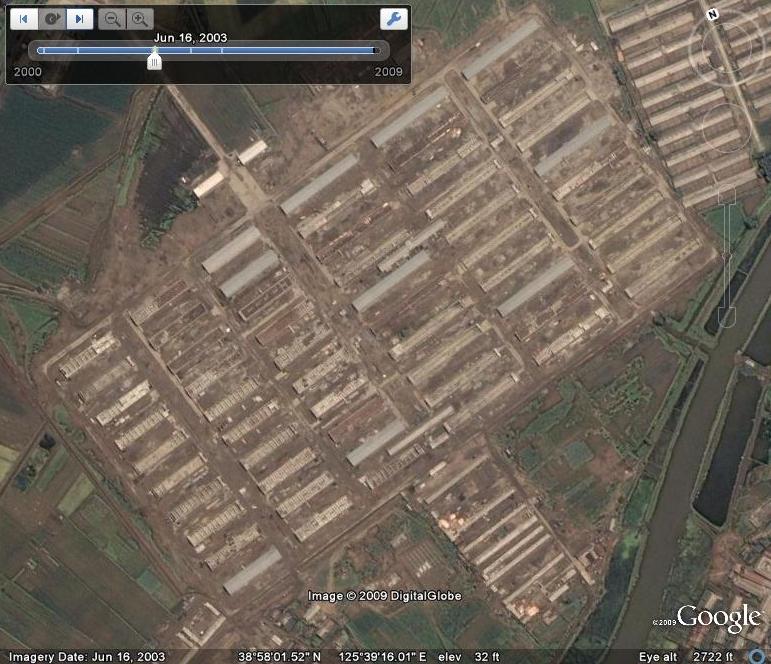
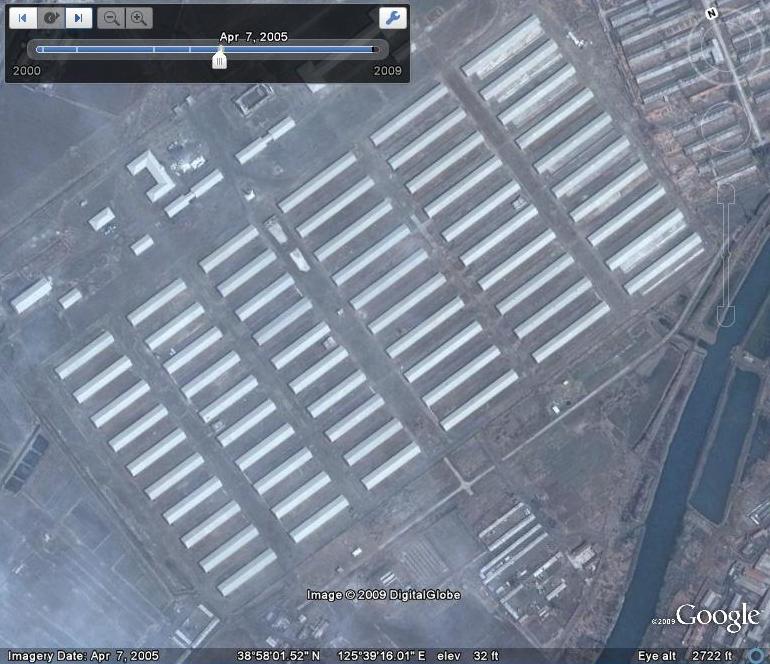
North Hwanghae Province was ordered to focus on increasing production at the Hwanghae Iron Complex, the Yesong River Youth Power Plant No. 1, the 2.8 Madong Cement Factory, the Sariwon Poultry Farm, and the Sariwon Pig Farm. In addition, high-yield crops are to be introduced and construction of irrigation systems is to begin, as land management efforts are to be implemented in order to expand agricultural land in Mirubol. North Hwanghae Province is also to build a new library, a new arts theater, and a new housing.

In South Hamgyung Province, efforts are focused on construction of the Keumya River and Keumjin River Guchang power plants, as well as improving mining capacity at the mines in the Danchun area while renovating production facilities at the Sudong Mines. Aggressive promotion of construction on the second stage of the 2.8 Vinylon Complex was also emphasized. Provincial authorities were also ordered to complete the initial stage of refurbishment in the Heungnam Pharmaceutical Plant, improve production at the Kwangpo Duck Farm and the Hamju Pig Farm, and accelerate home construction in Hamheung City.

North Hamgyung Province was tasked with perfecting ‘North Korean-style steel production methodology’ at the Kim Chaek Iron Complex and Sungjin Steel Complex, and modernizing exploration, mining and processing equipment at the Musan Mining Complex in order to boost output, along with bringing the Seodusu Power Plant and Chungjin Thermoelectric Power Plant fully on-line. Another important task prioritized was the completion of the second stage of the Urangchun Power Plant.

In Kangwon Province, construction of the Wonsan Army-People Power Plant, increased production at the Munchon River Ironworks, modernization of the Wonsan Shoe Factory and the Wonsan Textiles Factory, and the refurbishment of the Munchon Poultry Processing Plant were emphasized, along with the diversification of management in farming communities in order to resolve food shortage problems.

Ryanggan Province, in the northern Gosan region, was tasked with improving management of the Samsu Power Plant, which entered service in May 2007, and construction of the Baekdu Mountain Military-first Centennial Power Plant and other electrical facilities, and the establishment of a ‘hometown of potatoes’ for the quick increase in potato cropping.

The Jagang Province was tasked with modernizing its metalworks sector and increasing electrical production at the Gangye Youth Power Plant and Janga River Power Plant, construction of small and medium-sized power plants, and increasing its logging production. Jagang Province was also tasked with normalizing production in its pig, duck, and chicken factories, and software development for local organizations was emphasized as a priority task for the Electronic Business Research Institute in Ganggye City, which was visited by Kim Jong Il after its grand opening last year.

Share

More on Pyongyang’s facelift

Wednesday, January 21st, 2009

As mentioned earlier (here, here, here, and here) the DPRK is pursuing the goal of achieving a “strong and prosperous country (Kangsong Taeguk)” by 2012 (Kim il Sung’s 100th birthday).

Today the Choson Sinbun (via Yonhap) fills us in on some new policy details:

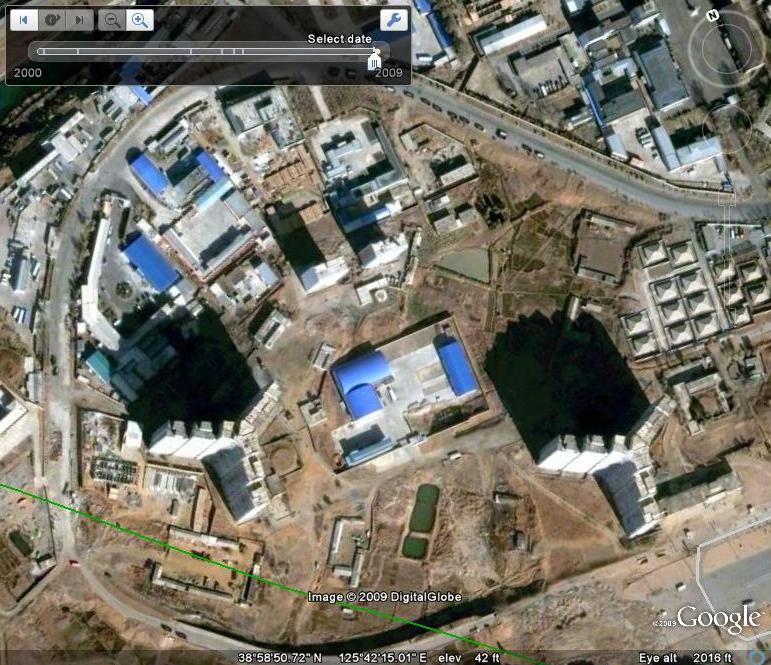
Choson Sinbun, a pro-Pyongyang paper published by Korean residents in Japan, said the People’s Committee of Pyongyang plans to plant 300,000 trees and build several “modern” parks across the capital under its 2009 urban management plan.

“The plan is characterized by the construction and modernization of parks and recreational gardens, and coincides with North Korea’s key aim of enhancing the cultural life and morale of its workers,” it said.

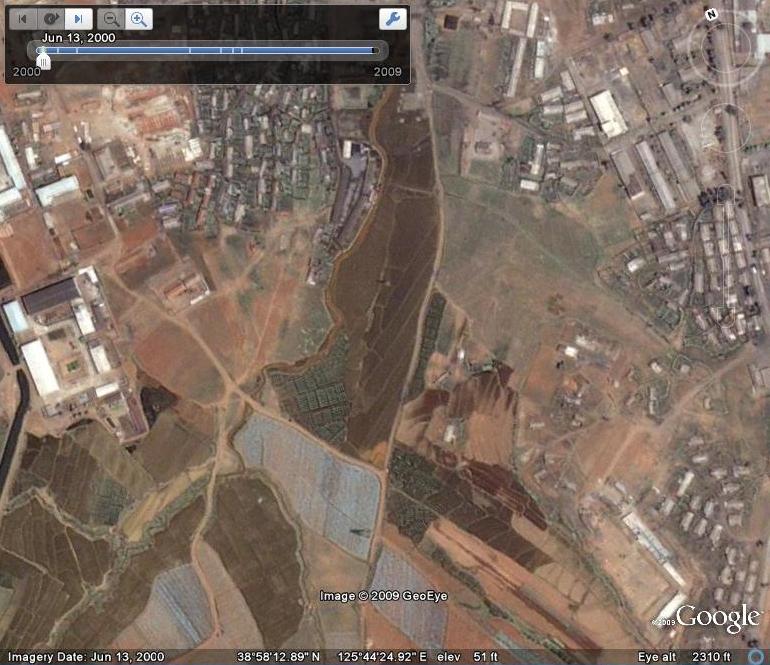
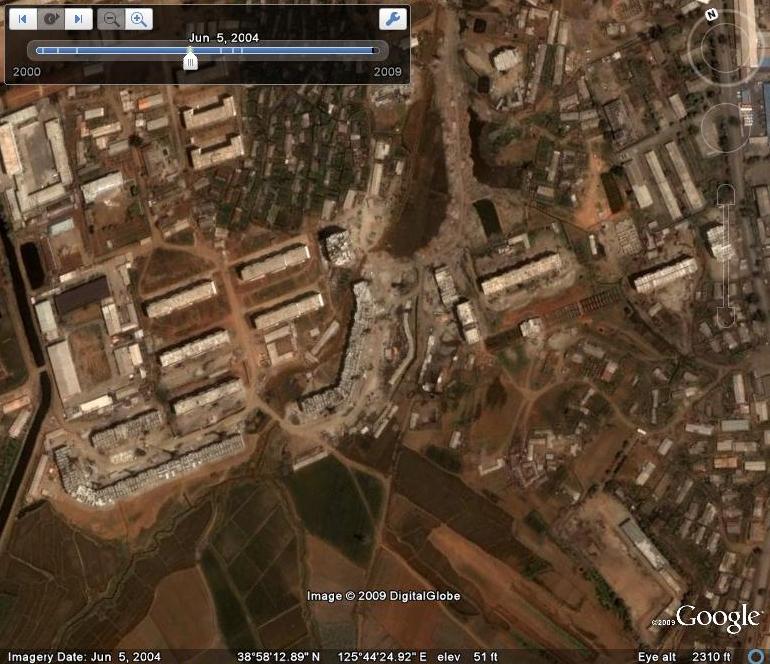
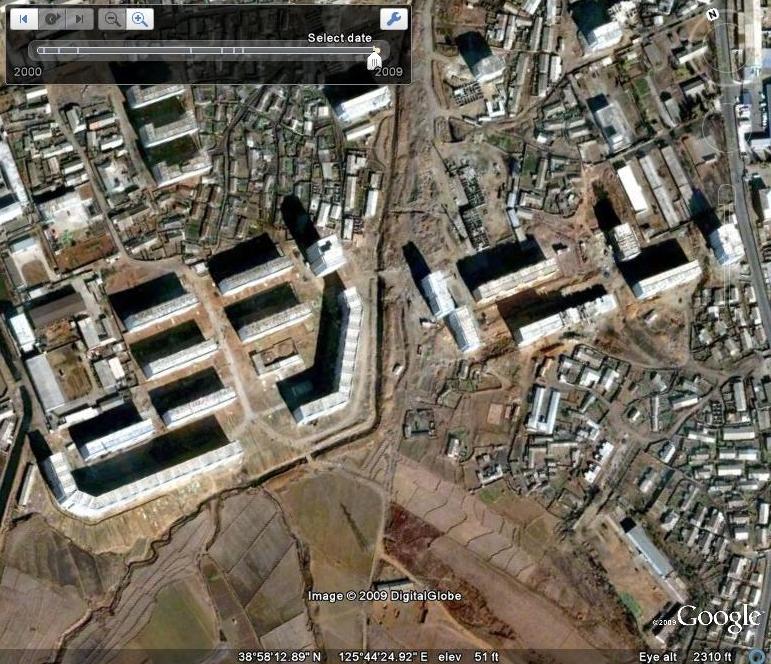
A greenspace will be built along the residential Mansudae area, where many apartment buildings are under construction, according to the report. A “folk park” and a “modern park” are also being planned for other areas in the city.

Antiquated facilities at a pond park at the edge of Pyongyang will be replaced by statues, recreation facilities and a beverage store, it said.

The urban remodeling project is being spearheaded by Jang Song-thaek, brother-in-law of leader Kim Jong-il, who reportedly wields nearly unrivaled power.

Read the full article here:
Pyongyang beefs up remodeling drive with more parks
Yonhap
1/21/2009

Share

North Korea on Google Earth

Thursday, October 2nd, 2008

North Korea Uncovered: Version 12
Download it here

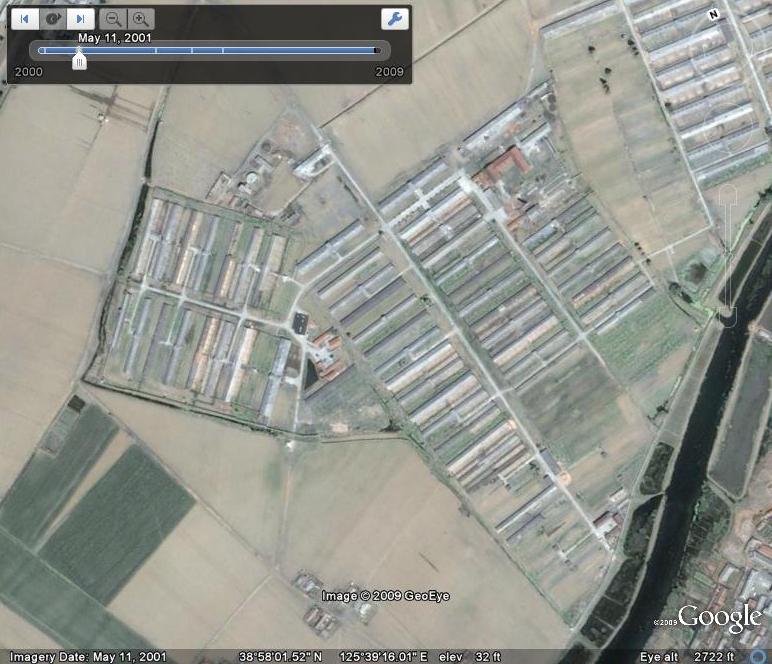
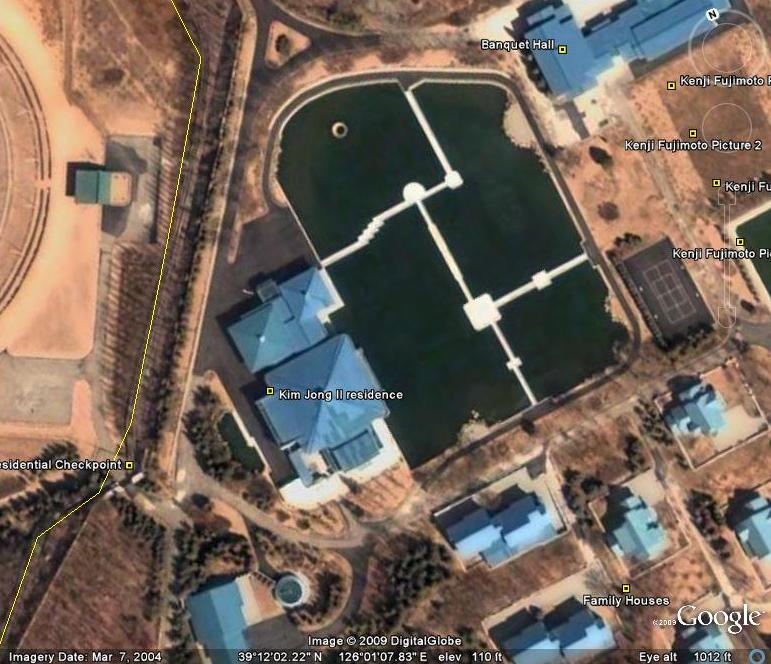
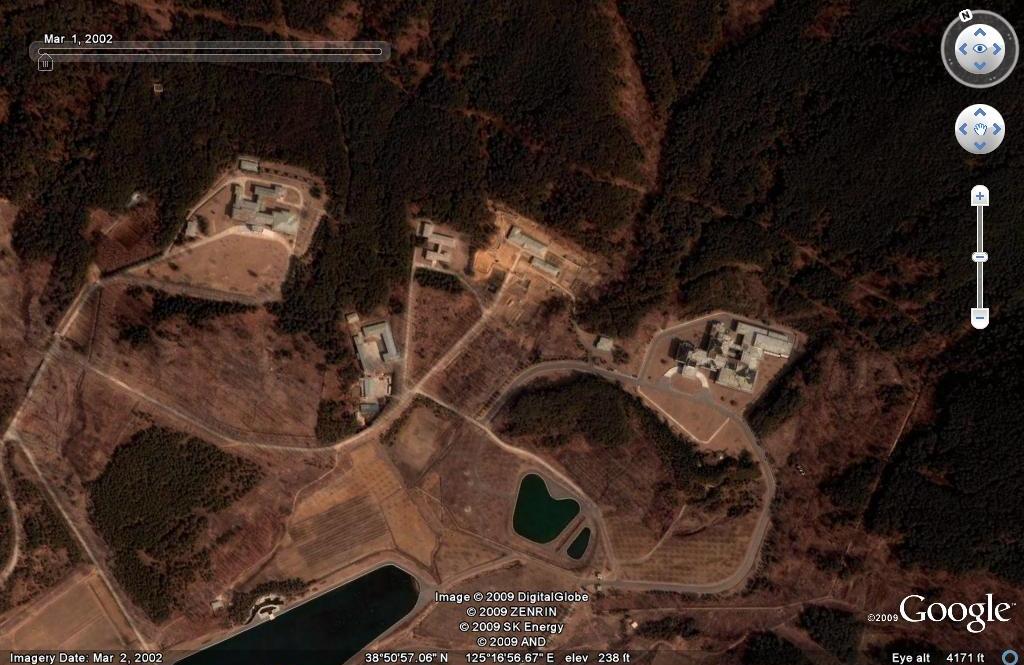
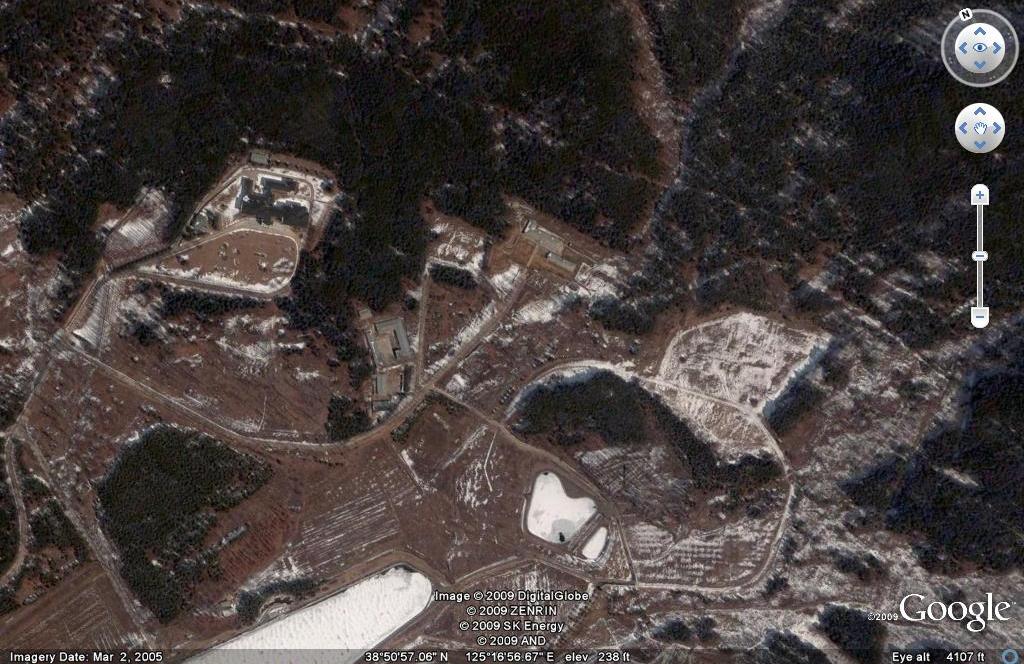
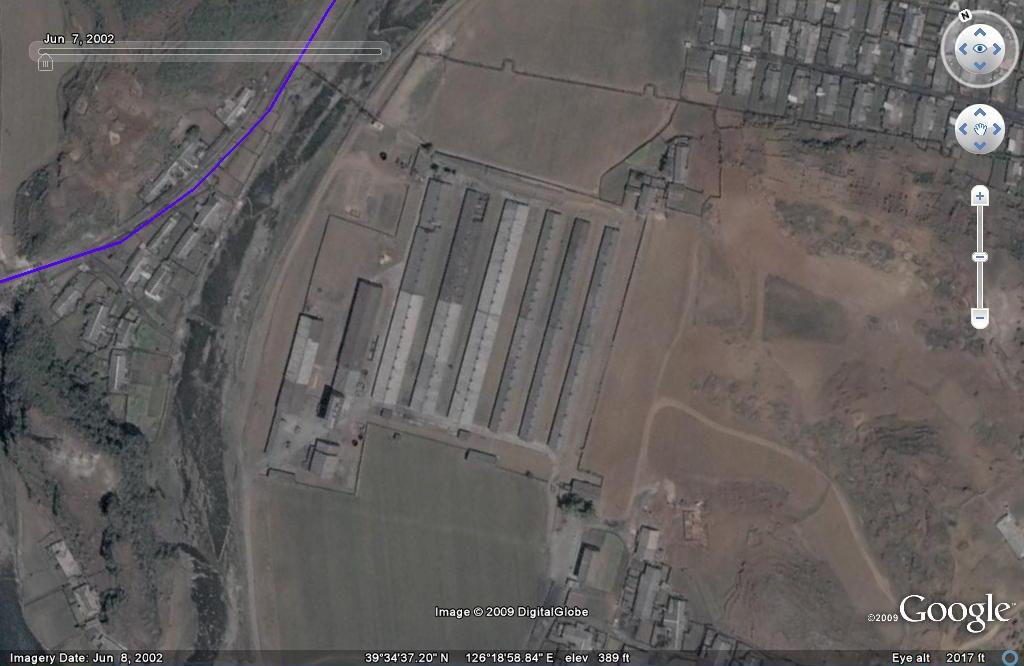
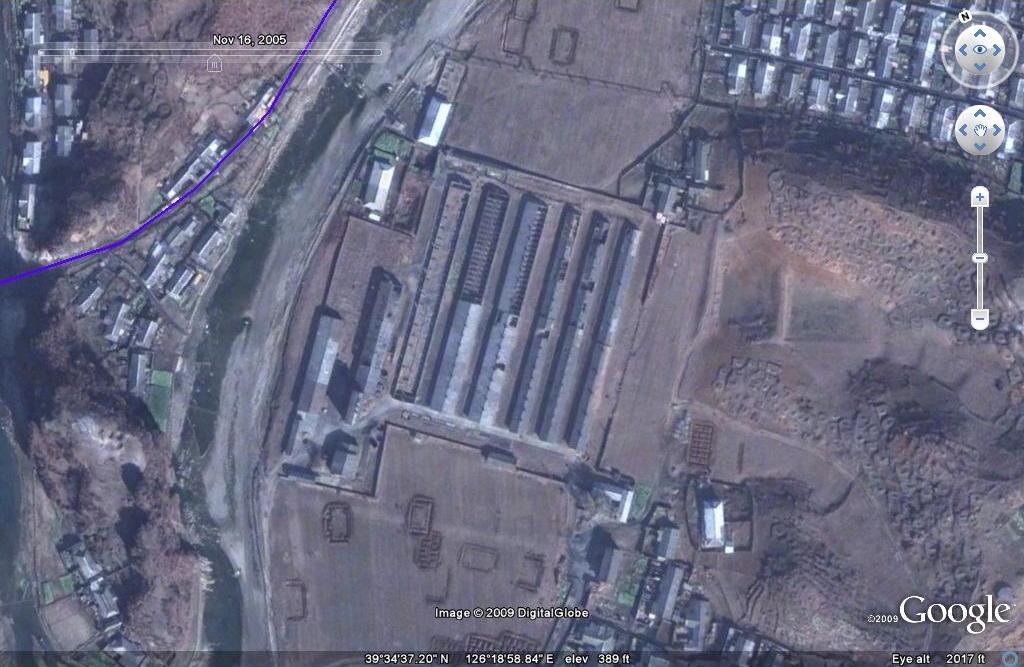
mayday.JPGAbout this Project: This map covers North Korea’s agriculture, aviation, cultural locations, markets, manufacturing facilities, energy infrastructure, political facilities, sports venues, military establishments, religious facilities, leisure destinations, national parks, shipping, mining, and railway infrastructure. It is continually expanding and undergoing revisions. This is the 12th version.

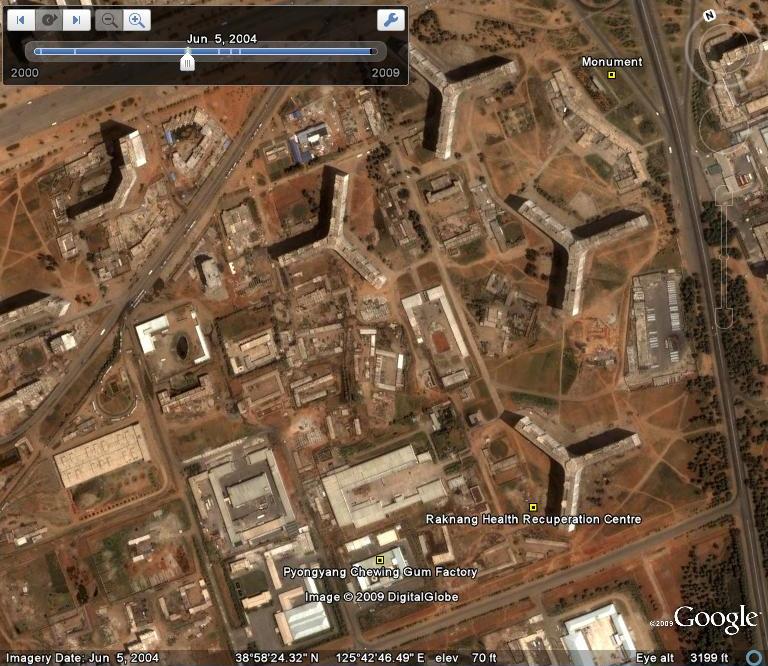
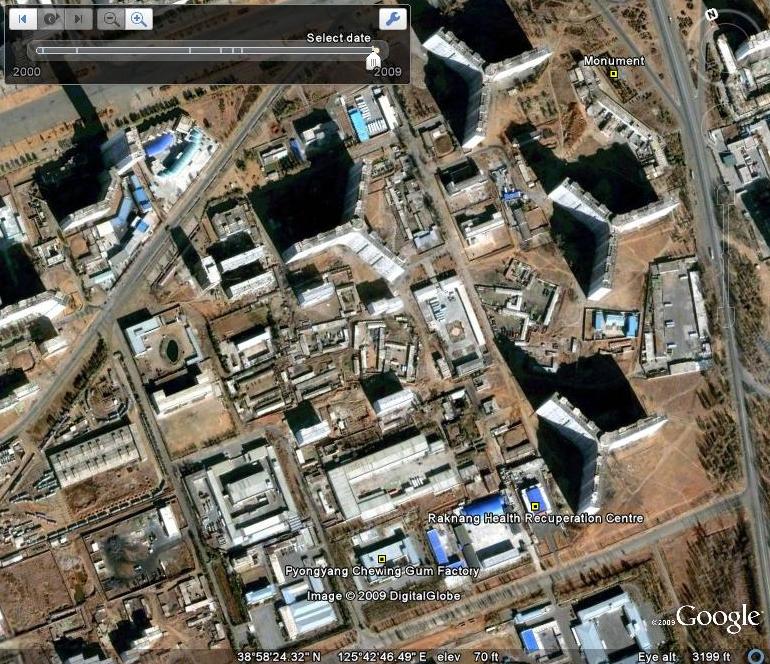
Additions include: Tongch’ang-dong launch facility overlay (thanks to Mr. Bermudez), Yongbyon overlay with destroyed cooling tower (thanks to Jung Min Noh), “The Barn” (where the Pueblo crew were kept), Kim Chaek Taehung Fishing Enterprise, Hamhung University of education, Haeju Zoo, Pyongyang: Kim il Sung Institute of Politics, Polish Embassy, Munsu Diplomatic Store, Munsu Gas Station, Munsu Friendship Restaurant, Mongolian Embassy, Nigerian Embassy, UN World Food Program Building, CONCERN House, Czech Republic Embassy, Rungnang Cinema, Pyongyang University of Science and Technology, Pyongyang Number 3 Hospital, Electric Machines Facotry, Bonghuajinlyoso, Second National Academy of Sciences, Central Committee Building, Party Administration Building, Central Statistics Bureau, Willow Capital Food House, Thongounjong Pleasure Ground, Onpho spa, Phipa Resort Hotel, Sunoni Chemical Complex (east coast refinery), Ponghwa Chemical complex (west coast refinery), Songbon Port Revolutionary Monument, Hoeryong People’s Library, Pyongyang Monument to the anti Japanese martyrs, tideland reclamation project on Taegye Island. Additionally the electricity grid was expanded and the thermal power plants have been better organized. Additional thanks to Ryan for his pointers.
I hope this map will increase interest in North Korea. There is still plenty more to learn, and I look forward to receiving your contributions to this project.

Version 12 available: Download it here

Share

Download glitch fixed: North Korea Google Earth (version 11)

Thursday, August 14th, 2008

The most authoritative map of North Korea on Google Earth
Download it here

This map covers North Korea’s agriculture, aviation, cultural locations, markets, manufacturing facilities, railroad, energy infrastructure, politics, sports venues, military establishments, religious facilities, leisure destinations, and national parks. It is continually expanding and undergoing revisions. This is the eleventh version.

Additions include: Mt. Paegun’s Ryonghung Temple and resort homes, Pyongyang’s Chongryu Restaurant, Swiss Development Agency (former UNDP office), Iranian Embassy, White Tiger Art Studio, KITC Store, Kumgangsan Store, Pyongyang Fried Chicken Restaurant, Kilju’s Pulp Factory (Paper), Kim Chaek Steel Mill, Chongjin Munitions Factory, Poogin Coal Mine, Ryongwun-ri cooperative farm, Thonggun Pavilion (Uiju), Chinju Temple (Yongbyon), Kim il Sung Revolutionary Museum (Pyongsong), Hamhung Zoo, Rajin electrified perimeter fence, Pyongsong market (North Korea’s largest), Sakju Recreation Center, Hoeryong Maternity Hospital, Sariwon Suwon reservoir (alleged site of US massacre), Sinpyong Resting Place, 700 Ridges Pavilion, Academy of Science, Hamhung Museum of the Revolutionary Activities of Comrade Kim Il Sung, South Hamgyong House of Culture, Hamhung Royal Villa, Pork Chop Hill, and Pyongyang’s Olympic torch route. Additional thanks go to Martyn Williams for expanding the electricity grid, particularly in Samjiyon, and various others who have contributed time improving this project since its launch.

Disclaimer: I cannot vouch for the authenticity of many locations since I have not seen or been to them, but great efforts have been made to check for authenticity. These efforts include pouring over books, maps, conducting interviews, and keeping up with other peoples’ discoveries. In many cases, I have posted sources, though not for all. This is a thorough compilation of lots of material, but I will leave it up to the reader to make up their own minds as to what they see. I cannot catch everything and I welcome contributions.  Additionally, this file is getting large and may take some time to load.

Share

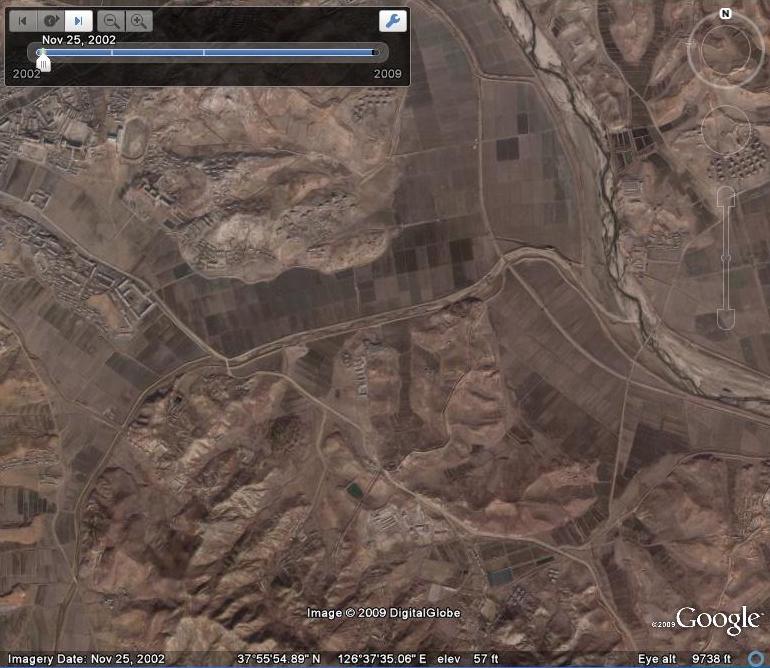
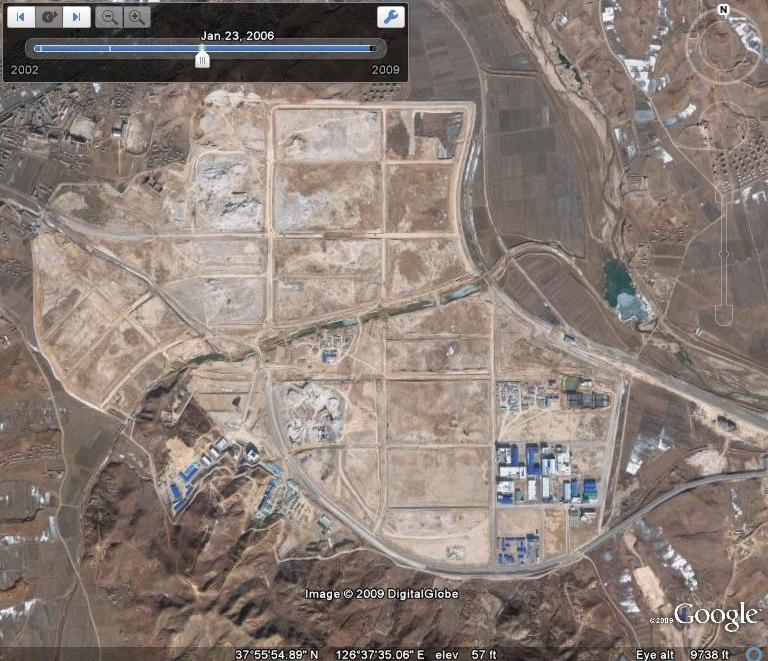
labor constraints at Kaesong

Wednesday, July 9th, 2008

According to the Korea Times, the end of official North-South dialogues has put plans on hold to expand housing for workers in the Kaesong Industrial Zone. 

From the article:

Officials at the complex expressed concerns that South Korean companies intending to set up operations there may be unable to do so as a lack of housing will likely see manpower shortages.

According to the Gaesong Industrial District Management Committee, the number of North Korean workers at 72 companies operating in the site totals 30,084 and the figure could reach 40,000 by late this year.

Besides, approximately 80,000 to 100,000 workers would be needed by 2010 when 450 companies are expected to settle in the industrial park.

However infrastructure projections show that less than 60,000 North Korean workers will likely be able to commute to the industrial site.

Currently, North Korean workers head for their workplaces by 88 commuter buses and bicycles and the authorities promised to provide an additional 100 buses until the year’s end.

South and North Korea agreed last December to build dormitories to accommodate 15,000 North Korean workers.

The two sides were to conduct a geological survey early this year and start construction work in the first half of the year following the agreement but the suspended talks have hindered the plan.

After conservative President Lee Myung-bak vowed a tougher line toward the North, the communist North kicked South Korean officials out of its territory in March and cut off official communication channels.

The Seoul government recognizes the lodging problem as urgent. Yet, it admitted it cannot find a solution at the moment since the North is rejecting any talks.

Read the full story here:
Gaeseong Complex Lacks in Lodgings for N. Korean Workers
Korea Times
Kim Sue-young
7/9/2008

Share

DPRK economy shrinks for second year: Bank of Korea

Tuesday, June 17th, 2008

North Korea does not publish economic data.  The size of North Korea’s economy is estimated by South Korea’s Central Bank (Bank of Korea), the US Central Intelligence Agency (CIA), and other think tanks such as the Sejong Institute (Lee Jong Seok)

According to a recent report by the Bank of Korea, North Korea sufferd its second full year of economic contraction (as defined by GDP), 1.1% in 2006 and 2.3% in 2007.  The bank estimates North Korea’s 2007 gross national income (GNI/GNP) at $26.7 billion, per capita GNP at $1,152 (assuming population of 23 million).  If you are interested in knowing the difference between GNP and GDP, click here.

Here are some highlights from the report:

Agriculture, forestry & fisheries marked a 9.4% decrease following a 2.6% decrease in 2006

Mining increased 0.4% in 2007, down from 1.9% increase in 2006

Manufacturing increased 0.8%, higher than 0.4% 2006 increase. -1.7% growth in light industry, due to the decrease in food products and beverages. +2.3% growth in heavy industries led by expansion of metal and machinery products.

Electricity, gas & water production increased 4.8%, (+2.7% in 2006), from hydroelectric and steam power generation.

Construction production -1.5%, (-11.5% in 2006), from reduced non-housing construction and civil engineering.

Services +1.7%, (+1.1% in 2006). Hotel, restaurant, transport, post & telecom industry expanded.

Trade volume (goods) fell 1.8% to $2.941 billion, 1/248 South Korea’s. Exports fell 3.0%, imports fell 1.3%.

These estimates are based on trade figures obtained from the Korea International Trade Association, Korea Trade and Investment Promotion Agency, fuel and food aid figures from aid groups such as the International Red Cross and the World Food Program, as well as information provided by frequent visitors.

More information here:
Full report by Bank of Korea  and data (recomended)

North Korea’s Economy Shrank in 2007, Second Annual Contraction
Bloomberg
Heejin Koo
6/17/2008

Share

South Korea cuts Kaesong subsidies with predictable results

Wednesday, April 30th, 2008

The Daily NK reports that South Korean businesses have delayed moving into the zone, or canceled their plans outright:

78.5 percent of those firms which received lots at the Kaesong Industrial Complex in the second round of the first stage of distribution in June last year have not begun construction of their facilities. 62.4 percent of them have not even hired a firm for construction,” said the Korea Federation of Small and Medium Business (KFSB) in a report released on April 27. For the report, the KFSB selected 85 firms out of all those firms which received lots and conducted a survey on how these firms are preparing their move into the Complex.

Companies distributed with lots in June last year are required to begin construction of their facilities within two years after the initial distribution contract. It is true that these firms have enough time to build their facilities. However, a number of firms have expressed that they would not move into the Complex.

The report says, “13 out of a total of 167 firms have already told the KFSB that they would not move into the Complex, and five of them have canceled the contract.”

59 percent of the firms including those 13 said that they would relinquish their rights to move into the complex because they are unable to raise enough money. 64 percent of these firms said that the reduced government funding has contributed to their financial difficulties.

Read the full article here:
South Korean Firms Postpone Their Move into the Kaesong Industrial Complex
Daily NK
Choi Choel Hee
4/28/2008

Share

North Korea Google Earth (Version 7)

Friday, December 14th, 2007

The most authoritative map of North Korea on Google Earth
North Korea Uncovered v.7
Download it here

koreaisland.JPGThis map covers North Korea’s agriculture, aviation, cultural locations, manufacturing facilities, railroad, energy infrastructure, politics, sports venues, military establishments, religious facilities, leisure destinations, and national parks. It is continually expanding and undergoing revisions. This is the sixth version.

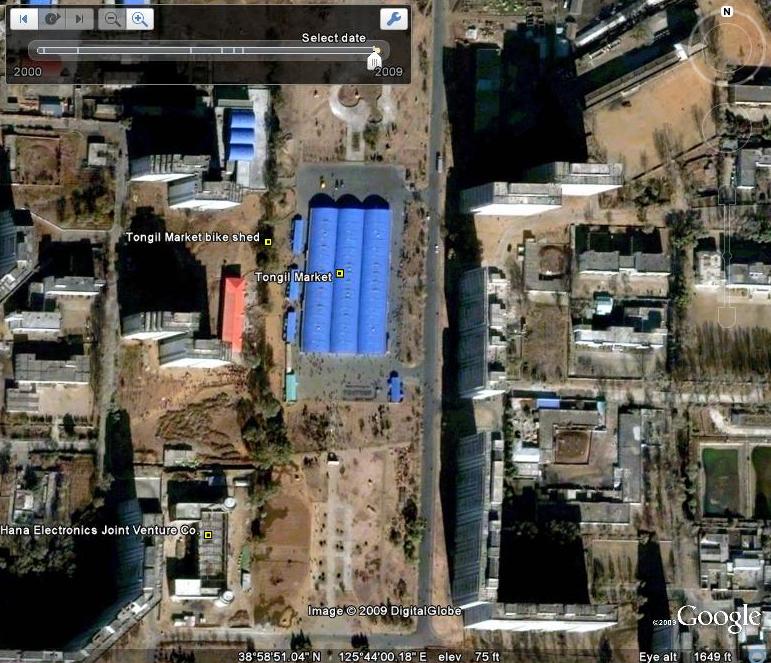
Additions to the latest version of “North Korea Uncovered” include: A Korean War folder featuring overlays of US attacks on the Sui Ho Dam, Yalu Bridge, and Nakwon Munitians Plant (before/after), plus other locations such as the Hoeryong Revolutionary Site, Ponghwa Revolutionary Site, Taechon reactor (overlay), Pyongyang Railway Museum, Kwangmyong Salt Works, Woljong Temple, Sansong Revolutionary Site, Jongbansan Fort and park, Jangsan Cape, Yongbyon House of Culture, Chongsokjong, Lake Yonpung, Nortern Limit Line (NLL), Sinuiju Old Fort Walls, Pyongyang open air market, and confirmed Pyongyang Intranet nodes.

Disclaimer: I cannot vouch for the authenticity of many locations since I have not seen or been to them, but great efforts have been made to check for authenticity. These efforts include pouring over books, maps, conducting interviews, and keeping up with other peoples’ discoveries. In many cases, I have posted sources, though not for all. This is a thorough compilation of lots of material, but I will leave it up to the reader to make up their own minds as to what they see. I cannot catch everything and I welcome contributions.

Share

Builder to Set Up Venture With North

Tuesday, December 11th, 2007

Korea Times
Ryu Jin
12/11/2007

Namkwang Engineering & Construction, a South Korean company which has recently been stepping up efforts for inter-Korean economic projects, plans to form a joint venture with a North Korean firm for construction works in the North and other countries.

Namkwang E&C CEO Lee Dong-chul told reporters Tuesday that his company, along with 516 Construction Company in the North, will seek to win construction orders in foreign countries including Angola as well as North Korean cities such as Gaeseong and Pyongyang.

“We signed a memorandum of understanding (MOU) for joint projects with the North Korean firm late last month,’’ he said in a press meeting. “They could be operated in the form of a joint venture, depending on the final agreement to be signed early next year.’’

Lee added that Namkwang would largely provide capital and construction technologies to the proposed joint-venture company while the North Korean firm would supply labor.

Founded about 50 years ago, 516 Construction Company is the only construction firm in the North Korean border city of Gaeseong where an inter-Korean industrial complex is located. It has constructed apartments in the city with more than 3,000 workers.

“Currently, the firm is building a steel-frame factory in the Gaeseong Industrial Complex including reinforced concrete, tiles and plaster work under a contract with us,’’ Lee said. “Maybe we can take part in construction works in Angola and Libya jointly.’’

Namkwang, which recently got government approval for cross-border projects, has invested some 7.6 billion won ($8.23 million) since October to build the steel-frame factory which would be used for the second-phase construction of the Gaeseong Industrial Complex.

Lee said that his company would also redouble efforts to get more orders for overseas construction in such countries as Angola, Libya and Vietnam next year. Namkwang has received orders worth $1.1 billion along with NIEC, a joint venture in Angola, since 2005.

Established in 1947, Namkwang has carried out a lot of large-scale projects in South Korea and also advanced to foreign countries such as Saudi Arabia, Iraq and the Philippines for construction of buildings, roads, dams and harbors on the back of its unique technology.

Share

An affiliate of 38 North