Archive for the ‘Transportation’ Category

Seoul to begin Kaesong road repair

Thursday, November 3rd, 2011

According to Yonhap:

South Korea will next week start repairing a road used by North Korean commuters to reach an inter-Korean industrial complex in the North, an official said Thursday amid signs of a thaw in bilateral relations.

The 4.5-kilometer road linking North Korea’s border city of Kaesong to the nearby industrial park is used by more than 47,000 North Korean workers who are employed by some 120 South Korean firms operating in the zone. South Korean officials earlier said the road was damaged in summer’s torrential rains, prompting the South to conduct an on-site survey.

“After signing an agreement (with the North), we expect to start repair work next week,” said an official at the Unification Ministry, which handles inter-Korean relations in the South.

“It will likely take about three months to complete the work, unless the weather becomes too cold, and cost us around 1.8 billion won (US$1.59 million),” the official said, speaking on condition of anonymity.

The repairs will involve restoring damaged paved sections and filling in holes on unpaved sections. Repairing the road is expected to save time for North Korean commuters and reduce traffic accidents.

The Daily NK offers some additonal information:

A government official explained today that the decision was made pursuant to agreement between the Kaesong Industrial Complex Management Committee, LH Construction and the North Korean authorities.

“The agreement has not yet been signed, but we are hoping to start the construction at the beginning of next week,” the official explained.

“Our side has taken on responsibility for planning the road repairs and supervising the construction,” he went on. “The weather could change things, but the construction should require three months and is expected to cost 1.8 billion South Korean won.”

Aside from the aforementioned construction, there are also plans to reconstruct two turning points for buses serving the complex. The human resources for the construction will be provided by North Korea.

There are plans to extend bus service to cover the areas of Pongchon (봉천), Kumchon (금천), and Phyongsan (평산). However, the roads to these areas are unpaved and extension of transportation services to these areas will require negotiations with the North Korean authorities.

Read the full story here:
Seoul to start repairing road leading to Kaesong complex next week
Yonhap
2011-11-3

Share

China-DPRK consternation over Hyesan-China bridge

Tuesday, November 1st, 2011


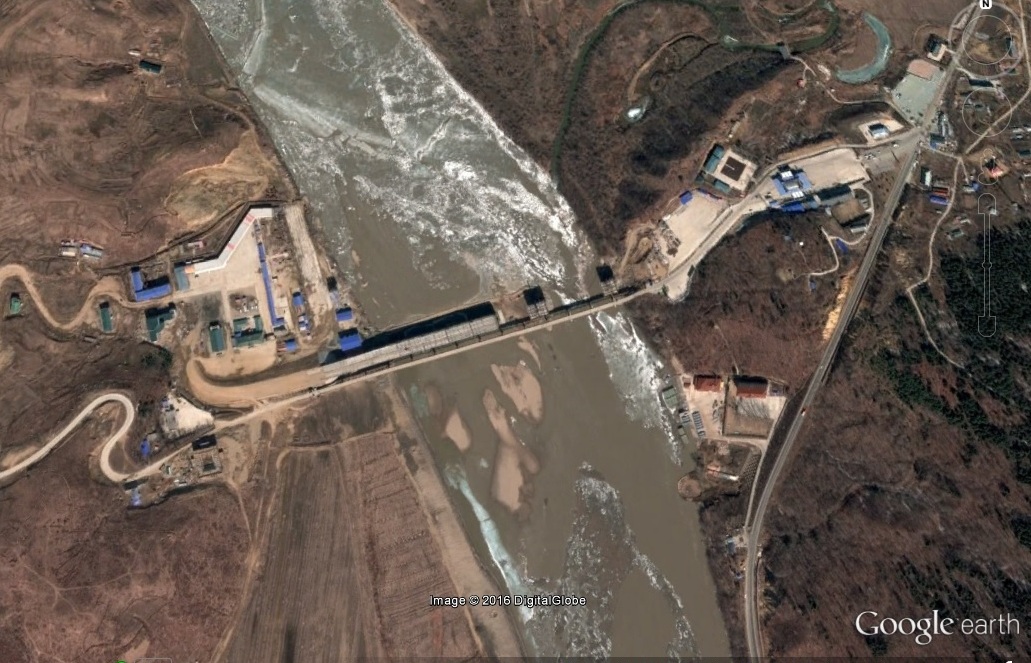
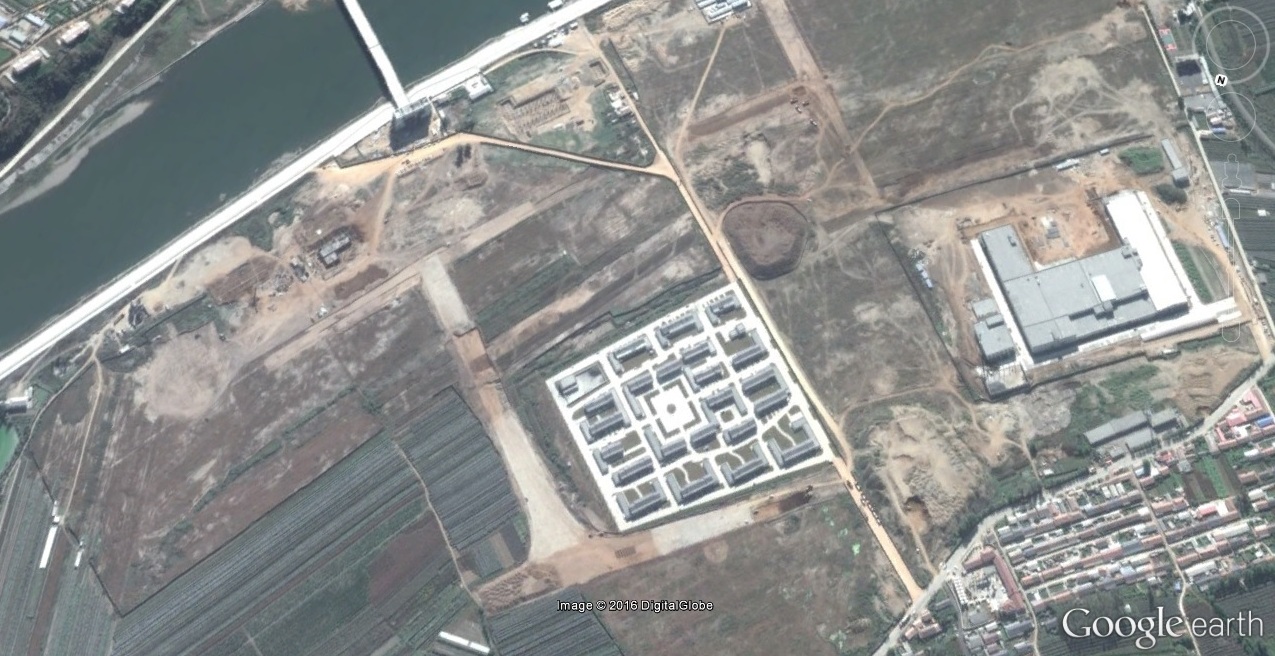
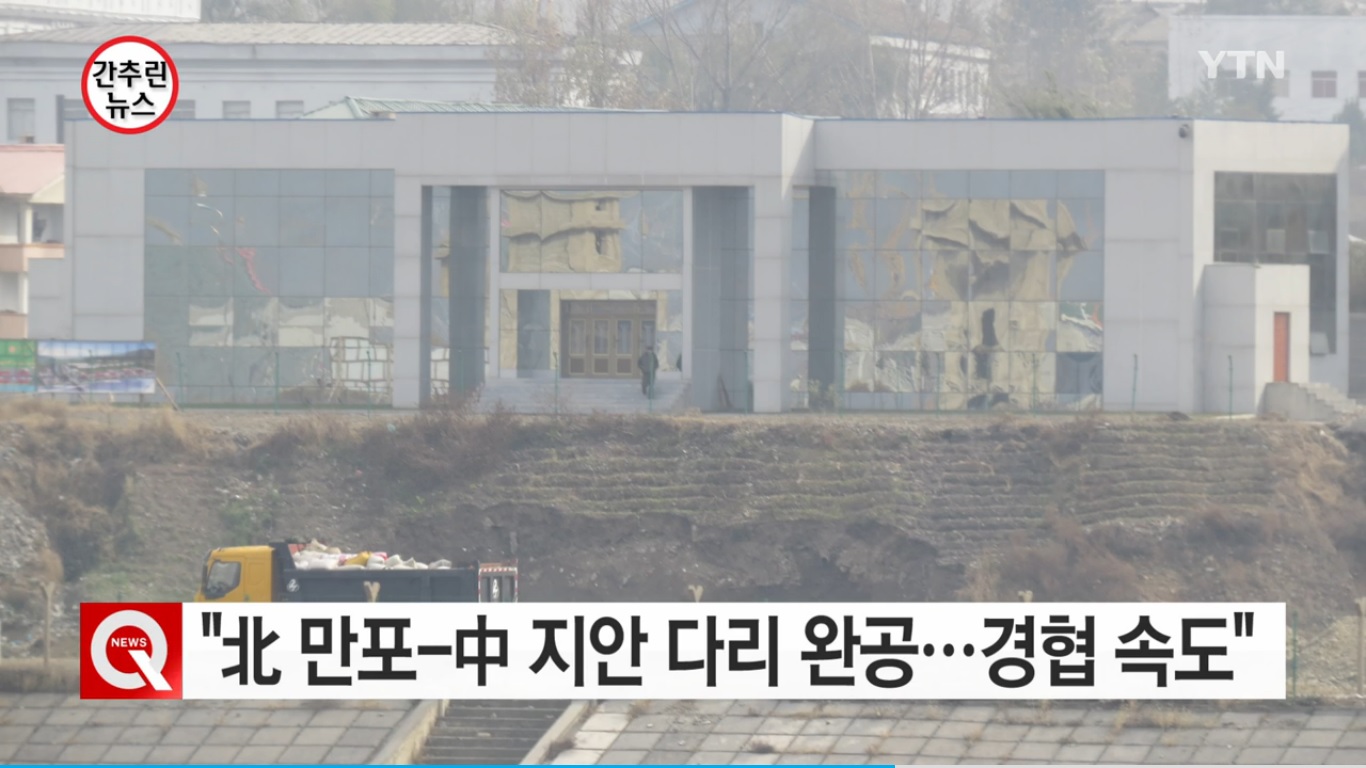
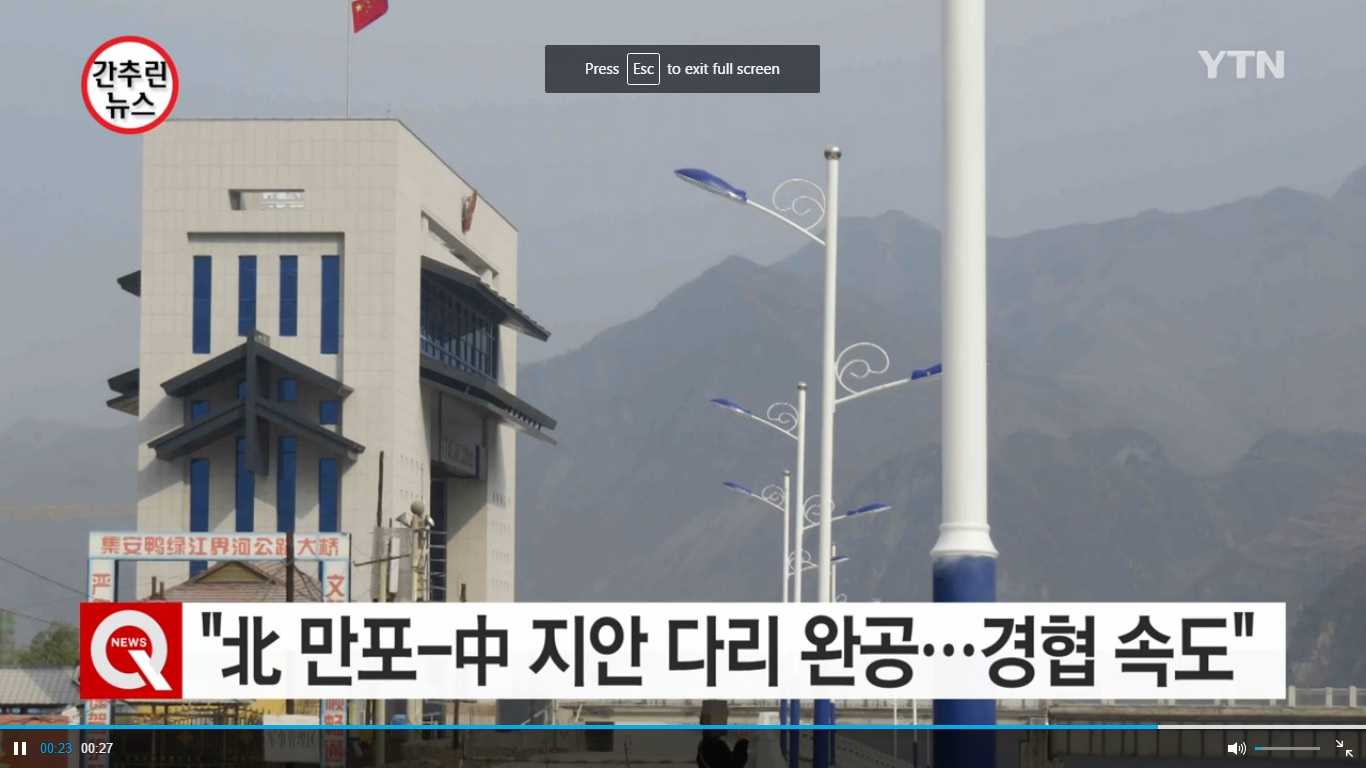
Pictured above: (L) A low-resolution image of the Hyeasn-China bridge (Google Earth) (R) A ground level photo of the bridge.

According to the Daily NK:

Construction work on a bridge connecting Hyesan in Yangkang Province and Changbai in China’s Jilin Province is raising hackles in the corridors of Sino-North Korean economic cooperation.

According to a source in China, both China and North Korea recognize that the existing ‘Friendship Bridge’ spanning the Yalu River between the two cities cannot handle increasing trade volumes. In particular, increasing copper ore production from Hyesan Youth Mine (which has been developed with Chinese capital) is putting it under unsustainable strain.

However, while China wants North Korea to expand and reinforce the existing bridge, North Korea is apparently pushing for the construction of an entirely new bridge in a different location using Chinese capital.

North Korea’s reason is supposedly one of revolutionary history. According to the source, “Chosun is opposed to the expansion of the bridge because right next to the bridge on the Hyesan side there is a stone commemorating a visit by Kim Jong Il.”

The 5m x 2m granite stone in question was set in place to commemorate the time on June 5th, 1956 when Kim Jong Il and his Pyongyang No. 1 Senior Middle School comrades stopped there during a trip to Mt. Baekdu and looked around an old royal building.

However, money also appears to be an issue. “In particular,” according to the source, “they are stubbornly insisting that ‘if you need a bridge, you should bear the burden of its construction.’”

In any case, the limitations of the bridge in its current condition are perfectly clear. It only has one lane, meaning that transit in both directions is impossible, and, though only built in 1985, there are very real concerns that its concrete structure cannot handle the Chinese heavy vehicles transporting copper ore away from the mine.

One other problem for North Korea is that the bridge is connected to Hyesan Customs House; the road off the bridge passes through the middle of the blue-roofed customs house, while the second floor houses the customs office itself. Therefore, expansion of the bridge would also involve redesigning the customs house. Due to fast flowing waters to the east, the only direction in which it is possible to expand is to the west; however, that is exactly where the commemorative stone is. Not only that, it is also the location of the local Kim Il Sung Revolutionary History Museum and Kim Jong Suk Art Theater.

Therefore, the source said North Korea has put forward an area around 4km east of the existing Hyesan Customs House as a possible candidate location for a new bridge. However, the suggested area is relatively unfavorable in terms of river width and topography, which would drive up construction costs. Given that North Korea is demanding that China bear the weight of these costs, it seems unlikely that agreement will be reached under the current conditions.

In the words of the source, “Chosun is making totally nonsensical demands. No conclusion is likely for the time being.”

This is not the first time that bridges spanning the Sino-North Korean border have been a source of friction between the two countries. Following a similar spat in 2005, China simply completed reinforcement work on its own half of a bridge between Hoiryeong and Sanhe, leaving the other half in its original state.

Related material:
1.  A Chinese company has mad a substantial investment into the Hyesan Youth Mine.

2. China is building a new bridge to the DPRK just west of the bridge linking Dandong and Sinuiju.

Read the Daily NK story here:
A Troubled Bridge between Friends
Daily NK
By Kang Mi Jin
2011-11-1

Share

DPRK commercial ship sinks off waters of Qingdao

Tuesday, November 1st, 2011

UPDATE 1 (2011-11-4): 3 DPRK sailors dead, 8 still missing after ship sinks off east China coast (Xinhua):

The body of a missing DPRK (Democratic People’s Republic of Korea) sailor was found Friday, bringing the death toll from the Oct. 28 sinking of a cargo ship off the coast of China to three, with rescuers continuing to search for eight missing sailors, according to Chinese maritime officials.

The Panama-flagged Oriental Sunrise sank with 19 crew members aboard following a collision with the Panama-flagged cargo ship Hamburg Bridge at 7:35 p.m. off the coast of east China’s city of Qingdao in Shandong Province.

The first sailor to perish in the incident died after being rescued, as he was heavily injured. The body of another sailor was retrieved on Oct. 31. Eight of the other sailors have been rescued and rescue workers are still searching for the remaining missing, according to officials from the Qingdao Maritime Safety Administration.

Salvage operations for the sunken ship are also under way, the officials said.

All of the crew members are from the DPRK, according to the Qingdao Frontier Inspection Station.

ORIGINAL POST (2011-11-1): According to the Daily NK:

The body of a North Korean crew member who went missing following the collision of two cargo ships in the waters off Qingdao, China last Friday was found yesterday morning, according to China’s Xinhua News Agency.

The two freighters, both flying Panamanian flags, collided on the 28th at around 7:35 in the evening, resulting in the sinking of the 2750-ton ‘Oriental Sunrise’. The next morning, the sunken ship’s mast was visible above the waterline.

Nine of the nineteen North Korean crew members on board the ship were rescued at the time, while ten were registered missing. One of the rescued nine later passed away, two are still in hospital and the remaining six are being put up at a local hotel.

Search-and-rescue units dispatched from Qingdao have not been able to locate the other missing crew members, and the situation now looks bleak.

Meanwhile, the other vessel, the 336m ‘Hamburg Bridge’, is now under investigation at anchor in waters near where the accident took place. There is also an oil slick of 200-300m in length and 10m in breadth at the scene of the collision.

The exact cause of the incident has yet to be established.

According to Xinhua:

Nine sailors are still missing while two have been confirmed dead after their cargo ship sank Friday, said local maritime officials Tuesday.

The Panama-flagged Oriental Sunrise sank following a collision with another Panama-flagged cargo ship Hamburg Bridge at 7:35 p.m. in the sea area near Qingdao, Shandong Province.

The death toll rose to two as a sailor’s body was found on Monday, said officials with Qingdao Maritime Safety Administration.

Nine of the total 19 crew members aboard had been rescued, but one of the three injured died after treatment failed. The rescuers will continue to search for the missing for three more days, they said.

All the 19 crew members were nationals of the Democratic People’s Republic of Korea, according to Qingdao Frontier Inspection Station.

See previous posts related to the DPRK’s shipping industry and infrastructure here.

Read the full stories here:
2 Dead, 9 Missing in Collision at Sea
Daily NK
Tang Hwa-Kwee
2011-11-1

DPRK sailors still missing, two dead, after ship sinks off E China coast
Xinhua
2011-11-1

Share

ROK government planning to resume construction and relax sanctions in Kaesong zone

Thursday, October 20th, 2011

Pictured above (Google Earth): The towns mentioned in the article below from which the Kaesong Industrial Zone could draw more labor: Pongchon (봉천), Kumchon (금천), and Phyongsan (평산).

Institute for Far Eastern Studies (IFES)
2011-10-20

According to South Korea’s Ministry of Unification (MOU), the “May 24 Sanctions” that went into effect after the sinking of the naval boat Cheonan was relaxed and began to permit the resumption of construction of businesses in the Kaesong Industrial Complex (KIC). In addition, plans to build fire stations and emergency medical facilities in the area are also currently underway.

After South Korean Grand National Party chairman Hong Jun-pyo visited KIC on September 30, 2011, the ROK government has reached the following decisions: 1) to allow the resumption of halted factory constructions; 2) to build a fire station and emergency medical facility; 3) to resume repair work for commuting roads for KIC employees; and 4) to extend the operations of commuter buses.

This means seven companies that received permits in the past to begin construction but stopped after the sanctions went into effect would be able to resume the halted construction projects.

According to the Ministry of Unification, the seven companies include three metal and machinery, three textile, and one electronic factories, taking up a total area of 103,527 square meters. The total site of production facilities of stage 1 businesses in the KIC reaches 2,171,900 square meters, in which the currently operating 123 companies take up 783,471 square meters. With the sanctions lifted, the total area of businesses in operation will reach 885,950 square meters.

In addition, five companies awaiting construction for expansion will have to wait a little longer. The authorities announced to discuss this issue at a later date, looking positively on their construction to resume shortly as well.

Also the MOU announced to push forward with the establishment of fire stations and emergency medical facilities, “to protect the properties and health of businesses and employees of the KIC. The plans to break ground for fire station will begin in mid-November and is expected to be completed by late next year.”

The layout for the KIC fire station was completed in December 2009 and 3.3 billion USD has been budgeted to fund the construction. The station will be constructed on a steel frame on a 3,305 square-meter lot with the total floor space to be around 2,182 square meters.

The Kaesong Management Committee has been operating a “fire/police station” from April 2005. But with occurrences of accidental fires since last winter, it has reinforced the number of fire engines and manpower – currently at a total of eight fire trucks and 36 fire fighters.

Medical facilities in the KIC will also be completed by the end of 2012 once the construction begins early next year. About 3 billion USD is set for this project.

Currently at the KIC, Green Doctor’s Cooperation Hospital is in charge of providing medical and health services in the KIC, with South Korea Green Doctor’s Kaesong Hospital treating the South Korean employees and North Korean Comprehensive Clinic treating the North Korean employees exclusively. The South Korea Green Doctor’s Kaesong Hospital is currently operated by volunteers at a clinic level. The hospital was in the process of improving the facilities to more than ten beds. However, this project was halted after the May 24 sanctions went in effect.

On another note, the MOU also announced that maintenance work for the road connecting Kaesong City to the KIC would begin. The road is normally used by North Korean employees of the KIC. It was also announced that the number and operation of commuter buses would increase to help with the commute. The buses operate in the 20 km radius; the plan is to increase that to 40 km. Since September 2010, the number of buses increased to 400.

There are plans to extend the service to cover the areas of Kumchon, Bongchon, and Pyongsang. However, the roads to these areas are unpaved and extension of transportation services to these areas will require negotiations with the North Korean authorities.

Although these measures will alleviate some of the problems faced by the businesses in the KIC, the MOU still stands firm on its position that North Korea must take responsibility and make formal apology for the Cheonan incident in order for a fundamental resolution of the situation to occur.

Share

Russia – Rajin (Rason) railway compendium

Thursday, October 13th, 2011

Pictured above (Google Earth): A map of the Khasan-Rajin Port rail service.

UPDATE 8 (2011-10-13): According to KCNA, the Rajin-Khasan trial train has been launched:

A ceremony of running a trial train between Rajin and Khasan section took place outside the DPRK-Russia Friendship Pavilion in the area of Tumangang Station in Rason City, North Hamgyong Province.

Present there from the DPRK side were Vice Minister of Railways Ju Jae Dok, Vice-Chairman of the Rason City People’s Committee Hwang Chol Nam, officials in the field of the railways and working people in Rason.

Present from the Russian side were Valery A. Reshetnikov, senior vice president of the “Russian Railways” Company, Igor A. Sagitov, minister-councilor of the Russian embassy here, Vyacheslav Tsupikov, Russian consul-general to Chongjin, those related to the railways and other guests.

Valery A. Reshetnikov, addressing the ceremony, said the bilateral cooperation in the railway transport now in progress amid the care of the top leaders of the two countries is a significant event in opening a new service line for freight transport.

The trial train service has greater significance as it is timed to coincide with the 63rd anniversary of the establishment of the DPRK-Russia diplomatic ties, he added.

Ju Jae Dok in his speech at the ceremony said that the train service will be recorded in the history of development of railway transport of the two countries.

The Rajin-Khasan freight transport will make contributions to the economic exchange not only between the DPRK and Russia but also Northeast Asia and Europe, he added.

Then followed congratulatory speeches.

The trial train departed for Khasan.

Video of the train ceremony can be seen here (KCNA).

UPDATE 7 (2011-9-15): Russia to send first train on reconstructed line. According to Reuters:

Russia will send its first train along a newly repaired railway line to North Korea next month [October 2011], Moscow’s railway monopoly said on Thursday, opening up a rare trade route with the secretive nation.

The link with Russia offers impoverished North Korea at least the prospect of increasing trade with its biggest neighbours after years of international sanctions.

Russian Railways has been renovating the 54km (34 mile) rail line from Russia’s eastern border town of Khasan to the North Korean port of Rajin as part of an agreement reached during North Korean leader Kim Jong-il’s 2001 visit to Russia.

“The first demonstration train will go along the line in October,” a spokesman for Russian Railways said.

Russian Railways has also been building a container terminal in Rajin, which is one of the main centres of North Korea’s Rason Special Economic Zone.

It said the railway and container terminal, built by a joint venture called Rasonkontrans, would be used to export Russian coal and to import goods from South Korea and other Asian countries.

The railway and container terminal will work at 35 percent capacity, or about 70,000 20-foot equivalent units (TEU), in 2011, rising to 140,000 TEU in 2012 and a full capacity of 200,000 TEU in 2013, Russian Railways said.

“There is the opportunity to increase the capacity of the container terminal and the railway,” a spokesman said.

Read the full story here:
Russia to open railway track to North Korea
Reuters
2011-9-15

UPDATE 6 (2010-5-23): Both China and Russia have secured a dock in the Rajin Port. Here is a map of Rajin’s docks.

UPDATE 5 (2008-10-6): Construction has begun!

rrailway.jpgThe Russians have begun upgrading a 54km railway line that, when completed, will connect Khasan, on the Russian border, with the North Korean port cities (and special economic zone) Rajin and Songbon (aka Rason).  The railway line needs to be upgraded because the Russians use a different gauge than the North Koreans.

According to the Donga Ilbo (where the above picture originates as well):

The project will [...] cost [] 195 million U.S. dollars, 72 million dollars of which will be shouldered by Moscow.

The Defense-Technology Blog quotes the project’s price at US$207 million, the difference probably the result of exchange rate calculations.  Additionally:

Eurasia’s largest transcontinental railroad of over 10,000 km will be established as a result.  Cargo transshipment from Asia to Europe along the route will take 14 days, while sea freight shipping takes 45 days. The completion of just the first stage of the project will make it possible to attract up to 100,000 containers annually to the Trans-Siberian railroad, a spokesman for Far Eastern Railways said.

I believe this deal is strategically important to the Russians for numerous reasons:

1. The Russians are happy to have a Pacific port that does not freeze in the winter.  This will open up year-round trade opportunities for Russia’s far east.

2. Bringing the Rason port under Russian “administration” puts Russia in a position to profit from linking South Korea’s economy to Europe (the DPRK will also indirectly benefit no doubt).  This could be accomplished by putting South Korean cargo in Russian ships which could be unloaded in Rason and carted across Siberia into Europe, significantly reducing the time (and cost) required to put South Korean goods on European shelves.

3. As reported earlier (herehere, and here), South Korea is interested in Russian energy resources, specifically oil and natural gas.  Ideally, pipelines could be build from Russia to South Korea (via the DPRK).  Until this pipe dream (pun alert) is a reality, however, the Rajin port will serve as an effective transit hub between the two countries.

4.  Investment in significant economic assets within the DPRK will solidify Russia’s position (vis-a-vis China) as a permanent player in political and economic developments on the Korean peninsula.

As an interesting aside, Yonhap reports that the North Korea just replaced the Minister of Railways:

Jon Kil-su, a career transportation official, has been named North Korea’s new railways minister, according to the country’s official media seen here on Sunday.

Jon, who headed the transportation ministry’s transportation command bureau, has been promoted to replace Kim Yong-sam as the top railways official in the North’s government, the report said. The outgoing minister had served in the post since 1998.

The Pyongyang Times (Link no longer available) reports on the ground-breaking ceremony:

A ground-breaking ceremony for the reconstruction of Rajin-Khasan railways and Rajin Port took place on October 4 in front of the DPRK-Russia Friendship House in the area of Tumangang Railway Station, Rason City.

It was attended by Minister of Railways Jon Kil Su, Deputy Foreign Minister Kung Sok Ung, Deputy Minister of Foreign Trade Ri Myong San, Deputy Minister of Railways Kim Chol, Chairman Kim Su Yol of the Rason City People’s Committee, railway officials and working people in Rason.

Also on hand were a delegation of the Russian Railways Company headed by President Vladimir Yakunin, Governor Sergei Darkin of the Administration of Maritime Territory of the Russian Federation, Deputy Foreign Minister Aleksei Borodavkin, railway officials and other Russians, Russian ambassador Valery Sukhinin and foreign diplomats.

The President of the Russian Railways Company made an opening address.

He said:

“The reconstruction project arranged as a result of the 2001 summit meeting between the two countries has finally entered a practical stage thanks to positive cooperation of railway officials.

“The world’s longest 10 000-kilometre railway route will come into being and 100 000 containers will be transported through it annually from 2013.

“The experimental stage of the large project for connecting the trans-Siberian railways with the trans-Koreans railway is drawing the attention of different countries.”

He hoped that the railway administrations of the two countries would steadily bolster up mutually beneficial cooperation to complete the project as early as possible.

The DPRK Minister of Railways delivered a speech.

He said it was of great significance to hold the ceremony on the threshold of the 60th anniversary of the establishment of diplomatic relations between the two countries, and continued:

“The ground-breaking for the reconstruction of Rajin-Khasan railways whose basis was provided by the DPRK-Russia Moscow Declaration signed by the leaders of the two countries in 2001 is the first step towards realizing a wide range of bilateral cooperation that conforms to the common development and interests of the peoples of the two countries.

“Rajin-Khasan railways will serve as an overland transit of friendship contributing to the development of the economy and transport of both countries and the improvement of people’s welfare and have a sure prospect of developing into an excellent international transport route that ensures transport between Asia and Europe.”

Noting the Rason area would become the region of friendship and cooperation that goes a long way towards travel and well-being of the peoples of the two countries and socio-economic cooperation, he was convinced that bilateral relations of friendship would grow in various fields, railway transport organs of the two countries would make positive cooperation and reconstruction project would be carried out successfully.

The Russian Deputy Foreign Minister made a congratulatory speech.

He said he was happy to take part in the ground-breaking ceremony, noting that it was an important occasion that gave a fresh impetus to the development of bilateral relations of friendship.

He hoped that the project would be completed as scheduled to contribute to the development of bilateral friendship.

He was followed by the Governor of the Administration of Maritime Territory. He said:

“The residents in the Russian Maritime Territory bordering on the DPRK have longed for this moment. The areas of the two countries bordering on the Tuman River have developed good-neighbourly relationship over the past decades.

“When the project is completed, their economic and cultural ties will become closer. The Russian Maritime Territory will make a positive contribution to the implementation of it.”

There were an explanation of the prospects of the project, the inaugural work of laying mixed railways and the unveiling of the monument to the ground-breaking ceremony.

The DPRK government hosted a reception that day.

Read more below:
North Korea-Russia Railway Reconnection
Donga Ilbo
10/7/2008

Russia, North Korea break ground on rail link project
(NSI News Source Info)
10/6/2008

N Korea has replaced its railways minister: report
Yonhap
10/5/2008

UPDATE 4 (2008-8-12): The DPRK and Russia have signed a Russia – Rajin railway agreement. According to the Moscow Times:

North Korea has agreed to rent out a 52-kilometer section of track to Russian Railways as part of a plan to link East Asia to Europe via the Trans-Siberian Railroad.

The 49-year lease was signed during talks Tuesday and Wednesday in Pyongyang, Russian Railways said Friday. Russian Railways will refurbish the line and build a container terminal at the North Korean port of Rajin.

Construction is expected to begin by the end of the year, Russian Railways said. North Korea and Russia also agreed to study the possibility of upgrading the rail link from Rajin to the Chinese border.

According to the Pyongyang Times (link no longer available):

Talks were held on August 6 in Pyongyang between the delegations of the DPRK Ministry of Railways and the Russian Railways Company.

They were attended by Deputy Minister of Railways Kim Chol and officials from the DPRK side and the delegation of the Russian Railways Company led by Vice-President Alexei Mersiyanov and Russian charge d’affaires Alexander Matsegora from the Russian side.

A contract on the lease of the Rajin-Tumangang railways was concluded between the Rason Transnational Container Transport Joint Venture Company and the Railway Transport Corporation (Tonghae) under the DPRK Ministry of Railways. Both sides agreed to have a ground-breaking ceremony for rebuilding the Rajin-Tumangang railways and building a container terminal in Rajin Port.

They agreed to fix the date of the ceremony within August this year.

Earlier, they formed a board of directors of the Rason Transnational Container Transport Joint Venture Company before holding the first meeting of the board.

The meeting elected members of the board, appointed the president of the company and decided on the issues related to the management of the company.

Read the full article here:
North Korea to Rent Rail Link to RZD
Moscow Times
8/11/2008

UPDATE 3 (2008-3-16): A recent report in NewKerala.com offers a broader description of the work that will need to go into the Russia – Rajin railway line:

Due to different rail gauges of the two countries, the reconstruction requires the laying of new railway tracks, rebuilding of tunnels and bridges, and upgrading of the automatic signal systems.

The handling capacity of the Rajin port, a major harbour in the northeastern part of North Korea, will also be expanded after the reconstruction.

Discussion of the broader strategic concerns can be found here.

The full article can be found here (h/t DPRK Studies):
North Korea, Russia reach agreement on Khasan-Rajin railway
NewKerala.com
3/16/2008

UPDATE 2 (2008-2-1): China and Russia seem to be competing for access to the DPRK’s Rajin (Rason) port. Rajin has ostensibly been open for business for years — with few results to show for it. The Russians and Chinese seem to believe that there is money to be made vis-a-vis Rajin and that the North Koreans are more than likely to cooperate this time around.

What the Chinese and Russians are offering the DPRK, and what exaclty each wants from the DPRK, is not readily known.

Do Russia and China want exclusive control of Rajin Port, guaranteed access, or simply guaranteed low port taxes?

The World Tribune offers a bit more information of what the Russians are offering:

Farther north along the North Korean border, the port city of Rajin will soon start receiving electricity it badly needs from the Inter RAO UES Company of Russia.

“We have no idea what is going on higher up there,” said a Korean-Chinese businessman from Yenben, “but it certainly looks like China and Russia are trying to win Pyongyang to their sides, like the old days.”

UPDATE 1 (2008-1-27): A Russian delegation is in the DPRK to discuss upgrading the 55km railway from the Raijin port to the Russian border. According to the report:

Russian officials have visited North Korea to discuss modernizing the 55-kilometer (34-mile) line between Rajin and Russia’s Khasan. Rajin is also referred to as Najin in South Korea.

A Russian railway spokesman told Agence France-Presse last week a preliminary agreement had been reached with North Korea on renovating the railway section, while North Korea had yet to respond to Russia’s proposal to build a cargo terminal in Rajin.

Russian President Vladimir Putin has expressed interest in connecting the Rajin-Khasan line to the Trans-Siberian Railway.

Last year, North Korea reportedly agreed to open Rajin further to foreign ships in an attempt to make it a regional transport hub.

South Korea sees the port project as an efficient alternative to renovating dilapidated rail networks running the length of North Korea and linking them to the Russian railway.

Reconstruction of North Korea’s railways would cost about 2.5 billion dollars, according to Russian estimates.

China has also expressed an interest in securing access to Rajin’s port. According to the Joong Ang Daily:

Beijing also has its eye on the North Korean port, which it envisions as part of its grand design to build a transport network that stretches from the Indian Ocean to the North Pacific.

“Najin Port is near the Jilin area and China’s own ports in the area have already reached their full capacity,” a government official said yesterday.

Beijing has recently notified Pyongyang that it is willing to spend $1 billion to develop port facilities, build railroads connecting the port to China and improve existing infrastructure such as highways, the official said.

In a report published earlier this year, Cho Myung-chul, a researcher at the Korea Institute for International Economic Policy, predicted that China would use investments in the North’s ports and railroads to extend its own infrastructure for export and import purposes. China has made similar investments in Burma and Bangladesh, among others.

ORIGINAL POST (2006-10-25): Russia announces plans to connect DPRK to Trans Siberian Railway.  According to Bloomberg (excerpt):

OAO Russian Railways, the state-run monopoly led by Putin confidant Vladimir Yakunin, is planning to complete a rail line crossing the North Korean-Russian border. While the project doesn’t violate United Nations sanctions on North Korea, it shows Putin’s drive to expand Russian influence.

“The railway is a symbol of Russia’s power in the region,” said Charles Armstrong, director of the Center for Korean Research at Columbia University in New York. “Russia has been trying to get back into the game in Northeast Asia since the collapse of the Soviet Union. The railway is one way.”

The Soviet Union backed communist North Korea throughout the Cold War with cheap oil and anti-American ideology. When the Soviet Union collapsed in 1991, North Korea lost its subsidies and had to watch as capitalist Russia improved relations with rival South Korea. Today Russia enjoys close diplomatic relations with both Korean states.

“The Korean peninsula, both south and north, is more favorably disposed toward economic cooperation with Russia because Koreans see it as a more benign force than China and Japan,” said Selig Harrison, a North Korea specialist at the Woodrow Wilson Center in Washington.

The 19-kilometer (12-mile) North Korean-Russian border, which cuts off northeastern China from a direct outlet to the sea, gives Russia a strategic wedge in a region dominated by China and Japan. One day, that border may be used not only to ship out Asian goods to Europe by land, but to pump natural gas to South Korea by pipeline as Russia strives to ship one-third of its oil and gas exports to Asia, up from 3 percent.

Putin and Kim agreed to revive North Korea’s link to the Trans-Siberian Railway in August 2001, after Kim made his first train journey from Pyongyang to Moscow.

The idea was to connect the South Korean port of Pusan with western Europe, by way of North Korea and then on to the 10,000- kilometer (6,200-mile) breadth of Russia. The route may become a major transportation line, challenging maritime routes through the Suez Canal by cutting the travel time in half and trimming costs by up to 75 percent.

‘Iron Silk Road’

Then-President Kim Dae Jung of South Korea, who was pursuing closer engagement with North Korea through his “Sunshine Policy,” strongly backed the project, dubbed “the Iron Silk Road.”

Despite delays over financing and feasibility, Russian Railways is keeping the $2.5-billion project alive. Railroad chief Yakunin said in July that refurbishment of the 40- kilometer stretch linking the North Korean port of Rajin to the Russian border town of Khasan would be complete by the end of the year.

Even after North Korea’s nuclear-bomb test, Yakunin traveled to Seoul to press South Korea to guarantee the freight that would make the Eurasian rail link economically viable.

Neighbors

Yakunin, Putin’s neighbor in an elite dacha settlement outside St. Petersburg, is viewed as a dark-horse presidential candidate for 2008. In January, the two men were seen attending Orthodox Christmas mass together.

Yakunin didn’t reply to questions directed to his spokesman Mikhail Goncharov.

Russian exports to North Korea rose 78 percent to $206 million in 2004, the last year the Korean Trade Investment Promotion Agency published figures. Russia still comes in a distant third behind China and South Korea in terms of trade with North Korea.

The idea of linking Korea with Europe goes back 70 years, to when the peninsula was a Japanese colony.

“‘Pusan to Paris’ was a Japanese slogan in the 1930s and something the South Koreans have now taken up,” said Armstrong. The main barrier to the project now, he said, was the reclusive North Korean leadership’s reluctance to open its borders.

‘Symmetry of Interests’

“If there’s any symmetry of interests, it’s between Russia and South Korea,” Armstrong said. “They have the most in common in how they envision development of the region.”

A significant part of that development is Russia’s growing role in Asia as an energy supplier.

Russia is building an oil pipeline across eastern Siberia to the Pacific and is planning two gas pipelines to China. Developments on Sakhalin Island, just north of Japan, are opening up additional energy resources nearby.

A pipeline with Sakhalin gas that would follow the path of the railway into North Korea has been under consideration by OAO Gazprom, Russia’s state-run, gas-export monopoly.

“Russia’s ability to project its economic power, especially through oil and gas pipelines, would be greatly enhanced if political tensions between the Koreas declined and they moved to unification,” Harrison said.

Even the railway, Russia’s most advanced infrastructure project in North Korea, may be thwarted by the unpredictability of Kim Jong Il.

“The risks are too high,” said Alexander Lukin, director of the Center for East Asian Studies at the Moscow State Institute of International Relations. “All this can be discussed only in a united Korea, after a serious change in regime.”

Read the full story below:
Russia Uses Railway to Expand Role in North Korea
Bloomberg
Lucian Kim
10/25/2006

Share

Japan arrests North Korean on charges of illegal export

Wednesday, October 5th, 2011

Pictured above: An American-made, petrol-guzzling Hummer H2 (MSRP 2008-$53,286; 10 mpg-US;24 L/100 km; 12 mpg-imp) in the parking lot of (I believe) the Yanggakdo Hotel in Pyongyang in September 2010.  The photo comes from here.

UPDATE 2 (2011-10-5): Accoridng to the Mainichi Daily News:

A man standing trial for illegally exporting luxury foreign cars to North Korea was a spy attempting to acquire foreign currency under the guise of a businessman, police allege.

An Sonki, 71, a North Korean resident of Japan, is being tried at the Tokyo District Court on charges of violating the Foreign Exchange Law for exporting three foreign luxury cars to North Korea in 2008.

An traveled to North Korea and China on 40 occasions over the past five years. He is believed to have worked as a broker between North Korea’s state-run companies and foreign firms, while ostensibly working for an electricity-affiliated company in Tokyo almost every day. He managed his own trading company, whose nominal president was a South Korean resident of Japan whom he was acquainted with.

The Metropolitan Police Department (MPD)’s Public Security Bureau had kept track of An since the 1990s because An invited North Korean trade missions to Japan and visited the North Korean passenger-cargo ship Mangyongbong while it was docked at a port in Japan.

The MPD launched a criminal investigation into the illegal export case in June and found that An belonged to a spy agency under the Korean Workers’ Party. An reportedly received instructions from the secretive agency by calling it about once a week from a public telephone.

The MPD also confiscated dozens of contracts and planning documents from locations linked to An. The documents pertained to joint crab and shrimp fishing with Russian companies; the processing and selling of kimchi with Vietnamese companies; scrapping and repairing of ships with Japanese and Chinese companies; cable copper trading with Zambian companies; and importing matsutake mushrooms and snow crabs to Japan.

An’s activities were apparently aimed at brokering joint ventures between North Korean state-run companies and foreign companies, as well as bringing supplies to North Korea. Investigators suspect that An was helping with North Korea’s acquisition of foreign currency and the improvement of power supply in the North.

An was reportedly living a frugal life, renting a six-tatami mat apartment room without a bathroom for 40,000 yen a month. The apartment was not equipped with an air conditioner or television. There was hardly any living ware in the apartment, except for a rice cooker and a compact refrigerator. His lunch box he brought to his company contained only rice and pickled vegetables. He always wore a suit, which was left by a deceased acquaintance. He rarely contacted his separated wife and child.

“I never thought of my own interests but acted in accordance with the agency’s instructions,” An was quoted as telling investigators.

An has not revealed much about the flow of his money. Investigators confiscated 1 million yen in cash and wads of receipts from traveling abroad, but the origin of those funds is unknown.

“His activities are shrouded in mystery. We suspect that the importance of secret agents like him has been increasing in North Korea, which is under economic sanctions,” said a senior MPD official.

During the first hearing of the trial on Sept. 9, An demanded that all charges in the indictments be withheld. How much of his secret activities will be revealed depends on the questioning of the defendant during the ongoing trial.

UPDATE 1 (2011-7-7): According to the Mainichi Daily News:

A North Korean man under arrest for illegally exporting luxury foreign cars to Pyongyang by way of South Korea allegedly disguised the cars as destined for foreign embassies, it has been learned.

An Sonki, 71, a North Korean resident of Tokyo’s Bunkyo Ward, was earlier arrested by the Metropolitan Police Department (MPD) on charges of violating the Foreign Exchange Law for exporting luxury foreign cars to North Korea from Kobe in 2008 under the instruction of the Workers’ Party of Korea’s undercover agency.

According to the latest revelations, the North’s undercover agency instructed An to make the Indian Embassy in Pyongyang one of the final destinations of the exported cars apparently to prevent South Korean authorities from uncovering irregularities when the cars went through the South. The MPD is trying to work out all the facts of the case.

An is suspected to have exported three fancy foreign cars to Pyongyang on two separate occasions in 2008, ferrying the cars from Kobe Port. The export was undertaken by a Tokyo-based trading company called “Godo Holdings,” which is effectively managed by An. The MPD suspects that An is a North Korean agent.

According to the MPD’s Public Security Bureau, An had declared to Japanese customs that the consignee of the luxury cars was a delivery company in Seoul. However, the vehicles were ultimately shipped to North Korea by way of the South, where the items were re-registered as transit cargo. It is believed that the cars were declared as destined for the embassies when they cleared South Korean customs.

Investigators have confiscated from An’s home documents that described a plan to make the Indian Embassy and a Middle Eastern embassy in Pyongyang the final destinations of the cars.

“I was told to make the embassies the nominal destinations of the cars,” An was quoted as telling investigators.

Investigators have also confiscated a North Korean passport, a seal with the name of the undercover agency engraved, as well as a document describing a plan to establish routes to distribute the North’s agricultural and marine products to Japan, the United States and Europe. It has also emerged that An had traveled to South Africa in order to procure rare metals, according to investigators.

An reportedly belonged to a section of the North’s undercover agency that was in charge of Japan.

More on the interesting business dealings of the North Korean embassy in India below.

ORIGINAL POST (2011-6-21): According to KBS:

Japanese police have arrested a North Korean citizen on charges of selling luxury foreign cars to the North through South Korea.

Japanese media said that the North Korean man, who resides in Tokyo and was identified only by his surname “Ahn,” is charged with violating Japan’s foreign currency law.

Ahn is accused of illegally exporting three used Mercedes-Benz cars to North Korea without the Japanese government’s permission. The cars were shipped to the communist country from Japan’s Kobe port via South Korea’s Busan and Incheon between September and December 2008.

This is the first uncovered illegal export scheme to use South Korea as a stopover between Japan and North Korea. China is generally the popular channel for illegal exports between the two nations.

Japanese police also believe that Ahn is a North Korean spy.

Back in May, the DPRK detained two Japanese men for drug smuggling in Rason, and North Korean Embassy officials in India came under investigation for involvement in a luxury car smuggling case worth W100 billion (US$1=W1,091).

Read the full story here:
Japan Arrests N. Korean on Charges of Illegal Export
KBS
2011-6-21

Share

Koryo Tours completes first bike tour of DPRK

Friday, September 23rd, 2011

Only weeks after helping launch the DPRK’s first Ultimate Frisbee tournament (see here and here), Koryo Tours launched the first bicycle tour of the DPRK. According to the Telegraph:

Beijing-based Koryo Group took 24 tourists from 10 nations on a 10-day tour of the most isolated nation on Earth.

The cyclists pedalled as far as 30 miles a day, often along dirt tracks in some of the most remote parts of the country, but also journeyed along the 10-lane Youth Hero Highway from Pyongyang to Nampo, on the west coast.

The itinerary is here. The Telegraph has a video of the tour here, and Koryo Tours has posted additional pictures here.

KCNA even gave an “interesting” shout out to the bike tour:

DPRK Directs Effort to Developing Tourism

Pyongyang, September 27 (KCNA) — The DPRK is directing much effort to developing tourism, with an eye to promoting the understanding, harmony, friendship and cooperation among nations and people of the world.

The country joined the United Nations World Tourism Organization (UNWTO) in September Juche 76 (1987) and the Pacific-Asia Tourism Association (PATA) in April 1996.

On September 27, World Tourism Day, Hong In Chol, a department director of the State General Bureau of Tourism, told KCNA:

The number of travel companies and people interested in the DPRK tourism is steadily increasing in Asian and European countries.

In particular, many tourists have visited the DPRK in the period of the grand gymnastic and artistic performance “Arirang” through international air routes and chartered flights from Shanghai, Xi An and Haerbin of China and Kuala Lumpur of Malaysia.

We have travel offices in China, Malaysia and Germany and plan to open such offices in other countries.

The bicycle tourism which took place in the DPRK some time ago under the sponsorship of the “Koryo Tours”, a British tourist agency, was very interesting.

The country’s tourist destinations have taken on a new look under the deep care of the Workers’ Party of Korea and the government, while the project for modernizing the infrastructure of tourism is progressing apace.

We will diversify the tourist program with cultural, sports, bicycle, golf and treatment tourism and improve all services.

Share

North Korea Encourages Investment in Rajin-Sonbong (Rason) Economic and Trade Zone

Friday, September 16th, 2011

Institute for Far Eastern Studies (IFES)
2011-9-14

At the seventh China Jilin and Northeast Asia Investment and Trade Expo (NEASIAEXPO), the North Korean delegation actively promoted the Rajin-Sonbong (Rajin) Economic and Trade Zone to attract investment.

During the expo, the DPRK’s Ministry of Trade and China’s Ministry of Commerce and People’s Government of Jilin Province co-sponsored the “(North) Korean Business Day and China-DPRK Trade and Investment Session” at the Changchun International Conference and Exhibition Center on September 7. Hwang Chol-nam, the vice mayor of Rason City, briefed the attendees on the current situation, advantages, and special benefits of his city.

According to Hwang, “The spacious 470 square-kilometer Rason Economic and Trade Zone is one of the largest economic trade zones,” and advertised the geographic and economic advantages of Rason as the “transportation hub of Northeast Asia that connects China and Russia via Tumen River and with Japan across the East Sea.”

He also introduced the three ports in the region. “Rajin Port is equipped with the annual loading capacity of 3 million ton and Sonbong Harbor is able to transport 2 to 3 million ton of oil while Ungsang Harbor is able to handle up to 600,000 cubic-meter of lumber annually.” He also boasted the ports to be deep enough where it does not freeze during the winter.

Rason was also introduced to have received the “special city” designation in 2010 and will grow to have a population of one million. The recently amended “Law on the Rason Economic and Trade Zone” was revised and supplement with over 50 articles.

Hwang also elaborated on the eight preferential policies providing special tax benefits to foreign investors. He asserted, “The government of North Korea will guarantee the investment of the foreign investors by not nationalizing or demanding requisitions. For inevitable cases where such demands occur, proper compensation will be provided.”

The income tax is also at 14 percent, which is 11 percent lower than other areas in North Korea. For companies with business plans over ten years, foreign capital companies will receive three years of tax-free benefit starting from the profit earning year and two years thereon after will receive 50 percent tax-free benefits. According to Hwang, over 100 foreign companies and offices are operating businesses currently in the special economic zone.

He also announced that the current highway construction project connecting Rajin with Wonjung is expected to be completed in October, and that the Tumen-Rajin port railway system is to be upgraded to a broad gauge railway next month.

Specifically, Russian Railways reached an agreement with North Korea to repair the Hasan-Rajin Railway and improve the Rajin port facilities, especially focusing on Pier 3. The plans include upgrading Rajin as a container harbor to be capable of transporting twenty-foot equivalent units annually. Russia and the DPRK have already conducted measurement and geological surveys and reached the process design phase.

However, Seo Gil-bok, the DPRK’s vice minister of commerce, stated in a speech that North Korea would “actively work hard to make the Rason region a successful collaboration between the DPRK and China,” saying further that they would “pull out all the stops to realize the goals agreed by the best leaders from both nations.”

Many foreign media and correspondents were present at the event to cover the “Korean Business Day.” At the event, North Korea actively promoted the Rason Economic and Trade Zone by also presenting a promotional video of the zone.

Share

Russia to forgive DPRK debt (again?)

Thursday, September 15th, 2011

This week another story emerged that Russia was planning to forgive the DPRK’s bilateral debt incurred back in the 1960s. There was a rumor that the matter had been settled back in 2006, but apparently it was not.  All the relevant posts are below:

UPDATE 2 (2011-9-15): Russia to forgive North Korea’s $11b debt. According to the Moscow Times:

Russia will write off North Korea’s $11 billion debt, Izvestia reported on Wednesday, citing a source close to the Finance Ministry.

Russia has proposed a scheme under which 90 percent of the debt — some of it Soviet-era — will be written off, and the remaining 10 percent will be invested in joint projects in North Korea. Pyongyang has given its preliminary consent to the proposal.

The source gave two reasons for the move: First, nothing can be recovered from North Korea because it is insolvent. Second, the debt is obstructing efforts to establish economic ties.

“The same problem has been resolved with almost all debtors. We have written off part of Vietnam’s debt, converted part of it into investment, and the remaining part is being repaid in goods and services,” said Alexander Fedorovsky, executive secretary of the Institute of World Economy’s Center for Asia Pacific Studies.

The Finance Ministry has not confirmed the report.

UPDATE 1 (2007-1-5): Accoriding to the AFP, an agreement has been reached, though no deal appears to have been finalized yet.

Russia has agreed in principle to write off up to 80 percent of some eight billion dollars owed by North Korea, a South Korean newspaper report has said.

The Chosun [Ilbo] quoted diplomatic sources in Moscow as saying Russian Deputy Finance Minister Sergei Storchak and his North Korean counterpart Kim Yong-Gil reached the agreement in December.

“They have agreed to finish negotiations on this issue before March,” the source said.

Finance officials from the two countries met last month for talks on the debt. Storchak had previously said he expected Russia to write off much of the debt but that the final amount would depend on Pyongyang’s ability to pay.

A South Korean foreign ministry official said he believes no agreement has yet been reached in the talks.

North Korea borrowed 3.8 billion roubles from its ally the Soviet Union since the 1960s to build power plants.

Russia’s Vneshtorgbank and North Korea’s Trade Bank agreed to re-estimate the debt at eight billion dollars including interest, the daily said.

“Russia backed down from its earlier position that it won’t continue eocnomic cooperation unless the North repays all its debt, in order to persaude it to take part in trilateral economic cooperation involving Russia and South Korea and return to the six-party nuclear talks,” it quoted a diplomat as saying.

The three-year-long negotiations aimed at scrapping North Korea’s nuclear programmes resumed in December for the first time in 13 months but they ended without setting a date for the next round.

Read the full story here:
Russia to write off 80% of North Korea’s debts: report
AFP
2007-1-5

ORIGINAL POST (2006-11-30): The Russian Foreign Ministry is preparing to forgive a large fraction of its US$8 billion claim on the DPRK treasury. According to RIA Novosti:

Russia’s Finance Ministry said Wednesday it plans to launch talks in a few weeks on writing off a major portion of North Korea’s debt.

Deputy Finance Minister Sergei Storchak said the country’s debt to Russia was estimated at $8 billion.

“I believe it will be a large write-off,” Storchak said, responding to a question on whether Russia will forgive 80-90% of North Korea’s debt.

Russia is not doing this out of a Bono/Sachs inspired DPRK economic development plan.  They are clearly getting something for it.  Only last month, Russia announced it was renovating rail lines between itself and the DPRK:

The idea was to connect the South Korean port of Pusan with western Europe, by way of North Korea and then on to the 10,000- kilometer (6,200-mile) breadth of Russia. The route may become a major transportation line, challenging maritime routes through the Suez Canal by cutting the travel time in half and trimming costs by up to 75 percent.

What better way to pay for the railway line than with money the seller already owes you–particularly if you never planned on collecting that money in the first place? It is pretty close to getting something for nothing!

Share

Light weekend reading

Sunday, September 4th, 2011

Below is some short, light North Korea fare for the holiday weekend (in the USA).

1. Kim Jong-il’s Train

The title “First peek into Kim Jong-il’s train” in a recent JoongAng-Ilbo article (later picked up by the Choson Ilbo) kind of irked me since I posted pictures and video (viewed over 8,000 times) of Kim Jong-il’s train back in May. The article claims such glimpses are rare, but this is not the case.  The train has been prominently featured in all the documentaries of Kim Jong-il’s trips for decades.  I have uploaded six different videos of Kim Jong-il’s train to YouTube which have been released over the years.  You can see them all: here, here, here, here, here and here.

2. Ultimate Frisbee

Pictured above: Taesongsan Park–site of the DPRK’s first ultimate frisbee tourney

Koryo Tours, which sponsored the DPRK’s first cricket match (2008) and first golf tournament (2005), recently wrapped up the country’s first ultimate frisbee tournament. Pictures available on Facebook.

3. Picture Guessing Game

What is in this box behind Kim Jong-il?

What is inside the sleeve of this security agent guarding Kim Jong-il?

4. Early Korea in Film

A reader sent me an hour-long documentary of Korea shot by German monks in the early 1900s. Fantastic footage.  You can watch the whole piece here.

Pictured above (Left) a screenshot from video footage shot in Korea in the early 1900s. The building is the Jangan Temple (장안사) in Kumgangsan. On the right is a Google Earth satellite image of where the temple used to stand before it was destroyed in the Korean War.

5. North Koreans frolicking by the pool

Since the summer has officially come to an end, I thought I would cap it off with this video of North Koreans playing in the water.

Share