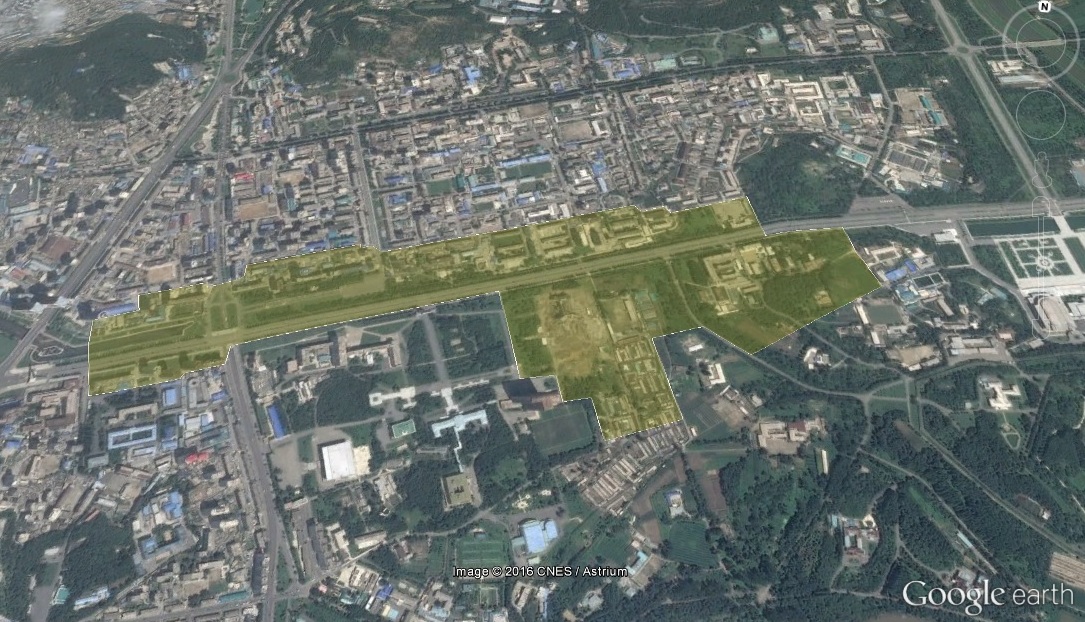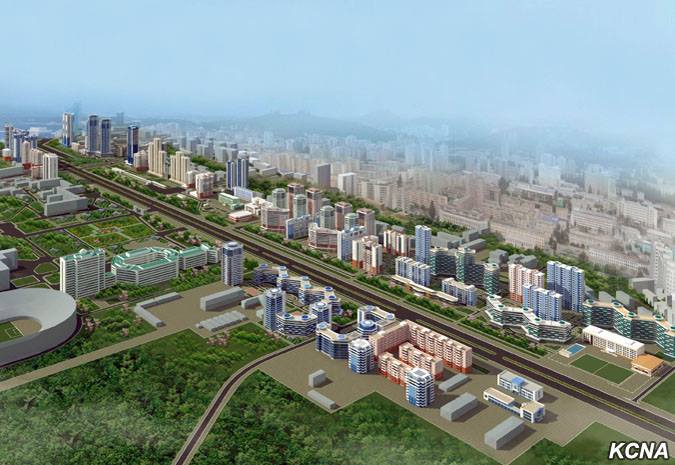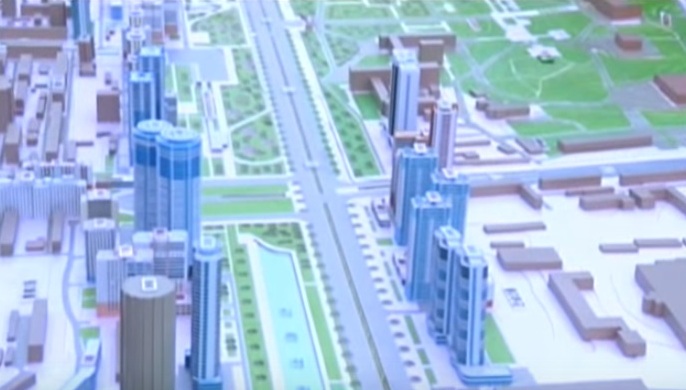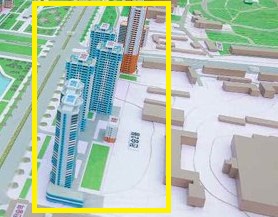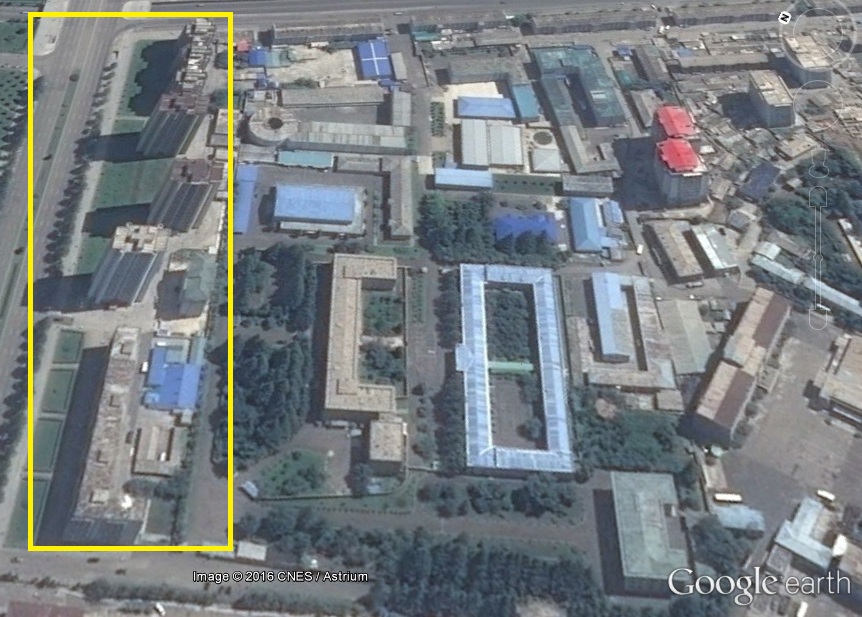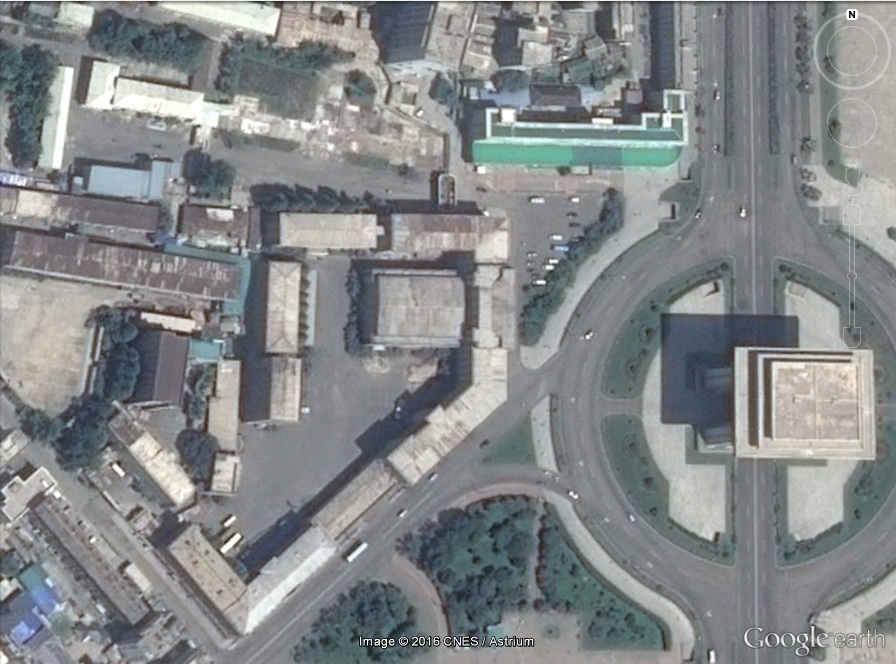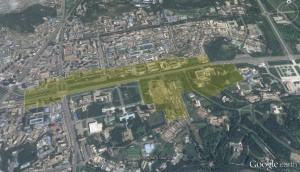
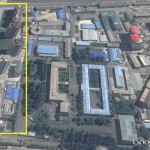
Pictured above (Google Earth): The location and approximate area of renovation of the newly announced Ryomyong Street
UPDATE 3 (2017-5-4): Here is an update from the Pyongyang Times:
Ryomyong Street demonstrates nation’s strength
Lecturers and researchers at Kim Il Sung University, former residents and other people began to move into new homes in newly built Ryomyong Street on April 17, presenting an impressive scene of people shouting cheers of hurray and dancing full of excitement and joy.
As they entered the modernly-built new flats, many of them said they are ordinary people but they received new houses for free and it is only possible in the Korean socialist system in which people are regarded as heaven.
The construction of the street is the crystallization of the love for people of Supreme Leader Kim Jong Un and a product of his great courage, outstanding leadership and infinite devotion to the people.
Last year the US and its vassal forces staged the largest-ever nuclear war games and applied tougher sanctions and pressure against the DPRK in the wake of its first hydrogen bomb test for self-defence and legitimate satellite launch.
On March 17 2016 the Supreme Leader came out to the site and declared the start of the street project. He named it Ryomyong Street in the meaning that the dawn of the Korean revolution breaks from the Kumsusan Palace of the Sun, the supreme temple of Juche, where President Kim Il Sung and Chairman Kim Jong Il lie in state, and Ryongnam Hill on which the Chairman took a historic oath to add glory to Korea. He said now the imperialists and the following forces try to tighten the noose around our neck while imposing the most vicious sanctions so far, the construction of Ryomyong Street would be a demonstration to the world of the will of the Workers’ Party of Korea that advances in the face of any enemy pressure and it would be like driving a dagger into the dirty body of the imperialists who resort to every means to do harm to the country.
The construction of the street which envisaged building many high-rise, multi-storeyed apartment houses for over 4 800 families in an area of over 90 hectares was not merely a construction project, but a campaign to defend the dignity of the DPRK and Korean socialism and to demonstrate once again its national strength and might.
The groundbreaking ceremony took place on April 3 last year amidst the apprehension, jealousy and interest of the world.
The Supreme Leader paid constant attention to the project. He saw many construction plans and layouts, saying the street should be built as a splendid one that makes perfect combination of the Juche character, national identity and uniqueness as a model of modern architecture. He also noted that the focus of the project is to wonderfully construct houses for educators, scientists and researchers of Kim Il Sung University, nurseries, kindergartens, laundries, post offices and other public buildings and service amenities, and ensured that the convenience-first and aesthetics-first principle was applied to all of them. When he visited the construction site for the second time this year, he took the lift which was in a trial run to climb up the 200-odd-metre 70-storey apartment house and check details of it.
Greatly encouraged by his noble love for the people, soldiers and other builders created construction legends of the Mallima era one after another, completing the concrete work of the 70-storey apartment building with a total floor space of over 120 000 square metres in 74 days by reducing the construction time of one storey from 36 to 24 hours, and again to 12 hours, and finishing the external tile fixing covering over 43 000 square metres in 13 days.
Thanks to their indomitable spirit and the nationwide assistance, the street, the equivalent of a town, was successfully completed in a matter of only one year.
The inaugural ceremony took place on April 13 in Pyongyang with the Supreme Leader in attendance.
The completion of the project hit the headlines of world media. Saying that the DPRK Supreme Leader cut the ribbon to open the street, they reported that north Korea replied with the opening of Ryomyong Street contrary to the expectation of the international community that it would respond to the UN sanctions with additional nuclear test or test fire of ICBM on the occasion of the Day of the Sun; the street construction proves UN sanctions against north Korea cut no ice with it and it develops its own way and at a very stable and fast speed; and Ryomyong Street, representative of Kim Jong Un’s era, is a demonstration of the DPRK’s Mallima speed to the international community.
Ryomyong Street shines brightly as a great and proud monument of the era of the Workers’ Party epitomizing the highest civilization and as a symbol of the great leap in the great Kim Jong Un’s Korea which advances with lightning speed ushering in the dawn of final victory.
UPDATE 2 (2017-4-15): Ryomyong Street was officially opened by Kim Jong-un on April 13. Here is the video. Here is coverage in Rodong Sinmun:
Inaugural Ceremony of Ryomyong Street Held in Presence of Kim Jong Un
Magnificent Ryomyong Street has made its appearance in the area of the Kumsusan Palace of the Sun, the sacred temple of Juche, amid the mounting festive atmosphere for celebrating the 105th birth anniversary of President Kim Il Sung as the greatest auspicious holiday of the nation.
The street, which was built as an icon of modern street architecture and a fairyland representing the era of the Workers’ Party, is a gift of loyalty presented by the army and people of the DPRK to President Kim Il Sung and leader Kim Jong Il.
Its inaugural ceremony took place with splendor on Thursday in the presence of Kim Jong Un, chairman of the Workers’ Party of Korea, chairman of the State Affairs Commission of the DPRK and supreme commander of the Korean People’s Army.
Present there were senior party, state and army officials including Hwang Pyong So, Pak Pong Ju and Choe Ryong Hae and officials of party and armed forces organs, ministries and national institutions, delegates to the celebrations of the 105th birth anniversary of the President, army and social officials, soldier-builders and shock brigade members who took part in the construction, officials of institutions and industrial establishments in Pyongyang, scientists, educators, youths and students and other Pyongyangites.
Also on hand were overseas Koreans’ congratulatory groups and delegations, overseas compatriots, the chief of the Pyongyang mission of the Anti-Imperialist National Democratic Front, representatives of foreign embassies and international bodies and military attaches and their spouses and foreign guests.
Pak Pong Ju made an inaugural speech.
The speaker said the ceremony for the successful completion of Ryomyong Street represents a report on the shining victory won by the army and people to President Kim Il Sung and leader Kim Jong Il and a great event of adding luster to the Day of the Sun, the greatest auspicious holiday of the Korean nation. He went on:
Ryomyong Street is like an ever-lasting monument to the love for the people as it reflects the intention of the motherly Party to let the people enjoy the highest level of civilization.
Respected Supreme Leader Kim Jong Un proclaimed the construction of the street and energetically led its whole course.
Ryomyong Street symbolic of the great era of Kim Jong Un is a proud edifice in the era of Mallima that sprang up thanks to the indomitable mental power of the army and people of the DPRK and their inexhaustible might of self-reliance and self-development to flatten even a mountain and empty a sea if it is a call of the Party.
Kim Jong Un cut the inaugural tape. He waved back to the enthusiastically cheering crowd.
At the end of the ceremony all the participants went round the street together with senior party, state and army officials.
UPDATE 1 (2016-3-29): According to the Institute for Far Eastern Studies (IFES):
North Korea to Construct ‘Ryomyong Street’ Despite Imposed Sanctions
North Korean leader Kim Jong Un has ordered for the construction of ‘Ryomyong Street’ in Pyongyang. Following the development of Mirae Scientists Street, the new street will serve as another landmark of the Kim Jong Un era, and this order of his can be interpreted as an economic move in response to the recent UN sanctions against the country.
On March 18, the state media Korean Central News Agency (KCNA) reported that Kim Jong Un declared the construction of ‘Ryomyong Street’, which is to be built between Kumsusan Palace of the Sun and the Ryonghung Crossroads in Pyongyang. The street’s name signifies a place where ‘the dawn breaks in the Korean revolution’. Kim also mentioned that the area is to be surrounded by magnificent skyscrapers and multi-level buildings that fit the geographical characteristics surrounding the palace, displaying the Party’s idea of giving importance to science and talents in socialist Korea.
The report also announced that the street will include residential apartment housing, daycare centers, laundry services, post offices and other public service buildings and amenities, including for the scholars, scientists and educators at Kim Il Sung University, and to push ahead with construction of Building No. 3 at Kim Il Sung University. In making the street, the construction is to emphasize 21st century energy conservation and eco-friendliness, hence the goal to design lighting and heating systems of the housing and public buildings so that they utilize solar panels, geothermal energy, and natural lighting, and for roof tops to “go green” with instillation of greenhouses.
Along these lines, Kim put emphasis on the policy of securing building materials in constructing the new street and to diversify the size, design and color of decorative objects on the exterior of buildings. He also instructed for the mobilization of ‘soldier-builders’ who previously worked on the construction of Mirae Scientists Street. The construction of the new street shall be carried out with “Mallima speed” during the country’s ‘70-day campaign’ in run-up to the Party Congress scheduled for this upcoming May. The news report also stated that “the party, state, and society should render positive assistance to the construction and the Cabinet, commissions, ministries and national institutions take the lead in this work.”
According to the report, Kim Jong Un also said that “The construction of the street is not merely for formation of a street but serves as a political occasion of clearly showing the spirit of the DPRK standing up and keeping up with the world, despite all sorts of sanctions and pressure by U.S. imperialists and their followers, the appearance of the country advancing to realize the great ideal of the people and truth that the DPRK is able to be well-off in its own way and nothing is impossible for it to do.” The construction of the street appears in part as a means to show off the strength of ‘Songun’ Korea, following in the footsteps of Kim Jong Il’s policy.
Despite the strong sanctions imposed upon the country by the international community, North Korea is striving to achieve some form of economic success. The 70-day campaign has been initiated in the run-up to the Seventh Congress of the Workers’ Party. North Korean media are boasting about the country’s successes on the production front since the campaign’s initiation, saying “under the Juche ideology, people are working hard especially in the fields of electricity, coal, metal, and railroad transportation that they have achieved great success in the [campaign’s] first week.”
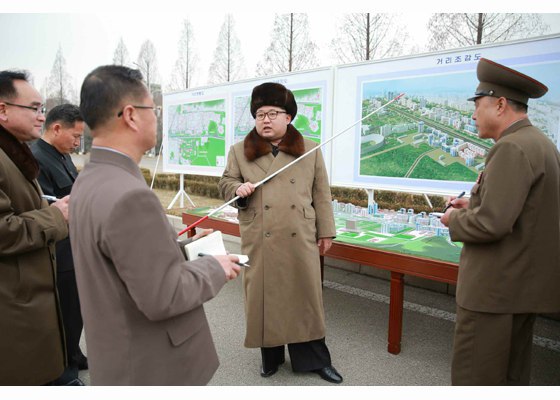
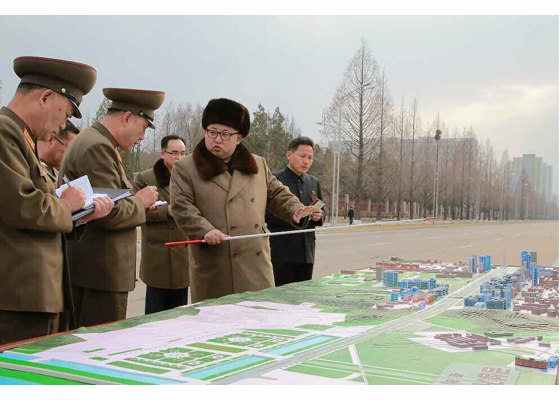
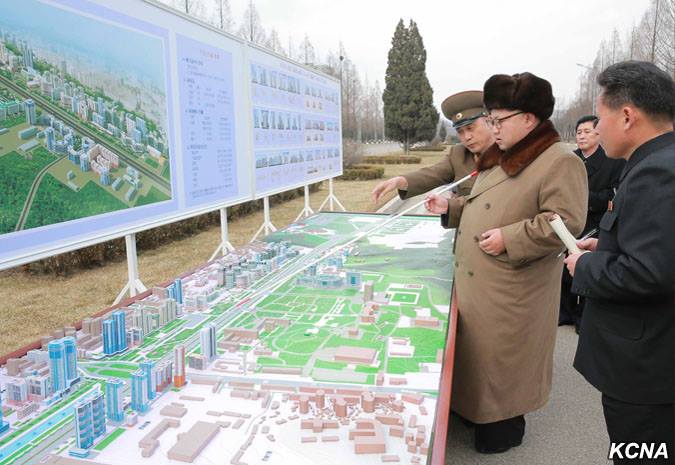
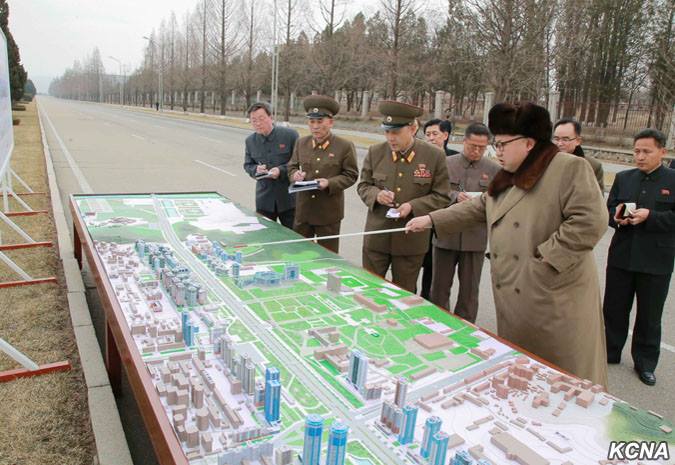
ORIGINAL POST (2016-3-18): Here are some official photos from Rodong Sinmun:
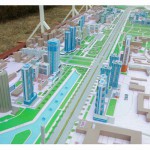
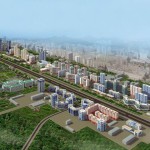
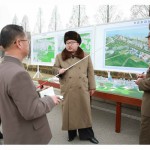
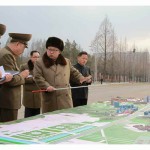
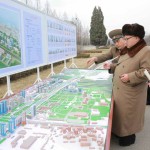
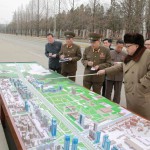
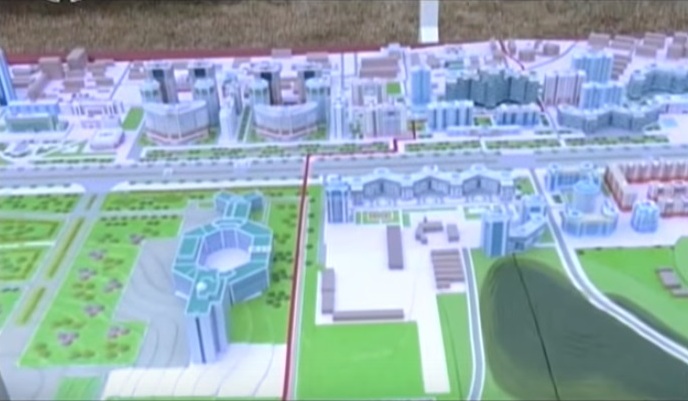
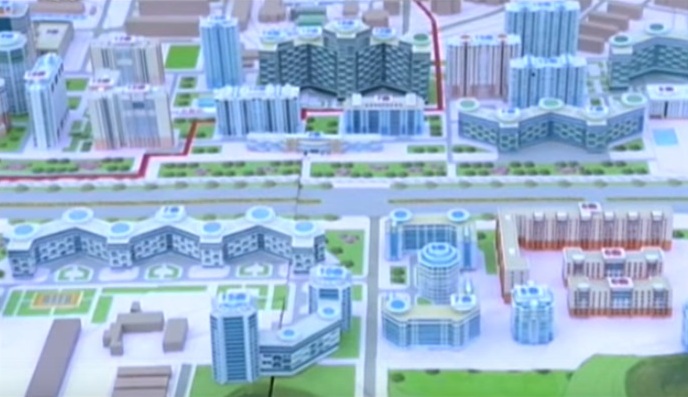
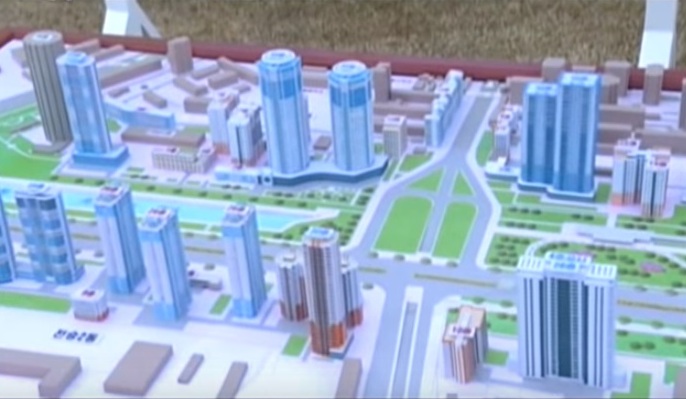
KCTV later published these photos:
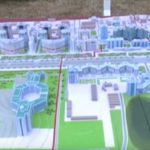
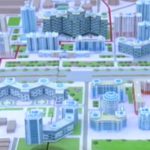
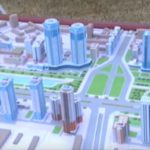
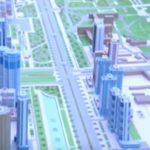
According to KCNA:
Kim Jong Un, first secretary of the Workers’ Party of Korea, first chairman of the DPRK National Defence Commission and supreme commander of the Korean People’s Army, declared the construction of Ryomyong Street and set forth the tasks for it on the spot, though he was very busy with his guidance over the 70-day campaign while disciplining the enemies’ anti-DPRK moves in the Paektu attack spirit.
The street is to be built in an area between the Kumsusan Palace of the Sun and Ryonghung Crossroads in Pyongyang.
Seeing the Kumsusan Palace of the Sun, the sacred temple of Juche where President Kim Il Sung and leader Kim Jong Il lie in state, and Ryongnam Hill where the leader made a historic oath “O Korea, I Will Add Glory to Thee”, Kim Jong Un named the street to be built “Ryomyong Street” in the meaning that it is a significant place from where the dawn breaks in the Korean revolution.
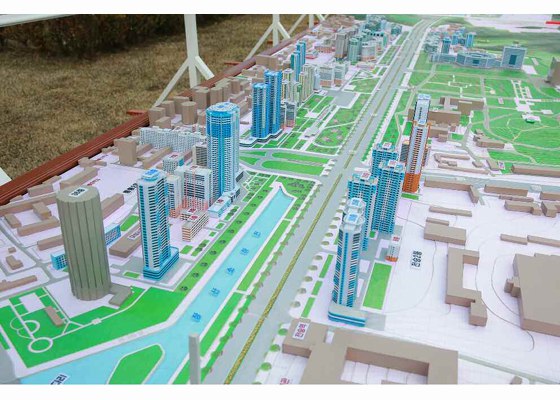
He examined a layout of the street, a map showing the bird’s eye view of it and its model board and gave instructions for building the street into a monumental edifice strikingly displaying the WPK’s idea of attaching importance to science and talents and the might of socialist Korea.
The essence of its construction is to splendidly build apartment houses for scientists and researchers including educators of Kim Il Sung University, nursery, kindergarten, laundry, post office and other public buildings and public service amenities, he said, stressing the need to push forward the construction of Building No. 3 of the university at the same time.
It is the Party’s intention to turn Ryomyong Street into an energy-saving and green street in the 21st century, he said, adding that the designing and construction units should set it as a goal to ensure the lighting and heating systems for the houses and public buildings with solar panels, geothermal energy and natural lighting and build rooftop greenhouses to go green.
Saying that he would dispatch the solider-builders, who took part in the construction of Mirae Scientists Street, to the construction of Ryomyong Street on the order of the KPA Supreme Commander, he gave an instruction that the entire party, state and society should render positive assistance to the construction and the Cabinet, commissions, ministries and national institutions take the lead in this work.
The construction of the street is not merely for formation of a street but serves as a political occasion of clearly showing the spirit of the DPRK standing up and keeping up with the world, despite all sorts of sanctions and pressure by the U.S. imperialists and their followers, the appearance of the country advancing to realize the great ideal of the people and the truth that the DPRK is able to be well-off in its own way and nothing is impossible for it to do, he said.
Noting that the construction of Ryomyong Street is a fierce battle with the U.S. imperialists and their followers, he called for completing the construction within this year to inspire the servicepersons and people with faith in sure victory and optimism and demonstrate the might of the DPRK fighting its way out with conviction in the rosy future and the traditions of ever-victorious Juche Korea that the world has neither understood nor can do.
This is the sixth overhaul of a specific housing area in Pyongyang since the 2012 “Strong and Prosperous Nation (강성대국) Policy” was implemented. The successfully completed efforts are Mansuade Area 1, Mansudae Area 2, Unha Scientists Street (for employees at the Second Academy of Natural Sciences), Satellite Scientists Street in Unjong District (next to State Academy of Sciences and new SEZ), and finally the Mirae Scientist Street in Phyongchon District, which houses facilities for Kimchaek University, a health club, lots of shops and restaurants, and possibly the Ministry of Atomic Energy Industry (address in Haeun-2 dong). There are still many housing units that were started in 2012, but never completed, particularly in Hyongjesan and Rakrang Districts.
According to my North Korean maps, until this announcement Ryomyong Street (려명거리) was named Kumsong Street (금성거리).
As KCNA noted, the project aims to build apartment houses for scientists and researchers, nursery, kindergarten, laundry, post office and other public buildings and public service amenities–including the completion of Building No. 3 and a new stadium at Kim Il sung University. I have discussed these last two projects before.
Not mentioned in the article is what appears to be new housing for party cadres who live in high rises right next to the Worker’s Party No. 3 complex (complex 1 and 2 are in the “forbidden city” in Central District).
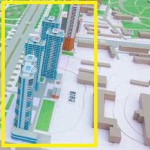
Here is coverage in Yonhap.