Petrov on DPRK-Australian relations

September 24th, 2008

The Nautilus Institute has published an aritcle by Leonid Petrov on 60 years of Australian/DPRK relations.

Topics covered: on again/off agian diplomatic history, Australian foreign policy, bilateral relations, DPRK engagement with Australia, Pong Su (drug smuggling), denuclearization, economic sanctions, DPRK canberra embassy closing.

You may read the article on line here.

You may download a PDF of the article here: petrov-australia-dprk.pdf

Share

Venerable Pomnyun at Johns Hopkins

September 23rd, 2008

UPDATE:Here is V. Pomnyun’s outline: pomnyun.pdf

NKeconWatch notes:
Agriculture: April – June are the lean months.  In July 2008 potatoes helped alleviate food shortage.  Also aid from West. Things began to get worse in August and September.

Earlier this year, the price of rice was up to 5x higher than a year ago.  In June-July it fell to 3x higher.  Now it is creeping back up.

Arduous March: In the 1990s, urban residents of North Hamgyong Province was the worst affected by famine.  Today, the worst affected are the farmers and rural residents of Hwangae (he did not specify north or south).  Shortage as bad as 1st arduous march, but fewer consumers and markets feed cities now.

Markets: protests in Chongjin.  People chanted, “Give us food or let us trade.”  None of the protests are political, just expressions of frustration.

Nukes:Nuclear weapons are a domestic propaganda weapon as well. Not just a matter of foreign policy.

Original Post:
Program details here
Wednesday, September 24
2:00 – 4:00 pm
Rome Auditorium at SAIS
1619 Massachusetts Ave., NW
Washington, DC 20036
RSVP here

The Venerable Pomnyun Sunim, Chairman of Good Friends and The Peace Foundation, will discuss the current political and social climate in North Korea, including the spread of the black market economy and the increase in political control over North Korea’s elite. Joining his discussion, is Dr. Cho Seong-ryoul, Director of the New Security Studies Program at the Institute for National Security Strategy (INSS), who will offer his insights on current and future inter-Korean relations.

Share

New CRS reports on North Korea available

September 23rd, 2008

I have updated the list of Congressional Research Service (CRS) reports published on North Korea and posted them here.  I have also added a hyperlink under “pages” on the menu tab to the right.

Updates include:
US Assistance to North Korea: July 31, 2008
North Korean Ballistic Missile Threat: January 24, 2008
North Korea’s Nuclear Weapons Program: January 21, 2008
North Korea’s Abduction of Japanese Citizens and the Six-Party Talks: March 19, 2008
The Kaesong North-South Industrial Complex: February 14, 2008
The North Korean Economy: Leverage and Policy Analysis: August 26, 2008

Share

Chosun International Development Trust Company handling overseas business for the DPRK

September 23rd, 2008

Institute for Far Eastern Studies (IFES)
NK Brief No. 08-9-23-1
9/23/2008

North Korea’s Chosun International Development Trust Company, founded less than four years ago, is quickly emerging as the center for all of North Korea’s overseas business transactions. This was made public in an article published in the September 18 edition of the Chosun Sinbo, the newspaper of the Jochongryeon, an organization representing the North Korean diaspora in Japan.

The newspaper introduced the trust as being involved in “business and trade dealings with other countries, investment trust activities, financial services and other activities,” while “raising the credit rating of related domestic enterprises through solid business practices and broadly and continuously expanding business transactions with foreign enterprises.” This trust was founded in April 2004, and handles import-export business and investment trust services, as well as financial services and other activities for foreign enterprises. The main imports of the trust are soybean oil and other foodstuffs, fertilizer, and farm-use products such as vinyl sheeting, which are high on the list of consumer demands within North Korea. The trust has set up an exchange market in the Botong River area of Pyongyang, and is responsible for providing production materials to the North’s businesses and farming towns.

This business also focuses on trust investment and financial services. According to the Chosun Sinbo, the trust is “solidifying economic utility and connecting domestic and international firms that are promoting positive prospective plans, guaranteeing and investing capital necessary for the development of national businesses.” The paper also explained that the trust “also provides financial services, actively promoting the management of domestic enterprises.” According to the article, it appears that the Chosun International Investment Trust Company is receiving foreign capital and investing it in North Korea’s domestic businesses.

The trust seeks capital, particularly Chinese capital in Beijing and Jilin, and invests this foreign capital in the building and operating of a leaf tobacco processing plant, a hygienic products production plant, food processing facilities, automobile repair facilities, and other joint venture and cooperative venture projects.

Share

Yongbyon and beyond…

September 22nd, 2008

UPDATE:  Inspectors barred.

North Korea has barred international inspectors from a nuclear reprocessing plant that produces weapons-grade material and intends to restart activity there in a week, the International Atomic Energy Agency said on Wednesday.

The decision by North Korea comes as the Vienna-based nuclear agency also announced it had completed on Wednesday the removal of all seals and surveillance cameras from the reprocessing plant, one of several sites at its vast Yongbyon nuclear complex. The removal was carried out following a formal request to the agency by the North two days ago.

…[T]he North Koreans “also informed IAEA inspectors that they plan to introduce nuclear material to the reprocessing plant in one week’s time. They further stated that from here on, IAEA inspectors will have no further access to the reprocessing plant.”

The inspectors have worked there, living in guest quarters on the site, since July 2007. (Herald Tribune)

ORIGINAL POST: North Korea has formally requested that the IAEA remove its seals and surveilance equipment from the Yongbyon processing facility.  According to the Associated Press:

North Korea had said that it was making “thorough preparations” to start up Yongbyon, which it began disabling last year under a now-stalled disarmament-for-aid deal.

“Some equipment previously removed by the DPRK during the disablement process has been brought back” to Yongbyon, ElBaradei told the closed meeting in comments made available to reporters. DPRK is the abbreviation of North Korea’s official name, the Democratic People’s Republic of Korea.

While the reactor remains shut down, “this morning, the DPRK authorities asked the agency’s inspectors to remove seals and surveillance equipment,” he said  (Associated Press).

According to Bloomberg, the South Korean government responded to this news by threatening to cut off promised energy assistance (previously negotiated as a reward to the DPRK for denuclearization progress). 

South Korea has so far delivered about 40 percent of a promised 1 million tons of energy aid to North Korea (Bloomberg).

According to the Australian Broadcasting Corporation, South Korea has also delayed shipment of “aid materials” to the DPRK including “steel pipes”.

The US is still maintaining its aid commitments as agreed to under the six-party talks.  According to the Choson Ilbo  (quoting the Congressional Research Service), the US has already paid the DPRK $20 million to dismantle the Yongbyon facility (famously blown up earlier this year) in addition to:

Spending close to US$1.3 billion on aid to North Korea since 1995, including: approximately 2.5 million tons of food worth over $700 million (since 1995), approximately $150 million on fuel oil provisions, and $400 million on the KEDO light water reactor.

This year the U.S. government plans to donate an additional 500,000 tons of food and an additional $100 million in oil shipments.

The DPRK claims this turnabout is a response to the US government’s failure to remove it from the list of state sponsors of terror (a symbolic gesture as it carries little economic significance).  The US claims that the DPRK did not meet the disclosure requirements necessary for it to justify taking such action.

In July 2008, the Congressional Research Service published a paper on the DPRK’s terrorism list removal.  Read it here.

Read the full articles below:
Read the rest of this entry »

Share

Doing business in North Korea seminar

September 21st, 2008

Capital Club, Beijing
Sept 29, 2008

Spearkers include: Dr. Leonid Petrov and Paul Tija
Agenda and reservation information here: dprk_seminar.pdf

The DPRK (North-Korea) is in need of many foreign products and investments, while there are also opportunities for production and outsourcing. From the end of September to 4 October 2008, a Dutch economic mission will investigate the business climate in this country, with participants from different business sectors, including agribusiness, light industry and computer software.   
 
Before leaving for Pyongyang, the trade mission will start its tour in Beijing. On 29 September, some of the participants will join the BenCham (Benelux Chamber of Commerce) event: “Doing business with North-Korea”. This dinner/seminar takes place at the famous Capital Club and will start at 18:30. The leader of the trade delegation, Paul Tjia of GPI Consultancy, will give a presentation. If you or your colleagues in China are interested, then you are welcome to join the event. Program details (including information on registration and dress code) can be found in the PDF file above.       
 
Due to the growing European interest in trading with the DPRK, we are planning to organize another trade mission to North-Korea in 2009. This trip will be open for business participants from other countries as well. If you are interested in joining a future trade mission, or wishing to cooperate, please contact us for further details.    
 
With best regards,
Paul Tjia (sr. consultant ‘offshore sourcing’)
GPI Consultancy, P.O. Box 26151, 3002 ED Rotterdam, The Netherlands
E-mail: [email protected] tel: +31-10-4254172  fax: +31-10-4254317 Website: www.gpic.nl

Share

UN to conduct DPRK census

September 20th, 2008

According to the Korea Times, the UN Population Fund (UNFPA) is preparing to launch the first census taken in the DPRK since 1993.

According to the artilce:

The United Nations Population Fund (UNFPA) said it has conducted data-collecting education to North Koreans and has been inspecting regional-level education for a population census in which as many as 35,200 field researchers and 7,500 inspectors will be dispatched

The census will take place between October 1-15.

Share

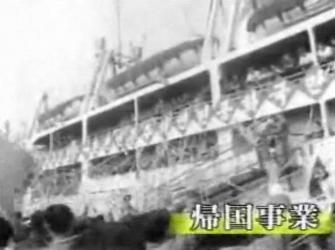
Returned to North Korea

September 19th, 2008

returned.JPG

The above image is from Returned to North Korea, a documentary on the 1959 program to repatriate Japanese-Koreans to the newly founded Democratic People’s Republic of Korea. Watch the video here.

Share

DPRK journal stresses food provision reform

September 18th, 2008

Institute for Far Eastern Studies  (IFES)
(NK Brief No. 08-9-18-1)
2008-09-18

The latest issue of the North Korean academic journal “Institute for Social Science Bulletin” (no.3, 2008) stressed that in order to resolve the North’s food shortage problems as quickly as possible, “it is necessary to take a good assessment of future food consumption [needs].”

In this issue, recently obtained in South Korea, an article reads, “the project for resolving the food issue cannot be pushed forward into the future, and while taking into consideration what steps can be taken now, the country’s food problems cannot ultimately be relieved by relying only on short-term benefits. On the contrary, [this] can adversely affect the future resolution of the food issue.”

The journal also added, “The task of restructuring food production must start with an assessment of future food consumption and start off with a view of long term interests rather than from starting from a standpoint of short-term interests in order to completely relieve food supply problems.” It stressed, “These days, resolving the country’s food supply problem is the most urgent and important task…solving food issues is an urgent problem that cannot be delayed a single moment,” but warned, “while the food issue must be solved without a day’s delay, recklessly pushing forward without scientific calculation or goals could result in insufficient and disorganized future results.”

Share

Mass Games to run through October 10

September 18th, 2008

According to a recent update from Koryo Tours, this year’s mass games have been extended through October 10th, which is the 63rd Party Founding Day.

This might be the last time for Americans to visit Pyongyang until 2012.

Share