New Kim Jong-il statue unveiled

February 14th, 2012

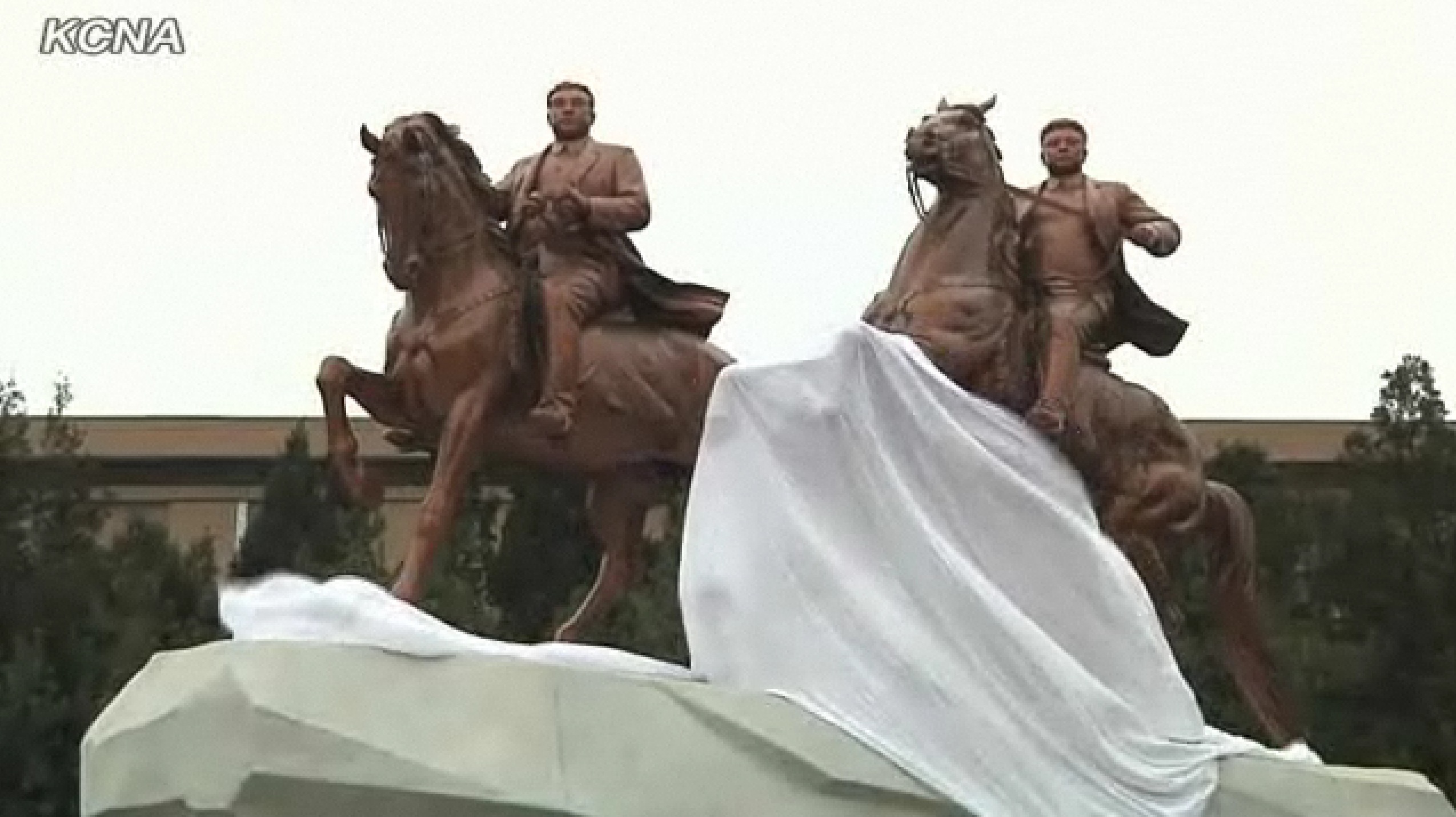
Following the unveiling of the Kim Jong-il memorial carved into Mt. Sokda last week, today KCNA announced the unveiling of a Kim Il-sung and a Kim Jong-il statue at the Mansudae Art Studio in Pyongyang.
Click image for a larger version.

You can watch the unveiling in video format on the KCNA page here. You can watch the video on YouTube here.

According ot KCNA:

The statues of President Kim Il Sung and leader Kim Jong Il riding on horses together were erected at the Mansudae Art Studio with approach of the Day of the Shining Star.

Their construction, the first of its kind in the history of the Workers’ Party of Korea and the Korean revolution, is a great glory and pride of Kim Il Sung’s nation and Kim Jong Il’s Korea.

A ceremony of unveiling the statues took place on Tuesday.

Present there were senior party, state and army officials Kim Yong Nam, Choe Yong Rim, Ri Yong Ho, Kim Yong Chun, Kim Ki Nam, Choe Thae Bok, Yang Hyong Sop and Kang Sok Ju, officials of party, military and power bodies, social organizations, ministries and national institutions, men and

officers of the Korean People’s Army and the Korean People’s Internal Security Forces, officials and employees of the Studio and working people in the city of Pyongyang.

Senior officials of the party, state and army and officials of the studio unveiled the statues.

Laid at the statues is a floral basket from Kim Jong Un, supreme leader of the WPK and the people and KPA supreme commander.

Placed were floral baskets in the name of the WPK Central Committee, the Presidium of the DPRK Supreme People’s Assembly, the DPRK Cabinet, the Ministry of the People’s Armed Forces, the Ministry of People’s Security, working people’s organizations, ministries and national institutions,
units of the KPA and party and power organs in the city.

The participants made bows to the statues.

Kim Yong Nam, member of the Presidium of the Political Bureau of the C.C., the WPK and president of the Presidium of the SPA, made an address at the ceremony.

It was the unanimous desire and ardent wish of all the Party members, servicepersons and people to erect a statue of Kim Jong Il as well as Kim Il Sung’s in order to hand down for all ages the prominent traits and revolutionary feats of the illustrious great man, the speaker said, adding:

This ardent desire has been realized thanks to Kim Jong Un’s boundlessly noble loyalty and meticulous guidance.

He called for glorifying the revolutionary careers and undying feats of Kim Il Sung and Kim Jong Il forever with the immutable faith that they are always with us.

The participants looked round the statues after being briefed on them.

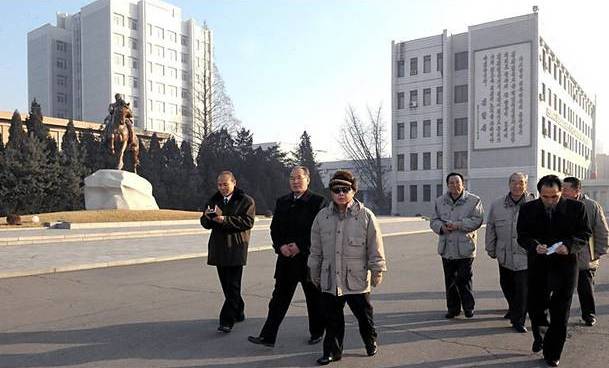
Though the unveiling displayed BOTH Kim Il-sung and Kim Jong-il statues, there was previously a Kim Il-sung statue located at this exact spot.  I am not sure if this statue has been decommissioned, moved, or incorporated into the new sculpture:
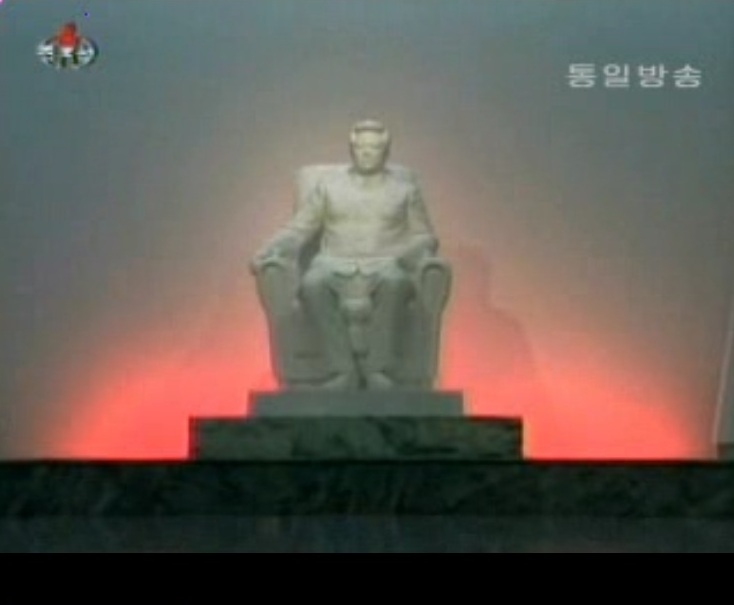
This is only the third Kim Jong-il statue of which I am aware–and the first located outside.

There is a Kim Jong-il statue at the International Friendship Exhibition in Myohyangsan:
The other Kim Jong-il statue is in the Ministry of the Peoples’ Armed Forces:
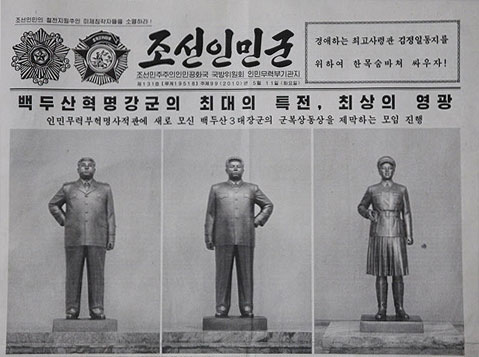
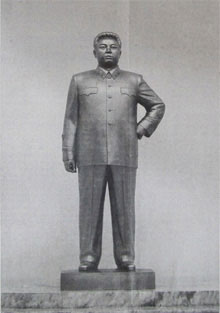
3-stars-of-paektu.jpg  kim-jong-il-bronze-statue.jpg

Both the Kim Il-sung statue and the Kim Jong-il statues were manufactured on location at the Mansudae Art Studio:
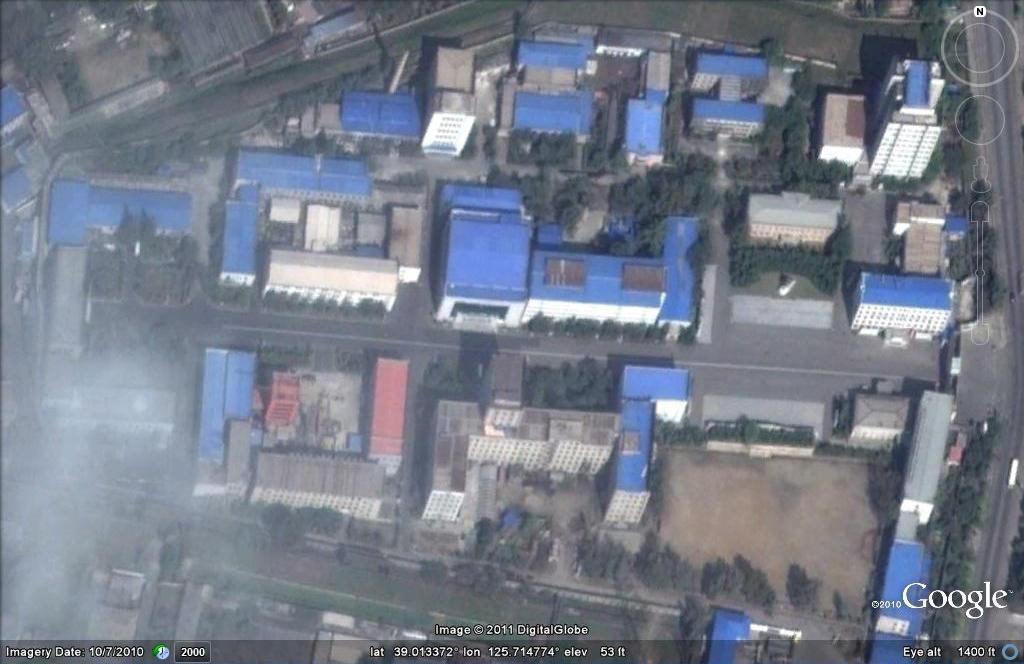
Pictured above (Google Earth): The Mansudae Art Studio in Pyongyang. The blue roofs indicate that most of the buildings have recently been renovated.

At the same time, the Daily NK reports that Kim Jong-un has asked that the costs of memorializing his father not be passed on the people (like this).

UPDATES related to the celebrations of Kim Jong-il’s 70th birthday:

1. Kim Jong-il also named “Generalissimo” — a title previously reserved for his father, Kim Il-sung.  This clears the way for Kim Jong-un to be promoted to “Marshal”.  Many officers were also promoted and awarded the Kim Jong-il Prize. Daily NK coverage here.

2. Commemorative gold and silver coins were issued to celebrate Kim jong-il’s 70th birthday. See more here and here.

3. New stamps were issued.

4. A military tribute was held in Kumsusan Palace (which was renamed Kumsuan Palace of the Sun). See video here.

5. The KCNA web page added a Kim Jong-il photo album. See it here.

6. A new Kim Jong-il badge is issued.

7. NK Leadership Watch coverage here.

8. Here is my lengthy collection of material published when Kim Jong-il passed away.

Share

A DPRK valentines story

February 14th, 2012

from the BBC.

I will post more later today, but this was too cute to wait.

Share

DPRK takes steps to reduce access to foreign media

February 13th, 2012

According to the Daily NK:

A new unit was formed in mid-January to deal with the amount of ‘illegal’ media circulating in North Korea.

“Unit 114 has been formed following a January 14th order handed down by General Kim calling for a concentrated crackdown on suspicious songs, recorded materials and impure published media,” a source from Yangkang Province told Daily NK on the 12th.

The source went on, “The unit has been organized by the Propaganda Department of the central Party, but the interesting thing is that it also contains people from the National Security Agency.” Interesting, the source noted, because such units, also a very regular feature of the Kim Jong Il era, are commonly made up of people dispatched by the central Party. Indeed, there is already Unit 109 similarly charged with dealing with inflows of outside media.

In addition, the format of the unit’s activities is in marked contrast to some of the past, the source said. “These inspections have not been announced in people’s unit meetings and, since the inspectors are circulating undercover in the jangmadang, people are much more frightened,” she explained. “Someone who was caught selling CDs in the area in front of the jangmadang here told me that the investigation was done by an NSA agent and someone from the central Party Propaganda Department.”

According to the source, the trader in question was selling copies of a recently released North Korean film, ‘Brotherly Love’, when he came under suspicion. Even though it is a North Korean film which portrays Chinese troops in the Korean War and the lives of North Koreans at the time, the trader nevertheless got in trouble because the film was copied rather than being an original.

“The trader made and signed a written statement saying ‘I will not sell copied films again’ and so was let go, but as he was leaving he was asked by an NSA agent to report people possessing or selling South Chosun films and songs or American films. He got really shocked by the experience, and is now at home resting up,” the source said.

“A lot of traders who used to make a living selling CDs are now in hiding. The investigation is harsh, so people with experience selling South Korean CDs in the past are hiding to avoid getting caught.”

Read the full story here:
More Pressure on Illicit Media
Daily NK
Lee Seok Young
2012-2-13

Share

Viennese Coffee now available in Pyongyang

February 13th, 2012

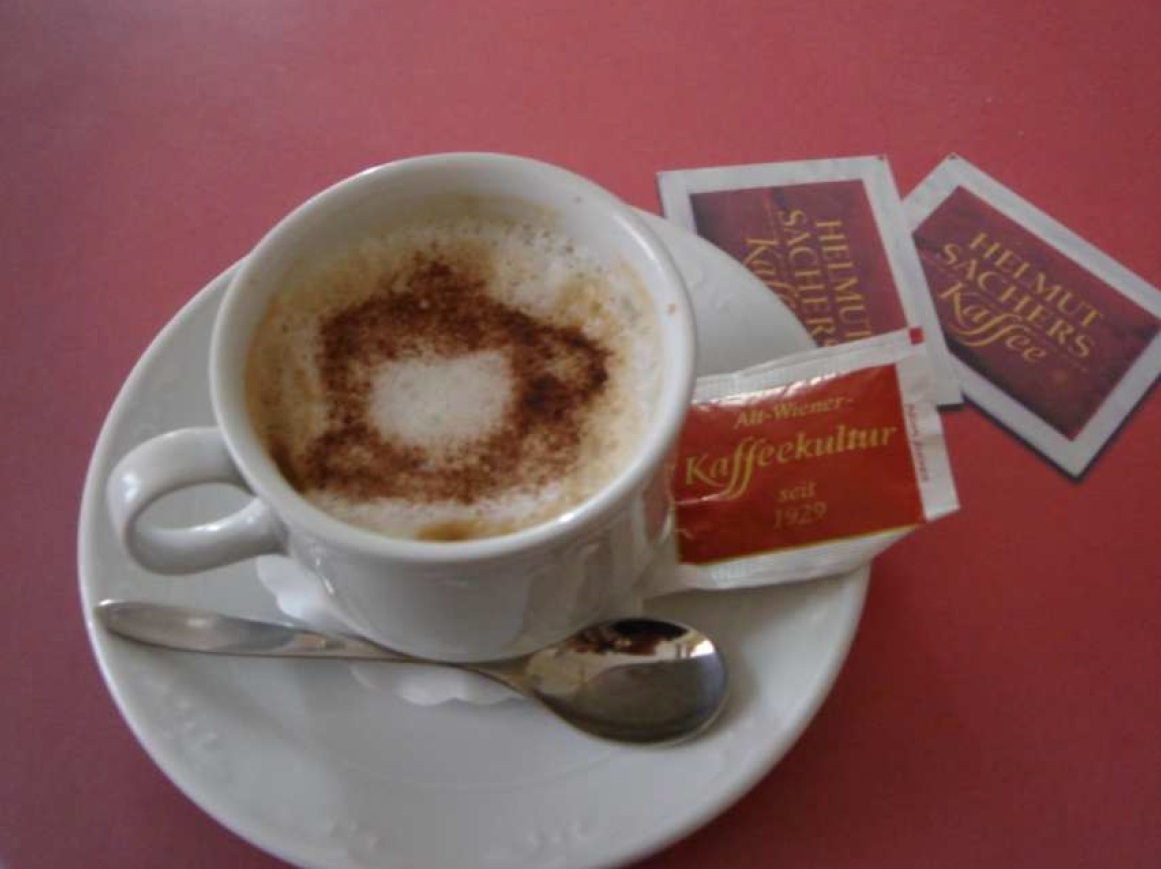
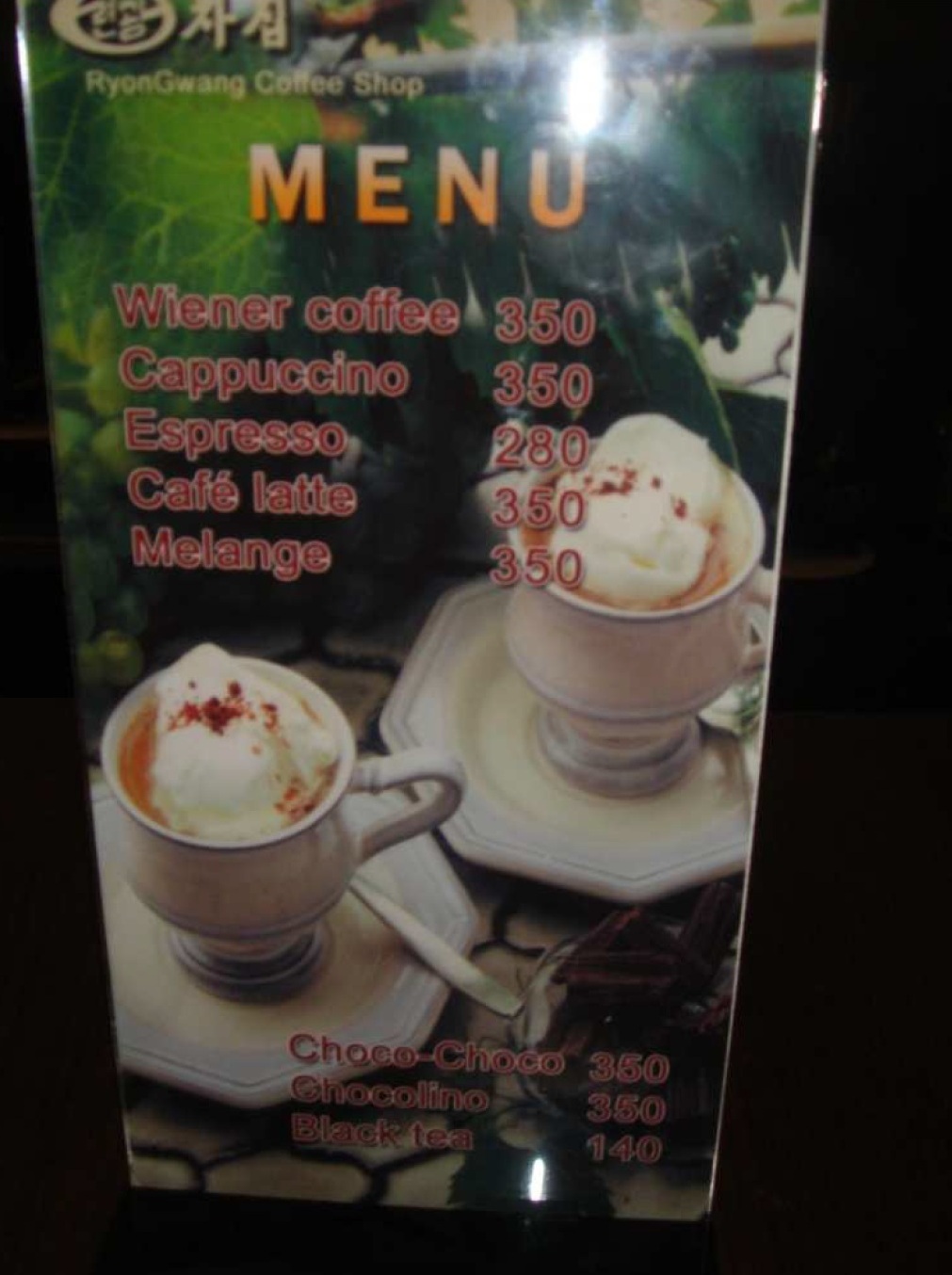
UPDATE 1 (2012-2-13): Thanks Dr. Seliger we now have some photos of the interior of the newly opened Viennese Coffee Restaurant:

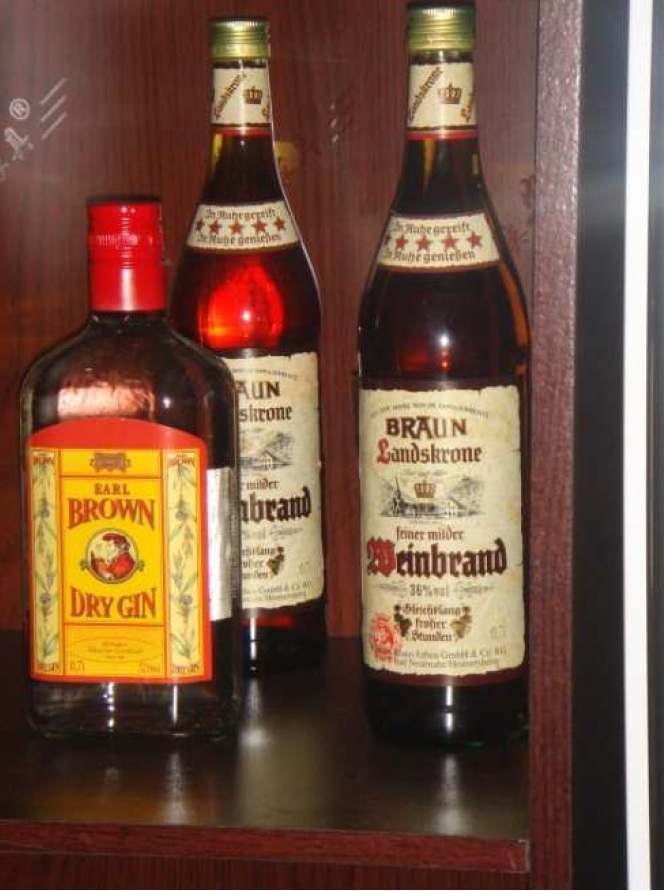
And if you don’t feel like coffee, they have more “traditional” drinks on offer:

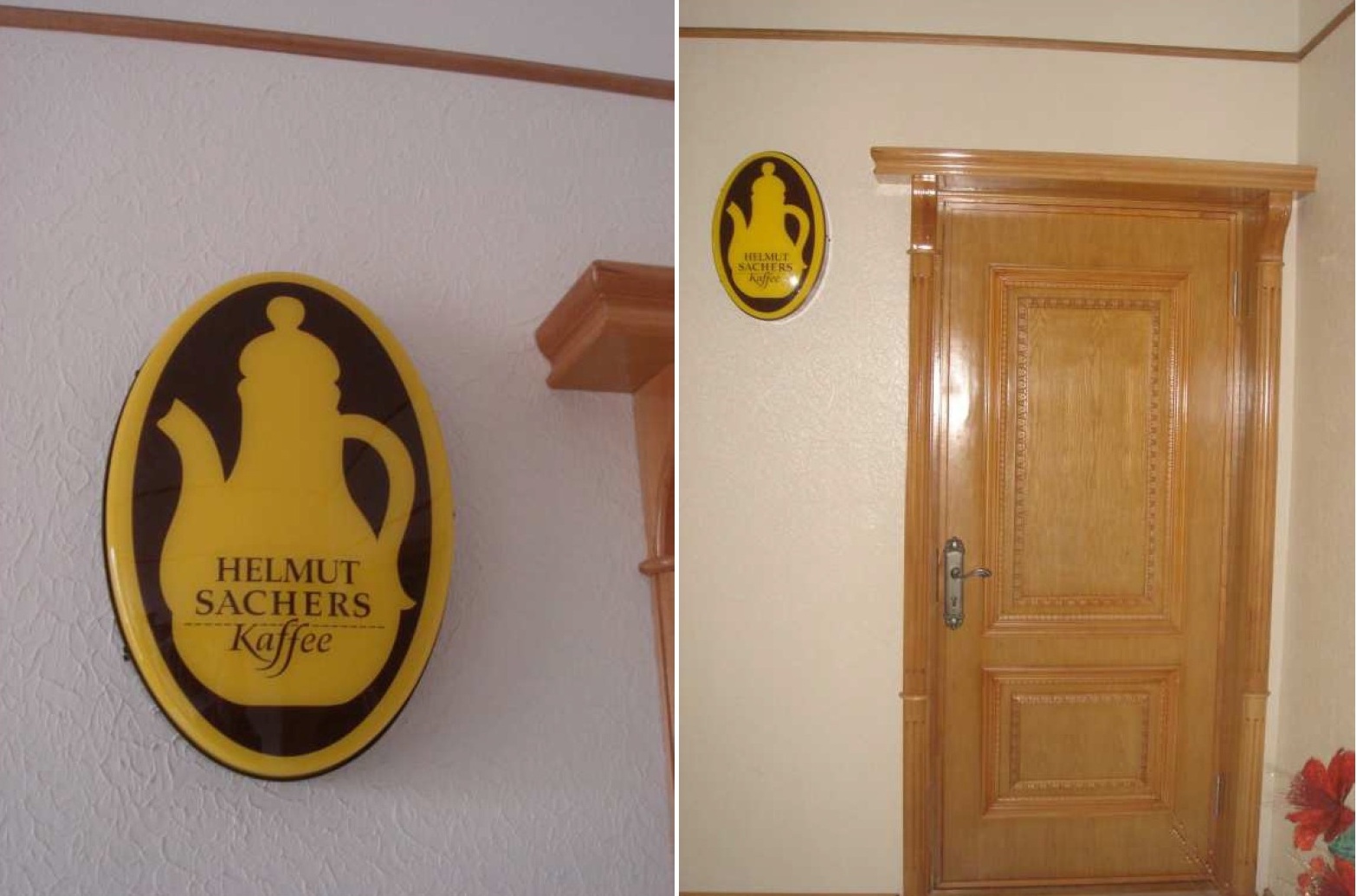
The sign on the front door reads “Helmut Sachers Kaffee,” but the menu shows another name: Ryongwang Coffee Shop (련광). Perhaps this is the name of the Korean Join-Venture company, but I cannot find any additional information on it.

A reader notes the following:

Helmut Sacher is an Austrian coffee roaster (web page here). It is probably that Ryon’gwang buys beans from Sacher, and/or Sacher owns part of the joint company.

ORIGINAL POST (2011-12-4):

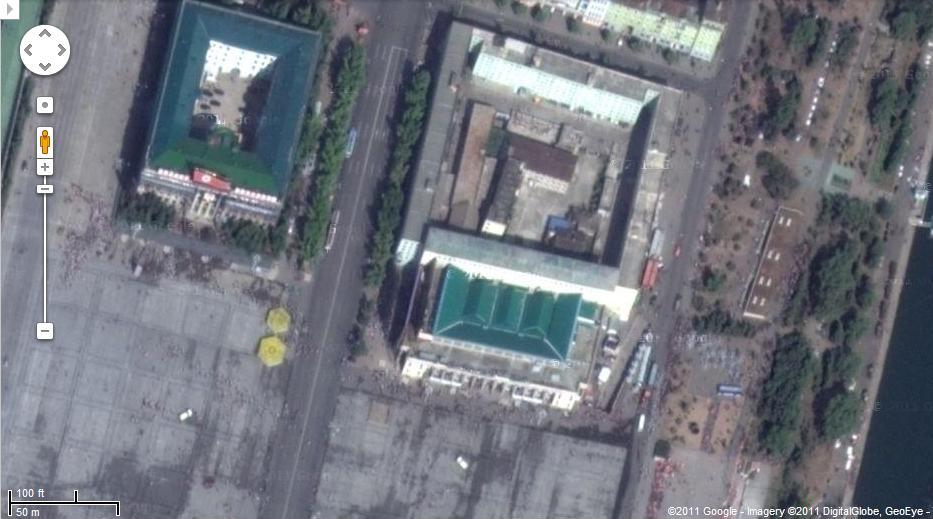
Pictured above (Google Maps): Korean Central History Museum on Kim Il-sung Square–site of the new coffee house.

According to a German reader:

A report published [2011-11-24] in the German Daily “Frankfurter Rundschau” reports on the opening of a “Viennese Coffe House” right on Kim Il Sung Square inside the Museum of Korean History (the one wih the “trumpet soldier”).

In brief: Austrian enterpreneur Helmut Sachers has opened this new Vienna style cofee house in October after training Korean service- and bakery staff. It says that it mainly serves the foreign community in Pyongyang, but alo an increasing number of Koreans appear to be able to pay EUR 2, the equivalent of 5000 Won, for a cup of cappucino.

Then reference is made to two older pizza-places and a a Swiss coffe house …. and various duty free shops serving the international community and wealthy North Koreans… which is contrasted with the children and young soldiers exercising on Kim Il Sung Square, who show indications of malnurishment.

You can read a PDF of the German article here. If a reader has the ability and inclination to provide an English-language copy of this article, I would appreciate it.

UPDATE: Thanks to Mr. Knoll I have a full English translation of the article:

Whipped Cream in Pyongyang

The heart of the North Korean capital Pyongyang now boasts a Viennese coffee house – a sign that the isolation of the country is showing cracks.

By Bernhard Bartsch

A cappuccino is not political, in most places in the world. But the milk foam coffee now being served on Pyongyang´s Kim Il Sung Square has an unmistakably political flavor – and some customers think that´s why it tastes so good. Right next to the parade ground in the heart of the North Korean capital, a Viennese café has opened its doors in late October – a sign the isolation of the arch-communist regime is slowly showing cracks.

The Austrian operator could hardly have asked for a more iconic building: the Museum of Korean History, a Stalinist representative structure, on its roof, a 10 m (30 ft) tall soldier is sounding the charge. Inside, you get a crash course in the history of the Korean revolution, and you´ll be served “Viennese coffee with whipped cream”, but only after passing through a door inconspicuously marked “café” in Korean. Only then the yellow coffeepot-shaped emblem marked “Helmut Sachers Kaffee” becomes visible.

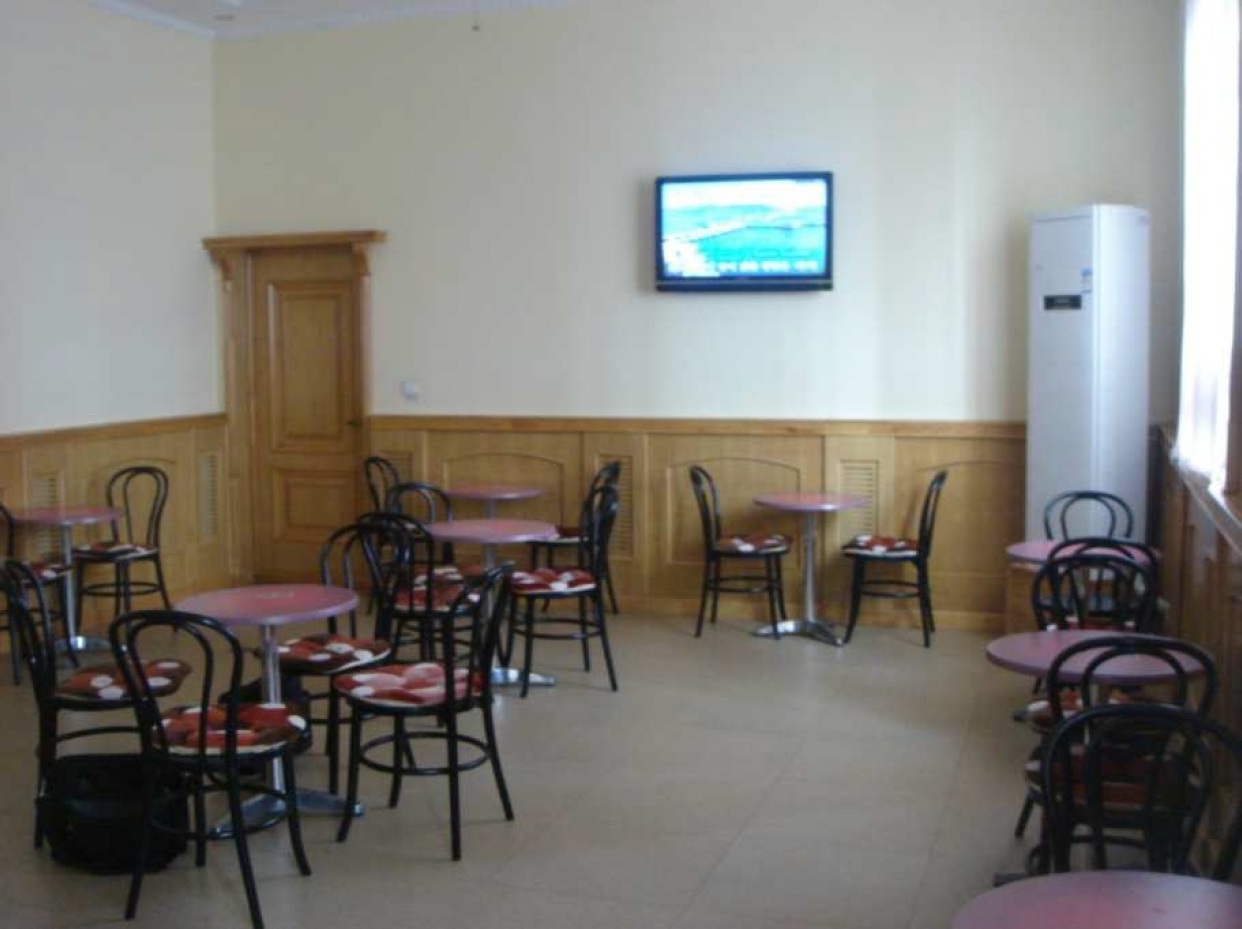
“We have thirty to fourty customers per day” the young waitress says. “Most of them are diplomats or other foreigners living here”. She wears a black pantsuit, and like most North Koreans, she is rather tight-lipped when talking to foreigners. A couple sitting at one of the eleven tables is examining the room, a peculiar mix of Austrian gemuetlichkeit and North Korean drabness. Two fans with gaudily-colored lamps are hanging from the ceiling, there´s wood paneling to half height, pink blinds cover the windows. A large flat screen TV is showing Austrian scenery, waltz is being played as background music.

Payment in hard currency

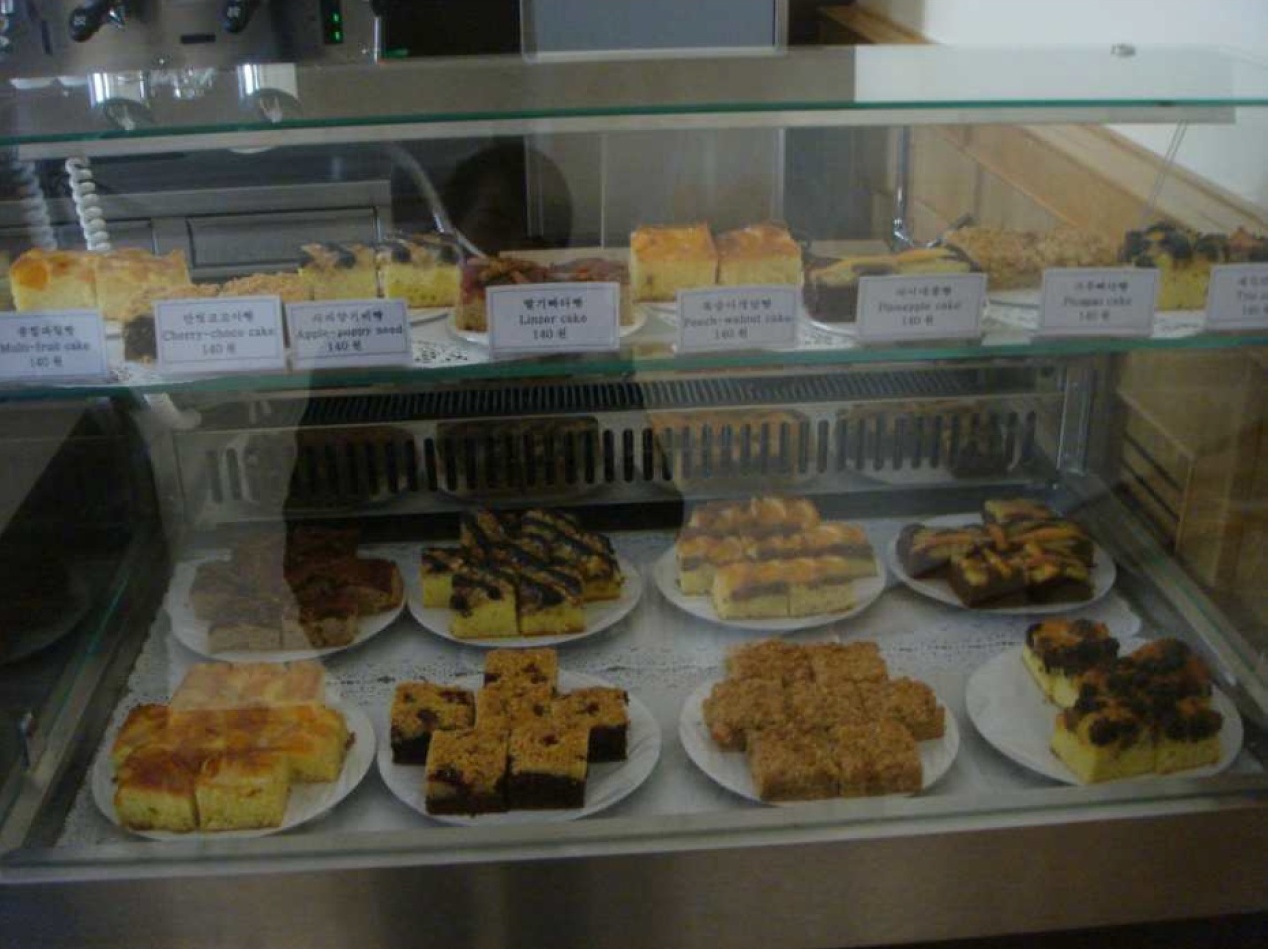
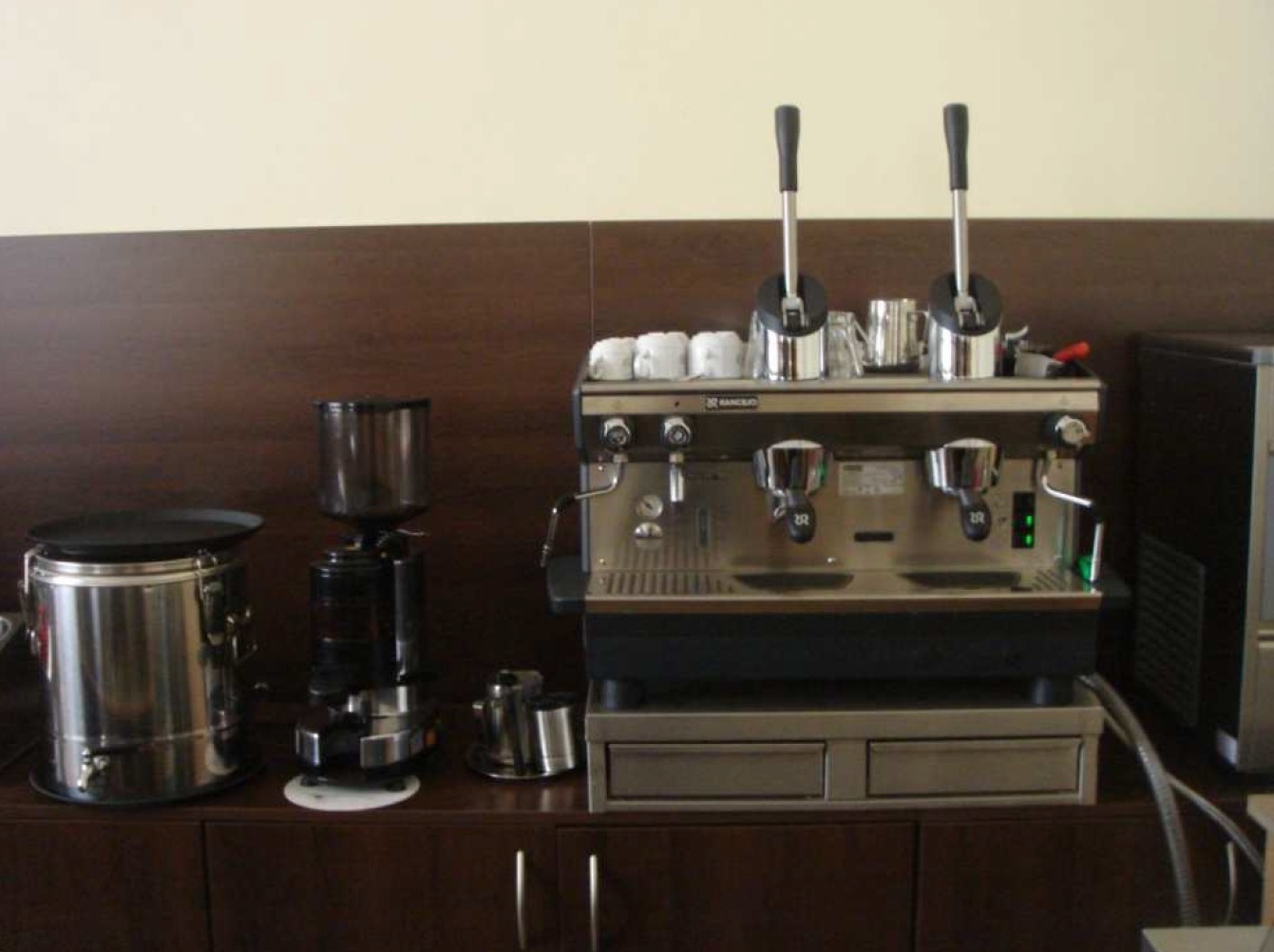
Expensive coffeemakers can be seen behind the bar, a vitrine shows a variety of cakes: apple tart, cherry streusel, poppyseed-walnut-vanilla. They won´t win any prizes in Vienna, they might in Pyongyang, though. The coffee, the dishes, even the sugar packs are imported from Austria. A cappuccino is two euros, you pay in hard currency. The Koreans prefer euros, Chinese yuan, even US dollars, over their own currency. Two euros are worth about 5,000 Korean won on the black market. That´s about a month´s salary for the average North Korean, not counting food and clothing rations.

The man the café is named after is living in Oeynhausen, near Vienna. “We seem to have a monopoly on exotic export markets” explains Helmut Sachers, owner of a long-standing family-owned coffee-roasting establishment, now doing business in 25 countries. “There´s a Café Sachers in the Mongolian capital Ulan Bator, too”. The cafés, however, are not operated by Sachers himself, but by importers. The one in Pyongyang was the brainchild of Vienna entrepreneur Helmut Brammen. “In 2009 he told me he´s doing business in very unusual destinations”, Sachers says. The negotiations went on for two years, before Sachers and Brammen flew to Pyongyang in March, accompanied by an Austrian baker to train staff. They met very eager men and women, Sachers says. The North Koreans soaked up Austrian coffee culture like a sponge.
The fact that a Viennese coffee house can open its doors in Pyongyang shows that behind the rigid façade things are in a state of flux, a European diplomat says. “Ordinary North Koreans won´t come here, of course, but the elites know what life is like outside the country, and they want a part of it to enjoy at home.

Communist Pizza

The Viennese café is not the first international establishment in the city. A member of the Italian Communist Party opened a pizzeria in 2009, the second in Pyongyang, but the first that is partly owned by foreigners. Adra, an aid organization run by Swiss Adventists, opened a Swiss café a few years ago, serving cheese fondue to North Koreans. There are also several stores selling exclusive imported goods. At the “Pyongyang Shop”, where the clientele consists of embassy staff and members of international aid groups, Italian pasta, German jam, Swiss chocolate, and a large selection of wine and whisky are available.
“Those with money can buy almost anything they want in North Korea” the diplomat says. “It is remarkable that more and more customers are North Koreans.” Despite the egalitarian rhetoric in the Communist country, the real-life wealth disparities are much more blatant than in capitalist countries.

The scene outside the Viennese café on Kim Il Sung Square is no exception. Schoolchildren are rehearsing in the cold for the celebrations planned for April 2012, the 100th birthday of the country´s founder. A gigantic mass gymnastics show involving hundreds of thousands of participants is supposed to strengthen unity among the Korean people. By command, children turn cartwheels and do flic-flacs, a student band plays military marches. On the other side of the street, an army unit doing construction work has pitched its tents. Clothing has been left to dry on bushes, there are lines of cabbage leaves to be pickled by the unit´s chef, to make kimchi, the national dish.

Almost all of the young soldiers are stunted – a result of the famine in the 1990s that killed millions of North Koreans and left many survivors with permanent health problems. “The food situation is still very bad, but a catastrophe as in those days seems unimaginable today”, says a Western aid worker, who is almost a regular at Helmut Sachers`s. “The country is opening up, and this is irreversible.

Share

Choson Exchange with a JVIC update

February 13th, 2012

According to Choson Exchange:

As we mentioned recently, Ri Chol, the broker of the Orascom deal, has moved on from JVIC. Where he has gone is not yet certain, but the choice for his replacement is interesting.

Ri Gwang Gun is the new head of JVIC and was introduced as such to the CEO of Orascom last week. Ri Gwang Gun has held various positions related to trade, including executive positions at state owned enterprises and as Minister of Foreign Trade. He apparently reports to Kim Yang Gon.

He was (is?) a Daepung Investment Group man. We’ve speculated that the existence of both Daepung and JVIC reflected a kind of “competition at the top” for influence in attracting and managing investments. They were both formed around the same time in 2009/2010 and have similar charges. Therefore, Ri Gwang Gun’s promotion could indicate a potential harmonizing of this competition.

Of course, the contours of this are difficult to see. Daepung, with stronger ties to the NDC, could be construed as taking over the JVIC from the top; perhaps the military has been able to exert itself to make sure that in the new leadership era, it does not get shut out of the investment game. (JVIC has become the more active and influential of the two groups.)

It could also be seen as a victory for JVIC, with Daepung being left to crumble and the top talent from that group being brought across. It remains to be seen if there will be some kind of exodus from either group.

Perhaps, also, it is some kind of compromise and a merger of sorts, with competing groups of elites ‘buying in’ to a unified system of investment management under the JVIC brand. They may see this as a way to increase effectiveness, avoid the negative outcomes of unfettered intra-elite competition and therefore encourage stability overall.

Share

US exports to the DPRK in 2011

February 11th, 2012

According to UPI:

U.S. relief efforts targeting North Korea jumped about 500 percent in 2011, trade export figures from the Commerce Department show.

The department said the United States shipped $9.4 million worth of goods to North Korea in 2011, up from about $1.9 million the previous year and $0.9 million in 2009. In 2008, the United States sent about $52.2 million in goods to the communist country.

South Korea’s Yonhap News Agency said Radio Free Asia reported 95 percent of the 2011 total was some form of aid for North Koreans, such food or basic household items, sent by private organizations.

Read the full story here:
U.S. shipments to N. Korea grew in 2011
UPI
2012-2-11

Share

DPRK placing more cameras on border

February 10th, 2012

According to the Daily NK:

The North Korean authorities are reportedly installing new and additional surveillance cameras on main defection and smuggling routes along the border with China.

Although surveillance cameras have been visible along the North Korean border since 2010, that was limited to a small number of areas. However, sources suggest that there has been a substantial increase already in the first month of 2012.

A source from Musan in North Hamkyung Province told Daily NK yesterday, “Starting this month more surveillance cameras have started being installed to improve security along the border. The surveillance cameras have been brought in large numbers into areas where escapes and smuggling often used to happen.”

The source explained, “The cameras are secured on poles erected 20m back from the riverside in areas controlled by the Border Guards, and the camera wires are connected underground to National Security Agency hideouts. It is so that areas can be monitored from the barracks.”

The work is being primarily undertaken by the National Security Agency, which is responsible for overseeing the stopping of defections. However, the source said, “This work is mostly being done by the NSA, but maybe they and the Border Guards are planning to keep watch over defection and smuggling altogether.”

Moreover, the source went on, “The surveillance cameras have been imported from China; I heard they will expand installation once they get more in.”

Faced with personnel limitations but also orders from Pyongyang demanding that the Sino-North Korean border be even more tightly controlled than it was under Kim Jong Il, it would not be surprising if the front two lines of North Korea’s three-line border security regime (Border Guards and the National Security Agency; the third is Local Reserve Forces) had decided that increasing the use of surveillance cameras might be a cost-effective way to try and increase their effectiveness.

Read the full story here:
NSA Ramping Up Use of Surveillance Cameras
Daily NK
Choi Song Min
2012-02-10

Share

Daewoo Shipbuilding [not] to invest in DPRK SEZ

February 10th, 2012

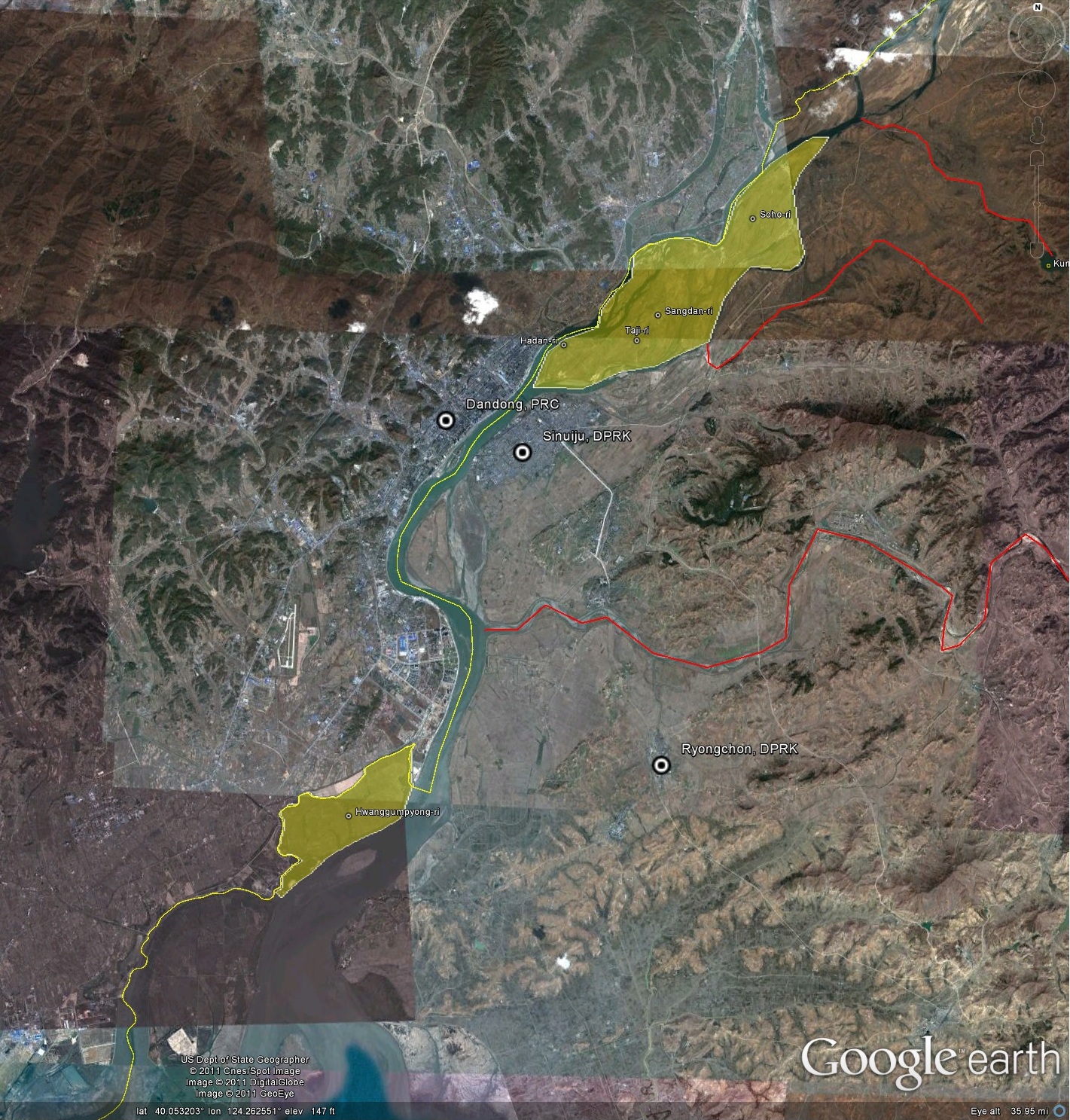
Pictured Above (Google Earth): The Hwanggumphyong and Wiwha Island SEZ on the Yalu/Amnok River which separates the DPRK and PRC.

On Friday, the Donga Ilbo reported that Daewoo Shipbuilding was going to invest in the DPRK’s Hwanggumphyong SEZ (see the original post below).  Today the report appears to be incorrect. According to the Wall Street Journal:

Daewoo Shipbuilding & Marine Engineering Co. on Monday shot down news reports that it had agreed to build a shipyard in North Korea.

“We don’t have any plans to do that,” a spokesman said.

According to some South Korean news accounts over the weekend, the company, which is the world’s second-largest builder of ships and whose controlling stake is owned by the South Korean government, had agreed to help a Chinese company develop an island off North Korea’s northwest coast, near the Chinese city of Dandong.

The DSME spokesman said the company held discussions with the Chinese company but isn’t close to an agreement.

The news accounts said DSME would build a shipyard that would be devoted to repair work. One report said the idea would be presented to DSME’s directors and announced in April.

The company spokesman said it’s unclear how the accounts originated.

See the original report bleow:

Read the rest of this entry »

Share

Friday fun: Kim Jong-il flies, “pasty-foods”, DPRK Gatorade

February 10th, 2012

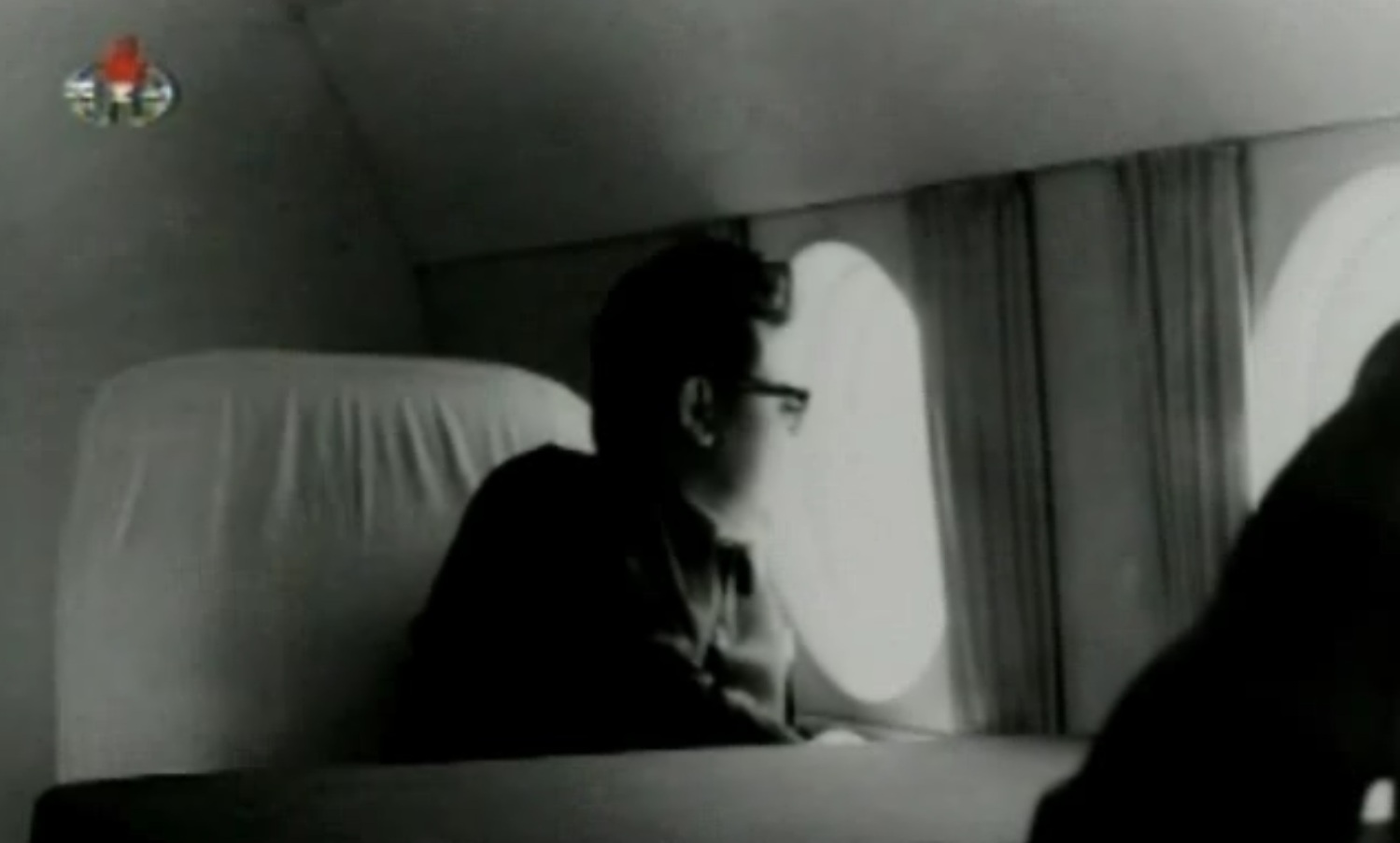
Kim Jong-il Flies: Recently KCTV has broadcast many videos on the life and work of Kim Jong-il. One of these videos was on Kim Jong-il’s contributions to the theatrical and cinematic arts.  In this video, Kim Jong-il can be seen riding in a plane while he scouts out locations for movie sets:

I have watched more North Korean television footage than a healthy person should, but this was the first video footage I had seen of Kim Jong-il on a plane.

Alejandro Cao de Benos once told me that Kim Jong-il could fly fighter jets, though I have not seen any footage of that.

___________

Koryo Tours has a great Facebook Page.  Here are some of the gems that have popped up over the last few weeks:

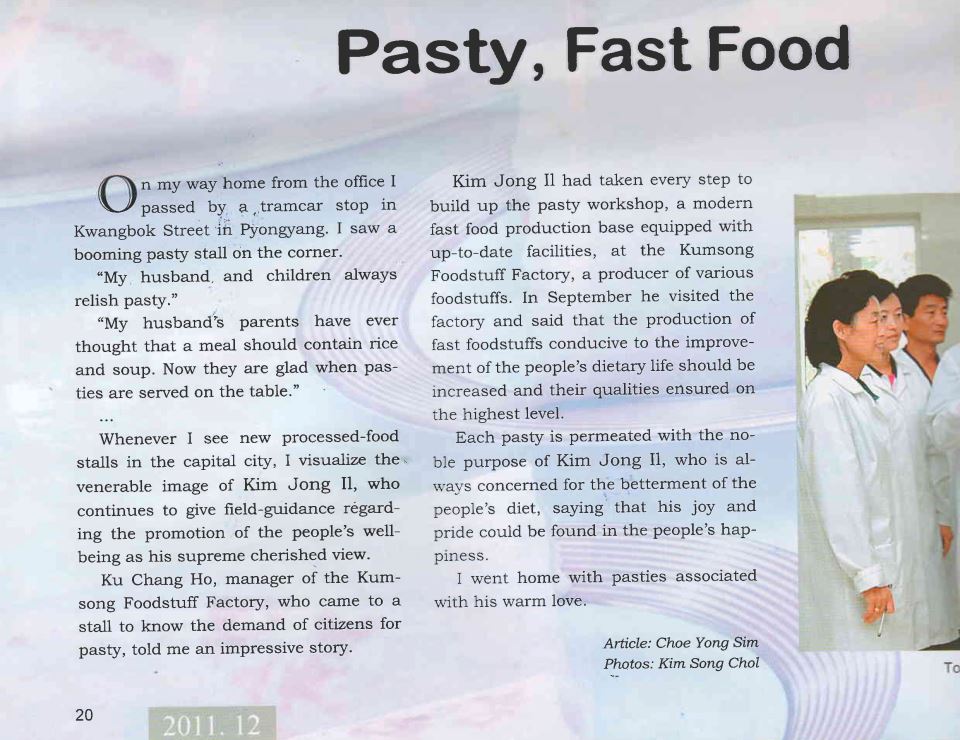
Pasty, fast food (yum):

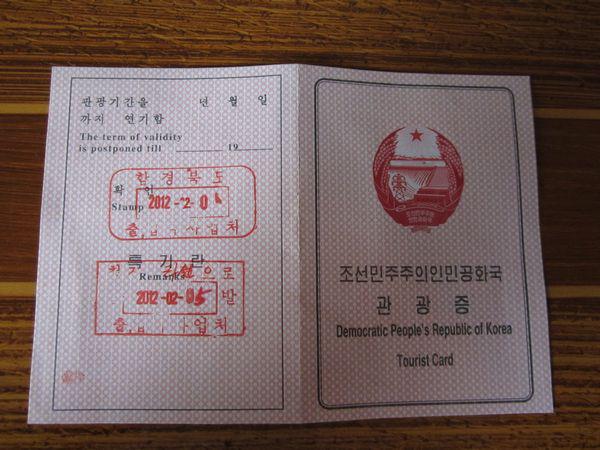
DPRK Tourist Card:

In the next few days Koryo Tours will be offering a brand new tourist route in the DPRK, from Rason down the East Coast to Chongjin and Mt. Chilbo, previously only accessible by charter flight from Pyongyang.

Take On Me by a-ha, North Korean Style (YouTube):

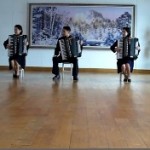
A-ha’s “Take on me” performed by young accordion players from the Kum Song School, filmed in Pyongyang, North Korea December 2011. Part of multi-genre project The Promised Land by director and artist Morten Traavik. Here is more information on the video.

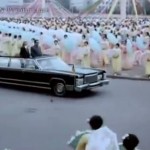
Ceausescu’s visit to Pyongyang, North Korea in 1971:

I believe this clip comes from a feature film: The Autobiography of Nicolae Ceausescu (2010) (trailer here).

___________

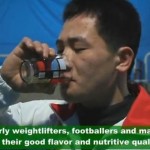
DPRK Gatorade: North Korea is making its own-style sports drink. Here is a link to the report on KCNA (posted to YouTube):

This drink is manufactured in the Kumkop Combined Foodstuff Factory (금컵체육인종합식료공장) in Mangyongdae District. Satellite image and coordinates here.

Share

Nampho port frozen (again)

February 10th, 2012

In February 2011 I posted reports that the DPRK’s west coast was experiencing record-low temperatures and the ports were frozen. Unfortunately for the North Korean people, history is repeating itself.


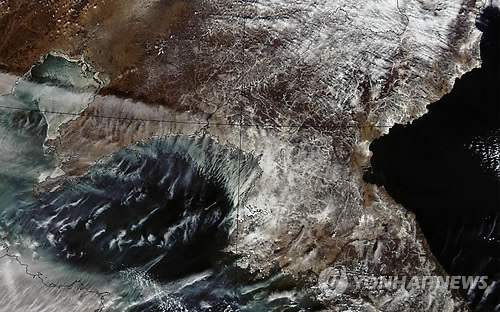
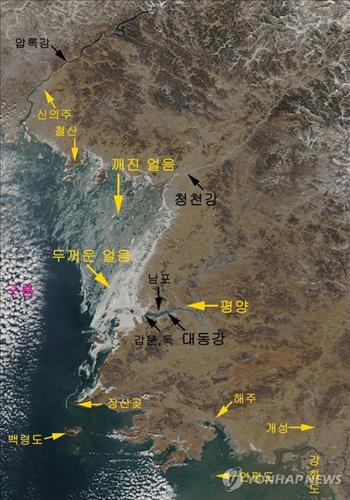
Pictured above (Yonhap): two satellite images of the DPRK’s west coast

According to the Donga Ilbo:

North Korea`s fisheries and shipping industries, two key earners of foreign currency for Pyongyang, have effectively been shackled due to a prolonged cold wave that has frozen waters in the Yellow Sea.
With the temperature reaching minus 10 degrees Celsius for more than a month, more than 40 kilometers of sea water in the Yellow Sea off the North`s coast have been frozen. This is the first time in decades that about 200 kilometers of the North`s coastline from the mouth of the Yalu River to the North`s Hwanghae provinces have been frozen.

Experts say the frozen water will not only affect the North’s fisheries and shipping industries, both of which are major earners of U.S. dollars, but also the Stalinist country`s economy and newly launched Kim Jong Un administration.

Massive ice blocks cover 200 kilometers of N. Korean coastline

In Seoul, the Korea Center for Atmospheric Environment Research and the Korea Meteorological Administration said Thursday that based on analysis of satellite images, massive ice 40 kilometers wide was detected in North Korean coastlines spanning 40 kilometers from the mouth of the Yalu River to coastal waters off Pyongyang.

According to the analysis, Korea Bay located in between the North’s Cholsan and Changyon peninsulas has remained frozen since Jan. 10 due to the cold wave. Coastal waters of Unryul County in South Hwanghae Province, the Chongchon River flowing into Korea Bay, and the port of Nampo at the mouth of the Daedong River running through Pyongyang are also covered with ice.

Chung Yong-seung, director of the environmental think tank, said, “In the past, waters off the North Korean coast used to be frozen. But the formation of such large-scale ice is unprecedented.”

Experts blame arctic ice moving south due to global warming for the ice formation.

North Korea has been hit by a severe cold snap this winter. According to the South Korean weather agency, the North’s average temperature last month was minus 8.4 degrees, 0.7 degrees lower than in an average year.

The Chosun Shinbo, the official newspaper of the pro-Pyongyang Federation of Korean Residents in Japan, recently said, “Temperatures in Pyongyang remained below zero from Dec. 23 last year through Jan. 31, the most extreme cold since 1945,” adding, “North Koreans can even walk on the Daedong River.”

Temperatures in the North fell further this month to minus 11.1 degrees on average, down 4.6 degrees from an average year.

Big burden on N. Korean gov

The ice formation in North Korean waters is pressuring the Kim Jong Un administration economically, experts said. The combined share of fisheries and agriculture in the North`s GDP is 20.8 percent, eight times higher than for South Korea (2.6 percent). Fisheries also play a key role in sustaining the North`s economy with catch volume reaching 630,000 tons a year.

Pyongyang`s dollar earnings have also been hit hard due to the frozen sea that has prevented fishing boats from leaving ports. Goh Yoo-hwan, head of the (South)Korean Association of North Korean Studies, said, “The North should export primary products such as fisheries goods, but no fishing operations due to the frozen water will take a huge toll on the North`s dollar earrings.”

Waters near China’s Liaodong Bay and Russia’s Vladivostok have also been frozen, causing the North’s maritime transportation to go awry. Due to soured inter-Korean relations, the North`s trade with the South and Japan has declined and raised the Stalinist country’s dependence on China to 56.9 percent.

Kim Yong-hyeong, a professor of North Korean studies at Dongguk University in Seoul, said, “If the ice formation in waters wreaks havoc on the North’s maritime transportation, this will destabilize the North Korean economy.”

The problem is that ice at sea is growing thicker. The National Meteorological Satellite Center in Seoul said the boundaries between ice blocks and waters in the North’s section of the Yellow Sea were vague last month, but grew clear this month with ice getting thicker.

Director Chung of the environmental think tank said, “Given North Korea’s weather conditions, the ice in the sea will grow thicker through early next month,” adding, “North Korean society will be hit hard if its fisheries and shipping industries are grounded for more than two months.”

And just how productive is the DPRK’s fishing sector?  According to Yonhap:

Chung Yong-seung, head of the research institute, said it is rare for the port to freeze two winters in a row, a development he said could have a negative impact on the North’s fishing industry.

North Korea’s catch reached 663,000 metric tons in 2009, the latest year for which statistics are available, according to the South Korean government data.

Read the full reports here:
N. Korea’s largest port frozen for 2 straight winters
Yonhap
2012-2-10

Extended cold wave freezes key NK sectors of fisheries, shipping
Donga Ilbo
2012-2-10

Share