Archive for the ‘Automobiles’ Category

The Unification Church in the DPRK

Monday, September 10th, 2012

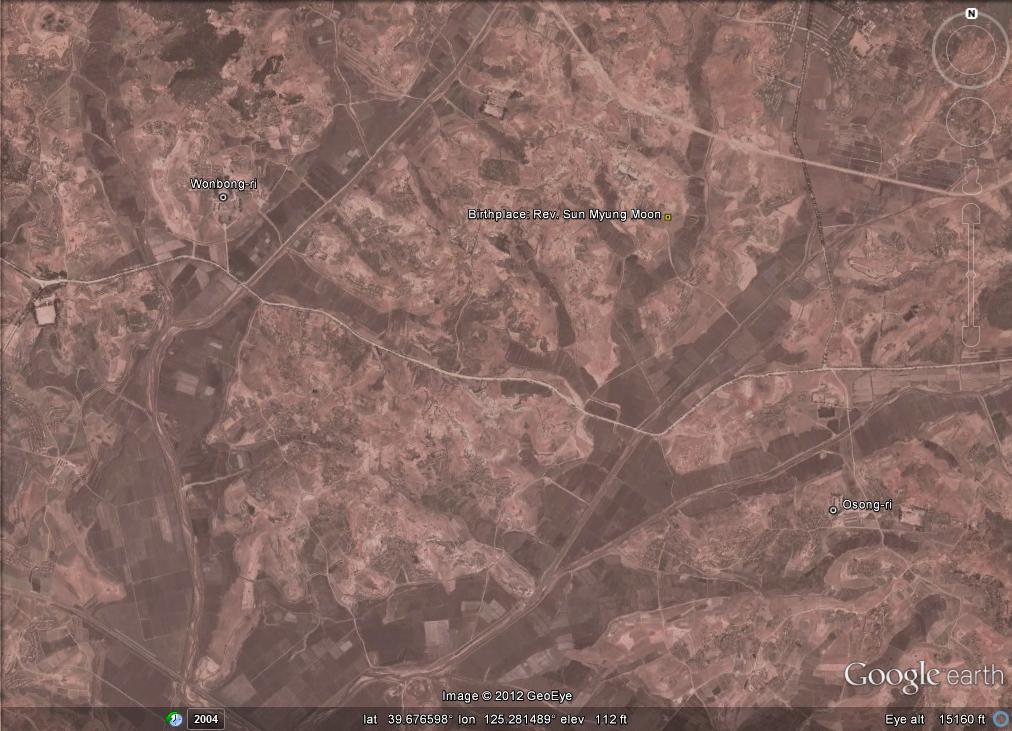
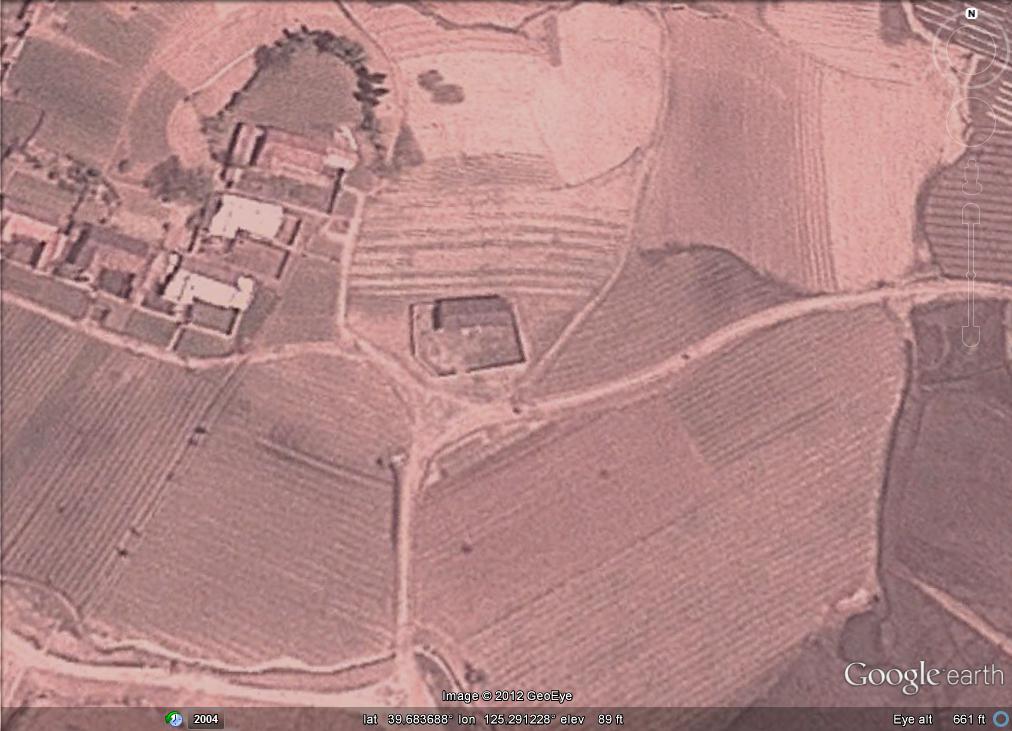
The Rev. Sun Myung Moon was born between what is now Wonbong-ri and Osong-ri in Jongju City (정주시).


Pictured above (R) is a satellite image of the exact building the DPRK and the Unification Church claim was the birthplace of Rev. Moon. I first blogged about this  in 2009. The Google Earth coordinates are  39.683728°, 125.291145°, and you can see a ground level photo of the site here (taken by Unification Church delegation).

The Rev. Moon’s Church, the Unification Church, has made substantial investments in the DPRK.

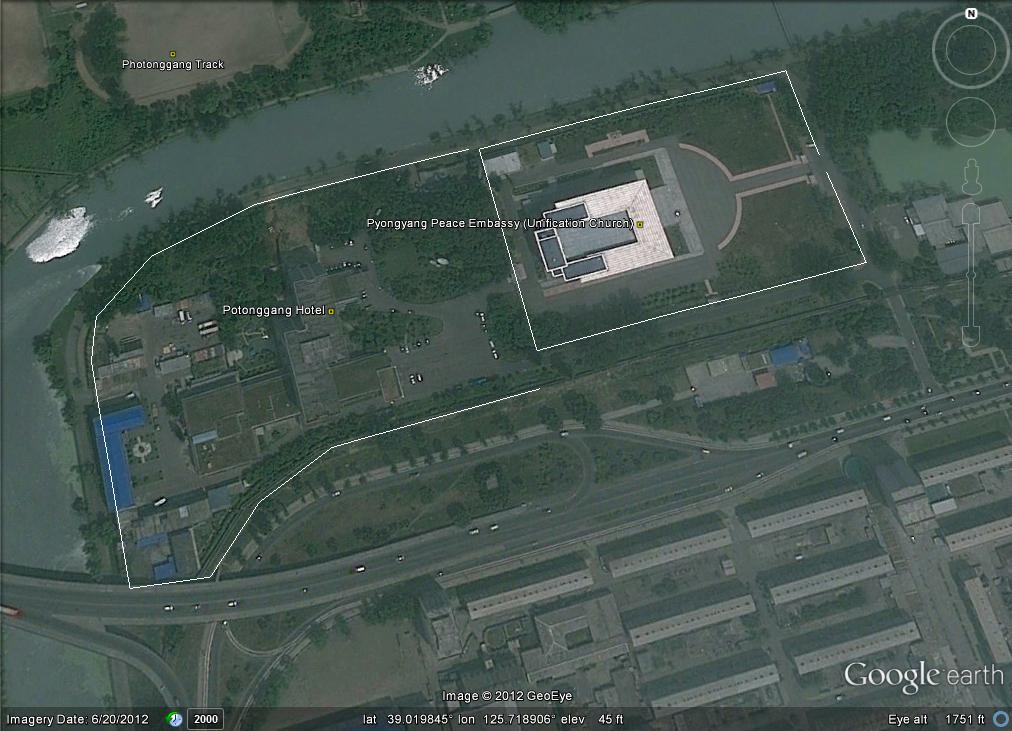
The Unification Church built the Pothonggang Hotel and Pyongyang Peace Embassy (Google Earth:  39.020134°, 125.717641°) in Phyongchon-guyok, Pyongyang:

See photos of the Pothonggang Hotel and Peace Embassy on the Pyeonghwa Motors web page.

The Unification Church also launched Pyeonghwa Motors in the DPRK.

Pyeonghwa Motors was the first firm allowed to put up billboard advertisements in the DPRK. Here are links to images of most of the billboards: Link 1 (Images also say where they are located), Link 2Link 3Link 4Link 5.

Pyeonghwa Motors has several assets in the DPRK, the status of which remains a bit unknown:

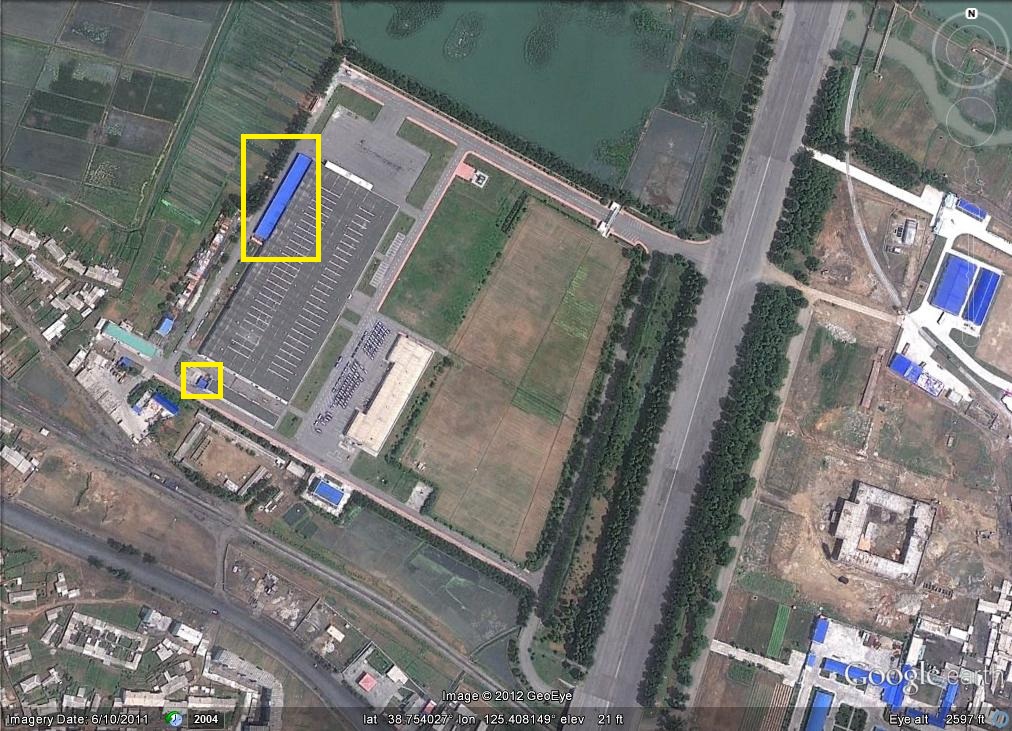
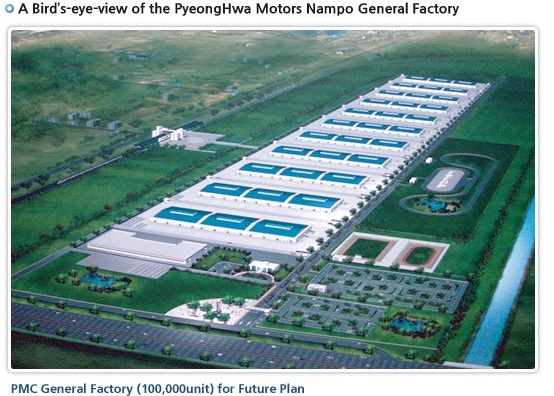
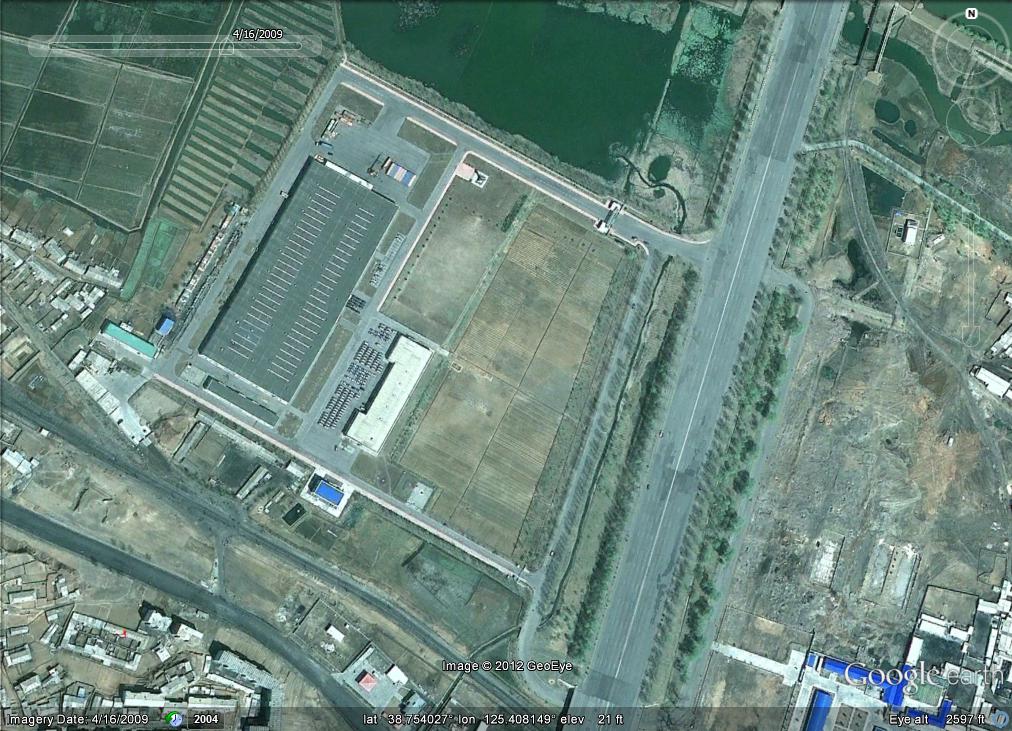
There is of course the Pyeonghwa Motors Assembly Factory in Nampho, which I first identified on Google Earth years ago. It has seen some minor expansion between 2009 and 2011:


You can see a Pyeonghwa Motors advert here which features the factory:

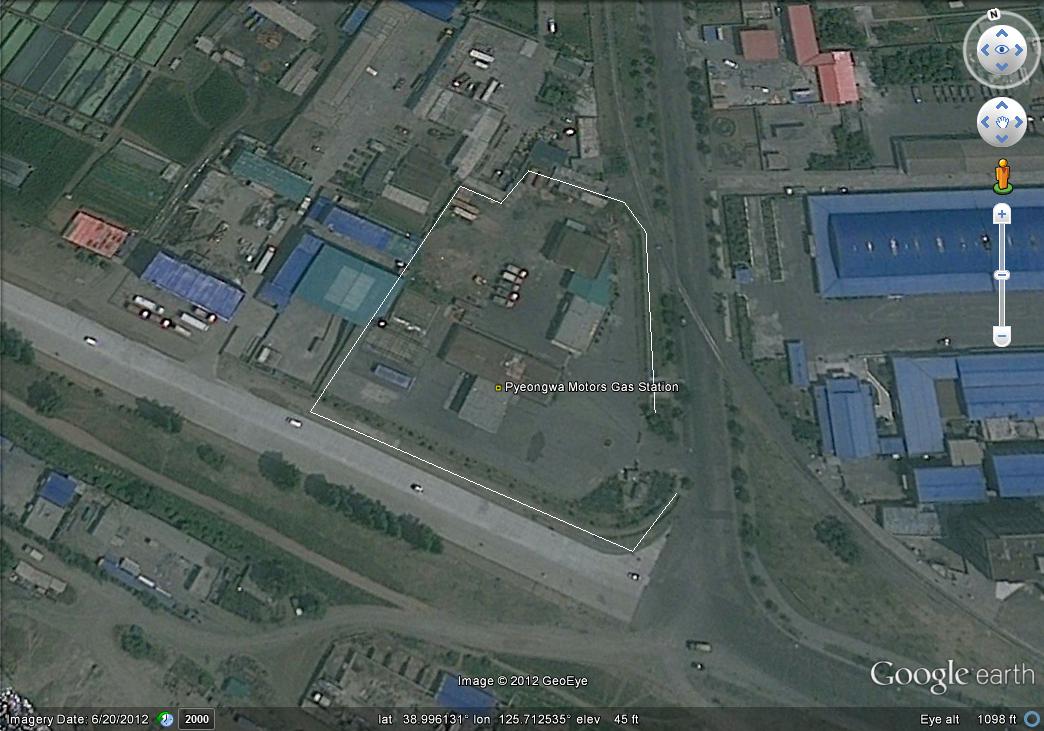
Pyeonghwa Motors also built a gas/petrol station in Pyongyang:

The Google Earth coordinates are  38.996068°, 125.712410°, and you can see photos of the Pyeonghwa Motors Petrol Station here.

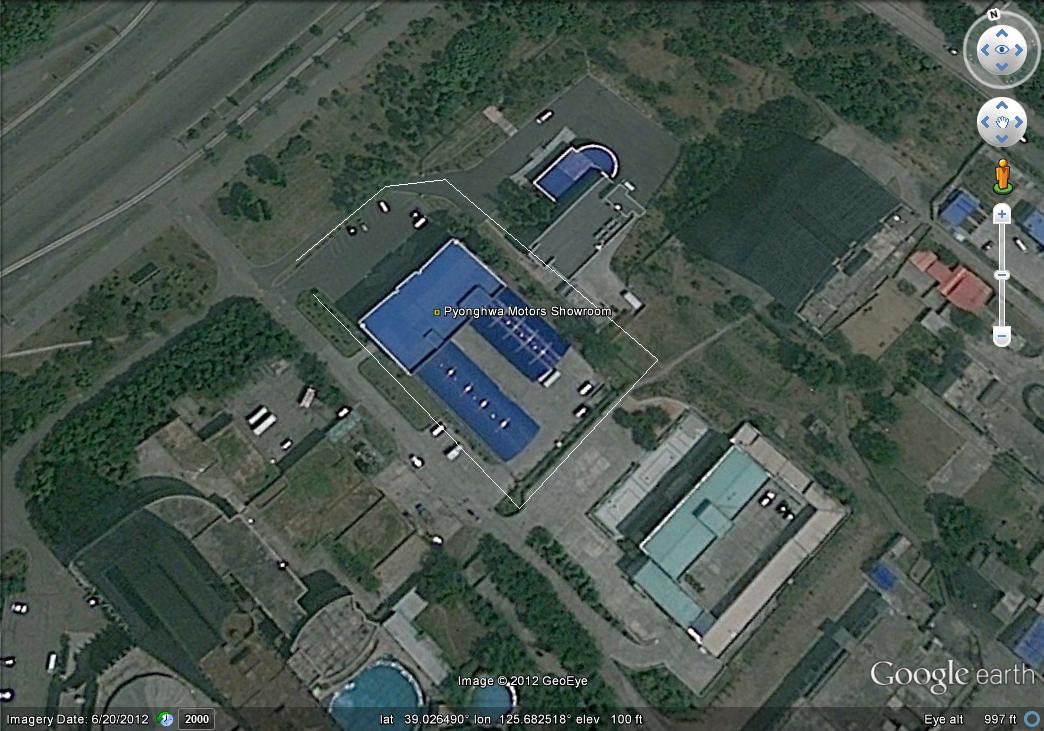
Pyeonghwa Motors also has a showroom on Kwangbok Street in Mangyongdae-guyok:

The Google Earth coordinates are  39.026709°, 125.682252°, and you can see photos of the Pyeonghwa showroom here.

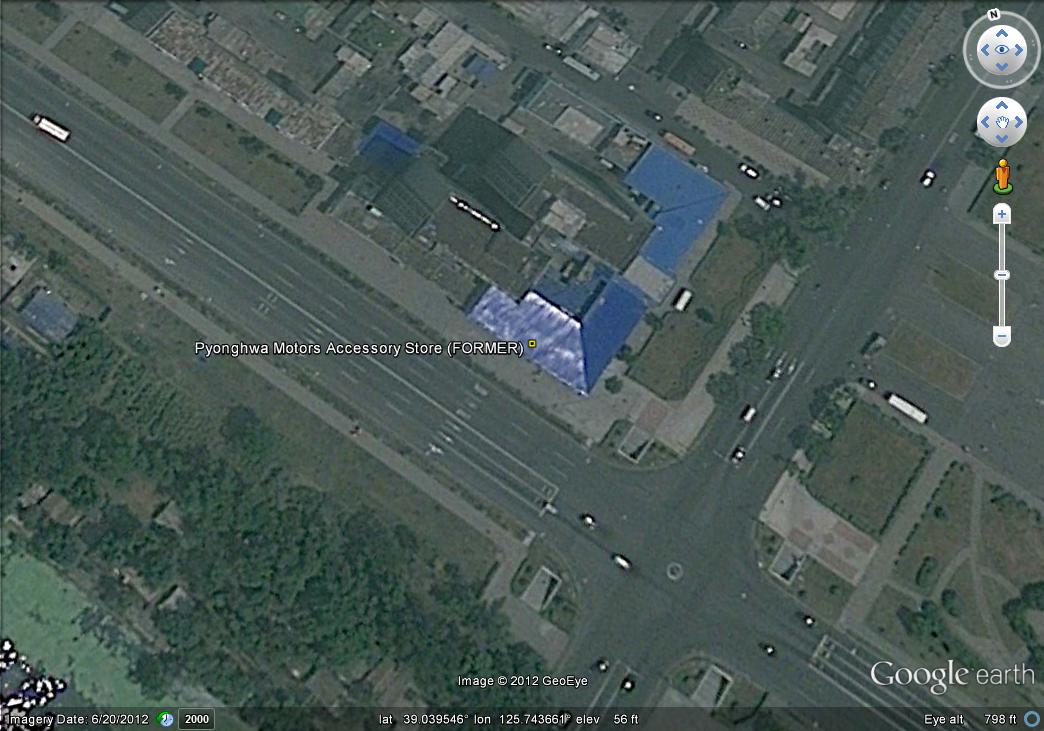
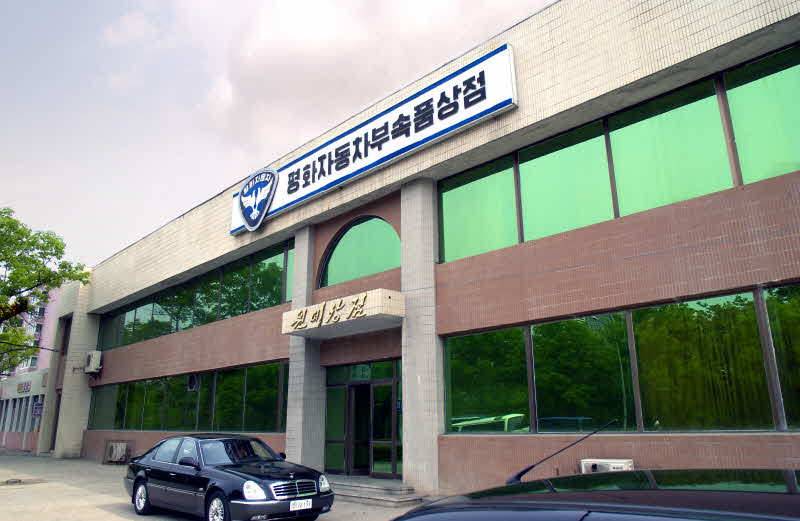
The Pyeonghwa Motors web page also advertises an accessory shop in Pyongyang:


The Google Earth coordinates for this shop are  39.039590°, 125.743704°, and you can see photos of the Pyeonghwa Motors Accessories Shop here.

Although this facility is listed as operational on the Pyeonghwa Motors web page, recent tourist video shows that at some point before April 2012 this building has become a humble flower shop (꽃상점):

The shop’s entrance can be seen at the 2:00 mark.

However, according to this photo taken on June 6, 2012, the Peonghwa Motors logo still appears on the top of the building. So I am unsure of the actual status of this facility.

It is unclear if the accessory shop has moved or if it has permanently closed down.

Previous posts on Pyeonghwa Motors here.

If there are any Unification Church assets that I have not mentioned in this post, please let me know.

Read more on the history of the Unification Church in the DPRK here.

Share

Fewer Japanese cars reported on DPRK roads

Thursday, May 31st, 2012

According to the Daily NK:

Japanese-made vehicles are disappearing from the streets of North Korea, six years after Kim Jong Il decreed that it should happen. Indeed, just two years ago it seemed that a majority of the vehicles on the streets were still those made by Toyota, Nissan and Mitsubishi, but this is no longer the case.

According to a Chongjin source who spoke with Daily NK yesterday, “In accordance with a 2010 National Defense Commission order saying that all Japanese cars had to be off the streets by last December, now you can hardly see any Japanese private cars or vans in the entire country.”

The NDC order reportedly pertained to private cars and vans of 1.5T or less, although the source said that trucks of Japanese origin are also meant to be phased out over the next couple of years as well.

The move is said to relate to a decree issued by Kim Jong Il in 2006 in which he demanded that all Japanese cars had to be gotten rid of. He apparently issued it after watching unhappily as a Japanese car overtook his own on the Pyongyang-Wonsan highway.

Another case is instructive in showing the degree of official dislike. In 2008, Namkang Trading Co. had already been importing second hand Japanese cars through Rasun for some time. However, a provincial Party secretary received a report on the removal of Japanese cars, and as a result more than 300 such cars were gathered in a local stadium and turned into scrap metal using fork cranes as cadres watched on.

But it was not really until four years after Kim’s original decree that implementation hit its stride, because it took some time to secure sufficient replacement vehicles. Pyongyang municipal, Party, state and security organs were the first to lose theirs in 2010, followed in 2011 by factories, enterprises and foreign currency earning units.

According to the source, “At the time, there were more than 100 perfectly good vehicles taken from North Hamkyung Provincial Party Committee alone.” The transportation head in the province apparently commented that “tens of thousands of perfectly sound vehicles have been gotten rid of nationwide.”

However, in October, 2010, Kim Jong Il delivered cars as gifts to key individuals and organizations. There were nationwide events held to celebrate receipt of the vehicles. Cadres at provincial Party departmental head and above received Chinese vehicles, while local Party secretaries and people’s committee chairmen received Russian ones. Factories and enterprises were subsequently ordered to purchase vehicles produced domestically in Nampo by ‘Pyeonghwa Motors’, a joint venture with the Seoul-based Unification Church, but this didn’t always happen.

The relative popularity of Japanese vehicles in North Korea stems in part from their build quality, which allows them to traverse the often sketchy North Korean roads, and in part from the fact that they used to represent a good trading opportunity in the 1980s and 90s. At that time, such vehicles could be imported from Japan and sold on to Chinese businesses at a profit margin of up to 400%. Domestic popularity was one of the inevitable side-effects of this trade.

Previous posts on this topic here (2007-7-11) and here (2007-7-27).

Read the full story here:
Japanese Cars Crashing Out
Daily NK
Choi Song Min
2012-5-31

Share

Visa-free Rason tourism for Chinese citizens

Tuesday, May 29th, 2012

According to Choson Exchange:

Chinese tourists will have visa free access to the border regions linking Yanbian Autonomous Region, Rason Special Economic Zone and Russia, according to a report originating with Jilin Radio that surfaced in South Korean media today.

The report doesn’t give an date for implementation, but does state that the previous tourism agreement governing the border region (signed in 2010) will be streamlined. It still takes 10 days for a Chinese traveler to get permission to visit Rason. This process will drop to 2-3 days.

If accurate, this could go a long way towards boosting tourism in the SEZ. After all, a Beijinger or Shanghaiian might well be more willing to spend the money to visit the region if they can get two countries in the same trip. At the risk of overgeneralizing, Asian tourists seem eager maximize passport stamps above all else on international tours. This desire could be effectively exploited if Rason and Russia’s Primorsky Krai province coordinate their marketing.

Also, now that the road to Rason is paved, the ease with which Chinese gamblers can reach the Emperor Casino and Hotel greatly increases and arguably makes the destination seem more normal and therefore attractive. One wonders if the casino’s fleet of crimson humvees, once needed to whisk high-rollers along the laborious dirt road from, will now be replaced by Mercedes or Lexuses. (Lexi?)

Last year, the SEZ experimented with self-drive tours for Chinese citizens, though there has yet to be any follow-up on it.

For westerner tourists thinking of visiting Rason, we recommend Krahun, a company that has had a presence in Rason for over a decade and know the region exceptionally well.

Read the full story here:
Visa Free Rason Tourism for Chinese Citizens
Choson Exchange
Andray Abrahamian
2012-5-29

Share

North-South Korea and Chinese trade

Wednesday, May 23rd, 2012

The Joongang Ilbo reports some recent statistics from, the Kaesong Industrial Zone and some trade statistics between the two Koreas and China.

Inter-Korean and China trade (Joongang Ilbo):

Exactly two years ago, on May 24, 2010, in the aftermath of the deadly sinking of the Cheonan warship, the Lee Myung-bak administration imposed sanctions against North Korea that forbade all inter-Korean trade and South Korean investments in the North.

[…]

Statistics from the Korea International Trade Association show that the volume of inter-Korea trade in 2011 dropped by 10.4 percent, falling to about $1.7 billion from $1.9 billion in 2010. The Kaesong Industrial Complex, which was exempted from the sanctions, accounted for most of the inter-Korean trade.

In contrast, the volume of trade between North Korea and China surged by 62.4 percent in 2011, from $3.4 billion in 2010 to $5.6 billion.

“After stopping trade with South Korea, factories in Pyongyang and Nampo cities turned to Chinese companies and now work for them,” a South Korean businessman said on condition of anonymity. “It took so much time and money for us to teach North Korean employees and now Chinese companies enjoy the fruits of our labor.”

The North Korean government responded to the South Korean sanctions:

As talks between the two authorities have been halted, North Korea has unilaterally decided to raise taxes on income and management of the complex.

In fact, the North Korean regime earns significant money from the complex. South Korean firms pay the North Korean government an average of $126.4 per month for each North Korean worker. The government then distributes 5,000 won of North Korean currency and some food coupons to each employee per month. This wage is desirable compared to other worker payments in the North.

Analysts calculate that the regime is holding at least $50 million from the $77.8 million of the North Korean employees’ annual income.

At current black market rates, there are appx 4,450 DPRK won to for US$1.

The article notes, however, that the Kaesong Industrial Zone continues to grow:

Located only three kilometers away from the Military Demarcation Line, the inter-Korean complex has 123 South Korean companies and about 51,000 North Korean employees.

Currently, the South Korean government is implementing a scheme to build more roads and infrastructure for South Koreans crossing the border to commute to the complex (see here and here).

“Although Kim Yong-chol, former head of the policy planning office of the North’s powerful National Defense Commission, who has exerted a huge influence on operating the Kaesong complex, repeatedly threatened to shut down the complex since the May 24 sanctions, he’s recently been more cooperative, saying ‘Let’s make it better,’” a high-ranking government source told the JoongAng Ilbo.

Unlike the frosty inter-Korean relations, the sales performance of the joint industrial complex is positive. For the past three years, 55 South Korean firms additionally moved into the complex and the annual output value surpassed $400 million in 2011, jumping from $180 million in 2007.

Last year’s volume is 30 times that of the $14.91 million in 2005, when the complex made its first yearly outputs. The total output value since 2005 has accumulated to $1.5 billion.

[…]

Currently, roughly 160,000 people are living in Kaesong city and approximately one out of three are working in the complex

The article also reports on additional DPRK-China projects that are not necessarily a result of higher barriers to commerce between the two Koreas (dredging, mining, labor mobility, and SEZs):

“A Chinese firm based in Yanji is now implementing a 60-kilometer-long (37-mile) dredging project in the Tumen river bed,” a government-affiliated research official said.

“It’s not simple dredging work, but a plan to mine the iron ore buried nearby.”

“In the river bed, about 30 percent of the sand contains iron ore,” the official said.

The regime also exports their labor forces to their closest ally.

“Most of the local people left for South Korea to get a decent job and the average wage for a Chinese worker is increasing,” a Chinese factory manager in Yanji said. “So we are planning to hire North Korean workers instead.”

Pyongyang and Beijing are also focusing on developing the two special economic zones, Rason and Hwanggumpyong in northeastern North Korea.

When Chen Deming, the Minister of the Chinese Ministry of Commerce of China, and South Korean Trade Minister Park Tae-ho had a bilateral meeting on May 2 to start negotiations on the Korea-China free trade deal, they included a provision stating the two countries will allow preferential tariffs on goods produced in designated zones.

“Hwanggumpyong is like a Kaesong Industrial Complex to China,” a South Korean authority said. “The Hwanggumpyong zone has the same function as Kaesong, composed of China’s capital and technology and North Korea’s land and labor forces.”

In the Rason Economic Zone, China has finished construction paving the 53-kilometer-long road connecting the Rason zone and a local tax office in Wonjong-ri, a North Korean village close to China.

The Chinese government also arranged a harbor near the Rason area, constructing a pier that can accept a three million-ton ship and building a bus route between an express bus terminal in China and the zone.

“If China uses the Rason harbor, they can save $10 per metric ton,” Jo Bong-hyeon, a senior official at the Industrial Bank of Korea, said. “It’s really good business for China, enough to invest money on building infrastructure in the zone.”

Read the full story here:
Kaesong complex running well despite sanctions
JoongAng Ilbo
2012-05-23

Share

Gas stations booming in Pyongyang

Tuesday, May 22nd, 2012

According to the Korea Times:

The number of gas stations in North Korea is rapidly increasing following a similar rise in automobiles in and around the showcase capital, a source who recently visited the Stalinist state said Tuesday.

Visitors to Pyongyang, which underwent massive renovations for the recent 100th birth anniversary of country founder Kim Il-sung, have noted a visible increase in cars, mostly Chinese, but also brands such as Mercedes, BMW and Volkswagen.

“Compared to some years ago, there has been a veritable boom in the use of cars. And, at the same time new gas stations have sprouted in Pyongyang, and even in the countryside,” the source said, asking not to be named.

North Korea watchers say that while much of the country remains in dire economic straits, consumption is rising in Pyongyang, where the North’s elite class resides, boasting wealth accrued from grassroots capitalism and increased trade with China.

The source, who has a record of accuracy on economic developments in the North, said while the stations appear to be owned by party organizations they are seen as good business opportunities for the operators.

Those filling up cars attached to the party must pay with a coupon but prices were cheaper for others paying with hard currency, which experts say Pyongyang is attempting to soak up. Gas is measured in kilograms there, not liters or gallons.

The source also noted the increased use of the license plate number “7-27” that has become linked to new leader Kim Jong-un and refers to July 27, 1953, when the armistice to end the Korean War came into force.

Most cars are still formally attached to an army unit, the ruling party or a government institution, but are said to be increasingly used for private transportation. Other signs of increased spending have popped up in Pyongyang in the form of foreign-themed restaurants and cafes, as well as a department store hawking Chanel and Armani.

Other projects for the founder’s centennial include new high-rise apartment units in the Mansudae area of the capital and the opening of a hydroelectric plant long-touted as a symbol of modernity.

The makeover coincides with lifestyle changes among Pyongyang residents marked most distinctly by the rapidly-increasing use of cellphones after the regime introduced a 3G network in 2008.

Despite the upgrades in the capital, reports of starvation persists, raising concerns that the wealth disparity may be unsustainable for the fledgling Kim Jong-un regime. Some say the regime may feel pressured to provide luxury goods due to fierce competition among the elite.

Read the full story here:
Gas stations booming in Pyongyang
Korea Times
Kim Young-jin
2012-5-22

Share

Rason update

Thursday, December 22nd, 2011

Andray Abrahamin and John Kim worte a comprehensive summary of the current state of Rason. The article appears in The Diplomat:

In 1991, the North Korean government dubbed Rajin-Sonbong (Rason) a free trade zone to attract foreign capital. However, less than a decade later, the zone lost its free trade status. According to local businessmen, the party secretary of Rason, a relative of the late Kim Jong-il himself, was charged with corruption and eventually executed, a harbinger for the long period of isolation ahead. Since the end of 2009, signs of renewed commitment to Rason have sprouted. While it may be too early to say whether the region will succeed in drawing investment and reform, our recent trips to Rason lead us to believe that developments on the ground may eventually warrant a shift in foreign policy by governments around the globe.

China has long eyed Rason as a potential import/export center for the landlocked provinces of Jilin and Heilongjiang. However, from Rason’s inception, the Middle Kingdom held little influence or interest in the region’s success. In 2002, North Korea establishedanother special economic zone in Shinuiju and instated businessman Yang Bin, then China’s second richest man, as the SEZ’s Chief Executive. The Chinese authorities promptly placed Yang Bin under house arrest. Perhaps as a lesson learned from this episode, the North Koreans have made the Chinese government a major stakeholder in Rason’s development.

The Chinese have moved 80,000 metric tons of coal this year through a pier they leased at the Rajin port.They are also reportedly sending regular delegations of senior officials, including the Chairman of the China Development Bank, and they have invested $30 million to repave the road from the border town of Wonjong to the Rajin Port. This road was 60 percent paved during a visit in October, and recent reports from businessmen inside the region confirm that the road is now 95 percent paved, allowing for large trucks to pass through. The Chinese have also constructed a new road on their side of the border, part of the support this area has received after the Chinese central government designated it “The Changjitu Development Region” in November of 2009.Officials from the North explained that the Chinese will have a say in everything from zoning of real estate to port customs and investment policies.

Though Russia’s involvement doesn’t run as deep, it also maintains a keen interest in Rason’s ice-free port and has pledged an investment of $200 million to refurbish a railway from the border town of Khasan and to upgrade pier three at the Rajin port, which it has leased for 49 years. Rason’s third port at Oongsang was once a major exporter of lumber from the Soviet Union, and though Oongsang looks far from reviving the Soviet involvement of its heyday, Russia clearly has an interest in Rason’s success as well.

In addition to neighboring countries’ newfound interest in the zone’s success, the North Korean leadership has also shown a renewed desire in luring investment into the region. In December 2009, Kim Jong-il made a visit to the area, sent his former trade minister to run the region as party secretary, and reinstated Rason’s status as a special city, wresting it out of provincial control. Any potential investor who visits the SEZ would experience the thirst of the local government to develop the region, as reflected by the words of an official with the Rason Economic Cooperation Bureau, Rhee Sung Hye: “The future of my career depends on how much investment I can bring.”

At the national level there are also signs that the regime is increasing its focus on economic development as a source of legitimacy. In 2009, the Joint Venture Investment Commission was formed as a one stop shop for foreign investors, while the Taepung Group and State Development Bank were created to attract foreign investment. In the first half of 2011, Kim Jong-il made more appearances related to the economy and less related to defense than in prior years, and a focus on improving lives through focus on light industry and agriculture was emphasized in joint editorials that signaled policy direction at the beginning of 2010 and 2011.

The alignment of simultaneous commitment from North Korea, China, and Russia sets the scene for a North Korean special economic zone with higher chances of success than perhaps ever before. However, interest and desire may not necessarily translate into results without knowledge of markets and how to create a stable investment environment. After a recent tour of his 200MW fuel oil powered generation facility, the President of Songbong Power, Rhee Kang Chul, expressed that the reason for his plant’s inactivity and the subsequent blackouts in the region was the rise in feedstock costs. When asked about mechanisms for electricity pricing, Rhee responded that the government had set power prices at 6.5 euro cents/kwh, but he couldn’t provide further details on how the number was arrived at and when it might change again. Though Rhee was clearly an expert on the technical aspects of power generation, he hadn’t had the chance to consider that potential investors, after getting comfortable with country risk, would have little clarity on the revenue side of their equation. When this was expressed to the Vice Mayor of Rason, he replied, “We can change the price of electricity here. Rason is not under the same restrictions as the rest of the country.”

North Korea could theoretically piggyback off the market knowledge that their Chinese partners have gained over the last 30 years, but Rason’s neighbors are only likely to share when it suits their interests. In the case of Sonbong Power, Kang told us that every Chinese official who has visited stated that the most effective solution would be to pipe in power from the Chinese grid. “We plan to have a power line installed from the border by the end of 2013.” As power is as strategic asset like food or water, dependence on Chinese power clearly leaves the North Koreans in a vulnerable position.

China is clearly North Korea’s closest ally, but their relationship has a thorny history and Pyongyang is acutely aware of its reliance on big brother Beijing. With China’s rise, many other countries in the region are increasingly dependent on trade but increasingly cautious of dependence, welcoming a stronger presence from the United States, which is in the midst of a strategic pivot towards Asia.

In December 2009, the Asia Society and the Institute on Global Conflict and Cooperation published a report arguing that economic engagement of Pyongyang by the United States would result in creation of vested interests in continued reform, a changed perception of self-interest and a less confrontational foreign policy from North Korea. Against the backdrop of a more uncertain domestic environment after the death of Kim Jong-il, and the shifting dynamics in Asia generally, a North Korea that trades more and engages with the outside world may necessitate a change in foreign policy of governments around the world, most specifically the United States, South Korea, and Japan.

The Rajin-Sonbong SEZ has a checkered past and it would be naïve to say that North Korea is embarking on late 1970’s style Chinese economic reforms. However, we believe that the unprecedented alignment of interests in the region make it a likely starting point for any lasting directional change, which is why the world should watch Rason.

Read the full story here:
Why World Should Watch Rason
The Diplomat
John Kim & Andray Abrahamian
2011-12-22

Share

Pyongyang – Nampho road renovation

Saturday, December 3rd, 2011

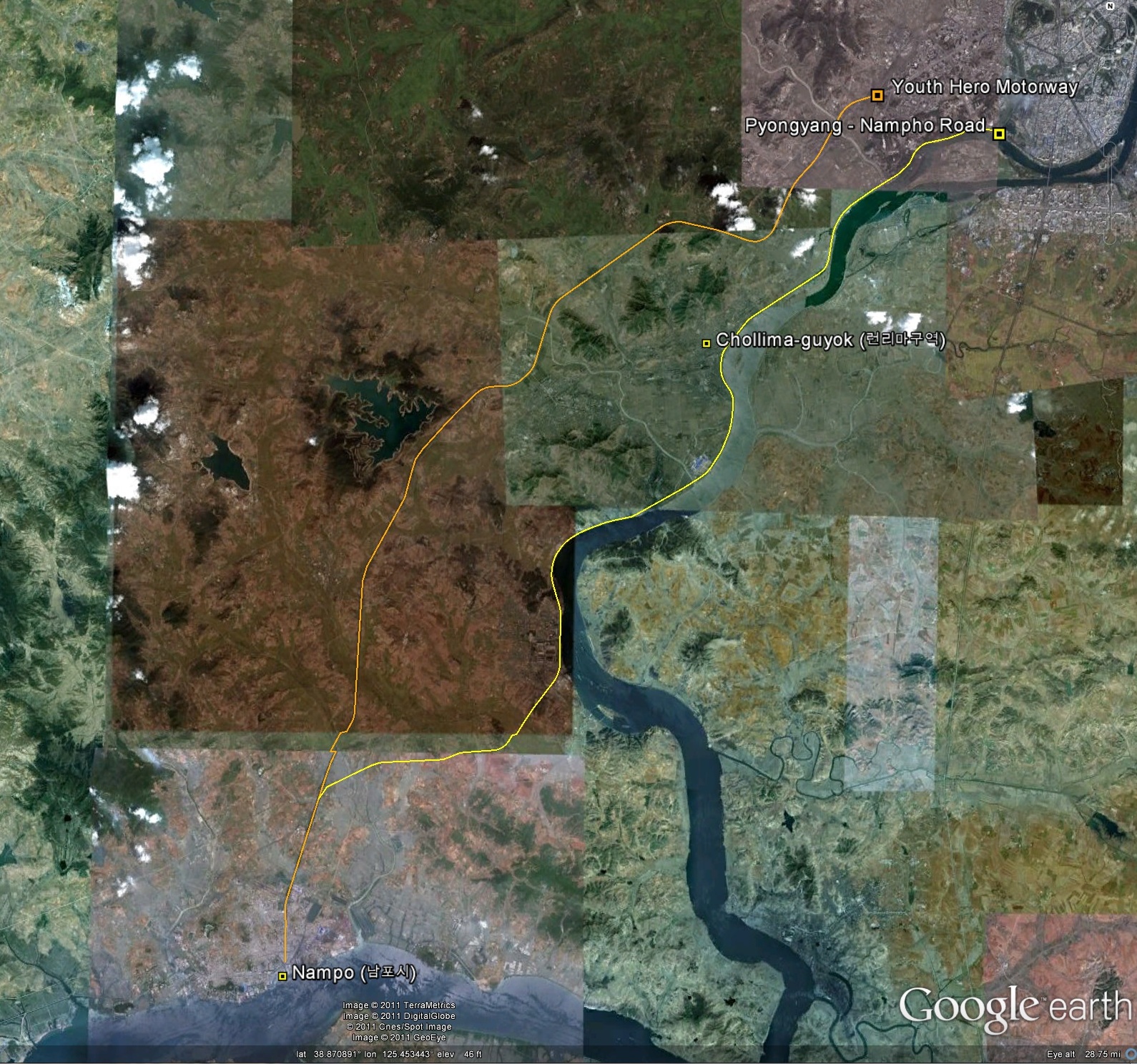
Pictured above (Google Earth): The Pyongyang – Nampho road (in yellow) and the Youth Hero Motorway (in orange).

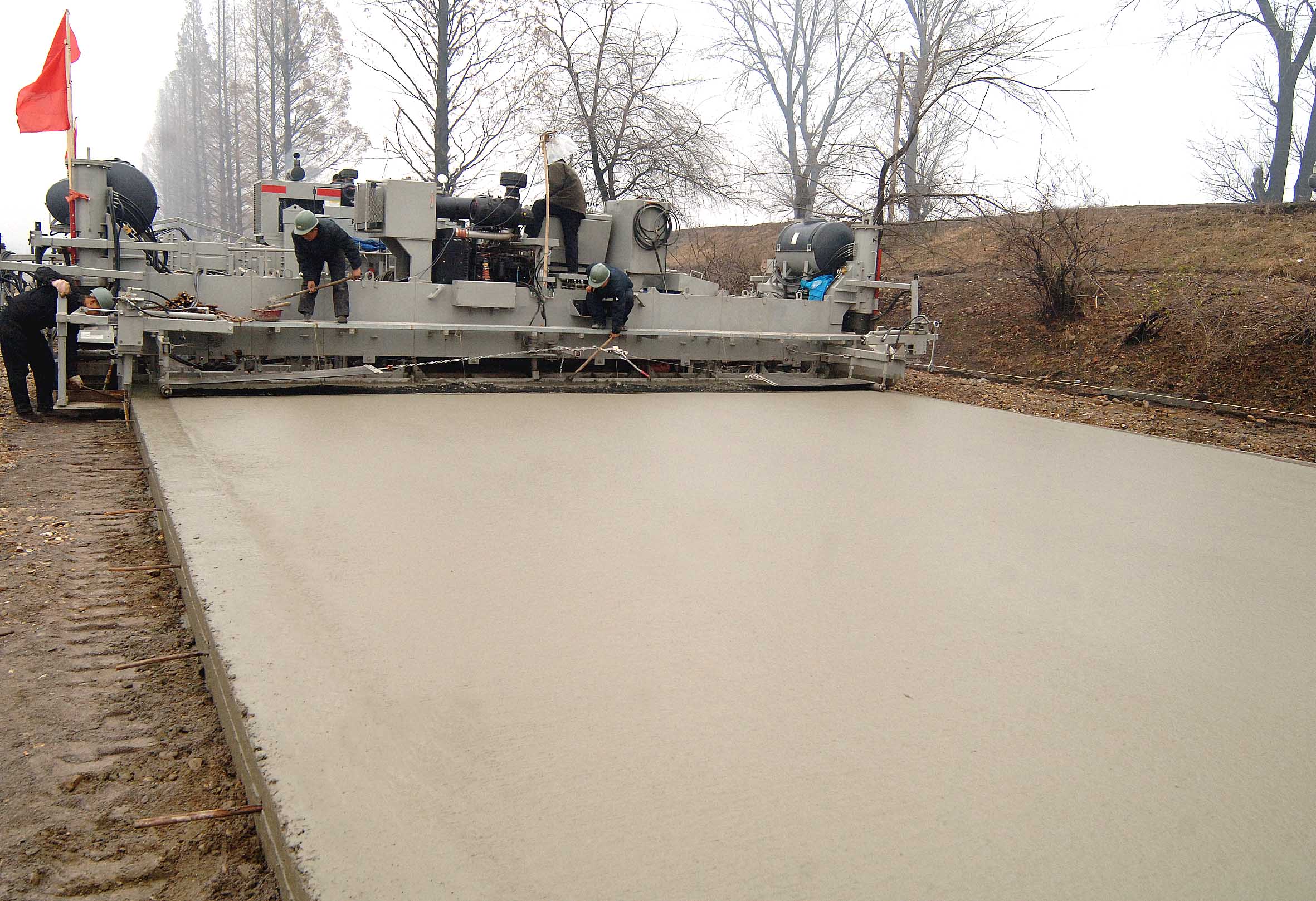
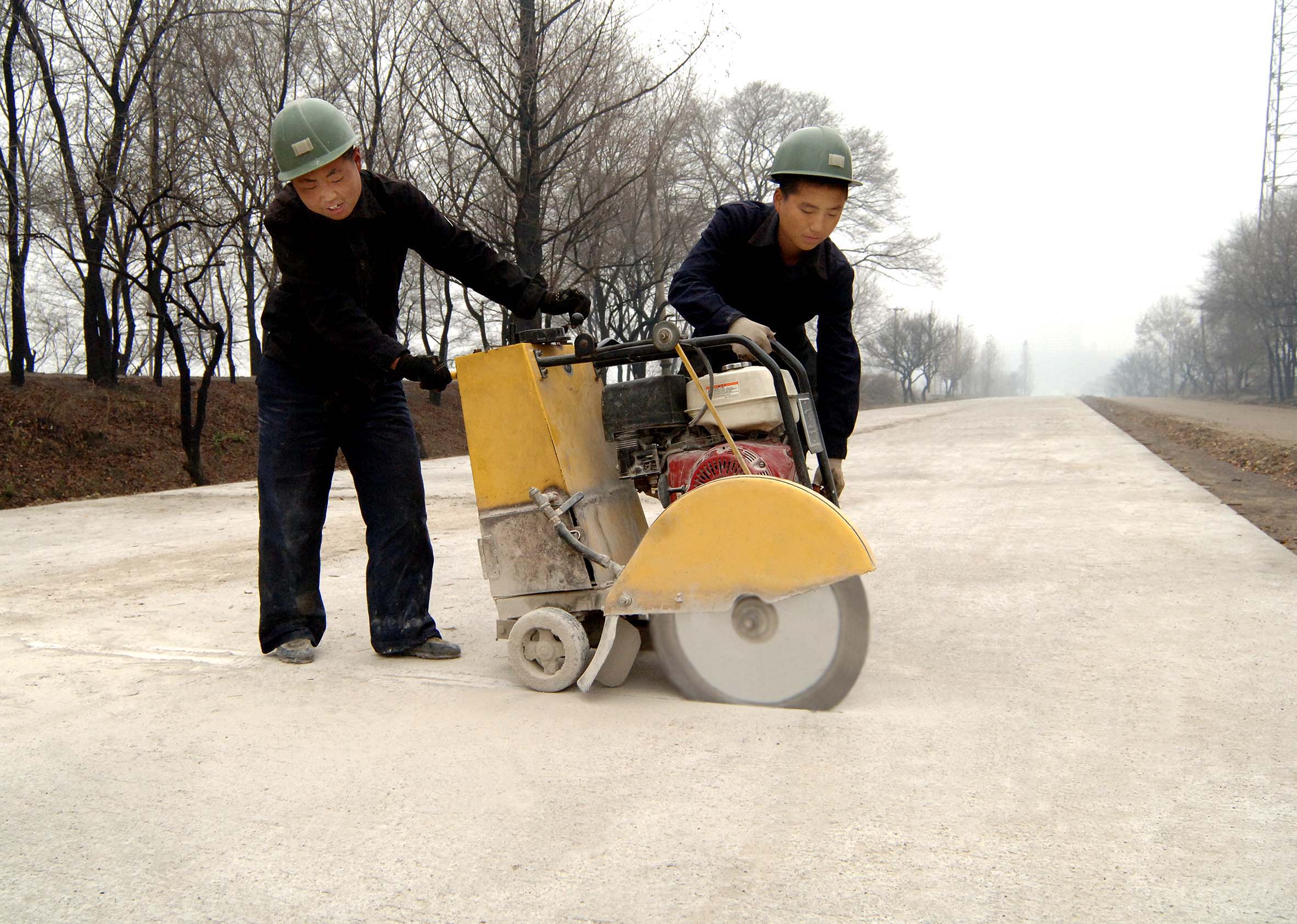
UPDATE 1 (2011-11-29): KCNA has published pictures of the road construction, so it must be continuing apace!


ORIGINAL POST (2011-8-25): According to Yonhap (North Korea Newsletter No. 172–August 25, 2011):

Premier Choe Yong-rim Visits Pyongyang-Nampho Roadwork Sites

SEOUL (Yonhap) — North Korean Premier Choe Yong-rim made spot inspections on Pyongyang-Nampho roadwork sites and discussed with workers ways to provide raw materials for the project, the North’s media said on Aug. 22.

“After going round various places of the project, he held a consultative meeting of officials concerned on the spot,” the KCNA said.

The KCNA also said that “discussed at the meeting were the measures for finishing the project on the highest level in a brief span of time and substantially supplying raw materials for the project at relevant fields.”

Earlier, the Rodong Sinmun, the official organ of the North’s ruling Workers’ Party, on Aug. 18 said repair work of the Pyongyang-Nampho old road is now under way at a faster pace.

Premier Choe has been making brisk inspections on industrial facilities and other economic sectors so far this year.

It is worth pointing out for the new readers that the Pyongyang – Nampho road is not the same thing as the Youth Hero Motorway, which was opened in 2000. Since the motorway opened, however, it appears the original Pyongyang – Nampho road has fallen into some disrepair–requiring repairs.

The original Pyongyang – Nampho road is a bit more “industrial” and “practical” than the Youth Hero Motorway.  The latter extends from Kwangbok Street in Mangyongday-guyok to northern Nampho via the countryside.  It is five lanes in both directions and runs in a kinked straight line.  Because it falls outside any densely populated areas (outside its beginning and end), however,  it is largely empty–serving only through traffic.

The original road, however, stretches from Mangyongdae to Nampho along the Taedong River and through the industrial areas of northern Nampho. It connects populated areas of the Chollima Steel Complex, Taedonggang Tile Factory, Taean Heavy Machine Plant, and Taean Friendship Glass Factory before connecting with the Youth Motor Highway just north of the Pyonghwa Motors Factory.

Share

7 Chinese killed in road accidents near Pyongyang

Monday, November 28th, 2011

Pictured above (Google Earth): The Pyongyang Friendship Hospital, where the Chinese visitors are being treated.

According to Xinhua (PR China):

Seven Chinese citizens and three nationals from the Democratic People’s Republic of Korea (DPRK) were killed in two traffic accidents near Pyongyang, the Chinese Embassy in the DPRK said Sunday.

On Saturday morning, a bus carrying 27 Chinese tourists overturned about 60 km away from Pyongyang, due to the slippery iced road caused by icy rain. Another bus with a 17-member Chinese business delegation plunged into a ravine from a bridge in the same section minutes later.

Ten wounded Chinese, including three seriously injured, were being treated at the Pyongyang Friendship Hospital, while the others were confirmed unharmed.

A work group sent by relevant Chinese authorities has arrived in Pyongyang. The Chinese Embassy activated an emergency mechanism and dispatched staff to look after the patients in the hospital on a 24-hour duty.

The DPRK government has instructed health, tourism and diplomatic departments to deal with related issues. DPRK officials have also visited the wounded Chinese in the hospital.

UPDATE: Adam Cathcart is also following this story.

Read the full story here:
7 Chinese killed in road accidents near Pyongyang
Xinhua
2011-11-27

Share

DPRK cracks down on grain market

Tuesday, November 15th, 2011

According to the Daily NK:

The overbearing presence of ‘grain patrols’ is being keenly felt in North Korea these days. Formed at the municipal level from People’s Safety Ministry agents and Worker and Peasant Red Guards from factories and other enterprises, these groups of 20-30 individuals are busy manning checkpoints on main transit routes in agricultural areas to thoroughly restrict the movement of grains from cooperative farms and private plots.

To transit grain legally in North Korea at this time of year, a permit must be sought from the relevent Rural Management Committees. Those who do not hold the required documentation are meant to face punishment, although many simply bribe their way out of trouble. The patrols, which arrive in August, usually disband at the end of November.

A Hwanghae Province source recently told one Daily NK reporter, “They are blocking roads day and night inspecting people and their carts. They do not allow the carrying of any kind of foodstuff and confiscate without condition the goods of those caught.”

The source added, “Even people mobilized for the fall harvest are getting body searched; they are really annoyed.”

Another source from Pyongyang also described the scene, saying, “Currently the grain patrols are focusing on regulating the movement of corn, and are carefully watching for harvested corn being taken into people’s homes. So, some people get together to rent a car and bribe the patrol to be able to get around.”

The source also agreed that a substantial number of market traders are bribing guards and taking this year’s rice and corn from farms to sell.

Read the full story here:
Return of the Grain Patrol
Daily NK
Lee Seok Young
2011-11-15

Share

Interesting weekend fare: Cars, cola, Disney, history, and lift troubles

Sunday, November 6th, 2011

Cars 

Uriminzokkiri posted this short video of rush-hour traffic in Pyongyang (YouTube):

I will leave it up to the reader to determine if the video was staged. What is more interesting to me is to see the variety of vehicles used in the shots.  I saw at least one American Dodge Van in the footage (similar to the one I saw parked next to the Pueblo in 2005).  If you know a lot about cars, feel free to try identifying other vehicles in the footage.

And continuing on the automotive front–a tourist to the DPRK took this picture in September 2010:

The picture above is of an American-made, petrol-guzzling “Hummer H2” (MSRP in 2008 – USD$53,286; 10 mpg-US; 24 L/100 km; 12 mpg-imp). The license plate on the vehicle is 평양 22-2722.

In September 2011, Eric Lafforgue took the picture below of what appears to be a second Hummer on the streets of the DPRK.

The license plate on this vehicle is “23-199”. I cannot read the city name on the plate.  According to the photographer:

During my stay in North Korea, i [sp] saw 2 Hummer cars. This is the fist time i [sp] hear north korean people making cristisms about something in their country! They all told me it was a shame to see such a car in North Korea, as it needs lot of fuel. Some people told me that the car number tells that it belongs to a local media (press or tv).

Cola

Mr. Lafforgue has also brought up another interesting topic through his pictures: North Korea’s cola wars!


On the left is a Picture of Cocoa “crabonated drink” [sp] taken by Eric Lafforgue in 2008.  On the right is a picture of  “코코아 탄산단물” (Translation: “Cocoa Carbonated Drink”) taken by Eric Lafforgue in September 2011.

I might have been inclined to believe they were the same product with different labels (and maybe they are?), however, they appear to be manufactured by different companies.  The cola on the left is manufactured by a company called “룡진” (Ryongjin), a company about which I cannot find any additional information, and the beverage on the right is manufactured by “모란봉” (Moranbong).  I presume that “Moranbong” is actually the Moranbong Carbonated Fruit Juice J.V. Company. According to Naenara:

Moranbong Carbonated Fruit Juice J.V. Company
Add: Taedonggang District, Pyongyang, DPR Korea
Fax: 850-2-381-4410

The company formed in 2004 produces a wide assortment of carbonated fruit juice and health drink.

It has an affiliated factory equipped with hi-tech facilities that conform to hygienic requirements of GMP, ranging from production of bottles and drinks to packing.

Its products include apple, grape, peach, orange, cocoa, lemon and strawberry carbonated juices.

A multifunctional super-antioxidant health drink “Pirobong” is a drawing card in the world market.

The company will steadily increase investment in the development of new brand of drinks and further promote exchange and collaboration with partners across the world.

So why does the DPRK produce competing colas? Wouln’t that be wasteful duplication of processes? No.  Monopolys are generally more wasteful than competitive firms. Though in the past there were few producers of carbonated drinks in the DPRK (Ryongsong Food Factory, Kyongryon Patriotic Soda Factory), the DPRK seems to have moved away from near-monopoly production to a more competitive industrial organization in the production of soda.

Kim Jong-il’s sister, Kim Kyong-hui (KKH), is director of the Light Industry Department in the Worker’s Party and as a result holds all colas in her job portfolio. Without having any special data on the DPRK’s cola market, I would speculate that KKH promotes competition between the different soda producers to increase efficiency and profits for the ultimate goal of improving the positions of her discretionary official and unofficial budgets.

As an aside, earlier this year Forbes ran a story about meetings held between the DPRK’s Taepung International Investment Group and Coca Cola. Taephing is directed by Jang Song-thaek, Kim Kyong-hui’s husband.

Disney

In the past I have pointed out the appearance of Disney characters on North Korean apparel (see here for example). Now they are showing up on mobile phones:

History 1

Here is a video of Lim Su-kyung in Pyongyang (1989). Here is a story about her in the Daily NK. I think I just found her Facebook profile!


History 2

Here is a map of Pyongyang produced int he 1800s.  Other maps of the region here. Hat tip to Kwang On Yoo.


Lift troubles

Here is a 30+ minute video shot in Pyongyang–nearly entirley in the dark. Hat tip to Leonid Petrov.

The video caption reads: “We were touring the 3 Revolutions Exhibition in Pyongyang in 2009, when our elevator lost all power and 11 of us were stuck in blackness, hanging by a North Korean thread.”

Share

An affiliate of 38 North