Archive for the ‘Tourism’ Category

Economic rationality in the DPRK

Saturday, January 24th, 2009

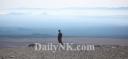
Writing in the Daily NK, guest author “Benji” and an astute reader offer us this little glimpse of economic rationality in North Korean culture.

benji-pektu.jpg

Commenting on the photo above, “Benji” notes:

“A North Korean soldier in front of an amazing view from [Mt. Pektu].  Minutes later, he was to offer me one of his cigarettes.”  

An astute reader made the following comment:

“The cigarette from the Soldier probably wasn’t the kind offer it seemed to be. North Koreans use cigarettes as currency. When they see a western tourist they offer their substandard north korean cigarettes in the hope of receiving western thus more valuable ones in exchange, or if they are especially lucky chinese Double Hapiness

The pictures and story are worth reading here:
Sacred and Stunning Mountain, Baekdu
Daily NK
“Benji”
1/22/2009

Share

Koryo Tours December newsletter

Wednesday, December 17th, 2008

The Koryo Tours December newsletter went out this week.  You can read it here. Interesting highlights below:

1. Apparently the areas open for tourism in the DPRK are expanding.

“We opened a few new areas to tourism over the course of the year including the East Coast city of Chongjin and the nearby Chilbo mountain area, Haeju in the south west of the country and various sites around Pyongyang. We stayed in a few different hotels, many of which we are now able to offer to our clients and in 2009 we intend to go to even more places than ever before, some wholly new areas and some new and expanded attractions in more familiar places – we can’t give out all details (some innovate, others imitate – have to keep some of it off the website for now to protect our interest!) but trust us – you’ll never have another holiday quite like this one if you choose to go with us next year. We have vastly expanded our range of tours to be ever-more inclusive to all demands.”

“2008 was also the year in which we continued our innovation in new kinds of tours; we ran a football tour where a foreign side played against a Korean team in a friendly, and the first ever Ice Hockey, Volleyball, and even Cricket (yes, cricket!) tours took place, all of them between visiting westerners and local Koreans. We continued our school trips and cultural exchange programs and assisted in several interesting and worthwhile projects, some of which are outlined further below. We also ran Pyongyang’s first ever pub quiz. It was a very interesting year for us all and we hope to repeat this innovation in 2009 so if you have any ideas for trips to DPRK then we would be more than happy to hear them, there are a great many restrictions on what can be done there but we have many years of experience and a track record of getting things done which is second to none, if it can be done, then we will organise it for you.”

2. Koryo Tours took in about 950 tourists this year.
3. Mass Games are presumed to be on in 2009.
4. Tour dates here.

Share

DPRK crackdown, restrictive measures on first phase of KIC

Tuesday, December 2nd, 2008

Institute for Far Eastern Studies (IFES)
NK Brief No. 08-12-2-1
12/2/2008

On November 24, North Korea announced measures to the Kaesong Industrial Complex management committee and other organizations involved in the KIC that would suspend tours to the city of Kaesong and cut the number of South Korean personnel in the complex by half, but stated that businesses operations within the complex would be guaranteed.

Kim Il-kun, current director of the North Korean Central Special Zone Development Bureau who had served as chairman of the North Hwanghae Province People’s Committee until October of this year, led the DPRK delegation, and from the South, KIC Management Committee Chairman Moon Moo-hong, KIC Business Council Chairman Moon Chang-sung, and representatives from companies operating in the complex were included in the 103 people in attendance.

First, the North delivered the notice to the public relations officer of the management committee from 11:00 to 11:07 in the morning.

The North’s KIC management committee announced in the notice, “50 percent of the management committee staff, including the committee chairman or vice-chairman, will evacuated by the end of November,” “Total workers, including those for construction and support activities, will be reduced by half,” “transit across the military demarcation line for those working on cooperative projects and exchanges within a one million-pyong area around the border will be strictly limited,” and stated, “The future of the industrial zone and inter-Korean relations depends on the stance taken by the South.”

From 11:10 to 11:20, the North announced the measures to the company representatives in the management committee assembly hall.

The North announced, “It was decided to guarantee as an exception activities of the businesses in the KIC, and so the resident workers of the South’s production companies are exempt from the measures restricting land crossings of the military demarcation line.”

The announcement proclaimed, “The responsibility for this kind of severe situation lies entirely with the Southern authorities who stubbornly pursue confrontational relations between North and South and fail to recognize the June 15 Joint Declaration and the October 4 Declaration…we do not wish for the South’s small and medium-sized enterprises to suffer from the imprudent confrontational policy of the South’s officials.”

In a separate notice, the North announced, “With the exception of those workers necessary to the KIC business operations, all South Koreans crossing the military demarcation line as visitors, tourists, for economic cooperation, etc. will be strictly limited or blocked,” “All unnecessary South Korean workers in the KIC, including the KIC management committee, will be evacuated, and land entry across the military demarcation line will be blocked, “The Inter-Korean Cooperation Council Office will be disbanded and all South Koreans related to it will be deported,” “Kaesong tours operated by Hyundai-Asan are halted,” “All Southern civic organization and entrepreneur coming in our region overland across the military demarcation line in the east and west seas for the purpose of cooperative exchange and economic transaction will be blocked from crossing overland, and if it is unavoidable that goods and their deliverers must cross by land strict inspections will be carried out,” and, “Train operations between our Bongdong Station and the Southern Munsan Stations are suspended.”

With the North’s new measures, because of the inability to repair inter-Korean relations, it appears likely that the number of new overseas companies looking to operate in the KIC will fall, orders from buyers will drop off, public opinion will sour, production will face difficulties, and the gradual withdrawal of businesses operating in the KIC coupled with the lack of new business interest could lead to the closure of the Kaesong Industrial Complex

Share

Last call at Kaesong…

Monday, December 1st, 2008

The end of sunshine?
According to Yonhap (here and here), Friday, November 28, was the last day of the Kaesong day tours (210 tourists made the trip) and the last day the “train to nowhere” made its inter-Korean trip.

As for the Kaesong Industrial Zone (KIZ)…According to (Bloomberg), on December 1 the DPRK cut the number of “windows” available each day for South Korean vehicles to enter and leave the KIZ from 19 to 6 (though the Donga Ilbo claims just 3), and limited the number of South Koreans allowed in the complex to 880—about 20% of the 4,200 previously permitted to enter the complex.

According to the  Donga Ilbo, Pyongyang delivered notice at 11:55pm Sunday saying those allowed to stay in Kaesong are 27 staff of the management committee; four from the (South) Korea Land Corp.; 40 from Hyundai Asan Corp.; five at restaurants and living quarters; two at shops and hospitals; and 800 from South Korean companies. Border crossings are also limited to 250 staff members and 150 vehicles each time.

Jeopardizing more than Kaesong
As previously discussed (here and here), South Korea and Russia are interested in building oil and natural gas pipelines which would cross the DPRK. If these projects went through, the DPRK government would benefit from construction and “rental” fees—in effect taking a cut of all the energy resources that cross their borders.  North Korea, is now telling the Russians that the project is not too palatable at the moment.

Still more red than green it seems.

What now?
So while the DPRK chases away investment from the South, they solicit more from Kuwait and Singapore (where Chris Hill is due to stop by):

North Korean Foreign Trade Minister Ri Ryong Nam, now in Singapore, has urged Singapore companies to invest in the isolated country, the Singapore government said Monday.

The North Korean minister “briefed…on economic developments in North Korea and possible investment opportunities for Singapore companies,” in a meeting with Singapore’s former Prime Minister Goh Chok Tong, now a senior minister in the Cabinet, a government statement said.

Goh said, “Singapore would be glad to explore ways to strengthen bilateral cooperation, including in the areas of trade and investment, once international concerns were assuaged and the environment improved.”

Singapore Foreign Minister George Yeo made a trip to North Korea in May, accompanied by a business delegation, in what was the first official visit to North Korea by a Singapore Cabinet minister.

On that trip, Yeo met North Korea’s No. 2 political leader Kim Yong Nam and Ri.

Yeo said at the end of his visit North Korea might be keen to learn from some aspects of the Singapore development model and that Singapore is ready to offer help and ideas. (Kyodo-Japan Economic Newswire)

Chewing gum manufacturers beware!

Share

Little sunshine on this cloudy day

Monday, November 24th, 2008

Last week, North Korean Economy Watch reported Pyongyang’s irrational economic policy threats which could end the flow of millions of South Korean dollars into North Korean coffers.  I use the word “irrational” because government policies are typically designed to increase revenues to the treasury (or to coalition / constituent members), not scare them away.  Today, however, North Korea reaffirmed its commitment to closing the border with South Korea on December 1, though with some qualifications:

1. The North Koreans will end “the train to nowhere(c) NKeconWatch. This is puzzling because of all the inter-Korean projects, this one is the least “contaminating.” The South Korean government pays the North Korean government to send an empty train across the border each day.  Why jeopardize this easy money?

2. The North Koreans will end the Kaesong day tours.  This will not be good for Hyundai Asan (HA), which is already suffering losses from the idle Kumgangsan resort.  On the plus side for HA, since this project merely bussed people around Kaesong, they will not be leaving much fixed capital on the northern side of the DMZ.  Still, it is strange that the North Koreans would seek to end this program.  Although it is slightly “contaminating” in that hundreds of South Koreans are shuffled through Kaesong every day, the North’s citizens are generally isolated from their wealthy neighbors. Additionally, I estimate that this program has grossed the North Koreans nearly USD$10 million since it was launched nearly a year ago. This is not an insignificant amount of money to the DPRK.

3. The ultimate fate of the Kaesong Industrial Zone remains uncertain.  Although the North Koreans have threatened to “selectively expel” up to half of the South Koreans in the facility, some managers remain optimistic:

“(The North) never said it would halt production or expel staff related to the production process. So even in the worst case of operating with only half of the staff, we think there won’t be any problem in production,” said Lee Eun-suk, an official at Shinwon Corp, which has clothing factories at Kaesong. (Reuters, via the Washington Post)

Unless North Korea’s policy makers are terminating the flow of economic rents into the country to curb the power of some particular official or interest group, there are not many instances where these actions could be considered shrewd.  Adding to the confusion, most analysts presume that the majority of the South’s construction and wage fees are distributed to the small cohort of high-ranking North Korean policy makers who ostensibly signed off on the projects in the first place.  So why would they now decide to end their own direct funding?

These policy decisions, moreover, will likely affect the North Koreans in ways they do not yet seem to anticipate, particularly when it comes to attracting private foreign direct investment (which is desperately needed).  Private investors will not be attracted to a business environment where the rules of the game are prone to changing every few months.  Investment entrepreneurs will not risk the appropriation of large scale fixed assets.  International aid and official foreign direct investment will probably go on as usual as these tasks have more to do with political decisions than economic.

So what is going on?  That is the million dollar question, and speculation in this case is not worth all that much.  The Daily NK, however, claims to have interviewed an “official” from Pyongyang who discussed recent developments in the Kaesong Industrial Zone.  His claim is that the North Koreans made the decision to close the Kaesong Zone for internal political reasons:

Q. What is the reason that North Korea is trying to suspend the business in the Kaesong Industrial Complex?

A. In fact, the story about the suspension of the Kaesong Complex has emanated from Pyongyang since this fall, but it had been decided as an instruction of the Party in Pyongyang late last year.

It is hard to say conclusively what is happening in Kaesong, because there are so many complicated things at work. People from the Party in Pyongyang say that the Kaesong Complex and tourism should fall into disuse and the Mt. Geumgang tourism site should be left alone. Whether or not the Kaesong Complex is thrown away is only up to our economy condition and also the General (Kim Jong Il)’s decision.

Q. Do you mean that instructions on the Kaesong Complex have already been decided internally by the Party?

A.Yes, you can say that. This was because at the beginning, they started it on in the precondition of switching workers once a year, but now they know that switching workers every year is impossible.

Additionally, rumors on South Chosun have been constantly circulating among workers and their families, so illusion of the South have now become uncontrollable among the people. The authorities cannot overlook this situation.

From the Party’s view, each worker in Mt. Geumgang and Kaesong is like a poster advertising capitalism. Due to them, our socialist system could be cracked.

As I know, at least 20 affiliates with Kaesong Complex came into questioning for advertising South Chosun and capitalism.

There was a thorough reshuffling in the Party last year. There is nobody who talks about Kaesong or Mt. Geumgang.

Q. Can North Korea ignore the abundant dollars from Kaesong in practice?

A. Frankly speaking, we have relied on it due to money. Even right now, if South Korea treats things like the Mt. Geumgang shooting accident flexibly and starts the tours again, everything is okay. The money we want does not need to come only from South Korea. There are Yuan, Rubles and dollars as well. They are all the same.

Although our economy is so terrible, we will not establish the national vision only targeted on making money. You should bear this point in mind.

Thoughts and opinions apprecaited. 

Read more here:
There Is an Internal Reason for the Bluff on Kaesong
Daily NK
Jung Kwon Ho
11/16/2008

Kaesong Staff to Be Expelled
Daily NK
Kim So Yeol
11/24/2008

Kaesong Tour and Trains are Suspended
Daily NK
Jeong Jae Sung
11/24/2008

North Korea to Halt Cross-Border Rail Service, Tours
Bloomberg
Heejin Koo
11/24/2008

North Korea prepares to shut border with South
Reuters (via Washington Post)
Jonathan Thatcher
11/24/2008

N. Korea Stiffens Diplomatic Stance
New York Times
Choe Sang-hun
11/24/2008
Share

(Updated) Kumgang/Kaesong update

Thursday, November 13th, 2008

UPDATE: Marcus Noland discussed this subject with the Daily NK.  Joshua has some thoughts at One Free Korea.

ORIGINAL POST: Hyundai Asan (HA) was having a good year up through July 2008.  At that point, inter-Korean trade volume had experienced a 23% year-over-year  increase—reaching US$880 million.   Commercial trade comprised 94% of this volume, up from 78%, and the number of firms conducting inter-Korean trade reached 526, up from 324.

…and then a South Korean tourist was shot by North Korean soldiers at HA’s flagship project, the Kumgang tourist resort.  Shortly after the shooting, the South Korean government halted tourism to Kumgangsan until the DPRK agreed to launch a joint investigation into the shooting and guaranteed the safety of tourists—which never happened.  As a result, the newly constructed six-star “Kumgang Ananti Golf and Spa Resort” desigend by Korean- American architect Min Sung Jin, sits unused, and revenues at HA are likely to fall to as low as 220 billion won (US$165 million), from about 300 billion won last year (Yonhap).

Despite the troubles at Kumgangsan, the joint-Korean projects on the west coast (Kaesong Industrial Zone and Kaesong tourism) remained unaffected.  The Kaesong Industrial Zone, the most ambitious and risky project, has continued to receive support from both the North and South Korean governments, and the Kaesong tours have grossed the North Korean government nearly $10 million since the project was launched in December 2007

Since I operate on the assumption that people will never turn down free money, even communist governments, I have been skeptical that the DPRK would jeopardize these investments.  As of this week, however, it looks like my assumption is wrong.  It seems the DPRK remains intent to cut off its nose to spite its face.  On November 9, 2008:

A North Korean military team visited an inter-Korean industrial complex in Gaeseong, North Korea, last week to check personnel and facilities there.

Local experts speculated that the unprecedented survey is aimed at putting pressure on the South, whose civic groups continue to send propaganda fliers containing criticism of the North’s dictatorship.

Five military officials looked around the industrial park, Moon Moo-hong, chairman of the Kaesong Indutrial District Management Committee (KIDMAC), said.

“They made the rounds of 11 companies in the complex in the morning and asked about the amount of investment, capital, the number of workers, their salaries and working conditions,” he said.

The officials, in military uniforms, asked about how long it would take to empty the complex several times during the six-hour inspection, he added.

They did not show an amicable attitude either, saying they were not visiting to give out business cards and they had nothing to talk about.

A government official asking to remain anonymous said the visit can be read as a threat to drive out South Korean companies from the complex. (Korea Times)

Who was leading the military delegation? Lt. General Kim Yong Chol:

Kim is widely known as Pyongyang’s chief delegate to inter-Korean general-level talks in South Korea, but this time, he assumed the title of policy chief of the National Defense Committee, the most powerful organization in the North. While inspecting infrastructure and companies at the complex, he reportedly asked, “How long would it take for South Korean companies to pack up and go home?” (Donga Ilbo)

Economically, this is a terrible move:

The complex employs 35,000 North Korean workers who earn 55 dollars a month (63 dollars including social insurance), an amount considered extremely high by North Korean standards. Though the communist regime deducts a significant sum from their salaries, workers there are clearly healthier and better fed than their malnourished neighbors. If each of these workers is assumed to be part of a family of four, the complex feeds 140,000 North Koreans. (Donga Ilbo)

Yet yesterday, the implicit threat to close the border was made explicit:

[On] Wednesday, North Korea’s military threatened to “strictly restrict and cut off” all overland passage through the military demarcation line starting Dec. 1 in protest over Seoul’s “confrontational” policy. (Yonhap)

and

A Red Cross office in the North with the only civilian phone link will shut. (BBC)

Hyundai Asan Corp. said that it has yet to receive an official notice from North Korea on the suspension of its tour program to a historic city in the North, despite Pyongyang’s announcement to restrict border crossings. (Yonhap)

So what has made the DPRK so angry that its leaders are willing to take such drastic action?  Judging only from the public statments by the DPRK’s military spokesmen, it seems to be the proliferation of balloons and anti-Kim Jong il leaflets that human rights groups are sending across the DMZ.   

This seems bizarre because balloons have been crossing the DMZ for decades.  The North Korean villages along the DMZ know exactly how to deal with these leaflets and it is fairly routine for work groups to be organized to go pick them up.  Additionally, North Korea’s leaders are smart enough to know that the South Korean government has no legal authority to prevent its citizens from undertaking these activities.  So the DPRK’s ultimate goals here must be greater than stopping human rights groups from sending the balloons.

Ironically, it is the same human rights groups that are sending the balloons across the border who are most vocal about closing down the Kaesong Industrial Zone and ending the Kaesong tourism project. This is because they believe that the revenues generated by these projects are diverted to support the government with little going to the actual workers.  If the North Korean government ends these inter-Korean projects it will be delivering its most vocal opponents a double victory—the DPRK will end up with more balloons and less South Korean money.  If I was in the business of sending balloons across the DMZ, I would be sending out fundraising letters right now telling potential donors how effective my strategy is. 

Anyhow, if all of this was not strange enough, North Korea has slowed dismantling of the Yongbyon reactor (again), claiming the US owes it energy aid, and asserted that they never agreed to a nuclear verification deal which gives inspectors permission to collect samples and remove them from the country for analysAre they just trying to squeeze more concessions out of the Six-Party talks? Or is this a calculated political strategy?

Share

Of troops and tourism

Thursday, November 13th, 2008

Troops: the Financial Times reports that the PRC (China) is increasing the number troops along its border with North Korea:

The Chinese military has boosted troop numbers along the border with North Korea since September amid mounting concerns about the health of Kim Jong-il, the North Korean leader, according to US officials.

Beijing has declined to discuss contingency plans with Washington, but the US officials said the Peoples’ Liberation Army has stationed more soldiers on the border to prepare for any possible influx of refugees due to instability, or regime change, in North Korea.

One official cautioned that the increase in Chinese troops was not “dramatic”, but he said China was also constructing more fences and installations at key border outposts. Wang Baodong, the Chinese embassy spokesman in Washington, said he was unaware of any increased deployments.

Tourism: Reuters reports that the DPRK has closed Sinuiju to entering Chinese tourists:

North Korea is restricting visitors from its ally and giant neighbour China, travel agents said on Thursday, including virtually closing off one of its main border crossings at Dandong.

Travel agents in China, who send a steady though small flow of tourists to impoverished and isolated North Korea, said they were still organising visits, though trips had to be made via air rather than by rail.

“The border has been closed since October. If you want to go to North Korea, you have to go to Shenyang and fly from there to North Korea,” said one travel agent in Dandong, referring to a northeastern Chinese city.

A Chinese rail official in Dandong said freight trains were still able to cross over into North Korea.

“There are four trains a week to North Korea. One train just left for there, though I don’t know if there are any passengers on it. I think most of the trains are freight trains,” the official said by telephone.

China’s relations with North Korea have long been characterised as being “as close as lips and teeth” after they fought side-by-side during the 1950-53 Korean War.

Read the full articles here:
China increases troops on North Korea border
Financial Times 
Demetri Sevastopulo and and Song Jung-a

North Korea restricts travel for Chinese visitors
Reuters
Ben Blanchard
11/13/2008

Share

Washington screening of “Crossing the Line”

Tuesday, October 28th, 2008

Nick Bonner, head of Koryo Tours and producer of three DPRK documentaries, will be in Washington Wednesday for a screening of his most recent film, Crossing the Line, at John’ s Hopkins University.  (NkeconWatch: I will be attending and I hope to see you there)

Event details:
Wednesday, October 29th at 6:00pm
Opening Reception at 5:30pm
Kenney Auditorium at Johns Hopkins University
1740 Massachusetts Ave., NW
Washington, D.C. 20036

Click here to register

You may order a copy of the film here

About the film
In 1962, a U.S. soldier guarding the DMZ deserted his unit, walked across the most heavily fortified border on earth and defected to North Korea. Crossing the Line, a documentary directed by Daniel Gordon and co-produced by Nicholas Bonner, goes inside North Korea to tell James Joseph Dresnok’s story for the first time. Allowed unprecedented access by North Korean authorities, the filmmakers reveal the full story of his defection, as well as the political intrigue and personal passions that have kept him behind the Cold War’s last frontier ever since.

Share

Kaesong receives 100,000th tourist

Wednesday, October 15th, 2008

According to Yonhap:

Hyundai Asan Corp., a unit of the South’s Hyundai Group in charge of businesses in North Korea, opened the tour to Kaesong in December last year. Everyday, about 370 people visit the North Korean city, about 70 kilometers north of the frontier separating the two Koreas.

The high number of tourists to Kaesong comes as the two Koreas are still bickering over responsibility in the July death of the South Korean tourist, who was fatally shot dead by a North Korean soldier while touring the North’s scenic mountain resort of Geumgang.

Since then tours to Mt. Geumgang, which began in 1998, have been indefinitely suspended.

In a ceremony to celebrate the 100,000th tourist, Hyundai Asan Chief Executive Officer Cho Kun-shik expressed hope that the two Koreas could amicably resolve the impasse over the shooting death.

According to the Associated Press (via the New Zealand Hearld):

Company officials said most of the tourists have been South Koreans but about 2,600 Americans, Japanese and other foreigners also have taken part in the programme.

Before the [Kumgangsan] shooting incident, about 10,000 people travelled to Kaesong every month, but the number of monthly visitors declined to about 7,450 in August and 5,770 in September, according to Hyundai Asan.

Facts:

1. By May 2008, 40,090 tourists had visited Kaesong, and the daily quota was increased from 300 to 500.  

2. Last August, Hyundai announced it was sending $928,560 to North Korea for the Kaesong tours

3. According to Dr. Lankov, the price to customers is W180,000, W100,000 of which is paid to the DPRK.  Additionally, Hyundai pays for all infrastructure improvements.  If these numbers are correct, the DPRK has grossed (and probably netted) W10,000,000,000  since the project was launched (appx. US$9,800,000 using an average interbank exchange rate from January through today).

4.  Although Hyundai Asan asserts (above) that appx. 370 tourists visit Kaesong per day, the most recent monthly figures (5,770 in September) indicate a mere 192/day.  370 is the number derived by taking the total (100,000) and dividing it by the number of days the project has run (appx. 270 this year)…so the daily average trend by month is now well below the annualized daily average.

Read more here:
N. Korean city draws 100,000 tourists from South despite shooting impasse
Yonhap
10/15/2008

North Korea: Border city draws 100,000 tourists
Associated Press (via the New Zealand Hearld)
10/16/2008

Share

North Korea on Google Earth

Thursday, October 2nd, 2008

North Korea Uncovered: Version 12
Download it here

mayday.JPGAbout this Project: This map covers North Korea’s agriculture, aviation, cultural locations, markets, manufacturing facilities, energy infrastructure, political facilities, sports venues, military establishments, religious facilities, leisure destinations, national parks, shipping, mining, and railway infrastructure. It is continually expanding and undergoing revisions. This is the 12th version.

Additions include: Tongch’ang-dong launch facility overlay (thanks to Mr. Bermudez), Yongbyon overlay with destroyed cooling tower (thanks to Jung Min Noh), “The Barn” (where the Pueblo crew were kept), Kim Chaek Taehung Fishing Enterprise, Hamhung University of education, Haeju Zoo, Pyongyang: Kim il Sung Institute of Politics, Polish Embassy, Munsu Diplomatic Store, Munsu Gas Station, Munsu Friendship Restaurant, Mongolian Embassy, Nigerian Embassy, UN World Food Program Building, CONCERN House, Czech Republic Embassy, Rungnang Cinema, Pyongyang University of Science and Technology, Pyongyang Number 3 Hospital, Electric Machines Facotry, Bonghuajinlyoso, Second National Academy of Sciences, Central Committee Building, Party Administration Building, Central Statistics Bureau, Willow Capital Food House, Thongounjong Pleasure Ground, Onpho spa, Phipa Resort Hotel, Sunoni Chemical Complex (east coast refinery), Ponghwa Chemical complex (west coast refinery), Songbon Port Revolutionary Monument, Hoeryong People’s Library, Pyongyang Monument to the anti Japanese martyrs, tideland reclamation project on Taegye Island. Additionally the electricity grid was expanded and the thermal power plants have been better organized. Additional thanks to Ryan for his pointers.

I hope this map will increase interest in North Korea. There is still plenty more to learn, and I look forward to receiving your contributions to this project.

Version 12 available: Download it here

Share