Archive for the ‘Manufacturing’ Category

Autos manufactured in the DPRK

Monday, September 7th, 2009

dprk-cars.JPG

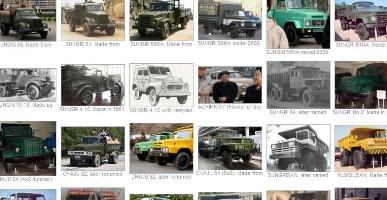
(h/t DPRK Studies) Erik van Ingen Schenau of the China Motor Vehicle Documentation Centre has posted a collection of photos of vehicles manufactured in North Korea.  Check them all out here.

Other links:
1. Background on Sungri Motors here.  This is the location of the Sungri Motor Plant.

2. Some background on Pyonghwa Motors here.  This is the location of the Pyonghwa Motors plant.

3.  I am not sure of the location of Pyongyang Auto Works or the Kamaz (Russian company) factory in Pyongsong.

Share

DPRK preparing for jump in construction demand

Friday, August 14th, 2009

Institute for Far Eastern Studies (IFES)
NK Brief No. 09-8-13-1
2009-08-13

As North Korea continues to pursue the creation of a Strong and Prosperous Nation by 2012, it is now reportedly building a large-scale construction materials facility to meet expected growth in building demand. North Korean authorities have designated the Daedong River Tile Factory, visited by North Korean leader Kim Jong Il on the 13th of last month, as a large-scale construction materials distribution center, and expect the second stage of its construction to be complete by April 2012.

The Tongil Sinbo, a weekly North Korean publication, printed in its recent (July 18) edition that upon completion of the second stage of construction, the facility would be capable of producing 225 million cubic meters of tiles, shingles, plastic materials and other building supplies. The first stage of construction began in July 2003, and was only recently completed, after five years and nine months, opening on April 15. North Korea is expected to invest 10.5 billion Won (80.77 million USD) into completing the second stage of construction, a considerable investment in light of the troubles facing the North‘s economy.

Upon completion of the facility, taking up more than 225 thousand pyong, it will produce indoor and outdoor tile, polished marble tiles, composite glass tiles and other porcelain and plastic products, as well as pre-fabricated housing components and coal gas. According to the newspaper, it will also house its own electrical generator.

When Kim Jong Il visited the factory, located near the Chollima Steel Complex in South Pyeongan Province, he declared the site to “hold a critical role in the development of the country’s construction industry,” stating that upon completion of the second stage of construction, the factory would serve as a “large-scale base for all modern construction projects.”

North Korea is currently pressing ahead with large-scale redevelopment projects in Pyongyang and other major cities, with one goal being the construction of 100,000 new homes by the year 2012. The Workers’ Party of Korea newspaper, the Rodong Sinmun, has called for all citizens to “make something from nothing” in an effort to build up each region. One point of interest to North Korea-watchers as this massive construction scheme unfolds is that a new position was created to oversee the project, and Kim’s third son, Kim Jong-un, was appointed.

Share

DPRK aims to increase food rations

Wednesday, August 12th, 2009

Kim Jong il sets sights on increasing processed food rationing in order to improve the daily lives of the people
Institute for Far Eastern Studies (IFES)
NK Brief No. 09-8-10-1
8/10/2009

North Korean authorities, recognizing that rationing of processed foods is directly linked to the daily lives of the residents of North Korea, are concentrating on a policy of increasing distribution as part of the campaign to build a ‘Strong and Prosperous Nation’ by 2012. The policy calls for the construction of regional food processing facilities throughout the country and using domestic ingredients for all processed foods. In addition, the government plans to undertake diversification of small-scale factories in order to produce soybean paste, soy sauce, cooking oil and other staples, as well as noodles, rice-cake and other foods, all kinds of side dishes, and alcoholic beverages.

This movement was announced in concurrence with Kim Jong Il’s visit to the Samilpo Special Products Factory and Store, both run by the military, on April 7, just two days after the North’s launch of a long-range rocket. This factory, on the bank of the Daedong River, produces over 350 kinds of edibles, including noodles, rice-cakes, oil, sweets, alcoholic drinks, processed meats and fish products. During his visit, Kim Jong Il is said to have stated, “Today, I am happier than during the launch of the Kwangmyeongseong 2,” emphasizing his interest in boosting food production.

On July 15, (North) Korean Central Broadcasting announced the formation of construction offices in Jagang, North Pyongan and other provinces to oversee the building of food production complexes, and the dispatch of “shock troops” to bolster construction efforts.

Recently, the construction of large-scale factories to produce foodstuffs out of each region’s local stock has been pursued in every province in the country. Even at the Cabinet level, a ’Production Workers’ Conference’ was held, bringing together responsible authorities and local production experts to discuss a course for quickly improving services provided to the general population.

In order to effectively implement the North’s policy of increasing rations of foodstuffs, the Standing Committee of the Supreme People’s Assembly issued an order to establish a Ministry of Foodstuff and Daily Necessities Industry.

As North Korea tries to implement this type of measure to boost production and rationing, failure to improve food shortage conditions and economic hardships while at the same time mobilizing the population in a drive to establish a Strong and Prosperous Nation has led to growing outcries among residents. North Korean authorities appear to be introducing these measures in order to placate these complaints.

Share

North Korea exports total USD $1.13 billion in 2008

Wednesday, July 22nd, 2009

Institute for Far Eastern Studies (IFES)
NK Brief No. 09-7-22-1
7/22/2009

According to a report released by the Korea Trade-Investment Promotion Agency (KOTRA), mineral products again topped the list of DPRK exports, accounting for 41.3 percent of goods sent out of the country last year. The KOTRA report, “2008 DPRK Trade Trends,” states that the North’s 2008 exports, totaling 1,130,213,000 dollars, increased by 23 percent over the 918.77 million USD-worth of goods exported in 2007.

With the exception of plastic and wooden goods, North Korean exports grew in all areas. Mineral products accounted for 41.3 percent; non-ferrous minerals made up 16.8 percent, textiles accounted for 10.6 percent; chemical plastics made up 7.6 percent; electrical and electronic machinery made up 7 percent; and animal products accounted for 3.6 percent.

Mineral goods were up 33.5 percent over last year, recording sales of 465.44 million USD. This sector has shown continuous growth over the last five years. In 2004, trade in these goods brought in 152.28 million USD; in 2005, 243.66 million USD; in 2006, 244.43 million USD; and in 2007, 349.58 million USD.

Since 2003, North Korea has concentrated on invigorating the light-industrial sector, and has emphasized the export of manufactured goods. However, last year, exports of mineral products and non-ferrous minerals combined to make up a total of 58.1 percent of all exports; the North has been unable to restructure its export sector or satisfactorily boost light-industrial manufacturing.

North Korea’s imports grew as well, to more than twice that of exports. Bringing in goods worth 2,685,478,000 USD, imports grew by 32 percent over the 2.023 billion in imports during 2007. In 2008, mineral products accounted for 25.9 percent of imports; fibers accounted for 11.9 percent; electrical and electronic machinery, 11.5 percent; processed food items, 8.8 percent; chemical and heavy industrial goods, 7.5 percent; and non-ferrous minerals, 6.6 percent. Import of fibers, processed food, and mineral products grew, while the import of animal products, vegetable products and automobiles fell.

Crude petroleum, the North’s largest import item, was imported exclusively from China, and was up 46.9 percent (414.31 million USD) over 2007 (281.97 million USD). However, due to the loss of other sources of fuel, overall imports of crude grew by a mere 1 percent.

Import of grains fell in 2008, recording only 86.24 million USD – a fall of 25.6 percent from the 115.86 million USD in grain imports during 2007. KOTRA explains that due to instability in the grain market, imports from China of rice and barley were halted in April, while corn imports were halted in August.

(Note: Here is the KOTRA web page.  It is not a user-friendly site and I was unable to find the report in English.)

Share

PyongSu Rx advertisement

Sunday, July 19th, 2009

From YouTube:

pyongsu-advert.JPG

(Click on image to see video)

According to the video description:

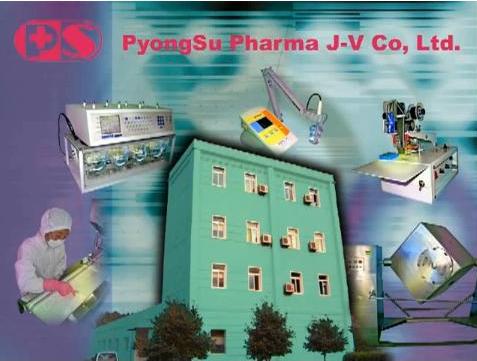
This was PyongSu’s introduction to donor organisations and individuals that have been purchasing pharmaceuticals abroad and shipped them to North Korea. PyongSu’s promotional presentation explained to them why they should place their orders with PyongSu rather than with pharmaceutical companies abroad.

As PyongSu had no budget to mandate a professional advertising company with the task its managing director Felix Abt made the concept, the script and produced it in-house towards the end of 2005, with the help of North Korean IT and designing students and their Canadian trainer Ian Lee as well as teacher Michael P. Spavor, then giving language courses in Pyongyang, who was the “voice” in this clip. Thus, this unique advertising clip was made in its entirety in Pyongyang (and by people who are not advertising professionals). Check it out and add your comment!

Longer videos on investments in the DPRK can be found here.

Share

More UN sanctions

Friday, July 17th, 2009

On Thursday the UNSC adopted a travel ban on five North Koreans, an asset freeze on five DPRK organizations (and the five individuals), and banned the export of graphite and para-aramid fiber to the DPRK.  Below are the details:

UNSC Sanctions effective: July 16, 2009.

Officials named:
1. Ri Je-son, director at North Korea’s General Bureau of Atomic Energy (GBAE)
2. Hwang Sok-hwa, director at North Korea’s General Bureau of Atomic Energy (GBAE)
3. Yun Ho-jin, director of Namchongang  Trading Corp.
4. Ri Hong-sop, former director of North Korea’s Yongbyon nuclear research center
5. Han Yu-ro, director of Korea Ryongaksan General Trading Corp.

Organizations named:
1. General Bureau of Atomic Energy (GBAE)-DPRK weapons agency
2. Namchongang Trading Corp-alleged to have procured Japanese vacuum pumps and aluminum tubes used to enrich uranium.
3. Hong Kong Electronics-transferred millions of dollars to Tanchon Commercial Bank and Korea Mining Development Trading Corp., both subject to sanctions by Security Council agreement in April.
4. Korea Hyoksin Trading Corp
5. Korean Tangun Trading Corp-primarily responsible for the procurement of commodities and technologies to support” North Korea’s defense research and development program

Further Notes:
1. The North Korean’s actually have a web page for the Hyoksin Trading Corp.

2. Here is a previous post summarizing most of the sanctioning activites this year.

Read more below:
U.N. council sanctions North Korea entities, officials
Reuters (via Washngton Post)
Patrick Worsnip
7/17/2009

North Korea Officials Sanctioned by UN for Travel, Nuke Program
Bloomberg
Bill Varner
7/17/2009

Share

2012 plan extends to Sungri Motors

Thursday, July 16th, 2009

According to Yonhap:

North Korea’s sole home-grown automaker seeks to expand its annual production capacity to 10,000 units by 2012, a level not reached since its peak in the 1970s, a pro-Pyongyang paper said Tuesday.

The Sungri Motor Complex, which started production in 1958, has gone downhill as the country suffered economic downturns and severe famine in the decades following the 1970s.

The Choson Sinbo, a Tokyo-based newspaper that relays Pyongyang’s position to the outside world, said the automaker is aspiring to return to its record production capacity by 2012, the target year for the country to become a “strong, prosperous and powerful nation.”

“As production decreased from the 70s, the workforce of the motor company fell to 75 percent of the peak years,” the paper said.

“During economic hardships in the late 90s, the company was close to not breathing. But now, anyone active in production is talking about the ‘promised revival,'” it said.

The paper noted North Korean leader Kim Jong-il’s trip in March to the complex, located at the foot of Mt. Sungni in South Phyongan Province, during which he stressed that the “modernization and scientification of the complex” is the most important factor in increasing output.

Kim then “guaranteed” state support to introduce computer numerical control machines to the complex, it said.

The automaker started producing hundreds of trucks named “Sungri 58-type,” “Sungri 61-type” or “Jaju (independence) 64-type” in late April, but output is “still in their early stage,” the paper said.

North Korea seeks to build a “strong, prosperous and powerful nation” by 2012, the centenary of the birth year of Kim Il-sung, the nation’s founder and father of North Korea’s current leader, Kim Jong-il, who will turn 70 that year.

Read the full story here:
N. Korean automaker aims to return to peak production by 2012
Yonhap
Kim Hyun
7/14/2009

Other links:
1. Background on Sungri Motors here.

2. I believe this is the location of the Sungri Motor Plant.  If anyone has evidence to the contrary, please let me know.

3. Read about another DPRK auto manufacturing plant here.

Share

DPRK continues to supply new laborers to KIC

Thursday, July 16th, 2009

Institute for Far Eastern Studies (IFES)
NK Brief No. 09-7-15-1
7/15/2009

Despite the fact that inter-Korean relations continue to be stalled, North Korea authorities reportedly provided approximately 1,300 new workers in June for businesses entering the Kaesong Industrial Complex (KIC). Despite the fact that there has been no progress in inter-Korean working-level talks between authorities involved in the KIC, the North is continuing to provide a labor force for South Korean businesses in the complex.

An official from the Kaesong Industrial District Management Committee verified that “approximately 1,300 new laborers were supplied last month,” and that “there are some young workers, as well, but the majority are 30 to 40-year-old women.” The official also explained, “the number of laborers was reduced slightly at the beginning of the year; while [their number] was insufficient, laborers continue to come…up until June of this year, while the number fluctuated, an average of around 700 per month [were provided].” Last year, the number of new workers each month was around 1,000.

New workers continue to be provided to the KIC, but there has also been a sharp increase in the number of workers quitting or being removed from their positions. At the end of June, there were 40,255 North Korean laborers; the overall number of workers provided by the North has only increased by 1,324 since the end of last year.

The source explained that at the beginning of 2009, more than 2000 construction workers quit. It appears, according to the numerous reports on the status of employment in the KIC, that the supply of workers is still insufficient, but that the North Korean authorities are working as hard as possible to provide what manpower they can.

North Korea’s Central Special Zone Development Guidance General Bureau recently held a general assembly for all North Korean labor representatives, and ordered them to “work to the max” in order to alleviate all complaints by South Korean businesses. However, as there has still been no resolution to the issue of constructing additional dormitories for the workers, this issue will continue to restrict growth in the number of North Korean laborers, regardless of the attitude in Pyongyang.

Share

Tadonggang Beer commercial

Friday, July 3rd, 2009

taedonggangbeeradvert.JPG

Click on image to see advert

The BBC offers what is hailed as the first Taedonggang Beer commercial. According to the article:

In a rare nod to commercial motives in the resolutely communist nation, the TV advert features a thirsty worker holding a mug of frothy beer.

Young women in traditional Korean dress are shown serving trays of beer to men in Western suits.

Billed as the “Pride of Pyongyang”, the advert promises drinkers that the beer will help ease stress.

“It represents the new look of Pyongyang,” the two-and-a-half minute advert says. “It will be a familiar part of our lives.”

Taedonggang Beer Factory has been making the brew since buying a British brewery and shipping it lock, stock and barrel from the UK in 2002.

The beer has been occasionally available in South Korea and is said to be of high quality.

North Korean leader Kim Jong-il, said to have a fondness for fine wines and brandy, has taken a personal interest in the brewery.

“Watching good quality beer coming out in an uninterrupted flow for a long while, he noted with great pleasure that it has now become possible to supply more fresh beer to people in all seasons,” North Korea’s state news agency, KCNA, said after he visited the brewery in 2002.

The DPRK did allow a ten minute “infomercial” to be made about Taedonggang Beer (probably by the Chongryun).  You can see it here:

taedonggangbeeradvert2.JPG

Click on image to see video

Here is a previous post on the beer.

Here is the location of the Taedongggang Brewery.

The full article can be found here:
North Korea launches beer advert
BBC
4/3/2009

Share

Bank of Korea releases 2008 DPRK economic stats

Sunday, June 28th, 2009

North Korea doesn’t release official economic data.  Since 1991, the South Korean central bank has released its own estimates of the North Korean economy to fill the void.  Its figures are derived from information provided by the ROK’s National Intelligence Service and other sources.  The 2008 statistics can be downloaded here.

According to coverage by the Associated Press:

The North’s gross domestic product for last year was estimated at $24.7 billion, a 3.7% increase from 2007, Seoul’s Bank of Korea said in a news release. The impoverished North’s economy shrank 2.3% in 2007 and 1.1% in 2006.

The central bank said the North’s economic growth was mainly because of “temporary factors” such as favorable weather conditions that resulted in an increase in agricultural production, and the arrival of oil shipments under an international disarmament deal on its nuclear program.

The size of North Korea’s economy, however, was still about 2.6% of South Korea’s, the bank said, adding it was “difficult” to determine whether last year’s growth means the country’s internal economic conditions have improved.

The bank said the North’s agricultural production increased 10.9% last year compared with 2007. The production of coal, iron ore and other minerals expanded 2.3% and the manufacturing industry 2.5%.

…and BBC coverage:

Agricultural production rose nearly 11% in 2008 compared with 2007. And coal, iron ore and other mineral production grew 2.3% for the year.

UPDATE from Business Week:

The surprise underscores the tiny size of the North Korean economy, which could be easily swayed by such factors as weather and outside assistance. Just over two-thirds of the 3.7% growth came from the agricultural sector, and that is heavily dictated by weather. North Korea’s agricultural output increased by 10.9% in 2008 after falling by 12.1% in the previous year as it managed to escape from major floods and drought. Its 2008 manufacturing production also grew by 2.5%, compared with a gain of a mere 0.8% in 2007, thanks to heavy oil supplies by the U.S. and its allies as a result of Pyongyang’s agreement last year to begin dismantling its nuclear facilities.

Even as hope builds in South Korea about a recovery, with the U.S. and China showing signs of revival, prospects for North Korea’s economy are looking grimmer. North Korea’s nuclear test in May and the regime’s missile tests this year have led to an end to outside help and economic sanctions by the U.N. This heralds a poor performance in the manufacturing sector, which will almost certainly face an acute shortage of oil and electricity this year.

Pyongyang can’t count on the agricultural industry for any major contribution to economic growth in 2009, either. Even if North Korea manages to maintain the 2008 grain output of 4.3 million tons, which will be difficult to achieve unless last year’s exceptionally good weather is repeated, it won’t help the economy grow as it starts from a high base.

Those factors make North Korea’s economic growth last year an anomaly. “There’s no indication that North Korea’s growth engine has improved in any fundamental way,” says Bank of Korea economist Shin Seung Cheol. Even with last year’s extraordinary growth, North Korea’s gross domestic product was 1/38 of South Korea’s $935 billion and its trade volume was 1/224 of the South’s $857.3 billion in 2008. As long as North Korea’s reclusive leader Kim Jong Il refuses to open up his country, the gap is bound to keep expanding.

I have collected the most commonly referenced North Korean economic statistics here.

Read more here:
South Korea’s Central Bank Says North’s Economy Grew in 2008
Associated Press
6/28/2009

North Korea’s GDP Growth Better Than South Korea’s
Business Week
Moon Ihlwan
6/30/2009

Share

An affiliate of 38 North