Archive for the ‘Manufacturing’ Category

Kaesong firms urged to withhold payment to DPRK entities

Monday, June 7th, 2010

According to KBS:

The Unification Ministry has asked South Korean companies that trade with North Korea to put off paying for goods manufactured in the North.

Ministry spokesman Chun Hae-sung told reporters Monday that the ministry made the request in consideration of sanctions and the suspension of inter-Korean trade following the North’s sinking of the “Cheonan” naval ship.

South Korean companies operating at the Gaeseong Industrial Complex manufacture labor-intensive goods using North Korean manpower.

The South Korean government suspended inter-Korean trade except for production at the Gaeseong complex last month to punish the North after the Cheonan incident.

Read the full story here:
Firms Asked to Put Off Payments to NK
KBS
6/7/2010

Share

German Parliamentary delegation visits DPRK

Thursday, June 3rd, 2010

Here is the report (PDF).  It is in German, but Stephen Smith (who does English, German, and Romance language translations) produced an English language version for all of us:

It was without a doubt one of the strangest official visits I have ever taken, more like Cuba than anything else.  The same slogans, the same ever-present security services, and the same absurd rules on taking pictures and communicating with the outside world.  Compared to the loose Cubans, the North Koreans have an uncompromising assiduousness and iron resolve.

What I saw in North Korea lies somewhere between between what we were shown by our minders, and the one-sided Western impression of the country as the world’s poorhouse.  Many foreign observers have praised the North Koreans’ high levels of education, along with their will and discipline to see their projects though to completion.  Economic liberalization by the regime and an end to the sanctions would result in a rapid economic recovery.

Although we had little opportunity to speak to North Koreans not pre-selected by the regime, the signs of malnutrition among the rural population and even parts of the urban population of Pyongyang were unmistakable.  Here a comparison with impoverished African living standards would be completely appropriate.  With regards to its sometimes-crumbling infrastructure, however, North Korea is at least at the level of a poor emerging market.  The drive to maintain and modernize the infrastructure – the roads and housing stock, for example – is also unmistakable.

Surveillance in North Korea is all-encompassing: even for North Korean citizens, trips to other provinces are only possible with official authorization.  The landline phone networks of foreigners, the government, and ordinary North Koreans are strictly separated by technical means.  Nobody knows who’s doing the informing, who or what they’re informing on, or who they’re reporting it to.

To a European, the personality cult of the two North Korean leaders, Kim Il-sung and his son Kim Jong-il, seems grotesque.  Upon each visit to factories and state enterprises, attention is called to the number of visits “by the president” or “by the general,” and what “notes and guidelines” they gave.  These can range from instruction on the proper feeding of ostriches, to the more efficient operation of machines, to the proper way to store old books.  Kim Jong-il is said to have tested new varieties of apple trees in his own garden before they were distributed across the country.  The veneration of the founder and “eternal president” of the People’s Republic, Kim Il-sung, who died in the 1990’s, is indeed quite noticeable in rare face-to-face discussions with North Koreans.

Before our trip, tensions between the two Koreas ran high, due to the dispute over the responsibility for the sinking of the South Korean warship “Cheonan” and the deaths of its 46 sailors.  The German Foreign Office didn’t want us to make the trip, but our group considered it important, especially given the circumstances, that relations are not severed.

Our group consisted of representatives of the trip’s organizers, Friedrich-Ebert-Stiffung, Frank Hantke, and Werner Kamppeter; WAZ [trans. note: a German newspaper] senior editor Richard Kiessler; WAZ journalist Jutta Lietsch; August Pradetto, professor of political science at the Helmut-Schmidt Armed Forces University; former MP and federal justice minister Herta Däubler-Gmelin; MP and speaker Johannes Pflug; and myself.

Sunday/Monday, May 23/24, 2010

Departure from Frankfurt.  Most of the other participants have already arrived, for example via China.  Flight to Beijing, arrival on Monday morning, then another trip to Pyongyang.

Upon arrival in the tiny Pyongyang airport we were met by representatives of the North Korean Workers’ Party, and spoke briefly in the main hall of the airport.  We’d like to emphasize that we considered it important to come for a dialogue during this tense time.  We took this opportunity, as well as others in the next few days, to indicate to the North Koreans that a flexible reaction, and not the immediate threat of “total war,” would strengthen their position.

We had to leave our cell phones at the entryway, though they wouldn’t have worked anyway.

We had dinner at the hotel, at the request of our hosts, and the conversation was rather diplomatic, followed by short group meetings.  Johannes Pflug, an Asia expert who has been to North Korean several times, was our spokesman.

Tuesday, May 25, 2010

Before we left the hotel, Mr. Tong, responsible Western European affairs within the Central Committee of the Korean Workers’ Party, related to us the official position on the Cheonan accident as reported in North Korean newspapers.  The North Koreans indirectly threatened to use their nuclear weapons, and especially intensified their criticism of the expert panel’s findings, stressed North Korea.  Many statements were disputed in detail and they demanded that North Korean experts also be allowed access to the evidence, and that the surviving South Korean sailors be given permission to testify before international experts.

Before our first meeting we visited the house in Mangjongdä where Kim Il-sung was born, a simple peasant house for a cemetery caretaker, which was arranged as a memorial.  From a hill closeby there was an outstanding view of nearby Pyongyang.

Exchange of ideas with Mr. Ri Jong-chol, vice commander of the international division of the Korean Workers’ Party.  At our request he expounded upon his ideas of North Korean’s present situation: “We have designed a new form of synthetic fiber, which could improve our clothing supply,” “We have developed a new chemical fertilizer through anthracite gasification, to raise the level of food production” (because of the sanctions, North Korea suffers from a fertilizer shortage), “In 2009 there will first be 151 days of action during which new houses, hydroelectric dams, and orchards will be created, followed by an additional 100 days” (part of the preparations for 2012, the 100th year anniversary of the birth of Kim Il-sung), “Reunification as our biggest wish,” “The South Koreans’ current policy towards the North is confrontational,” “We have proposed a US-North Korea peace treaty,” “American policy towards North Korea has again been put in the hands of hardliners because of the desire by American Democrats to win seats in the US Senate.”

Our questions as to why China supported the recent UN sanctions against North Korea and what, specifically, a peace treaty with the USA would include (currently there is only a ceasefire agreement) were not addressed.  In North Korea’s view the Non-Proliferation Treaty is unfair, according to Mr. Ri, for the “atomic threat by the USA still remains.”

In the early afternoon we had a discussion with the leader of the European section of the Foreign Ministry, Mr. Kim Chun-guk, followed by a visit to the monument to the Juche ideology of Kim Il-sung, which differs from Marxist ideology in that it places a strong emphasis on national autonomy.  A focus of the discussion was the tension surrounding the sinking of the Cheonan.  The North Koreans put forth the same arguments as on Monday morning, and we criticize the immediate threats of war by North Korea, and encourage a political rather than military solution.  The conversation turns to the poor relationship with Japan, North Korea being accused of never having revealed the fate of Japanese citizens kidnapped in the ’70s and ’80s.  The accusation was rebuffed, notwithstanding the admissions of kidnapping in the 1990s.  The North Koreans say that they freed all the surviving abductees, and that Japan has yet to apologize for the “death, kidnapping, and forced prostitution” during the 1910-1945 colonial occupation.

Later in the afternoon we had a discussion with the chairman of the Korean-German parliamentary friendship group, Mr. Ri Jong-hyok, who studied in East Germany in the 1960s and was a classmate of Kim Jong-il.  During this discussion it was worth paying special attention to the nuances in his answers, despite his evasiveness in answering our questions.  He expressed fear that because of the tensions, the Special Economic Zone, supported jointly by North and South Korea, may no longer be tenable.  We interpreted this as suggesting that the North Korean leadership has not yet decided on a specific reaction to further South Korean sanctions.  The tensions surrounding the sinking of the Cheonan played the biggest role in our discussion, in addition to North Korea’s energy supply.  At the end we gave him a list of eleven names of German citizens who are children of North Korean exchange students in East Germany in the ’50s and ’60s, and who are seeking contact with their fathers and half-siblings.

In the evening, there was a banquet at the German embassy.  The German ambassador would soon be sent from North Korea (diplomatic relations since 2001) to Guatemala.  The German embassy lies on the ground floor of the former East German embassy, which it currently shares with the British and Norwegian embassies.

Wednesday, May 26, 2010

In the morning we paid a visit to a glass factory constructed by the Chinese and a Yellow Sea lock built in the 1980s, which included an 8-kilometer long dam, which turned a lagoon into a freshwater lake.  The glass factory built in 2005 is of the highest technical standard.  According to the factory leadership, 50% of the production is for the domestic market, with the other 50% destined for China.  One thousand employees build not only window glass, but also stained glass, plate glass, bulletproof glass, and glass doors.  One branch builds bottles and blenders with the cooperation of the German firm Tekal.  They are especially proud of their CNC machines, with which all sorts of glass jewelry and various pre-cut parts can be built.  The introduction of CNC in North Korean firms is part of the current modernization campaign by Kim Jong-il.

On the way to the Yellow Sea lock we noticed the poor overall supply situation.  But more specifically we noticed that, after the two typhoons in the 1990s hit, peasants have cut down trees for their own private use, and have planted crops on the steep hills.  These fields yield few crops, but have totally eroded the soil.  Only 16% of North Korea’s acreage is provisioned for agriculture.

At the Yellow Sea lock we were also met by a pretty, young girl, dressed in quasi-traditional costume.  Ultimately this turned out to be standard operating procedure; young girls are trained specifically for this job.  Each enterprise has a large mural of Kim Il-sung and/or Kim Jong-il in the entryway – a large stone tablet (30 meters on one side) with laudatory verses and a room dedicated to the history of the enterprise, with special attention paid to visits by North Korean leaders.

The Yellow Sea lock was built by 30,000 workers in 1981-86 in order to prevent the encroachment of saltwater fifty kilometers up the river to Pyongyang, and thus to ensure safe drinking water for agriculture, residential use, and industry.  The enormous dam is broken into three lock chambers, allowing ships of up to 50,000 gross registered tons to pass through.  Despite the seven meter tidal range, the dam only generates enough electricity to power the lock.

There are many people out in the rice fields since the planting season is just beginning, and the office workers must regularly help.  Many soldiers can also be seen in the fields, and incidentally at road and housing construction sites as well.  In contrast, over the next few days there were barely any armed soldiers to be seen; no signs could be seen of a general mobilization, as many Westerners assumed would occur after the Cheonan incident.  In the West it is known that the North Korean army employs 1.3 million of the country’s 24 million citizens.  Not known, however, is the fact that the army must to a large extent finance itself, mostly working domestically in agriculture and building projects, and therefore is not constantly under arms.

The mobilization of North Korean troops, presumed by South Korea, is nowhere to be seen, and in addition hardly anybody among the population or in government expects a war due to the Korean crisis.

Outside of Pyongyang there are barely any cars on the enormous eight-lane arterial highways.  The traffic in Pyongyang itself has, however, definitely increased.  In terms of mass transit there is a subway, surface trams (constructed similarly to East German trams, because of the earlier COMECON bond), buses, and trolley buses (in horrible condition).  The populace, however, covers considerable distances by bicycle and by foot.  Women are apparently forbidden by Kim Jong-il from riding bicycles, as he once witnessed a woman in a bicycle accident, though there seemed to be no lack of women in the streets.

At lunchtime we had a discussion with the Swedish ambassador, which was, at his request, off the record.

After lunch we visited the Pyongyang textile factory and the ostrich farm on the airport road.  Here we heard a typical history lesson, this time including the story of why Kim Il-sung is called “father”: as he visited workers and heard from them that their fathers couldn’t visit them, Kim is supposed to have said that he would be the father to all Koreans.  Otherwise stated: those who in our country look to the Bible for metaphors, allegories, and quotes would in North Korea look to the country’s founder, Kim Il-sung.

Nine thousand workers (mostly women, aged 17 to 55) worked in the textile factory, which was shown to us by the party secretary in charge.  This stands in contrast to the history lesson given at the start, where it was suggested that an earlier “heroine of work” is still working at age 70.  They answered my query by stating that the female workers themselves choose when they’d like to retire, at which point free general healthcare is provided by the state.

The fabrics produced used to be exported, but the factory came to a standstill in the ’90s, and now only serves the domestic market.  Exports should resume in 2011, after further production increases.  Those looms which we could see were thoroughly modern, though the condition of the machines in other rooms remains an open question.  The party secretaries of the concern are depicted in photos as being on equal footing as the director.  A third of the seamstresses in the factory are party members, who must apply and prove their worth to be chosen.

There are very few small traders on the streets, hawking snacks, drinks, or – as we saw once – popsicles.  Refrigeration is, however, a huge problem in North Korea, due to a lack of cooling units and unreliable and inadequate power supplies.

The ostrich farm, whose animals are used for meat, has been around since 1998 and has gradually increased its population to 10,000 animals over the span of one year.  The meat was until recently exported, but now, on the advice of Kim Jong-il, serves only the domestic market.  Because of transportation and refrigeration issues, the animals are slaughtered when restaurants or businesses request them, on the order of about 20-30 per day, each animal yielding about 100 kg of meat.  It must be noted that meat is not part of the average Korean’s diet, but rather goes largely to restaurants which serve foreigners and better-off North Koreans.

Five hundred people work in the ostrich farm, the processing factory, and in feed production.  The ostriches can survive temperatures as low as -10 degrees in the harsh Korean winter, but any lower and they must be moved inside.

A side note: North Korea is a very clean country.  Not only because people barely have anything to throw away, but also because it doesn’t occur to anybody to throw away trash (not even plastic bags, which one sees everywhere in the countryside of other developing countries).

At the end of the day we visited NOSOTEK, a joint venture software firm.  Founded by the German programmer Volker Eloesser in 1970, the firm mostly develops cell phone and Flash games, but also ports video games for consoles.  The customers usually don’t want there to be any references to North Korea in the games, some of which are well known.  Thirty five people work for the firm in Pyongyang, ten are on loan from other firms, and there are ten more at the Chinese branch.

The idea came to Mr. Eloesser during a visit as a member of a delegation in 2005, and by the end of 2007 the firm was founded.  While the education of programers and graphic designers in North Korea is top rate, he had to introduce quality assurance, teamwork, and entrepreneurial thinking.

Because of North Korea’s internet restrictions, he only has access in his private home.  He must bring his business data with him to work every morning, and take it back home every night.  From his personal phone (part of the foreigner network) he cannot reach any of his Korean colleagues directly.  Since as a foreigner he is forbidden from using phones intended for Koreans, he must, in case of an emergency, go to, for example, a restaurant and ask a Korean to call his colleague and pass along the message.

Despite all of this, Mr. Eloesser is very happy with his decision to found a North Korean firm.  He works pragmatically around the everyday problems of North Korea.  He gets by okay because the the North Koreans know that he wants neither to denigrate the leadership nor start a counterrevolution, but rather just to run the company.  We agree to have dinner the following day.

In the evening we had a meeting with Kathi Zellweger from the Swiss development agency, which has been in North Korea since 1993.  They have implemented programs dealing with biological pest control, crop rotation, government control of the hillsides, rehabilitation of river power plants, and building of educational capacity.

A side anecdote: When Mrs. Zellweger was accompanied on a trip by a Hong Kong hair stylist, North Korean acquaintances of Mrs. Zellweger wanted haircuts like Angela Merkel.

Thursday, May 27, 2010

The next morning we had a meeting with Mrs. Hong Son-ok, vice chairperson of the Union for Cultural Connections Abroad.  In addition to a general cultural exchange, we and the ambassador encouraged the willingness of the North Koreans to allow an exchange of North Korean cultural treasures in Germany, including the world-famous Chinese lacquered baskets found in Pyongyang in 1931.  Because they are seen as un-Korean, these lie in the museum’s storage facility and are presently not on display in Pyongyang.  We told them how proud we are of our Roman heritage.

Our suggestion of sending a scholar to Helmut-Schmidt University was received with reservations, as was our wish for more journalist visas, for example for the film festival at the end of the year.  She said that they hadn’t had good experiences with journalists.  Johannes Pflug calls attention to our different understand of media relations and suggested that the next parliamentary group issue more visas to journalists.

After this we took a trip to the Museum of National Friendship, a good 120 kilometers north of Pyongyang.  Here, among the wondrous mountainside, gifts given to Kim Il-sung (128,000) and Kim Jong-il (65,000) are on display in monumental buildings with corridors and rooms dug deep into the mountain.  At various points we guessed that there is more hidden in the mountain than just the museum.

The gifts were at times awe-inspiring, such as the 9.5 ton block of jade.  There are many gifts from the former GDR, as well as from the SED and the LDPD, which merged with the FDP.  Kim Il-sung was depicted as a wax figure in a special room with a birch tree landscape, artificial wind, and music.

There were a few things that suggested to us a parallel society.  Gifts given by small, unimportant countries and international organizations that we didn’t recognize were among the collection.  Among German newspapers, only the “Rote Fahne,” the central organ of the KPD (which has fewer than 200 members), has written positively about Kim Jong-il.

Afterwards they took us through a narrow, hilly, picturesque tributary valley, where they had a barbecue prepared.  This was followed by a visit to the 700-year-old Pohyon Temple, where 800-year-old books were on display.  The temple also has significant to the Workers’ Party of Korea: Kim Il-sung saw himself as following in the tradition of its abbot, who was the leader of the national resistance against a 1359 Japanese invasion.

We then took a detour to the Pyongyang football stadium and spoke with young footballers about their role models, hopes, and assessment for the World Cup.  Ballack and Zidane were named as role models, and the kids wanted only to play in a World Cup.  Their goal for North Korea in South Africa was eighth place.

Later came dinner, where we met once again with the German businessman Volker Eloesser, who told us about his experiences in North Korea.

The next morning we visited the Kim Won-gyun College of Music, named after the composer who wrote the national anthem and the Kim Il-sung song, among others.  Eight hundred students, more than half of whom were women, were being trained in singing, composition, western musical instruments, and traditional Korean music.  Founded in 1949, the school got a new campus of 50,000 square meters, with classrooms, demonstration rooms, music halls, and dorms.  Everything is of the highest level and is still in top shape.

Our visit is thoroughly organized, with many high quality demonstrations.  Ms. Berg, an envoy at the German embassy, told us that North Korean kindergartens place a heavy emphasis on singing and dancing.

Shortly after 10 o’clock we met with the speaker of the People’s Assembly, Mr. Choe Thae-bok, a member of the highest governing body, who studied in Germany [trans. note: doesn’t indicate East or West] at the end of the ’50s.  The discussion themes were the same as in other conversations (Cheonan, visas for journalists, exchanges by North Koreans to Germany).  Mr. Choe is more open and sophisticated in his answers – an important talk that allows for some interpretation of current debate in North Korea.

In the early afternoon we visited an orchard in bloom.  With modern cultivars, the 700 hectares produce apples for the city’s population.  The first crop was just produced last year.  Housing for all 700 workers is under construction, with some already ready.  1,200 bees are responsible for pollination, and the plantation has a drip irrigation system.  The capacity should end up yielding over 35,000 tons of apples per year.

As part of the agricultural policy there is a pig farm, a chicken farm, a fish pond, and a turtle hatchery in the neighborhood, in order to use the excrement as fertilizer.  Pests (wasps, dragonflies) are managed both biologically and with pesticides.

On our journey across the country it struck us that there were newly built houses almost everywhere along the route we took.  Whether this applies to the whole country I cannot say, though it was confirmed by other observers.

At four we visited a copper cable factory in the middle of Pyongyang, founded in 1959, with over 1300 employees.  It manufactures everything from basic wires to high-voltage submarine cables, as well as plugs for export and plastic utensils made from the PVC remains of the insulation.

Our two journalists did not accompany us because they were invited to a “press” conference for the diplomatic corps, where North Korea expresses its opinion on the Cheonan sinking for the first time.

Shortly after five we visited the last of the projects, but one which is encouraging for the future of the country: on the outskirts of Pyongyang there were fifteen vegetable greenhouses constructed by Welthungerhilfe [trans. note: an NGO funded largely by Germany, the EU, and the UN].  Thanks to Pyongyang’s good sunlight (39th degree of latitude, corresponding to Sicily), various vegetables can be harvested without heating for ten months out of the year.  The output per hectare is 200 tons of vegetables, many times that of traditional rice cultivation.

As much of the harvest will be sold as covers its cost, with the rest given free of charge to schoolchildren and kindergartners to prevent malnutrition.

The harvest can begin as early as one year after building a greenhouse, which is a good option for a country with little arable land.  The plants lay in a nutrient solution rather than in the earth.  The project leader praised the North Koreans for their knowledge and dedication.

Small greenhouses for balconies and gardens are also being developed, and at 300-800 euros they are very affordable.

In the evening we were seen off with a communal meal with our escorts, interpreters, and drivers.

Saturday, May 29, 2010

Return trip to Germany, again via Beijing.

Share

The short life of the Sunchon Vinalon Complex area

Tuesday, May 25th, 2010

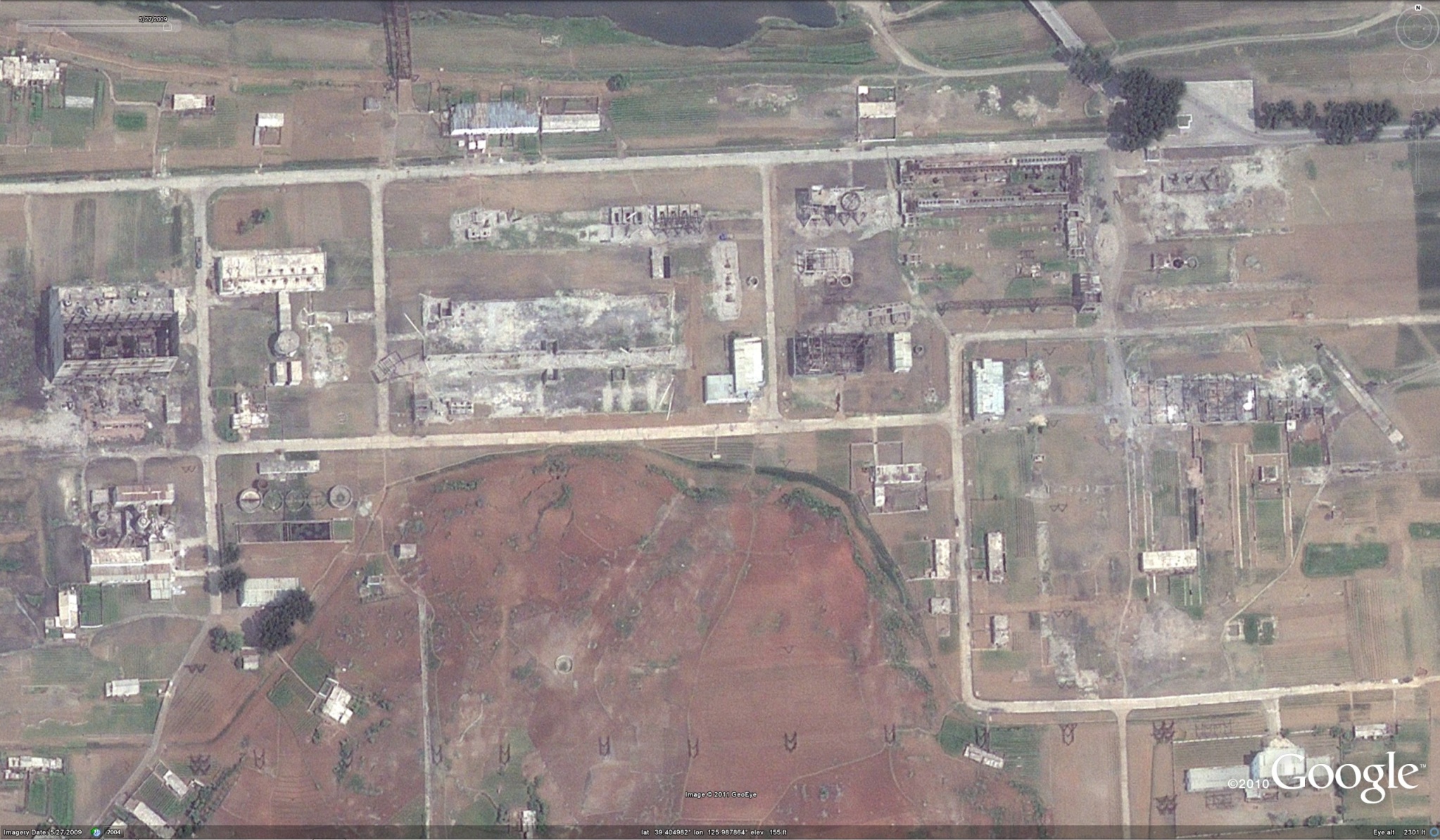
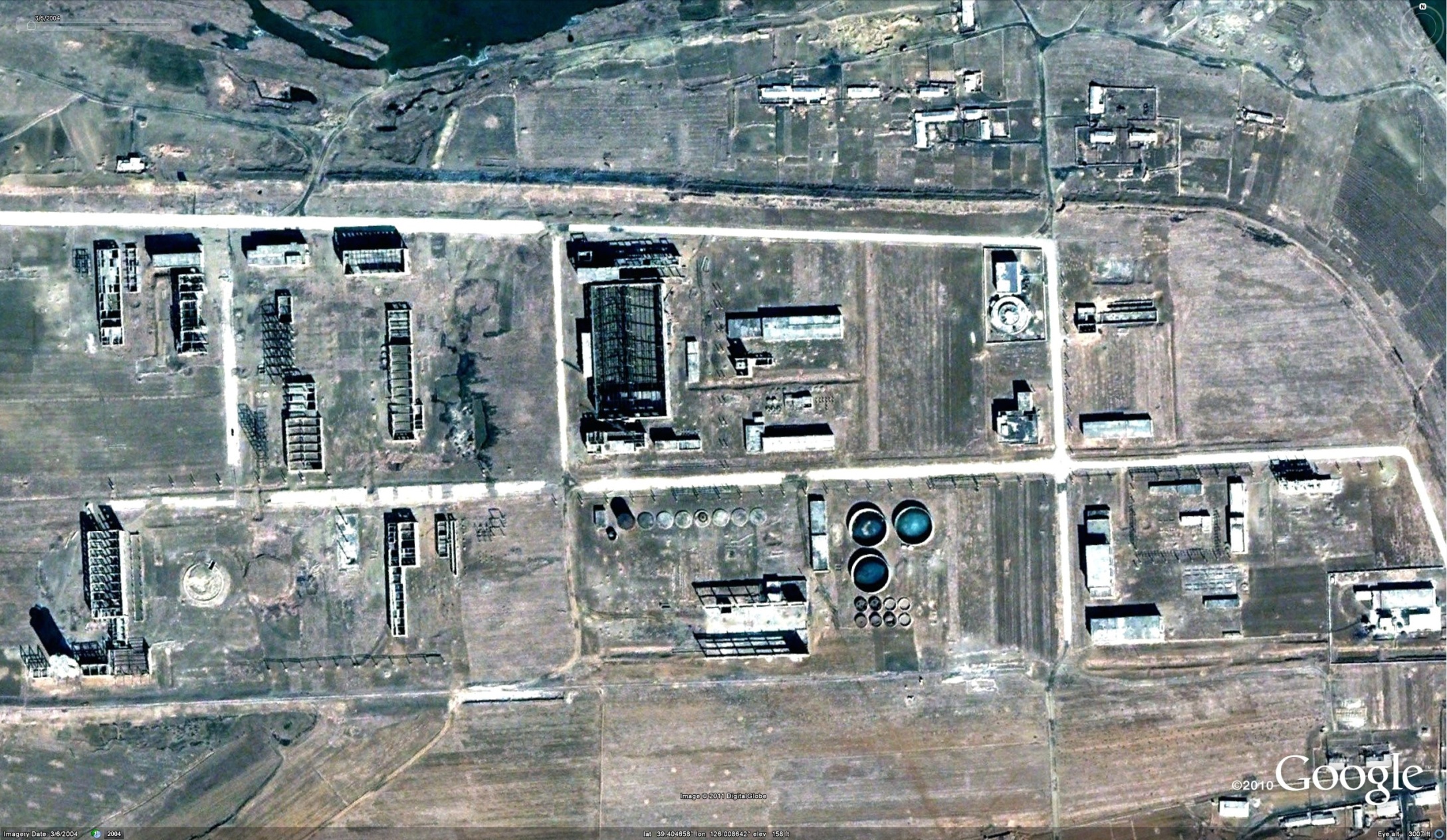
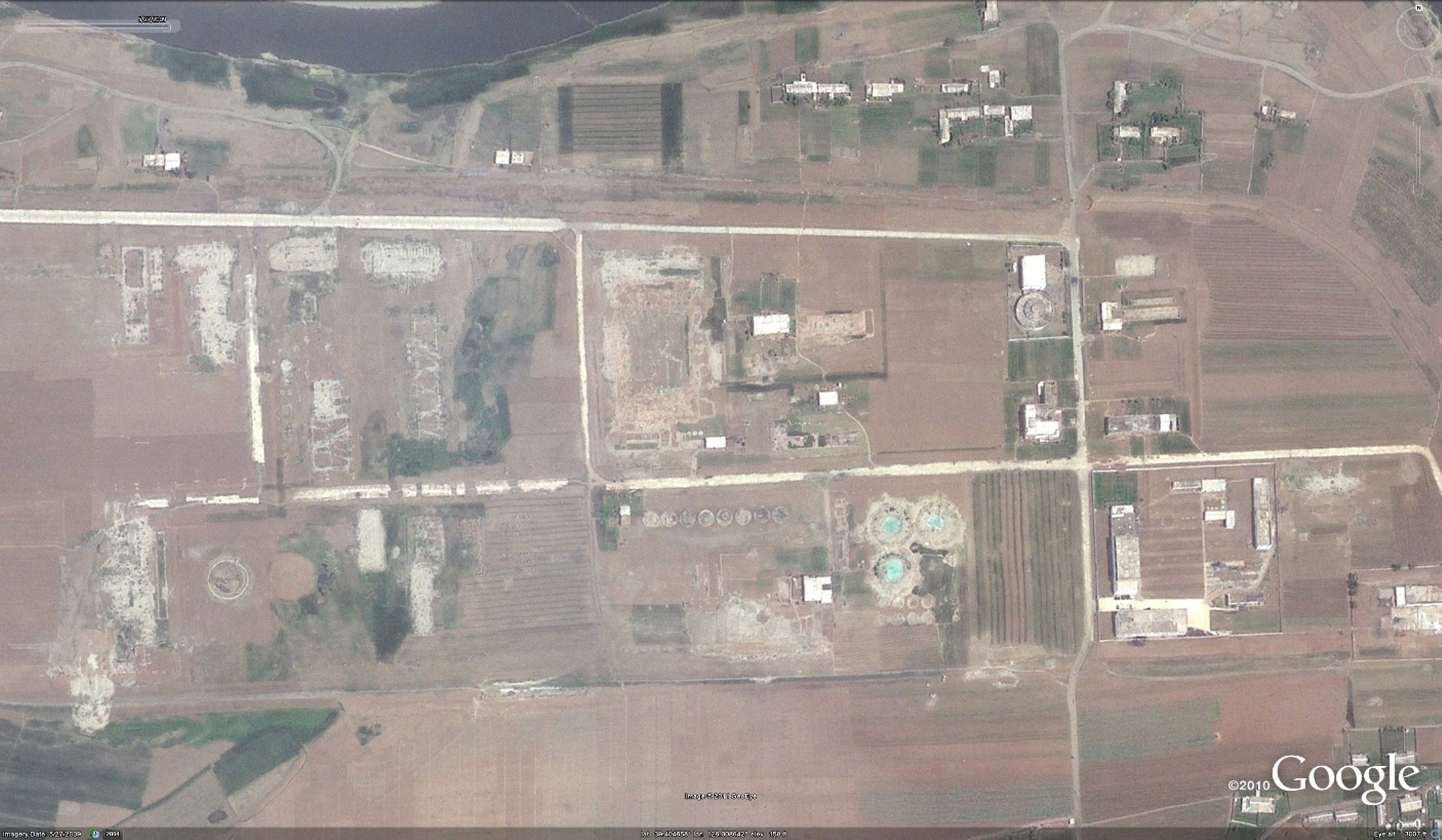
UPDATE (2011-5-31): New Google Earth imagery, dated 2009-5-27, reveals the Sunchon Vinalon Complex area continues to shrink:

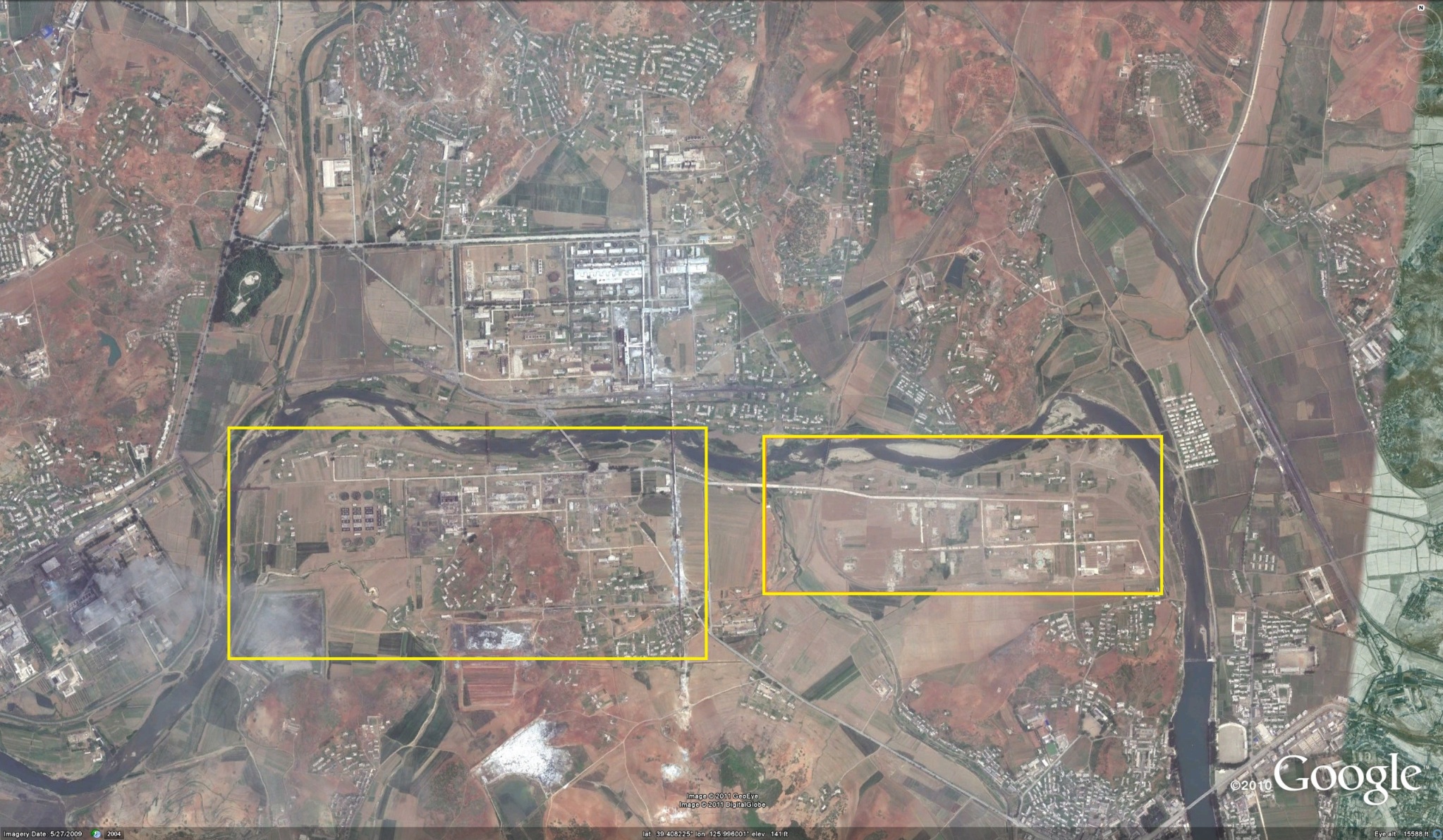
Here is an overview of the facilities in question.  Note the two yellow boxes:

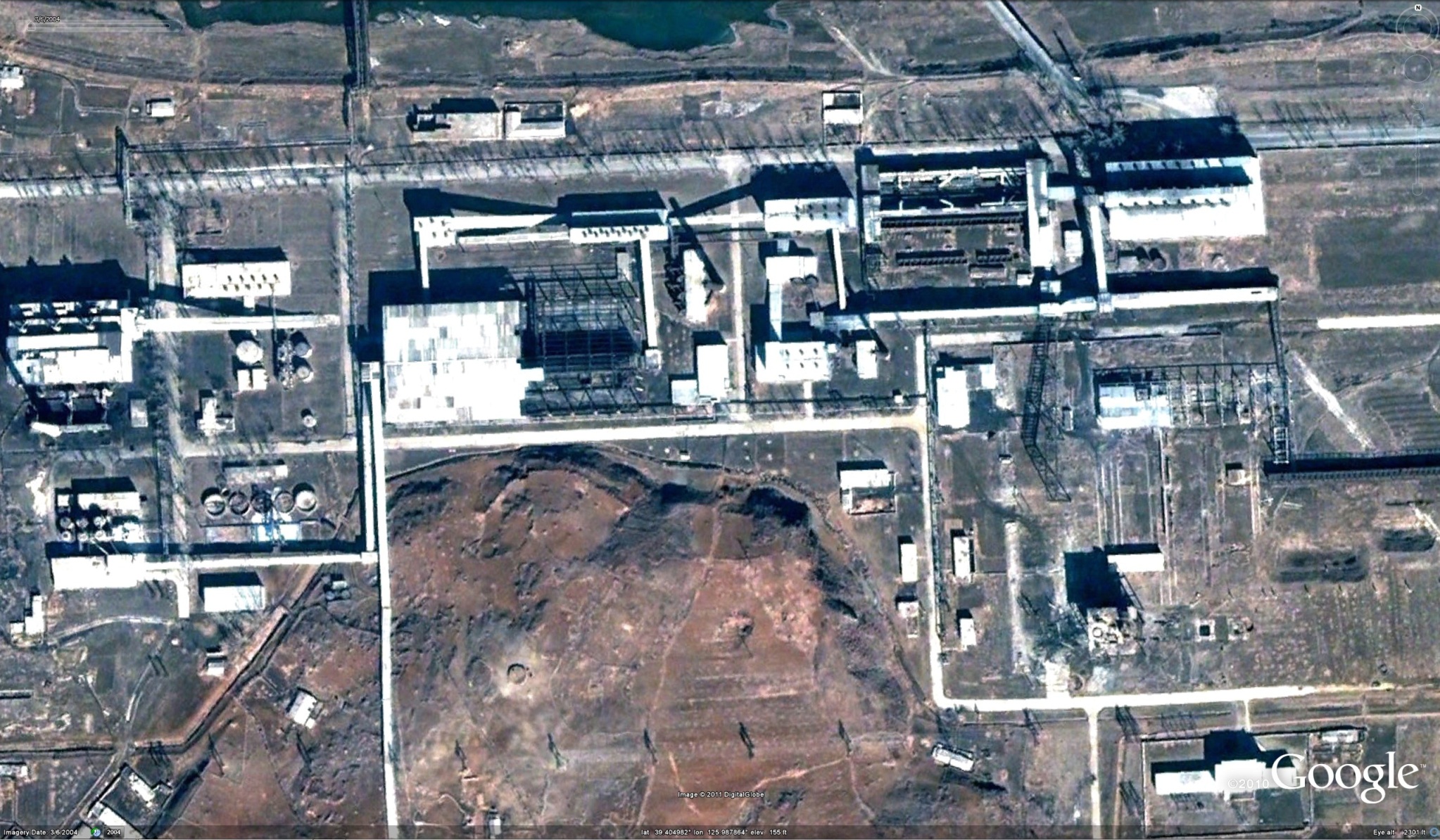
Below are images from the complex in the yellow box on the left (March 2004 – May 2009):

Below are images from the complex in the yellow box on the right (March 2004 – May 2009):

ORIGINAL POST (2010-5-25): The Sunchon Vinalon Complex was launched in 1985.  It was intended to produce 100,000 tons of Vinalon as well as methanol, vinyl chloride, sodim carbonate, caustic soda, nitrogenous fertilizers, albuminous feed.  In October 1989 the government announced that the first-stage had gone into production (50,000 tons of vinalon).

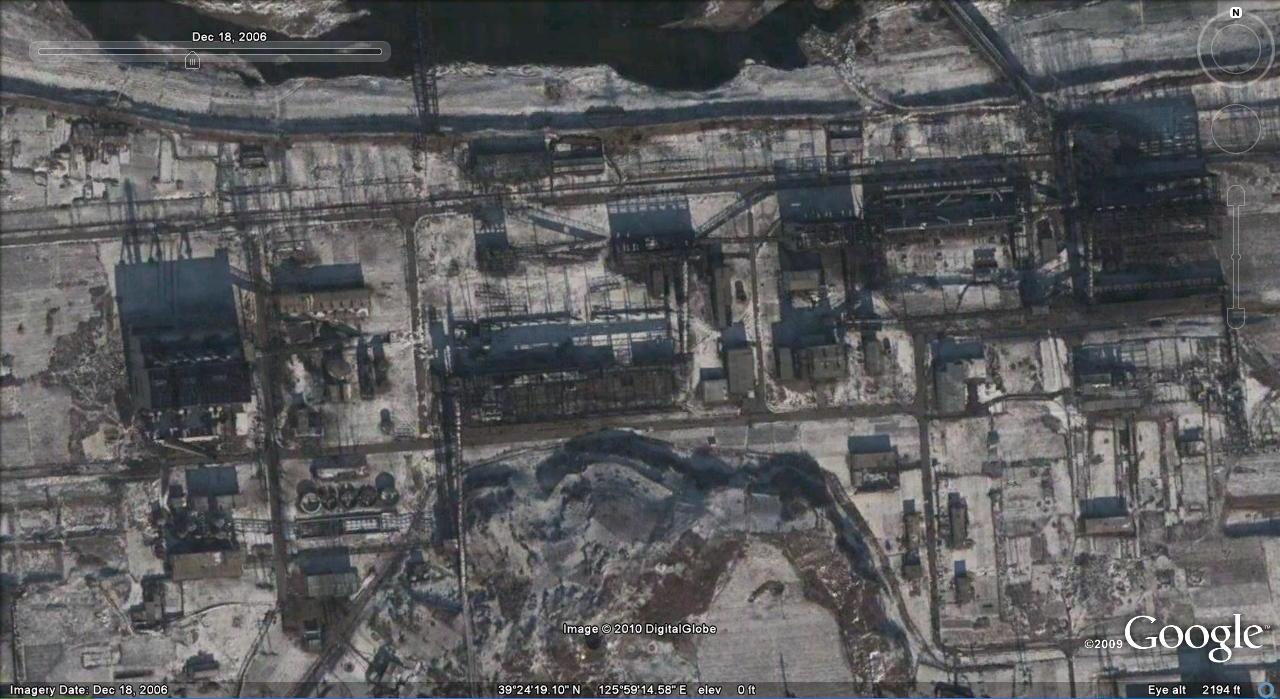
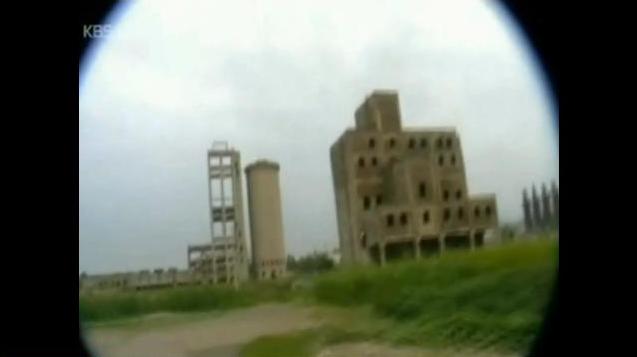
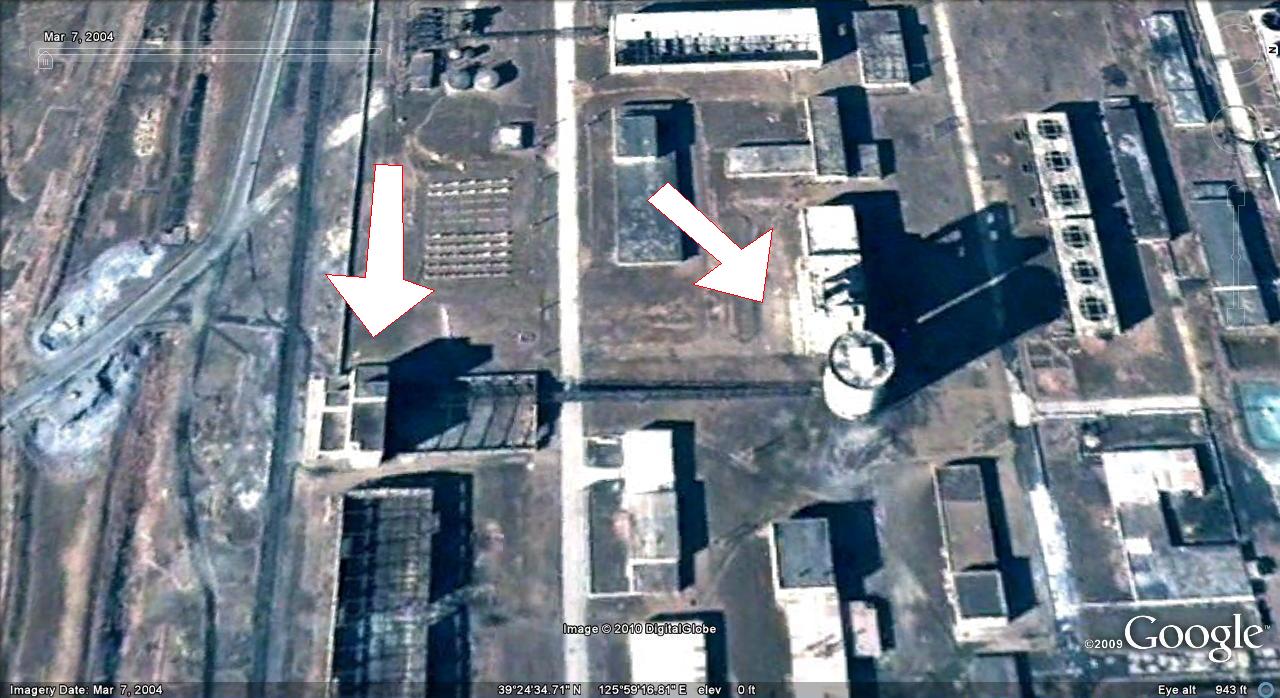
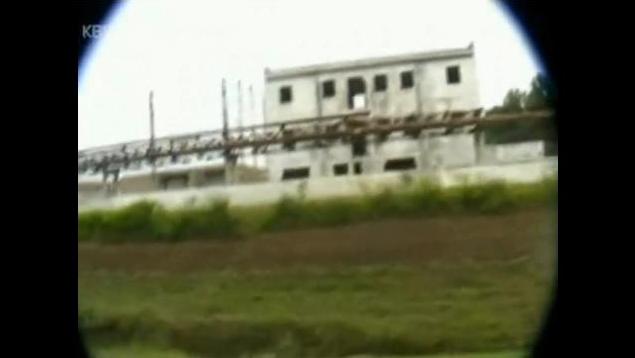
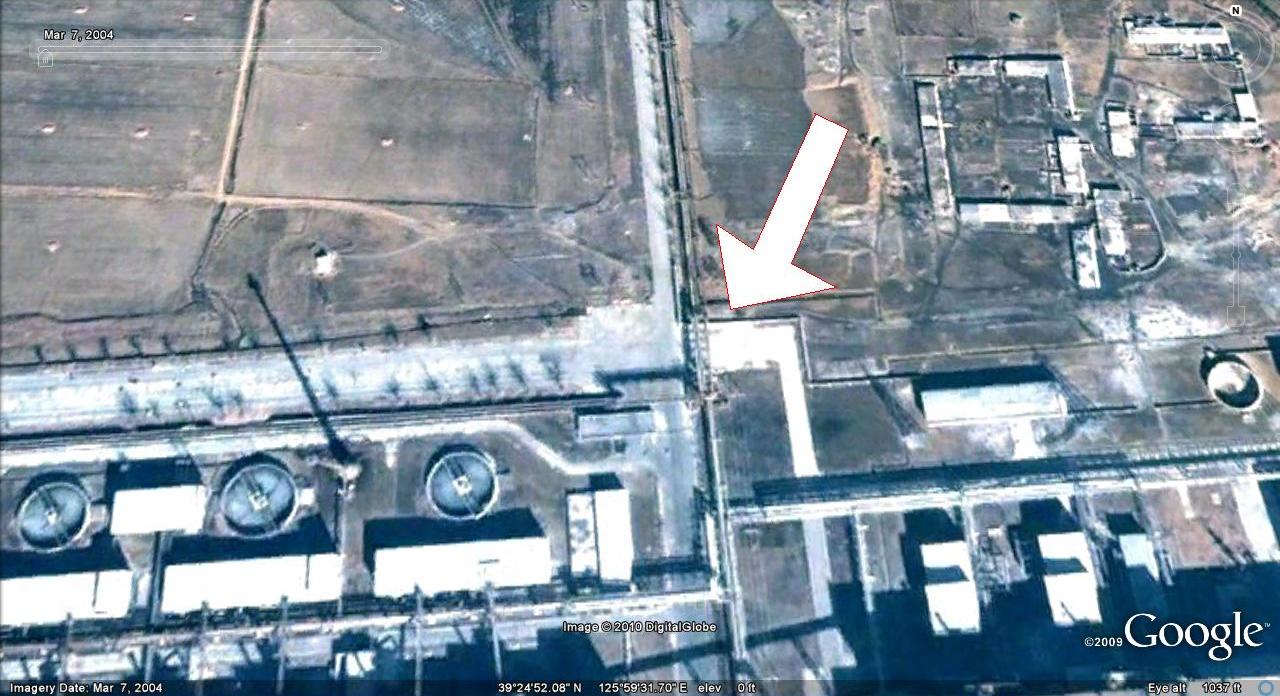
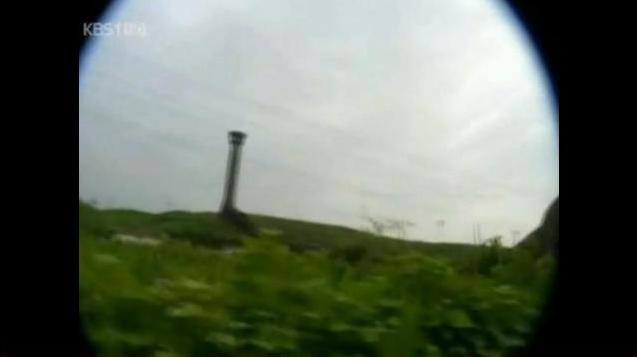
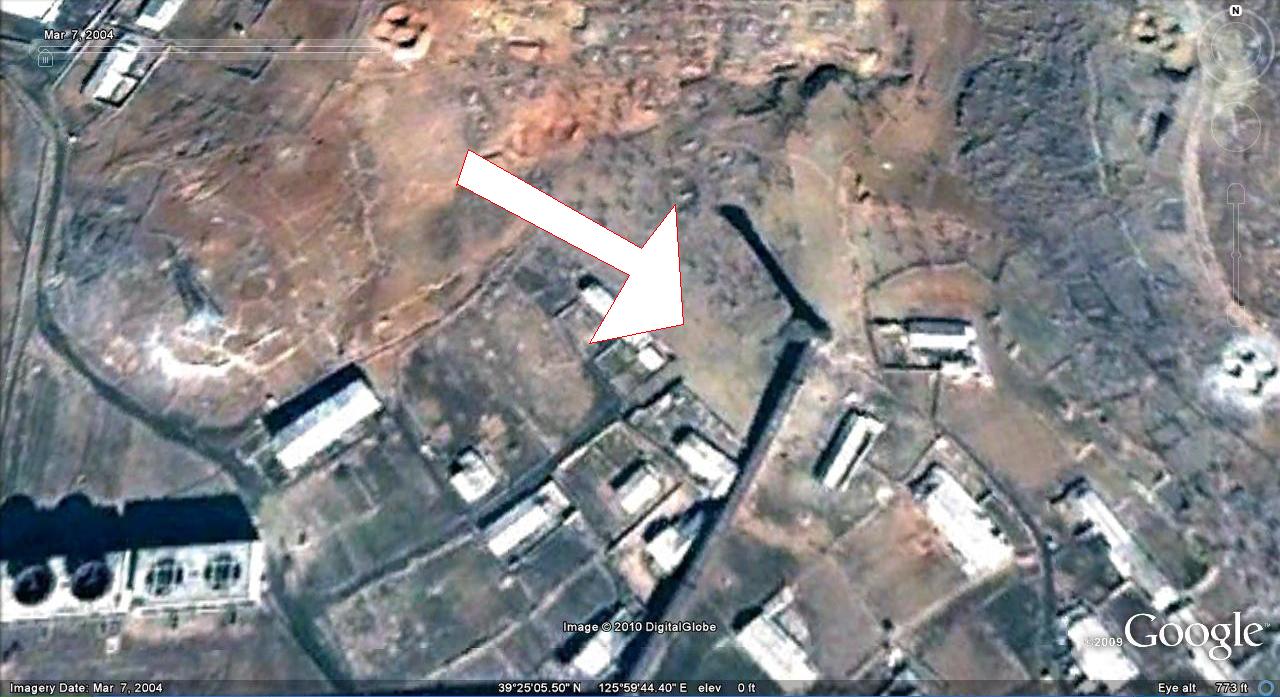
Using Google Earth imagery and clandestine video footage we can see, however, that much of the Sunchon Vinalon Complex, what I believe is that largest industrial complex in the DPRK (in terms of geographic size), is now a shrinking pile of scrap materials.

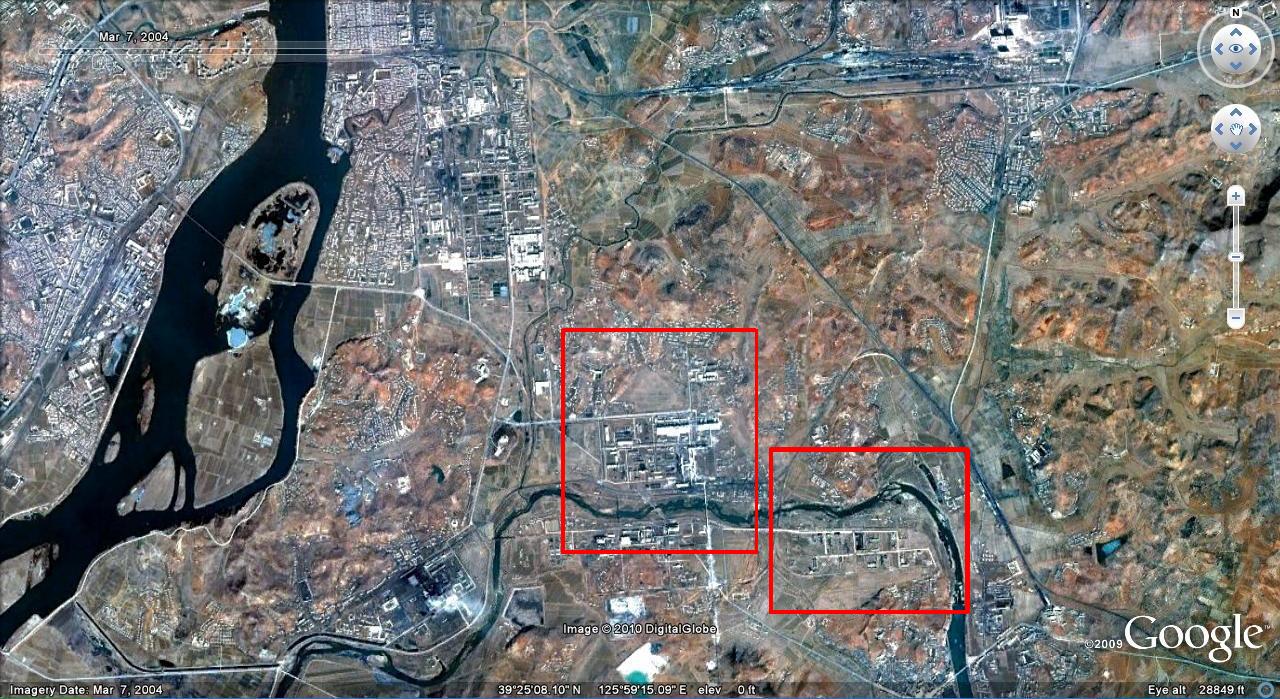
Below is an overview of the Sunchon industrial area.  It is composed not only of the Sunchon Vinalon Complex, but also the Sunchon Thermal Power Plant and Sunchon Cement Complex.  I believe the Sunchon Vinalon Complex is actually composed of three distinct hubs. The two I will be looking at are highlighted in red in the below satellite overview image:

sunchon-overview-2004.JPG

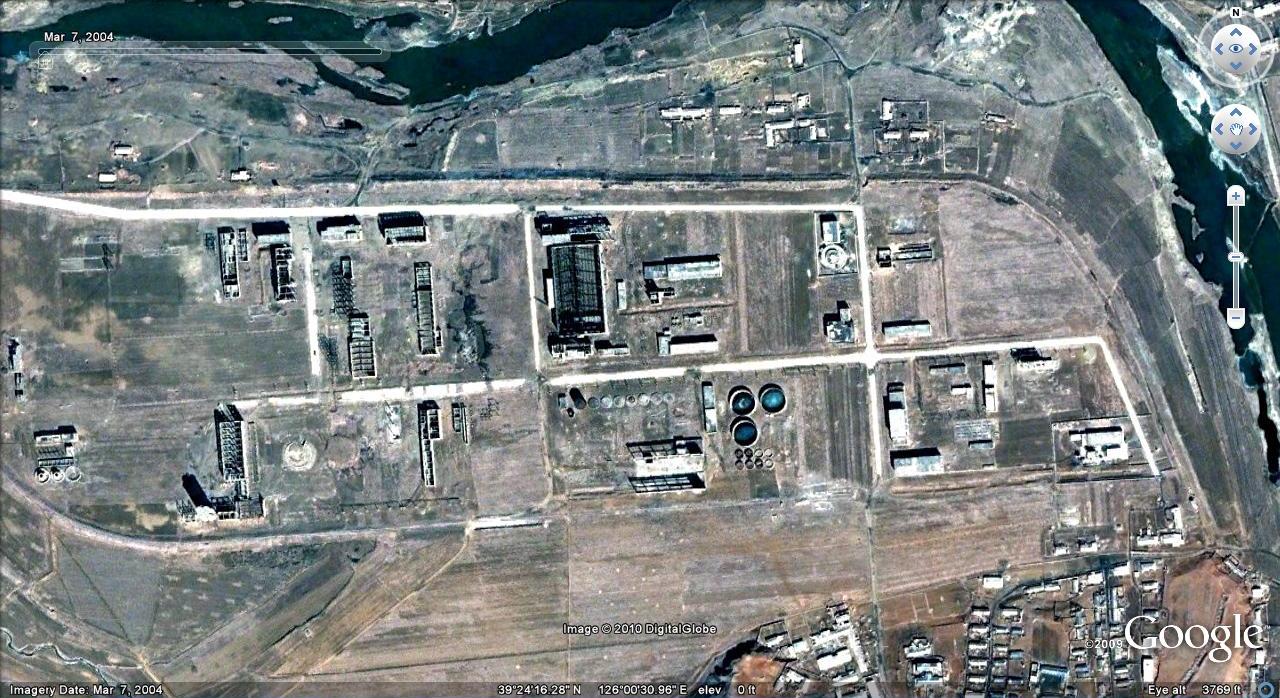
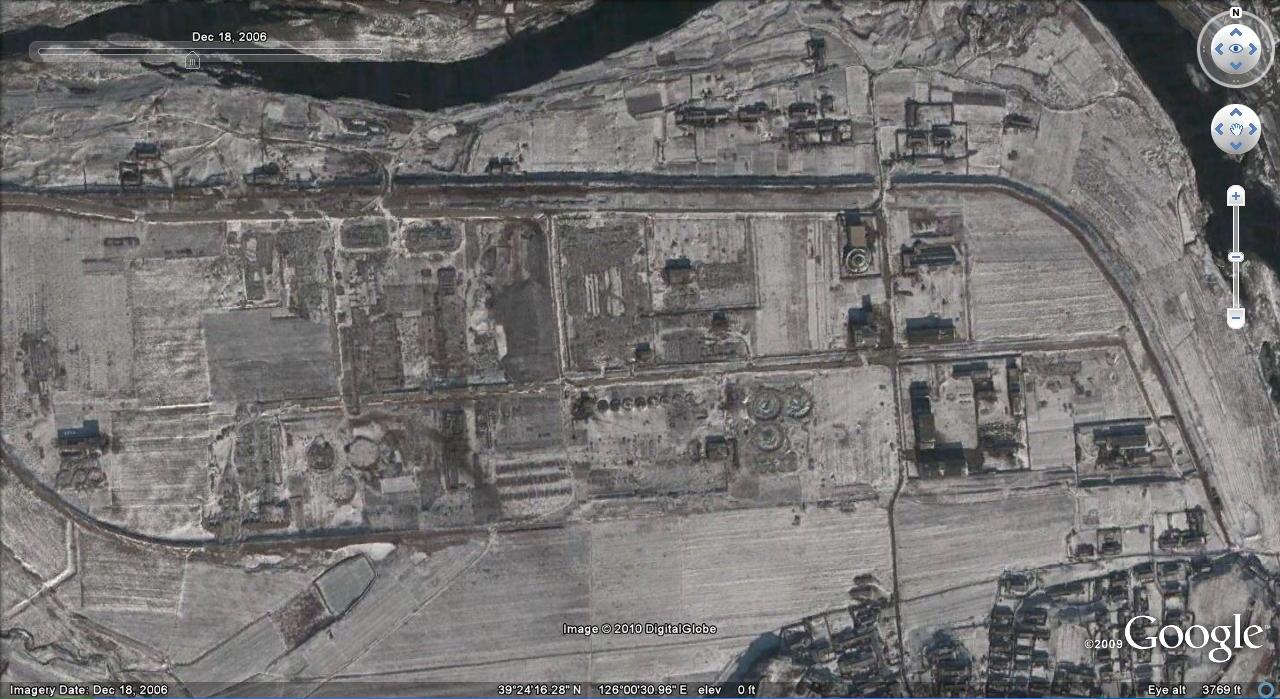
The  red box on the right has seen the most changes.  Between 2004 and 2006 it was nearly entirely stripped:

sunchon-area1-2004.JPG sunchon-area1-2006.JPG

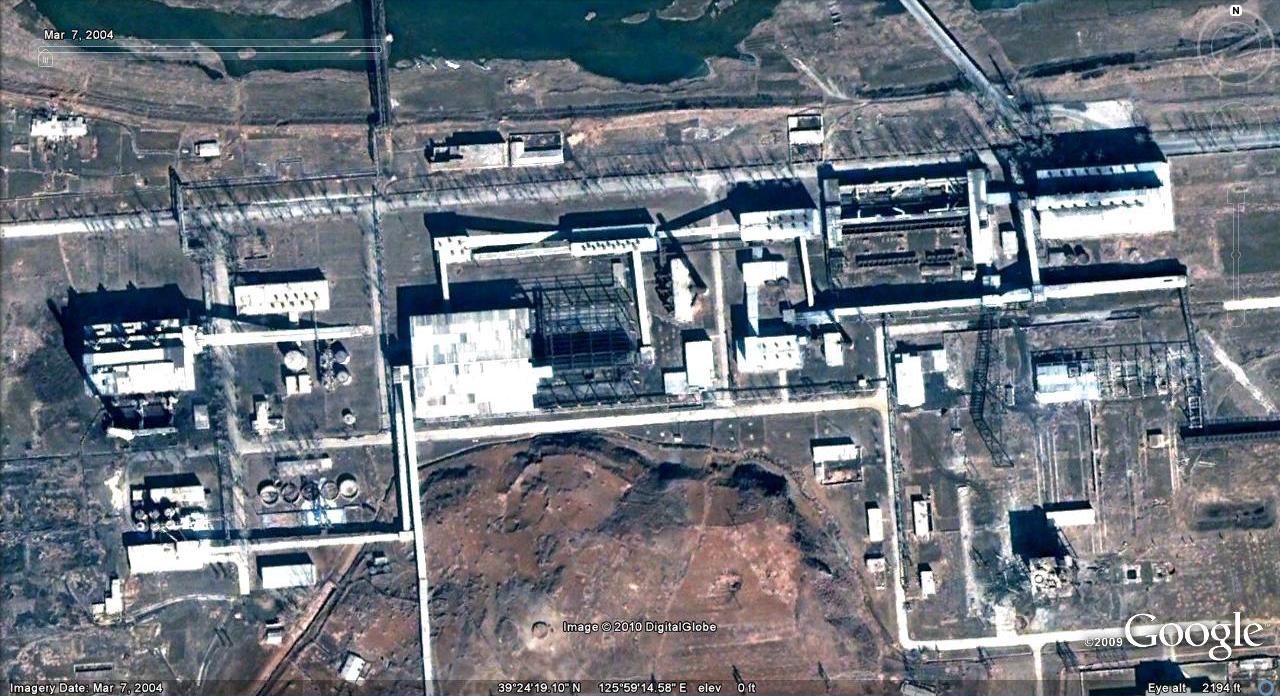
The red box on the left has been stripped as well–though not nearly to the same extent:

sunchon-area2-2004.JPG sunchon-area2-2006.JPG

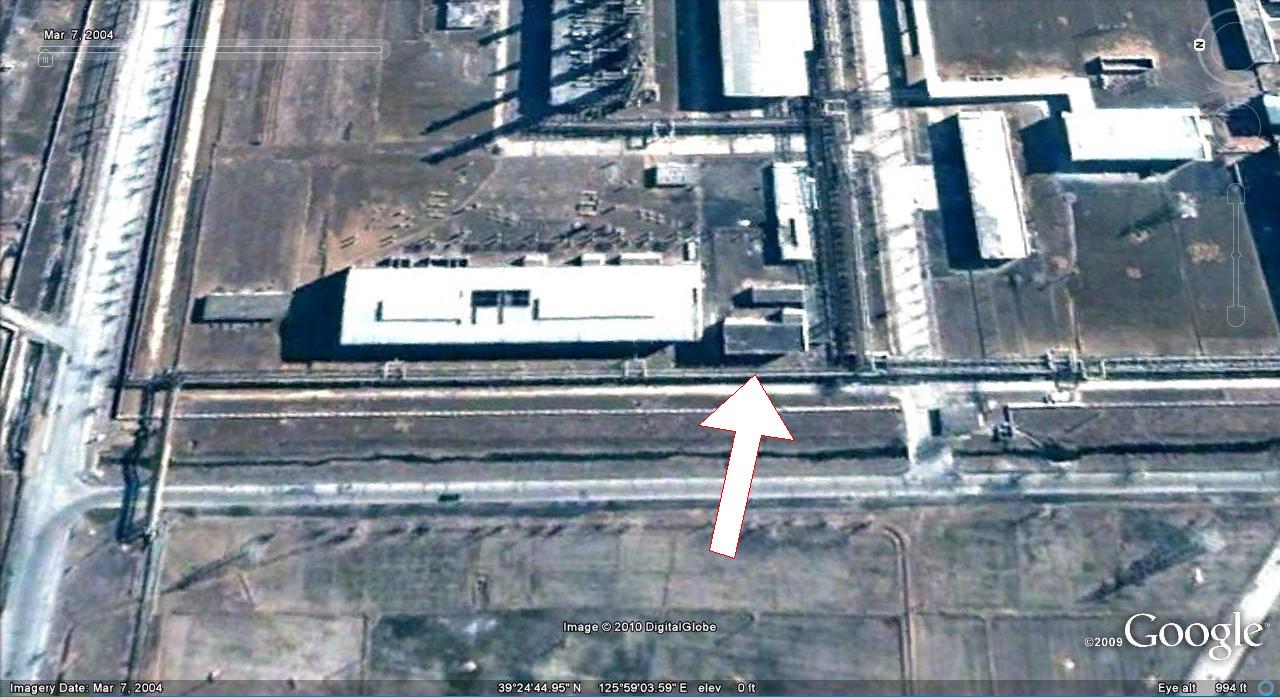
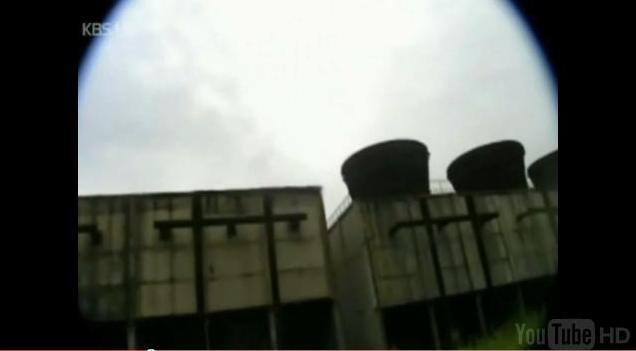
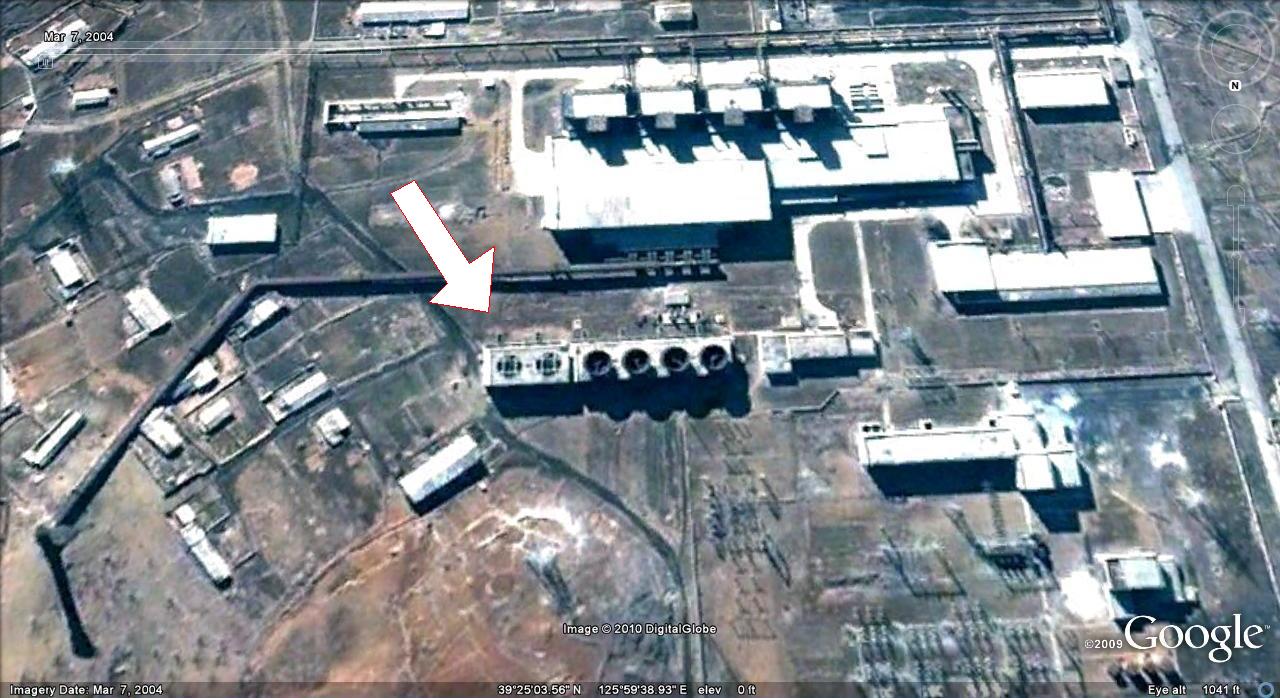
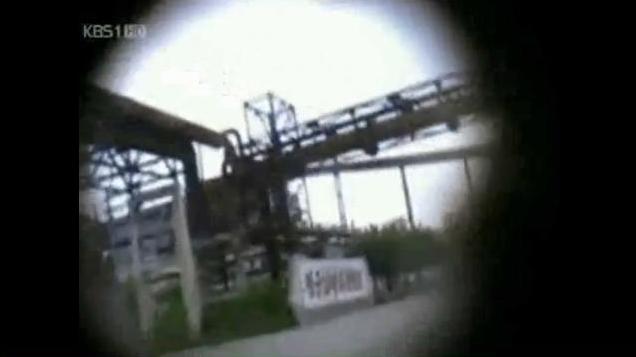
Recently KBS broadcast clandestine video shot at the Sunchon complex and someone posted a short clip on the web.  You can watch it here.  Below I have matched the clandestine video segments with the satellite imagery which shows just how derelict the facility has become. Satellite image dates are in the upper right hand corner.

sunchon-vinalon-video1.JPG sunchon-sattelite-video1.JPG

sunchon-vinalon-video2.JPG sunchon-sattelite-video2.JPG

sunchon-sattelite-video3.JPG sunchon-vinalon-video3.JPG

sunchon-vinalon-video4.JPG sunchon-sattelite-video4.JPG

sunchon-vinalon-video5.JPG sunchon-sattelite-video5.JPG

The third zone of the complex seems unaffected over the years.  You can see it here.  I suspect this is the successfully launched “first stage”.

Additional Information:

1. Google Books has a blurb about the complex from North Korea: A Strange Socialist FortressSee the blurb here. I own this book and recommend it.

2.  Global Security asserts that the facility produces chemical weapons.

3. Here are all of the KCNA stories that mention the Sunchon Vinalon Complex (Courtesy of the invaluable STALIN Search Engine)

4. The Sunchon Vinalon Complex is the second vinalon facility to be constructed in the DPRK.  The first is the 2.8 Vinalon Complex in Hamhung.  This facility was recently reconstructed and opened after falling into disrepair during the Arduous March.

Share

Waiting for an [economic] miracle

Monday, May 24th, 2010

Andrei Lankov writes in the Korea Times:

Kim Jong-il’s recent visit to China was somewhat unusual: instead of going straight to Beijing, Kim visited a number of sites which are associated with China’s economic development.

He went first to the port city of Dalian and spent time there inspecting the harbor and hi-tech centers located nearby (including even a semi-conductor plant operated by Intel). While in Beijing, he continued such visits.

Had this happened a few years ago, we would expect a wave of optimistic speculation: such interest in modern technology would have been interpreted as a sure indicator of North Korea’s readiness to launch Chinese-style reforms. This time, it seems that even the optimists have become tired of making prophecies which never come true.

Nonetheless, the trip once again demonstrated a peculiar feature which the North Korean regime shares with the now-extinct Leninist regimes of Eastern Europe. The Pyongyang leaders have an almost religious belief in the miraculous power of modern technology.

They hope that all their problems can be easily and quickly fixed once a proper technology is found and applied (of course, application has to be done by state). However, the social dimensions of the economic problems are ignored.

It sounds very non-Marxist: after all, the founding fathers of Communism explicitly stated that it is the social structure and property relations, not technology, which determines the economic productivity. But their supposed disciples would never agree that the economic woes of the Communist countries were brought by the less than perfect social system.

This unwillingness is understandable: social change might become dangerous for those who are in power. Therefore they have a vested interest in presenting their system as perfect.

So, if there are problems, those problems should have an easy technocratic decision ― and the only force which can find and introduce such decision is, of course, the regime in power.

When in the early 1950s the Soviet agricultural industry was clearly in trouble, Stalin decided to do something about it. His solution was a program of planting forest strips which would decrease soil erosion.

Stalin was also much interested in the grotesque promises of Trofim Lysenko, a notorious charlatan who was talking about “educating” plants into yielding greater harvest.

Lysenko also enjoyed the support of Khrushchev, Stalin’s successor. Khrushchev’s pet technology was corn production, and insisted that the nationwide switch to this wonder plant would miraculously raise productivity.

However, corn, being a Mesoamerican plant, did not grow well near the polar circle, and plants did not show any sickness of being susceptible to `education’. Russia, once a major exporter of grain, became an increasingly voracious importer of food.

Of course, the problems of the Soviet agriculture were caused not by the insufficient attention paid to corn production. It was the social problems that made the Soviet agricultural system so inefficient: farmers, being badly paid employees of the government-run farms, had no reason to work diligently.

When they toiled the small patches of their own land, which they were legally allowed, they showed a remarkable level of productivity. But this was not what the Soviet government was willing to see.

It was Mao’s China, though, which produced the weirdest examples of belief in wonder technologies. It reached its height during the Great Leap Forward in the late 1950s.

Mao wanted small furnaces to be built everywhere: during the Great Leap even schools and farms were required to make their own steel in the backyard furnaces. Predictably, the home-made steel was useless because of the low quality.

Simultaneously, Mao told the farmers to use “close cropping.” Seeds were sown far more densely than normal on the “politically correct” assumption that “seeds of the same class would not compete with each other” (of course, crops were ruined).

The farmers were also ordered to plough two meters deep, since this would “encourage plants to develop extensive root systems.” The result was famine which killed between 20 and 30 million people. However, it seems that Mao and his henchmen never abandoned their belief in miraculous technologies.

North Korea is no different. Its leaders also are firm believers in the power of technology, if this technology is carefully selected by the state and introduced by its agents. Kim Il-sung, being a son of a farming family, paid special attention to the agriculture.

Among other things, he was a great enthusiast for terrace fields. He wanted to transform the barren hills of North Korea into rice-producing areas, and kept reminding his officials that no efforts should be spared to do so.

Predictably, the result was a disaster: in the 1990s terrace fields were washed away by floods while the few remaining became unusable since a large electric pump would be necessary to provide those high-rise fields with water.

Kim Jong-il shares the belief in wonders, but in his case the major hope is modern industrial technology, preferably related to computers (an approach clearly influenced by gadgetry).

The Dear Leader reputedly said that it was a great folly not to study computers, and most of his technological initiatives are clearly related to IT.

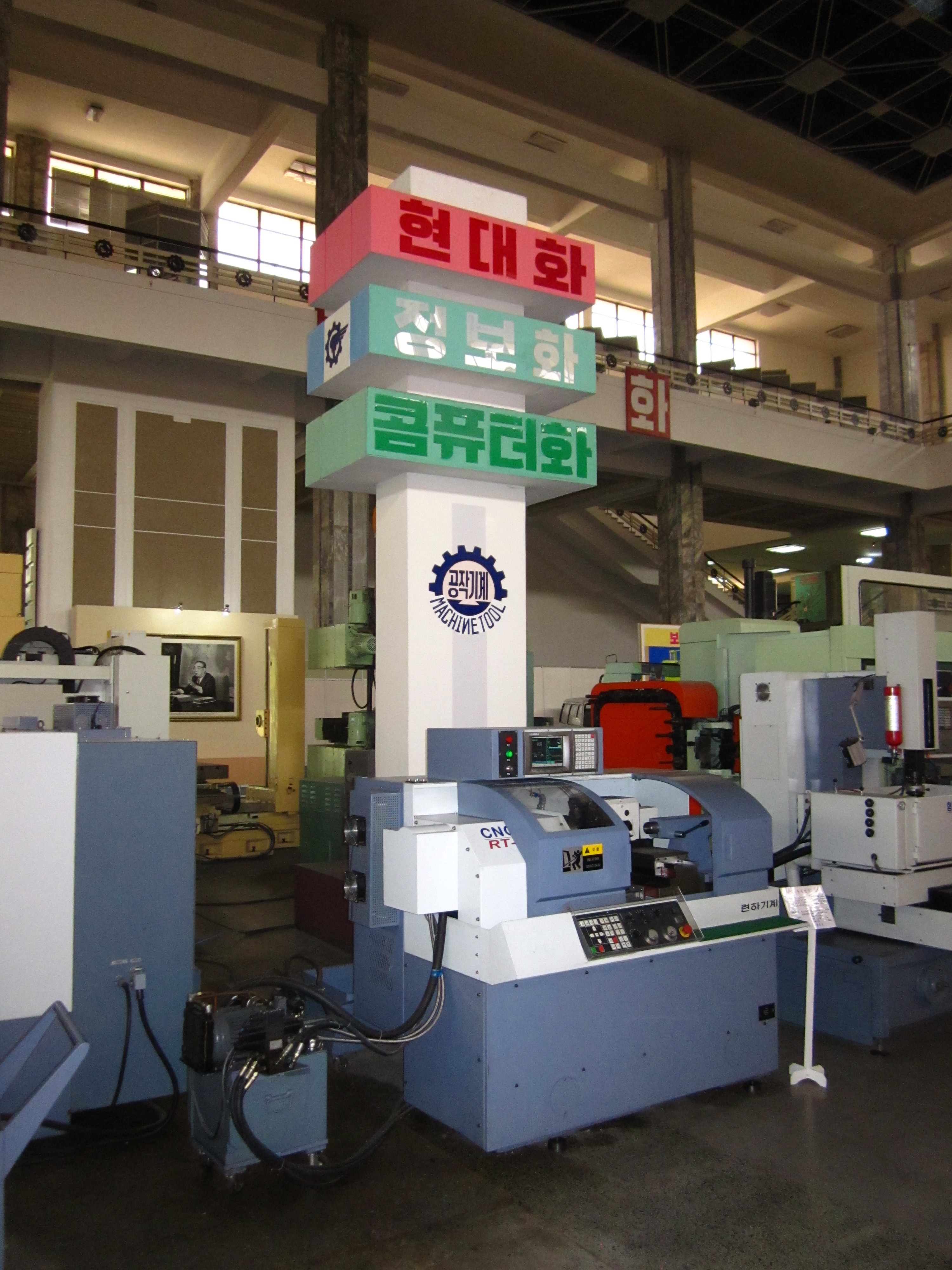
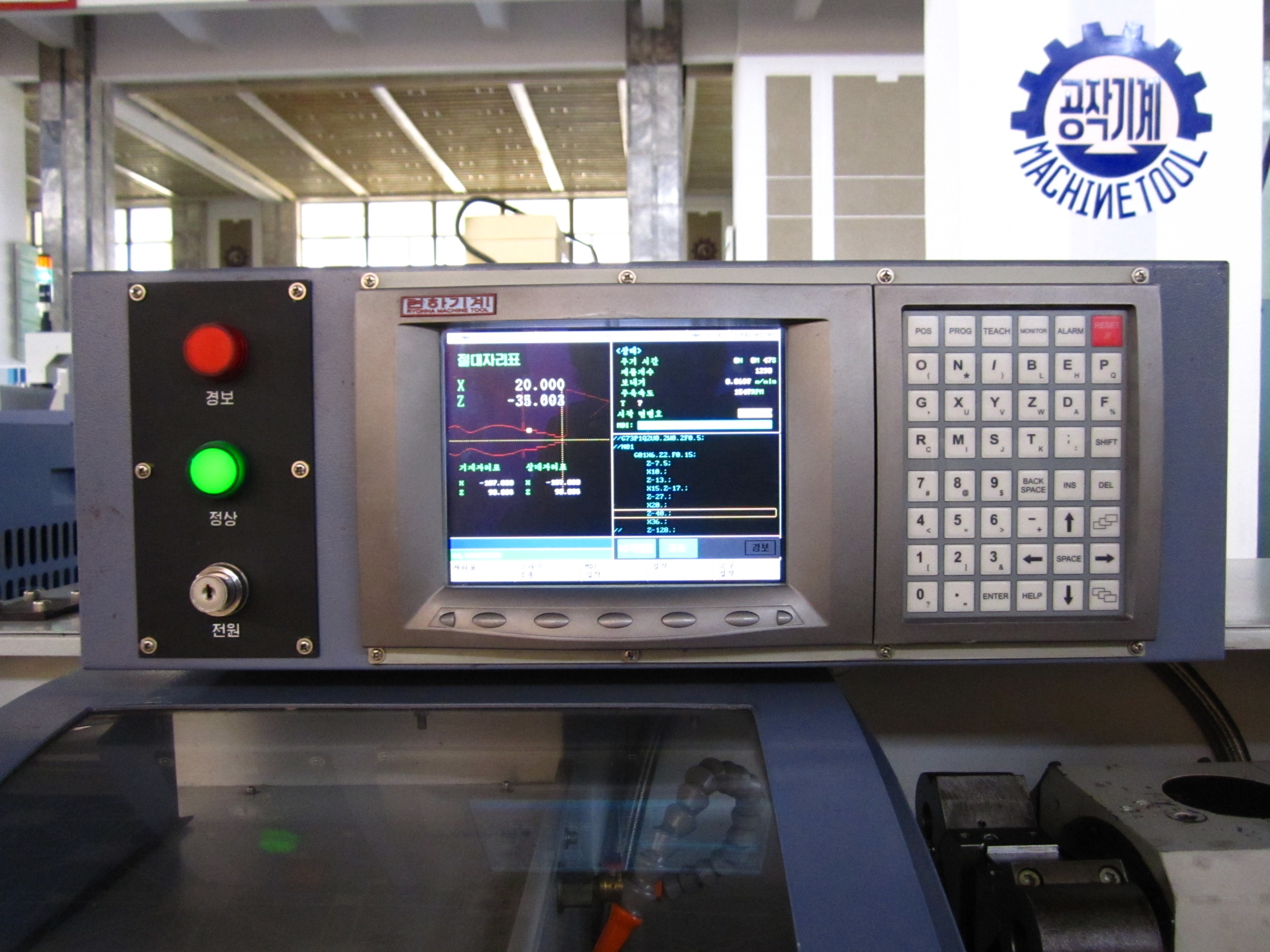
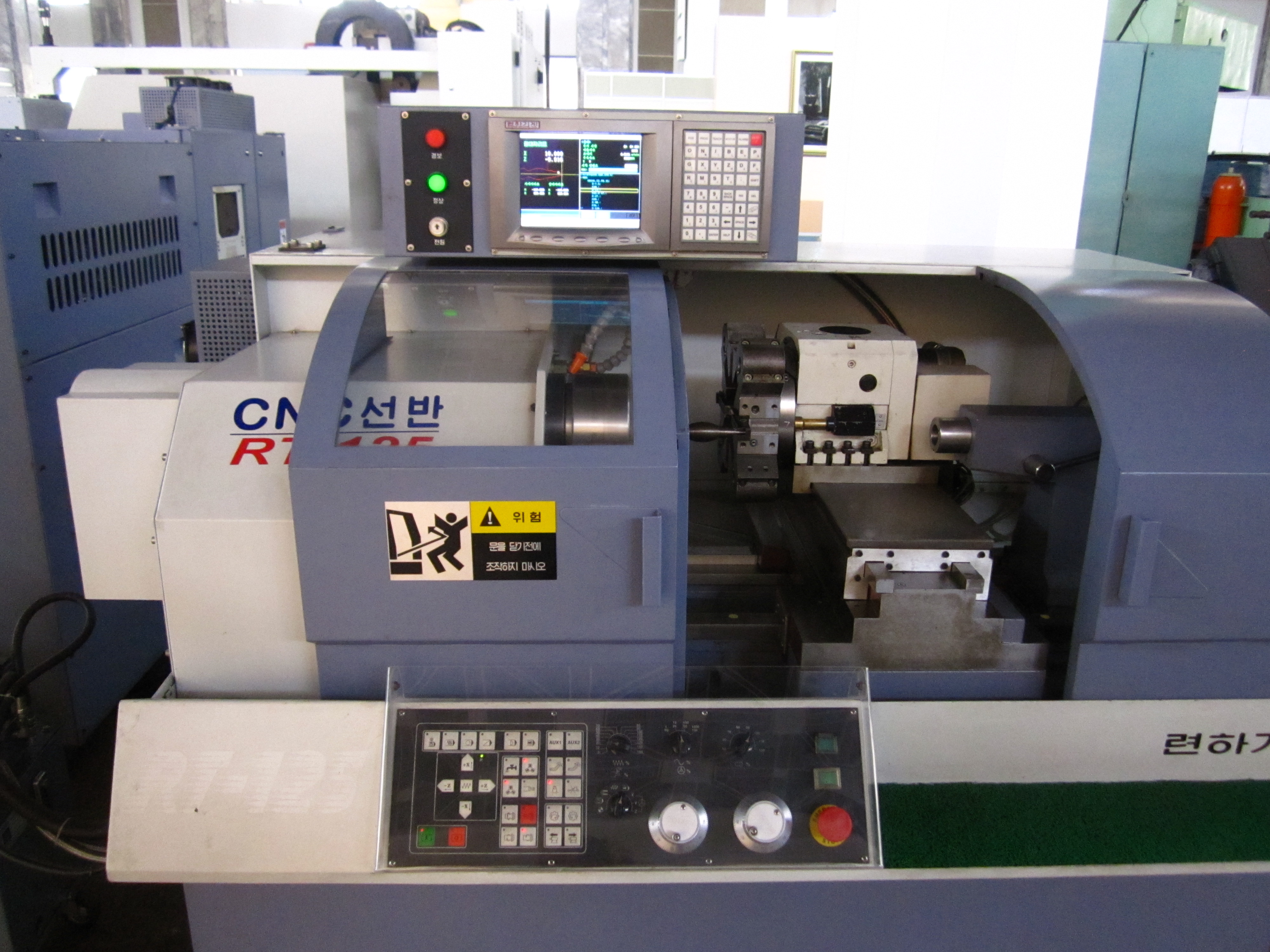
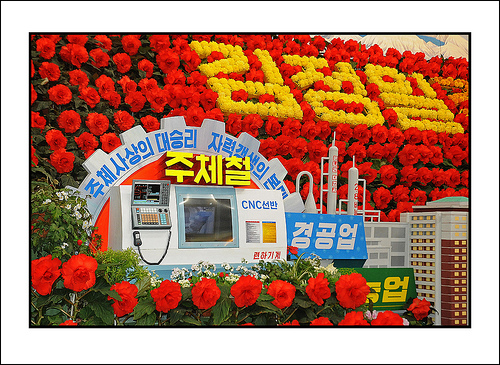
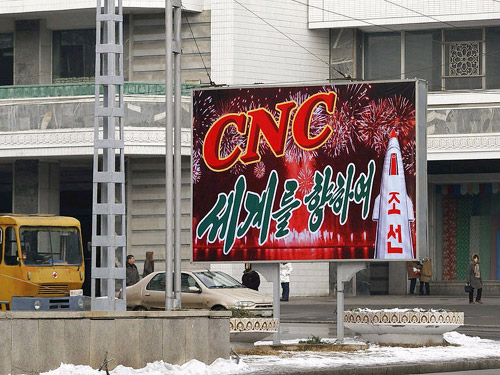
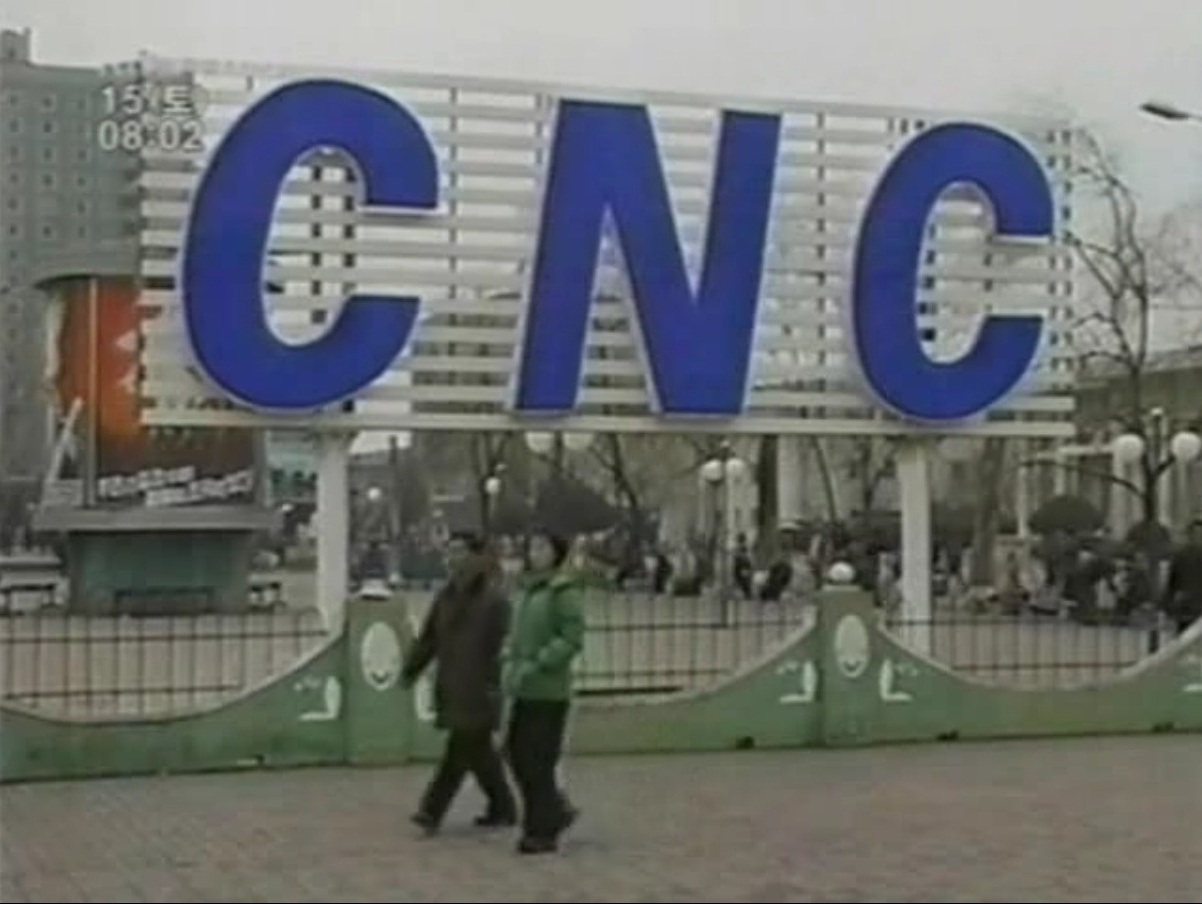
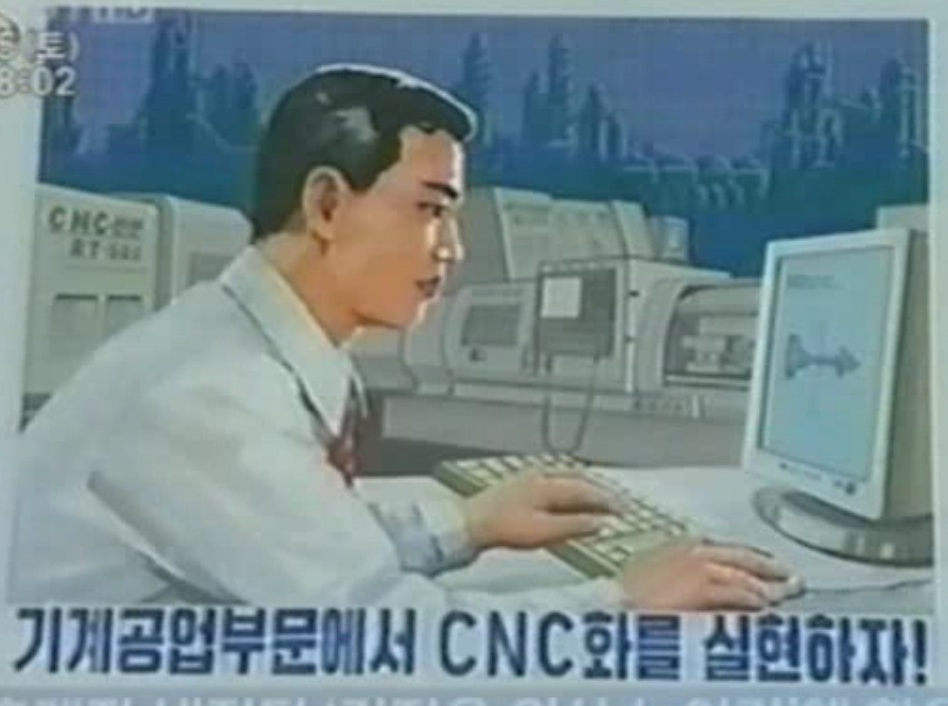
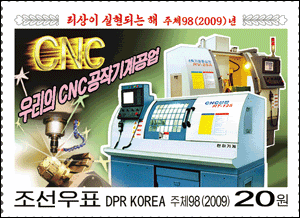
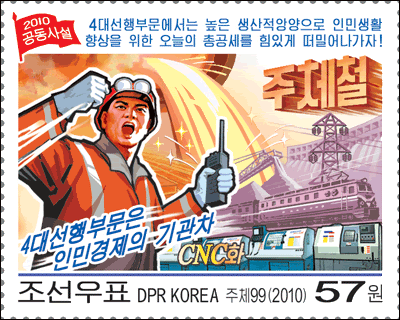
Since last year, for example, the Pyongyang streets have been covered with posters which tell about wonders of the CNC technology (in an unusual twist, the English acronym is used). CNC stands for “computer numerically controlled” technology and, to put it simply, describes computer-controlled industrial equipment.

It is remarkable that the present author heard the same slogans many decades ago, in the 1970s. Indeed, the Soviet leaders also had much hope about the CNC and worked hard to introduce it as a cure for the Soviet economy ― with the predictable lack of success.

Therefore, not much should be read from Kim Jong-il’s visit to Intel. He might dream of computer-operated giant plants, but he lives under severe political constraints, and these constraints ensure that North Korea will remain a very inhospitable environment for high technology (apart from some ultra-cool gadgetry for the chosen few, of course).

This might be changed only if the system itself will be changed, but this is clearly not what Kim wants.

Read the full story below:
Waiting for a miracle
Korea Times
Andrei Lankov
5/24/2010

Share

Myanmar buying DPRK military equipment

Sunday, May 16th, 2010

According to Interconnected World:

Secrecy normally shrouds military relations between Burma and its strategic allies such as China and North Korea, but intelligence sources suggest ongoing military ties with these two countries are helping the Burmese generals’ to achieve their military ambitions, including that of becoming a nuclear power.

Intelligence sources said top junta generals have held late- night meetings in Naypyidaw in the last two months, discussing military modernization, foreign relations, tension with ethnic groups and suppressing dissidents in urban areas.

They said the junta bought weapons from China and North Korea including mid-range missiles and rocket launchers in April, and suggested the war office in Naypyidaw chose the month when the Burmese celebrate new year in order to avoid public scrutiny.

Equipment necessary to build a nuclear capability was reportedly among imported military supplies from North Korea that arrived at the beginning of the holidays.

A report from Rangoon in April also referred to an undisclosed vessel believed to be connected with North Korea that was seen at Thilawar Port, near Rangoon. Burmese officials at the time said the vessel was there to load Burmese rice destined for North Korea.

Military relations between Naypyidaw and Pyongyang have been attracting attention from analysts, diplomats and journalists in recent years. In August 2009, an article in Sydney Morning Herald alleged the Burmese junta aims to get an atomic bomb in five years using Burmese enriched uranium and North Korean nuclear technology.

Apart from nuclear know-how and equipment, Pyongyang has also provided the Burmese junta’s armed forces with truck-mounted multiple rocket launchers, surface-to-air and surface-to-surface missiles and technology for underground warfare since the early 2000s, according to experts on Burma’s military like Andrew Selth.

“Pyongyang needs Burmese primary products, which Naypyidaw can in turn use to barter for North Korea arms, expertise and technology,” wrote Andrew Selth in the Australian Journal of International Affairs in March.

Read the full article here:
Burma said buying arms from China, North Korea
Interconnected World
5/10/2010

Share

Pyongyang International Trade Fair opens soon

Monday, May 10th, 2010

According to KCNA:

Pyongyang Spring Int’l Trade Fair to Open

Pyongyang, May 7 (KCNA) — The 13th Pyongyang Spring International Trade Fair will take place at the Three-Revolution Exhibition from May 17 to 20.

It will bring together more than 270 companies of the DPRK, China, Russia, Germany, Mongolia, Brazil, Switzerland, Singapore, Australia, Austria, Italy, Indonesia, Thailand, Cuba, Poland and Taipei of China.

Exhibits will include more than 85,000 products of over 5,000 kinds such as CNC machine tools, electrical machinery and equipment, electronic and light industrial goods, foodstuffs, daily necessities, medicines and vehicles.

Share

DPRK to promote production of consumer goods

Thursday, April 22nd, 2010

According to the People’s Daily (Xinhua):

The Democratic People’s Republic of Korea (DPRK) has decided to promote the production of consumer goods in order to improve people’s lives, the Rodong Sinmun newspaper reported Wednesday.

The major task was to continue exploiting the potential of the light industry, raising production, improving quality, promoting the modernization of enterprises and guaranteeing its operation at full capacity, a cabinet meeting has agreed.

Besides, the ministers underlined the importance of the spring ploughing and sowing, saying supply to the rural area should be ensured.

They also demanded sectors such as metal, electricity, coal and railway continue promoting production to create condition for the improvement of people’s lives.

The newspaper said DPRK’s Premier Kim Yong Il attended the cabinet meeting, but did not mention the exact date.

Industrial production grew 16 percent in the first quarter, compared to the same period a year before, said the paper.

Consumer goods are part of Kim Kyung-hui’s (Kim Jong-il’s sister) portfolio as head of the KWP’s light industry department.

Read the full story here:
DPRK to promote production of consumer goods
People’s Daily (Xinhua)
4/21/2010

Share

DPRK spends millions of US$ on fireworks show

Monday, April 19th, 2010

According to the Choson Ilbo:

North Korea spent more than US$5.4 million on fireworks displays along the banks of the Taedong River in Pyongyang on Wednesday to celebrate former leader Kim Il-sung’s 98th birthday the following day.

A North Korean source on Friday said the North had imported about 60 tons of fireworks from China for the display and invited foreign engineers for technical assistance. “They must have spent more than W6 billion for the fireworks and their display, transportation, and labor,” the source said.

The regime temporarily cut power and banned driving in an area near the Juche Tower for the fireworks spectacular to maximize the effect. The North’s state-run Korean Central Television broadcast the fireworks for an hour from 9 p.m. on Thursday, and reran it the following morning.

At the fireworks ceremony, Kim Ki-nam, a close aide to Kim senior and a secretary of the North Korean Workers’ Party’s Central Committee, said, “We put on the fireworks display full of hope today because we have held matchless great men in high esteem generation after generation.” Some interpret this as a hint at the succession from leader Kim Jong-il to his son Kim Jong-un.

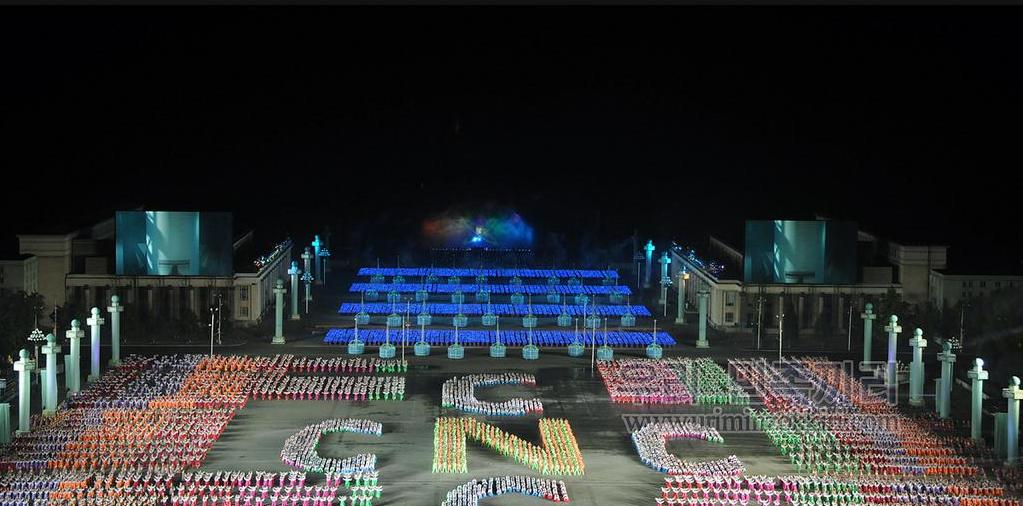
You can watch the fireworks show on YouTube: Part 1, Part 2 (the new 10-minute CNC song kicks in at 5:10), Part 3.

Aside: I managed to get a great mp3 of the CNC song.  I am working on a CNC post and you will hopefully be able to donwload  it there.

Share

DPRK 2009, 2010 budgets

Friday, April 16th, 2010

According to KCNA:

Report on Implementation of 2009 Budget and 2010 Budget
 
Pyongyang, April 9 (KCNA) — Deputy Pak Su Gil, vice-premier and minister of Finance, delivered a report on the results of the implementation of the DPRK state budget for last year and its state budget for this year at the 2nd Session of the 12th Supreme People’s Assembly held on Friday.

According to the report, the state budget for last year was successfully implemented and, as a result, the state budgetary revenue was overfulfilled 1.7 per cent, an increase of 7 per cent over the previous year.

Ministries, national institutions, management bureaus and complexes overfulfilled the national plans for budgetary revenue and all provinces, cities and counties across the country also overfulfilled their plans for local budgetary revenue.

Last year’s plan for state budgetary expenditure was carried out at 99.8 per cent.

An investment from the state budget was focused on the development of metal industry while a huge financial allocation was made for the power and coal industries and the railway transport.

8.6 per cent more funds than the previous year were spent for capital construction and expenditure was increased for agriculture and light industry.

A 7.2 per cent greater financial disbursement than the previous year was made for the field of science and technology, surpassing the level of the latest science and technology in domains of space technology, nuclear technology and CNC technology and putting the key industries of the national economy on a high scientific and technological basis.

A large amount of fund went to the field of cultural construction and 15.8 per cent of the total state budgetary expenditure was spent for national defence.

The reporter said that the scale of revenue and expenditure in the state budget for this year has been set on the principle of improving the people’s standard of living to meet the requirements of the policy of the Workers’ Party of Korea on conducting a great offensive to bring about a decisive turn in the above-said work.

This year’s plan for state budgetary revenue is expected to grow 6.3 per cent over last year. The revenue from the profits of state enterprises, the main source of state budgetary revenue, is expected to go up 7.7 per cent over last year, that from the profits of cooperative organizations 4.2 per cent, that from the fixed asset depreciation 2.5 per cent, that from real estate rent 2 per cent and that from social insurance 1.9 per cent.

This year’s plan for state budgetary expenditure is expected to show an 8.3 per cent increase over last year.

The spending for the light industry is expected to go up 10.1 per cent, that for agriculture 9.4 per cent and that for metal, power and coal industries and railway transport 7.3 per cent as compared with last year.

The expenditure for the machine-building industry is expected to go up and an 8.5 per cent bigger financial allocation will be made for scientific researches and the introduction of new technologies.

A 6.2 per cent bigger financial disbursement than last year is expected to be made to more successfully enforce the popular policies, a proof of the advantages of Korean-style socialism centered on the popular masses.

15.8 per cent of the total state budgetary expenditure for this year is expected to be spent for national defence.

It is expected that a large amount of educational aid fund and stipends will be sent for the children of Koreans in Japan this year, too.

In order to successfully implement this year’s state budget, all domains and units of the national economy should work out enterprising and realistic business strategy and management strategy and tenaciously carry them out by relying on a high degree of mental power of the producer masses and thus fulfill the plans for budgetary revenue without fail, stressed the reporter.

And according to the Choson Ilbo:

North Korean leader Kim Jong-il can freely dispose of 20 percent of his country’s budget, a former secretary of North Korean Workers’ Party has said that. Hwang Jang-yop told the Asahi Shimbun, “Only 30 percent of the budget is spent on public services, while 50 percent is earmarked for military spending.” Hwang defected to South Korea in 1997.

Hwang was interviewed by the daily during his visit to Japan on April 4-8. “Kim Jong-il’s dictatorship is 10 times worse than his father’s. People have a painful life,” he said.

Asked if the North is likely to abandon its nuclear weapons program, he said, “There is no such possibility. But the North won’t use the weapons. They’re a means to maintain the regime.”

To the question why Kim’s eldest son Jong-nam was passed over for the succession, he said, “At first, Kim Jong-il thought of choosing his eldest son as his successor. But he seems to have changed his mind as he fell in love with Ko Young-hee, the mother of Jong-un, his third son, after Jong-nam’s mother Song Hye-rim died.”

Commenting on the North’s bizarre abductions of Japanese citizens in the 1970s and 80s, he said, “The North needed native Japanese to train agents who would work in Japan.”

Read the full story here:
Kim Jong-il ‘Gets 20% of N.Korea’s Budget for His Own Use’
Choson Ilbo
4/12/2010

Share

UN Says N. Korea’s Exposure to Toxic Chemicals Is Result of Isolation

Thursday, March 4th, 2010

Voice of America
3/4/2009

Decades after most countries signed on to global bans of highly toxic chemical agents, North Korea continues to make widespread use of them — putting its people and those of other countries at risk. The North’s self-imposed isolation has kept people there ignorant for decades of the dangers they face.  The United Nations is trying to remedy the problem.

United Nations officials say decades of isolating itself has left North Korea ignorant about some of the world’s most dangerous chemicals — and that it is taking a heavy toll.

Craig Boljkovac manages the chemical and waste program for  the United Nations Institute for Training and Research.

“The environment-related problems that exist in North Korea, I just have to say right now, I think they’re much more serious than in many other countries in the world,” Boljkevac said.

A team of U.N. envoys managed by Boljkovac is in Pyongyang this week, teaching officials about decades-old global chemical bans Pyongyang ignored completely until just a few years ago.  The world body is especially concerned by North Korea’s use of two chemicals, known as DDT and PCBs.

DDT was once a widely used insecticide.  American soldiers even sprinkled it in their helmets to kill head lice during World War Two.  Adverse health effects caused it to be banned in most countries — but not North Korea.

“So today in the world, DDT is only allowed one use, and that’s to kill the mosquito that carries malaria… But turn the clock back 50 years, and you have North Korea,” Boljkevac said. “They use DDT for everything.”

PCBs are a cooling agent, once critical in power grids to help keep electrical circuits from overheating.  Other countries now use much safer chemical alternatives, but Boljkevac says his team has made some unsettling discoveries in the North.

“It looks like there is something on the order of 40,000 metric tons of PCBs in North Korea presently,” Boljkevac said. “And, all you need are a few molecules in your body to cause irreversible harm to your health, or that of your children.”

Boljkevac and his team were not allowed to make a visit to North Korea until 2005.  He was struck by the lack of otherwise common chemical knowledge there.

“The look and the feelings of surprise from the officials that we deal with in North Korea, when they realized how harmful these chemicals were — I witnessed them personally, myself,” Boljkevac said. “They were quite stunned.”

Boljkevac says women are especially vulnerable to the effects of toxic chemicals, because they can be stored in fatty tissue and mother’s milk.   He also says it is also impossible to confine the dangers of toxic chemical use to North Korean territory.

“North Korea’s problem with these chemicals is the world’s problem,” Boljkevac said. “Once they’re used and released into the environment, they travel all over the world.  North Koreans cannot travel outside their country very easily or frequently — these chemicals can, and do, on a daily basis.”

Boljkevac says North Korea is providing his teams with full access and cooperation.   He says his job is made easier by the fact that none of the chemicals he is seeking to eliminate have anything to do with weapons production.

Share

An affiliate of 38 North