Archive for the ‘Manufacturing’ Category

North Korean economy suffers in the new year: Power shortages and prices on the rise

Thursday, January 27th, 2011

Pictured above: Nampho Glass Bottle Factory visited by Kim Jong-il

Institute for Far Eastern Studies (IFES)
(NK Brief No. 11-01-26)
1/26/2011

According to North Korean media, Kim Jong Il began this year’s onsite instruction with a visit to the Nampo Glass Bottle Factory. The January 20th issue of the Choson Sinbo also ran an editorial stating that “These days, in our country, improving the lives of the people is especially emphasized.” It also noted that Kim Jong Il’s first onsite visit of the year was to a site important to improving people’s standard of living. The paper boasted that great efforts were being made in the development of light industry — especially factories producing daily-use goods and food products — and revealed that the bottle factory in Nampo will play an important role in meeting the increased countrywide demands for packaging from factories large and small.

Despite this praise, the reality is that the people of North Korea are suffering ever-worsening economic conditions. Just as South Korea is in the middle of a cold spell, the North has suffered chilling conditions ever since the end of December. The Korean Central News Agency reported on January 22, “The cold-weather conditions are expected to continue until the end of January,” and, “this cold spell is causing more than a little damage to the lives of the people and to spring farming preparations.”

As the cold spell drags on, their hardship will continue. North Korea is ill-prepared to deal with such cold weather; freezing pipes make it difficult for the people to access fresh water, while food and firewood are in short supply. Hunger and cold are exacerbated this winter because those without access to firewood or heating oil are also faced with an environment devoid of wild plants or animals.

Power shortages have also grown more severe in the new year. On January 20, Open Radio for North Korea (ORNK) reported that an area of the Yanggang Province has been without electricity since the first of the month. Even Pyongyang has been experiencing power difficulties, with electricity only available to most residents for 1~2 hours each day. ORNK reported that “recently in North Korea, students and parents have been burdened with supplying firewood for school heating, while the prices of coal and wood are skyrocketing in the markets.”

The cost of food has also shot through the roof. Rice, corn, pork, and other staple foods are becoming increasingly more expensive. Young-wha Lee, a spokesperson for the Japanese human rights organization Rescue the North Korean People! Urgent Action Network (RENK), announced on January 17 that a source inside North Korea had reported a 500 Won jump in the price of rice within Pyongyang, from 1,400 Won per kilogram on the January 7 to 1,900 Won within 3~4 days. Corn jumped from 750 to 950 Won, and pork was up from just under 4,000 Won to its current price at around 5,000 Won. Gasoline now costs 3,500 Won.

According to a South Korean online source for news on North Korea, Daily NK, one can see the impact of inflation by taking notice of the price gap of around 200 Won per kilogram of rice in Pyongyang and rice in rural areas (North Pyongan Province’s Sinuiju and Ryanggang Province’s Hyesan, in particular). It is noteworthy that prices are shooting up in January, rather than during the lean season of March and April.

Good Friends, a South Korean-based humanitarian organization, has also relayed reports of inflation from sources within North Korea. It has reported that rice was selling in Pyongyang for as much as 2,100 Won per kilogram on January 7, significantly more than the 1,600 Won per kilogram reported at the end of last year. Prices continued to hover around 2,000 Won until recent rations eased shortages and brought the price back down to around 1,500 Won. As North Korean organizations and social units distribute these overdue holiday rations, there has been a fall in food prices.

However, these rations were not seen in all areas of the North, and in those regions where residents were not provided food, prices remain high. Rice in Hamheung jumped from 1,500 Won per kilogram on January 1 to 1,800 Won just one week later. On January 7, similar prices were seen in Chongjin (1,750 Won) and Sinuiju (1,800 Won). Ten days later, rice in Chongjin had climbed to 1,980 Won, and was threatening to break the 2,000 Won barrier. Corn in Pyongyang was selling for 950 Won per kilogram on January 7, while it cost 780 Won in Chongjin and 850 Won in Hamheung, Sinuiju, and Pyongsong. By January 17, corn averaged between 750 and 800 Won. Only in Pyongyang, agricultural regions, and other areas receiving rations had prices fallen to 600 Won per kilogram.

According Good Friends, grain prices in the North have shot up this year because several Party officials in charge of grain imports are behind schedule with incoming shipments, and the rising value of the US dollar and Chinese yuan have driven up the cost of overseas purchases.

Share

DPRK spurs on light industrial production, focuses on quality

Thursday, January 27th, 2011

Institute for Far Eastern Studies (IFES)
(NK Brief No. 11-01-19)
1/19/2011

North Korean media outlets have been highlighting production of goods in the Pyongyang Textile Mill, the Sunheung Food Factory and other sites that represent the North’s light industry sector, while mines, power plants and other factories in regions throughout the country exhibit an atmosphere of productivity as labor is poured into an ‘offensive’ for increased output. In the first week of the year, after the New Year’s Joint Editorial was published, assemblies were held in cities and regions around the country in support of a labor revolution and in an effort to foster light industry. Lately, similar meetings have been held in factories and on cooperative farms.

North Korean authorities are also emphasizing the need to increase the quality of consumables, calling it a patriotic endeavor. An article on January 12 in the Korean Workers’ Party newspaper, the Rodong Sinmun, was titled ‘Raising the Quality of People’s Consumable Goods is True Patriotism.’ The article emphasized the need to reform consumable goods production in order to successfully improve the lives of the people, something the regime has publicly promised to do this year.

The paper also stressed that the quality of consumable goods is most important to this effort, and that “decisively increasing the quality of consumables” is an esteemed and patriotic task. It called on all workers to focus on improving the quality of each and every good they produce, stating that it was necessary in this “age of development” to advance the people and the country.

The article said that the Party was prioritizing the improvement in quality, and that while it would take “decisive” steps to boost production numbers, improving quality was absolutely necessary, as well. It appears that the regime’s focus on quality improvement has two meanings. First, it is an effort to show the Party’s devotion to the people. The newspaper stated that the quality issue was not just an industrial issue, but rather, that the Party saw it as an issue about the people, and pointed to the tireless efforts of workers at the Samilpo Special Goods Factory, the Kangseo Pharmaceutical Factory, the Sinuiju Cosmetics Factory, the Pyongyang Gum Factory and the Ryongseong Food Plant.

Second, improving the quality of goods is a way to show patriotism. The article encouraged workers to increase their efforts by stating that “popular goods that are favorably received by the people and that are internationally competitive can only [be produced] through the efforts of truly patriotic people,” and it pointed to the “myriad food products” coming out of the potato processing plant in Daehongdan as an example. “Truly patriotic people” think about the country’s development before producing even one product,” according to the article, and a true patriot considers whether each and every product is internationally competitive.

Share

Hankyoreh, Choson Ilbo, and Yonhap point to tough times at Kaesong Zone

Wednesday, January 19th, 2011

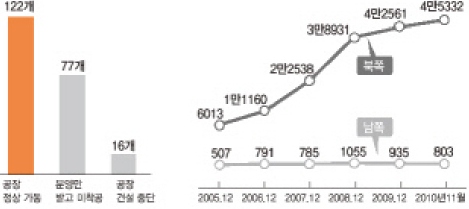
Image from the Hankyoreh: The left graph shows the number of South Korean tenant companies operating at Kaesong Industrial Complex. 122 companies are operating normally, 77 companies are not currently operating, and 16 have halted operations. The right graph shows the total number of workers: above, the number of North Korean workers and below, the number of South Korean workers.

According to the Hankyoreh:

… [Companies in the Kaesong Zone]  complained that they have lost hundreds of millions of Won (hundreds of thousands of dollars) with the suspension of factory construction due to administration measures forbidding new investment. They also said that the situation is growing bleaker by the day, with veteran employees quitting as the numbers of resident personnel at the complex drops due to concerns about personal safety. Despite all of this, they suffer without a word of formal complaint out of fears that they might draw the anger of North Korean and South Korean authorities.

In its May 24 measures last year, the Lee administration declared a suspension to trade and exchanges with North Korea in response to the sinking of the Cheonan. At the complex, only existing facilities were allowed to operate, while the resident workforce was halved to 500 people and the introduction of additional equipment was prohibited. Sixteen companies that were in the process of building new factories suffered a direct hit from these measures. At present, a total of 122 small and medium companies run factories in the complex.

Company “A,” a garment company that invested 5 million Won ($4,493) in inter-Korean economic cooperation funding to build a sewing factory, but were forced to suspended construction with approximately 90 percent of the process complete.

“Only the exterior and interior remain,” said the president of the company. “We could not bring in factory equipment, so we just gave up.”

The Export-Import Bank of Korea (EXIM) only stood surety for 90 percent of the loan, so Company A faces the immediate burden of principal and interest repayments in the hundreds of millions of Won. It also has to pay 16 million Won per year in interest on the EXIM-guaranteed loan until compensation money comes from the government.

The company’s president said, “We borrowed the money because they said to do an inter-Korean economic cooperation project, and then they just cause a loss by suspending exchange. Is the administration playing interest games with South Koreans?”

To date, a total of 1.26 trillion Won ($1.1 billion) has been invested in the complex, the bulk of which is facility investment paid by tenant companies, amounting to 730 billion Won.

Company “B,” another garment company, originally had seven South Korean employees working with 330 North Korean workers. But following the order from Seoul to halve the number of resident employees, there are now just three South Korean employees left. Two employees left the company. “The employees who left were heads of household in their forties who had worked with us for over a decade,” the president sighed. “They had a difficult time getting up at 6 in the morning for the 70 to 80 kilometer commute, and the government actually ended up fanning anxieties with its talk about ‘protecting employee safety,’ so their family members dissuaded them from working at the complex.”

Hiring new employees is not an option. In some cases, interviews were held and start dates were set before the new recruits abandoned their plans after the Yeonpyeong Island shelling occurred two months ago. Company B, which has its head office in Seoul, is in a slightly better position. Employees at businesses in Daegu, Gwangju, and Busan, for whom commuting is impossible, are forced to stay at motels in Munsan, Gyeonggi Province.

“They emptied out a perfectly good dormitory in the Kaesong complex, and employees have been wasting time, money, and strength for months now,” said the president of Company “C.” “It stands to reason that the departure rate is increasing.”

The president of Company “D” stated emphatically that there is no physical risk at the complex. In fact, the president said, North Korean authorities have added more productive labor on site since the Cheonan sinking and the bombardment of Yeonpyeong Island. The 45,332 North Korean workers as of November 2010 represented an increase of a full 2,771 over the 42,561 working in 2009. The president of Company D stressed that the government must increase the number of resident personnel if the physical safety of South Korean employees is to be guarded.

“If it is impossible to guarantee physical safety, they should not be leaving a single person at the Kaesong complex,” the president said. “Does it make any sense to say that 500 people is okay, but 1,000 is not?”

Some buyers have also fallen away because of anxieties. In late 2010, garment company “E” lost a buyer that had previously been purchasing 70 percent of its production output. “They got worried when it became difficult to bring in raw materials due to the sanctions against North Korea, and finally they halted transactions, saying that they thought the government had washed its hands of the Kaesong complex,” the president of Company E said. “Even if we suspend operations because there is no work to do, we still have to pay the workers’ wages, so the deficit is increasing by the day.”

With the decreased South Korean presence, six commercial facilities within the complex have also closed down, including a supermarket, restaurant, and singing room at “Songak Plaza.”

“If you look at the Gaeseong Industrial Complex Support Act, which the National Assembly passed unanimously, the government is to provide support and guarantees so that we can conduct business freely, like companies do in any other region,” said the president of Company F. “We are on the brink of withering away because of this idea of restricting property rights and company activities for administrative expedience, and through a minister’s order rather than any law.”

While they have been driven to the brink, the company presidents are adamantly opposed to closure of the complex. The president of Company G explained, “At first, things were rocky because of cultural and ideological differences, but now the North Korean workers understand the companies. They have realized by themselves why we need to meet the delivery deadline, why we need to improve quality, why we need to make so much. The Kaesong complex is performing the role of reducing the costs of reunification by restoring homogeneity between North Korea and South Korea.”

The president of Company H said, “The possibility of war is also being checked by the presence of North Korean and South Korean workers in the complex.”

“For the sake of peace and shared prosperity, we need to develop [the complex] into a special economic zone of peace where North Korea and South Korea can communicate,” the president added.

According to the Choson Ilbo:

Six of nine commercial [leisure] facilities in the joint Korean Kaesong Industrial Complex have closed, it emerged on Tuesday.

According to the Unification Ministry, a supermarket, a beer hall, a karaoke and a billiard hall in the Songak Plaza, the industrial park hotel operated by Hyundai Asan, closed on Dec. 1, right after North Korea’s shelling of Yeonpyeong Island. Already in February a massage parlor closed, and in August a Japanese restaurant.

Only a duty-free shop and Korean and Chinese restaurants managed directly by Hyundai Asan stay open. A staffer at the industrial park said the reason is that the number of South Korean staffers in the industrial park, who were the main customers of the facilities, has dropped sharply.

There were some 1,200 to 1,500 South Koreans at the industrial park until the North’s sinking of the Navy corvette Cheonan in March and its shelling of Yeonpyeong in November, but the number dropped to about 500 recently.

According to Yonhap:

Production at an inter-Korean industrial park dropped 15 percent in November last year when the North bombarded a South Korean island, raising bilateral tensions to the highest level in years, the Unification Ministry said Sunday.

The fall, however, contrasted with an increase in the number of North Korean workers at the Kaesong industrial park, located just north of the heavily armed inter-Korean border, the ministry said on its Web site.

Over 45,000 North Koreans were working as of November for more than 120 South Korean firms at the complex, the ministry said, adding that they produced US$25.1 million worth of products that month, compared to $29.4 million in October.

The factory park is considered the last remaining symbol of reconciliation between the two Koreas that remain divided by a heavily armed border after the Korean War ended in a truce in 1953.

After North Korea shelled the western South Korean island of Yeonpyeong on Nov. 23, killing four people, Seoul restricted the number of South Korean workers allowed to stay overnight in Kaesong.

The measure, which remains in place, led business managers to complain of difficulties in production. South Korea maintains it will continue to support manufacturing activities at the Kaesong industrial park despite the North Korean provocation.

Since May when a multinational investigation led by Seoul found the North responsible for the sinking of a South Korean warship earlier that year, South Korea has suspended all cross-border trade with North Korea.

Read the full stories here:
Kaesong companies on the brink as sanctions continue
Hankyoreh
Jung Eun-joo
1/19/2011

Leisure Facilities at Kaesong Close Down
Choson Ilbo
1/19/2011

Output at inter-Korean factory park falls amid tension
Yonhap
1/23/2011
Share

DPRK focuses on CNC in 2011: Kim Jong-un’s birthday passes quietly

Sunday, January 16th, 2011

Institute for Far Eastern Studies (IFES)
NK Brief No. 11-01-11
(1/11/2011)

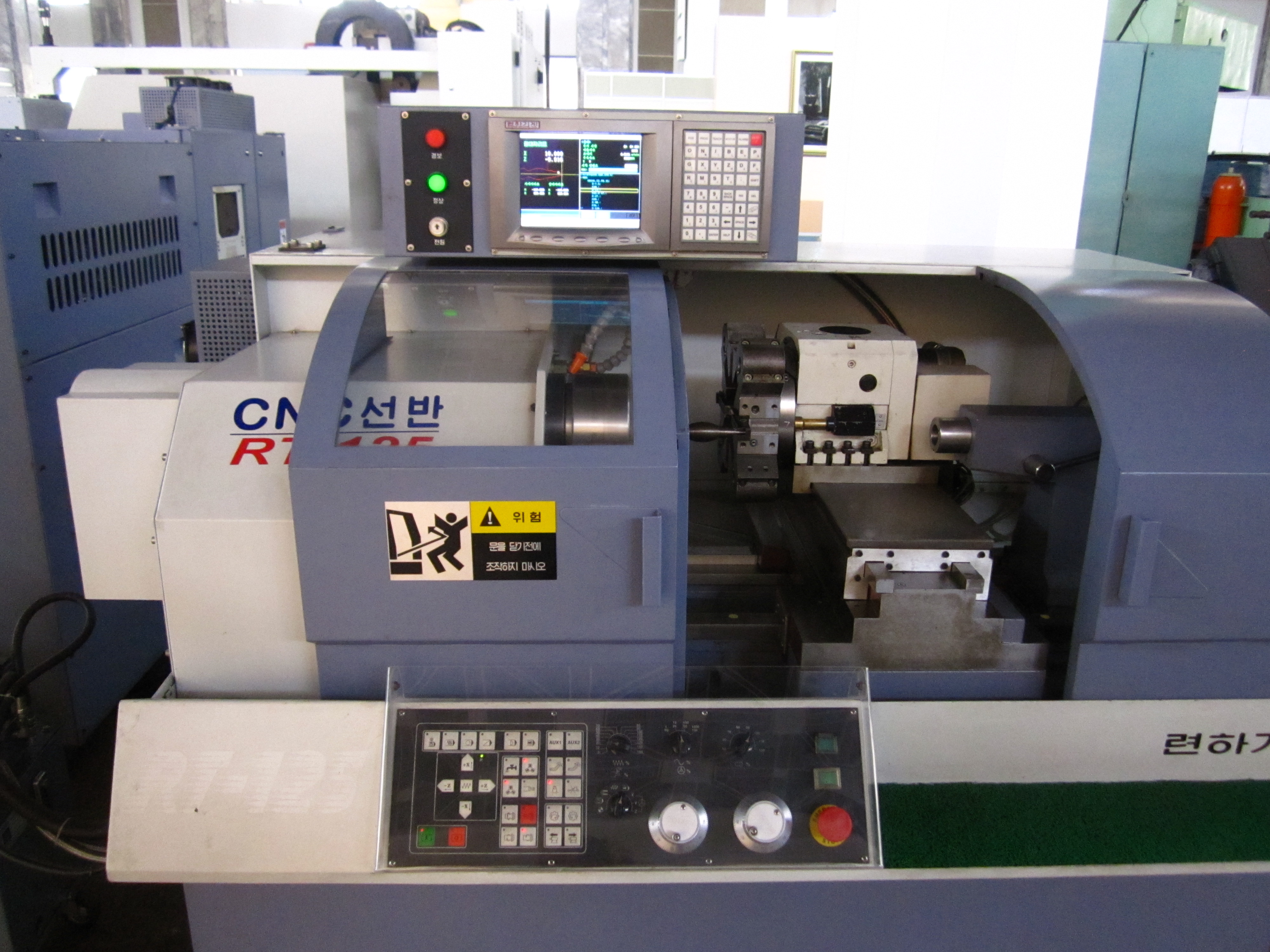
On January 7, the Korean Workers’ Party newspaper Rodong Sinmun ran an article introducing the Huichon Ryonha Machine Complex, which manufactures Computer Numerical Control (CNC) systems. The article appeared just before Kim Jong Un’s birthday, and the CNC system appears to be attributed to the youngest son of Kim Jong Il.

The newspaper introduced the machine complex by calling for advancements in the coming year, stating that the CNC system manufacturer “saved our country” and that it was the envy of everyone, catching eyes around the world. The article also proclaimed that “the fatherland” was “growing younger and stronger” with the implementation of vanguard-technology CNC, and that equipment filling a space the size of seven soccer stadiums was set to further the push for industrialization. The reference to ‘growing younger and stronger’ is thought to refer to Kim Jong Un.

In particular, the article stated that North Korea “is not a country that only answers the hardline talk of aggressors with a more hardline response,” and that the North “is not a country that answers the nuclear cudgel of the aggressors as a satellite-launching country or a nuclear country by name alone.” Rather, “the citizens living on this land will answer with vanguard technological breakthroughs” in the face of the economic and technologically dominant aggressors.

North Korea’s satellite launch and nuclear programs were credited to Kim Jong Il in both domestic and international propaganda. The article emphasizing ‘vanguard technological breakthroughs’ is part of a campaign in which the succession system and Kim Jong Un’s reputation are being built on economic and technological development. Increasing propaganda touting CNC technology, in particular, is reflective of the realization of Kim Jong Un’s leadership role.

On one hand, there were no special ceremonies on January 8, the first birthday of Kim Jong Un’s to pass since his official emergence into DPRK politics. In fact, according to the Daily NK, Kim Jong Un’s birthday is not acknowledged in the official calendars issued by Pyongyang at the end of last year.

Last year, North Korea recognized Kim Jong Un’s birthday as a special holiday, with laborers and farm workers all having a day off. Within the Party, the day is known as “the people’s holiday,” and there were internal celebrations attended by Party members. A source within North Korea explained to Daily NK, “with no official promulgation of a successor, it doesn’t make sense to make the Young General’s birthday a holiday.”

While it’s clear that Kim Jong Un will move up through the ranks to take his father’s leadership position, he has to first be officially established within the Party before his birthday can be celebrated on a national level. Furthermore, since the currency reform measures at the end of November, 2009, prices skyrocketed and the lives of the people grew more difficult. With the current atmosphere within North Korea, it would not benefit Kim Jong Un to be cast into the spotlight by politicizing his birthday.

In addition, North Korean authorities have been emphasizing the ‘battle’ for light industrial development and the improvement of the lives of the people through the New Year’s Joint Resolution and other articles in state-run newspapers and media, while the people of North Korea have been gathering in groups to have the joint resolution explained and the key points emphasized. In this situation, it appears authorities decided that public celebration of Kim Jong Un’s birthday would be distracting.

Share

Rumor of DPRK plans to focus on light industry

Friday, January 7th, 2011

According to the Choson Ilbo,

The North Korean regime wants to divert some of budget for the all-powerful military to the civilian sector and increase exports of mineral resources to China in its Quixotic quest to become “a powerful and prosperous nation” by 2012.

A senior member of the Workers Party who attended a meeting held in Chongjin, North Hamgyong Province on Monday was quoted by Radio Free Asia as saying, “This year, the party decided to divert some of the budget earmarked for the munitions industry to the people’s economy to develop the light industry.”

“People will undergo a sea change in their lives next year when we reach the goal to become an economic power,” the U.S.-funded broadcaster quoted a senior party official from North Pyongan Province as saying. “There’ll be big investments.”

The North did not even reduce military spending even during the famine of the mid to late 1990s, when more than a million people starved to death, telling people to “tighten belts until the peninsula is reunited.” The regime’s annual military spending is estimated at about US$1.7 billion.

A South Korean security official said the North managed to overcome a food shortage early last year by releasing some rice from its military stockpiles, “but it may not be as easy this year.”

Meanwhile, the regime has been increasing exports of mineral resources to China to earn hard currency.

“In 2009, Kim Jong-il banned exports of coal after receiving a report that factories weren’t working due to coal shortage, but the regime sold $300 million worth of coal to China in 2010,” a North Korean source said.

Coal accounted for 30 percent of the North’s total exports to China of about $900 million last year.

A Chinese businessman dealing with the North said in early December last year, a delegation from Resources Development Corporation of the North’s National Defense Commission agreed with the Chinese province of Liaoning on the development of 350 million yuan worth of graphite in the North. He added Chinese officials last November looked around Pyoksong, Yonchon and Haeju in Hwanghae Province, which have abundant graphite deposits.

The regime ordered officials to earn hard currency by selling coal from Pukchang, South Pyongan Province, and iron ore from Unyul, Hwanghae Province, to China, a member of a North Korean defectors organization said.

Read the full story here:
N.Korea Diverts Military Budget to Light Industry
Choson Ilbo
1/7/2011

Share

DPRK trades steel for food

Tuesday, January 4th, 2011

According to the Daily NK:

North Korean trading companies operated by several organs have been selling steel to China in exchange for food.

One Chinese trader who does business with North Korea reported to The Daily NK on Monday, “China-based North Korean workers in charge of trading with China for Cheongusan Trading Company (under the Escort Command), say that this year Chosun is expanding the volume of its steel sales with China.”

The trader said, “In November last year, the analysis table of steel quality was delivered to us, and accordingly a contract has also already been signed.” He added, “In Chosun, the company is waiting for a permit to trade from an upper organ after having loaded materials on freight trains.”

He explained further, “For the price of the steel, Chosun has asked for rice, flour, noodles and also construction materials,” adding, “Food in bulk can enter Chosun.”

He explained that since North Korea is facing a serious lack of food, cement and other construction materials due to isolation from the international community, the country is trying to barter steel for food with China, from which the North is able to import.

Another trader in China verified the story, explaining, “Recently in Dandong, workers from Kangsung General Trading Company (under the General Staff) and other companies visited China for the purpose of selling steel.”

He added, “From now on, our company is going to do only steel trade with Chosun. We have decided not to do business in other things because our experiences have shown that there is no credit there.”

He went on, “North Korean trading units may have suffered from limitations put on items by Chinese companies,” going on, “If Chosun does not make a deal with us, they will starve to death this year. Even though they emphasize independent rehabilitation, when have they ever been rehabilitated?”

North Korea’s media frequently emphasizes the glorious production of “Juche” steel at Kim Chaek Steel Mill and Gangsun Steel Mill. Indeed, the Common Editorial issued on the first day of this year stated that, “By the power of the realization of the faith and model of Kim Steel (steel from Kim Chaek Steel Mill) and Juche steel, let’s have waves of victories.”

According to KOTRA, South Korea’s trade statistics agency, from January to October, 2010, North Korea exported steel to China worth $82 million.

One potentially positive aspect to this story is the recognition by the DPRK of the benefits of comparative advantage in trade.  Rather than aiming to produce all of its own food, the DPRK can instead specialize in steel production and trade for Chinese produced food.  Through trade, China and the DPRK could both consume more steel and food than if each country practiced autarchy.  Unfortunately the DPRK’s recent history has demonstrated a callous disregard for comparative advantage and has instead focused on increasing domestic food production and aid while limiting international trade.  Lets hope to see more rational policies prevail in the future.

Read the full story here:
North Korea Bartering Steel for Food
Daily NK
Im Jeong Jin
1/3/2011

Share

Friday Fun: New year’s close out

Thursday, December 30th, 2010

Item number one: the DPRK’s domestically produced film camera, Hakmujong-1 (학무정-1):

This picture comes via the Russian blog “Show and Tell Pyongyang”. You can read about this camera in the original Russian here.  You can read about it in English (via Google Translate) here. This is the same blog that informed us about the DPRK’s PDA device and the DPRK’s Linux OS, Red Star.  He also has some fabulous pictures of the Kim Jong-suk Pyongyang Silk Mill here.

Item number two: DPRK’s domestic “Coke”:

This photo comes from the collection of Eric Lafforgue.  If you have not already seen his photos, please do yourself a favor and click over.

The soda is “Crabonated” which is a pretty funny typo.  Also worth noting are the lengths they have gone through to copy the Coca-Cola brand–as if they are trying to win back market-share from the foreign firm.  The colors, red, black, silver and white are the same.  The familiar cursive English “C” at the beginning of the word is a close copy.  They even tried to replicate the Coke “wave” by adding a literal wave in a similar curve along the bottom of the advert.

Item number three: DPRK caviar (Okryu Restaurant)

“Thanks to our leader Kim Jong-il we have managed to breed sturgeons.  People from Pyongyang and other provinces can come here to taste caviar and turtle meat.”

See the full video here. Here is a satellite image of the restaurant.

Item number four: Women’s fashion

Uriminzokkiri has posted a clip on DPRK women’s fashion to their Youtube account.  You can see it here.  I have blogged about women’s fashion before here and here.

Item number five: New Koryolink advert (Koryolink is the DPRK’s new 3-G mobile phone service founded by Orascom)

The video comes from this NK web page.  For South Koreans I posted it to my Youtube account.  You can see it here.

Item number six: DPRK verison of The Diary of Anne Frank

Michael Rank has scanned the introduction and uploaded it here.

Item number seven: Happy new year!

Share

DPRK economic activity in 2010

Thursday, December 30th, 2010

Institute for Far Eastern Studies (IFES)
NK Brief No. 10-12-29
12/30/2010

In the New Year’s Joint Editorial issued last January, the North Korean government vowed to improve the lives of the people by focusing on light industry and agriculture. Early in December, the North Korean government-run media reflected on the year’s achievements, stating that advances in industry and improvements in the lives of the people had made unprecedented leaps in 2010.

As North Korea pushes forward with its attempt to “open the doors to a Strong and Prosperous Nation,” Pyongyang has poured significant effort into reviving its economy. In mid-December, the [North] Korean Central News Agency released a report on the 2010 activities of Kim Jong Il, noting that he had made 65 visits to sites related to the nation’s economy, more than twice as many as the 31 visits made to military sites. In 2009, Kim Jong Il made 58 visits to economic sites and 43 visits to military sites, suggesting that the leadership has shifted its focus to the economy this year.

On December 9, the Choson Sinbo published an article in which it highlighted the importance of improving the lives of the people and called an “economic renaissance” critical to the achievement of a “great and prosperous nation.” It also stressed the need for an independent people’s economy as the foundation for such a recovery.

As the North has worked to establish a self-sustaining economy this year, it has highlighted the Kimchaek Iron and Steel Complex as an example of ‘Juche’ production. North Korean media has highlighted the improvements in mining production, in Kimchaek as well as other areas, and has reported that the metals industry has undergone a “revolution” this year. The media has reported surprising production gains at the Hwanghae and Chollima steel complexes, and claim that these production levels have been repeated throughout the country.

Not only has the North celebrated “Juche steel”, but also “Juche textiles” and “Juche fertilizer.” In February, North Korea reopened the modernized “February 8 Vinalon Factory,” highlighting the factory as representative of the country’s independent textile production capacity and likening the new Vinalon factory to a new representation of North Korea’s socialist economy. On March 8, the KCNA called the Vinalon factory the new face of “the brilliant future of the Strong and Prosperous Nation.”

As for “Juche fertilizer,” the North’s media sang the praises of the Namhung Youth Chemical Complex, reporting that the anthracite gas process developed there allowed for steady agricultural production without needing to import fuel or other raw materials, and stated that if the process can be further institutionalized, it should be able to provide for the basic needs of the entire country.

Pyongyang has set as a goal the resolution of the country’s fertilizer shortage by producing one million tons of fertilizer by 2012 in the Hungnam Fertilizer Complex and the Namhung Youth Chemical Complex, stating that for every ton of fertilizer, it can produce ten tons of rice. The media has reported that the North will produce “over ten million tons of grain” in 2012 with the expected million tons of fertilizer.

Improvements in textiles, fertilizer, and other light industries are directly related to raising the standard of living for North Koreans. Kim Jong Il visited the Samilpo factory in Pyongyang in April, and for the rest of the year, state media heralded the advancements made in the factory and called for industries throughout the country to follow in its footsteps. Throughout the year, North Korean media highlighted numerous factories and light industries to illustrate the regime’s efforts at improving the standard of living.

The North Korean government has set a goal of resolving its food, clothing and housing shortages. In order to meet the food demands of the people, the regime seeks to increase grain output by boosting fertilizer production through ‘samilpo’-style factory enhancements. In order to assure everyone is clothed, the regime is relying on the Vinalon factory and increased domestic production. As for housing, the state has set its sights on the construction of 100,000 new houses by the year 2012.

At the forefront of the North’s push for modernization and increased production is its “Computer Numerical Control” (CNC), a vaguely defined idea that has been attributed to Kim Jong Un, the third son and probable successor of Kim Jong Il. As Pyongyang pursues a “strong and prosperous nation” by 2012, state-controlled think-tanks and industries are focusing on CNC as the means for modernization and increased productivity.

Share

Kaesong output up 10% between Sept and Oct

Sunday, December 19th, 2010

According to Yonhap:

Output at an inter-Korean industrial complex in the North Korean border city of Kaesong rose by over 10 percent in October from the previous month, data released by the Unification Ministry said Sunday.

In October, companies in the Kaesong complex produced goods totaling US$29.41 million in value, up by $2.72 million, or 10.2 percent, from $26.69 million in September, according to the data.

The figure increased by 8.9 percent from the same month last year, they showed.

Total output for the Kaesong complex had been on the decline since the Cheonan incident in March, in which 46 sailors died in a torpedo attack blamed on North Korea. The figure hit $26.41 million in July.

The data also showed that the number of North Korean workers in the border town complex marked 44,958 in October, rising steadily from 42,397 in March.

Although the North shelled Yeonpyeong Island on Nov. 23, North Korean workers have been on the rise,” said a ministry official. “According to unofficial statistics, 45,300 North Koreans are working in Kaesong today.”

The Kaesong industrial park is considered the last remaining major symbol of reconciliation efforts between the two Koreas, whose relations have been tense over the past three years. The park began operating in 2004 as a product of the first inter-Korean summit held four years earlier.

Read the full story here:
Output for Kaesong industrial complex increases 10 pct in October
Yonhap
12/19/2010

Share

Jon Il-chun re-surfaces

Wednesday, December 15th, 2010

According to the Choson Ilbo:

South Korean intelligence officials breathed a sigh of relief on Sunday. They had finally located Jon Il-chun, the head of a special department in North Korea’s Workers Party that manages Kim Jong-il’s slush fund. Jon, who had eluded intelligence officials for the past six months, was finally spotted on a North Korean TV broadcast featuring one of leader Kim Jong-il’s so-called on-the-spot guidance tours in Pyongyang.

The 69-year-old Jon went to high school with Kim (68) and was appointed head of the department, known as Room 39, early this year. It manages 17 overseas branch offices and around 100 trading companies and even owns a gold mine and a bank. The US$200-300 million those companies make each year is funneled into Kim’s secret bank accounts around the world.

Room 39 is targeted each time the U.S. and other foreign governments apply financial sanctions against North Korea. Kim replaced its head early this year because the former director, Kim Tong-un, was put on an EU list of sanctioned individuals late last year, making it impossible for him to manage the leader’s secret overseas bank accounts.

Due to the importance of the department and the clandestine nature of its business, the director of Room 39 rarely appears in public, but he sometimes accompanies Kim Jong-il on guidance tours when they involve organizations linked to Kim’s slush funds, an intelligence official said.

In the TV clip on Sunday, Jon is seen with Kim on an tour to Hyangmanlu, a popular restaurant, and Sonhung food manufacturing plant. A North Korean defector who used to live in Pyongyang, said the restaurant was built in the 1990s by a wealthy ethnic Korean from Japan and is located in a busy part of Pyongyang. “It was always packed with wealthy party officials,” the defector said, adding the party manages the restaurant so the entire proceeds probably go into Kim Jong-il’s coffers. He added there is a strong possibility that the food factory also belongs to the party.

The last time Jon appeared on North Korean TV was on June 20, at the opening of a mine in Yanggang Province. A North Korean source said the Huchang Mine is a famous copper mine that had been closed for some time but must have reopened. “Judging by the fact that Jon took part in the opening ceremony, it appears to be one of many mines run by Room 39.”

Jon was also spotted at Kim’s inspections of two fisheries companies last year and one this year. A Unification Ministry official said, “North Korean exports of fisheries products are handled by the party or the military and they’re sources of revenue for Kim Jong-il’s slush fund.” Fisheries products accounted for the second largest North Korea’s W1.64 trillion exports to South Korea last year, amounting to W173 billion or 16.3 percent. Textiles totaled W477 billion or 44.8 percent.

“This is one of the reasons why we blocked imports of North Korean fisheries products” following the North’s sinking of the Navy corvette Cheonan, the official said.

Additional Information:

1. Michael Madden has written a biography of Jon Il-chun here.

2. Here is a satellite image of the Hyangmanru Restaurant.  Here is a satellite image of the Sohung Foodstuff Factory (right next door).

Read the full story here:
Elusive Manager of Kim Jong-il’s Slush Funds Pops Up Again
Choson Ilbo
12/15/2010

Share

An affiliate of 38 North