Archive for the ‘International trade’ Category

DPRK working to avoid ROK trade restrictions

Tuesday, January 25th, 2011

According to Choson Ilbo:

North Korean products are being sold in South Korea labeled as Russian after the South stopped all cross-border trade in May last year. The North is desperate to unblock the flow of hard currency and is pushing for resumption of dialogue over the Kaesong Industrial Complex and lucrative package tours to Mt. Kumgang.

The Unification Ministry has released a list of the top 10 North Korean agricultural and fisheries imports, which show that the South brought in around 310,000 tons between 2006 to 2010. Imports totaled US$677 million tons, which worth $135 million a year. Over the last decade, North Korea also earned more than $500 million from the Mt. Kumgang tours, while the Kaesong Industrial Complex brought in $50 million annually.

Shellfish exports made the most money for the North, totaling 171,533 tons worth $268 million, followed by dried fish ($78.76 million), processed fish products ($76.02 million) and other seafood ($67.42 million).

Before the South halted trade following the sinking of the Navy corvette Cheonan, most North Korean shellfish was brought into the port city of Sokcho on the east coast. South Korean importers paid in U.S. dollars in Sokcho after signing contracts in the Chinese border town of Dandong with North Korea’s official economic cooperation agency.

But since trade was halted, North Korean shellfish has been labeled in Dandong as Chinese in origin and apparently sent to the western port city of Incheon. North Korean fisheries products are also apparently loaded on to Chinese vessels in the West Sea and brought into South Korea. As the pressure to bring in more dollars increases, chances have risen that the North’s agricultural and fisheries products are being falsely labeled.

A South Korean businessman who trades with North Korea, said, “Since trade was halted, North Korea has been trying to sell its products to South Korea labeled as Chinese or Russian in origin. This shows just how desperate North Korea is for dollars.”

The alternatives would be to sell the goods to China, the North’s largest trading partner, but prices have to be slashed and it costs more to transport them. Most of the dollars North Korean makes from selling goods to South Korea appear headed straight for leader Kim Jong-il’s coffers and used to prop up his rule. Kim’s funds are divided into local and foreign currencies and the latter, raised by selling farm and fish products, account for a key portion. Products such as shellfish and mushrooms that can bring in the most foreign currency are controlled by the Workers Party or the military, making it hard for the money to be used to boost the welfare of the North Korean people.

“North Korea uses a lot of the money it makes from trade to fund its rule, either buying gifts for government officials or building luxury homes,” said Cho Myung-chul, a professor at the Korea Institute for International Economic Policy, who taught economics at Kim Il-sung University in North Korea. “North Korea desperately needs money to win the hearts and minds of the public and gain support for the hereditary transfer of power. That’s why it’s seeking talks with South Korea, so it can find a way to sell its products.”

South Korea is also prosecuting South Korean firms suspected of trading with the DPRK.

Read the full story here:
N.Korea Sells Products in South Under False Labels
Choson Ilbo
1/22/2011

Share

ROK spending on inter-Korean exchanges at record low

Sunday, January 23rd, 2011

According to Yonhap:

In another reflection of frayed inter-Korean relations, South Korea last year used the smallest amount of funds earmarked for exchanges with North Korea since the sides held their first summit in 2000, the Unification Ministry said Sunday.

The ministry, the main South Korean government arm handling affairs involving North Korea, spent 86.25 billion won (US$76 million), or 7.7 percent of the 1.12 trillion won designated as the “South-North Cooperation Fund,” officials said this week.

The fund was created in 1991 to support humanitarian and economic exchanges between the divided Koreas, which remain technically at war after the 1950-53 Korean War ended in a truce.

Last year’s spending was the smallest since 2000 when the sides held their landmark summit talks and agreed on a wide range of cooperation projects as part of their reconciliation efforts.

But the cross-border ties deteriorated to the worst level in more than a decade when the North bombarded a South Korean island and was also found responsible for sinking a warship last year.

South Korea has suspended humanitarian aid and cross-border trade in retaliation, pressing North Korea to apologize if the impoverished communist country seeks to restore their relations.

The cooperation fund’s implementation rate had ranged from 37 to 92.5 percent between 2000 and 2007, but nosedived after a conservative government took power in 2008 with a hard-line policy on the North. That year, the rate stood at 18.1 percent before dropping further to 8.6 percent in 2009.

Read the full story here:
Spending on inter-Korean exchanges lowest since 2000: ministry
Yonhap
1/23/2011

Share

South Korean companies under investigation for DPRK imports

Wednesday, January 19th, 2011

According ot Yonhap:

South Korea is investigating about 10 companies accused of importing North Korean merchandise in violation of a ban that came into effect last year over the sinking of a warship, an official said Wednesday.

South Korea suspended all inter-Korean trade in May last year when a multinational investigation found North Korea responsible for the sinking of the Cheonan earlier that year.

Unification Ministry spokeswoman Lee Jong-joo said in a briefing in Seoul that the authorities are questioning the companies on suspicion of violating the ban by importing marine products, mushrooms and other items from North Korea via China.

The companies claimed that they had thought the products were from China. Lee said the government plans to step up its crackdown on imports from North Korea starting next month in an effort to reinforce the ban.

Read the full story here:
Companies under probe for importing N. Korean products: official
Yonhap
1/19/2010

Share

Australia’s ANL cited in DPRK weapons smuggling

Monday, January 10th, 2011

According to The Australian:

The use of an Australian-owned cargo ship to smuggle weapons from North Korea to Iran has been highlighted in a report to the UN.

It was one of several breaches of UN sanctions against Kim Jong-il’s regime detailed in a report to the Security Council.

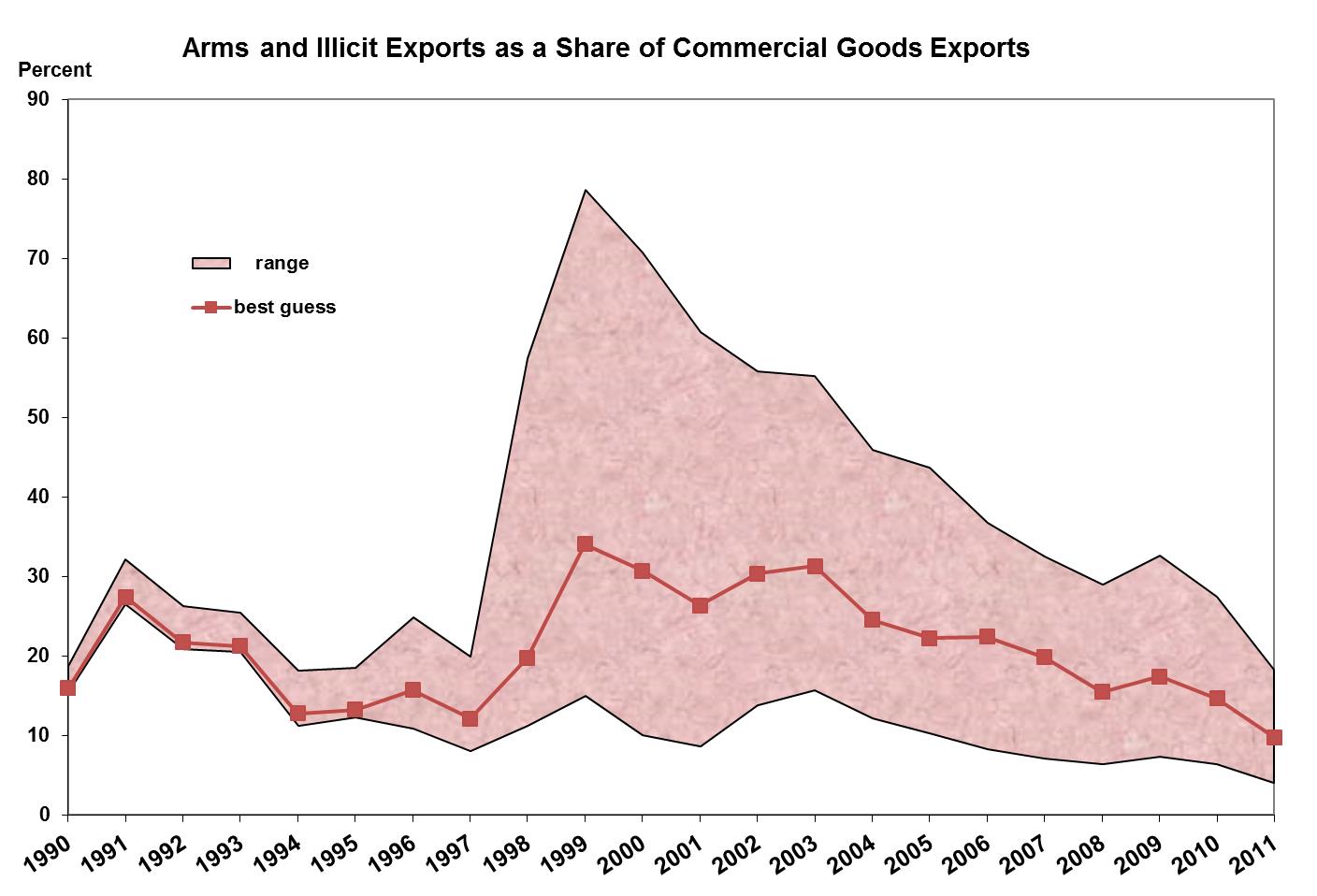
The report, which was submitted to the council recently after months of obstruction from China, found the North was making $US100 million a year through illegal arms sales to Syria, Iran and Burma.

Pyongyang used shadowy webs of front companies, false manifests and complex routes to try to get around sanctions aimed at stopping its arms proliferation, the investigation found.

The report flags the 2009 interception of the ANL Australia in Sharjah as one of at least four occasions that North Korea was caught out exporting arms or defence equipment.

The report said weapons were seized from the ANL Australia in the United Arab Emirates on July 22, 2009.

The cargo is thought to have included up to 10 containers of arms, including rocket-propelled grenades and trigger mechanisms and propellant, although this is not detailed in the report.

The cargo was packed and sealed in North Korea and shipped to China, where it was loaded aboard the ANL Australia en route to Iran.

The Bahamas-flagged vessel was owned by ANL Container Line at the time.

ANL, once Australia’s national shipping line, was taken over by French company CMA CGM.

Despite the breach of sanctions, an Australian government investigation found ANL was not responsible because the ship was chartered by a foreign company at the time.

“The Australian government’s inquiries into this matter indicated that at all relevant times the vessel was not under the operational control of its owner, but was rather being chartered by a non-Australian company,” a Department of Foreign Affairs and Trade spokesman said.

“No conduct relevant to the shipment can be attributed to an Australian person or body corporate,” he said.

ANL declined to comment.

The report found that while no ballistic missile or nuclear-related materials emanating from North Korea had been intercepted since sanctions were applied, evidence suggested “continuing DPRK (North Korea) involvement in nuclear and ballistic missile-related activities in certain countries, including Iran, Syria and Myanmar (Burma)”.

“To supplement its foreign earnings, the DPRK has long been involved in illicit and questionable international transactions (including) the surreptitious transfer of nuclear and ballistic missile-related equipment, know-how and technology,” it says.

The panel received government reports suggesting North Korea had helped build Syria’s Dair Alzour nuclear facility (destroyed in 2007 by an Israeli attack) along with details of Japan’s arrest in June 2009 of three individuals trying to illegally export a magnetometer, a device with potential missile-related uses, to Burma.

The report cited in the story is the “Panel of Experts” report to the UNSC.  You can read (and search) it here (PDF).

Read the full story here:
UN cites ANL in N Korea arms smuggling
The Australian
Rick Wallace
1/10/2011

Share

DPRK trade falls in 2009 – reliance on China remains high

Sunday, January 9th, 2011

According to Yonhap:

North Korea’s external trade fell in 2009 with its economic reliance on China staying significantly high, a report showed Sunday, underscoring the need for Pyongyang to diversify its industry structure and open its market for survival.

According to the report by the Korea Finance Corporation, North Korea’s total trade amounted to US$3.41 billion in the cited year, down 10.6 percent from a year earlier. The trade decrease was the largest since 1998.

Exports dropped 6 percent to $1.06 billion, while imports fell 12.5 percent to $2.35 billion over the same period, the report showed, bringing the North’s trade deficit to $1.29 billion.

With international sanctions in place for its nuclear ambitions and its reluctance to open up its economy, the North’s dependence on China stayed quite high at 80.4 percent in 2009, the report showed. Its trade deficit with Beijing totaled $1.1 billion.

The report said that the North should open its market and diversify its industry structure currently focused on producing weapons, while improving overall infrastructure such as power generation facilities, should it seek to revive its economy.

It also emphasized the need for resumption of inter-Korean trade and an increase in international aid for the North’s survival.

“For the North Korean economy to get back on track, inter-Korean trade has to be resumed and aid from the international community should also be expanded,” said an official of the state-run corporation.

South Korea’s economic relations with the North have remained frozen since Seoul cut almost all inter-Korean trade in May 2010 after it found Pyongyang was behind the deadly attack of its naval ship in March that killed 46 sailors.

The move led to a drop of around 30 percent in inter-Korean trade last year, according to the latest report by Seoul’s customs office. South Korea is one of the North’s major trade partners, although the two remain technically at war as their 1950-53 conflict ended in a truce, not a peace treaty.

If a reader can send me a link to the actual report, I would appreciate it.

The Los Angeles Times also covered the report.

Read the full story here:
N. Korea’s trade falls, reliance on China remains high in 2009
Yonhap
1/9/2011

Share

Chinese to boost investment in Rason

Friday, January 7th, 2011

UPDATE  1 (2011-1-19): According to the Wall Street Journal:

A Chinese firm has signed a letter of intent to invest $2 billion in a North Korean industrial zone, representing one of the largest potential investments in Kim Jong Il’s authoritarian state and a challenge to U.S. policy in the region.

The agreement was signed with little fanfare in Pyongyang on Dec. 20—a day otherwise marked by pitched tension on the Korean peninsula following the North’s shelling of a South Korean island—according to documents viewed by the Wall Street Journal. Confirmation of the deal comes as Chinese President Hu Jintao visits Washington this week in a bid to forge closer security and economic ties with the U.S.

U.S. officials said the administration is aware of the possible Chinese investment, but noted that previous projects haven’t gone anywhere. “No investment project will enable North Korea to meet the needs of its people as long as its government continues its destabilizing behavior,” said a senior administration official.

The letter of intent involves China’s Shangdi Guanqun Investment Co. and North Korea’s Investment and Development Group. An assistant to the managing director of Shangdi Guanqun, who identified himself only by his surname, Han, said his company’s planned investment is focused on the Rason special economic zone, situated near North Korea’s border with Russia.

The zone was called Rajin-Sonbong when it was established in 1991, but failed to attract sufficient investment. It was revived, and re-named Rason, following a visit there in 2009 by Mr. Kim.

Mr. Han said the plan is to develop infrastructure, including docks, a power plant and roads over the next two to three years, followed by various industrial projects, including an oil refinery, over the next five to 10 years. He said the company was waiting for a response from the North Korean government before applying for approval from China’s Ministry of Commerce.

“It’s all pending at this stage, and it’s really up to the Korean side to make the decision,” Mr. Han said. He added that the $2 billion figure was what the North Korean side had hoped for, not necessarily what his company could deliver.

The company’s Web site says the company was “under the administration” of a state-owned enterprise, Shangdi Purchase-Estate Corporation. Mr. Han, however, said his company was “100 percent private.”

For the Obama administration, securing China’s cooperation in restraining North Korea’s military and nuclear-proliferation activities is a cornerstone of a warmer bilateral relationship. But the potential investment is a reminder of possible limits of Chinese cooperation.

The U.S. wants to step up sanctions to force Kim Jong Il to give up his nuclear-weapons arsenal and military activities. China, meanwhile, is increasingly promoting business projects and direct investment to influence the North, say Chinese and American analysts, arguing financial pressure hasn’t worked.

China is North Korea’s biggest trading partner and aid donor, but the scale of this deal raises concerns in Seoul that Beijing is running its own version of the “Sunshine” policy under which the South boosted investment in the North from 1998 to 2008.

This policy disconnect is expected to be one of the issues Chinese and U.S. officials discuss this week. “These types of deals pursued by China generally present a real challenge to the sanctions” being effective, said Victor Cha, a North Korea expert who helped oversee Asia policy in George W. Bush’s National Security Council. “The net effect is that it does make it more difficult for these sanctions to have the desired effect.”

Such deals have emerged in the past and have come to nothing, analysts said, and it is possible this one, too, could peter out. A number of similar North Korean economic zones have failed to live up to their billing because of poor infrastructure and corruption, and a lack of economic reform. News of the deal was first reported in the Korean-language press, including the Voice of America’s Korean service.

It is unclear how long the agreement has been in the works. But its Dec. 20 signing came on the day South Korea conducted a closely watched artillery test from Yeonpyeong Island near North Korea.

The test marked a high point in tensions after North Korea’s surprise late November shelling of Yeonpyeong, which killed four South Koreans. Pyongyang had threatened a swift military response should Seoul carry out an announced artillery test on Dec. 20. But the day’s drill came and went amid high security in the South, with the North saying in a statement it “did not feel any need to retaliate.”

Top administration officials have recently both praised and chided the Chinese over the North. On a trip to China last week, Defense Secretary Robert Gates commended the Chinese for their “constructive” role in reducing tensions on the peninsula after Pyongyang’s recent shelling of a South Korean island. Secretary of State Hillary Clinton in a Friday speech pressed China to be more aggressive in helping tamp down the North’s nuclear program.

The proposed investment is among the strongest evidence yet of China’s strategy of using direct investment rather political pressure to push for change in North Korea. Chinese experts say that after North Korea’s first nuclear test in 2006, China tried to make improved bilateral relations dependent on Pyongyang dismantling its nuclear program. But after a second test in 2009, China changed tack.

Beijing now believes, according to Chinese experts, that the North Korean regime won’t respond to political pressure and could collapse completely if China cuts off aid and investment, triggering a flood of refugees into northeastern China, and bringing U.S. troops right up to the Chinese border.

The investment strategy was cemented when China’s Premier Wen Jiabao visited North Korea in October 2009 and signed a slew of economic and trade agreements. One of those agreements was for China to fund construction of a $250 million bridge across the Yalu River that separates the two countries.

Construction of the bridge, which would link China with another North Korean special economic zone, had been slated to start in August. Local officials said in November it appeared to have been put on hold indefinitely. Now they say a ground-breaking ceremony was held Dec. 31.

U.S. officials are particularly concerned about how China’s financial links to North Korea may be facilitating Pyongyang’s weapons programs. In November, Pyongyang showed a visiting American scientist 2,000 centrifuges stationed at a cover site, drastically raising fears about the North’s ability to expand its nuclear-weapons arsenal.

“China’s increased economic support undercuts the rest of the region’s efforts to convince Pyongyang that there will be consequences for further belligerence, nuclear weapons development or transfer of nuclear capabilities,” said Michael Green, who also served as a senior official on Asia during the Bush administration.

Read the full story here:
Chinese Firm to Invest in North Korea
Wall Street Journal
Jay Soloman and Jeremy Page
2011-1-19

ORIGINAL POST (2011-1-7): According to the Joong Ang Ilbo:

A Chinese state-run company recently agreed to invest $2 billion in North Korea’s Rason free trade zone, the JoongAng Ilbo learned yesterday from documents related to the deal.

Shangdi Guanqun Investment Co., Ltd. signed a 10-point memorandum of understanding with Pyongyang’s Investment and Development Group on Dec. 20 in Beijing, the documents showed.

The signing ceremony was attended by Mi Chang, president of Shangdi Guanqun Investment, and Kim Chol-jin, president of the Investment and Development Group.

The goal of the investment, stated in the documents, is to build Rason, a northeastern North Korean city on the East Sea that borders both China and Russia, into the “biggest industrial zone in Northeast Asia” in around 10 years.

The project calls for coal-fired power plants, roads, piers and oil refineries in the North Hamgyong Province city, the documents said.

According to the documents, the deal is “a strategic joint project based on trust between high-level figures” in China and North Korea, which suggests it may have been negotiated by North Korean leader Kim Jong-il during two visits to China last year, on which he met Chinese President Hu Jintao.

The North’s economy has suffered under international sanctions on trade and financial services overseas, imposed after its nuclear weapon tests, and is desperately seeking foreign investment.

China is investing in Rason as an export base to serve markets in Japan, southern China and Southeast Asia.

Rason is a merger of two towns, Rajin and Sonbong, and was designated the first free trade zone in the North in 1991. It was promoted to a “special city,” which means it has fewer restrictions on businesses.

“We have a deep interest in North Korea’s ample natural resources,” an official of Shangdi Guanqun Investment Co., Ltd. told the JoongAng Ilbo. “To facilitate the export of natural resources [from the region], we will invest $300 million first and construct a coal-fire power plant at the coal mine and build a railway, roads, and harbors and piers [near it].”

The Chinese firm’s official said the company opened an office in Pyongyang at the end of last month.

Shangdi Guanqun Investment, established in 1995 by the Chinese government, is a trading firm specializing in oil processing, natural resources and international financial services. It is one of the key companies in China’s 12th five-year economic development plan that starts this year.

North Korea’s Investment and Development Group is in charge of developing the country’s four free trade zones. The other economic special zones are in Kaesong, Mount Kumgang and Sinuiju.

The Shangdi Guanqun Investment official said the company will build an oil refinery in Rason, where it plans to refine crude imported from the Middle East and Russia and sell the output to China or other countries.

I believe this Chinese story also relates to the same project.

Read the full story here:
China backs North’s Rason project
Joong Ang Daily
Ko Soo-suk
2011-1-7

Share

DPRK trades steel for food

Tuesday, January 4th, 2011

According to the Daily NK:

North Korean trading companies operated by several organs have been selling steel to China in exchange for food.

One Chinese trader who does business with North Korea reported to The Daily NK on Monday, “China-based North Korean workers in charge of trading with China for Cheongusan Trading Company (under the Escort Command), say that this year Chosun is expanding the volume of its steel sales with China.”

The trader said, “In November last year, the analysis table of steel quality was delivered to us, and accordingly a contract has also already been signed.” He added, “In Chosun, the company is waiting for a permit to trade from an upper organ after having loaded materials on freight trains.”

He explained further, “For the price of the steel, Chosun has asked for rice, flour, noodles and also construction materials,” adding, “Food in bulk can enter Chosun.”

He explained that since North Korea is facing a serious lack of food, cement and other construction materials due to isolation from the international community, the country is trying to barter steel for food with China, from which the North is able to import.

Another trader in China verified the story, explaining, “Recently in Dandong, workers from Kangsung General Trading Company (under the General Staff) and other companies visited China for the purpose of selling steel.”

He added, “From now on, our company is going to do only steel trade with Chosun. We have decided not to do business in other things because our experiences have shown that there is no credit there.”

He went on, “North Korean trading units may have suffered from limitations put on items by Chinese companies,” going on, “If Chosun does not make a deal with us, they will starve to death this year. Even though they emphasize independent rehabilitation, when have they ever been rehabilitated?”

North Korea’s media frequently emphasizes the glorious production of “Juche” steel at Kim Chaek Steel Mill and Gangsun Steel Mill. Indeed, the Common Editorial issued on the first day of this year stated that, “By the power of the realization of the faith and model of Kim Steel (steel from Kim Chaek Steel Mill) and Juche steel, let’s have waves of victories.”

According to KOTRA, South Korea’s trade statistics agency, from January to October, 2010, North Korea exported steel to China worth $82 million.

One potentially positive aspect to this story is the recognition by the DPRK of the benefits of comparative advantage in trade.  Rather than aiming to produce all of its own food, the DPRK can instead specialize in steel production and trade for Chinese produced food.  Through trade, China and the DPRK could both consume more steel and food than if each country practiced autarchy.  Unfortunately the DPRK’s recent history has demonstrated a callous disregard for comparative advantage and has instead focused on increasing domestic food production and aid while limiting international trade.  Lets hope to see more rational policies prevail in the future.

Read the full story here:
North Korea Bartering Steel for Food
Daily NK
Im Jeong Jin
1/3/2011

Share

Hot 2010 DPRK consumer goods

Tuesday, December 28th, 2010

According to Yonhap:

Skinny jeans, blue crabs, pig-intestine rolls and even human manure were some of the hottest items among North Korean consumers this year, according to a South Korean professor who has interviewed recent defectors from the communist country.

Kim Young-soo, a political science professor at Seoul’s Sogang University, said in a conference on Tuesday that adult movies, television dramas and instant noodle “ramen” made in South Korea are also selling “like hot cakes” in North Korea.

Skinny jeans refer to slim-fit pants that have gained popularity around the world, said Kim who interviewed about 2,000 defectors this year as part of a research project for the government.

He said that skinny jeans are so popular in the North’s capital, Pyongyang, that people there sometimes mistakenly believe Chinese wearing the stylish clothes are roaming their capital.

“These are signs that North Korea is easing its isolation,” Kim said in a telephone interview, noting that such lifestyle changes are conspicuous in Pyongyang and areas near the border with China.

The professor said many of the defectors he has interviewed had stayed in China no longer than a month before they came to South Korea, allowing him to have a relatively up-to-date glimpse of the latest culture in the communist country.

Kim said defectors told him pine mushrooms were also a “hit” among North Koreans this year because exports to South Korea had been diverted into the domestic market since cross-border tensions soared over the deadly March sinking of a South Korean warship.

After a multinational investigation in May found North Korea responsible for the sinking that killed 46 sailors, Seoul banned cross-border trade as part of its punitive measures.

Kim said blue crabs have met the same fate as pine mushrooms, allowing North Koreans to enjoy what was once a rarity for them. The professor even told of a shop in which human manure could be traded to be used as an alternative to chemical fertilizer, an item on which the North had heavily depended from the South for years.

“Soondae,” or sausage rolls stuffed with ingredients such as noodles and vegetables and wrapped in pig intestine films, has also made inroads into the market as a staple after the military stopped collecting pork and other food items from civilians, Kim said.

“These changes may not necessarily lead to greater ones in society, but they do bear a meaning,” he said.

Read the full sotry here:
Skinny jeans, pig-intestine rolls among “hit items” in North Korea this year: survey
Yonhap
Sam Kim
12/28/2010

Share

DPRK elevates status of national resource development office

Tuesday, December 28th, 2010

Institute for Far Eastern Studies (IFES)
NK Brief No. 10-12-22
12/22/2010

On December 1, the North Korean Supreme People’s Assembly Standing Committee announced an order to elevate the position of the National Resource Development Office, which is overseen by the Cabinet’s Ministry of Extractive Industry, to the Ministry of National Resource Development. According to the Korea Central News Agency, this measure is aimed at increasing development and export of underground resources as international sanctions against the North further limit Pyongyang’s access to foreign capital.

The regime’s focus on increasing earnings can be seen in Kim Jong Il’s on-site guidance trips, as well. The KCNA reported on December 3 that Kim had recently visited Danchon, South Hamgyong Province, touring the Danchon Magnesia Factory, the Danchon Mining Equipment Factory, and the Danchon Port facilities. During his visit to the magnesia factory, Kim Jong Il emphasized the need for increasing the production of quality asphalt. In addition, after receiving a report on the status of implementation of CNC in the Danchon Mining Equipment Factory, he stated, “The factory needs to normalize at a high level of mass production to turn out the necessary numbers of mining and processing equipment.” Upon reviewing the Danchon Port facilities, Kim Jong Il urged staff to work towards ensuring a loud chorus of boat whistles in the port for the upcoming 100th anniversary of the birth of Kim Il Sung in 2012.

U.S. financial sanctions levied against the North have made it difficult for Pyongyang to collect export earnings from its mining efforts, one of its key earners of foreign capital. In May of last year, when sanctions were strengthened in response to North Korea’s second nuclear test, European and even Chinese banks froze money transfers to North Korea. The [North] Korea Magnesia Clinker Manufacturing Group could not collect 4.6 million USD in earnings from the export of zinc to Europe. It appears that the North has tried to compensate for these losses by increasing the export of iron ore from Musan. Exports to China passing through the Musan customs office have more than doubled, rising from 1200 to 2500 tons per day.

The mines of Musan, holding more than seven billion tons of iron ore, are the North’s primary vehicle for earning foreign capital. In 2004, China’s Tonghua Steel and Iron Group signed a contract with North Korean authorities granting the group 50-year development rights at some key North Korean mines, and is planning to invest seven billion Yuan in developing the sites. Beijing plans to use the access to North Korean mines to meet some of the expected 80 million ton shortfall of iron ore in 2010. However, there are rumors that North Korea has canceled the contract with no explanation, causing much speculation about the direction of Pyongyang’s export strategy.

Share

EU Extends Visa Bans and Asset Freezes on DPRK

Friday, December 24th, 2010

According to the Choson Ilbo:

The European Union has decided to renew and extend its list of people and entities in North Korea who are subject to restrictive measures.

One individual and six entities were added to the list due to their involvement with the North’s nuclear arms program or other weapons-related activities.

The measures include both a visa ban and an asset freeze. The list, which currently contains 18 individuals and 12 entities, was published in the EU Official Journal on Thursday.

The EU says “the decision also limits financing activities and trade” with Pyongyang, particularly of arms and related materials that could be used in the development of weapons of mass destruction.

The official EU publication, featuring all of the specifics, can be found here (PDF).

Read the full story here:
EU Extends Visa Bans and Asset Freezes on N.Korea
Choson Ilbo
12/24/2010

Share

An affiliate of 38 North