Archive for the ‘Finance’ Category

Truth Revealed behind Companies in Kaesung

Thursday, May 17th, 2007

Daily NK
Kim Yong Hu
5/17/2007

Kaesong.jpgCompanies in Kaesung Delegate Management over to North Korea

Most of the factories in Kaesung Complex are facing financial problems, a report on the “Situation on 22 factories in Kaesung Industrial Complex” revealed by the Forum for Inter-Korea Relations.

According to the report, most of the companies in Kaesung Complex are facing entrepreneurial difficulties due to restraints in contracts and inadequate resources.

The Forum for Inter-Korea Relations (co-representative Kim Kyu Chul) has been monitoring the South-North economic cooperation. The forum released a report on the 15th which revealed that two companies leasing areas in Kaesung, Moonchang Industry and SJ Tech were facing management difficulties and handed over the right of management to North Korea’s managers. The companies have invested a total of 9bn won.

The Forum bases its evidence on result provided by legal representatives for the 22 companies in Kaesung, collected over a period of 2 years and a North Korean document on the business circumstances in Kaesung to collect difficulties of South Korean managers.

Mr. Kim said, “We confirmed through representatives of two companies leasing areas in Kaesung Complex, Moonchang Industry and SJ Tech that problems were being experienced due to insufficient human resources and freedom of enterprise” and revealed, “Moreover, these companies are facing such severe management difficulties that they have apparently designated the right of management over to the North.”

Regarding this, Director of SJ Tech Lim Hwang Yong said in a conversation with the DailyNK on the 15th, “There is absolutely no evidence to the claim that the companies in Kaesung have handed their business permits over to the North,” strongly denying the act. Similarly, an affiliate of Moonchang Industry commented that the claim was groundless.

In addition, many companies such as Sonoko Cuisineware, Daehwa Fuel Pump, Bucheon Industrial Company made large investments in equipment to manufacture and produce goods, but then again some companies are known to have begun other production such as paper folding. In order to recover from the entrepreneurial ditch, another company has begun manufacturing shopping bags. The total amounts invested by these companies exceed around 17bn won (US$18.3mn).

Regarding this, an affiliate of Sonoko Cuisineware said, “We are merely using our pre-existing equipment to manufacture shopping bags.”

Furthermore, according to the document, a shoe manufacturer Peace Company is using it’s materials initially designed for shoes to produce slippers as it faces management problems during this time. It seems that Peace Company is not able to utilize 100% of its factory materials due to a lack of human resources. Meanwhile, Samduk Comapny has actually made a loss of $1.8mn as a result of 10 different claims made following its entry in Kaesung complex.

Other companies including TS Precision, JC Com, Solu Tech, Magic Micro, HOSAN A.C.E which based their manufacture on electrical parts are currently deliberating in producing other goods, as the goods were found to be below standard due to lack of training and skills by North Korean workers.

An affiliate of TS Precision said, “Our company asked that the workers have basic understanding of maths and English. But no matter how many times we teach the North Korean workers, they do not understand” and revealed, “Currently, only a third of the factory is in operation, while the other materials are being considered to manufacture other goods.”

Lee Hyun Suk of JC Com said, “It is true that the produced goods are of low quality. This is because North Korean workers lack skills as a result of inadequate training” and asserted, “It has been two months since we asked for workers but still we have not been provided with the workers demanded.”

However, he added, “In order to overcome this issue, we are training the North Korean workers ourselves” but refused to comment on whether other goods were being considered for manufacture.

Of all the businesses experiencing management difficulties, Artrang, Pyongan and Sonoko Cuisineware are known to be preparing factory leases.

Mr. Kim revealed, “Companies finding it difficult to increase production with the original factory equipment are known to be leasing areas to other companies.”

He added, “Not only is it illegal for businesses to manufacture goods other than the items listed in the initial contract, it is also illegal to lease the areas to other companies.”

In relation to this, an affiliate of Sonoko Cuisineware said, “Companies other than Sonoko Cuisineware are using the location but after receiving a permit from the Ministry of Unification” and remarked, “However, these companies have not leased the area to help recuperate mismanagement but are rather producing goods needed for our business.”

On the other hand, 7 other companies are showing a glimmer of hope as they conduct regular operations. These companies include Good People, Shinwon, Cotton Club, Taesung Industrial, Sunghwa Trading, Jeil Sangpum and Grubig International Co.

Mr. Kim said, “Though many outsiders perceive Kaesung Complex as a success, the truth of the matter is that most of the companies are experiencing hardships” and asserted, “Unless management, employment, personnel and freedom of contract increases, it is unclear whether these companies will or will not succeed.” 

Share

Transfer of N. Korea Money Sought

Thursday, May 17th, 2007

Washington Post
Glenn Kessler
5/17/2007

Wachovia Bank Considering State Department Request

Wachovia Corp. said yesterday that it is considering a request from the State Department to transfer tainted money tied to North Korea from an overseas bank blacklisted earlier this year by the Treasury Department.

The State Department has scrambled to persuade banks around the world — including U.S. banks — to transfer the money, but financial institutions have been unwilling to shoulder the risk, because they do not want to run afoul of the Treasury Department. The failure to find a willing bank has left in limbo a deal inked in February that the Bush administration had called a breakthrough in the impasse over North Korea’s nuclear ambitions.

Pyongyang was supposed to shut down its reactor at Yongbyon by April 14, but has refused to do so until $25 million it holds in the blacklisted bank, Banco Delta Asia, is released. The bank is located in the Chinese special administrative region of Macao.

In response to an inquiry, spokeswoman Christy Phillips-Brown of Wachovia said that the Charlotte-based bank had “been asked, on a nonprofit basis, by the U.S. State Department to help them process an interbank transfer of funds held at other banks, which are the subject of negotiations with North Korea,” adding: “We have agreed to consider this request, and our discussions with various government officials are continuing.”

Phillips-Brown said that Wachovia, which had been a U.S. correspondent bank for the Macao bank, is “fully compliant” with sanctions involving North Korea but that “we take any request for assistance from our government seriously and endeavor to cooperate whenever possible.” She added that the bank “would not agree to any request without appropriate approvals from our regulators.”

The United States agreed in February to end a banking investigation that had frozen about $25 million in North Korean money, but in March the Treasury Department cut off the Macao bank from the U.S. financial system. Treasury officials said that nearly half of the money was obtained through illicit activities, such as money laundering and counterfeiting. But in an effort to win North Korea’s cooperation, U.S. officials agreed to return all of the money to Pyongyang. Yet the transfer has proved impossible to arrange.

U.S. government officials first disclosed the request made to Wachovia. Treasury officials declined to comment, but sources said that many officials are dismayed that the administration is now asking a major U.S. bank to work around an order issued two months ago. Some White House officials have also objected to using a U.S. bank, but Secretary of State Condoleezza Rice supports the possible deal with Wachovia.

“I can assure you . . . we are not going to allow $25 million or even $26 million to get between us and a deal that will finally do something about nuclear weapons on the Korean peninsula,” Assistant Secretary of State Christopher R. Hill told the Korea Society on Tuesday. “We are going after this problem until we solve this problem.”

The Treasury Department has not been involved in the effort to find a financial institution to handle the money, leaving the search to the State Department. But Treasury would need to grant significant waivers, such as special permission for a U.S. bank to deal with Banco Delta Asia. One senior U.S. official said that it is not clear “what universe of waivers” would be needed to ease the bank’s concerns that it would not be putting its reputation at risk.

Deputy Russian Foreign Minister Alexander Losyukov told the RIA Novosti news agency yesterday that Russian banks had refused to handle the transfer. “Until the U.S. Treasury lifts restrictions on operations with Banco Delta Asia, no sensible banks will deal with transfers of North Korean funds,” he said.

Share

Kim Jong Il Gets the Gifts, and All North Korea Ends Up Paying

Wednesday, May 16th, 2007

Bloomberg
Bradley Martin
5/16/2007

For decades, tourists visiting North Korea have been brought to a 200-room, 70,000-square-meter palace completed in 1978 that displays presents to Kim Il Sung, the “Great Leader,” who died in 1994.

Starting with Joseph Stalin’s 1945 gift of a bulletproof railway carriage, the items include a stuffed bird from American evangelist Billy Graham and a piece of the Berlin Wall donated by a German writer.

These days most visiting foreign dignitaries bring gifts for Kim’s eldest son and successor, Kim Jong Il, 65. The junior Kim’s loot is housed in a 20,000-square-meter (215,278-square- foot) annex that was completed in 1996 — a time when a famine was starving tens of thousands of North Koreans.

Why would the country have spent vast sums on four-ton bronze doors and polished marble floors? “Our people couldn’t display all these precious gifts in a poor palace,” says tour guide Hong Myong Gun. “So we built this palace with our best.”

The gifts in the windowless “International Friendship Exhibition” at Mt. Myohyang, a two-hour drive north of the capital, Pyongyang, range from the trivial to the grandiose.

Cable News Network founder Ted Turner donated paperweights with the CNN logo. A tribal chief in Nigeria offered a throne featuring carved lions, with matching crown and walking stick. Romanian communist dictator Nicolae Ceausescu brought the stuffed head of a bear he had hunted and killed.

Giving and Receiving

In Asia, the protocol of gift-giving has been well established since Chinese emperors began expecting visitors to bear tribute. The Chinese know how to give as well as to receive: Pride of place in the exhibit goes to one of their presents, a life-sized wax figure of Kim Il Sung standing on a three-dimensional representation of a lake shore.

Reverent music, calculated to induce bowing, plays in the background of the posthumous gift, the final exhibit viewed by visitors to the hall.

The elder Kim’s title of President for Eternity makes him the world’s only dead head of state, and Hong says he continues to receive gifts. As of last year, his presents numbered 221,411.

“No other president could draw so many presents, so our people live in pride,” she says. “Except for this place, where can you see such a sight?”

The annex for Kim Jong Il, whose titles include secretary general of the Workers’ Party and chairman of the Military Commission, houses 55,423 additional presents, Hong says. As with his father’s gifts, most of them were never used but were immediately donated to the exhibition.

A Dynasty Sedan

Some highlights in the annex: a 1998 luxury sedan from the founder of South Korea’s Hyundai group — the model named, appropriately enough, Dynasty — and two roomfuls of carved, gilded furniture from South Korea’s Ace Bed Co.

From time to time, groups of uniformed soldiers troop past to see the gifts. A high percentage of them are five feet tall or shorter. In the 1990s, North Korea reduced the minimum height for military service to 148 centimeters (4 foot 9 inches) from 150 centimeters and the minimum weight to 43 kilograms (95 pounds) from 48 kilograms, according to South Korea’s National Intelligence Service.

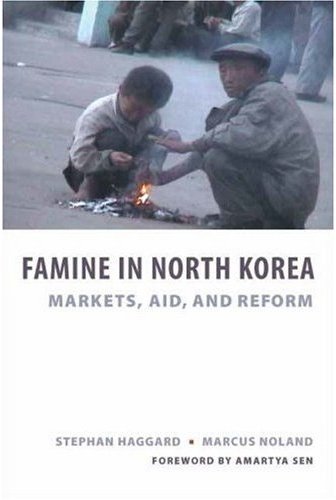
A 2004 World Food Program nutritional survey found that 37 percent of North Korean children suffered chronic malnutrition. The state “bears central responsibility” for the shrinking of North Koreans, says Marcus Noland of Washington’s Peterson Institute for International Economics, co-author of a new book about the famine.

Freeing Up Foreign Exchange

“As aid began arriving, the North Koreans cut commercial food imports, freeing up foreign exchange,” Noland said in an e-mail exchange.

The saved money was used to purchase surplus military aircraft from Kazakhstan and to build monuments “to the recently departed Great Leader Kim Il Sung and his son,” Noland says. If the regime had maintained the rate of commercial food imports during the 1990s, using aid as a supplement instead of a substitute, he says, “the famine could have been avoided.”

Noland estimates the death toll at 600,000 to 1 million; others have said as many as 4 million people may have died.

Tour guide Hong, 27, places the blame elsewhere. “From 1993 to 2000 our people suffered from countless natural disasters and also from other pressure in the economic field owing to the U.S. aggressors,” she says, referring to sanctions. Even during such hardships, she says, constructing the annex with the best materials was “the greatest desire of our people.”

As she speaks, there is a brief power blackout, a frequent occurrence in the energy-short country. When the lights come back on, Hong continues.

“Our people are very grateful because the Great Leader Kim Jong Il sent all the gifts here for the people to look at freely,” she says. “It was our duty to preserve them and show them to the new generation.”

Share

Bank owner disputes money-laundering allegations

Wednesday, May 16th, 2007

McClatchy Newspapers
Kevin G. Hall
5/16/2007

The owner of a tiny bank in faraway Macau that the U.S. government blacklisted after accusing it of laundering the illicit gains of North Korea’s leaders has appealed to the U.S. Treasury to reverse its decision. He claims that the U.S. government itself had encouraged him to maintain North Korea’s accounts.

The May 2 statement by Stanley Au raises new questions about the Treasury’s decision March 19 as well as the Bush administration’s assertions that the North Korean regime has used the Banco Delta Asia to introduce counterfeit U.S. $100 bills into circulation.

In his declaration, Au said that some $160,000 in counterfeit American currency had turned up at his bank in 1994 but that he’d reported the incident to Macau’s police after he’d learned the money was fake. A short time later, U.S. government agents called on him, he said.

“I cordially answered the questions and asked if their preference was that we should desist from doing business with North Korean entities,” Au wrote. “They said they would like us to continue to deal with them, as it was better that we conducted this business rather than another financial entity that may not be so cooperative with the United States.”

Au made his statement as part of an appeal of the Treasury’s blacklisting of his bank for what it describes as insufficient controls against money laundering and passing fake U.S. currency into the global financial system. The family-owned bank in the Chinese-controlled enclave of Macau is now in government receivership.

Au said that because the meetings took place 13 years ago, he’d forgotten the agents’ names. The U.S. Secret Service, under Treasury control at the time, investigates the counterfeiting of American currency, but Au didn’t specify with what agency he met.

The Treasury declined to comment on Au’s statement or the appeal.

“In the next couple of years, the Bank was periodically contacted by other U.S. government agents and we cooperated in their inquiries,” Au said in a statement to the Treasury first published by China Matters, an Internet blog.

“Since those meetings, I believed that the U.S. government knew of my willingness to cooperate with regard to the Bank’s North Korean business and, indeed, to end that business if this would help prevent unlawful conduct.”

The statement to the Treasury also said that international accounting giant Price Waterhouse Coopers audited the bank’s finances annually and didn’t raise questions about its business or accounting practices.

Shortly after the Treasury’s initial September 2005 action sent the bank into receivership, Macau’s monetary authorities asked independent auditor Ernst & Young to audit the bank’s books. The audit, obtained and published by McClatchy Newspapers, found insufficient money-laundering controls but no evidence that North Korea used the bank to introduce fake $100 bills.

Au’s 10-page declaration also countered another allegation by the Treasury, that Banco Delta Asia maintains a relationship with one source of the bills in 1994.

Au said he’d closed two of the three accounts into which the counterfeit bills had been deposited, San Hap General Trading Co. and Kwok Tou, an individual. Both were known to have been doing business with North Korea, and neither challenged the closure. Au said he’d assumed that was an acknowledgement of guilt.

However, the third company, Zokwang Trading Co. Ltd. – which the Treasury alleges remains in an unsavory relationship with Banco Delta Asia – told authorities and bank officials that the counterfeit money deposited into its account had come from China and that it had no knowledge that it was fake.

Au said he’d warned Zokwang officials that the account would be closed if counterfeit money came through again. Shortly afterward, Banco Delta Asia began sending all large U.S.-dollar deposits to Hong Kong for screening at what today is banking behemoth HSBC.

“To the best of my knowledge, Zokwang has never since 1994 been found to be the source of counterfeit funds deposited with Banco Delta Asia,” Au said.

Share

North seeks Russian or Italian home for its funds

Tuesday, May 1st, 2007

Joon Ang Daily
Brian Lee
5/1/2007

Still seeking access to the international financial system, Pyongyang has asked Macao authorities to transfer $25 million in funds to unnamed banks in Russia and Italy, signaling some progress in the deadlock over money held in a Macao bank.

Chinese Deputy Foreign Minister Wu Dawei told Japanese lawmakers visiting Beijing that North Korea broached the idea, the Kyodo News Agency reported. Wu said that Macao authorities are trying to determine whether the move is possible.

South Korean government officials held out hope that the news could be a catalyst in finally resolving an issue that has been dragging on for weeks. “We are ready at anytime to move on; we are just waiting for the clouds to clear,” said one official. Italy was the first European country to open diplomatic ties with Pyongyang in 2000.

The dispute over the money led the North to miss the April 14 deadline for shutting down its main nuclear reactor.

In what was viewed as a major concession, Washington announced on April 10 that it supported measures by Macao to unblock the North Korean funds held in Banco Delta Asia. The U.S. had said the money was the result of illegal activities.

However, other than saying that it has taken notice of such measures, Pyongyang has delayed withdrawing the money. Instead, through state media, the North said it was looking to integrate itself into the international financial system rather than just retrieve the money.

With China and Macao entering the labor day holiday starting today, it could be a few days before any transfer takes place, the government official in Seoul conceded.

A source said that Pyongyang had also asked banks in Singapore, Vietnam and Mongolia to agree to a transfer but was rebuffed.

Washington has endorsed measures to unfreeze the funds, but it has not withdrawn its designation of Banco Delta Asia as a confirmed money launderer.

Share

N. Korea, Switzerland try new bank program to help N.K.’s farmers

Monday, April 30th, 2007

Yonhap
4/30/2007

Years of efforts to cultivate North Korea’s mountainous farmland is beginning to yield results, and Swiss and Korean officials are testing a bank credit program for the farmers in the Asian country, a Swiss aid office said on Sunday.

North Korea is showing “many promising signs of changes in progress,” including the emergence of consumer markets that are now established as part of the country’s economic system, Adrian Schlapfer, assistant director-general of the Swiss Agency for Development and Cooperation (SDC), said on the agency’s Web site.

Schlapfer was comparing the current situation to that during his previous visit to Pyongyang four years ago.

“The farming land in which the starving people started to work back then is now recognized as providing scope for agricultural initiative,” he wrote.

“The SDC, together with North Korea’s Central Bank, is therefore in the process of testing a micro-credit program to encourage farmers to base their investment decisions on economic feasibility considerations — an innovation for North Korea,” he said.

But North Korea still suffers from food scarcity, and aid is still essential, he said.

The SDC, an agency of the Swiss Foreign Ministry, has maintained an office in Pyongyang since 1997, focusing on agricultural programs to improve food production and on supporting domestic reform. The Swiss government started providing humanitarian assistance to North Korea in 1995.

Schlapfer described North Korea as the most little-known and enigmatic partner of the SDC, and acknowledged there are constant doubts on whether Swiss engagement there will yield results.

“Are there any meaningful approaches for long-term development partnership in this country with its planned economy, backwardness and secretiveness? Given the context, is it at all possible to initiate change?” he asked.

Pyongyang is “not an easy partner,” he said. “The key values, priorities and methods of Switzerland’s development cooperation have to be repeatedly insisted upon.”

“However, the projects implemented over the past 12 years are encouraging,” Schlapfer added.

Share

S. Korea’s asset management company may take over BDA: sources

Friday, April 27th, 2007

Yonhap
4/27/2007

South Korea’s state debt-restructuring agency may take over Banco Delta Asia (BDA), which is now virtually facing bankruptcy over accusations of engaging in money laundering for North Korea, diplomatic sources here said Friday.

Last month, the U.S. Treasury Department ordered all U.S. banks and companies to sever ties with the BDA, putting the Macao-based lender at risk of closing its business as global banks and companies are reluctant to do financial transactions with it.

“It is difficult for the U.S. to lift the sanctions on the BDA….so an option to let South Korea’s state-run agency take over the lender is now being reviewed,” a diplomatic source said.

According to the source, a way for the Korea Asset Management Corp. (KAMCO) — which buys bad debts from financial companies and turns them around — to purchase bad loans from the BDA is being studied, thus preventing the lender from going bankrupt.

KAMCO has been seeking to make inroads into overseas countries by taking over bad debts from troubled financial institutions.

North Korean funds frozen at the BDA, estimated at US$25 million, have not been transferred to the communist state so far, holding up progress in a landmark agreement over the North’s denuclearization.

Pyongyang said it will not implement the first 60-day denuclearization measures unless the funds are transferred to another bank, so the North can confirm the free transfer of its funds in the international financial system, upon which the U.S. Treasury Department has a strong influence.

North Korea has said that it will take the first steps toward nuclear dismantlement as soon as it confirms the release of its funds, which have been frozen at Banco Delta Asia since September 2005.

Under the Feb. 13 agreement, North Korea pledged to shut down its main nuclear reactor and allow U.N. inspectors back into the country within 60 days. In return, North Korea would receive aid equal to 50,000 tons of heavy fuel oil from South Korea.

Share

32 Out of 52 BDA Account Holders Revealed

Friday, April 27th, 2007

Daily NK
Nangung Min
4/27/2007

While the transfer of BDA’s North Korea’s accounts continues to linger on, a defector once a high authority in North Korea, recently revealed the names of 32 account holders used in North Korea.

A list of 32 account holders (out of the 52 BDA North Korea accounts) were released on the internet site of “Chogaje.com” on the 26th, in which the defector claims to be well acquainted or have conducted direct transactions with while working in foreign trade in North Korea.

This list recorded financial ministries including the No. 39 Department for Kim Jong Il’s personal funds, the People’s Military Department, National Security Agency and Safety Agency.

If this list is proven to be true, at present the international trades of North Korea’s 4 key financial centers, the Party, the military, the administration and the security agency can be analyzed to be in a frozen state.

In addition to unveiling the list of account holders, the defector informed, “BDA is commonly known as ‘Delta Bank’ amongst the elites in North Korea” and certified, “The North Korean government used this bank to import luxury goods, gifts and undoubtedly nuclear armaments and weapons of mass destruction.”

Furthermore, the defector said that “22% of all North Korea’s transactions were conducted through BDA” and implicated that BDA played a vital role as Kim Jong Il’s personal funds.

The U.S. State Department recently accused BDA of engaging in counterfeit dollars and hence all U.S. transactions with BDA was terminated. Since, the U.S. suspended its transactions with BDA, any official bank has also been placed in a difficult position to transact with BDA.

For now, the Bank of China, Hong Kong’s HSBC and 27 other Macau banks are known to have suspended transacting funds with North Korea.

For the past 2 weeks, North Korea has refused money regarding the 52 accounts. Meanwhile, the U.S. and China are urging that either each of the 52 account holders send the money directly or a third party remits the whole amount and the frozen measures returns to normal. As a result, North Korea’s part in the preliminary implementations of the Feb 13 Agreement continues to be delayed also.

Share

Seoul bid to solve North bank row

Monday, April 23rd, 2007

BBC
4/23/2007

South Korea’s chief nuclear negotiator is travelling to the US to try to resolve a major stumbling block to North Korea’s nuclear disarmament.

Chun Yung-woo said he did not want to see a dispute over North Korean bank accounts scupper progress towards ending the North’s nuclear programme.

Washington has lifted a freeze on the North’s accounts, but Pyongyang appears to be unable to access the money.

On Sunday South Korea agreed to resume food aid shipments to the North.

Following five days of talks in Pyongyang, Seoul said it would begin delivering 400,000 tonnes of rice to its impoverished neighbour.

While no reference was made to the North’s nuclear programme in the final communique at the talks, Seoul has insisted the aid is linked to progress on disarmament.

Unification Minister Lee Jae-joung reiterated the South’s position on Monday, saying the aid was dependent on whether the North fulfilled its pledge to begin the process of dismantling its nuclear programme.

“The rice issue is not just a humanitarian issue, but a very symbolic and essential task for peace,” he told MBC radio.

‘Technical issues’

The North missed a mid-April deadline – agreed on 13 February between the two Koreas, Japan, China, Russia and the US – to “shut down and seal” its Yongbyon reactor in return for aid.

Pyongyang made clear it would only close the reactor if $25m (£13m) of its money frozen in the Macau-based bank Banco Delta Asia (BDA) was returned.

The US has said the accounts are now unfrozen, and insists it does not know why the North has left the funds untouched.

South Korea’s Chun Yung-woo said his talks with US counterpart Christopher Hill in Washington would focus on “technical issues” over the banking dispute.

“We cannot continue putting off the more important denuclearisation issue because of this BDA issue,” he said before leaving Seoul.

He said the North’s demands had “generally been identified”, but more time was needed to fully resolve the issue, Yonhap news agency reports.

“Let us wait and see for a little longer because the parties are working hard for the resolution,” he said.

The nuclear issue, as well as rice aid, was central to intense negotiations between the two Koreas, which went into an unscheduled fifth day on Sunday.

Seoul, a major food donor to its northern neighbour, suspended aid after Pyongyang’s missile tests in July 2006, which was followed by a nuclear test in October.

The BBC’s Charles Scanlon in Seoul says Pyongyang badly needs the aid, because stocks from last year’s harvest are running out.

The first rice shipments are due to begin arriving in the North in May.

Share

Macau Bank Dealt Gold for N Korea

Wednesday, April 18th, 2007

Associated Press
4/18/2007

Macau Bank at Center of Nuclear Talks Dealt Gold for North Korea

A small Macau bank accused of laundering money for North Korea also dealt gold for the reclusive country, with gold pieces flown in to the Chinese territory then carried to nearby Hong Kong and sold there, a news report said Wednesday.

Citing an audit report by the accounting firm Ernst & Young, the South China Morning Post said Banco Delta Asia’s ties to North Korea go back 30 years, and that besides accepting deposits, the bank also handled gold and silver sales for clients from the country worth $120 million.

The Post said six North Korean companies shipped gold pieces stamped with “Central Bank of North Korea” to Macau.

The gold was then moved to Banco Delta Asia’s Hong Kong subsidiary, Delta Asia Credit, by hand, then sold to a German trader, according to the Post.

Hong Kong is an hour by high-speed ferry from gambling enclave Macau.

The report says Banco Delta Asia’s North Korean business accounted for 22 percent its turnover during the 30 years, the Post reported.

The U.S. announced last month the bank would be blacklisted and blocked from doing business with American banks, a potentially crippling blow to most lenders.

The move came after American investigators accused the bank of helping North Korea launder money and handle counterfeit currency.

Macau’s Monetary Authority took control of the bank and froze about $25 million in North Korean funds. That enraged the North Koreans, who for more than a year boycotted the six-nation talks that aim to disarm the North’s nuclear program.

The bank has repeatedly denied knowingly helping in North Korea’s alleged illicit activities and said Monday it filed a challenge against the U.S. ruling.

It said it was a family-owned lender that lacked the sophisticated equipment and procedures to combat money laundering and counterfeiting.

Banco Delta Asia and Ernst & Young’s Macau office didn’t immediately respond to messages from The Associated Press.

Share

An affiliate of 38 North