Archive for the ‘Economic reform’ Category

Collection of DPRK laws and regulations

Wednesday, March 27th, 2013

A much-appreciated colleague has sent me a PDF document published by the DPRK’s Committee for the Promotion of External Economic Cooperation in 2003. It that contains hundreds of pages of DPRK laws and regulations.
Compilation-of-laws-and-regs-for foreign-investment

Click here to open the PDF document

Here is a list of the contents:

1. The Law of the Democratic People’s Republic of Korea on Foreign Investment

2. The Law of the Democratic People’s Republic of Korea on Equtiy Joint Venture

3. Regulations for the Implementation of the Law on Equity Joint Venture

4. The Law of the Democratic People’s Republic of Korea on Contractual Joint Venture

5. Regulations for the Implementation of the Law on Contractual Joint Venture

6. The Law of the Democratic People’s Republic of Korea on Foreign Exchange Control

7. Regulations for the Implementation of the Law on Foreign Exchange control

8. The Law of the Democratic People’s Republic of Korea on Foreign-Invested Bank

9. The Law of the Democratic People’s Republic of Korea on the Leasing of Land

10. The Law of the Democratic People’s Republic of Korea on Foreign-Invested Business and Foreign Individual Tax

11. Regulations for the Implementation of the Law on Foreign-Invested Business and Foreign Individual Tax

12. The Customs Law of the Democratic People’s Republic of Korea

13. The Law of the Democratic People’s Republic of Korea on the Protection of Environment

14. The Insurance Law of the Democratic People’s Republic of Korea

15. The Law of the Democratic People’s Republic of Korea on External Economic Arbitration

16. The Law of the Democratic People’s Republic of Korea on External Civil Relations

17. The Notary Public Law of the Democratic People’s Republic of Korea

18. The Civil Proceedings Act of the Democratic People’s Republic of Korea

19. The Law of the Democratic People’s Republic of Korea on Processing Trade

20. The Law of the Democratic People’s Republic of Korea on Bankruptcy of Foreign-Invested Enterprises

21. The Law of the Democratic People’s Republic of Korea on the Rason Economic and Trade Zone

22. The Law of the Democratic People’s Republic of Korea on Wholly Foreign-Owned Enterprises

23. Regulations for the Implementation of the Law on Wholly Foreign-Owned Enterprises

24. Regulations on the Financial Management of Foreign Invested Enterprises

25. Regulations on the Introduction of Latest Technologies by Foreign-Invested Enterprises

26. Regulations on the Naming of Foreign-Invested Enterprises

27. Regulations on the Registration of Foreign-Invested Enterprises

28. Labor Regulations for Foreign-Invested Enterprises

29. Regulations on the Resident Representative Offices of Foreign Enterprises in the Rason Economic and Trade Zone

30. Regulations on Entrepot Trade in the Rason Economic and Trade Zone

31. Regulations on Contract Construction in th Rason Economic and Trade Zone

32. Regulations on Forwarding Agency in the Rason Economic and Trade Zone

33. Regulations on Statistics in the Rason Economic and Trade Zone

34. Regulations on Tourism in the Rason Economic and Trade Zone

35. Regulations on Financial Management of Foreign-Invested Enterprises in the Rason Economic and Trade Zone

36. Regulations on Foreigner’s Immigration Procedure and Stay in the Rason Economic and Trade Zone

37. Customs Regulations For the Rason Economic and Trade Zone

38. Regulations on Finding in the Rason Economic and Trade Zone

Share

China-North Korea railway links to undergo upgrade

Tuesday, March 26th, 2013

Tumen-namyang-rail-2011-9-23

Pictured Above (Google Earth): The Namyang (DPRK) – Tumen (PRC) rail and bridge crossings. I suspect that this is the specific area that will see renovation

According to the Global Times:

The government of northeast China’s Jilin Province announced Tuesday plans to upgrade railways links to neighboring North Korea, aiming to boost cross-border economic and trade ties.

The China Tumen-North Korea Rajin Railway and China Tumen-North Korea Chongjin Railway will be upgraded under the Jilin government plan. A special highway passenger line linking Tumen to North Korea is also set to be opened in coming years.

The plan aims to improve the industrial cooperation between China and North Korea’s Rason and push the development of the Tumen Korean Industrial Park to a higher level.

Jin Qiangyi, director of the Asia Research Center of Yanbian University, told the Global Times that the industrial cooperation between China and North Korea has been going on for many years and does not breach international sanctions against Pyongyang.

Such cooperation could improve employment in border areas of both countries and contribute to development and stability in the area amid heightening tensions, said Jin.

Read the full story here:
China-North Korea railway links to undergo upgrade
Global Times
2013-3-27

Share

North Korea enacts new tax regulations in Mt. Kumgang tourist zone

Thursday, March 21st, 2013

Institute for Far Eastern Studies (IFES)
2013-3-21

North Korea announced that it has instituted a new law to begin levying tax in the Mount Kumgang Tourist Zone which has been — until now — a tax-free zone. In addition, a personal protection regulation for tourists was also added to its tourism regulations. North Korea has been modifying laws pertaining to the Mt. Kumgang area in order to develop it as a special tourism zone.

Last week, Yonhap News reported that it had obtained from North Korea a book that was released last November on North Korea’s laws and regulations on international economic policy. According to the book, North Korea adopted in June 2012 a new tax regulation for the Special Zone for International Tour of Mount Kumgang. The law was passed by the Presidium of the Supreme People’s Assembly.

The new tax regulation stipulated that any companies or individuals (foreigners and oversees Koreans) who conduct business transactions or make profit from the Special Zone for International Tour of Mount Kumgang are subjected to tax.

The business income tax applied in the Mount Kumgang zone are on average about 14 percent of one’s yearly profit (infrastructure projects including airport, railways, roads, and port construction only pay 10 percent) and individual income tax ranges from 5 to 30 percent when monthly income is 300 euros (approximately 430,000 KRW).

The tax regulation also covers property, inheritance, transaction, business, and local tax. This comes as a subordinate law under the Special Law for International Tourism in Mount Kumgang, which was enacted in May 2011 and subsequently revoked the monopoly rights of Hyundai Asan.

As such, this law likely will impact South Korean investment in the Mount Kumgang tourism industry.

In the past, working closely with Hyundai Asan, North Korea designated the tourist area as a tax-free zone. There were also no separate laws regarding the levying of taxes on foreigners except for South Korean tourists, who were required to pay 50 USD per person.

In the ‘Tourism Regulations of Mount Kumgang International Tourism Zone,’ a clause was added that specified the special travel bureau for international tourism was responsible for the protection of personal safety and property of tourists in Mount Kumgang. The special travel bureau for international tourism is under the jurisdiction of the Guidance Bureau of the Special Zone of Mount Kumgang International Tourism.

North Korea’s decision to insert a clause ensuring the safety of tourists is likely due to the fact that this issue has continually been raised as a main concern since the death of a South Korean tourist in the zone in July 2008 and subsequent halt of inter-Korean cooperation in the Mount Kumgang project.

In addition to the new tax and tourism regulations, North Korea also made new regulations pertaining to the foundation and management of enterprises; customs; access, visitation, and housing; insurance, and environmental protection, among others.

Share

Rason – China – USA sea food trade

Tuesday, March 5th, 2013

According to the New York Times:

At the Red Sun restaurant, a short-order joint on Crab and Beer Streets, live crabs with plump legs wriggle in a cooled tank, fresh from the North Korean coast just two and a half hours away by road.

The cook and owner, Jin Yuansheng, douses the prized crabs in boiling water and adds them to the steaming platters of sea cucumbers, shrimp and squid, also from North Korean waters, that he brings to the table.

This border town in China’s cold and poor northeast abuts North Korea along the icy Tumen River, where a bridge serves as the gateway for a lively commerce in shellfish plumbed from the Sea of Japan off North Korea. It is an exotic niche business in the more than $11 billion annual trade between North Korea and China, which is dominated by China’s purchases of cheap North Korean iron ore and coal.

By encouraging trade with North Korea, China aims to prevent North Korea’s government from collapsing, an outcome that could result in a Korean Peninsula allied to the United States. And business with North Korea serves a domestic goal: it helps employment and incomes in needy Jilin Province, where an estimated two million ethnic Koreans live.

That is where the crabs come in. Scooped from 3,000-foot-deep waters by trawlers crewed by North Korea workers, they are first taken to the North Korean port of Rason, a special enterprise zone serving foreign investors and largely financed by China. The crabs are trucked in ice to the Chinese border town of Quanhe, and then brought to the market in Yanji, or flown to cities across China as a delicacy for the affluent.

“Getting the crabs here is a delicate operation,” said Mr. Jin. “If they are too hot en route, they can die, and if they are too cold, they can freeze to death.”

For Chinese traders, importing crab is a lucrative business. They sell not only to upscale restaurants around China, but also to banquet organizers. The sales pitch stresses what is called the purity of the waters around impoverished North Korea compared with the more polluted seas around industrialized Japan and South Korea.

“The fishermen capture the crab deep down, so it is high quality,” said Qu Baojie, whose company imports crab from Rason. “South Korea and Japan can’t compete.”

His crab, branded as Crab Earth, Crab Heaven, is featured at the buffet of the Golden Jaguar, a fashionable Beijing restaurant, and is sold in red boxes suitable for business gifts, he said.

The fishing operations in Rason, an ice-free port that gives year-round sea access to China’s northeastern provinces, work fairly smoothly, Mr. Qu said. Fishing trawlers equipped with South Korean gear ply the waters at night, returning to shore about 4 a.m.

Their catches are then transferred to a state-owned plant where some crabs are packed live and others are processed, he said. About 300 North Korean workers are employed during the peak September to December fishing season. Fishing during the breeding season of June to September is banned, he said.

His crab business flourishing, he recently bought a new processing factory in Yanji, Mr. Qu said.

Some of the crab meat was vacuum packed in clear plastic, and sold to other Chinese traders, who in turn dispatched it to the United States, he said. The brand name of North Korean crab meat sold in the United States? “They slap on their own brands,” he said of the American buyers.

Read the full story here:
Caught in North Korea, Sold in China, Crabs Knit Two Economies
New York Times
Jane Perlez
2013-3-4

Share

Nuke test does not deter China’s economic interests in the DPRK

Thursday, February 28th, 2013

According to Reuters:

While Beijing has not made clear whether the test would disrupt its investment plans for the Rason economic zone, an official at the zone’s joint management office told Reuters that all previously announced Chinese projects for the zone remain on track, including a power line from China to ease acute electricity shortages there.

“All the people of the management office are still here working as usual… If there is any major impact (from the nuclear test), do you think we would still be here?” he said by phone from Rason, which lies near where North Korea, China and Russia converge. “All works are proceeding as planned.”

There are about 60 Chinese and North Korean people working at the management office, and the number may grow with the launch of more projects, said the official, who declined to be identified as he was not authorized to speak to the media.

China and North Korea jointly set up the Rason management committee in October to handle the planning, construction and development of the zone, also known as Ranjin-Songbong, one of the country’s highest profile economic projects.

“China has normal relations with North Korea. We will conduct normal trade and economic exchanges with North Korea,” Hua Chunying, China’s foreign ministry spokeswoman, said when asked whether China would continue to work with North Korea to develop its special economic zones after the nuclear test.

Led by China’s commerce ministry, Chinese firms, including State Grid Corp, Jilin Yatai (Group) and China Railway Construction Group and other state enterprises, have indicated interest in investing in power, building materials, transport and agriculture projects in the zone.

Yatai, a Shanghai-listed cement and coal producer, signed a framework agreement last year with the North Korean government to construct a 500,000-square-metre building materials industrial park, including a cement plant, in Rason.

State Grid finished the final review of the feasibility study of the 97.8-kilometre power line early this year, but has not started construction as it has not yet won all approvals, the official and a source close to the plan said.

The planned line would cut through a Siberian tiger natural reserve, and State Grid is awaiting a green light from China’s National Development and Reform Commission and coordinating with various other authorities, the source told Reuters.

There is no timetable for the project as State Grid is unsure when it would receive government approvals, he added. State Grid was not immediately available for comment.

Jilin Yatai may delay its cement project in Rason — which is critical to the construction of other projects such as the railway there — due to “issues on the North Korean side,” said an official at Yatai’s securities office.

But the likely delay of the project was not related to the nuclear test, the official said by phone from Changchun, capital city of Northeast China’s Jilin province, which borders North Korea. He declined further comment.

In a filing with the Shanghai bourse in August, Yatai said it planned to complete the construction of its first cement plant in North Korea by September this year only if there is sufficient power capacity available.

Read the full story here:
China moves ahead with North Korea trade zone despite nuclear test
Reuters
2013-2-28

Share

Phoenix Commercial Ventures Ltd reacquires Sinji Brand

Sunday, February 24th, 2013

PRESS RELEASE: 

SinjiTiger1

Phoenix Commercial Ventures Ltd is pleased to announce that it has reacquired the Sinji brand, trademark and associated intellectual property rights.

Sinji JVC was a 50/50 joint venture between Phoenix Commercial Ventures Ltd and the Taegyong Economic Group.

Phoenix’s share in the company was sold to a third party in November 2010.

Sinji (pronounced “shinjee”) was a lieutenant of Tangun, the first king of Korea in around 3,000 BC, and his mission was to relay communications between the king and his people. In the absence of a written script, he invented one. Sinji dates from ancient history, all Koreans will recognise the name. Sinji symbolises the human intellectual, and he can be considered to be the original Korean IT developer.

Sinji’s main areas of operations at the time of disposal were:

• Retail (consumer electronics, household necessities)
• Software (eg the innovative web based e-learning platform, learnwithelsi)
• Artificial flower manufacturing for export
• SKD assembly/retail: Renewable energy products (eg small capacity wind turbine generators)

Phoenix Commercial Ventures Ltd will issue further updates as to the intended future operations and direction of the newly acquired Sinji brand.

Here is a PDF with more.

Share

Rason energy growth to come from China

Tuesday, February 19th, 2013

According to Yonhap:

China is expected to start supplying electricity to North Korea’s special economic zone in June as part of their joint development efforts there, a news report said Tuesday.

China-based Yangbian Internet Radio said the Chinese city of Hunchun, which is close to the border with the North, will make efforts to establish joint economic projects, including the electricity supply plan.

The news outlet said preparations for the plan to supply electricity to the Rason Special Economic Zone, located in the northern tip of North Korea, will be complete in June. The Chinese city also plans to build a bridge and road.

Since last year, Chinese media outlets have said the supply plan marks the first case of China’s state-run electricity agency providing electricity to a foreign nation and aims to help build up infrastructure in the North Korean special zone.

Experts said China may continue its economic cooperation projects in the North’s east coast region as they are part of the country’s efforts to secure a commercial stronghold in the East Sea despite rising tension over the North’s Dec. 12 nuclear test.

Read the full story here:
China to start electricity supply to Rason economic zone in N. Korea
Yonhap
2013-2-19

Share

Inter-Korean trade hits record high in 2012

Saturday, February 9th, 2013

According to Yonhap:

Despite rising cross-border tension, the trade between South and North Korea reached a record high last year, government data showed Saturday.

The volume of trade between the two Koreas reached US$1.97 billion in 2012, inching up from the previous record of $1.91 billion in 2010, according to the data by the Korea Customs Service.

South Korean products worth $896.26 million were shipped to North Korea, up 13.4 percent from the previous year.

The amount of products that came here from the North jumped 19.3 percent on-year to $1.07 billion, according to the data.

A total of 99 percent of the volume was shipped through a land route linked to the inter-Korean industrial complex in the North’s border town of Kaesong.

Read the full story here:
Inter-Korean trade hits record high in 2012
Yonhap
2013-2-9

Share

Chinese company to invest in gold mine, luxury hotel in North Korea

Sunday, February 3rd, 2013

koryo-seven-star-under construction

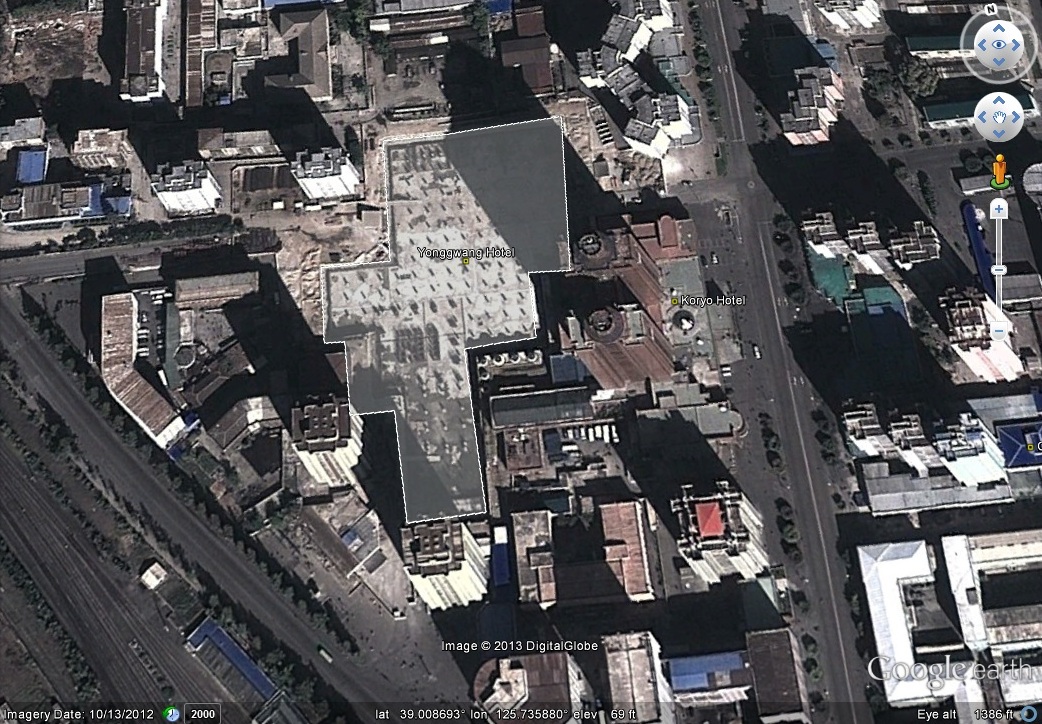
Pictured Above: New hotel under construction. See more here. I am still not sure about the gold mine.

By Michael Rank

A Chinese company has announced plans to invest $20 million in a gold mine in North Korea as well as in the country’s first five-star hotel, a Chinese-language website reports (http://www.#removed-for-malware-warning-external-site#idprkorea.com/news/news/view.asp?id=2599).

The mine, with deposits of 50 tonnes of gold, is in Unsan county 운산군 in North Phyongan province 평안북도 in northwestern North Korea near the Chinese border.

The report said Weijin Investment Group is the first Chinese company from Hunan province to invest in North Korea.

It quoted Weijin chairman Xia Juhua as saying, “North Korea is backward in infrastructure construction, so we can fulfill the requirements of mineral resources exploitation by offering technology and management support to the country’s key projects like highways and hotels”.

He said Wejin plans to construct a 30-storey, five-star hotel to be completed this year but did not give a location. Xia also mentioned plans to invest in the rare earth sector in North Korea but gave no details.

The report said about 200 Chinese companies were investing in North Korea and that over 70% were focusing on the mining sector. But at least one of these ventures went spectacularly sour last year, when the Chinese partner launched an extraordinarily bitter attack on its North Korean counterpart, accusing the North Koreans of tearing up a multi-million-dollar deal, intimidating its staff, imposing outrageous extra charges and cutting off its power and water, as well as of corruption and demanding prostitutes whenever their North Korean colleagues visited China.

UPDATE (2013-3-13): NK News has published that the hotel will be named “Yonggwang Hotel (영광호텔)”…which is the name of the closest metro stop.

Share

Taepung International Investment Group allegedly dissolved

Friday, February 1st, 2013

According to Yonhap:

North Korea dissolved a well-known state-run company in charge of attracting foreign investment due to its unsatisfactory performance, South Korea’s Unification Ministry said Friday.

“Daepung International Investment Group seems to have been disbanded, probably due to poor performance,” a ministry official said in a briefing on governmental and personnel changes taken under the Kim Jong-un regime over the past year.

The country also broke up another extra-governmental organization in charge of trade promotion and foreign investment with its work believed to have been reassigned to the government’s Commission for Joint Venture and Investment, according to the official.

Daepung Group was established at the instruction of the North’s highest political body, the National Defense Commission, in January 2010 as a means to attract foreign investment.

The group oversaw the now-suspended joint tourist program in Mount Kumgang on the eastern coast of North Korea.

The cross-border program had served as a cash cow for the North before Seoul halted it in 2008 following the shooting death of a South Korean tourist at the resort.

Additional Information:

1. Previous posts on the Taepung Investment Group can be found here.

2. NK Leadership Watch has an excellend review of the organization here.

3. The “Commission for Joint Venture and Investment” is also known as the Joint Venture Investment Committee (JVIC). See JVIC posts here.

Read the full story here:
N. Korea dissolves state-run firm in charge of attracting foreign investment: gov’t
Yonhap
2013-2-1

Share