Archive for the ‘State Offices’ Category

Regular food rations not provided as Prices Soar and food shortages grow in DPRK

Friday, August 6th, 2010

Institute for Far Eastern Studies (IFES)
NK Brief No. 10-08-06-1
8/6/2010

Over the last five months, regular food rations have not been provided even to those in the capital city of Pyongyang, indicating the severity of food shortages in North Korea. According to the ROK Ministry of Unification, rice and corn were added to the list of goods with controlled prices in at least one market in Pyongyang. A list of controlled goods with state-set upper price limits has been distributed to each market throughout North Korea since 2003. While prices may vary slightly, comparing them with earlier price caps gives a good indication of the availability of goods.

The July appearance of rice and corn on the list of restricted goods, neither of which has been on the list even as far back as February, when strict market controls were enacted in the aftermath of failed currency reform measures, indicates that the ration system is not operating normally, even in Pyongyang. It also means that not only are officials not receiving normal rations, but that average residents are relying more on markets for their food. One Unification Ministry official stated, “Rice was on the list of controlled goods in markets outside of Pyongyang in February, but couldn’t be found in markets in the capital city…in July, rice and corn emerged [as items with price caps] in Pyongyang markets.” The official also explained that as the food ration system collapsed even in Pyongyang, the issuance of price caps on rice and corn was an indication that more people were turning to the markets to buy these staples.

Looking at other goods on the list, it appears that agricultural goods cost 3~7 times more in July than in February, and manufactured goods were as much as 7 times more expensive. Necessary goods, both agricultural and manufactured, have grown considerably more expensive in North Korea over just five months. More specifically, beans were up 3.6-fold; chicken, 3.3-fold; lettuce, 3-fold; apples, 6.3-fold; rice and corn, 2-fold. Ball-point pens and other daily-use items were up 5~6-fold. In July, rice sold for 550 won per kilogram, while corn was priced at 280 won per kilo.

The price caps are upper limits set by North Korean authorities, but the reality is that goods are often sold at higher prices. The shortage of agricultural goods, and the fact that the Chinese Yuan has appreciated 3-fold since February, has led to these record price-hikes. On May 26, Workers’ Party of Korea (WPK) authorities issued a decree, “Regarding Korea’s Current Food Situation,” calling for residents to fend for themselves. As prices skyrocketed on agricultural goods, one measure adopted by North Korean authorities has been to more than double exports of iron ore from Musan, North Hamgyong Province to China, while drastically increasing the import of corn. This increased import of corn has brought down the price of rice from 1,200 to 900 won per kilogram in Musan, while corn itself has fallen from 600 to 500 won. On the other hand, the drop in the foreign currency exchange rate in mid-July caused a shortage of dollars, driving the price of rice up to as high as 1,200 won per kilogram in some regions.

Share

UN report explains sanctions decisions

Friday, August 6th, 2010

According to the Daily NK:

The 1718 Committee of the UN Security Council has published the final version of its “Report to the Security Council from the Panel of Experts established Pursuant to Resolution 1874,”

In the report, of which the Daily NK has obtained a copy, the 1718 Committee revealed North Korean overseas accounts which had likely been used for North Korea’s illicit activities such as conventional weapons transactions and luxury goods, and the names of entities and individuals involved in those activities. The lists were submitted by UN member states.

The report singles out 17 North Korean officials thought likely to violate UN Resolutions 1718 and 1874, and outlines the reasons why they were designated by the UN member states.

They are Jang Sung Taek, Vice-chairman of the National Defense Commission and the closest associate of Kim Jong Il, Vice-chairman of the National Defense Commission Oh Keuk Ryul, Kim Young Chun, the Minister for the People’s Armed Forces, Director of No. 39 Department Kim Dong Woon, Military Supplies Secretary in the Central Committee of the Party Jeon Byung Ho, former Yongbyon technical director Jeon Chi Bu, First Vice-director of the Ministry of the Munitions Industry Chu Kyu Chang, Standing Vice-director of the People’s Army’s General Political Department Hyun Cheul Hae, President of the Tanchon Commercial Bank Kim Dong Myung, Member of the National Defence Commission Baek Se Bong, Deputy Director of the General Political Department of the People’s Armed Forces Park Jae Kyung, President of the Academy of Science Byeon Youong Rip, Director of the General Bureau of Atomic Energy Ryeom Young, Head of the Department of Nuclear Physics of Kim Il Sung University Seo Sang Il, President of Kohas AG Jacop Steiger and Alex H.T. Tsai, who is known to have provided financial, technological and other support for KOMID, and his wife, Su Lu-chi.

It also released a list of autonomous designations provided by member states, covering 19 North Korean entities. That list was made based on information collected as of April 30th this year.

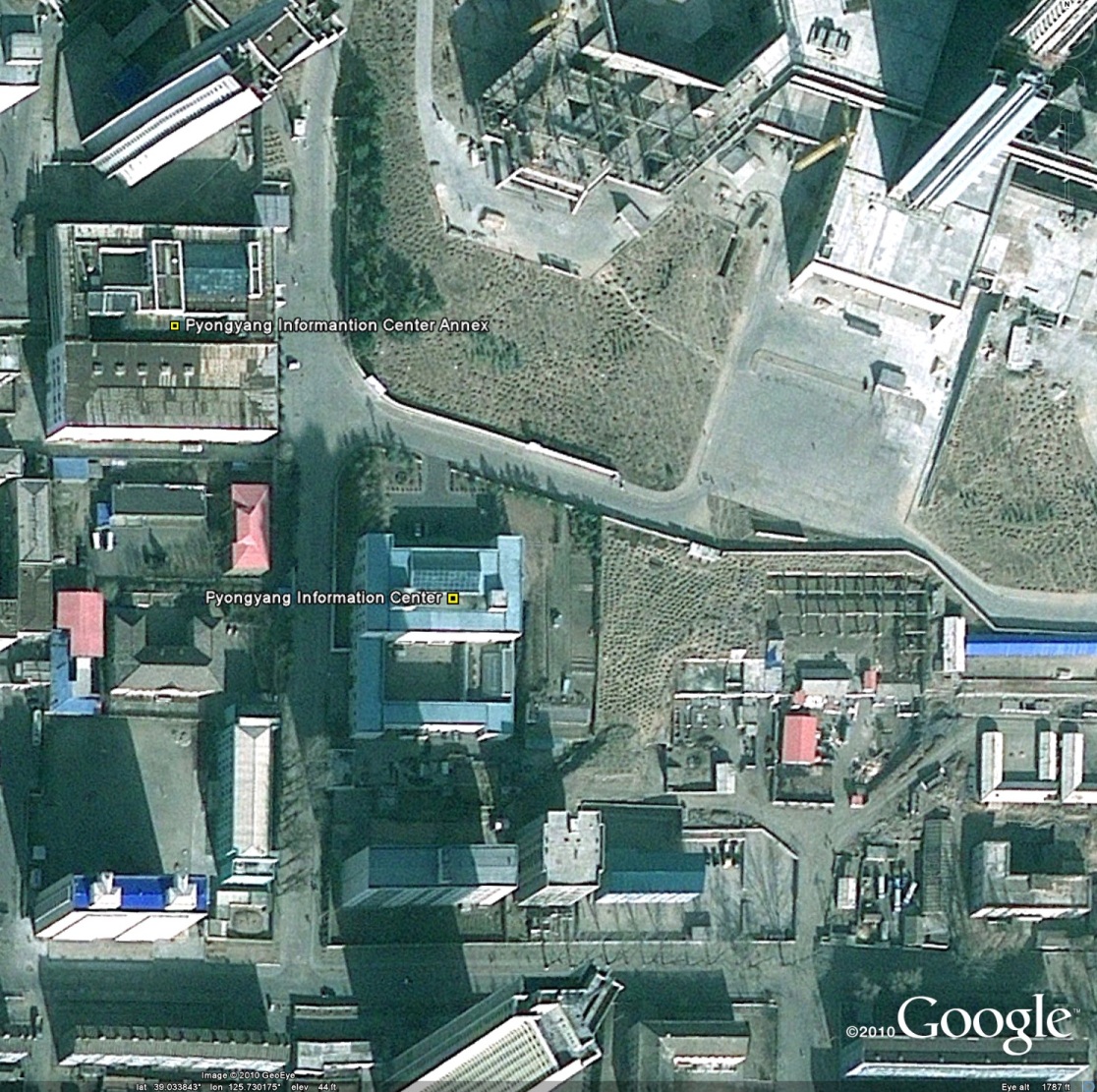
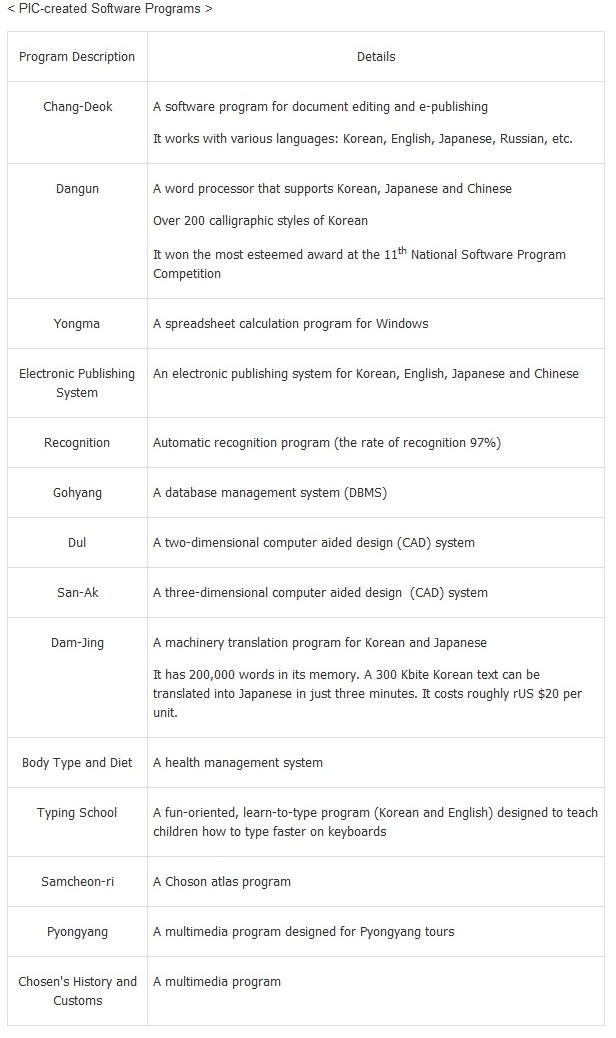
They are Amroggang Development Banking Corporation, Global Interface Company Inc., Hesong Trading Corporation, Korea Complex Equipment Import Corporation, Kohas AG, Korea International Chemical Joint Venture Company, Korea Kwangson Banking Corp, Korea Kwangsong Trading Corporation, Korea Pugang Trading Corporation, Korea Pugang Mining and Machinery Corporation ltd., Korea Ryongwang Trading Corporation, Korea Ryonha Machinery Joint Venture Corporation, Korea Tonghae Shipping Company, Ponghwa Hospital, Pyongyang Informatics Centre, Sobaeku United Corp., Tosong Technology Trading Corporation, Trans Merits Co. Ltd., and Yongbyon Nuclear Research Centre.

13 out of the 19 have direct or indirect links to Tanchon Commercial Bank and Korea Mining Development Trading Corporation (KOMID).

Amroggang Development Banking Corporation is the financial arm of KOMID and related to Tanchon Commercial Bank, which has also been designated by the 1718 Committee. Additionally, Global Interface Company Inc. is owned by Alex Tsai, who is thought to have provided, or attempted to provide, support to KOMID.

Sobaeku United Corp. is involved in activities related to natural graphite, producing graphite blocks that can be used in missiles.

The report points out, “North Korea has established a highly sophisticated international network for the acquisition, marketing and sale of arms and military equipment, and arms exports have become one of the country’s principal sources for obtaining foreign exchange,” and goes on to say, “Agencies under the National Defense Commission (NDC), the Workers’ Party of Korea (WPK) and the Korean People’s Army (KPA) are most active in this regard.”

The report explains, “The Second Economic Committee of the National Defense Commission plays the largest and most prominent role in nuclear, other WMD and missile-related development programs as well as in arranging and conducting arms-related exports.”

It adds, “The General Bureau of Surveillance of the Korean People’s Army is involved in the production and sale of conventional armaments.”

The report points out that North Korea has opened 39 accounts with 18 overseas banks in 14 countries. 17 of which are held with Chinese banks.

Besides China, 11 banks in eight European and former Soviet countries (Russia, Switzerland, Denmark, Hungary, Poland, Italy, German, Belarus and Kazakhstan) hold 18 North Korean accounts. There is one account in Malaysia.

“The DPRK also employs a broad range of techniques to mask its financial transactions, including the use of overseas entities, shell companies, informal transfer mechanisms, cash couriers and barter arrangements,” the report notes.

According to experts on North Korea, since North Korean overseas illegal activities are all led by the loyal group surrounding Kim Jong Il, U.S. financial sanctions in accordance with UN Security Council resolutions 1817 and 1874 and also U.S. Executive Order (E.O.) 13382 have the potential to be a great pressure on the Kim Jong Il regime.

The Panel of Experts, which was appointed by the UN Secretary-General on 12 August 2009 to author the report, are David J. Birch (United Kingdom of Great Britain and Northern Ireland, coordinator), Masahiko Asada (Japan), Victor D. Comras (United States of America), Erik Marzolf (France), Young Wan Song (Republic of Korea), Alexander Vilnin (Russian Federation), and Xiaodong Xue (People’s Republic of China).

Read the full story here:
Report Explains Sanctions Decisions
Daily NK
Kim Yong Hun
8/6/2010

Share

More on upcoming US sanctions

Wednesday, August 4th, 2010

According to the AFP:

The United States is expected to blacklist three key North Korean figures suspected of handling secret funds for leader Kim Jong-Il as part of its new sanctions, a report said Wednesday.

Washington is devising the measures to punish the North for an alleged deadly March attack on a South Korean warship and to push it to abandon its nuclear weapons ambitions.

Yonhap news agency, quoting an unidentified South Korean government source, said one of the three officials is Kim Tong-Myong, head of the North’s Tanchon Commercial Bank.

“The US is paying special attention to three people, including Kim Tong-Myong, who operate North Korea’s secret funds abroad,” the source was quoted as saying.

“If they are included in the new sanctions, it could deal a blow to North Korea’s leadership.”

The foreign ministry had no comment on the report.

Washington also has evidence that nine North Korean financial institutions operating overseas and at least two trading firms have been used for illicit activities such as trading in conventional arms, luxury goods and counterfeit money, the source was quoted as saying.

Overall, the US is expected to add 10-20 North Korean entities and individuals to its blacklist, the report said.

Robert Einhorn, US State Department special adviser for non-proliferation and arms control, said Monday during a visit to Seoul the new measures would designate companies or individuals involved in the North’s illicit activities.

Any property or assets they possessed which were under US control could be blocked.

“By publicly naming these entities, these measures can have the broader effect of isolating them from the international financial and commercial system,” Einhorn said.

He named Tanchon Bank as one of several North Korean companies active overseas. The bank has already been designated by the US and the UN Security Council for suspected illicit activities.

South Korean Foreign Minister Yu Myung-Hwan said details of the new US sanctions will emerge soon.

“We’re expecting concrete measures within the next two weeks that will freeze assets of related North Korean individuals or companies and will prohibit third countries from dealing with such individuals or companies,” Yu told a local radio station.

South Korea, the United States and other countries, citing a multinational investigation, accuse the North of torpedoing a South Korean warship in March with the loss of 46 lives — a charge it denies.

Read the full story here:
US to target secret funds of N.Korea’s Kim
AFP
8/4/2010

Share

DPRK issues rule on bank deposits

Thursday, July 29th, 2010

According to the Daily NK:

North Korean authorities released a public announcement that they will exchange deposits, consigned to the Chosun (North Korea) Central Bank during the currency redenomination in November last year, into new bills at the rate of 100:1 within the limit of 500,000 won.

Last November the North’s authorities announced that they will exchange the existing denomination, to a limit of 150,000 won per household, to the newly issued bills at the rate of 100:1. They urged people to deposit their remaining cash into the bank.

However, many citizens have refused to follow the instructions after previous experiences with forfeited deposits during the country’s fourth redenomination in 1992.

This measure is designed to work towards curing the hardships of residents caused by the decline in value of individual property since the last redenomination. There are hopes that it will stimulate market activity by increasing the amount of money in circulation, particularly since a downturn in purchasing power amongst the people led to an economic depression.

However, even after the Central Bank’s announcement the people remain apathetic. A source said that, “Prices have risen to similar levels as before the redenomination. Rice now costs over 1,000 won per kilogram; when you get back your deposit of 5,000 won you can only buy five kilograms of rice. It’s meaningless.”

If the state-designated price of rice, around 24 won per kilogram in procurement stores, had been maintained then this measure would be significant. Now the prices have multiplied by 50 and the people say that the measure is nothing but a play on words.

In addition, February saw the authorities hand down a decree to raise all state-designated prices by 100 times to levels known before the redenomination. The decree was not applied to people’s deposits in the bank, a fact that has received criticism from the public. A source commented that, “The authorities actions are nonsense. They raised prices by 100 times but people’s deposits were the same value as last year. It is ridiculous.”

Read the full sotry here:
Bank Deposits Can Be Withdrawn at 100:1 Rate
Daily NK
Park In Ho
7/29/2010

Share

First real estate auction held in Kaesong Industrial Complex

Sunday, July 18th, 2010

Institute for Far Eastern Studies (IFES)
NK Brief No.10-07-15-3
2010-07-15

A real estate auction was held in the Kaesong Industrial Complex for the first time since the joint inter-Korean project was launched. According to the Kaesong Industrial District Development Committee, factory plots (20,472.7 ㎡) in the stage-1 area of the KIC were being auctioned off on July 12. A government source stated, “Land in the KIC has been sold before, but this is the first I know of land rights being auctioned off.”

The company currently on the plot was awarded land rights and permission to build a factory after signing a contract with the North Korean Central Special Development Guidance Bureau. The land rights being auctioned off run until April 12, 2054. It is not known why the land rights are being auctioned off, but it appears that the company currently holding rights to the plot have some financial difficulties, forcing them to sell.

The rights are estimated to be worth more than 1.37 billion won, and the auction is set to close on the 23rd of July. The sale is being handled by the Kaesong Industrial District Management Committee. The committee is handling the sale in accordance with the rules set forth on May 10 by the KIC real estate management office. These rules established a seven-member committee of lawyers and other specialists to handle the auction and sale of real estate within the industrial complex.

After the sinking of the ROK warship Cheonan, Seoul authorized more flexible management of South Korean workers in the KIC in order to help companies avoid financial losses in the complex. The government also increased the amount of the inter-Korean cooperation fund from 50 trillion to 60 trillion won in order to ease financial concerns of South Korean companies operating joint ventures, and announced that loans to 183 companies involved in processing-on-commission, as well as 530 other trading companies, would be made at 2 percent.

This move by the government highlights the fact that South Korean companies in the KIC continue to tread on rocky financial footing, despite the announcement by the Ministry of Unification that emergency management stability funds would be made available.

Following the sinking of the Cheonan, the number of South Korea workers in the KIC on any given weekday was reduced from more than 1000 to around 500, and this has caused companies to produce less, have higher costs, and see lower buyer interest. While Seoul tries to keep the industrial complex open, it is also looking into the laws on the Mount Keumgang tourism project, seeking ways to aggressively assist companies involved in the joint scheme.

Share

Bronze Kim Jong il statue unveiled

Sunday, July 18th, 2010

First of all, here are the images (from the Daily NK web page):

3-stars-of-paektu.jpg  kim-jong-il-bronze-statue.jpg

The Daily NK also offers the following commentary:

A statue of Kim Jong Il has been revealed in a North Korean newspaper obtained by Open Radio for North Korea.

Open Radio managed to obtain a copy of the May 11th, 2010 “Chosun People’s Army,” the North Korean military’s own publication. That day, the publication ran a banner headline, “The greatest privilege and highest honor of the Mt Baekdu revolutionary army.”

“There has been an unveiling ceremony of statues of the ‘Three Mt. Baekdu Generals’ (Kim Il Sung, Kim Jong Il and Kim Jong Suk) dressed in military uniform at the Revolutionary History Museum of the Ministry of the People’s Armed Forces,” the front page article explained.

The report added that Chief of Staff of the Chosun People’s Army Lee Young Ho and First Vice-Director of the General Political Department of the People’s Army Kim Jung Kak took part in the ceremony.

Kim Jung Kak emphasized in his speech at the ceremony that the statue of Kim Jong Il is the first dressed in military attire, claiming, “It is the luckiest and most honorable thing in the world for the Chosun People’s Army to have this, the first statue of its highest commander dressed in military uniform.”

On the subject of the relative lack of Kim Jong Il statues, Cheong Young Tae, a researcher with the Korea Institute for National Unification, explained to The Daily NK today, “Kim Jong Il inherited the family’s ruling legitimacy by making his father the eternal ‘Suryeong’ (supreme leader). It seems, then, that the process of justifying and enhancing the legitimacy of the revolution now includes setting Kim up as the second ‘Suryeong’ in order to hand over power to the next generation.”

But while statues of Kim are rather rare, they do exist. Open Radio cited a defector as saying, “I’ve seen a Kim Jong Il statue at Kim Jong Il Political Military University in Pyongyang. However, most people do not know about it.”

“I think that is natural, because it is the only university which is named after Kim Jong Il. There is no Kim Jong Il statue in any other province or in official buildings, though” he added.

Additionally, a 2008 report asserted that a gold statue of Kim Jong Il can be found “in the area in front of the National Security Agency office building at the foot of Mt. Amee in Daesung district, Pyongyang.” This one, the report asserted, was erected on Kim Jong Il’s 46th birthday in 1988, but no photos exist to corroborate the claim.

Another, white plaster statue of Kim can be found at the International Friendship Exhibition at Mt. Myohang, north of Pyongyang, this one a stalwart on the North Korean tourist trail.

Additional information:

1.  An image of the Kim Jong-il statue at Myohyangsan can be seen here (link).  Scroll down until you see it.

2.  The Kim Jong il statue reminds me of the Laurent Kabila statue in Kinshasa (both made by the Mansudae Art Studio).

Share

Former DPRK railway minister reportedly executed

Thursday, July 15th, 2010

According to Breitbart (via Breitbart):

Former North Korean Railways Minister Kim Yong Sam was executed in March last year for failing to maintain locomotive trains that had been in store for wartime, Radio Free Asia, a nonprofit radio station, reported Wednesday on its Internet edition.

A source on North Korean affairs said Kim got into trouble during an inspection by the National Defense Commission for scrapping locomotive trains that were in store for wartime.

After the inspection, carried out after celebrations were held to mark the country’s 60th birthday on Sept. 9, 2008, Kim was handed over to the State Security Department, report said.

He had been railways minister for 10 years from September, 1998.

The Choson Ilbo has more:

A nationwide campaign is underway recently in North Korea to get rid of photos and publications of executed former senior officials, Radio Free Asia claimed Tuesday.

This campaign was ordered by leader Kim Jong-il on July 2. The North’s Press Censorship Bureau is reportedly destroying documents and materials collected from across the country.

According to RFA, the campaign’s targets include Pak Nam-gi, the former director of the North Korean Workers Party’s Planning and Finance Department who was executed in March over the disastrous currency reform, and former railways minister Kim Yong-sam.

“Railway workers suffering from the food shortage stole copper and aluminum parts from locomotive trains that were in store for wartime and sold them as scrap metal. As a result, about 100 locomotives were scrapped,” it claimed. “This was revealed in an inspection by the National Defense Commission in 2008.” Kim Yong-sam was then taken to the State Security Department and executed in March the following year, it added.

Kim Yong-sam was appointed railways minister in September 1998 but has not been seen in public since October 2008, when he was replaced by current minister Jon Kil-su.

A Unification Ministry official said rumors about his execution are “rampant.”

Read the full stories here:
Former N. Korean railways minister Kim Yong Sam executed: report
Kyodo (via Breitbart)
7/14/2010

N.Korea’s Ex-Railways Minister Executed
Choson Ilbo
7/15/2010

Share

Burma-North Korea Ties: Escalating Over Two Decades

Wednesday, July 7th, 2010

According to the Irrawaddy:

A recent New York Times op-ed article by Aung Lynn Htut, formerly a high-ranking Burmese military intelligence officer who defected in 2005 while he served as an attaché at the Burmese embassy in Washington, shed new light on the history of the still murky relationship between Burma and North Korea, two of the world’s most isolated, secretive and oppressive regimes.

Burma broke diplomatic relations with North Korea in 1983, when North Korean agents attempted to assassinate the South Korean president on Burmese soil. But according to Aung Lynn Htut, shortly after current junta-chief Snr-Gen Than Shwe assumed power in 1992, he surreptitiously moved to renew ties with Pyongyang.

“Than Shwe secretly made contact with Pyongyang. Posing as South Korean businessmen, North Korean weapon experts began arriving in Burma. I remember these visitors. They were given special treatment at the Rangoon airport,” Aung Lynn Htut said in his June 18 article.

The junta kept its renewed ties with North Korea secret for more than a decade because it was working to establish relationships with Japanese and South Korean businesses, Aung Lynn Htut said. By 2006, however, “the junta’s generals felt either desperate or confident enough to publicly resume diplomatic relations with North Korea.” 

In November 2008, the junta’s No 3, Gen Shwe Mann, visited North Korea and signed a memorandum of understanding, officially formalizing military cooperation between Burma and North Korea. Photographs showed him touring secret tunnel complexes built into the sides of mountains thought to store and protect jet aircraft, missiles, tanks and nuclear and chemical weapons.

According to Aung Lynn Htut, Lt-Gen Tin Aye, the No.5 in the Burma armed forces and the chief of Military Ordnance, is now the main liaison in the relationship with Pyongyang. Tin Aye has often traveled to North Korea as well as attended ceremonies at the North Korean embassy in Rangoon.

In September 2009, The New Light of Myanmar reported that Tin Aye went to the anniversary celebration of the Democratic People’s Republic of Korea (DPRK), held in a hotel in Rangoon. In February, Tin Aye, along with other senior officials, attended the birthday event of the Dear Leader of North Korea at the embassy.

Flights and ships from North Korea to Burma have been carrying more than just Burmese generals. Analysts, including Burma military expert Andrew Selth, say that for years Burma and North Korea have used a barter system whereby Burma exchanges primary products for North Korean military technologies.

In June 2009, a North Korean ship, the Kang Nam I, was diverted from going to Burma after being trailed by the US navy. Then in April, another North Korean ship, the Chong Gen, docked in Burma carrying suspicious cargo, allegedly in violation of the UN Security Council Resolution 1874, which restricts North Korea from arms deals and from trading in technology that could be used for nuclear weapons.

In May, the seven-member UN panel monitoring the implementation of sanctions against North Korea said in a report that Pyongyang is involved in banned nuclear and ballistic activities in Iran, Syria and Burma with the aid of front companies around the world.

According to the UN report, a North Korean company, Namchongang Trading, which is known to be associated with illicit procurement for Burma’s nuclear and military program and is on the US sanctions list, was involved in suspicious activities in Burma.

The report also noted three individuals were arrested in Japan in 2009 for attempting to illegally export a magnetometer—a dual-use instrument that can be employed in making missile control system magnets and gas centrifuge magnets—to Burma via Malaysia allegedly under the direction of another company known to be associated with illicit procurement for North Korea’s nuclear and military programs.

The UN experts also said that the Korea Kwangson Banking Corporation has handled several transactions involving millions of dollars directly related to deals between Burma and the Korea Mining Development Trading Corporation.
 
With this string of events and the suspicions surrounding them as a dramatic lead in, on June 4, Al Jazeera aired a news documentary prepared by the Democratic Voice of Burma (DVB) which was written by Robert Kelley, a nuclear scientist and former director of the International Atomic Energy Agency (IAEA). The DVB report claimed that the ruling military junta in Burma is “mining uranium, converting it to uranium compounds for reactors and bombs, and is trying to build a reactor and/or an enrichment plant that could only be useful for a bomb.”

The IAEA wrote to Burma’s agency representative, Tin Win, on June 14 and asked whether the information provided in the DVB report was true. Burma, which is a member of the IAEA, a party to the Nuclear Non-Proliferation Treaty and a signatory to the Southeast Asia Nuclear-Weapon-Free Zone Treaty, responded with a letter stating that the DVB report allegations are “groundless and unfounded.”

“No activity related to uranium conversion, enrichment, reactor construction or operation has been carried out in the past, is ongoing or is planned for the future in Myanmar [Burma],” the letter said.

The letter also noted that Burma is a signatory of the Nuclear Non-Proliferation Treaty and the agency’s so-called safeguards agreement. “As stated in the safeguards agreement, Myanmar will notify the agency if it plans to carry out any nuclear activities,” the letter said.

The regime, however, has not signed the IAEA’s Additional Protocol, meaning that the agency has no power to set up an inspection of Burma’s nuclear facilities under the existing mechanism known as the Small Quantities Protocol.

Previously, on June 11, Burma’s state radio and television news had reported the Foreign Ministry’s denial of the allegations in the DVB report. The denial claimed that anti-government groups in collusion with the media had launched the allegations with the goal of “hindering Burma’s democratic process and to tarnish the political image of the government.”

The Foreign Ministry denial also addressed Nyapyidaw’s relationship with Pyongyang. “Following the re-establishment of diplomatic relations, Myanmar [Burma] and the DPRK, as independent sovereign states, have been engaging in promoting trade and cooperation between the two countries in the same way Myanmar is dealing with others,” the ministry said in its statement.

The regime did acknowledge that the Chong Gen docked at Thilawa Port near Rangoon in April. But the statement said the North Korean vessel was involved in importing cement from North Korea and exporting rice from Burma.

But in an article for Asia Times online, Burma analyst Bertil Linter noted that, “if carrying only innocuous civilian goods, as the statement maintains, there would seemingly have been no reason for authorities to cut electricity around the area when the Chong Gen, a North Korean ship flying the Mongolian flag of convenience, docked on the outskirts of Yangon.”

“According to intelligence sources, security was tight as military personnel offloaded heavy material, including Korean-made air defense radars. The ship left the port with a return cargo of rice and sugar, which could mean that it was, at least in part, a barter deal. On January 31 this year, another North Korean ship, the Yang M V Han A, reportedly delivered missile components also at Yangon’s Thilawa port,” Linter said.

Strategypage.com, a military affairs website covering armed forces worldwide, said, “Indications are that the North Korean ship that delivered a mysterious cargo four months ago, was carrying air defense radars (which are now being placed on hills up north) and ballistic missile manufacturing equipment. Dozens of North Korean technicians have entered the country in the last few months, and have been seen working at a military facility outside Mandalay. It’s unclear what this is for. Burma has no external enemies, and ballistic missiles are of no use against internal opposition.”

In his Asia Times online story, Lintner noted that on June 24, the DVB reported that a new radar and missile base had been completed near Mohnyin in Myanmar’s northern Kachin State, and he reported that work on similar radar and missile bases has been reported from Kengtung in eastern Shan State,160 kilometers north of the Thai border town of Mae Sai.

“Since Myanmar is not known to have imported radars and missile components from any country other than North Korea, the installations would appear to be one of the first visible outcomes of a decade of military cooperation,” Lintner said.

Lintner also reported that Western intelligence sources know that 30 to 40 North Korean missile technicians are currently working at a facility near Minhla on the Irrawaddy River in Magwe Division, and that some of the technicians may have arrived overland by bus from China to give the appearance of being Chinese tourists. 

North Korea has also issued adamant denials with respect to allegations regarding its relationship with Burma.

According to the Korean Central News Agency (KCNA), on June 21 Pyongyang said, “The US is now making much fuss, floating the sheer fiction that the DPRK is helping Myanmar [Burma] in its nuclear development.”

The KCNA often highlights the close relationship between North Korea and Burma.

On June 20, the Pyongyang news agency reported that ex-Col Than Tun, deputy chairman of the Union of Myanmar Economic Holding Ltd., sent a statement cheering Kim Jong Il’s 46th anniversary at the Central Committee of the ruling Workers’ Party of Korea.

On April 18, Korean state-run- media reported that Than Tun also issued a statement cheering the 17th anniversary of Kim Jong Il’s chairing of North Korea’s National Defense Commission.

“Kim Jong Il’s field inspection of KPA [Korean People’s Army] units served as a main source that helped bolster [North Korea’s] self-reliant defense capability in every way,” the statement noted.

Military sources said the Union of Myanmar Economic Holding Ltd, managed by the junta, is responsible for purchasing imported weapons for Burma’s armed forces, including transferring money to overseas banks such as Korea Kwangson Banking Corporation.

Meanwhile, in addition to its escalating relationship with North Korea, the Burmese military regime has recently boosted ties with Iran, which according to the UN report is also allegedly receiving nuclear and missile technologies from North Korea.

In recent years, Burmese and Iranian officials visited their counterparts homeland for the purported purpose of improving economic ties. Observers, however, said Than Shwe has made a tactical decision to develop relationships with other “pariah states,” particularly enemies of the US, to relieve Western pressure on his regime.

Iranian Deputy Foreign Minister Mohammad Ali Fathollahi met Burmese Foreign Minister Nyan Win and Minister of Energy Lun Thi during his trip to Burma on June 15-17.

“The two sides reiterated their desire to further expand the ties of friendship and economic cooperation and to increase cooperation in the regional international forums such as [the] United Nations and Non-Aligned Movement,” The New Light of Myanmar reported on June 18.

Fathollahi’s visit came three months after Maung Myint’s visit to Iran on March 8-11, when he met Iranian Foreign Minister Manochehr Mottaki and Deputy Minister of Petroleum H. Noghrehkar Shirazi.

Read the full story below:
Burma-North Korea Ties: Escalating Over Two Decades
Irrawaddy
Wai Moe
7/7/2010

Share

Life tough in Pyongyang

Tuesday, July 6th, 2010

According to the Daily NK:

The gap between the rich and poor in North Korea is growing as the number of people trying to sell their family home to buy food expands in the aftermath of last November’s currency reforms, according to a source from inside the country.

The source from South Pyongan Province told The Daily NK on Thursday, “An increasing number of homes are being sold to buy food, and now it seems like about two out of every ten people around here have lost their home.”

According to the source, the rich buy up the houses, demolish them and build new ones to sell for a profit. Those who have amassed dollars or Chinese Yuan from trading are now turning to the housing market.

Even in Pyongyang, where the public distribution system continues to function, there are homeless people on the street, according to the source, who added, “When I was in Pyongyang, there were homeless people sleeping in the subway in large numbers.”

The source went on, “People’s lives are very difficult. There are even some who rely on digging up 5kg of wormwood, walking three hours to sell it, and only getting 100 won per kg.”

Currently, 1kg of rice sells for 400 to 500 won in Pyongyang, and 500 to 600 won in other areas.

The source also explained, “While public distribution still functions in Pyongyang, there are strict restrictions on movement, and even with our salaries we can’t buy food because there is too little.”

Since the economy is so bad, the crime rate is also going up, he added, “There are now more and more pick pocketing cases, and these days, they not only use small knives to steal purses, but even tweezers to pick stuff from pockets.”

The source’s assertion that there was public distribution until mid-June contradicts the claim of one NGO, which said that on May 26 the authorities ordered each area to look out for its own food supply. The source, when asked about the decree, said he was unaware of its existence.

Read the full story here:
Life Even Tough in Pyongyang
Daily NK
Kim So Yeol
7/2/2010

Share

Kim Jong Il, the reformer?

Monday, June 28th, 2010

Bradley Martin, author of Under the Loving Care of the Fatherly Leader, writes in the Global Post:

Now that food shortages reportedly have forced North Korea to reverse its crackdown on capitalist-style markets, more systematic reforms for its collapsed economy may not be far behind.

The markets policy reversal came May 26 in directives issued by the cabinet and the ruling Workers’ Party to subordinate organizations, according to a report by the Seoul-based newsletter North Korea Today, which gets its information from officials and ordinary citizens inside the North. “The government cannot take any immediate measures” to relieve a food shortage that is “worse than expected,” the newsletter quoted one of the directives as saying in explanation for the policy change.

The same authorities only late last year decreed a sudden currency revaluation that crippled the “anti-socialist” markets, where stallholders had been trading for individual profit, by confiscating the traders’ wealth. The new decrees bless and deregulate what’s left of the markets, which have shrunk and in some cases closed completely in the interim, in the hope that market trading will keep people from starving. And the directives instruct managers of state-run enterprises to pursue lucrative deals — especially in foreign trade — that could help feed their employees.

This could all turn out to be the big event that finally pushes the very reluctant leadership into a multi-year campaign of serious reforms of the sort that began decades ago in Vietnam and China, according to Felix Abt, a Swiss involved in North Korean joint ventures in pharmaceutical manufacturing and computer software.

“Given an industrial stock and an infrastructure beyond repair, and the impossible task of maintaining a huge army, economic reforms appear unavoidable in the very near future,” Abt, a former president of Pyongyang’s European Business Association, wrote in an email exchange.

“It looks intriguing and it reminds me of Vietnam’s history of reforms,” said Abt, who did business for years in Vietnam before going to Pyongyang and recently has moved back to Vietnam while maintaining his involvement in North Korea.

“The Vietnamese economic situation looked dire at the beginning of the 1980s,” he explained. “Nguyen Van Linh, party secretary in Ho Chi Minh City, favored moderate economic reforms. He tried too early, lost his job and left the political bureau in 1982.

“Le Duan, secretary general of the Communist Party, was categorically against any economic reforms. He died in 1986, the year of the five-year party congress which brought Nguyen Van Linh back and elected him as his successor. The new party secretary general immediately launched the Doi Moi policy — ‘reforms.’”

Abt ventured the lesson that triggering reforms “takes something big like the death of a leading politician” in Vietnam — or, in North Korea, a “ruinous” currency revaluation.

Not every foreigner who has had firsthand economic dealings with North Korea is convinced the recent events constitute that trigger. Some worry that U.S.-led sanctions could nip any flowering of capitalism in the bud.

“The problem is still U.S. Treasury’s attitude,” said one such foreigner, who asked not to be identified further. Treasury Department officials began working several years ago to take North Korea “out of the international banking system,” discouraging trade, he noted.

Some U.S.-sponsored sanctions subsequently were eased in an effort to persuade Kim Jong Il to negotiate away his nuclear weapons capability, but after those talks went nowhere — and especially after North Korea allegedly torpedoed a South Korean warship earlier this year — enthusiasm for compromise cooled. Recent reports say Washington is moving toward aggressively strangling cash flow into the country.

There is also the argument that Kim believes he cannot afford to reform the economy because it would let in information and influences that would undermine his family’s rule by letting his isolated subjects learn that the rival South Korean system works much better.

According to Abt, one answer to both concerns could be China, which “will provide all the support necessary to the DPRK party and government to enable economic reforms without regime change.” He used the abbreviation of Democratic People’s Republic of Korea, the country’s official name. “The DPRK may expect support from other quarters, for example, the European Union, too,” he said.

“I think the dilemma of the leadership — economic upsurge versus the inflow of ‘subversive’ system-destabilizing information and ideas, particularly regarding the South — can be overcome with the necessary Chinese support,” Abt said. “Though the division of Korea can only be compared with that of Germany before 1990, China’s division — capitalist Hong Kong, capitalist Taiwan — was a sort of challenge to Deng Xiaoping and successors, too, but they learnt to manage that quite well.”

Read the full the story here:
Analysis: Kim Jong Il, the reformer?
Global Post
Bradley Martin
6/24/2010

Share

An affiliate of 38 North