Archive for the ‘State Offices’ Category

Philippines donates to DPRK school

Thursday, July 7th, 2011

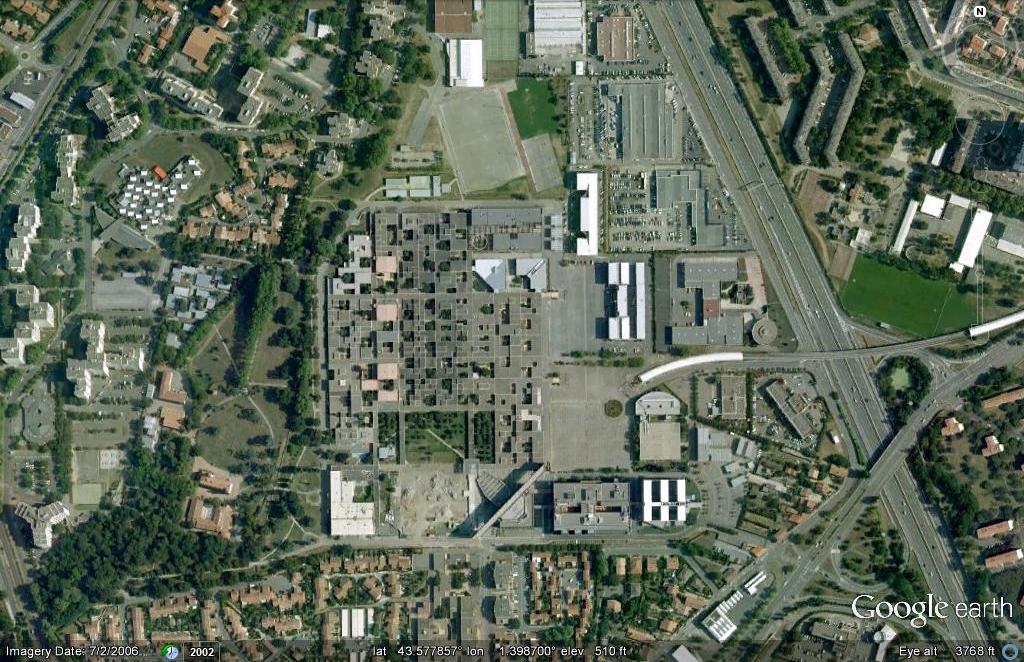
Pictured above (Google Earth): Suspected location of Kaeson Middle School (Google Maps)

According to the Philippine Department of Foreign Affairs:

Foreign Affairs Undersecretary for Policy Erlinda F. Basilio turned over to the Pyongyang Kaeson Middle School a Philippine donation of Philippine and ASEAN books, as well as a computer set consisting of one desktop computer, one laptop computer, and one printer last July 1.

Undersecretary Basilio was in Pyongyang with other Philippine officials to take part in scheduled Policy Consultations with the Foreign Ministry of the Democratic People’s Republic of Korea (DPRK).

Established in August 1960 and located in Pyongyang’s Moranbong District, Pyongyang Kaeson Middle School was designated the Philippines-DPRK Friendship School on 23 August 2010, as part of the 10th anniversary of the establishment of diplomatic relations between the two countries. The school is run by nine officials and 79 teachers, and has a student population of 1,454.

The donation was undertaken in cooperation with the Philippine Embassy in Beijing and the PH-Korea Friendship Society, based in Pyongyang.

The Philippines and the DPRK established diplomatic relations on 12 July 2000.

Additional information:

1. The DPRK routiney names schools and farms as “Country X-DPRK Friendship school/farm”.   For example, the Songyo Secondary School is also the “DPRK-Mongolia Friendship School”.  I have written about “friendship farms” before (here and here).

2. The PH [Philippine]-Korea Friendship Society is an “organization” in the “TaeMun” (대문) portfolio.  대문 is the North Korean abbreviation for 대외문화련락위원회, or in English, the Committee for Cultural Relations with Foreign Countries.  I say “organization” because in reality this friendship society, like all of the others, contains only one or two part-time members.  TaeMun takes its origins from an imported Soviet office named the All Union Society for Cultural Relations with Foreign Countries (Всесоюзное общество культурных связей с заграницей), known in the West by the acronym VOKS (from the Russian “BOKC”).  Historically, its  job was to create sympathetic constituencies in foreign countries and provide the North Korean government with an alternate channel of foreign information, but since the Arduous March they have transformed their mission to focus more directly on resource acquisition.  There is some tension between TaeMun and the DPRK Foreign Ministry.  TaeMun has a web page here.

3. Here are some previous posts on the DPRK-Philippines relationship: here, here, here and here.

Share

The Rason Economic and Trade Zone to Adopt the Singapore Model

Thursday, June 30th, 2011

Institute for Far Eastern Studies (IFES)
2011-6-25

Since the June 8 and 9 groundbreaking ceremonies for joint development projects between North Korea and China were held, attention has been directed toward North Korea’s international economic activities. The Japan-based newspaper, Chosun Shinbo, featured an interview article regarding these collective projects, including the areas of Hwanggumpyong and Wiwha Islands and the Rason Economic and Trade Zone.

According to North Korea’s Committee of Investment and Joint Venture, Rason Economic and Trade Zone is, “an important national undertaking following the teachings of Kim Il Sung. . . . Rason will soon become the entrepot port like Singapore, enhancing the lives of North Korean people.”

In addition, it was mentioned that the development of economic zones in Hwanggumpyong and Wiwha Islands will solidify the already strong DPRK-China friendship and expand the boundaries of international economic relations.

According to North Korea’s Committee of Investment and Joint Venture, politically, “Stable political atmosphere allow investors to engage freely in investment activities and necessary legal measures were taken creating favorable legal conditions for foreign investments. This includes the establishment of Joint Venture Law (of 1984) and other related laws.” Economically, “All the necessary substructures supporting the business operation are set. Workers will all be provided free 11-year education and tax rates are the lowest in the region and for those investors investing in sectors that the DPRK is promoting, will be provided with preferential treatment.”

North Korea is encouraging foreign investments especially in the industrial, agricultural, transportation, construction, financial, and tourism sectors. In particular, adopting state-of-the-art production technology is considered most important. This is to increase the area’s competitiveness in the international market through the production of items that have high export value. However, investment restrictions are placed preventing exports on natural resources like ore and coal.

The Committee also stressed the accomplishments of economic cooperation with China and Egypt and revealed plans of passing a double tax avoidance agreement with China, who is the largest foreign investment for North Korea.

The Egyptian company Orascom Telecom has invested in telecommunications, construction, and financial sectors in North Korea. The president of Orascom is said to have met with Kim Jong Il early this year, announcing his plans of expanding investment in the country.

In addition, the Committee reiterated building an independent national economy does not exclude international economic relations. It explained, “We are trying to resolve our shortcomings through international economic activities while maximizing our domestic technology and resources. This is the principle of socialist economic construction.

The Committee of Investment and Joint Venture was established last July, which is a central state organization under the Cabinet overseeing joint ventures and investments. It is in charge of guiding, supervising and administering the inducement of investments from abroad. It is a government body on the level of the Ministry of Trade, which it has close affiliations with. The Ministry is a central organization controlling general trade activities while the Committee is mostly responsible for attracting foreign investment, joint investment, and ventures.

Share

Aid worker claims DPRK cut food rations

Wednesday, June 29th, 2011

According to the AFP:

North Korea has drastically cut public food handouts as it heads towards a new hunger crisis with people again eating grass to survive, one of the most experienced aid workers in the isolated nation said.

Food rations have been cut to as low as 150 grammes (5.3 ounces) a day per person in some parts of the country as foreign donations collapse and higher international prices make imports more expensive, said Katharina Zellweger, head of a Swiss government aid office in Pyongyang.

Food supplies to the estimated population of 23 million people have been controlled through a public distribution system for decades.

“It works sometimes and sometimes it doesn’t work,” the head of the Swiss Agency for Development and Cooperation office in Pyongyang told a group of UN correspondents.

“The lowest I heard was 150 grammes per person per day, and I even heard that in Pyongyang the rations are cut to 200 grammes per person per day.”

Diplomats say the rations have been halved over the past 18 months. One hundred grammes of rice produces about 250-350 calories a day, experts said.

Zellweger said she had seen “a lot more malnourished children” on recent travels around the country.

“You see more people out in the fields and on the hillsides digging roots, cutting grass or herbs. So there are signs that there is going to be a crisis.”

At the same time the Daily NK reports:

Anecdotal evidence suggests that the market price of potatoes in North Korea has risen substantially in recent weeks, with farms unable to supply the jangmadang because drought and a lack of fertilizer have had a detrimental effect on this year’s spring harvest.

One farmer from North Hamkyung Province revealed his concerns in a phone interview with The Daily NK on the 26th, saying, “This year, potatoes have not done well because of the drought and fertilizer situation, so I have nothing to sell in the market. I am worried about what we are going to do until the corn comes in August.”

Spring potatoes harvested in early June are a decisive food for North Korean farmers. They receive their share of the autumn harvest in December, but once the People’s Army has received its share and various debts have been repaid, they only get enough food for three or four months. After this, potatoes are an important staple to see them through until corn can be harvested in July and August.

However, after deducting cost incurred in bringing together seeds, fertilizer, agricultural chemicals, farm machinery, irrigation equipment and fuel, a farmer receives distribution depending upon his individual work points, decided according to his/her working hours. Since deductions are high, the share for farmers is low, sources say.

The price of potatoes has even risen sharply in Yangkang Province, the center of North Korean potato production. According to Yangkang Province sources, potatoes there are currently selling for between 900 and 1,000 won/kg, double the price of last year.

Fortunately, the high price of potatoes has not had any influence on rice prices. According to one source, “Rice is being sold steadily, and the price is stable not rising.” In the market in Hyesan, rice is now on sale for between 1,900 and 2,100 won/kg, not much more than it was before the spring shortages began.

Finally, new video footage smuggled out of the DPRK suggested that food supplies are particularly tight in distant towns, even for soldiers:

“Everybody is weak,” says one young North Korean soldier. “Within my troop of 100 comrades, half of them are malnourished,” he said.

The DPRK has requested food aid this year, but donors have been reluctant to meet their demands for a number of reasons.  See related stories here.

According to the Chirstian Science Monitor:

A central question is whether North Korea needs emergency shipments as called for by the World Food Program. Yes, Ms. Park acknowledges, “The problem this year is changed by flood and winter cold,” but the widespread view here is that North Korea basically has enough food.

It’s believed that North Korea wants to stockpile food for celebrations planned next year to mark the 100-year anniversary of the birth of the late Kim Il-sung, the long-reigning “Great Leader” who died in 1994 after passing on power to his son, current leader Kim Jong-il.

“There’s a need, but we don’t know how great it is,” says a knowledgeable western observer. “My hunch is it’s less about a shortage of food and more about unequal distribution. You can buy rice in the markets if you have the means.”

South Korean leaders appeared relieved when Secretary of State Hillary Clinton recently made it clear that the US did not believe North Korea had addressed “serious concerns about monitoring” food distribution. The US still wants to know what happened to 20,000 tons of rice that’s strongly believed to have gone to North Korean soldiers when a US food aid program was suspended two years ago.

And on June 30, Yonhap reported:

North Korea imported more than 50,000 tons of grains from its key ally China in May, an expert said Thursday, amid chronic food shortages in the North.

The North purchased 50,328 tons of corn, flour and rice in May, up 31.5 percent compared to the same period last year, said Kwon Tae-jin, a North Korea expert at the Korea Rural Economic Institute.

The North also imported 114,300 tons of fertilizer from China in the first five months, a rise of 39 percent compared to the same period last year, Kwon said, citing figures from Seoul’s Korea International Trade Association.

China is the North’s last remaining ally, key economic benefactor and diplomatic supporter.

Share

South Korean churches change DPRK strategies

Thursday, June 23rd, 2011

According to the Daily NK:

For the ten years from 1995 to 2004, churches in South Korea sent a total of 270 billion South Korean won in aid to North Korea’s Chosun Christians Federation to fund projects including the building of an orphanage.

This money represented fully 77% of all private donations sent to North Korea in the same period. However, the truth is that nobody knows how the money has been spent, or by whom.

Such religiously motivated support for the Chosun Christians Federation results in not only problems for other missionary work, but also prolongs the suffering of the people, according to Yoo Suk Ryul, the director of Cornerstone Church, an active missionary group working along the North Korean-Chinese border. He has just released a new book, ‘The Collapse of the Kim Jong Il Regime and North Korean Missionary Work.’

In it, Yoo writes, “The Chosun Federation first came to our attention as an association affiliated to the United Front Department of the Chosun Workers’ Party so, to that extent, funds from missionary organizations are obviously propping up the Kim Jong Il regime.”

“The rebuilding of the church should not be done through an organization affiliated to the Kim Jong Il regime or the Chosun Workers’ Party,” Yoo therefore asserts. Rather, he believes assistance should be rendered to underground churches, to begin the spread of the gospel from the bottom up.

In addition, “To date, Chinese-Koreans and our defector brethren have received training in China, and through this indirect method have entered North Korea to establish underground churches.” However, “North Korea’s situation both at home and abroad is change rapidly now, so missionaries need to turn to a strategy that is more direct.”

Additionally, he goes on, “The Bible, radio, TV and DVDs should continue to be sent by balloon, along with all other methods of advancing the spread of the gospel,” and explained, “This is a strategy to force Pyongyang’s fall through the gospel.”

Yoo has invested much time and effort into persuading Korean churches to end their existing missionary work in North Korea, and follow a new path. “Missionary work in North Korea is not something that can be accomplished with a strategy of passion alone,” he writes, “This missionary strategy does not grasp the essence of the North Korean system; it is a house of cards.”

Read the full story here:
New Religious Strategy Is Needed
Daily NK
Cho Jong Ik
2011-6-22

Share

No. 91 Office

Wednesday, June 1st, 2011

Pictured above (Google Maps): No. 91 Office

According to the Daily NK:

No. 91 Office, as it is known, is allegedly run under the auspices of the General Bureau of Reconnaissance.

A defector with substantial experience of conditions there offered information on the situation as far back as 2006 at the NKnet-organized “2011 North Korean Cyber Terror Seminar.”

The defector was unable to attend the seminar in person due to fears for his safety, but via pre-produced materials he explained how No. 91 Office is located in a set of two two-storey buildings in the Dangsang-dong of Mankyungdae-district, and how he entered the buildings on a number of occasions thanks to his relations with traders and cadres affiliated to it.

Additionally, satellite images were used to show the location of the office, just 300m from Ansan Bridge across the Botong River.

The defector also detailed the staff of No. 91 Office; the head, in 2006 a PhD-holding colonel in his 40s, a Party secretary ranked lieutenant-colonel, a similarly-ranked National Security Agency agent and around 80 staff, all in their 20s and 30s.

The 80 staff, all excellent minds selected from Kim Il Sung University, Chosun Computer University, Kim Chaek University of Technology and other elite schools, often spoke of ‘business trips’ to Shenyang and Dandong in China, the source explained.

The No. 91 Office-affiliated trade arm had five workers at the time, and is known as the ‘May 18th Trading Company, he added. Through it, the No. 91 Office allegedly obtains the equipment to do its work and provides hackers and other staff with daily necessities.

The unit has a 35-seater bus and two cars with number plates starting with ‘33’ or ‘34’, officially denoting vehicles belonging to the Mining Industry Department of the Cabinet.

Here and here are previous post on the Reconnaissance Bureau.

Here is a post on similar cyber warfare units in the DPRK: Mirim College and Moranbong University

Read the full story here:
No. 91 ‘Hackers HQ’ Revealed
Daily NK
Kim So Yeol
2011-6-1

Share

Is a generation change coming to the Supreme People’s Assembly?

Thursday, May 19th, 2011

The Choson Ilbo reports:

North Korea’s Workers Party has started a generational shakeup in the Supreme People’s Assembly by appointing large numbers of young delegates in their 20s and 30s. The rubber-stamp parliament consists of delegates with a five-year term from various organizations including the party and the military.

A North Korean source said the Workers Party recently ordered municipal, provincial, and county party committees to force elderly members to quit for health reasons and fill the vacancies with people under 40.

“The North Korean leadership is seeking to replace a larger number of elderly members with younger people next year,” which it has declared as the year when the country becomes a “powerful and prosperous” nation, the source said. The regime “also ordered officials to lower the educational level of the delegates, but raise the ratio of female delegates to more than 30 percent.”

The average age of the 687 SPA delegates is 57. Those with college or higher degrees account for 92.8 percent, and women for 19.3 percent, according to the source. The moves are believed to be part of the regime’s efforts to consolidate the succession of leader Kim Jong-il’s third son and heir Jong-un, who is in his late 20s.

Liberty Forward Party lawmaker Park Sun-young backed the story. “I was told by a North Korean source based in a Southeast Asian country that the regime has recently issued instructions for a generational change in the SPA,” she said. “The party is trying to strengthen Kim Jong-un’s control” at a time when the lower echelons of the party, which has a membership of 4.5 million nationwide, have become unreliable since a botched currency reform in late 2008.

“Once the SPA has more delegates in their 20s and 30s who are Kim Jong-un’s loyal cadres, the regime will probably get tough, including launching more provocations against the South,” Park added.

The 12th Supreme People’s Assembly just held their 4th session.

Read the full story here:
N.Korea Pushes Generational Change in Parliament
Choson Ilbo
2011-5-20

Share

Some current economic data points

Tuesday, May 17th, 2011

According to Daily NK:

Things are growing more difficult for many North Korean people as they pass through the spring lean season, according to a new interview with a citizen from the edge of Pyongyang, Kang Mi Soon. There has been little distribution this year, even in the capital, which has traditionally received preferential treatment, and while people are trading to try and improve matters, it’s not easy at the moment.

This is because, as a lingering after-effect of the currency redenomination, a lot of people have exhausted their reserves of cash, while prices have returned to levels commensurate with before the redenomination. In spite of relative commercial freedom in the jangmadang, the number of transactions has fallen and the class of small traders which lives day-to-day is struggling.

Kang, who hails from Gangdong County in Pyongyang, revealed this and more news from the city in an interview she gave to The Daily NK in Yanji, where she recently visited relatives,

The following is a transcript of the interview with Kang:

– What is the state of the distribution system?

In December last year and then January this year, there were eight days-worth of distribution. In February there were ten days, including the 16th (Kim Jong Il’s birthday), but in March there was no distribution. In April there were five days, including the Day of the Sun (Kim Il Sung’s birthday).

(One day of distribution ordinarily means 700g of rice or other grain for laborers, 900g for miners and workers in other strategic industries, 800g for members of state security, 400-500g for students (depending on grade) and 300g for housewives)

– Is the jangmadang operating well?

The jangmadang is working normally. However, the situation is that though the number of sellers is on the rise, people do not have money so products are not selling well.

– What things are selling the most?

Mostly, rice and corn are the mainstays of jangmadang sales. Since February of this year, there has been a drastic reduction in sales of other household items and industrial products. Though the supplies of rice and corn in the jangmadang are similar to last year, the number of buyers and the amounts being bought are both decreasing.

– What is the overall situation in terms of prices?

Overall, they have risen to a level similar to that of before the redenomination. In the case of Chinese products, prices have increased to more than before the redenomination. Socks made in China were 1,500won before, but now they are 2,000won.

– They say that the food situation during the spring lean season is hard. Can you tell us more?

Starting from last year, after the currency redenomination, the situation started getting worse, and this year it is really bad.

– Has anyone starved to death?

In Gangdong [Kangdong] County, since the beginning of February about twenty people, including two families which committed suicide, have died of hunger.

(Gangdong County had a population of 221,539 in 2008)

– What is the overall food supply situation?

60% of people in the county are living off three meals a day of corn porridge or corn flour noodles, 30% on corn rice and the remaining 10% are eating three meals of rice a day. In March and April of last year, the number of people eating three meals of rice was 30 or 40%, and less than 5% were living on corn porridge or noodles; the rest are corn rice.

– What about other regions?

With the exception of central Pyongyang and other big cities (Sinuiju, Pyongsung, Chongjin etc), it seems to me that other rural regions are in the same situation as Gangdong. The price of rice looks likely to stay the same or rise, and so, until around June 10th when the potatoes are gathered, the numbers of starving people is likely to rise.

Read the full story here:
Gangdong County Hit by Spring Shortages
Daily NK
Choi Cheong Ho
2011-5-17

Share

Western Aid: The Missing Link for North Korea’s Economic Reviva

Monday, May 9th, 2011

AEI Working Paper
Nicholas Eberstadt

Download PDF here

[T]his past January, for the first time in over two decades, Pyongyang has formally unveiled a new multi-year economic plan: a 10-year “strategy plan for economic development” under a newly formed State General Bureau for Economic Development. The new economic plan is intended not only to meet the DPRK’s longstanding objective of becoming a “powerful and prosperous country” [Kangsong Taeguk] by 2012 (the 100th anniversary of the birth of Kim Il Sung), but also to promote North Korea to the ranks of the “advanced countries in 2020.”

Details on the new 10-year economic plan are as yet sketchy. South Korean analysts report that the plan envisions massive amounts of new investment in North Korea: up to $100 billion, by some accounts.3 But even if the investment target is more modest than such rumors suggest, North Korea will be counting on more than just domestic capital accumulation to secure this funding. It will have to rely upon major inflows of both foreign private capital–and foreign aid.

Additional Information:

1. This report has been added to the DPRK Economic Statistics Page.

Share

Hyesan rail incident reported

Friday, May 6th, 2011

Pictured above (Google Earth): Komsan Station in Hyesan

According to Open Radio:

A source in Yanggang province reported May 4th, “A Hyesan – Pyongyang train derailed on May 2nd somewhere in the region of Geomsan station in Hyesan killing at least ten passengers and injuring many others.” The injured are being treated at a nearby hospital but the dead have not been formally identified and are yet to be transferred home.

“The North Korean police and security agencies are both investigating the case,” said the source. “So far they have been unable to establish the incident’s cause.” They are said to be investigating the possibility that a track sleeper became unhinged.

The possibility, however, that this is not merely an accidental occurrence is raised by the fact that the Pyongyang – Hyesan line is known by the population not just to be a route used by citizens travelling between the cities but is also one of national significance.

There are both a security agency detention center and a munitions factory in the Geomsan area of Hyesan. Before he died Kim Il-sung travelled only via station number 1 at Geomsan.

Five of twelve passenger carriages were overturned when they became disconnected from a connecting link. Subsequent repair operations have caused much disruption to regular line service. Stranded passengers are staying in the station’s vicinity as locals take advantage of the situation, catering to them with impromptu vending operations.

Read the full story here:

Ten Die in Pyongyang – Hyesan Rail Incident
Open Radio
2011-5-6

Share

DPRK accused in DDoS attack

Wednesday, May 4th, 2011

According to Bloomberg:

North Korea was responsible for paralyzing the National Agricultural Cooperative Federation’s computer network in April in a second online attack in two months linked to the Kim Jong Il regime, South Korean prosecutors said.

Hackers used similar techniques employed in cyber assaults that targeted websites in South Korea and the U.S. earlier this year and in 2009, the Seoul Central District Prosecutors’ Office said in an e-mailed statement today. The Unification Ministry criticized the “provocation” and urged North Korea to stop such attacks immediately.

The network of the bank better known in Korean as Nonghyup was shut down on April 12, keeping its almost 20 million clients from using automated teller machines and online banking services. In all of the three bouts of online attacks, a method called “distributed denial service” was used, according to the statement.

Under the DDoS tactic, malicious codes infect computers to trigger mass attacks against targeted websites, according to Ahnlab Inc. (053800), South Korea’s largest maker of antivirus software.

Nonghyup will spend 510 billion won ($477.2 million) by 2015 to boost network security, the bank said in an e-mailed statement. The company received 1,385 claims for compensation related to the network disruption as of May 2, and 1,361 of them have been settled, according to the statement.

North Korea’s postal ministry was responsible for the 2009 attacks, Won Sei Hoon, head of South Korea’s National Intelligence Service, told lawmakers in October that year.

Attacks in March this year targeted 40 South Korean websites, including at the presidential office, the National Intelligence Service, and Ministry of National Defense. They were traced to the same Internet Protocol addresses used in the 2009 episodes, South Korean police said last month.

The hackers prepared for the April 12 attack on Nonghyup for more than seven months, the Seoul Central District Prosecutors’ Office said today.

According the Hankyoreh:

Prosecutors stated that a notebook computer belonging to an employee of the company managing the Nonghyup server became a so-called “zombie PC” after being infected in September 2010 by malicious code distributed by the North Korean Reconnaissance General Bureau, and that North Korea subsequently operated the notebook remotely to attack the Nonghyup computer network.

North Korea did not initially target Nonghyup, but the bank was exposed as a result, prosecutors explained.

As bases for this conclusion, prosecutors cited the fact that one of the IP addresses for the server ordering the attack was confirmed to be administered by the North Korean Reconnaissance General Bureau, along with the strong similarity between the malicious code and distribution methods with previous DDoS attacks concluded to be North Korea’s doing.

Some experts at security companies reacted with skepticism to the prosecutors’ contentions. One expert questioned the explanation that the parties behind the attack used the same overseas command server employed by hackers in the DDoS attacks for operating zombie PCs, noting that its IP address was blocked through the Korea Internet Security Agency.

A computer systems design expert said, “The back door program on the notebook used in the attack could not function if linked with Nonghyup’s internal network, which is cut off from the Internet.”

The argument is that it would have been effectively impossible for an outside party to precisely determine and attack Nonghyup’s computer system structure and work currents and those notebooks authorized for top access without assistance from an inside party.

When questioned about their evidence of North Korea’s direct involvement, prosecutors reiterated that they could not disclose the information because it was related to national security.

The story was also covered by the Daily NK and the AFP.

The Choson Ilbo reports that 200 additional infected computers have been discovered.

Authorities have discovered 200 more so-called zombie computers that have been infected with viruses North Korean hackers planted in September last year. They came across them in the process of investigating the laptop computer of an IBM employee that was used to paralyze the computer network of agricultural cooperative lender Nonghyup.

Prosecutors said Monday that the National Intelligence Service identified 201 port numbers that have been infected with viruses so that they can serve as zombie computers, and the IBM employee’s laptop is one of them. This means not only Nonghyup but any state agency could be the target of a North Korean cyber attack.

Growing Sophistication

South Korean authorities and computer experts say the Nonghyup incident demonstrates the increasing sophistication of North Korea’s cyber warfare capabilities. During a so-called distributed denial-of-service attack on July 7, 2009, North Korean hackers used 435 servers in 61 different countries to spread just one type of virus. During a DDoS attack in March this year, 746 servers in 70 countries were used to plant more than three different types of viruses. The cyber attack against Nonghyup involved a different virus which directly infiltrates the computer network of a bank and deletes not just data but its own tracks as well.

Authorities say finding the 200 zombie computers is as difficult as locating a mole planted by North Korean intelligence. As long as the zombie PCs remain dormant, it is impossible to trace them.

The Korea Herald raises points of skepticism:

Despite prosecutors’ announcement pinpointing North Korea as the culprit for the April 12 cyber attack, security experts say that it is difficult to identify its instigator given the complicated nature of the hacking process.

On Tuesday, investigators at the Seoul Central District Prosecutors’ Office said the Reconnaissance General Bureau, the North’s premier intelligence body, orchestrated the “unprecedented cyber terror” that paralyzed the banking system of the National Agricultural Cooperative Federation, or Nonghyup, for several weeks.

They said that the conclusion came as the methods used in the previous two cyber attacks on a number of key South Korean government and business websites in July 2009 and in March last year were similar to the ones used in last month’s attack.

They also stressed that one of the Internet Protocol addresses used in the attack on the cooperative was identical to that used in last year’s attack.

Experts, however, said that evidence of North Korea’s involvement in the worst-ever cyber attack was too “weak” and only based on “circumstantial assumptions” and that the case could remain unaddressed forever given that identifying the hackers is extremely difficult.

First of all, experts pointed out that hackers usually change IP addresses frequently or use someone else’s address to disguise their identity. Thus, an IP address cannot serve as credible evidence to identify the culprit.

“It appears that prosecutors believe the owner of an empty house with a certain address is the thief who broke into the house while the owner is away,” said a security expert in a media interview on condition of anonymity.

Prosecutors also presented a Media Access Control address which was found on a laptop computer used by the North to launch the attack as evidence. But experts say that the address cannot be reliable as it kept changing on the Internet.

The hacking methods similar to the previous North Korean attacks cannot be clear evidence, either, to hold the North responsible, experts added. They said hackers tend to copy effective methods used by others.

During the announcement, investigative authorities stressed that they could not reveal all pieces of “critical” evidence to the public, citing security concerns. However, their concerns fail to ease doubts over whether the weeks-long result of the prosecutorial investigation is credible.

The North has long focused on cyber warfare. It is known to have established many college-level institutions to produce hackers and stationed cyber warfare personnel in China. The North has used cyber attacks to spy on South Korean government bodies or glean crucial intelligence.

Read more about the DPRK organizations thought to be responsible here.

Share

An affiliate of 38 North