Archive for the ‘State Offices’ Category

DPRK looking for someone to give them new meteorological equipment

Tuesday, December 13th, 2011

UPDATE (2011-12-13): According to Radio Free Asia (in Korean), the Chinese government has agree to provide the DPRK with new meteorological equipment.  According to the article:

중국 정부가 유엔 산하 기구를 통해 북한에 첨단 기상관측장비를 지원하기로 결정한 것으로 밝혀졌습니다.

정아름 기자가 보도합니다.

중국정부가 지난 12일 북한에 컴퓨터를 통해 기상관측 정보를 받아보는 자동기상 관측장비(Automatic Weather Systems) 4대를 지원 하겠다는 의사를 유엔 산하 세계기상기구에 전달했습니다.

세계기상기구는 13일 자유아시아방송(RFA)에 이번 지원의 정확한 시점과 지원대상지역은 정해지지 않은 상태이라고 전했습니다.

Here is the article translated by Google Translate.

Jospeh Bermudez recently wrote about the DPRK’s hydro meteorological service.

ORIGINAL POST: According to the Korea Times:

A meteorological expert called for international assistance for North Korea, saying it was lacking in up-to-date meteorological equipment.

The Radio Free Asia quoted Avinash Tyagi, director of the climate and water department of the World Meteorological Organization (WMO), who visited North Korea in mid-March, as saying “equipment and computers used for weather forecasting were in urgent need of replacement.”

Tyagi’s visit with two other colleagues was the first by a WMO team in eight years.

They were supposed to visit the North last November in light of severe flooding last summer, but the trip was postponed.

The floods cost many lives and left many homeless in Sinuiju near the border with China, drawing immediate international humanitarian assistance, including from the South.

The expert said new equipment would help improve the food situation in the country and encouraged the international community to help. He added of the 186 observatories scattered through the country, only 27 were connected to the international meteorology network. Even the equipment there was outdated, made in the 1970 and 80s.

Food shortages are a chronic problem for North Korea, and this has got worse in recent years, which prompted the regime to run an unprecedented campaign to call for food aid from other countries.

More on the DPRK’s 2011 food situation here.

Read the full story here:
N. Korea in need of new meteorological equipment
Korea Times
4/1/2011

Share

DPRK 2011 food shortage debate compendium

Friday, December 2nd, 2011

UPDATE (2012-2-1): Karin Lee of the National Committee on North Korea wrote a great summary of the DPRK’s food situation in 2011:

In December 2010, North Korea began asking multiple countries for food aid. Its request to the U.S. came in early 2011, but it wasn’t until December 2011 that a deal seemed close, with the U.S. prepared to provide 240,000 metric tons (MTs) of assistance. Kim Jong Il died soon after this news hit the press, and details of the potential deal were never announced.

In the ideal world, Ronald Reagan’s “hungry child” knows no politics. But the case of North Korea is far from ideal. The U.S. government states it does not take politics into consideration when determining whether to provide aid to North Korea. Instead, the decision is based on three criteria: need in North Korea, competing demands for assistance, and the ability to monitor aid effectively. Yet these three criteria are subjective and tinged by politics.

In 2011 a succession of four assessment delegations (one by U.S. NGOs, one by the U.S. government, one by the EU and one by the UN) visited the DPRK. All found pretty much the same thing: widespread chronic malnutrition, especially among children and pregnant or lactating women, and cases of acute malnutrition. The UN confirmed the findings late last year, reporting chronic malnutrition in children under five in the areas visited — 33% overall, and 45% in the northern part of the country.

Some donors responded quickly. For example, shortly after its July assessment, the EU announced a 10 Million Euro donation. Following its own May assessment, however, the U.S. government was slow to make a commitment. Competing demands may have played a role. In July, the predicted famine in the Horn of Africa emerged, prompting a U.S. response of over $668 million in aid to “the worst food crisis in half a century.” While there was no public linkage between U.S. action on the African famine and inaction on North Korea, there could have been an impact.

But the two biggest factors shaping the U.S. government’s indecisiveness continued to be uncertainty about both the severity of the need and the ability to establish an adequate monitoring regime. At times, South Korean private and public actors questioned the extent of the North’s need. Early on, a lawmaker in South Korea asserted that North Korea already had stockpiled 1,000,000 metric tons of rice for its military. Human rights activist Ha Tae Keung argued that North Korea would use the aid contributed in 2011 to augment food distributions in 2012 in celebration of the 100th birthday of Kim Il Sung and North Korea’s status as a “strong and prosperous nation.” According to Yonhap, shortly after the U.N. released the above-noted figures, South Korean Unification Minister Yu Woo-Ik called the food situation in North Korea not “very serious.”

South Korea’s ambivalence about the extent of the food crisis was noted by Capitol Hill, exacerbating congressional reluctance to support food aid. A letter to Secretary Clinton sent shortly before the U.S. assessment trip in May began with Senators Lieberman, McCain, Webb and Kyl explaining they shared South Korean government suspicions that food aid would be stockpiled and requesting State to “rigorously” evaluate any DPRK request for aid. With the close ROK-U.S. relationship one of the administration’s most notable foreign policy accomplishments, such a warning may have carried some weight.

Monitoring is of equal, if not greater congressional concern. Since the 1990s U.S. NGOs and USAID have worked hard with DPRK counterparts to expand monitoring protocols, and conditions have consistently improved over time. In the 2008/2009 program, the first food program funded by the U.S. government since 2000, the DPRK agreed to provisions such as Korean-speaking monitors. The NGO portion of the program was fairly successful in implementing the monitoring protocol; when implementation of the WFP portion hit some bumps, USAID suspended shipments to WFP until issues could be resolved. The DPRK ended the program prematurely in March 2009 with 330,000 MT remaining.

In 2011 the Network for North Korean Human Rights and Democracy conducted a survey of recent defectors to examine “aid effectiveness” in the current era. Out of the 500 interviewees, 274 left the DPRK after 2010. However, only six were from provinces where NGOs had distributed aid in 2008/2009. Disturbingly, of the 106 people interviewees who had knowingly received food aid, 29 reported being forced to return food. Yet the report doesn’t state their home towns, or when the events took place. Unfortunately such incomplete data proves neither the effectiveness nor ineffectiveness of the most recent monitoring regime.

Some believe that adequate monitoring is impossible. The House version of the 2012 Agricultural Appropriations Act included an amendment prohibiting the use of Food for Peace or Title II funding for food aid to North Korea; the amendment was premised on this belief. However the final language signed into law in November called for “adequate monitoring,” not a prohibition on funding.

The U.S. response, nine months in the making, reflects the doubts outlined above and the politically challenging task of addressing them. It took months for the two governments to engage in substantive discussions on monitoring after the May trip. In December, the State Department called the promised nutritional assistance “easier to monitor” because items such as highly fortified foods and nutritional supplements are supposedly less desirable and therefore less likely to be diverted than rice. The reported offer of 240,000 MT– less than the 330,000 MT the DPRK requested – reflects the unconfirmed report that the U.S. identified vulnerable populations but not widespread disaster.

In early January, the DPRK responded. Rather than accepting the assistance that was under discussion, it called on the United States to provide rice and for the full amount, concluding “We will watch if the U.S. truly wants to build confidence.” While this statement has been interpreted positively by some as sign of the new Kim Jong Un regime’s willingness to talk, it also demonstrates a pervasive form of politicization – linkage. A “diplomatic source” in Seoul said the December decision on nutritional assistance was linked to a North Korean pledge to suspend its uranium enrichment program. Linkage can be difficult to avoid, and the long decision-making process in 2011 may have exacerbated the challenge. Although Special Representative Glyn Davies was quick to state that “there isn’t any linkage” between the discussion of nutritional assistance and dialogue on security issues, he acknowledged that the ability of the DPRK and US to work together cooperatively on food assistance would be interpreted as a signal regarding security issues. Meanwhile, the hungry child in North Korea is still hungry.

UPDATE 75 (2011-12-5): The ROK will donate US$5.65 million to N. Korea through the UN. According to Yonhap:

South Korea said Monday it will donate US$5.65 million (about 6.5 billion won) for humanitarian projects in North Korea through the U.N. body responsible for the rights of children.

The donation to the United Nations Children’s Fund, or UNICEF, will benefit about 1.46 million infants, children and pregnant women in North Korea, according to the Unification Ministry, which is in charge of relations with the North.

Seoul’s contribution will be used to provide vaccines and other medical supplies as well as to treat malnourished children next year, said the ministry.

There have been concerns that a third of all North Korean children under five are chronically malnourished and that many more children are at risk of slipping into acute stages of malnutrition unless targeted assistance is sustained.

“The decision is in line with the government’s basic stance of maintaining its pure humanitarian aid projects for vulnerable people regardless of political situation,” Unification Ministry spokesman Choi Boh-seon told reporters.

South Korea has been seeking flexibility in its policies toward the North to try to improve their strained relations over the North’s two deadly attacks on the South last year.

Despite the South’s softer stance, North Korea recently threatened to turn Seoul’s presidential office into “a sea of fire” in response to South Korea’s military maneuvers near the tense western sea border.

South Korea donated $20 million for humanitarian projects in North Korea through the UNICEF between 1996 and 2009.

Last month, the South also resumed some $6.94 million worth of medical aid to the impoverished communist country through the World Health Organization.

Separately, South Korea also decided to give 2.7 billion won ($2.3 million) to a foundation to help build emergency medical facilities in an industrial complex in the North Korean border city of Kaesong.

UPDATE 74 (2011-12-2): The Choson Ilbo reports that the DPRK’s food prices are rising after the 2011 fall harvest, however, the price increase is not due to a shortage of output, but rather political directives. According to the article:

The price of rice in North Korea is skyrocketing, contrary to received wisdom that it drops after the harvest season. According to a source on North Korea on Wednesday, the rice price has risen from 2,400 won a kg in early October to 5,000 won in late November.

North Korean workers earn only 3,000-4,000 won per month.

This unusual hike in rice price seems to be related to preparation of next year’s political propaganda projects.

A South Korean government official said, “It seems the North Korean government is not releasing rice harvested this year in order to save it up” for celebrations of regime founder Kim Il-sung’s centenary next year, when the North has vowed to become “a powerful and prosperous nation.”

UPDATE 73 (2011-11-24): According to the Daily NK, DPRK television is calling on people to conserve food:

With barely a month left until 2012, the year in which people were promised a radical lifestyle transformation to coincide with the North Korea’s rebirth as a ‘strong and prosperous nation’, programs calling upon people to conserve food are now being broadcast by Chosun Central TV and the fixed-line cable broadcaster ‘3rd Broadcast’.

Chosun Central TV is broadcasting the programs as part of ‘Socio-Culture and Lifestyle Time’, which begins directly after the news on Thursdays at 8:40pm. The majority of the content is apparently now about saving food.

A Yangkang Province source told The Daily NK on Wednesday, “Recently the head lecturer from Jang Cheol Gu Pyongyang Commercial University, Dr. Seo Young Il, has been appearing on the program both on television and the cable broadcasting system, talking about saving food.”

In one such program, Professor Seo apparently noted, “In these days of the military-first era there is a new culture blossoming, one which calls for a varied diet,” before encouraging citizens to eat potatoes and rice, wild vegetables and rice and kimchi and rice rather than white rice on its own, and then adding that bread and wheat flour noodles are better than rice for lunch and dinner.

It is understood that older programs with titles such as ‘A Balanced Diet is Excellent Preparation for Saving Food’ and ‘Cereals with Rice: Good for Your Health’ are also being rebroadcast, while watchers are being informed that thinking meat is required for a good diet is ‘incorrect’.

Whenever North Korea is on high alert or there is a directive to be handed down from Kim Jong Il, both of Chosun Central TV and the 3rd Broadcast are used to communicate with the public. For this reason, some North Korea watchers believe the recent food-saving campaign may reflect a particularly weak food situation in the country going into the winter.

According to the source, one recent program showed a cookery competition involving members of the Union of Democratic Women from Pyongyang’s Moranbong District. During which, one woman was filmed extolling the virtues of potato soup, saying “If we follow the words of The General and try eating potatoes as a staple food, there will be no problem.”

Read all previous posts on the DPRK’s food situation this year blow:

(more…)

Share

KPA Journal Vol. 2, No. 6

Friday, November 25th, 2011

Joseph Bermudez, now a Senior Analyst with DigitalGlobe’s Analysis Center and author of The Armed Forces of North Korea, has posted the latest issue of KPA Journal. You can download the PDF here.

Topics include: M-1979/1989 170mm SPGs (Part 1) and and article on the 12th Supreme People’s Assembly by Michael Madden.


Share

DPRK makes discreet investor plea to French students

Thursday, November 24th, 2011

Pictured above (Google Earth): The University of Toulouse, France. See in Google Maps here.

According to AlertNet (Reuters):

Secretive and isolated North Korea is searching for economic allies in the unlikeliest of ways: showing videos of happy North Korean tourists to young French university students in a 13th century convent.

The reclusive communist state has no official diplomatic relations with France, one of only two European Union countries to cut ties with North Korea until it abandons its nuclear weapons programme and improves its human rights record.

But just weeks after Paris decided to open a cooperation office in the North Korean capital, its ambassador to Paris-based UNESCO accepted an invitation to address students from the University of Toulouse within the gothic surroundings of the Franciscan convent’s capitular chamber.

The meeting marked Ambassador Yun Yong Il’s first public appearance in France.

“They are the future,” said Yun, when asked by Reuters why he picked Toulouse to talk. “I’m here for the students who have been waiting to hear from a North Korean official for a year.”

Tensions have gradually eased on the Korean peninsula since the sinking of a South Korean warship 20 months ago and the North’s revelation of a uranium enrichment facility that opens a second route to make an atomic programme.

North Korea and the United States have also held a series of bilateral meetings geared at restarting broader regional de-nuclearisation talks, giving the North a window of opportunity to raise its diplomatic efforts around the world.

Yun, a former political director at the Foreign Ministry, faced about 100 students.

At times, the future political science graduates looked on bemused and surprised as the four-hour presentation cut from a hazy tourism video of the 1980s showing rolling mountains, happy North Koreans on holiday and copious seafood platters to a well structured monologue about the country’s woes and potential.

“Our country is open to everybody who wants to come. You just have to ask for a visa in Paris!” said Yun, who speaks fluent French, but opted to talk in his native language and let his deputy translate into English.

Pyongyang has slowly opened its doors under strict conditions to foreign tour groups, mostly Chinese as a way of earning hard currency.

Yun, who wears a lapel pin of President Kim Jong-il on his suit, said the country’s lack of hard currency as a result of tighter sanctions has made it turn to foreign investors on the “basis of mutual respect and interests”.

“We are looking forward to multilateral and multifaceted economic co-operation with other countries,” he said.

“We are definitely opposed to monopolistic investment of a single country,” said Yun, adding that the country’s natural resources provided opportunities for investors to tap.

CHINESE MODEL, CHINA TRAP

Michel-Louis Martin, director of Toulouse University’s security and globalisation research group said the event was not just propaganda.

“They are trying to go beyond what they usually have to say about North Korea. Don’t forget in France, North Korea is not very well known,” said Martin.

The country’s desire to diversify its economy has echoes of China when it began to allow foreign investment and gave permission for entrepreneurs to start up businesses in the 1970s.

Yun’s presentation attempted to steer clear of its frictions with the United States, South Korea and even its relationship with China, focusing instead on his country’s economic problems.

But by the end he stepped up the rhetoric, firmly laying the blame for Pyongyang’s “misfortune” on the United States.

Michel Dusclaud, a researcher at the University of Toulouse who convinced Yun to speak, said it was normal for ancestral hatreds to come out. Despite this, he said, it was clear the North was beginning to accept that if it did not diversify, it would be engulfed either by its souther neighbour or China, which still has territorial claims to it.

“They have to open up for international cooperation otherwise they will be eaten up by South Korea or China,” Dusclaud said. “It’s imperative, but it’s not because they like us.”

With his speech finished, Yun was quick to shuffle out of the Gothic chapel, declining to speak to Reuters, but also telling a student who attempted to pose a question on whether North Korea’s political system could last:

“I’ll see you in Paris and then we’ll talk.”

Read the full story here:
N.Korea makes discreet investor plea to French students
AlertNet (Reuters)
John Irish
2011-11-24

Share

Ideology classes being extended for KPA

Monday, November 7th, 2011

According to the Daily NK:

A source within North Korea has revealed to Daily NK that political education classes for the Chosun People’s Army have been extended from 12 to 19 hours a week in what the source sees as an effort to increase unity within the military.

The order to extend ideological instruction apparently came from the General Political Bureau of the Ministry of Peoples’ Armed Forces in early September. Following as it did the late Colonel Muammar Qadhafi’s escape from the Libyan capital Tripoli in the middle of August, this points to the possibility that the beginning of the Libyan leader’s end had a part to play in the nervy North Korean regime’s decision.

The source claims that all military units were handed new schedules for political education at that time, stating, “Every week commissioned officers get extra materials to conduct classes and enlisted soldiers have had their basic hours extended from 12 to 19.”

In reality this means that the classes, which used to be for two hours every day from Monday to Saturday, have now been extended to three hours, with the 30 minutes each morning previously allotted for reading and interpreting party policy and the works of Kim Il Sung and Kim Jong Il extended to 40 minutes.

Commanding officers have had their own classes covering the correct method of instructing subordinates bumped up from three or four times a month to twice a week. These classes are to help them become acquainted with the guidance materials sent down from Pyongyang.

So-called ‘political commissars’ attached to companies follow the guidelines of the General Political Bureau in carrying out political education. Given their license to assess the ‘appropriateness’ of company commanders, in many ways they occupy a role more influential than that of commanders themselves.

The source claims that Special Forces were the guinea pigs for the new policy, with Marine Corps, specialist security forces and guidance department troops getting the first taste of the new orders.

The ideological training of ordinary soldiers is said to involve interpretation of Rodong Shinmun editorials, which serve as the main de facto public mouthpiece for official opinion, along with ideological ‘debate’ sessions.

“At the end of October we began studying a piece from the Rodong Shinmun called ‘We are all Descendants of Kim Il Sung’, and have been had debate sessions regarding another article which was about how to make our lives even better than they already are,” the source explained.

“A stationed officer from the Political Bureau sits in on the debate sessions and plays the role of a facilitator, making sure everything goes smoothly. They are drumming up excitement within these sessions by giving a day’s holiday to the best participants,” said the source.

Interestingly, meanwhile, the source added that the state is still choosing not to report on the death of Gaddafi or other Libya news, while “Most soldiers think the ramping up of political studies is some sort of preparation for winter training.”

Every year North Korea holds winter training from December 1 until June. On top of ideological education, training also involves marching, shooting, martial arts, war strategy and other drills.

Read the full story here:
More Ideology for the Troops!
Daily NK
Lee Seok Young
2011-11-07

Share

DPRK mineral exports to China increase

Sunday, November 6th, 2011

UPDATE 1 (2014-1-21): See more recent data here and here.

ORIGINAL POST (2011-11-6): According to Yonhap:

North Korea’s mineral exports to China have tripled this year compared to a year ago, a study showed Sunday.

A joint study of Chinese data by Yonhap News Agency and Seoul-based IBK Economic Research Institute showed that China imported 8.42 million tons of minerals from North Korea from January to September this year, worth US$852 million.

Over the first nine months of last year, China brought in 3.04 million tons of minerals from the North for $245 million.

Most of the minerals were anthracite coals, the data showed. This year, of 8.42 million tons, 8.19 tons were anthracites.

China is the sole major ally and the biggest economic benefactor for North Korea, a reclusive regime under international economic sanctions following its nuclear and long-range missile tests.

Cho Bong-hyun, an analyst at the IBK institute, said North Korea may be trying to earn much-needed hard currency as it aims to become a powerful and prosperous country by 2012.

“Last year, North Korea ordered its institutions to meet their goals in foreign currency income by this year,” Cho said. “Since exporting minerals is a military business, we can see that the military is trying to meet its target. In addition, the steep mineral export growth was attributable to the lifting of the cap on the amount of mineral exports, as ordered by North Korean leader Kim Jong-il.”

China appears to be trying to stockpile mineral resources at affordable prices, Cho added. North Korean anthracites were traded at an average of $101 per ton, whereas the international standard for quality anthracites is $200 per ton.

“Given that North Korean coals are of very good quality, trade with China must have been made at a fairly low price,” Cho said.

Meanwhile, sources said North Korean authorities last month entirely halted its coal exports, as the impoverished country fears a shortage of energy resources during the upcoming winter.

From January to September this year, China exported 732,000 tons of minerals to North Korea, most of them crude oil.

Here is the IBK web page.  If anyone can find a copy of this report and send it to me to post, I would appreciate it.

Additional information:
1. The economics lessons: A. The more isolated the DPRK’s economy from the global trade and financial system, the greater monopsony power Chinese firms can exert on their North Korean trading partners. B. The rents earned in the current DPRK-China trade regime are visible and have organized constituencies.  Unfortunately the much greater gains that could be reaped if the North Korean economy was more open, integrated, and dynamic remain unseen and their potential beneficiaries remain unknown and unorganized.

2. The Nautilus Institute published a very interesting paper by Nathaniel Aden on China DPRK trade back in June. See it here.

3.  Here is the most recent US Geological Survey report on the DPRK’s mineral sector.

Read the Yonhap story here:
N. Korea’s mineral exports to China tripled from last year: study
Yonhap
2011-11-6

Share

Some interesting recent publications and articles

Thursday, October 20th, 2011

1. “Relying on One’s Strength: The Growth of the Private Agriculture in Borderland Areas of North Korea”
Andrei Lankov,Seok Hyang Kim ,Inok Kwa
PDF of the article here 

The two decades which followed the collapse of the communist bloc were a period of dramatic social and economic transformation in North Korea. The 1990-2010 period was a time when market economy re-emerged in North Korea where once could be seen as the most perfect example of the Stalinist economic model. The present article deals with one of the major areas of socioeconomic change which, so far, has not been the focus of previous studies. The topic is about the growth of private agricultural activities in North Korea after 1990. This growth constitutes a significant phenomenon which has important social consequences and also is important from a purely economic point of view: it seems that the spontaneous growth of private plots played a major role in the recent improvement of the food situation inside North Korea.

______________________

3. Korea Sharing Movement anti-malarial program (Via Cancor)
Read a PDF of on the project here

______________________

4. What is it like to teach at the Pyongyang University of Science and Technology (PUST)?
Find out from one instructor here. More on PUST here.


Share

Plans for SEZ between China and the DPRK to Come Out at Year’s End

Thursday, October 13th, 2011

Institute for Far Eastern Studies (IFES)
2011-10-5

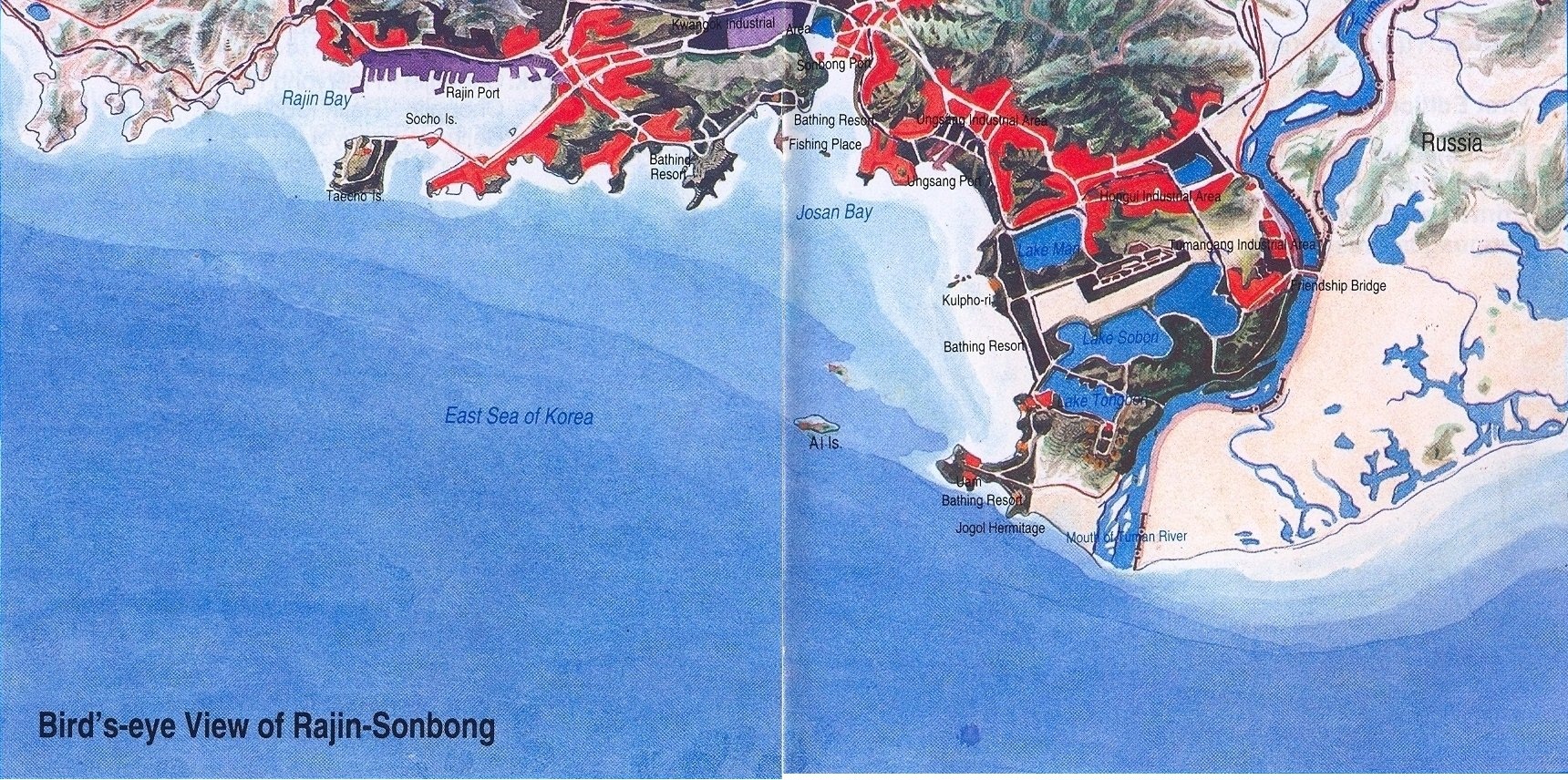
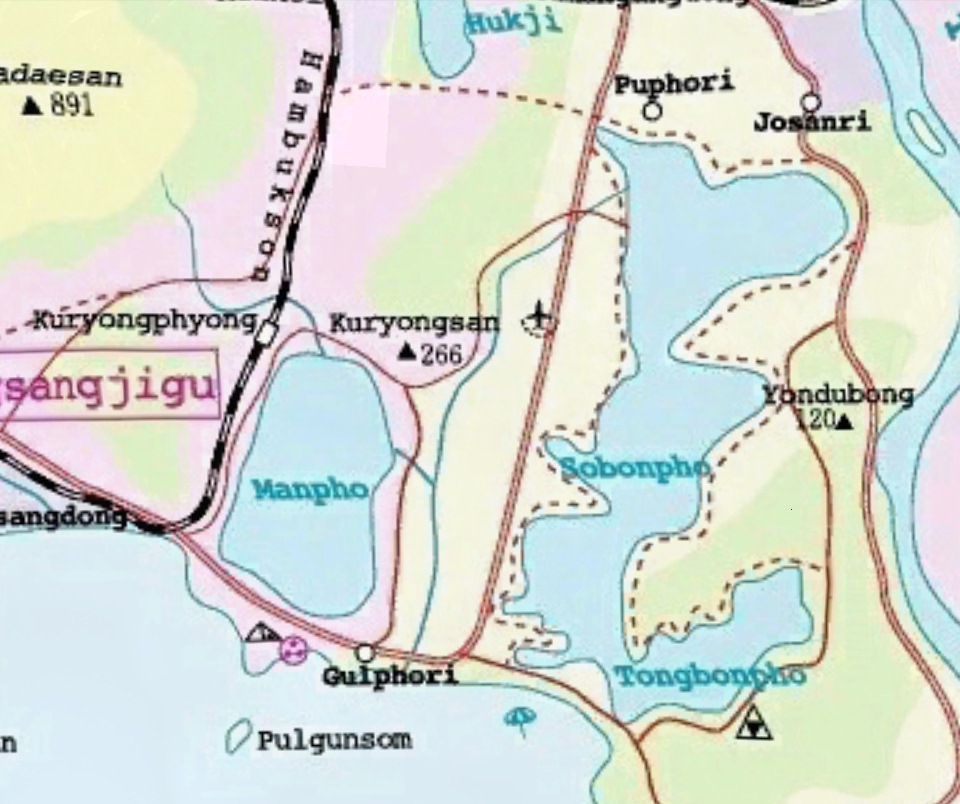
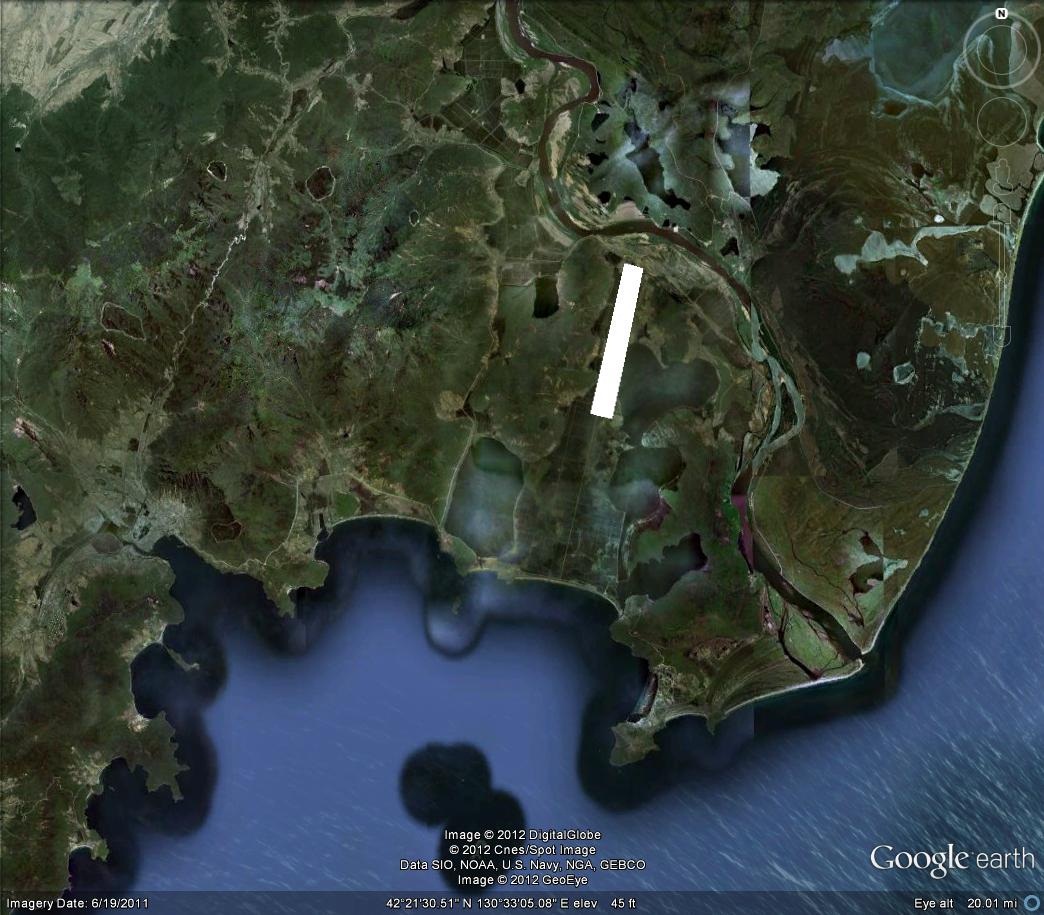
Dai Yulin, secretary of the Dandong Committee of the Communist Party of China, said in his interview with the China Daily on September 28 that concrete plans for the joint development projects between China and North Korea in the Hwanggumpyong and Rajin-Sonbong regions will be announced at the end of the year.

This past June, Dai stated both countries agreement to jointly develop Hwanggumpyong and Rajin-Sonbong as an economic development zone and reported smooth progress in its plans.

According to Secretary Dai, “The joint management committee between China and North Korea has already been formed to promote the Hamggumpyong development project. Both countries are getting up steam to advance the project.”

In addition Dai explained, “China has secured 10 square kilometers of national land to be used to support the joint development of Hamggumpyong.” He also added, “A think tank comprised of 72 experts was also established to advise and buttress the project.”

When DPRK Cabinet Premier Choe Yong Rim visited China last month, Dai commented, “Choe’s visit to China is underlined with North Korea’s strong interest in economic reform. All the high level officials in the economic sectors accompanied him on the trip.”

While visiting China for five days, Choe met with Premier Wen Jiabao and expressed strong motivation for strengthening trade and cooperation with China, especially to improve its infrastructure. He stated, “For those Chinese companies investing in North Korea, we will provide special accommodations to encourage more investments.” In response, Wen Jiabao commented, “China will do all it can to support North Korea, so that they may seek development method most appropriate for them.”

After the meeting between the two top officials, the two nations came to an agreement to cooperate in trade, investment, and infrastructure, resources and agriculture development.

Prior to meeting with Wen, Choe visited Lanxing Chemical Industrial Machine Co. After he paid his courtesy visit to President Hu Jintao of China in Beijing, he continued to make economic related visits to Baoshan Steel Group, Bailian Xijiao Goods Purchasing Center, and industrial facilities in Jiangsu Province.

After North Korea designated Hwanggumpyong Island as a free trade zone, China has signed a 50 year-lease agreement to develop the island. Despite being a “joint development” in name, in actuality, China has the exclusive development rights based on Chinese capital.

However, North Korea is requesting for revision of the name to “co-development between China and the DPRK,” a request that China is expressing some uneasiness over. The initial agreement was to “lease Hwanggumpyong Islands to China,” which gave exclusive and autonomous development and management rights to China in the zone.

China has articulated on many occasions the Hwanggumpyong project must be strictly based on market principles and expressed apprehension that Chinese businesses may be unwilling to invest in the area if North Korea continues to pursue to change it as a joint development.

Share

Koryo Bank unveils new debit card

Wednesday, October 12th, 2011

Dr. Bernhard Seliger of the Hanns Seidel Foundation writes in to notify us about the DPRK’s new Koryo Bank (고려은행) debit card.

Click image above to see the front and back of the card.

There is an information flyer available in the DPRK:

According to the translator this is what it says:

Electronic Paying Card (Debit Card)

1. Introduction
* Electronic Paying Card is a cash card with which cardholders can make a payment when buying a merchandise or receiving a service instead of money. We provide the very best customer service, convenience and security.
* Cardholders (including foreign cardholders) can freely make a payment in foreign currency at electronic paying card affiliates.

2. Instruction
*Issuing a card and making a deposit: Card is issued at Koryo card issuing branches. Foreign currency is converted into equivalent North Korean won at a current exchange rate (purchasing price) when cardholders or to-be make a deposit. Issuing a new card is free of charge. Issuing a card, cardholders should register a private password to prevent use of a third party. Using the card cardholders should remember the password to verify identity.

*Procedure of the payment: Card holders are allowed to purchase goods and services within the available balance of the account. Card payment machine verifies identity by crosschecking with the password you enter. If the information is confirmed to be correct upon identification, merchants or acquirers proceed to make the payment. After purchasing, the balance is diminished by the payment.

*Cash Withdrawal: Cardholders who want to withdraw a part or the entire of the remaining balance can be served at Koryo Bank Card issuing branches. The exchange rate is the current selling price.

3. Notice: Cardholders observe the followings as regards to using the card.
*Due to its delicate electronic procedure while the card is to be used, it is recommended not to damage the electronic part of the front.
*Remembering and entering the password correctly is important, since the payment procedure is suspended after 3 times of password errors.
*If the card is destroyed or lost, cardholders should go to the Koryo bank where the card is issued and report the loss and the damage.
*With verifying identity and the balance of the card, a new card is issued.
*Cardholders shall remain liable for the loss incurred by their negligence.

4. Questions and hot line
*When there is a question, a loss, duplication or a lost electronic paying card, Call 462-6315.

Koryo Bank

This is not the only debit card available to foreigners in the DPRK. Dr. Seliger also wrote in earlier this year to inform us of the DPRK’s Narae (나래) debit card.

Here are previous posts on Koryo Bank.

Share

Friday Fun: Fashion, Beer and Coca-Cola

Friday, September 30th, 2011

North Korean Fashion Archives

Choson Exchange posted the following on their web page:

During our last trip, we met with Korea Daesong Bank, which kindly provided a product catalog from the 80s/90s of their parent company – Korea Daesong Economic Group (KDEG). While fashion definitely has moved on in Pyongyang, we thought that it might be good to share some of the products they display in their catalog – for old times sake. In case you decide that the retro look is for you, do note that KDEG is currently under international sanctions.

Choson Exchange posted the pictures to their Facebook Page, but since there are many people who cannot (or do not) access Facebook, I thought I would post the pictures here:

American beer popular in the DPRK?

Pictured above (left) is a bottle of Budweiser served with dry fish aboard the recent Mangyongbong-92 “cruise” from Rason to Kumgangsan.  Learn more here. Pictured above (right) is a can of Pabst Blue Ribbon (PBR) which has been converted into a candle holder and placed next to a bottle of “domestic” Taedonggang Beer. Click image for source. Maybe the number of hipster visitors to the DPRK has increased?

Coca Cola
Forbes Magazine has a very interesting article on talks between the North Koreans and Coca-Cola! Read the full article here.  I thought this would be a good time to remind readers about the DPRK’s indigenous cola:

Image source here

The soda is “Crabonated” which is a pretty funny typo. Also worth noting are the lengths they have gone through to copy the Coca-Cola brand–as if they are trying to win back market-share from the firm. The colors, red, black, silver and white are the same. The familiar cursive English “C” at the beginning of the word is a close copy. They even tried to replicate the Coke “wave” by adding a literal wave in a similar curve along the bottom of the advert.


Share

An affiliate of 38 North