Archive for the ‘DPRK organizations’ Category

DPRK establishes new ministry of foodstuff manufacturing

Wednesday, July 22nd, 2009

Institute for Far Eastern Studies (IFES)
NK Brief No. 09-7-28-1
7/28/2009

The Standing Committee of the North’s Supreme People’s Assembly announced, through a cabinet order on July 22, the establishment of a new Ministry of Foodstuff Manufacturing. According to (North) Korean Central Broadcasting, the standing committee created the new bureau with Cabinet Order 161, but no further details were revealed. The designation of ‘Ministry’, however, indicates that the new entity will be under the control of the Cabinet.

At the first session of the 12th Supreme People’s Committee, last April, the Cabinet identified 37 government facilities, including three committees, thirty ministries, two bureaus, one institute, and one bank; the establishment of this new Ministry of Foodstuff Manufacturing brings the number of offices under Cabinet control to 38.

It appears that the establishment of such a ministry is closely tied to the regime’s efforts at improving the daily lives of the people of North Korea as it strives to achieve a ‘Strong and Prosperous Nation’ by 2012. North Korean authorities have shown an awareness of the need to raise the standard of living for the average resident. After inspecting the Samilpo Special Product Factory and the factory-run store, both operated by the military, Kim Jong Il declared that the store was an example of a significant turn-around in public service activity for the residents of the country.

On July 14, a ‘Commerce Sector Leaders Conference’ was held in Pyongyang, with Cabinet Vice-Minister Kwak Beom Ki and Minister of Commerce Kim Bong Cheol in attendance. Discussion at the conference focused on “Tasks and Means for Turning Around Public Service Activities for the People.” Just as was seen last year, North Korea continues to emphasize improving the lives of the people, while focusing on resolution of food shortage issues and ensuring adequate supply of daily necessities, as well as continuing to build housing in Pyongyang. Despite these calls for improvement, however, the continued prioritization of military and heavy industry development, combined with raw material shortages means that no real progress has been made. 

ORIGINAL POST: According to Yonhap:

North Korea said Wednesday it has created the Ministry of Foodstuff and Daily Necessities Industry as the country strives to resolve its food shortage within years.

The Presidium of the Supreme People’s Assembly issued a decree on setting up the ministry, the official Korean Central News Agency said in a one-sentence dispatch. It gave no further details.

According to KCNA:

Decree of DPRK SPA Presidium Issued

Pyongyang, July 22 (KCNA) — The Presidium of the DPRK Supreme People’s Assembly issued a decree on setting up the Ministry of Foodstuff and Daily Necessities Industry on July 22.

Read the full story here:
N. Korea sets up food ministry
Yonhap
6/22/2009

Share

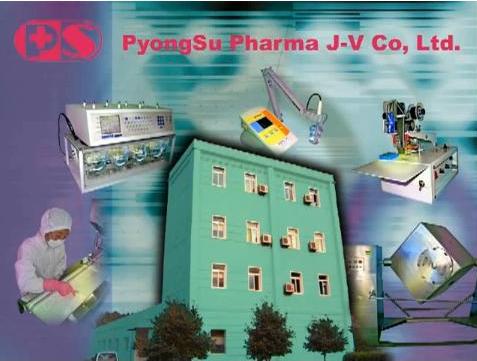
PyongSu Rx advertisement

Sunday, July 19th, 2009

From YouTube:

pyongsu-advert.JPG

(Click on image to see video)

According to the video description:

This was PyongSu’s introduction to donor organisations and individuals that have been purchasing pharmaceuticals abroad and shipped them to North Korea. PyongSu’s promotional presentation explained to them why they should place their orders with PyongSu rather than with pharmaceutical companies abroad.

As PyongSu had no budget to mandate a professional advertising company with the task its managing director Felix Abt made the concept, the script and produced it in-house towards the end of 2005, with the help of North Korean IT and designing students and their Canadian trainer Ian Lee as well as teacher Michael P. Spavor, then giving language courses in Pyongyang, who was the “voice” in this clip. Thus, this unique advertising clip was made in its entirety in Pyongyang (and by people who are not advertising professionals). Check it out and add your comment!

Longer videos on investments in the DPRK can be found here.

Share

More UN sanctions

Friday, July 17th, 2009

On Thursday the UNSC adopted a travel ban on five North Koreans, an asset freeze on five DPRK organizations (and the five individuals), and banned the export of graphite and para-aramid fiber to the DPRK.  Below are the details:

UNSC Sanctions effective: July 16, 2009.

Officials named:
1. Ri Je-son, director at North Korea’s General Bureau of Atomic Energy (GBAE)
2. Hwang Sok-hwa, director at North Korea’s General Bureau of Atomic Energy (GBAE)
3. Yun Ho-jin, director of Namchongang  Trading Corp.
4. Ri Hong-sop, former director of North Korea’s Yongbyon nuclear research center
5. Han Yu-ro, director of Korea Ryongaksan General Trading Corp.

Organizations named:
1. General Bureau of Atomic Energy (GBAE)-DPRK weapons agency
2. Namchongang Trading Corp-alleged to have procured Japanese vacuum pumps and aluminum tubes used to enrich uranium.
3. Hong Kong Electronics-transferred millions of dollars to Tanchon Commercial Bank and Korea Mining Development Trading Corp., both subject to sanctions by Security Council agreement in April.
4. Korea Hyoksin Trading Corp
5. Korean Tangun Trading Corp-primarily responsible for the procurement of commodities and technologies to support” North Korea’s defense research and development program

Further Notes:
1. The North Korean’s actually have a web page for the Hyoksin Trading Corp.

2. Here is a previous post summarizing most of the sanctioning activites this year.

Read more below:
U.N. council sanctions North Korea entities, officials
Reuters (via Washngton Post)
Patrick Worsnip
7/17/2009

North Korea Officials Sanctioned by UN for Travel, Nuke Program
Bloomberg
Bill Varner
7/17/2009

Share

DPRK continues to supply new laborers to KIC

Thursday, July 16th, 2009

Institute for Far Eastern Studies (IFES)
NK Brief No. 09-7-15-1
7/15/2009

Despite the fact that inter-Korean relations continue to be stalled, North Korea authorities reportedly provided approximately 1,300 new workers in June for businesses entering the Kaesong Industrial Complex (KIC). Despite the fact that there has been no progress in inter-Korean working-level talks between authorities involved in the KIC, the North is continuing to provide a labor force for South Korean businesses in the complex.

An official from the Kaesong Industrial District Management Committee verified that “approximately 1,300 new laborers were supplied last month,” and that “there are some young workers, as well, but the majority are 30 to 40-year-old women.” The official also explained, “the number of laborers was reduced slightly at the beginning of the year; while [their number] was insufficient, laborers continue to come…up until June of this year, while the number fluctuated, an average of around 700 per month [were provided].” Last year, the number of new workers each month was around 1,000.

New workers continue to be provided to the KIC, but there has also been a sharp increase in the number of workers quitting or being removed from their positions. At the end of June, there were 40,255 North Korean laborers; the overall number of workers provided by the North has only increased by 1,324 since the end of last year.

The source explained that at the beginning of 2009, more than 2000 construction workers quit. It appears, according to the numerous reports on the status of employment in the KIC, that the supply of workers is still insufficient, but that the North Korean authorities are working as hard as possible to provide what manpower they can.

North Korea’s Central Special Zone Development Guidance General Bureau recently held a general assembly for all North Korean labor representatives, and ordered them to “work to the max” in order to alleviate all complaints by South Korean businesses. However, as there has still been no resolution to the issue of constructing additional dormitories for the workers, this issue will continue to restrict growth in the number of North Korean laborers, regardless of the attitude in Pyongyang.

Share

GPI organizaing DPRK business delegation

Sunday, July 5th, 2009

From GPI Consulting:

In the current financial and economic situation, companies face many challenges. They must cut costs, develop new products and find new markets. In these fields, North-Korea might be an interesting option. Inspired by the economic successes of its neighbouring country China, North-Korea has since a few years opened its doors to foreign enterprises. It established several free trade zones to attract foreign investors and there are several sectors, including textile industry, shipbuilding, agro business, logistics, renewable energy, mining and Information Technology, that can be considered for trade and investment.

North-Korea is competing with other Asian countries by offering skilled labor for very low monthly wages and by offering tax incentives.  Last year, North-Korea’s exports rose with 23 percent and its imports with 32 percent. Do you want to explore new business opportunities for your company? Then join us from 19 – 26 September 2009 on our trade & investment mission to North-Korea. The program includes individual matchmaking, company visits, network receptions and dinners. Furthermore, we will visit the annual Autumn International Trade Fair in Pyongyang (see photo). We will also meet European business people who are working and living in North-Korea.
 
The mission is meant for entrepreneurs from various business sectors; tailormade meetings will be arranged by our local partner, the DPRK Chamber of Commerce. The program of this unique mission has been attached and we can be contacted for further details. In case you want to participate: please register as soon as possible, so we can start the visa-application procedure.
 
With best regards,
Paul Tjia (sr. consultant ‘global sourcing’)
GPI Consultancy, P.O. Box 26151, 3002 ED Rotterdam, The Netherlands
E-mail: [email protected] tel: +31-10-4254172  fax: +31-10-4254317 Website: www.gpic.nl
 
N.B. some examples of investment opportunities in North-Korea:  
http://www.gpic.nl/invest(hungsong).pdf and http://www.gpic.nl/invest(clock).pdf 

GPI’s marketing flyer is here.

Share

DPRK defector discussed financial flows

Friday, July 3rd, 2009

Last week we mentioned the curious case of Kim Kwang Jin, a high-ranking defector who helped raise money for the North Korean government who is spending a year here in DC at the Committee for Human Rights in North Korea.  This week he spoke to Fox News and painted a broad picture of the DPRK’s financial strategy:

Trim and sharply dressed, his bushy head of hair dyed jet black, the 42-year-old Kim, once an English professor at a computer college in Pyongyang, speaks polite and fluent English, albeit in a halting style and with a heavy accent.

An interview with FOX News in late June marked Kim’s first with an American TV news channel. Kim recounted his extraordinary experiences working for the Northeast Asia Bank and Korea National Insurance Corporation, where he handled accounts worth hundreds of million of dollars.

He described two economies in North Korea: one administered by the North Korean Cabinet and nominally oriented toward serving the needs of the people; and a “Royal Court economy,” financed by illicit enterprises worldwide and providing the stream of hard currency that keeps Kim Jong Il, and his cronies, ensconsed in power and luxury.

“Kim [Jong Il] himself enjoys a lavish lifestyle,” said Kim Kwang Jin. “He is giving gifts to his associates: the Mercedes-Benz[es] and whiskeys, first-class room and [air]fare from Japan. Everything’s provided to his aides….Kim Jong Il himself is now ruling the country with [the] dollar, hard currency….Without hard currency they cannot rule the country.” 

Kim Kwang Jin described a society in which bankers demand bribes from clients, doctors from patients, professors and teachers from students. 

“Everybody tries to make use of their position, their authority…to survive,” Kim said.

The former banker said the regime’s largest source of hard currency comes from the clandestine manufacture and sale of weapons of mass destruction. After that comes the regime’s multibillion-dollar insurance fraud business, in which the authorities stage arson and bogus accidents to collect multimillion-dollar payouts from international banks and insurers. 

“The state — Kim Jong Il himself — controls all these funds,” said Kim Kwang Jin. “It is funneled to him. And then he’s using all these revenues according to his regime’s priorities, which are now the missile program and nuclear weapons development.”

Kim Kwang Jin believes the North Korean government has never negotiated in good faith with the United States and its allies at the Six-Party nuclear disarmament talks. 

“The North Koreans are coming to the table not for negotiation; they are there for winning, for implementing their strategy,” he said. To grant meaningful concessions at such negotiations, or to enact meaningful internal reforms toward democratization, would, Kim says, be tantamount to “suicide to the regime.”

Yet Kim also believes financial sanctions can compel better behavior from Pyongyang, and cites as an example the Treasury Department’s targeting from 2005 to 2008 of Banco Delta Asia: a bank in Macau, also known as “BDA,” through which the North Korean regime once transferred large sums. It was during this period, when Banco Delta Asia faced international restrictions, that the North made its most far-reaching concessions in the Six-Party Talks, only to renege on them once the sanctions were lifted.

“The BDA case was a frightening thing to the regime,” Kim said. “It was a blow to [Kim Jong Il’s] personal funding, to the economic sector which is now supporting the regime. And even the national economy, the people’s economy run by [the] Cabinet, is influenced by this BDA case. 

Here is his interview on Fox News via YouTube

Read the full story here:
North Korean Defector Describes Inner Workings of Isolated Regime
Fox News
James Rosen
7/2/2009

Share

UN, US, ROK, sanction DPRK arms companies–and partners

Tuesday, June 30th, 2009

On January 21, the day after the Obama administration took office, the White House approved certain trade sanctions–initiated by the Bush administration–to be printed in the Federal Register.  These sanctions targeted specific Chinese, Iranian, and North Korean companies that the US believes were/are violating arms export regulations governing missile technology and other proliferation activities.  [Read more, including Federal Register text, here]

After North Korea conducted a long-range missile test in April, the US pushed the UN Security Council to adopt a presidential statement which blacklists several additional North Korean firms. [Read more here].

After North Korea conducted a second nuclear test, in violation of UNSC resolution, the UNSC adopted a resolution which tightened sanctions on the DPRK. [Read more here]

In June, the South Korean government imposed sanctions on these DPRK companies for the first time [Read more here]

The US followed up the UNSC resolution by announcing an inter-agency team that will focus exclusively on enforcing DPRK sanctions [Read more here

Today, the US Treasury Department announced it was targeting Hong Kong Electronics (Kish Island, Iran) [from where a former FBI agent is still missing] for supporting the balcklisted North Korean organizations.  According to Market Watch:

The Treasury Department said Tuesday that it has targeted another player in North Korea’s missile proliferation network. The agency designated Hong Kong Electronics, located in Kish Island, Iran, for providing support to North Korea’s Tanchon Commercial Bank and Korea Mining Development Trading Corp. Those two firms have been targeted by the U.S. and the United Nations as part of North Korea’s nuclear proliferation network. “Today’s action is a part of our overall effort to prevent North Korea from misusing the international financial system to advance its nuclear and missile programs and to sell dangerous technology around the world,” said Stuart Levy, Treasury under-secretary for terrorism.

What does this mean? It means that any bank accounts or other financial assets found in the United States belonging to the company must be frozen. Americans also are forbidden from doing business with the firm. This probably does not amount to much economically, but is probably intended to discourage banks outside of the US from doing business with these firms.

UPDATE 1: It looks like the State Departmet is also going after a North Korean company believe to be involved in weapons proliferation today.  According to a statement by the Treasury Department:

The U.S. Department of the Treasury today targeted North Korea’s missile proliferation network by designating Hong Kong Electronics under Executive Order 13382.  E.O. 13382 freezes the assets of designated proliferators of weapons of mass destruction and their supporters and prohibits U.S. persons from engaging in any transactions with them, thereby isolating them from the U.S. financial and commercial systems.  Hong Kong Electronics, located in Kish Island, Iran, has been designated for providing support to North Korea’s Tanchon Commercial Bank (Tanchon) and Korea Mining Development Trading Corporation (KOMID).

Tanchon and KOMID have also been designated by the United States under E.O. 13382 and the UN Security Council under Resolution 1718. The Department of State also today targeted North Korea’s nuclear proliferation network by designating Namchongang Trading Corporation (NCG), a North Korean nuclear-related company in Pyongyang, under E.O. 13382. 

“North Korea uses front companies like Hong Kong Electronics and a range of other deceptive practices to obscure the true nature of its financial dealings, making it nearly impossible for responsible banks and governments to distinguish legitimate from illegitimate North Korean transactions,” said Stuart Levey, Under Secretary for Terrorism and Financial Intelligence. “Today’s action is a part of our overall effort to prevent North Korea from misusing the international financial system to advance its nuclear and missile programs and to sell dangerous technology around the world.”

Since 2007, Hong Kong Electronics has transferred millions of dollars of proliferation- related funds on behalf of Tanchon and KOMID. Hong Kong Electronics has also facilitated the movement of money from Iran to North Korea on behalf of KOMID. Tanchon, a commercial bank based in Pyongyang, North Korea, is the financial arm for KOMID – North Korea’s premier arms dealer and main exporter of goods and equipment related to ballistic missiles and conventional weapons.

Tanchon plays a key role in financing the sales of ballistic missiles for KOMID. Tanchon has also been involved in financing ballistic missile sales from KOMID to Iran’s Shahid Hemmat Industrial Group (SHIG), which is the Iranian organization responsible for developing liquid-fueled missiles. SHIG has been designated under E.O. 13382 and sanctioned by the United Nations under UN Security Council Resolution (UNSCR) 1737. Since 2005, Tanchon has maintained an active relationship with various branches of Iran’s Bank Sepah, an entity designated under E.O. 13382 and sanctioned by the United Nations under UNSCR 1747, for providing financial services to Iran’s missile program. The U.S. has reason to believe that the Tanchon-Bank Sepah relationship has been used for North Korea-Iran proliferation-related transactions.

Here is the press release by the State Department:

The U.S. Department of State today targeted North Korea’s nuclear proliferation network by designating Namchongang Trading Corporation (NCG) under Executive Order 13382. E.O. 13382 is an authority aimed at freezing the assets of proliferators of weapons of mass destruction and their supporters, and at isolating them from the U.S. financial and commercial systems. Entities designated under E.O. 13382 are prohibited from engaging in all transactions with any U.S. person and are subject to a U.S. asset freeze.

NCG is a North Korean nuclear-related company in Pyongyang. It has been involved in the purchase of aluminum tubes and other equipment specifically suitable for a uranium enrichment program since the late 1990s.

The Department of the Treasury also today designated Hong Kong Electronics, located in Kish Island, Iran, for providing support to North Korea’s Tanchon Commercial Bank (Tanchon) and Korea Mining Development Trading Corporation (KOMID). Tanchon and KOMID were designated by the United States under E.O. 13382 on June 28, 2005 and the UN Security Council under Resolution 1718 on April 24, 2009.

North Korea’s April 5, 2009 launch of a Taepo Dong-2 (TD-2) missile and May 25, 2009 nuclear test demonstrate a need for continued vigilance with respect to North Korea’s activities of proliferation concern. The designations add to continuing U.S. efforts to prevent North Korean entities of proliferation concern from accessing financial and commercial markets that could aid the regime’s efforts to develop nuclear weapons and the missiles capable of delivering them.

McClatchy has more here.

Share

White House forms DPRK sanctions team

Sunday, June 28th, 2009

According to the Washington Post:

The White House is ramping up its efforts to enforce sanctions against North Korea by forming a new interagency team to coordinate U.S. actions with other nations, senior administration officials said today.

The new team will be led by former ambassador to Bolivia Philip S. Goldberg, who is slated to leave for China in the near future as the U.S seeks concerted action to stop the North Korean regime from developing nuclear weapons.

“There is a broad consensus about the need to have a focused and engaged effort to see that these sanctions are implemented … and that we’re sharing information with each other,” one official said, speaking on background.

U.S. officials described the new group as a way to focus the administration more squarely on implementation of the latest sanctions, which were approved by the United Nations in the wake of North Korea’s nuclear test last month.

The officials said they are hoping the group — with representatives from the State Department, the White House, the National Security Agency, Treasury and others — will help “shine a spotlight” on the actions of the regime.

“We wanted somebody who woke up every morning and thought about nothing but sanctions implementation,” one official said. “It’s a huge difference when you have somebody who isn’t worried about any of the other aspects of this.”

The White House also announced a renewed effort to use the authority of the U.N. resolution to take financial actions against the North Korean regime in an effort to choke off the money flowing from small arms trade and other activity.

Treasury officials have issued a public memorandum to private financial institutions reminding them of the global condemnation and other risks of doing business with the North Korean regime.

The letter warns that North Korean banks and institutions often use deceptive techniques to engage in financial transactions that could place legitimate financial firms at risk.

“Financial institutions should apply enhanced scrutiny to any such correspondent accounts they maintain, including with respect to transaction monitoring,” the letter states.

One senior official said the U.S. is confident that the financial sanctions will over time help to further isolate North Korea and pressure its leaders to abandon its nuclear program.

“It’s going to take time to have a bite,” he conceded. “But we’re trying to get out of the box quickly.”

The Bush administration also had a sustained effort to implement United Nations sanctions after North Korea first tested a nuclear weapon in 2006.

The Counterproliferation Directorate of the White House National Security Council coordinated the effort, while the State Department and Treasury also co-chaired an interagency effort to examine specific cases that eventually worked their way up the chain for approval.

A team of senior officials, led by the undersecretary of State for arms control, traveled to Asia to work closely with allies. But the effort was dropped after Bush shifted course and decided to pursue diplomacy with North Korea.

Their first stops: China then Malaysia.

Citations:
New North Korea Sanctions Team Formed
Washington Post
Michael D. Shear and Glenn Kessler
6/26/2009

U.S. North Korea sanctions team to visit Malaysia
Reuters UK
7/2/2009

Share

DPRK reinsurance update

Sunday, June 21st, 2009

In December 2008 this blog discussed how the DPRK’s Korea National Insurance Corporation (KNIC) received USD$58 million from several European reinsurance companies in a legal settlement.

Well, the Washington Post offers an update on how the money is being moved and even highlights the story of a defector who claims to be involved in the DPRK’s insurance racket:

For Kim Jong Il’s birthday, North Korean insurance managers prepared a special gift.

In Singapore, they stuffed $20 million in cash into two heavy-duty bags and sent them, via Beijing, to their leader in Pyongyang, said Kim Kwang Jin, who worked as a manager for Korea National Insurance Corp., a state-owned monopoly.

Kim said he helped arrange the shipment and watched in February 2003 as the cash was packed. After the money arrived, Kim Jong Il sent a letter of thanks to the managers and arranged for some of them to receive gifts that included oranges, apples, DVD players and blankets, Kim said.

“It was a great celebration,” he said.

The $20 million birthday present and the gratitude of its recipient, who is known as the Dear Leader, were annual highlights of a sophisticated global insurance fraud that North Korea has concocted to provide its communist leadership with hard currency, said Kim, who spent five years as an executive of the state insurance company in Pyongyang and worked for a year at its banking subsidiary in Singapore before defecting to South Korea.

The British court ruled the way it did [NKeconWatch: this might be an error as the court did not rule on the case–it was settled] because the reinsurance companies contractually agreed to be bound by the North Korean court system (which to nobody’s surprise systematically rules in favor of domestic agencies and firms).  Since the western reinsurance firms could not prove that the DPRK was committing fraud, they had to pay up.

And how does this program work?

While working for North Korea’s insurance monopoly, Kim Kwang Jin said, he and other managers had a tightly focused mission: to find reinsurance companies and brokers in different parts of the world who would accept high premiums to reinsure KNIC’s policies.

Those policies, he said, usually covered losses from common North Korean disasters such as mining accidents, industrial fires, transportation crashes and crop losses due to floods.

“The major point of the reinsurance operation is that they are banking on disaster,” he said. “Whenever there is a disaster, it becomes a source of hard currency.”

According to Kim, KNIC would target a different potential disaster and a different reinsurance company each year. “We pass it around,” he said. “One year, it might be Lloyd’s; the next year, it might be Swiss Re; and the next, Munich Re.”

In London, the expert on the insurance industry familiar with the helicopter case echoed Kim’s assessment of how KNIC operated. He spoke on the condition of anonymity because he was not authorized by reinsurers to talk about the case.

“They pay good premiums, and they are very sophisticated, very clever,” he said. “They would divvy business up into very small bites and use different brokers in different places. The division of losses was such that it would never be apparent to a prospective reinsurer just how bad the business was.”

The North Koreans were known in the reinsurance industry for their capacity to prepare meticulously documented claims, speed them through puppet courts in Pyongyang and demand quick payment from international reinsurers. The North sometimes restricts the ability of reinsurers to dispatch investigators to verify claims.

The North Korean insurance monopoly sometimes took advantage of the geographical and political ignorance of brokers and reinsurers, according to the London-based insurance expert. Some brokers and companies, he said, thought they were dealing with a company from South Korea, while others were unaware that North Korea is a secretive totalitarian state with one of the world’s worst human rights records.

When he worked at KNIC, Kim said, annual revenue from North Korea’s reinsurance claims was about $50 million to $60 million. Most of that money, he said, was used to scout out potential disasters inside North Korea, to buy more reinsurance on the global market and to pay premiums.

“The remaining hard currency should have been used to help people recover from disasters and accidents, but it was not used that way,” Kim said. “It is just going into the pocket of Kim Jong Il.”

He said cash shipments of $20 million arrived yearly in Pyongyang, usually in the week before Feb. 16, which is Kim Jong Il’s birthday and a national holiday. In his six years at KNIC, Kim said, bags of cash arrived in Pyongyang from Singapore, Switzerland, France and Austria.

The money, he added, was delivered to an entity called Bureau 39 of the Korean Workers’ Party Central Committee. It was created by Kim Jong Il in the 1970s to collect hard currency and give him an independent power base, according to defectors, Seoul-based analysts and published reports. These sources agree that Bureau 39 spends foreign currency on luxury goods for the North Korean elite, components for missiles and other weapons programs.

With Bureau 39 skimming off hard-currency earnings returned to North Korea by KNIC’s global operation, Kim said, claims to disaster victims had to be paid in won, North Korea’s currency.

“That money is nearly worthless at present, because the economy has collapsed,” he said. “This means that little is done to help people recover from fires or whatever.”

But Kim Jong Il has been pleased with the state insurance company, Kim said.

“It brings him large amounts of hard currency,” Kim said. “Working in insurance is one of the best professions in North Korea. Many people want to do it.”

Mr. Kim is working in the Washington DC area this year with the Committee for Human Rights in North Korea.

Read the full artocle here:
Global Insurance Fraud By North Korea Outlined
Washington Post 
Blane Harden
6/18/2009

Share

Tunnels, Guns and Kimchi: North Korea’s Quest for Dollars – Part II

Thursday, June 11th, 2009

Yale Global
Bertil Linter
6/11/2009

BANGKOK: The global economic meltdown has claimed an unexpected victim: North Korea’s chain of restaurants in Southeast Asia. Over the past few months, most of them have been closed down “due to the current economic situation,” as an Asian diplomat in the Thai capital Bangkok put it. This could mean that Bureau 39, the international money-making arm of the ruling North Korean Workers’ Party – which runs the restaurants and a host of other, more clandestine front companies in the region – is acutely short of funds. Even if those enterprises were set up to launder money, operational costs and a healthy cash-flow are still vital for their survival. And, as for the restaurants, their main customers were South Korean tourists looking for a somewhat rare, comfort food from the isolated North of the country. The waitresses, all of them carefully selected young, North Korean women dressed in traditional Korean clothing, also entertained the guests with music and dance.

But thanks to the global economic crisis, not only has the tourist traffic from South Korea slowed, the fall in the value of won has also reduced their buying power. The South Korean won plummeted to 1,506 to the US dollar in February, down from 942 in January 2008. No detailed statistics are available, but South Korean arrivals in Thailand – which is also the gateway to neighboring Cambodia and Laos – are down by at least 25 percent.

Though staunchly socialist at home, the North Korean government has been quite successful in running capitalist enterprises abroad, ensuring a steady flow of foreign currency to the coffers in Pyongyang. North Korea runs trading companies in Thailand, Hong Kong, Macau and Cambodia, which export North Korean goods – mostly clothing, plastics and minerals such as copper – to the region. At the same time, they import various kinds of foodstuffs, light machinery, electronic goods, and, in the past, dual-purpose chemicals, which have civilian as well as military applications. Those companies were – and still are – run by the powerful Daesong group of companies, the overt arm of the more secretive Bureau 39.

North Korea embarked on its capitalist ventures when, in the late 1980s and early 1990s, the country was hit by a severe crisis caused by the disruption in trading ties with former communist allies. More devastatingly, both the former Soviet Union in 1990 and China in 1993 began to demand that North Korea pay standard international prices for goods, and that too in hard currency rather than with barter goods. According to a Bangkok-based Western diplomat who follows development in North Korea, the country’s embassies abroad were mobilized to raise badly needed foreign exchange. “How they raised money is immaterial,” the diplomat says. “It can be done by legal or illegal means. And it’s often done by abusing diplomatic privilege.”

North Korea’s two main front companies in Thailand, Star Bravo and Kosun Import-Export, are still in operation. In the early 2000s, Thailand actually emerged as North Korea’s third largest foreign trading partner after China and South Korea.

Bangkok developed as a center for such commercial activities and Western intelligence officers based there became aware of the import and sale of luxury cars, liquor and cigarettes, which were brought into the country duty-free by North Korean diplomats. In a more novel enterprise, the North Koreans in Bangkok were reported to be buying second-hand mobile phones – and sending them in diplomatic pouches to Bangladesh, where they were resold to customers who could not afford new ones. In early 2001, high-quality fake US$100 notes also turned up in Bangkok and the police said at the time that the North Korean embassy was responsible as some of its diplomats were caught trying to deposit the forgeries in local banks. The North Korean diplomats were warned not to try it again.

The restaurants were used to earn additional money for the government in Pyongyang – at the same time, they were suspected of laundering proceeds from North Korea’s more unsavory commercial activities. Restaurants and other cash-intensive enterprises are commonly used as conduits for wads of bills, which banks otherwise would not accept as deposits.

For years, there have been various North Korean-themed restaurants in Beijing, Shanghai and other Chinese cities. But the first in Southeast Asia opened only in 2002 in the Cambodian town of Siem Reap. It became an instant success – especially with the thousands of South Korean tourists who flocked to see the ancient ruins of Angkor Wat. It was so successful that Pyongyang decided to open a second venue in the capital Phnom Penh in December 2003. A fairly large restaurant in the capital’s Boulevard Monivong, which offered indifferent Korean staple kimchi and other dishes and live entertainment by North Korean waitresses, closed earlier this year for lack of business.

In 2006, yet another Pyongyang Restaurant – as the eateries were called – opened for business in Bangkok. It was housed in an impressive, purpose-built structure down a side alley in the city’s gritty Pattanakarn suburb, far away from areas usually frequented by Western visitors but close to the North Korean embassy and the offices of its front companies in the Thai capital. This was followed by an even grander restaurant in Thailand’s most popular beach resort, Pattaya, which was also housed in a separate building with a big parking lot outside for tour buses. A much smaller Pyongyang restaurant opened in Laos’s sleepy capital Vientiane, but that one became popular not with South Korean tourists, but with Chinese guest workers and technicians. The Vientiane restaurant may be the only North Korean eatery that is still in operation.

After years of watching North Korea’s counterfeiting and smuggling operations, the United States began tightening the screws on Pyongyang’s finances in September 2005. This occurred after Banco Delta Asia, a local bank in Macau, was designated as a “financial institution of primary money-laundering concern.” The bank almost collapsed, and North Korea’s assets were frozen. The money was eventually released as part of an incentive for North Korea’s concession in the Six-Party talks and returned to North Korea via a bank in the Russian Far East. But, coupled with UN sanctions, the damage to North Korea’s overseas financial network was done – including the ability of Pyongyang’s many overseas front companies to operate freely. For example, the two-way trade between Thailand and North Korea peaked at US$343 million in 2006 – but then began to decline. It was down to US$100 million in 2007, and US$70.8 million in 2008.

Now with North Korea conducting a second nuclear test and firing off missiles, Washington has raised the possibility of the re-listing of North Korea as a state that supports terrorism. If that were to happen, many private companies would become hesitant to deal with Pyongyang and its enterprises for fear of being blacklisted by the US Treasury.

With its various money-making enterprises coming unstuck, Pyongyang is increasingly under pressure. The worldwide financial crisis has already put North Korea in a tight corner. There was never anything to suggest that the money earned by North Korea’s economic ventures abroad were to be used for social development at home, or to be spent on basic necessities such as putting food on the tables of the country’s undernourished people. Now, there won’t even be food for sale to South Korean tourists in the region.

Share
