Archive for the ‘DPRK organizations’ Category

Foreign exchange and smuggling again prevalnet in North Korea

Friday, March 26th, 2010

Institute for Far Eastern Studies (IFES)
NK Brief No. 10-03-22-1
3/22/2010

Foreign currency swaps and illegal trade are again prevalent in North Korea, despite recent currency reforms and bans on money exchanges.

Following last November’s currency reform, there has been a significant crackdown on the use of foreign currency and cross-border trade by individuals. However, reports indicate that North Korean traders continue to conduct business with outside entities, despite new regulations requiring them to remit profits through the Korean ‘Kwangson’ Bank. There has been a crack-down on unauthorized transactions, but it appears to have been ineffective.

The Korean Central Bank and Chinese People’s Bank established the Kwangson Bank in 2004 in Dandung as part of the North’s efforts to earn foreign capital. Even today, North Korean authorities rely on the Kwangson Bank to handle trade accounts, but most North Korean traders despise using the bank, and conduct most of their transactions privately, avoiding authorities. This is because the bank has a reputation for seizing the profits of private traders. The official decision to funnel foreign funds through the Kwangson Bank was part of the effort to crack down on smuggling, and was in conjunction with other currency reform efforts.

Economic reform attempts included crackdowns on illegal activity for a short time, but black market currency trade and smuggling has again become commonplace. Reform efforts were aimed at reducing unregulated and illegal trade by requiring transactions to be carried out through a government bank, but the costs associated with such a transaction further encouraged black market activity.

It also appears that currency exchange, banned as part of last year’s currency reform, is now again being allowed in order to ease rising prices and other detrimental side effects of the measures.

In North Korea, not only traders, but also average citizens are earning foreign capital through smuggling and other means. The latest reversal of policy to again allow currency exchange is seen as an attempt by authorities to sooth rising discontent within the masses.

In November of last year, North Korea implemented currency reforms and issued new notes, devaluing the currency by 100:1 and banning private holdings of foreign currency. This led North Koreans to lose faith in the value of their currency and sparked a drive on foreign monies. Now, the government appears to be implementing measures to underscore the value of the Won and to stave off inflation. Foreign visitors are allowed to again spend foreign currency and it appears that other restrictions are slowly being lifted.

Share

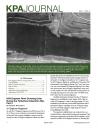
Bermudez publishes KPA Journal, Vol. 1, No.3

Thursday, March 25th, 2010

kpa-journal-3.jpg

Joseph Bermudez, military analyst for Jane’s Intelligence Review and author of The Armed Forces of North Korea, has published the third issue of his very fascinating KPA Journal.

Click here to download the full issue (PDF)

Chapters include: KPA Engineer River Crossing Units During the Fatherland Liberation War (Part 3), The Scud B SRBM in KPA Service, A ‘Type’ KPAF Fortified SAM Base. 

Bermudez Comments in the Journal:

With this issue I’ve concluded coverage of the KPA’s engineer river crossing units during the Fatherland Liberation War. I would like to thank all the readers for their positive comments concerning this series of articles.  As I mentioned in issue No. 2 I will follow up this series with some coverage of KPA underwater bridges and bridging equipment.  Which issue they will appear in is presently uncertain.

A number of readers have asked if I will be writing anything special for the 60th Anniversary of the Korean War this June.  I haven’t yet decided upon a topic for the June issue, but would like to hear from what you the readers might be interested to see.  Readers might be interested to know that I had written a history of the KPA’s 17th Tank Division during the war and submitted it to Armor for publication with the hope that it would appear in the May-June issue.  Unfortunatley their publication  schedule is already full.  They have, however, accepted it for publication in a future issue.  When that occurrs, I will inform the readers of KPA Journal.

In response to a number of reader’s requests I will be preparing several articles, or photo essays, on KPA tanks and armored fighting vehicles. I hope to have the first in time for the next issue. 

I am making slow progress on the KPA Journal website and I hope to have it up in a month or so.  I will let the readers know when it goes live.

Finally, all readers are encouraged to share ideas of what you would like to see in future issues of KPA Journal.  As always I would like to thank you all for your encouragement and support.

You can download previous issues of KPA Journal here.

Share

Old Guard Returns to the Economic Fold

Wednesday, March 24th, 2010

According to the Daily NK:

Yun Gi Jeong, the 82-year old former Finance Director of the old Administration Council (now known as the Cabinet), has apparently been charged with resolving the crisis in the chaotic people’s economy.

Her elevation may represent an attempt to steady the ship following the disastrous currency redenomination and rumored execution of former economic boss Park Nam Ki.

The chair of a people’s unit in a neighborhood of Shinuiju told The Daily NK on Tuesday, “Prices have been fluctuating since the redenomination, but now a notice has been handed down from the Cabinet saying that they will be stabilized by April 1. It says the Cabinet will deal with this confusion in the people’s economy.”

He said that Yun Gi Jeong, who resigned her office in the Administration Council some years ago, had been brought back to the Cabinet to bring order to the chaos.

“Upon her return to the Cabinet,” the source added, “the rice price started dropping. It was over 1,500 won early March, but has now settled at around the 600 won level.”

According to his explanation, the North’s authorities intend to try and cap rising prices by April 1. The authorities released official price ceilings on February 4th; rice was 240 won and corn 130 won per kilogram, but these rapidly proved unrealistic.

Another source from North Hamkyung Province told the Daily NK yesterday, “When the rumor that they would restart distribution as normal came out, rice prices dropped drastically. As the news of Yun Gi Jeong came out, rice prices and exchange rates also went down. However, people still feel frustration at the fluctuating exchange rate.”

Yun Gi Jeong was born in Seoul in 1928 and served as the Finance Director of the Administration Council for almost 20 years from April, 1980. After her resignation in 1999 she became the President of the National Economic Institute, and is now an honorary professor at Kim Il Sung University, a member of the Party Central Committee and a delegate to the 12th Supreme People’s Assembly.

One defector who was a high official in North Korea explained to The Daily NK today, “Yun Gi Jeong is a person who Kim Il Sung was in favor of. After he died, she stepped back from the economic field.”

He added, “She tends to stick to her principles and is known to be a workaholic. Kim Jong Il presumably asked her to solve the economic problems because she is an old hand in the economic field.”

Read the full article here:
Old Guard Returns to the Economic Fold
Daily NK
Jung Kwon Ho
3/24/2010

Share

North Korean logger detained in Russian east

Friday, March 19th, 2010

According to the Associated Press (via Los Angeles Times):

The North Korean’s note, scrawled in pen, was simple: “I want to go to South Korea. Why? To find freedom. Freedom of religion, freedom of life.”

The ex-logger, on the run from North Korean authorities, handed the note over to a South Korean missionary in the Russian city of Vladivostok last week in hopes it would lead to political asylum.

Just before he was to meet Thursday with the International Organization for Migrants, a team of men grabbed him, slapped handcuffs on him and drove off, rights activists in Moscow said Friday. He was spirited away to the eastern port city of Nakhokda, where he is sure to be handed back over to North Korean officials and repatriated to his communist homeland, activists said in Seoul.

Police in Vladivostok refused to comment. A senior South Korean diplomat in Vladivostok said he had no information. Officials from the U.S. consulate in Vladivostok could not be reached for comment.

The 51-year-old would be the third North Korean logger in Russia in a week to make a bid for asylum. On March 9, two other North Koreans who had fled their jobs as loggers managed to get into the South Korean consulate in Vladivostok.

Russia’s RIA Novosti news agency reported last week that two North Koreans climbed a fence, ran past the guards and entered the consulate, saying they wanted political asylum. ITAR-Tass carried a similar report.

The incidents focused attention on the precarious existence of tens of thousands of North Koreans sent by the impoverished regime to work in neighboring Russia.

Russian government figures from 2007 put the number of North Korean laborers at 32,600, most of them working in logging in the remote east.

The Rev. Peter Chung, a Seoul-based activist, said there are about 40,000 North Korean loggers in Russia, but that some 10,000 of them have fled their work sites. Some are finding work as day laborers while others are in hiding as they try to map out how to win asylum in foreign diplomatic missions.

The North Korean described the conditions as unbearable. His government took half his meager wages, while the North Korean company operating the logging camp took 35 percent. He kept just 15 percent — about $60 a month — an arrangement that rendered him “virtually a slave,” he told activists.

He eventually fled the logging camp, taking odd jobs to survive. He also became a Christian, Chung and Kim Hi-tae said, which could draw severe punishment, even execution, back home.

The successful asylum bid of two other former North Korean loggers inspired Kim to make a similar attempt, Chung said.

Previous posts on the North Korean loggers in Russia can be found hereMore here. And here. And here.

Read the full story below:
3rd North Korean logger attempts to defect in Russia, propelled by dream of ‘freedom of life’
Associated Press (via Los Angeles Times)
Kim Kwang Tae
3/19/2010

Share

DPRK threatens to seize Hyundai assets at Kumgang

Thursday, March 18th, 2010

According to Yonhap:

North Korea has informed South Korea of its plan to look into all of the real estate owned by South Koreans inside the scenic mountain resort along its east coast, the South’s government confirmed Thursday, as Pyongyang apparently grows impatient with Seoul’s refusal to allow its citizens to travel there.

In a recently faxed message to the South Korean government, the North’s Asia-Pacific Peace Committee, a state agency in charge of cross-border exchanges, said, “South Korean figures who possess real estate in the Mount Kumgang district should come to Mount Kumgang by March 25,” according to the Unification Ministry, which deals with inter-Korean affairs.

The North went on to say, “All assets of those who do not meet the deadline will be confiscated and they won’t be able to visit Mount Kumgang again.”

An inter-Korean tourism program to the mountain, once a cash cow for the impoverished North, has been suspended since the summer of 2008, when a female South Korean tourist was shot dead by a North Korean soldier while traveling there. A luxury hotel, a golf course, and other facilities built by the South Korean conglomerate Hyundai there have since remained idle. A similar joint tour business to the ancient city of Kaesong, just north of the two Koreas’ border, has been also halted.

North Korea, feeling the pinch of U.N. sanctions imposed for its missile and nuclear tests, has called for the South to immediately resume the tours.

In its statement issued March 4, the North Korean committee said, “We would open the door to the tour of the Kaesong area from March and that of Mount Kumgang from April.”

It said it may revoke all accords and contracts on the business unless the South stops blocking the resumption of the joint ventures.

South Korea has urged the North to first fully guarantee the safety of South Korean tourists. Related working-level talks between the two sides last month failed to yield a deal due to differences over details on a security guarantee.

The Unification Ministry expressed regret over the North’s latest threat.

“North Korea’s measure violates agreements between South and North Korean authorities, as well as between their tourism business operators,” the ministry said in a press release. “It also goes against international practice.”

It stressed the North should abide by accords with the South, and all pending issues should be resolved through dialogue.

“As the tours to Mount Kumgang and Kaesong are issues directly related with our people’s safety, there is no change in the government’s existing position that it will resume them only after the matters are settled,” it added.

Meanwhile, the head of the South Korean operator of the tours offered to resign to take responsibility for snowballing losses from the suspended businesses.

Cho Gun-shik, president of Hyundai Asan Corp., expressed his intent to step down in a statement emailed to all staff earlier Thursday, company officials said.

The Choson Ilbo has more:

In the message, North Korea said, “From March 25, North Korean authorities and experts will conduct a survey of all South Korean assets in the presence of South Korean officials concerned,” including Hyundai Asan staffers, who have assets in the area. “All South Koreans with real estate in the Mt. Kumgang area must report to the mountain by March 25,” it added.

According to the ministry, Hyundai Asan signed a lease with the North for a plot of land in Mt. Kumgang until 2052. South Korean firms have invested a total of W359.2 billion (US$1=W1,134), including W226.3 billion from Asan, in a hotel, a hot spring spa, a golf course, and a sushi restaurant there. The South Korean government owns a meeting hall for separated families opened in 2008 that cost more than W60 billion to build.

Nonetheless the threat is likely to fall on deaf ears. A South Korean security official said, “The North apparently wants South Korean firms that are in danger of losing their assets in the North to put pressure on the government, but the government won’t back down.”

A South Korean businessman operating in the Mt. Kumgang region said, “The North is threatening to seize our firms’ real estate there while talking about attracting large amounts of foreign investment. What South Korean or foreign business will make new investments in the North under these circumstances?”

Read the full stories here:
N. Korea threatens to seize S. Korean assets at Mount Kumgang
Yonhap
3/18/2010

N.Korea Ramps Up Threats Over Mt. Kumgang Tours
Choson Ilbo
3/19/2010

Share

Pak Nam-gi executed over currency reform

Wednesday, March 17th, 2010

According to Yonahp:

North Korea executed a former top finance official last week, holding him responsible for the country’s currency reform fiasco that has caused massive inflation, worsened food shortages and dented leader Kim Jong-il’s efforts to transfer power to a son, sources said Thursday.

Pak Nam-gi, who was reportedly sacked in January as chief of the planning and finance department of the ruling Workers’ Party, was executed at a shooting range in Pyongyang, multiple sources familiar with information on North Korea told Yonhap News Agency.

“All the blame has been poured on Pak after the currency reform failure exacerbated public sentiment and had a bad effect” on leader Kim Jong-il’s plan to hand power over to his third son Kim Jong-un, one source told Yonhap on condition of anonymity.

Pak, a 77-year-old technocrat, was charged with “deliberately ruining the national economy” as a “son of a big landowner,” the sources said.

Mike wrote a few notes about Mr. Pak in February.

Read the full Yonhap story here:
N. Korean technocrat executed for bungled currency reform: sources
Yonhap
3/18/2010

Share

DPRK seeks hike in embassy rent

Sunday, March 14th, 2010

According to the Joong Ang Daily:

North Korea has unilaterally raised rental fees for offices of foreign embassies and international agencies by 20 percent this year, at the same time that it tightens its grip on communications at the establishments, sources said.

A source privy to North Korean affairs said last week that the North Korean Foreign Ministry sent notices to the foreign offices last October and the increase took effect at the beginning of this year. The source also said commodity prices in markets specifically set up for foreigners have soared.

“Following the currency reform last November, the North may have wanted to earn some foreign currency by raising the rents and commodity prices,” the source said. “As far as I know, diplomats and their families are angry that the North has violated diplomatic protocols.”

Pyongyang has diplomatic offices for 25 nations, plus the office for World Food Program among other the United Nations agencies. Most rent out space in buildings owned by North Korea.

Pyongyang-based diplomats have also been asked to celebrate North Korean holidays by purchasing flowers or writing congratulatory messages.

“On Kim Jong-il’s 68th birthday last month, the North asked the diplomats to buy wreaths, made up of ‘the Kim Jong-il flowers,’ and write messages praying for Kim’s health under the ambassador’s name,” one source explained. The source did not know if the diplomats complied.

North Korea is also cracking down on the flow of information within foreign missions and agencies. The North rejected a request by a UN agency to use the Internet to send documents to UN headquarters. When diplomats make international phone calls, North Korean interpreters are there to listen in on the conversation, sources said.

“The North may want to block any details on Kim Jong-il’s health, disruption after the currency reform or other domestic affairs from reaching the outside world,” a South Korean government official said.

One Western diplomat, asking for anonymity, recently complained to a South Korean government official that diplomats in Pyongyang can’t talk to each other freely for fear of others listening in, and that they only vent their frustration when they’re out of North Korea.

In addition to making money from the foreign embassies in Pyongyang, the DPRK earns revenue from its embassies abroad.  See here, here, here, here, here, and here.

Most Pyongyang embassies (aside from Russia and China) are located in Munsudong (satellite image here). Recent photos of Pyongyang’s diplomatic quater here.

This is a fascinating topic.  What are the rental rates now?  How are they determined?  If anyone has an idea, please let me know.

Read the stories below:
Diplomats in North face price hike
Joong Ang Daily
Lee Young-jong
3/15/2010

Share

DPRK seeks foreign capital through Rajin Port Development

Wednesday, March 10th, 2010

Institute for Far Eastern Studies (IFES)
NK Brief No.10-03-11-1
3/11/2010

North Korea is actively looking into further development of Rajin Port by extending China’s lease on port facilities for another decade, and granting Russia 50-year rights to Rajin port facilities, as well. Li Longxi, a deputy of the National People’s Congress and head of Jilin Province’s Yanbian Korean Autonomous Prefecture, revealed to a Yonhap News reporter in Beijing on March 8, “The North gave Russia the right to use Pier 3 for 50 years, and is actively looking into extending the right to use Pier 1 granted to China in 2008 for another 10 years.”

Rajin Port has five piers, with Pier 3 being larger than Pier 1. The rights to Pier 1 were granted to the Changli Group, which specializes in the manufacture of environmental materials in Dalian. 10-year use and development rights had already been granted to this company. Deputy Li explained, “China gained rights to Pier 1 in 2008, and is now in negotiations with North Korea over extending those rights for 10 years.” Therefore, if this agreement is reached, China will have exclusive rights to the pier until 2028.

Li added, “Currently, China is in the process of constructing the facilities necessary to use the pier, and will begin to move goods through the port when construction is complete.” It appears China has invested tens of millions of Yuan into this project. Li also pointed out that by being able to use Rajin Port, Yanbian, currently lacking export avenues, will be able to transport Jilin Province’s abundant coal resources, not only through the Yellow Sea to Shanghai and other domestic cities, but to Japan and other countries in the Asia Pacific region.

On February 28, Sun Zhengcai, CCP Secretary of Jilin Province met with North Korean Kim Yong Il, head of the Korean Workers’ Party International Department, and introduced to him China’s ‘Greater Tumen Initiative’ development project. At the time, it was reported that Sun explained to Kim that Jilin provincial authorities had reached an agreement with North Korea for joint venture to construct a network of roads and basic infrastructure facilities. Jilin provincial and city officials, as well as Changchun city representatives, are involved in the project. China is focused on the Tumen river basin and Rajin Port because of their strategically valuable economic role in developing the country’s straggling northeast region.

Russia is also eyeing Rajin Port, because if the port is developed, it could serve as an outlet to export Sakhalin and Siberian crude oil and natural gas to neighboring countries. In July of last year, Russia and North Korea reached an agreement to repair the rail connection between Rajin and Hasan and to improve Rajin Port facilities, investing 1.4 billion Euros. Japanese newspaper Sankei Sinbun quoted a source within North Korea as reporting that Jang Song Thaek, Party administrative chief and brother-in-law of Kim Jong Il, had recently travelled to Rasun (Rajin + Sunbong) and declared that the area would be fully developed within the next 6 months.

The Korea Daepung International Group, serving as North Korea’s window to foreign capital, is said to have a plan to entice international investment in order to support the Tumen river development plan, and plans to develop Rasun Special City and Chongjin Port into key outlets for DPRK-PRC-Russian trade and commerce in Northeast Asia. However, the participation, and investment, of private-sector enterprises will likely depend on the success of the Rajin Port development.

Share

DPRK State Development Bank holds first meeting

Wednesday, March 10th, 2010

According to the AFP:

Sanctions-hit North Korea on Wednesday formally launched a development bank aimed at attracting foreign funds to revive its economy, state media reported.

Directors of the State Development Bank held their first meeting to elect officers and decide on a management structure and annual budget, the Korean Central News Agency said.

The bank, set up on the orders of leader Kim Jong-Il, will have “advanced banking rules and system for transactions with international monetary organisations and commercial banks,” the agency said.

It would invest in major projects and act as a commercial bank.

The bank is the latest move by the North to revive its ailing economy and rebuild crumbling infrastructure. In January it upgraded the status of Rason, a free trade zone near the border with China and Russia, to boost foreign trade.

Analysts have said the decision to found the development bank shows leader Kim is confident the six-party talks will eventually produce a settlement.

The board is made up of members of the National Defence Commission (NDC), the nation’s top ruling body; the Korea Asia-Pacific Peace Committee, a state agency in charge of exchanges with South Korea; the finance ministry; the Korea Taepung International Investment Group and two independent directors.

NDC representative Jon Il-Chun was elected director-general and Pak Chol-Su, described as a Korean resident in China, as his deputy.

Previous State Development Bank posts here.

The KCNA story is here.

North Korean leadership Watch has more, including a picture of Jon Il-chun.

Read the full story here:
N.Korea launches bank to woo foreign capital
AFP
3/17/2010

Share

DPRK holds national meeting of agricultural workers

Thursday, March 4th, 2010

Institute for Far Eastern Studies (IFES)
NK Brief No. 10-3-4-1
3/4/2010

As the failure of North Korea’s currency reform drives the country’s food woes to even greater depths, DPRK authorities and farmers from around the country met on February 25 for two days of meetings under the theme, “Let’s Focus All Efforts on Farming and Resolve the Food Problem!”

It has been four years since North Korean authorities called for a nationwide meeting of agricultural workers, with the last meeting in February 2006. From 1974 to 1994, meetings were held annually in January or February, when farmers had a chance to rest between the fall harvest and the spring planting season. However, after the famine in 1995, in which millions starved to death, no meetings were held for twelve years.

This year’s New Year’s Joint Editorial called for North Koreans to revolutionize the light industrial and agricultural sectors in order to improve the lives of the people, and for them to struggle to resolve the country’s ‘eating issues’. However, in the aftermath of last December’s failed currency reform, the North’s food problems actually worsened to the point that people are starving to death. This led authorities to hold a nationwide agricultural meeting in order to show their determination to focus efforts on resolving food shortages and to encourage farmers and other residents to focus on agriculture.

According to the (North) Korean Central News Agency (KCNA), the meetings were attended by “[Cabinet Premier] Kim Young Il, [National Defense Commission Vice-Chairman] Ri Yong Mu, and [Supreme People’s Assembly Chairman] Choe Tae Bok, leading officials of ministries and national institutions, party and people”s committees and agricultural guidance organs in provinces, cities and counties, officials of farm primary organizations, model farmers, scientists and technicians in the field of agriculture and officials of relevant industrial establishments.”

Vice-Premier Kwak Pom Gi presented a report, stressing, “On the agricultural front this year, marking the 65th anniversary of the founding of the Party, we must decisively ease the country’s food issue, [and] the people’s eating issue, charging forward with the improvement of the lives of the people and the construction of a strong and prosperous nation.” He also called for assistance to agricultural communities and related sectors, and for the prioritization of agricultural goods and materials.

According to a source in North Korea reporting to the South Korean organization Good Friends, deaths due to starvation in South Hamgyong Province’s Danchon city and South Pyongan Province’s Pyongsong city were reported to central Party authorities. This led to meetings on January 27 and February 1 of central Party members, cabinet officials and People’s Security authorities at which emergency measures to stave off famine were discussed.

Results of a survey of living conditions in Danchon and North Hamgyong Province’s Chongjin reported to central Party authorities revealed many deaths due to starvation, while currently, the most deaths due to lack of food appear to be occurring in South Pyongan Province’s Sunchon and Pyongsong cities. Last year, Party authorities in these cities turned over approximately 65 percent of harvests to the military, while farmers were only issued, on average, five months worth of rations.

Share
