Archive for the ‘International Governments’ Category

North Korea’s donor fatigue

Thursday, September 25th, 2014

The Wall Street Journal reports on the difficulties the UN World Food Program faces trying to find supporters for its operations in North Korea:

The United Nations aid program for malnourished North Koreans may close after raising only a fraction of the money it needs to operate in the country, a senior U.N. official said in a call for donations.

“We may need to scale down or think about closing altogether,” Dierk Stegen, the Pyongyang-based North Korea head for the U.N. World Food Program, said in an interview.

The agency, which has operated in North Korea since 1995, could shut early next year if there is no indication it will be able to raise needed funds by the end of October, he said. One complication is that North Korea’s humanitarian crisis has been overshadowed by the conflict in Syria and Ebola outbreak, he said.

While North Korea is getting better at feeding its people, hundreds of thousands of young infants and their mothers remain chronically malnourished, he said.

Contributions from private organizations and the South Korean government in recent weeks have helped, but the program is far from its goal of $50 million, already a significant reduction from the original target of $200 million it set last year.

The North Korea food-assistance program has drawn flak from critics who say the regime takes advantage of the agency’s largess, devoting its resources to developing its nuclear weapons program and constructing amusement parks while its people suffer. Critics also say the agency can’t be sure its assistance is reaching the intended recipients.

Nicholas Eberstadt, a political economist at the American Enterprise Institute in Washington who has studied North Korea’s food situation, said that the WFP’s work in the country was “a disappointment—perhaps a terrible disappointment,” arguing that the agency has put up little resistance even as Pyongyang restricts oversight from foreign aid groups.

“Outside humanitarian assistance will not work in North Korea unless it is ‘intrusive’—and the WFP has no stomach for such work,” Mr. Eberstadt said.

Mr. Stegen acknowledged past shortcomings in its ability to monitor the distribution of its aid, but blamed a lack of funding and cited recent improvements in its access inside the country. He said that the WFP can now get permission within 24 hours to visit any school or household that is receiving its aid. In the past, two weeks’ notice was required.

Mr. Stegen said that criticism of a government’s priorities isn’t unique to North Korea, and urged donors to prioritize vulnerable infants over politics.

“Intervention and assistance on a humanitarian basis should be separated from political things,” he said.

Earlier this month, South Korea’s government approved $7 million in new funding to the WFP, its first such contribution since 2007. While South Korea’s conservative government has talked tough on North Korea, it has also pursued a policy of “humanity” toward the North, particularly infants and young mothers.

The U.S., by far the largest donor to the WFP’s North Korea work, hasn’t contributed since 2009, when Pyongyang tightened its rules on monitoring food aid by restricting the number of Korean-speaking monitors allowed into the country, according to a U.S. Congressional Research Service report published in April.

The WFP’s fundraising efforts have also been hampered by rising awareness of North Korea’s human-rights violations. Earlier this year, a special U.N. commission published a landmark 400-page report which said the regime selectively starves its population based on factors like political loyalty, and recommended the U.N. Security Council refer Kim Jong Un and other senior officials to the International Criminal Court.

Ahead of the U.N. General Assembly, U.S. Secretary of State John Kerry on Wednesday called North Korea’s system of prison camps “unfathomable” and a sign of what he described as “barbarity, inhumanity—I think you can call it evil.”

Mr. Stegen said North Korea had markedly improved its capacity to produce food for its people since a devastating famine in the 1990s. He said that fewer people in the country remain hungry today, even as the population has increased.

But he cautioned that the country’s agricultural efforts have focused too much on producing rice and other grains, at the expense of protein. That has led to malnourishment of infants and children under the age of four, he said, putting them in danger of stunting, even as Kim Jong Un has made a public show of encouraging fisheries as a potential source of protein.

“For many of the children of North Korea, it’s already too late,” said John Aylieff, the WFP’s deputy regional director for Asia. “They’ve been dealt a life sentence of impaired mental functioning and impaired physical development.”

A drought earlier this year has also meant a throttling back of government rations to ordinary citizens, which fell to about 250 grams a day, Mr. Aylieff said. That is less than half the targeted rations, and the lowest in several years.

As a result, the aid agency is expecting a surge in acute malnutrition this year. “We hope potential donors will see the humanitarian imperative,” Mr. Aylieff said.

Marcus Noland, an economist and North Korea expert at the Peterson Institute for International Economics in Washington, said that given the WFP’s funding problems, its ability to monitor its work would be limited.

“Trying to maintain an underfunded program in that environment is practically inviting an aid diversion scandal,” he said. But the WFP’s absence from North Korea would also likely exacerbate any food crisis.

“The advantage of having the WFP in-country in even a limited capacity is that they are pre-positioned to monitor conditions and respond if there is an emergency,” Mr. Noland said.

Read the full story here:
U.N. North Korea Food Program in Danger
Wall Street Journal
Jonathan Cheng
2014-9-25

Share

DPRK holds investor forum in Dalian

Monday, September 22nd, 2014

According to the JoongAng Ilbo:

North Korea held a rare investors relations event over the weekend and its more capitalistic and entrepreneurial manner hinted at a new openness to foreign investors and economic reform in general.

“The door is wide open. Come on in any time,” said Oh Eung-gil, president of North Korea’s Wonsan District Development General Corporation.

Oh was inviting South Koreans to invest in the North as he addressed a group of businessmen at an investors relations session at the Shangri-La Hotel in Dalian, China, on Saturday.

“We prepared all the conditions to develop Mount Kumgang and waited for the South to change its attitude,” said Oh. “But we can no longer wait, so we are trying to attract foreign investors. We have no intention to exclude the South.”

The investors relations event was arranged by the Dalian chapter of the World Federation of Overseas Korea Traders Association. About 200 Korean businessmen from around the world including Australia, China and the United States attended.

From North Korea, five delegates including Oh joined the event.

The North started its event with a presentation by Oh on the country’s laws governing foreign investments and the business environment.

“We have already simplified the investment application procedures and created regulations that meet international standards,” Oh said.

He spent a considerable amount of time to assuring businessmen that their investments, if made, will not vanish overnight.

“With Article 19 of the Foreign Investment Act, we promise that the assets of foreign investors and their companies won’t be nationalized,” he said. “If they are nationalized for an unavoidable reason, then we will make compensation for all costs.”

He also stressed that the North has abundant mineral and fisheries resources. With its 2 million educated workforce, who graduated from 300 universities, Oh said North Korea is the best place to make investments in Asia.

He said foreign companies that invest in special economic zones will only have to pay 14 percent corporate income tax and that the tax is even lower for some advanced technology industries. Making investments in the North’s infrastructure will also be tax-free, he said.

The North also held an unprecedented question and answer session. At similar events in the past, the North only made presentations without answering investors’ questions.

A businessman said he was afraid that the North Korean government could confiscate his investments, and Oh assured him that the government guarantees all legal investments by laws.

Oh even used humor to answer one businessman’s question.

“I would like to invest in hospitals,” the businessman said.

“Our [Democratic People’s] Republic of Korea offers free medical services, so it will be hard for you to make money,” Oh joked. “Please reconsider.”

Following Oh’s presentation, Ri Sing-ryol, vice president of the Wonsan District Development General Corporation, unveiled a development plan for the Wonsan-Mount Kumgang international tourism zone. He said the zone has 142 historic sites, 11 white-sand coasts and nine lakes, as well as 676 tourist venues.

The North’s Standing Committee of the Supreme People’s Assembly announced in June an ambitious plan to develop the area as an international tourism zone.

“Now that the Kim Jong-un regime is settled, the North’s top priority is resolving economic hardships and strong economic reform is being pushed forward,” said Jin Jiang, chairman of the Dalian Chapter of the World Federation of Overseas Korea Traders Association.

According to the Donga-Ilbo, the patchy subject of Hyundai Asan’s assets came up:

North Korea requested South Korea to make additional investment in Mount Kumgang and Wonsan areas, claiming that “it never confiscated the South’s property,” which it had forfeited and frozen in April 2010. Oh Eung Kil, general president of Wonsan district development company under the North’s external economy ministry, told South Korean reporters at an informational session on investment in the North in Dalian, Liaoning Province, China on Saturday.

“We did not confiscate Hyundai (Asan)’s asset. We will not confiscate and will wait (going forward). We have waited for long (thus far),” Oh said. “The South’s asset is just in our territory because it is real estate, and the property is registered in Hyundai’s name.”

Notably, citing the North’s foreign investment act providing that Pyongyang does not nationalize foreigners’ asset, Oh said, “Because we cannot afford to continue waiting, blindly trusting the South, we will form ties with investors from various countries. Still, we are not excluding the South. The door is open.”

In April 2010, the North implemented a slew of measures, including forfeiture of the South Korean government’s assets such as a separated family reunion house, freezing of private sector assets including duty-free shops, and deportation of management staff. In 2011, the North enacted the “Mount Kumgang international tourism district act,” and deprived Hyundai Asan of the exclusive right to tourism projects. Hotels and other assets that were owned by Hyundai are currently operated by the North Korean authority. Experts say, “The North’s move is aimed at denying its forfeiture of Hyundai Asan’s assets, which was negatively regarded by foreigners, and displaying situation of improved investment environment.”

Meanwhile, Oh said, “Foreign shipment of unprocessed natural resources has been designated as an additional item subject to restriction of investment into North Korea.” While banning shipment of coals and others without processing in North Korea by foreign investors, the North intends to allow processing of such resources within the Stalinist country. Since the North Korean authority singled out “sale of valuable natural resources at bargain prices as a unpatriotic act” as one of the crimes allegedly committed by Jang Song Thaek who was executed late last year, Pyongyang is believed to have strictly restricted foreign shipment of natural resources.

Here is additional coverage in the Choson Ilbo.

Other posts on the Wonsan-Mt. Kumgang International Tourist Zone here. See the category tab on the right for more.

Read the full stories here:
Pyongyang woos foreign investors
JoongAng Ilbo
Choi Hyung-Kyu
2014-9-22

N.K.: ‘We never confiscated facilities from Hyundai Asan’
Donga-Ilbo
2014-9-22

Share

Rason Port gets competition from Zarubino Port

Thursday, September 11th, 2014

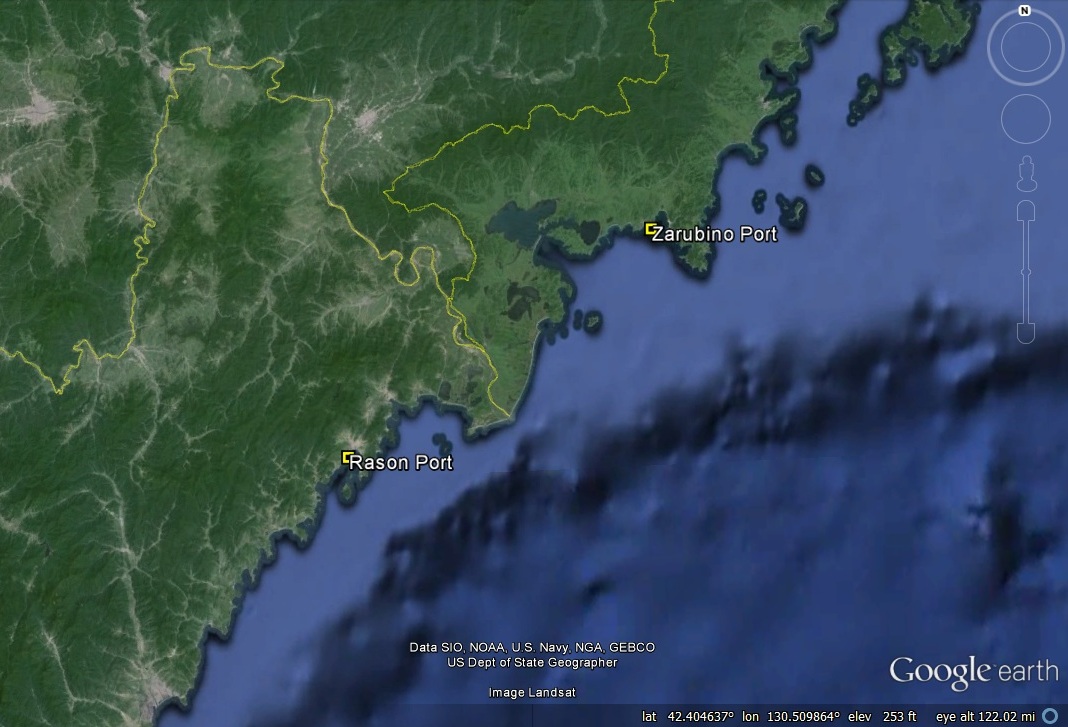
Zarubino-port

Pictured above (Google Earth) the relative locations of Rason and Zarubino Ports

According to Port Technology International:

China and Russia are to join forces and morph Russia’s Zarubino Port into one of the biggest ports in northeast Asia, according to the Chinese People’s Daily.

Zarubino Port is at the far south-eastern tip of Russia and a stones throw from North Korea, and only 18km from China.

North-east China’s Jilin province and Russia’s Summa Group reportedly signed a joint-agreement concerning the rejuvenation of the port at the fourth Conference on Interaction and Confidence-Building Measures in Asia (CICA), in Shanghai in May, 2014.

It is planned that the Zarubino Port will have the ability to handle 60 million tonnes of cargo once construction is completed.

ECNS, an English-language Chinese news source, reported a Summa deputy president as stating the planned port will be multifunctional, and is intended to “hugely benefit China and Russia”.

The port will be used to serve as a key port in ensuring the security of food provisions.

Read more at Voice of America.

Zarubina port is only 80km (directly) north-east of Rason. It will be interesting to see what kind of effect this project will have on development at Rason.

Share

US federal court rules against DPRK

Thursday, September 11th, 2014

In July 2014 a US federal court found the DPRK guilty of proliferating weapons and providing training to Hezbollah.

Here is the ruling (PDF).


Share

Choson Exchange on HGP master plan

Saturday, August 30th, 2014

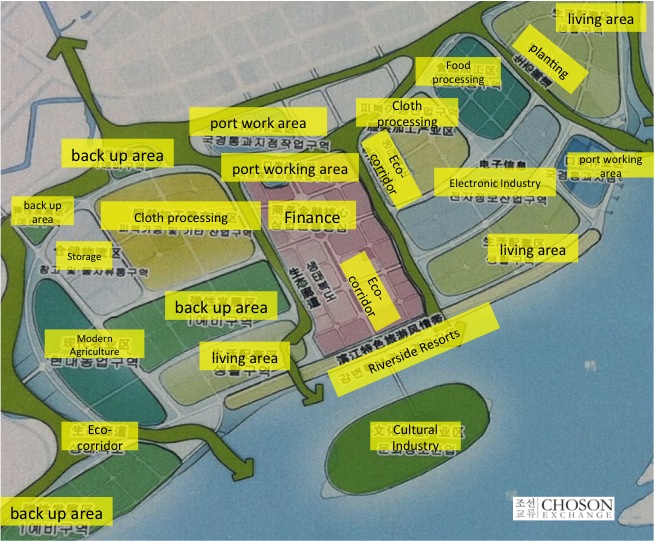
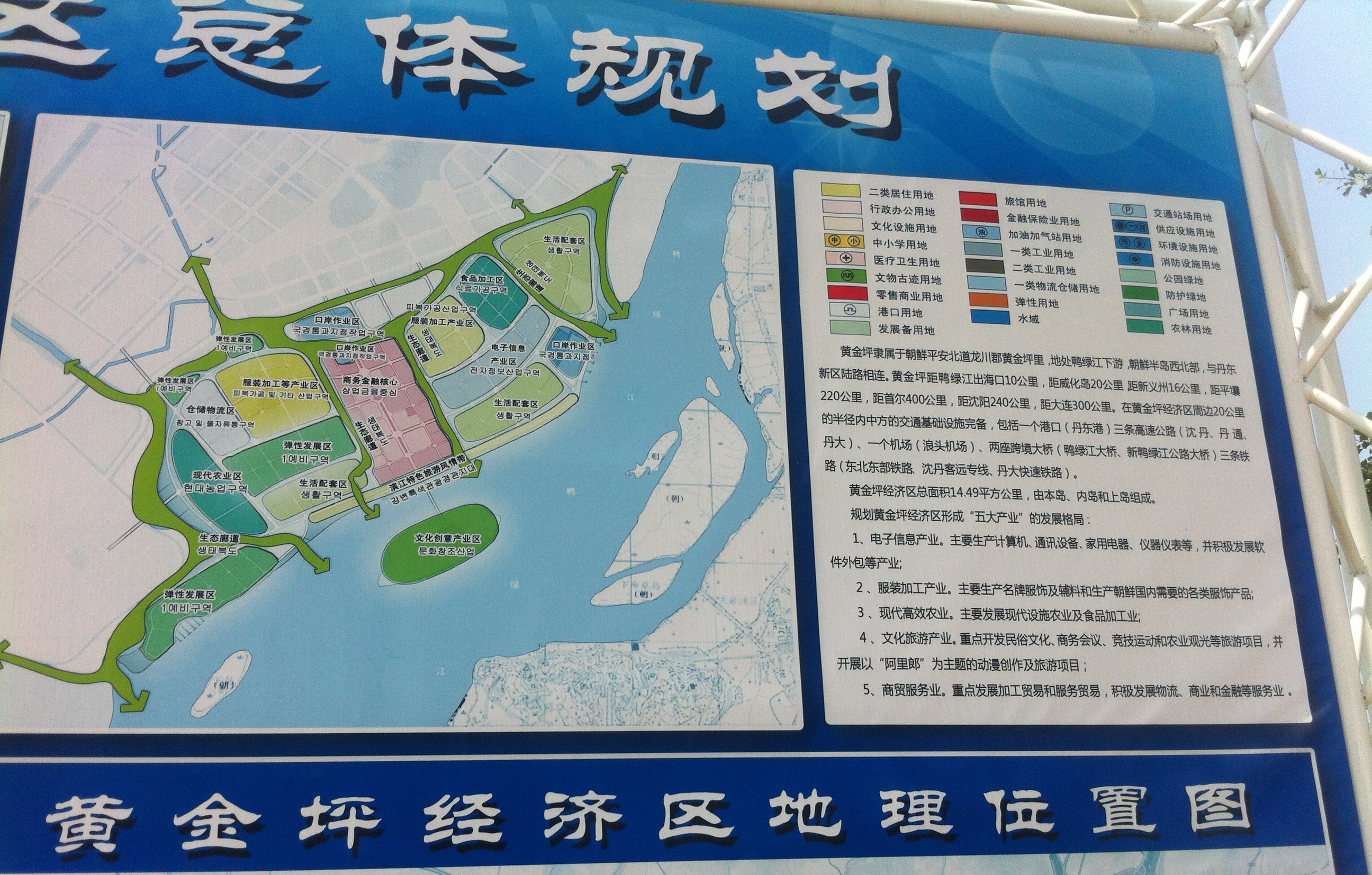
Choson Exchange posted a picture taken of a billboard in China that shows the master plan for the development of Hwanggumphyong (HGP) Economic Zone.

HGP-master-plan-choson-exchange

Click image for larger version, or visit Choson Exchange here

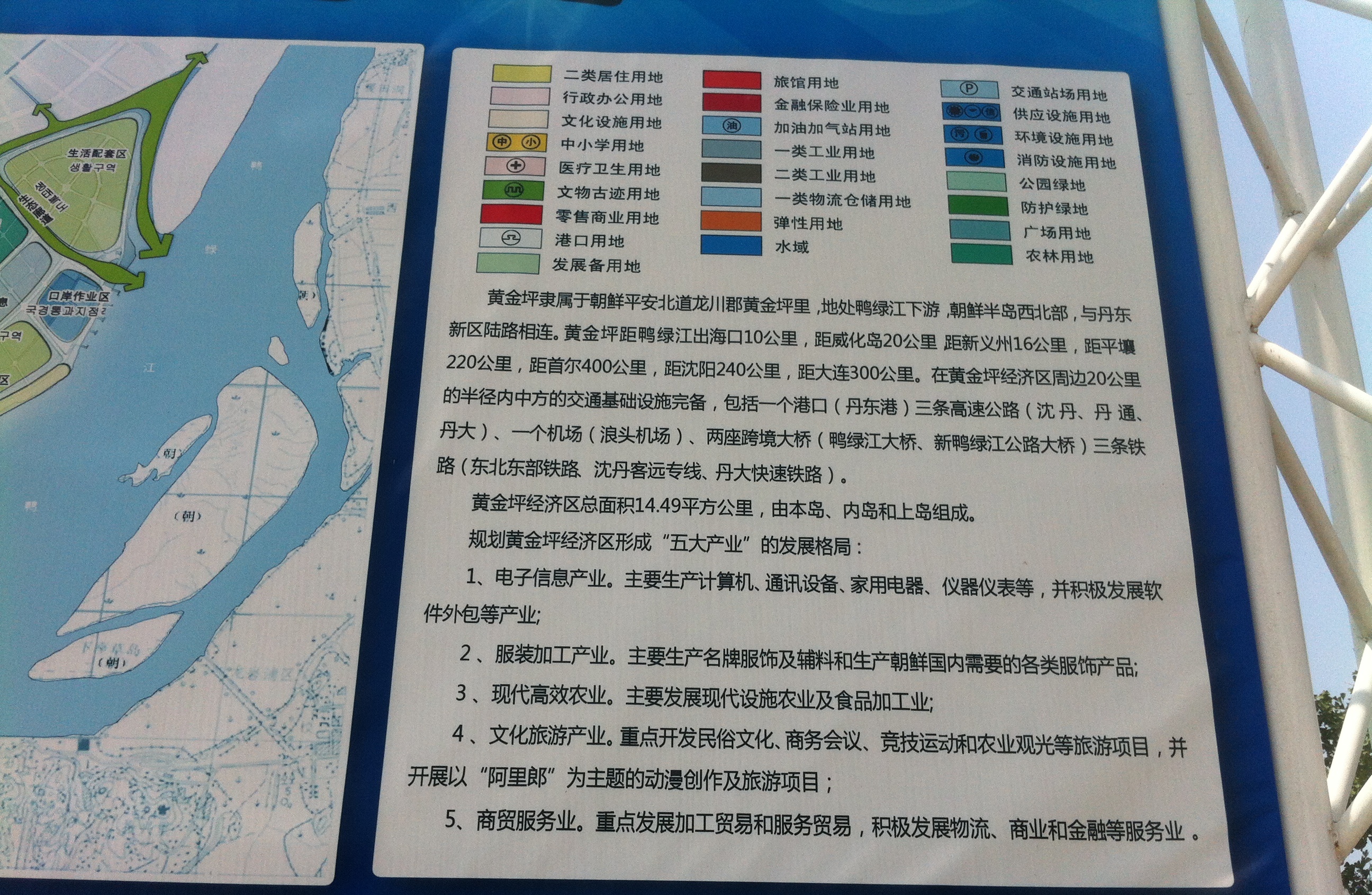
Here are larger photos of the same billboard:

Choson-exchange-2014-HGP-map-1

Choson-exchange-2014-HGP-map-2

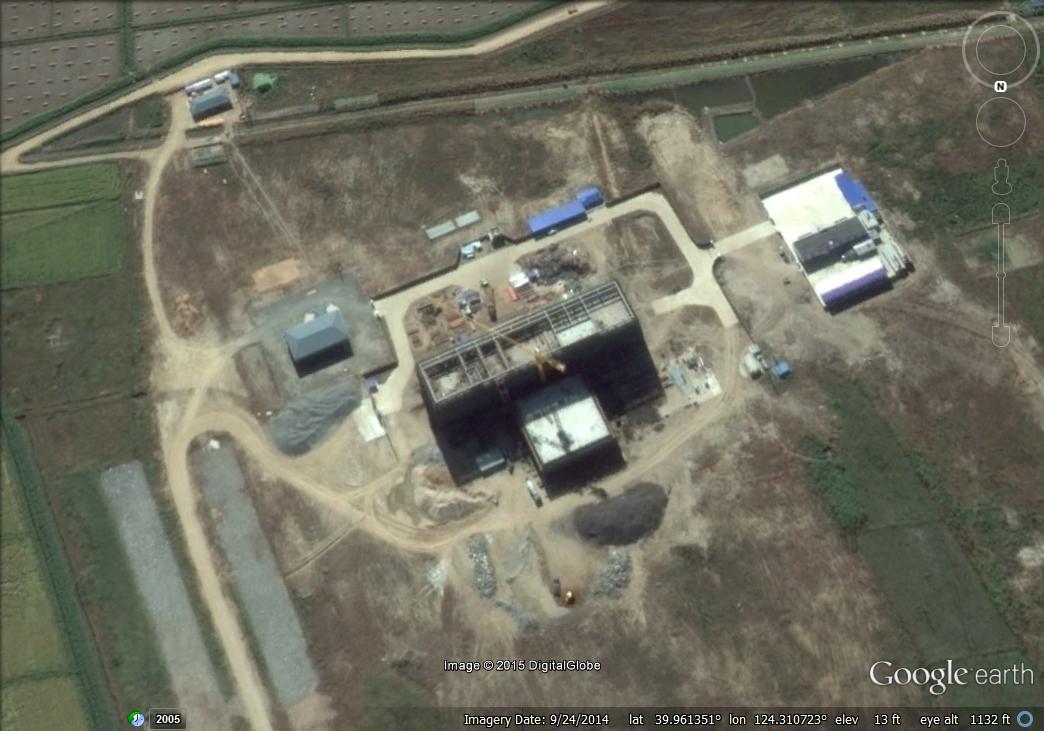
As was revealed in Andray Abrahamian’s report “The ABCs of North Korea’s SEZs“, there is a new construction project underway at the Hwanggumphyong SEZ:

HGP-construction-Google Earth-2014-9-24

It is not known for sure what this building is just yet, but it seems to fall within the “Finance Area” of the master plan.

Share

DPRK still owes Sweden for old Volvos

Friday, August 29th, 2014

According to Newsweek:

North Korea’s foremost trade debt to the western world is bizarre even by North Korean standards. Each time the administration misses a payment, as it has done every year for the past 40 years, we are reminded of one of the most unexpected political twists of the last century: Kim Il-sung scamming Sweden out of 1,000 Volvo 144 sedans.

Each fiscal year, the Swedish Export Credits Guarantee Board calculates interest on a single debt that accounts for more than half of all its political claims. It’s been a tradition since 1974, when the government agency was advised to insure Volvo, Atlas Copco, Kockum, and other Swedish companies’ exports to an entirely new buyer: Supreme Leader Kim Il-sung. For nearly half a century, the Board has been in charge of the Sisyphean task of coaxing €300m from a nation that thinks international law is an elaborate gambit designed by capitalist pig-dogs.

“We semi-annually advise when payments fall due,” Stefan Karlsson, the board’s head of risk advisory, tells Newsweek. “However, as is well known, North Korea does not fulfil their part of the agreement.” Sweden being Sweden and North Korea being North Korea, that’s about as hardball as it gets.

Small wonder that a regime so impressed with itself soon developed expensive taste. “Inside the 144 GL you sit on leather,” reads the unambiguous 1970s marketing material that Volvo likely sent its North Korean buyers. Together with contemporary industry giants Atlas Copco and Kockums, Volvo was one of the first European companies to foray into the North Korean market, and promptly received an order for 1,000 vehicles, the first of which were delivered in 1974. But less than a year later, the venture blew up at a Swedish-Korean industrial trade fair in Pyongyang, where it suddenly became clear that the Kim regime wasn’t actually paying for the goods it was importing – not even the machines it ordered for the expo. The bills were simply piling up.

Exporters realised that the venture had gone horribly wrong. But for the past few years, Sweden had had North Korea fever, with countless hours and funds spent on diplomatic and industrial ties. Acquiescing in a massive failure was not easy. “Many had been blinded by North Korea’s impressive economic growth – people had raced to get there first,” Lamm Nordenskiöld says. “Sweden was supposed to be the first country to unlock this new market.”

While many companies pressed on with payment negotiations in an effort to save face, Swedish media was having a blast unraveling one of the most bizarre trade debacles in recent memory. In an indignant spread featuring a photo of the supreme leader with the caption “Kim Il-sung – Broke Communist,” Åge Ramsby of the newspaper Expressen in 1976 went all out listing reports of other debts the Kim regime shirked, including a cool €5m to Swiss Rolex, from whom it had allegedly ordered 2,000 wristwatches with the engraving “donated by Kim Il-sung”.

“North Korea had expected to pay their foreign debts with deliveries of copper and zinc,” the Swedish newspaper Dagens Nyheter wrote in 1976, referring to the reserves the imported mining equipment was supposed to unlock. “But the North Korean economists had been too optimistic in their calculations, and the international market price for these ores had also dropped ­catastrophically.”

Fair enough – but two things suggest that botched calculations and sheer lack of funds only partially explain North Korea’s failure to pay up. First, it is widely accepted among biographers and manufacturers that the Kim regime conducted extensive industrial espionage during the trade fair. Colluding to cop specs from technology you’re paying for would be weird even by Kim’s standards.

More importantly, Erik Cornell, a diplomat and former Swedish ambassador to North Korea, recalls in his book North Korea: Emissary to Paradise a widespread local belief that the Western world had finally “seen the light” in the global struggle against the American imperialist – that Europe had recognised its duty to assist the brave People’s Republic, and that quibbles regarding who owed whom money would soon dissolve in grand efforts to crush capitalism as a whole.

Adjusted for interest and inflation, the debt to the Swedish state now exceeds three billion Swedish kronor, or €300m. It is an astronomical claim, particularly on capital that has depreciated to a fraction of its original value.

If Kim Jong-un and his officers rounded up all 1,000 vehicles and sold each of them at the current book value of about €2,000, they would raise 0.6% of the debt.

Read the full story here:
North Korea Owes Sweden €300m for 1,000 Volvos It Stole 40 Years Ago – And Is Still Using
Newsweek
John Ericson
2014-8-29

Share

Vietnam recalls traditional North Korean medicine

Friday, August 29th, 2014

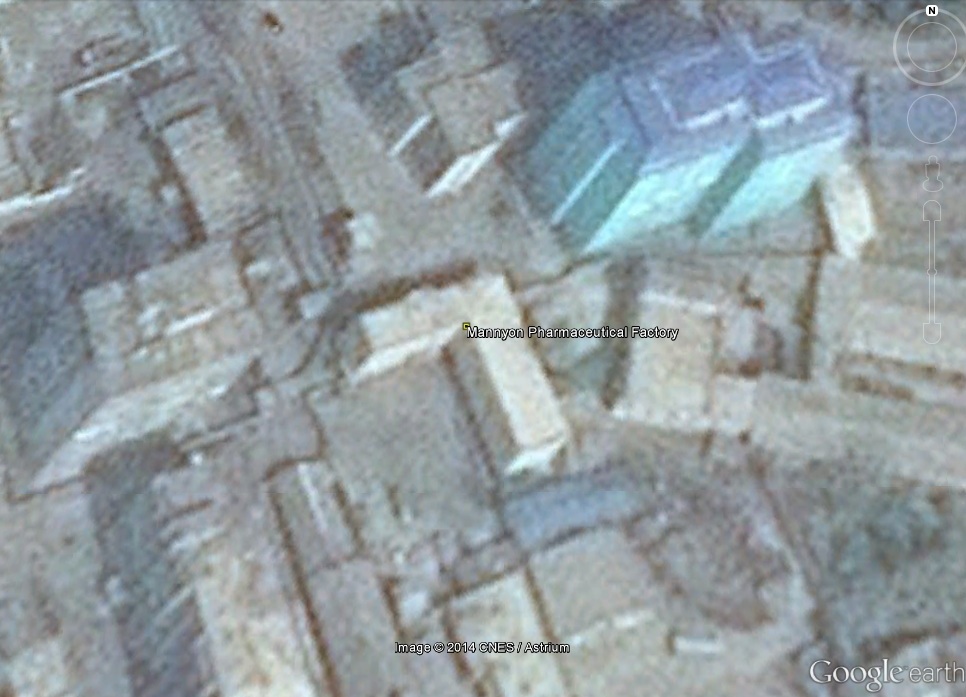
Mannyon-rx-factory-2014-8-29

Pictured above: The Mannyon Pharmaceutical Factory in North Korea which produced the banned medicine.

According to Vietnamnet Bridge:

The Bureau of Food Safety of the Ministry of Health on Wednesday decided to take Angunguhwanghwan (안궁우황환), a functional food produced by North Korea, off the market. It will also destroy all of the products, which contained high concentrations of mercury, arsenic and lead.

Test results of this product revealed that it contained mercury and arsenic exceeding the allowed limits. The Central Institute of Drug Testing collected the samples from the LC Tacy Red Ginseng Showroom in Hanoi.

The bureau has asked the firm to stop circulation, revoke and destroy the Angunguhwanghwan product and report the results to the department before August 29.

The product, produced by the Korea General Mannyon Health Corporation Chongryu No2, North Korea, was imported by Mannyon Vietnam. The product was licensed by the Bureau of Food Safety in July 2013.

As reported by the importer, it imported 30 boxes of this product in June 2014, with the purpose of introducing it to the local market. Four of the boxes were tested.

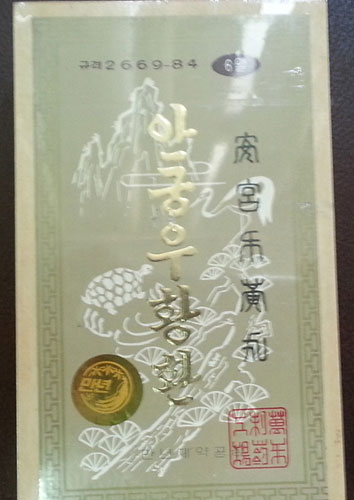
Here is a photo of the product:

Mannyon-rx-factory-product-banned-2014-8

Read the full story here:
N. Korean functional-food item taken off market
Vietnamnet Bridge
Le Ha
2014-8-29

Share

Norwegians seeking to set up art school in DPRK

Thursday, August 28th, 2014

According to the Art Newspaper:

The North Korean government has approved plans by two Norwegian artists to open an art academy in the country. Henrik Placht and Morten Traavik travelled to North Korea together for the first time in August to flesh out the proposal and to look for potential sponsors. So far they have received financial support from the Prince Claus Fund.

The academy is due to be called DMZ after the term for the Korean demilitarised zone. It will primarily be an academy for North Korean students, but the plan is to open it up for international exchange programmes, Placht says.

“One of the reasons for us going to North Korea is that we don’t believe in sanctions and the boycott of art,” Placht tells The Art Newspaper. “Next year we are planning an exhibition and workshop in North Korea, in co-operation with the North Korean government, which will feature well-known international artists as well as North Korean artists,” he adds.

The artists already have good contacts in North Korea thanks to Traavik, who has produced several art projects in the country—some in response to North Korea’s dictatorship. In 2012, Traavik organised The Promised Land, a performance in Kirkenes, northern Norway, in which North Koreans holding flags instructed more than 200 Norwegian soldiers to create sequences of images using individual placards.

That same year, Traavik also produced the first Norwegian arts festival in North Korea, “Yes, we love this country”, named after Norway’s national anthem. Meanwhile, earlier this year, he arranged for musicians from the Kum Song Music School to come to Bergen in western Norway to perform a Norwegian children’s play.

Placht also has experience setting up academies in extreme political contexts. In 2002, he founded the International Academy of Art Palestine, where he was a project director until 2009. “I will be able to draw on my experiences in Palestine when it comes to fundraising, curating and co-operating with the government,” Placht says. “But I will also seek to create trust with North Korea so that they will have a natural ownership of the academy.”

More information here.

Read the full story here:
Norwegian artists plan to open art academy in North Korea
Art Newspaper
Hanne Cecilie Gulstad
2014-8-28

Share

German Government offers TB assistance to DPRK

Tuesday, August 26th, 2014

According to Yonhap:

The German government has provided North Korea with US$600,000 in medical aid via [Caritas International], a U.S. media reported Tuesday.

The Roman Catholic group Caritas International, which was launched in Germany in 1897, has been campaigning to help the needy in the impoverished communist nation, especially those infected with tuberculosis (TB) and hepatitis.

“The German government is providing 450,000 euros [$600,000] to be used for the TB patients in the DPRK,” Reinhard A. Wurkner, a Caritas official in charge of Asia, was quoted as telling the Voice of America. DPRK is the acronym for the Democratic People’s Republic of Korea, North Korea’s official name.

Caritas began its North Korea project in 1996. It has since offered medical and nutritional assistance to TB and hepatitis patients in the country.

Read the full story here:
German gov’t offers US$600,000 in N. Korea aid
Yonhap
2014-8-26

Share

DPRK rice imports from China increase

Monday, August 25th, 2014

According to Yonhap:

North Korea bought US$7.02 million worth of rice from the neighboring country last month, up 115 percent from $3.27 million a year earlier, according to Chinese trade data from the Seoul-based Korea International Trade Association.

The amount also represents an on-month increase of 53 percent from $4.57 million.

The sudden increase in imports comes amid reports that the price of rice has risen sharply in the North.

According to the South Korean online newspaper DailyNK on Aug. 12, rice cost 5,800 won per kilogram in Pyongyang, up 1,550 won from the middle of July.

Read the full story here:
N. Korea’s imports of Chinese rice more than double
Yonhap
2014-8-25

Share