Archive for the ‘International Governments’ Category

Sony, “The Interview”, and new US sanctions

Wednesday, December 17th, 2014

UPDATE 28 (2015-3-17): Vox.com reports that a US congressman may have revealed a US response to the Sony hacking:

Rep. Michael McCaul hinted at a think tank event on Tuesday that the US may have been responsible for North Korea’s massive internet outage in late December.

McCaul, in the course of his answer on how the US responds to cyber threats, then mentioned North Korea: “There were some cyber responses to North Korea,” he said, referring to the country’s alleged role in the November hacks against Sony Pictures.

Though he did not explicitly confirm long-held suspicions that US cyberattacks were responsible for North Korea’s mass internet outage, McCaul’s comments have come as close as any official US statement ever has to acknowledging a role.

The comments, made at a cybersecurity policy event hosted by the Center for Strategic and International Studies, were first reported by Bloomberg reporter Chris Strohm and confirmed by a source with knowledge of the event.

Here is a link to the original Bloomberg report.

UPDATE 27 (2015-1-18): The New York Times is reporting that the NSA had broken into North Korea’s computer system before the North Koreans hacked Sony:

Spurred by growing concern about North Korea’s maturing capabilities, the American spy agency drilled into the Chinese networks that connect North Korea to the outside world, picked through connections in Malaysia favored by North Korean hackers and penetrated directly into the North with the help of South Korea and other American allies, according to former United States and foreign officials, computer experts later briefed on the operations and a newly disclosed N.S.A. document.

UPDATE 26 (2015-1-9): The NSA played a role in identifying the DPRK.

UPDATE 25 (2015-1-7): FBI reveals more details (New York Times):

The F.B.I.’s director, James B. Comey, said on Wednesday that the United States had concluded that North Korea was behind the destructive attacks on Sony Pictures partly because the hackers failed to mask their location when they broke into the company’s servers.

Mr. Comey said that instead of routing some of the attacks and messages through decoy servers, the hackers had sent them directly from known North Korean Internet addresses.

Though Mr. Comey did not offer more details about the government’s evidence in a speech in New York, senior government officials said that F.B.I.’s analysts discovered that the hackers made a critical error by logging into both their Facebook account and Sony’s servers from North Korean Internet addresses. It was clear, the officials said, that hackers quickly recognized their mistake. In several cases, after mistakenly logging in directly, they quickly backtracked and rerouted their attacks and messages through decoy computers abroad.

UPDATE 24 (2105-1-5): The DPRK criticized the latest round of unilateral sanctions imposed by the US. According to the New York Times:

North Korea denounced the United States on Sunday for imposing new sanctions on it after a cyberattack on Sony Pictures, calling them byproducts of American “hostility” toward the North.

North Korea reiterated its denial of involvement in the hacking of Sony computers and said Washington’s sanctions would only strengthen resolve to pursue its “military first” policy. That policy calls for an arms buildup, including nuclear weapons development, as a “deterrent” against Washington’s policy.

“The persistent and unilateral action taken by the White House to slap sanctions against the D.P.R.K. patently proves that it is still not away from inveterate repugnance and hostility toward the D.P.R.K.,” an unidentified government spokesman was quoted as saying by the North’s official Korean Central News Agency. D.P.R.K. stands for the Democratic People’s Republic of Korea, North Korea’s official name.

The statement from the spokesman was the North’s first reaction to the new sanctions the Obama administration announced on Friday.

UPDATE 23 (2015-1-2): US sanctions Pyongyang over Sony hack. According to the AP:

President Barack Obama signed an executive order on Friday authorizing the sanctions. Although the U.S. has already sanctioned North Korea over its nuclear program, these are the first sanctions punishing Pyongyang for alleged cyberattacks.

The Obama administration says the sanctions affect three North Korean entities, including a government intelligence agency and a North Korean arms dealer. The U.S. is also sanctioning 10 individuals who work for those entities or the North Korean government.

Those sanctioned are barred from using the U.S. financial system, and Americans are prohibited from doing business with them.

The updates to the treasury department’s list of sanctioned entities and individuals can be found here.

Here is the press release from the treasury department.

Here is additional coverage: Reuters, New York Times, Vox.com.

UPDATE 22 (2014-12-31): FBI still maintains DPRK is behind the attack.

UPDATE 21 (2014-12-25): Lizard Squad takes credit for DDoS attack on Xbox live. Also, I have had trouble accessing North Korean web pages this evening (11:20pm).

UPDATE 20 (2014-12-24): Meet the hacker group, Lizard Squad. Also, here is another story in the New York Times which casts doubt on the theory that the hack originated in the DPRK.

UPDATE 19 (2014-12-24): Via @levie on Tiwtter:

“A country with no internet is now essentially responsible for causing Hollywood to adapt its business model to the Internet. This is weird.

UPDATE 18 (2014-12-24): Martyn Williams reports that “The Interview” will be available on line. More at CNN and Washington Post.

UPDATE 17 (2014-12-23): Sony has authorized a limited release of “The Interview”  on Christmas Day. According to the Associated Press:

“The Interview” was put back into theaters Thursday when Sony Pictures Entertainment announced a limited theatrical release for the comedy that provoked an international incident with North Korea and outrage over its cancelled release.

Sony Entertainment CEO Michael Lynton said Tuesday that Seth Rogen’s North Korea farce “will be in a number of theaters on Christmas Day.” He said Sony also is continuing its efforts to release the film on more platforms and in more theaters.

“We have never given up on releasing ‘The Interview,'” Lynton said in a statement Tuesday. “While we hope this is only the first step of the film’s release, we are proud to make it available to the public and to have stood up to those who attempted to suppress free speech.”

For Sony, the decision was the culmination of a gradual about-face: After initially saying it had no plans to release the movie, the company began softening its position after it was broadly criticized.

Moviegoers celebrated the abrupt change in fortune for a film that appeared doomed as “The Interview” began popping up in the listings of independent theaters across the country Tuesday, from Atlanta to Los Angeles. The film stands to open in as many as a few hundred theaters on Thursday, the day it was originally set for wide release.

One of the loudest critics of the film’s shelving — President Barack Obama — hailed Sony’s reversal.

“The president applauds Sony’s decision to authorize screenings of the film,” said Obama spokesman Eric Schultz. “As the president made clear, we are a country that believes in free speech, and the right of artistic expression. The decision made by Sony and participating theaters allows people to make their own choices about the film, and we welcome that outcome.”

Rogen, who stars in the film he co-directed with Evan Goldberg, made his first public comments in a surreal ordeal that began with hackers leaking Sony executives’ emails and culminated in an ongoing confrontation between the U.S. and North Korea. The FBI has said North Korea was behind the hacking attacks.

“The people have spoken! Freedom has prevailed! Sony didn’t give up!” said Rogen on Twitter.

“VICTORY!!!!!!!” said James Franco, who co-stars in the film. “The PEOPLE and THE PRESIDENT have spoken.”

The film will be showing at the Alamo Draft House (where Team America was yanked).

UPDATE 16 (2014-12-23): In Update 11 I noted that the US has asked for Chinese support. Apparently China is cool to the idea. According to the Washington Post:

China said Tuesday there was no proof that North Korea was behind a cyberattack on Sony Pictures Entertainment, signaling its reluctance to side with the United States over the incident, while also rejecting speculation it could have cut off Pyongyang’s Internet access as punishment.

Asked about American requests for help from China to punish North Korea for cyberattacks, Hua Chunying, a spokeswoman for China’s foreign ministry, said the United States and North Korea needed to communicate directly.

She said Beijing had not seen proof of who was behind the attack on Sony. “We need sufficient evidence before drawing any conclusion,” she said at a news conference.

Administration officials had asked China last Thursday to block Pyongyang’s access to Internet routers and servers based in China, to expel North Korean hackers living in China and to pressure the regime of Kim Jong Un to end its alleged cyberoffensive against companies in the United States, according to one official.

Read the full story here.

UPDATE 15 (2014-12-22): This morning I was having trouble loading some North Korean web pages. Looks like others were as well: Martyn Williams, Bloomberg, Vox, New York Times, Wall Street Journal, Washington Post.

UPDATE 14 (2014-12-22): Martyn Williams has some more information here.

UPDATE 13 (2014-12-21): KCNA has published a second statement on the Sony hacking–this time from the National Defense Commission (the initial statement was from the Ministry of Foreign Affairs):

U.S. Urged to Honestly Apologize to Mankind for Its Evil Doing before Groundlessly Pulling up Others

Pyongyang, December 21 (KCNA) — The Policy Department of the National Defence Commission of the DPRK issued the following statement Sunday:

Strange thing that happened in the heart of the U.S., the ill-famed cesspool of injustice, is now afloat in the world as shocking news.

The Sony Pictures Entertainment, the biggest movie producer in the U.S., which produced the undesirable reactionary film “The Interview” daring hurt the dignity of the supreme leadership of the DPRK and agitating even terrorism and had a plan to distribute it, was exposed to surprisingly sophisticated, destructive and threatening cyber warfare and has been thrown into a bottomless quagmire after suffering property losses worth hundreds of millions of dollars.

The public in the U.S. is now describing this case as “disgrace suffered by Sony Pictures Entertainment,” “very sorry thing caused by the U.S.,” “Sony Pictures Entertainment showing a white flag before hackers” and the “unprecedented disaster suffered by the U.S.”

Those who meted out a stern punishment of justice were reported to be cyber experts styling themselves “guardians of peace”.

Seized with terrible horror and threat in face of their merciless hacking attack in retaliation against unjust actions, many movie and drama distributors in North America including 41 states of the U.S. and Canada immediately canceled the screening of the reactionary movie. And it was reported that the Sony Pictures Entertainment which directly sponsored its production and distribution hastily issued a statement on Dec. 25 that it would suspend the screening of the undesirable movie which had been planned in 63 countries.

The NDC of the DPRK highly estimates the righteous action taken by the “guardians of peace,” though it is not aware of their residence.

It, at the same time, considers as fortunate the step taken by the Sony Pictures Entertainment to give up the overall distribution of the above-said movie due to the decision and strong pressure of the movie and drama distributors for stopping the screening of the reactionary movie, though belatedly.

This is an official stand of the army and the people of the DPRK on what happened in the heart of the U.S.

This stand is taken by the DPRK because the movie “The Interview” is an undesirable and reactionary one justifying and inciting terrorism which should not be allowed in any country and any region.

Another reason is that the movie is run through with a story agitating a vicious and dastardly method of assassinating a head of a legitimate sovereign state.

No wonder, even political and social circles of the U.S. commented that it is quite wrong to defame the head of the state for the mere reason that his politics is different from that of the U.S. and it is in the hostile relationship with the latter and, therefore, the Sony Pictures Entertainment got into a serious trouble and paid a due price.

For these reasons, the DPRK is more highly praising the “guardians of peace” for their righteous deed which prevented in advance the evil cycle of retaliation– terrorism sparks terrorism.

It is quite natural that the movie and drama producers should refrain from undesirable deeds contrary to the noble mission to lead morality and civilization.

But what matters is that the U.S. and its followers are groundlessly trumpeting that the recent cyber attack was made by the DPRK.

The FBI issued the results of the investigation into the hack at the Sony Pictures Entertainment on December 19.

According to them, it suffered tremendous losses.

One may say this is the due price incurred by wrong deed, the evil act of hurting others.

The U.S. released a statement asserting that this loss was caused by the DPRK.

No matter how big and disgraceful the loss may be, the U.S. should not pull up others for no reason.

The FBI presented a report on the results of technical analysis of hacking program used by the “guardians of peace” for this attack, citing it as the ground that the serious hacking was caused by the DPRK.

The report says the malignant code had access to north Korea’s IP already known several times and the hacking methods applied in the “March 20 hacking case” and during cyber warfare against media and various other computer networks in south Korea in recent years are similar to that applied against the Sony Pictures Entertainment this time, being another ground that “this was done by the north”.

The report, in particular, adds that the malignant code and algorithm applied during the attack are similar to what was used during the hacking attack on south Korea, citing it as a proof.

Not satisfied with those groundless “evidence”, the FBI is letting loose ambiguous remarks that it is hard to fully prove due to the “protection of sensitive information sources.”

This means self-acknowledgement that the “assertion about the north’s deed” came from an intentional allegation rather than scientific evidence.

It is a common sense that the method of cyber warfare is almost similar worldwide. Different sorts of hacking programs and codes are used in cyberspace.

If somebody used U.S.-made hacking programs and codes and applied their instruction or encoding method, perhaps, the “wise” FBI, too, could not but admit that it would be hard to decisively assert that the attack was done by the U.S.

Moreover, the DPRK has never attempted nor made a “cyber-attack” on south Korea. The rumor about “cyber-attack” by the DPRK was a concoction made by the south Korean puppet regime and its plot.

After all, the grounds cited by the FBI in its announcement were all based on obscure sci-tech data and false story and, accordingly, the announcement itself is another fabrication. This is the DPRK’s stand on the U.S. gangster-like behavior against it.

What is grave is that U.S. President Obama is recklessly making the rumor about “DPRK’s cyber-attack on Sony Pictures” a fait accompli while crying out for symmetric counteraction, strict calculation and additionally retaliatory sanctions.

This is like beating air after being hit hard. A saying goes every sin brings its punishment with it. It is best for the guilty to repent of its evil doings and draw a lesson when forced to pay dearly for them.

The DPRK has clear evidence that the U.S. administration was deeply involved in the making of such dishonest reactionary movie.

It is said that the movie was conceived and produced according to the “guidelines” of the U.S. authorities who contended that such movies hurting the dignity of the DPRK supreme leadership and inciting terrorism against it would be used in an effective way as “propaganda against north Korea”.

The U.S. Department of State’s special human rights envoy went the lengths of urging the movie makers to keep all scenes insulting the dignity of the DPRK supreme leadership in the movie, saying it is needed to “vex the north Korean government”.

The facts glaringly show that the U.S. is the chief culprit of terrorism as it has loudly called for combating terrorism everywhere in the world but schemed behind the scene to produce and distribute movies inciting it in various countries of the world.

It is not exaggeration to say in the light of the prevailing situation that the U.S. administration and President Obama looking after the overall state affairs of the U.S. have been behind the case.

Can he really cover up the crimes he has committed by trying so hard to falsify the truth and turn white to black.

So we watched with unusual attention what had been done by the “guardians of peace” to avert terrorism and defend justice.

Yet, we do not know who or where they are but we can surely say that they are supporters and sympathizers with the DPRK.

The army and people of the DPRK who aspire after justice and truth and value conscience have hundreds of millions of supporters and sympathizers, known or unknown, who have turned out in the sacred war against terrorism and the U.S. imperialists, the chieftain of aggression, to accomplish the just cause.

Obama personally declared in public the “symmetric counteraction”, a disgraceful behavior.

There is no need to guess what kind of thing the “symmetric counteraction” is like but the army and people of the DPRK will never be browbeaten by such a thing.

The DPRK has already launched the toughest counteraction. Nothing is more serious miscalculation than guessing that just a single movie production company is the target of this counteraction. Our target is all the citadels of the U.S. imperialists who earned the bitterest grudge of all Koreans.

The army and people of the DPRK are fully ready to stand in confrontation with the U.S. in all war spaces including cyber warfare space to blow up those citadels.

Our toughest counteraction will be boldly taken against the White House, the Pentagon and the whole U.S. mainland, the cesspool of terrorism, by far surpassing the “symmetric counteraction” declared by Obama.

This is the invariable toughest stand of the army and people of the DPRK.

Fighters for justice including “guardians of peace” who turned out in the sacred drive for cooperation in the fight against the U.S. to defend human justice and conscience and to dismember the U.S. imperialists, the root cause of all sorts of evils and kingpin of injustice, are sharpening bayonets not only in the U.S. mainland but in all other parts of the world.

The just struggle to be waged by them across the world will bring achievements thousands of times greater than the hacking attack on the Sony Pictures Entertainment.

It is the truth and inevitability of the historical development that justice prevails over injustice.

Whoever challenges justice by toeing the line of the biggest criminal U.S. will never be able to escape merciless punishment as it is the target of the sacred drive for cooperation in the fight against the U.S.

The U.S. should reflect on its evil doings that put itself in such a trouble, apologize to the Koreans and other people of the world and should not dare pull up others.

UPDATE 12 (2014-12-21): Obama states he will consider adding the DPRK back to the list of state sponsors of terror. According to the New York Times:

As the United States moves closer to taking Cuba off the list of state sponsors of terrorism, President Obama said he would “review” whether to return North Korea to the list, part of a broader government response to a damaging cyberattack on Sony’s Hollywood studio.

“We have got very clear criteria as to what it means for a state to sponsor terrorism, and we don’t make those judgments just based on the news of the day,” Mr. Obama told CNN in an interview broadcast Sunday. “We look systematically at what’s been done.”

North Korea was removed from the list six years ago, but the government has again prompted the ire of the United States after the F.B.I. said it had extensive evidence that linked the North Korean government to a cyberattack on Sony Pictures.

UPDATE 11 (2014-12-21): Media reports indicate the US will seek Chinese support to resolve North Korean hacks. According to the New York Times:

The Obama administration has sought China’s help in recent days in blocking North Korea’s ability to launch cyberattacks, the first steps toward the “proportional response” President Obama vowed to make the North pay for the assault on Sony Pictures — and as part of a campaign to issue a broader warning against future hacking, according to senior administration officials.

“What we are looking for is a blocking action, something that would cripple their efforts to carry out attacks,” one official said.

So far, the Chinese have not responded. Their cooperation would be critical, since virtually all of North Korea’s telecommunications run through Chinese-operated networks.

It is unclear that China would choose to help, given tensions over computer security between Washington and Beijing since the Justice Department in May indicted five hackers working for the Chinese military on charges of stealing sensitive information from American companies.

The secret approach to China comes as American officials, convening a half-dozen meetings in the White House Situation Room last week, including one of the top national security team on Thursday night, have been developing options to give to the president during his vacation in Hawaii. They include new economic sanctions, mirroring those recently placed on Russian oligarchs and officials close to President Vladimir V. Putin, which would cut off their access to cash — the one perk that allows the elite surrounding Kim Jong-un, the North Korean leader, to live lifestyles their starving countrymen can barely imagine.

The sessions also included discussions of “information operations” directed at the North Korean people, officials said, but similar efforts by South Korea to sway opinion in the North have often created a furious backlash.

This was also covered by the Wall Street Journal.

Although China has made no public response to the request, a separate report in the New York Times indicates that frustration with the DPRK among China’s leadership is as an all time high.

UPDATE 10 (2014-12-20): The DPRK denies involvement and makes an offer:

DPRK Foreign Ministry Rejects U.S. Accusation against Pyongyang over Cyber Attack

Pyongyang, December 20 (KCNA) — A spokesman for the Foreign Ministry of the DPRK gave the following answer to a question put by KCNA Saturday as regards the U.S. accusation against the DPRK over a cyber attack on a movie company in the U.S.:

Obama, Kerry and other high-ranking authorities of the U.S. cried out for sort of counter-measure Friday, claiming that the results of the investigation into the cyber-attack on the Sony Pictures Entertainment proved that the DPRK was behind it.

They, without presenting any specific evidence, are asserting they can not open it to public as it is “sensitive information.”

Clear evidence is needed to charge a sovereign state with a crime.

Reference to the past cyber-attacks quite irrelevant with the DPRK and a string of presumptive assertions such as “similarity” and “repetition” can convince no one.

The U.S. act of daring charge the DPRK with a crime based on absurd “investigation results” reveals its inveterate bitterness toward the DPRK.

This is proven, as in the recent cyber-attack, by the recent urge made by a man called a “human rights special envoy” of the U.S. State Department to movie-makers that they should harass the north Korean government and keep alive scenes hurting the dignity of the its supreme leadership.

The U.S. ruling quarters are working hard to divert the criticism of its administration to the DPRK as the plan of putting on show the anti-DPRK film on Christmas Day canceled due to the controversial cyber-attack, causing an uproar in the U.S.

We will never pardon those undesirable elements keen on hurting the dignity of the supreme leadership of the DPRK. In case we retaliate against them, we will target with legitimacy those responsible for the anti-DPRK acts and their bases, not engaging in terrorist attack aimed at the innocent audience in cinemas.

The army of the DPRK has the will and ability to do so.

The U.S. State Secretary is going to justify the production of the movie hurting the dignity of the supreme leadership of a sovereign state while trumpeting about the freedom of expression. He should know that there is punishment of libel in enforcement of international law.

We propose the U.S. side conducting a joint investigation into the case, given that Washington is slandering Pyongyang by spreading unfounded rumor.

We have a way to prove that we have nothing to do with the case without resorting to torture as what the CIA does.

The U.S. should bear in mind that it will face serious consequences in case it rejects our proposal for joint investigation and presses for what it called countermeasure while finding fault with the DPRK.

UPDATE 9 (2014-12-19): Some technology writers still believe the the DPRK was not behind the attack. And here. And here.

UPDATE 8 (2014-12-19): US Department of State on the hacking.

UPDATE 7 (2014-12-19): President Obama makes remarks on the hackingMore politics here.

UPDATE 6 (2014-12-19): There is the official FBI press release on the matter.

UPDATE 5 (2014-12-19): The New York Times has published information from the FBI that implicates the DPRK in the Sony hack:

The F.B.I. on Friday said it had extensive evidence that the North Korean government organized the cyberattack that debilitated Sony Pictures computers, marking the first time the United States has explicitly accused the leaders of a foreign nation of hacking American targets.

The bureau said that there were significant “similarities in specific lines of code, encryption algorithms, data deletion methods, and compromised networks” to previous attacks by the North Koreans. It also said that there were classified elements of the evidence against the North that it could not reveal.

“The F.B.I. also observed significant overlap between the infrastructure used in this attack and other malicious cyberactivity the U.S. government has previously linked directly to North Korea,” the bureau said. “For example, the F.B.I. discovered that several Internet protocol addresses associated with known North Korean infrastructure communicated with I.P. addresses that were hardcoded into the data deletion malware used in this attack.”

The F.B.I. said that some of the methods employed in the Sony attack were similar to ones that were used by the North Koreans against South Korean banks and news media outlets in 2013.

“We are deeply concerned about the destructive nature of this attack on a private sector entity and the ordinary citizens who worked there,” the F.B.I. said.

It added: “Though the F.B.I. has seen a wide variety and increasing number of cyberintrusions, the destructive nature of this attack, coupled with its coercive nature, sets it apart. North Korea’s actions were intended to inflict significant harm on a U.S. business and suppress the right of American citizens to express themselves. Such acts of intimidation fall outside the bounds of acceptable state behavior.”

North Korea has been under extraordinary economic sanctions for decades, and it has done nothing to curb either its nuclear program or these cyberattacks. A military response seems unlikely — the White House said on Thursday that it was examining options for a “proportional response,” and that would seem to rule out conventional military options.

Some of the evidence has been developed from “implants” that the National Security Agency has placed in networks around the world. But North Korea has proved to be a particularly hard target, because it has relatively low Internet connectivity to the rest of the world, and its best computer minds do not move out of the country often, where their machines and USB drives could be accessible targets.

“Suffice it to say,” one senior intelligence official said this week, “that we almost never name a suspect country. So when we do, it’s got to be based on something fairly strong.”

As the F.B.I. pointed out, the attacks at Sony share similarities with a similar series of destructive attacks last year on South Korean banks and broadcasters, and they used the same data-wiping tool that Iranian hackers used to destroy data on 30,000 computers at Saudi Aramco in 2012, according to forensics researchers.

In 2009, a similar campaign of coordinated cyberattacks over the Fourth of July holiday hit 27 American and South Korean websites, including those of South Korea’s presidential palace, called the Blue House, and its Defense Ministry, and sites belonging to the United States Treasury Department, the Secret Service and the Federal Trade Commission. North Korea was suspected, but a clear link was never established.

But those were all “distributed denial of service” attacks, in which attackers flood the sites with traffic until they fall offline. The Sony attack was far more sophisticated: It wiped data off Sony’s computer systems, rendering them inoperable.

“The cyberattack against Sony Pictures Entertainment was not just an attack against a company and its employees,” Jeh C. Johnson, the secretary of the Department of Homeland Security, said in a statement. “It was also an attack on our freedom of expression and way of life.”

Mr. Johnson said the attacks underscored the importance of taking measures “to rapidly detect cyberintrusions and promote resilience throughout all of our networks.”

“Every C.E.O. should take this opportunity to assess their company’s cybersecurity,” he added.

UPDATE 4 (2014-12-18): Paramount has chickened out and will not let any theater show “Team America” right now…See here and here.

UPDATE 3 (2014-12-18): Christmas day screening of Team America at the Alamo Draft House is already sold out.

UPDATE 2 (2014-12-18): Maybe time for a Team America sequel?

UPDATE 1 (2014-12-18): Team America to the rescue! At least one American theatre will stick up for the first amendment. And let’s be honest, it is probably a much better movie.

Oh, and this.

ORIGINAL POST (2014-12-17): Today Sony Pictures announced it was canceling the opening of the film The Interview. According to NBC:

Sony is dropping its planned Dec. 25 release of “‘The Interview,” the comedy starring Seth Rogen and James Franco that depicts the assassination of North Korean leader Kim Jong Un.

The decision comes after some of the nation’s largest movie theater chains, including Regal, Cinemark, Carmike and Cineplex, said they were holding back or dropping “The Interview” from screens in the aftermath of a hack that has ballooned from embarrassing disclosures for Sony Pictures executives to involve threats against theaters screening the film.

“Sony Pictures has been the victim of an unprecedented criminal assault against our employees, our customers, and our business,” Sony said in a statement Wednesday, saying that it reached the decision after the top cinema chains pulled out.

“Those who attacked us stole our intellectual property, private emails, and sensitive and proprietary material, and sought to destroy our spirit and our morale — all apparently to thwart the release of a movie they did not like. We are deeply saddened at this brazen effort to suppress the distribution of a movie, and in the process do damage to our company, our employees, and the American public,” the company said.

At the same time, another North Korea themed film was also put on hold.

This seemed like a massive over-reaction in my opinion until a few minutes later when this story was published by the New York Times:

American intelligence officials have concluded that the North Korean government was “centrally involved” in the recent attacks on Sony Pictures’s computers, a determination reached just as Sony on Wednesday canceled its release of the comedy, which is based on a plot to assassinate Kim Jong-un, the North Korean leader.

Senior administration officials, who would not speak on the record about the intelligence findings, said the White House was still debating whether to publicly accuse North Korea of what amounts to a cyberterrorism campaign. Sony’s decision to cancel release of “The Interview” amounted to a capitulation to the threats sent out by hackers this week that they would launch attacks, perhaps on theaters themselves, if the movie was released.

You can read the remainder of the article here.

Share

Hyundai Asan losses in the DPRK

Tuesday, November 18th, 2014

According to Yonhap:

Hyundai Asan Corp., the company that pioneered inter-Korean commercial ties, said Tuesday that its loss from the suspension of its North Korea tour programs is estimated at nearly 1 trillion won (US$909 million) over the past six years.

The company said on the eve of the 16th anniversary of starting the tours to Mount Kumgang on North Korea’s east coast that it has also been forced to reduce its workforce by up to 73 percent.

Before visits were stopped, the company employed 1,084 people to handle tours to Mount Kumgang and the city of Kaesong, but the staff has been slashed to just 285. Kaesong was the capital of the Goryeo Dynasty (918-1392).

The estimate is based on the assumption that some 300,000 tourists would have visited the scenic mountain and seaside resort on an annual basis if the ban was not placed. For Kaesong, Hyundai Asan said the loss in earnings was calculated on the premise that some 100,000 people would have visited the city per year.

Seoul banned all tourists from visiting the isolated country after a North Korean guard shot a South Korean visitor dead in July 2008 at Mount Kumgang. South Korea said the North must formally apologize for the mishap and assure that the tragedy will not occur in the future.

Tourists first started visiting the mountains in November 1998 and by 2008, over 1.93 million made the trip to the North.

“The halt in tourism to the mountain resort has cost the company 809.4 billion won, while losses brought on by a ban on tourism to the ancient city of Kaesong on the west coast, has ballooned to 125.2 billion won with the total reaching 934.7 billion won,” the company said. They added that if tours do not resume soon, the loss in earnings will reach the 1 trillion won mark.

The halt in tourism is particularly painful because the company, part of the larger Hyundai Group, invested 226.8 billion won in various facility investments and US$486.69 million to acquire land and operational rights from Pyongyang.

Hyundai Asan said that despite troubles, it has a plan in place that can restart tours in two months, with its top executives still hoping that cross-border relations will improve so operations can resume.

Read the full story here:
Hyundai Asan faces 1 tln won loss on N. Korea tour suspension
Yonhap
2014-11-18

Share

Kim Jung Un Stresses Protecting National Heritage

Tuesday, November 18th, 2014

Institute for Far Eastern Studies (IFES)

The DPRK leader Kim Jong Un recently emphasized the work of national heritage protection through the announcement of Nojak. In the DPRK vernacular, Nojak means the immortal writing of the highest leaders, Kim Il Sung and Kim Jong Il.

In October 30, DPRK’s Chosun Central News Agency reported that on October 24, the First Chairman Kim Jong Un made a statement on “National Heritage Protection Work as a Patriotic Business that Brings Honor to the Heritage and History of Our Nation,” together with members of the Workers’ Party Central Committee, in celebration of the 20th anniversary (October 29) of field guidance at the tomb of Tangun in Pyongyang by Eternal Chairman Kim Jong Il.

During the discourse, First Chairman Kim Jong Un stressed that “it is our strong will to flourish as a powerful nation which has inherited a glorious culture with a long history of being a universally civilized country.”

He went on to say, “by well managing the preservation of the remains and relics of the old capital city of Pyongyang and Kaesong, further interest should be turned in preserving the remains that have meaning as a national treasure in other suburban areas.” He also pointed out that “we need to fight hard the tendency of Dadaism, which refuses the superiority of one’s country and not managing the preservation of relics, which leads to the phenomenon of damaging them.”

He also added, “It is important to preserve the original form and not destroy the ecological environment of the scenic spots” and also stressed that “it is important to set up a thorough countermeasure so that the scenic spot will not be destroyed or polluted because of wastewater and factory pollution, pests and underground development of resources, and forest fires.”

Kim Jung Un also said “parts of the city and districts have not turned their interest in managing the preservation of historical remains; therefore, precious historical relics have been stolen or destroyed.” He further pointed out that “there has been cases where the ecological environment had been destroyed and the scenic beauty had vanished at the scenic spot.”

“Cabinet, relevant ministries and central organizations should turn their interest to historical remains and museums where maintenance and construction should be focused at these scenic spots so that facilities, materials, and funds that are demanded can be supported with responsibility.” He also proposed a solution: “through tourism and observation of historical remains and scenic spots, a portion of money that had been earned should be turned into the fund for protecting the ethnic heritage so that it can be managed autonomously.”

He went on to stress that “at the Guidance Bureau for the Preservation of National Heritage, in order to designate the natural heritage and historical monuments of the people at the UNESCO World Heritage, exchange business with other countries and the UN has been underway, especially in strengthening academic exchanges related to national cultural heritage, and especially with the compatriots of the South and overseas.”

Furthermore, he stated that the “Complex of Koguryo Tombs and historical relics at Kaesong City had been designated as a World Heritage; however, there needs to be continuous work in finding more of our country’s outstanding material heritage, non-material heritage, and natural heritage to be registered at the UNESCO World Heritage.”

In the discourse, Kim Jung Un stated that “national heritage work is a patriotic business which can lift up the country and a way to hold on to the tradition and history of the country.” He added that the “principle of identity, principle of history and scientific history are the basic principles that need to be consistently followed in order to develop and protect the national cultural heritage.”

The recent talk that has constantly stressed national heritage protection work by the Kim Jung Un regime can be seen as a move to infuse pride in the people for the history and culture of the country and to strengthen the solidarity of the people.

Share

Eugene Bell expands TB work in DPRK

Tuesday, November 11th, 2014

According to Yonhap:

A U.S. charity group said Tuesday it has agreed with North Korea to expand its medical aid program in the impoverished nation.

Under the deal, the Washington-based Eugene Bell Foundation will construct three new wards at tuberculosis (TB) treatment centers in Pyongyang.

It is the fruit of a three-week trip to the communist nation by a group of 13 officials from the foundation.

“The number of patients at those treatment centers has grown as the activity of our foundation is increasingly known,” a foundation official said. “Every treatment center suffers a severe lack of wards.”

The foundation has long provided medical humanitarian assistance to North Korea, especially for multidrug-resistant tuberculosis.

In a new program, it is sending 770 million won (US$750,000) worth of TB medication to the North.

Read the full story here:
U.S. charity group to expand medical aid program in N. Korea
Yonhap
2014-11-11

Share

DPRK to open Tongrim to Chinese/other tourists

Tuesday, November 11th, 2014

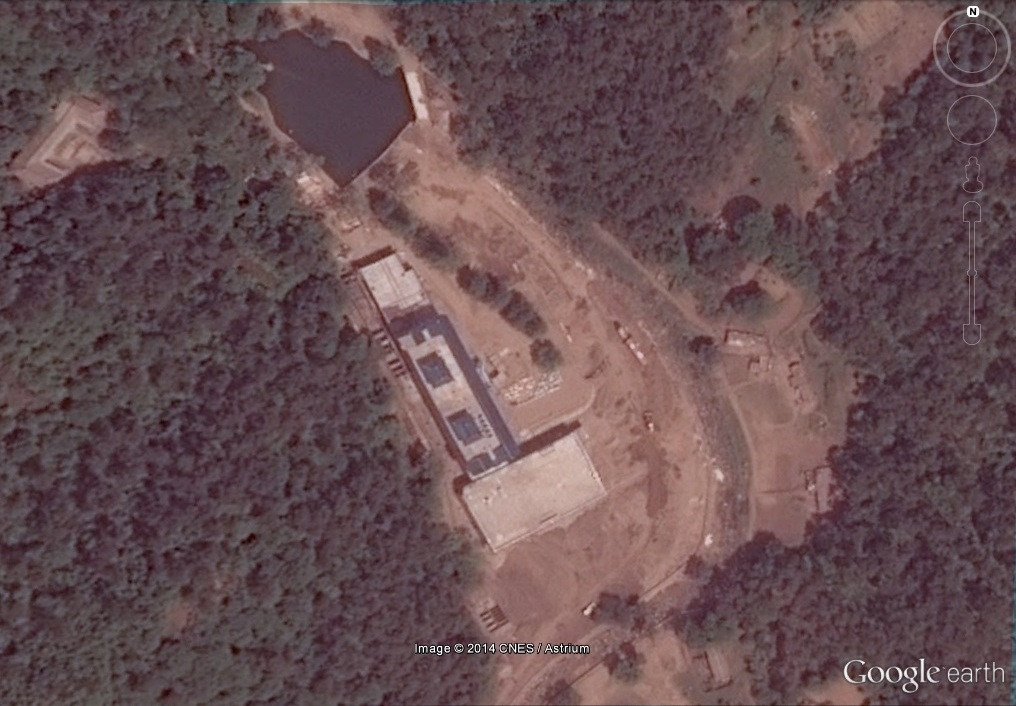
New-tongrim-Hotel-2014-10-16

Pictured Above (Google Earth): The new Tongrim Waterfall hotel

UPDATE 2 (2014-11-11): Koryo Tours announces that westerners will be able to visit Tongrim as well:

For anyone looking for an exciting opportunity to travel in one of the least-seen parts of the least-seen nation in the world Koryo Tours is proud to offer the option to visit the city of Sinuiju, and take a drive down to the city of Dongrim – newly open to western tourists after years of our hard work pushing for access.

We have two options available for tours to this area; a day trip from the Chinese border city of Dandong, or an overnight extension to one of our regular DPRK trips as an extension to any tour that leaves the country by train – both on group and independent tours.

These areas were opened to western tourists due to the hard work of Koryo Tours’ staff in negotiating with the local and national authorities in the DPRK for access to these areas – know that if you join one of these trips, or any of our tours, you’re travelling with the company that made it all possible, we’d be glad to have you along with us!

You can now visit Sinuiju, Dongrim, and stay overnight either if you finish your tour in the DPRK by train travelling from Pyongyang up to Sinuiju on the Chinese border – this is a 24 hour extension that offers a great way to see some sites in North Pyongan province; a rarely seen part of North Korea.

UPDATE 1 (2014-10-16): DPRK opens Tongnim-jun to Chinese tourists. According to the Global Times:

The Democratic People’s Republic of Korea (DPRK) opened its city of Tongnim-jun to Chinese tourists on Thursday, in the latest sign of the reclusive country developing its tourism sector.

Tongnim-jun is in Sinuiju, an area which borders northeast China’s Liaoning Province.

Under an agreement signed by tourist agencies of the two countries, Chinese group tourists can visit Tongnim-jun for two days from Dandong City in Liaoning.

The Dandong branch of the China International Travel Service has built a four-star hotel in the area with an investment of 30 million yuan (4.88 million US dollars).

Chinese group tourists can visit a number of DPRK cities, including its capital Pyongyang, Rason, Namyang, Chongjin and Mount Kumgang, by bus or by train.

The two countries are considering opening self-drive tours for Chinese tourists from Dandong, according to You Zejun, head of the municipal tourism commission.

The DPRK is working to develop its burgeoning tourism sector. It has approved several new travel programs and simplified entry applications to woo Chinese tourists.

In April, a train service from Ji’an City of Jilin Province was launched to link with Pyongyang, Kaesong and Panmunjom in the DPRK, making it the second city after Dandong with such services.

ORIGINAL POST (2013-1-11): According to Sina English:

The Democratic People’s Republic of Korea said it will open a village famous for a scenic waterfall in the northern part of the country to Chinese tourists from July.

The report by the China News Service said the tourist department of China’s Dandong city government will begin a two-day travel program on the route linking the Chinese city of Dandong to the North’s Donglim County, about 40 kilometers southeast of the border city of Sinuiju.

The news outlet said the Chinese travel department has been operating a one-day Dandong-Sinuiju travel route.
A four-star hotel is under construction as well as other amenities for travelers in the DPRK village in the North Pyongang Province, according to the report.

The village is most famous for its Donglim waterfall, a popular tourism location. The area near the waterfall is also well known for its scenic landscape.

The media report added that when the North opens the route in July, about 100 tourists will likely sign up for the tour program every day, whose two-day itinerary will cost about 1,000 Chinese yuan (US$160.9).

China’s tourist industry estimated that about 10,000 Chinese people visited the North on the Dandong-Sinuiju tour program in 2012.

Read the full story here:
DPRK to open waterfall village to Chinese tourists
Sina English
2013-1-11

Share

North Koreans working in China (2013 and 2014)

Tuesday, November 11th, 2014

UPDATE 1 (2014-11-11): Yonhap has now published some more realistic numbers of North Koreans working in China:

The number of North Koreans going to China to find work rose an average 20 percent annually in the last three years, reaching a record 93,000 in 2013, a report by a local international traders association said Tuesday.

These North Koreans are usually paid barely more than half what Chinese workers get, according to the findings by the Korea International Trade Association (KITA).

The report said the rate of workers’ increase is more than twice as high as the 9.1 percent in overall rise of migrant workers entering China in the same period.

For 2014, 44,000 North Koreans have arrived in the world’s second largest economy to find jobs, roughly on par with figures from the year before.

KITA said the number of North Korean workers entering China constitutes 47.8 percent of North Koreans visiting the neighboring country as a whole. Last year some 207,000 North Korean nationals entered China, up sharply from 116,000 in 2010.

“The increase seems to be a win-win arrangement for both sides since workers send back money, which is an easy way for the cash-strapped communist country to get hard currency, while China benefits from cheap labor,” the trade association said.

North Korean workers are usually paid 260,000-280,000 won (US$238-256) per month, which is much less than 440,000-530,000 won that businesses pay Chinese citizens.

In particular, KITA said that agreements signed between Pyongyang and Liaoning, Jilin and Heilongjiang provinces and other regional authorities in the North Korea-China border areas in 2012 is effectively fueling the influx of cheap workers.

The agency said South Korean companies, however, that have set up operations in China are barred from using North Korean workers due to opposition from Pyongyang.

“There is a need to get North Korea to lift its ban on allowing its workers who can benefit these firms to be employed by a South Korean company,” a KITA official said. He said in the long term, it may be feasible to use North Korean workers, with their cheap labor costs, to allow South Korean firms to make inroads into China’s domestic consumer market.

Read the full story here:
Influx of N. Korean workers into China jumps 20 pct annually in 3 years
Yonhap
2014-11-11

ORIGINAL POST (2014-10-14): According to Yonhap:

About 7,000 North Koreans are estimated to be working in China’s border cities with the North, bringing hard foreign currency to the cash-strapped regime, a senior South Korean diplomat said Tuesday.

“We have estimated that there are around 2,500 North Korean workers in Dandong and some 4,500 North Korean workers in Yanbian Korean Autonomous Prefecture,” said Shin Bong-sup, consul general at the South Korean Consulate in the northeastern Chinese city of Shenyang.

Dandong is a Chinese border city where more than 70 percent of bilateral trade between North Korea and China is conducted. Yanbian, home to ethnic Koreans in China, also borders North Korea.

Shin gave the estimated number of North Korean workers in the Chinese border cities during an annual parliamentary audit in Beijing.

This number is much lower than I would have expected. In 2012, Yonhap reported that there were 4,000 North Koreans in Kuwait. Additionally, two stories in 2012 (see here and here) put the number of workers at 20,000-40,000.

However a recent report in the Daily NK indicates that cross-border family visits (which often involve significant business activity) are also on the decline this year.

Read the full Yonhap story here:
About 7,000 N. Koreans work in Chinese border cities: diplomat
Yonhap
2014-10-14

Share

North Koreans working on Qatar construction projects

Friday, November 7th, 2014

According to The Guardian:

In the sprawling construction zone that will eventually become Qatar’s gleaming $45bn (£28bn) Lusail City, where the 2022 World Cup final will be held, four construction sites are said to be using North Korean workers, although there is no suggestion they are involved in building World Cup stadiums.

On one site, North Koreans battled biting desert sands and searing heat to construct a luxury residential tower. They laboured on as day turned to night, long after workers from other nationalities had left the site.

One North Korean worker helping to build the high-rise said: “People like us don’t usually get paid. The money does not come to the person directly. It’s nothing to do with me, it’s the [North Korean recruitment] company’s business.”

A project manager of the lavish development said the workers “don’t have a single rial themselves” and “borrow money from us if they need small things like cigarettes”.

“The descriptions of the conditions North Korean workers endure in Qatar – abuse of vulnerability, withholding of wages and excessive overtime – are highly indicative of state-sponsored trafficking for forced labour,” a modern form of slavery, said Aidan McQuade, the director of Anti-Slavery International.

Sources in Qatar estimate there may be as many as 3,000 North Koreans working on projects across the emirate. They are part of an army of workers the North Korean regime exports around the world to bring in much-needed foreign currency. According to defectors’ groups, there may be as many as 65,000 North Koreans abroad, mainly working in Russia, China, Mongolia and the Middle East.

Kim Joo-il, a former army officer who escaped North Korea in 2005, estimates that the Pyongyang government typically takes 70% of the total salary of workers abroad, and that after all “fees”, notionally for food and accommodation, have been paid, workers will be left with only 10% of their salary.

Two employees of state-run North Korean recruitment firms operating in Qatar admitted that their workers do not receive their salaries in person, but insisted a proportion of their wages are sent back to the workers’ families in North Korea.

A spokesperson from the ministry of labour and social affairs said: “We take all issues around worker payment extremely seriously. There are currently 2,800 North Korean guest workers registered in Qatar and we have no recorded complaints about their payment or treatment. Qatar is determined to continually improve labour conditions for all who work in the country, and will continue to work with NGOs, businesses and other governments to achieve this.”

North Koreans are alleged to have participated in construction of facilities at South Africa’s World Cup as well.

Here are previous posts involving Qatar.

You can read the full story here:
North Koreans working as ‘state-sponsored slaves’ in Qatar
The Guardian
2014-11-7

Share

DPRK oil imports from China in 2014 (UPDATED)

Tuesday, November 4th, 2014

UPDATE 8 (2014-11-14): Yonhap speculates on Chinese oil exports to the DPRK:

China appears to be continuing to provide North Korea with crude oil, contrary to its customs data, officials here said Friday.

China exported not a single drop of crude oil to North Korea in the first nine months this year, according to formal data.

If true, it might reflect widespread speculation that the relations between the communist allies have been strained to some extent due to Pyongyang’s repeated provocative acts.

South Korean officials, however, believe China is continuing to send crude oil to North Korea either in hidden trade or in the form of aid.

“Without China’s provision of crude oil, the operation of many of North Korea’s industrial facilities and vehicles would be suspended. But there has been no such indication yet,” an intelligence official said.

Beijing may be deliberately excluding its crude oil shipments to Pyongyang from the customs data in a bid to give the world the impression that it is joining the international community’s efforts to put pressure on it, another government official said.

He dismissed the view that the North has replaced China with Russia as its main source of crude oil imports.

“North Korea has brought in more crude oil from Russia this year, but the total amount is still less than 100,000 tons,” he said.

North Korea used to import an annual average of half a million tons of crude oil from China. (Yonhap)

UPDATE 7 (2014-11-4): According to Yonhap, North Korea’s jet fuel imports from China have begun to rebound this year.

North Korea imported 13,000 tons of jet fuel from China between January and September, a sharp rise from 359 tons in the same period last year, the unification ministry official told reporters.

But the amount is still far short of past tallies: 38,000 tons in the same period of 2011 and 39,000 tons in that of 2012, he noted, citing formal data from China’s customs authorities

UPDATE 6 (2014-8-23): For what it is worth, China recorded zero oil exports to North Korea in July. According to Yonhap:

According to the Chinese data analyzed by the Beijing unit of the Korea Trade and Investment Promotion Agency, there were no shipments of crude oil from China to North Korea from January to July.

Diplomatic sources with knowledge of the matter cautioned against reading too much into the official trade figures because China has been providing crude oil to North Korea in the form of grant aid and such shipments have not been recorded on paper.

In the first seven months of this year, China’s exports to North Korea rose 1.8 percent from a year ago to US$1.95 billion, while imports fell 4.3 percent to $1.57 billion, according to the data.

UPDATE 5 (2014-8-4): The Hankyoreh weighs in on Chinese oil exports to the DPRK:

However, there are also other experts who counter that suspending the supply of crude oil ought not to be read as a sign of deteriorating relations between North Korea and China. They say that, while the statistics read zero, the supply of crude oil is actually continuing. In fact, the price of gasoline and other petroleum products in North Korea remains stable, reports have indicated.

Radio Free Asia reported that gasoline was selling recently for around 10 to 11 won per kilogram at North Korea’s markets, around the same as the 11 won price from 2012. The price of diesel also remained steady at 6 to 7 won, the broadcaster said.

The South Korean government believes that while China may have reduced its crude oil exports, it is continuing to supply North Korea with oil as a form of aid. “China has been supplying North Korea with 500,000 tons in trade, along with a similar amount of free oil. It appears to be providing North Korea with enough crude oil to prevent problems from occurring in North Korean society,” said a senior Ministry of Unification official on condition of anonymity.

But many experts believe that relations between North Korea and China are not in such a bad state that China would shut off the supply of crude oil. “Relations between North Korea and China are not normal, but they should not be seen as especially bad, either. From the viewpoint of a superpower, China appears to be steadily observing North Korea’s behavior, without grief or joy,” said Lee Hui-ok, professor at Sungkyunkwan University.

Indeed, aside from interaction between senior officials, other sectors appear to be operating normally without any major disturbances. Trade between North Korea and China in the first half of the year remained at levels similar to 2013. Chinese exports to the North from January to May of this year were US$1.27 billion, down slightly from US$1.33 billion last year. But a big rebound in June brought the first half figures up to US$1.58 billion, nearly the same as the US$1.59 billion posted last year.

In the area of tourism, China also appeared to be taking a more aggressive attitude in the first half of the year than in 2013, running new tourism programs using bicycles and trains, reports said. In the area of personnel exchange, working-level contact is continuing, despite the lack of meetings between senior officials.

“There are virtually no senior political officials from North Korea visiting China. However, technical and economic officials continue to visit China for inspections and training,” said an official at the South Korean embassy in China, on condition of anonymity.

“It is dangerous to read too much into the temporary fluctuations and the sluggish mood recently affecting relations between North Korea and China. That would be a false diagnosis of their relationship,” said Lee Nam-ju, professor at Sungkonghoe University.

“Since North Korea and China understand each other, it does not appear likely that their relations will be suddenly damaged,” Lee said.

UPDATE 4 (2014-7-14): NK News reports on Chinese petrol exports to the DPRK:

China has increased deliveries of oil products to North Korea during the first five months of 2014 according to the latest Chinese customs data, which also confirms the widely reported halt in crude oil shipments.

However, data from the Chinese General Administration of Customs shows that the oil-products being delivered to North Korea only cover a fraction of the supplies of crude once shipped, with total deliveries falling by over 60 percent.

Experts were unsure over whether this constituted a warning from Beijing in response to North Korea’s regional provocations or whether the slow-down was due to the DPRK’s aging refineries. Crude oil must be refined into petroleum products such as fuel oil, diesel and aviation fuel before being used.

In total, China exported more than 88,000 tons of refined products to the DPRK between January and May 2014, with more than half of the growth caused by spikes in gasoline and kerosene shipments. Gasoline, is primarily used as a fuel for motor vehicles, while kerosene is used to power jet engines and as a heating fuel in North East Asia.

“[This] is somewhat over half of the recorded exports from China to the DPRK in 2010, and somewhat over a quarter of the net petroleum products imports that we estimated for the DPRK from all nations in 2010.  So there may be a real shift in petroleum products exports going on,” David Von Hippel a Senior Associate at the Nautilus Institute for Security and Sustainability told NK News.

Kerosene, used as an aviation fuel, saw the sharpest spike in exports increasing by 5131% when compared to the same period last year. The North Koreans imported more than a hundred thousand barrels, mostly in one bulk shipment in March, amidst news published in early July by Reuters that the DPRK was looking to restart domestic flights.

Gasoline exports also rose by 84% to approximately 280 thousand barrels when compared to the  January – May period in 2013.

DPRK imports of diesel rose to 63,000 barrels and mark the first time China has exported the petroleum product since 2011, although no data is available before this point. The exports remain at a low level however, representing only a few percent of total DPRK yearly usage.

China also upped exports of Butane by 28%, which is used primarily as fuel gas or in gasoline blending. “[Butane] is more likely used as an input to bottled gas (for example, liquefied petroleum gas, LPG), which is, we have heard, increasingly used for cooking in urban households that can afford it in the DPRK.” Von Hippel told NK News.

UPDATE 3 (2014-5-24): This Daily NK article further highlights why we should be skeptical of official reports of the DPRK’s oil imports from China:

Daily NK has confirmed that China is currently supplying oil to North Korea through a pipeline running between the two. Though there have been cases where Beijing has suspended such shipments in response to North Korean intransigence, particularly over nuclear issues, but this has not happened recently.

On April 10th, Daily NK visited an oil storage and pipeline facility in Dandong. There, our team interviewed Chinese Ministry of Public Security officials guarding the facility, which is owned by a subsidiary of China National Petroleum Corporation, or CNPC.

When asked about oil assistance to North Korea, one of the officers acknowledged, “We are continuously supplying oil (to North Korea),” but “cannot say how much we send each month or how much remains as of now.”

Oil deliveries to be transferred to North Korea are received at this facility from a larger nearby facility, Basan, and then are shipped to a partner storage facility at Baekma in Pihyun Couunty, North Pyongan Province. The pipeline is 11km long.

According to sources, these deliveries are not recorded in Chinese customs data, or in foreign trade statistics. The oil from the pipeline is rather characterized as de facto aid, either in the form of low interest loans or free of charge.

This is why, on April 24th, Korean agency KOTRA released a figure of ‘zero’ for oil exports from China to North Korea for the first quarter of 2014, basing it on Chinese customs data. The data says zero for commercial transfers; however, supplies in the form of aid and assistance may not have stopped at all.

In this regard, a diplomatic source said, “China has the ability to stop the oil supplies whenever they want, but they’ve never done so for a long period of time.” He went on, “Above all, China places as much importance on security as North Korea places on nuclearization, and it doesn’t want to see disorder in the North Korean regime. This explains why China keeps providing this assistance.”

Meanwhile, Chinese trade statistics show that 520,000 tons of oil was exported to North Korea every year from 2009 to 2012. Mostly small North Korean tankers shipped this oil.

UPDATE 2 (2014-5-26): The DPRK officially did not import any oil from China as of April 2014. According to Yonhap:

China sold no crude oil to North Korea in the first four months of this year, data compiled by South Korea’s government trade agency showed Monday, in an unusual four-month absence of oil shipments amid the North’s threats of a nuclear test.

The Beijing unit of the South’s Korea Trade and Investment Promotion Agency (KOTRA) said in a report, citing data from China’s customs authorities, that there were no oil shipments from China to North Korea from January to April this year.

A four-month absence of oil shipments from China to North Korea was also reported in 2009, when the North conducted its second nuclear test.

However, a diplomatic source in Beijing cautioned against reading too much into the official trade figures.

“The Chinese side has provided crude oil to North Korea in the form of grant aid, which is not recorded on paper,” the source said on condition of anonymity.

North Korea also appears to have been trying to diversify its source of oil imports, through countries such as Russia, the source said.

UPDATE 1 (2014-4-24): DPRK official imports from China in Q1 of 2014: zero.

According to Yonhap:

China did not export any crude oil to North Korea in the first three months of this year, data compiled by South Korea’s government trade agency showed Thursday, in an unprecedented three-month absence of oil shipments amid North Korea’s threats of a nuclear test.

Monthly shipments of crude oil from China to North Korea were absent in February, June and July last year, but it was the first time that China apparently stopped exports of crude oil to North Korea for three consecutive months.

The Beijing unit of the South’s Korea Trade and Investment Promotion Agency (KOTRA) said in a report, citing data it collected from China’s customs authorities, that there were no oil shipments from China to North Korea from January to March this year.

“To my knowledge, it is the first time that China did not export crude oil to North Korea for three consecutive months and that would impact the North Korean economy,” a diplomat at the South Korean Embassy in Beijing said on the condition of anonymity.

Also worth highlighting from the report:

China’s total trade with North Korea fell 2.83 percent to US$1.27 billion in the January-March period, compared with the same period a year ago, according to the KOTRA report.

Additional information:

1. DPRK – China trade statistics following the Jang Song-thaek purge.

2. DPRK – China trade at all time high in 2013.

3. DPRK diversifying energy sources.

4. DPRK does not import any oil from China in January 2014.

Read the full Yonhap story here:
China didn’t export crude oil to N. Korea in Q1
Yonhap
2014-4-24

ORIGINAL POST (2014-3-10): DPRK oil imports from China in January 2014: Zero!

According to Yonhap:

North Korea did not import any crude oil from China in January, marking the first absence of monthly deliveries from China in five months, a Seoul government report showed Monday.

It was not immediately clear whether the January absence of crude shipments to North Korea from China was linked to Beijing’s growing frustration with Pyongyang over its nuclear program, but it followed the execution of the once-powerful uncle of North Korean leader Kim Jong-un last December.

Last year, monthly shipments of crude oil from China to North Korea were absent in the months of February, June and July. However, annual shipments of crude oil to North Korea from China rose 11.2 percent on-year to 578,000 tons in 2013.

Read the full story here:
No crude import from China to N. Korea in Jan.: report
Yonhap
2014-3-10

Share

DPRK visitors to China in 2014

Thursday, October 30th, 2014

According to Yonhap:

The number of North Korean visitors to China fell more than 6 percent on-year in the first nine months of this year, a U.S. news report said Thursday, in an apparent sign of chilled relations between the two ideological neighbors.

Some 139,800 North Koreans traveled to China between January and September this year, down 6.5 percent from the same period last year, Radio Free Asia reported, citing China’s National Tourism Administration.

It marked the first decline in three years, possibly due to frayed ties between the two countries.

The figure rose 18.6 percent in 2012 and continued to grow 14.4 percent last year.

Employment was the most common reason to travel to China this year with 47 percent, followed by conferences and business with 19 percent. Less than 1 percent went there for tourism.

The vast majority, or 113,000, of them were men, compared with just 26,800 women, according to the report.

Read the full story here:
N. Korean visitors to China drop 6.5 pct in 2014
Yonhap
2014-10-30

Share

Russian investment into DPRK railway

Sunday, October 26th, 2014

Most of Russia’s current investment in the DPRK has been limited to Rason: Rason Port, Rason-Russia Railway. But there has been movement in bilateral relations this year.

In March of 2014, the North Koreans and the Russians announced bilateral trade would be conducted in Rubles and they discussed additional economic opportunitiesInter-Korean transportation, gas pipeline, and the Kaesong Industrial Complex.

On October 20, 2014, ITAR TASS reported the following:

Russian construction compnay NPO Mostovik has developed a plan of designing and upgrading railways and ore enriching plants, as well as developing and processing natural resources in North Korea, CEO Vladimir Shishov told PRIME on Monday.

“These are two interconnected and quite complex processes. But the NPO has lots of experience in designing, and we will promote our experience and technologies in this region,” Shishov said.

About 7,000 kilometers of North Korean railways require modernization, and 3,500 kilometers of them must be modernized urgently.

North Korea “has a large industrial and economic potential, the realization of which requires solving infrastructural problems.” Without the development of railways and roads and electrification, “it is impossible to solve the whole range of tasks, connected with the development of North Korea’s economy,” he said.

KCNA followed up on October 23:

Talks Held between DPRK Minister of External Economic Relations and Minister of Development of Far East of Russia

Pyongyang, October 23 (KCNA) — Talks between Minister of External Economic Relations Ri Ryong Nam who doubles as chairman of the DPRK side to the Inter-Governmental Committee for Cooperation in Trade, Economy, Science and Technology between the DPRK and Russia and Minister of Development of Far East of Russia Alexandr Galushka who doubles as chairman of the Russian side to the committee were held here on Thursday.

Present there from the DPRK side were Ju Jae Dok, vice-minister of Railways, and officials concerned and from the opposite side were the party of the minister of Development of Far East, Alexandr Timonin, Russian ambassador to the DPRK, and a staff member of his embassy.

Discussed at the talks were the issues of boosting the economic and trade cooperation between the two countries.

And on October 26:

Delegation of Ministry of Railways Back Home

Pyongyang, October 26 (KCNA) — The delegation of the Ministry of Railways led by Minister Jon Kil Su returned home Sunday after taking part in an international seminar held in Sochi, Russia.

However, while North Korea’s foreign minister and railway minister were in Russia, the North Koreans and Russians held a ground-breaking ceremony to announce the rebuilding of the Jaedong-Kangdong-Nampho railway line. According to KCNA:

A ground-breaking ceremony of rebuilding the section of Jaedong-Kangdong-Nampho railway stations took place at East Pyongyang Railway Station Tuesday.

Present there were Minister of External Economic Relations Ri Ryong Nam who doubles as chairman of the DPRK side to the Inter-Governmental Committee for Cooperation in Trade, Economy, Science and Technology between the DPRK and Russia, officials concerned and working people in the city.

Also on hand were Minister of Development of Far East of Russia Alexandr Galushka who doubles as chairman of the Russian side to the Inter-Governmental Committee for Cooperation in Trade, Economy, Science and Technology between the DPRK and Russia, and his party, Alexandr Timonin, Russian ambassador to the DPRK, staff members of his embassy and foreign diplomatic envoys here.

Oleg Shishov, director general of the Russian Bridzh Group, and Won Phil Jong, senior vice-minister of Railways of the DPRK, made speeches at the ceremony.

They said that they were pleased that the ceremony of weighty significance in economic development between the two countries was being held in Pyongyang this year marking the 66th anniversary of the establishment of diplomatic relations between the DPRK and Russia.

The project for remodeling railways, the first stage of realizing the large-scale cooperation project which is in line with the common development and interests of the peoples of the two countries, marked an important occasion in developing economic cooperation between the two countries, they noted.

Alexandr Galushka and Ri Ryong Nam made congratulatory speeches.

They said that Marshal Kim Jong Un is paying deep attention to boosting the bilateral friendly relations.

The relations of economic cooperation between the two countries are growing stronger with each passing day, they said, hoping for bigger successes in the work to develop the bilateral cooperative relations in the future, too.

A reception was given that day.

According to supplementary information in Yonhap:

A Russian broadcaster earlier reported that Pyongyang and Moscow signed a US$25 billion deal to modernize a combined 3,500-kilometer stretch of railways in North Korea. If confirmed, it would cover 60-70 percent of the North’s railways.

Russia Beyond the Headlines reports the following information:

The implementation of the Russian-North Korean project Pobeda (Victory) will make it possible for North Korea to start exporting metallurgical coal in 2015, one of the participants in the project, LLC NPO Mostovik CEO Oleg Shishov believes.

“We’re already discussing this with the North Korean government, that everything will go to [third countries], and they agree. The volume is tens of millions of tonnes at the initial stage, and then we’ll see. Let’s take the first step,” Shishov told reporters.

He said the North Korea stands out by its almost complete absence of sulfur. “This is a very important indicator for metallurgical production, particularly for production of high quality steels,” Shishov said.

“Mining is already underway there, only with such methods that little is being mined. the methods are very inefficient, unproductive. Modern mining equipment will be delivered there and this will increase production manifold. The reserves there are huge,” Shishov said.

He did not specify who would be investing in the development of North Korean coal fields or the countries that would be importing the coal.

Russia and North Korea are now beginning to implement the Pobeda project, which calls for the development of mineral resources and comprehensive reconstruction of North Korea’s railway network. A number of Russian companies are participating in the project, including Mostovik. The other participants have not been named.

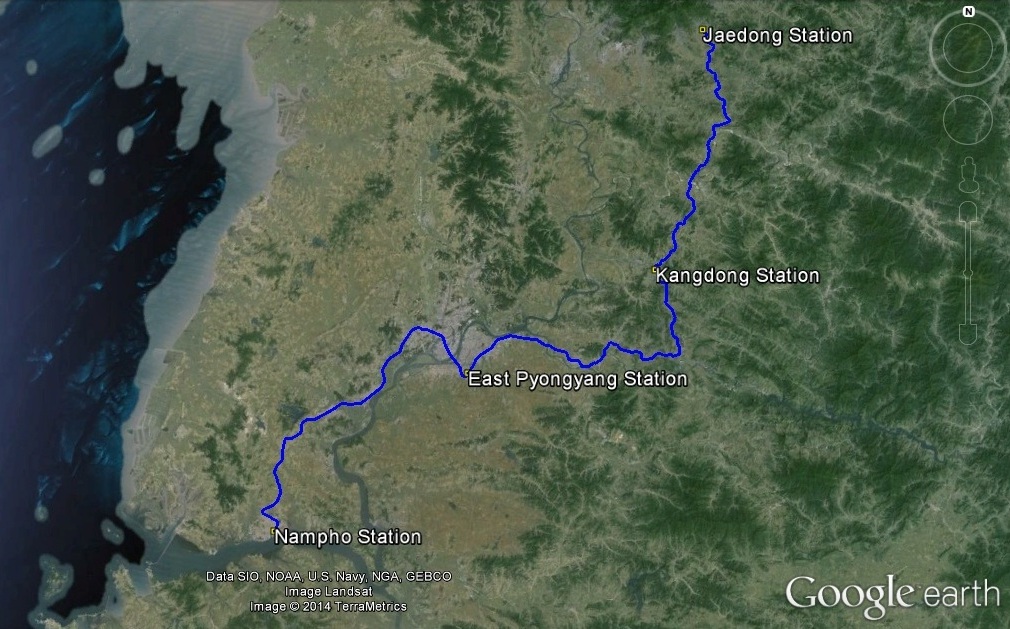
Here is a Google Earth image of the proposed train route:

Jaenam-Nampho-Railway-GE

The total length of this route is approximately 175km.

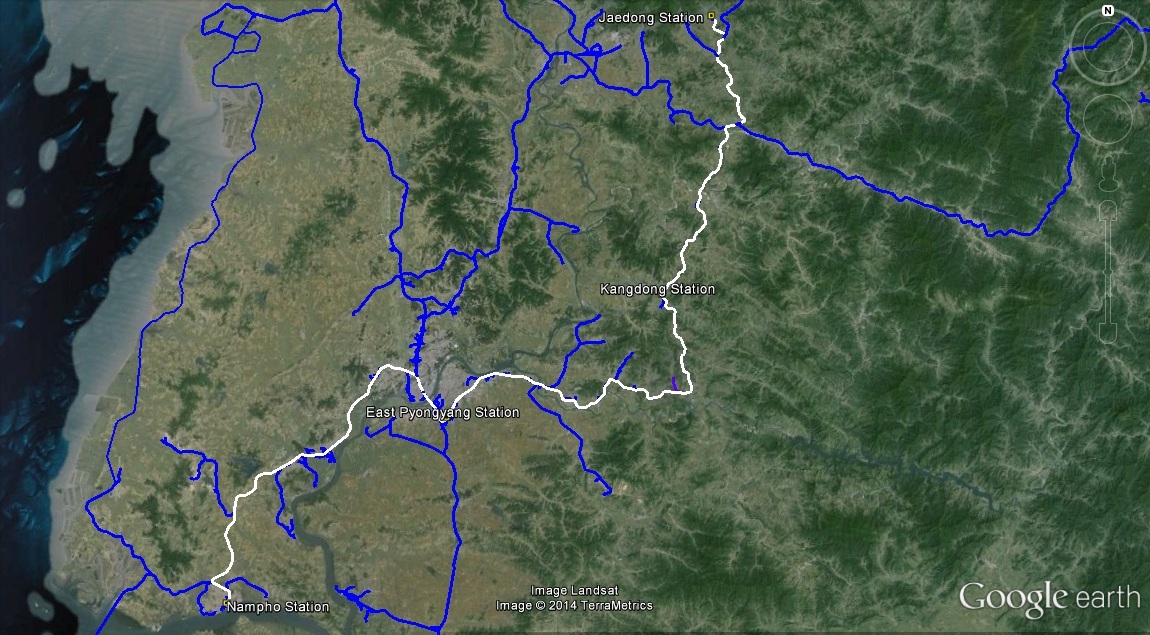
Here is the proposed route relative to other railway lines in the area:

Railway-line-vs-whole-railway

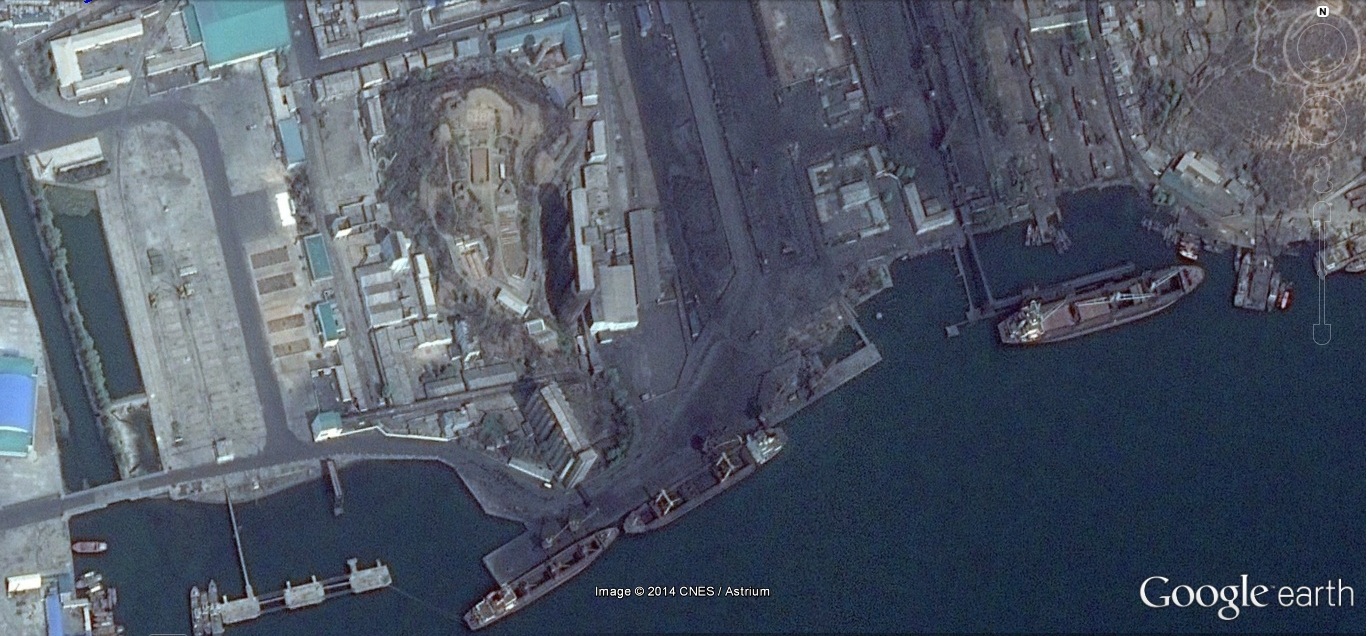
The obvious interpretation of the image is that the railway renovations will be used to facilitate coal exports. Jaenam Station exclusively serves the Sinchang Youth Coal Mine under the Sunchon Area Youth Coal Mine Complex Enterprise. Additoinally, the area surrounding Jaenam Station is doimated by coal mines. The Kangdong Station is not in the town of Kangdong, but just to the east where it services the Kangdong Area Coal Mine Complex Enterprise. Coal in these areas will supposedly be carried more efficiently to the port of Nampho where a coal terminal already exists.

Nampho-coal-port

If indeed this is the primary purpose of the project, then the obvious loser will be China (on multiple fronts). Currently Chinese state-owned mining companies are the only serious investors in North Korea’s extraction industries. Because of their unique relationship with and proximity to the DPRK, they are able to purchase coal and other resources at a bargain price (monopsony). North Korea can only strengthen its bargaining position with these companies by finding other buyers of its produce. Russia’s investment could help them accomplish this goal.

However there are two domestically-related uses that renovation of this railway route could facilitate.

The first is domestic steel production. Russian sources highlight the importance of sulfur-free coal for the production of steel, and this railway line passes directly by the Chollima Steel Mill, one of the largest smelters in the country. Increased steel production has long been a goal of North Korea’s economic policymakers going back to the “heavy-industry” days of the 1950s. With a renovated railway track that connects the correct kind of coal with Chollima Steel Mill, the DPRK may be able to produce more steel for both domestic use or for export.

A second potential domestic use could be the increase in energy supply to Pyongyang. As I highlighted in 38 North, the DPRK is constructing a new coal power plant in Kangdong. This new power plant, as well as the Pyongyang and East Pyongyang Thermal Power Plants lie along the Jaenam-Nampho line. Increased coal supplies to these mills could have significant impact on power supply in Pyongyang.

Are there any other potential uses? Maybe, but these are more difficult to see right now and may only become evident at a later date. After examining the composition of facilities along the track between Pyongyang and Jaenam, I cannot identify any other specific industries that may benefit, other than potential military factories that lie along the route. These, of course, are worth of examination, but I am not the most qualified to carry that out.

On November 6, 38 North Published this article on DPRK-Russia relations.

Share