Archive for the ‘International Governments’ Category

Friday Fun: Google, Jackie Chan, and great photos

Thursday, April 30th, 2009

DPRK citizens forbidden from entering Google offices?
According to this article in Britain’s Daily Mail:

When you visit the shiny headquarters of Google UK, just a stone’s throw from Victoria Station in London, the receptionist asks you to log-in on a computer with a touch screen.

How else would you sign in? This is one of the centres of the cyber universe.

And then something strange happens. Before you can be issued a pass, the computer asks you to enter into a ‘ nondisclosure agreement’ with Google Inc., a 499-word document.

You must agree not to disclose any confidential information that you might stumble upon while in the building.

In particular, the Participant (that’s you) ‘hereby certifies that he/she shall not  –  directly or indirectly  –  sell, export, re- export, transfer, divert, or otherwise dispose of any hardware, software, source code or technology . . . without obtaining prior authorisation from Google and the appropriate government authorities’.

In addition, you must even certify that you are not a citizen of Cuba, Iran, North Korea, Sudan or Syria.

Some readers will recall a similar incident with LinkedIn a few weeks back (which has since been resolved).

Jackie Chan
Following Jackie Chan’s comments that he believed Chinese people “need to be controlled,”  some Hong Kong residents created a Facebook group dedicated to sending him to the DPRK.  If you are a member of Facebook, check out the group page here.

Great Photos
(Hat tip to David) The Boston Globe posted a great set of photos from North Korea’s boder with China.  I am not easily impressed with photos of the DPRK, but these are good.

(Addition Al Jazeera)
Last night Scott Snyder and Alejandro Cao de Benos were on Al Jazeera’s Riz Khan.  Part 1 herePart 2 here.

Share

North Korea, 1949

Thursday, April 30th, 2009

Anna Louise Strong (November 24, 1885 – March 29, 1970) was a twentieth-century American journalist and activist best known for her reporting on and support for communist movements in the Soviet Union and the People’s Republic of China.

In 1949 she wrote a pamphlet for Soviet Russia Today titled, “In North Korea: First Eye-Witness Report” (Many will be familiar with the DPRK equivalent, Korea Today, which has survived long enough to be published on the internet)

The text is relatively short, but since this is exam season, I will not get around to it for a couple of weeks.  Enjoy.

(hat tip Alina)

Share

UNSC blacklists three DPRK companies

Friday, April 24th, 2009

In response to the DPRK’s rocket launch, the UN Security Council issued a presidential statement containing the following:

The Security Council reiterates that the DPRK must comply fully with its obligations under Security Council resolution 1718 (2006).

The Security Council demands that the DPRK not conduct any further launch.

The Security Council also calls upon all Member States to comply fully with their obligations under resolution 1718 (2006).

The Security Council agrees to adjust the measures imposed by paragraph 8 of resolution 1718 (2006) through the designation of entities and goods, and directs the Committee established pursuant to resolution 1718 (2006) to undertake its tasks to this effect and to report to the Security Council by 24 April 2009, and further agrees that, if the Committee has not acted, then the Security Council will complete action to adjust the measures by 30 April 2009.

(Read the full text of the statement here

Today the Security Council followed up this statement (and resolution 1718) by voting to blacklist three North Korean companies.  According to Reuters (via the Washington Post):

The North Korea sanctions committee met a Friday deadline set by the Security Council on April 13 to produce a list of goods and North Korean entities to be blacklisted under Security Council resolution 1718, passed after Pyongyang’s October 2006 nuclear test.

The three companies put on the list are Korea Mining Development Trading Corp., Korea Ryongbong General Corp. and Tranchon (Tanchon) Commercial Bank, according to a copy of the committee’s decision obtained by Reuters.

The decision said the three companies were linked to the military and active in procuring equipment and financing for North Korea’s ballistic missile and other weapons programs.

The blacklisting prohibits companies and nations around the world from doing business with the three firms, but the impact of the action might be largely symbolic.

One Western diplomat said the three blacklisted firms had subsidiaries that also would be subject to U.N. sanctions.

Committee members also decided to ban the import and export of items on an internationally recognized list of sensitive technologies used to build long-range missiles capable of delivering weapons of mass destruction.

The US imposed sanctions on three North Korean companies in the Federal Register earlier this year.  Of these three companies, one has made the UNSC list: the Korea Mining and Development Corporation.  I can only speculate as to the fate of the other two mentioned in the US Federal Register, Mokong Trading Corporation and the Sino-Ki company. 

Read more below:
UNSC Presidential Statement

U.N. committee puts 3 North Korea firms on blacklist
Reuters (via the Washington Post)
Louis Charbonneau
4/24/2009

Share

US Senate bill seeks to add DPRK to terrorism list (again)

Tuesday, April 21st, 2009

US Senator Sam Brownback (R-KS) has introduced legislation which would require the the US governmet to add the DPRK back to its list of state sponsors of terror.  If passed by the legislature and signed by the president, this would reverse the decision by Republican President George W. Bush, who had the DPRK removed from the list in October of last year. 

The bill is S. 837.  It has been referred to the Senate Committee on Foreign Relations.  I am not a political insider, so I do not have any insight into how long it will remain there or if it has any chance of passing a committee vote.  Joshua will probably be following the bill closely will be actively seeking the bill’s passage, so we can expect updates at One Free Korea.

I cannot offer any analysis of the proposed legislation since the Government Printing Office has not yet published the bill’s text (so it is not on line at the moment). You can track the bill’s progress hereThomas has a list of cosponsors, etc.

UPDATE: Joshua has a link to a copy of the Senate bill as well as information on the corresponding House bill.

Share

Commodity price decreases vs. sanctions

Thursday, April 16th, 2009

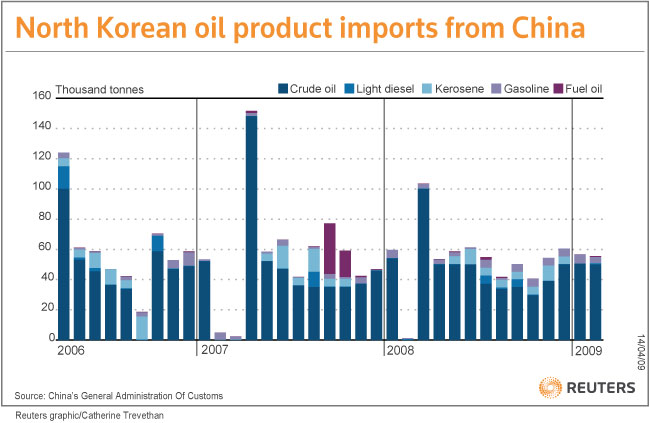
Writing in Reuters, Lucy Hornby and Tom Miles point out that the DPRK faces greater economic uncertainty from falling commodity prices than from new sanctions.  Below I have posted excerpts and charts:

Lower commodity prices may prove more painful to North Korea than the tightened sanctions, which will likely blacklist certain firms known to deal in military goods.

“Sanctions won’t have a big effect, they won’t change their actions,” said Shi Yinhong, a professor of international relations at Renmin University in Beijing.

“There will be no impact on trade with China, which is mostly grains and basic materials … Sanctions may have some influence on luxury goods, but only a weak effect on overall trade volume.”

The isolated country’s $2 billion annual trade with China, equal to about 10 percent of the North’s annual GDP, is its most important economic relationship.

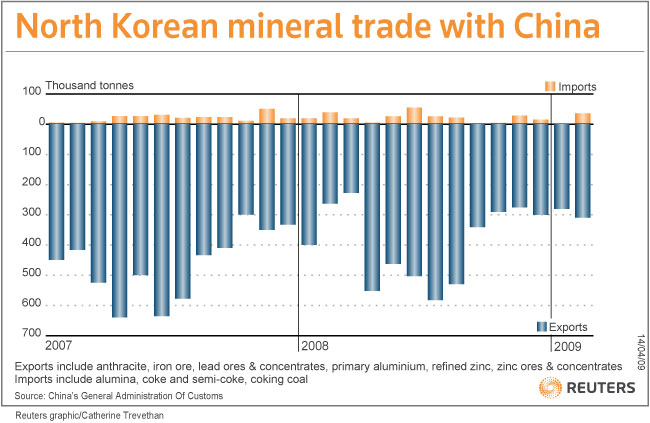
North Korea profited from strong prices for minerals and ores over the last few years, ramping up exports of zinc, lead and iron ore to resource-hungry China.

Most of those exports have dropped again since last summer, in line with sharp decreases in metals prices buffeted by the global economic crisis.

china-trade.jpg

The North’s mineral deposits could be worth $2 trillion, according to an estimate by the South’s Korea Resources Corporation. But dilapidated infrastructure and a broken power grid hinder mining and the transport of minerals out of the country.

The irregular pattern of North Korea’s alumina imports implies that its smelter only runs in fits and starts. Other ore exports are equally ragged, possibly indicating that North Koreans are only digging the easily accessible ores.

Chinese companies that have tried to invest in North Korean mines complain of constant changes in regulations and report that the North tries to tie mining access to commitments to build mills and other industrial projects.

“China and North Korea are friendly neighbors and we will continue to develop friendly cooperative relations with North Korea,” Chinese foreign ministry spokeswoman Jiang Yu said on Tuesday after the North’s withdrawal from the six-party talks.

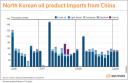
Diplomats’ expectations that China might use trade to influence its prickly neighbor rose when China cut off crude oil shipments in September of 2006, as North Korea prepared to test a nuclear bomb. It had tested ballistic missiles that July.

In fact, energy trade data shows that China is reluctant to apply trade pressure. Increased oil products shipments offset the brief cut in crude supplies in 2006.

“The imposition of these sanctions (in 2006) has had no perceptible effect on North Korea’s trade with the country’s two largest partners, China and South Korea,” wrote Marcus Noland, of the Washington-based Peterson Institute for International Economics.

Data since early 2006 show that Chinese crude shipments have in fact been overwhelmingly consistent, at 50,000 tons a month.

china-trade2.jpg

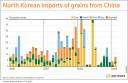
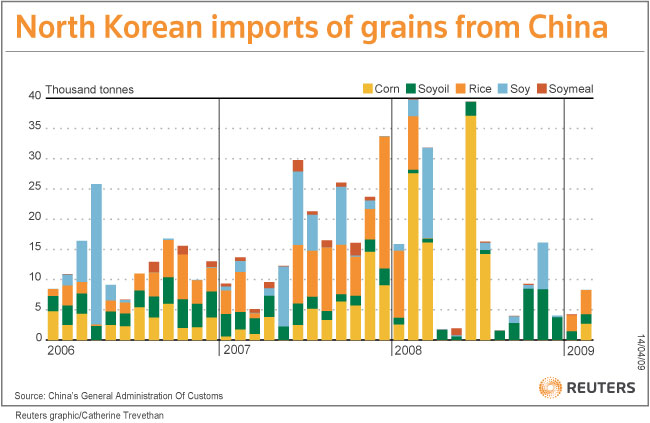
North Korea has imported very little Chinese grain since the 2008 harvest, reflecting the better harvest. Flooding and a disastrous harvest in 2006 and 2007 required heavy imports of grains from China in those years.

Chinese corn shipments to North Korea since August have dropped to 2,670 tons, from 136,595 tons in the previous twelve months and 32,186 tons in the year before that.

Rice and soybean shipments show a similar pattern.

china-trade3.jpg

Read the full story below:
Little leverage left for North Korea sanctions
Reuters
4/14/2009
Lucy Hornby and Tom Miles

Share

Lankov on sanctions

Tuesday, April 14th, 2009

Lankov writes in the Financial Times:

The US and its allies have almost no leverage when it comes to dealing with North Korea. There is much talk about sanctions, but, to be effective, they must be upheld by all major states, and this is not going to happen. China and Russia, driven by their own agendas, have already made clear that they would not support a tougher approach. These two states have veto power in the Security Council, and are major trade partners of North Korea (slightly more than half of Pyongyang’s entire trade is with them).

The ineffectiveness of sanctions has been demonstrated before. In 2006 when Kim Jong-il’s regime conducted its first nuclear test, even China was outraged and supported UN sanctions. However, it soon became clear that the sanctions were not working, since not only China, but also the US chose to return to business as usual. As a result from 2006 the North Korean government, despite theoretically being subjected to sanctions, felt more secure domestically and internationally than at any time since the early 1990s. This time, however, even the chance of passing a resolution is slim.

What else can be done? Military actions are unthinkable. Unilateral economic pressure will not work since neither the US nor its major allies have significant trade with North Korea. Financial sanctions, imposed on the foreign banks serving the regime, would probably deliver a blow, but it is unlikely that this would lead to a serious crisis in Pyongyang.

Indeed, even if an efficient sanctions regime were imposed, its only victims would be common people in North Korea. In the late 1990s, about 5 per cent of the entire population starved to death, but there were no signs of discontent: terrified, isolated and unaware of any alternative to their system, North Korean farmers did not rebel, but died quietly.

This means that diplomatic condemnation will have no consequences, and North Korean dictators understand this. If anything, the excessive noise is harmful: the sharp contrast between bellicose statements and lack of real action will again demonstrate to North Korean leaders that their opponents are powerless.

However, there is something even worse than empty threats, and this is empty threats followed by generous concessions. If history is a guide, this is likely to happen. In 2002-06 the US took a very harsh approach to the North, but everything changed in October 2006 when North Korea conducted a partially successful nuclear test. In merely four months, US policy was dramatically reversed, negotiations were restarted, and aid delivery resumed. Perhaps this change of policy was wise in itself (isolation would not work anyway), but its timing was bad. It once again confirmed to North Koreans that blackmail works.

The recent launch confirmed they had learnt the lesson. Since the regime was afraid the US was not paying enough attention to it, it was deliberately provocative, in the hope that the US, after a short outburst of militant rhetoric, would rush back to the negotiating table ready to make more concessions. It might be right.

There is no alternative to negotiations with Mr Kim’s clique. But Pyongyang dictators should be taught that provocations do not pay (or, at least, do not pay handsomely and immediately). This is especially important now, when Mr Obama’s administration has its first encounter with North Korean brinkmanship.

Read the full article here:
Sanctions will have no effect on North Korea
Financial Times
Andrei Lankov
4/12/2009

Share

The end of six party talks or playing hard to get?

Tuesday, April 14th, 2009

UPDATE 2: Financial markets do not seem to care.  According to Reuters:

Financial markets in Seoul and Tokyo were not affected by North Korea’s announcement, with investors seeing it as more of the sabre-rattling they have come to expect from Pyongyang.

UPDATE 1: According to the Wall Street Journal, the DPRK has ordered nuclear inspectors to leave the country (again):

North Korea ordered International Atomic Energy Agency inspectors out of the country Tuesday. The decision ends international monitoring of a research reactor at Yongbyon and in theory could allow reprocessing of fuel rods to produce plutonium. The IAEA is expected to announce the eviction in the next hour.

The on-again, off-again inspections at the 5-megawatt Experimental Nuclear Reactor Plant and the Nuclear Fuel Fabrication Plant at Yongbyon resumed in October, soon after the U.S. announced it would remove North Korea from the State Department list of countries that sponsor terrorism.

The IAEA issued a press statement here. 

ORIGINAL POST:
The UN Security Council has published its presidential statement condemning th DPRK’s missile launch (read the full text of the statement here), and the media is widely reporting on the contents:

The United Nations Security Council has condemned North Korea’s April 5th rocket launch and demanded that Pyongyang not conduct further tests, saying that it would expand sanctions against North Korea.

The Security Council’s presidential statement is a level below a resolution — which has the power of force to back it up. But several ambassadors, including U.S. envoy Susan Rice, said the statement is legally binding, nonetheless. “The United States views presidential statements, broadly speaking, as binding. In this instance, it is more than binding in that it adds to an existing Chapter 7 sanctions regime. So in our view, there is no doubt that the measures that will be imposed as a consequence of this presidential statement by the 24th or 30th of April will occur and will be binding,” he said.

Monday’s statement goes further, saying there will be additional strengthening of measures in resolution 1718 and activates the dormant sanctions committee set up under that resolution.

“It is not extending the number of sanctions. It is not doing that. What it is doing is broadening the base of sanctions under the existing resolution. That is what we have agreed to do in principle and we have agreed to do it in a tight timeline by end of this month. So we are tightening the sanction screw a notch against North Korea,” said British Ambassador, John Sawers.

The statement calls for the designation of entities that would be subject to asset freezes and the prohibition of the transfer of some goods into or out of North Korea.

Turkish Ambassador Baki Ilkin, chairman of the sanction committee, said no countries have officially submitted their list yet. But several ambassadors said they are putting them together. (Voice of America)

This morning, the DPRK annonced it will withdrawl from 6 party talks:

Fuming at the U.N. Security Council for condemning its recent missile launch, North Korea said Tuesday it will restart its plutonium factory, junk all its disarmament agreements and “never participate” again in six-country nuclear negotiations.

It called the Security Council’s statement a “brigandish,” “wanton” and “unjust” infringement of its sovereignty. It said that six-party nuclear talks with the United States, South Korea, Japan, Russia and, even its closest ally, China, had “turned into a platform” for forcing the North to disarm itself and for bringing down its system of government.

“We have no choice but to further strengthen our nuclear deterrent to cope with additional military threats by hostile forces,” North Korea’s Foreign Ministry said in a statement released by its state news agency.

If it follows through on Tuesday’s bluster, North Korea will walk away from six years of slow, fitful but sometimes productive negotiations that have led to substantial disablement of the North’s main nuclear reactor and partial disclosure of the scale of its weapons program.

“We will actively consider building our own light-water nuclear reactor, will revive nuclear facilities and reprocess used nuclear fuel rods,” the ministry said. Experts have said the North does not have the equipment or skills to make an advanced light-water reactor.

China, host of the six-party talks, called for restraint and calm on Tuesday, asking all countries to return to the discussions, even after North Korea announced it would never do so.

“We hope the relevant parties could proceed from the perspective of the overall interest of the region, so as to work together to safeguard the progress of the six-party talks,” Chinese foreign ministry’s spokeswoman Jiang Yu said at a news briefing.

Japan also urged North Korea to return to the talks and the Russia government said it regretted Pyongyang’s decision.

Analysts in Seoul said that North Korea, with its threat to pull out of the six-party talks, appeared to be up to its familiar tactics of brinkmanship — creating a crisis in order to be rewarded for helping to solve it.

“North Korea can use today’s walkout as a negotiating chip with the United States in the future,” said Koh Yu-whan, a profession of North Korean studies at Dongguk University in Seoul.

“North Koreans have learned from past experience that when they create worst-case scenarios they get closer to solving their problems,” said Chun Hyun-joon, a North Korea specialist at the Korea Institute for National Unification. (Washington Post)

Here is the full KCNA comment:

DPRK Foreign Ministry Vehemently Refutes UNSC’s “Presidential Statement”
 
Pyongyang, April 14 (KCNA) — The DPRK Foreign Ministry issued a statement Tuesday flatly rejecting the brigandish “presidential statement” which the U.S. and its followers finally released by abusing the UNSC to condemn the DPRK’s launch of satellite for peaceful purposes.

Saying that throughout history the UNSC has never taken issue with satellite launches, the statement continues:

First, the DPRK resolutely rejects the unjust action taken by the UNSC wantonly infringing upon the sovereignty of the DPRK and seriously hurting the dignity of the Korean people.

Second, there would be no need to hold six-party talks which the DPRK has attended.

Now that the six-party talks have turned into a platform for infringing upon the sovereignty of the DPRK and seeking to force the DPRK to disarm itself and bring down the system in it the DPRK will never participate in the talks any longer nor it will be bound to any agreement of the six-party talks.

Third, the DPRK will bolster its nuclear deterrent for self-defence in every way.

It will take the measure for restoring to their original state the nuclear facilities which had been disabled under the agreement of the six-party talks and putting their operation on a normal track and fully reprocess the spent fuel rods churned out from the pilot atomic power plant as part of it.  

Read the full stories here:
North Korea orders UN nuclear inspectors to leave
Reuters
Jon Herskovitz
4/14/2009
North Korea Expels Nuclear Inspectors After Leaving Six-Party Talks
Wall Street Journal
David Crawford, Evan Ramstad
4/14/2009

Security Council condemns DPR Korea’s recent launch
UN Security Council Press Release
4/13/2009

UN Condemns North Korea Rocket Launch 
Voice of America
Margaret Besheer
4/13/2009

N. Korea Says It Will Boycott Nuclear Talks, Restart Weapons Plant
Washington Post
Blaine Harden
Washington Post Foreign Service
4/14/2009

Share

DPRK – ROK ambassadors attend London panel

Monday, April 13th, 2009

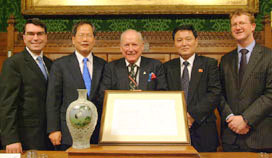
akspanel.jpg

(Hat tip to a reader) On March 26, the Anglo-Korea Society in London hosted an interesting panel discussion with the London ambassadors from both North and South Korea along with Martin Uden, Britain’s ambassador to the ROK, and Stephen Lillie, the head of the FCO Far East Group.

It is a bit too late to attend, but below are summary links and photos:
1. Official page of the event (pictures at the bottom)

2. Pearl Daborn summary

3. Michael Rank summary

4. Jennifer Barclay summary

5. Marian Werner summary

Share

South Korean government restricts access to Kaesong Zone after launch

Sunday, April 12th, 2009

According to Radio Free Asia:

Following North Korea’s April 6 rocket launch, South Korea began limiting the number of its citizens allowed to cross the border to the Kaesong Industrial Zone, which was set up just inside North Korea amid thawing relations between the two sides in 2004.

“We plan on maintaining the minimum personnel needed to run the Kaesong operations,” South Korean Unification Ministry spokeswoman Lee Jong-joo said.

“The South Korean government has requested enterprises invested in Kaesong to maintain their staff at the minimum level necessary to avoid disruption of production and business operations in the complex.”

South Koreans trying to travel to Kaesong this week were surprised to find their entry permits revoked by the South in the wake of the rocket launch, with the number of South Koreans working in the zone cut to a little above the minimum needed for basic operations.

“Eight persons initially received permission to travel to Kaesong, but eventually only three were allowed to take the trip, and actually most South Korean managerial staff had to stay behind,” a Kaesong-based South Korean entrepreneur said.

‘Skills gap’
“The big issue here is that the skill level of North Korean workers is insufficient, and that’s why South Korean management is essential.”

He warned of negative economic consequences if management personnel were unable to reach the zone from the South.

“Banning South Korean managerial staff from traveling to Kaesong will inevitably have a negative impact on production in the complex,” the entrepreneur said.

Tensions have further escalated over the March 30 detention of a South Korean employee of the Kaesong-based Hyundai Asan factory, allegedly for encouraging North Koreans to defect and criticizing the communist regime.

Hyundai’s company president visited Kaesong for a second time this week to press North Korean officials for the employee’s release, but he was refused permission to see the employee, identified only by his surname, Yoo.

Unification Minister Hyun In-taek warned that Seoul wouldn’t tolerate further detention of the employee.

Warning to North
“In the case of Mr. Yoo, the Hyundai Asan employee in the custody of the North Korean authorities, we will react vigorously to any unreasonable extension of the detention of the South Korean,” Hyun told a foreign affairs, trade, and unification committee in Seoul.

He also warned against “any punitive measures exceeding what was agreed upon between the two Koreas, such as a warning or expulsion to South Korea.”

The South has ruled out the possibility of closing the joint industrial park despite rising tensions with the North, however.

In March, in protest against a joint South Korea-U.S. military exercise, the North blocked the border crossing to the industrial complex several times, affecting production in some factories.

Experts have called for bilateral talks to hash out a clear framework for the running of Kaesong, to prevent economic fallout from political events in future.

“South and North Korea need to discuss and consult on the relevant systemic and legal issues associated with inter-Korean economic cooperation in the area,” said Hong Ik-pyo, researcher at the Korea Institute for International Economic Policy.

Read the full story here:
Korean Tensions Hit Zone
Radio Free Asia
J.W. Noh
4/10/2009

Share

US religionists perform at Pyongyang Friendship Festival

Sunday, April 12th, 2009

UPDATE:  According to the band (via Christian Post):

“Made many friends. We performed twice and were awarded for the performance of Lifesong,” he added Monday. “We also recorded the Korean song, White Dove, in their studio in Pyongyang.”

ORIGINAL POST: According to the Christian Post:

Contemporary Christian band Casting Crowns will again participate in North Korea’s annual Spring Friendship Arts Festival but this time won’t be the only U.S. Christian group there performing.

The Grammy Award-winning band will be joined by the Annie Moses Band (AMB), a five-sibling ensemble whose ages range from ten to 24.

“In early December we received an official invitation from the North Korean government to perform in the Spring Friendship Arts Festival,” AMB lead vocalist and violinist Annie Wolaver told The Christian Post on Friday.

“We have been praying for many years that the Lord would open doors for us to tour overseas. We had some grand visions of playing Celtic jigs in the Scottish highlands, but instead He opened a door that was entirely unexpected,” she reported.

Two years ago, Casting Crowns was invited to perform at the 25th Annual April Spring Arts Festival with help from Global Resource Services (GRS), which has worked in the Democratic People’s Republic of Korea – the official name of North Korea – for more than a decade.

The annual Spring Arts Festival reportedly emphasizes artistic exchange and promotes peace and good will.

According to GRS, the band was well received and even drew praise from the vice chairman of the festival, Jang Chol-sun, who expressed his hope that groups like GRS, Casting Crowns and the people of North Korea can work together to bring unity and peace.

Here is a web page by Jason Carter who performed in this show some years ago.

Read the full article here:
Casting Crowns to Return to North Korea for ‘Friendship’ Festival
By Josh Kimball
Christian Post
4/10/2009

Share