Archive for the ‘China’ Category

IFES February 2009 recap

Thursday, March 5th, 2009

Institute for Far Eastern Studies (IFES)
(NK Brief No. 09-3-3-1)
3/3/2009

INTER-KOREAN RELATIONS
As February began, North Korea continued to publicly warn that the two Koreas were on a path toward war, stating on February 1 that downward spiraling relations between the two Koreas were brought on by ROK President Lee Myung-bak The (North) Korean Central News Agency (KCNA) printed that Lee’s policies toward the North were “the very source of military conflicts and war between the North and the South,” and warned that tensions on the peninsula “may lead to an uncontrollable and unavoidable military conflict and war.”

Poll results released by the Korea Economic Research Institute on February 2 indicated that 68.4 percent of South Koreans support President Lee Myung-bak’s aid-for-denuclearization policy toward the North, and a separate poll by Gallup Korea showed on February 23 that 62 percent of South Koreans blame North Korea for strained inter-Korean relations.

A South Korean official stated on February 4 that 3,000 tones of steel plates that were to be sent to North Korea as part of the energy aid-for-denuclearization deal reached in 2007 would be delayed due to the North’s recent saber-rattling. According to the official, “It is hard to predict when we will send the steel plates. For now, we are not even seriously considering the timing…North Korea should first change its attitude.”

The South Korean government has shot down a project by an ROK journalist organization that would allow the exchange of news with North Korea. It was reported on February 4 that a Unification Ministry Spokesman Kim Ho-nyoun stated, “There are concerns that the exchange of news articles may undermine national security, public order and the interests of the general public.”

On February 16, it was reported the ROK Defense Minister Lee Sang-hee has mandated field commanding officers in all branches of the South Korean military to immediately respond to any North Korean provocation without first seeking permission from superiors. This has further heightened concerns over the possibility of a naval confrontation in the Yellow Sea around the disputed Northern Limit Line.

On February 19, North Korean media warned, “Now that the political and military confrontation between the North and the South has gone into extremes, a physical clash may break out at any moment,” and, “North-South relations have reached such a pass that there is no way to improve them or bring them under control.”

INTER-KOREAN TOURISM
Hyundai Asan, the South Korean company running the Kumgang Mountain tourist resort and the Kaesong City tours in North Korea is on the brink of bankruptcy. A Hyundai representative stated on February 4, “We are reaching a critical situation…unless the tours resume by April, it will be difficult for us to stay afloat.” Hyundai Asan brought in 255.5 trillion Won, or approximately 170.3 million USD, through tour sales in 2007, but in 2008, the company sold only 228.8 billion Won, or 152.5 million USD-worth of tours in 2008. The company employed 1,084 workers when tours were in operation, but has cut back to 479 employees. Of those, approximately 20 percent are receiving only 70 percent of their wages while they work from home. The tours have been on hold since a South Korean tourist was shot and killed at the Kumgang resort last summer.

ROK lawmaker Song Hun-suk stated on February 22, “Since the suspension of the [tourism] program, dozens of South Korean businesses and approximately 1,000 travel agents that offered organized trips to the North have gone to the brink of bankruptcy,” and he reported that approximately 30,000 North and South Koreans were on the verge of unemployment due to the travel ban, with 80 percent of shops and restaurants in South Korea’s Gosung, Gangwon Province, which is near the border, have been forced to close due to the absence of tourists passing through.

INTER-KOREAN TRADE
On February 3, the Korea International Trade Association (KITA) launched a new website, “Inter-Korean Economic Cooperation Information Center”, at http://interkoreatrade.kita.net. The website is designed to provide information and education on North Korean investment and inter-Korean cooperation

On February 8, South Korea’s Unification Ministry released statistics for 2008 regarding the Kaesong Industrial Complex. According to the ministry, production in the complex was up 36 percent over the previous year, reaching a value of 251.42 million USD. The total value of goods produced in the complex since it began operations in 2005 comes to 524.84 million USD.

The Economic Times ran an article on February 15 titled, “Ever heard of Gaesung? Gear up for its products,” in which it reports that the India-South Korea Comprehensive Economic Partnership Agreement (CEPA) soon to be signed will mean that India recognizes goods produced in the Kaesong Industrial Complex as South Korean goods.

ROK UNIFICATION MINISTER
On February 12, Korea University Professor of Political Science Hyun In-taek was sworn in as the new South Korean minister of unification. At his inauguration, Hyun stated that he is willing to meet with North Korean counterparts “at any time, at any place” in order to repair inter-Korean relations. Hyun has been criticized as being a hardliner, and an architect of the Lee Myung-bak administration’s “Vision 3000: Denuclearization and Openness” policy. Hyun was a key advisor during Lee’s presidential campaign, at which time Lee introduced the Vision policy, and was also a member of Lee’s presidential transition team, which at one point had advocated the shuttering of the Ministry of Unification.

U.S.-DPRK RELATIONS
A group of high-ranking former U.S. officials now advising the Obama administration on the DPRK visited North Korea during the first week of February. The group included Stephen Bosworth, Jonathan Pollack, Morton Avramowitz, and Leon Sigal. The delegation reported that North Korea does not appear to be rushed, and that they had taken a “wait and see” attitude in Pyongyang. Bosworth stated that “[North Korean officials] understand the Obama administration will need some time to sort itself through the policy review and the expressed patience, there is no sense of alarm or urgency.” He also noted that the officials were willing to move forward with denuclearization talks.

Leon Sigal stated on February 1, just prior to his visit to the North, “the Obama administration should promptly send a high-level emissary, perhaps former President Bill Clinton or former Secretary of State Henry Kissinger, to Pyongyang.” Sigal also wrote in an online opinion piece that Obama should “hold a summit meeting with Kim Jong-il in return for North Korea disposing some of its plutonium.”

On February 2, the U.S. State Department announced that it would impose sanctions on three North Korean companies for missile export violations. In accordance with the Arms Export Control Act, the Export Administration Act of 1979, the International Emergency Economic Powers Act, the National Emergencies Act, Executive Order 12851 of June 11, 1993, Executive Order 12938 of November 14, 1994, the Korea Mining and Development Corporation, the Mokong Trading Corporation, and Sino-Ki are subject to Nonproliferation Measures and Category II missile sanctions.

U.S. Secretary of State Hillary Clinton stated on February 13 that the Obama administration would be willing to normalize bilateral relations with North Korea if the North is genuinely prepared to completely and verifiably eliminate its nuclear weapons program. She stated that the U.S. would have a “great openness” to North Korea, and added, “It’s not only on the diplomatic front,” but that Washington had a “willingness to help the people of North Korea, not just in narrow ways with food and fuel but with energy assistance.” Two days later, North Korea’s head of state Kim Yong Nam reaffirmed that North Korea would “develop relations with countries that are friendly toward us.”

On February 17, Clinton reiterated the U.S. offer of a peace treaty officially ending the Korean War, normalization of relations, and aid, but stated, “The decision as to whether North Korea will cooperate in the six-party talks, end provocative language and actions, is up to them,” and , “If North Korea abides by the obligations it has already entered into and verifiably and completely eliminates its nuclear program, then there will be a reciprocal response,” indicating that North Korea will have to make the next move.

During a trip to South Korea, Clinton stated that North Korea was “badly miscalculating” if it thinks it can “drive a wedge” between Washington an Seoul, and that “North Korea is not going to get a different relationship with the United States while insulting and refusing dialogue with the Republic of Korea.”

U.S. SPECIAL ENVOY TO NORTH KOREA
Following his return from a trip to North Korea at the beginning of the month, former U.S. Ambassador to South Korea Steven Bosworth was named by Secretary of State Clinton as the Obama administration’s special representative for North Korea. He will remain dean of the Fletcher School of Law and Diplomacy at Tufts University, but will now be responsible for coordinating U.S. policy regarding the DPRK. Special Envoy Sung Kim is responsible for ‘day-to-day’ negotiations with Pyongyang.

UK-DPRK RELATIONS
A British parliamentary delegation arrived in North Korea on February 3, coinciding with a visit to London by a DPRK Workers’ Party of Korea delegation. EU Parliament member Glyn Ford stated that he hoped to reopen dialog that was broken off in 2005 on human rights, and denuclearization, hinting that restarting dialog could lead to the transfer of renewable energy technology to the North.

PRC-DPRK TRADE
It was reported on February 24 that trade between China and North Korea reached 2.78 billion USD in 2008, a 41.2 percent increase over the previous year. DPRK imports were up 46 percent, at over 2.03 billion USD, while its exports to China grew 29.7 percent, to 750 million USD. Mineral resources made up 54.7 percent of North Korea’s exports to China, and machinery and electronics made up the majority of imports.

DPRK NUCLEAR PROGRAM

(NKeconWatch: Although this is simply a reprint of the IFES report, I have been notified by NTI that this report is inaccurate. According to NTI Communications Director Cathy Gwin:

“I am writing to respond to your post that referred to erroneous reports that the Nuclear Threat Initiative (NTI) is preparing to open an office in Seoul ” in order to help prepare DPRK nuclear scientists for peaceful civilian employment.

The Nuclear Threat Initiative (NTI) has worked in the past to develop ideas on how governments could apply cooperative threat reduction (CTR or “Nunn-Lugar”) approaches as part of a solution to the North Korean nuclear challenge.  However, we have no current program to carry out those activities ourselves, nor do we have a program to retrain North Korean scientists.  In addition, we have no current plans to open an office in South Korea, and we do not have branch offices in Ukraine or Kazakhstan.  We have a main office in Washington, DC and a presence in Moscow.

January 31 was the deadline for North Korea to shut down and seal the Yongbyon nuclear reactor as part of 6-Party negotiations, but it failed to meet the deadline. Christopher Hill stated on February 3 that the U.S. would “hold on for a few more days,” but that “we’re not happy that the DPRK essentially has missed this very important deadline.”

On February 2, it was reported that the Nuclear Threat Initiative (NTI) would open a new office in Seoul in order to help prepare DPRK nuclear scientists for peaceful civilian employment. The NTI is in the process of building a program to retrain the North’s experts, and “is also considering ways to support not only nuclear scientists at Yongbyon, but also farmers near Yongbyon who provide them with rice,” according to Roy Kim, a professor at Drexel University.

The U.S. government criticized Pakistan’s decision on February 6 to release Abdul Qadeer Khan from house arrest. Khan as been under house arrest for the past 5 years, after admitting to selling nuclear weapons technology to North Korea, as well as Iran and Libya. In 2004, A.Q. Khan took full responsibility for selling the nuclear secrets, stating that the military and government were unaware of his actions. He recanted this confession last year, stating that he had been a scapegoat.

DPRK MISSILE LAUNCH PREPARATIONS
Several countries have reported intelligence pointing to a launch by North Korea of a Taepodong-2 long-range missile. The U.S. State Department warned on February 3 that “a ballistic missile launch by North Korea would be unhelpful and, frankly, provocative,” while the ROK Foreign Ministry noted that a missile launce would “constitute a clear breach of the UN resolution” adopted in 2006. Chinese Foreign Ministry Spokeswoman Jiang Yu stated, “We hope all the parties can recognize that maintaining stability is in the common interest of the people of the Korean Peninsula.” Preparations appear to be underway at its Musudan-ri base, near the DPRK-PRC border. A Taepodong-2 is thought to have a range of 6,700 kilometers (4,150 miles).

Amid reports that it was preparing the missile launch, North Korea’s Rodong Sinmun printed, “The DPRK’s policy of advancing to space for peaceful purposes is a justifiable aim that fits the global trend of the times. There is no power in the world that can stop it,” and, “ As long as developing and using space are aimed at peaceful purposes and such efforts contribute to enhancing human beings’ happiness, no one in the world can find fault with them.” North Korea continues to deny preparations for a long-range missile launch, and insists that it is preparing to launch a satellite

According to a researcher at the South Korean Agency for Defense Development, if North Korea were to launch a satellite, “given the size of the rocket, the satellite will likely be a low-orbit device,” and low-orbit devices usually need to be fired toward either the North or South Pole in order to successfully reach orbit. This would mean North Korea would need to use Chinese, Russian, Japanese or South Korean airspace.

JAPANESE FIRM, DPRK MISSILES
On February 26, Japanese police raided Toko Boeki, a Tokyo trading company with ties to the DPRK residents’ association in Japan. The company is suspected of trying to export magnetic measuring instruments that could be used to manufacture missiles to North Korea via a third country.

DPRK MOBILE COMMUNICATIONS
It was reported on February 5 that North Korea’s new 3G cellular network, built by the Egyptian company Orascom Telecom, has been very popular. Orascom Telecom Chairman Naguib Sawiris stated, that in the first two weeks of service, “so far we have about 6,000 applications. The important point is that they are normal citizens, not the privileged or military generals or party higher-ups. For the first time, they have been able to go to a shop and get a mobile phone.”

DPRK SPORTS
North Korea’s soccer squad defeated South Arabia 1-0 as it moved closer to the World Cup finals. The North now has seven points in Group 2, after four games, and is in second place, with only South Korea having more points. North Korea has not been in the World Cup finals since 1966.

KIM JONG IL BIRTHDAY CELEBRATIONS
Kim Jong Il’s 67th birthday was marked on both sides of the DMZ. In the North, ceremonies were held throughout the country on February 16, and special rations were provided to the people of the country, with extra noodles, rice and other grains given out to mark the day.

In South Korea, the Abductees’ Family Union marked the day by flying 100,000 leaflets with North Korean currency and criticisms of the North’s leader. South Korean authorities announced plans to investigate, as it is illegal for South Koreans to possess North Korean bank notes without permission.

DPRK SUCCESSION
More rumors were heard in February concerning who might succeed Kim Jong Il as leader of the North Korean regime. Kim’s youngest son, Kim Jong-un has reportedly registered as a candidate for the March 8 parliamentary elections, which would launch his political career. In addition, an editorial marking Kim Jong Il’s 67th birthday stressed the “inheritance of bloodline of Mount Paektu,” further stoking rumors that one of Kim’s sons may be next in line.

DPRK CENSUS
Results of a preliminary census by the United Nations Population Fund were released in February. According to the data, there were 24.05 million North Koreans as of October last year, with 11.72 million males and 12.33 million females. South Pyongan Province was the most populous, with 4.05 residents. 3.26 million people reside in the North’s capital, Pyongyang. This census, conducted by the United Nations Population Fund, was the first in 15 years to be conducted in North Korea.

Share

DPRK deepens reliance on China trade

Tuesday, February 24th, 2009

DPRK trade deficit with China nears USD$1.3 billion
Institutue for Far Eastern Studies (IFES)
NK Brief No. 09-3-5-1
2009-03-05

As North Korean dependence on trade with China continues to grow, the amount of overall trade hit a record high in 2008, however its trade deficit rose along with it. According to recent statistics released by China’s Customs Bureau and the Ministry of Commerce, trade between the DPRK and PRC in 2008 was worth a total of 2.78 billion USD, a 41.2 percent increase over the mere 1.97 billion USD recorded in 2007.

DPRK exports to China were worth 750 million USD, a 29.7 percent rise, while imports from China totaled 2.03 billion USD, up 46 percent, which led to a record 1.28 billion USD trade deficit. Mineral resources accounted for more than half (54.7 percent) of North Korea’s exports to China, while the majority of imports were machinery and electronic goods.

The North’s trade deficit with China has continued to grow for the past five years straight. In 2004, the North’s trade deficit was a mere 210 million USD, but this more than doubled, to 580 million USD, in 2005, rose to 760 million USD in 2006, and then hit 810 million USD in 2007. The reason for the sudden jump in the North’s trade deficit appears to be the globally rising cost of raw materials, and therefore Pyongyang’s trade deficit is expected to continue to rise rapidly in the near future.

This deficit is exacerbated by the North’s isolation from the rest of the international community, leaving it little choice but to continue trading at prices set by the Chinese. With the currently frigid relations between Pyongyang and Seoul, and the deadlock in 6-Party Talks, tensions on the Korean Peninsula make it increasingly difficult for North Korea to trade with other countries, so its dependence on China and Chinese goods is expected to continue to grow. 

And according to the Choson Ilbo:

Trade between North Korea and China totaled US$2.78 billion last year, up 41.2 percent from $1.97 billion in the previous year, according to the statistics released on Monday by the China Customs and China’s Ministry of Commerce. North Korea’s imports topped $2.03 billion, up 46 percent from the previous year, but its exports stood at $750 million, up only 29.7 percent.

As a result, North Korea’s trade deficit with China reached a record high of $1.28 billion, up a whopping 57.7 percent from $810 million in 2007. It has been rising steadily from $210 million in 2004.

Mineral resources accounted for 54.7 percent of the North’s exports to China, while machinery and electronic equipment took up the biggest portion of imports.

The figures are attributable to the drastically increased prices of raw materials and the North’s deepening dependency on China. “North Korea’s dependence on China appears to be rising steadily because foreign countries other than China are reluctant to trade with the North because of strained inter-Korean relations and the stalled six-party talks,” said a North Korea export in Beijing diplomatic circles.

Read the full article here:
N.Korea’s Reliance on China Trade Deepens
Choson Ilbo
2/24/2009

Share

Korea Business Consultants Newsletter (1/09)

Wednesday, February 4th, 2009

Korea Business Consultants has published their January newsletter.

Here is a link to the PDF.

Topics covered:
New Year Joint Editorial
Year of DPRK-China friendship
UNDP to resume DPRK operations
Buddhist Leader to Head DPRK’s ROK Affairs
DPRK Railroad Engineers Study in Russia
Housing Construction Progresses Apace
Orascom Opens Bank in Pyongyang
DPRK Tackles Clothing Shortage
“DPRK Harvest Best in Years”
China to Invest in NK Coal
US$ 3.75 Million in Australian Aid for DPRK
The Principles of the DPRK’s Foreign Trade
ROK Farmers Send Rice to DPRK
New SNG Kaesong Plant Idle
“Inter-Korean Trade Slides Due to Weak ROK Won”
ROK to Build Nursery in Kaesong Complex
DPRK Opens Consulate in Dandong
DPRK, China Foreign Officials Meet
Seoul Forum Highlights DPRK Films
“NK Martial Arts Team Best in World”
PUST Opening Delayed
DPRK TV Takes Note of Park Ji-sung
The Korean War

Share

Sinuiju SAR: Take 4

Friday, January 23rd, 2009

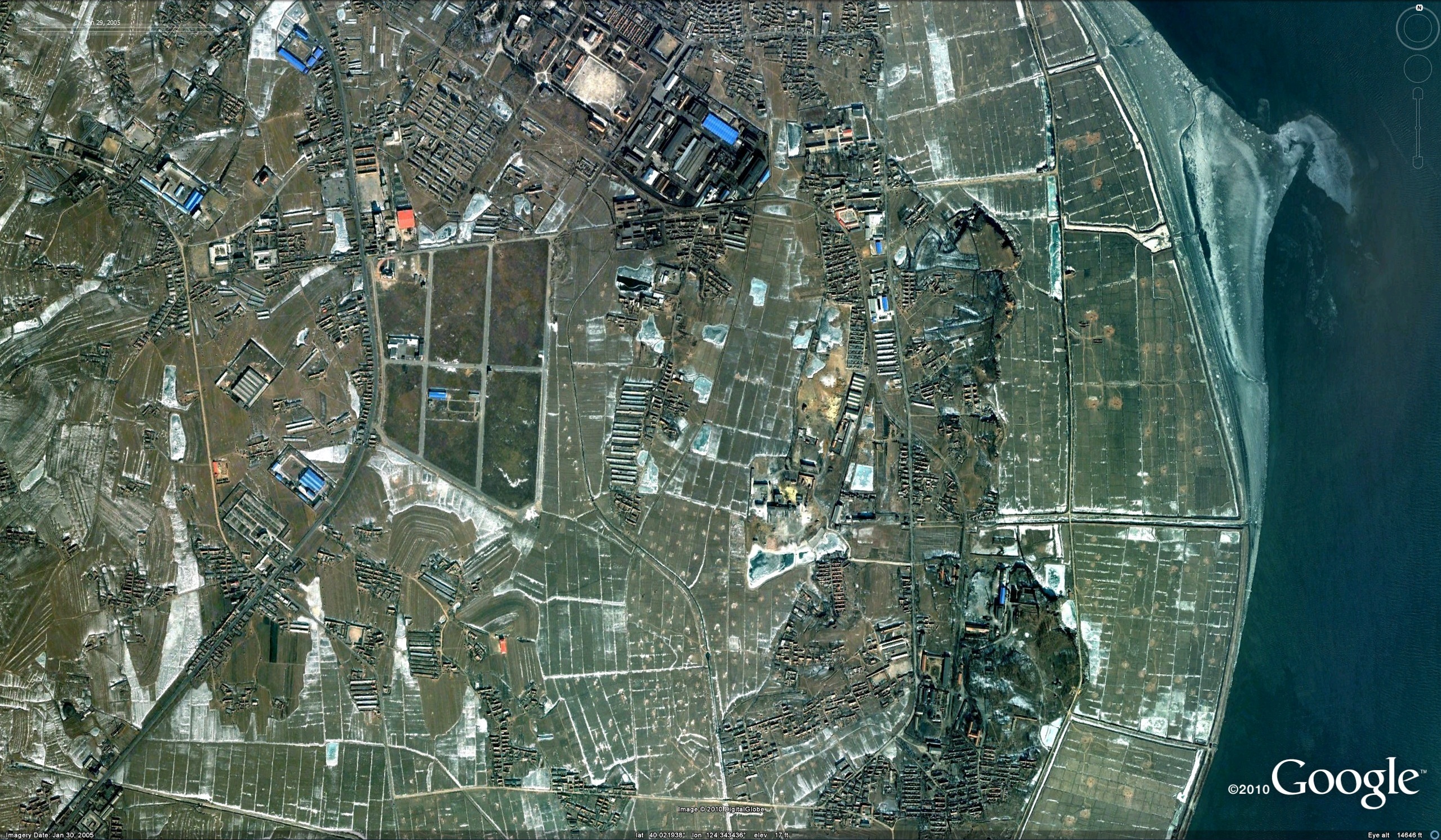
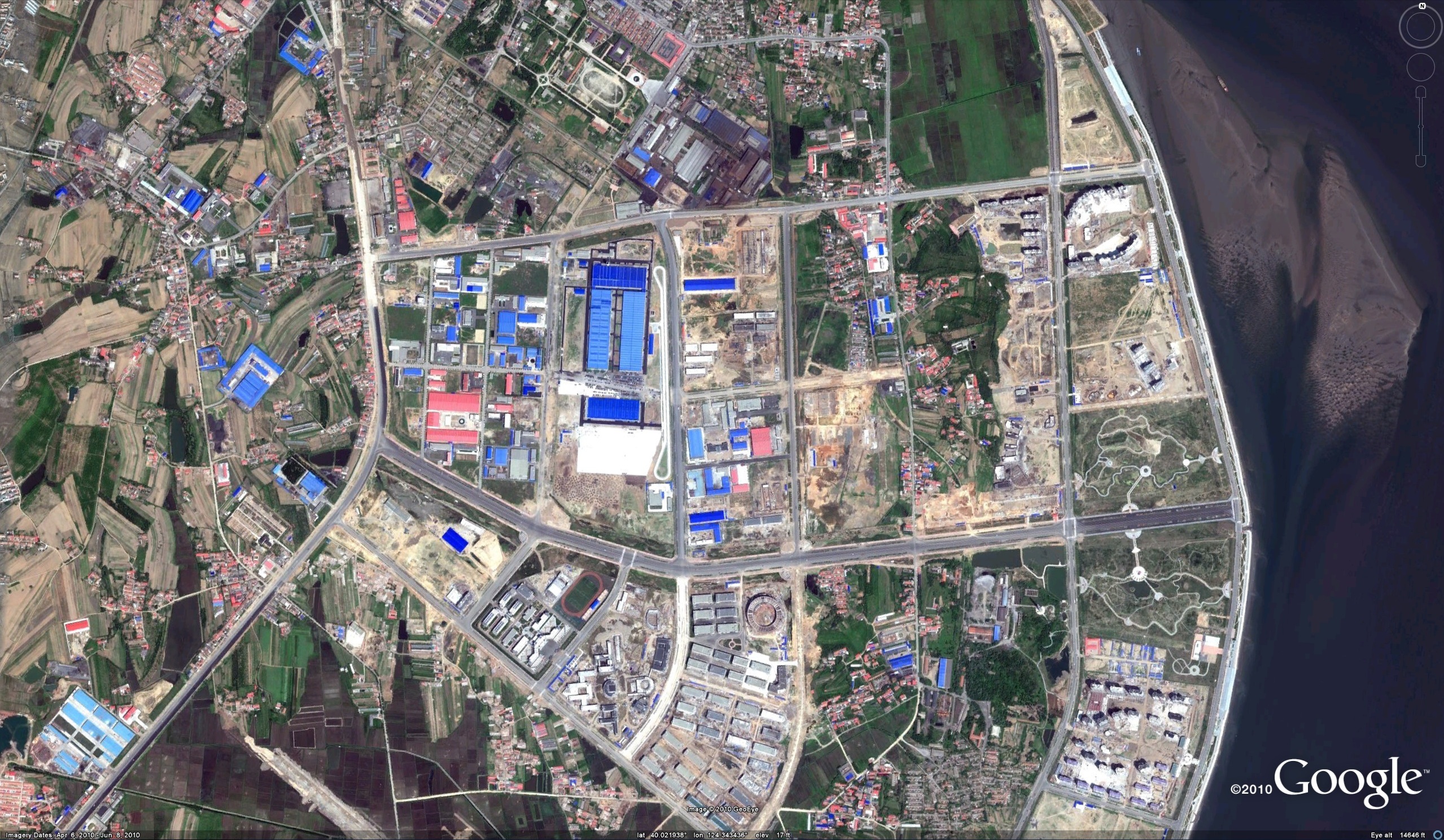
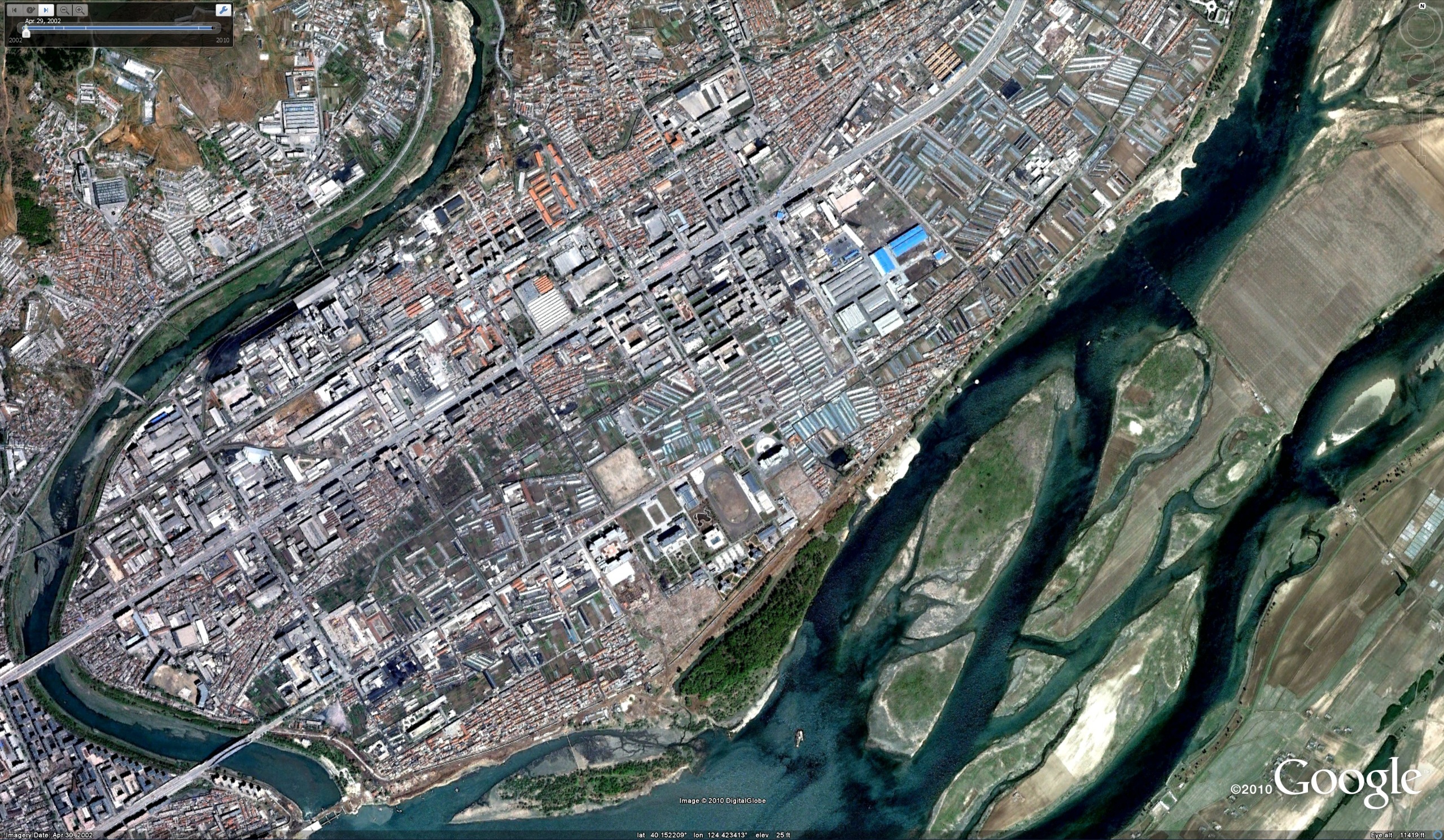
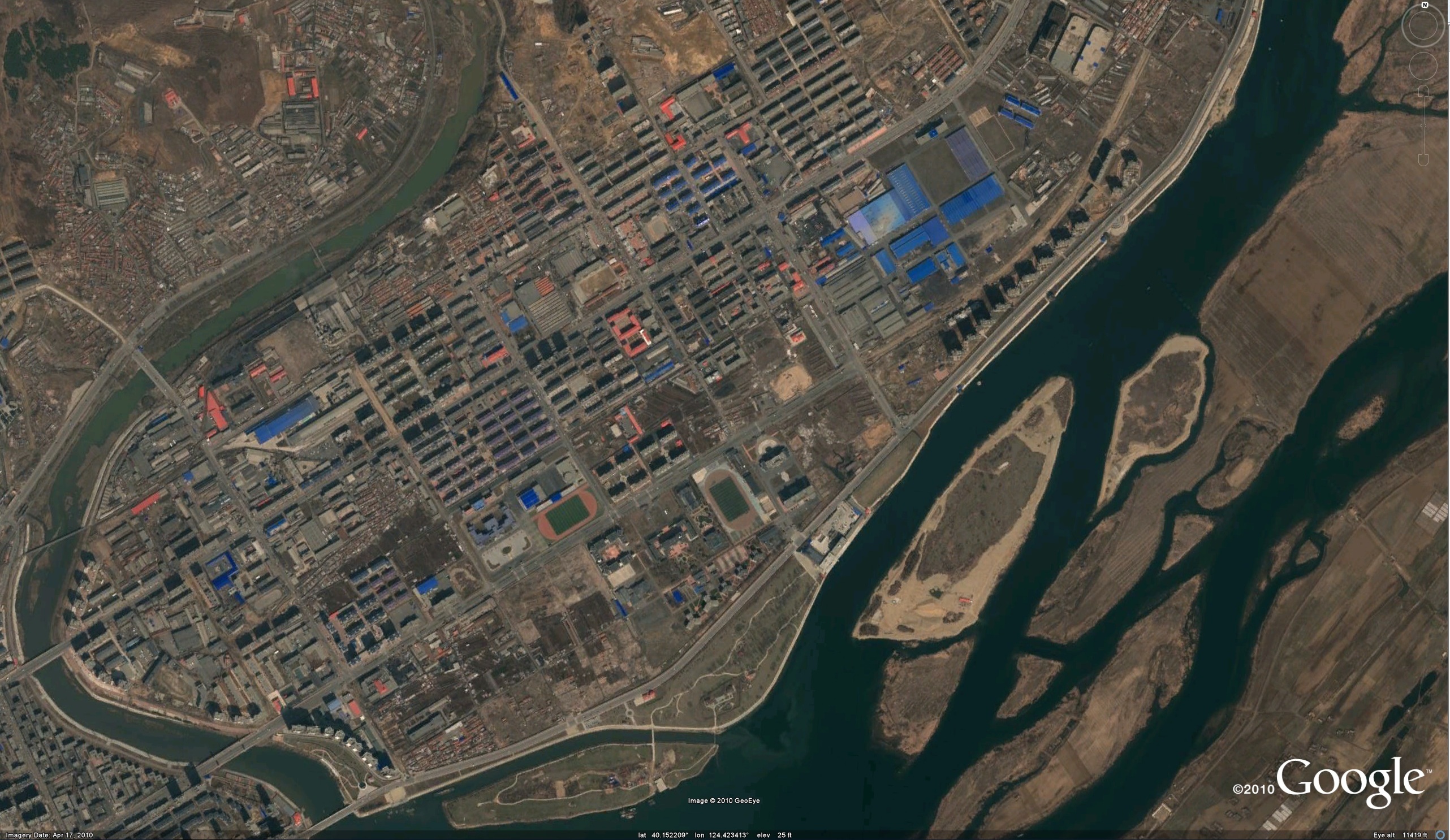
sinuiju2.JPGOn September 20, 2002, the DPRK’s Supreme People’s Assembly announced the creation of the Sinuiju Special Administrative Region (SAR) (KCNA announcement here).

The project was to be headed by a Chinese-born, naturalized Dutch citizen, Yang Bin…who was arrested by Chinese authorities shortly after the Sinuiju SAR was announced.  Western analysts interpreted this move as a signal that China was not supportive of either the project or the selection of Mr. Bin as its chief executive.  Needless to say the future of the project lay in doubt.

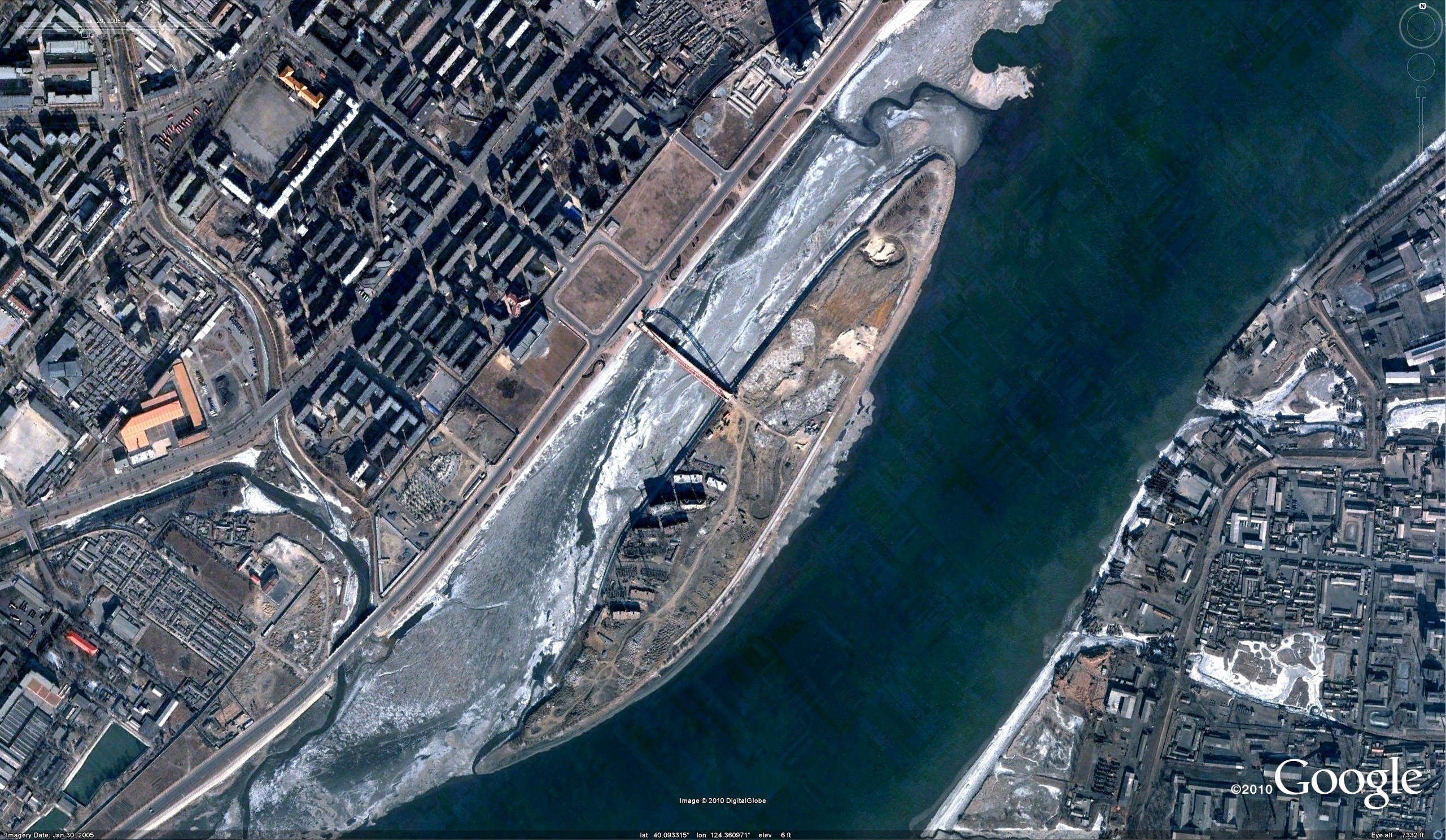
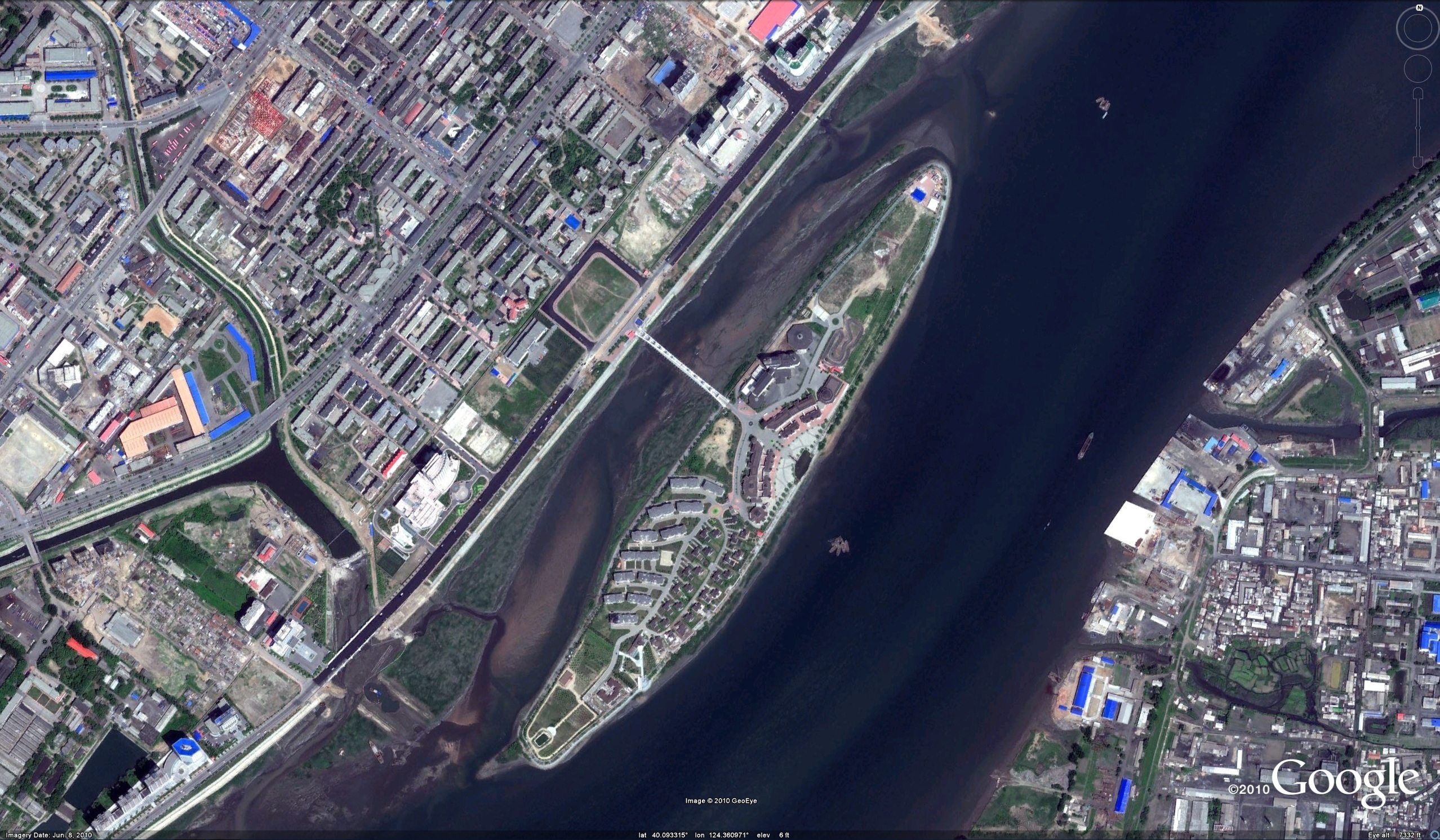
However, according to a Yonhap report (here), as of March 2007 the North Koreans still seemed interested in launching some kind of SAR/SEZ in Sinuiju, though the location had been moved from the city proper to two islands in the Yalu River, Bidan and Wihwa.

In August 2007, IFES and the Choson Ilbo reported that preparations were already underway in Sinuiju to convert the city center into a SAR/SEZ.  However, after this initial media hit, most of the news coming out of Sinuiju was related to Jang Song Taek’s 2008 anti-corruption campaign which brought most of the trading companies along the Chinese border back under the control of the Ministry of Finance.

This week, Japan’s Yomuri reports from Shenyang, China, that the Sinuiju SAR is still on and will be located on Wihwa Island:

“The zone will only cover Wi Hwa Island, which will be much easier to control, and only Chinese will be allowed to freely visit,” one of the sources said. “The plan solely aims at expanding trade with China. North Korea isn’t planning any measures that would involve a dramatic opening up.”

According to Chinese statistics, the total value of trade between China and North Korea from January to October last year was 2.12 billion dollars, up 31.7 percent from a year earlier.

Meanwhile, a diplomatic source said, “The move to beef up border trade with China is also aimed at putting pressure on South Korea.”

(FYI: Use of the phrase “beef up” is a pretty good sign that the diplomatic source was an American.)

I know the story of “The Boy Who Cried Wolf.”  I will remain skeptical about the new SEZ until I see evidence of construction myself.

You can read the full Yomuri article here:
N. Korea plans free trade zone on island
Daily Yomuri
Toru Makinoda
1/23/2009

Share

More from Taiwan

Monday, January 19th, 2009

Although the P.R. of China and the DPRK are supposed to be as close together as “lips and teeth,” we have seen a couple of interesting stories emerging from Taiwan in the last few days.

Case 1: On Jan 8, the Straits Times reported that former Taiwanese president Chen Shui-bian embezzled money intended for the DPRK.

Case 2: Last Friday, the AFP reported that the US Treasury Depratment was moving on a Taiwanese couple who were allegedly facilitating shipping to the DPRK:

The US Treasury moved Friday to freeze the assets of a Taiwanese couple and their companies, linking them to North Korean weapons proliferation.

Alex HT Tsai and his wife Lu-chi Su were accused of providing support to the Korea Mining Development Trading Corporation (KOMID), identified by Washington as a proliferator four years ago, the Treasury said in a statement.

Tsai was last year indicted by Taiwanese authorities for forging shipping invoices and illegally shipping restricted materials to nuclear-armed North Korea, it said.

“He has been involved in shipping items to North Korea that could be used to support North Korea’s advanced weapons program,” the statement said.

The companies controlled by the couple Global Interface Co and its subsidiary Trans Merits Co. were sanctioned by the Treasury action.

“Proliferators depend on access to the international financial and commercial systems to support their dangerous trade,” said Stuart Levey, Treasury under secretary for terrorism and financial intelligence.

“Our action today exposes a North Korean procurement channel, and we urge governments and companies worldwide to cut this channel off entirely,” he said.

Rad the full story here:
US freezes assets of Taiwanese couple and their companies
AFP
1/16/2009

Share

DPRK won exchange rate continues to climb

Thursday, January 15th, 2009

Institute for Far Eastern Studies (IFES)
NK Brief No. 09-1-15-1
2009-01-15   

The exchange rate for the North Korean won shot up approximately 13-15 percent at the end of last year, and has maintained this high rate into January, according to an article in the on-line newsletter, “Open News for North Korea,” on January 12.

According to the inaugural edition of the newsletter, the exchange rate last year was around 3,200 won per USD, or 460 won per Yuan, with only slight fluctuations, but shot up to 3,630 won per USD and 530 won per Yuan in December. In the first weeks of the new year, it has fallen only slightly, to 3,540 won per USD, and 530 won per Yuan.

According to traders who import and export between North Korea and China, “The sudden rise in the exchange rate appears to be related to trade regulations on goods imported from the North,” and they stressed, “After North Korea protested to China about inferior Chinese goods leading to accidents around the country, China decided to set an example, and unilaterally imposed [trade] restrictions.”

Because business with China makes up almost 50 percent of North Korea’s trade, if DPRK-PRC trade, and in particular, North Korea’s exports to China, are restricted, this would cause a large shock to the foreign currency market,” and, “China’s regulatory measures were eased as January come around,” but, “this year, North Korea is strengthening crackdowns on domestic markets, making it difficult to expect the exchange rate to return” to last year’s lower numbers. According to the article, “There is a foreign currency crisis in North Korea, as well, the scale of which is so great it can’t even be compared to what is happening in the South.”

The black market price for U.S. dollars has shot up from a low of 200 won, in July 2002, to 3,200 won in July of last year, and has continued to rise, peaking at 3.500 won currently. This is a sixteen-fold increase in just over six years. The newsletter put this in perspective by explaining, “North Korea has experienced a foreign currency crisis like that seen in South Korea in 1998 every year since 2002.”

North Korea’s haphazard currency distribution and chronic trade deficit has led to a reduction in the country’s foreign currency reserves, while the failure of the authorities’ currency stabilization policies combined with the growing demand for U.S. dollars by North Korean residents seeking imported goods have led to the sharp growth in the exchange rate.

Share

DPRK opens consulate in Dandong

Monday, January 12th, 2009

According to the Korea Times:

North Korea has opened a consulate branch office in Dandong, a major Chinese city bordering North Korea, displaying its intention to reinforce bilateral trade relations with China, Yonhap News reported quoting a source Sunday.

“The North Korean consulate-general in Shenyang recently established its branch office in Dandong and dispatched personnel there,” said the source.

“The move signals the North’s intention to increase its product procurement from China through brisker border trade and strengthen its consular affairs amid a growing North Korean population in the Chinese border city.”

Dandong, a city in the Chinese province of Liaoning, is situated right across the Yalu River from Sinuiju in the northwestern part of North Korea. Approximately 70 percent of trade between North Korea and China is conducted through the Dandong-Sinuiju route.

According to the source, the North Korean consulate branch office is the first foreign diplomatic mission to open in Dandong, which has a population of about 650,000.

Bilateral trade and cooperation via Dandong are expected to further grow as China and North Korea are to celebrate the 60th anniversary of their diplomatic relations in 2009 and launch a joint “Year of Friendship.” Two-way trade is estimated to have topped $2 billion last year.

Read the full article here:
N. Korea Opens Mission in Chinese Border City
Korea Times
1/11/2009

Share

Chinese expand reach over DPRK’s coal

Wednesday, December 31st, 2008

Via China Knowledge:

Henan Yima Coal Mining Group, one of the leading state-owned coal miners in Henan Province, said the company planned to invest in a 10-million-ton coal mine and a 1.2-million-ton coal chemical project in North Korea, the China Daily reported.

The Chinese coal miner and the Anju Coal Mining Association, the country’s largest coal miner with nearly ten coal mines, signed an agreement on Dec. 12 to develop the two projects.

Under the agreement, the two projects, with Yima Group holding controlling stakes, will be built by stages. Auxiliary facilities, such as power plant and coal-selecting plant, are also expected to be jointly constructed by the two companies.  North Korea is rich in coal resource [sic], a main energy source of the country’s self-dependent economy.

Source:
Chinese coal miner taps into North Korea
China Knowledge
12/31/2008

Share

The (Non) Impact of UN Sanctions on North Korea

Friday, December 19th, 2008

Working Paper (Download PDF here)
Marcus Noland, Peterson Institute for International Economics

Abstract: This study finds that North Korea’s nuclear test and the imposition of UN Security Council sanctions have had no perceptible effect on North Korea’s trade with its two largest partners, China and South Korea. Before North Korea conducted an underground nuclear test, it was widely believed that such an event would have cataclysmic diplomatic ramifications. However, beginning with visual inspection of data and ending with time-series models, no evidence is found to support the notion that these events have had any effect on North Korea’s trade with its two principal partners.

In retrospect, North Korea may have calculated quite correctly that the direct penalties for establishing itself as a nuclear power would be modest (or, alternatively, put such a high value on demonstrating its nuclear capability that it outweighed the downside risks, however large). If sanctions are to deter behavior in the future, they will have to be much more enthusiastically implemented.

Keywords: Sanctions, North Korea, Nuclear, United Nations, Trade equations
JEL codes: F51, P2, D74

This subject was covered in the Washington Times this morning.

Share

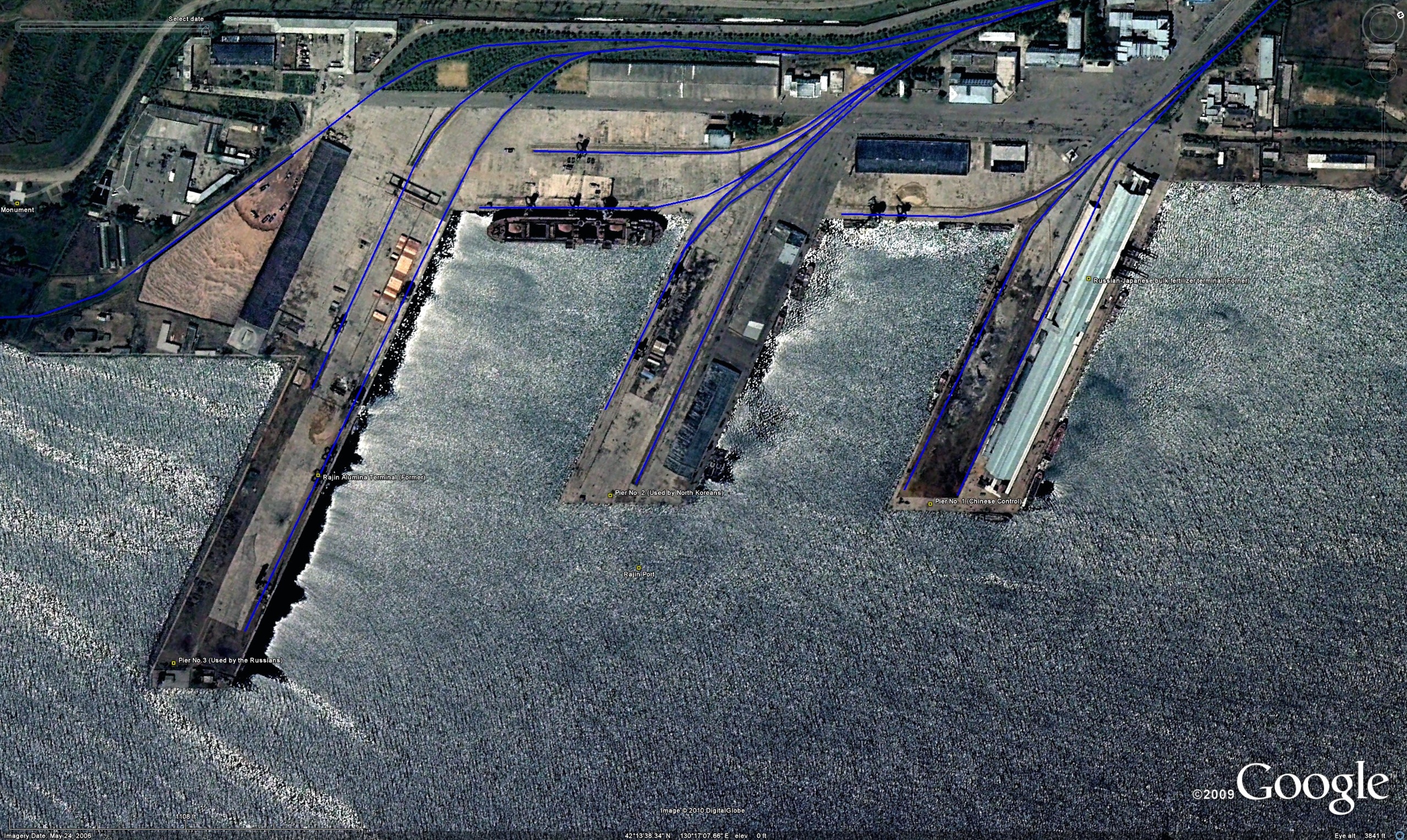
DPRK to remove inactive Chinese companies from Rajin

Friday, December 19th, 2008

Quoting from the article (h/t Oliver):

North Korea is preparing to remove inoperative foreign companies from a special economic zone in the country’s northeast, officials said after a report that some Chinese firms in the area were asked to leave.

“North Korea appears to have conducted a survey in October to sort out companies that exist only on paper from the Rajin-Sonbong economic zone,” Kim Ho-nyoun, spokesman for the Unification Ministry, told reporters.

He was responding to a request to confirm a recent report by a local daily, the Dong-a Ilbo, that Pyongyang has asked an unspecified number of Chinese firms there to evacuate by the end of November. The firms did not comply with the request since it was not mandatory. About 250 Chinese firms are on the registry, according to the daily.

Although pure speculation, this could also be due to the influence of the Russian government—who has made no secret of its desire to invest in the Rajin.  Russia is also upgrading the railway track from Kashan to Rajin. 

Source:
N Korea to remove inactive cos from Rajin-Sonbong Economic Zone
Asia Pulse Businesswire
(Yonhap)
December 16, 2008

Share

An affiliate of 38 North