UPDATE 8 (2014-11-14): Yonhap speculates on Chinese oil exports to the DPRK:
China appears to be continuing to provide North Korea with crude oil, contrary to its customs data, officials here said Friday.
China exported not a single drop of crude oil to North Korea in the first nine months this year, according to formal data.
If true, it might reflect widespread speculation that the relations between the communist allies have been strained to some extent due to Pyongyang’s repeated provocative acts.
South Korean officials, however, believe China is continuing to send crude oil to North Korea either in hidden trade or in the form of aid.
“Without China’s provision of crude oil, the operation of many of North Korea’s industrial facilities and vehicles would be suspended. But there has been no such indication yet,” an intelligence official said.
Beijing may be deliberately excluding its crude oil shipments to Pyongyang from the customs data in a bid to give the world the impression that it is joining the international community’s efforts to put pressure on it, another government official said.
He dismissed the view that the North has replaced China with Russia as its main source of crude oil imports.
“North Korea has brought in more crude oil from Russia this year, but the total amount is still less than 100,000 tons,” he said.
North Korea used to import an annual average of half a million tons of crude oil from China. (Yonhap)
UPDATE 7 (2014-11-4): According to Yonhap, North Korea’s jet fuel imports from China have begun to rebound this year.
North Korea imported 13,000 tons of jet fuel from China between January and September, a sharp rise from 359 tons in the same period last year, the unification ministry official told reporters.
But the amount is still far short of past tallies: 38,000 tons in the same period of 2011 and 39,000 tons in that of 2012, he noted, citing formal data from China’s customs authorities
UPDATE 6 (2014-8-23): For what it is worth, China recorded zero oil exports to North Korea in July. According to Yonhap:
According to the Chinese data analyzed by the Beijing unit of the Korea Trade and Investment Promotion Agency, there were no shipments of crude oil from China to North Korea from January to July.
…
Diplomatic sources with knowledge of the matter cautioned against reading too much into the official trade figures because China has been providing crude oil to North Korea in the form of grant aid and such shipments have not been recorded on paper.
In the first seven months of this year, China’s exports to North Korea rose 1.8 percent from a year ago to US$1.95 billion, while imports fell 4.3 percent to $1.57 billion, according to the data.
UPDATE 5 (2014-8-4): The Hankyoreh weighs in on Chinese oil exports to the DPRK:
However, there are also other experts who counter that suspending the supply of crude oil ought not to be read as a sign of deteriorating relations between North Korea and China. They say that, while the statistics read zero, the supply of crude oil is actually continuing. In fact, the price of gasoline and other petroleum products in North Korea remains stable, reports have indicated.
Radio Free Asia reported that gasoline was selling recently for around 10 to 11 won per kilogram at North Korea’s markets, around the same as the 11 won price from 2012. The price of diesel also remained steady at 6 to 7 won, the broadcaster said.
The South Korean government believes that while China may have reduced its crude oil exports, it is continuing to supply North Korea with oil as a form of aid. “China has been supplying North Korea with 500,000 tons in trade, along with a similar amount of free oil. It appears to be providing North Korea with enough crude oil to prevent problems from occurring in North Korean society,” said a senior Ministry of Unification official on condition of anonymity.
…
But many experts believe that relations between North Korea and China are not in such a bad state that China would shut off the supply of crude oil. “Relations between North Korea and China are not normal, but they should not be seen as especially bad, either. From the viewpoint of a superpower, China appears to be steadily observing North Korea’s behavior, without grief or joy,” said Lee Hui-ok, professor at Sungkyunkwan University.
Indeed, aside from interaction between senior officials, other sectors appear to be operating normally without any major disturbances. Trade between North Korea and China in the first half of the year remained at levels similar to 2013. Chinese exports to the North from January to May of this year were US$1.27 billion, down slightly from US$1.33 billion last year. But a big rebound in June brought the first half figures up to US$1.58 billion, nearly the same as the US$1.59 billion posted last year.
In the area of tourism, China also appeared to be taking a more aggressive attitude in the first half of the year than in 2013, running new tourism programs using bicycles and trains, reports said. In the area of personnel exchange, working-level contact is continuing, despite the lack of meetings between senior officials.
“There are virtually no senior political officials from North Korea visiting China. However, technical and economic officials continue to visit China for inspections and training,” said an official at the South Korean embassy in China, on condition of anonymity.
“It is dangerous to read too much into the temporary fluctuations and the sluggish mood recently affecting relations between North Korea and China. That would be a false diagnosis of their relationship,” said Lee Nam-ju, professor at Sungkonghoe University.
“Since North Korea and China understand each other, it does not appear likely that their relations will be suddenly damaged,” Lee said.
UPDATE 4 (2014-7-14): NK News reports on Chinese petrol exports to the DPRK:
China has increased deliveries of oil products to North Korea during the first five months of 2014 according to the latest Chinese customs data, which also confirms the widely reported halt in crude oil shipments.
However, data from the Chinese General Administration of Customs shows that the oil-products being delivered to North Korea only cover a fraction of the supplies of crude once shipped, with total deliveries falling by over 60 percent.
Experts were unsure over whether this constituted a warning from Beijing in response to North Korea’s regional provocations or whether the slow-down was due to the DPRK’s aging refineries. Crude oil must be refined into petroleum products such as fuel oil, diesel and aviation fuel before being used.
…
In total, China exported more than 88,000 tons of refined products to the DPRK between January and May 2014, with more than half of the growth caused by spikes in gasoline and kerosene shipments. Gasoline, is primarily used as a fuel for motor vehicles, while kerosene is used to power jet engines and as a heating fuel in North East Asia.
“[This] is somewhat over half of the recorded exports from China to the DPRK in 2010, and somewhat over a quarter of the net petroleum products imports that we estimated for the DPRK from all nations in 2010. So there may be a real shift in petroleum products exports going on,” David Von Hippel a Senior Associate at the Nautilus Institute for Security and Sustainability told NK News.
…
Kerosene, used as an aviation fuel, saw the sharpest spike in exports increasing by 5131% when compared to the same period last year. The North Koreans imported more than a hundred thousand barrels, mostly in one bulk shipment in March, amidst news published in early July by Reuters that the DPRK was looking to restart domestic flights.
Gasoline exports also rose by 84% to approximately 280 thousand barrels when compared to the January – May period in 2013.
DPRK imports of diesel rose to 63,000 barrels and mark the first time China has exported the petroleum product since 2011, although no data is available before this point. The exports remain at a low level however, representing only a few percent of total DPRK yearly usage.
…
China also upped exports of Butane by 28%, which is used primarily as fuel gas or in gasoline blending. “[Butane] is more likely used as an input to bottled gas (for example, liquefied petroleum gas, LPG), which is, we have heard, increasingly used for cooking in urban households that can afford it in the DPRK.” Von Hippel told NK News.
UPDATE 3 (2014-5-24): This Daily NK article further highlights why we should be skeptical of official reports of the DPRK’s oil imports from China:
Daily NK has confirmed that China is currently supplying oil to North Korea through a pipeline running between the two. Though there have been cases where Beijing has suspended such shipments in response to North Korean intransigence, particularly over nuclear issues, but this has not happened recently.
On April 10th, Daily NK visited an oil storage and pipeline facility in Dandong. There, our team interviewed Chinese Ministry of Public Security officials guarding the facility, which is owned by a subsidiary of China National Petroleum Corporation, or CNPC.
When asked about oil assistance to North Korea, one of the officers acknowledged, “We are continuously supplying oil (to North Korea),” but “cannot say how much we send each month or how much remains as of now.”
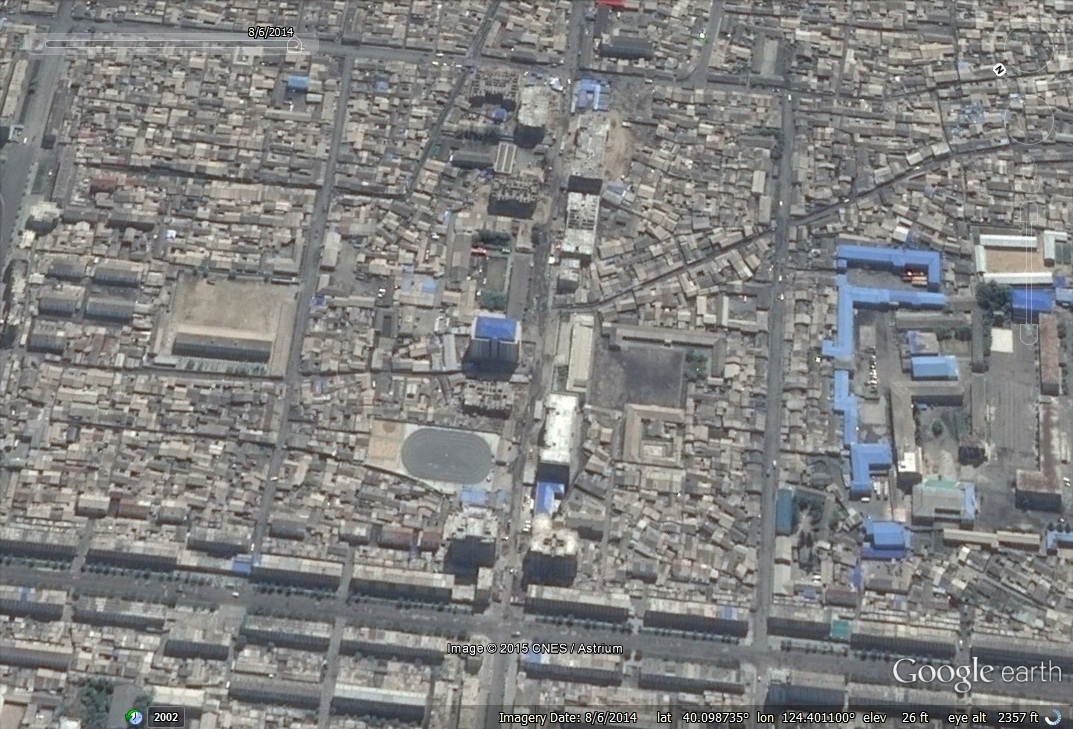
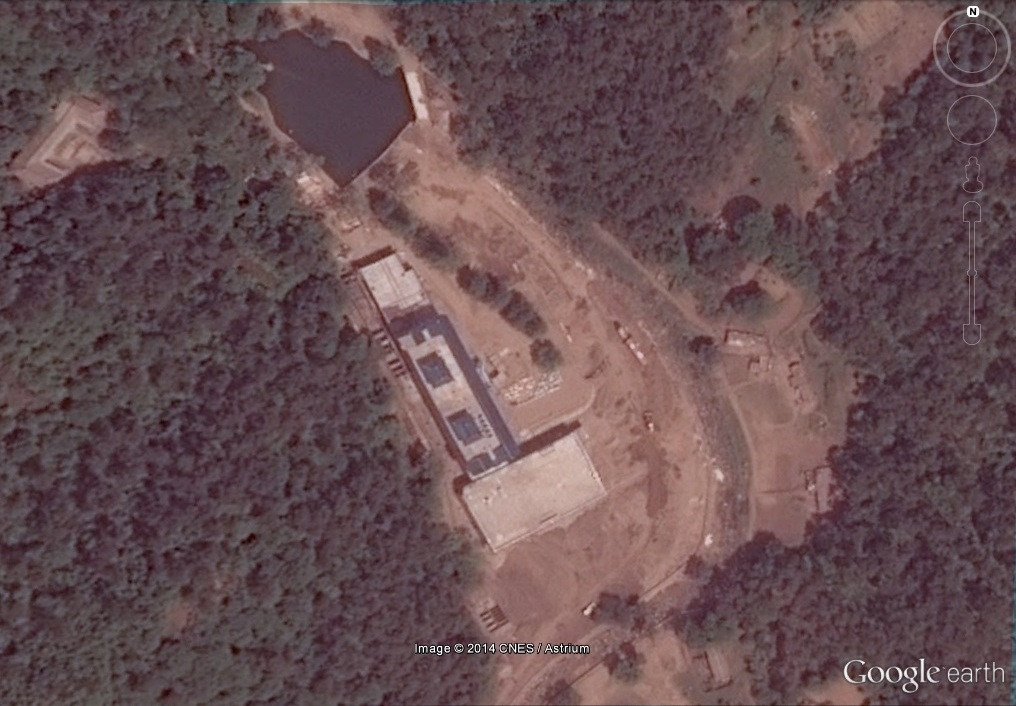
Oil deliveries to be transferred to North Korea are received at this facility from a larger nearby facility, Basan, and then are shipped to a partner storage facility at Baekma in Pihyun Couunty, North Pyongan Province. The pipeline is 11km long.
According to sources, these deliveries are not recorded in Chinese customs data, or in foreign trade statistics. The oil from the pipeline is rather characterized as de facto aid, either in the form of low interest loans or free of charge.
This is why, on April 24th, Korean agency KOTRA released a figure of ‘zero’ for oil exports from China to North Korea for the first quarter of 2014, basing it on Chinese customs data. The data says zero for commercial transfers; however, supplies in the form of aid and assistance may not have stopped at all.
In this regard, a diplomatic source said, “China has the ability to stop the oil supplies whenever they want, but they’ve never done so for a long period of time.” He went on, “Above all, China places as much importance on security as North Korea places on nuclearization, and it doesn’t want to see disorder in the North Korean regime. This explains why China keeps providing this assistance.”
Meanwhile, Chinese trade statistics show that 520,000 tons of oil was exported to North Korea every year from 2009 to 2012. Mostly small North Korean tankers shipped this oil.
UPDATE 2 (2014-5-26): The DPRK officially did not import any oil from China as of April 2014. According to Yonhap:
China sold no crude oil to North Korea in the first four months of this year, data compiled by South Korea’s government trade agency showed Monday, in an unusual four-month absence of oil shipments amid the North’s threats of a nuclear test.
The Beijing unit of the South’s Korea Trade and Investment Promotion Agency (KOTRA) said in a report, citing data from China’s customs authorities, that there were no oil shipments from China to North Korea from January to April this year.
A four-month absence of oil shipments from China to North Korea was also reported in 2009, when the North conducted its second nuclear test.
However, a diplomatic source in Beijing cautioned against reading too much into the official trade figures.
“The Chinese side has provided crude oil to North Korea in the form of grant aid, which is not recorded on paper,” the source said on condition of anonymity.
North Korea also appears to have been trying to diversify its source of oil imports, through countries such as Russia, the source said.
UPDATE 1 (2014-4-24): DPRK official imports from China in Q1 of 2014: zero.
According to Yonhap:
China did not export any crude oil to North Korea in the first three months of this year, data compiled by South Korea’s government trade agency showed Thursday, in an unprecedented three-month absence of oil shipments amid North Korea’s threats of a nuclear test.
Monthly shipments of crude oil from China to North Korea were absent in February, June and July last year, but it was the first time that China apparently stopped exports of crude oil to North Korea for three consecutive months.
The Beijing unit of the South’s Korea Trade and Investment Promotion Agency (KOTRA) said in a report, citing data it collected from China’s customs authorities, that there were no oil shipments from China to North Korea from January to March this year.
“To my knowledge, it is the first time that China did not export crude oil to North Korea for three consecutive months and that would impact the North Korean economy,” a diplomat at the South Korean Embassy in Beijing said on the condition of anonymity.
Also worth highlighting from the report:
China’s total trade with North Korea fell 2.83 percent to US$1.27 billion in the January-March period, compared with the same period a year ago, according to the KOTRA report.
Additional information:
1. DPRK – China trade statistics following the Jang Song-thaek purge.
2. DPRK – China trade at all time high in 2013.
3. DPRK diversifying energy sources.
4. DPRK does not import any oil from China in January 2014.
Read the full Yonhap story here:
China didn’t export crude oil to N. Korea in Q1
Yonhap
2014-4-24
ORIGINAL POST (2014-3-10): DPRK oil imports from China in January 2014: Zero!
According to Yonhap:
North Korea did not import any crude oil from China in January, marking the first absence of monthly deliveries from China in five months, a Seoul government report showed Monday.
It was not immediately clear whether the January absence of crude shipments to North Korea from China was linked to Beijing’s growing frustration with Pyongyang over its nuclear program, but it followed the execution of the once-powerful uncle of North Korean leader Kim Jong-un last December.
…
Last year, monthly shipments of crude oil from China to North Korea were absent in the months of February, June and July. However, annual shipments of crude oil to North Korea from China rose 11.2 percent on-year to 578,000 tons in 2013.
Read the full story here:
No crude import from China to N. Korea in Jan.: report
Yonhap
2014-3-10