Archive for the ‘Civil society’ Category

Number of cross-border visitors surges on increased exchanges: ministry

Saturday, October 20th, 2007

Yonhap
10/20/2007

The number of South and North Koreans who made cross-border visits during the first nine months of this year surged over 30 percent as economic, social, cultural and humanitarian exchanges between the Koreas expanded, a government report showed Saturday.

According to the report released by the Unification Ministry, a total of 102,809 people from the two countries made cross-border visits during the January-to-September period, up 33.6 percent from the same period of the previous year.

Of the total that excluded South Koreans who visited the North’s Mount Geumgang, 102,079 were South Koreans going to the North, and only 730 North Koreans visited the South, it added.

Exchanges in the economic sector were most brisk with a total of 69,729 people crossing the border, followed by 9,924 for social and cultural exchanges, and 7,260 for humanitarian purposes, the report showed.

Meanwhile, inter-Korean trade during the nine months amounted to US$1.22 billion, up 12.7 percent from a year earlier, the report noted.

The countries remain technically at war as the 1950-53 Korean War ended with an armistice, not a peace treaty.

Share

The Hermit Kingdom and I

Saturday, October 20th, 2007

Asia Times
Michael Rank
10/20/2007

This 38-year-old British soprano may not be a household name in the western world, but she’s a superstar in North Korea where she has given dozens of concerts and appeared countless times on the rigidly state-controlled television.

Suzanne Clarke has performed every year since 2003 in the culturally and politically isolated country, where she has sung everything from Mozart to Gershwin and from Verdi to Andrew Lloyd Webber.

North Korea may be highly repressive and deeply suspicious of foreign cultural contamination, but Clarke says the government has never attempted to censor what she sings. “There’s been no interference. I sing what I would like to sing,” she says.

She sings Korean songs as well as Western classics, but is careful to avoid being used as a tool of the Pyongyang regime, so she tactfully turns down requests to sing hymns of praise to the Great Leader Kim Il-sung and his son and successor, Kim Jong-il, around whom an all-embracing personality cult revolves, and which the North Korean government is always eager for foreigners to endorse.

“I come with a message of friendship and peace, not politics. I’m incredibly careful about what I choose to sing. I won’t sing anything in praise of any regime or any particular person,” said Clarke, an active member of Britain’s Labor Party who has nurtured ambitions to become a member of parliament.

She is strongly against capital punishment, which is widely carried out in North Korea, and does not hesitate to tell North Korean officials when she disagrees with their policies. “I tell them that I don’t believe in the death penalty. If I see something that isn’t correct I will point that out.”

Clarke, who has been a principal singer at La Scala, Milan and has been taught by Pavarotti’s singing teacher, Arrigo Pola, loves the Italian repertoire and has sung plenty of Puccini arias in Pyongyang. But she’s wary about including Madame Butterfly in her North Korean repertoire, as this is a sensitive area because of the undertones of American imperialism in the tragic love affair between a Japanese geisha and an American sailor.

Clarke said that despite frequent media attacks on cultural imperialism, North Koreans have “a certain level of knowledge of western music”, and their orchestras play works by Beethoven, Mozart, Tchaikovsky and even the decidedly modernist Shostakovich. In fact, Shostakovich’s Seventh (or Leningrad) symphony seems to be something of a favorite, judging how often performances of it have been reported by the official North Korean news agency KCNA, although it is unclear whether the government is aware that it is sometimes seen as a veiled attack on Stalin.

Clarke said North Koreans love to be challenged by music that is technically difficult, “so I deliberately try to perform some of the more difficult pieces in the repertoire”. She finds North Korean audiences highly appreciative and they are especially fond of Danny Boy which is surprisingly something of an old favorite in Pyongyang (as it is with older Koreans across the DMZ). “I like trying to win them over, and they do reciprocate,” she says.

Clarke suffered a nasty attack of food poisoning when she visited North Korea for the first time for their annual Friendship Festival in 2003, but this didn’t put her off in the least. She enjoys the country so much that she has twice taken her mother, also a Labor Party activist – “They love my mother because she comes from a poor family and always looks immaculate” – and this year she took her partner Chris to Pyongyang. But next year she may have to skip a visit because she is expecting her first baby in January.

Clarke became a star in Pyongyang via a highly unexpected route. She hails from the northeastern English town of Middlesbrough, which is where North Korea sensationally beat Italy in the quarter finals of the soccer World Cup way back in 1966. In 2001 the remaining members of the North Korean team returned to Middlesbrough as part of a film documentary, The Game of Their Lives, and Clarke sang the North Korean Song of Friendship at the town’s new stadium.

This was the beginning of a remarkable relationship which is continuing not only with concerts but also with fundraising. Clarke has raised money to buy musical instruments for North Korean schools, and now she is hoping to bring a North Korean orchestra over to London next year.

This would be the first ever visit by a North Korean orchestra to the West, and despite the enormous hurdles Clarke is hopeful that she will succeed. “Things are going very well but we need more sponsorship,” said Clarke, who is working with, among others, David Heather, who this summer brought the first North Korean art exhibition to London.

The New York Philharmonic is discussing a possible concert in Pyongyang next February, so North Korea is clearly opening up musically, and Clarke is ready to give the Americans some expert advice should they request it.

Share

North Korea and Press Freedom

Friday, October 19th, 2007

There are two prominent international rankings of press freedom: Freedom House and Reporters without Borders. As I have reported in the past (here and here), North Korea typically “wins” last place in both reports.  You can usually bank on it.

Well, this year I would have lost a lot of money. 

Although in May 2007 Freedom House awarded last place to the DPRK, DPRK Forum has pointed out that this year Reporters without Borders has awarded last place to Eritrea–Bringing the DPRK’s reign over both titles to an end.  The DPRK came in second to last in the RWB rankings this year. No doubt this will create some tension as historically the titles have been united under North Korea.  Freedom House and Reporters Without Borders will need to schedule a new round of competition immediately to sort out once and for all who is really the champion of last place in press freedom: North Korea or Eritrea.  This time, let’s keep Don King out of it.

On a personal note, the list of 10 worst countries in both of these surveys looks pretty much like my list of vacation destinations for the last five years: China, Iran, Zimbabwe, Burma, Turkmenistan, and North Korea.

Share

DPRK Economic Policy One Year after Nuclear Test

Thursday, October 18th, 2007

Institute for Far Eastern Studies (IFES)
NK Brief No. 07-10-18-1
10/18/2007

One year after the DPRK nuclear test, North Korea is still focusing all of their policy efforts on restoring their economy. North Korean leaders are convinced that an economic revival is crucial for the survival and stability of their regime.

The DPRK stated in this year’s New Year Joint Editorial, a publication that presents the regime’s policy direction for the year, that “the founding of a strong national economy is a crucial requirement for the revolution and advancement of our society, and is a historic undertaking toward becoming a fully prosperous and powerful nation.” The emphasis on “focusing all the state’s efforts on solving the economic issue,” was indicative of their sense of imminence regarding economic revival.

The Joint Editorial presenting the DPRK’s national goal of “founding a strong national economy” came out three months after the October nuclear test, which took place just over one year ago. Since its publication, the North Korean media has been stressing that the DPRK already realized powerful military strength and strong political ideology, and must now strive to establish a strong national economy. The military might of the nation was epitomized by the success of the nuclear test.

A copy of the North Korean quarterly publication “Politics & Law Review” obtained on September 14th emphasized the need to establish a strong national economy, stating that “without a strong national economy, it is impossible to strengthen the forces of political ideology and military power,” and, “the only way to block the infiltration of economic imperialism is by strengthening economic power.” It also added that “if we are weaker than South Korea, we will naturally look to them and depend on them.”

North Korean press claims that Kim Jong Il’s decision to carry out a nuclear test was the reason the 6-party talks have been working since January’s meeting between the United States and the DPRK in Berlin, thus easing tensions on the Korean peninsula by ameliorating the U.S.-DPRK relationship and advancing inter-Korean relations. The fact that 18 out of 55 public appearances (a significantly higher proportion than that of last year) made by Kim Jong Il this year were visits to economic bureaus also reflects North Korea’s economic ‘all-in.’ North Korea’s pro-active movement toward ameliorating relations with the United States, and its determination to expand inter-Korean economic cooperation, all stem from its urgency to develop their economy in order to stabilize their regime.

Share

In the So-called Socialist Country, North Korea, the Number of Unemployment Is Increasing

Tuesday, October 16th, 2007

Daily NK
Kim Min Se
10/16/2007

The North Korean authorities always proclaim that “There is not a single unemployed person in socialist North Korea.”

Although that is a lie, the North Korean authorities keep propagating it. Indeed, the state has been using the propaganda maneuver for over fifty years. Unfortunately, there are some South Korean people who take this lie as truth.

The North Korean regime arbitrarily posts most of its people, except for a few, at the workplaces regardless of their fit with the job or ability. Therefore, of those placed into unfavorable places such as coal mines or factories (in bad conditions) are individuals who refused the job.

However, the current day unemployed are different from their counterparts back in the 1980s and 90s. In the past, the unemployed were those who rejected the jobs provided by the regime. Now, people become jobless because factories and complexes refuse to receive new workers.

The number of the unemployed has increased especially since the late 1990s when the authorities suspended its food distribution and many factories or complexes stopped operating because there was no work provided.

Lately, the North Korean authorities ordered that the managers of the factory complexes take responsibility for providing food rations for their workers. If they fail, the authorities warned that the managers would lose their positions. Thus, it is burdensome for the managers to receive new workers.

In a phone conversation with DailyNK on October 12th, Kim Chul Man (pseudonym), who works in Yanji in China and conducts trade business between North Korea and China said, “There are many unemployed people in North Korea. It is because the managers do not want to receive new workers since they have to provide for their workers both wage and food ration.”

“How could the managers receive the new workers when it is hard to give wage and food to existing workers?” Mr. Kim said, “Even those who work under managers competent for providing both food and wage for their workers are concerned about securing their jobs.”

Mr. Kim also said, “Discharged solders who are incompetent and those females who only finished junior high school are of particular concern. Most of them make a living by doing petty business.”

Lee Yung Gu(pseudonym), a defector who came to South Korea this year said, “In North Korea, anyone who has money and ability can become a manager. The authorities appoint new managers based on their ability to provide wage and money for workers.”

“The state factories are indeed managers’ factories,” said Lee, adding “In such a situation, the managers act highhandedly.” Lee said, “Some female workers even prostitute themselves to their mangers in order to secure jobs and receive more food and money.”

Share

Maternal mortality rate increases sharply in N. Korea

Monday, October 15th, 2007

Yonhap
10/15/2007

*View the UN report here

The number of North Korean women who have died while giving birth rose drastically in 2005 from five years earlier due to worsening health care conditions in the impoverished communist state, a report said Monday.

Maternal mortality rose to 370 per 100,000 births in 2005 from 67 in 2000, according to the report issued jointly by the United Nations Population Fund, UNICEF, the World Health Organization and the World Bank.

Although the rate is lower than the global average of 400 deaths per 100,000, it is 26 times higher than that of South Korea with the rate of 14 deaths per 100,000.

Sub-Saharan African countries have the highest maternal mortality rate of 900 per 100,000, followed by Southeast Asia’s 450 and East Mediterranean countries’ 420.

The comparable figures for the United States, the Western Pacific Ocean and Europe are 99, 82 and 27 respectively.

Blurb from report:

The MMR estimate for 2005 (370) was higher than the 2000 MMR (67). The predicted PMDF in 2005 was higher than in 2000, because the GDP estimate (in purchasing power parity) used in the 2005 model was approximately 75% lower than the estimate of US$ 14 996 used in the 2000 model.

Share

Roger Clinton’s Trip to North Korea

Sunday, October 14th, 2007

I was doing some research this weekend for a paper I am writing, when I stumbled on the following stories from KCNA.  It seems that although President Clinton never made it to the DPRK before his term in office ended, his brother Roger Clinton (aka “US pop singer”) did.

——————-

U.S. pop singer Roger Clinton and his party arrive
KCNA
12/2/1999

Pop singer Roger Clinton, brother of the U.S. president, and his party arrived here today to visit the DPRK on the invitation of the Korean Asia-Pacific Peace Committee. 

They were greeted at the airport by Ri Jong Hyok, vice chairman of the Korean Asia-Pacific Peace Committee, and Song Sok Hwan, vice-Minister of Culture.

U.S. pop singer Roger Clinton and his party enjoy concert
KCNA
12/4/2007

U.S. pop singer Roger Clinton and his party enjoyed a concert staged by the state symphony orchestra at the Moranbong Theatre Friday.

Among the audience were Ri Jong Hyok, vice-chairman of the Korean Asia-Pacific Peace Committee, Song Sok Hwan, vice-Minister of Culture, officials concerned and working people in the city.

The artistes of the state symphony orchestra staged the orchestral pieces “Arirang,” “Dear Home In My Native Place,” “Nostalgia,” “Bumper Harvest Has Visited Chongsan Field,” a piano concerto “Korea Is One,” and so on. 

U.S. pop singer Roger Clinton and his party visit Mangyongdae
KCNA
12/5/1999

U.S. pop singer Roger Clinton and his party visited Mangyongdae on December 3. 

They looked round historical relics with deep interest, hearing an explanation about how the President Kim Il Sung was born and spent his childhood there. 

They posed for a souvenir photo in front of the old home at Mangyongdae. 

They also visited the Tower of the Juche Idea, King Tangun’s Mausoleum and Pyongyang metro on the same day and the Mangyongdae Schoolchildren’s Palace on Saturday.

Kim Yong Sun meets pop singer Roger Clinton
KCNA
12/5/1999

Kim Yong Sun, chairman of the Korean Asia-Pacific Peace Committee, Saturday met and had a talk with U.S. pop singer Roger Clinton on a visit to the DPRK.

Present there was Ri Jong Hyok, vice-chairman of the Korean Asia-Pacific Peace Committee.

U.S. pop singer Roger Clinton performs in Pyongyang
KCNA
12/6/2007

A performance was given by U.S. pop singer Roger Clinton at the Ponghwa Art Theatre yesterday.

It was seen by Kim Yong Sun, chairman of the Korean Asia-Pacific Peace Committee, Ri Jong Hyok, vice-chairman of the committee, Mun Jae Chol, acting chairman of the Korean Society for Cultural Relations with Foreign Countries, Song Sok Hwan, vice-Minister of Culture, and artistes and Pyongyangites.

Roger Clinton and his party and Korean artistes took part in the performance.

Roger Clinton presented solo pieces and his party song, dance and male and female solos.

Korean artistes staged female concert, soprano, solo and dance and other pieces.

The performance ended with a chorus “Our Wish Is Reunification.”

Kim Yong Nam meets Roger Clinton
KCNA
12/7/1999

Kim Yong Nam, President of the presidium of the Supreme People’s Assembly of the DPRK, met and had a talk with U.S. pop singer Roger Clinton and his party at the Mansudae Assembly Hall today.

Present there was Ri Jong Hyok, vice-chairman of the Korean Asia-Pacific Peace Committee.

Roger Clinton said that it was an honor for him to visit Korea, expressing the belief that the visit would contribute to the improvement of the relations between the two countries.

Gift to Kim Jong Il from Roger Clinton
KCNA
12/7/2007

General Secretary Kim Jong Il received a gift from U.S. pop singer Roger Clinton on a visit to Korea. 

He handed it to Kim Yong Sun, chairman of the Korean Asia-Pacific Peace Committee.  

Roger Clinton and his party feted
KCNA
12/7/2007

The Korean Asia-Pacific Peace Committee (KAPPC) gave a reception for U.S. pop-singer Roger Clinton and his party on a visit to the DPRK at the Mokran House on Monday evening.

Present there were chairman Kim Yong Sun and vice-chairman Ri Jong Hyok of the KAPPC, vice-Minister of Culture Song Sok Hwan and other officials concerned.

Vice-chairman Ri Jong Hyok in his speech said Roger Clinton has staged music and conducted social activities, adding that he is well known among the pop-music circles for presenting many lively and optimistic songs in different countries and regions of the world.

Noting that Roger Clinton and his party gave a successful performance in Pyongyang, he hoped that they would find their stay in Korea pleasant and joyful.

Roger Clinton in his speech expressed thanks to General Secretary Kim Jong Il and the KAPPC and the Korean people for providing him with an opportunity to visit the DPRK and give a performance.

He said the performance tour this time offered an important occasion, adding that all of them should make positive efforts for peace in the future, too.

An art performance was given during the reception.

Roger Clinton interviewed by KCNA
KCNA
12/9/2007

American pop singer Roger Clinton was interviewed by KCNA at Pyongyang Airport before his departure from here Wednesday.

Giving his impressions of Pyongyang, he said it looked very positive and very much peaceful.

He continued:

From the artistic viewpoint, the talented Koreans that I saw here can perform any art of the world. They are as talented people as I have ever seen. But more specific is that children here are the most talented children that I have ever seen.

They performed music and dance, just general art work.

Really, the children are brilliant.

If there is something that I like to say to the Koreans freely, one must claim, I’ll be back.

I promise to convey all of my feelings, all of my lessons and all the information I have got from brave people to our people and to my brother.

At earlier press interviews he said that he was proud of having performed in Pyongyang, and this was great generosity that the Korean people and the government granted to him.

He thanked Marshal Kim Jong Il for the generosity.

He hoped that his visit would be helpful to the improvement of the U.S.-DPRK relations.

Roger Clinton and his party leave
KCNA
12/8/2007

U.S. pop singer Roger Clinton and his party left today after concluding their Korean visit at the invitation of the Korean Asia-Pacific Peace Committee (KAPPC).

They were seen off at the airport by Ri Jong Hyok, vice-chairman of the KAPPC, and Song Sok Hwan, vice-Minister of Culture.

Before their departure, they hosted a reception at Pyongyang Koryo Hotel Tuesday evening in connection with their Korea visit.

Share

Smugglers’ Paradise

Sunday, October 14th, 2007

Korea Times
Andrei Lankov
10/14/2007

When I was looking at the narrow and shallow Tumen River which delineates the eastern part of border between China and Korea, I can not help but think that this area is very conducive for smuggling.

Indeed, the river can be waded over at many spots, the area is sparsely populated (by the Chinese standard, that is), the border is almost unguarded from the Chinese side and a large number of the locals have families on the other side of the border.

Indeed the area is frequented by North Korean traders, who until few years ago were mostly illegal border-crossers, essentially smugglers. In most cases they did not cross the river by stealth, hiding under the cover of darkness, but preferred to bribe the border guards instead.

North Korea is a very corrupt place these days, so the guards are ready to receive a hundred dollars, an equivalent of their small annual salaries, from a professional smuggler and then allow him or her to move bulky merchandise almost openly.

From around 2003 North Koreans could also apply for special permission, which allows them to visit China regularly and come back with merchandise. Only people with politically sound background are issued such permits, and in most cases the procedure includes heavy bribing.

Nonetheless, legal travel has become possible. On the other hand, all ethnic Korean residents of the Yanbian Autonomous Prefecture, an ethnic home of Chinese Koreans, can visit North Korea. There are no problems with obtaining a special travel pass from the Chinese authorities even it involves some payments (official, in this case).

In most cases the travel is of purely commercial nature: the visitors bring with them sacks of merchandise. Needless to say, customs officials expect their fair share of both legal fees and bribes. A local Korean, who occasionally goes to visit his relatives, described his usual experience.

“They are so greedy. Officials take bribes in China, too. But perhaps nowhere in the world are the officials so hungry for bribes as they are in North Korea. At the customs, they slowly go through the luggage and sometimes put aside a few things they like, and then they say that those things are not allowed into North Korea.

This is the hint, and I have no choice but to tell them to take those things, some dress or small items. And it is a tradition that everybody who checks you should be given some foreign cigarettes. Last time I took five cartons of cigarettes with me, and only one reached my relatives.

All others I had to give away to the officials.” A particular role is played by the so-called “chogyo,” those North Korean citizens, who permanently reside in China. This is a small group, numbering from 5,000-10,000 people, but their economic and social role is out of proportion to their modest numbers.

Their unusual legal standing allows movement between China and North Korea almost at will, and this means that they have great opportunities for very profitable trade. In the past, chogyo were often feared and distrusted since they were widely believed to be North Korean espionage agents.

This might have been the case, since their families in North Korea were indeed hostages to the Pyongyang authorities. Nowadays, however, these people came to understand that they are unlikely to earn much by serving as loyal soldiers of the “Dear Leader,” and switched to business instead.

They still are said to maintain special relations with North Korean secret agencies, but these agencies are also being increasingly driven by profit-seeking. A similar group, known as “hwagyo,” consists of Chinese citizens who are allowed to live permanently in North Korea.

The hwagyo also number just a few thousands, and in North Korea they enjoy a number of privileges, including the right to go overseas with relative ease. Nowadays, as my interlocutors never fail to stress, the hwagyo have become the most prosperous social group in North Korea.

From the Chinese side, the consumption goods are largely sold. The trade items include home appliances, footwear and garments. Used fridges are often sold, being seen in North Korea as an important status symbol. The VCRs and DVD players are also highly demanded, as well as tapes and DVDs of South Korean movies, dramas and shows.

Such items are prohibited, but bribes and ingenuity help to smuggle the subversive material across the border. The North Korean traders sell a rather limited number of items, since North Korea is not capable of producing a large array of products. The North Korean private export seems to be dominated by seafood. Dried squid, pollack and the like sell well in landlocked parts of China.

Some traders dare to deal in more dangerous items, such as gold or antiquities, secretly (and illegally) dug up by North Korean grave robbers. The recent decade was a time when capitalism began to spread to the North, and most of the capital, ideas and markets which made this quiet transformation possible, came from China.

In a sense, the North Korean grassroots capitalism of black markets, old trucks, female traders with huge and unwieldy sacks on their back was conceived in China, in the vast mountainous areas of Yanbian or on the plains of Southern Manchuria which stretch along the Yalu.

Share

A Footage of North Korean Jangmadang Captured by Asahi TV

Sunday, October 14th, 2007

Daily NK
Yang Jung A
10/14/2007

The Asahi TV of Japan broadcasted in the evening of October 9th recent video footage of the market which is thriving across the North Korea. The released footage was filmed by an underground journalist, Lee Jun who operates in North Korea.

The footage captures the scenes of local people’s making transactions at the markets in Pyongyang, Chongjin, and Hamheung

Filmed last August, the scene from the Sungyo market in Pyongyang with its bustling crowd was distinguishable from the markets in the other parts of the country. Many different kinds of goods were available at the market.

Women’s dresses being sold at the market were trimmed with lace, and had floral design in splendid color. There were also clothed mannequins with heart-shaped price tags. If customers wanted to try on clothes, they could do so on the scene.

Storekeepers at grocery stores were wearing an apron, trying to keep their store clean and tidy.

Some female peddlers were engaging themselves in business at places other than the markets permitted by the state such as bus stations where there were many people. Among the peddlers were those wearing the badge of Kim Il Sung. Around parks or high-class apartments, there appeared small-scale markets where people could buy fruit such as apples or watermelons or some snack like doughnuts.

A 35-year old defector, Han Young Ju who had lived in Pyongyang until 2003 said, “The ordinary people frequently visit the Sungyo market. Judging from the video footage, I could see that the market became more crowded as the number of people engaged in business without permission has increased.”

“Back in 2003, the market was very clean because there were managers who kept the place in order and regularly directed cleanup activity. But, now, the place seems to be out of control because too many people are gathering around the market to do business,” the defector said, adding, “As I look at the types of clothes or shoes these people are wearing, I think the living conditions are worse off than before.”

Jiro Ishimaru, the chief editor of Asia Press International, said in his interview with Asahi TV, “We can see that the market economy is developing in Pyongyang.” The chief editor proceeded, “Nowadays, the North Korean people engage themselves in economical activities in order to improve their standard of living.”

The chief editor added, “For the past ten years, the market economy has been spreading into North Korea. And its power has been reshaping the country to the point that the state authorities cannot stop it.”

A market in Chongjin of North Hamkyung province did not look as vigorous as did the Sungyu market in Pyongyang. People in the market in Chongjin are wearing shabby cloth if compared to their counterparts in Pyongyang. Some women engaged in business at the market were notable with their baseball caps with visor.

There were many Kotjebi (street children) roaming around the markets in the Hamheung areas.

The footage featured a scene where the cameraman spoke with a homeless family. They were picking up usable stuff in a dumpster adjacent to the market. Lately, the number of families who were driven out of their homes into the street because of debt has been rising in the county.

The footage also showed a Kotjebi singing and begging for money, and an old man lying down in front of the railroad station but later being pulled along by a superintendent. Jiro Ishimaru explained about the rising of homeless families, saying, “It seems that we are observing ‘bankruptcy,’ one of many phenomena under capitalism occurring in North Korea.”

Share

North Korean Students Know about Keynes and Freedman?

Thursday, October 11th, 2007

Daily NK
Yoon Il Gun
10/10/2007

A famous professor at Sunchon University in South Korea, Kim Yong Ok, who was invited to the Summit, opened to the public his discussion with Sung Ja Rip, the president of Kim Il Sung University, on October 8th in a JoongAng Daily Newspaper interview.

According to the article, Kim asked President Sung, “Did you study Freeman?” and the Chancellor answered, “Aren’t theories of Keynes and Freedman the basics?”

Seemingly, it sounds as if North Korean college students and intellectuals can freely study about economic theories of modern capitalism or modern thought.

Unfortunately, this is not true. Only cadres of the Party or those favored by the regime could have access to foreign books on modern thinking.

Kim Myung Chul (32, pseudonym) defected from the North while he was still a student at Kim Il Sung University. Mr. Kim’s testimony is as follows.

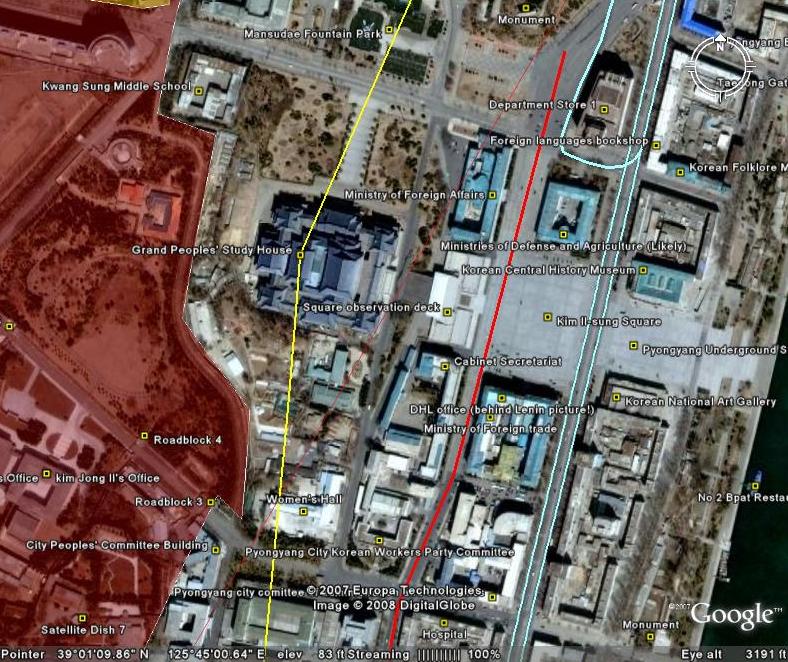
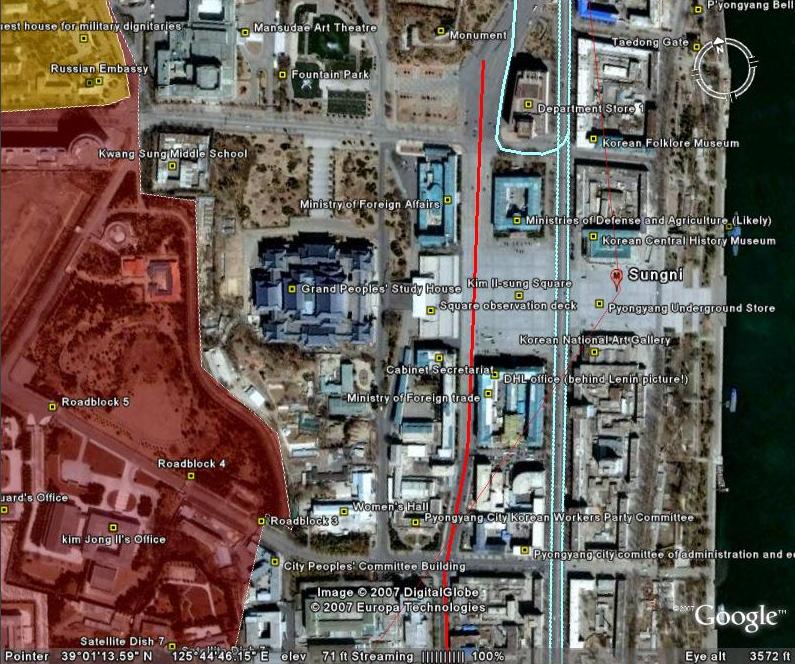
“There is a ‘closed library’ on the fourth floor of the Grand People’s Study House in Pyongyang. Foreign books at the library are only available for cadres of the Party or VIPs. Chancellor Sung Ja Rip must have read the theories of Keynes and Freedman at ‘the closed library’,” Mr. Kim said.

“There is discrimination in access to books and data against the general public,” Mr. Kim said, “general college students have no chance to study Keynes and Freedman.”

Since Kim Il Sung’s “May 25 Instruction” in 1967, most of books on western literature and philosophy have been burnt or smeared with ink, or pages have been torn out of books. Such vandalism was carried out under the so called “Book Arrangement Activity.” For some time thereafter, the general public had no access to books, even to those related to Karl Marx.

“Pyongyang Foreign Literature Publishing House” began to publish foreign books in 1984. From then on, the western classics in literature were made available. However, books on modern economics and modern thought are accessible only to the Party officials or some special groups at the “closed library.”

Mr. Kim said, “I had a chance to read the classics in North Korea but nothing on modern thought or economic theories. Only state-approved foreign books are readily accessible to the public. Ideologies or theories that seem to challenge the system are thoroughly denounced.”

Mr. Kim added, “In the late 1990s, the state education authorities approved classic economics and classic philosophy for public reading in order to stress the superiority of socialist economic theory and Juche Ideology.”

“In the 1990s, I checked out from library and read the classics such as Marx’s ‘Das Kapital,’ Engels’ ‘Ludwig Feuerbach and the End of Classical German Philosophy,’ ‘The Holy Family,’ and Lenin’s ‘The State and Revolution.’ But the books were so old that the pages were worn out and yellow,” said Mr. Kim.

Mr. Kim also borrowed some books from those who had access to “the closed library.” The books he secretly borrowed and read were “How to Win Friends and Influence People,” by Dale Carnegie, “From the Third World to First” by Lee Kuan Yew and “The Decameron” by Giovanni Boccaccio.

“Only approved literary works are translated and published. Many literary works which do not threaten the current system have been published,” Mr. Kim said, adding “When I was in college, I read many foreign books including novels written by Pushkin, John Byron, Heine, Shakespeare, Moliere, Stendhal, Tolstoy, Dumas, Victor Hugo, and Cervantes”

Unfortunately, Mr. Kim said, “I had never had a chance to read modern novels because only classics were made available. North Korea censors any books or information that it regards as a threat to the system or seems to produce illusions of capitalism.”

“Translations of up-to-date technology and information are weak,” Mr. Kim said, “When college students write their dissertations, they use outdated books as a reference.”

Mr. Kim also recalled that around 2001, it was all the rage among college students in Pyongyang to read “Gone with the Wind” by Margaret Mitchell, and “An American Tragedy” by Theodore Dreiser.”

Ever since the former US President Jimmy Carter gave Kim Il Sung “Gone with the Wind” on video tape as a present upon his visit to Pyongyang in 1994, such American novels have been translated and published.

Kim Myung Chul added, “The authorities approved of publishing such books because they did not consider the books challenging to North Korea’s system or status quo. However, those college students who read the American books loved the opportunity of reading them, for it served as a chance to learn about America.”

Share

An affiliate of 38 North