By Michael Rank
A Dutch stamp dealer who was arrested in North Korea this summer has told how he was held in solitary confinement for two weeks and threatened with spending 15 years in prison for spying.
Willem Van der Bijl said in a telephone interview that he had visited North Korea about 24 times since 1998 in order to buy stamps, postal stationery and propaganda posters, and that three of his business contacts were arrested with him last August. Although he was freed after a highly unpleasant two weeks during which he was held in a two-by-three metre cell, he has no idea what has happened to his North Korean colleagues, but fears they will be severely punished.
He said he had been “intimidated” by his interrogators but not physically mistreated during his detention. “They yelled at me but did not hit me”, he said, adding that he was accused of being a spy apparently because of the large number of photographs he had taken of the North Korean countryside during trips to factories outside Pyongyang to discuss possible joint ventures.
He was released after signing a confession to his alleged crimes, and said the North Koreans confiscated his laptop and camera as well as a Kim Il Sung badge that had been given to him, but his money was returned to him. “I was happy to leave,” he said, adding that “There was nothing really wrong in what I did…All I did in North Korea was fairly correct”.
Van der Bijl, 60, photographed here with an interview in Dutch, said his North Korean colleagues were held in the same interrogation centre as he was and that he was deeply concerned that “They will have to face trial, and I will never see them again.”
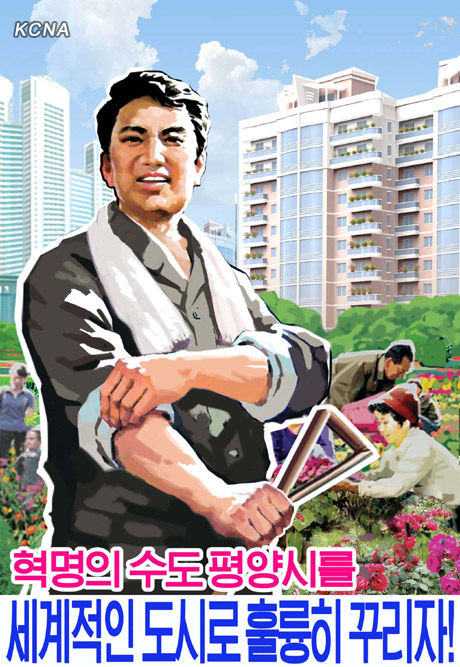
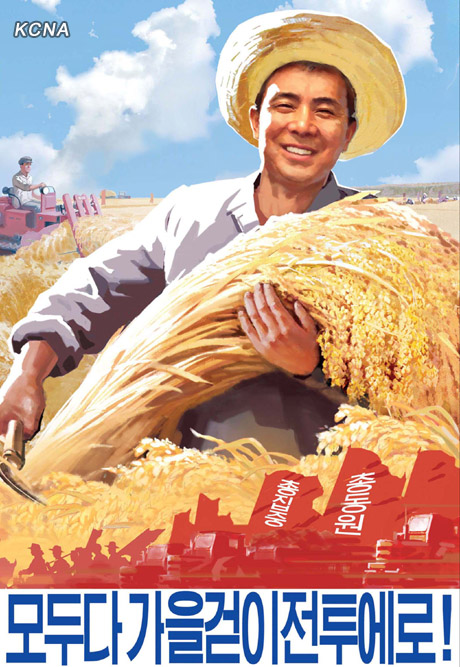
Although mainly a stamp dealer with a stamp shop in Utrecht, he said he had become interested in collecting propaganda posters during his last few visits, and had a collection of thousands of posters.
He said North Korean officials seemed divided in their attitude as to whether such posters should be sold to foreigners. “The ‘doves’ say this art is popular in the west and should be sold; the ‘hawks’ do not want to export secret paintings, they are meant for the Korean people,” Van der Bijl said.
He said his hopes mounted every Tuesday and Saturday that he would be released as there are flights from Pyongyang to Beijing on those days, and as time progressed he became more worried that he would be sentenced to spending up to 15 years in jail for espionage. When he was freed he was told he could apply for a visa to visit North Korea again, but he told NKEW said he had no wish to do so as long as the current regime remains in power.
He said he had taken car journeys about 120 km outside Pyongyang nominally to visit companies to discuss joint ventures, but he was more interested in taking photographs of the impoverished countryside, and that North Korean factories were too dilapidated for there to be any serious chance of doing business with them.
Somewhat surprisingly, Van der Bijl is quoted on two official North Korean websites here and here before his arrest concerning local elections in North Korea in July. He visited a polling station during the elections and was quoted as saying, “Looking round the poll, I have been greatly impressed by the free and democratic elections and I have had a better understanding of the DPRK’s reality.
“In the DPRK every citizen is eligible to vote and to be elected. Those who have worked a lot for the people are elected as deputies. The popular election system of the DPRK is really excellent.”
He confirmed he had spoken to North Korean reporters at a Pyongyang polling station, but said all he had told them was that he had never seen elections run in such a way before, and strongly denied praising the elections as free and fair
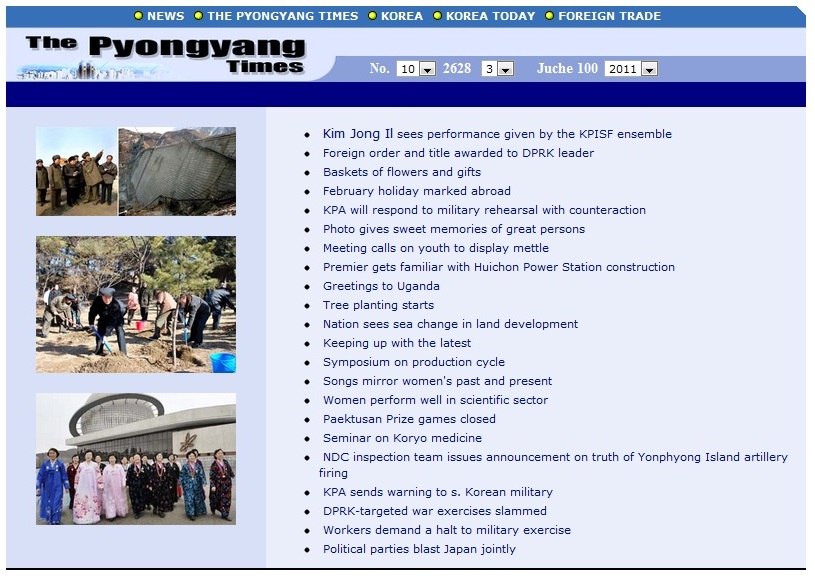
Also surprisingly, Van der Bijl is shown wearing a Kim badge in two photographs of him on the Pyongyang Times websites. It’s rare for foreigners to be given a Kim badge and still rarer for them to be shown wearing one in the official North Korean media. Van der Bijl said he was unsure where the photos were taken. One of the websites shows Van der Bijl’s signature, copied from his passport.