Archive for the ‘Chongryun’ Category

Chongryun on YouTube?

Thursday, August 12th, 2010

UPDATE: As noted in the comments and in this post, Uriminzokkiri is run by the North Koreans, not the Chongryun.

ORIGINAL POST:

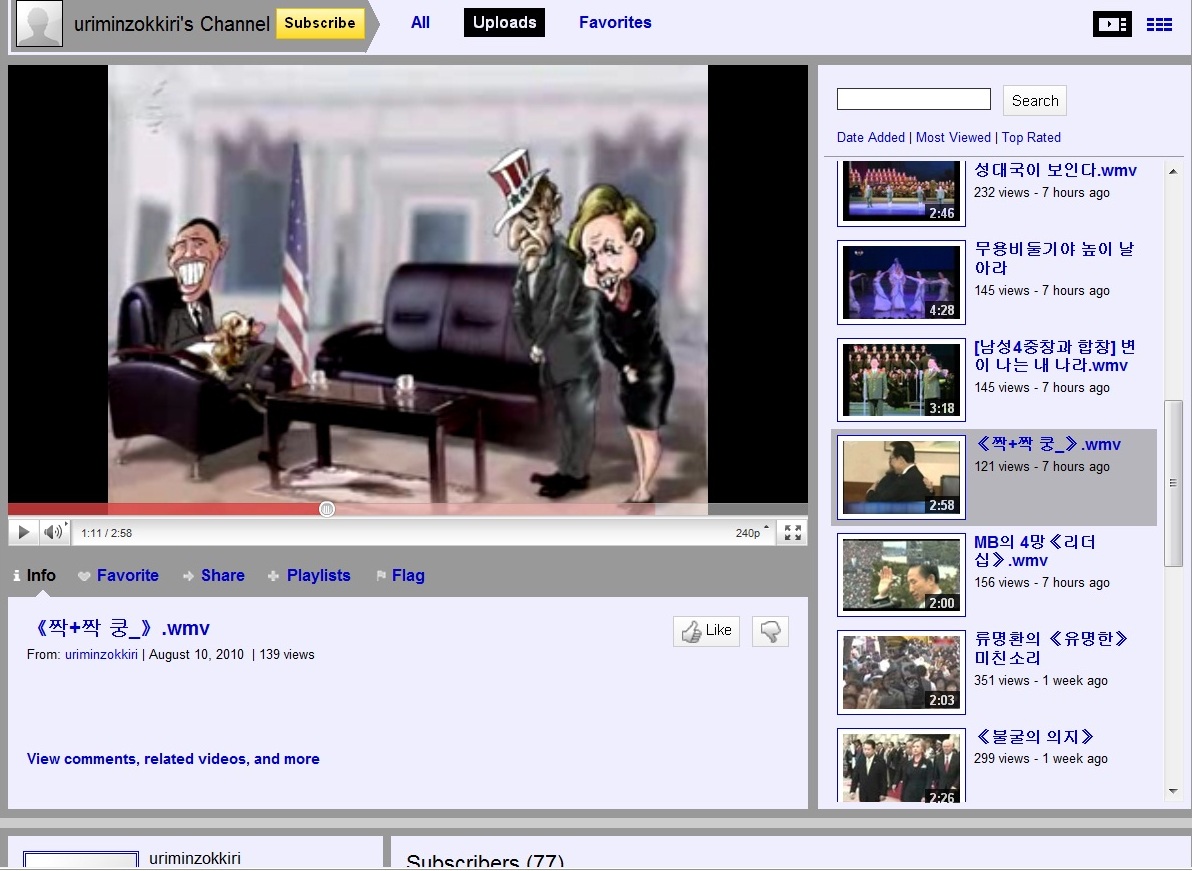
The pro-Pyongyang ethnic Korean community in Japan (Chongryun, Chosen Soren) has apparently opend a YouTube channel named “uriminzokkiri” (“On our own as a nation”) where they are uploading pro-DPRK and DPRK-made videos.

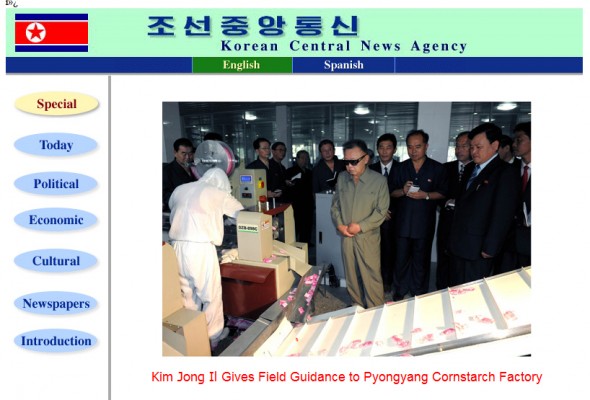
The Chongryun operate a number of web pages on behalf of themselves and the North Korean government (Chongryon.com, Naenara, elufa.net, uriminzokkiri.com, and more) all of which host video content.  So why open a YouTube account?  All these web pages are blocked in South Korea—so I am wondering if South Korean readers see these YouTube videos? 

UPDATE: Gag notes the following in the comments: “The ‘uriminzokkiri’ account is presumably run by the website of the same name, which links to it. The uriminzokkiri.com homepage lists two email addresses on silibank.com, so I doubt that it’s run by the Chongryon either. (elufa.net, which is in Japanese, has an email address on its own domain.)

I wonder also whether it is just a matter of time before the US Justice Department/Treasury Department goes knocking on YouTube’s door.  If this account is sponsored by the official Chonryon organization, the US government might have a problem with that.  I suspect, however, that the account is ”maintained” by a “private” individual so that it cannot be construed as engagement in a business trade with the DPRK.  In the past, on line chat services owned by Yahoo and Linkedin have been asked to close accounts of individuals in sanctioned countries like the DPRK.  

As of now, the account hosts nearly 40 videos.  Unfortunatley not a single one is of the North Korean evening news.  The North Korean news is usually posted on Elufa.net, but has not been updated since July 26. Rather than running 10 pages poorly, they might consider consolidating and running 2 pages well!

According to Yonhap:

North Korea has apparently registered an account with the iconic U.S. video-sharing site YouTube, uploading clips that praise the isolated regime and defend itself against accusations that it attacked a South Korean warship.

The name in Korean means “on our own as a nation” and was registered July 14.

The uploaded footage contain regurgitations of official cant that honor the North’s leader, Kim Jong-il, and the usual South Korea bashing. The Aug. 2 upload contained an elaborately produced three-minute clip lashing out at South Korea’s foreign minister.

Another clip, uploaded the same day and also produced in Korean, ridicules Seoul for its failure to stop the U.N. Security Council from placing Pyongyang’s denial in its statement deploring the deadly March sinking of the Cheonan warship.


Share

Chongryon’s Korea University

Tuesday, August 3rd, 2010

According to the Chronicle of Higher Education:

North Korea’s red, white, and blue flag flutters on the campus, signs are written in Hangul, and female students stroll through the corridors wearing the traditional jeogori costume. Professors lecture beneath iconic portraits of the father-and-son hereditary dictatorship that has run the reclusive Stalinist state since 1948.

Roughly 800 miles from P’yongyang in Tokyo’s leafy western suburbs, Korea University is an anomaly, an intellectual oasis in a society that distrusts and even despises the ethnic group it caters to—native Koreans loyal to P’yongyang. The institution has never received financial support or even official recognition from the government of Japan.

The university is part of a network of educational institutions established decades ago to serve the Korean population here. Its students wrestle with politics and computer science but also the philosophy of the North’s leader, Kim Jong-il, and the merits of their isolated country’s fossilized centralized government. Surrounded by one of the planet’s most high-tech cities, undergraduates spend their entire four years in Spartan on-campus dorms designed to encourage shared collective identity.

“Part of what we do here is protect our culture,” said the institution’s president, Chang Byong-tai. “Our country and our identity were stolen from us by Japan.”

While unusual, the university for the most part resembles other higher-education institutions, with some notable exceptions. A tour reveals a quiet campus, with aspiring teachers taking a music lesson and students reading in the library, where yellowed English-language newspapers from P’yongyang sat on shelves.

The university offers a standard range of courses, including languages, history, economics, and hard sciences, and has carved out a niche offering legal and other specialist qualifications to Koreans. It has become an academic pit stop for Korean students on their way to Japanese graduate universities.

Set up in 1956, the university is struggling to survive. Hit hard by the decline in Japan’s Korean population, enrollment has plummeted to just 800 students, down from 1,500 in the mid-1990s. Student fees pay for 70 percent of the institution’s costs; donations and endowment investment earnings pay for the rest. Cash from P’yongyang, once a lifeline, has dried up to a thin, unreliable trickle.

“We’re very worried about the future,” said Mr. Chang.

A Political Punching Bag

Mostly left alone for decades by Japan’s authorities, the institution—like any with connections to North Korea here—has recently become a political punching bag. Ultrarightists have driven up this quiet cul-de-sac and blasted the campus with anti-P’yongyang slogans from loudspeakers. Political conservatives have zeroed in on the roughly 70 P’yongyang-affiliated Korean schools that feed the university, demanding they be excluded from a new tuition-waiver system.

“The atmosphere now is very, very bad,” said Kim Yang-Sun, an administrator at the university. Like most of the staff here, Mr. Kim resents the recent attention, which comes on the back of growing tensions between Tokyo and P’yongyang and what he sees as unfair long-term treatment by the Japanese authorities. “Donations to universities are tax deductible in other parts of the world, but not for us. We have been discriminated against.”

Mr. Kim’s ancestors have been in Japan since its annexation of the Korean peninsula in 1910. When occupation ended in 1945, about 700,000 Koreans stayed on rather than return to their homeland, which was then sliding into a war that would eventually split the country into two bitterly opposed states.

These refugees were rendered stateless when Japan’s postwar government ended the citizenship of former colonial subjects in 1947. Well-documented discrimination meant that many found the typical postwar route to prosperity in Japan—lifetime employment in large companies—effectively barred.

When Tokyo normalized relations with South Korea in 1965, Koreans in Japan had to choose essentially an administrative category—to opt for life as a South Korean with permanent residency or to leave the word “Korean” on their alien-registration cards and so become de facto North Koreans. Most declined South Korean citizenship—ironic given that the vast majority originates from the geographic south. South Korea was then a poor dictatorship backed by the United States, while North Korea, though offering little freedom, at least boasted the rhetoric of a “workers’ state.”

“Koreans in Japan were very poor and had no civil rights, so it was a big deal that there was a nation that regarded them as fellow compatriots, that gave them help, and funded this university,” said Sonia Ryang, a professor of anthropology and director of the Center for Asian and Pacific Studies at the University of Iowa.

Today at the university, the grandchildren of those first-generation Koreans struggle with profound identity issues. Many distrust the Kim Jong-il regime but remain loyal out of respect for their parents or the desire to preserve their cultural heritage.

“The reputation of the university is less important that what we study here,” said Ho Tae-jung, a political-economy student. “I’m a Korean, and I want to protect my culture, language, and identity. That’s why my parents and I chose this place.”

Said Ms. Ryang: “They do an amazing job of maintaining Korean culture in a hostile environment.”

Those familiar with the university say one of its unofficial roles is to act as an ethnic matchmaking service. “Most of us want to marry a Korean and have Korean children,” said Yun Minna, a third-year law and politics student at the college.

“I don’t hate Japan, but when you see how our community is getting smaller, it would be better to marry a Korean,” said Mr. Ho.

‘Education Gives Us Pride’

But many Japanese view the community and the college with mistrust since the 2002 revelation that the North Korean military had been kidnapping Japanese citizens in the 1970s and 80s in a bizarre plot to train spies. News-media interest, often prurient, has grown as relations have deteriorated with P’yongyang, which recently became a nuclear power. For conservatives, the university and the rest of North Korean network in Japan are a sort of Trojan horse, breeding disloyalty and even incubating spies. Students and graduates respond that they are the victims of McCarthy-style persecution.

“I don’t talk anymore to the Japanese media because I’m sick and tired of how they portray us,” said Chung Hyon Suk, a graduate of the university who now supervises press events at the Foreign Correspondents’ Club of Japan. Like most students who have graduated from the university, she says there are huge misconceptions about what goes on there. “Students discuss Marx and Lenin, of course, but they can talk very freely and criticize the [P'yongyang] government. A lot of us feel inferior, so education helped give us pride as Koreans, in our language and culture.”

Said Ms. Ryang, who is also a graduate of the university: “Depending on the occasion, students felt free to make jokes about North Korea, but by the same token, again depending on the occasion, students were able to conform with university orthodoxy, upholding North Korea as their glorious fatherland.”

With over 10,000 Koreans a year either assuming Japanese citizenship or swapping their affiliation to South Korea, according to Japan’s Ministry of Internal Affairs and Communications, the minority community served by the university is shrinking, from a peak of 700,000 to just over 400,000. Many parents are sending their children to Japanese schools. For some, that’s an opportunity to bury the past completely and scrap their Korean names and identities.

“We have heard cases of schoolchildren finding photographs of their grandparents wearing Korean dress and being astonished at this background,” said Moogwi Kim, of the Korean Youth Association in Japan. “Their parents kept it from them.”

Mr. Chang, the university’s president, believes that government recognition as a foreign university, which is currently afforded very few Japanese universities, and allowing donations to be tax deductible might help his institution survive.

Ms. Ryang, however, wonders if the university would really welcome recognition by the government. “If it were recognized, it would have to receive periodic inspections, comply with certain levels of transparency, and it has no experience of that.”

She said few people understand how isolated the community and the university felt. “Japan is not a violently segregated community; it’s politely segregated. Until 1981 we were not able to travel outside Japan. I never had Japanese friends when I was a kid. That’s changing now, and the university is within reach of globalization, but is it ready for that?”

Read the full story here:
In Japan, a North Korean Campus Keeps National Identity Alive
Chronicle of Higher Education
David McNeill
8/3/2010

Share

Chongryon headquarters on block after ruling

Wednesday, June 30th, 2010

According to the Daily NK:

Japan’s Supreme Court has ruled that Chongryon headquarters are a legitimate Chongryon asset which may be seized and auctioned as part of proceedings to recover loans made by a defunct credit union to the organization, Japanese broadcaster NHK reported on Tuesday.

A collection agency recently took over a number of bonds issued by the bankrupt Joeun Credit Union, which loaned around $700 million to Chongryon, the organization of North Koreans in Japan. The agency then announced its intention to pursue collection by putting Chongryon headquarters land and buildings in the Chiyoda district of Tokyo up for auction.

However, since the land and buildings are registered under a separate firm, Chosun Central Hall Management Association, the collection agency was required to file a lawsuit to get the necessary recognition of its right to seizure.

The court initially dismissed the collection agency’s claim on the grounds that the assets are held by a separate entity, but accepted, “It is possible to seize (the assets) if they can be shown to be actual Chongryon assets.”

Therefore, the collection agency filed a separate lawsuit to ask for recognition of the Chongryon headquarters estate and buildings as such an asset, and the Supreme Court has now ruled in its favor.

If the judgment is allowed to stand, the collection agency will be able to legally seize the estate and buildings of the Chongryon headquarters, adding to the organizations mounting woes.

Read the full story here:
Chongryon HQ on Block after Ruling
Daily NK
Yang Jung A
6/30/2010

Share

What happened to Naenara and .kp?

Wednesday, June 23rd, 2010

Is anyone else out there having trouble accessing the Naenara site (aside from those of you in South Korea)?

The North Korean web service, Naenara (Wikipedia page here, though not much info), used to be posted on two domains: Kcckp.net and Naenara.kp.  It looks like these sites are down—as well as their foreign language services: /en (English), /fr (French), /ja (Japanese), /ru (Russian), /ko (Korean), /ch (Chinese).

In addition, the Korea Education Fund site is also down (http://www.koredufund.org.kp/). I picked up one of their brochures last time I visited the DPRK and posted it here.

..and the Committee for Cultural Relations with Foreign Countries (CCRFC or Taemun) web page is also down: http://www.friend.com.kp/

A quick search of the .kp domain (The DPRK’s country level domain assigned by ICANN) reveals only three other functional web pages:

1. The domain registry lookup site: http://kcce.kp/

2. KPNIC domain registration guidelines (which are well worth reading): http://www.kcce.kp/en_Guideline.php

3. And this document:

조선민주주의인민공화국 망령역이름
변경신청서

1. 변경신청목적
2. 변경신청기관명
3. 변경신청기관주소

변경신청내용
1. 등록된 망령역이름
2. 변경하는 망령역이름
3. 신청자
이름
직장,직위
전화번호
전자우편주소
주소
3. 변경신청기관의 영문표기
4. 변경신청기관의 영문략자표기

Share

Japan, USA extend DPRK sanctions

Thursday, June 17th, 2010

According to Business Week:

Japan will tighten controls on sending money to North Korea next month as part of additional sanctions in response to a suspected sinking of a South Korean warship.

The cap on undeclared cash transfers will be lowered to 3 million yen ($32,800) from 10 million yen, according to a statement released by the Ministry of Finance.

The ministry also will reduce the amount of money an individual can take into North Korea to 100,000 yen from 300,000 yen. The change will take effect on July 6, the statement said.

Read the full story here:
Japan to Tighten Control on Sending Cash to North Korea
Business Week
Kyoko Shimodoi and Keiko Ujikane
6/15/2010

According to the White House web page:

TO THE CONGRESS OF THE UNITED STATES:

Section 202(d) of the National Emergencies Act (50 U.S.C. 1622(d)) provides for the automatic termination of a national emergency unless, prior to the anniversary date of its declaration, the President publishes in the Federal Register and transmits to the Congress a notice stating that the emergency is to continue in effect beyond the anniversary date.  In accordance with this provision, I have sent to the Federal Register for publication the enclosed notice stating that the national emergency declared in Executive Order 13466 of June 26, 2008, is to continue in effect beyond June 26, 2010.

The existence and the risk of proliferation of weapons-usable fissile material on the Korean Peninsula constitute a continuing unusual and extraordinary threat to the national security and foreign policy of the United States.  For this reason, I have determined that it is necessary to continue the national emergency and maintain certain restrictions with respect to North Korea and North Korean nationals.

BARACK OBAMA

THE WHITE HOUSE,
June 14, 2010.

Share

North Korea Looking to Makkoli Business

Tuesday, June 8th, 2010

Daily NK
Hwang Ju Hee
6/7/2010

Showing Pyongyang’s desire to reach new markets, Uriminzokkiri (Being amongst Our Nation), a website managed by the North Korean Committee for the Peaceful Reunification of the Fatherland, recently covered “Rakbaek Makkoli,” taking its lead from an article published in the latest issue of monthly domestic publication “Deungdae” (Lighthouse).

Makkoli is a traditional Korean drink made from fermented rice which has its roots in agricultural areas. Recently it has experienced a resurgence of popularity in South Korea.

The Uriminzokkiri report explained of the North Korean makkoli, “The makkoli produced by Rakwon Department Store in Pyongyang is a healthy beverage and good to drink. It is consumed internationally as well as domestically.”

Given that Uriminzokkiri is targeted at South Koreans, the appearance of “Rakbaek Makkoli” looks like an attempt to profit from the thriving South Korean makkoli business.

Although North Korea has exported “Pyongyang Soju” to the U.S., Japan and China in the past, consumers didn’t take to it due to its expensive price and strong taste. Therefore, North Korea may be looking to makkoli.

One defector, who used to be involved in trade in North Korea, explained in an interview with The Daily NK, “Bottled makkoli is thought of as a luxury beverage, but the general populace can drink it only on holidays when the state distributes it.”

He added, “But the common people, especially those who live in agricultural areas, brew their own with spoiled rice or bread and yeast. Cadres don’t usually drink this.”

The South Korean makkoli industry is thriving under the influence of a South Korean cultural wave which is in evidence in Japan, China, Taiwan and even as far away as the U.S. The most famous traditional makkoli, which is made in the southwest provinces of South Korea, has recently begun to be produced for export, while marketing men in Seoul recently hit upon calling makkoli “Drunken Rice” in an attempt to forge an international makkoli brand image.

To that end, makkoli has been promoted several times at summits and other international events by South Korean President Lee Myung Bak.

Share

Japan tightens controls on DPRK cash flows

Monday, May 31st, 2010

According to Bloomberg:

Japan tightened controls on sending money to North Korea and authorized the Coast Guard to search the communist regime’s ships in response to the deadly attack on a South Korean naval vessel.

The cap on undeclared cash transfers will be lowered to 3 million yen ($32,800) from 10 million yen, Chief Cabinet Secretary Hirofumi Hirano said today in Tokyo. Parliament passed a bill allowing the boarding of ships in international waters suspected of carrying North Korean nuclear or missile technology.

The toughened sanctions come a week after an international report concluded that a North Korean torpedo sank the 1,200-ton Cheonan in March, killing 46 sailors. Japan banned almost all trade with Kim Jong Il’s regime last year in response to a second nuclear weapon test and several missile launches.

“The cabinet has decided to take these new measures prompted by the unforgivable torpedo attack,” Hirano said. Japan also reduced the amount of money an individual can legally take into North Korea to 100,000 yen from 300,000 yen, he said.

Prime Minister Yukio Hatoyama will hold a two-day summit with South Korean President Lee Myung Bak and Chinese Premier Wen Jiabao starting tomorrow on South Korea’s Jeju Island. Japan and the U.S. are pushing Wen to acknowledge and condemn North Korea’s role in sinking the ship.

Koreans in Japan

Japan is home to about 589,000 Korean nationals, based on 2008 data, most of them the descendents of forced laborers brought back from the peninsula during Japan’s 1910-1945 occupation. South Koreans number almost 400,000 and North Koreans about 40,000, according to the Korean Residents Union, a pro-South group in Tokyo. Chosensoren, a Japan-based group that supports North Korea, doesn’t disclose its membership numbers.

North Korean residents in Japan have sent billions of yen in money and goods back home to relatives since the 1953 end of the Korean War, much of it derived from their operation of pachinko gambling parlors. Sanctions imposed last year and in 2006 have reduce the amount.

“Japan has imposed so many sanctions in the past that the new measures won’t have much impact,” said Pyon Jin Il, author of the “The Truth of Kim Jong Il” and chief editor of the Tokyo-based monthly Korea Report. “This is more symbolic, to show the world that Japan is doing something.”

In the 11 months through February, 55 million yen was wired or brought to North Korea from Japan, down from 280 million yen in the April to March 2006 fiscal year, according to Ministry of Finance data.

Trade between Japan and North Korea fell 97 percent to 793 million yen in 2008 — all in Japanese exports — from 21.4 billion yen in 2005. Last year’s sanctions added to a previous ban on exports of luxury goods imposed in 2006 following the communist nation’s first nuclear test.

Read full story here:
Japan Tightens Control on Sending Cash to North Korea
Bloomberg
Takashi Hirokawa and Sachiko Sakamaki
5/28/2010

Share

DPRK IT update

Sunday, April 4th, 2010

According to the Korea IT Times:

The number of science and technology institutions in North Korea is estimated to hover around 300; about 200 institutions have been officially confirmed. Therefore, the North is unable to focus on building the hardware industry, which requires massive capital input and long-term investment, and is left with no choice, but to be keen on nurturing IT talent geared toward software development. As a result, the North has been producing excellent IT human resources in areas like artificial intelligence, needed for controlling man-made satellites and developing arms systems, and programming languages.

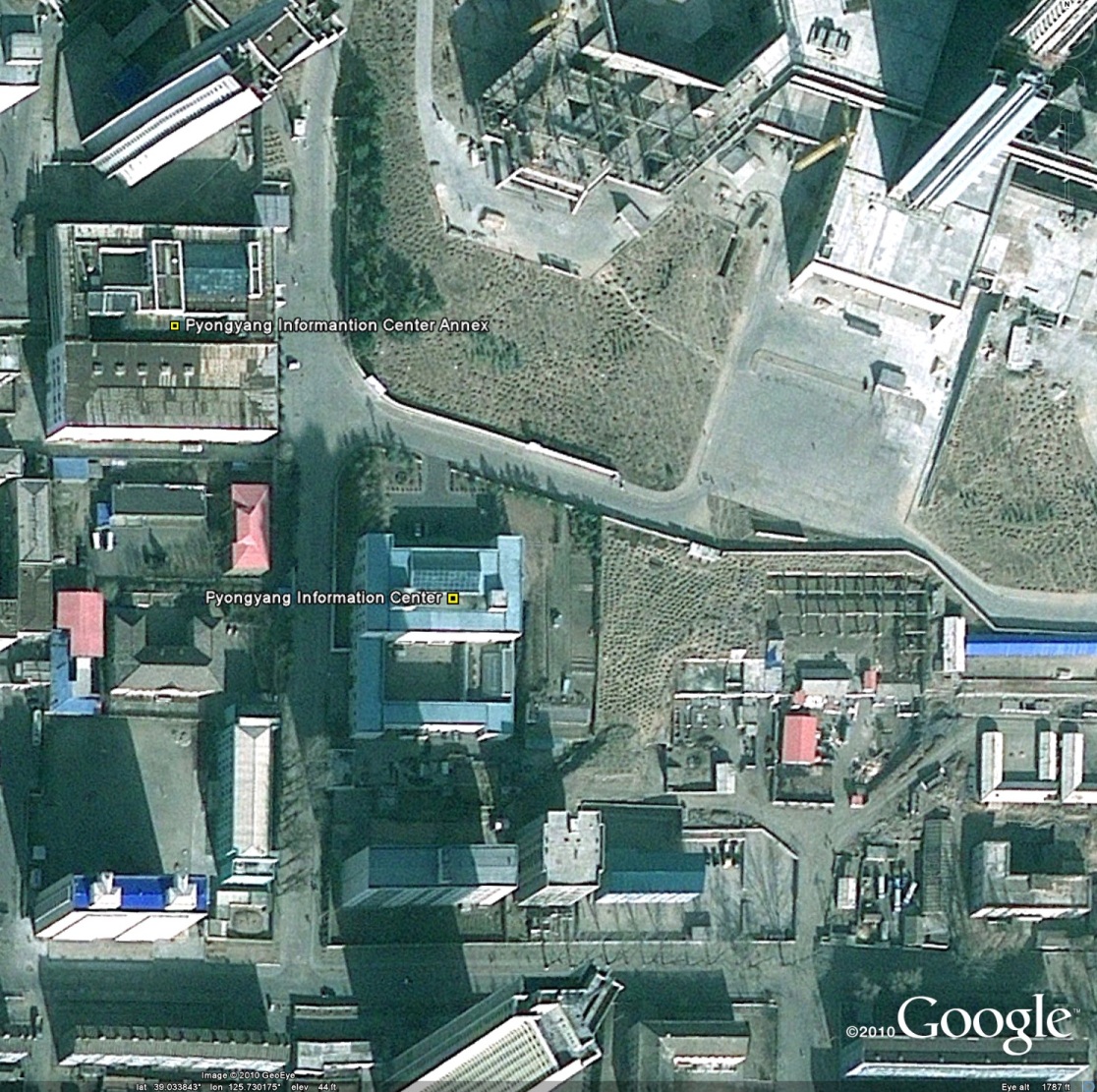
The following IT institutions are in charge of fostering the North’s software industry: DPRK Academy of Sciences, Korea Computer Center (KCC), Pyongyang Information Center (PIC) and Silver Star, which is currently under the KCC.

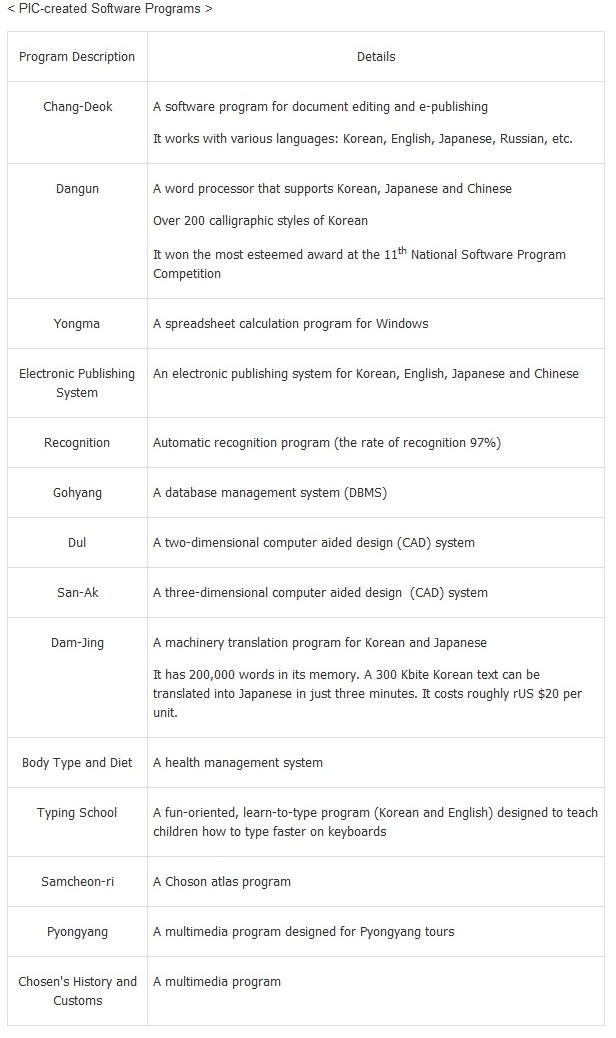
In particular, the creation of the PIC, modeled on the Osaka Information Center (OIC) at Osaka University of economics and law, was funded by Jochongnyeon, the pro-North Korean residents’ league in Japan, and was technologically supported by the UNDP. The Jochongnyeon-financed KCC has been responsible for program development and distribution; research on electronic data processing; and nurturing IT talent.

Thanks to such efforts, nearly 200,000 IT talents were fostered and about 10,000 IT professionals are currently working in the field. Approximately 100 universities such as Kim Il-sung University, Pyongyang University of Computer Technology and Kim Chaek University of Technology (KUT) – and 120 colleges have produced 10,000 IT human resources every year. At the moment, the number of IT companies in the North is a mere 250, while the South has suffered from a surplus of IT talent. Therefore, inter-Korean IT cooperation is of great importance to the two Koreas.

As aforementioned, the North has set its sights on promoting its software industry, which is less capital-intensive compared to the hardware industry. Above all, the North is getting closer to obtaining world-class technologies in areas such as voice, fingerprint recognition, cryptography, animation, computer-aided design (CAD) and virtual reality. However, the North’s lack of efficient software development processes and organized engineering systems remains a large obstacle to executing projects aimed at developing demand technology that the S. Korean industry wants. What is more, as the North lacks experiences in carrying out large-scale projects, doing documentation work in the process of development, and smoothing out technology transfer, much needs to be done to measure up to S. Korean companies’ expectations.

Thus, the North needs to build a system for practical on-the-job IT training that produces IT talent capable of developing demand technology- which S. Korean companies need. In addition, it is urgent for both Koreas to come up with an IT talent certification system that certifies both Koreas’ IT professionals.

Read the full story here:
North Korea Needs to Set Up Practical IT Training and Certification Systems
Korea IT Times
Choi Sung
4/2/2010

Share

Chosen Soren schools face image problem

Wednesday, February 24th, 2010

According to Park Ju-Min writing in the Los Angeles Times:

The portraits of North Korean leader Kim Jong Il have been taken down from the classrooms in the run-down Tokyo Chosen No. 2 Elementary School.

But a quick look into the teachers lounge reveals the Dear Leader in all his glory.

The school for ethnic Koreans in Japan, one of about 60 in the country that are funded by North Korea, faces a delicate balancing act as money from the reclusive regime has decreased amid economic turmoil there.

Since the 1950s, the schools have been run by the General Assn. of Korean Residents in Japan, or Chosen Soren, whose Tokyo headquarters acts as North Korea’s unofficial embassy.

At Chosen No. 2, the eight teachers and 54 students face a life of political isolation as they try to preserve their ethnic identity in Japan, a country many people believe is in the sights of North Korea’s nuclear missiles.

Former Principal Song Hyon-jin knows the school spreads what many Japanese consider communist propaganda. Activists have surrounded the school with megaphones shouting for students and teachers to leave the country, threats that increased after North Korea tested a nuclear device last year. A student at another Chosen school was accosted on the subway, her traditional hanbok robe, worn by many North Koreans, ripped by her attacker.

“Even though the Korean community has changed much in the past 20 years, it’s still tough to live as a Korean in Japan,” said Song, a longtime Chosen member.

The schools get no funding from the Japanese government, which doesn’t officially recognize them.

….

Because there are no diplomatic ties between Tokyo and Pyongyang, the ethnic Koreans cannot apply for North Korean passports. They must be content to send their children to Chosen schools.

Since the 1970s, enrollment in the schools has fallen to less than 12,000 from 40,000, and fees have risen dramatically. In an effort to improve the schools’ image, administrators removed portraits of Kim Jong Il and his father, Kim Il Sung, from classrooms. They also added South Korean history to the curriculum, along with Japanese language and history.

Another change was softening the emphasis on North Korean propaganda, relying instead on a more straightforward history. To avoid undue attention, middle and high school students were ordered not to wear traditional Korean school uniforms after class.

“Schools have to be more open and acceptable for non-Chosen Soren affiliates for the sake of their existence,” said Han Young-hae, an associate professor at the Graduate School of International Studies at Seoul National University. “They need to reestablish their historical views and educational direction.”

As a result, the atmosphere here has lightened. South Korea also has begun taking up the financial slack, donating computers.

“I hope to teach here forever,” said Lee Young-sim, a 25-year-old art teacher who is a product of Chosen schools.

Song is heading a fundraising drive to build a new wing at the school, in hopes of stemming the defection of ethnic Koreans to Japanese schools.

“It is difficult to protect the school when many Korean kids are going to Japanese schools,” said Song, whose two children attend Chosen schools. “But I will do my best until the good day comes.”

Read the full article here:
North Korea-funded schools in Japan have an image problem
Los Angeles Times
Park Ju-Min
2/23/2010

Share

DailyNK series on Chongryon

Sunday, February 7th, 2010

The Daily NK did a series of articles on the General Association of Korean Residents in Japan (Chongryon or Chosen Soren).  Below are links to all seven parts:

Part 1: Chongryon feels the pinch

Part 2: Debts, Mergers, Collapses and Foreclosures

Part 3: Homecoming Project Speeds Chongryon Demise

Part 4: South Korea Visits Weakened Chongryon

Part 5: Chongryon Remittances and Investments

Part 6: “Study Group,” the Core of Chongryon

Part 7: Study Group Money Laundering Machine

Share